







Abstract
Objective
Lipedema, which mainly affects women, is a chronic and progressive disorder characterized by abnormal adipose tissue accumulation in the limbs. Despite its clinical importance, research on lipedema remains limited. Bibliometric analysis provides a quantitative way to evaluate the literature, identify trends, and assess research impact.
Materials and methods
Global lipedema research was analyzed in the Web of Science database using the terms “lipedema”, “lipoedema”, and “lipolymphedema” for publications indexed through March 2025. Articles were classified by publication type, year, country of origin, journal quartile, and citation count. Citation analyses excluded publications from 2024 and 2025 because citation accumulation was incomplete. Only English original articles and reviews were included, while editorials, meeting abstracts, and non-indexed sources were excluded.
Results
Of 610 records identified, 382 met the inclusion criteria. The analysis identified the main contributing countries and highlighted knowledge gaps and opportunities for multidisciplinary collaboration in the evolving field of lipedema research.
Conclusions
This study provides a global overview of lipedema-related research and its scholarly development. It also highlights the need for further studies on the pathophysiology, diagnosis, and treatment of lipedema.
Introduction
Lipedema is a chronic progressive disorder marked by disproportionate subcutaneous fat accumulation, typically affecting the hips, buttocks, and lower extremities. Diagnosis depends not only on appearance but also on symptoms such as pain, tenderness, heaviness, swelling, and easy bruising, which may worsen over time. Despite increasing recognition, lipedema remains difficult to assess in routine practice because it is often considered together with obesity and may overlap with lymphatic involvement, complicating clinical phenotyping and treatment planning.1,2
Recent guidance has emphasized early recognition and individualized care. Management increasingly focuses on practical, patient-centered self-care and conservative treatment, while procedural interventions are reserved for selected cases.3,4 Meanwhile, literature has expanded rapidly across diagnosis, symptom burden, psychosocial impact, quality of life, and treatment, although these areas are often studied separately, leaving the field fragmented.5–7
As the field grows, narrative reviews alone are no longer sufficient to capture its structure. Bibliometric methods provide a broader perspective by identifying publication trends, collaboration patterns, and evolving thematic clusters. Originally developed as statistical tools for publication analysis, these methods were described by Pritchard (1969), Nalimov and Mulchenko (2021), and Kokol et al. (2021).8–10 Visualization tools such as VOSviewer further strengthen this approach by enabling clearer interpretation of collaboration networks and keyword patterns. 11
In this study, we used bibliometric mapping to examine the scientific landscape of lipedema research. We analyzed publication trends, leading contributors, collaboration networks, and thematic areas based on keyword co-occurrence, and sought to identify gaps that may guide future multidisciplinary and methodologically robust research.
Methods
Database selection and search strategy
This bibliometric study was conducted in March 2025 using the Web of Science (WoS) Core Collection. The search was limited to English-language publications and used the terms “lipedema,” “lipoedema,” and “lipolymphedema.” Only original articles and reviews were included. Initially, 610 records were retrieved.
Records were screened using predefined eligibility criteria. Non-English publications and ineligible document types, including editorials, letters, meeting abstracts, book chapters, case reports, and anonymous publications, were excluded. Records without journal impact factor or quartile data were also removed. After filtering, 393 records remained for manual screening. Titles and abstracts were then reviewed, and papers unrelated to lipedema/lipoedema were excluded, leaving 382 publications for final analysis. The study selection process is shown in Figure 1. Selection process flowchart.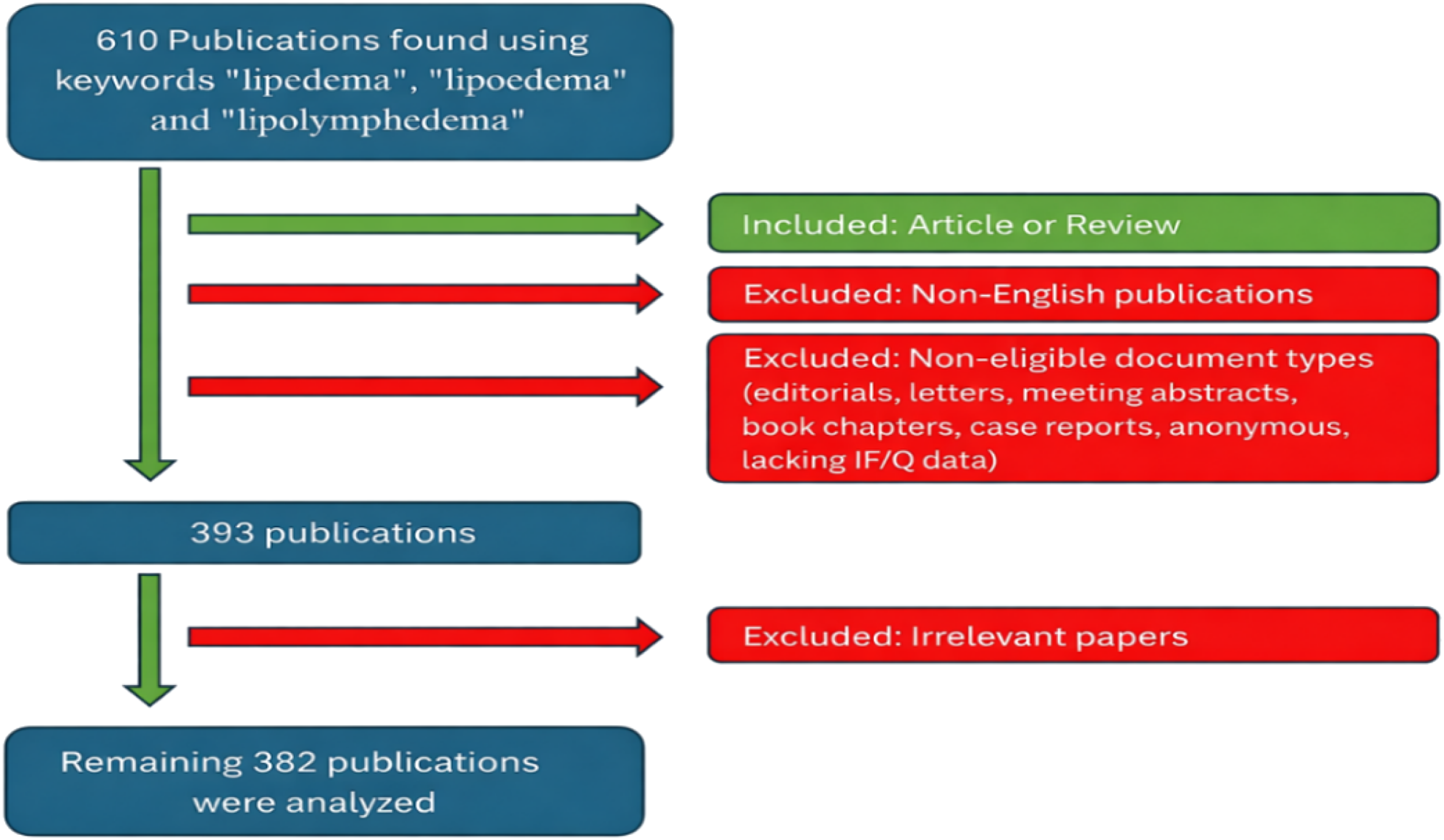
Data extraction and analysis
Two independent researchers (E.Ç.D. and B.F.K.) extracted data on publication year, article type, country of origin based on the first author’s affiliation, citation count, journal title, subject category, quartile ranking (Q1-Q4), and journal impact factor. Bibliometric analyses covered articles published between 1984 and March 2025, whereas citation analyses excluded publications from 2024 and 2025 because citation accumulation was incomplete.
Country-level population and GDP data were obtained from the CIA World Factbook (“Population” and “Real GDP - Purchasing Power Parity” comparison pages) to evaluate publication output in relation to demographic and economic indicators. 12
Active countries were defined as those contributing at least 1% of total publications. For each country, total publications, total citations, and average citations per article were calculated. Countries were grouped by World Bank income categories as high-income, upper-middle-income, lower-middle-income, and low-income. 13 Contribution rates of the primary active countries were calculated by dividing each country’s number of articles by the total number of articles. The top five journals and five most productive countries were identified by publication count. The leading five countries contributing to the top five journals were also determined. Prolific authors were identified by publication output.
Author keywords were analyzed using VOSviewer software (version 1.6.20). Visualizations were created for countries, co-authorship, and author keyword co-occurrence. VOSviewer constructs maps by grouping entities such as countries, authors, journals, or keywords according to the number of links between them. Line thickness indicates connection strength, and different colors represent distinct clusters. 11
Considerations of ethics
This study used publicly available bibliometric data from the Web of Science database. Ethical approval was not required because no human or animal subjects were involved.
Analysis of statistical data
Descriptive bibliometric measures were used to summarize publication output, journal distribution, country productivity, and citation characteristics. Linear regression analysis was performed to assess the temporal trend in annual publication counts.
Results
Figure 2 illustrates the annual distribution of publications on lipedema between 1984 and 2025. Publication output remained low until 2010, then increased steadily, peaking at 62 papers in both 2022 and 2024; 57 papers were published in 2023 and 14 in early 2025. A simple linear regression model confirmed a significant upward trend in annual publication counts (N = 35), with publication year explaining 51.7% of the variance (R2 = 0.517). The slope was 0.998 (SE = 0.168, p < .001), indicating an average increase of about one publication per year. Publication counts by year.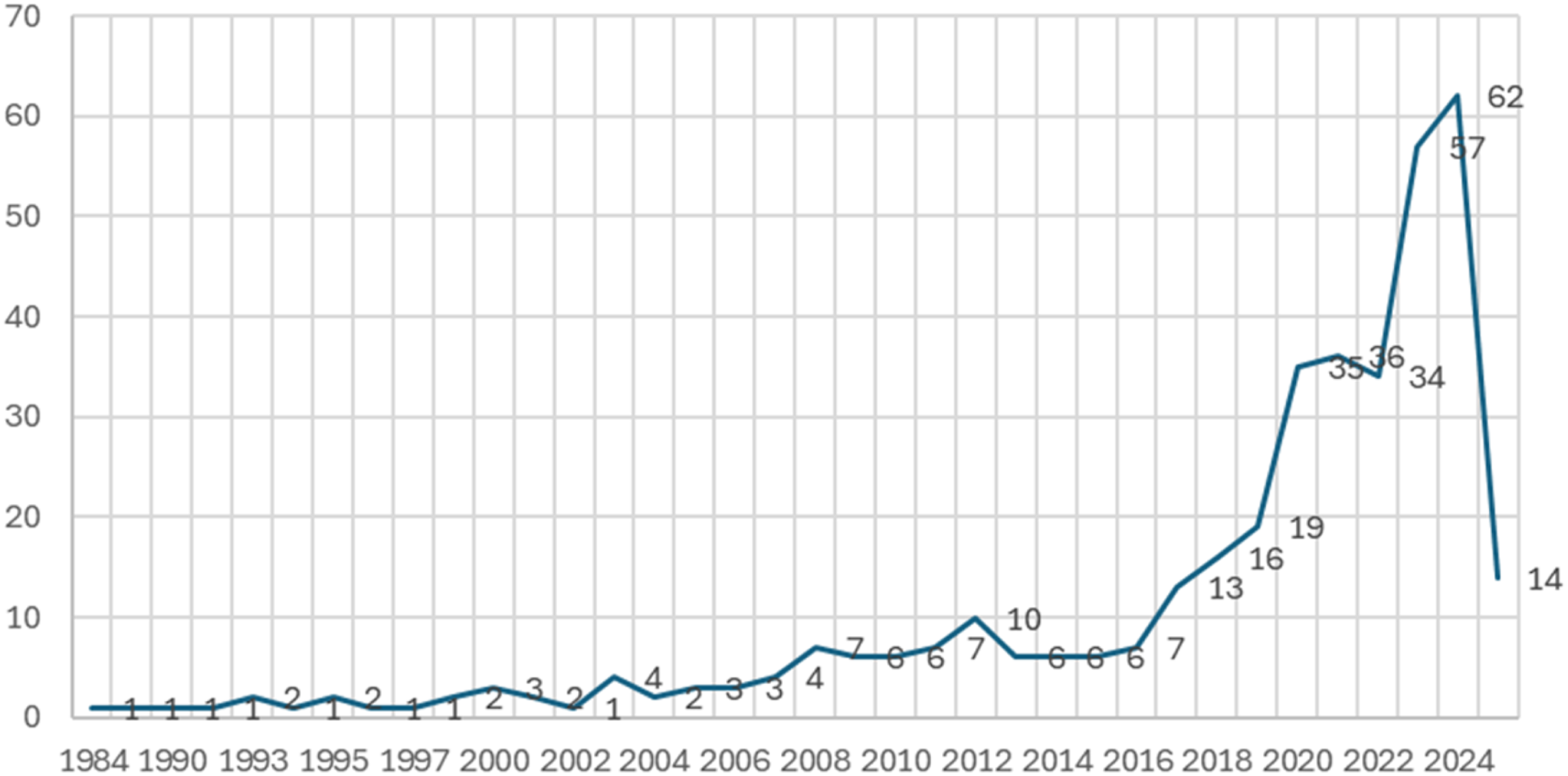
As illustrated in Figure 3, the USA led the field with 91 publications, followed by Germany with 81. Italy ranked third with 25 publications, Türkiye fourth with 20, and Poland and Switzerland shared fifth place with 18 each. Overall, most output came from economically developed countries, particularly in North America and Europe. Publication counts of main active countries.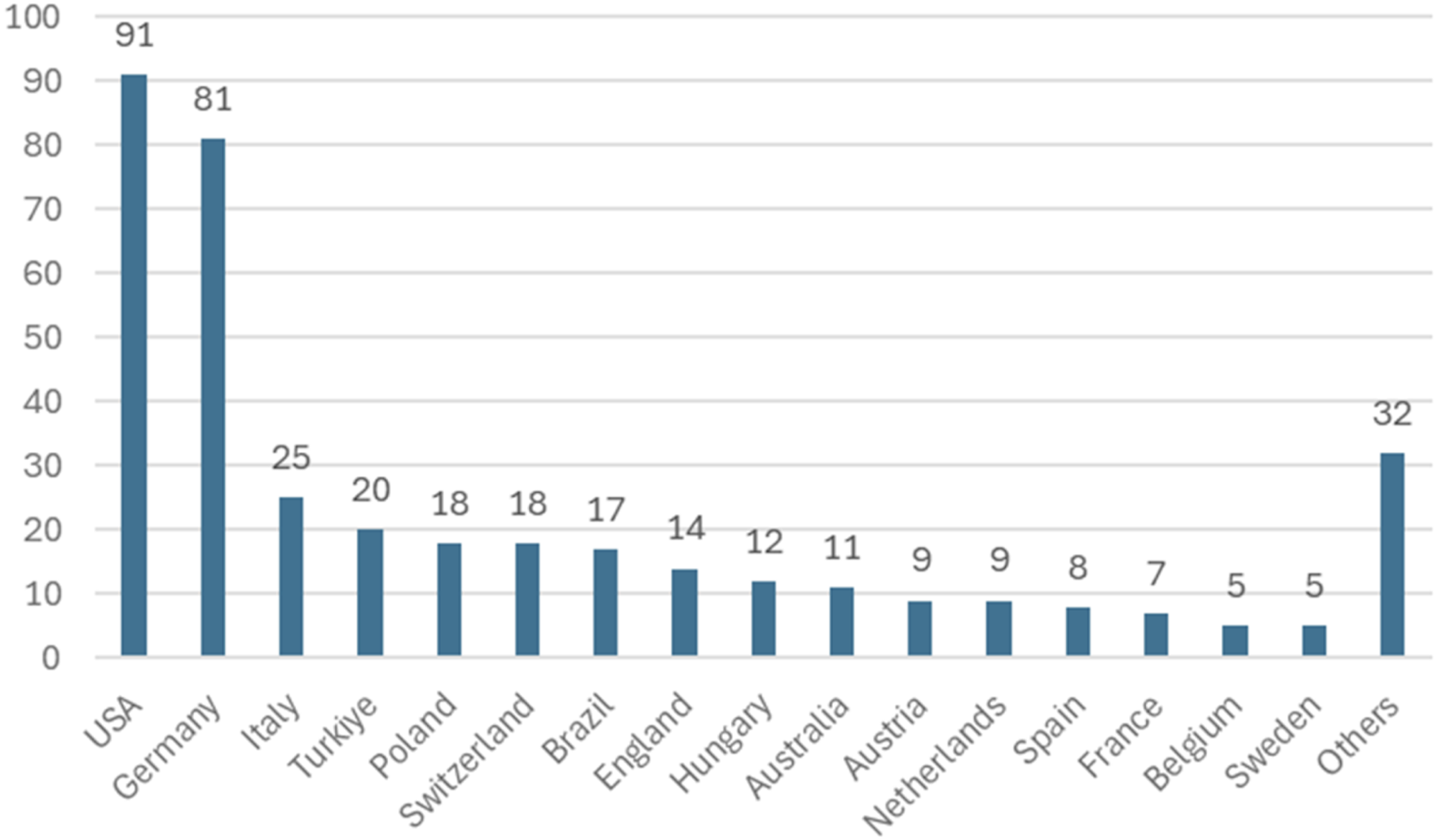
The United States dominated the earliest indexed years, accounting for all publications in 1984 and 2004. Germany later emerged as a major contributor, accounting for 50% of annual publications in 2009, 2013, and 2015, and matching or exceeding U.S. output in several recent years. Italy, Türkiye, and Poland formed a second tier of contributors, each reaching its highest share after 2020. Together, these patterns suggest a shift from early U.S. dominance toward a more internationally distributed, Europe-inclusive research landscape.
Contribution of main active countries.
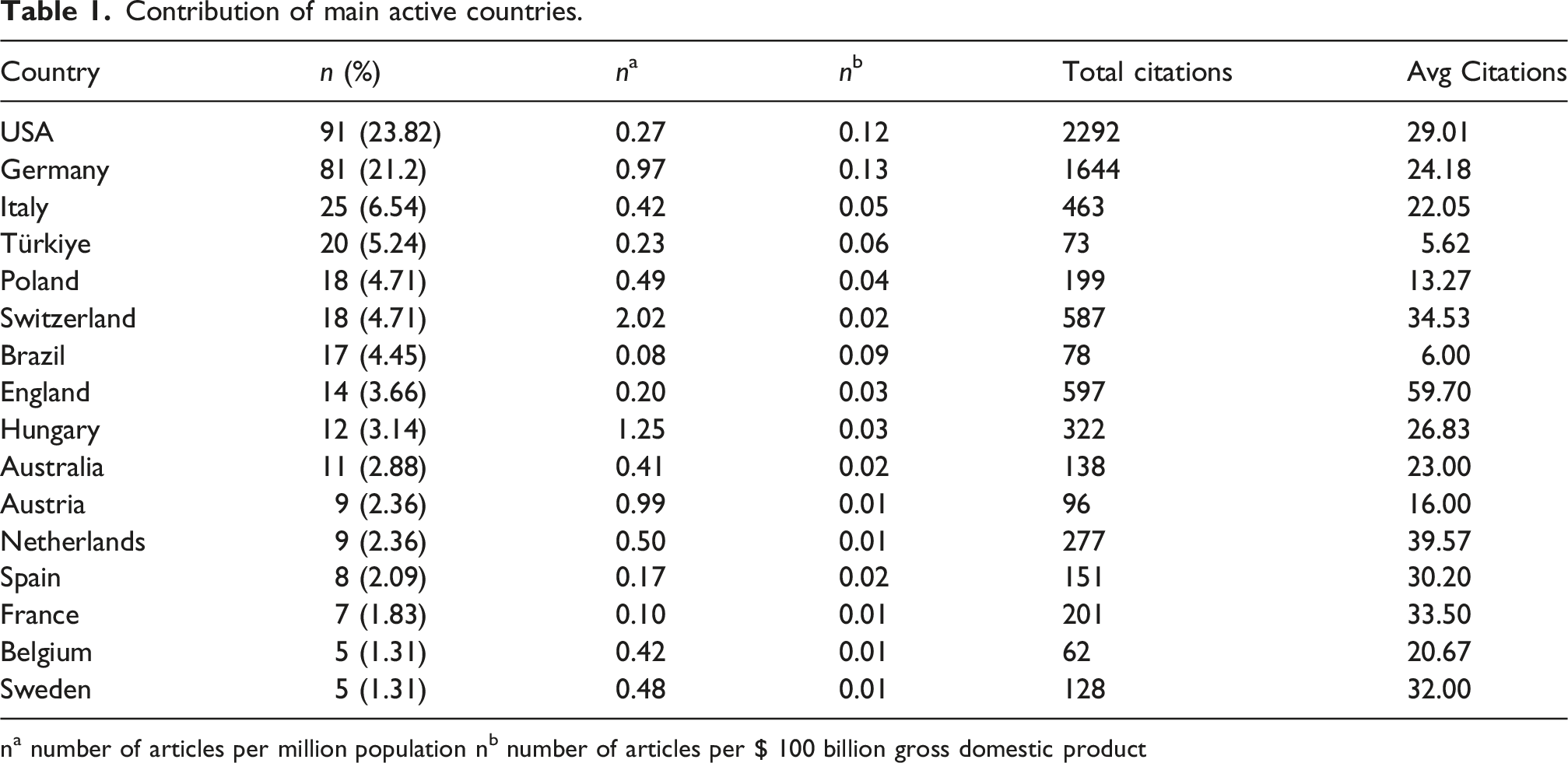
na number of articles per million population nb number of articles per $ 100 billion gross domestic product
Journal preferences varied across the five most productive countries. U.S. publications were distributed across several journals, with International Journal of Molecular Sciences, Lymphatic Research and Biology, and Plastic and Reconstructive Surgery - Global Open each publishing five articles. German output was more concentrated in national and specialty journals, particularly Phlebologie and Journal der Deutschen Dermatologischen Gesellschaft. Italian publications were led by European Review for Medical and Pharmacological Sciences, whereas Türkiye showed the strongest concentration, with half of its output appearing in Lymphatic Research and Biology. Polish researchers published most often in the International Journal of Environmental Research and Public Health. Overall, these patterns suggest that, although some journals serve as shared international platforms, national and linguistic contexts still shape publication choices.
Top five countries in the five most active journals.

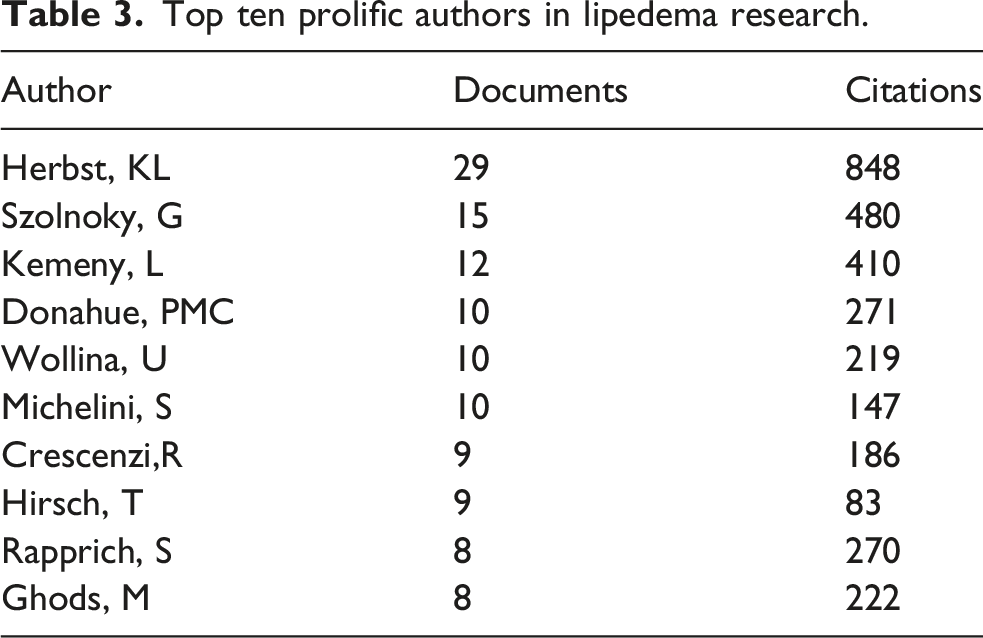
Top ten prolific authors in lipedema research.
The country co-authorship network visualization revealed four clusters (Figure 4). Country co-authorship network visualization map. Four clusters were created. Cluster 1 (Belgium, England, France, Hungary, Italy, Netherlands, Spain) is presented in red; Cluster 2 (Austria, Brazil, Germany, Türkiye) is presented in green; Cluster 3 (Australia, Poland, Sweden, USA) is presented in blue; and Cluster 4 (Finland, Switzerland) is presented in yellow.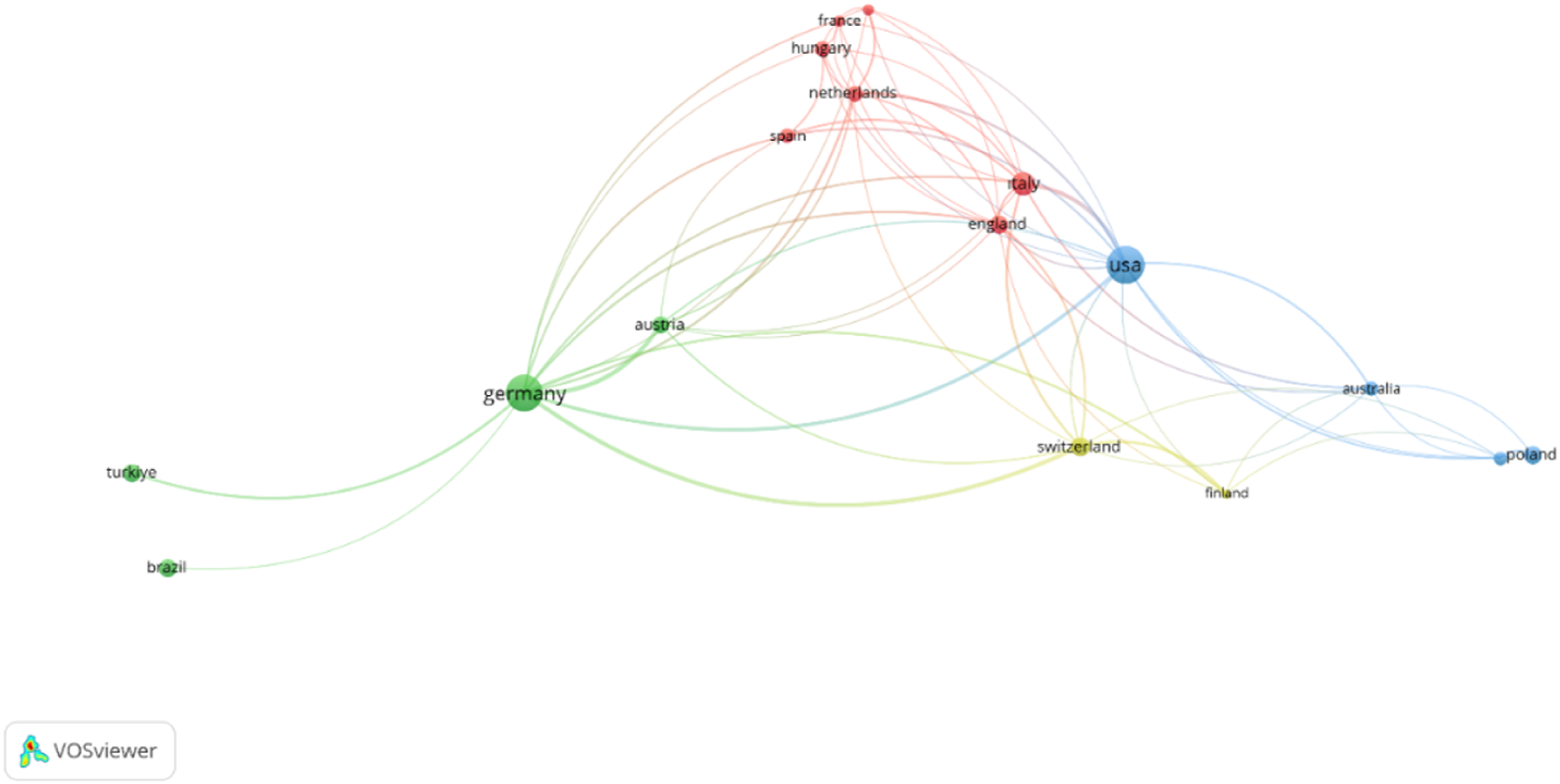
The author keyword co-occurrence network visualization revealed six clusters (Figure 5). Author keywords co-occurrence network visualization map.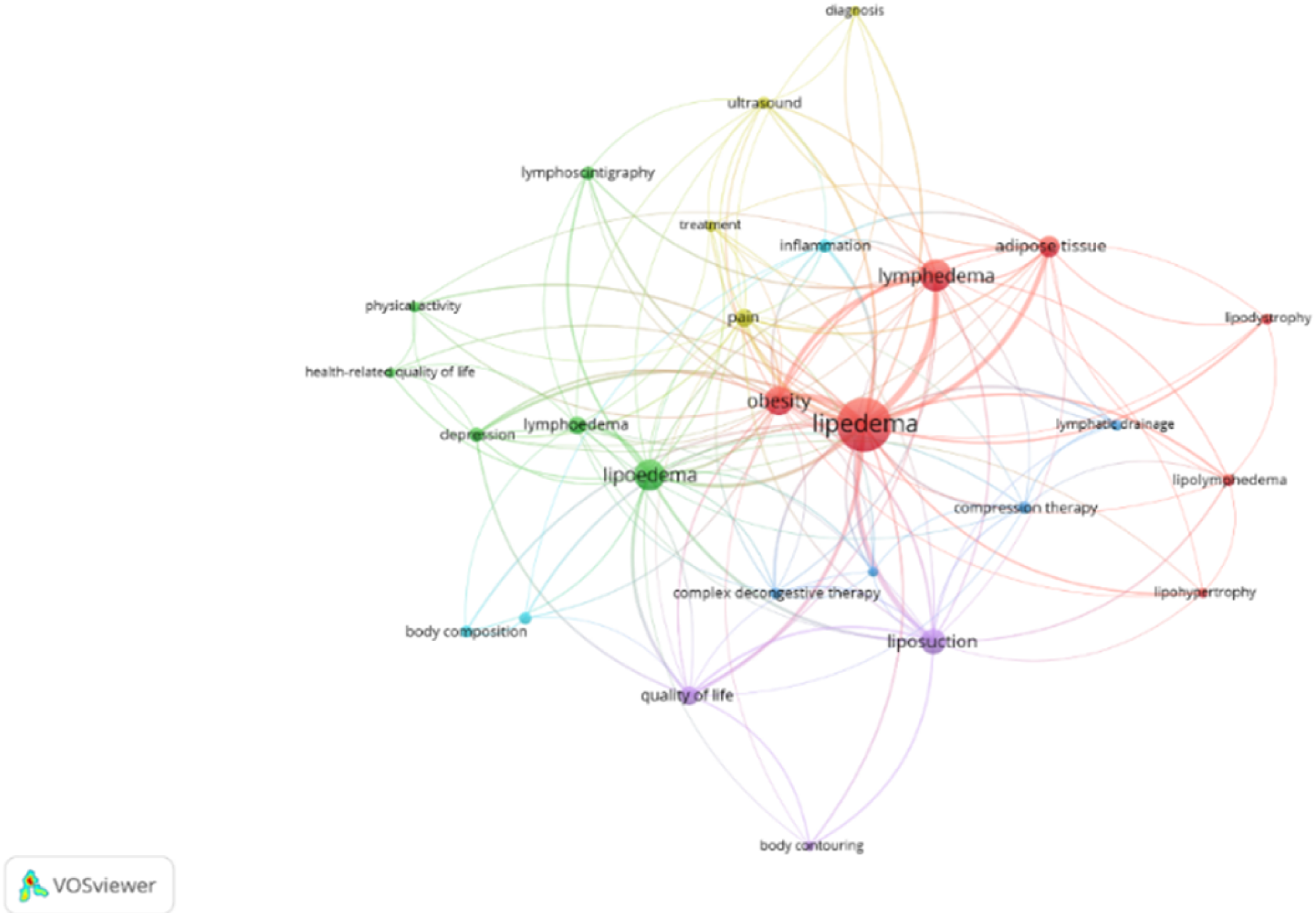
Six clusters were created. Cluster 1 (7 keywords) is presented in red; Cluster 2 (6 keywords) is presented in green; Cluster 3 (4 keywords) is presented in blue; Cluster 4 (4 keywords) is presented in yellow; Cluster 5 (3 keywords) is presented in purple; Cluster 6 (3 keywords) is presented in light blue.
According to the journal index distribution, 77.5% of the publications were indexed in SCI-E, 21.7% in ESCI, and 0.8% in SSCI. Based on journal quartile rankings, 29.6% were published in Q1 journals, 26.4% in Q2, 23.3% in Q3, and 20.7% in Q4. The mean Web of Science citation count was 19.5, and the overall mean citation count was 20.6; after excluding publications from 2024-2025, these values increased to 24.2 and 25.5, respectively.
Discussion
This bibliometric analysis examines lipedema/lipoedema research from 1984 to March 2025 and shows marked growth over time. The clearest shift was the rise in publications after 2016, with peaks in 2022 and 2024, suggesting sustained rather than temporary expansion. This pattern parallels the emergence of broader reviews and more mechanistic work on lipedema. Recent studies have examined morphology and pathophysiology, 14 nutritional strategies such as ketogenic diets, 15 the possible role of dietary supplements, 16 and hormonal metabolic pathways including AKR1C1 in disease pathogenesis.17,18 Together, these developments suggest that increasing publication volume reflects not only numerical growth but also deeper mechanistic and therapeutic interest.
Geographically, output followed a familiar pattern, with the United States and Germany leading in publication volume and total citations. This likely reflects stronger clinical networks, funding, and research infrastructure. At the same time, growing interest in lipedema also reflects its increasing recognition as a distinct clinical entity that remains difficult to assess in routine practice because it is often discussed together with obesity and may overlap with lymphatic involvement. This combination of diagnostic uncertainty and patient burden appears to drive both research activity and efforts to standardize care.1–3 Publication volume alone, however, did not fully capture influence: England produced fewer papers but had the highest average citations per publication.
Network analysis adds further nuance. Country co-authorship mapping showed a regionally clustered structure in which the United States and Germany acted as major hubs, while Switzerland occupied an intermediate position linking European- and U.S.-centered clusters. In contrast, Türkiye’s international collaborations were mainly tied to the Germany-centered network, suggesting that broader cross-regional integration remains limited. At the same time, Türkiye’s inclusion among the leading contributors indicates that research activity is spreading beyond traditional high-output centers, although the overall collaboration structure remains centralized rather than evenly distributed.
This concentration was also evident at the author level. Co-authorship analysis revealed a small number of tightly connected research clusters with limited interaction between them. Herbst KL emerged as a central connector, suggesting that a considerable share of collaborative output is organized around a few key research groups rather than large, fully integrated international consortia.
Adjusting publication output for population size and GDP provided an additional perspective. Countries with modest absolute publication counts appeared more productive when demographic and economic context was considered. Switzerland is a notable example, ranking highly after population adjustment and remaining competitive after GDP adjustment.
Although this does not change which countries lead the field, it offers a fairer interpretation of productivity and highlights places where focused expertise may exist despite smaller research systems. This interpretation is consistent with the collaboration map, where smaller countries appeared as connected but specialized contributors rather than isolated producers.
Journal quality indicators also help position the field. A substantial share of publications appeared in higher-quartile journals, with Q1 and Q2 accounting for a large proportion of indexed papers. This suggests that lipedema/lipoedema research is increasingly reaching higher-visibility journals rather than remaining confined to peripheral outlets. The indexing profile supports this view, as most papers were published in SCI-E indexed journals, while a smaller share appeared in ESCI. Although bibliometric indicators do not directly measure clinical relevance, publication in higher-visibility journals usually reflects stronger editorial selectivity and wider readership, which may promote faster knowledge dissemination within and beyond the specialty community.
The thematic structure of the literature, reflected in the keyword networks, further clarifies the field’s priorities. Major clusters centered on symptom burden and quality of life, overlap with obesity and lymphedema, and a management spectrum ranging from conservative approaches to procedural interventions. This shows that the literature has developed along multiple parallel tracks, including clinical characterization, patient-reported outcomes, imaging and phenotyping, and treatment evaluation. This breadth is also consistent with current clinical guidance favoring stepwise and individualized care, with conservative management as the foundation and procedural options considered when appropriate. 3 In the keyword co-occurrence map, the closeness of “lipedema” to terms such as lymphedema, obesity, pain, quality of life, compression therapy, and liposuction supports this multidimensional structure rather than a purely aesthetic framing of the disease.
Beyond thematic patterns, the social structure of the field is also informative. Author co-authorship mapping suggests that lipedema/lipoedema research is organized into several relatively distinct clusters. This pattern is common in emerging fields, where expertise initially develops within a limited number of teams before broader integration occurs. At the same time, weak connections between clusters may slow methodological harmonization, especially in areas requiring shared definitions and comparable outcome measures.
Several gaps remain. First, the geographical concentration of publications suggests that global representation is still uneven, and research from lower-resource settings may be underrepresented, particularly in analyses limited to English-language WoS-indexed publications. Second, the presence of multiple thematic clusters does not necessarily mean that the field is well integrated. More studies are needed to connect phenotyping and mechanisms with patient-relevant outcomes such as function and quality of life, and to evaluate management strategies using comparable endpoints. Third, the prominence of management-related keywords points to a clear need for stronger comparative evidence, especially studies clarifying which patients benefit most from specific interventions and under what conditions. In the maps, some themes appear strongly linked within clusters but only weakly linked across clusters, reinforcing the need for more integrative work.
Several limitations should be considered when interpreting this analysis. We used the Web of Science Core Collection and restricted the search to English-language publications, which may have excluded relevant studies indexed elsewhere or published in other languages. Citation analyses were also influenced by the natural delay in citation accumulation, so the most recent years should be interpreted with caution. Finally, bibliometric indicators reflect visibility and citation behavior rather than clinical effectiveness, and should therefore be viewed as markers of research activity and influence rather than direct evidence of best practice.8,9,11
Conclusion
Overall, this bibliometric mapping suggests that lipedema/lipoedema research is expanding rapidly, driven by both clinical need and efforts to improve recognition and standardize care. The field appears to be consolidating around a few productive hubs while also broadening its thematic scope. Future studies that connect phenotyping, patient-centered outcomes, and comparative treatment evidence are likely to make the most meaningful contribution to the next stage of this literature.
Footnotes

Ethical considerations
This research employed publicly accessible bibliometric data sourced from the Web of Science database. Ethical approval was not required because there were no human or animal subjects.
Author Contributions
All authors contributed to the literature review and study design. ECD and BFK performed the statistical analysis. ECD and BFK contributed to data collection and entry. All authors contributed to writing the manuscript. All authors read and approved the final manuscript. Each author has participated sufficiently in the work to take public responsibility for the content.
Funding
The authors received no financial support for the research, authorship, and/or publication of this article.
Declaration of conflicting interests
The authors declared no potential conflicts of interest with respect to the research, authorship, and/or publication of this article.
Data Availability Statement
Guarantor
Dr. Emine Çetin Duru is the guarantor of this study.