







Abstract
Social capital is central to the reproduction of stratification, but the extent to which national context explains cross-national differences remains unclear. Drawing on Bourdieu and Lin, this study examines how much social capital varies across individuals and countries and whether a small set of country-level structural proxies accounts for the remaining between-country variation. Using the 2017 ISSP Social Networks and Social Resources module (N = 30,936 across 29 countries) and hierarchical linear models, the analysis shows that more than 91% of variation in social capital lies at the individual level, while 8.7% is attributable to country differences. Education, occupational prestige, and social class are consistently and positively associated with social capital across contexts. Although the macro indicators explain a limited share of between-country variance, institutional design and policy shifts may shape the opportunity structures through which individual-level stratification processes are reproduced or mitigated.
Introduction
Sociological theory, from Bourdieu to Lin, has robustly established social class as a primary driver of social capital at the individual level. It is often assumed, however, that the strength of this relationship is conditioned by macro-level institutional contexts; for example, that egalitarian welfare states might buffer the resource inequalities that drive disparities in social capital (Pichler and Wallace, 2009). Yet, to what extent are country-level structures associated with social capital accumulation, relative to the pervasive, cross-nationally consistent influence of individual social class? This study tackles this fundamental question in stratification research. This study treats social capital as the accumulation of social resources mobilized to fulfill both instrumental and expressive needs. Maximizing personal social capital is deeply embedded in sociological understandings of social dynamics across institutional contexts. Turner (2000) emphasizes the need to analyze social capital accumulation at macro-, meso-, and micro-level institutions, highlighting the inherent complexity of this multifaceted concept. Scholars widely acknowledge that social capital emerges from relationships embedded within social networks, thereby delivering significant benefits to individuals across various contexts (Castle, 2002; Dasgupta and Serageldin, 2000; Engbers et al., 2017; Gannon and Roberts, 2020; Grootaert et al., 2004; Häuberer, 2011; Kwon and Adler, 2014; Paldam, 2000; Van Der Gaag, 2005).
Despite its well-documented benefits, social capital can also reproduce inequality because access to valuable social resources remains tied to prevailing socioeconomic structures. Drawing on the International Social Survey Program (ISSP) 2017 module (ISSP Research Group 2019) and the position generator method (Lin et al., 2001; Lin and Dumin, 1986), Sapin et al. (2020:10) document pronounced class- and gender-based disparities across countries: higher-status groups consistently mobilize more valuable networks than lower-status groups, thereby reinforcing durable inequalities. Yet social capital is not monolithic. A key, often overlooked, dimension in cross-national research is the composition of mobilized ties. Their preliminary descriptive analyses of the ISSP 2017 data show cross-national differences in the composition of accessible ties. The contrasts motivate the question of whether national contexts are associated with different opportunity structures for forming and activating relationships, but the finding itself does not identify the mechanisms behind those differences. This perspective complicates the presumed linear relationship between socioeconomic status and social capital. Traditional explanations cast social capital as a direct reflection of individual structural position, but this risks masking the ways contextual forces organize access to, and returns from, networks. Divergent trajectories of industrialization and modernization suggest that national contexts configure the opportunities and constraints individuals face when building, maintaining, and leveraging ties. Despite frequent reference to national context, few studies partition variance in social capital outcomes to estimate the relative weight of contextual versus individual factors. Addressing this gap, Lignier et al. (2024) employ multilevel modeling to evaluate whether national context is a primary driver of social capital formation. Their design probes the limits of macro-structural primacy by testing whether stratification mechanisms operate with surprising regularity across heterogeneous national settings.
In the present analysis, this broad macro-level debate is operationalized more narrowly through three cross-nationally comparable indicators: the Gini coefficient, public social expenditure, and infant mortality, which capture distributional inequality, welfare-state effort, and institutional capacity, respectively. These national institutions are understood as structuring the opportunity environments within which individual-level processes unfold. This study thus advances the literature in two key ways. First, it moves beyond merely identifying significant predictors to assess their relative explanatory weight in a global framework. Second, it uses cross-national differences in tie composition to motivate a multilevel analysis of social capital, while treating family-based tie concentration as an exploratory individual-level predictor rather than a tested macro-level pathway. By theorizing both the sources and consequences of this variation, the research offers a more refined account of how institutions and inequality interact within and across societies.
Accumulation of social capital from sociological perspectives
Social class has become the dominant analytic lens in sociological research on social capital, where empirical inquiry typically centers on how networks help reproduce social inequality (Ioannides and Loury, 2004; Lin, 2000; Pinxten and Lievens, 2014; van Tubergen and Volker, 2014). Across diverse settings, higher-socioeconomic-status individuals consistently report greater volumes and varieties of social capital than their lower-status counterparts. This advantage expands their capacity to mobilize contacts for consequential life domains, healthcare access, employment opportunities, and social support, thereby reinforcing cumulative inequalities over time (Ioannides and Loury, 2004; Lin, 2000; Pinxten and Lievens, 2014; van Tubergen and Volker 2014).
The theoretical foundations for linking social capital to inequality are powerfully articulated by Bourdieu’s theory of habitus and the field of power (Bourdieu, 1996[1989]). For Bourdieu, social structures are organized through power relations and the distribution of multiple, convertible forms of capital, economic, cultural, symbolic, and, social. Within fields, ongoing struggles reproduce domination and legitimation, as actors strategically accumulate and leverage these resources to secure advantage. One’s class position, therefore, is not merely descriptive but constituted by the accumulation and accessibility of diverse capitals, whether inherited or acquired, which systemically reproduce exclusive benefits for higher classes and entrench structural inequality (Bourdieu, 1996[1989]: 267).
At the level of mechanisms, social capital revolves around the unequal mobility and reproduction of resources across classes (Burt, 2001; Marsden and Gorman, 2001). Lin (2000) argues that investments in social relations yield instrumental outcomes (e.g. occupational attainment) and affective returns (e.g. mental well-being), contingent on one’s location in a network. Social class relates to social capital at the micro level by limiting the breadth of accessible groups and, consequently, the heterogeneity of ties. This homogeneity, in turn, perpetuates inequality. Lin’s perspective draws on social stratification theory (Panday, 1983) and the principle of homophily (Au, 2023; Duncan et al., 1972; Ertug et al., 2022; Kandel, 1978).): resources tend to circulate within privileged groups, and people cluster with others who share values, information, and behaviors. Ironically, while homophily stabilizes cooperation, it restricts exposure to diverse resources, deepening segregation and constraining mobility (Duncan et al., 1972; Kandel, 1978; Panday, 1983).
Operationally, the position generator, introduced to capture inequality in access to network resources, translates these ideas into a tractable measure (Lin, 2001: 1986). By mapping whether respondents know someone in a set of occupations distributed across the prestige or status spectrum, the instrument estimates the range and composition of embedded resources. Lin (2001) emphasizes that both structural constraints and individual attributes shape who acquires and can deploy social capital, with implications for the diversity of accessible ties. Consistent with this view, Lin (2001:19) conceptualizes social capital as an “investment in social relations by individuals through which they gain access to embedded resources to enhance expected returns of instrumental and expressive actions,” centering the mechanisms through which inequality is reproduced.
While micro-level processes are critical, a satisfactory account of social capital must also consider the national context. Prior scholarship points to several macro channels through which opportunity structures may differ across countries, including welfare-state organization, distributional inequality, labor-market structure, and cultural expectations. The present study does not directly estimate all of these dimensions. Given the need for parsimony and cross-national comparability at Level 2, I use three country-level proxies: the Gini coefficient for inequality, public social expenditure for welfare-state effort, and infant mortality as a summary indicator of structural precarity and institutional capacity rather than cultural norms. Prior research shows that infant mortality reflects health-system performance, socioeconomic conditions, and governance quality (Lin et al., 2014; Reidpath and Allotey, 2003). Because institutional quality is also linked to generalized trust, infant mortality is used here as a bounded proxy for contexts less supportive of durable, resource-rich networks (Robbins, 2012). The empirical contribution of the study is therefore narrower than a full test of regime or cultural theories: it evaluates whether these three structural dimensions help explain between-country variation in social capital.
These patterns suggest family-based tie composition may shape individual social capital, but it is modeled only as an exploratory Level-1 predictor. Following Granovetter’s (1973) insight on the strength of weak ties, heavy reliance on strong, family ties may enhance security yet reduce exposure to diverse occupational contacts. Thus, a heavier reliance on bonding ties may depress the breadth of position-generator resources relative to network profiles that rely more on bridging ties (Granovetter 1973).
Existing cross-national evidence supports the centrality of stratification while raising questions about its universality. Pichler and Wallace (2009) analyze occupational class across European countries and find that higher classes hold more extensive and intense social capital, reinforcing claims that networks help reproduce advantage. Building on Bourdieu, they ask whether the positive class–capital association is uniform across settings and how national inequality levels shape distribution across strata (Pichler and Wallace 2009). Such inquiries align with broader findings that social capital tracks socioeconomic position and contributes to the reproduction of inequality (Ioannides and Loury, 2004; Lin, 2000; Pinxten and Lievens, 2014; van Tubergen and Volker, 2014).
Because the number of country-level units is limited, the empirical model must remain parsimonious. I therefore focus on a small set of cross-nationally comparable indicators corresponding to three recurrent mechanisms in the literature: inequality, welfare-state protection, and societal precarity. These variables do not exhaust the macro-level determinants of social capital, but they allow a transparent test of whether these structural dimensions account for part of the between-country variation.
Accordingly, this study asks how much social capital varies between countries, whether selected individual-level associations, especially occupational status, vary across countries, and whether parsimonious structural proxies explain part of the remaining between-country variation in average social capital. Importantly, macro- and micro-level explanations should not be treated as mutually exclusive competitors. National institutions rarely generate social capital independently of individuals; rather, they shape the opportunity structures within which individuals form, maintain, and mobilize ties. Welfare arrangements, educational systems, labor-market rules, and associational infrastructures can affect who meets whom, how costly it is to sustain relationships, and which kinds of ties yield the greatest returns. In this sense, macro institutions may exert their influence indirectly, through the organization of within-country differentiation, even when the majority of observed variance in social capital remains located at the individual level. The empirical question, therefore, is not whether one level “matters” and the other does not, but how strongly national contexts structure the micro-level processes through which social capital is accumulated (Bourdieu, 1996[1989]; Lin, 2000).
In sum, the social class approach has credibly demonstrated that networks contribute to the reproduction of inequality (Ioannides and Loury, 2004; Lin, 2000; Pinxten and Lievens, 2014; van Tubergen and Volker, 2014). Bourdieu’s framework explains why: access to convertible capitals differentially equips actors to maintain advantage (Bourdieu 1996[1989]: 267). Lin’s theory and the position generator show how: stratification and homophily constrain network diversity and, with it, the distribution of embedded resources (Lin, 2001: 1986; Duncan et al., 1972; Kandel, 1978; Panday, 1983). Extending this tradition requires attention to macro-level institutional regimes and cultural orientations (Esping-Andersen, 1990; Hofstede, 2001; Singelis et al., 1995), even though the present study directly tests only three parsimonious structural proxies and does not estimate those broader frameworks in full. Whether inequalities in social capital reflect contingent institutional mediation or robust universal stratification remains an empirical question, one that demands cross-national, multilevel designs capable of testing both context-dependence and generality (Lin, 1999, 2001; Pichler and Wallace, 2009).
Methodology
This study assesses how social capital varies across individuals and countries and whether a small set of theory-driven national indicators helps explain that variation, with particular attention to how national contexts may shape opportunity structures within contemporary capitalist societies. Establishing whether national differences in social capital are statistically meaningful, and isolating the macro- and micro-level factors that account for those differences, advances our understanding of how social capital contributes to life chances and inequality. The empirical framework integrates a cross-national survey, theoretically motivated country indicators, and hierarchical linear modeling (HLM) to assess whether national context is associated with individual access to social capital and whether these associations vary across countries.
Data
The analysis uses the 2017 wave of the ISSP, a long-standing, collaborative infrastructure for comparative research that fielded a social networks and social resources module across 30 societies (N = 44,492). Each country implemented nationally representative probability samples under shared protocols, yielding high-quality, comparable microdata on attitudes, behaviors, and demographics. After restricting to countries with sufficient information for multilevel estimation, the Null Model includes 41,601 individuals. Models 1–4 incorporate individual predictors, education, social class, and occupational status, whose missingness led to listwise deletion, producing a final analytical sample of 30,936 respondents across 29 countries. Balance checks comparing the full and final samples revealed no statistically significant differences in core demographics (gender, age), suggesting that listwise deletion did not introduce systematic bias that would compromise representativeness. The 2017 module comprises 60 questions that tap network diversity and verticality (via a position generator), social resources and supports from personal and organizational ties, frequencies of interaction with family and friends, and the accessibility and mobilization of relationships, together providing a robust basis for operationalizing social capital.
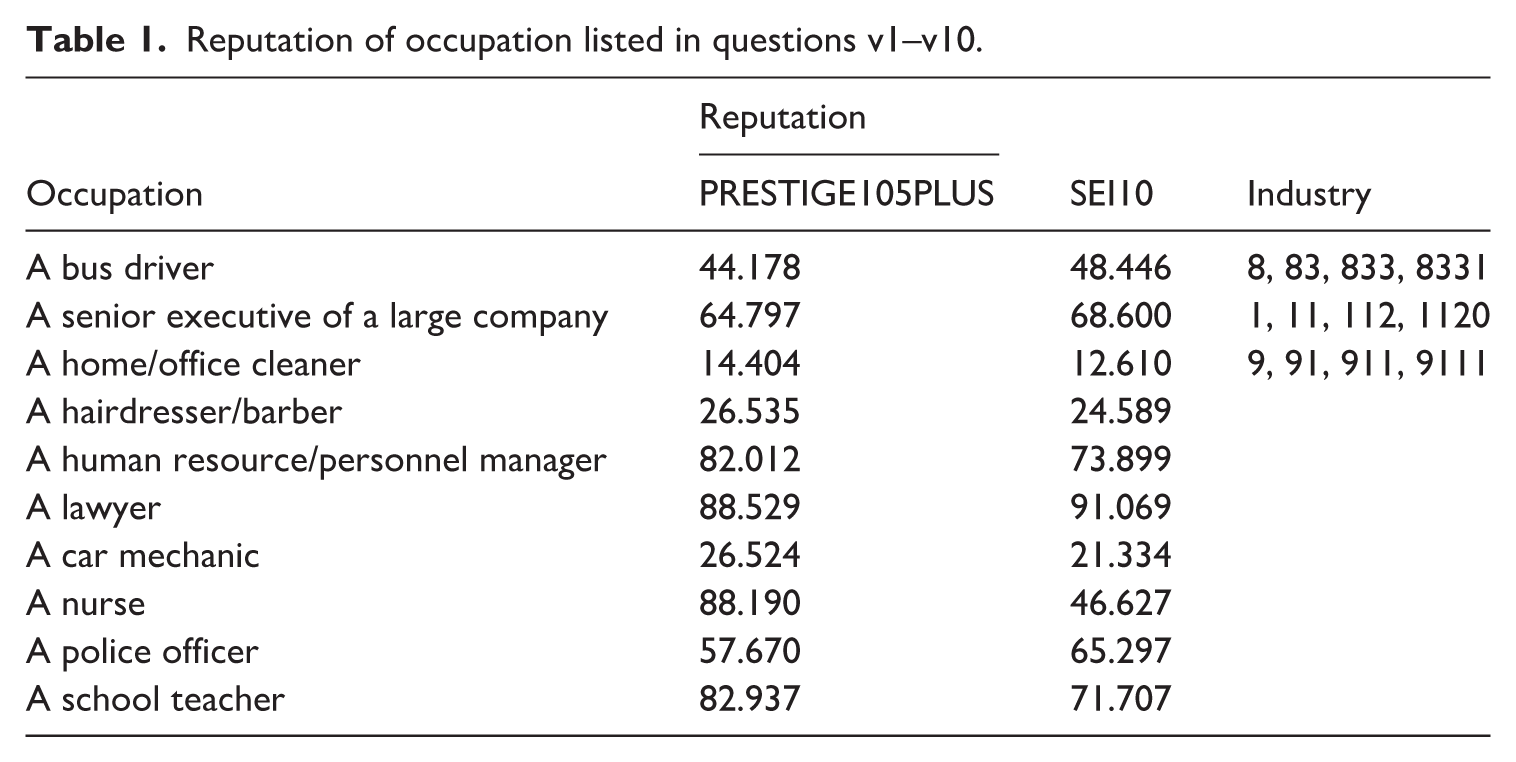
To construct a comparable individual-level metric, I follow the procedure in Sapin et al. (2020), deriving a factor score via principal component analysis from four indicators that capture distinct facets of occupationally embedded resources: (1) the highest socioeconomic status present in the respondent’s network (ISEI of the highest-prestige occupation known); (2) the range of socioeconomic statuses (requiring at least two distinct occupations and their ISEI values); (3) the mean occupational status across all reported contacts; and (4) the count of distinct occupations named in the position generator. Implementationally, the position generator (Lin and Dumin, 1986) asks whether respondents personally know someone in each of 10 occupations and identifies who those alters are; using the International Socio-Economic Index (ISEI) scores for those occupations (see Table 1), I compute the four indicators and extract a single factor capturing the depth and breadth of embedded resources. Because the outcome reflects contacts’ occupational status, respondents’ occupational status indicates access to higher-status networks, not an independent effect (Lin and Dumin, 1986; Sapin et al., 2020).
Reputation of occupation listed in questions v1–v10.
Country-level indicators are selected to match the mechanisms estimated in the model. Rather than directly modeling welfare-regime categories, labor-market institutions, or cultural value systems, the analysis relies on three cross-nationally comparable proxies drawn from the United Nations Statistics Division. The Gini coefficient captures distributional inequality, which prior research links to lower generalized trust, weaker civic participation, and greater social segregation across status groups (Bjørnskov, 2007; Lancee and van de Werfhorst, 2012; Uslaner and Brown, 2005; Tóth et al., 2021). Public social expenditure (% of GDP) captures welfare-state effort and serves as a parsimonious proxy for decommodification. Infant mortality is not treated as a proxy for cultural norms, but as a bounded indicator of structural precarity and institutional capacity, reflecting broader health, socioeconomic, and governance conditions (Lin et al., 2014; Reidpath and Allotey, 2003). Such conditions may reduce generalized trust, weaken community stability, and constrain the formation and maintenance of durable, resource-rich social ties; the expected association is therefore negative. These measures are thus interpreted as bounded structural proxies rather than exhaustive representations of national context. Accordingly, the subsequent models first introduce individual-level predictors and then add country-level variables to assess whether national context helps explain between-country variation in social capital.
The selection of country variables follows theory rather than data-mining: (1) Gini coefficient (income inequality). Higher inequality is theorized to heighten social polarization, weaken generalized trust, and reduce opportunities for cross-group participation and bridging ties; accordingly, a negative association with social capital is hypothesized (Tóth et al., 2021). (2) Social expenditure (% of GDP), as a proxy for decommodification (Esping-Andersen, 1990), more generous welfare provision should reduce reliance on purely instrumental or kin-based coping and expand associational spaces, implying a positive association with social capital. (3) Infant mortality rate. It is used as a bounded indicator of structural precarity and institutional capacity, reflecting health, socioeconomic, and governance conditions (Reidpath and Allotey, 2003). Because weaker institutions are associated with lower generalized trust, a negative association with social capital is hypothesized (Robbins, 2012). All three country-level indicators are retained in the specifications regardless of statistical significance so that the analysis remains theory driven rather than data mined. Non-significant coefficients are therefore reported and interpreted as part of the substantive findings rather than used as a basis for variable exclusion. More generally, I confront two critiques: over-reliance on significance testing for variable selection and inference from a non-random country sample (Lucas, 2014). The first is addressed by theory-driven specification and by interpreting non-significance as evidence about the relative salience of institutional channels. The second is addressed by situating inference within the ISSP’s institutionalized comparative design: although participation is voluntary rather than globally random, the platform’s standardized protocols and widespread scholarly use justify cautious generalization to similarly structured national contexts.
This multilevel strategy assesses how much variance in social capital lies between individuals and countries, whether selected individual-level associations vary across countries, and whether a small set of country-level proxies explains part of the remaining between-country heterogeneity. If between-country variance and selected slope variation are substantial, national context may still structure opportunity environments in meaningful ways. If most variation remains within countries and the main individual-level associations are stable, the findings would suggest that the stratification mechanisms organizing social capital are comparatively robust across institutional settings. Either result clarifies how social capital participates in the reproduction of inequality and informs debates about the scope and limits of macro-level policy levers.
Statistical model. This study does not aim to identify definitive causal effects of national institutions on social capital or to exclude variables solely on statistical significance; rather, it identifies variance patterns that are consistent with indirect institutional effects, generates hypotheses, and refines theory. To assess how individual- and national-level conditions jointly shape social capital, I employ hierarchical linear modeling (HLM), which is well suited to nested cross-national data and to inference attentive to cultural heterogeneity and measurement equivalence, including etic validity (Adam, 2008; Calvo et al., 2012; McDonald et al., 2015; Young, 2014). HLM also clarifies variance across levels and helps distinguish context-specific from potentially general dynamics in network and inequality research (Moody and White, 2003; Raudenbush and Bryk, 2002).
Analytically, I begin with a one-way random-effects analysis of variance (ANOVA) (“null model”) that partitions variance in social capital into between- and within-country components, motivating subsequent Level-1 and Level-2 specifications.
One-way ANOVA with random effects (null model)



The random variables
Following the null model, Models 1–4 sequentially add fixed effects, random slopes, family ties, and country indicators, emphasizing variance and fit






Across Models 1–4, I compare changes in variance components and model fit to assess how much heterogeneity is absorbed by additional individual- and country-level terms. The goal is not to estimate a full set of cross-level interactions, but to evaluate whether average country differences and selected random slopes persist after theoretically motivated controls are introduced.
Analysis
Figure 1 is descriptive and is used primarily to illustrate cross-national differences in tie composition; it should be read as exploratory rather than as evidence of any specific institutional mechanism.
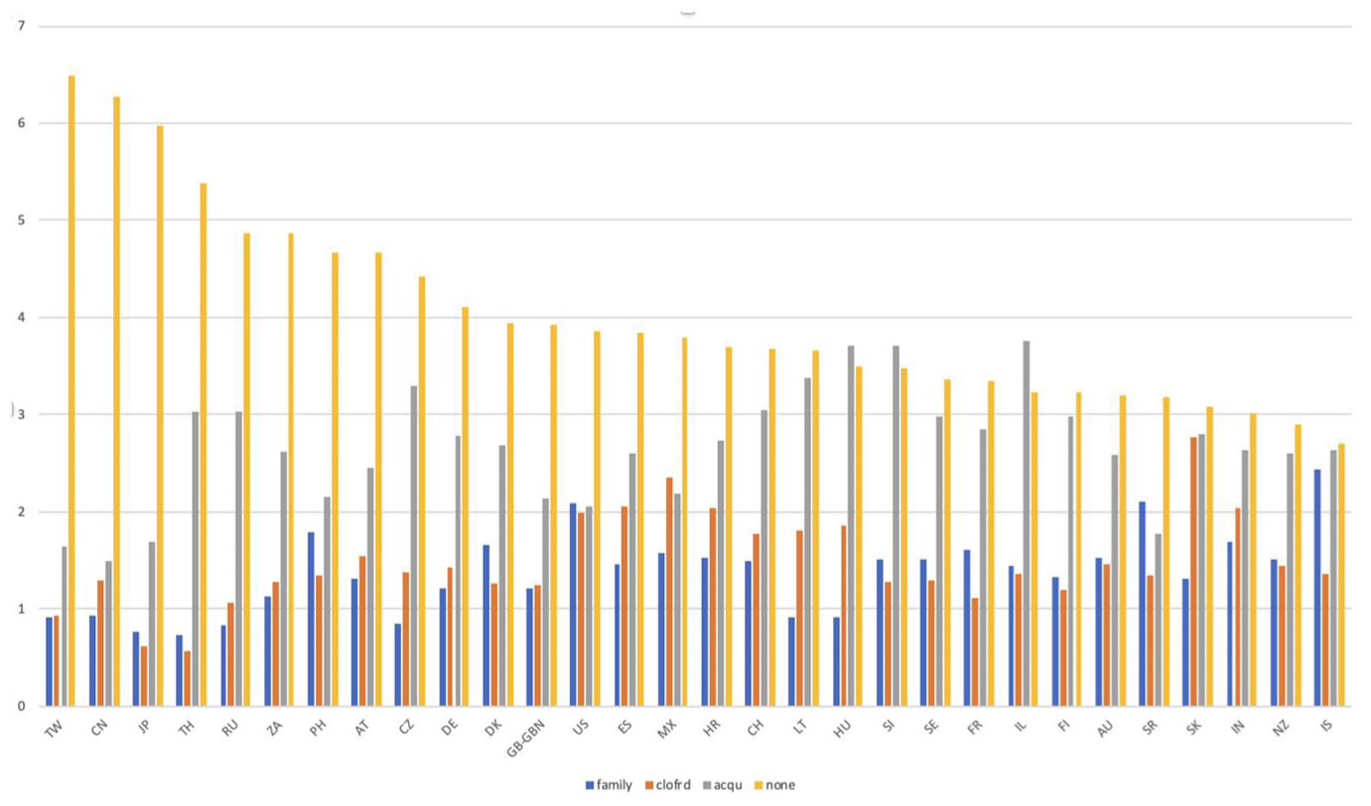
Mean number of occupations (out of 10) for which the closest identified alter is family/relative, close friend, someone else known, or no one, by country. Note: Based on ISSP 2017 position-generator item Q1. Respondents selected one category for each occupation and, if several contacts fit, were instructed to choose the person they felt closest to. “Someone else known” is interpreted here as acquaintance/other non-kin tie. “Can’t choose” responses are excluded.
Figure 1 shows cross-national variation in the composition of occupational contacts by relationship type. Some countries display relatively stronger family-based patterns, others rely more on close friends or acquaintances, and several show comparatively high levels of no-contact responses. These descriptive contrasts motivate the multilevel analysis that follows, but Figure 1 by itself cannot identify the institutional mechanisms behind them.
Taken together, the figure suggests that countries differ not only in how many occupational contacts respondents report, but also in the mix of kin, friend, and acquaintance ties through which those contacts are accessed. I therefore use the figure only as descriptive background and treat family-based tie concentration as an exploratory Level-1 predictor rather than as direct evidence of a macro-level mechanism.
Figure 2 complements this portrait by visualizing, for each of the 30 descriptive national samples, the ranked distribution of the social capital factor score derived from the ISSP 2017 Social Networks and Social Resources Module. The multilevel models, however, use 29 countries after estimation restrictions. The horizontal axis indexes respondents within each country, the vertical axis shows the standardized social capital factor score, the blue line traces the ordered empirical distribution, and the red horizontal line marks the country mean. Read alongside Figure 1, these panels distinguish compositional patterns of ties from distributional features of resource access, clarifying how nations differ both in the kinds of relationships that dominate and in how widely social capital is shared (Granovetter, 1973; Sapin et al., 2020).
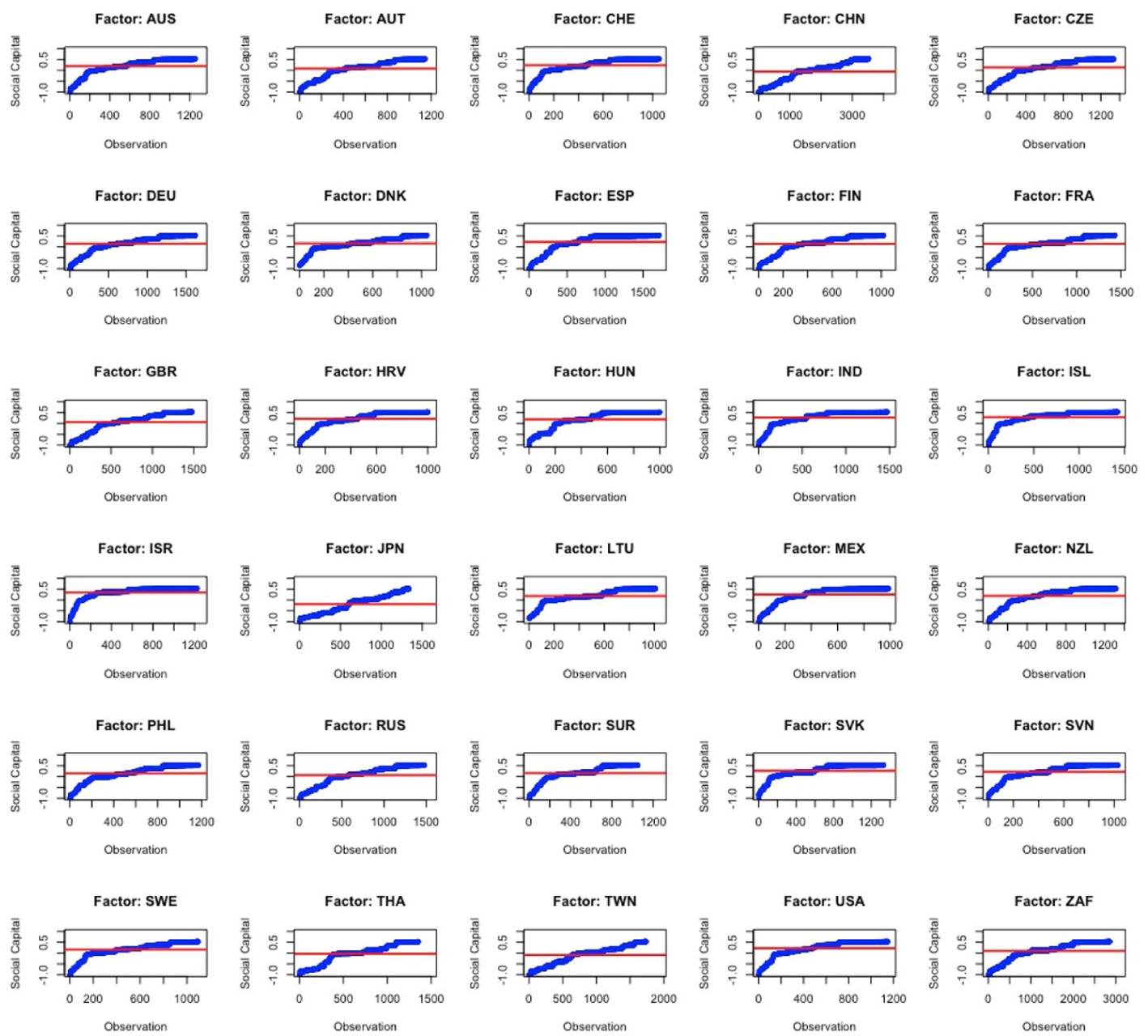
Distribution of social capital across nation samples.
Each country-specific panel ranks individual respondents on the horizontal axis (“Observation”) and plots their standardized social capital factor scores on the vertical axis (“Social Capital”). The blue line is therefore an ordered empirical distribution rather than a density curve, and the red horizontal line marks the country mean. Steeper segments indicate that many respondents are concentrated within a relatively narrow score range, whereas flatter stretches indicate wider separations between adjacent ranked cases.
Across panels, some countries appear more compressed around the mean, whereas others show broader dispersion across the ranked distribution. These descriptive contrasts suggest that within-country inequality in social capital differs across national samples, but the figure is primarily heuristic and should not be used on its own to infer specific structural or cultural causes.
Without ranking countries, these visual diagnostics highlight comparatively higher or lower means, compressed versus diffuse spreads, and skewed profiles. Together, they motivate the subsequent multilevel analysis, which evaluates whether observed cross-national differences in social capital reflect primarily within-country stratification, between-country variation in average levels, or both.
Model specifications
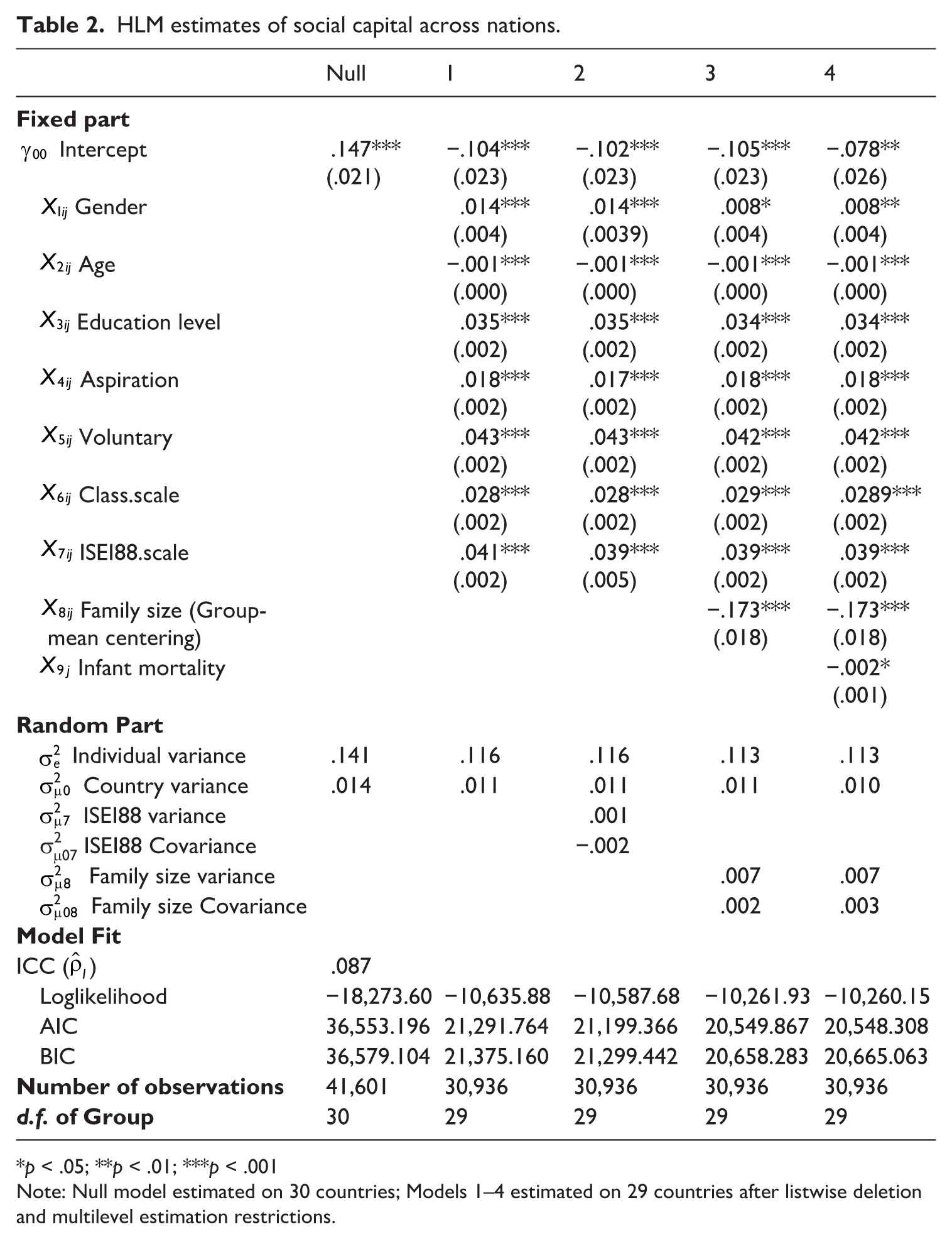
Table 2 presents five multilevel models. The Null Model includes only the intercept and the country random effect. Model 1 adds individual-level fixed effects: gender, age, education level, aspiration, voluntary work, perceived social class, and ISEI88. Model 2 retains these fixed effects and allows the ISEI88 slope to vary across countries. Model 3 adds the proportion of occupational contacts identified as family or relatives as a Level-1 predictor. Higher values indicate that a respondent’s accessible occupational ties are more concentrated in kinship relations rather than in close-friend or other non-kin ties. Model 4 introduces the country-level indicators to assess whether they explain part of the remaining between-country variation. The sequence is intended to show how variance components and model fit change as theoretically motivated terms are added.
HLM estimates of social capital across nations.
*p < .05; **p < .01; ***p < .001
Note: Null model estimated on 30 countries; Models 1–4 estimated on 29 countries after listwise deletion and multilevel estimation restrictions.
By incorporating a Level-2 random effect for countries, the Null Model accounts for the clustered structure of the data and recognizes that individuals within the same country may share broader social, economic, and political conditions relevant to social capital. The ICC of .087 indicates that 8.7% of the variance in social capital lies between countries, whereas 91.3% lies within countries, at the individual level. This pattern shows that variation in social capital is concentrated primarily within national contexts. At the same time, the modest between-country share should not be read as institutional irrelevance, since national contexts may still shape individual outcomes indirectly and condition micro-level processes.
Model 1 is an extension of the Model Null, helping assess how much of the within-country variation in social capital can be explained by individual-level characteristics. The results of Model 1 show that several individual characteristics significantly influence social capital levels. For example, higher education levels report higher social capital, reflecting the role of formal education in shaping social networks and civic engagement. The positive association with aspiration implies that individuals who find it easier to achieve their goals tend to have higher social capital, potentially reflecting personal agency and self-efficacy. The strong positive coefficient for voluntary work frequency suggests that engaging in volunteer activities is a robust predictor of social capital, reinforcing the idea that civic participation strengthens social ties. Higher perceived social class is positively associated with social capital, indicating that individuals from higher social classes may have greater access to beneficial social networks. Model 1 assumes that the included individual-level associations are identical across countries. The next specification therefore tests whether one key predictor, respondents’ occupational status (ISEI88), varies across national contexts.
Model 2 relaxes the assumption that all individual-level associations are identical across countries by allowing the slope of respondents’ occupational status (ISEI88) to vary across countries. This specification tests whether the occupational-status gradient in social capital is stronger in some national contexts than in others, while the remaining individual-level coefficients are held fixed across countries.
Model 3 represents a further refinement of the hierarchical modeling process by incorporating all Level-1 variables while maintaining random coefficients. This model builds upon Model 2, but Model 3 ensures that all individual-level characteristics are considered in a comprehensive manner. The inclusion of all Level-1 variables ensures that the model accounts for as much within-country variance as possible while continuing to explore how individual effects vary across national contexts. That is, it expands upon earlier findings by highlighting that three main outcomes: some Level-1 variables, such as education and voluntary work, remain robust predictors of social capital across countries. Meanwhile, the share of family-based ties in a respondent’s network is included as a Level-1 predictor, using group-mean centering to account for within-country variation. The idea is that a higher proportion of family-based ties captures a more bonding-centered network composition, which may provide emotional and material support but may also limit exposure to more diverse occupational contacts. Their significance across models suggests that personal characteristics contribute to social capital accumulation, reinforcing the role of socioeconomic positioning in shaping access to social networks, trust, and civic engagement. Individuals with higher educational attainment, greater occupational prestige, and a stronger sense of personal efficacy tend to have more social capital, aligning with theoretical perspectives that link economic and cognitive resources to network-building capacities.
However, while these models capture within-country variations, they remain limited in explaining why social capital differs across nations. The inclusion of random effects acknowledges that the strength of these individual factors is not consistent across different countries, suggesting that broader structural conditions influence how individuals develop and maintain social capital. Having established the dominance of within-country variance, Model 4 attempts to explain the modest 8.7% of variance that exists between countries. Of the three theoretically selected macro indicators included in the model, only infant mortality emerged as a statistically significant predictor, and its effect is small (γ = -.002). Infant mortality is interpreted here as a broad structural indicator of precarity and institutional/service capacity, and the negative coefficient is consistent with the possibility that weaker structural environments are less supportive of generalized trust and durable, resource-rich ties. A modest negative association between infant mortality and social capital suggests that higher mortality rates are associated with lower levels of social capital. This finding is consistent with the argument that societal precarity and weaker institutional environments may hinder individuals’ ability to build and maintain social networks. Because infant mortality aggregates multiple dimensions of societal precarity, including health-system weakness and deficits in basic service provision, the coefficient is interpreted here as a broad contextual signal rather than evidence of one specific causal mechanism. The negative coefficient is therefore consistent with, but does not by itself establish, the proposition that weaker institutional environments are less conducive to generalized trust and the maintenance of durable, resource-rich ties.
The significance of infant mortality should be interpreted cautiously as evidence that broader structural precarity is associated with lower social capital, not as proof of any single long-term or intergenerational causal pathway. The coefficient for infant mortality is negative and statistically significant (γ = −.002, p < .05), but its substantive interpretation should remain cautious and contextual. In practical terms, the result indicates that the macro measures used here capture only a limited portion of cross-national variation in social capital. Importantly, that finding should not be read as evidence that national context is irrelevant. Rather, it indicates that broad institutional proxies may capture only part of the ways in which macro environments shape social capital formation. Institutional effects may be indirect, mediated through within-country inequalities and opportunity structures, and therefore only partially visible in country-level residual variance.
Conclusion
This study asked how far social capital accumulation is structured by national context, relative to the enduring influence of individual social class. The multilevel analysis shows that most observed variation in social capital is located within countries, while a smaller portion is located between them. In the present data, this means that differences among individuals within national settings are empirically more pronounced than differences across countries as wholes. This finding refines, rather than rejects, macro-institutional explanations: it suggests that national context may matter less as a direct source of cross-national average differences than as a framework that organizes the micro-level processes through which social capital is accumulated and reproduced. The present analysis does not identify a direct causal effect of institutions on social capital; rather, it shows a variance structure consistent with the view that institutions matter indirectly by shaping the opportunity environments within which network resources are formed and mobilized.
Theoretically, these results align with foundational perspectives from Bourdieu and Lin, who emphasize the centrality of social class in reproducing advantage and constraining access to social networks. Consistent with these frameworks, the HLM models confirm that individual attributes, such as educational attainment, perceived social class, and occupational status, remain robust and reliable predictors of social capital. Because the dependent variable is constructed from the occupational status of network contacts, the occupational-status coefficient should be read as evidence that higher-status respondents tend to access higher-status networks, rather than as a completely separate occupational-domain effect. The novel contribution of this study lies in showing that the individual-level stratification patterns estimated here remain comparatively stable across 29 countries. Across 29 countries with diverse historical trajectories, economic systems, and social institutions, the individual-level stratification patterns estimated here are broadly stable, even though some country-level variation remains.
This raises an interesting question: Why do micro-level processes of inequality appear resilient across different institutional contexts? One plausible interpretation is that core mechanisms of social capital accumulation, such as homophily, the tendency to associate with similar others (Au, 2023; Ertug et al., 2022; Kandel, 1978), are embedded in modern capitalist societies and therefore may not be easily altered by broad institutional or policy change. Moreover, the conversion of economic and cultural capital into social capital may operate as a broadly recurrent process across welfare regimes. Globalization may further reinforce this pattern, as increasingly standardized educational systems, labor markets, and corporate hierarchies allow positions such as “senior executive” or “lawyer” to yield similar network advantages across countries, thereby limiting the extent of country-level variation.
The limited explanatory power of most standard macro-level indicators is itself a notable finding. This point is important because other macro indicators may capture the relevant mechanisms more directly than the proxies used here. Generalized trust or institutional trust, for example, are often treated as core dimensions or close proxies of social capital, while educational segregation may shape who meets whom and thus the opportunity structure for building bridging ties (Scrivens and Smith, 2013). Such variables could potentially alter the relative importance of the macro-level results reported here. At the same time, with only 29 countries, country-level inference must remain parsimonious, since multilevel models with a small number of higher-level units have limited power for robust estimation of multiple country effects (Bryan and Jenkins, 2016; Maas and Hox, 2005). This suggests that widely used regime typologies and macro-indicators may be too coarse to capture the institutional features that actually shape social capital formation. More targeted, theory-driven, and context-sensitive variables may better explain cross-national differences. The findings therefore point to the need for more refined operationalization in comparative research on social capital.
Ultimately, this study offers both substantive and methodological contributions. Through hierarchical linear modeling, it empirically partitions variance across levels, avoiding the inferential pitfalls of overstating the role of macro-level factors that, while sometimes statistically significant, account for only a minor fraction of the overall variance. The conclusion is not that national context is irrelevant; rather, its influence is substantially more modest than often presumed. These findings do not imply that national institutional design is unimportant for meaningful change. Instead, institutional design matters precisely because it shapes the micro-level environments in which social capital is accumulated. Educational reforms, labor-market regulation, welfare provision, urban planning, civic infrastructure, and associational supports can alter who interacts with whom, the costs of maintaining ties, and the returns attached to different network strategies. The finding that most observed variance lies within countries therefore redirects attention to the institutional organization of within-country opportunity structures. National policies may reduce social capital inequality most effectively when they intervene in the everyday settings where class-based homophily, occupational closure, kin dependence, and unequal access to bridging ties are reproduced. In this sense, the enduring power of social class should not be interpreted as evidence against institutional intervention, but as evidence that institutional intervention must operate through the concrete micro-level contexts in which social relations are formed and mobilized.
Footnotes
Funding
The author received no financial support for the research, authorship, and/or publication of this article.
Declaration of conflicting interests
The author declared no potential conflicts of interest with respect to the research, authorship, and/or publication of this article.
Data availability statement
ISSP 2017 – “Social Networks and Social Resources” - ZA No. 6980. doi.org/10.4232/1.13322 ( )
)