







Abstract
The city of Livingstone has experienced rapid tourism growth over the past 20 years, as Zambia has attempted to diversify its economy that has been traditionally driven by copper and natural resource extraction. As tourism has grown in Livingstone, the importance of the industry in providing more than just economic progress and growth has been debated, in line with changing global priorities for tourism development. Tourism, as a means for community growth and upliftment is now commonplace within tourism discourse, an issue which is reflected in discussions about poverty reduction and developing sustainable tourism in Livingstone. The potential of corporate social responsibility (CSR) as an agent for positive tourism development, however, remains largely unexplored. This paper examines different levels of CSR commitment within Livingstone, demonstrating that significant positive impacts among local communities have resulted from some CSR initiatives. Consideration is also given to possible future measures that might ensure that CSR becomes more commonplace in Livingstone and elsewhere, as an essential part of community empowerment and development associated with a growing tourism industry.
Introduction
The growing influence of tourism in the modern world is undeniable, having evolved through the 20th and 21st centuries to become one of the world’s largest industries, and in 2012 contributing 9.1% to world gross domestic product and 8.7% to world employment, with international tourist arrivals surpassing one billion people for the first time (World Tourism Organisation, 2013; World Travel and Tourism Council, 2012). No longer just a leisure activity for wealthy western elites, tourism is now often seen as an effective means for achieving economic and social development in destination areas (Telfer and Sharpley, 2008). In the developing world especially, tourism has become progressively incorporated into many economic and social development plans that aim to improve livelihoods and drive national economies. Debate surrounding whether such tourism development has been ‘appropriate’ and ‘sustainable’, however, has fuelled critique about the actual benefits that local destinations and their communities gain from tourism, leading to new forms of tourism approaches, including pro-poor and community-based tourism, that attempt to incorporate local stakeholders more effectively in tourism development. Buzzwords such as ‘sustainability’, ‘participatory’, ‘appropriate’ and ‘responsible’ have challenged the modernist imbalances of tourism development (Mowforth and Munt, 2009), placing greater emphasis on local empowerment, involvement and ownership. As part of the tourism industry’s response to this change and growth, corporate social responsibility (CSR) has become an increasingly visible feature. Large tourism companies in particular are looking to extend their CSR roles within local communities in order to promote development, as well as to raise their profiles among more environmentally and socially conscious tourists. This paper examines the impact of CSR in the local setting of Livingstone, Zambia, and explores possible future avenues of growth which could further promote development and ensure that tourism remains both sustainable and appropriate in the local setting.
Tourism, development and CSR
Mowforth and Munt (2009) suggest that tourism in developing nations is considered as a ‘new style’ of holiday, as rapid tourism development in many of the world’s poorer nations has become increasingly evident. Tourism in general has experienced rapid growth since the mid-20th century, as factors such as higher standards of living in developed nations and the improved speed and carrying capacity of air travel have made tourist destinations more accessible and viable for a larger proportion of the world’s population (Harrison, 1992). Over this period of growth, tourism has become increasingly associated with development and the potential to improve economic and social conditions in host countries, becoming an attractive industry to establish and promote in many developing nations. Holden (2013) argues that tourism has turned the tourist into a ‘point of production’, with the potential to directly benefit poor people. Issues related to tourism and socio-economic development have been raised in recent literature (see Mowforth and Munt, 2009; Mowforth et al., 2008; Telfer and Sharpley, 2008), indicating that such socio-economic benefits do not automatically follow tourism development.
The association between tourism and economic and social development became evident through the drive for modernisation in the 1950s, where emphasis was placed on tourism’s contribution to economic growth and its ability to provide income and employment generation (Telfer and Sharpley, 2008). Tourism growth under this guise, however, has often been characterised by unequal power relationships (Mowforth and Munt, 2009), as key stakeholders in developed countries such as national governments, institutions such as the World Bank, and private investors, have often dictated stakeholders in developing nations. Transferring western capital, technology and expertise to the least developed countries (Harrison, 1992), have been aspects of this ‘imitative’ (Potter et al., 2008), modernist push from developed nations to advance tourism within developing nations. Over time, imbalanced relations from previous modernist principles became further entrenched through the neo-liberal approach to development in the 1980s, which encouraged free market growth, privatisation and a raft of structural adjustment programmes that were introduced in developing countries (Potter et al., 2008). This has led to common shortfalls in tourism growth, such as high rates of foreign ownership, extensive leakage of tourism earnings, loss of control over local resources, high inequality, spatial unevenness and alienation of local people, limiting the potential of tourism in poorer communities (Brohman, 1996).
In an attempt to mitigate such unequal relationships and ineffective tourism growth, various ‘alternative’ forms of tourism development became popular during the 1970s and 1980s, ‘attempt[ing] to balance tourism as a profit-driven, resource-hungry activity with the developmental needs of destination environments and communities’ (Telfer and Sharpley, 2008: 27). Sustainability and participation in tourism became popular through the shift in attitude towards development and environmental protection, with prefixes such as ‘alternative’, ‘appropriate’, ‘responsible’, ‘low impact’, ‘eco’ and ‘sustainable’ challenging the notion that tourism from the modernist era draws developing countries into unequal relations with developed nations (Mowforth and Munt, 2009: 81). This change in thinking has led to different approaches towards tourism in developing countries, bringing in processes such as conservation, grassroots development and responsible tourism, reverting from the traditional ‘top-down’ and ‘trickle-down’ development models to a ‘bottom-up’ style of development that encourages local participation and community empowerment. There is now a raft of alternative approaches to tourism development that are ‘bottom-up’ in nature, including: pro-poor tourism (see Holden, 2013; Overseas Development Institute, 2007a, 2007b; Roe et al., 2004), community-based tourism (see Dixey, 2005, 2008; Spenceley, 2008), responsible tourism (see Goodwin, 2011) and sustainable tourism (see Fusco-Girard and Nijkamp, 2009; Mundt, 2011; Telfer and Sharpley, 2008). One aspect of this new approach to tourism and its developmental role within local communities that has thus far received only limited attention is the role that businesses of varying sizes might play within communities, commonly referred to as ‘corporate social responsibility’.
The role that CSR plays within corporate society has changed substantially over recent years to become a feature which is now incorporated into business activity to a greater or lesser extent. Defined as a, ‘concept whereby companies integrate social and environmental concerns in their business operations and in their interaction with their stakeholders on a voluntary basis’ (Arifeen, 2012: 1), CSR’s meaning and relevance have altered as civil society has become more concerned about business accountability and ethics. Up to the late 1970s, CSR was a minor aspect of business, considered as ‘social responsiveness’ (Wilson, 1974: 3), where corporations were ‘asked to assume broader responsibility… and to serve a wider range of human values… than merely supplying quantities of goods and services’ (Feldberg, 1974: 42). During the 1980s and 1990s, however, CSR became increasingly prominent, considered as an ‘essential framework’ for society to challenge the practices of large companies and businesses, as public trust and consumer confidence were starting to wane in relation to certain companies’ business standards (Kalisch, 2002). Major environmental disasters such as Chernobyl (1986), Bhopal, India (1984), together with the Nestlé boycott protests of the 1970s, and increasing civil rights movements throughout the world during this time (see Segerlund, 2010), acted as catalysts for the rigorous public gaze that is placed upon business activities today. Businesses have been encouraged to develop a social conscience, and act as part of the solution, rather than part of the problem (Fennell, 2006). CSR is now ‘about companies voluntarily embracing responsibility for the impact of their activities on the environment, consumers, employees and communities’, implying that companies need to consider the interests of other stakeholders in the way that they operate (Goodwin, 2011: 90). CSR is now a well-established feature of business lore, functioning around the economic, social and environmental issues that affect and influence the host communities where businesses operate (Bonini et al., 2009; Gilberthorpe and Banks, 2012; Gokulsing, 2011).
The tourism industry now has a ‘wide… impact on the socio-economic and ecological development of regions and nations’ (Fusco-Girard and Nijkamp, 2009: 1), and CSR has become a significant element in achieving sustainable development (Telfer and Sharpley, 2008). Kalisch (2002: 19) argues that tour operators now have a ‘role and responsibility for creating the conditions for positive dynamics in the locations where they operate’. However, CSR in tourism is still considered to be lagging behind a number of other industries in terms of applying CSR frameworks to business practice (Koutra, 2013). That is not to say that CSR in tourism is non-existent as, on the contrary, throughout the global tourism industry, corporations and businesses are becoming active in supporting local communities and uplifting livelihoods, especially in the developing world. Adopting responsible practices in the day-to-day running of businesses and addressing sustainability issues in tourist destinations are key aspects of CSR (Telfer and Sharpley, 2008). Tourism has already brought prosperity and higher living standards to people who would have few options without it, and evidence has shown that by supporting local people and developing high-quality products, customers are more likely to be satisfied, and there will be increased motivation and commitment from local employees (Kalisch, 2002).
Leon et al. (2011) argue that the cost of ignoring CSR is higher than the benefits of implementing it, as tourists are now likely to consider their vacation options on the basis of attributes such as a company’s CSR involvement. There is now ‘widespread support’ within tourism for the recognition that the customer has a considerable influence over the future development of the industry (Miller, 2001). Tourism businesses run the risk of losing support and clientele if they are perceived as having limited involvement within the local community in which they operate, since ‘customers are more likely to be more satisfied by services that socially responsible firms offer’ (Nicolau, 2008: 1000). CSR policies in tourism enterprises, therefore, have the potential to attract further clientele, raise profit margins and increase business credibility (see Miller, 2001; Nicolau, 2008), as well as ‘helping poor communities to uplift their livelihoods’ (Bishop and Binns, 2009: 22).
Researching CSR in Livingstone
In the case of Livingstone, Zambia, CSR is an aspect of tourism activity that has thus far not been explored in relation to sustainable tourism development and community upliftment. Livingstone is a city of 140,000 people located close to Zambia’s southern border with Zimbabwe, and most significantly just 10 km north of the Zambezi River and the Victoria Falls, widely regarded as one of the ‘Seven Wonders of the Natural World’, and designated a UNESCO World Heritage Site in 1989 (Figure 1). The city was founded in 1905, and was the capital of Northern Rhodesia until Lusaka became the capital in 1935. Livingstone has grown rapidly, particularly in recent years, due to the mushrooming of tourism activities and associated infrastructure (Figure 2). Since 2000, Livingstone has also benefitted from the fallout associated with political instability in neighbouring Zimbabwe, leading to many international tourists choosing to view the Victoria Falls from the Zambian side.
Map of Zambia. Map of Livingstone.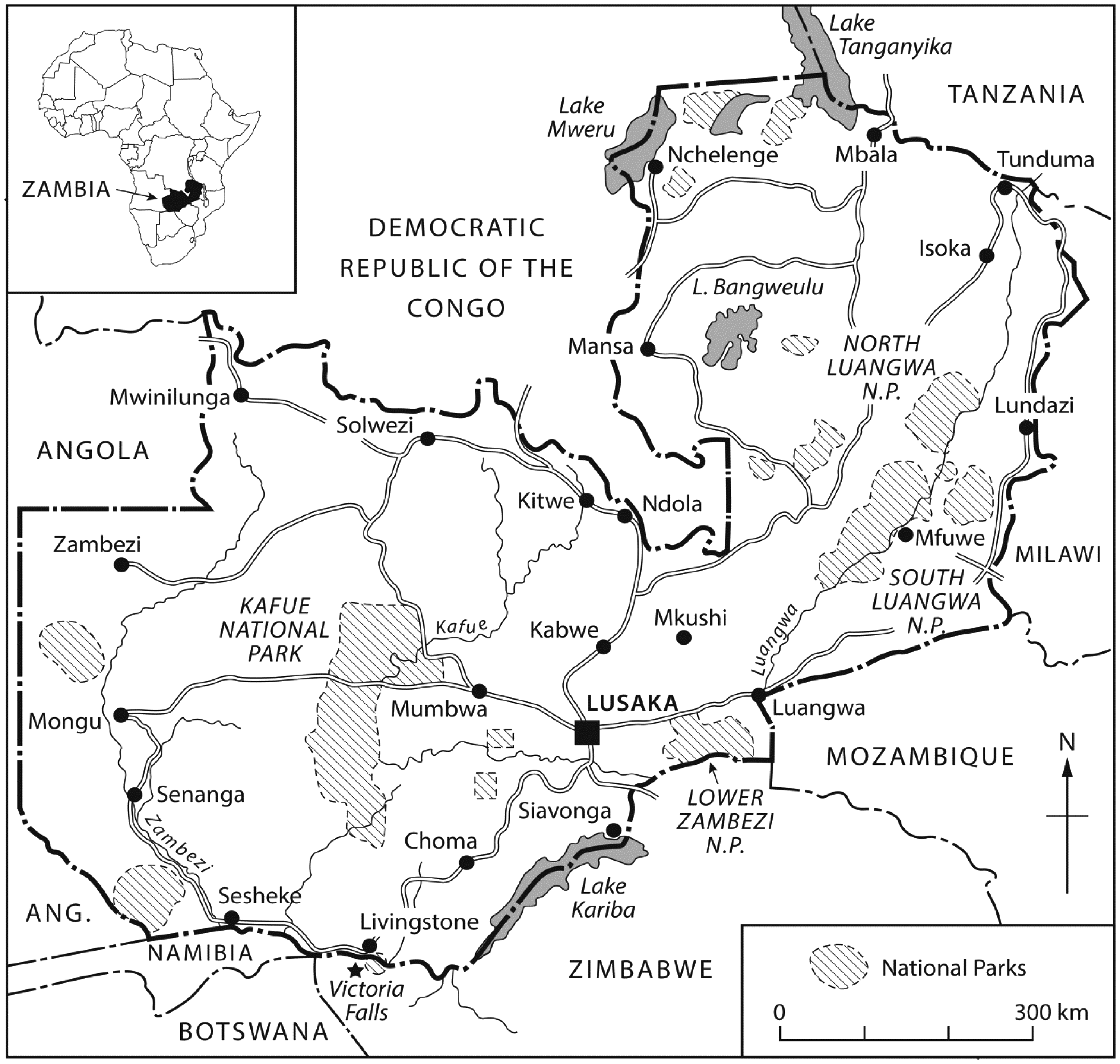
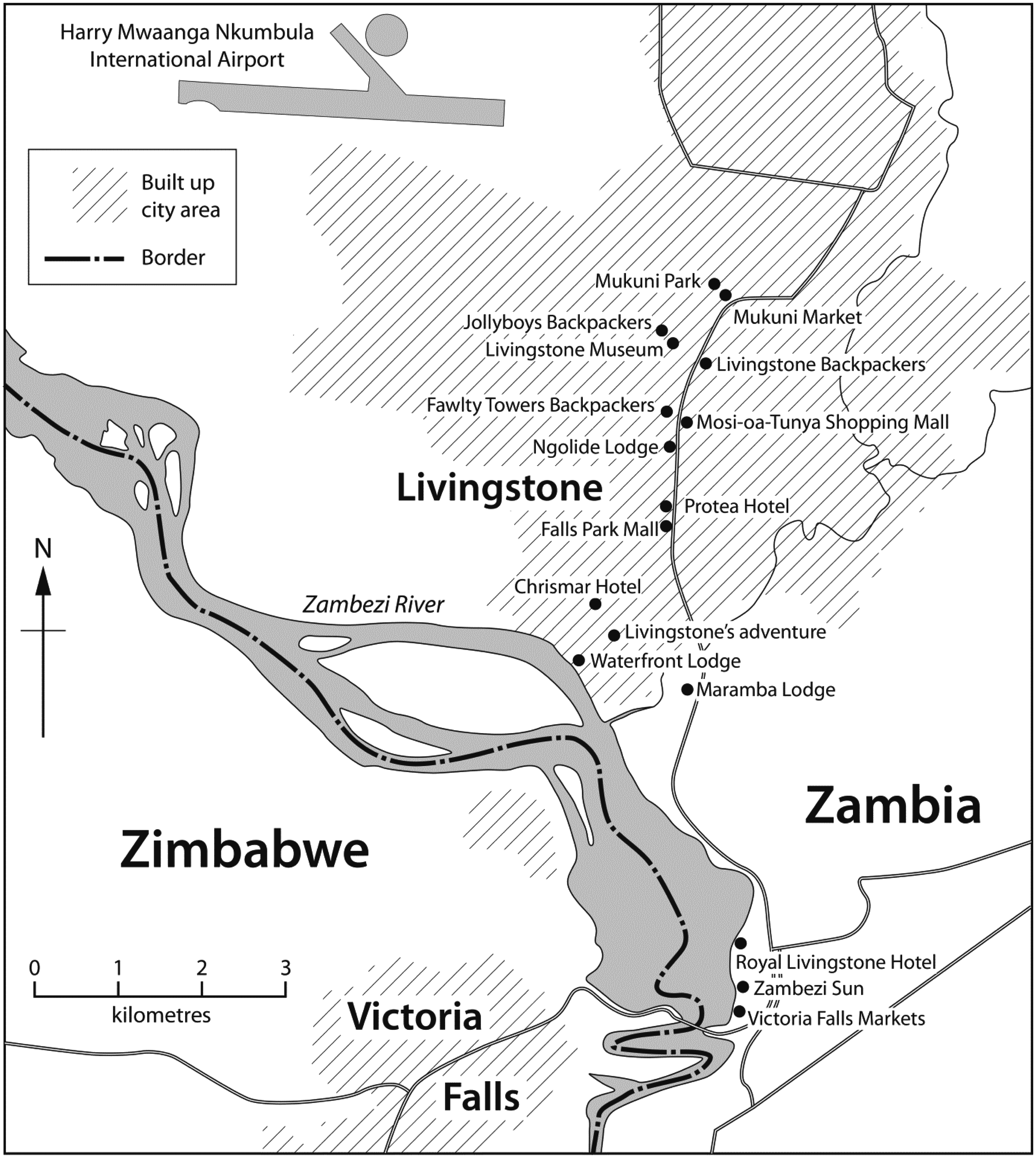
Livingstone’s growth has also been associated with increasing external investment, and the Zambian government’s drive for tourism development and economic diversification in light of fluctuations in the world price of copper, Zambia’s key export commodity (for more details, see Brulliard, 2009; Myles, 2002; Rogerson, 2003, 2004, 2005; Standish and Boting, 2007). Considered as a ‘ghost town’ in the early 1990s, Livingstone is now awash with tourism-related businesses and activities. Tourism is undoubtedly the driving force of Livingstone’s economy, attracting tourists from around the world to its unique wildlife, adventure-based tourism activities and the Victoria Falls, and supporting a majority of local livelihoods through either direct or indirect employment. While there have been numerous government and non-government reports that address tourism’s economic potential, as well as opportunities for poverty reduction and future sustainability (e.g. DCDM Consulting, 2006; Dixey, 2005; Pope, 2009; World Bank-UK AID, 2011; Zambia Ministry of Tourism, 1999), the impact of businesses within the local community is only briefly raised by Dixey (2005), but not in relation to CSR. The rise of CSR projects and their involvement with the local community has increased significantly in recent years with tourism’s rapid growth in the city, and the impacts that these projects are having among local community groups are often substantial.
In order to gain first-hand information about the impact of CSR upon the local Livingstone community, field-based research was conducted over a 7-week period from early November 2011. A variety of data collection methods were used to ensure that a wide range of perspectives, statistics and factual information were obtained. A total of 122 key informants were involved in the project, through direct interviews, questionnaires, focus groups or transect walks across local community projects. Seventy-seven key informants were engaged in semi-structured interviews. Twenty-eight detailed interviews lasted between 20 and 80 min, involving informants from hotels, activity businesses, resorts, local government, backpackers, restaurants, shop owners, employees and local artists. A further 49 shorter interviews lasted between 5 and 25 min in length, and involved engaging with local curio market sellers. Such interviews provided a high level of personal insight, enabling a detailed understanding of the impacts of CSR and the issues associated with tourism development in Livingstone as perceived by a variety of local stakeholders. One focus group also contributed to understanding the impacts of tourism from a local perspective, as nine employees from a local Livingstone hotel were involved in discussion around the impacts of tourism on their own personal livelihoods, as well as the impact on Livingstone as a city. Thirty-five tourists participated in ‘face-to-face’ (Cloke et al., 2004: 133) questionnaire interviews, which required them to complete a two-page questionnaire, addressing nine questions in total. Information was collected on the tourists’ perception of Livingstone as a destination, and their level of interaction with local community members and community projects during their stay in the city. Finally, a transect trip was undertaken with a CSR co-ordinator from one of Livingstone’s major hotels, which involved a 2-hour walk and car journey around the many CSR projects that the hotel had set up and which the co-ordinator was supervising at the time of the research. This transect journey revealed the scale of the projects that had been initiated in Livingstone, and highlighted the large number of community groups that were being incorporated and supported by this specific CSR programme. By utilising a variety of qualitative and quantitative methodologies, a wide range of data was collected, including a number of different perspectives that together gave a balanced assessment of the current impacts of tourism in Livingstone, as well as a sound understanding of the role that CSR plays in the city’s tourism industry.
The nature of CSR in Livingstone’s tourism industry
CSR initiatives in Livingstone are occurring on a variety of different scales. In order to highlight the varying degrees of CSR commitment within the local community, we will refer here to the three different scales of CSR that Barton et al. (2012) identify, namely, ‘reactive’, ‘proactive’ and ‘active’ CSR. Many of the examples observed during field-based research in Livingstone illustrate both the altruistic sense of support for the poorer Livingstone community, while at the same time involving some strategic elements of CSR, such as developing business image and expanding customer numbers.
At a ‘reactive’ level, where businesses respond to requests for donations or support from certain stakeholders in the community (Barton et al., 2012), a number of Livingstone businesses were actively involved with the local community. CSR contributions focused mainly on the employment opportunities that tourism businesses created for local people, and the contribution of small-scale donations to various charities, organisations and community groups when they were approached by such groups. Donations, for example, were made to the Livingstone retirement home, various orphanages, sports teams and community projects centred on agriculture. Dixey (2005: 58) notes that most tourism companies in Livingstone were supporting local schools at the time of her research. Many of the tourism businesses that are involved in this reactive style of CSR were comparatively small in size, including restaurants, smaller hotels and backpackers, and small activity organisations.
At the larger ‘proactive’ level, where businesses deliberately seek opportunities to engage in local projects (Barton et al., 2012), smaller tourism businesses such as backpackers and lodges, and larger restaurants, activities companies and larger hotels in Livingstone were contributing to the welfare of the local community. Their efforts differed to the reactive level of CSR as they were more scheduled and on-going, organised either monthly or annually, to ensure a more stable and sustainable form of support. Regular monthly donations included food, financial donations, bedding and linen, stationery, books and second-hand goods from hotels, such as cooking ware. One backpacker lodge in Livingstone had developed a strong relationship with the local Lubasi Orphanage, where they regularly donated unwanted clothing from guests, organised football matches every Sunday for the children and organised a Christmas party every year. Danni’s Home for Vulnerable Young Women, a home established to support young women in the Livingstone community who have either lost their parents or are unable to get regular support from their families, also had a strong relationship with one particular adventure activities company. Regular monthly donations and continuous operational support featured as part of their ‘socio-economic reach to the community’ (Key informant interview). Other projects are also supported in the ‘proactive’ nature, including a small sports academy that is assisted by one of the local restaurants. Children aged between 12 and 16 from the surrounding villages within the wider Livingstone community are encouraged to play sport and get the chance to receive proper coaching. This restaurant supports the academy by providing regular donations that continue to allow the academy to function, and invites football clubs from overseas to give their time to coach and run football programmes with the children.
At the highest level, which Barton et al. (2012) describe as ‘active’ CSR, businesses not only seek to get involved in supporting the local community, but aim to associate themselves with organised and established projects and groups, attempting to ensure their future sustainability. Businesses and companies that are involved in this type of CSR commonly establish their own projects which actively aim to support certain marginalised groups within society, and generally have the necessary financial backing to ensure that positive change eventuates. A few well-established tourism businesses in Livingstone have developed strong and varied CSR projects that were positively influencing the local community.
A particularly significant CSR contribution has come from Sun International (SI) in its efforts to become meaningfully involved in local community development. SI has made a significant impact since its arrival in Livingstone in 2001, playing a pivotal role in the development of tourism within the city. Being a large South African-based multinational corporation that has established many hotels throughout Africa, SI has a significant portfolio of activities. The company’s financial strength not only allows for large-scale hotel developments but also enables considerable investment to be made in worldwide marketing and advertising, as well as in the local community. Significantly, SI’s marketing budget in Livingstone alone is similar in size to the Zambian government’s entire expenditure on tourism advertising and marketing, estimated at $US 500,000. SI’s CSR budget is the largest of any company in Livingstone, at $US 250,000 per annum (Dixey, 2008). With this substantial budget, SI has established a number of community projects, which have had a significant impact on many livelihoods within Livingstone.
SI state that their CSR policy ‘has a wide array of development projects and partnerships with the community… aim[ed] to create and enhance the lives of people with a specific focus on local entrepreneurship, education, agriculture, community development, health, the environment and arts and culture’ (Sun International, 2011). One of the core aspects of SI’s CSR programme is the establishment of a number of projects which have incorporated vulnerable groups from the local Livingstone community, involving them in agricultural and other primary sector activities that have developed over time into small-scale businesses. Successful projects include a vegetable-farming scheme that has been set up with blind members of the local community, a worm-farming scheme that is run with vulnerable women suffering from HIV/AIDS, a large-scale fish-farming scheme that involves both local schools and community members and a community-based beekeeping scheme which produces honey.
The vegetable-farming initiative, for example, was started as a pilot project on-site at SI in 2006, in association with Stellenbosch University and ‘Agribusiness in Sustainable Natural African Plant Products’, an NGO from Cape Town, South Africa. Vegetables are grown hydroponically, germinated through drip irrigation in sawdust, which is recycled from local sawmills and woodworkers in Livingstone, who are paid a small fee for the material. This project was set up to employ members from the blind community, starting initially with 11 families, and increasing to over 400 families at the time of field-based research. Two large greenhouse tunnels now exist at SI, as well as two external sites in the suburbs of Linda and Mapenze, which are all owned and run by the blind co-operative. At the time of the field-based research, over 2000 tomato plants were growing in the two greenhouses at SI. Many other vegetables are also grown, including red, yellow and green peppers, okra, eggplant and carrots, as well as beans, millet and maize, and also table grapes and a variety of fruits. Once this produce is harvested, the blind co-operative sell their goods directly to SI, and they have the opportunity of selling their surplus produce on the open market.
SI’s worm-farming project also positively impacts upon local community members. Initially, SI built a worm farm on-site, and imported red wriggler worms in association with ‘Full Cycle’ from Cape Town. The worm farm is run by ‘Care to Care’, a group of 60 HIV/AIDS widows who were linked to the project to support their livelihoods and are now generating their own income (Sun International, 2011). The worms are fed on waste paper and food waste from SI’s two Livingstone hotels, producing both liquid and solid fertiliser. These by-products are then sold back to SI or to other farms around Livingstone, or are used on the participants’ own vegetable plots. Fifty percent of the profit ensures food security for the people involved, while the other 50% is put back into the business to help improve and expand the operation.
In addition to these successful community projects, SI has also augmented the local produce market by establishing its own vegetable and fruit market at their warehouses in Livingstone to improve access for local subsistence farmers. Small farmers are able to sell their goods in bulk every Monday and Thursday and receive immediate payment, allowing them to support their families and sustain their farming operations. With a combined 385 rooms at SI’s two hotels in Livingstone, there is a considerable demand for locally produced fruit and vegetables, with the warehouse holding on average between $US 1.6 and $US 2 million worth of stock (Key informant interview).
Over the past decade, SI has actively linked donors, and has itself donated to a number of schools and orphanages, as well as to the hospice and old age home. Their donations, however, go further than just financial aid. One of their most recent projects, starting in March 2011, was establishing support for Nakitindi Community School, one of the poorest schools in Livingstone. Before SI came on board, the school had no running water or toilet facilities for over 500 children. SI has helped to build new toilets, a new library, and has installed a computer laboratory, planted trees throughout the school grounds and redecorated most of the school buildings. The contribution to the community at this level, coupled with the number of active projects which the company has developed within Livingstone, indicates the very significant impact that SI has had in improving local livelihoods in many ways.
While SI has been the most active corporate in terms of initiating this active style of CSR, there are equally impressive, though more modest, examples of other tourism businesses around Livingstone that have become active in supporting the community. Just outside Livingstone, near Kazungula, one tourist resort has invested in the local community through its CSR policies to dramatically improve the livelihoods of local people. The resort has worked with local communities to improve housing conditions, to establish a nursery school and to supply it with books, furnishings and equipment, and to renovate the previously dilapidated local church. Numerous houses have now been re-roofed and livelihoods have improved substantially.
Discussion
Such CSR responses within the local Livingstone community are undoubtedly making a positive impact on local livelihoods and the quality of life, especially at the ‘active’ level where marginalised groups within the community are being included and empowered. There are, however, certain areas which could be further improved in order to make CSR an integral part of tourism’s response towards local community development.
CSR at the ‘reactive’ level has involved a relatively small number of Livingstone businesses in relation to the large number of smaller tourism businesses and supporting industries that have been established over the last 20 years. There are some 300 guesthouses and lodges in Livingstone (Key informant interview), but many businesses regretfully stated that they had been forced to focus on maintaining the viability of their businesses, rather than exercising their CSR commitment in the community, since pressures associated with the global financial crisis had led to decreased tourist numbers which had affected their business turnover. Such external pressures had also forced smaller businesses with ‘proactive’ CSR efforts to restrict the amount of community support that they could offer.
There is strong academic critique of such CSR polices that are ‘reactive’ in nature. Bishop and Binns (2009: 13) argue that CSR policies which merely involve making donations often have ‘little, if any’ positive impact on local communities. One-off donations do not ensure sustainability for community organisations and projects, and can make them vulnerable if donations are sporadic. While the capacity to support the local community is rather limited at this level, it is important to note that an awareness of the importance of local community support was evident among businesses that could not themselves afford to initiate CSR. Even though the scale of contribution is minor and sporadic, there are still businesses donating to worthwhile projects and community groups, predominantly for altruistic reasons. Other businesses, however, might be included in small-scale CSR efforts if local tourism bodies or national government were to actively promote CSR as an integral part of tourism development. Promoting certain CSR projects and linking businesses to community organisations and endeavours could be a proactive approach towards strengthening tourism’s impact on local development.
Both the ‘proactive’ and ‘active’ CSR projects in Livingstone are encouraging, allowing a number of organisations and projects that support the Livingstone community to continue to operate, as well as developing effective projects that have positively changed the livelihoods of many marginalised people. While the level of involvement from the entire business community is still not as great as it could be, there are certain businesses, most notably SI, which are leading the way for sustainable tourism. CSR in these forms is significantly more effective than the typically irregular ‘reactive’ approaches. Having a more stable relationship with businesses allows local community organisations to continue to operate and plan ahead, with greater financial security from assured assistance and/or donations. CSR at this scale demonstrates that companies which are involved in these initiatives have considered the interests of community stakeholders in their operations strategies (Goodwin, 2011). At this level, CSR can be seen as a ‘win-win’ situation for such businesses, as strategic business promotion can also be gained from the altruistic attitudes exhibited through such community projects. Supporting the local community reflects a sense of care towards the local Livingstone people, and attests to the importance of maintaining a good relationship between the tourism industry and local communities. While primarily concerned with their business development strategies, businesses engaged in CSR stated that it was important to ensure that the community benefits alongside tourism development to ensure the sustainability of the destination.
SI, for example, has developed a strong local image of being both environmentally and socially aware, through its altruistic efforts in the community. Birch (2006: 82) argues that the challenge for corporations is to ensure that they ‘recognise the importance of cultural specificities with respect to CSR’. SI has empowered a number of marginalised groups within the community, and has established projects that are appropriate for the local circumstances. Initiatives such as the worm-farming project and the vegetable-farming project have been developed specifically to achieve self-sufficiency for the groups involved, further empowering community members. Roe et al. (2004: 11) state that a growth in tourism can often ‘provide a direct increase in income to those who supply the hotels, transport and other services’. Local people in Livingstone have been given the opportunity to conduct business with SI, which has created a stronger local economy and uplifted the livelihoods of local people who are involved either directly or indirectly. Such CSR projects have undoubtedly benefitted SI, giving the corporation the ability to source goods locally and to establish projects that are mutually beneficial, thus reducing business costs. Outsourcing other needs has also created a number of business opportunities for local community members, assisting further economic and social development. In doing so, SI has certainly enhanced its image through their CSR initiatives. Kalisch (2002) argues that sustainable tourism awards are an excellent way of showcasing good practice, and can create increased consumer demand through stronger public credit and reputation. In recognition of its CSR initiatives, SI Zambia was awarded both the ‘Clean and Green Award’ and the ‘Community Tourism Award’ at the 2009 Zambia National Tourism Awards (Corporate Face, 2009; Travel and Tourism News Middle East, 2010), as well as winning the ‘Best Practice-Economic Impact’ and the ‘Best Social Involvement Programme’ every year from 2009 to 2012 at the prestigious Imvelo tourism awards in South Africa (Imvelo Awards for Responsible Tourism, 2012). Coccossis (2009) notes that in the European context societies are becoming increasingly sensitive to social and environmental issues, particularly as a response to growing global problems such as cultural diversity and climate change. Having an environmentally and socially friendly image, supported by awards for CSR practice, is likely to further attract tourists and customers, thus enhancing the company’s reputation. In this sense, a win-win situation is evident, as SI gains a number of benefits from its community-based CSR initiatives.
There have, however, been critiques of such ‘active’ CSR policies from large corporations that contest the impact that CSR has within communities. Koutra (2013), for example, reveals that the tourist industry is dominated by smaller enterprises, which are primarily profit driven and have low profit levels which limit their capacity to implement CSR. Larger companies that participate in CSR are often dominant, owing to their greater capacity to implement such strategies. This is apparent within Livingstone where SI’s CSR involvement is considerably greater than any other single business. However, this is not to say that other business responses are necessarily ineffective. While smaller businesses may not have the financial capacity to implement large-scale ‘active’ programmes, their CSR can still be meaningful at the lower ‘reactive’ and ‘proactive’ levels. If businesses can acknowledge their responsibility to local communities by engaging in CSR initiatives, then the outcome is likely to be favourable and sustainable for the future (Koutra, 2013).
Conclusion
To continue to promote sustainable tourism development and uplift the local community, government and local tourism bodies in Livingstone should encourage all businesses to become involved in CSR and community support. Government could possibly create legislation that requires all new tourism-related businesses within Livingstone (and indeed elsewhere) to initiate some form of CSR as a condition for establishing the business. Local tourism bodies, working closely with local Chambers of Commerce, could identify such projects within the community, and encourage the establishment of new projects, fostering links between the different parties. Alternatively, other businesses could be linked to the work that such corporations as SI are doing, encouraging partnerships and further enhancing the outreach that tourism development can have for local community development. As we have seen in the case of Livingstone, there are some positive examples of CSR practice that tourism companies have initiated, which could be built upon to bring further benefits for the local community.
Research in Livingstone has shown that the various CSR projects are operating at the ‘reactive’, ‘proactive’ and ‘active’ levels, and tourism businesses, both large and small, have generally had a very positive impact on the local community. But, as with tourism-related CSR generally, such CSR initiatives in Livingstone are still in their infancy, and there is much scope to involve further tourism-related businesses to ensure future sustainability. Although the tourism industry in the least developed countries has grown exponentially in recent decades, tourism businesses have often overlooked ways to incorporate local stakeholders and communities. In Livingstone, it is evident that, while there are currently a relatively small number of businesses involved in CSR practices, the output from such initiatives has been overwhelmingly positive, especially in the case of SI. It is hoped that in time more businesses will become involved, to ensure that tourism development is sustainable and has positive outcomes, in terms of both the tourist experience and the economic and social development of local communities.
Footnotes
Funding
This research received no specific grant from any funding agency in the public, commercial or not for-profit sectors.