







Abstract
Despite extensive research on decentralisation, the role of local governments in promoting the internationalisation of firms has been rather neglected in the literature. Based on a sample of 144 Portuguese municipalities, and resorting to logistic econometric estimations, we found that: (1) the majority of municipalities have been involved in activities to promote economic development and the internationalisation of firms; (2) municipalities are essentially involved in the branding of regions (image building) or in organising fairs and trade missions and (3) municipalities more active in promoting the internationalisation of small and medium-sized enterprises (SMEs) tend to be more peripheral, with a relatively high area and population density, higher purchasing power, higher proportion of population with secondary schooling, lower density entrepreneurial context but with higher amounts of exports. Although there is still a long way to go for a more profound and comprehensive decentralisation at this level in Portugal, given the knowledge municipalities possess about the firms that are located in their vicinity, we contend that it would be desirable that more decentralised efforts be put towards the implementation of information, and education/training-related programmes aiming at promoting SMEs internationalisation.
Introduction
Governments have an increasingly active role in supporting exports by small and medium-sized enterprises (SMEs) through public policies that promote their internationalisation (Gil et al., 2008; Lederman et al., 2010; O'Gorman and Evers, 2011). However, in most countries export promotion agencies and policies have traditionally operated at the national level, rather than through a decentralised model (Leonidou et al., 2011). The efforts to boost SME internationalisation might occur nevertheless at the micro (local authorities), meso (national trade bodies and EPAs) and macro-levels (overseas embassies, EU, etc.). Given the challenges and specificities that countries face at the regional and local levels, a multiscalar nature of governance within economies regarding SMEs export promotion might be advisable.
Bearing in mind the growing process of decentralisation (Azfar et al., 2001; Faguet, 2014; Litvack and Seddon, 1999; Marinetto, 2003; Taylor, 2007) and the spread of studies focusing on local economic development in the last 30 years (Barberia and Biderman, 2010; Cox, 2004; DeFilippis, 1999; Fineberg, 2013), it becomes important to assess to what extent the local sphere, through local municipalities, can and/or should seek affirmation as a fundamental scale of policy action in promoting local enterprises in the global market.
Notwithstanding the important and fairly widespread scientific literature on the promotion of exports, public policies and programmes in this area, covering their results (Shamsuddoha et al., 2009; Wilkinson and Brouthers, 2006) and the degree of satisfaction by the beneficiary firms (Calderón et al., 2005; Cassey, 2008; Gillespie and Riddle, 2004), there is a relative lack of studies dealing with the local dimension or the decentralisation of the support provided to the internationalisation of firms (for a review, see Teixeira and Barros, 2014).
The empirical analysis undertaken in this study therefore aims to contribute to reflections on export promotion and internationalisation policies at a territorial/local scale, based on the factors that, according to the literature, can contribute to, or restrict, the development of such measures/policies at the local level.
The study focuses on a rather unexplored reality, Portugal, a small European country that has received a large amount of EU funding for the development of its home-market infrastructures (Pinho and Martins, 2010), where internationalisation, in particular of SMEs, is at the fore of the country’s political agenda as a means to overcome the economic crisis (Serra et al., 2012), and where regional decentralisation is still an unresolved issue (Nanetti et al., 2004; Sorens, 2009).
The paper is organised as follows: the following section presents a literature review on the determinants of the involvement of municipalities in promoting the internationalisation of enterprises. Then, the study’s methodological considerations are detailed in the next section and the results obtained are presented in subsequent section. Finally, Conclusion summarises the main topics covered in the study, as well as its limitations and pointers for future research.
Determinants of the involvement of local municipalities in promoting the internationalisation of firms: A literature review
Public policy interventions are many and varied (Blackburn and Schaper, 2012). Among these, promoting national exports and the internationalisation of firms is a top priority of many public policy makers, mainly because internationalisation in general, and national exports in particular, provide the means to increase employment opportunities for local people, generate foreign exchange to finance imports, enrich public funds with additional tax revenues, create backward and forward linkages in the economy, and achieve higher economic growth and living standards (Leonidou et al., 2011).
Government-designed internationalisation promotion policies include a variety of programmes intended to support firms’ exporting activity, covering a broad spectrum of activities (Durmuşoğlu et al., 2012; Leonidou et al., 2011; Volpe Martincus and Carballo, 2010): information-related programmes (provision of marketing/information/advice; information on market opportunities; general information about doing business in a specific country; specific information about doing business with a particular firm; export publications – newsletters, how-to-export handbooks); education- and training-related programmes (organisation of export seminars/conferences for potential exporters; counselling and training on the export process for inexperienced exporters; training on export documentation; foreign language support); trade mobility-related programmes (arrange meetings with potential customers; assistance in participating in trade shows/exhibitions; participation in trade missions abroad; support by trade offices abroad) and financial aid-related programmes (co-finance the participation in trade missions, shows and fairs, and organise these events; sponsor the creation of export consortia; export loans; export credit guarantees; funds transferring).
At the macro-level and using a bilateral gravity model, Rose (2007) demonstrated that the presence of foreign missions, most notably associated with embassies and consulates, was positively correlated with countries’ exports. At the micro-level, some earlier works (e.g. Cavusgil and Naor, 1987; Gençtürk and Kotabe, 2001) found that government export assistance programmes contributed to firms’ export success. More recently, it has been demonstrated that experiential activities such as trade shows and trade missions lead to higher levels of firms’ performance because they allowed managers to rapidly acquire information about export markets and the process of exporting (Wilkinson and Brouthers, 2006). Trade shows constitute an important promotional tool and can provide positive economic benefits to the firm, generating both immediate sales and product awareness (Gopalakrishna et al., 1995). Through trade shows, representatives of companies which are export ready can gain customers, disseminate information, identify prospects, gather intelligence and reinforce firm morale (Wilkinson and Brouthers, 2006).
In most countries, export promotion policies have traditionally operated at the national level rather than through a decentralised model (Lederman et al., 2010; Leonidou et al., 2011). However, given firms and regions’ specificities there might exist benefits from involving local public authorities in the promotion of the internationalisation of their firms, that is, from a more decentralised implementation of export promotion policies (Teixeira and Barros, 2014).
In a centralised system, politicians make decisions usually aimed at reflecting the country’s interests (Balaguer-Coll et al., 2010; Rodríguez-Pose and Gill, 2005). Nonetheless, this practice may prove rather inefficient when interests differ among regions, since some regions do not benefit from those national policies. If preferences vary across regions, it would be more efficient to geographically alter the provision of public services. Thus, the provision of public services by the public sector could be more efficient within a decentralised government structure (Balaguer-Coll et al., 2010). This might be the case of export promotion policies, since local municipalities can have branches of economic activity that vary across regions, and which act as competitive advantages.
Barberia and Biderman (2010) maintain that initiatives should be executed and managed at the territorial and local levels and several authors recognise that the main benefits of decentralisation are: greater agility, competitiveness and flexibility to adapt to changes (Lobao and Kraybill, 2009; Oates, 1999; Taylor, 2007); the creation of a geographical focus at the local level, coordinating national, state, district and local programmes more effectively (Litvack and Seddon, 1999); and the formulation of more creative, innovating and appropriate programmes that enable local experimentation (Litvack and Seddon, 1999). It can therefore be assumed that decentralising export promotion to a local scale, specifically, to the local municipalities, could result in a continuing process whose final impact would ultimately be the higher efficiency and higher effectiveness of these policies and, consequently, a higher degree of benefit for the targeted local enterprises.
Closer scrutiny shows that the benefits attributed to decentralisation reside mostly in the local governments’ greater responsiveness to local needs (Lobao and Kraybill, 2009; Oates, 1999), adapting policies to the preferences of smaller and more homogeneous groups (Balaguer-Coll et al., 2010; Lobao and Kraybill, 2009; Tiebout, 1956; Wallis and Oates, 1988), or in the better ability of governments to accommodate differences in tastes for public goods and services (Balaguer-Coll et al., 2010; Oates, 1972; Tiebout, 1956), all factors that justify decentralisation from the viewpoint of economic efficiency.
In short, the considerations of efficiency on which decentralisation discourses are based (Balaguer-Coll et al., 2010) also comprise this study’s main line of reasoning, that is, greater efficiency is the main argument in favour of decentralising export promotion policies to the local municipalities.
Decentralisation might nevertheless involve possible losses. The arguments here are directly linked to the local scale itself, such as lack of administrative or technical capacity, or even the transfer of authority to individuals who have limited experience in management and, in some cases, little interest in taking those responsibilities (Andersson et al., 2006; Balaguer-Coll et al., 2010; Chapman et al., 2002; Faguet, 2004); less efficient and effective services provision (Agrawal and Ribot, 1999; Andersson et al., 2006; Azfar et al., 2001; Boone, 2003; Litvack and Seddon, 1999); the transfer of responsibilities to the local level without adequate financial resources can make the equitable distribution and provision of services more difficult (Agrawal and Ribot, 1999; Andersson et al., 2006; Balaguer-Coll et al., 2010; Boone, 2003; Cox, 2004; Faguet, 2004; Litvack and Seddon, 1999) and agents may back away from new strategies they do not fully understand, perpetuating conservatism within the communities and stifling efforts for improvement (Chapman, 2000; Chapman et al., 1997, 2002).
These arguments are in line with Litvack and Seddon (1999) regarding the importance of the organisations’ profile and characteristics, implying that there should be basic knowledge of the strengths and weaknesses of organisations in the performance of various types of functions, since the success of decentralisation depends on these characteristics and also on the appropriate preparation of the agents of decentralised administration (Litvack and Seddon, 1999). Teixeira and Barros (2014) further highlight an emergent generation of studies about decentralisation that focuses not only on the scale of provision and the type of service but also on the fundamental nature of the policies and institutions. This emergent literature shows that it is a complex mix of institutions that generates receptive local agents.
What will ultimately define the final result of decentralisation is, besides specific factors, the interaction between the type of decentralisation and the conditions under which it takes place. To simplify, the conditions that influence the success of a decentralisation process, that is, the increasing involvement of local entities, can be divided into two groups: the attributes of the local municipalities (the extent to which local authorities are motivated to support the process and the availability of financial and technical resources) and structural variables, such as the type and magnitude of the resources possessed, the local power relationships and the characteristics of the local economy (Pacheco, 2004; Teixeira and Silva, 2012).
Indeed, several authors agree that decentralisation works differently depending on the types of powers that are decentralised (Andersson et al., 2006; Litvack et al., 1998; Ribot, 2002; Rondinelli et al., 1989). Others sustain that decentralisation can work, but only in the context of specific institutions, which include mechanisms of accountability, supervision and transfer of resources (Agrawal and Ribot, 1999; Andersson et al., 2006; Blair, 2000; Faguet, 2014; Gibson and Lehoucq, 2003; Joanis, 2014).
It is increasingly acknowledged that for decentralisation to achieve the potential benefits of an efficient and equitable provision of public goods, citizens need to have the means to send appropriate information to local actors, so that local politicians can respond appropriately or be held accountable when this does not occur. It is claimed that for these conditions to exist, several institutional and social characteristics have to be assembled. More specifically, the incentives for local politicians to respond to their constituents’ demands are understood as being conditioned by institutional incentives within the framework of national policy, by constraints from the local political system, and by the formal representation and articulation of the citizens’ preferences in the political structure (Kauneckis and Andersson, 2009).
In the model by Kauneckis and Andersson (2009), formal political institutions and the structure of the local society generate several incentives and constraints to the municipalities’ action. Thus, the structure of local political action is conceptualised as comprising two levels: the impact of local political institutions at the national level and the influence of the local municipalities’ specific institutional and socioeconomic characteristics.
In this context, analysing under which circumstances decentralisation is more effective places the emphasis not on the merits of decentralisation (as opposed to centralisation) but rather on the manner and conditions in which it is undertaken. Theoretical premises suggest that decentralisation depends on institutional regulations and their interaction with social practices, influencing the achievement of decentralised governance (Kamoto et al., 2013). These factors, according to Azfar et al. (2001), include the distribution of powers among levels of government (central government supervision over local government operations), the discipline operating from within and outside government (management of the involved staff) and the principal-agent information flows (ability for all agents to participate in the decision-making process), which is intimately related to the region’s human capital. In other words, Agrawal and Ribot (1999) maintain that the relationship between decentralisation and its results can be better understood if it is analysed in terms of actors, powers and accountability, which makes it relevant to analyse the relationships between the central government and local governments and between these and local populations (De Vries, 2012; Pacheco, 2004; Ribot, 1999, 2001).
Summarising, the key determinants of the involvement of local municipalities in activities that provide support to economic development and the internationalisation of firms include: (1) the municipalities’ characteristics, namely the municipal budget per capita and the number of employees; (2) the municipalities’ development indicators, including telecommunications, distance to the capital, area, population density, population with secondary and higher education, purchasing power and unemployment rate and (3) the municipalities’ characteristics of entrepreneurial activity, such as the number of enterprises, volume of exports, weight of medium and large enterprises and tertiary educated labour.
Bearing in mind that the formal mechanisms of government are important only in the way they interact with the local conditions, particular attention should be put on the local demand structure regarding the municipalities’ characteristics and not merely on the analysis of the relations between the central government and the local governments. In this context, according to Kauneckis and Andersson (2009), the characteristics of a municipality that most influence the quality of local service provision are the size of the area the municipality has to serve, its population (education and literacy, population density and percentage of population which requires that service) and its financial capacity. According to the same authors, the larger the municipal area, the greater is the difficulty in providing adequate quality services. Additionally, a more educated population, clustered in population centres with low demand for the services under study should be easier to satisfy than low-density clusters of population with low literacy rates and a high demand for these services (Kauneckis and Andersson, 2009; Rowland, 2001). On the other hand, Lobao and Kraybill (2009) concluded that localities with more population and less educated citizens get more involved in activities to promote local economic development. Finally, local municipal governments are restricted by their financial capacity to respond to local demand. In some cases, this relates to a flaw in devolution to local governments; in others, it may simply reflect the relative vigour of a local economy. The municipal budget is, therefore, used as a measure of the local governments’ ability to respond to their citizens’ demand (Kauneckis and Andersson, 2009). Equally, to question the potential efficiency and effectiveness of promoting exports at the local level implies the need to examine the relationships between local municipalities and enterprises. By going beyond the main arguments on the factors influencing a process of decentralisation, a healthy export sector is considered of extreme importance to the nation, states and communities (Lewis, 1990). Additionally, the number of employees assigned to a division may serve to indicate the commitment of a state or municipality to develop exports (Lesch et al., 1990) and the local government’s capacity (measured in resources and network) is an important determinant of the activities pursued to promote local economic development (Lobao and Kraybill, 2009). Finally, business competitiveness with other localities pressures governments to attract businesses (Lobao and Kraybill, 2009) and, by entering new markets, regions may increase their economic potential, instead of simply competing with each other in the existing markets (Stagg, 1990).
Methodological considerations
The aim of this study is to assess the determinants underlying the involvement of the local sphere, most specifically the municipalities, in the promotion and support of local firms’ internationalisation processes.
The municipalities’ sensibility to matters of economic development and the internationalisation of firms might be analysed considering three dimensions of municipalities’ involvement: (1) the municipality has staff assigned to this area (variable ‘staff’); (2) the municipality establishes contact with enterprises (variable ‘contacts’) and (3) the municipality carries out the activities under study (variable ‘activities’).
Proxies for the key variables of the ‘theoretical’ model.
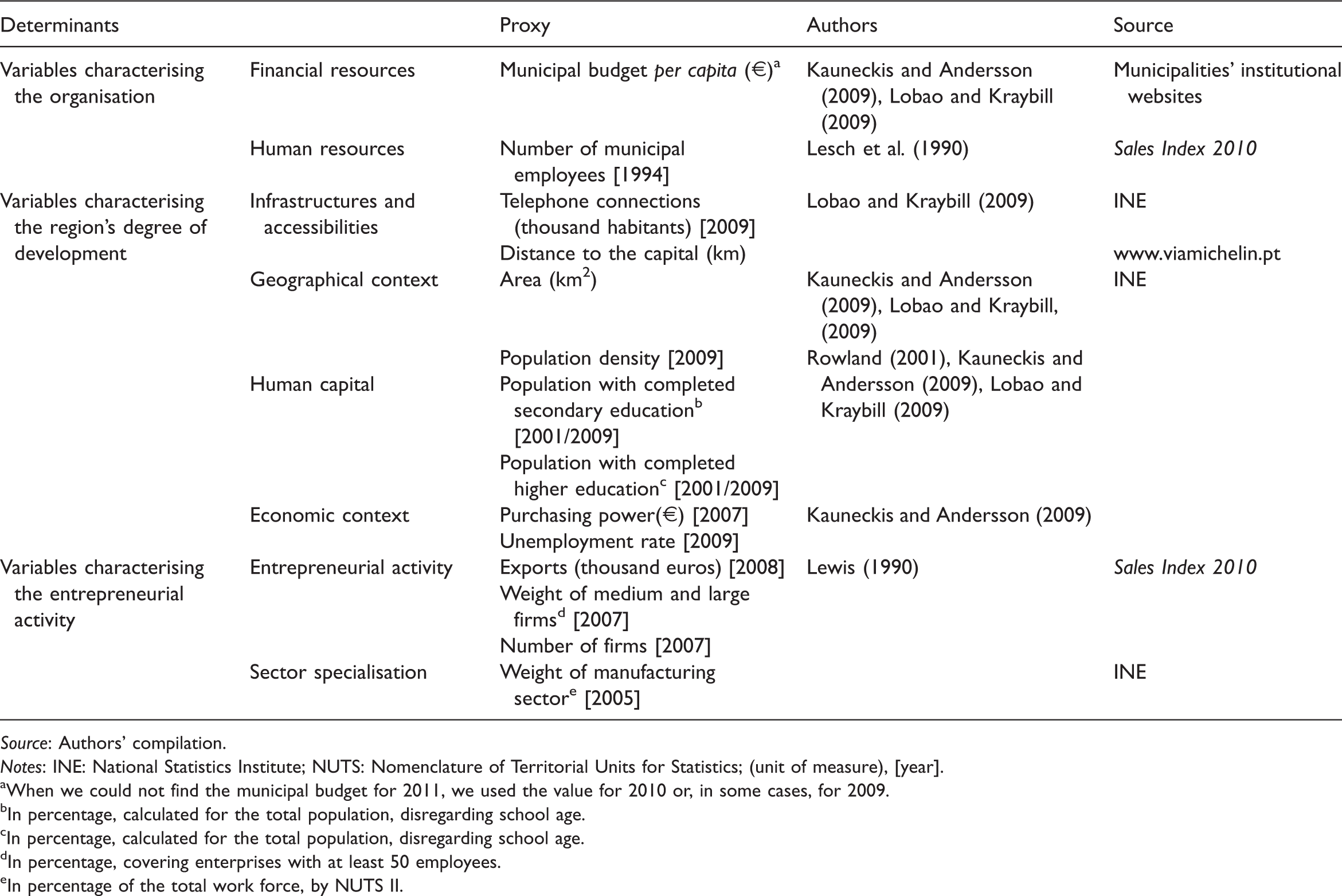
Source: Authors’ compilation.
Notes: INE: National Statistics Institute; NUTS: Nomenclature of Territorial Units for Statistics; (unit of measure), [year].
When we could not find the municipal budget for 2011, we used the value for 2010 or, in some cases, for 2009.
In percentage, calculated for the total population, disregarding school age.
In percentage, calculated for the total population, disregarding school age.
In percentage, covering enterprises with at least 50 employees.
In percentage of the total work force, by NUTS II.
In order to operationalise the explanatory variables that are likely to influence the involvement of Portuguese municipalities in activities to promote economic development/the internationalisation of firms, we gathered primary and secondary data, this latter from the Sales Index 2010 (Marketest), the National Statistics Institute (INE), the City Halls’ websites and the Michelin website.
The primary data gathering involved the implementation of a survey to the 308 Portuguese municipalities, to see whether they engaged in activities to promote local economic development and the internationalisation of local firms. The survey was composed of three sections. The first group of questions was intended to address the municipalities’ sensibility to the issue of promoting economic development/the internationalisation of firms. It enabled us to determine whether there was a structure (formal or informal) in the municipality assigned to these actions, its dimension (number of staff members), the level of qualification of the involved employees and their capacity for autonomy. The second section addressed the level of the municipalities’ intervention in this area and was intended to assess the ways in which City Halls relate to local firms (and, when that contact exists, gain insights into its nature). The last group of questions focused on the municipalities’ proactivity and the performance of the activities studied, so as to determine the inherent factors that influence, positively or negatively, their involvement in such actions.
Respondent municipalities, by geographical region.
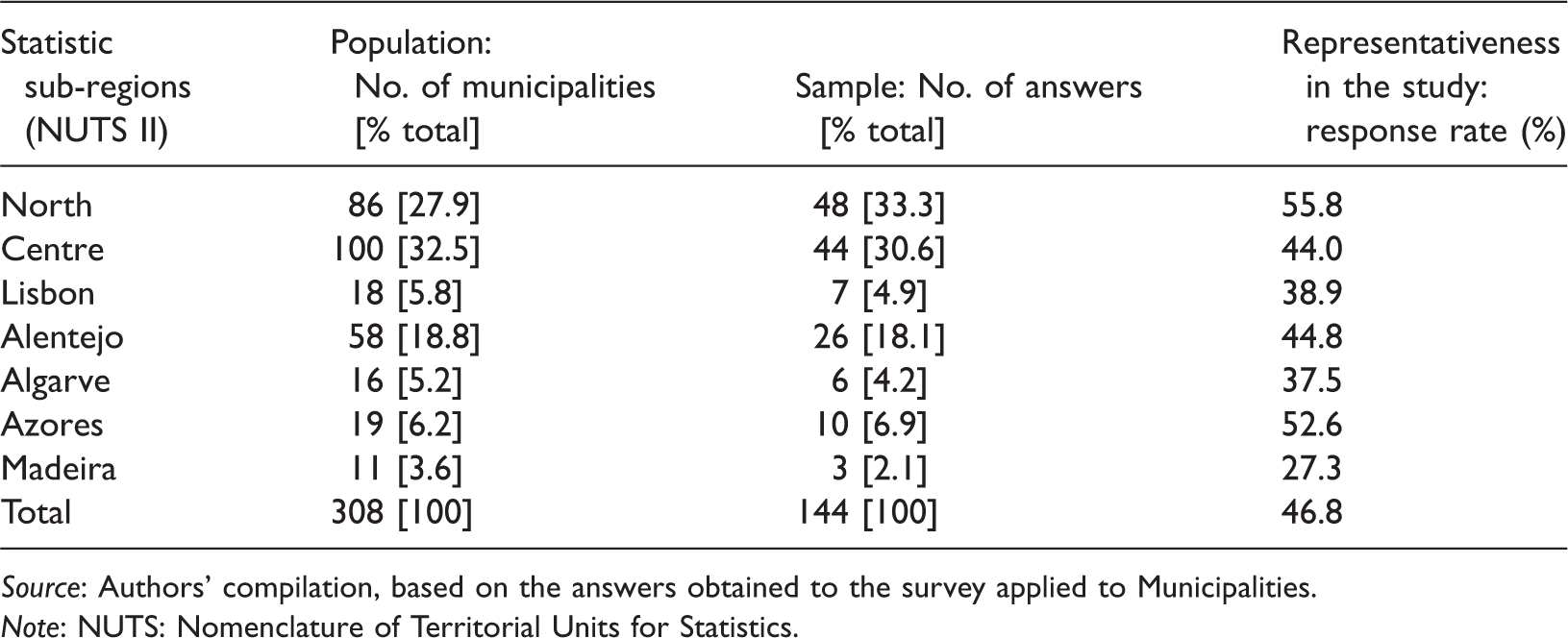
Source: Authors’ compilation, based on the answers obtained to the survey applied to Municipalities.
Note: NUTS: Nomenclature of Territorial Units for Statistics.
Given the non-compulsory nature of the survey, the overall response rate by Nomenclature of Territorial Units for Statistics (NUTS) II was quite acceptable (Chang et al., 2012). Thus, excluding the case of the Autonomous Region of Madeira, the sample obtained is representative of the population under study, enabling a rigorous statistical analysis, with the possibility of extrapolating the results to the population.
The binary nature of the variable to explain variable (municipalities’ involvement) restricts the choice of the estimation model, with the logistic regression being the most appropriate regression technique to model the occurrence (Greene, 2012). 1
Empirical results
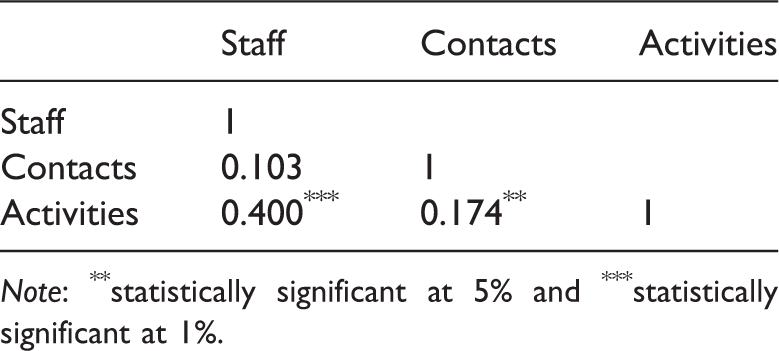
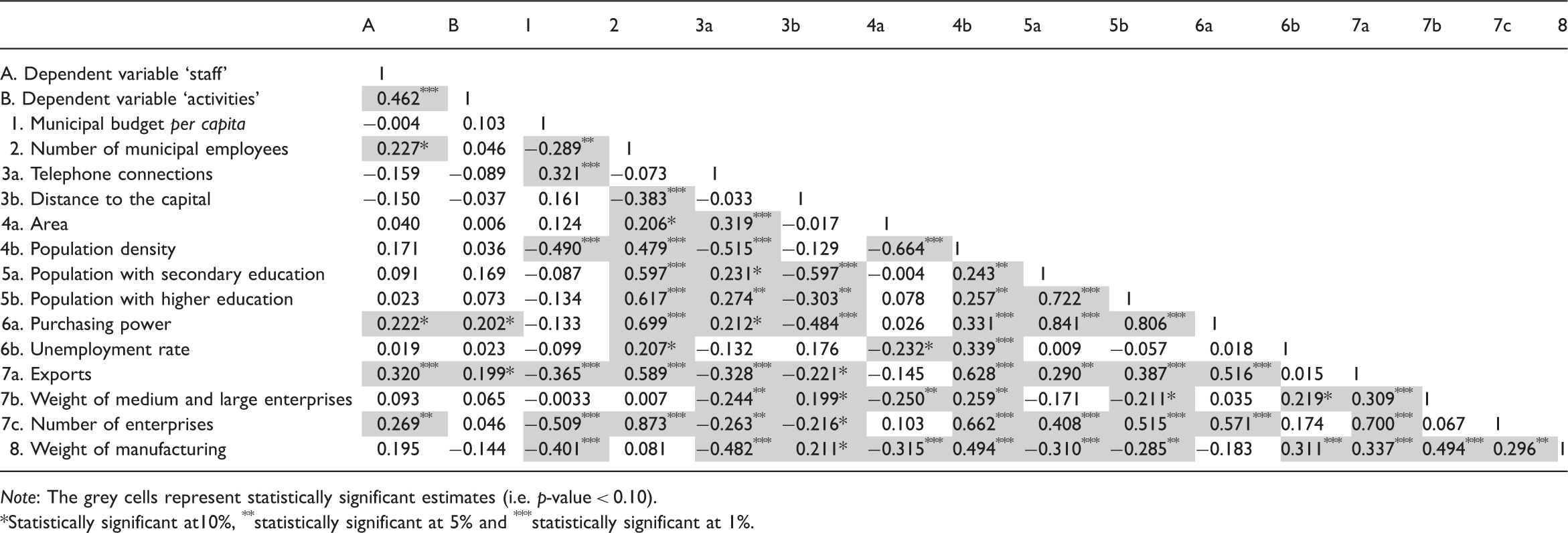
The majority of municipalities revealed that they are involved in activities to promote economic development/the internationalisation of firms (e.g. region’s branding, export support services, trade missions, fairs, market search and publications). Although there is a positive linear association between the three variables that measure the involvement of the municipality in export and development promotion, only the correlation coefficient estimates between ‘activities’ and ‘staff’, and ‘activities’ and ‘contact’, are significant (see Table 3). Thus, municipalities that perform activities to promote economic development/internationalisation tend to a larger extent than those that do not possess personnel assigned to activities to promote such activities and to maintain contacts with local enterprises. Such correlation however is far from perfect. Indeed, in geographical terms (NUTS III) we observe that not having staff members specifically assigned to the promotion of economic development/internationalisation (variable ‘staff’) does not imply the non-performance of such activities (variable ‘activities’) and vice versa (see Figure 1).
Dimension of the municipalities’ involvement in activities to promote economic development/the internationalisation of firms – ‘staff’, ‘contacts’ and ‘activities’, by NUTS III, in Mainland Portugal, in percentage of the municipalities where they exist. The municipalities’ involvement in activities to promote economic development/the internationalisation of firms – correlation between the variables ‘staff’, ‘contacts’ and ‘activities’. Note: **statistically significant at 5% and ***statistically significant at 1%.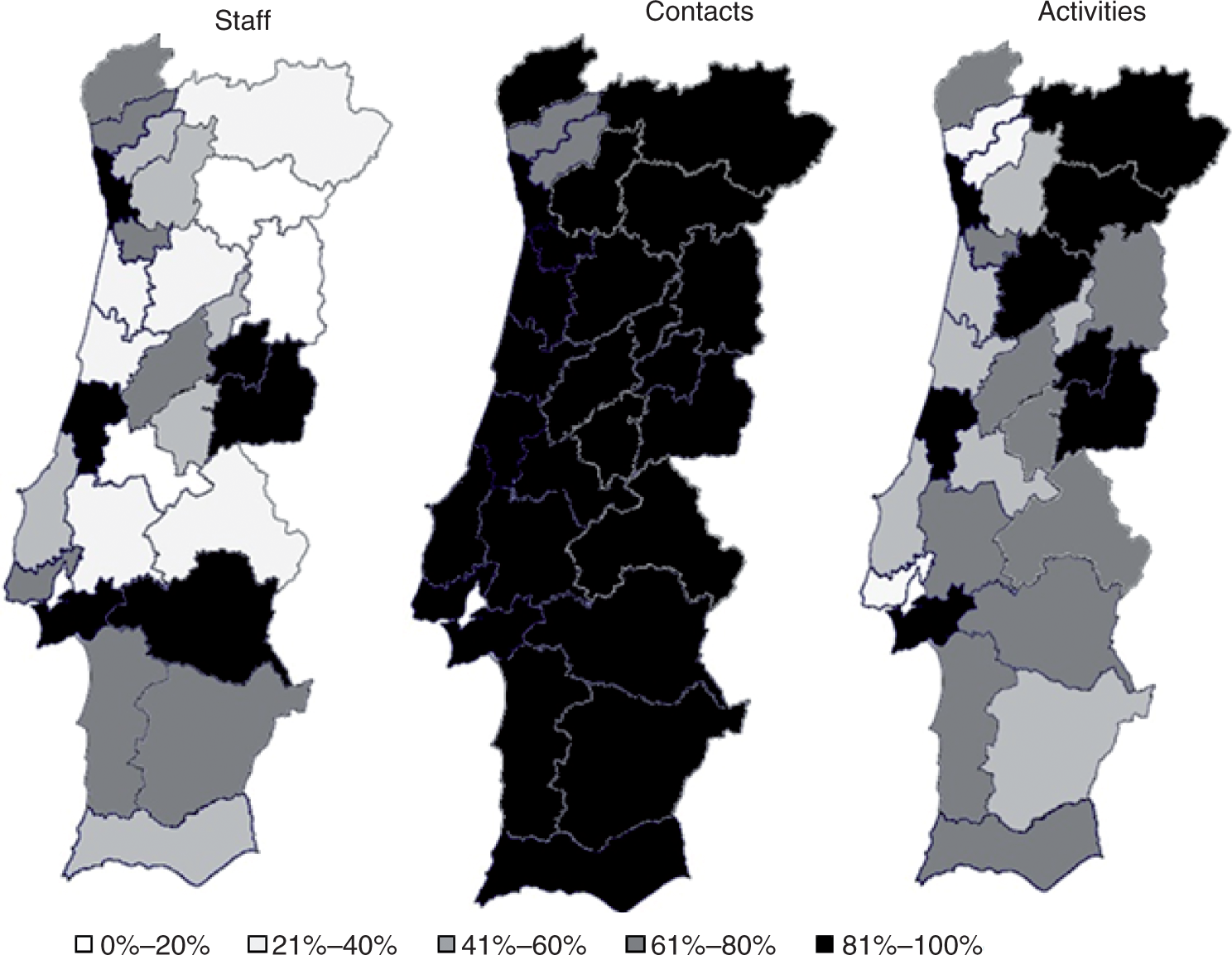
As only very small number of municipalities has no contact with firms, it was irrelevant to statistically and econometrically explore this dimension of the municipalities’ involvement.
At the structural level, we observe that three-fourths of the municipalities formally pursue activities to promote economic development/internationalisation through an organic unit or division specially assigned to that effect defined in the macrostructure. The staff members who work in this area are qualified and possess a considerable level of independence with regard to processes of bureaucracy and hierarchy.
Regarding the contacts established with local enterprises, and according to the categories of services provided by export promotion entities (Lederman et al., 2010), there is a predominance of activities to boost the region’s image building and marketing, including fairs and trade missions (at 77.4% and 76.6%, respectively), followed by market research and publications, and export support services (technical assistance, seminars), at 38.0% and 29.2%, respectively. Other activities indicated by a much small number of municipalities encompass information and counselling on legislation and public support mechanisms to enterprises, support to entrepreneurship and local and regional innovation (sometimes associated with start-up centres), financial incentives, local financing mechanisms, training, visits and tributes to enterprises, and trade missions to take advantage of twinning agreements with other localities/regions.
In an attempt to understand why more than one-third of the local municipalities are not involved in activities to promote economic development/internationalisation of firms, the factors identified by local municipalities as enhancers or inhibitors to the performance of such activities were analysed.
Within the group of municipalities involved in these activities, the factors they most frequently indicated as apparently increasing their involvement included the importance of local businesses, competitiveness in relation to other municipalities and the fact that they are requested by firms to act in this area (with 93.6%, 55.3% and 33.0%, respectively). These were followed by the use of specific local information and specific technical or administrative capacity. The ‘sufficient funds’ option had no expression (see Figure 2). Among the other factors mentioned were concerns about improving the local quality of life, promotion of local economic development (affirming the local brand and leveraging local resources), EU funding opportunities and local incentive schemes.
Importance of the factors which favour the respondent municipalities’ involvement in activities to promote economic development/internationalisation of firms, in (in % total).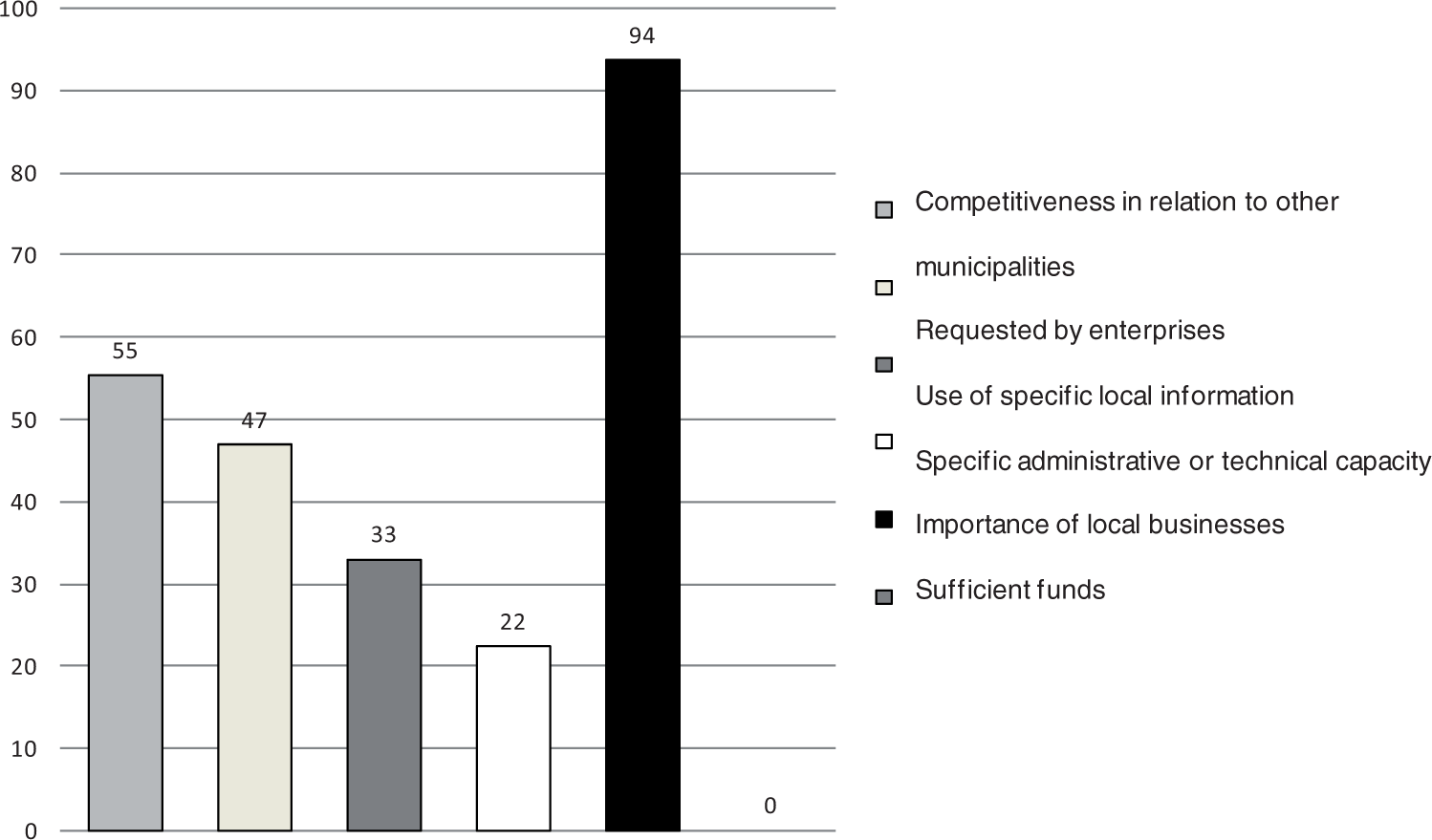
As for the municipalities which do not perform activities to promote economic development/internationalisation, the factor that was most often referred to as hindering this action was the lack of sufficient financial resources (54.0% of the cases). This was followed by administrative or technical limitations and/or shortcomings (32.0%), the fact that local businesses do not justify this involvement (26.0%), and focus on other benefits (22.0%). The over-centralisation and lack of interest in the matter were highlighted by a few local authorities, whereas the ‘lack of contact with local companies’ had no expression (see Figure 3). Other factors pointed out included the existence of an active trade association in the area, not having received such requests, and the fact that the organic division in question is recent (which was the case of three of the respondents).
Importance of the factors which restrict the respondent municipalities’ involvement in activities to promote economic development/internationalisation of firms (in % total).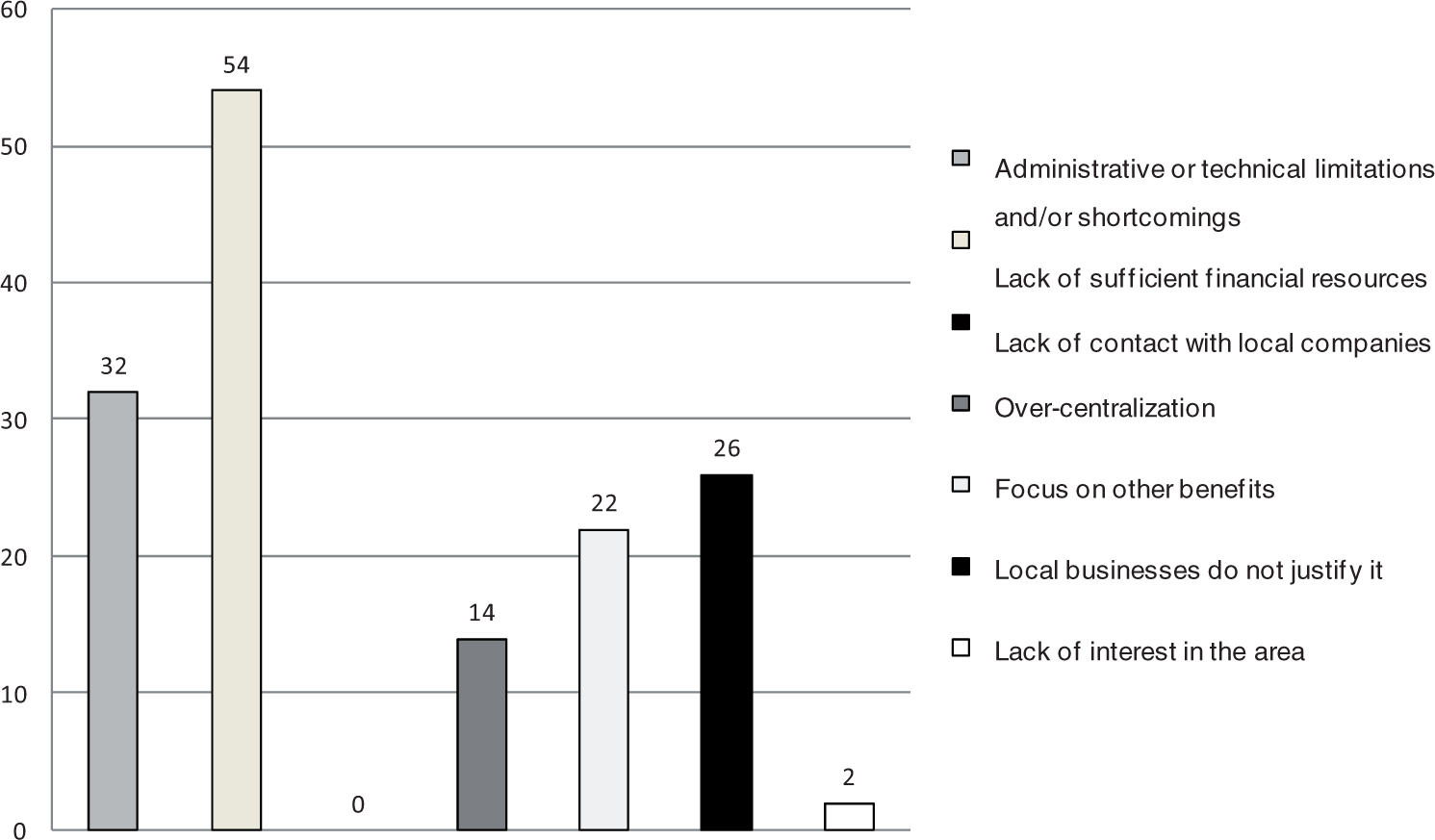
The results corroborate the arguments against decentralisation described in the Determinants of the involvement of local municipalities in promoting the internationalisation of firms: A literature review section, namely with regard to the constraints deriving from administrative or technical shortcomings at the local level (Andersson et al., 2006; Balaguer-Coll et al., 2010; Chapman et al., 2002; Faguet, 2004) and the lack of adequate financial resources (Agrawal and Ribot, 1999; Andersson et al., 2006; Balaguer-Coll et al., 2010; Boone, 2003; Cox, 2004; Faguet, 2004; Litvack and Seddon, 1999). Broadly speaking, these factors sustain the notion that the organisations’ characteristics determine the quality of the service they provide (Litvack and Seddon, 1999; Rodden, 2003).
Correlation matrix.
Note: The grey cells represent statistically significant estimates (i.e. p-value < 0.10).
Statistically significant at10%, **statistically significant at 5% and ***statistically significant at 1%.
With regard to the relation between the independent variables, the results show that there is a high correlation between the number of municipal employees and most of the other variables, which also occurs with telephone connections. There are also strong bivariate correlations among other independent variables, such as the purchasing power and the human capital proxies. Potential problems of multicollinearity that may arise, which recommend the estimation of three separate models in the case of municipalities’ involvement proxied by the variable ‘Activities’.
Differences in means in the variables in analysis (Kruskal–Wallis non-parametric test).
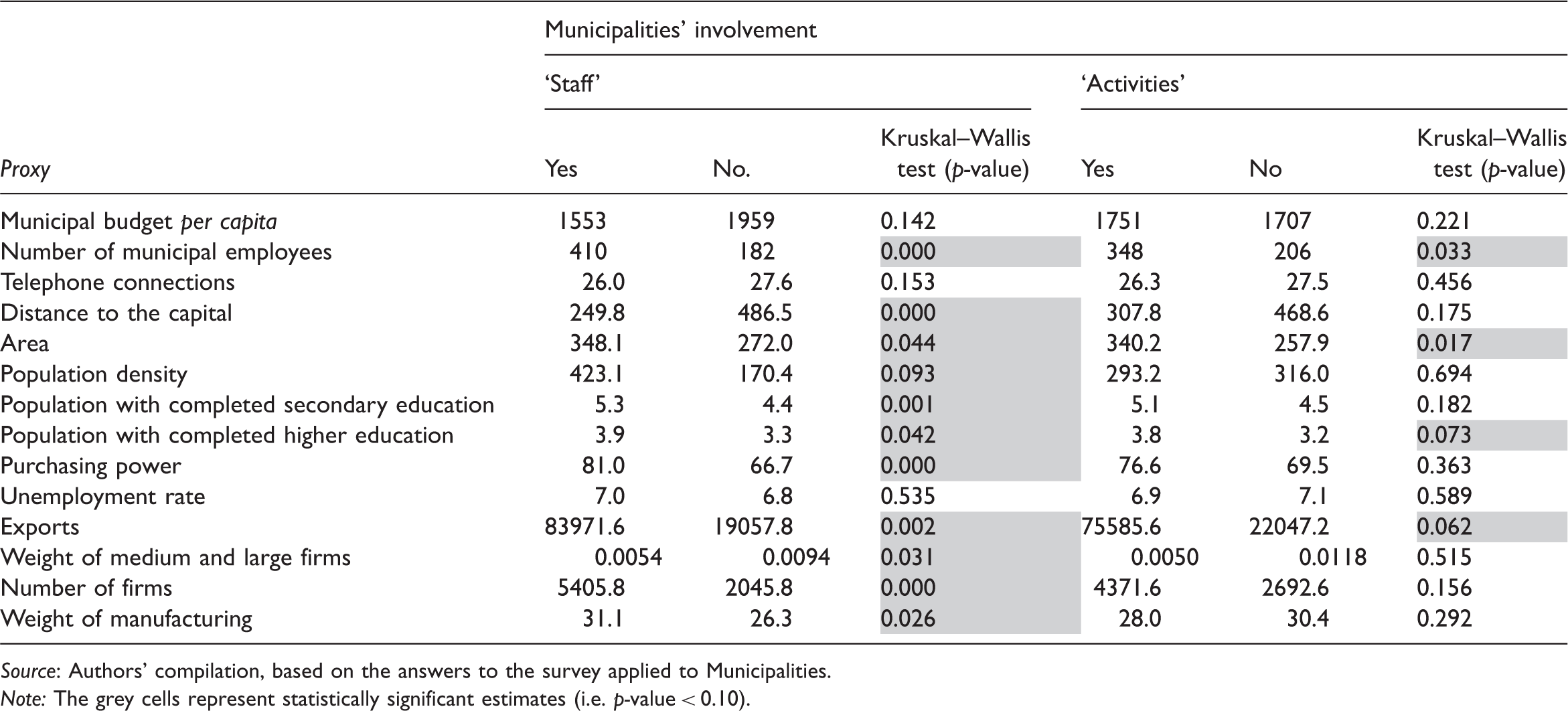
Source: Authors’ compilation, based on the answers to the survey applied to Municipalities.
Note: The grey cells represent statistically significant estimates (i.e. p-value < 0.10).
The municipalities’ involvement in activities to promote economic development/internationalisation of firms: logistic regression.
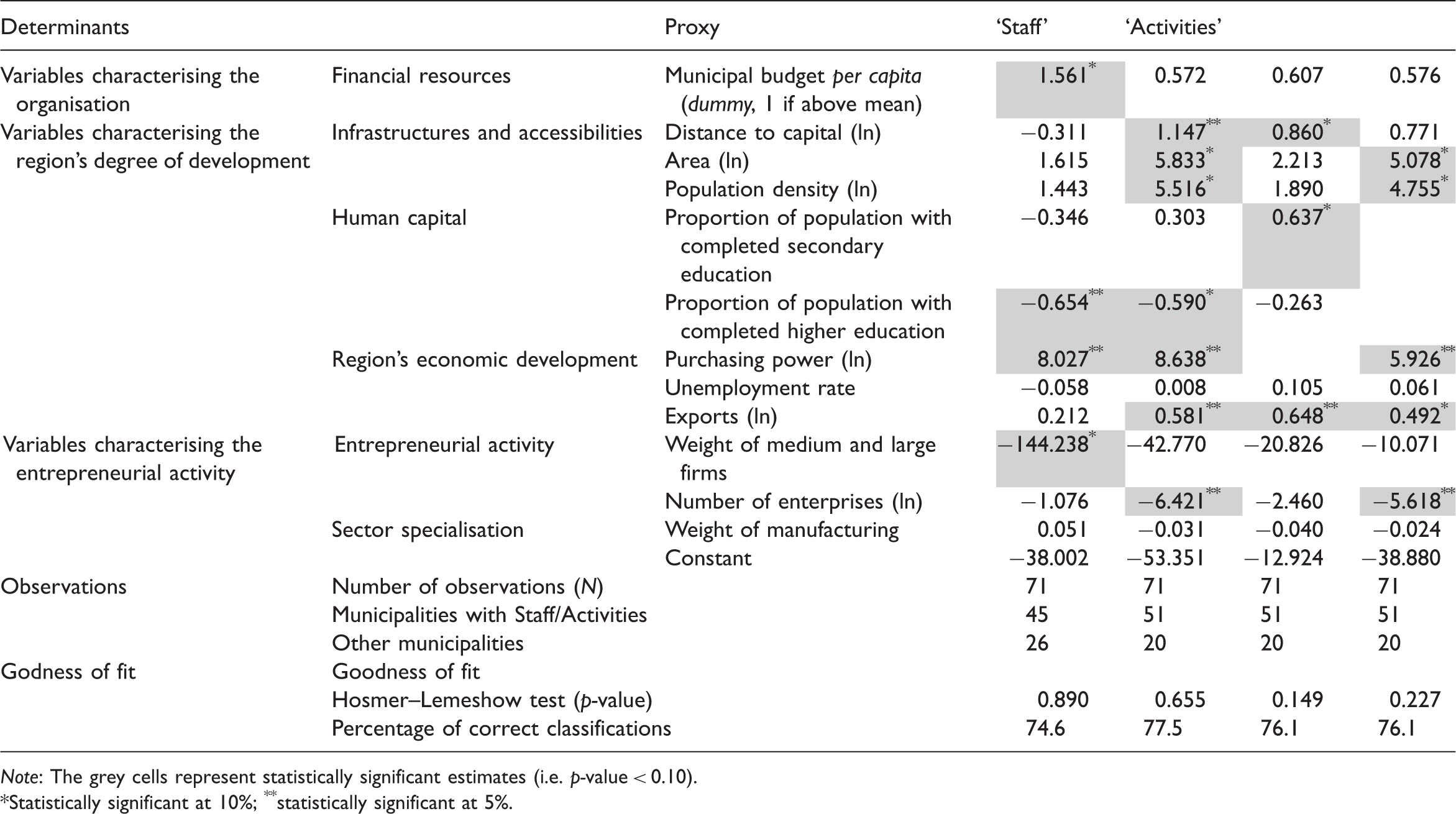
Note: The grey cells represent statistically significant estimates (i.e. p-value < 0.10).
Statistically significant at 10%; **statistically significant at 5%.
All the group of determinants – organisation, region’s development, entrepreneurial activity – are relevant for explaining the involvement of the municipalities in the promotion of SMEs internationalisation. Individually considered, the region’s level of development (measured by its per capita purchasing power) and internationalisation characteristics (measured by the size of its exports) emerged as the most critical determinants for the quest for decentralisation in what SMEs’ promotion policies and measures are concerned.
As would be expected, and in line with Kauneckis and Andersson (2009), municipalities with a higher municipal budget per capita tend, on average, ceteris paribus, to be associated with a higher involvement in the promotion of economic development and SMEs internationalisation.
Municipalities characterised by low weight of medium and large firms, low density of firms and low share of highly educated (i.e. citizens with post-secondary (‘higher’) education) are associated with a higher level of involvement in the promotion of economic development and SMEs internationalisation. This seems to indicate that the municipalities’ involvement may to some extent constitute an attempt to ‘compensate’/overcome the difficulties and obstacles raised by a lack of preparation of the region’s agents in terms of human and other resources (e.g. organisational, financial) to face internationalisation processes. Such evidence reinforces the argument in favour of increasing decentralisation of public policies and measures in the area of SMEs internationalisation.
Accessibilities and geographical context emerge as (much more) relevant in explaining the municipalities’ involvement in the ‘activities’ for promotion of SMEs internationalisation. In fact, all else remaining constant, on average, larger municipalities, with relatively higher population densities and more distant from the capital tend to decentralise activities to promote economic development/internationalisation of firms, replacing (or complementing) the action of central government institutions. The arguments of Lobao and Kraybill (2009) are also corroborated, in that municipalities with a larger area and population density and with more educated citizens (in this case, at the secondary education level) tend to perform more activities to promote economic development/the internationalisation of firms. Thus, some population/area/human capital threshold might be required to justify the decentralisation of such activities.
At the level of entrepreneurial activity, and as has been mentioned in the literature (see Determinants of the involvement of local municipalities in promoting the internationalisation of firms: A literature review section), the higher the volume of exports, the higher, on average, is the municipalities’ propensity to perform activities to promote economic development/SMEs internationalisation. This fact is in line with Lewis (1990) regarding the extreme importance of exports in this context. On the contrary, and regardless of their industrial specialisation, municipalities with fewer enterprises and lower proportion of medium and high firms tend, on average, to be more proactive in this area, assigning more staff and performing more of such activities. This evidence might be rationalised, following the arguments of Lewis (1990) and Lesch et al. (1990), in light of the idea that, in the presence of underdeveloped local businesses, municipalities will attempt to encourage entrepreneurial and exporting activities, acting as a supporter for local agents.
Conclusion
This study analysed whether local municipalities could be considered as valid decentralised agents to promote economic development and the internationalisation of firms. With this in mind, we approached the matter from the perspective of the municipalities themselves.
To assess the municipalities’ degree of involvement in this domain, regarding human resources, contacts with local enterprises and performance of such activities, we created and implemented a survey to the 308 Portuguese municipalities, gathering 144 responses. Broadly speaking, in all the dimensions mentioned above, the majority of the municipalities claim to be involved in activities to promote economic development and the internationalisation of firms.
In spite of the myriad of government-designed internationalisation promotion policies that purport to support firms’ exporting and internationalisation activity (Durmuşoğlu et al., 2012; Leonidou et al., 2011; Volpe Martincus and Carballo, 2010), Portuguese municipalities are essentially involved in region branding (image building) or in organising fairs and trade missions. There is thus a long way to go for a more profound and comprehensive decentralisation at this level. Given the knowledge municipalities possess about the firms that are located in their vicinity, it would be desirable and reasonable to expect that more efforts be put in implementing and arranging information-related programmes (including the provision of marketing/information/advice, information on market opportunities and general information about doing business in a specific country), and education- and training-related programmes (namely, counselling and training on the export process for inexperienced exporters, training on export documentation and foreign language support). At present, the austerity programme that the Portuguese government faces puts a lot of financial pressures and restrictions on municipalities, which justify that trade mobility-related programmes (most notably, assistance in participating in trade shows/exhibitions or participation in trade missions abroad) or financial aid-related programmes (e.g. co-finance the participation in trade missions, sponsor the creation of export consortia, export loans, export credit guarantees or funds transferring) are still considerably centralised.
Our multivariate econometric estimates show that municipalities with a higher budget per capita and located in regions with higher purchasing power tend, on average, ceteris paribus, to assign more human resources to SMEs internationalisation promotion activities, which concurs with the findings by Kauneckis and Andersson (2009), and shows that the municipal budget determines the municipal government’s capacity to respond to local demand, and that municipalities’ financial and economic context is a relevant factor to explain their involvement in local firms’ internationalisation promotion.
Entrepreneurial activity, human capital and the characteristics of the municipalities (population density, area and geographical location) also arise as important determinants of the decentralisation of the activities studied here. Specifically, larger and peripheral municipalities, with low density of firms and low shares of medium and large firms but a high volume of exports and a reasonably high (formally) educated population, tend to be more involved in economic development/internationalisation activities.
Footnotes
Funding
This research received no specific grant from any funding agency in the public, commercial or not-for-profit sectors.