







Abstract
The EU accession of the Central and Eastern European countries required adjustment to EU cohesion policy and its framework, based on multi-level governance and territorially targeted financial support for regional development. This involved reforms of territorial administration, the developing of regional policies and the building of the capacity for administering structural funds. This article investigates the mechanisms of adjustment to the programming principle of EU cohesion policy which requires that the structural funds are used according to multi-annual strategies and place-tailored operational programmes. Drawing on qualitative data from interviews with regional actors in Polish, Czech and Hungarian regions, the article focuses on the impacts of this EU-imposed approach to the practices of the regional and local actors. It finds that EU cohesion policy overall promoted strategic and place-based development planning in the Central and Eastern European countries. However, its impacts remain differentiated and often limited to ‘superficial’ changes. The article argues that there are factors hampering the institutionalisation of multi-annual strategic development planning. These include the overemphasis on the ‘absorption’ of EU funds, patronage networks affecting decision making, and the reluctance of the central governments to let regional authorities set their own investment priorities, thus denying the very purpose of strategic planning tailored to regional specificities.
Introduction
Against the background of the severe economic crisis and the resulting austerity measures implemented across European countries, EU cohesion policy found itself under an increased pressure to deliver tangible results. The stakes are very high. Cohesion policy is the EU’s main investment tool and the second biggest item on the EU budget after the Common Agricultural Policy, offering less developed regions substantial funding for developmental initiatives to help reduce the economic, social and territorial disparities, while promoting growth and jobs across all of the EU’s territory (see e.g. Manzella and Mendez, 2009).
Nevertheless, there is no consensus on the effects of the policy on regional growth and convergence (Bachtler and Gorzelak, 2007), while numerous studies criticise it for not being able to effectively reduce those disparities (e.g. Boldrin and Canova, 2001; Ederveen et al., 2006; Gripaios et al., 2008; Rodríguez-Pose and Fratesi, 2004). Strategic planning is one of the core principles of EU cohesion policy, embodied in the so-called programming principle requiring that the co-financed interventions are based on multi-annual strategic programmes tailored to regional/local development needs. It is also the key eligibility criteria for the sub-national authorities to get access to the Structural Funds (SF). Despite these conditionalities, the deficits in strategic planning remain one of the main weaknesses of cohesion policy resulting in ineffective interventions as stressed in a number of studies (e.g. Barca, 2009; Gripaios et al., 2008) and recognised in policy reports (Barca, 2009; European Commission, 2010). Poor management and lack of genuine strategic thinking about how the EU funds should be used results in all too frequent squandering of resources. For instance, instead of addressing the actual place-specific developmental challenges and exploiting the endogenous potentials, drawing on strategic reflection and planning, many EU-funded projects turn out to be ‘white elephant’ investments in costly infrastructure which is not used to its full potential and thus becomes an unsustainable budgetary burden (e.g. Medeiros, 2013); or are designed to cater to the electoral ambitions of the local leaders rather than to drive economic development (e.g. Dąbrowski, 2012). In fact, evidence from past research suggests that infrastructural investment does not necessarily promote development per se unless it is complemented by investment in education and human capital (see Rodríguez-Pose and Fratesi, 2004). That said, investment in infrastructure is well perceived by the general public. This in turn increases the chances for the regional or local leaders to be re-elected. More generally, political and electoral bias in the allocation of EU funds is a well-documented phenomenon that has been reported both in the ‘old’ (Bodenstein and Kemmerling, 2011; Dellmuth and Stoffel, 2012; Solé-Ollé and Sorribas-Navarro, 2008) and ‘new’ (Bloom and Petrova, 2013) EU Member States. A closer look at how the SF are used on the ground also reveals that some countries and regions struggle with favouritism and corruption in allocation of grants to fund particular projects, which is a further obstacles to strategic use of EU funding, as illustrated by evidence from previous research (e.g. Dąbrowski, 2008; Getimis and Grigoriadou, 2004) and the various scandals involving fraud and misuse of the SF surfacing in places such as Southern Italy or many of the Central and Eastern European EU Members States (e.g. Euractiv, 2008, 2012; Segreti and Gatti, 2010).
While the cohesion policy framework in place in 2007–2013 already puts more and more emphasis on strategically targeted interventions (e.g. ‘Lisbon earmarking’), 1 lack of strategic thinking about development and the resulting sub-optimal use of the SF remained a concern. This was the background to the debate on the reform of EU cohesion policy for the 2014–2020 period, the orientations of which were to a large extent set by the Barca Report (2009) putting forward proposals for transforming it into a more place-based policy. The report advocated a more territorial approach to EU cohesion policy that would involve relying on (1) a long-term strategy to reduce the under-utilisation of the local potential for economic development and social inequalities in specific places, that would (2) be implemented through integrated and place-tailored interventions designed on the basis of local preferences and knowledge through participatory and cooperative processes and (3) supported by a system of multi-level governance including financial transfers subject to conditionalities on objectives and institutions (Barca, 2009: 5). In essence, place-based approach emphasises the importance of the geographical context for defining development policies and the need for a cross-level cooperation to extract and make use of local knowledge for that purpose, while ensuring coordination through guidance by external (national and/or supranational) development agency (Barca et al., 2012). These propositions also chime with the regional development policy paradigm advocated by the OECD (2009). Its central assumption of which is that in every region there are opportunities for growth and development that can be exploited through a place-tailored regional development policy.
The success of such a place-based approach would, however, require elaborating sub-national economic strategies based on an assessment of the actual development barriers and ways to tap into the assets specific to particular places (Hildreth and Bailey, 2014). This in turn crucially depends on the capacity of the sub-national governments to prepare such strategies through participatory processes. In fact, a substantial share of the SF is disbursed via Regional Operational Programmes (ROPs) that are supposed to be in line with the regional strategic goals and used for financing regional and local authorities’ developmental projects. The sub-national capacity issue was somewhat overlooked in the debates on delivering better results with EU cohesion policy (see Bachtler et al., 2013), which tended to focus on issues such as allocation of funds across the European regions, thematic priorities for spending, conditionalities or measurement of impacts, etc.
This paper adds to this debate by investigating the patterns of adjustment to the requirement for strategic planning the implementation of the SF among the sub-national authorities and by shedding light on the capacity challenges that hinder the use of EU funding to support place-based development strategies. It draws on the notion of ‘Europeanisation’, understood as the influence of EU public policies on the policies, institutional structures and political developments in the EU Member States. Europeanisation is thus defined as ‘processes of (a) construction, (b) diffusion and (c) institutionalisation of formal and informal rules, procedures, policy paradigms, styles, “ways of doing things” and shared beliefs and norms which are first defined and consolidated in the EU policy process and then incorporated in the logic of domestic discourse, identities, political structures and public policies’ (Radaelli, 2003: 30). Hence, the outcomes of these processes depend on the ways in which the EU norms and practices resonate and blend with the domestic institutions.
The questions addressed in the paper are: to what extent has the implementation of the SF and compliance with its framework resulted in the Europeanisation of strategic planning approaches at the sub-national level? What are the mechanisms of adjustment to the SF programming principle? Do the actors on the ground internalise the strategic multi-annual planning practise promoted by cohesion policy and adopt a place-based approach to meet regional and local needs; or do they conform with those norms only ‘superficially’ merely to meet the eligibility criteria for the structural funding?
Empirical evidence from regions in three of the new EU Member States – Poland, Czech Republic and Hungary – is used to answer those research questions. Some 46 semi-structured interviews were conducted during winter of 2011 in Lower Silesia, South West Cohesion Region and South Transdanubia as well as in Warsaw, Prague and Budapest. Interviewees were selected among the key informants within the institutions coordinating the implementation of EU cohesion policy (e.g. the Ministries of Regional Development, Hungarian National Development Agency), regional-level institutions distributing the SF (regional authorities, regional development agencies (RDAs)), local authorities implementing EU-funded projects and a variety of experts. In order to minimise the limitations of interviews as a source of objective data, this was complemented by an analysis of secondary sources (evaluation reports, programming documents, press articles), which allowed for triangulating the findings from the interviews and enhancing validity.
The article examines the extent to which plan making is carried out by sub-national authorities; the extent to which local stakeholders influence the SF ROPs, who are the stakeholders; and the extent to which local problems are addressed in the ROPs. The findings indicate that the impact of the programming principle of cohesion policy is differentiated across and within the regions and often remains limited to ‘formal’ and ‘superficial’ changes which are introduced in order to meet the EU’s requirements and gain access to structural funding. The argument underpinning this is that a lack of strategic planning capacity at the sub-national level in the ‘new’ Member States (NMS) does not lead to place-based approaches to regional economic development, which is essential for the effectiveness of EU cohesion policy. Given these countries are its main beneficiaries – with about 80% of EU regional funding being allocated to them – it is important that the funds be appropriately used. At the same time, however, earlier studies on the impacts of EU cohesion policy in Central and Eastern Europe do suggest that participation in its implementation stimulates learning among the policy actors on the ground and can itself be conducive to capacity-building, regionalisation and diffusion of the multi-level governance approach, the modernisation of domestic regional policies and territorial administration systems (e.g. Baun and Marek, 2008a; Bruszt, 2008; Dąbrowski, 2008; Paraskevopoulos and Leonardi, 2004). To some degree, similar learning dynamics were also observed in the regions under investigation in this paper.
The remainder of the paper is structured as follows. The next section reviews the literature on Europeanisation of spatial planning and identifies the gaps in knowledge. The subsequent section describes the characteristics of the three Central European regions used as case studies. Then the findings from the empirical research are discussed, which is followed by a concluding section which includes remarks on the implications of the findings for a future place-based approach to strategic planning in the NMS.
Europeanisation of spatial planning: ‘Shallow’ change in the ‘new’ EU Member States?
While (strategic) ‘spatial planning’ has no generally agreed upon definition, it refers to the processes of development strategy building that are closely intertwined with regional policy and other policies that have territorial impacts, like for example environmental policy (Böhme and Waterhout, 2008: 227). Therefore, strategic spatial planning is an important tool for designing place-based economic development strategies. Spatial planning in the European context is often associated with spatial development policy, i.e. a policy concerned with shaping the ‘geographical distribution of features in the built and natural environment and patterns and flows of human activity’ and reducing the ‘geographical disparities in socio-economic conditions and life chances of citizens’ (Dühr et al., 2010: 301).
In the wake of the growing prominence of EU cohesion policy and the vertical and horizontal cooperation as part of its multi-level governance framework, emergence of certain sectoral policy initiatives such as TEN-T Trans European Network, 2 intended to coordinate and stimulate the development of road, rail, air and water transport networks across the EU; or the development of the territorial agenda by the EU, the issue of the EU’s influence on domestic spatial planning and the scope for convergence of planning approaches was picked up by the research community. Hence, a literature on Europeanisation of spatial planning emerged from the mid-1990s onwards in response to, on the one hand, the conceptual emergence of European spatial planning and, subsequently the establishment of the European Spatial Development Perspective in 1999, 3 and on the other hand, development of EU policies that affect domestic sectoral policies the impacts of which matter for spatial development (see e.g. Böhme and Waterhout, 2008; Dühr et al., 2010; Mourato and Tewdwr-Jones, 2012).
While some authors have suggested a possibility for convergence of planning approaches as a result of Europeanisation (e.g. Davies, 1994), the research published to date invites scepticism about the transferability of approaches and ‘best practices’ in spatial planning across the wide variety of local institutional contexts in the EU (see e.g. Adams, 2008; Stead and Nadin, 2011). In fact, the European planning practices and policy approaches tend to be reinterpreted according to the specific domestic economic, social and institutional characteristics and planning cultures, which leads to different outcomes in different territories (Mourato and Tewdwr-Jones, 2012; Rivolin and Faludi, 2005; Stead, 2012; Stead and Nadin, 2011). This is particularly the case when it comes to transferring ‘best practice’ from ‘old’ to ‘new’ EU Member States (Stead, 2012), because of the deep differences between those two groups of countries in terms of institutional legacies, planning traditions, administrative capacity and resources available to the sub-national authorities. Thus, convergence towards a common ‘European’ planning model is even less likely within the enlarged EU (Adams, 2008).
Despite the negative connotations of ‘planning’ in post-socialist Central and Eastern Europe, frequently associated with communist-era central planning (Nedović-Budić, 2001), since the early 1990s, spatial planning in Central and Eastern European countries (CEECs) has been developing rapidly, driven by the preparations for future EU membership and the implementation of EU cohesion policy (Stead and Nadin, 2011). While the pressures for these changes emanating from the EU were similar for all of the NMS, and there is evidence of Europeanisation through sharing knowledge and diffusion of EU-imported approaches, the actual adjustment of planning practices to the cohesion policy framework followed different trajectories (Stead and Nadin, 2011).
Most of the studies considering Europeanisation of planning focus on the influence of the European Security and Defence Policy (Faludi, 2008; Giannakourou, 2005; Rivolin and Faludi, 2005; Stead and Nadin, 2011) or territorial cooperation (Dühr et al., 2007; Peterlin and McKenzie, 2007; Stead and Nadin, 2011) as instruments for diffusion of norms and practices. However, there is a shortage of research looking at the impact of EU cohesion policy on planning practices, even though it has been an important driver for changes in strategic planning, particularly in the NMS, as this article will demonstrate. In fact, since 2004 the SF have provided those countries with unprecedented amount of developmental funding, while at the same time triggering major institutional and policy reforms. The SF have been credited for generating ‘added value’ for the NMS by stimulating modernisation processes in territorial administration (decentralisation, regionalisation), mobilising sub-national actors and introducing new policy standards and practices, such as evaluation, partnership-based vertical and horizontal coordination and consultation, as well as strategic, integrated and place-based approaches to development policy.
In practice, however, the application of the EU cohesion policy principles in the NMS is often ‘superficial’ and inconsistent. The governance reforms undertaken prior to accession focused on establishment of a decentralised (or at least de-concentrated) territorial administration and regional policies in line with the EU cohesion policy framework, but relatively little attention was paid to the issue of strategic planning (Pallagst and Mercier, 2007). As a result, administrative capacity issues remained a challenge for the programming of EU funds at the regional level (Polverari et al., 2006). Hence, two decades after the fall of communism, ‘even where the legal requirements are in place, progress in the development of new policy instruments is variable, institutional arrangements are not always complete and the influence of adopted plans and policies are sometimes still limited’ (Stead and Nadin, 2011: 167). The implementation of strategic multi-annual development planning in the NMS is hampered by their institutional legacies: weak administrative capacity; centralised policy making; mistrust; politicised decision making and clientelism, putting forward interests of particular groups before the actual development needs. As a consequence, there is a risk of ‘shallow’ Europeanisation (Czernielewska et al., 2004), whereby the sub-national actors adjust superficially to EU requirements in order to gain access to funding. This, in turn, may result in non-strategic use of the SF and limit the effectiveness and efficiency of EU cohesion policy. Nevertheless, some authors have hypothesised that over time sociological mechanisms of Europeanisation might come to the fore and favour a gradual internalisation of EU policy rules through processes of social learning (Bafoil and Surel, 2008; Goetz, 2005; Schimmelfennig and Sedelmeier, 2005; Sedelmeier, 2006).
The empirical section below will attempt to probe the above hypothesis and the ‘depth’ of the impact of EU cohesion policy and its strategic planning requirement on the practices of sub-national authorities in the NMS. It will examine whether and how EU cohesion policy spurred multi-annual strategic thinking about spatial development and encouraged adoption of a place-based approach by the regional and local authorities. More specifically, this will be done by investigating the processes of elaboration of the ROPs for the purpose of implementation of EU cohesion policy in 2007–2013 period. The emphasis will be put on the extent to which the local stakeholders participated and exerted an influence on the ROPs and whether these documents address the actual local development needs. Moreover, the extent to which EU cohesion policy norms influenced the approaches to designing local development strategies will also be assessed.
Overview of the regions under investigation
The article compares the strategic planning practices in the context of implementation of EU cohesion policy at the regional and local levels, in regions in three countries: Lower Silesia (Poland); the South East Cohesion Region (Czech Republic) and South Transdanubia (Hungary). These countries may share the legacy of the democratic centralism of the communist regimes, but their paths in terms of territorial reforms undertaken in the wake of EU accession were different, which results in differentiated outcomes adjustment to the EU cohesion policy framework.
Lower Silesia, Poland
Poland is the most decentralised among the NMS, with a three tier system of territorial administration introduced in 1999. The Polish regions (województwo) are governed by elected authorities with wide competences in regional development policy and management of the SF. After the initial period of centralised management of the SF in 2004–2006, the Polish regional authorities took over the role of the Managing Authorities for their ROPs for 2007–2013, making them the key actors within the regional political arena.
Basic data on municipalities in the countries under investigation.
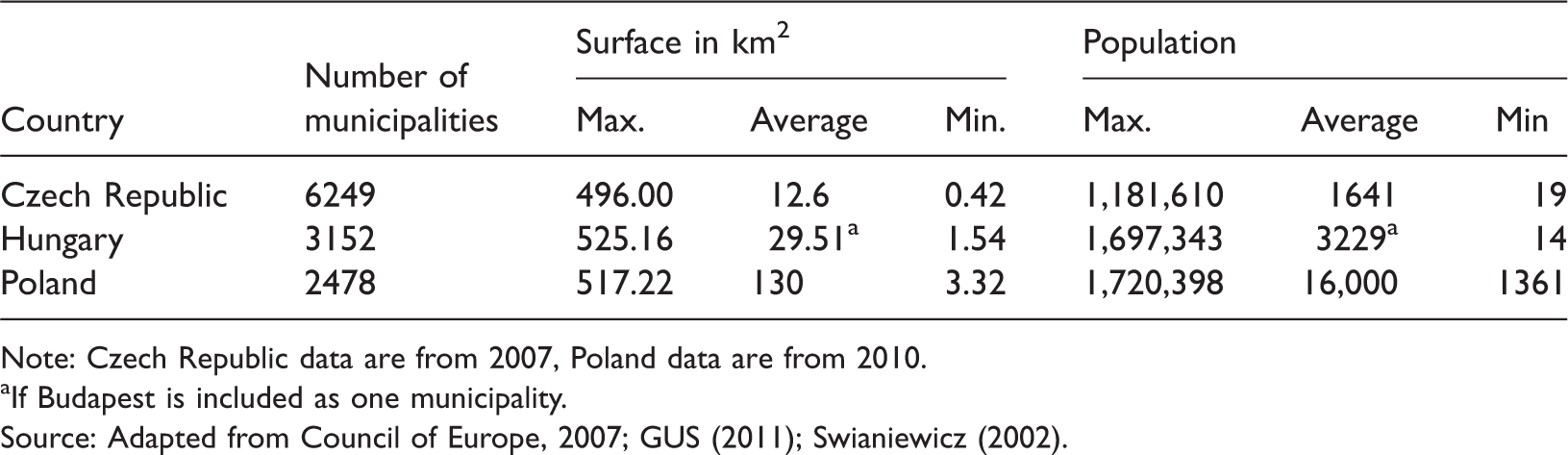
Note: Czech Republic data are from 2007, Poland data are from 2010.
If Budapest is included as one municipality.
Source: Adapted from Council of Europe, 2007; GUS (2011); Swianiewicz (2002).
Percentage of municipalities with less than 1000 inhabitants.
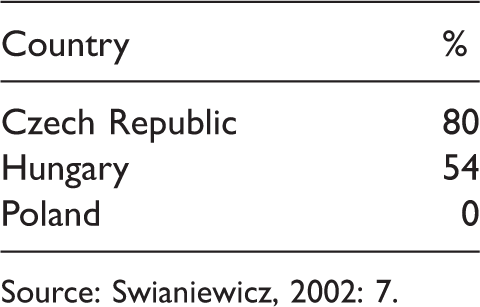
Source: Swianiewicz, 2002: 7.
South East Cohesion Region, Czech Republic
In the Czech case, there are also self-governed regions (Kraj) with an elected regional authority (Krajský úřad) in charge of regional development (Baun and Marek, 2008b: 166–168). However, the Czech regions remain financially weak and dependent on central government. This raises doubts about their capacity to deliver place-based regional development policy and effectively participate in EU cohesion policy (Ferry and McMaster, 2005: 20–22). Moreover, unlike in Poland, eight ‘artificial’ NUTS two cohesion regions were established from the regrouping of several existing regions, for the purpose of the SF (Baun, 2002: 269).
The small and fragmented Czech municipalities tend to lack resources and capacity, which makes them ‘too weak to play much of a role in strategic decisions’ (Myant and Smith, 2006: 167). The South East Cohesion Region comprises two self-governed regions: South Moravia (Jihomoravský Kraj) and Vysočina (Vysočina Kraj), which delegate their representatives to form the Regional Council for the Cohesion Region, a body in charge of management of the SF under the ROP. Economically it is the second best performing cohesion region in the country and, like Lower Silesia, it is also characterised by a relatively strong cooperative culture.
South Transdanubia, Hungary
Hungary is the most centralised of the three countries. A ‘euro-conform’ institutional system was established in the 1990s, introducing Regional Development Councils (RDCs) and RDAs at the NUTS two level with important competences in management of pre-accession and structural funds (Kovács et al., 2004: 457). However, in practice this EU-catalysed regionalisation in Hungary remains handicapped by the insignificance of the intermediate level of government – the counties (Megye), the dysfunctional operation of RDCs, and the misfit between the ‘artificial’ NUTS two regions and the spatial ties of the actors operating on a lower scale (Horvath, 2008: 191, 197, 202).
In addition, in recent years a further reversal of the decentralisation and regionalisation trends can be observed (Horvath, 2008: 198; Kovács, 2011), as evidenced by the increased control of the central government over the activities of the RDAs or the establishment of a single Managing Authority and Monitoring Committee for the SF in Budapest (Kovács and Cartwright, 2010). Thus, in 2007–2013 period, unlike in Poland and the Czech Republic, the RDAs play only an intermediary role and the ROPs in 2007–2013 are managed centrally. A further characteristic of the regional development system in Hungary is that it was set up in parallel to and outside of the state administration structures, which limits the scope for spillover of EU cohesion policy practices to the latter. The Hungarian local authorities tend to be small and fragmented. Consequently, most municipalities have limited resources to provide basic public services, including spatial planning. South Transdanubia is one of economically lagging regions which, however, has the reputation as being the ‘cradle of regionalism’, where EU regional funding in Hungary was pioneered (Kovács et al., 2004: 442–443).
The differentiated impacts of EU cohesion policy on strategic planning in the new EU Member States
In all of the three countries, EU cohesion policy – being the main source of funding for public investment at the sub-national level – has had an important influence on the regional and local authorities’ practices. The programming principle governing the implementation of the SF contributed to diffusion of multi-annual planning and a more strategic and integrated thinking about regional and local development, even though, as is illustrated below, the application of these new approaches is patchy and uneven.
Impacts at the regional level
In a place-based approach, it would be expected that the regional authorities would prepare their own development strategies (Hildreth and Bailey, 2014) and the related programming documents for the implementation of the SF. However, the European Commission opted for centralised management of EU funding in the first 2004–2006 programming period; it argued that only national governments could cope with this task (Hughes et al., 2004). As a result, to the discontent of the regional actors, the regions were side-lined from the programming of the SF, which deprived them of an opportunity to develop planning capacity (Dąbrowski, 2008). Instead, single Integrated ROPs specifying the priorities for allocation of the SF in regions were prepared at the central level. Similar to the case with the control over the preparation of the documents, the programmes were criticised for ignoring regional-specific developmental challenges and as they imposed a ‘one-size-fits all’ approach (Polverari et al., 2006).
In the 2007–2013 period, however, the situation changed radically with the introduction of the ROPs for each of the NUTS two regions. In Lower Silesia, the preparation and implementation of the ROP was the responsibility of the regional authorities. In the Czech case of the South East Cohesion Region, the authorities of South Moravia and Vysočina regions were responsible for the formulation of the ROP, while the implementation of the programme was delegated to the Regional Council. In South Transdanubia, the preparation of the ROP was the responsibility of the Regional Development Agency in Pécs, which also implemented it on behalf of the National Development Agency, based in Budapest. This shift ‘represented a major turning point in building regional capacities’ (OECD, 2008: 211) and created scope for developing a more place-based strategic thinking regional level. However, out of the three countries these opportunities were only partially seized.
The partnership principle also requires inclusion of sub-national authorities as well as economic and social partners at all stages of implementation of the SF. It was observed that widespread consultations of the ROPs were initiated in the run up to the 2007–2013 programming period, thus creating scope for the participation of stakeholders in the programming process. In all three regions, this new practice, introduced as part of the cohesion policy framework, was initially perceived merely as an EU-imposed requirement for accessing EU funds. However, it was gradually internalised by regional actors. The regional officials interviewed considered it a good practice and a useful tool in accessing local knowledge, building a network with the regional stakeholders and enhancing the ROPs by enhancing the link between the policy and the regional needs.
However, there were notable differences in the actual application of consultations of the ROPs. It was only in Lower Silesia that the municipalities had some degree of concrete influence on ROP priorities (e.g. introduction of revitalisation of urban areas as a priority axis). For instance, consultation groups were organised by and between various stakeholders in sub-regions in order to foster joint recommendations regarding the ROP. The majority of the stakeholders interviewed in Lower Silesia argued that they had a genuine possibility of influencing the programme and that the regional authority took their opinion into consideration. For example, as a result of pressures from the local authorities, revitalisation of urban areas was introduced into the Lower Silesian ROP as an area eligible for funding. Therefore, even if the regional authorities took the final decisions, the voice of the local authorities was taken into consideration in the decision-making process.
In South East and South Transdanubia, there was no concrete evidence of such ‘bottom-up’ mobilisation and, more importantly, no evidence of influence being exerted by local authorities or other stakeholders on the actual decisions concerning the content of the ROPs, which appears contrary to the purpose of participative regional strategic programming.
A range of further problems remains across the regions studied. The regional stakeholders that participated in the consultations of the ROPs were mostly the more resourceful municipalities, while many smaller or peripheral municipalities remained inactive. This creates scope for a strong bias towards the needs of the former and resulted in disenchantment with the EU funds among the marginalised municipalities not being able or not willing to take part in the debates on the ROPs. In the three regions, consultations were also dominated by local authorities with only limited input from economic and social partners. The involvement in the consultations of the ROPs, as the data from the interviews indicated, was motivated above all by self-interest – participation created an opportunity suggest the inclusion of the local investment priorities in the programmes as well as access to first-hand information on the types of projects that would be eligible for funding. Given that compromise in agreeing objectives to meet common was not reached but met stakeholder own interests, it can be argued that such attitudes make it difficult to reach consensus (Kovács and Cartwright, 2010). They are indicative of a superficial and strategic adjustment to the participative decision-making system imposed by the cohesion policy framework and is an example of ‘shallow’ Europeanisation whereby an EU ‘best practice’ is formally being complied with, and has an impact on the behaviour of the domestic actors, but in reality is reinterpreted by those actors according their preferences and narrowly defined interests; practices are not changed by rules set by the EU.
The involvement of stakeholders in the design of ROPs in South East region and South Transdanubia was also hindered by the mismatch between the NUTS two units and the regional boundaries. In the Czech case, this could be compensated by the consultations of ROP conducted by the regional authorities within their jurisdictions, parallel to consultations run by the Regional Council for the cohesion region. By contrast, in Hungary, county authorities are not actively involved in regional development policy.
Additionally, one of the major problems that remain is that strategic planning fails to address the place-specific developmental challenges and opportunities. In Poland, in the context of a strong pressure to disburse the SF and an equally strong demand for grants among the local authorities, the priorities of regional development strategies and ROPs were kept as broad as possible in order to make sure that they could cover a wide variety of projects for which funding would be available. Moreover, as the case of Lower Silesia shows, even initially well-designed strategic documents could be later influenced by the regional politicians in a way that would promote the interests of their constituencies. As a result, the regions largely failed to articulate their strategic aims and put them into coherent multi-annual strategies (Swianiewicz et al., 2010). This exemplifies a ‘thin’ adjustment to the EU-imported strategic planning approach, underpinned by the desire to acquire as much funding as possible.
In the Czech Republic and Hungary, by contrast, regional programming was undermined by the strong central control. While the Lower Silesian regional authority enjoyed a considerable autonomy in designing its ROP, in South East and South Transdanubia, the contents of the ROPs were to a large extent imposed by the central government. The central control of programming is, however, particularly pronounced in the Hungarian case. The approach in Hungary was to centrally define a menu of priorities and interventions for the ROPs from which the regions would choose what suited their needs (Polverari et al., 2006). The RDAs-formulated draft ROPs on that basis and organised consultations to gather input from the regional stakeholders. However, these choices ‘were often overwritten and overridden’ by the National Development Agency supervising the implementation of EU cohesion policy from the central level (SFteam, 2009: 20).
Impacts at the local level
At the local level, the requirement to prepare local development strategies in order to be eligible for European funding stimulated many local authorities to embrace strategic planning and encouraged them to reflect on the local investment priorities. The introduction of consultations of strategic documents for the purpose of implementation of the SF also had some spillover effects at the local level. For example, in Poland consultations of regional and local development strategies were made mandatory with the 2006 law on regional development. In Lower Silesia specifically, consultations are increasingly used for planning in various policy areas (e.g. regional innovation strategy, transport strategy, major investments), proof of gradual internalisation of this EU requirement for this practice.
In the Czech Republic, similar developments can be observed, however, only in bigger municipalities. As Czech towns with over 50,000 inhabitants are obliged to prepare Integrated Urban Development Plans in partnership with stakeholders in order to be granted access to EU funds, the introduction of local consultations of planning documents tends to be initially driven by the desire to acquire the funds. Nonetheless, this practice is also increasingly used for the purpose of domestic funding schemes or authority own developmental initiatives. Consultations on development issues are not common among the smaller municipalities. However, they are increasingly used by some Czech micro-regions (associations of municipalities), a process which is actively encouraged by the regional authorities.
In Hungary, strategic planning and consultations at the local level are a precondition for eligibility for the SF, but the local officials tend to consider it a formality and it is hard to foster ‘consultative coalitions’ in most Hungarian municipalities, which remain fragmented and dominated by political client networks (Kovács, 2011: 35–36). The scope for spillover of this practice to domestic initiatives is even more limited as in the context of austerity pressures there are hardly any other funding sources available to municipalities than the SF, while domestic funds are used to provide match-funding for the EU-supported projects.
However, the interviews revealed that strategic planning at the local level is seldom considered to be more than a formality required to get access to EU money, particularly in municipalities with lower capacity to develop a coherent development strategy. The problem of limited planning capacity is more acute in Hungary and Czech Republic where municipalities are small and fragmented; while in Poland it concerns particularly the smaller or peripheral units. In addition, local strategic planning documents tend to be tailored to the priorities of the ROP rather than to actual local needs. In many cases, strategies were akin to ‘wish lists’ or were prepared by consultancy firms according to a template. As a result, many projects that benefited from European funding were fragmented small-scale investment projects aimed at improving the quality of life of the citizens (and boosting the popularity of the local government) rather than at achieving well-thought strategic developmental objectives. In some cases, local development strategies were drafted, but then not implemented.
Overall, the approach to strategic planning varied across local authorities. Several factors that constrained the internalisation of strategic planning at the local level were identified, resulting in differentiated outcomes of Europeanisation at the local level: limited financial and human resources which are closely related to the small size of municipalities; passive attitudes of Mayors; electoral turnover of local leadership and reluctance to cooperate with other municipalities preventing exchange of ‘good practice.’ Some of those factors relate to personal characteristics of the local leaders, which, as also reported elsewhere in this special issue (Nel and Stevenson, 2014), are a fundamental determinant of economic success or demise of smaller municipalities.
Despite these negative aspects, there were some encouraging signs of change across the three regions. For example, it was found that bigger (or more resourceful) municipalities tended to learn, accumulate experience and gradually internalise strategic planning, even though it was initially considered to be solely a requirement to gain access to funding. This obligation did stimulate reflection on development and initiated the local officials to the use of new instruments, such as indicators of output, SWOT analysis and consultations. Positive spin-offs could be observed, such as increased transparency in the spending of public funds, as well as spillover effects. For instance, some Lower Silesian municipalities started using strategic planning approaches outside of the SF programming process for the purpose of their own policies.
Concluding remarks and implications for policy practice
This comparative case study shows that in all three regions EU cohesion policy contributed to diffusion of the process of multi-annual strategic planning of developmental initiatives at regional and local levels. The EU strategic planning requirement stimulated reflection on regional/local developmental needs, challenges and opportunities. It also found evidence of spillover effects, as EU imposed practices in some cases is used beyond the EU-funded programmes and projects process. This can be considered as indicator of gradual internalisation of strategic multi-annual development planning.
A closer look, however, revealed differences in the ‘depth’ of the impact of EU cohesion policy processes across the regions as well as several important barriers to institutionalisation of strategic planning. Only in the Lower Silesia region some evidence of an actual bottom-up mobilisation in the formulation of strategic documents and of an influence of regional stakeholders on the ROP was found. Moreover, the hopes that the ROPs would enable an investment policy tailored to the regional needs proved futile. In the case of Lower Silesia, as a result of regional/local political considerations and patronage networks, the ROP’s strategic objectives were considerably broadened to encompass the widest possible variety of potential projects.
In the Czech and Hungarian cases, central government control over the contents of the ROPs defeated the purpose of regional strategic planning. At the local level, many municipalities across the three regions considered strategic planning as an irksome ‘formality’ required to get EU funds. They also lacked the capacity to prepare strategic documents and, hence, sub-contracted this task to consultancies. The latter, instead of considering the actual barriers and opportunities for development, tended to use the same ‘template’ for preparing local strategic documents, contradicting the idea of place-based development (Hildreth and Bailey, 2014).
The findings presented in this article also offer a fresh look on the under-researched issue impacts of EU cohesion policy from the perspective of sub-national actors. It highlights some encouraging signs that gradual internalisation of the strategic and multi-annual approach promoted as part of the EU cohesion policy framework in the NMS is possible. However, it also stresses that important obstacles to diffusion of this approach remain and need to be tackled by policy-makers. It also sheds more light on the mechanisms of Europeanisation, by showing that the impact of EU policy norms is multi-faceted and tends to be differentiated across the local authorities within a region, depending on size, administrative capacity, preferences and the attitudes of the local leaders.
Lastly, the findings presented above are also relevant in the context of the debate on the contested effectiveness of EU cohesion policy and its reform in the wake of the 2014–2020 policy cycle. The key elements of this reform include greater emphasis on more strategic and place-tailored use of the SF (see Barca, 2009), focus on the key priorities outlined in the Europe 2020 strategy and reinforcement of conditionalities (see e.g. Bachtler and Ferry, 2013) in order to deliver better results and greater returns on investment. The developments reported in this paper indicate that there is a need for increased efforts to improve the administrative capacity at the sub-national level as well as granting more powers and autonomy to the regional authorities, while taking action to raise awareness of the local and regional leaders to the benefits of strategic planning.
In fact, administrative capacity and the possibility of taking autonomous decisions on the regional and local development priorities (as opposed to centralised top-down steering of regional policy) are important factors in creating an environment conducive to emergence of effective local leadership, which in turn is vital for designing and implementing place-based development strategies (Beer and Clower, 2013). Thus, without substantial investment in the strategic planning and horizontal partnership capacity at the sub-national level and further decentralisation in Central and Eastern European EU Member States, delivering an effective place-based regional development policy during the 2014–2020 period may prove very hard indeed. In addition to these efforts, the national and regional governments would also need to demonstrate courage and strong leadership to promote thinking beyond short-term political gains and prioritising the most place-relevant and sustainable investment. However, the experience to date does not give much ground for optimism in this respect.
Footnotes
Funding
This research received no specific grant from any funding agency in the public, commercial, or not-for-profit sectors.