







Abstract
Australia’s economy has experienced profound change over the last decade in response to the opportunities generated by the expansion of the mining industry, the strength of the Australian dollar and ongoing competition within global markets. The new economic environment has, however, resulted in the decline of some established industries and the loss of employment from high profile enterprises, including Bluescope Steel, Bridgestone Tyres, General Motors Holden and Mitsubishi Motors. Large-scale redundancies have resulted in government structural adjustment packages that seek to reduce unemployment and encourage the economic revitalisation of the affected region. Such arrangements have been criticised. Despite these concerns, structural adjustment measures are commonly used across Australia and, depending upon definition, more than $88 bn was committed to these programmes by the Australian Government over the period 2000–12. New programmes continue to be rolled out, while other industries call for support. This paper evaluates the outcomes of structural adjustment programmes in Australia and considers the use of such measures relative to other developed economies, including those in Europe. It considers the impact of these schemes on the target communities, including those made unemployed, and whether there is the possibility of identifying better solutions to the challenges confronting communities undergoing change.
Introduction
Australia’s economy has experienced profound change over the last decade in response to the new opportunities generated by the expansion of the mining industry, the strength of the Australian dollar and ongoing competition within global markets (Beer et al., 2013). The new economic environment has resulted in the decline of many industries and the loss of employment from high profile enterprises, including Bluescope Steel, Toyota, General Motors Holden (GMH), Bridgestone Tyres, Ford Australia and Mitsubishi Motors. Further change is likely to result from restructuring in the food processing sector and a decline in some parts of the mining sector – including mining services. Agricultural communities have also been adversely affected by change, including change in regulatory conditions (dairying), adverse environmental impacts, including drought (horticulture in the Murray Darling Basin, pastoralism in central and western Queensland), and the challenge of competing on global markets against producers from nations that subsidise production (e.g. in citrus, sugar). Large-scale redundancies often result in structural adjustment packages that seek to reduce unemployment and encourage the economic revitalisation of the affected region. Such arrangements have been criticised (Daley and Lancy, 2011) and there are questions around the nature and effectiveness of adjustment instruments, the impact on the community and how places are able to respond.
Formal regional policies and programmes have been a feature of developed economies for more than a century (Armstrong and Taylor, 1993; Hall, 1969) and they remain a critical dimension of the policy landscape in many places. The European Union and its member states have placed considerable priority on ‘territorial development’ and the balancing of human well-being and employment growth across regions (OECD, 2009). In Australia, regional policies have been embraced by both conservative and Labor governments (Beer, 1999; Collits, 2012), although the commitment to regional development has varied over time (Collits, 2011). Generally, however, Australian governments have eschewed formal regional policies and while European nations – including the UK – have used a mix of regulatory mechanisms and central government incentives to achieve regional goals, Australia, as a more market-oriented economy, has relied upon modest government investments and locally provided inducements (Beer et al., 2003).
This paper examines structural adjustment programmes in Australia, focussing on the period 2000–2012 and it draws upon an original study undertaken for the Australian Government’s Rural and Regional Research and Development Grant Scheme (Beer et al., 2013). Structural adjustment programmes occupy a contradictory position within public policy in Australia and the more specific field of regional policy. This tension arises because, while Australian Governments have eschewed formal regional policies, they have introduced a large number of structural adjustment measures with both explicit and implicit regional impacts. In short, structural adjustment programmes have served as de facto regional policy for Australia. The paper examines both the broad question of how effective these programmes appear to be as well as the impacts they have on communities. Significant public funds have been committed to structural adjustment measures in Australia, with approximately $88 bn made available to communities and industries over the 12-year period. This paper sets out to answer three key questions: what are the distinctive features of structural adjustment programmes in Australia, what is the evidence on their effectiveness and what have been the community impacts of structural adjustment in Australia?
Structural adjustment: Australian and international perspectives
Research into the development of regions has highlighted the importance of institutional arrangements in determining trajectories of growth or decline (Amin, 1999; North, 1990). Rodriguez-Pose (2013) has argued that institutions represent the ‘missing variable’ in explaining why some regions grow and others do not. It is impossible to link a region’s growth to its ‘institutional environment’ but instead, Rodriguez-Pose (2013: 1034) argued, it is necessary to focus on its ‘institutional arrangements’, ‘the institutional factors that represent barriers to the efficacy of other factors influencing economic development and training (education, training and skills, innovation, infrastructure and the like)’. Within this schema, structural adjustment programmes serve as an ‘institutional arrangement’ intended to overcome impediments to growth.
There is a very substantial literature of structural adjustment programmes internationally and in Australia. Published work in this field continues to grow (Bailey et al., 2008, 2014; Beer, 2014; Fairbrother et al., 2013) and this burgeoning of published work is partly in response to ongoing economic and political change. In Australia, the term ‘structural adjustment’ has been used to refer to ameliorative actions undertaken in response to economic shock – sometimes policy induced, sometimes not. These measures have become more prominent since the year 2000 and this new profile reflects a significant increase in the pace of change in the Australian economy (Beer, 2012). Some of the most influential work in Australia on structural adjustment has been undertaken by the Productivity Commission and it has been highly critical, a view shared by the Grattan Institute (Daley and Lancy, 2011). The Productivity Commission’s (2001) work is important because of the Commission’s standing within public debate and because they identified a number of key themes within Australian structural adjustment practices. First, they noted structural adjustment programmes in Australia are seen to be defensive or reactive, and may be construed to include an element of ‘buying off’ opposition to policy change. The Commission acknowledged, however, that there are some circumstances where the case for special assistance can be made.
Not all commentary on structural adjustment is negative: recent research by the European Commission (Mouque, 2012) suggests that public sector assistance can have a clear and positive impact on investment. That is, such programmes can leverage investment from the private sector, resulting in total capital outlays in excess of anything that would have occurred in the absence of government intervention.
Understanding structural adjustment in Australia
The number and size of programmes
One of the conclusions to emerge from any examination of structural adjustment programmes in Australia is that these programmes constitute a large, and relatively costly, part of the Australian government’s engagement with industry and communities. Analysis of government documents found 135 structural adjustment programmes operating between 2000 and 2012. Many were substantial in size, while others were much more limited in their scope and ambition. Importantly, the total value of commitments undertaken as part of such schemes was considerable – more than $88 bn of prospective outlays, with the overwhelming majority Federal expenditures. Critically, a diverse range of industries received structural adjustment support, including the higher education and mining sectors – including coal – and the video games industry. These are noted because they have been buoyant sectors over the past dozen years, though affected by the high value of the Australian currency. Expenditure and programme effort is concentrated in the manufacturing and agricultural sectors.
The Productivity Commission (2012a, 2012b) noted that assistance is greatest in the manufacturing sector, but there remain a large number of programmes targeted at agriculture, forestry and fishing. In many instances programmes are tied to the Federal Government’s aspirations with respect to the environment, and there is a strong compensation dimension to these initiatives. The buy-back of water rights in the Murray Darling basin and the introduction of changes to the rights of commercial fishers are two examples of environmentally focussed structural adjustment. The political tensions in such arrangements can remain for a considerable time and jump spatial scales, with local or regional issues emerging at the national level. For example, in June 2013, the Queensland Government announced it would withdraw from plans to reduce water diversions from the Murray, arguing that the Federal government needed to first develop new industries in these regions and communities, i.e. structural adjustment.
Not all programmes are large or have a significant take up. As of January 2013 only two individuals had received assistance as a result of the creation of Marine Protected Areas in Tasmania. A transitional assistance payment was made to a fisher in relation to the Port Davey/Bathurst Harbour Marine Nature Reserve to compensate for increased operating costs. The other case concerned a fisher affected by the creation of the Kent Group Marine Nature Reserve. Financial assistance was provided for the acquisition of new fishing gear and they were given conditional, continued access to the multiple use areas of the Marine Protected Area. The total financial assistance provided to both individuals was approximately $50,000. Some programmes are, however, substantial. The Dairy Structural Adjustment Program that ran from May 2000 to December 2008 had a total budget of $1.63 bn. The Automotive Competitive Investment Scheme in place from 1 January 2001 to 2015 was budgeted to cost $7 bn at completion in 2015, but it was replaced in 2011 by the Automotive Transformation Scheme (ATS). More commonly, however, programme costs range from $5 m to $500 m. Examples include: the Moreton Bay Marine Park Structural Adjustment Package – $15.1 m; the Structural Adjustment Fund for South Australia (SAFSA) – $45 m of Commonwealth funding, plus $10 m of SA Government monies; the Illawarra Advantage Fund (ILAF) – $10 m; and the Regional Food Producers Innovation and Productivity Program – $35 m.
Programmes badged ‘structural adjustment’ have not sought a single policy objective but have attempted to realise a number of goals, including securing employment for displaced workers or business owners, supporting an industry as it goes through a time of change, compensating property owners for the loss of rights or other economic opportunities, and generating new economic opportunities in communities affected by change. For example, one programme sought to place Australia’s dairy industry on a globally competitive footing by assisting non-viable farmers leave the industry. It provided exit payments to farmers, but also provided funds to invest in communities affected by change.
The geography and nature of structural adjustment programmes
Some regions and localities receive multiple assistance packages, either because of the structure of their local industries, the depletion of natural resources and/or the impact of government policy changes. Examples of regions to benefit from multiple programmes include:
Tasmania – Tasmanian Forest Industry Development Program (2005–2006); Tasmanian Country Sawmills Assistance Program (2005–2006); Tasmanian Softwood Industry Development Program (2005–2006); Tasmanian Forest Contractors Exit Assistance Program (2010–2012); Tasmanian Forest Contractors Financial Support Program (2010–2012); NBN Industry Assistance Package (Tasmania) (2012); Tasmanian Health Assistance Package (2012–2016); Scottsdale Industry and Community Development Fund 2007; Beaconsfield Community Fund (2006–closed); Tasmanian Innovation and Investment Fund (2011–closed); North West and Northern Tasmania Innovation and Investment Fund (2009); North East Tasmania Innovation and Investment Fund 2008. Southern Adelaide – SAFSA 2004–2006 (Mitsubishi – Lonsdale); South Australia Innovation and Investment Fund (SAIIF) 2008–2010) (Mitsubishi – Tonsley). Illawarra, NSW – ILAF (1999–2011); Illawarra Region Innovation and Investment Fund (IRIIF) (2011–2014); Port Kembla Industry Facilitation Fund (2006–closed).
This list does not form the totality of programmes that operated in these regions. One of the conclusions we can draw from repeat assistance for some, especially vulnerable regions, is that current policy instruments simply do not reposition these economies. It is possible that the programmes are either of insufficient scale to fundamentally reshape these economies or that they are misdirected and that investment would be better placed elsewhere.
The nature of structural adjustment programmes – Industry restructuring
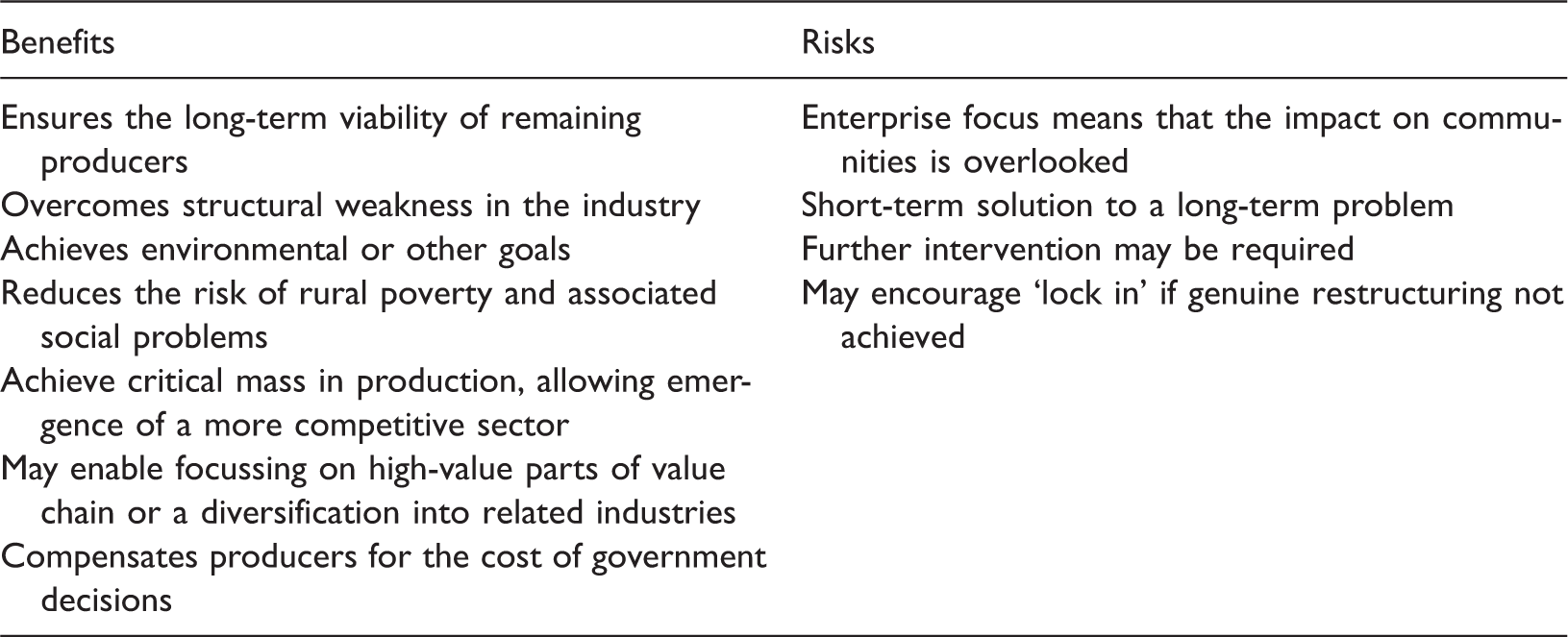
Over recent decades industry restructuring programmes have taken a number of forms in Australia and have sought to achieve a range of outcomes. One of the key goals of industry restructuring programmes has been – and remains – to assist industries adjust to new economic conditions in order to ensure their viability in the long term. Many programmes have sought to do this by assisting non-viable enterprises exit the industry. Examples include the Tasmanian Forest Contractors Exit Assistance Programme (2010–2011) and the Tobacco Grower Adjustment Assistance Package (2006–2007). Other programmes have been introduced to both assist a process of change, and compensate industry participants, following government policy shifts. The Tasmanian Forest Contractors Exit Assistance Program is one example, but others include the Murray–Darling Basin Small Block Irrigators Exit Grant 2008–2009 and the Queensland East Coast Commercial Net Fishing Reduction Scheme (2012–2013). Critically, industry restructuring programmes of this type appear concentrated in primary industries – agriculture, forestry and fisheries– where there are a large number of enterprises, production is geared to global markets and changing circumstances internationally have challenged the viability of some industries and their constituent enterprises.
Risks and benefits of industry restructuring programmes for affected communities.
The nature of structural adjustment programmes – Enterprise assistance
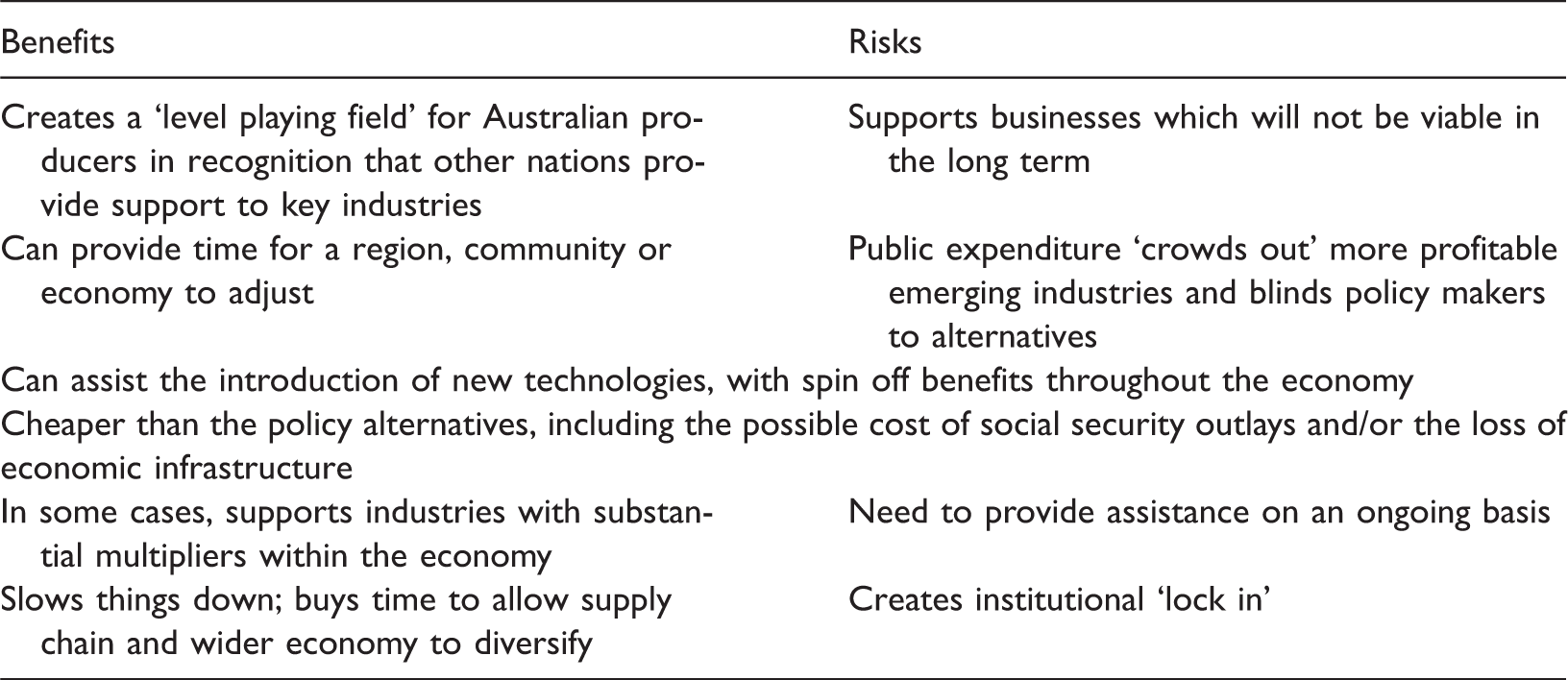
It is important to distinguish between industry restructuring and enterprise assistance because, while the former has an explicit goal of helping some participants leave the sector, the latter is geared to helping individual enterprises remain viable. In large measure, industry restructuring programmes have been more prominent in primary production in Australia, while enterprise assistance has more commonly been a feature of the manufacturing sector. The automotive industry is perhaps the most high profile example of enterprise assistance over the past 12 years in Australia. Programmes of enterprise assistance include: the Automotive Industry Structural Adjustment Program (2009–2012); Automotive Competitiveness and Investment Scheme (2001–2011) and the ATS (2011–2020).
Risks and benefits of enterprise assistance for affected communities.
The nature of structural adjustment programmes – Labour market programmes
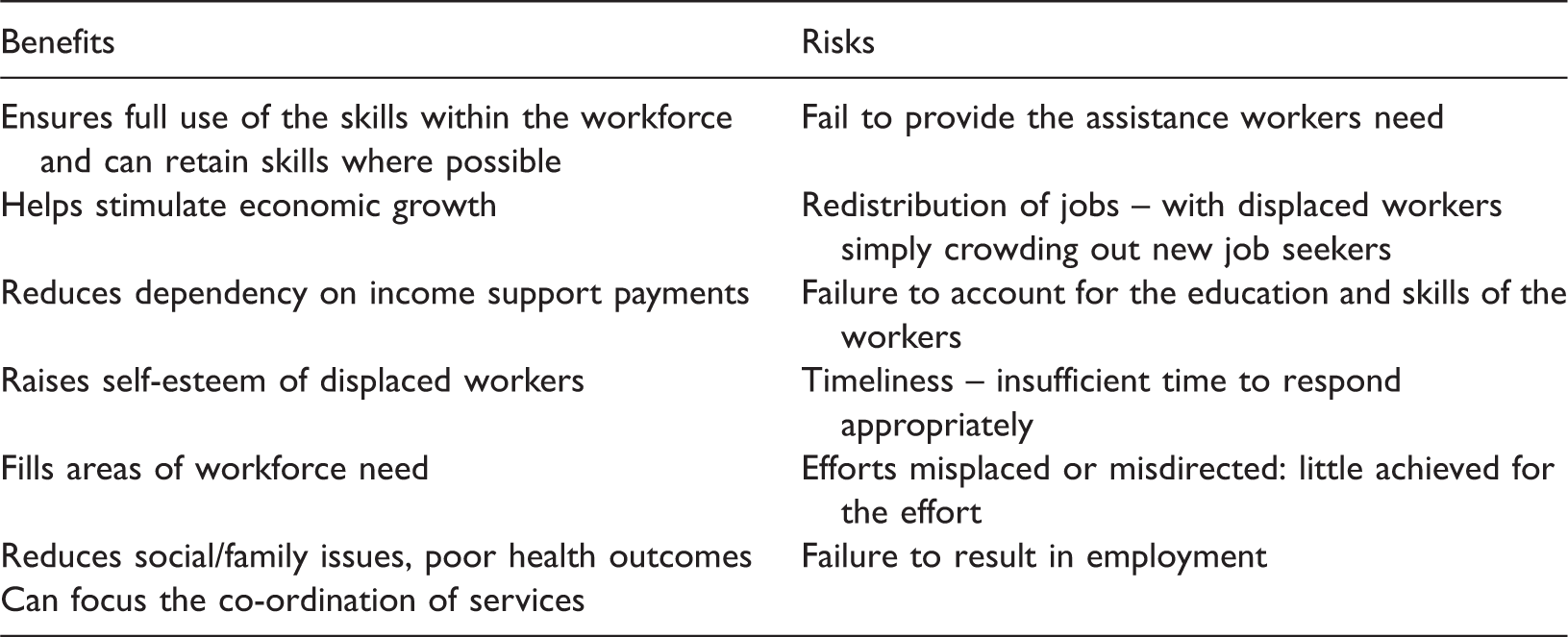
Labour market programmes are a prominent component of structural adjustment measures in Australia and other nations. Labour market programmes are commonly introduced to assist workers displaced by a plant closure or similar economic shock. Common features include expedited access to the highest level of support available through the Australian Government’s Jobs Network, training assistance, advice on establishing a small business, job fairs, information seminars on employment opportunities, assistance and advice on writing job applications and in preparing a contemporary CV for employment and measures to recognise prior learning.
Labour market programmes confront a number of challenges. In many industries the employees affected by change are older, long-term staff, with considerable working histories and substantial personal assets – either as superannuation, property or other forms of wealth. In these instances, a high percentage of workers may choose to leave the formal workforce. This loss of skilled labour can be exacerbated by generous redundancy provisions that effectively discourage a return to work. Labour market programmes may be confronted by a second important reality: in regions with few alternative employment opportunities, finding employment for staff to move into can be difficult – especially if the displaced staff have relatively high expectations with respect to wages and conditions. The programmes may therefore fail to achieve their objectives because the external environment is not conducive to their success. It can be argued that one of the keys to better labour market outcomes is a focus on a suite of measures, rather than one off interventions.
Risks and benefits of labour market programmes for affected communities.
The nature of structural adjustment programmes – Investment attraction strategies
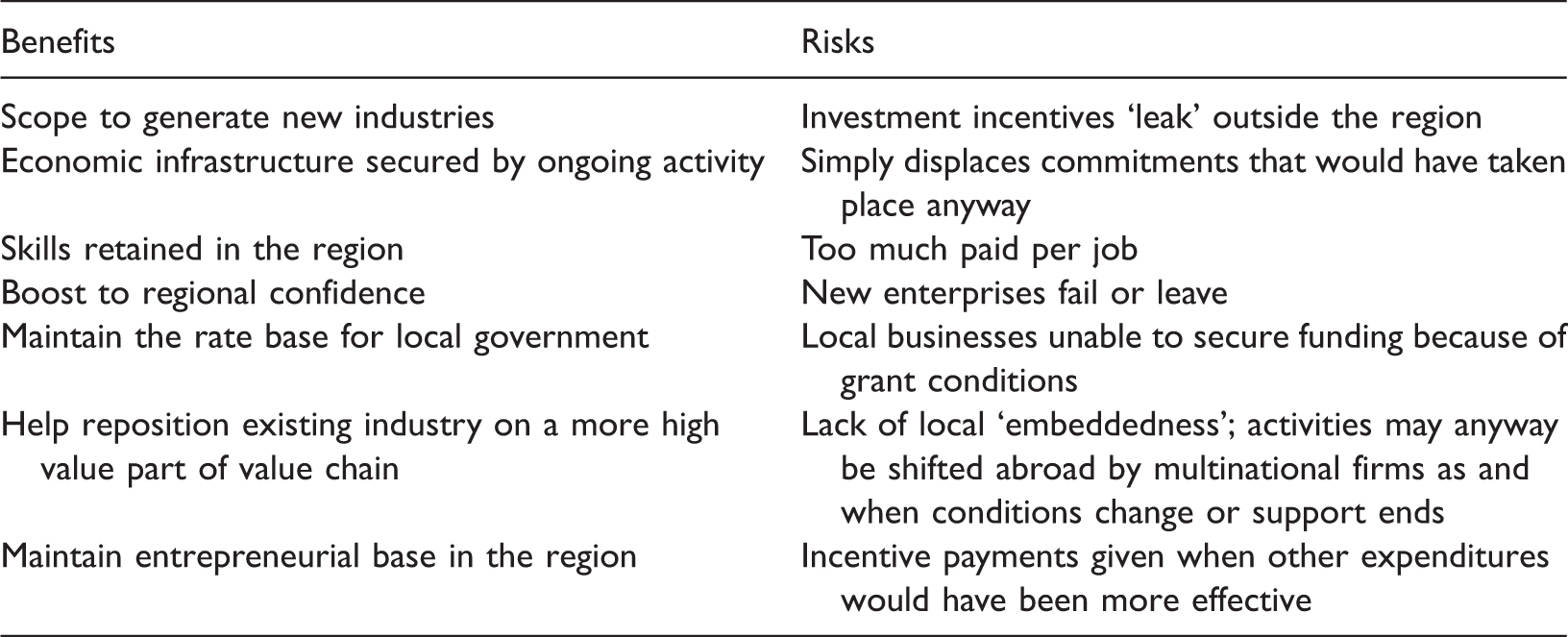
Investment attraction programmes have been used with increasing frequency across Australia. Such programmes consist of a funding pool – which may be exclusively monies from the Australian Government or a mix of resources that also includes State and private sector funds – made available to attract new investment. In some instances this consists of the entry of new businesses into the region, on other occasions it reflects the expansion of existing enterprises. Examples of investment attraction programmes include the IRIIF (2011–2014), SAFSA (2004–2006), SAIIF and Geelong Investment and Innovation Fund (GIIF) 2007–closed.
The scale of the recipient region is one of the key issues for investment attraction programmes. That is, does the new investment need to be located within the affected region or community, or is some degree of dispersion both expected and welcome? Beer and Thomas (2007), for example, noted that the SAFSA was highly dispersed geographically – a feature that raised concerns within the region. The more recent IRIIF was tightly targeted spatially, and this may reflect an evolution in such programmes over time. The SAFSA was also criticised for including criteria that appeared to restrict access to the programme by local businesses. Because the economy of southern Adelaide is dominated by small enterprises, few businesses could meet the $1 m minimum investment threshold to participate in the scheme. Funding, therefore, went to larger businesses outside the region or entering the region for the first time.
Risks and benefits of inward investment for affected communities.
Case studies: Illawarra and Southern Adelaide
Two case studies of structural adjustment are considered here: Southern Adelaide and the Illawarra region, centred on Wollongong (see Figure 1). Both locations had received assistance in the recent past or are currently in receipt of assistance. Southern Adelaide is metropolitan, while Wollongong is normally considered part of non-metropolitan Australia. It is important to acknowledge, however, that both are relatively urban places, either within, or close to, a major city. Both case studies were the subject of fieldwork in 2012 as part of a project funded by the Australian Government’s Rural and Regional Research and Development Grant Scheme and the findings presented in this paper reflect this original research. Both have received substantial structural adjustment assistance over the past decades, with the first programs of assistance rolling out in the Illawarra in the late 1970s. Both have benefited from government actions that have been spurred by political sensitivities over job losses, with the precise nature and volume of assistance determined on an ad hoc basis. Unlike parts of Europe, the absence of formal spatial planning or regional development policies has meant that plant closures have not triggered formal programs of assistance, instead the government of the day has balanced the potential political impact against fiscal concerns. In large measure the Australian Government has provided the majority of the financial assistance, with minor contributions from state governments. Often Federal Government monies have been the only form of assistance available.
The case studies.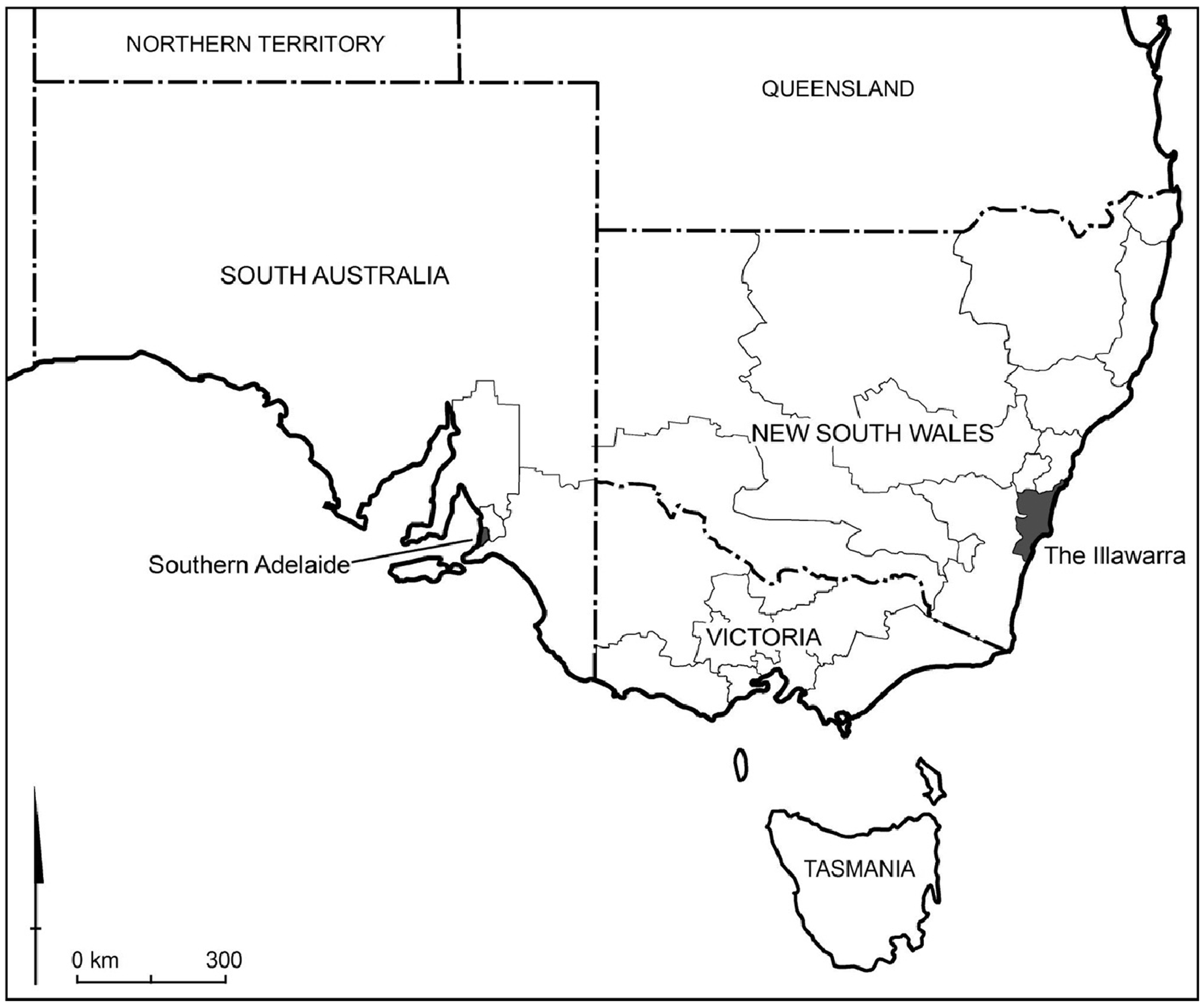
The Illawarra
Wollongong had a population of 181,000 persons in 2001, 183,000 in 2006 and 193,400 in 2011. Wollongong’s economy has long been dominated by the steel making plant that was established at Port Kembla by Broken Hill Proprietary Company Limited (BHP) in the first decades of the 20th century. Its economy is also affected by its proximity to Sydney, with approximately 20,000 workers commuting from Wollongong to Sydney daily. The University of Wollongong is also a significant economic force within the region, with students attracted from Sydney, southern NSW and internationally. The university has also been active in a number of technologically based industry projects.
The steel industry at Port Kembla has been undergoing a process of restructuring for a considerable period of time. Beginning in the 1980s with the Button Steel Plan, employees have been laid off and new technologies introduced to achieve greater efficiencies (Haughton, 1990). In the 1990s BHP restructured again, spinning off Bluescope Steel (Port Kembla) and OneSteel (Whyalla) as separate businesses. In 2011 Bluescope announced a further 800 voluntary redundancies as the company closed part of their facilities. It is important to note that the scale of this restructuring was small compared with the changes introduced in the 1980s when more than 15,000 jobs were lost. In July 2011 the Gillard Government announced the $30 m IRIIF to assist the region’s economy adjust to a smaller heavy manufacturing sector.
As Figure 2 shows, Wollongong’s population has been relatively stable over the past decade and in part this reflects its desirability as a place to live, as well as its closeness to Sydney. The 2011 Census data would not include the impacts, if any, of the 2011 redundancy round at Bluescope, but in the longer term consequences of restructuring from the 1980s are reflected in the lower growth rate and relatively high unemployment rate (Figure 3).
Wollongong Population 2001, 2006 and 2011. Unemployment and youth unemployment rates, Wollongong, 2001, 2006 and 2011.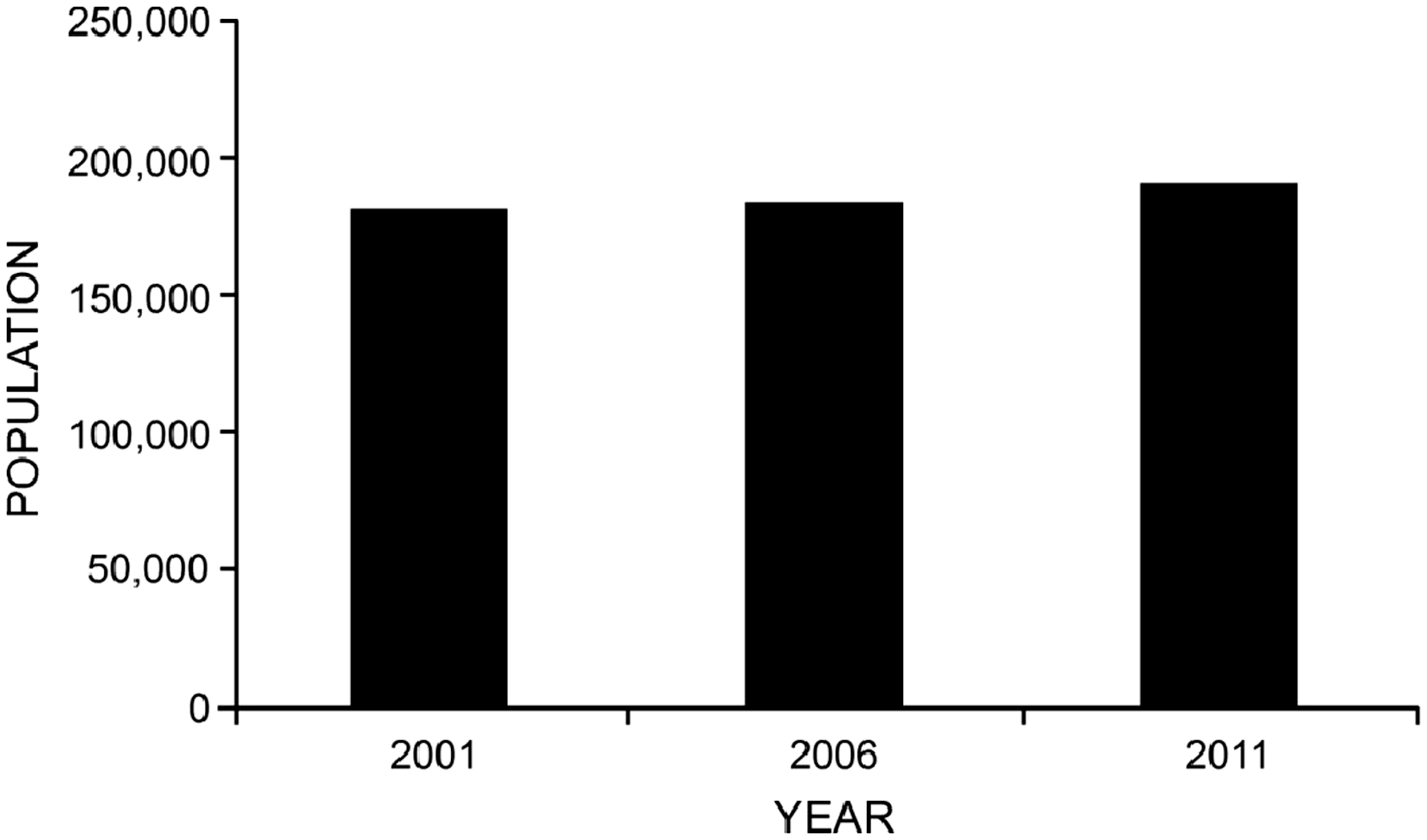
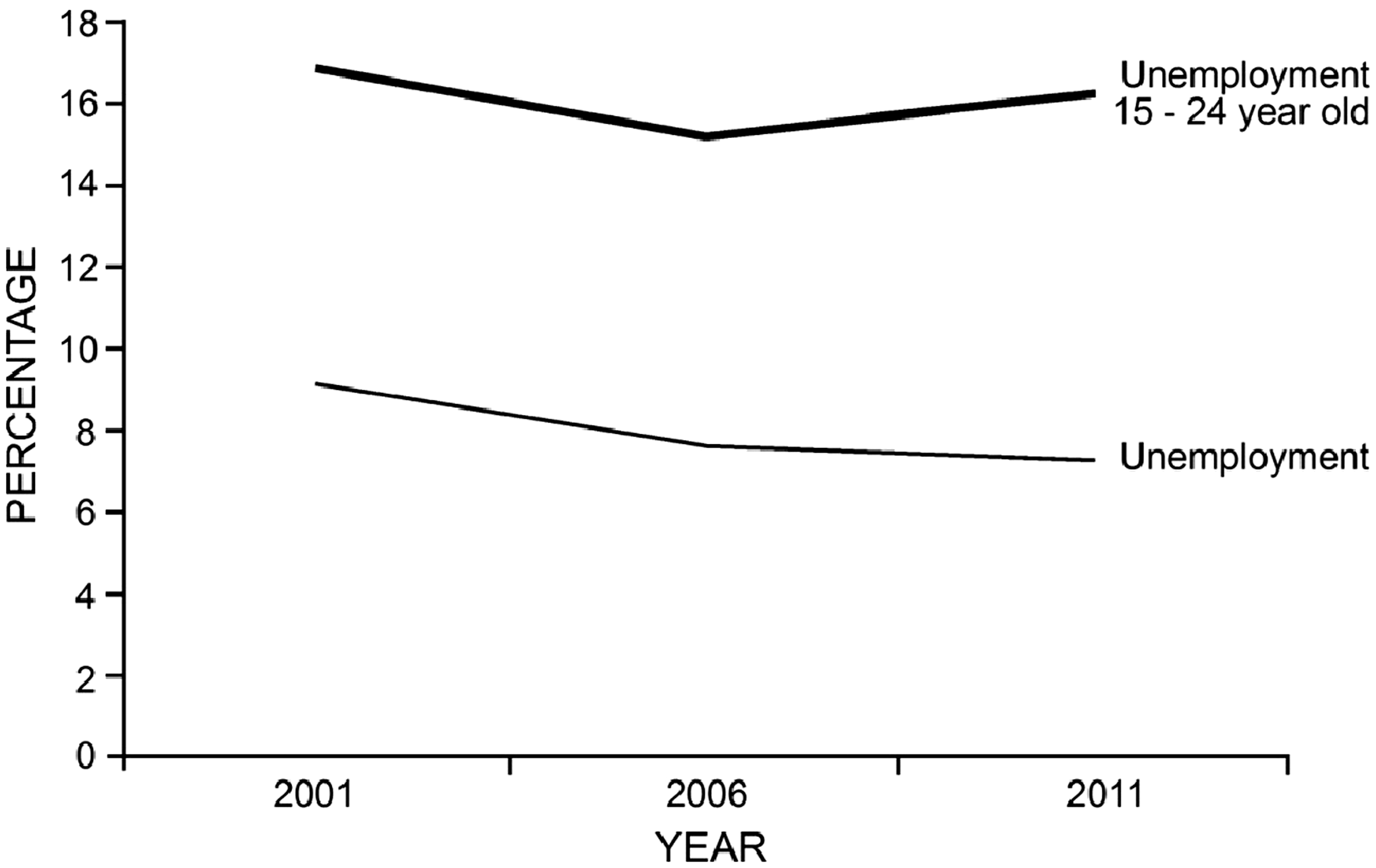
The unemployment rate in Wollongong has fallen over the past decade, though it remains appreciably higher – 2 to 3 percentage points – than the Australian average. Youth unemployment fell between 2001 and 2006, before rising again in 2011 – and in all years the rate of youth unemployment was high.
The restructuring of Wollongong’s economy over the decade 2001–2011 is evident in Figure 4, with a notable decline in manufacturing employment and growth in service employment – especially health and community services, as well as education and training. Accommodation and food services have also grown, as has retail trade and construction employment. There has been modest growth in mining employment, with the expansion of some of the mines locally and within the broader region. This structural shift would have accelerated since 2011, when Bluescope announced voluntary redundancies. Census data from 2001, 2006 and 2011 show that over that decade there was a pronounced fall in manufacturing employment in the Illawarra and a sustained rise in service-based employment, especially health care and social assistance, as well as in education and training. In large measure this reflects broader trends across Australia, though the pace of change appears greater in Wollongong. Manufacturing employment declined from a much higher level than the national average. Since the 1980s the University of Wollongong has grown rapidly and education (which includes much more than the tertiary sector) is now the second largest industry within the region.
Wollongong industry structure, 2001, 2006 and 2011.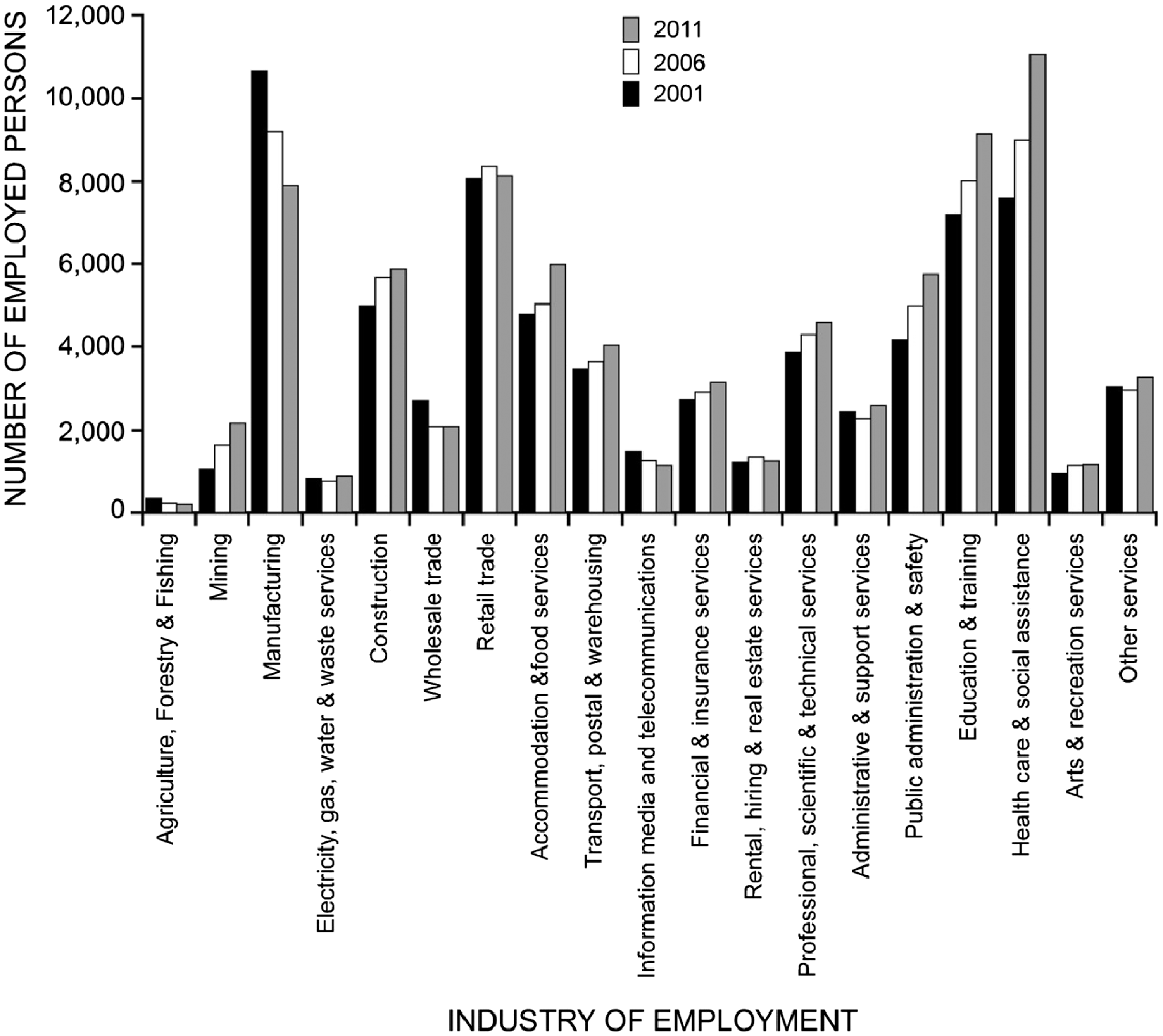
Discussions with stakeholders in 2013 throughout the region found a range of opinions on both restructuring within the Illawarra and the roll out of the IRIIF. Some of the key points to emerge included:
A sense that the IRIIF was implemented and closed too quickly, which meant that some potentially valuable projects were not put forward as they could not be fully developed in the available time frame. Some of the businesses to receive IRIIF support subsequently suffered under the Global Financial Crisis, but generally the projects were considered appropriate and worthy of investment. Workers made unemployed sought comparable well paid employment, especially in mining and mining related employment. Many were willing to participate in Fly In-Fly Out work schedules. Few workers were willing to leave the region permanently for employment in anything other than the mining industry. There was a strong sense that it is too early to determine the impacts of the IRIIF investment, but several stakeholders felt that the Australian Government could have done more to keep them informed. Several stakeholders felt that a greater level of control should have been devolved to local leaders, and that there was a need for greater transparency.
In addition, persons interviewed as part of this project reported an adjustment process that was in many ways similar to the outcomes reported elsewhere (Beer and Thomas, 2007). Some of the key insights included:
Acknowledgement that many experienced – and well paid – workers simply left the workforce; Workers with skills in demand found employment easily, while others struggled; Workers benefitted from advice and training on how to apply for work; Many who remained in the region found employment at much lower wage levels.
Not all commentators agreed with the direction and pace of structural adjustment in the region. One person noted that the building of high quality infrastructure investment would enable a far stronger growth dynamic in the region, while others felt that funding under the IRIIF was spread too thinly over a range of industries. All commentators, however, agreed that it was important that the Australian Government had been ‘seen to act’ at that time.
Southern Adelaide
Southern Adelaide consists of the local government areas of the City of Marion and the City of Onkaparinga, with a total population of just under 250,000 persons (Figure 5). There are a number of major industrial precincts within the region, including Lonsdale within the City of Onkaparinga and Tonsley Park and Edwardstown within the City of Marion.
Southern Adelaide population 2001, 2006 and 2011.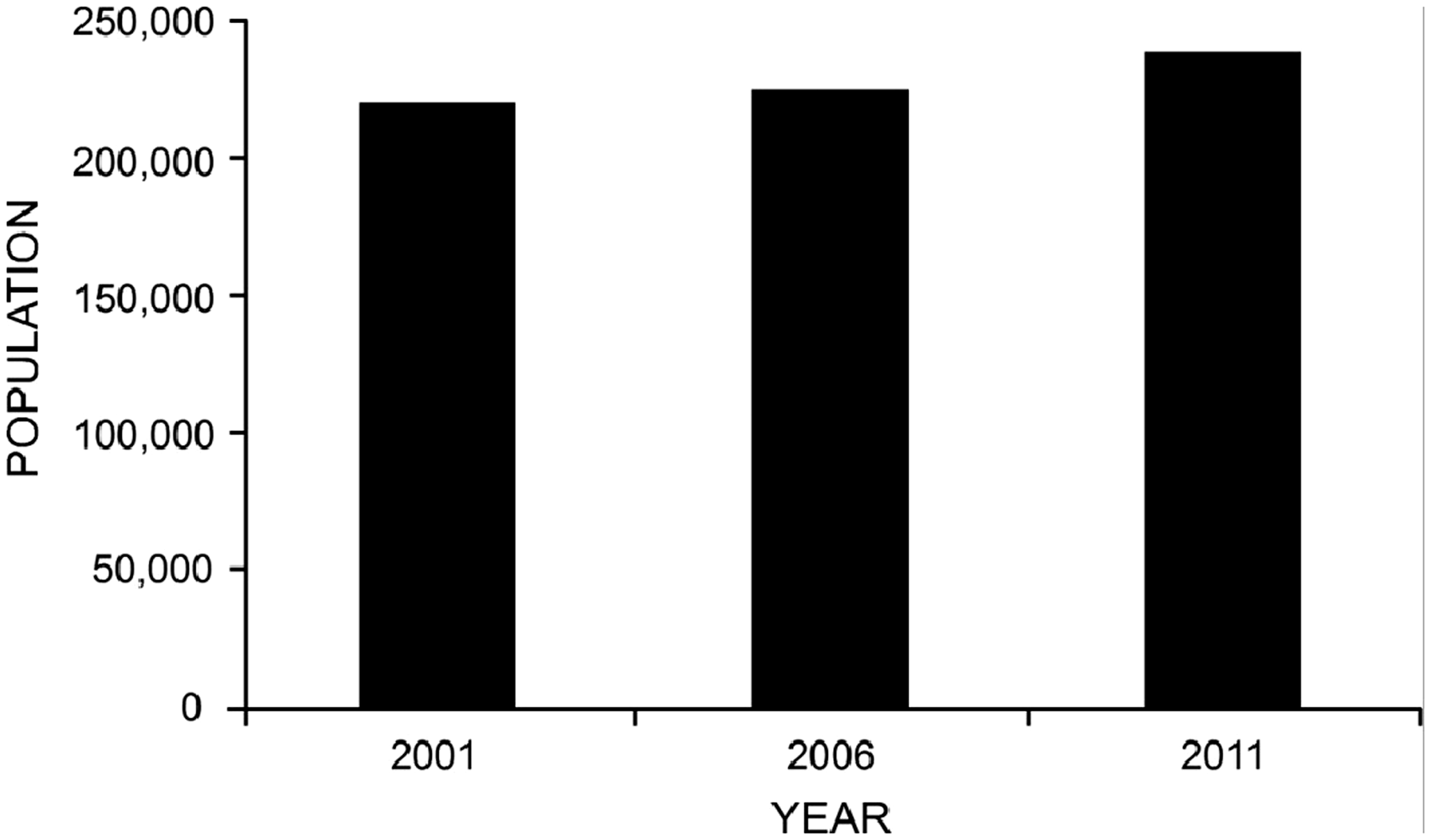
Between 2000 and 2012 a number of major plants closed in southern Adelaide. The Port Stanvac refinery closed in 2002, followed by Mitsubishi’s Lonsdale plant in 2005 and its Tonsley Park assembly plant in 2008. In 2006 Kimberley Clark closed its paper products facility in Lonsdale.
The closure of the two Mitsubishi facilities had a substantial impact on the region, with the firm employing more than 7000 staff in the year 2000, but less than 200 a decade later. The region received two packages sourced from the SAFSA 2004–2006 which followed the closure of the Lonsdale facility and the SAIIF associated with the cessation of car assembly at Tonsley Park. In addition, Mitsubishi received state government assistance up to 2008, and the closure of Kimberley Clarke resulted in workers gaining access to a support programme focussed on the Textile Clothing and Footwear industry.
Unemployment fell in southern Adelaide between 2001 and 2006, and increased slightly between 2006 and 2011 for the total workforce, and more markedly for workers aged under 24 years of age (Figure 6). The jobless rate was appreciably lower in southern Adelaide compared with some other parts of Adelaide, but it is worth acknowledging that many displaced workers were under-employed rather than unemployed.
Southern Adelaide unemployment and youth unemployment rates, 2001, 2006 and 2011. Source: ABS Census, 2001, 2006 and 2011.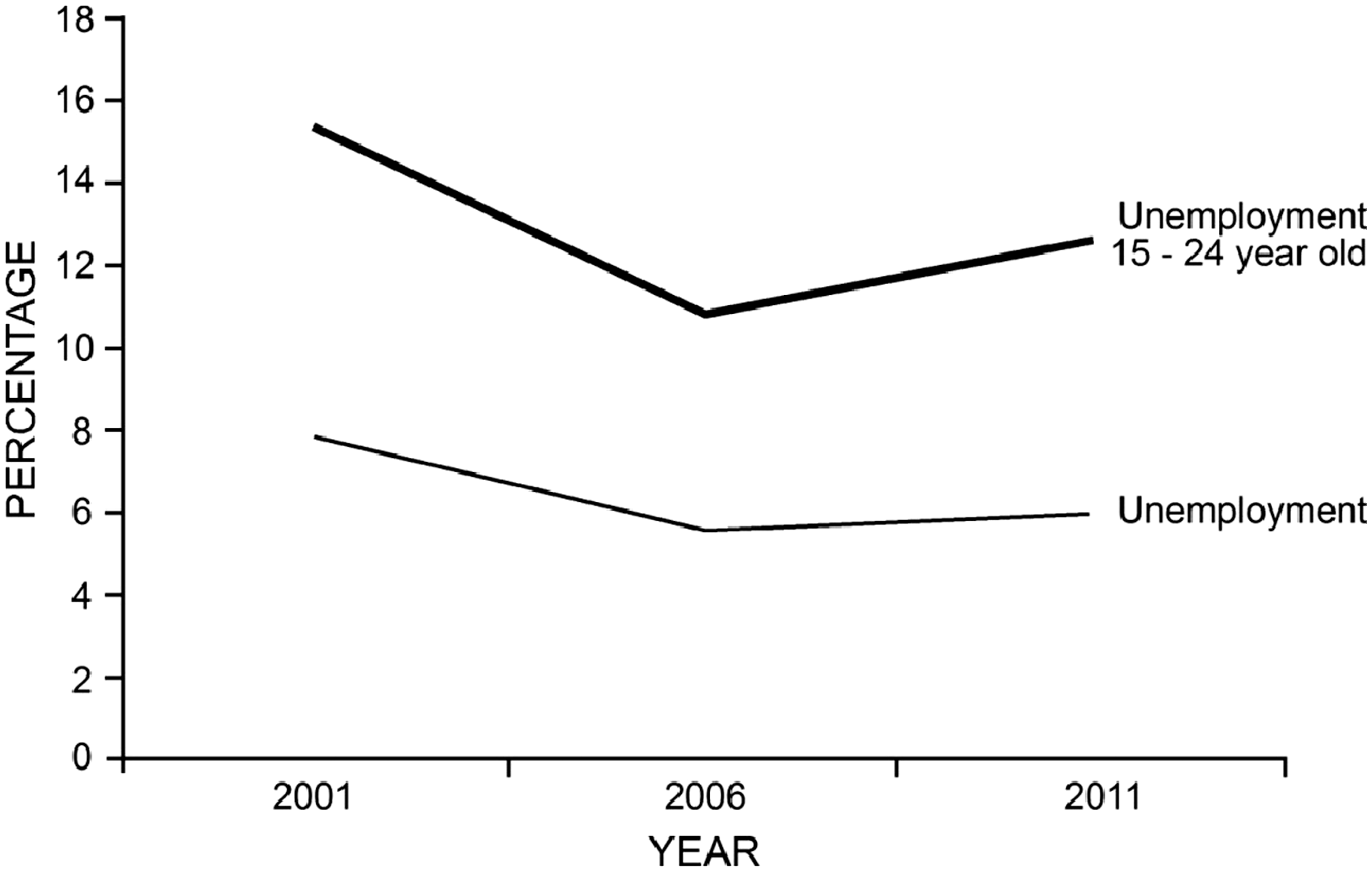
The structure of employment in southern Adelaide shows the clear impact of a decade of decline in manufacturing and growth in service-based employment (Figure 7). From 2001 to 2011 manufacturing employment declined by almost one-third (approximately 600 jobs) while the number of workers engaged in health care and social services increased by an equivalent figure. Retail trade employment also grew, as did employment in education and training; public administration and safety; and professional, scientific and technical services.
Southern Adelaide industry structure, 2001, 2006 and 2011.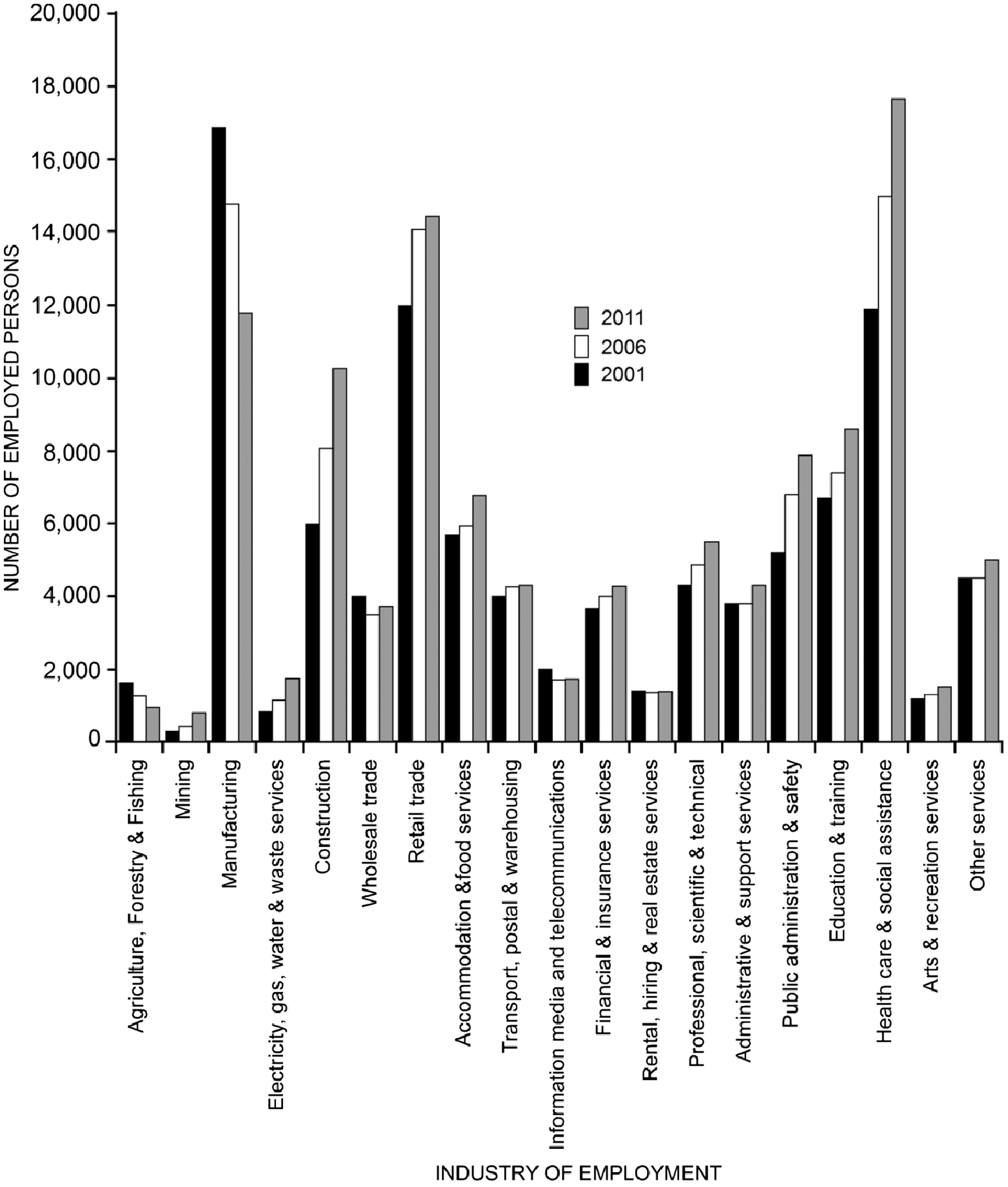
Stakeholders in the region acknowledged that southern Adelaide had made a relatively successful transition to a service-based economy over the decade to 2011. They noted, however, that household incomes had fallen as a higher percentage of employees worked part-time or casually, and because wages tended to be lower in retail trade, health care and social services. Construction employment can pay well, but it offers less job security compared with the manufacturing sector. Informants were also concerned about the effectiveness of some of the projects funded under the structural adjustment programmes associated with the Lonsdale and Tonsley Park closures. They felt that:
Small businesses struggled to gain access to the SAFSA as the $1 m minimum threshold for investment ruled out too many enterprises. This issue was addressed in the design of the later programme. An unacceptably high percentage of funds were invested outside the region. That the cost per job created may have been too high. Not all enterprises to receive funding under the SAFSA survived five years. However, some that did not were taken over by other businesses which then expanded production within the region.
Making sense of structural adjustment in Australia
The examination of structural adjustment programmes has shown they are much more common within Australian policy domains than might otherwise be anticipated, that some regions have received numerous structural adjustment programmes and that such programmes can be divided into four distinct types of intervention, though any individual programme is likely to include a mixture of elements. While there is a well-developed literature on the principles underpinning structural adjustment measures and their potential advantages and disadvantages, the empirical analysis is remarkably scant. The paper has also considered two case studies, both of which suggest that structural adjustment programmes appear to speed up the process of industry restructuring. That is, they have expedited the transition from industrial to post-industrial regional economies. The paper has also considered the views of key informants in the regions, many of whom felt that structural adjustment measures could be better targeted: geographically, with respect to the recipient enterprises and over a more realistic – that is longer – time frame.
In attempting to assess the impacts of structural adjustment programmes, we need to answer two separate, but inter-related, questions. What would have happened in the absence of action by government? Was the form of assistance provided is appropriate to the level of need within the community and did it represent ‘best practice’ with respect to structural adjustment? There is no clear-cut answer to either question, but we can draw conclusions on a balance of probabilities approach. In all cases, affected regions would have eventually ‘adjusted’ if no action had been taken by governments. In all likelihood, confidence in the region would have fallen to a greater extent, investment in the region would have declined more dramatically, the process of rebuilding would have taken longer, a higher percentage of workers would have left the labour market or spent long periods away from paid employment. In addition, local infrastructure expenditure would have declined and there would have been a greater loss of skills from the region. It is likely that the reputation of the region would have suffered. Structural adjustment programmes in Australia mute these adverse impacts and deliver a number of intangible benefits to regions, including boosts to their reputation as a place to do business, a more buoyant outlook amongst consumers and enterprises and the opportunity to reshape their future. These psycho-social benefits are important because as Cook et al. (2013) showed, the announcement of industry adjustment programmes gives a sense of responsiveness that in turn creates a more positive regional outlook. One can therefore conclude that structural adjustment programmes are a valid and necessary policy measure, as the costs of not introducing such interventions are unacceptably high. These costs include a greater loss of business confidence, the erosion of human capital, lower social capital and the loss of productive capacity in both fixed assets and labour. Even enterprise assistance can be justified where it gives a regional economy or community time to reposition itself within national or global markets, a point underlined by Bailey et al. (2008).
There is greater complexity associated with the question of whether the forms of assistance provided are appropriate to the level of need and represent ‘best practice’ at a national and international scale. The review of the literature and the case studies has identified a number of key issues, including:
1. Time period. Structural adjustment is a long-term proposition and measures that attempt to find solutions in a narrow time frame are not likely to find the best possible outcomes. 2. Anticipatory planning. The overwhelming majority of structural adjustments can be anticipated and early steps are needed to (a) reduce the likelihood of adverse events, (b) reduce the scope and scale of adverse events and (c) plan for a new future. Anticipatory planning does not encompass subsides for failing firms, instead it should be a process of looking to a new future for the region and its businesses and fostering, for example, diversification. 3. Governance and information dissemination. Governance reform should be embedded in the process of structural adjustment to ensure that appropriate mechanisms remain to drive change and growth in the region or community. This may involve the creation of new entities or it could see the reform of existing institutions. In addition, the broader community needs to be kept informed of the change process. 4. Focus on the affected region. Assistance measures need to be relatively tightly targeted to those places affected by change. The relative spatial immobility of a large part of the Australian workforce means that solutions need to be generated in the localities experiencing change. 5. Human capital is a driver of growth. Structural adjustment measures should always seek to add skills and abilities to the region’s workforce, as well as retain existing skills for incoming investors. 6. Economic diversification is a partial answer. More successful approaches to the repositioning of economies seek to build upon existing capacities – skill sets, infrastructure, intellectual capital, etc. – using an approach referred to as ‘smart specialisation’ (McCann and Ortega-Argilés, 2013). Such considerations should inform any inward investment.
One of the realities confronting policy makers is that there is no single action or policy measure governments can introduce to best facilitate structural adjustment. Rather successful outcomes appear to be dependent upon:
1. The external environment – including the prosperity of the national and/or global economy, the viability of other industries within the region; 2. The assembly of the most appropriate mix of policy measures, which potentially includes infrastructure provision, labour market assistance, education and training, inward investment, improved governance arrangements to facilitate economic activity and place marketing. 3. The stock of human and social capital within the region. Effective leadership can expedite the process of change (Beer and Clower, 2014), while a workforce with flexible and/or sought after skills may either attract new investment or shift relatively seamlessly to other industries.
While there are dangers in transferring European experience to Australia without critical reflection, there would appear to be some lessons for Australia with respect to the nature and type of assistance delivered to restructuring regions and their businesses. The focus on assistance of lesser value targeted to small business appears critical, as does the emphasis on the provision of advice in addition to finance (Mouque, 2012). The evaluation of assistance measures would appear to be an important step in the development of better policies, an argument made by the Productivity Commission.
Overall, the case for government intervention in structural adjustment programmes appears compelling. Of the four forms of assistance the evidence in support of enterprise assistance is weakest: it is often provided to enterprises for whom decline is inevitable; it creates a degree of ‘path dependency’ in the economy that can make adjustment more difficult; it is relatively expensive and it does not change the behaviour of recipient firms. The case for inward investment strategies is stronger as it enjoys support both within the published literature and from amongst the community. We can conclude that industry restructuring programmes have positive impacts and therefore represent a valuable contribution to the total set of potential policies. However, greater attention could be paid to the social outcomes associated with these measures. Finally, we can conclude that appropriately targeted labour market assistance is of considerable value.
Conclusion
Rodriguez-Pose (2013) has argued that the growth of regions is not shaped by the simple presence or absence of appropriate institutions – the institutional environment – but instead upward or downward trajectories are determined by the quality of the interventions enabled or supported by institutions – the institutional arrangements. Such arrangements need to overcome the impediments to economic development, allowing pre-existing measures – such as national programmes and policies – reach their potential. Within this context, structural adjustment programmes can be considered to be an institutional arrangement, often focussed on particular regions and intended to overcome local challenges to growth. The discussion has identified four dimensions to structural adjustment in Australia, which suggests that they respond to separate challenges: the lack of appropriate skills within the workforce; a shortage of investment in infrastructure and new businesses; short-term volatility in major industries or enterprises as a result of external factors – such as environmental perturbation, currency fluctuations, etc. and long-term structural change requiring the departure of some participants from the industry. The last two are closely related and at some stage short-term volatility in an industry must be construed as longer term structural change. Australia’s recent experience would suggest that on occasion short-term assistance is applied – often for a considerable period – in spite of mounting evidence of a more profound structural shift.
The emphasis placed by Rodriguez-Pose (2013) on the quality of institutional interventions rather than their sheer presence or number is helpful at a number of levels. It leads us to conclude that it is the quality of the structural adjustment programme – how well it is targeted at the impediments to growth locally, whether it is the right form of structural assistance, whether its implementation addresses the most appropriate actors at the local scale, etc. – that determines its value and contribution to the region. The European Union (Mouque, 2012) has also shown that it is possible to identify both more and less effective strategies for facilitating regional rebirth. By implication, we can conclude that not all structural adjustment measures are of equal merit. This must lead us to conclude that structural adjustment measures can be effective and often are effective, but the challenge is to introduce appropriate programmes at the most appropriate time. Good quality structural adjustment programmes will deliver long-term impacts, while poorly conceived initiatives will generate limited gains. The question we should therefore ask is not, do structural adjustment programmes work? Rather the challenge is to find an answer to the question, which structural adjustment measures work best under which circumstances and how can we ensure appropriate action is implemented?
Footnotes
Funding
This research received no specific grant from any funding agency in the public, commercial, or not-for-profit sectors.