







Abstract
The Gold Coast and Tweed coast region is an archetypal Australian high amenity coastal area. It is also home to a local surfboard manufacturing industry of international standing, with well over one hundred separate but frequently closely related firms located in this littoral zone. This paper explains the rise and enduring influence of the Gold Coast/Tweed surfboard manufacturing agglomeration through the conceptual lens of the new industrial districts literature. We explore the many multi-scalar challenges the local industry faces in order to remain viable in the longer term. Based on interviews with 19 active participants in the Gold Coast/Tweed surfboard and ancillary manufacturing industries during 2010, we find that a combination of high quality surf, an established surfing culture, local planning instruments, and ready accessibility to high quality material suppliers, have facilitated the emergence and subsequent evolution of the local surf industrial district. However, our research also finds this local cluster at a crossroad. International competition – exacerbated by Australia’s high exchange rate and cheap local ‘backyard producers’ – threaten cluster members’ already slim margins. The ongoing structural ageing of the cluster’s chief operators, driven in large part by an inability to attract younger workers/entrepreneurs, is at least partly explained by the precarious and penurious nature of employment and pay in the sector. The highly individualistic and independent nature of most surfboard manufacturers – once a key feature of the cluster’s ‘industrial atmosphere’ – has become something of a weakness with the industry unable to collectively agree on the creation of a formal government/peak industry organization to auspice accredited training and industry-specific lobbying.
Keywords
Introduction
The Gold Coast and Tweed coast region is an archetypal Australian high amenity coastal area which, until the turn of the millennium, experienced some of the fastest rates of population growth in the nation, fed predominantly by in-migration from the southern Australian states (Burnley and Murphy, 2004; Hugo, 1996; O’Connor et al., 2001). Although the region has increasingly become associated with high rise apartment and resort development (Beer et al., 2003), it is also home to a local surfboard manufacturing industry of international standing. While Hawaii is widely regarded as the spiritual home and ultimate ‘proving ground’ of surfing, the Gold Coast/Tweed surfboard manufacturing agglomeration is anecdotally by many referred to as ‘the Hollywood of surfing’.
Well over one hundred separate but closely related firms have congregated in this littoral zone straddling the New South Wales (NSW) and Queensland state border. While the individual businesses are generally small in size – measured by turnover and employment – the sector plays an important role in generating economic rents for surf manufacturing businesses, in providing direct employment, and in promoting the region to the 12 million domestic and international tourists who visit every year (City of Gold Coast, 2014). This contribution takes on extra significance, given the region’s structural disadvantages. Baum et al.’s (1999) research categorized the Gold Coast as a member of its ‘disadvantaged outer communities’ cluster, a grouping where, inter alia, population growth had rapidly outpaced the regional economy’s capacity to create jobs (see also O’Connor et al., 2001). With a heavy dependence on national and international tourism, the Gold Coast is susceptible to global financial market fluctuations and general market conditions. In the wake of the global financial crisis and the rapid appreciation of the $A, the Gold Coast’s rate of population growth dropped to just over 1% per annum (down from over 5% per annum prior to 2000), while Gross Regional Product (GRP) declined during 2009/2010. The Gold Coast’s GRP has since recovered to A$25.24 million in 2013 (economy.id.com, 2014). Unemployment in the region is frequently well above the national average (Lappemann, 2012), though given the high level of out-commuting official figures almost certainly understate the true employment deficit.
In numerous respects, the local surf industry agglomeration is a creature of post-Fordist, neoliberal times: a small-scale, locally-led, organically evolving sector that is immediately responsive to market demands. It has remained resilient despite only sporadic and limited assistance from State and Federal Governments. Yet, like many other parts of the domestic manufacturing sector, the Gold Coast/Tweed cluster is experiencing a series of threats to its long-term survival, including foreign competition, unregulated local producers and itinerant vendors, and increasingly stringent local planning and occupational health and safety (OH&S) regulations. With reference to the international literature on industrial districts and their contributions to local economic development, this paper seeks to explain the rise and enduring influence of this regional agglomeration, and to explore the many multi-scalar challenges it faces in order to remain viable in the longer term.
We now briefly review the literature on agglomeration economies and their importance to regional development before considering the local economic significance of the surfboard manufacturing industry in select Australian regions. This background is followed by an outline of the methods and results of recent research into the Gold Coast and Tweed surf cluster.
The difference proximity makes: Industrial districts, surfing and regional development
For over a century, agglomeration has been regarded as the dominant tendency and recommended strategy in the development of regional space economies (Lindqvist, 2009; Lloyd and Dicken, 1977; Porter, 1998, 2000). Effectively, agglomeration economies are the manifestation of urbanisation and localisation economies, and these typically enable firms to realise enhanced productivity, profitability and innovation (Scott, 1993). As such, agglomeration economies are fundamental, ceteris paribus, to individual firm profitability and the ongoing development of industry innovation (Gordon and McCann, 2005; Keeble and Wilkinson, 1999; Saxenian, 1994; Searle and Pritchard, 2005).
Of course, not all agglomeration economies are alike (Markusen, 1996). The archetypal industrial districts eponymously described by Alfred Marshall (1961) in the early 20th century were regarded as providing the greatest contributions to local and regional development, relative to other industrial locational patterns (Amin, 2003). The ideal-typical Marshallian industrial district comprises a collection of small firms which, inter alia, trade inputs and outputs intensively with each other, share information (selectively) and engender a strong local culture reflected in product type, approaches to innovation and branding/marketing. Traditional class barriers and tensions between capital and labour are largely non-existent. While some inter-regional labour migration and mobility do occur, workers are generally loyal to their employer and region (Amin, 2003; Markusen, 1996; Marshall, 1961).
Consistent with this essentially artisanal and autarkical structure, key regulatory and financial institutions are primarily locally-based and frequently work closely, if informally, with local businesses. In the more contemporary ‘Italianate’ versions of the Marshallian district (see Markusen, 1996), there is a high degree of overlap between kin (extended over generations), business ownership and leadership in local trade associations, local government and locally-significant sporting and cultural groups (Amin, 2003; Markusen, 1996). In other words, the true Marshallian industrial district is characterised by high levels of locally-embedded social capital.
A key product and inbuilt defence mechanism of this combination is Marshall’s famed ‘industrial atmosphere’ (Amin, 2003; Barnes, 1997; Marshall, 1961). For Amin (2003: 153): … this atmosphere includes a life ethic based on self-help, entrepreneurship, and a sense of local belonging; a regular flow of bottom-up innovations generated by the industrial atmosphere; a culture of emulation resulting from the mobility of labor (sic) between firms; and an area reputation.
During the 1980s and 1990s concern emerged that Marshallian industrial districts would succumb to globalisation as trans-national corporations (TNCs) and multi-national corporations (MNCs) spread their production and distribution networks globally. However, research (e.g. Amin and Thrift, 1992; Goodman et al., 1989; Piore and Sabel, 1984) demonstrated the resilience of this industrial form, particularly in the famed ‘Third Italy’, Silicon Valley and Orange County, California (Amin, 2003; Markusen, 1996).
The relative durability of the Marshallian industrial district has been attributed to a combination of factors, including: the standard urbanisation economy benefits of location within an agglomeration; producers’ commitment to quality, rather than quantity; and a related focus on maintaining craft skills and techniques while simultaneously innovating (often stimulated by worker mobility between firms within the same district) in the production process. A vital resource in the ongoing survival of the modern industrial district therefore is craft knowledge and the appropriate techniques for its transmission amongst relevant workers: Success – at individual and network level – is the product of craft knowledge and experience, apprenticeship, imitation, and incremental innovation and adaptation. Learning is achieved through imitating, doing and using … Industrial districts thus are specific learning environments, equipped for continuous and incremental adaptation within given niche-markets through the mobilization of informal ties and tacit knowledge. (Amin, 2003: 164)
Motorsport Valley, UK, exhibits many of the key characteristics of a modern Marshallian industrial district (Henry and Pinch, 2000). The region contains a dense agglomeration of motorsport activity within a 50 mile radius around Oxford in southern England, producing an annual turnover of £1.3 billion (in a global industry of £5 billion) and employing between 30 and 40,000 people (mostly engineers) (Henry and Pinch, 2000: 120–123).
Motorsport Valley’s evolution has been attributed to the external scale economies realised from its close proximity to the best suppliers, together with its adaptation to so-called ‘accidents of history’ (e.g. tobacco advertising laws, vertical integration of firms, aviation industry input). Motorsport Valley has become a knowledge and learning community through the exchange of information, driven by competition, innovation and professional respect. The close spatial proximity of leading innovators is complemented by the clique-like relationship between designers, managers and engineers, facilitating rapid responses to shifts in technology and knowledge. The generation and dissemination of knowledge within Motorsport Valley are critical to its position as the world leading region for motor sport.
Staff turnover enables the knowledge-sharing central to the Valley’s success. Workers stay an average of 3.7 years per firm and make a mean eight moves across their career. Manufacturers report an annual staff turnover rate of 10% (Henry and Pinch, 2000: 128). The supplier–client relationship is also significant in assimilating new innovations, modifications and techniques throughout the industry. Social interaction, such as gossip, rumour and observation, is also important. Team members are constantly observing competitors’ products and performance and, hence, pit lane, testing tracks and race meets are important venues for the casual trading of industry information. It is a key argument of this paper that localised social–cultural interactions – Storper’s (1997) ‘untraded interdependencies’ – are a generally overlooked catalyst in the formation and maintenance of such ‘soft capitalism’ industry districts (Hudson, 2005).
In relation to agglomeration economies within the Australian surfboard manufacturing industry, recent studies have identified the local economic significance of the sector. But equally profound are the considerable threats it faces. In southern Victoria, the Surf Coast Shire’s Surf and Lifestyle Torquay (SALT) Program found that surf-related businesses in the region employed around 650 people, generating more than $18 million annually in wages, salaries and other operating expenses (Emerick, 2008; Pickett and Pickett-Thomas, 2007). However, with increased domestic market penetration by cheaper imported Asian surfboards and greater shares being taken by high volume production sites in NSW and Queensland, Victorian surfboard makers were effectively limited to custom orders and repairs. In this cut-throat environment inter-firm collaboration had greatly diminished (Emerick, 2008). Nevertheless, the study recommended that formal industry management should be instituted to encourage collaboration, networking and labour and skills development. Surf Coast Shire Council offered to facilitate the co-location of numerous manufacturers who would also share resources (e.g. automated shaping technologies) (Pickett and Pickett-Thomas, 2007) but to date no such arrangements have been instituted.
Sirasch et al. (1998) revealed similar barriers to the development of a surfing equipment and apparel industry in the Newcastle (NSW) region. Although surfing was an important contributor to the regional economy, local board manufacturers faced numerous threats to their profitability, including: ‘backyard operators’; lack of skilled local workers; lack of retail and export market knowledge; high sales tax; and low profit margins. Sirasch et al.’s (1998) report also noted the need for a coordinated freight system and a board manufacturing co-operative to provide small operators access to equipment, safer working conditions, lower overheads, a pool of skilled labour and an opportunity for enhanced collaboration. The study concluded that many of the local industry’s problems could be attributed to the lack of co-ordination between the region’s surfboard manufacturers, a dearth of local industry leadership, an inability to attract youth to the sector and the need to secure more surfing events for the Newcastle region.
… the Gold Coast surf industry is a significant contributor to the local economy. Total output of the industry in 2007/2008 (direct and flow on) was estimated to be approximately $3.3 billion creating approximately 21,760 full-time equivalent employment positions on the Gold Coast. The Gold Coast surf industry contributes approximately 9.4% of the local economy’s total output and supports around 12.6% of total employment within the Gold Coast LGA… The direct contribution of the industry to the local economy in 2007/2008 was estimated to be approximately $1.4 billion in output, with around 9,400 full-time equivalent employment positions on the Gold Coast… (A. E. C. Group, 2009; see Table 1)
Output of Gold Coast surf businesses, 2007/2008.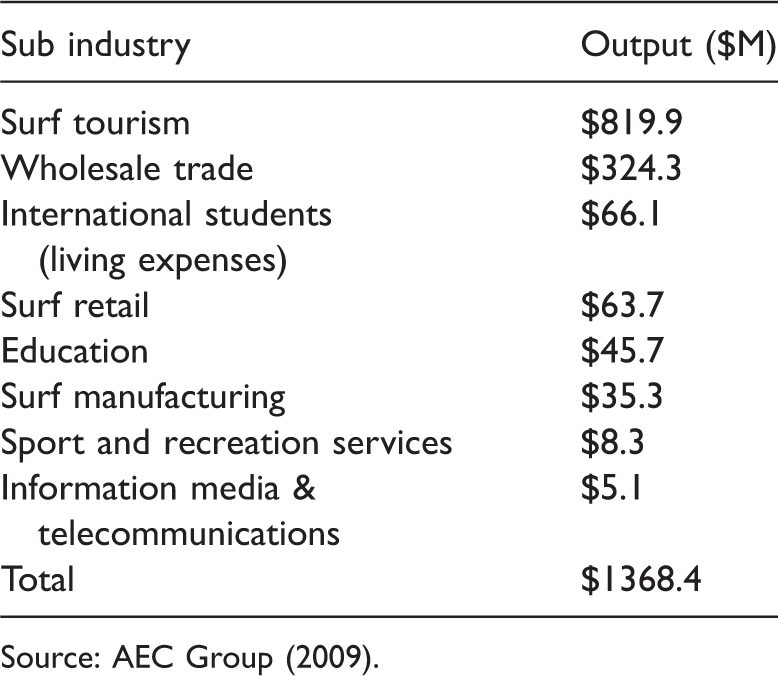
Source: AEC Group (2009).
Despite these findings, the local surfboard manufacturing sector has been hampered by problems similar to those facing producers in Victoria’s Surf Coast and New South Wales’ Hunter regions. In 2002, the Gold Coast City Council (GCCC) worked with relevant Federal and State Departments to create a Surf Industry Development Plan. The plan’s major objectives were to standardise and formalise industry practices in an effort to remove ‘backyard operators’, to investigate education schemes, and to identify export opportunities. It was also identified that the industry lacked a coordinated leadership body and that measures should be taken to review environmental and OH&S practices. Consistent with the findings of Pickett and Pickett-Thomas (2007) and Sirasch et al. (2008), no consensus could be reached on how to act upon the report’s recommendations and no lasting actions were implemented (Ellemor, 2007).
The research project at the centre of this paper was inspired by the many troubles confronting highly-localised and small-scale surfboard manufacturers in Australia. The aims involved three separate but related tasks. The first objective was to identify surfboard and surfboard componentry manufacturers within the Gold Coast–Tweed region. Second, the research sought to investigate the sector’s historical/geographical foundations, and its economic contribution to the region. Third and finally, the project aimed to explore the material and non-material transactions within the sector, and to ascertain its status as a functioning and sustainable ‘industrial agglomeration economy’, one that may be able to see off the numerous and multi-scalar challenges it currently faces and grow in importance as a local employer. After outlining the methodology the remainder of the paper reports on the results.
Riding the crest of a wave? The Gold Coast/Tweed surfboard manufacturing sector
Methods
The first step in this research involved establishing a comprehensive spatial database of Gold Coast surfing manufacturers. This was also used to recruit participants for a questionnaire and a follow-up semi-structured interview. The second step was to describe the spatial and temporal development and operations of the agglomeration, focusing on individual manufacturers’ production methods, labour inputs and formal and informal interactions with each other. In order to understand the agglomeration’s historical context, a number of meetings were held with prominent surfing industry representatives. Discussions were also held with local government planners, economic development officers and other key informants. Essentially, these individuals formed an expert panel for the research and provided advice, inter alia, on questionnaire development. All phases of the field research were approved by the University of New England’s Human Research Ethics Committee.
To address the third facet of the project, interviews were held with 19 active owner/manager participants in the Gold Coast/Tweed surfboard and ancillary manufacturing industries. This sample represents approximately 15% of the surfboard and ancillary manufacturers within the region. The respondents were purposively selected to ensure that all parts of the surfing commodity chain were covered, including shapers, contractors, retailers, materials suppliers and wetsuit manufacturers. All 19 had considerable industry experience, having spent an average 27 years in surfboard manufacturing. Each interview was recorded and transcribed, with responses tabulated in a Microsoft Excel spreadsheet.
Over the last decade, surfboard manufacturing has undergone radical change. New technology has been applied not only to board and componentry fabrication and production, with increased local outsourcing, but also large scale vertical integration in Asian countries such as Thailand, China and Indonesia. However, the material inputs have essentially remained the same since the early 1960s when polyurethane foam replaced wood. After foam blanks are manufactured in a specialised factory, they are delivered to a surfboard workshop. Shaped to precise specifications by manual planing (or a shaping machine) and sanding, each foam board is fitted with decals and laminated with a single layer of fibre glass cloth. The cloth is then saturated with resin (called the hot/fill coat) to ensure the foam is waterproof. For about 40% of custom-made boards, a second ‘gloss’ coat is added for additional strength and aesthetic appeal. After the resin has set, the board is given a final light sand and polish. Fins are fixed during the laminating/glassing stage or the plugs for interchangeable fins can be fitted after glassing. Boards may also be sprayed with vivid artwork (Jennar, 2007; Warshaw, 2004). Some material inputs have changed in recent years, such as the use of extruded polystyrene foam (XPS) and epoxy resin and since the mid-1990s interchangeable fins have developed into an increasingly diverse sub-industry (Figure 1).
Joe Larkin’s surfboard factory, Kirra.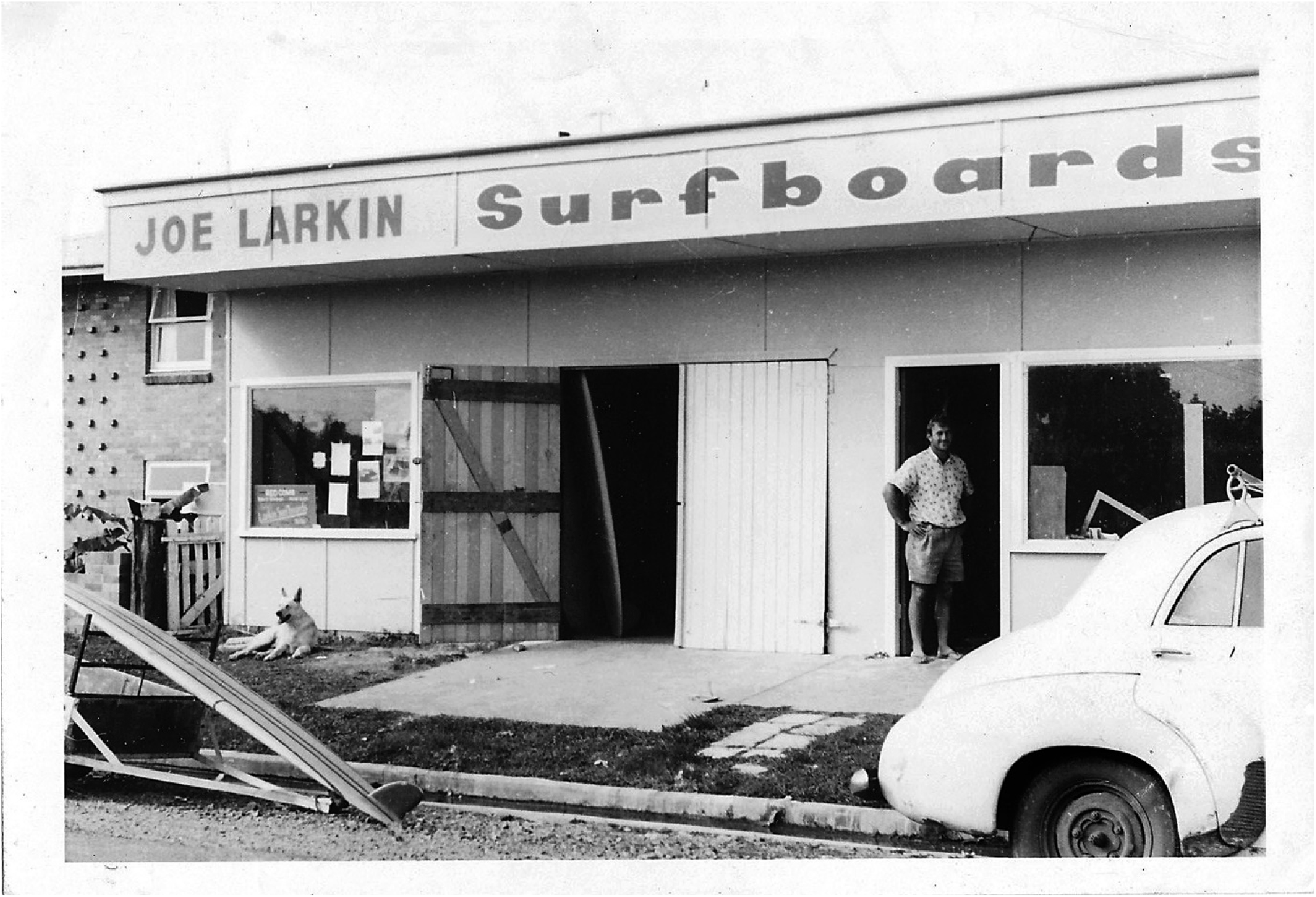
The Gold Coast/Tweed surfboard manufacturing industry agglomeration is contained within a narrow 20 km long corridor that runs along the NSW/Queensland coast from Mermaid Beach in the north to Tweed Heads South in the south (Figure 2). Research revealed 109 surfboard manufacturers (red dots), including several laminating factories, three fin manufacturers (green dots), three foam blanks suppliers (dark blue dots), three wetsuit manufacturers (yellow dots), two surfboard shaping machine manufacturers (light blue dots) and nine other firms (pink dots), including materials suppliers, makers of decals, surfboard storage racks and manufacturers of accessories such as wax, grip/traction systems and repair kits. Our measure of the region’s surfboard manufacturers excludes the large number of independent contractors working from factory to factory within the cluster.
Gold Coast/Tweed surfboard manufacturing cluster, June 2011.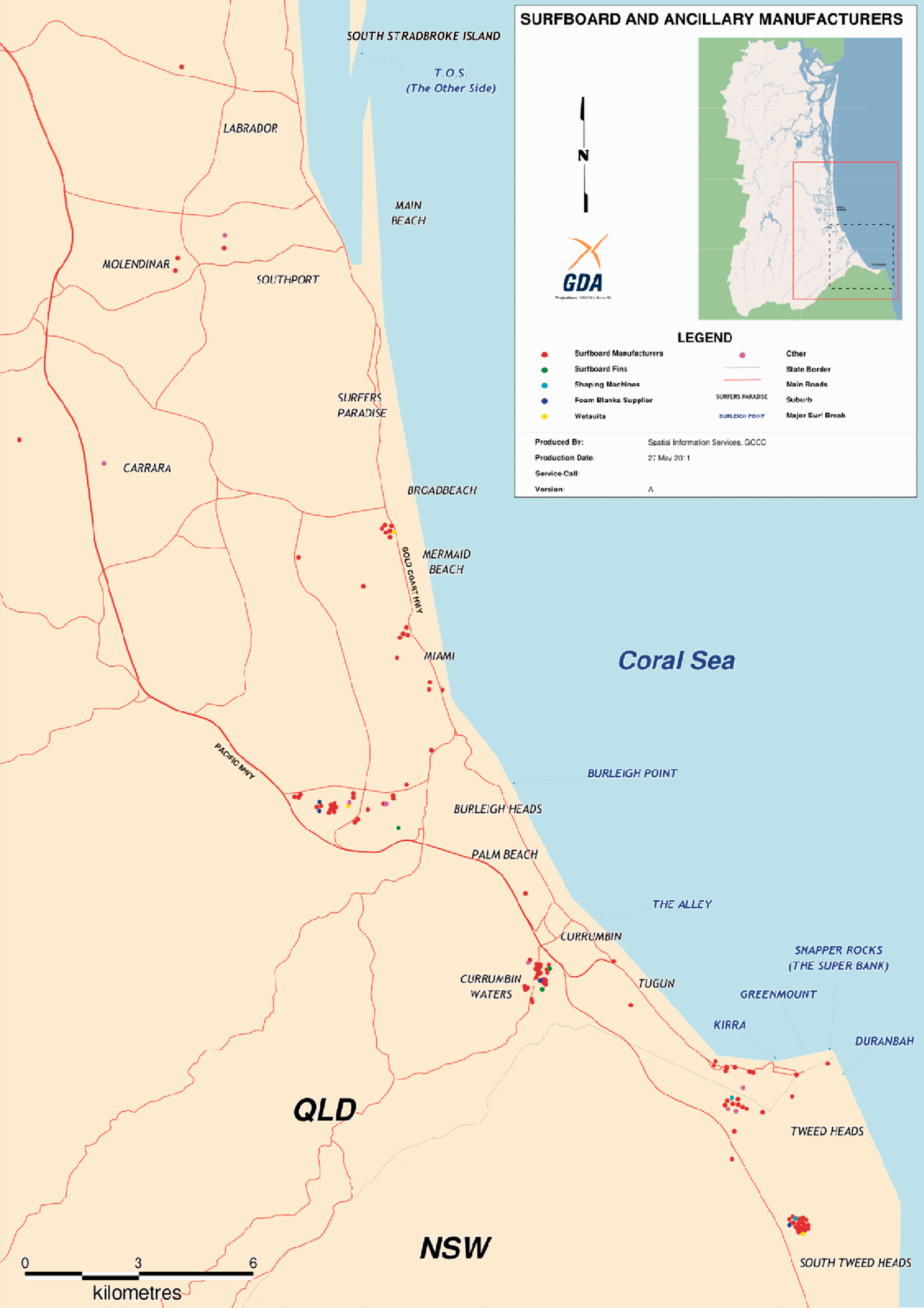
The first purpose-built Gold Coast surfboard factory opened in January 1962 when Joe Larkin moved from Sydney’s Northern Beaches to commence production in a rented garage in Miles Street, Kirra (Figure 3). Beforehand, Gold Coast surfers had to either make their own boards, often in backyard tool sheds, or purchase a ‘stock’ board from Mal Sutherland, the local distributor for Sydney-based manufacturer Dillon Surfboards (Figure 4). The market consisted chiefly of local and Brisbane-based surfers and interstate tourists, supplemented by referrals from surfboard-hiring licensees. Business promotion entailed simply surfing well, chatting with other surfers and subsequent word of mouth. At this early stage, ‘capital deepening’ in the sector was hampered by a lack of scale economies – itself reflective of the small local market and the concomitantly strong ‘D-I-Y’ board presence – and a dearth of suitable local production facilities. For many manufacturers, renting a private garage around Kirra was the only option. Over time, planning laws forced the relocation of these operators to the industrial areas (Bartholomew, 1992; Bartholomew and Baker, 1996; Doherty, 2004).
Foam blanks. Scott Dillon promoting his surfboards on the Gold Coast.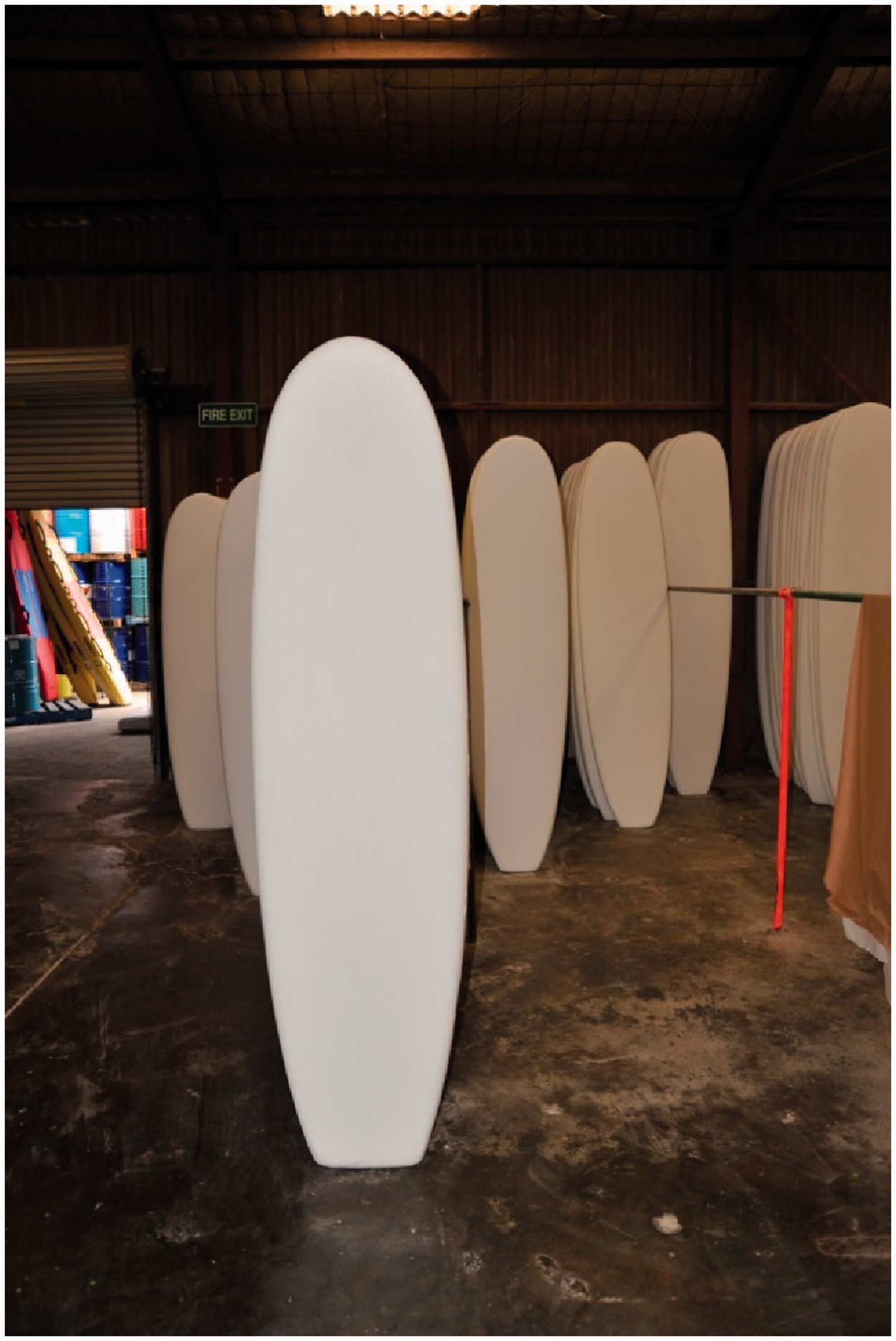

The agglomeration’s subsequent evolution is related to three key factors. First and foremost is the cluster’s proximity to a close grouping of globally famous, high quality Gold Coast point breaks
1
and Duranbah beach (blue text in Figure 5). Between 2002 and 2010, the board manufacturing cluster intensified in the region’s south. The concentration paralleled the evolution of a new high quality surf break known as ‘the Superbank’, produced ‘accidentally’ from sand pumping operations occurring at the nearby Tweed River bar. Surf journalist Nick Carroll explained the unexpected impact of the Superbank: The Superbank … has attracted huge numbers of surf tourists to the Goldie; it's provided the key boardmakers with a near captive market. … It's also helped promote a focus on high performance equipment among the Goldie cluster which keeps it distinct from most other board building environments. (N Carroll, personal communication, 28 April 2011) Network of functional linkages involving Gold Coast/Tweed surfboard manufacturing cluster. Source: Gold Coast/Tweed surf manufacturing survey, 2011.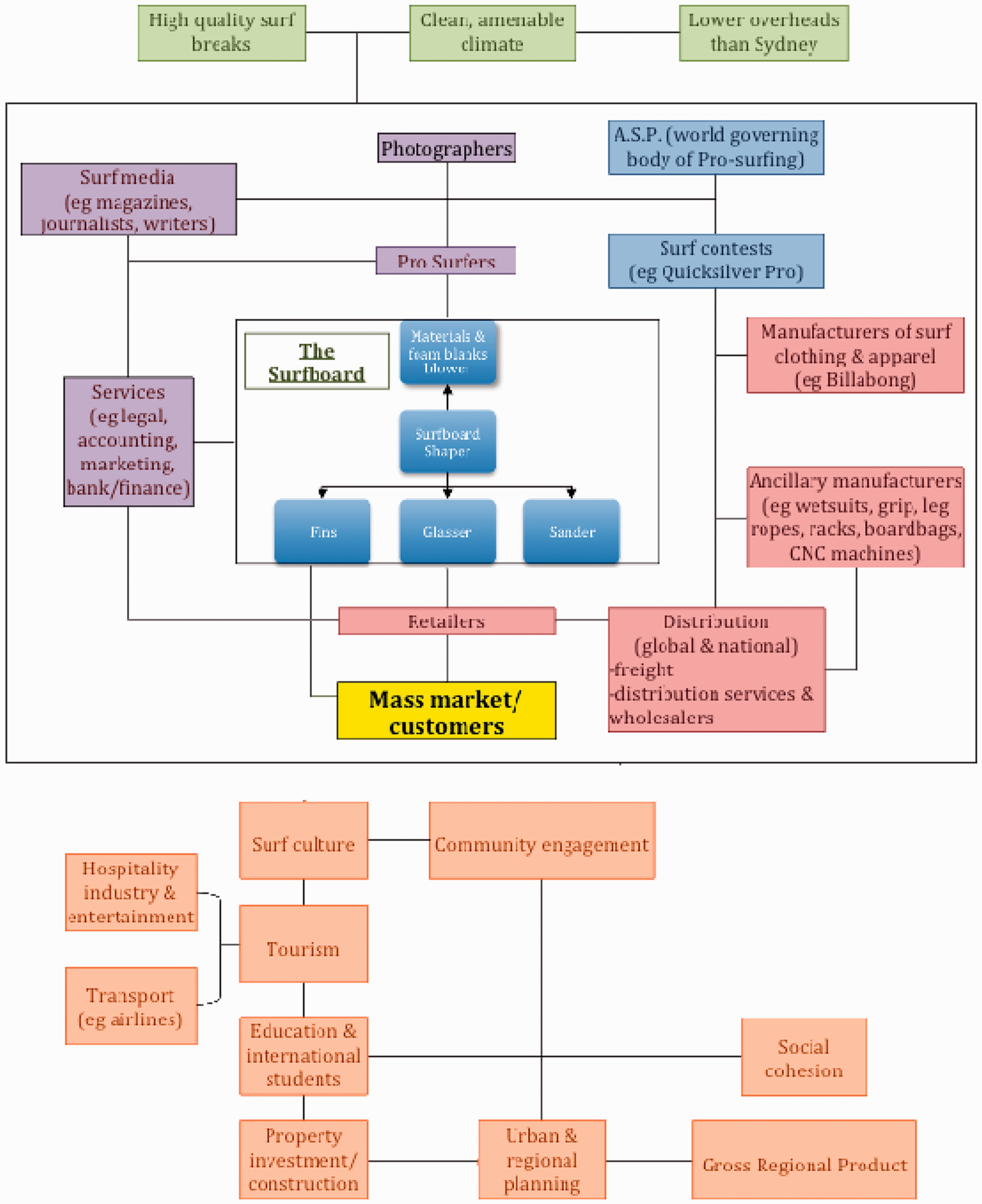
Second, and consistent with conventional location theory, manufacturers have also been lured in by the growing consumer market (i.e. surfers) and key suppliers (see Figure 5). It was initially hypothesised that surfboard manufacturers had originally chosen to locate around the suppliers of foam blanks (Fitzgerald, 1992; J Larkin, personal communication, 23 March 2011; McTavish, 2009). Figure 5 seems to support this initial hypothesis, with a blanks supplier centrally located within the three main clusters of Burleigh Heads, Currumbin and Tweed Heads South. However, the reverse is true. The Gold Coast’s largest blank manufacturer, Burford, relocated from Adelaide during the mid-1960s to be closer to the rapidly emerging surf market. Burford did not provide the initial impetus for the cluster but subsequently became a key attractant for board manufacturers and other upstream and downstream businesses. Third, planning laws in combination with the availability of relatively cheap, appropriately zoned land have seen manufacturers locate predominantly around Tweed Heads, Coolangatta, Burleigh and Currumbin, though some have located along the Gold Coast Highway where dual retail and manufacturing businesses are permitted.
Non-local events have also influenced the cluster’s development. In December 2005, US surfboard blank fabricator, Clark Foam, suddenly ceased its operations at the height of global surfboard production; an event referred to in the surfboard industry as ‘Blank Monday’. ‘Blowing blanks’ is a dark art (Finnegan, 2006), with the most successful formulae and production methods kept as closely guarded secrets. Further adding to the mystery, foam blank producers are scarce, their number limited by the toxicity of the chemicals used in the manufacturing process, the concomitant difficulty in finding suitably located and zoned land and high establishment costs (see Warren and Gibson, 2014). Prior to ‘Blank Monday’, Clark Foam, owned by industry figure, Gordon ‘Grubby’ Clark, was the largest supplier of foam blanks in the world, accounting for 50% of global production (Finnegan, 2006).
Clark Foam supplied only a relatively small proportion of the Australian market (c. 20–25%). However, the abruptness of the closure created widespread panic and a substantial void in the efficient supply of quality blanks. This was a gap that Australian blank and surfboard manufacturers ably filled. Additionally, the closure of Clark Foam facilitated the development of more environmentally-sound materials (hemp cloth, for example) and production methods (Delson, 2006; Finnegan, 2006; Holmes, 2009; N Carroll, personal communication, 2 May 2011).
For the remainder of this paper, we explore the current state of the Gold Coast/Tweed surf manufacturing cluster in relation to four of the key elements of ‘new industrial districts’ as suggested by the relevant literature: producers’ focus on quality, artisanal-style production methods; the sector’s twin commitment to craft skills maintenance and innovation; the famed ‘industrial atmosphere’; and a preference for informal, non-hierarchical producer organization.
Production methods
Career and business history.
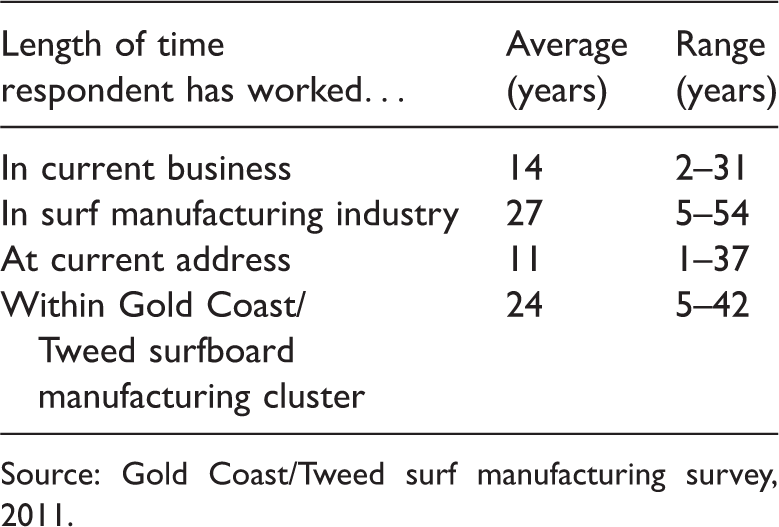
Source: Gold Coast/Tweed surf manufacturing survey, 2011.
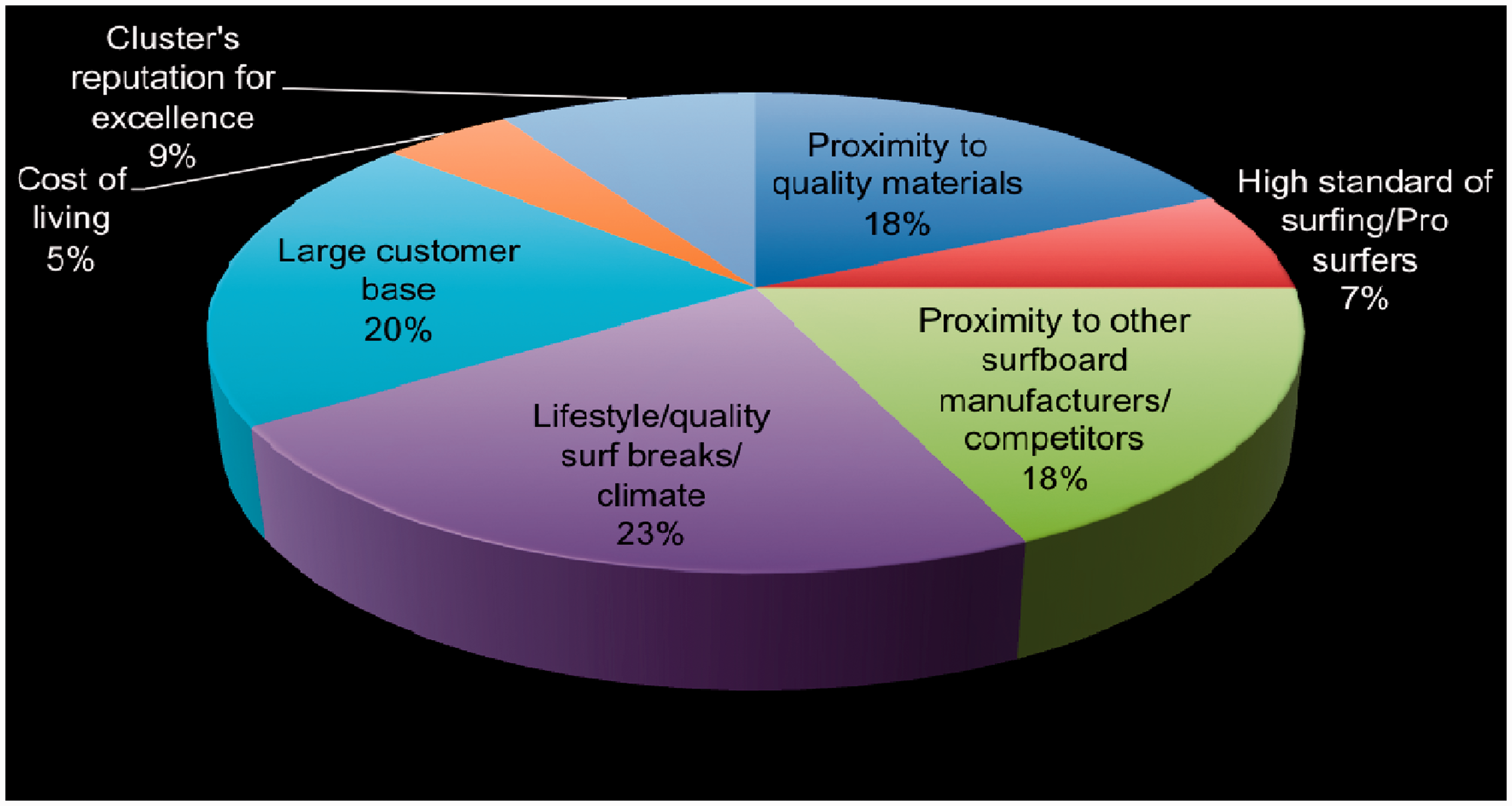
Benefits of location in Gold Coast/Tweed surfboard manufacturing cluster.
All respondents were experienced and passionate surfers, and all noted that their involvement in the industry afforded the opportunity to continue that lifestyle while making an income. A background in trades, particularly carpentry, was common. Most respondents advised that the desire to pursue a more creative, challenging and rewarding pursuit than their trade had formerly allowed led them into surfboard manufacturing. The Gold Coast/Tweed district was seen as home to similarly innovative and creative colleagues and a flexible work schedule that revolved around surfing when conditions were good and working at any time of the day or night in order to catch up. Such is the ‘pro-am’ nature of the local sector: what had begun as a passionate hobby has for some been converted into a profession based around the creation of quality surfboards and componentry.
Befitting the artisanal nature of much of the sector, most careers began in surfboard repairs and/or shaping for themselves and friends at home, progressing in skill until they were employed by others or opened their own business. Others started doing basic work in surfboard factories, working their way up through various stages of production mostly with the goal of shaping and designing surfboards. Industry training is ad-hoc with no formal skills recognition or classification, accredited formal training systems or apprenticeship scheme.
Production statistics for the local cluster are shrouded in secrecy and uncertainty. According to respondents, global surfboard production was estimated at 740,000 (the mean of all estimates). This figure compares with blanks manufacturer Burford’s estimate of 600,000 and surf writer Matt Warshaw’s estimate in 2009 of ‘roughly 400,000’ (Warshaw, 2010). In 2008, it was reported that the Cobra factory in Thailand (the largest in the world) was producing 200,000 epoxy-moulded surfboards and 70,000 polyurethane surfboards per year (Curtain, 2008). Respondents generally agreed that the Gold Coast/Tweed surfboard manufacturing district produced at least 50% of all surfboards in Australia, underscoring the regional cluster’s importance to the Australian surf scene.
Craft skills maintenance and innovation
Larger manufacturers tend to employ staff on a permanent but piece-rate basis. By comparison smaller manufacturers rely upon contractors and casual staff. Piece-rate employment conditions are popular, and reflect the industry’s high level of workday flexibility and, partly, its inherent volatility. Demand for boards and, hence, labour fluctuates wildly due to seasonality. Domestic surfing participation naturally peaks in summer and, thus, winter is a slow season according to most respondents.
As might be expected in such a small-scale, ‘flexible’ industry, staff turnover is high. According to respondents, most workers remained with a single employer for fewer than 5 years. For many contractors, piece rates have remained unchanged since 1990. Consequently, many ‘job-hop’ between workshops in order to make a reasonable income, or have left the sector for more reliable employment elsewhere, including the construction and mining industries (see Warren, 2014). Several respondents noted that this tendency is more prevalent in Western Australia where mining employment is more readily accessible.
As a consequence of the declining regional economy and industry conditions, over half of all respondents reported that their staff levels had decreased over the previous three years. Nevertheless, one-third reported that their employee numbers had remained stable. The average age of employees has increased with few young staff entering the industry, particularly in the small- to medium-sized factories. There is an increasing trend to use foreign labour, particularly from Japan and Brazil. Some respondents reported that foreign workers displayed a better work ethic and appeared more enthusiastic to work in the industry. It was common for those workers, upon gaining sufficient skills and knowledge from the Gold Coast/Tweed surf manufacturing cluster, to return to their country of origin and experience considerable career success. However, the process involved in hiring skilled foreign labour has proven prohibitively expensive, confusing and time consuming for many of the smaller local manufacturers.
Automation and precision technology are also increasingly making their mark on the sector. The emergence of computer numerical control (CNC) shaping machines in recent years has reduced the workload, time and inaccuracies of full hand shaping (see also Warren and Gibson, 2014). The introduction of such machines is a contentious issue within the industry. Machine shaping is often cited as being a soulless intrusion into a strongly artisanal craft production sector; one which removes the uniqueness of each board and sterilises the process, thus removing the errors or ‘accidents of history’ which foster design innovation. Conversely, it has also been argued that less time ‘mowing foam’ in the shaping bay leaves more time for creative design and knowledge-based innovation. Moreover, reduced manual work and chemical exposure reduces the physical and health toll on workers. Regardless, shaping machines are now widely used in the cluster, 75% of respondents in this study reported using CNC shaping machines in their own plants or using others’ machines for a fee, then fine tuning the shape to exact specifications by hand.
Further, respondents believed that outsourcing of production was increasing. Almost half reported some degree of outsourcing, mostly via the use of shaping machines. Almost 40% reported some degree of international outsourcing with five manufacturers producing boards in foreign countries for Australian and international markets. This is a recent and emerging strategy undertaken to manage the impact of the high Australian dollar, high local production costs and to exploit more efficient and extensive shipping routes, particularly from Asia. Furthermore, there is an increase in international production of local brands under licence in foreign countries. Some are shipped back for sale in Australia while others are distributed globally.
‘Industrial atmosphere’
A key ingredient to the success of the Gold Coast/Tweed surfboard manufacturing district is its ‘industrial atmosphere’. Surfing and surf culture have come to thoroughly permeate the region and are part of its raison d’être. However, aspects of this local ‘industrial atmosphere’ have begun to change. Surfboard manufacturing is no longer perceived as favourably by younger surfers as it once was when shaper-idolising ‘grommets’ would hang around factories after school and on weekends. Whereas surfboard making was once perceived as an attractive lifestyle, defined by its creativity, flexibility, relaxed environment, ample surfing and cultural iconic status, it is increasingly viewed by younger people as financially insecure, precarious, physically demanding and dirty work. The lack of a formal apprenticeship, accreditation scheme or government skills recognition further overshadows this career path, particularly when contrasted with established and recognized trades and careers.
All respondents stated that there was little to no formal collaboration or sharing of ideas between firms. However, as in Motorsport Valley, informal knowledge transfer within the cluster was rife but subject to inter-regional ‘spillover’ (cf. Henry and Pinch, 2000). Production knowledge was primarily transferred by the sharing of workers – understandable given the high rate of contract employment and staff turnover – and various suppliers. Other methods of ‘intelligence gathering’ included gossip in the surf, beach car park, pubs and parties, innuendo and the ‘rumour mill’. From a manufacturer’s perspective the high level of staff movement is a double-edged sword: it not only ensures the rapid transmission of knowledge from firm to firm, facilitating the spread of innovation to willing adopters, but also produces ongoing expenses for staff re-training and loss of intellectual property. From a worker/contractor’s perspective, their embodied craft knowledge and skills, accumulated from working a number of boardmakers, are highly desired and portable attributes that provide these ‘flexible’ workers with a modicum of protection in a sector characterized by insecure employment and relatively low pay.
For over a third of respondents, the Gold Coast/Tweed surfing industrial district is conducive to high quality design and manufacturing, using leading edge techniques, due largely to the sheer spatial proximity of competitors and input suppliers (see Figure 6). Ready access to Burford Reinforced Plastics (at Currumbin), a firm which many respondents regarded as producing the best foam blanks in the world, was given as a key advantage. This close proximity, together with the high standard of surfing and the large numbers of professional surfers in the region, produces a harmonious, virtuous set of conditions for economic development (Myrdal, 1957). Moreover, the agreeable climate, warm water, good quality surf and well-developed surfing culture strongly contribute to brand recognition and reputation for quality surfboard design and production. Some manufacturers sponsored local and international pro-surfers as a key part of their global marketing strategy. There was also an acknowledgment of the ready supply of customers and low cost of living relative to Sydney. Gold Coast-based international apparel and componentry company, Billabong, must also be credited with stimulating the region’s surfing culture and economic development via surfing event and pro-surfer sponsorship, as has Rip Curl in Victoria’s Surf Coast region.
While a number of respondents claimed there were few if any negative aspects (see Figure 7), it is ironic that the cluster’s main positive feature (the highly competitive environment), was also perceived as its main drawback. Participants cited ‘excessive competition’ as the main negative aspect of firm location. This issue was closely followed by ‘unsustainable/low margins’ – of which a considerable cause is intense competition. It was posited that this low margin climate created conservatism in design; undermining the ‘industrial atmosphere’ by stifling innovation and creativity due to risk aversion which materialised in the production of surfboards that sold quickly without discounting. Consequently, the Gold Coast/Tweed surf industrial district was seen to be at risk of retreating from a centre of innovation to a centre of refinement, dedicated to the larger scale production of outside innovations.
Disadvantages of location within the Gold Coast/Tweed surfboard manufacturing cluster.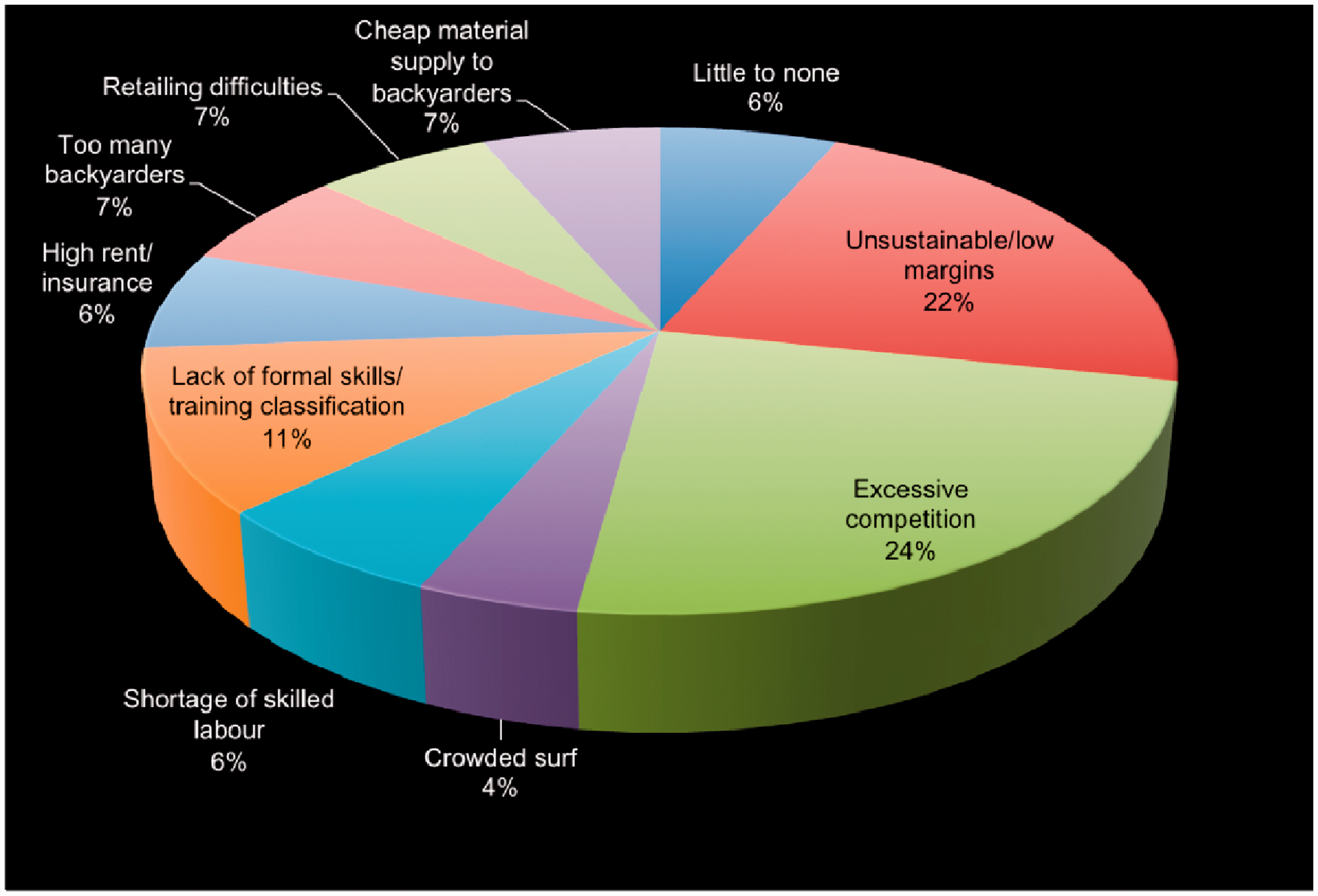
The underlying competition provided by ‘backyard manufacturers’ was identified by respondents as another ongoing problem. An unknown number of these operators exist because they rarely advertise, work out of unregistered business premises and trade on cash-only terms. Predominantly found in residential or basic factory premises, they allegedly flout environmental, OH&S and local authority compliance laws, thus enabling production at lower prices (often 20–30% less than the legitimate market). Respondents lamented that material suppliers charge the same price to backyarders as they do to manufacturers who could order hundreds or thousands of products per year, entrenching the low barriers of entry to the industry. However, the presence of these ‘backyarders’ was thought to have decreased in recent years due to an increase in the availability, diversity and demand for established brands and designs (N Carroll 2011, personal communication, 3 May), and an inability to compete with cheap imported surfboards, the retail price of which is typically less than the cost of production in Australia (Holmes, 2009; McAloon, 2008). Ironically, many respondents acknowledged starting their own careers as backyarders.
In spite of these concerns about low cost market entry and price under-cutting, retailing difficulties were mentioned by only 7% of respondents. Problems included the lack of appropriately zoned small retail sites along prominently exposed routes such as the Gold Coast Highway. Some suggested that retailing would be a preferable land use along this route, offering better planning outcomes than residential land uses.
A preference for informal organisation
The predominant ‘cottage industry’ character of the Australian surfboard manufacturing sector can be attributed to a number of factors. To begin with, low profit margins have hampered any collective investment in research, development and training. In addition, many manufacturers’ own rejection of mainstream cultural values has engendered an essentially individualistic entrepreneurialism and an inward-looking approach to business improvement. The lack of a coordinated, well-funded and active peak industry organisation is both an outcome of the previous two factors and a further potential weakness. In such an artisanal setting, it is perhaps not surprising that a high proportion of respondents felt that the industry needed to take greater responsibility for itself, principally via manufacturers’ active participation in the Australian Surf Craft Industry Association (ASCIA). The ASCIA was formed in late 2010 in response to the recommendations of the AEC Group research report for the Gold Coast City Council but disbanded in 2013 due to a lack of support from manufacturers and general disagreement over what role the Association should play in advancing the industry.
Respondents felt that more government input was needed, particularly in relation to the need for a formal skills classification system, incorporating awards and training. At a local level, there was a call for planning and development input into such areas as workplace regulation, particularly backyard manufacturing operations. At the same time, many manufacturers eschewed Council intrusion into established premises since they feared a growing regulatory burden would increase costs and diminish already thin margins. Furthermore, the previous two years had seen a rise in itinerant vendors selling large volumes of cheap imported surfboards on roadsides, in public parks and council halls in contravention of local planning laws (see Figure 8). One respondent was advised by an itinerant vendor that he had 1500 surfboards in a container in Brisbane which he was gradually selling in this manner. Some retailers were now stocking imported Asian manufactured surfboards, reporting better margins even at cheaper prices.
Itinerant vendor surfboard sale: Advertisement for one-off sale of a volume of imported Chinese made surfboards held in Kingscliff community hall.
The future
Looking to the future, most respondents believed that the cluster would shrink as participants relocated to more profitable, lifestyle-oriented locations. Some indicated that Bali (Indonesia) was the likely site of the next surfboard manufacturing cluster due to: its high quality surf; lower overheads; existing and rapidly developing (Australian) surf industry, including manufacturers, retailers, pro surfers and media; large customer base from travelling international surfers; limited development compliance; ready supply of cheaper and increasingly skilled labour; and access to more efficient global distribution routes. The Gold Coast/Tweed surf industrial district, on the other hand, was thought likely to be negatively affected by increased outsourcing, encroaching residential development and likely skills shortages as the domestic workforce ages or relocates without being fed at the entry level by young workers.
Clearly, the high Australian dollar, mounting local production costs and difficulties and Australia’s remoteness are having a deleterious effect upon this industry, as they are on the broader Australian manufacturing industry (Warren and Gibson, 2014). Respondents with trade-exposed businesses have reported production losses of 25–33% since the $AUD exceeded $US 0.80 from June 2009. Retailers reported lower spending by international tourists due to the higher exchange rate but an increase in sales of second hand boards, which have also become cheaper. The high Australian dollar also made imported Asian-produced surfboards even cheaper and hence retailers were more likely to stock imports than locally made products due to the resultant higher margins. Local manufacturers with international factories increased profits by using $US and those that imported raw materials also benefited for the same reason. Conversely, one respondent who only serviced the local market reported that the high $AUD had boosted turnover this year due to the spike in surfers travelling overseas and ordering new locally-made boards to take with them.
Overall, the most significant issue affecting respondents’ businesses was poor business turnover and narrow margins. These factors were produced by a combination of intense competition, cheap imports, declining exports and the ongoing depressed domestic economic conditions (Bita, 2011) triggered by the Global Financial Crisis and felt strongly in the Gold Coast/Tweed region due to its narrow economic base. Furthermore, the 2010/2011 summer, dominated by a La Niña weather pattern, caused a decrease in tourism and surfing participation, resulting in lower sales. This setback was exacerbated by out-migration from the region for superior job opportunities elsewhere. Most respondents agreed that current global production had led to an oversupply, with cheap, mostly inferior, quality surfboards flooding the novice to intermediate surfer market. Many had been dumped on local markets at or below cost and were being sold by itinerant vendors (Figure 8).
Conclusion
The Gold Coast/Tweed surfboard manufacturing cluster shares many characteristics with other industry agglomerations, particularly the close spatial co-location of participant firms, its peer esteem as a highly competitive centre of innovation and rapid information transfer and dissemination. From backyard beginnings, over the past 50 years this propulsive sector has spawned an extensive network of forward and backward linkages that collectively generate $3.3 billion per annum, representing a substantial proportion of the regional economy. The surfboard industrial district now encompasses an innovative knowledge community within a congruent culture with easy access to high quality material suppliers, supported by evolving planning instruments. While a relatively low-income industry, surfboard manufacturing can be considered a crucial element in the place-branding and marketing of the Gold Coast.
This paper has also demonstrated the ongoing utility of the industrial district/agglomeration economy literature to the analysis of regional economies, including those centred on less traditional industries. The ‘industrial atmosphere’ that has developed within the Gold Coast/Tweed surf cluster, and which still suffuses it to this day, echoes the predominantly small-scale, artisanal, craft-based structure of most of its participants. Close proximity to high quality surf, and to fellow surfers, was a vital locational factor for many respondents, reflecting surfing’s essentially recreational nature. In many ways, this aspect of the ‘atmosphere’ has served the Gold Coast/Tweed cluster well over the past half-century. The region has become a world leader in surfboard design and materials innovation, its increasingly global ‘area reputation’ reinforced by important ‘accidents of history’, such as the creation of ‘The Superbank’.
Yet, in spite of the local district’s apparent resilience to the continual long-term weakening of the wider manufacturing sector, the macro- and micro-effects of globalisation, neoliberalisation and Australia’s historically sporadic regional development policy, it now faces significant challenges. The sector is characterized by tight margins (for manufacturers/contractors) and low incomes (for contractors/workers). Pay and conditions are largely unregulated, and employment is highly flexible, precarious and ‘pro-am’. As in the case of Motorsport Valley, high labour mobility is an important (and largely necessary) survival strategy for surfboard manufacturing workers but, as already discussed above, is an active deterrent to the entrance into the district (and sector) of new and younger workers and potential entrepreneurs.
Further, key elements of the district’s ‘industrial atmosphere’ that were once strategic strengths are now emerging as potential weaknesses. An almost innate aversion to formal, collective approaches to industrial organization and representation has, to date, cruelled any attempt at fostering industry-wide representation (crucial for government lobbying) and collaboration in the development and delivery of training. The latter is increasingly seen by surfboard manufacturers as essential in mentoring the next generation of surfboard makers. The collapse of ASCIA is particularly concerning in this regard.
The longer-term fortunes of the Gold Coast/Tweed cluster would not be solely (or even dominantly) shaped by macroeconomic processes such as currency appreciation or international export growth. Historically, an atmosphere of creative design paired with vibrant local surfing culture has been the developmental driver of the Gold Coast/Tweed surfboard industry. Future viability is likely to depend upon maintaining a proclivity for high quality products. The transference of artisanal skills and knowledge via succession planning looms as crucial to the sustainability of the regional cluster. Informal, subcultural values pertaining to the surfboard industry have created barriers to formal, collective industry organisation – despite most manufacturers agreeing this is important. We argue that in one of the world’s most renowned and densely concentrated surfing regions skills training and professional development can be nurtured amongst a younger generation. Matching avid, young surfers to rewarding, creative jobs in the surfboard industry will require a committed approach by all scales of government to regional development policy. Such an approach must engage with local manufacturers while also challenging them to invest in instituting longer term changes around succession planning and skills transference. Such knowledge-based assets are vital for maintaining and enriching an iconic local industry. At stake is more than the direct loss of jobs and regional income, but an important part of the cultural and industrial heritage of the Gold Coast/Tweed region.