






Abstract
Policymaking at the city-region level in England was initially designed to shift the focus from sector-based to place-based development, but this has often coincided with agglomeration effects that benefit already prosperous urban regions like London and the Southeast. As new strategic authorities – many with a more rural character – become established, it is important to reflect upon the distinct sectoral and socioeconomic differences between rural and urban areas and what this means in the jigsaw of devolution and the key national agenda of growth. For instance, rural authorities differ markedly in their economic composition: rural areas tend to have a higher proportion of employment in agriculture, tourism, and small-scale services, while urban areas are dominated by sectors such as finance, technology, and large-scale manufacturing. The arrival of more rural authorities underscores the need for regional policy that integrates both sectoral and regional strategies, using robust data to tailor interventions to local strengths. This paper considers whether devolution in its current form is set up to support such an approach. As devolution progresses, coordination among regions with devolved powers, supported by central government frameworks, will be crucial to ensure that both rural and urban areas can benefit from, and contribute to, national economic growth.
Introduction
Regional productivity divides in the UK remain deeply entrenched, reflecting historic spatial inequalities dating back to the Victorian era (Fai and Tomlinson, 2023; Martin et al., 2016, 2017). These divides are commonly discussed through the UK’s weaker productivity performance relative to other OECD countries (Brandily et al., 2022), and persistent geographical regional imbalances (McCann, 2024). While often conceptualised through the north–south English divide (Van Ark, 2025), this article focuses on the urban–rural divide. Urban areas tend to be more dependent on high-value, knowledge-intensive sectors, while many rural regions remain reliant on agriculture, tourism, and services – sectors that historically generate lower productivity growth (Martin et al., 2017; Tilley et al., 2023). These structural differences create distinct economic conditions, suggesting that uniform policy interventions risk reinforcing rather than reducing inequalities (Rodríguez-Pose, 2013; Tilley et al., 2023). At the same time, England’s regional governance is continuously evolving through the expansion of Combined Authorities (CAs) and Combined County Authorities (CCAs); through the English Devolution White Paper (MHCLG, 2024) which establishes statutory “Strategic Authorities,” led by directly elected mayors, to exercise powers across skills, housing, transport, and economic development; and through the Devolution and Community Empowerment Act 2026 (legislation.gov.uk, 2026), which designates CAs and CCAs as strategic authorities and establishes a strategic authority framework. This article examines how institutional change and sectoral divergence intersect, asking whether current devolution arrangements can deliver approaches to productivity that reflect the varied economic realities of England’s regions.
The 2024 White Paper makes clear that devolution is essential for supporting growth. The paper notes that “opportunity is being stifled” (p. 19), requiring urgent action aimed at “fixing the foundations of the economy” (p. 20), and places “growth as its central mission” (p. 20). This ambition is to be operationalised through Mayoral Strategic Authorities at “strategic scales” (p. 22), where “policy can be tailored to local situations” (p. 23), reflecting the belief that mayors are a “fundamental partner to the government” (p. 25). This emphasis on growth powered by place and managed by local people signals a key policy ambition to align governance structures with local economic conditions. The Devolution and Community Empowerment Act 2026 supports this through the establishment of new mechanisms for local areas to secure deeper devolution. Of particular importance in the graduated system of strategic authorities are the Established Mayoral Strategic Authorities (EMSAs) and their access to the Section 53 “right to request” function within nine areas of competencies, notably including rural affairs and coastal communities.
This (somewhat) counters England’s previous asymmetric, deal-based devolution, which while having been praised for its flexibility, risked entrenching inequalities between early adopters and latecomers (Turner et al., 2023; Warner et al., 2024). Urban areas such as Greater Manchester and the West Midlands received devolved powers earlier (LGA, 2025), enabling them to develop greater institutional capacity and experience, while rural regions have only recently gained equivalent governance structures, leaving them with less capacity, shorter institutional memory, and fewer resources. At the same time, amid national efforts to boost regional productivity, rural areas face inherent disadvantages stemming from their sectoral and employment structures. A growth-oriented spatial policy risks privileging urban areas unless a more nuanced approach to productivity and devolution is adopted. Productivity is frequently understood through an urban lens that emphasises high-growth sectors such as financial services, digital and technology, and life sciences, as exemplified in the 2025 Industrial Strategy (GOV.UK, 2025b). Such framing places rural areas at a disadvantage as they are less likely to have the institutional capacity to respond to productivity challenges, less likely to have more devolved powers to do so, and are responding to productivity strategies around sector growth strategies which are not comparably dominant in their regions.
These asymmetries matter because productivity is shaped not only by economic structure, but also by the governance frameworks through which policy is delivered. In practice, the design of the devolution architecture acts as a determinant of how effectively regions can pursue growth. To explore this further, this paper will first outline the changing devolution architecture within England, which is set to drive regional productivity. It will then address prospective challenges of driving productivity in diverse economies before focussing analytically on the differences between rural and urban economies in England. The analysis will consider both the role of sectoral productivity contribution through gross value added (GVA) and sectoral employment levels in urban and rural areas to demonstrate the necessity of individual responses to regional productivity, before offering a discussion on how the regional productivity agenda can balance this, and the role of devolution architecture in supporting it.
Institutions, devolution and the uneven geographies of productivity
The changing architecture of regional economic development in England
Both the development of institutions and the evolution of strategies to tackle regional economic growth are largely reflected in, and driven by, the recognition of the need for clear, place-based approaches that respond to the diverse economic realities across regions to drive economic growth.
The UK’s approach to regional economic development has undergone significant institutional change. To drive growth at the regional level, Regional Development Agencies (RDAs) were established in 1998 as non-departmental public bodies. Abolished in 2012, RDAs were replaced with smaller, business-led partnerships, Local Enterprise Partnerships (LEPs), that were more aligned with local economic realities (Harris and Moffat, 2015). They fostered closer collaboration between local councils and businesses to pursue economic development but were later closed in April 2024 with this funding reallocated to CAs and upper-tier local authorities (GOV.UK, 2023). While CAs have been the general statutory form of local governance in England, CCAs came later under the Levelling Up and Regeneration Act 2023 (legislation.gov.uk, 2023), designed for areas with two-tier local governments.
Devolution levels.
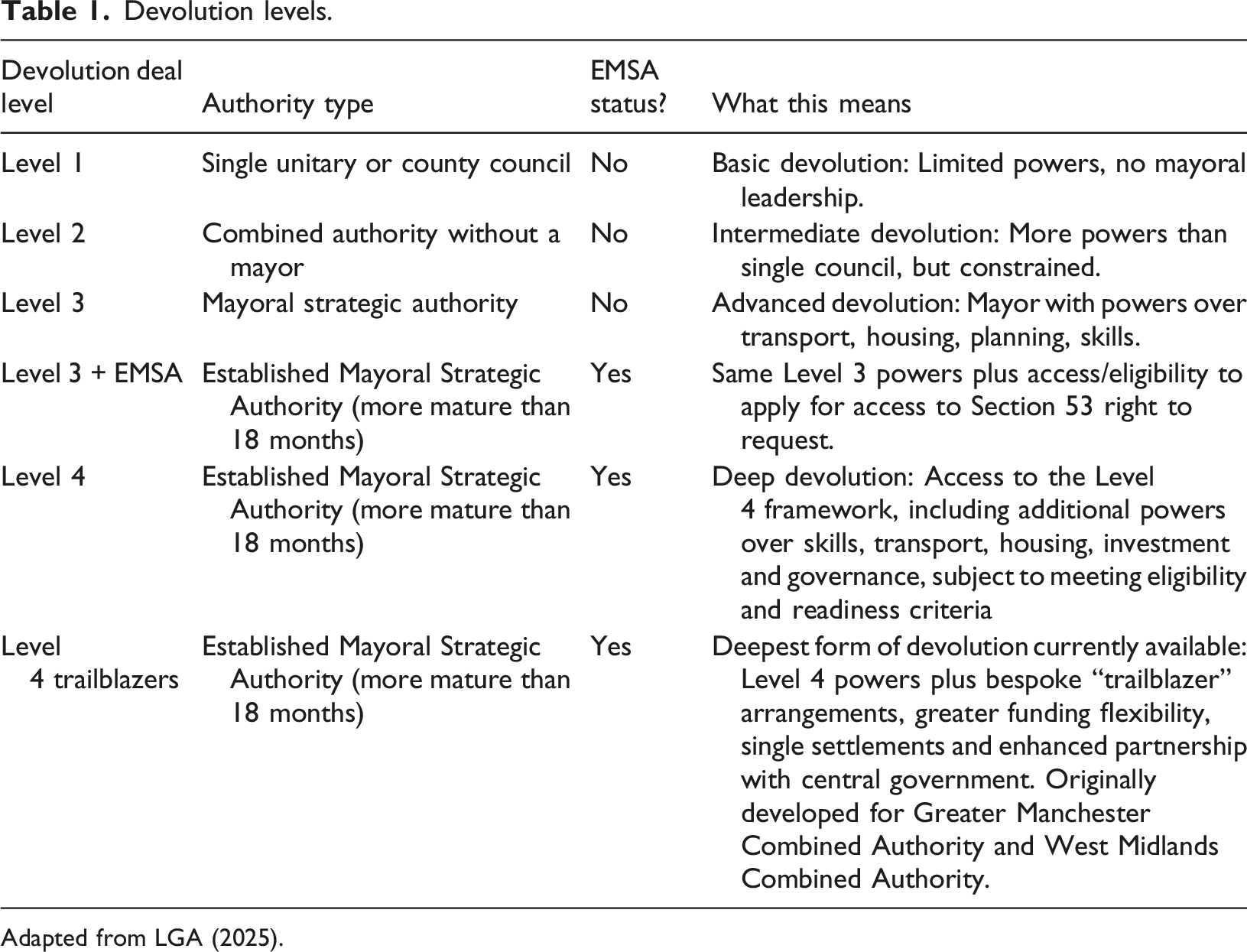
Adapted from LGA (2025).
England’s devolution landscape, 2025.
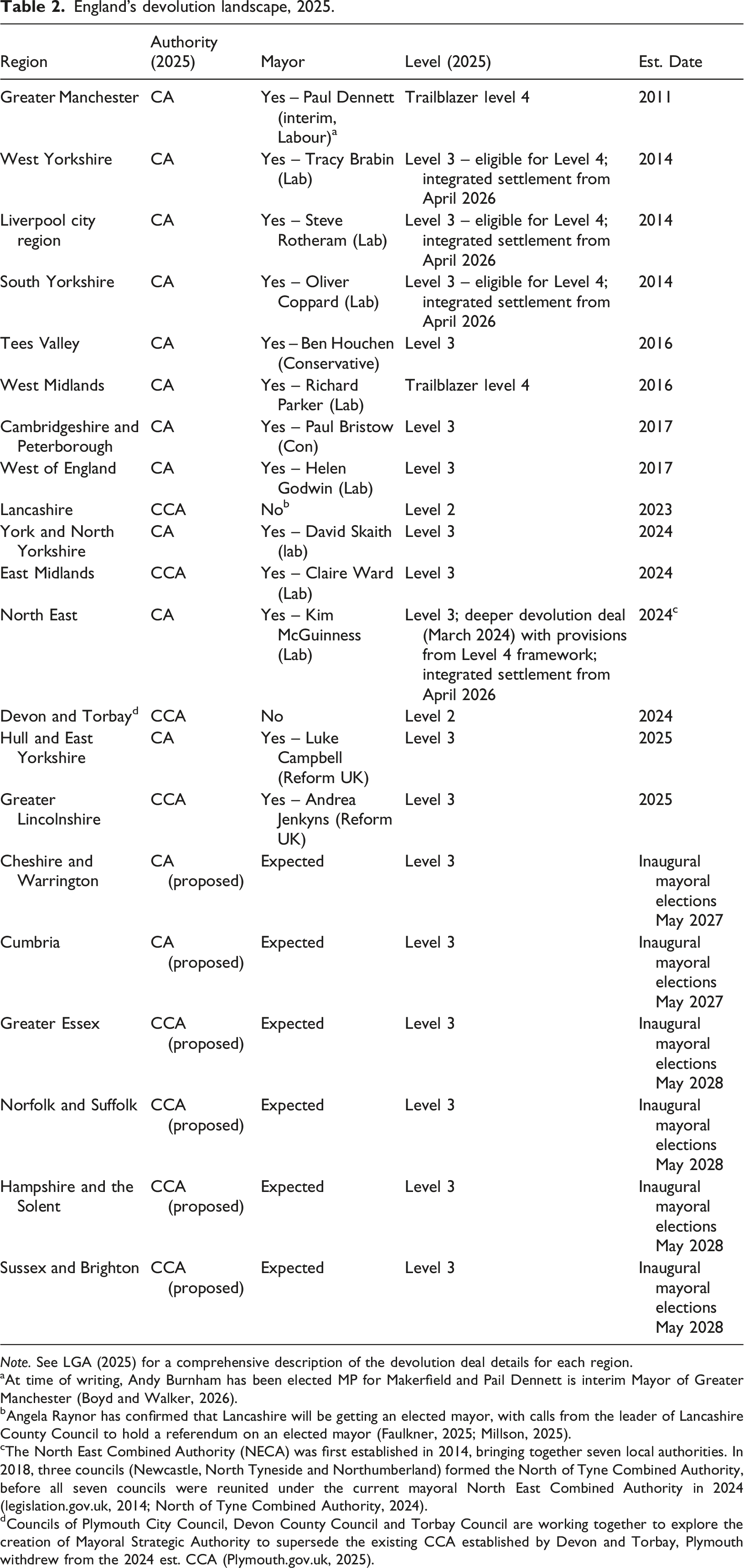
Note. See LGA (2025) for a comprehensive description of the devolution deal details for each region.
aAt time of writing, Andy Burnham has been elected MP for Makerfield and Pail Dennett is interim Mayor of Greater Manchester (Boyd and Walker, 2026).
bAngela Raynor has confirmed that Lancashire will be getting an elected mayor, with calls from the leader of Lancashire County Council to hold a referendum on an elected mayor (Faulkner, 2025; Millson, 2025).
cThe North East Combined Authority (NECA) was first established in 2014, bringing together seven local authorities. In 2018, three councils (Newcastle, North Tyneside and Northumberland) formed the North of Tyne Combined Authority, before all seven councils were reunited under the current mayoral North East Combined Authority in 2024 (legislation.gov.uk, 2014; North of Tyne Combined Authority, 2024).
dCouncils of Plymouth City Council, Devon County Council and Torbay Council are working together to explore the creation of Mayoral Strategic Authority to supersede the existing CCA established by Devon and Torbay, Plymouth withdrew from the 2024 est. CCA (Plymouth.gov.uk, 2025).
Devolution has been further deepened and extended marked by the 2026 Devolution and Community Empowerment Act (legislation.gov.uk, 2026). Under this Act, there is the introduction of an established strategic authority framework which still broadly maps to the deal-based devolution framework (see Table 1), and grants established mayoral strategic authorities (EMSA) status to those who have had a mayor for 18 months or over and who have a published Local Assurance Framework. Seven areas have received this status: Greater Manchester, West Midlands, North East, South Yorkshire, West Yorkshire Mayoral Combined Authorities, Liverpool City Region, and the Greater London Authority (GOV.UK, 2025a), with other authorities eligible to apply for EMSA status.
Notably, EMSA status grants access to the Section 53 right to request function where authorities can request more powers, funding, etc., to help deliver responsibilities more effectively in the nine areas of competences: transport and local infrastructure; skills and employment support; housing and strategic planning; economic development and regeneration; the environment and climate change; health, well-being and public service reform; public safety; culture; rural affairs and coastal communities (legislation.gov.uk, 2026).
While the 2026 Devolution and Community Empowerment Act seeks to address some of the limitations associated with the earlier deal-based approach by introducing a more formalised strategic authority framework and the right to request function, its practical implications remain uncertain. The graduated strategic authority model continues to recognise varying levels of institutional maturity and capacity across England, meaning that powers and responsibilities remain differentiated between places. As a result, the reforms signal both a continuation of asymmetric devolution and an attempt to create clearer pathways through which authorities can secure additional powers over time.
Due to the asymmetric deal-based model, maturity of urban and rural authorities, and varying EMSA status, this signals that more established urban authorities hold stronger powers and resources, while newer (and more rural) authorities face catch-up challenges in capacity and influence (Warner et al., 2024). Furthermore, spatial political differences between devolved and non-devolved areas, and between strategic authorities and EMSAs, risk reinforcing divides between urban and rural regions (Shutt and Liddle, 2019; Warner et al., 2024). Compared to other OECD countries, England’s devolution has been criticised for transferring limited meaningful powers (Morphet and Denham, 2023).
Warner et al. (2024: 2) argue that “the empowerment of the largest cities in England and the relative neglect of non-urban areas will exacerbate power asymmetries within the UK political system in both centre-periphery and centre-local relations, a phenomenon we term ‘political spatial inequality.’” This underscores the need for deeper reflection on the devolution architecture to ensure the promised coherence and equity are effectively realised. Sustainable development strategies require “wiggle room” to adapt to varied local institutional arrangements. This reflects a wider shift from traditional government to governance, emphasising bottom-up approaches that amplify local voices and mobilise local resources (Rodríguez-Pose, 2013). But while sub-national governments are “closer to the ground,” decentralisation carries risks, including fragmentation, weak capacity, inefficient convergence, or “isomorphic” responses (Chien, 2008). This leads to a dilemma, not about whether to devolve, but how to coordinate decentralisation to sustain both local responsiveness and national coherence.
The early stages of UK devolution illustrate these challenges: limited policy capacity led to Northern Ireland mirroring Westminster policies (“Shamrock photocopy”) and the Welsh producing “dragonised” versions of Whitehall strategies (Keating et al., 2012). Conversely, decentralisation can incentivise fragmentation, which risks undermining policy coherence and national objectives (Kleider and Toubeau, 2022). Policy spillovers also present problems: benefits in one region may dilute impact elsewhere through leakage effects (Pope et al., 2023). These examples highlight the complexities of coordinating decentralised systems, where local adaptations must balance with national policy goals to avoid inefficiency and inequity. Addressing these risks, central government remains an important actor, not just in funding, but in building capacity and orienting local policy to maximise positive national spillovers (OECD, 2009).
Devolution also raises questions about how policy circulates. While “policies may be crossing borders ever more ‘freely’ … [they are] … not yielding a flat earth of standardised outcomes or some socio-institutional monoculture” (Peck, 2011: 781) as “what are apparently space-neutral policies will always have explicit spatial effects” (Barca et al., 2012: 139). Successful governance requires both allowing local adaptation and embedding coordination with national objectives. This calls for paradoxically embedding policy mobility (Peck, 2011). Understanding these tensions is crucial for designing governance architectures that can support growth across England’s diverse places.
The OECD’s Regions Matter report (2009) reinforces these insights, finding that vertical coordination between central and local authorities, and horizontal coordination across ministries and municipalities, are essential for coherent outcomes. It finds that public organisations are interdependent and so, joint efforts are needed to address complex challenges. However, practical limitations, such as lack of coordination, often undermine these efforts. Effective regional policy requires consistent implementation and the efficient collation of information to bridge “knowledge gaps” between central and sub-national governments (OECD, 2009: 109).
Devolution architecture.
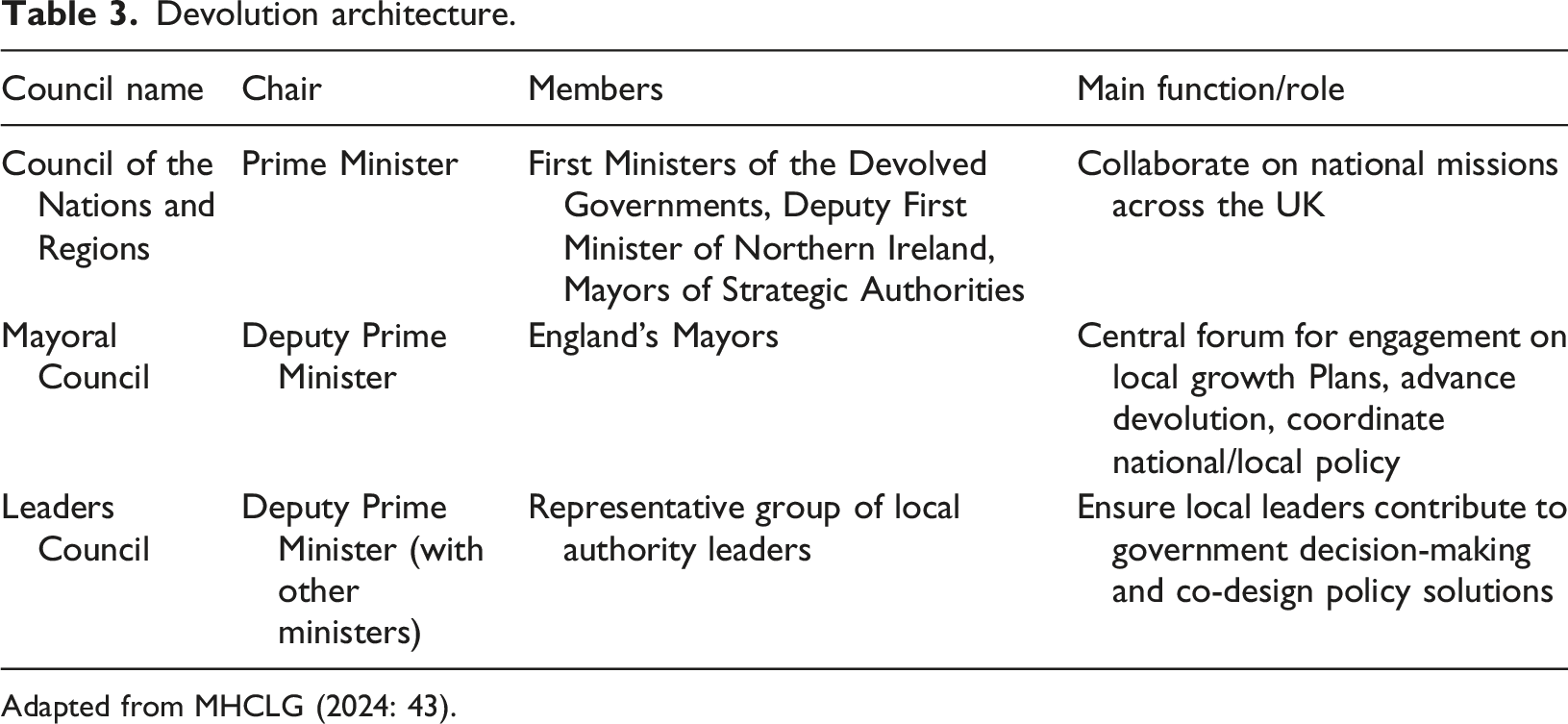
Adapted from MHCLG (2024: 43).
This architecture is explicitly designed to support collaboration and coordination between the strategic authorities and central government, notably within the Council of Nations and Regions, to collaborate on national missions across the UK and within the Mayoral Council to coordinate national and local policy. Beyond this architecture to guide engagement, there is also pan-regional cooperation exemplified by the White Rose Agreement, as signed by South Yorkshire, West Yorkshire and York and North Yorkshire to help coordinate regional strategy, particularly important where rigid boundaries do not conform with porous geographies (Barnett, 2024). The Devolution and Community Empowerment Act 2026 also put forth clarity around collaboration requests between mayors. There is a duty for mayors to collaborate, however, only if the request would be likely to improve the economic, social or environmental well-being or some or all people in Mayor A and Mayor B’s area.
However, challenges do remain. A pertinent question of the architecture asks whether such a governance structure made up of numerous small, disparate subnational units can sustain effective engagement with central government, particularly in shaping policy and managing fiscal transfers (Schneider and Cottineau, 2019). This issue is compounded by the political influence and soft power wielded by some mayors (see Giovannini, 2021). Furthermore, the diversity of interests and party politics can make meaningful coordination difficult.
Crucially, O’Grady (2024) observes the Council of the Nations and Regions becoming a “federalist talking shop” as it lacks statutory basis (McCann, 2024). Policy instruments in the UK tend to be more volatile and easily changed (Ferry, 2021). While coordination can be achieved through creatively assembling and adapting policy mechanisms for specific territories, without strong legislative, organisational, or strategic foundations, such efforts are unlikely to shift centre–periphery dynamics in a lasting way. Additionally, Rodríguez-Pose (2013: 1041) cautions against “an excess of either formal or informal institutions [as this] may also be counterproductive for economic development” since this can exacerbate principal–agent divides. Critics also caution that “without a transformation of the Whitehall machine … the UK state will remain too centralised and ineffective … failing to address strategic issues such as place-based reindustrialisation.” (Pabst, 2025: 66), pointing to the need for central reform before place-based strategies can be appropriately realised.
This leads to our first question: How can governance architecture be used to support effective policymaking in a complex landscape?
Conceiving productivity through city-region logic
The 2024 White Paper acknowledges the uneven distribution of devolved powers but stops short of outlining detailed strategies to harness diverse regional and sectoral strengths, instead emphasising that local leaders are best placed to determine their own priorities. But while the White Paper highlights the “untapped strengths we see in towns, cities and counties across the country” (p. 20), it simultaneously asserts that “the economic gains are potentially huge – if English cities outside of the capital met their productivity potential compared to similar cities in other countries, national economic output could be £34bn-£55bn larger per year” (p. 20). This focus places cities and urban areas at the core of productivity ambitions. Furthermore, the September 2025 Industrial Strategy outlined the government’s 8 sectors which show the greatest growth potential, unveiling bespoke sector plans for advanced manufacturing, clean energy, creative industries, defence, digital and technologies, financial services, life sciences, and professional and business services (GOV.UK, 2025b). Rural economies often remain more reliant on sectors such as agriculture, education, health, and services, which have historically seen slower productivity growth compared to sectors like finance, technology, and advanced manufacturing.
This leads us to consider that whether devolution can drive productivity lies in how growth and productivity are conceptualised. Authorities have been closely tied to an agglomeration-led growth model, premised on the city region as the most effective unit of productivity (Beel et al., 2018; Hildreth and Bailey, 2023). City regions were devised as agile spaces where local leaders could strategically manage growth and exploit economic niches. However, in practice, the model reproduces uneven development. The clustering of high-value, knowledge-intensive firms is “essentially urban in character” (Hildreth and Bailey, 2023: 453), creating an urban bias at the heart of the system. This leaves rural areas and weaker towns exposed to decline (Fai and Tomlinson, 2023; Turner et al., 2023).
Moreover, the economic rationale underpinning agglomeration has been contested. London’s experience is often held up as the national template, but there is a danger of policy transfer fallacy as productivity gains can distort challenges around rentier dynamics, pay inequality and inflated housing prices (Coffey et al., 2023). While larger agglomerations can provide a productivity premium through access to skilled labour and scale effects (Corradini et al., 2023), the challenge of more equitable territorial development remains acute. Investment in infrastructure has been heralded as one approach to spread agglomeration benefits through enhanced intercity connectivity (Martin et al., 2017; Rodríguez-Pose, 2008). Yet the cancellation of HS2 north of Birmingham has highlighted the persistent London-centricity of infrastructure policy and fuelled concerns that levelling up, under the Johnson-Sunak Conservative governments, was downgraded (Coffey et al., 2023; Fai and Tomlinson, 2023).
Diemer et al. (2022: 506), writing in reference to the European development trap, stresses that regions need to “strike a balance between sustaining the economic engine of booming urban agglomerations, while at the same time attending to regions in development traps or at risk of falling into them.”
This leads to our second question: How can the productivity agenda balance the strengths and needs of both urban and rural economies?
The preceding discussion highlights the ways in which national policy frameworks and devolution settlements have tended to privilege agglomeration-based and urban-centred models of productivity, often to the neglect of rural and peripheral economies. Yet such accounts remain incomplete without grounding them in the empirical realities of the sectoral structures that underpin regional economies. In order to test and illustrate these dynamics, the following analysis draws on ONS data to examine the sectoral and employment composition of both urban and rural CAs and CCAs. This provides a clearer picture of how sectoral specialisation contributes to regional GVA (generally conceived of as a key metric of productivity), the workforce distribution across sectors, and the implications these structural differences have for spatially balanced productivity growth.
Methodology
Urban and rural classifications.
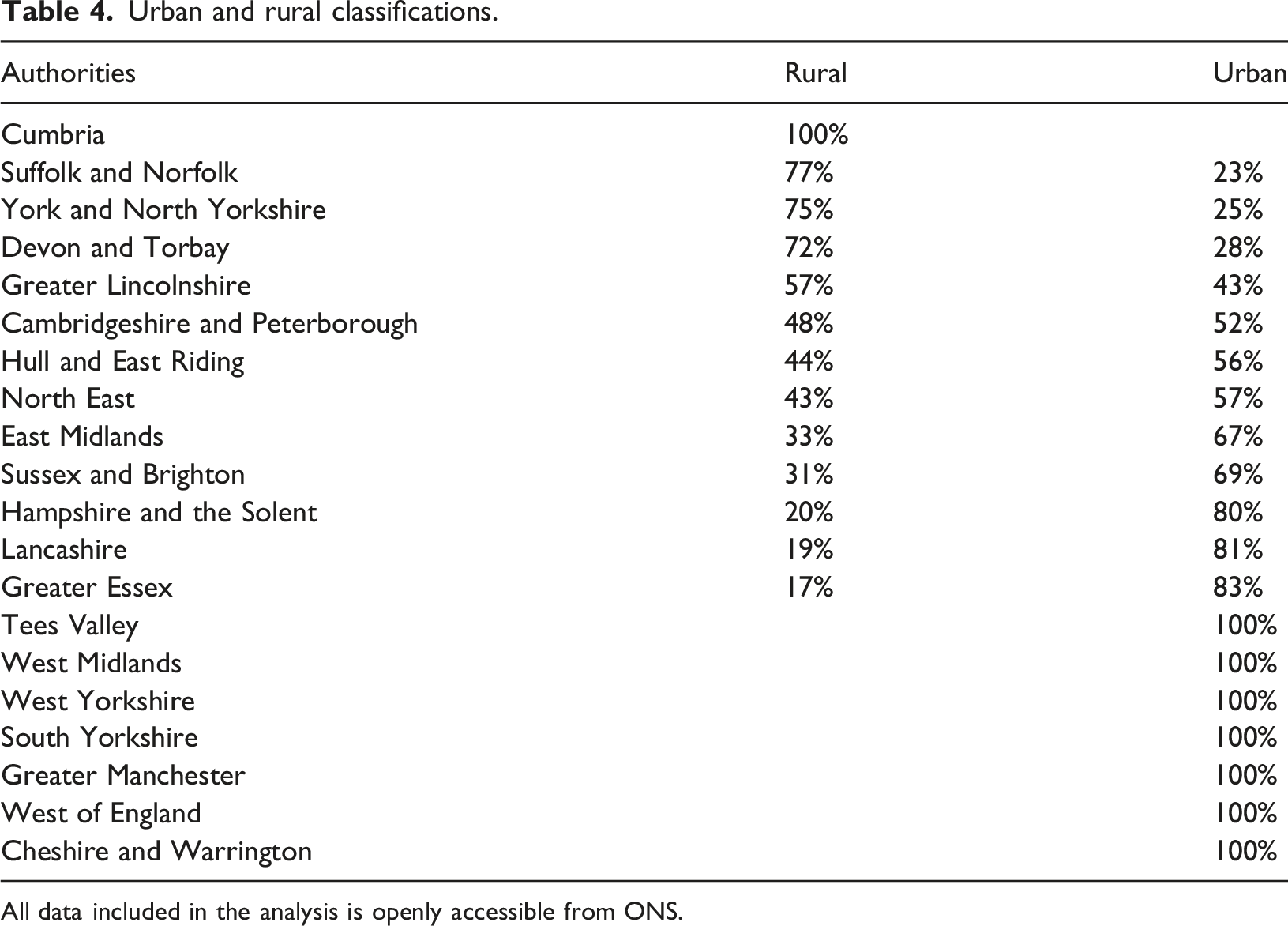
All data included in the analysis is openly accessible from ONS.
Analysis
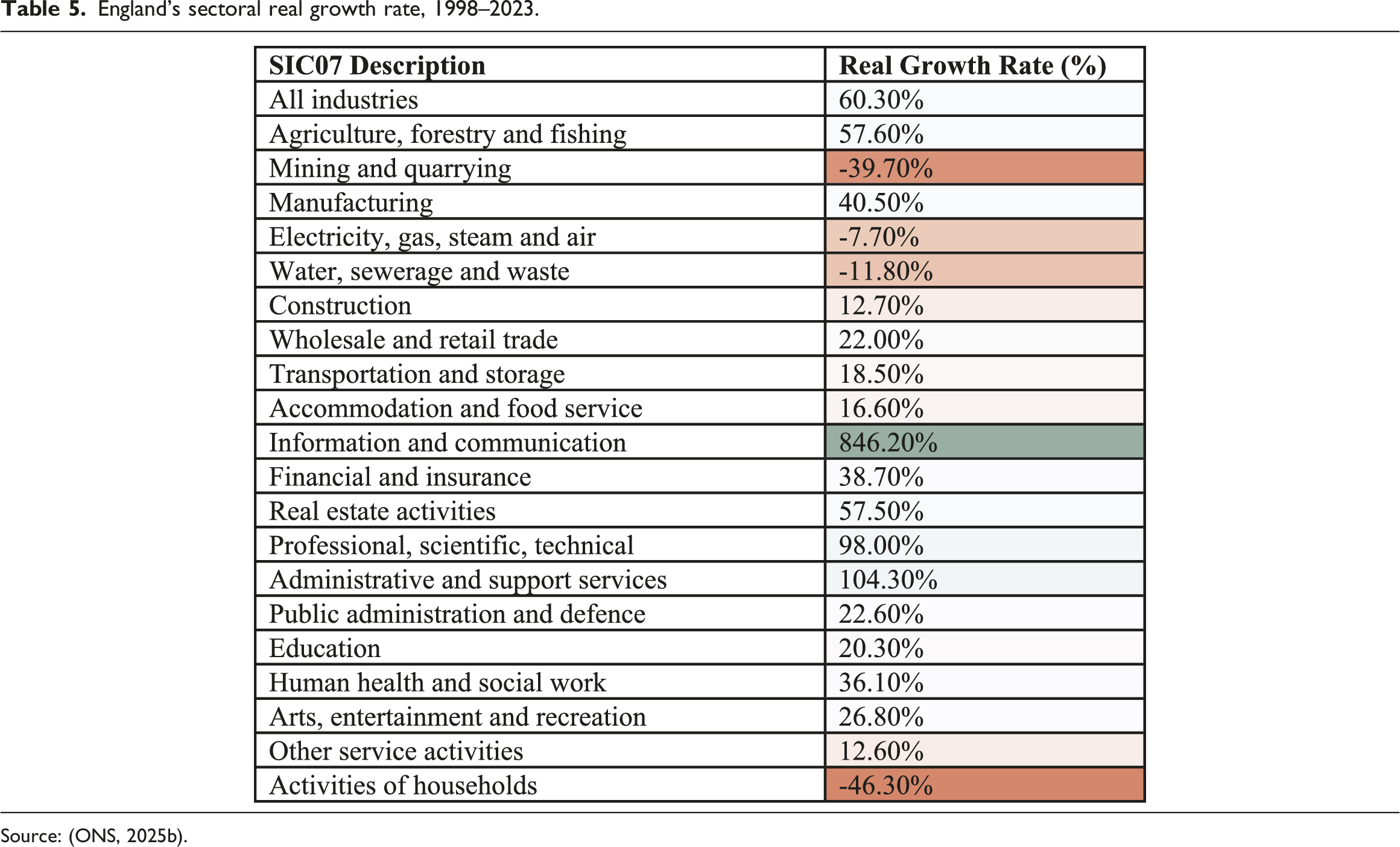
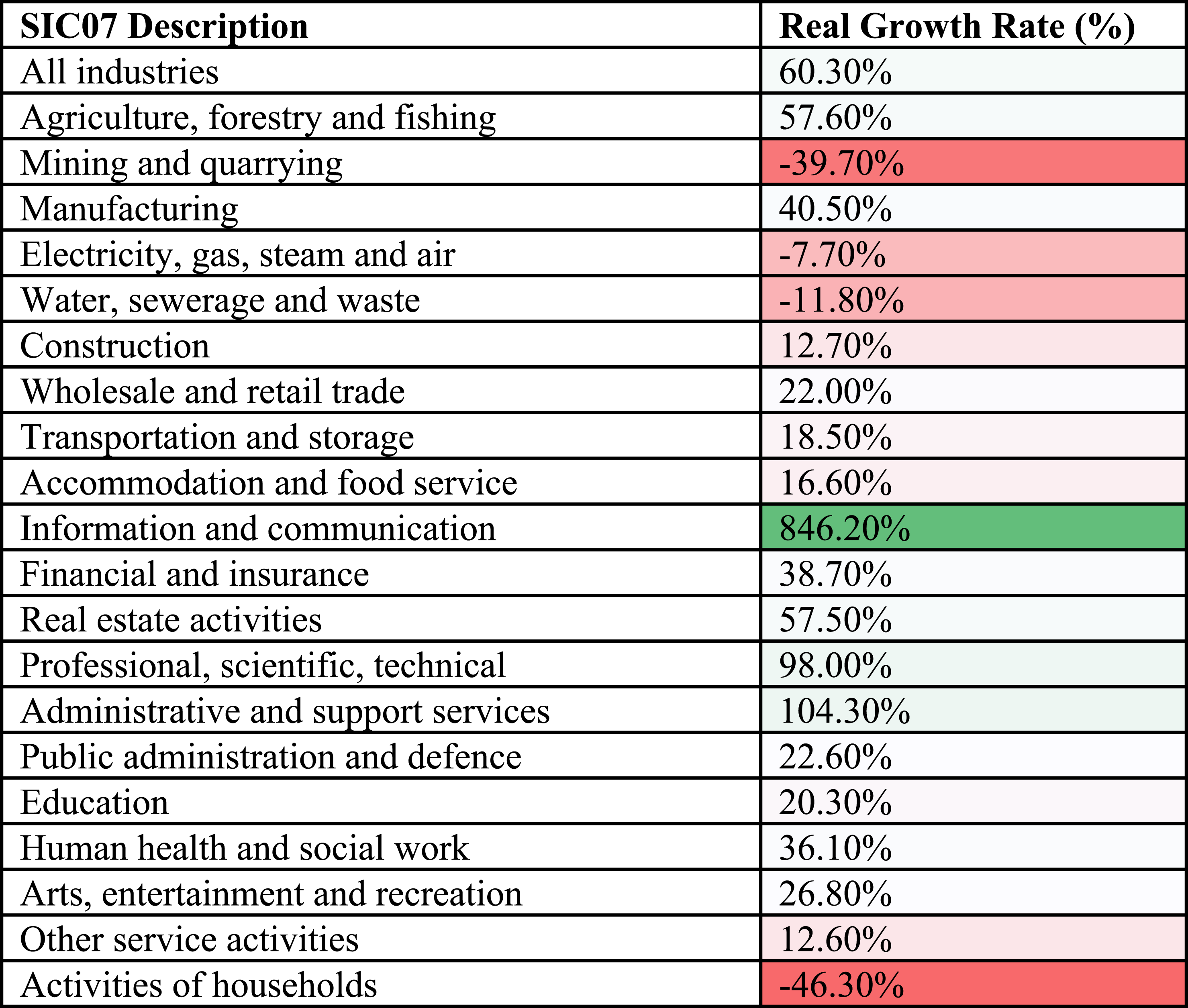
England’s sectoral real growth rate, 1998–2023.
Source: (ONS, 2025b).
Between 1998 and 2023, the sectors of information and communication (846%), administrative and support services (104%), and professional, scientific, and technical activities (98%) have exhibited the highest cumulative real growth. Smaller sectors such as agriculture, fishing, and forestry (58%) have also shown meaningful growth, though their relatively small economic scale limits their overall contribution to regional productivity. These findings align with patterns identified by Coyle and Mei (2022), who found substantial labour productivity growth in info and comms driven by technological advancements and workforce upskilling between 1997 and 2019. They note that although agriculture and manufacturing have also grown, their labour-intensive nature typically restrains overall productivity improvements. Consequently, capital- and knowledge-intensive industries tend to have higher productivity levels than labour-intensive sectors.
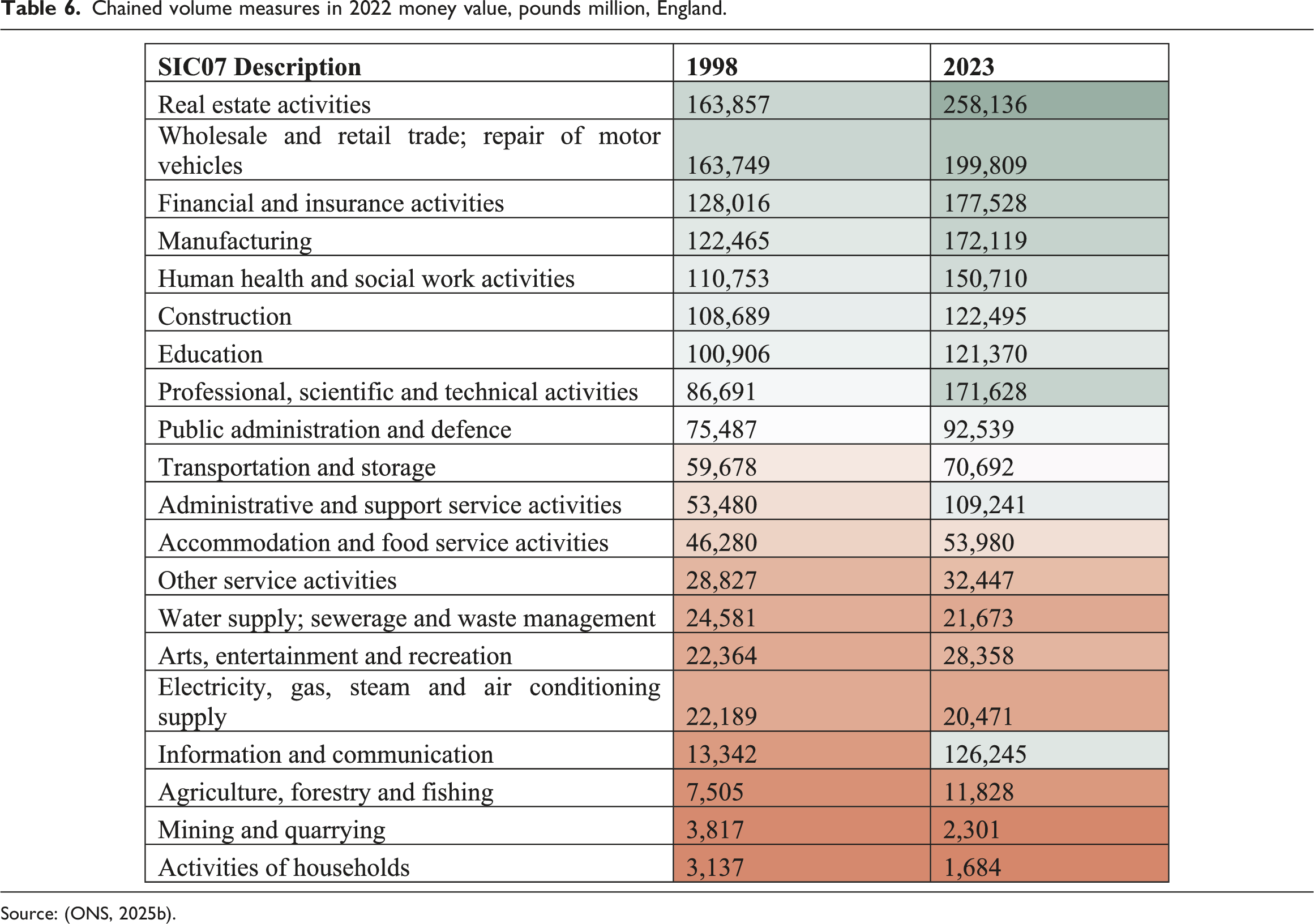
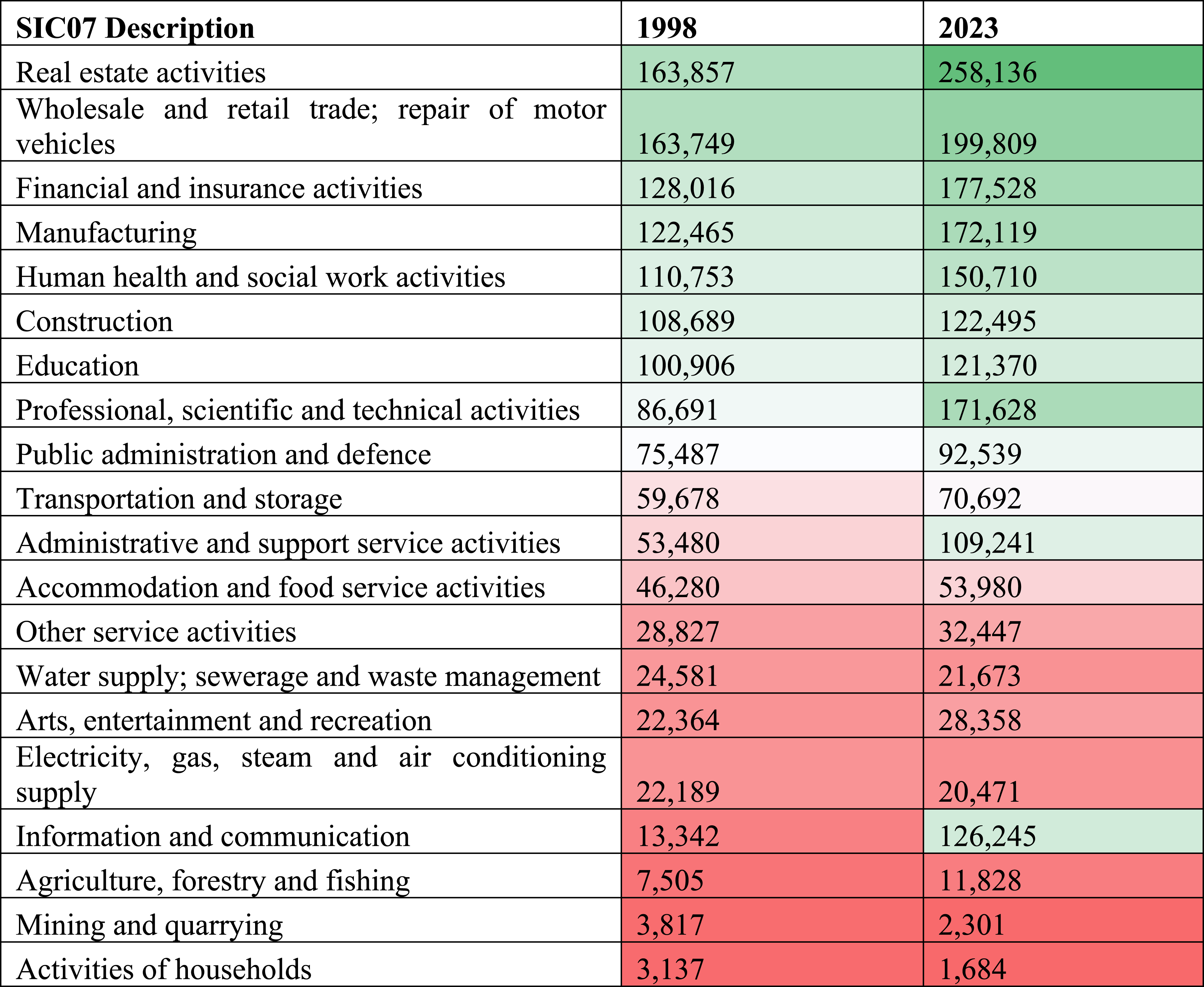
Chained volume measures in 2022 money value, pounds million, England.
Source: (ONS, 2025b).
Meanwhile, traditional sectors like manufacturing have maintained a strong position but with slower relative growth. Public administration and health services, while sizeable, have lost ground in rank, reflecting their lower rates of productivity growth relative to knowledge-intensive sectors.
Sectoral contribution towards urban and rural GVAs
Given the overall picture of sectoral contribution to the English economy, an important question is how sectoral strengths are reflected regionally. Distinguishing between urban and rural GVA reveals the ways in which local economies align or diverge from national growth trends. For the purpose of analysis, York and North Yorkshire (YNY), Cumbria and Norfolk and Suffolk are included as examples of rural areas while Greater Manchester, West of England, West Midlands, and Hampshire and the Solent are included as urban areas. These areas reflect a mixture of north and south regions, as well as regions with more advanced forms of devolution to those still awaiting inaugural mayoral elections.
A closer look at productivity and sectors in Figure 1 reveals that rural and urban areas differ in the sectors that contribute to their total GVA. Calculations are derived from current price estimates of the sector as a percentage of the region’s total price estimates. % Sectoral GVA contribution to each region’s total GVA (2025). Source: (ONS, 2025c, 2025d).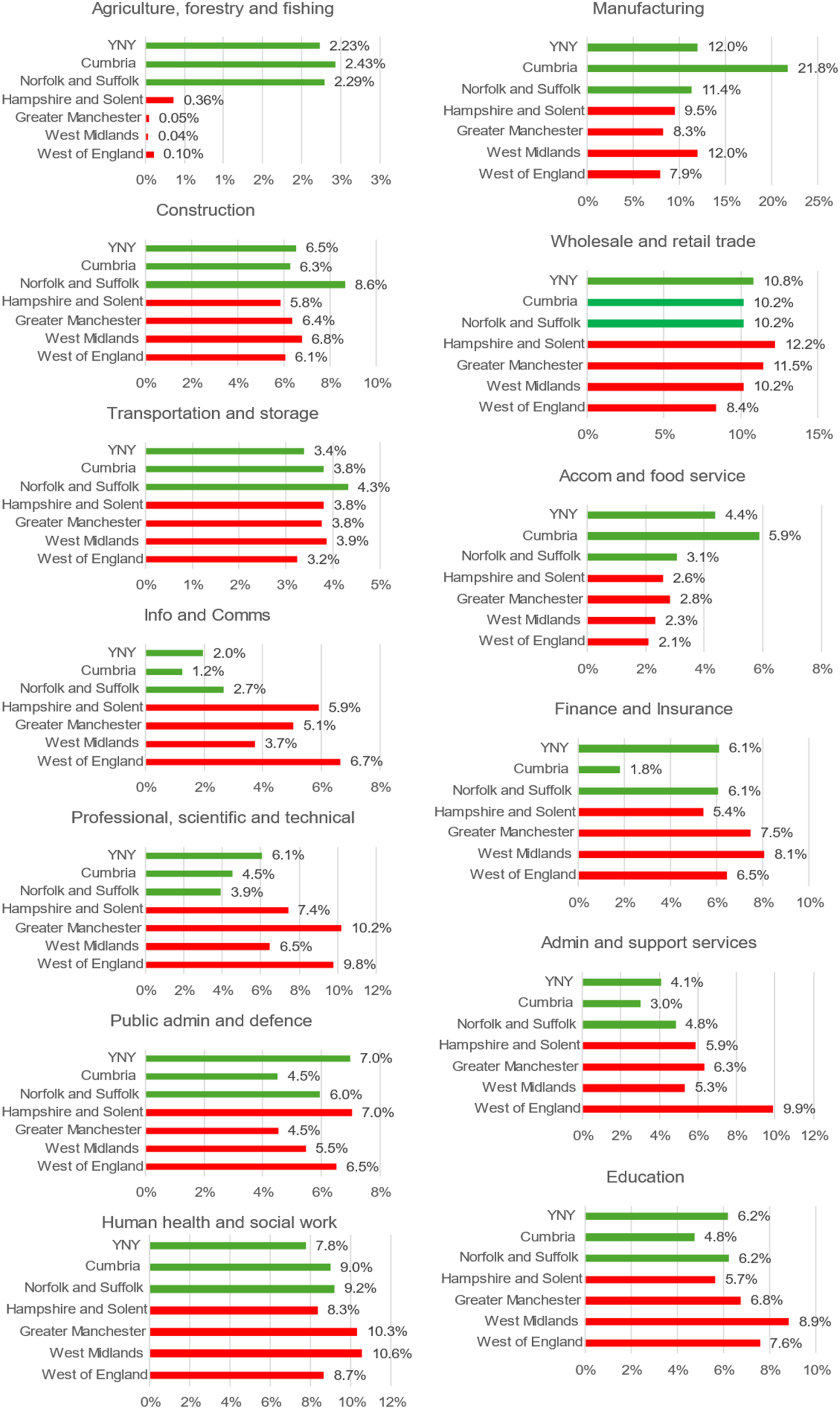
When reflecting on agriculture, forestry, and fishing, it is unsurprising that this sector makes a greater contribution to the GVA of rural areas, accounting for between 2.2 and 2.5% of their economies. In contrast, its contribution to urban GVA, such as in the West Midlands and Greater Manchester, is almost negligible.
A similar pattern is evident in accommodation and food services. This sector contributes 5.9% of Cumbria’s GVA and 4.4% in YNY, reflecting the importance of tourism and hospitality. In urban areas, contributions are lower: 2.1% in the West of England and 2.8% in Greater Manchester. While these shares are not insignificant, they remain consistently below rural counterparts, mirroring the trend seen for agriculture, forestry, and fishing. These patterns are significant for understanding productivity in rural regions. With a higher reliance on labour-intensive sectors, rural economies are less aligned with the agglomeration-based and knowledge-intensive models that typically underpin productivity frameworks. This reinforces the case for differentiated approaches to productivity that reflect the structural strengths and sectoral composition of both rural and urban economies. Linking back to Table 6, while both agriculture and accommodation have registered relative growth in chained volume measures (2022 prices), they remain among the weakest sectors in terms of overall economic contribution when compared to higher-value, knowledge-intensive industries. This underlines the challenge faced by rural regions: even where growth occurs, it often comes from sectors that provide limited productivity gains within the wider national economy.
Knowledge-intensive sectors more broadly contribute a greater share to urban GVA, enabling cities and metropolitan areas to achieve higher GVA per head. This is clearly exemplified through info and comms. Info and comms contribute towards 6.7% of the West of England’s GVA and 5.9% to Hampshire and the Solent but only contributes 1.2% to Cumbria’s GVA and 2% to YNY.
The financial and insurance sector performs strongly in urban areas, contributing 8.1% to GVA in the West Midlands and 7.5% in Greater Manchester. It also has a relatively strong presence in rural regions such as YNY and Norfolk and Suffolk, where it accounts for 6.1% of GVA in each. These figures may reflect regional specialisations, although the share of financial services within rural GVA remains consistently below that of urban centres. But as Martin et al. (2017) argue, opportunities often lie in strengthening existing sectors, through better knowledge exchange, innovation diffusion, and skills upgrading, which is preferential to replicating high-growth urban models. Given that financial services have significantly higher productivity than most other sectors, with financial services productivity twice as high as overall productivity across the UK (Mourougane and Jung Kim, 2020), policies supporting the growth and productivity enhancement of financial and insurance activities in rural regions could help strengthen their economic contribution. However, achieving this may require investment in digital connectivity, skills development, and fostering local specialisations suited to rural contexts.
The results also show that some regions are more dependent on certain sectors than others. For example, manufacturing accounts for 22% of Cumbria’s total GVA. This means that if manufacturing declines, whether due to economic shocks, changes in production, or other factors, the region would be highly vulnerable to a significant loss in productivity. It also highlights the importance of addressing any intra-sector productivity gap, particularly between companies that are quick to adopt advanced technologies and those that are slower or less able to do so. Some other sectors, such as construction, show relative parity in its contribution to GVA across rural and urban areas.
Differences in regional productivity performance often reflect the degree to which institutional and infrastructural assets are present and embedded locally. Regions with strong knowledge institutions, universities, and innovation infrastructure tend to show higher productivity in knowledge-intensive sectors. This is evident, for instance, in Greater Manchester, where the professional, scientific, and technical sector contributes 10.2% of GVA, and in the West of England at 9.8%, both underpinned by multiple academic institutions that foster skills development, R&D activity, and business collaboration. These outcomes align with the logic of the UK’s evolving devolution model, which place Mayoral Strategic Authorities as central to harnessing such place-based assets and capabilities.
Employment analysis
Understanding productivity at the regional level also requires examining the structure of employment. While earlier analysis highlighted how different sectors contribute to GVA across rural and urban economies, it is equally important to consider the proportion of the workforce employed in those sectors. This highlights mismatches between employment intensity and productivity efficiency that underpin the uneven economic landscape within which devolution is now operating.
Turning to employment rates by sector in Figure 2, there is notably higher employment in agriculture, forestry, and fishing within rural areas. This sector employs 5.6% of the workforce in Cumbria and 4.5% in YNY. This aligns with earlier evidence of this sector’s greater GVA contributions, but also suggests relatively low productivity efficiency. For example, agriculture accounts for 2.23% of YNY’s GVA but employs double that at 4.5% of the local workforce. The trend is even more pronounced in accommodation and food services. Although the sector contributes 4.4% to YNY’s GVA, it employs 11.8% of the workforce. This underlines the labour-intensive nature of the sector and reinforces the finding that rural regions are more reliant on industries with lower productivity returns, even when they provide significant employment opportunities. % Employment per each sector as a % of total employment (2023), Source: BRES (2023) using total in employment.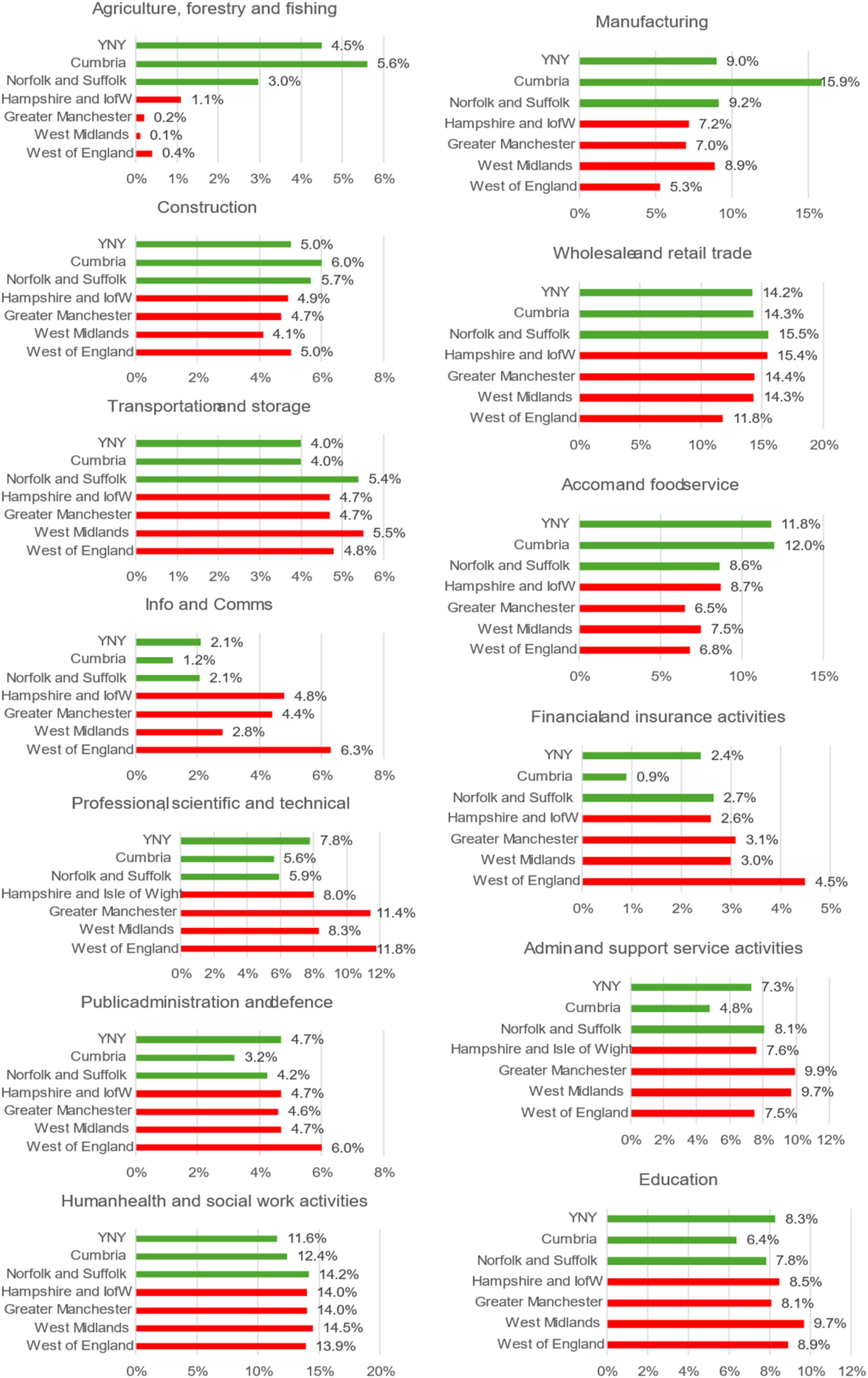
Compared with rural economies, urban regions generally employ a lower share of their workforce in manufacturing, although exceptions exist such as the West Midlands where 8.9% of the workforce is employed in the sector. More broadly, employment in knowledge- and capital-intensive sectors, which tend to offer higher productivity gains, is skewed towards urban authorities. In the West of England, for example, 4.5% of the workforce is employed in financial and insurance activities compared to just 0.9% in Cumbria. Similarly, employment in info and comms reaches 6.3% in the West of England, compared to 2.1% in YNY and Norfolk and Suffolk. The professional, scientific, and technical sector also reflects this pattern, employing 11.8% in the West of England and 11.4% in Greater Manchester, compared with only 7.8% in YNY and 5.6% in Cumbria.
Taken together, this data highlights a structural challenge: rural economies rely on sectors that provide employment but generate lower economic value per worker. Urban economies, by contrast, have a stronger employment base in high-value, knowledge-intensive industries that drive aggregate productivity performance. This divergence underlines why devolved strategies must be sensitive to sectoral and labour market composition, ensuring that workforce development and skills policies are central to local growth agendas.
Discussion
How can the productivity agenda balance the strengths and needs of both urban and rural economies?
The sectoral and employment analysis demonstrates the uneven economic foundations across England’s regions. Urban authorities are typically characterised by higher employment shares in knowledge-intensive and high-value service sectors. By contrast, rural authorities retain stronger reliance on manufacturing, agriculture, and labour-intensive services. Policies rooted in agglomeration-led city-region models therefore risk reproducing urban-centric bias, offering only limited traction in rural or smaller-town economies where productivity drivers are structurally different. Since devolution was initially granted to city regions, findings on productivity differences have themselves been complicated, and assumptions of straightforward “catch-up” through devolution are misleading.
Bailey et al. (2023) emphasise a targeted approach of identifying gaps and weaknesses in lagging regions to close them. However, it is important to be careful that such an approach does not inadvertently reinforce a deficit model of regional development. Framing productivity challenges primarily in terms of “gaps” risks positioning regions against external benchmarks rather than recognising the value of context-specific strengths. For example, interpreting the absence of financial services as a structural weakness to be addressed through sectoral industrial policy overlooks the possibility that productivity may be more effectively enhanced by building on existing assets in manufacturing, tourism, or locally embedded institutions. In this sense, the analytical priority should be in identifying how productivity can best be delivered in the specific social, economic, and institutional context of each place, rather than assuming that success requires replicating the sectoral profile of more advanced regions.
While local strategies often seek alignment with national “superstar sectors” in the 2025 Industrial Strategy, there is widespread recognition of the need to broaden the sectoral base. The East Midlands Inclusive Growth Commission noted that a growth plan for Nottingham should inevitably differ from one for Mansfield, but the two should remain strategically connected. Importantly, it argued that local strategies must look beyond the eight nationally designated “superstar sectors” if they are to offer realistic pathways to higher pay and secure work for a broader section of the labour market. Indeed, only 15% of workers in the region are employed in those sectors (RSA, 2025). Similarly, the West Midlands has acknowledged that replicating the London model would be both inappropriate and counterproductive (West Midlands Combined Authority, 2025) instead opting to look at comparator areas such as Greater Porto. While Preston’s community wealth building approach centres on six anchor institutions to deliver localised economic benefits (Preston City Council, 2024) illustrates how productivity can be driven through embedding institutional collaboration in ways suited to local contexts.
Industrial policy is most valuable when designed strategically and systemically, addressing both demand- and supply-side factors while embedding synergies with complementary policies such as skills, education, training, and entrepreneurship (Sunley et al., 2022). This points to the strength of adopting a “systems of systems” approach (Arnold and Wade, 2015; Forrester, 1971; Meadows, 2009), where industrial policy is understood as part of an interconnected framework spanning education, labour markets, innovation, infrastructure, and governance institutions, rather than as a standalone lever. By focussing on contextually grounded strategies, local and regional authorities can avoid prescriptive “catch-up” models and instead pursue productivity improvements aligned with their comparative advantages and local pathways to growth.
This aligns with Pabst’s (2025) calls for the restructuring of Whitehall into a Prime Minister’s Department to create an overarching economic strategy that integrates fragmented policy areas and also echoes an encouraging shift towards alternative approaches to productivity. Increasingly, integrated responses, such as trailblazer programmes in Greater Manchester and inclusive growth initiatives in the East Midlands, show a shift towards more holistic conceptions of productivity, addressing issues like economic inactivity alongside traditional growth drivers. This reflects wider academic debate. For example, Coyle (2025) has drawn attention to the limitations of orthodox productivity metrics, suggesting a need for more nuanced and holistic measures.
How can governance architecture support effective policymaking in a complex and uneven landscape?
The White Paper positions devolution as the mechanism that enables place-sensitive adaptation. However, historic asymmetric powers and uneven EMSA status and authority maturity may limit regions’ capabilities to do so, creating a paradox. Advanced metropolitan regions with Level 4 Trailblazer status can leverage capabilities and capacity to design proactive, innovation-led policies suited to their sectoral strengths. By contrast, newer or less empowered authorities may struggle to move beyond compliance with central government agendas.
Mechanisms such as the Council of the Nations and Regions and the Mayoral Council or duty to collaborate in the Devolution and Community Empowerment Act are intended to address these concerns by embedding cooperation both vertically between central and local government and horizontally across devolved regions. Effective use of these forums, alongside the development of “horizontical” policy approaches that combine vertical guidance with horizontal knowledge exchange (Bailey et al., 2023), will be central to ensuring that employment and productivity strategies can be effectively tailored across highly diverse regional economies. Mechanisms such as the Council of the Nations and Regions were designed to manage these challenges, but their limited statutory responsibilities and weak practical influence restrict their ability to shape effective policymaking. Lessons from abroad, such as Germany’s experience where metropolitan areas function as cooperative platforms rather than merely administrative units (Hildreth and Bailey, 2023), underline the need for sustained commitment to collaboration.
Alongside the “superstar sectors” outlined in the Industrial Strategy (2025) and the White Paper’s emphasis on cities leveraging their productivity potential, there is a need to reflect on the role of the rural productivity agenda, which runs parallel to urban concerns. As a report from University of Cambridge and PolicyWISE has argued, working groups within the council, premised on examples from Germany, could help address diverse regional concerns (Walker et al., 2025). Within Section 9 of the Devolution and Community Empowerment Act, the section outlines the appointment of up to 10 commissioners to assist the mayor in the exercise of mayor’s functions in related to the areas of competence. This provides capacity for collaboration if regions have rural affair commissioners.
Ferry (2021) points out that this challenge is as much about political will and ideology as it is about institutional design. Each mayoral candidate will have their own ambitions for office and approach to doing so. Politics is a factor when we consider alignment with central government, as well as the political make-up of the Council of the Nations and Regions and Mayors’ willingness to engage. Turner et al. (2023) emphasise the importance of united leadership from the Prime Minister in driving regional growth. This is particularly important in the UK where there is no constitutional basis for devolution and where attitudes towards devolution have shifted alongside political will. The grounding of productivity and growth in regions as evident in the White Paper, suggests a priority on regional growth. However, the architecture to do so needs further explicit commitment from central government and devolved regions with clear agenda, priorities and mechanisms for supporting both vertical and horizontal engagement.
Conclusion
Driving productivity fairly through devolution demands tailored regional strategies, sensitive to local structures, supported by both expanded devolved powers and stronger governance capacity. More nuanced measurement of productivity, coupled with governance arrangements that integrate vertical alignment with Westminster and meaningful horizontal cooperation among regions, will help prevent the reproduction of structural inequalities. If designed and empowered effectively, devolution can evolve beyond its current patchwork form and provide a genuine platform for inclusive, sustainable productivity growth across England’s diverse regional economies.
Footnotes

Ethical considerations
No ethical approval was required to carry out this research.
Funding
The author disclosed receipt of the following financial support for the research, authorship, and/or publication of this article: This research was supported by a research grant from Research England Development (RED) funding, which has funded the Yorkshire and Humber Policy Engagement Research and Network (Y-PERN) that enabled this research.
Declaration of conflicting interests
The author declared no potential conflicts of interest with respect to the research, authorship, and/or publication of this article.