







Abstract
Objective:
To investigate the effect of a 12-month sensomotor balance exercise programme on postural control and the frequency of falling in women with established osteoporosis.
Design:
Randomized controlled trial where the intervention group was assigned the 12-month Balance Training Programme and the control group did not undertake any intervention beyond regular osteoporosis treatment.
Subjects:
A total of 100 osteoporotic women – at least with one osteoporotic fracture – aged 65 years old and above.
Main measures:
Balance was assessed in static and dynamic posture both with performance-based measures of balance, such as the Berg Balance Scale and the Timed Up and Go Test, and with a stabilometric computerized platform.
Interventions:
Patients in the intervention group completed the 12-month sensomotor Balance Training Programme in an outpatient setting, guided by physical therapists, three times a week, for 30 minutes.
Results:
The Berg Balance Scale and the Timed Up and Go Test showed a statistically significant improvement of balance in the intervention group (p = 0.001 and p = 0.005, respectively). Balance tests using the stabilometer also showed a statistically significant improvement in static and dynamic postural balance for osteoporotic women after the completion of the Balance Training Programme. As a consequence, the one-year exercise programme significantly decreased the number of falls in the exercise group compared with the control group.
Conclusion:
The Balance Training Programme significantly improved the balance parameters and reduced the number of falls in postmenopausal women who have already had at least one fracture in the past.
Introduction
Osteoporosis is associated with an increased risk of fracture, which is most commonly induced by falling. About 30% of people over 65 years of age experience a fall every year, almost 20% need medical care following trauma and these falls are often disabling or fatal. 1 These consequences present a large public health burden.
Loss of balance can be one of the greatest risk factors for falling in elderly, osteoporotic patients. 2 Strengthening the balance and posture of elderly osteoporotic patients can reduce the risk of falling, thus preventing fatal events or hospitalization with enormous healthcare costs. Therefore, exercise programmes that aim to improve the balance of patients need to address reduced proprioception and strengthen sensomotor function as well. 3 The aim of our study was to investigate the effectiveness of a 12-month sensomotor Balance Training Programme (BTP) on postural control, and the frequency of falling in women with established osteoporosis using both the performance tests and the computerized stabilometer as well.
Data and method
Patients and study setting
All women aged 65 and over, who were examined in the Osteoporosis Outpatient Clinic of the National Institute of Rheumatology and Physiotherapy, Budapest, one year before study were screened. Demographic data and baseline characteristics were collected using a questionnaire and have been summarized in Table 1.
Baseline characteristics of participants (n = 100).
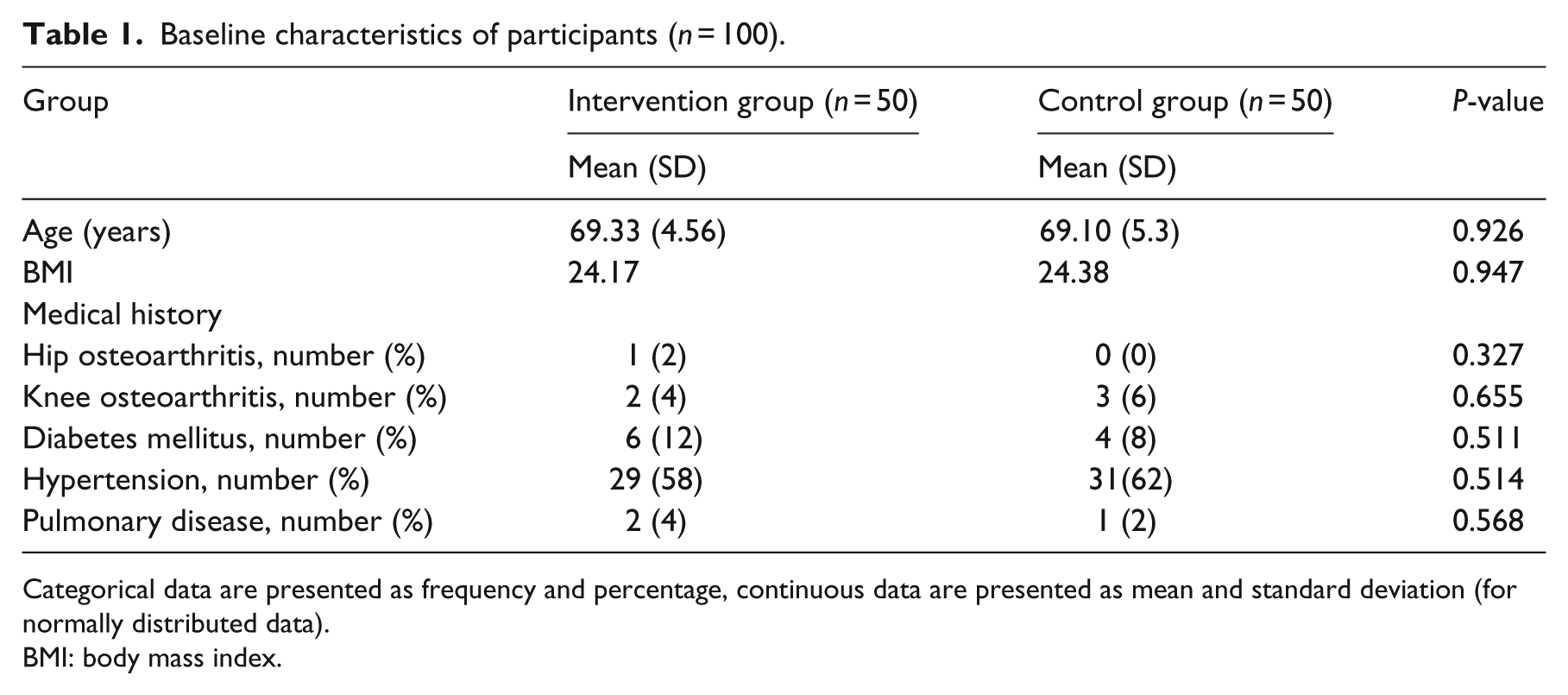
Categorical data are presented as frequency and percentage, continuous data are presented as mean and standard deviation (for normally distributed data).
BMI: body mass index.
Inclusion criteria were that only the patients with osteoporosis, classified using the World Health Organization diagnostic criteria for established osteoporosis in postmenopausal women, 4 were used for the study. These patients had a bone mineral density T-score lower than −2.5 in the lumbar spine, femoral neck or total femur region, and in the history at least one osteoporotic fracture.
Exclusion criteria included visual deficiency, severe auditive or vestibular deficiency, advanced locomotor diseases, women who used assistive walking devices or who were unable to walk independently more than 10 metres, progressive neurological or unstable cardiovascular diseases and participation in a regular physical exercise programme in the past six months.
Eligible patients were randomized (using a numbered series of prefilled envelopes specifying the group) into two groups: The intervention group who followed the BTP, and the control group who only received osteoporosis treatment and had no intervention. Given the large available database, equal numbers of patients were selected for the intervention and the control groups (Figure 1).
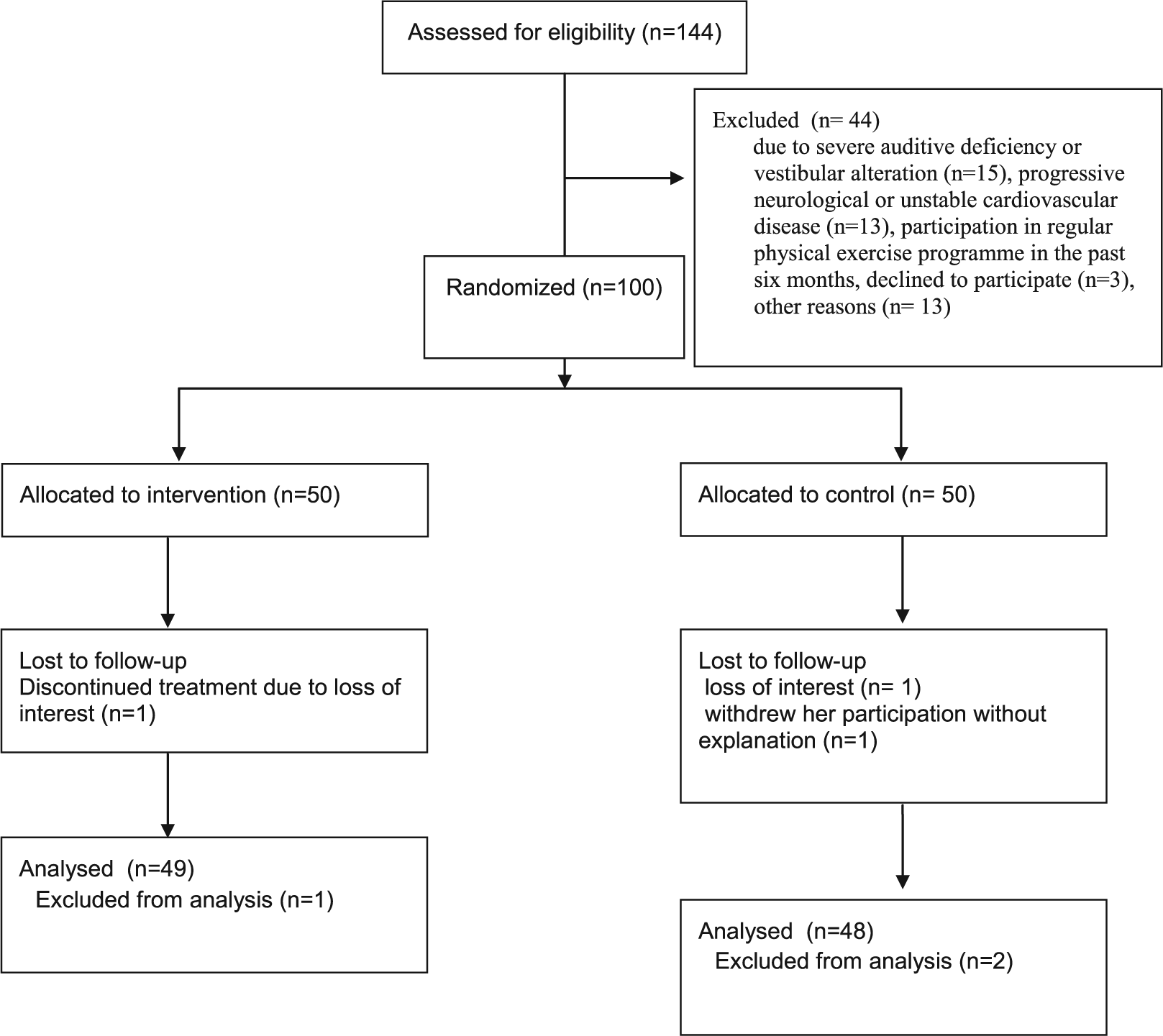
Flow of participants through the study.
An informed consent form was obtained from all participants prior to the study. The study was approved by the regional ethics committee (Scientific Research and Ethics Committee of Semmelweis University). The study was carried out between 1 January 2011 and 31 March 2012.
Outcomes
Assessment of balance
Balance of all patients in static and dynamic posture were measured at the start, at three months and at the end of the trial by an assessor physiotherapist who was blinded to both groups. Performance-based measurements of balance, such as the Berg Balance Scale and the Timed Up and Go Test, were used to measure balance in the patient population.5–7 In addition to these measurements, as a novelty in our study, static and dynamic postural balance were also assessed by the Bretz stabilometer, 8 a computerized way of studying the balance of elderly patients.
The Bretz stabilometer, similar to other new balance assessment tools, 9 is proven to be a reliable device for the quantitative assessment of postural sway during stance, which allows static as well as dynamic posturometric examinations.
Static postural balance was measured by two tests, which were carried out while patients were standing straight, feet together and arms extended parallel to the ground for 20 seconds with eyes open (‘Romberg’ 1 position) and eyes closed (‘Romberg’ 2 position). 8 The movement of the patient’s centre of pressure was visualized on a monitor by individual dots forming a line on a plane with X and Y coordinates. The main outcome variable of the tests was the radius of the circle that captured 95% of these individual dots on the plane.
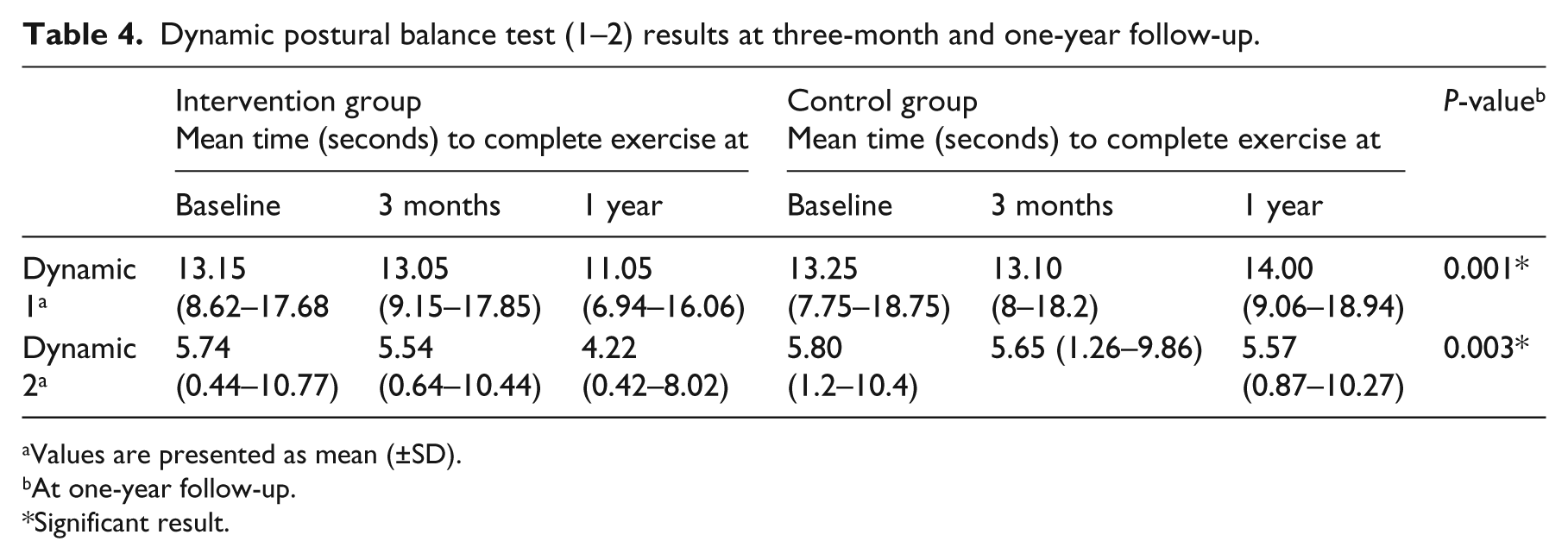
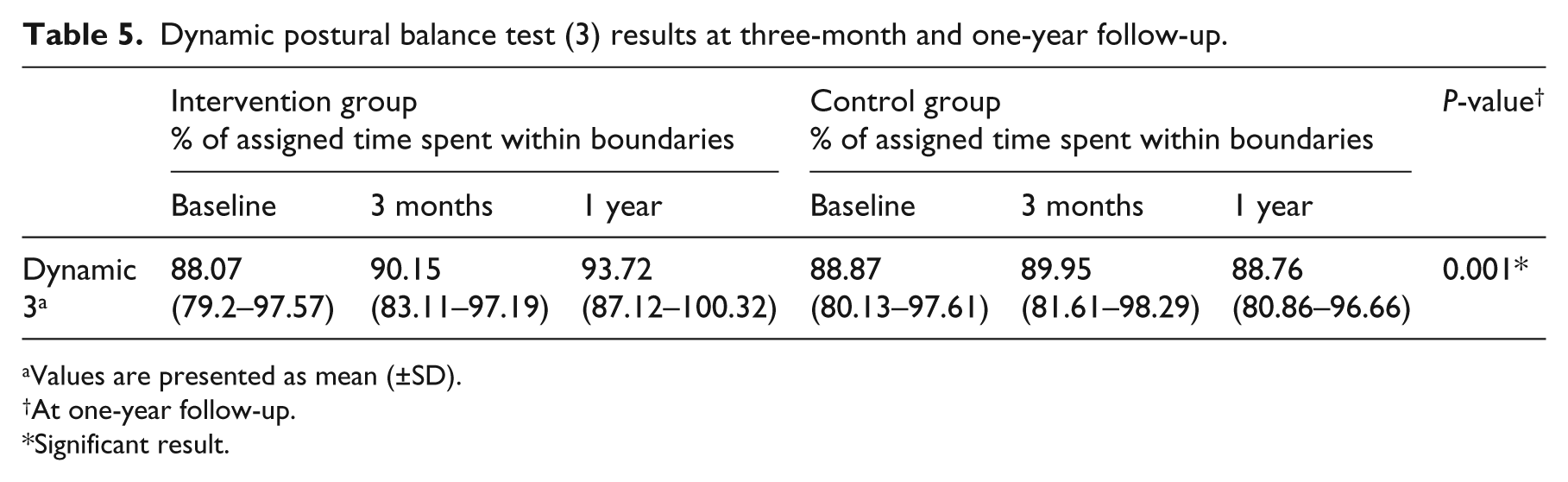
Dynamic postural balance was assessed using Dynamic 1, 2 and 3 tests. 8 During these tests the patients moved the centre of pressure of their bodies on the stabilometer’s force platform, and movements away from the centre were visualized on the monitor connected to the platform. The time needed to carry out the three tasks was measured and recorded.
Frequency of falling
During the study year, patients in both the intervention and control groups kept a ‘fall diary’, in which they recorded every fall and its circumstances and the frequency of falling was assessed based on this fall diary.
Interventions
Our BTP compiled by physiotherapists is a combination programme between conventional back, torso and lower extremity muscle strengthening exercises10,11 and the proprioceptive dynamic posture training, 12 modified in its sensomotory elements in order to improve balance control and reduce falling in the study population. This exercise programme follows a learning principle, which strengthens and improves the function of the deep and postural muscles by making patients perform specific exercises.
There are three levels of progressivity within the BTP, which are performed in a step-wise manner. The first, static phase, where the focus is on stabilization, has to be completed for the patient to be able to progress to the next, dynamic phase, which is used to practise balancing, and additionally arm and leg exercises. The final phase is the functional phase. The goal of this phase is to achieve automatic stabilization of the torso when performing different exercises and the activities of daily life. The functional phase also assists patients in developing stabilization skills when changing position and posture during sports and work activities.
Patients included in the intervention group did the exercises twice a week in the outpatient setting, guided by physiotherapists who compiled the BTP. For the rest of the week, they continued exercises 60 minutes a day based on an exercise booklet individually at home.
Statistical methods
A statistical analysis was carried out using SPSS version 19.0 for Windows software. The baseline characteristics of the patients were analysed using descriptive statistic.
Independent-sample t-tests and Mann–Whitney U-tests for continuous data and χ² test for categorical data were used to compare baseline values of the intervention and control groups and to determine whether there was a statistically significant difference between the outcomes of the intervention and control groups postintervention (statistically significant difference was considered at p < 0.05). Relative risk was also calculated for falling.
Results
Performance-based measurements of balance
The Berg Balance Scale and the Timed Up and Go Tests showed a statistically significant improvement of balance and stability in the intervention group after the completion of the one-year BTP (Table 2).
Performance-based tests’ results at three-month and at one-year follow-up.
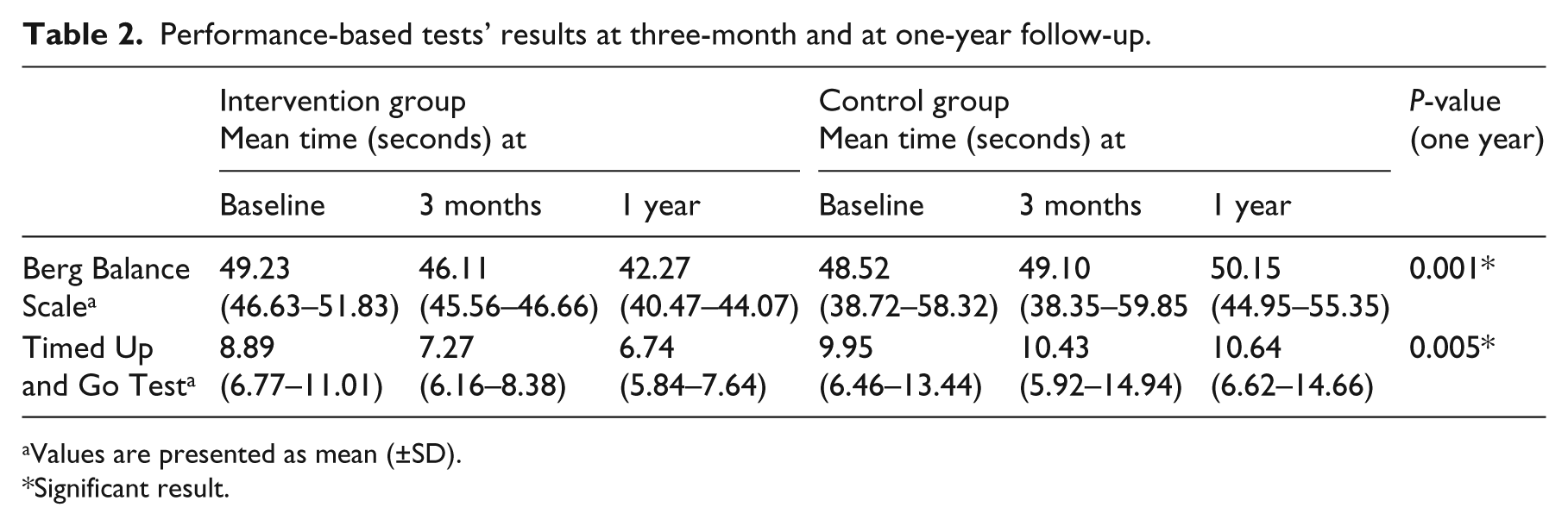
Values are presented as mean (±SD).
Significant result.
Stabilometric balance tests
The static postural balance tests (‘Romberg 1’, ‘Romberg 2’) showed statistically significant improvement in patients who completed the BTP, compared with control patients receiving no intervention apart from osteoporosis treatment, at one-year follow-up. Results were also significant at the three-month follow-up for the closed but not the open-eyed tests (Table 3).
Static postural balance tests’ results at three-month and one-year follow-up.
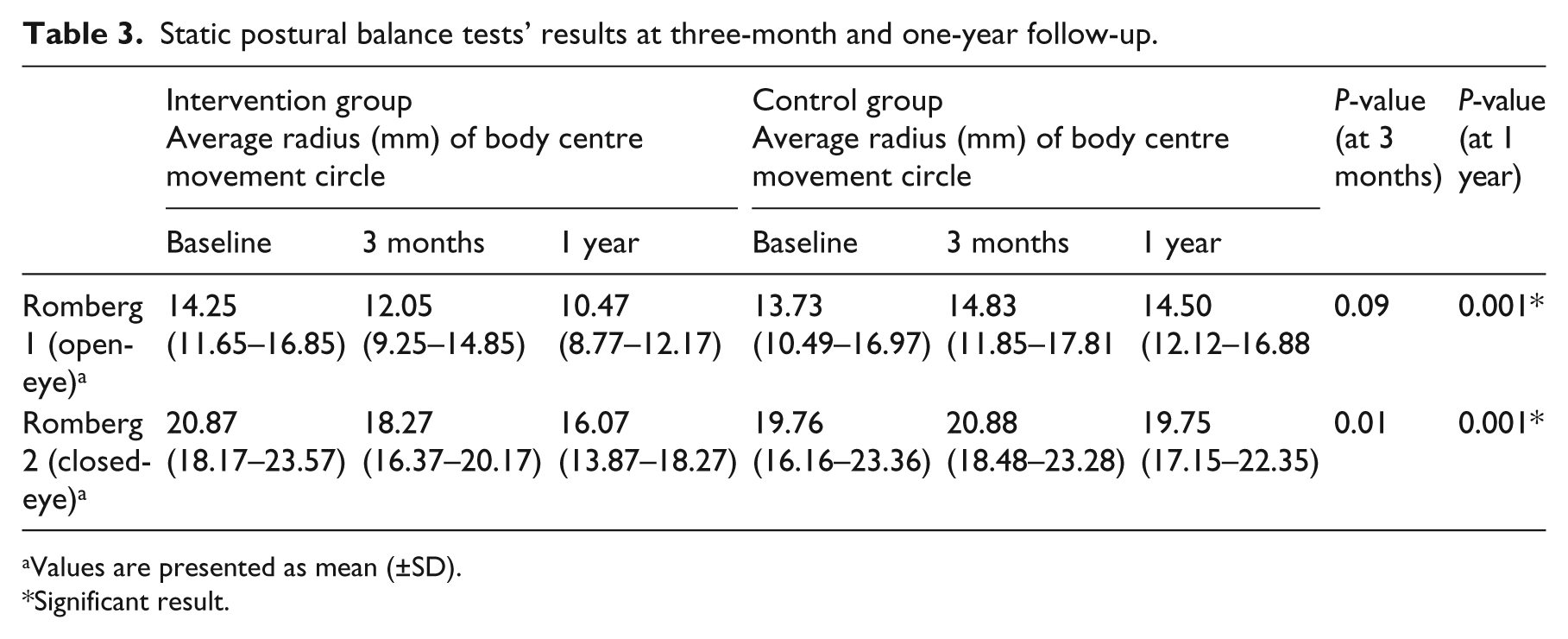
Values are presented as mean (±SD).
Significant result.
The effect of the BTP on the dynamic postural balance was confirmed by the dynamic balance tests, which showed a significant improvement in the intervention group at one-year follow-up, but the results were not statistically significant at three-month follow-up. In the first two tests (Dynamic 1 and 2) and in the third dynamic tests (Dynamic 3) patients completed the exercises in a significantly shorter time in the intervention group at one-year follow-up than the control group, proving the efficacy of the training programme in terms of the patients’ improved postural balance and mobility (Tables 4–5).
Dynamic postural balance test (1–2) results at three-month and one-year follow-up.
Values are presented as mean (±SD).
At one-year follow-up.
Significant result.
Dynamic postural balance test (3) results at three-month and one-year follow-up.
Values are presented as mean (±SD).
At one-year follow-up.
Significant result.
Frequency of falling
The number of falls was seven in the intervention group and 16 in the control group. The number of patients who fell in the study year was six in the intervention group and 11 in the control group.
The relative risk of falling in the intervention group was 0.12 and 0.229 in the control group, respectively (p < 0.05).
Discussion
The first controlled, randomized study, which examined the effects of physical activity in women with decreased bone mineral density, was published in 1996. 13 Therefore, a large range of literature is available for review. Several studies use body balance and its changes to assess the results of exercise programmes in osteoporotic patients.14–21 There were no systematic reviews or meta-analyses performed in this field for us to study. Most previous researchers use performance tests, such as the Timed Up and Go Test, standing on one leg and the Berg Balance Scale, which evaluate balance in a functional approach. Madureira and colleagues assessed the effect of a BTP on the functional status of elderly osteoporotic women in Brazil using such performance tests. 3
In contrast, postural studies using a computerized method examine the swaying movement of the body, which is a physiological test.
Our study is the first to our knowledge that used both types of balance examinations to assess the effectiveness of a 12-month sensomotor balance exercise programme on postural control and the incidence of falling in women with established osteoporosis.
The stabilometric measurements that were carried out in our study – an example of a postural balance examination – provided us with a more objective and reliable measurement of improved balance than using only performance-based tests. Both static balance parameters showed a significant improvement in the intervention group at one-year follow-up; the closed-eye test (Romberg 2) was significant already at the three-month follow-up. The dynamic balance data evaluation revealed an even more interesting correlation. While the static balance results demonstrated significant improvement already at the three-month follow-up in the intervention group, the dynamic balance test results did not show significant improvement at three months. However, the one-year test results did confirm significant improvement in the dynamic balance parameters; a plausible explanation for this phenomenon is that the balance exercise programme had to be completed for the dynamic balance parameters to improve significantly compared with patients not following the BTP.
The balance examinations of this study prove that our new, complex BTP, which is a combination programme between conventional muscle strengthening exercises and the proprioceptive dynamic posture training, modified in its sensomotory elements, can improve the balance parameters of postmenopausal women who have already suffered at least one previous osteoporotic fracture. According to the results of this study, the one-year exercise programme also significantly decreased the observed rate of falling in the intervention group compared with the control group. Results confirm our hypothesis that exercise programmes, which aim to address reduced proprioception and strengthen sensomotor function in addition to strengthening the muscles, are effective in reducing the number of falls owing to balance instability for established osteoporotic women.
The study has some limitations. Exercises conducted by patients at home were not supervised by a physician, which could have had a negative impact on the quality of the exercises performed. We did not collect information about the fear of falling given the lack of suitable questionnaires in Hungarian. Our results are only generalizable to postmenopausal women with established osteoporosis.
Further research should be conducted on a larger and international sample for a longer follow-up period to assess the long-term effectiveness of the complex BTP on the improvement of balance, and consequently on reduction in the number of falls of postmenopausal osteoporotic patients.
In conclusion, the 12-month exercise programme significantly improved the balance parameters and reduced the number of falls in postmenopausal patients who had already suffered at least one fracture in the past. Therefore, we recommend the incorporation of the BTP in everyday rheumatological practice exercise regimes to reduce the risk of further fractures for postmenopausal osteoporotic women.
Clinical messages
The complex Balance Training Programme described herein reduced the frequency of falls in women with established osteoporosis over a period of one year.
The programme improved balance measured quantitatively by performance and stabilometric tests.
Footnotes
Declaration of Conflicting Interests
The author(s) declared no potential conflicts of interest with respect to the research, authorship, and/or publication of this article.
Funding
The author(s) received no financial support for the research, authorship, and/or publication of this article.