






Abstract
Background:
Palliative care services strive to support people to live and die well in their chosen environment, with optimal symptom control and a pattern of care supportive of laycarers. The likelihood of patients remaining at home often depends upon laycarers, who may be required to manage subcutaneous medications.
Aim and Design:
This study reports the development, trial and evaluation of a package that teaches laycarers to manage subcutaneous medications used for symptom control in home-based patients. The package was developed by palliative care stakeholders and comprises an educational session, delivered by nurses, and a range of demonstrative, audiovisual and written resources.
Settings/Participants:
The package was trialled across 24 sites and was evaluated by 76 laycarers (pre- and post-use) and 53 nurses (at study completion).
Results:
Outcomes of primary interest were perceived global usefulness of the package and rated relevance of components. Laycarers and nurses rated the usefulness and relevance of the package highly – all means were above 5 on a 7-point scale. Also, laycarers were invited to comment on the package, and three focus groups for 26 nurses explored post hoc issues following package implementation.
Conclusions:
In terms of the palliative patient’s illness trajectory, consensus was that the time for package introduction depended upon each particular clinical situation and laycarer. Nursing opinion was divided concerning whether it is safe and appropriate for laycarers to manage subcutaneous injections. Nevertheless, this study demonstrates that the package supports laycarers to manage subcutaneous medications. This has important implications for families, services and health-care systems.
Keywords
Introduction
Australian palliative care services, like their international equivalents, strive to support patients to live and die well within the setting of their choice, usually home, with optimal symptom control and with a pattern of care supportive of laycarers.1–7 The likelihood of patients remaining symptomatically well managed at home often depends upon input from laycarers, mostly family members, who may be required to administer subcutaneous medications.8–11 Australian bereaved laycarers report their ability to provide injections adds value to patient care; nonetheless, many report the need for education and resources to assist them in this quasi-professional role.4,7,9
Structured education programmes for laycarers result in positive patient and laycarer outcomes relating to symptom management.12–15 Providing laycarers with the knowledge to understand the rationale of good symptom management adds to their confidence in administering the right drug for the right symptom at the right time.1,16 This generates improved patient outcomes and decreases unwanted and inappropriate admissions to acute care facilities.17–19
There is some literature confirming the ability of laycarers to successfully administer pre-prepared syringes for symptom control, but there are few studies concerning the practice of also teaching laycarers to prepare injections.4,14,20 There is resistance from some palliative care service providers about the appropriateness of teaching laycarers to prepare and administer subcutaneous injections.11,18,21,22 This has been partly due to a perception that the task is too burdensome for family members, that is, it generates unnecessary stress and anxiety with possible negative consequences in bereavement. 21 In addition, there is organisational and individual uncertainty related to legal, jurisdictional and scope of practice issues for registered nurses and laycarers. 17
This study investigated an intervention to improve laycarers’ capacity to manage symptoms in palliative care patients requiring breakthrough subcutaneous injections. The intervention educated and supported laycarers to competently and safely prepare, store and administer subcutaneous injections; to monitor subcutaneous sites; to manage a medication administration record suitable for easy assessment by health professionals and to understand the uses of common medications used in palliative care.
Method
The aim was to develop, trial and evaluate the effectiveness of a package, consisting of an education session and resources, that supports laycarers of home-based palliative patients to manage breakthrough subcutaneous medications used for symptom control. Ethics clearance was obtained from six Human Research and Ethics Committees.
Legislative requirements
Early in this study, it was identified that many Australian community-based services and individual staff were unclear regarding the legal, jurisdictional and scope of practice issues related to the common palliative care practice of preparing subcutaneous injections and leaving them in the home for subsequent administration by laycarers. 22 To clarify these issues and to progress the study, the Brisbane South Palliative Care Collaborative prepared a document entitled Guidelines for the Handling of Medication in Community-Based Palliative Care Services in Queensland. 16 This document has been endorsed by Queensland Health, Australia and complies with the Health (Drug and Poisons) Regulation 1996, 23 the Queensland Powers of Attorney Act 1998 24 and the Guardianship and Administration Act 2000. 25
The package
Production of the package was an iterative process guided by a multidisciplinary group of 14 specialist and non- specialist palliative care providers, academics and laycarers. The group met face-to-face five times to draft aspects of the package. These drafts were circulated until consensus about the final documents was achieved.
The education session development was informed by a literature search, consensus-based best practice with respect to subcutaneous medication use 26 and adult learning principles.27,28 Agreed requirements of the session included:
standardised information content, focusing on safety, competency and skills (inclusive of preparation, storage and administration of breakthrough injections) and able to be delivered by registered nurses to laycarers;
suitable for delivery in a one-on-one format in the laycarer’s home;
able to be implemented across various health and geographical settings;
various teaching material modalities to allow for individual differences in rates and style of learning.
A training manual was developed to guide nurses in the delivery of the education session. A suite of resources was developed for use within the education session and to provide laycarers ongoing support in their day-to-day management of subcutaneous medications. All the materials produced by this study can be accessed via http://www.caresearch.com.au/caresearch/tabid/2145/Default.aspx
Package implementation
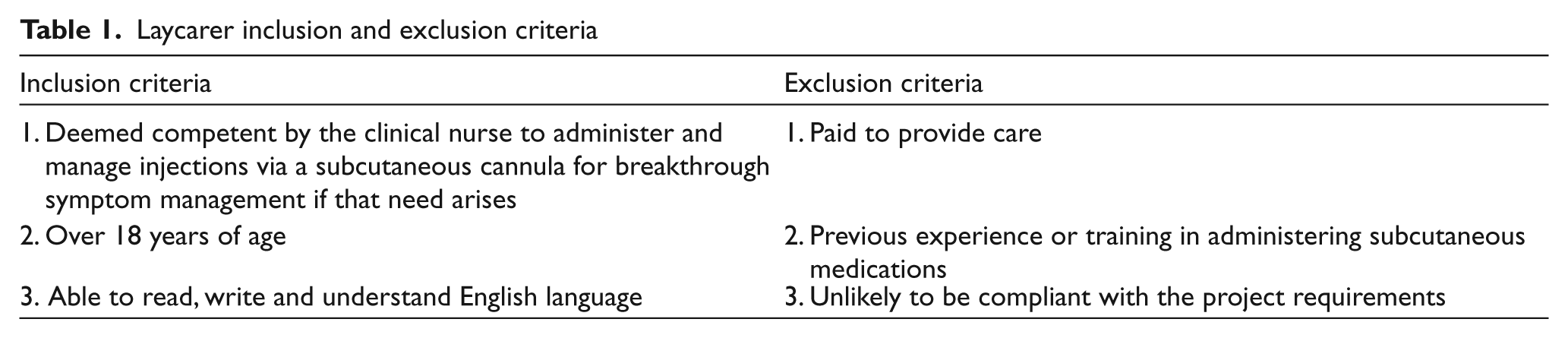
Specialist and non-specialist palliative care services across South East Queensland were approached to be involved in the study. All the registered nurses from consenting services received on-site training by research staff in all aspects of the package, including delivery of the education session, prior to recruitment of laycarers. Potential laycarers were identified initially by clinically registered nurses using the criteria listed in Table 1. These laycarers were later contacted by research staff to discuss the study and obtain written consent.
Laycarer inclusion and exclusion criteria.
Evaluation
The package was evaluated by laycarers and registered nurses. The outcomes of primary interest were the perceived global usefulness and relevance of package components. Laycarers completed two questionnaires: the first questionnaire was administered immediately after delivery of the education session (Time 1) and the second questionnaire was administered 4 weeks after laycarers had had experience injecting medications and using the resources (Time 2).
The first questionnaire rated the global usefulness of the education and resources as well as laycarers’ perceptions of confidence with regard to aspects of their future delivery of subcutaneous medications. The initial section rated the education session in terms of relevance to needs, ease of understanding, potential usefulness in reducing stress, medication administration and satisfaction with the information. The next section rated confidence with preparing, labelling and administrating injections; managing the injection site and symptoms and understanding of common palliative care medications. The final section rated specific aspects of the education and resources including the one-on-one session, written and illustrated information, demonstration and supervision components and the audiovisual resource.
The second questionnaire was similar to the first and asked laycarers to rank the usefulness of the resources that they had actually used after they had had experience injecting. All questions were answered on 7-point Likert-type rating scales where a higher score indicates a more positive response. Interpretation of the mean ratings and 95% confidence interval (95% CI) were based on a mean higher than 5, indicating a very positive response on average, and the lower limit of the 95% CI above 4, indicating consistent agreement among respondents about the high rating. Laycarers were also invited to write comments.
Nurses who delivered the education were asked to complete a questionnaire at the conclusion of the study. The questionnaire aimed to evaluate the package across content, efficacy, safety and satisfaction domains. It was based on 7-point Likert-type scales with endpoints, strongly disagree, 1, and strongly agree, 7.
The first section rated overall aspects of the education session, including ease of delivery, quality of resources and appropriateness to the needs of laycarers. The second section concerned how well nurses thought the various issues had been explained. The third section rated the usefulness of specific aspects of the package for the laycarers.
At the end of the study, focus groups were held with a purposive sample of specialist and non-specialist palliative care nurses from participating sites. Focus group questions were informed by the findings from the registered nurse questionnaire. The purpose was to explore post hoc issues that had arisen after implementation of the package.
Results
The package
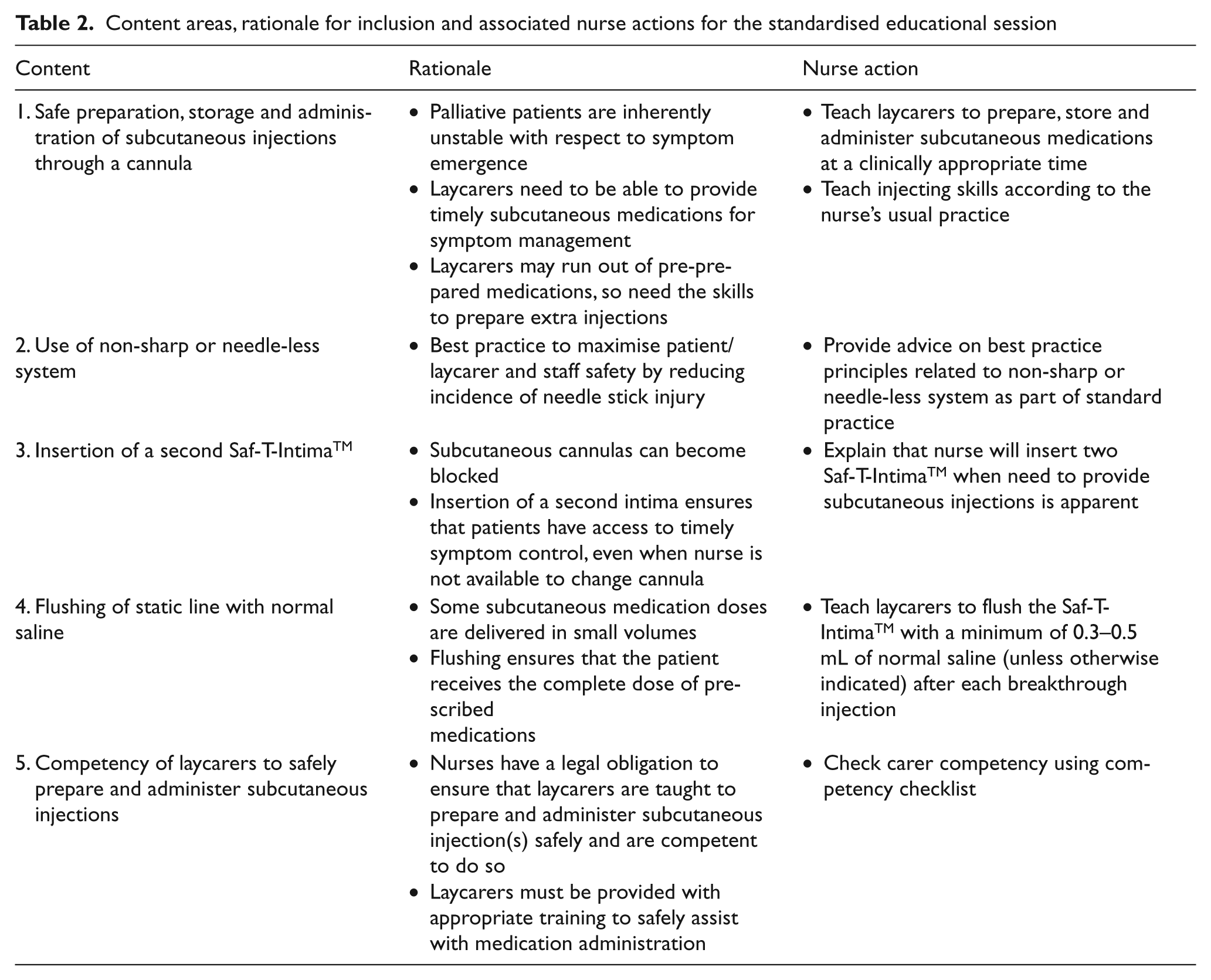
The education session comprised five major content areas. These content areas, the rationale for their inclusion and nurse actions associated with those areas are listed in Table 2. The education session required between 20 and 60 min to complete and was used to introduce the suite of resources developed for the study.
Content areas, rationale for inclusion and associated nurse actions for the standardised educational session.
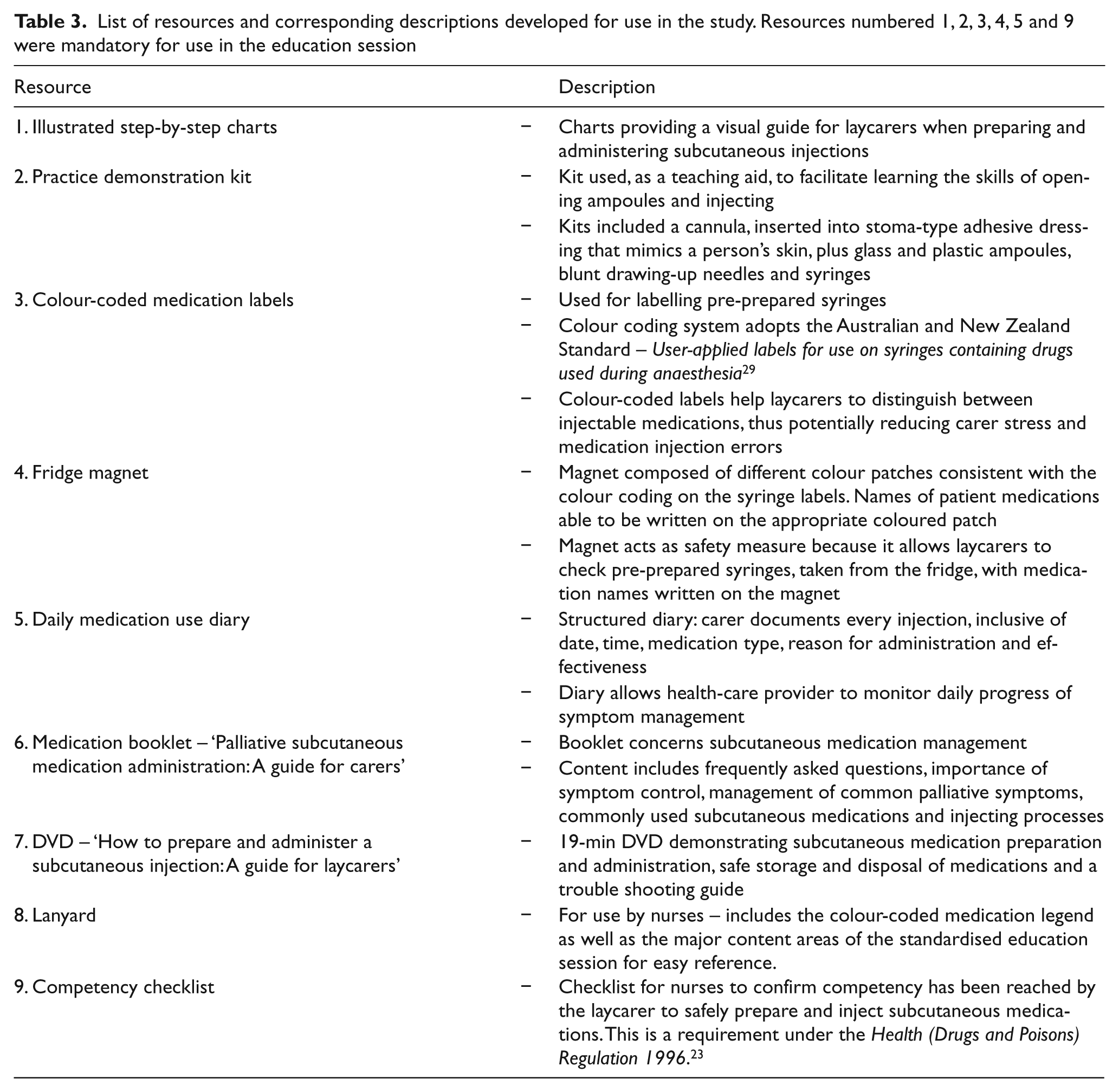
The resources are listed and described in Table 3. Resources numbered 1, 2, 3, 4, 5 and 9 were considered mandatory for use in the education session while resources numbered 6, 7 and 8 were non-mandatory and could be used at the discretion of the nurse and laycarer.
List of resources and corresponding descriptions developed for use in the study. Resources numbered 1, 2, 3, 4, 5 and 9 were mandatory for use in the education session.
Implementation
The study commenced on February 2009 and ceased on January 2010. The package was implemented across 24 sites (7 specialist palliative care services and 17 generalist services) in urban, regional and rural settings across South East Queensland, Australia.
Evaluation by laycarers
Overall, 347 laycarers, who potentially may have been required to deliver subcutaneous injections in the foreseeable future, were identified and 169 approached after the need for breakthrough injections was realised. Of these, 165 consented to participate and 76 returned questionnaires. The majority of consenting laycarers, 74% (123), were female, spouses, partners or daughters. Ages ranged from 18 to 76 years and over. The majority of laycarers, 49% (82), were aged between 46 and 65 years, 31% (51) were aged between 18 and 45 years, 19% (22) were 66 years or above and 4% (7) were over 76 years. In terms of geographical distribution, 81% of participants were recruited from urban areas, with smaller percentages from regional (16%) and rural populations (3%).
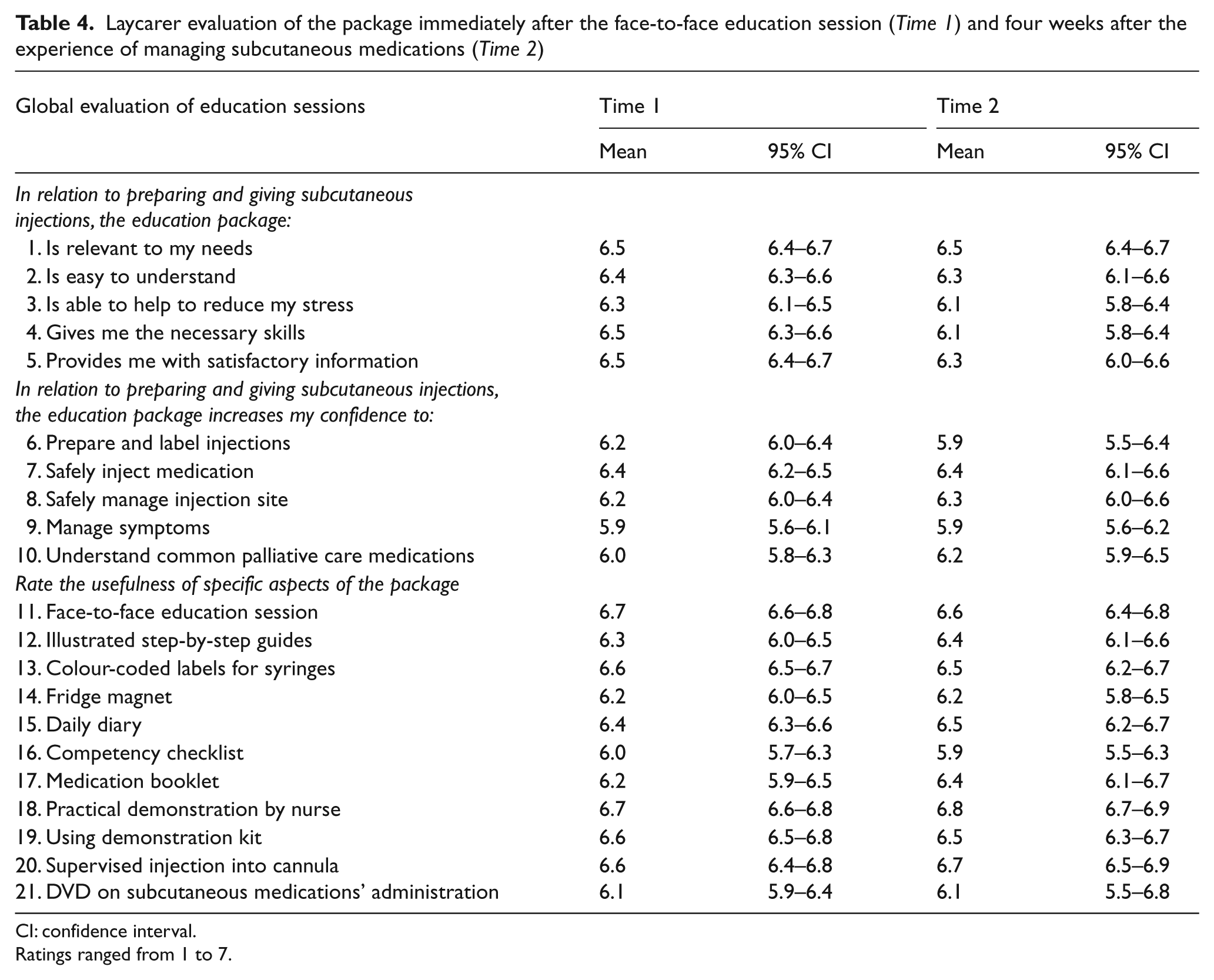
Time 1 questionnaire was returned by 76 laycarers, after the face-to-face education session, and Time 2 questionnaire returned by 62 laycarers, after experience with administering subcutaneous injections in the home. Mean ratings and 95% CIs for these laycarers are shown in Table 4.
Laycarer evaluation of the package immediately after the face-to-face education session (Time 1) and four weeks after the experience of managing subcutaneous medications (Time 2).
CI: confidence interval.
Ratings ranged from 1 to 7.
Global usefulness of the education session was rated highly. Across both Times 1 and 2, means were greater than 6 out of a maximum of 7, indicating a high level of usefulness perceived before and realised after the experience of administering injection(s). In terms of laycarers’ confidence, means were uniformly high at both times, indicating the benefits of the package in preparing laycarers for the task of subcutaneous medication management.
The potential and realised relevance of specific aspects of the package were also rated highly, as shown in Table 4. Aspects evaluated included the face-to-face education session, the written and illustrated information provided in the package, the demonstration and supervision while giving a subcutaneous injection and the DVD included in each package. Representative laycarers’ comments are presented in Table 5.
Laycarer comments regarding the package.
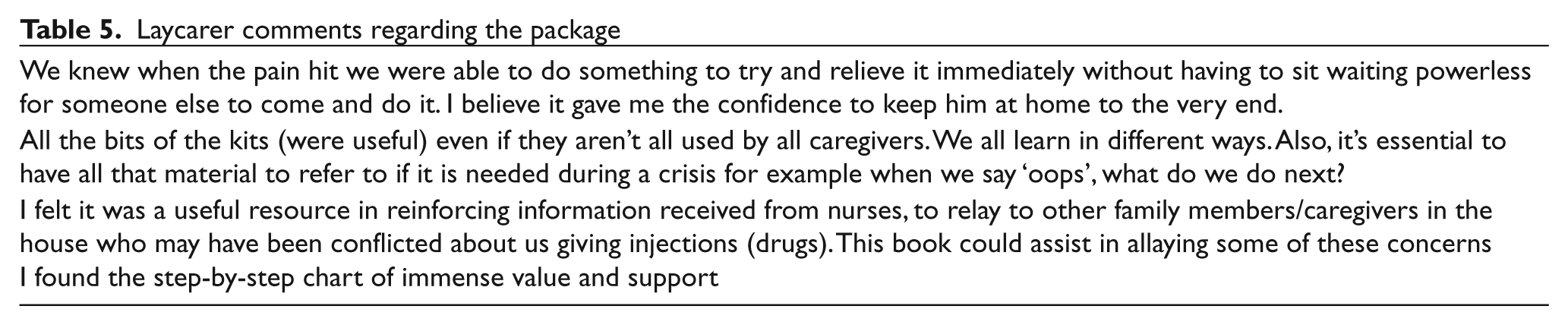
In summary, the results show that the means of laycarers’ responses were all equal to or above 5.9, indicating that laycarers found the package to be useful and relevant in enabling them to deal confidently with symptoms arising in the home-based palliative patient.
Evaluation by nurses
A total of 217 nurses from 24 sites were trained to deliver the standardised education; not all nurses subsequently delivered the education because their patients did not require breakthrough injections. Of those who delivered education, 53 returned questionnaires.
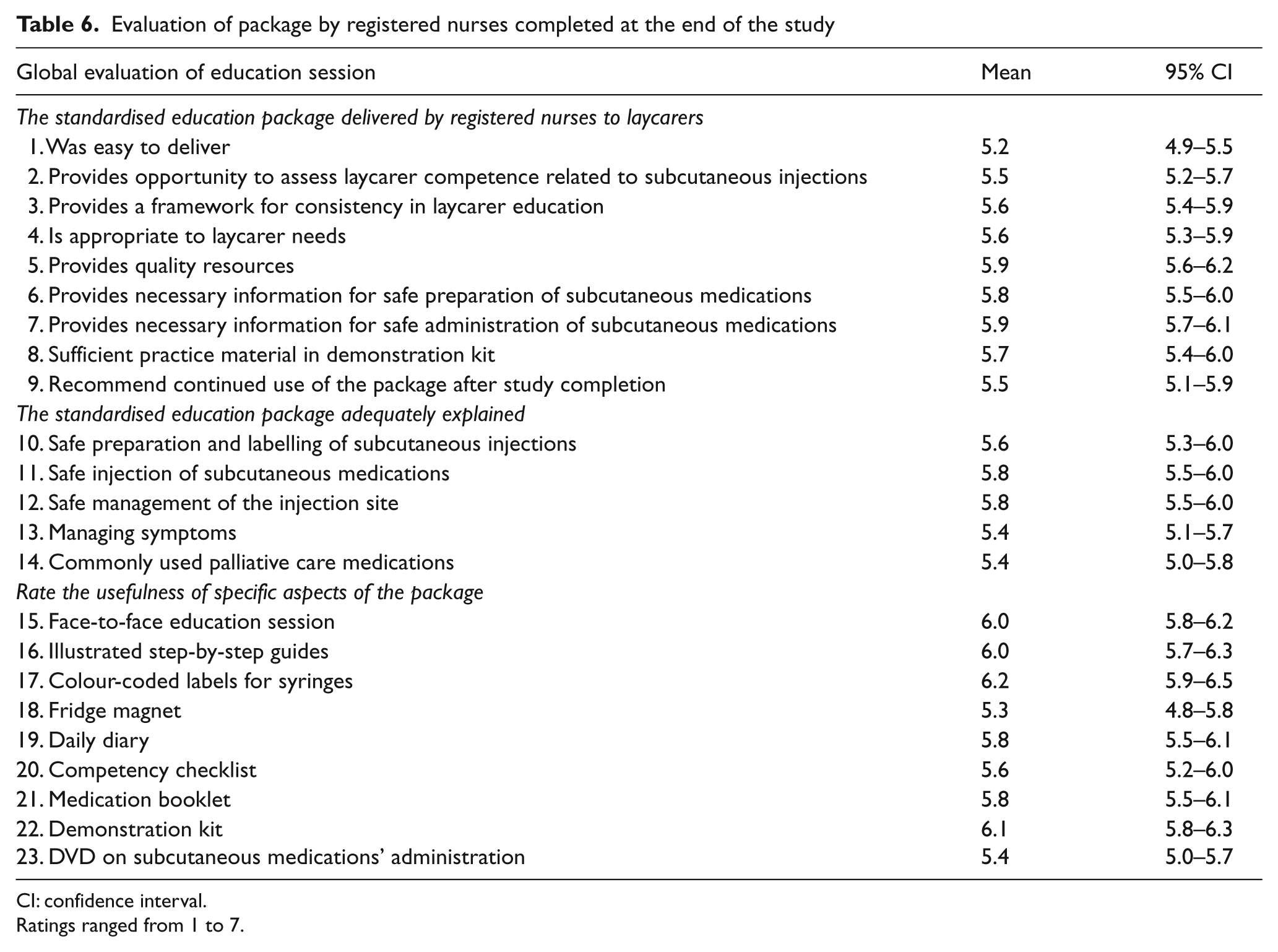
Nurses rated the education session highly for aspects such as appropriateness to the needs of laycarers, providing the necessary information to allow laycarers to safely pre-prepare and administer subcutaneous injections. Similarly, they indicated that the issues relevant to subcutaneous injections of palliative care medications had been well explained, and the components of the package provided useful resources for laycarers. Specific items, together with means and 95% CI, are shown in Table 6.
Evaluation of package by registered nurses completed at the end of the study.
CI: confidence interval.
Ratings ranged from 1 to 7.
Three focus groups targeting three trial sites from different demographic areas, urban, regional and rural, were held with 26 nurses at completion of the project. In all the three groups, there were two issues that dominated discussion. The first was the question of when is the right time in the palliative patient’s trajectory to deliver laycarer education regarding subcutaneous medication management. General consensus was that there is ‘no right time’ and that timing was a clinical decision dependent on individual laycarers. The second issue concerned whether it is safe and appropriate for laycarers to manage subcutaneous medications. Opinion on this issue was divided – some considered it safe as well as necessary given palliative care resourcing constraints, while others held that it was simply too difficult for laycarers. Other recurrent issues included time pressures experienced by some nurses for the delivery of the one-on-one education session, the usefulness of the structured daily diary that allowed nurses to easily monitor medication effectiveness and frequency of symptom occurrence and the value of the colour coding system that contributed to laycarers’ confidence that they were safely administering the right medication.
Discussion
This study demonstrates that if laycarers are supported with education and resources, tailored to their needs, they can confidently, safely and competently manage breakthrough subcutaneous medications to relieve symptoms in home-based palliative care patients. This finding has important implications for laycarers, home-based palliative care patients, palliative care services and Australian health-care systems.11,13,26 In terms of study limitations, the sample sizes and sample inclusion/exclusion criteria for laycarers may limit the extent to which these findings are directly applicable across all palliative care service populations. Furthermore, this study is not applicable across countries due to differences in legal codes between countries.
Laycarers perceived the overall usefulness of the package as soon as they had completed their one-on-one education session. This perception was maintained after they had had the experience of symptom management using subcutaneous medications. They were satisfied that the package information was relevant to them and the content provided necessary technical skills to manage subcutaneous medications. Importantly, they felt confident that they could safely pre-prepare and inject subcutaneous medications. In addition, the package decreased their stresses surrounding subcutaneous injections, and they were satisfied that they could assist with symptom management. In summary, the package by allowing access to standardised, relevant information empowers laycarers to care safely for their loved ones at home.
Most Australian palliative care patients prefer to be cared for at home and many want to die at home.1,2 In reality, only 16% of Australians are able to die at home, with the majority (54%) dying in hospitals.1,2,6,15,19 One of the most frequent reasons that community-based palliative care patients are transferred to in-patient units is because their symptoms cannot be controlled adequately at home.11,15,21,30–32 The package reported here shows that laycarers can learn to manage subcutaneous injections, thus contributing to breakthrough symptom control in a timely and effective way. It is likely that use of the package can contribute to more patients being able to die in the environment of their choice, their home. Potentially, this will result in an improved quality of death9,15,18,21 and decrease the cost burden to the health-care system incurred when distressed patients are unnecessarily transferred to acute care facilities.
Palliative care services are struggling to meet the increasing demand for palliative care.20,21,31 This situation is worsening as the population ages and community acceptance of palliative care for people with chronic and non-neoplastic diseases grows. If the ability of laycarers to provide symptom management is improved by initiatives such as the package described here, then the capacity of professional palliative care staff, particularly nurses, to care for more people will be enhanced.
Registered nurses concurred with laycarers that the package was both useful and relevant. Nurses felt that the education session was easy to deliver, adequately explained injecting issues and recommended its continued use. Nonetheless, delivery of the standardised education challenged some nurses, possibly because it encompassed practice change. Clinical opinion varied as to the appropriate time in the patient’s palliative care trajectory to present the education session. Some commented on the clinical load impost due to the time required to deliver the session depending upon the clinician and individual laycarers’ abilities and learning styles. It was recognised, nonetheless, that with continued experience in education delivery, the time required to introduce the package would decrease.
Some nurses reiterated their concerns about safety issues related to laycarers managing symptoms and the burdensomeness of that task. However, given laycarers’ high level of satisfaction with the package, it may be that nurses, and other health-care professionals, have been overprotective or gatekeeping in their attitudes to laycarers.11,17,21,22 They may underestimate the resilience and motivation of laycarers when placed in the difficult situation of caring for a loved one at home.10,11,13,17,21 Alternatively, it may be that the laycarers chosen for this study were psychologically robust individuals, given it was clinical nurses who initially screened laycarers’ suitability for the study.
The issue of safe practice is pivotal to all health-care provision and was a fundamental consideration throughout the package development. To reinforce written medication information, a colour coding system, adapted from anaesthetic drugs safety Standards29,33,34 and advocated by an Australian national labelling project, 35 helped laycarers to identify correct medications, and avoid errors, through the use of labelling pre-prepared syringes. The importance of the colour coding system was emphasised during the education session. Laycarers were taught that they could use the coloured labels on the pre-prepared syringes as a cue to help distinguish between medications, even when they were tired or distressed. All the pre-prepared injections were stored in secure containers in the refrigerator. The fridge door magnet incorporated the colour-coding system, thus further consolidating the colour prompt for the laycarer. The magnets were designed to be written on, so changes in medication could be easily updated by nurses or laycarers. The colour coding system was uniform across all package resources including the medication booklet and DVD.
Another safe practice measure was the diary provided to laycarers that encouraged the recording of every injection given as well as the effectiveness of the medication for symptom relief. This clinical tool proved to be of great value to both laycarers and visiting health professionals. In the focus groups, many nurses made reference to laycarers experiencing a sense of security in having a record of injection administration as pressures associated with the caring role often led to an inability to accurately recollect medical detail. Indeed, most laycarers chose to continue using the diary even after study completion. Nurses reported that they could easily interpret the information contained within the standard diary and this helped them monitor medication effectiveness, progress of symptom evolution and patient condition.
The Australian National Palliative Care Strategy 1 of 2010 recognises that in order to meet future palliative care demand and provide equitable access to all Australians to the right care, at the right time and in the right place, new approaches to care and service models are required. The package presented in this study could be one element of a supportive model of care based on a partnership between lay and professional care providers to achieve optimal outcomes for home-based palliative care patients.
Footnotes
Acknowledgements
The authors thank the laycarers who participated in this study as well as the nursing services and specialist palliative care services for their contributions to the success of this project. The authors particularly thank Ben Sankey, research nurse, for his professional and personal input during recruitment and data collection.
Clinical trial registration
Australian New Zealand clinical trial registry 0835553.
Conflict of interest
The authors declare that there is no conflict of interest.
Funding
This work was supported by funding from the Australian Government, Department of Health and Ageing under the Supporting Carers of People Requiring Palliative Care At Home projects.