






Abstract
Background:
Implementing tools to identify and support palliative care needs remains challenging in hospitals, requiring a clear understanding of implementation determinants. This study defines tools as clinical resources for palliative care identification, needs assessment, and advance care planning support.
Aim:
This scoping review aimed to identify and categorise the barriers and facilitators influencing the implementation of tools in hospital settings.
Design:
Following the Arksey and O’Malley framework with PRISMA-ScR reporting, we employed a hybrid analysis combining inductive thematic coding with deductive mapping onto the Consolidated Framework for Implementation Research. Studies in English, Danish, Norwegian, or Swedish were considered eligible for inclusion.
Data sources:
In May 2024, the databases MEDLINE, Embase, Scopus, CINAHL, SocINDEX, and PsycINFO were searched for studies focusing on tool implementation by healthcare professionals in hospital settings.
Results:
From 4032 records screened, 25 studies were included. Determinants were identified across all five Consolidated Framework for Implementation Research domains, though primarily concentrated within the Inner Setting and Individuals. Key barriers included time constraints, lack of training, and fragmented communication. Facilitators comprised strong leadership support, clinical champions, multidisciplinary collaboration, and a supportive organisational culture.
Conclusion:
This scoping review identifies determinants that can inform the selection of implementation strategies for tools in hospitals. Our findings suggest that tool implementation likely requires multi-faceted strategies capable of addressing barriers across multiple levels, from individual training to organisational leadership and culture. Future research should focus on evaluating tailored strategies that account for the unique complexities of different hospital contexts to ensure sustainable adoption.
What is already known about this topic
Tools can improve the quality of palliative care in hospital settings.
The implementation of tools is often complex and challenging.
Identifying barriers and facilitators is important for sustainable implementation.
What this study adds
Provides an overview of barriers and facilitators for implementation of tools in hospital settings.
Highlights that implementation depends on leadership commitment, multidisciplinary collaboration, and a supportive organisational culture.
Identifies a theory-practice gap, as the majority of studies implemented tools without applying a formal implementation framework.
How this study might affect research, practice or policy
The findings can inform the design of targeted, multi-faceted implementation strategies.
It underscores the necessity of moving beyond individual training to address organisational and structural determinants.
It provides a foundation for future research to enhance tool adoption and sustainability.
Background
Growing interest in general palliative care reflects a broadening understanding of its importance within the healthcare system. 1 A key component is the early identification and assessment of palliative care needs to facilitate advance care planning and ensure a thorough understanding of patient preferences. 2 While validated tools are often employed to ensure systematic processes, this study defines tools as resources for identifying and assessing palliative care needs, and approaches supporting advance care planning. This encompasses validated identification tools (e.g., Supportive and Palliative Care Indicators Tool), 3 assessment scales (e.g., Palliative care Outcome Scale) 4 and communication frameworks (e.g., advance care planning).5,6 By categorising these as tools, we emphasise their role as the specific objects of implementation within hospital settings.
Early identification of palliative care needs is essential to ensure timely care, 7 yet delays in this process often hinder referrals to specialised palliative care, leading to potentially harmful consequences for both patients and their caregivers. 8 Systematic use of tools can facilitate proactive treatment planning regardless of diagnosis.9–13 Despite their potential to improve quality of life and reduce non-beneficial hospitalisations,7,9,14 a persistent implementation gap remains,15,16 particularly for non-malignant conditions. 17 Addressing this gap requires a move beyond clinical efficacy toward understanding the implementation process itself.18–20 A preliminary search of Cochrane, Open Science Framework, and PROSPERO confirms a lack of synthesised evidence regarding the implementation of tools in hospital settings. While previous research has explored the complexity of palliative care implementation strategies,21,22 or focused specifically on patient-reported outcome measures, 23 there is a lack of synthesised evidence covering the broader spectrum of tools in hospital settings.
By utilising implementation science24,25 this scoping review aimed to investigate the implementation determinants, specifically the barriers and facilitators that affect the use of tools in practice. The research question was: What are the barriers and facilitators that influence the implementation of tools for identifying and assessing palliative care needs, and approaches supporting advance care planning, in hospital settings?
Methods
Study Design
This scoping review was conducted following the framework originally described by Arksey and O’Malley, 26 refined by Levac et al. 27 and the latest standards from the Joanna Briggs Institute. 28 The reporting of this study adheres to the Preferred Reporting Items for Systematic Reviews and Meta-Analyses Extension for Scoping Reviews (PRISMA-ScR) checklist, 29 ensuring transparent documentation of all steps. To ensure the transparency and reproducibility, a study protocol was registered on the Open Science Framework: https://osf.io/rud7s/. 30
Eligibility criteria
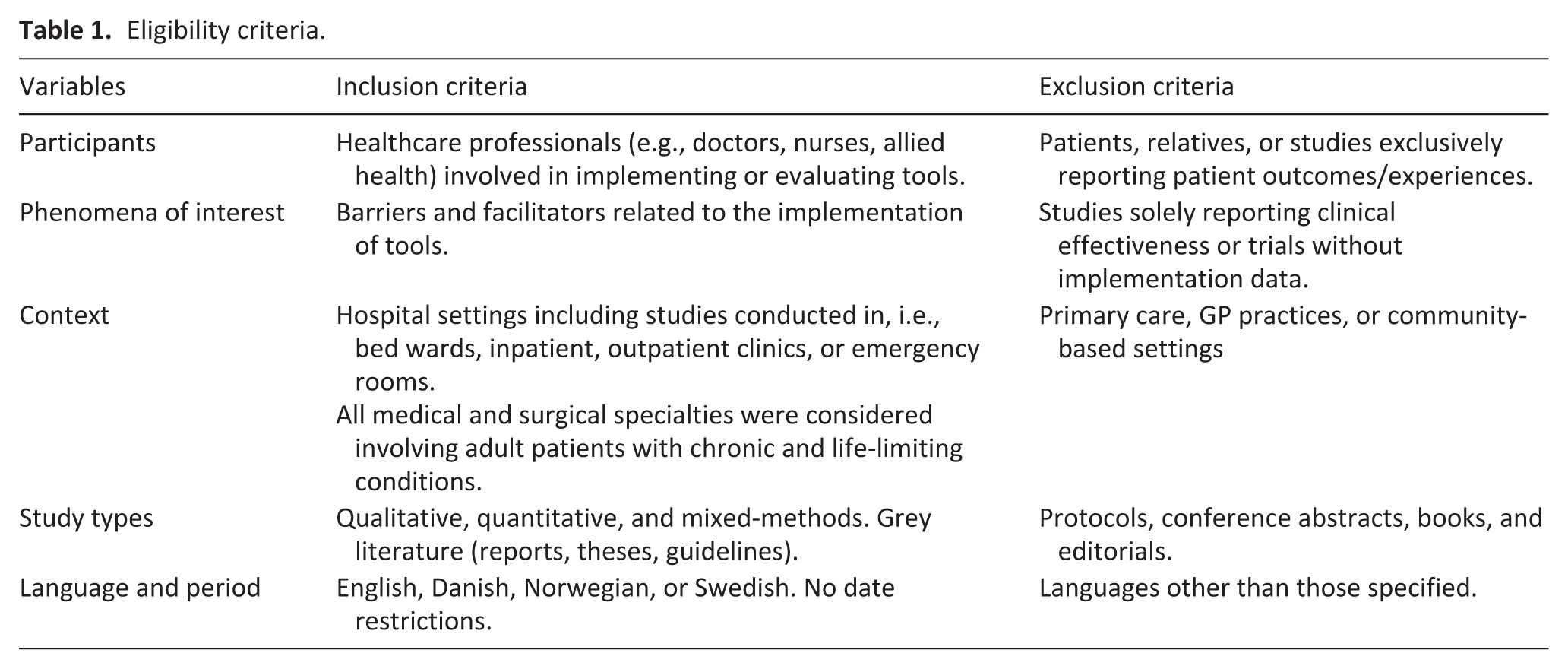
This scoping review includes studies focusing on barriers and facilitators to the implementation of tools used by healthcare professionals in hospital settings. The context encompasses medical and surgical specialties providing care to adult patients with life-limiting conditions. By including a diverse range of literature and methodological approaches, we sought to increase the depth and breadth of the findings. 27 Studies published in English, Danish, Norwegian, or Swedish were considered. No publication date restrictions were applied to the exclusion criteria (Table 1).
Eligibility criteria.
Search strategy
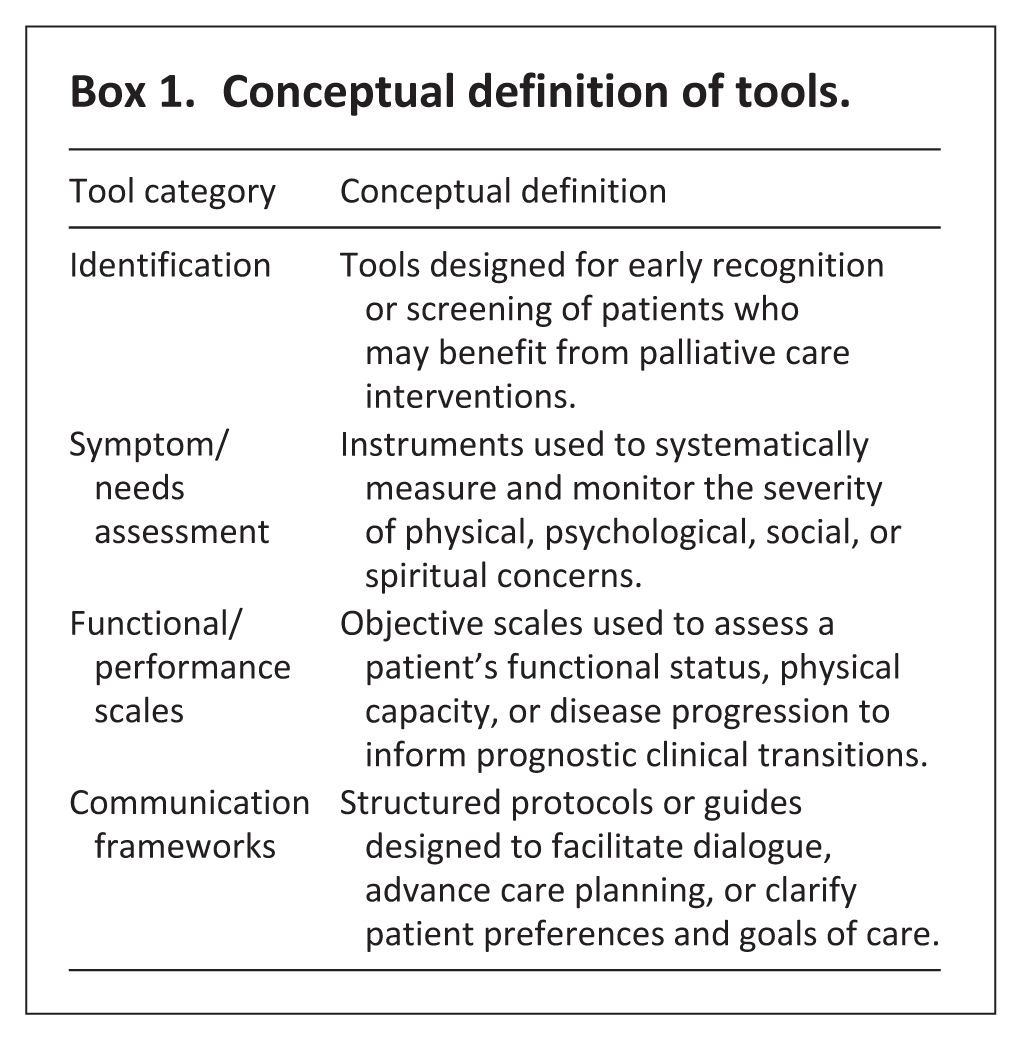
A search strategy was developed using the Population, Concept, and Context framework 31 to ensure alignment with the review’s objectives of identifying implementation determinants (Table 1). In May 2024, we systematically searched the electronic databases: MEDLINE, Embase, Scopus, CINAHL, SocINDEX, and PsycINFO. These databases were selected to provide coverage of both medical and social science perspectives. To ensure sensitivity, the search did not explicitly restrict results to the hospital setting, as preliminary searches showed that hospital-specific data are often embedded within multi-setting studies. Thus, any study featuring the hospital setting was eligible. The search terms were organised around three core conceptual blocks: (1) Palliative Care: which incorporated subject headings and keywords for concepts like ‘Hospice and Palliative Care Nursing’, ‘end-of-life or Terminal Care’, and the general scope of ‘Palliative Care’; (2) The tools: incorporating broad terms like ‘Needs Assessment’ to ensure sensitivity. Additionally, we included specific terms such as the ‘surprise question’, ‘supportive and palliative care indicators tool’, and ‘EORTC QLQ-C15-PAL’; and ‘Advance Care Planning’. These were selected as they represent the clinical gold standard for palliative care delivery as recommended by the Danish Health Authority (3) Implementation: including ‘implementation science’, ‘barriers’, and ‘facilitators’. To enhance the search, we conducted a forward and backward citation tracking in Scopus. A university librarian provided guidance throughout the search process, ensuring the development of a robust search strategy (Supplemental Material 1). While different terms were utilised as functional keywords to maximise the retrieval, the subsequent analysis was conducted under the conceptual definition of tools (Box 1).
Conceptual definition of tools.
Conceptual definition of tools
To ensure conceptual clarity, the identified tools were categorised into four types: identification, symptom/needs assessment, functional/performance scales, and communication frameworks (Box 1). This taxonomy was developed iteratively during the data synthesis process to explicitly define the diverse tools analysed and to allow for transparent assessment of implementation determinants across the different tools identified in the search.
Grey literature
To complement the database searches and identify potentially valuable regional insights, a dedicated grey literature search in Danish was performed using Google to identify regional reports, clinical guidelines, and non-indexed resources specific to the Danish healthcare landscape. While the search was international in scope, the grey literature search was strategically prioritised for the local context to ensure relevance for the broader research project, which includes an ongoing clinical feasibility study in Denmark. This search, however, did not identify any additional sources that met the inclusion criteria.
Source of evidence selection
The Covidence platform was utilised throughout the review process, adhering to the PRISMA-ScR checklist for source selection, duplicate removal, and full-text retrieval. 29 Prior to the main review, a pilot test was conducted to establish inter-rater reliability and optimise workflow. The full review commenced once agreement was achieved on at least 75% of the pilot-tested articles. This threshold was determined pragmatically, balancing the need for sufficient reliability with the practical constraints of the review process. It was calculated by dividing the number of articles with agreed inclusion/exclusion decisions by the total number of articles screened. To maintain consistency and accuracy, all authors screened titles and abstracts in pairs, always including the first author as one of the reviewers. Disagreements were resolved through discussion and consensus between the reviewers. Subsequently, the first author independently reviewed all full-text articles twice, performing blinded exclusion within the Covidence platform.
Data extraction
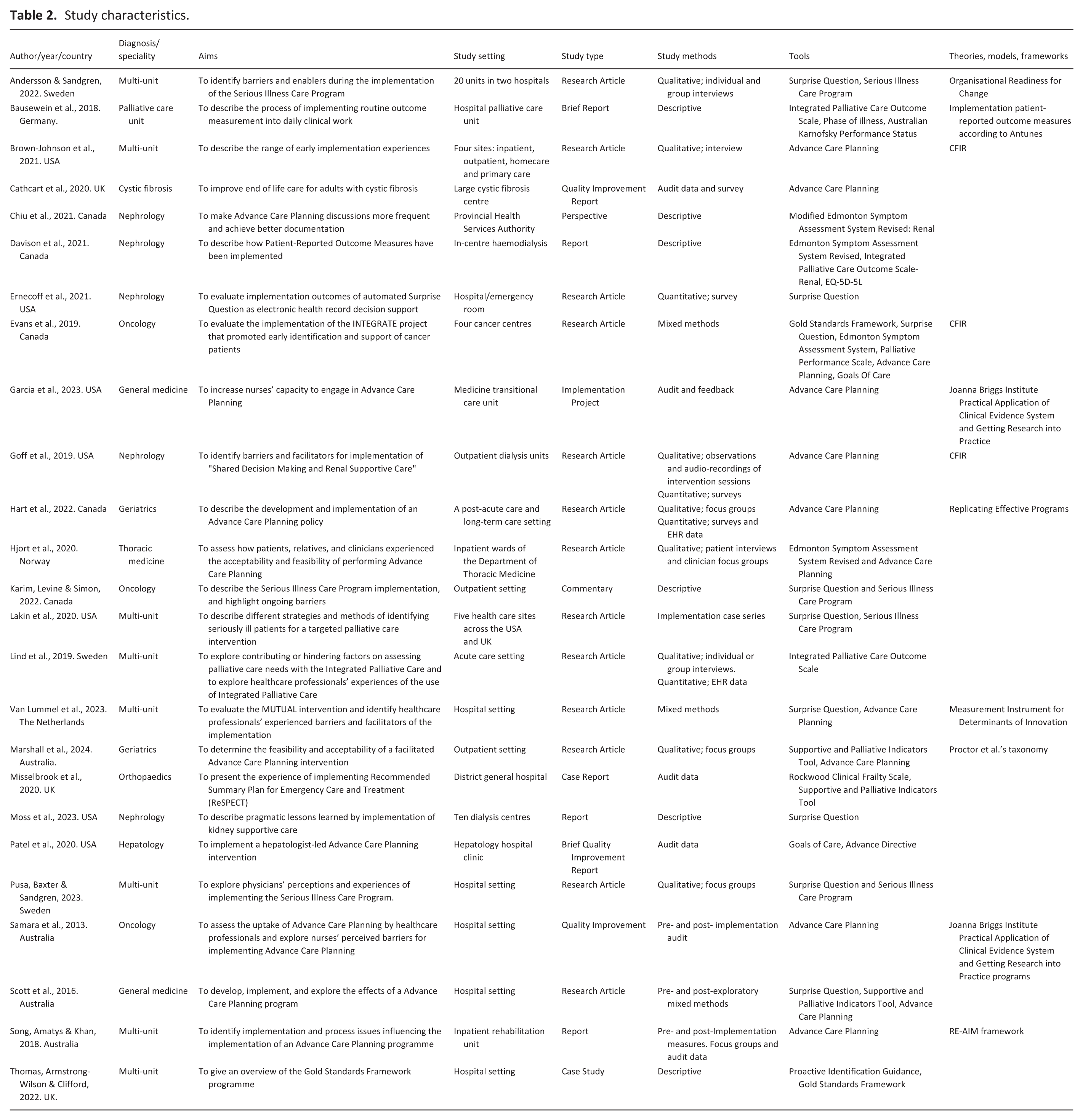
For the descriptive summary, data extraction was performed using Microsoft Excel. Charting Table 2 contains information such as authors, publication year, country, aims/purpose, type of tool, methodology/methods, and theories/models/framework applied.
Study characteristics.
Data analysis
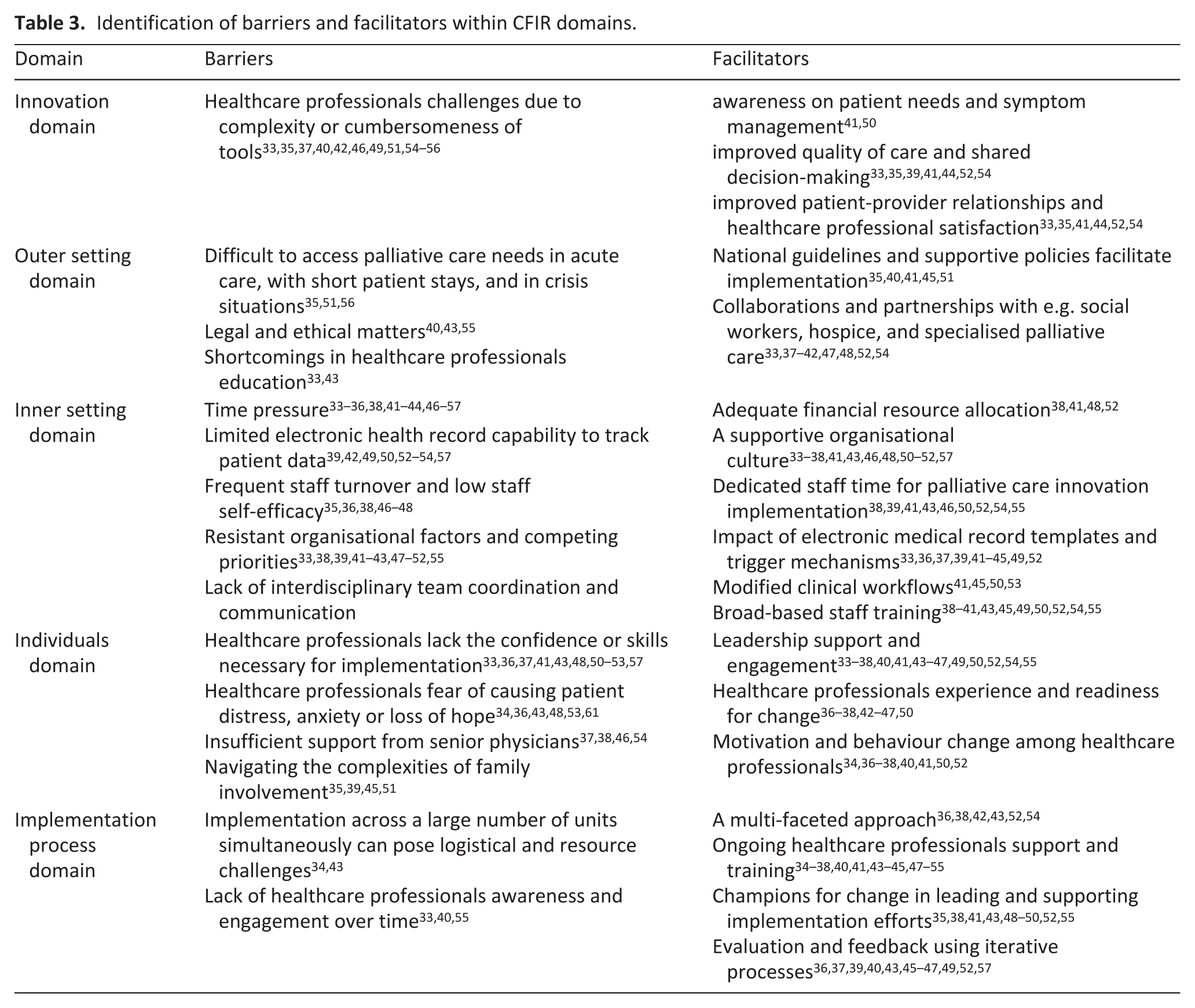
Data analysis utilised a two-phase, inductive-deductive approach to identify and categorise implementation determinants. This approach ensured that findings were grounded in the empirical data while being systematically organised within the CFIR framework. Initially, an reflexive thematic analysis was performed, guided by the principles of Braun and Clarke, 32 to identify recurring themes related to the practical application of tools. Subsequently, these themes were deductively mapped onto the Consolidated Framework for Implementation Research (CFIR). 24 As a meta-theoretical framework, the CFIR was selected to provide a systematic structure to distinguish between the attributes of the tools (e.g., complexity, design) and the contextual factors influencing their implementation. 24 Thus, the identified barriers and facilitators were mapped across the five CFIR domains: Innovation, Inner Setting, Outer Setting, Individuals, and Implementation Process (see Table 3). While the first author conducted the initial extraction and classification, researcher triangulation (performed by TR, HBZ, and CLE) was employed to validate the findings, ensure consistency of the mapping, and to resolve any discrepancies in classification.
Identification of barriers and facilitators within CFIR domains.
Results
Study selection and characteristics
The initial search yielded 5306 records. Following the removal of 1274 duplicate entries, 4032 records remained for title and abstract screening. From these, 128 full-text articles were assessed for eligibility, and 25 studies were ultimately included in this scoping review (Figure 1). While the systematic search did not impose a chronological filter, no articles published before 2013 were included in the final analysis.
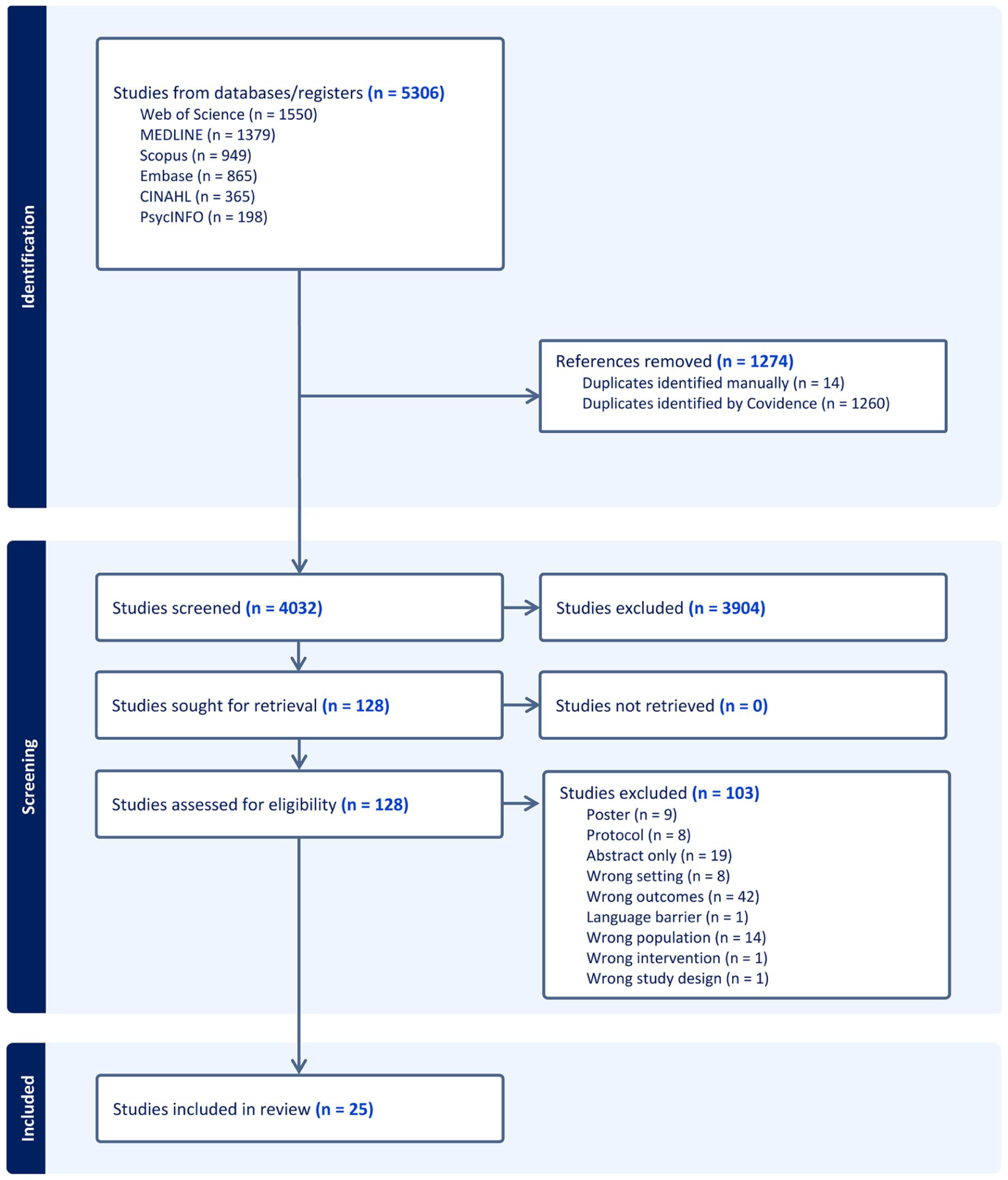
PRISMA flowchart.
Studies originated from a wide geographical range, including the Netherlands, 33 Sweden,34–36 Germany, 37 the USA,38–44 the UK,45–47 Canada,48–52 Norway, 53 and Australia54–57 (Table 2). The scoping review included studies employing qualitative, quantitative, and mixed methods approaches encompassing a diverse range of clinical areas: 8 multi-unit settings,33–36,38,42,47,57 5 nephrology,39,41,43,48,49 3 oncology,50,52,55 2 general medicine,40,56 2 geriatrics,53,56 1 palliative care unit, 37 1 cystic fibrosis, 45 1 thoracic medicine, 53 1 orthopaedics, 46 and 1 hepatology. 44 Publication year: 1 from 2013, 55 1 from 2016, 56 2 from 2018,37,57 3 from 2019,35,41,50 5 from 2020,42,44–46,53 4 from 2021,38,39,51,52 4 from 2022,34,47,51,52 4 from 202333,36,40,43 and 1 from 2024. 54
A variety of tools were employed. However, the implementation of communication frameworks, specifically advance care planning,33,38,40,41,45,50,51,53–57 was the most prevalent, frequently used in conjunction with other tools, including the Surprise Question,33,36,39,42,43,50,52,56 Supportive and Palliative Indicators Tool,46,54,56 Serious Illness Care Program,34,36,42,52 Integrated Palliative Care Outcome Scale,35,37,49 Phase of Illness and The Australian Karnofsky Performance Status, 37 Edmonton Symptom Assessment System,48–50,53 EuroQol 5-Dimension 5-Level questionnaire, 49 Goals Of Care,44,50 Rockwood Clinical Frailty Scale, 46 Proactive Identification Guidance, 47 Palliative Performance Scale, 50 and Gold Standards Framework.47,50 Eleven studies33,34,37,38,40,41,50,51,54,55,57 were explicitly guided by implementation theory, models, and frameworks, such as RE-AIM framework, CFIR, and Quality Improvement.
Identification of barriers and facilitators within CFIR domains
A substantial concentration of determinants emerged within the Inner Setting domain, indicating that organisational factors influenced tool implementation. Numerous factors also related to Individual Characteristics. In contrast, relatively fewer determinants were mapped to the Innovation, Outer Setting, and Implementation Process domains.
The Innovation Domain
This domain concerns the specific attributes of the tools being implemented. 24
The Outer Setting Domain
This domain encompasses the broader healthcare system and external hospital environment. 24
Contextual variations significantly impacted the implementation of tools, with distinct challenges arising across diverse hospital settings and patient populations.34,37,41,50,51,54,56,57 Studies highlighted the influence of setting-specific factors, demonstrating that certain tools were not universally adaptable. For instance, implementation especially faced obstacles in acute care units,35,56 and in hospital rehabilitation facilities where the focus on functional restoration often conflicted with palliative care goals. 57 Moreover, specific patient populations, such as patients undergoing dialysis, were subject to restrictive hospice eligibility criteria, 41 and those with dementia 54 presented substantial barriers to successful implementation. System-level factors such as a lack of resources were barriers that influenced the implementation of tools.33,38,39,41–43,48–52,55
The Inner Setting Domain
This domain refers to the specific organisational characteristics of the hospital settings 25
The Individuals Domain
This domain focuses on the healthcare professionals involved in the implementation process. 25
Implementation of tools was affected by knowledge,33,35,40,48,50,52–55,57 skills,33,36,37,41,43,48,50–53,57 and motivation34,36,42,52,57 among healthcare professionals, acting as a barrier when lacking and a facilitator when sufficient. The implementation was compounded by the dual influence of healthcare professionals readiness,34,36,38,42 confidence34,36,40,42,46,50,54 and experience33–36,38,41,42,44,50,51,53,54,57 of tool implementation.
The Implementation Process Domain
This domain addresses the strategies used to put the tools into practice. 24
Discussion
This scoping review demonstrates that the implementation of tools in hospitals is shaped by a complex interplay of organisational, professional, and cultural determinants. While earlier research, such as the 2014 review by Dalgaard et al. 1 established the broad preconditions for early palliative care, our findings specifically delineate the determinants influencing the implementation of tools within hospital settings. Furthermore, while previous literature has addressed specific types of assessment, such as patient-reported outcome measures, 23 our synthesis demonstrates that implementation challenges – such as time constraints and cultural resistance – are consistent across different categories of tools, ranging from identification to communication frameworks.
A significant proportion of included studies (14 out of 25) did not utilise a formal implementation science framework (Table 2). This underscores that clinical interventions are often introduced without the established theories of change necessary to embed them into routine practice. 25 This finding should be viewed alongside the foundational work of Sommerbakk et al., 22 and Van Riet Paap et al., 21 who have extensively documented the multi-level barriers and facilitators in palliative care, spanning practice characteristics, professional factors, and systemic influences. While our findings align with these established insights, this review’s sole focus is on the hospital setting. The heavy concentration of determinants within the Inner Setting domain suggests that implementation success depends on the hospital’s organisational climate, leadership support, and resource allocation. Conversely, the Innovation and Outer Setting domains yielded fewer factors, implying that while intrinsic qualities and external pressures are relevant, they may have less immediate influence on implementation than the local context.
The contextual imperative
Our findings indicate that the implementation of tools is not a uniform process but rather a context-dependent phenomenon. The Inner Setting of a hospital is not monolithic, for example, the intense time pressure and competing priorities prevalent in acute care units can make the sustained use of any tool difficult.35,56 This aligns with the Dynamic Sustainability Framework, 58 which suggests that for a practice to persist, it must possess the fit and adaptability to survive within a shifting clinical environment. As Goff et al., 41 highlight, even when tools are technically sound, Outer Setting factors like restrictive hospice eligibility criteria can stifle their practical utility. This reinforces the necessity for flexible and adaptive implementation strategies. Rather than viewing tools as rigid instruments, they must be understood as clinical resources that require dynamic implementation strategies to ensure cultural and structural adaptation to the local context. For example, specific impediments arise in hospital rehabilitation settings; the restorative focus inherent in functional recovery creates an environment that is not optimally conducive to addressing palliative care needs. 57 From the perspective of Normalisation Process Theory, 59 this struggle may occur because the implementation strategies fail to facilitate the necessary contextual adaptation. As Chiu et al. 48 found in British Columbia, regional disparities and logistical constraints impact tool implementation even within a single healthcare system. This underscores the need for implementation strategies that acknowledge the heterogeneity of patient populations and contexts.
Resource constraints and cultural influences
A consistent theme was the pervasive impact of resource limitations – specifically temporal, financial, and technological.33–39,41–44,46–57 The integration of tool data within electronic health records emerged as a critical structural facilitator.39,42,49 When a tool is siloed from the primary digital workflow, its implementation is likely to fail regardless of clinical value. This is supported by Ross et al., 60 who emphasise that the seamless integration of interventions within electronic health records and their alignment with clinical workflows are critical determinants for implementation success. Beyond technological accessibility, the establishment of flexible clinical workflows was essential to accommodate the dynamic nature of tools.36,40,49,50,54 However, resources alone are insufficient. The influence of a supportive organisational culture that prioritises continuous improvement and a learning environment was pivotal.34,38,52 Psychological safety within learning environments is a known prerequisite for clinicians to feel supported. 61 Shortcomings in education and training act as a barrier, emphasising a disconnect between theoretical knowledge and the practical application.43,50 Research points to a need for Implementation Support Practitioners, who provide ongoing coaching rather than one-time educational sessions to bridge this theory-practice gap. 62
The critical role of champions and collaboration
The cultivation of champions emerged as a salient factor at various levels.35,37,38,41,43,48–50,52,55 While nurse site leads were highlighted as pivotal,43,44,49,54,55 physician leadership was also essential in navigating organisational hierarchies.63,64 Without physician backing, nurse site leads may encounter limitations in addressing clinical complexities. Leadership support manifested in the provision of resources, clear strategic direction, and the establishment of a supportive organisational climate.34,38,40,43,47,48,50,52 Recently, Magid et al. 65 emphasised that successful implementation relies on a synergy between champion commitment and site-level leadership engagement, identifying priority-setting as a key driver. However, leadership support is also mirrored in broader implementation literature66,67 and prompts an examination of the distinction between leadership and champions’ roles. Research suggests that while formal leadership provides permission for change, champions provide the persistence. 68 Champions may fill a leadership gap, particularly when implementation of tools lacks managerial focus, highlighting their key role. This is consistent with the middle-manager role in the implementation of evidence-based practices, which argues that individuals, such as nurse leads, are essential for translating strategic goals into daily clinical practice. 69
The interplay of communication and iterative adaptation
An organisational culture that fosters open communication and promotes interprofessional collaboration is fundamental for the successful implementation of tools.34,35,38,52 Effective communication channels among stakeholders, facilitated by, for example, advisory boards,38,41 were central to inclusive decision-making. Furthermore, success was linked to a structured implementation plan with realistic timelines, 39 and comprehensive training.33,34,38,40,41,43,49–52,54,55 This multi-faceted approach to preparation aligns with Implementation Mapping, 70 which emphasises that training must be paired with organisational structural changes to be effective. Finally, the strategic use of iterative evaluation and adaptation – using monitoring and feedback mechanisms – helps ensure that implementation strategies remain responsive to evolving challenges.34,37,40,43,45,46,49–51 The audit and feedback literature 71 demonstrates that data-driven performance insights can drive behavioural change. Such iterative cycles reflect the plan-do-study-act quality improvement methodology, where successful implementations treat the initial launch as a working hypothesis requiring ongoing refinement. 72
Strengths and Limitations
This scoping review offers a synthesis of the existing literature regarding the implementation of tools using the CFIR. Employing CFIR as an analytical lens allowed us to systematically categorise the complex interplay of factors influencing implementation. While CFIR offered a valuable structure, its broad scope risks oversimplification and may not fully capture the dynamic, non-linear nature of implementation. Interpretive biases in assigning findings to CFIR domains are acknowledged. The scoping review is also limited by the variability in study quality, and the included studies may not represent the full range of implementation experiences. Importantly, the review grouped highly heterogeneous tools, combining identification, needs assessment, and communication framework resources. While this inclusive approach was necessary to map the clinical reality of hospital settings, it prevents a direct comparative analysis of how CFIR domains differ based on tool types or clinical settings; we flag this as a critical area for future research.
Conclusion
This scoping review identifies a range of barriers and facilitators that can inform the selection of implementation strategies for tools in hospital settings. Our findings suggest that successful implementation is a complex process requiring multi-faceted strategies capable of addressing these factors across multiple levels—from individual training and clinical champions to organisational leadership and culture. Furthermore, structural factors and clear multidisciplinary roles emerged as critical for success. Future research should focus on evaluating tailored strategies that address specific barriers and leverage facilitators within unique hospital contexts to ensure systematic and sustainable adoption.
Supplemental Material
sj-docx-1-pmj-10.1177_02692163261465770 – Supplemental material for Implementation of tools for identifying palliative care needs and supporting advance care planning: A scoping review of barriers and facilitators in hospital settings
Supplemental material, sj-docx-1-pmj-10.1177_02692163261465770 for Implementation of tools for identifying palliative care needs and supporting advance care planning: A scoping review of barriers and facilitators in hospital settings by Tóra Róin, Jahan Shabnam, Stine G. Roikjær, Vibeke Ø. Steenfeldt, Cecilie L. Egholm and Heidi M. Bergenholtz in Palliative Medicine
Footnotes
ORCID iDs

Ethical considerations
This is a scoping review and therefore no formal ethics approvals were required.
Consent to participate
Consent procedures were not required as this is a scoping review.
Author contributions
HBZ and CLE contributed to the conception and design of the study, TR, HBZ, and CLE to the acquisition, analysis, and interpretation of data, all authors to the drafting and critical revision of the manuscript, and all authors approved the final version for publication. JS, SGR, and VØS contributed to title and abstract screening. All authors have participated sufficiently in the work to take public responsibility for appropriate portions of the content.
Funding
The authors disclosed receipt of the following financial support for the research, authorship, and/or publication of this article: This research was funded by MVU-fællespuljen, Region Zealand, Denmark.
Declaration of conflicting interests
The authors declared no potential conflicts of interest with respect to the research, authorship, and/or publication of this article.
Supplemental material
Supplemental material for this article is available online.
References
Supplementary Material
Please find the following supplemental material available below.
For Open Access articles published under a Creative Commons License, all supplemental material carries the same license as the article it is associated with.
For non-Open Access articles published, all supplemental material carries a non-exclusive license, and permission requests for re-use of supplemental material or any part of supplemental material shall be sent directly to the copyright owner as specified in the copyright notice associated with the article.
