







Abstract
In 1996 Canada introduced progressive sentencing law reforms, such as: restorative non-carceral alternatives for offenders to serve their prison sentence in the community under strict conditions for up to two years; and special consideration of Aboriginal offenders so that courts may take into account the detrimental effects of colonialism such as residential schools, family breakdown and substance abuse. This article is a quantitative examination of 168 reported sentencing decisions to assess the impacts of these reforms upon Aboriginal men and women convicted of violent offences. Findings presented here suggest that the potential of sentencing law reforms is realized unevenly across Canada, pursued most often in sexual assault cases, and seldom on behalf of Aboriginal women. I suggest sentencing law reforms are insufficient strategies to address the incarceration spiral of Aboriginal women when the conditions of their lives are contoured by legacies of trauma and neglect.
Introduction
In 1996, the federal government of Canada enacted Bill C-41, 1 codifying for the first time the purpose of sentencing, sentencing objectives and principles. These reforms were seen to be significant in a country wherein judicial discretion had been at the core of the sentencing process. The introduction of stated objectives and principles was intended to bring proportionality and consistency to sentencing practices across similar offences and offenders (Daubney, 1988; Roberts and Melchers, 2003). Another key aim of the legislation was to reduce the use of incarceration through a series of innovative sentencing objectives, such as section 718.2(e), requiring courts to give special consideration to the unique circumstances of Aboriginal offenders’ lives, and conditional sentences (section 742): prison terms of less than two years to be served in the community under strict conditions.
In the nearly two decades that have passed since the enactment of the legislation, incarceration rates for Aboriginal peoples have continued to rise, especially for Aboriginal women. In this article I examine 168 reported sentencing decisions from various Canadian provinces, in cases of Aboriginal men and women convicted of serious personal injury offences. Despite high rates of sexual violence and domestic violence against Aboriginal women, my findings suggest that special consideration for the unique circumstances faced by Aboriginal offenders and the aim of non-carceral sentencing alternatives are pursued most often on behalf of men convicted of sexual assault, and seldom on behalf of criminalized Aboriginal women.
Confronting the incarceration spiral
In Canada, as in most colonial countries, Aboriginal peoples are vastly overrepresented in the criminal justice system. The incarceration rate for women in Canada has doubled over the past decade, and 75% of federal women prisoners are Indigenous (Pollack, 2009). Feminists and critical race scholars have denounced the prison system as the neo-colonial reserve (Monture-Angus, 2003; Smith and Ross, 2004). In efforts to address this incarceration spiral, the Canadian government introduced a series of sentencing law reforms. However, these reforms, as interpreted by the Supreme Court of Canada, present a paradox of restorative and punitive justice principles. 2 On one hand, the Court calls for the special consideration of the unique circumstances of Aboriginal offenders’ lives and a culturally appropriate approach to sentencing of offenders who warrant a sentence of less than two years, regardless of offence. Yet on the other hand, the Court recognizes the appropriateness of a carceral sentence in the context of a serious offence. In response to numerous challenges of lower court rulings 3 on the interpretation of what is meant by special consideration of Aboriginal peoples (section 718.2(e)) and the appropriateness of conditional sentences for certain categories of offences (section 742), the Supreme Court of Canada set out procedural requirements to be followed by the defence bar and sentencing judges to provide and consider culturally appropriate alternatives to incarceration for Aboriginal offenders. As stated here by Cory and Iacobucci JJ. for the majority, in Gladue: 4 Section 718.2(e) directs judges to undertake the sentencing of such offenders individually, but also differently because the circumstances of aboriginal people are unique. In sentencing an aboriginal offender, the judge must consider: (a) the unique systemic or background factors which may have played a part in bringing the particular aboriginal offender before the courts; and (b) the types of sentencing procedures and sanctions which may be appropriate in the circumstances of the offender because of his or her particular aboriginal heritage or connection. In order to undertake these considerations, the sentencing judge will require information pertaining to the accused. Judges may take judicial notice of the broad system background factors of aboriginal people, and of the priority given in aboriginal cultures to a restorative approach to sentencing. We do not mean to suggest that as a general practice aboriginal offenders must always be sentenced in a manner which gives greatest weight to the principles of restorative justice, and less weight to goals such as deterrence, denunciation, and separation. ... Clearly there are some offenders and some offences for which and for whom separation, deterrence, and denunciation are fundamentally relevant ... Generally the more violent and more serious the offence the more likely that it is as a practical reality that the terms of imprisonment for aboriginal and non-aboriginal will be close to each other or the same, even taking into account their different concepts of sentencing. 5
Despite the progressive intent of the Supreme Court’s decision in Gladue to direct lower court sentencing judges, prison rates for Aboriginal offenders have remained staggeringly high, regionally disparate, and gendered. Roberts and Melchers (2003) conducted a longitudinal study of the proportion of Aboriginal offenders in custody to discern the impact of conditional sentences on the sentencing of Aboriginal offenders (section 742). Examining provincial prison population data from 1978 to 2001, Roberts and Melchers found that the rate of non-Aboriginal offender imprisonment dropped at a more significant rate than did the rate of Aboriginal offenders in custody (22% and 3%, respectively) after the Supreme Court of Canada decided Gladue. More recent studies show that between 1998 and 2008 the proportion of Aboriginal peoples admitted to custody increased from 13% to 18%; and for Aboriginal women, the increase in their representation was greater, moving from 7% to 24% (Perreault, 2009). Aboriginal women now represent 72% of federally sentenced women (Pollack, 2009). 6 These data suggest that over the past decade sentencing practices have moved away from the principles set out in section 718 that call for the least restrictive measures and special consideration of Aboriginal offenders.
How do we make sense of these sentencing trends more than 15 years after legislation was introduced to reduce the rate of incarceration of Aboriginal peoples? Are these reforms confounded by high rates of violent crime and social disadvantage in Aboriginal communities? La Prairie (2002) has demonstrated that the overrepresentation of Aboriginal offenders in the criminal justice system – particularly in Canadian Prairie urban inner cities such as Regina, Saskatoon and Winnipeg – could be explained by the high degree of socio-economic disadvantage (low income, poor education, transiency, single parenting) and relative deprivation of Aboriginal peoples in those cities. Moreover, Aboriginal peoples who migrate to urban centres from reserves are more vulnerable to being criminalized and imprisoned. In urban and reserve communities, Aboriginal women are more likely to be charged with, and imprisoned for, violent offences than non-Aboriginal women. Assault is the largest crime category where charges were laid against Aboriginal women living on and outside reserves, and Aboriginal women are four times more likely to be charged with homicide than non-Aboriginal women (Brzozowski et al., 2006). Comparatively speaking, Aboriginal women living on reserve are twice as likely to be charged with homicide than Aboriginal women living off reserve. Again, La Prairie (2002) is instructive here as she points to the variations in reserve band council composition and practices as instrumental in the allocation of resources and opportunities, as well as reporting of crimes to the police; oftentimes Aboriginal women in these communities have very little power, and are highly vulnerable: There is also the issue of relative disadvantage within Aboriginal society. Hull (2001: 23) reports that most of the reserve is part of the working class (52%) or unemployed (44%), there is a new class that sits at the top of the social hierarchy on reserves and has controlling influence over much of the community’s economic life. Aboriginal men are more likely than women to be a part of the new class (politicians and senior managers), especially on reserves, and women are more likely to be non-participants. (La Prairie, 2002: 200 emphasis added)
Unlike previous studies of the impact of sentencing reforms that have focused on prison population fluctuations without regard for gender disparity or sentencing process, this study considers sentencing decisions reported between 1996 and 2004 in cases of Aboriginal men and women convicted of violent offences, to discern how restorative and punitive principles of sentencing intersect. 7
Study design
This study is based on all reported sentencing decisions captured in a search of the Quicklaw database between 1996 and 2004 using the search terms: Aboriginal offender and 718.2(e) and 742. 8 Separate searches were run for eight serious personal injury offence categories: manslaughter, robbery, assault (including assault with a weapon and aggravated assault) and sexual assault (including sexual assault with a weapon and aggravated sexual assault). Lower court and appeal court decisions were included. A subsample (n = 21) was generated of those reported cases wherein the defence counsel raised section 718.2(e) in response to a Crown’s (prosecutor’s) application for a long-term offender or dangerous offender designation of an Aboriginal offender. 9 For the purposes of this article, all extracted decisions have been analysed. In sum, a total of 168 cases were retrieved; 61 of these cases were appeal court decisions. Reported sentencing decisions were coded for offender and offence characteristics, mitigating and aggravating factors, stated sentencing objectives, and sentence handed down.
These data are constrained by several limitations. The administration of justice turns on the ubiquitous practice of plea bargaining. Through this unregulated process, sentencing deals are reached and often never reported. Thus, social scientists are left to consider prison population fluctuations and changes in public attitudes towards punishment as a measure of the impact of sentencing law reforms (Roberts, 2007). Another constraint is the discretion of reporting services such as Quicklaw who decide what decisions to report. Nevertheless, reported decisions generally provide us with the outcomes of a juridical process, rather than an accounting of how law reforms are put into play in different contexts and across time. Thus, in determining the effectiveness of law reforms, Canadian socio-legal studies are constrained by a dependency upon corporatized reporting services and a lack of longitudinal national sentencing data.
Despite these limits, I would argue that reported decisions are valid data as they are considered by the judiciary to be significant decisions that serve to instruct or inform lower court judges. These are dominant sentencing discourses. It is important to consider the legal narratives of sentencing decisions as they provide a glimpse of the practice of law as distinct from the text of the law. By this I mean the administration of justice in real time is a bureaucratic process mediated by intersecting influences of socio-political context, normative frameworks, proscribed professional codes of conduct, and the individual agency of legal actors (Comack and Balfour, 2004). Sociologically, reported sentencing decisions can be read as social practices that are expressions of dominant cultural meanings and relations of power that operate within particular cultural and institutional contexts. In this way, we can read sentencing decisions for the representations of Aboriginal peoples and their communities, violent crimes, and the purposes of punishment that are at work in the practice of law.
In what follows, a brief review of sentencing reforms in Canada is provided so as to situate the socio-political and juridical context of Bill C-41, and specifically section 718.2(e), as a legislative response to the over-incarceration of Aboriginal peoples. Findings of a content analysis of sentencing decisions in cases involving Aboriginal peoples convicted of violent crimes are discussed, specifically by looking at the use of incarceration, regional and gender disparities, and those mitigating and aggravating factors that receive judicial notice, as well as stated sentencing objectives.
Sentencing reforms in neo-liberal times
The 1990s throughout most Western countries were a time of complex legislative and policy changes in areas of crime control and public safety. For example, at the same time that governments were working in partnership with community organizations to implement restorative justice practices such as sentencing circles, victim−offender mediation, and family group conferencing, these same governments (conservative, social democrat and liberal alike) were passing legislation to enhance police powers of arrest, 10 criminalize drug use, 11 bring in mandatory charging in cases of domestic violence 12 and create welfare fraud. 13 Crime control policies became a set of rhizomatic circuits of inclusion and exclusion operating simultaneously across different fields of regulation, such as health care, social work, income assistance regimes and immigration (Rose, 2000). Thus, the sentencing principles and objectives set out in Canada’s Bill C-41 were a progressive approach to sentencing that sought to limit the use of imprisonment when appropriate, and to promote reparation of harm to communities and victims, yet in a socio-political context of ‘tough on crime’ sensibilities.
It is possible that reforms such as 718.2 (e) are, in part, rooted in the constitutionally prescribed responsibilities of the federal government to manage/control the affairs of Aboriginal peoples as well as its jurisdiction over the Criminal Code. For decades, the federal government’s relationship with Aboriginal peoples has been marked by growing conflicts and demands for compensation over land treaty violations, residential school abuses, environmental damage to traditional lands by industrial expansion, regulation of traditional hunting practices, police brutality and unsolved murders of Aboriginal women (Amnesty International, 2009; Native Women’s Association of Canada, 2010; Royal Commission on Aboriginal Peoples, 1996). Government inquiries into the treatment of Aboriginal peoples by police, courts and prison officials have repeatedly revealed systemic racism embedded in all aspects of the criminal justice system (Aboriginal Justice Implementation Commission, 1999; Nova Scotia, 1989; Saskatchewan Indian Justice Review Committee, 1992). In this context, the federal government was confronted by increasingly politicized movements within Aboriginal communities which demanded police accountability and a greater respect for Aboriginal self-governance, including restorative justice. In sum, Bill C-41suggested a progressive approach to sentencing that sought to introduce restorative justice practices that acknowledged harm, while at the same time seeking alternatives to imprisonment, recognizing the importance of using the least restrictive sanctions wherever possible and recognition of the unique position of Aboriginal offenders.
As expected, these sentencing reforms were contested by the Crown and defence bar, who argued that the legislation was too vague in its intent and was being interpreted inconsistently. 14 Sentencing experts pointed to empirical evidence indicating that sentencing judges do not treat Aboriginal offenders more punitively, but rather many Aboriginal offenders are convicted of serious offences and have significant treatment needs, rendering community-based sentences inappropriate (Roberts and Melchers, 2003; Stenning and Roberts, 2001). Moreover, law reforms do little to tackle the complex intergenerational social problems resulting from government policies of forcible removal of Aboriginal peoples from their traditional lands, economic dependency and cultural assimilation that underpin violence, poverty, and substance abuse in Aboriginal communities (Murdocca, 2009). In the years following the enactment of Bill C-41, the Supreme Court of Canada was asked to interpret section 718.2(e) upon appeal from lower court rulings in the sentencing of Aboriginal peoples convicted of serious offences. Two cases, R. v. Gladue and R. v. Wells 15 are discussed here, as they reflect how sentencing courts responded to cases involving an Aboriginal woman and man, each convicted of a violent crime.
In 1999, defence lawyers for Jamie Gladue filed an appeal with the Supreme Court of Canada on the grounds that the lower provincial and appeal courts did not take into account Ms Gladue’s Aboriginal status. Jamie Gladue was convicted of manslaughter in the death of her abusive common law husband and received a three year prison sentence. Upon appeal, the Supreme Court of Canada upheld the custodial sentence but set out procedural requirements for defence counsel to provide courts with detailed background information about Aboriginal offenders, and directed judges to take appropriate note of information about the offender and his/her community, such as whether the offender has ever been affected by substance abuse, poverty, overt racism, family or community breakdown, unemployment or community fragmentation, or attended residential schools (Turpel-LaFond, 1999). Lawyers must also provide information regarding alternatives to incarceration that are available in the community for the offender.
Notwithstanding these important procedural requirements imposed upon defence counsel and sentencing judges, Jamie Gladue’s appeal against her prison sentence was denied because of the seriousness of her offence and the aggravating fact that she killed her spouse, despite the years of documented abuse perpetrated against her. In presenting the opinion of the majority, Justices Cory and Lacobucci stated: Both the trial judge and all members of the Court of Appeal acknowledge the seriousness of the offence in question is a most serious one, properly described ... as a ‘near murder’. Moreover the offence involved domestic violence and a breach of trust inherent in a spousal relationship. That aggravating factor must be taken into account in the sentencing of the Aboriginal appellant as it would be for any offender. For that offence for this offender, a sentence of three years imprisonment was not unreasonable. (R. v. Gladue [1999] at paras 96 and 97)
Thus, despite the majority decision in Gladue setting out procedural requirements to implement restorative sentencing practices and to take into account the specific experiences of Aboriginal offenders, the Supreme Court of Canada returned to punitive principles of deterrence and public safety, and the interests of justice.
Some legal scholars commended this decision as progressive and transformative of the administration of justice (Roach and Rudin, 2000; Turpel-LaFond, 1999). However, other scholars criticized the decision, as ‘there is little evidence that the problem [of over representation of Aboriginal people in Canadian prisons] has arisen as a result of discriminatory sentencing per se’ (Stenning and Roberts, 2001: 165). Moreover, ‘social cultural disadvantage should be equally available to any offender whose circumstances may justify it, regardless of his or her racial or cultural origins’ (Stenning and Roberts, 2001: 165). With regards to the sentencing of Aboriginal women offenders under section 718.2(e), Williams (2009) noted the direction to lower courts given in this decision sets out a ‘Gladue methodology’ that individualizes Aboriginal women’s experiences, erasing the historical and systemic context of racism, sexism and poverty. Elsewhere I have explored the disregard for gendered conditions of endangerment (violence against women and feminization of poverty) in how section 718.2(e) has been applied in the sentencing of Aboriginal women (Balfour, 2008).
In another case heard before the Supreme Court of Canada, R. v. Wells, an Aboriginal man was convicted of a major sexual assault against a young Aboriginal woman passed out in a bedroom, at what is described in the legal narrative as a ‘drinking party’. Mr Wells received a 20 month prison term. A conditional sentence was denied on the basis of the seriousness of the offence. The lower court judge asserted that the paramount sentencing factors in the case were deterrence and denunciation. Upon appeal, defence counsel argued that Mr Wells’ Aboriginal heritage was not properly taken into account and that he should have received a conditional sentence so he could take advantage of culturally appropriate addiction treatment programming available in his community. In dismissing the appeal, Justices Sulatycky, Cairns and Belzil held the following: It is interesting to note that s. 718.2(e) directs the court to consider ‘all available sanctions other than imprisonment that are reasonable under the circumstances for all offenders with particular attention to the circumstances of Aboriginal offenders’. Dealing initially with the expression ‘circumstances’, it is our view that this term must be given expansive interpretation. The term circumstances in the context of imposing a sentence for criminal conduct must include such things as the gravity and nature of the offence committed, the record of the accused, impact of the offence on the victim and community, the need for denunciation and deterrence, the need to maintain proportionality, and aggravating and mitigating factors not restricted to those outlined in s. 718.2(a). (R. v. Wells, [1998] at paras 44 and 45)
The legal narratives of Gladue and Wells seem to suggest sentencing courts have reaffirmed the appropriateness of imprisonment for the purposes of denunciation and deterrence in cases of serious offences, regardless of section 718.2(e). 16 In this way, the potential for decolonizing legal practice – one that locates the blameworthiness of Aboriginal offenders as relational to conditions of endangerment such as those that confronted Jamie Gladue as well as the lack of resources within their communities – is diminished by a retrenchment of retributive sentencing principles of deterrence and denunciation. On the other hand, if Aboriginal women are more likely to be victims of violence does the project of de-carceration via sections 718.2(e) and 742 undermine women’s safety in their community? Do Gladue and Wells reveal to us the limits of law as a strategy of de-carceration in the context of lingering colonial traumas? The current study explores sentencing decisions handed down between 1997 and 2004 to discern how sections 718.2(e) and 742 have been taken up in the sentencing of Aboriginal men and women convicted of violent offences.
Findings
Not surprisingly, perhaps, the present study found that Aboriginal men and women convicted of violent offences were more likely to receive a provincial or federal term of imprisonment than a non-custodial sentence (83% and 16%, respectively). 17 Yet, in order to understand the role sentencing reforms played in these decisions, we need to examine the context and content of the decisions. In what follows, findings of a content analysis of the 168 sentencing decisions will be presented, outlining regional disparities, gender disparities, mitigating and aggravating factors taken into account, and the influence of retributive sentencing objectives.
Regional sentencing patterns
Regional sentencing outcomes based on these reported decisions, shown in Table 1, indicate that while overall 85% of Aboriginal offenders received a prison sentence, there were some regional variations in the application of section 718.2(e). For example, the province of British Columbia had the highest number of reported decisions (33% of the sample), and approximately three-quarters of those reported sentences were for a term of imprisonment. In the province of Ontario, reported sentencing decisions (17% of the sample) suggest that almost all Aboriginal offenders convicted of serious personal injury offences received a prison term. The province of Saskatchewan reveals a more complex criminal justice response to Aboriginal offenders. Police reported that violent offences were almost five times higher on-reserve than in urban or rural areas; a greater proportion of Aboriginal females than non-Aboriginal females were charged by the police; and more than one-half of those accused in Saskatchewan were Aboriginal compared to their 9% proportion in the population (Quann and Trevethan, 2000: 8). Yet in the current study, decisions were reported in Saskatchewan in only 15 (10%) of total sentencing decisions. Within that small number of cases, non-carceral sentences were handed down in 48% of cases of violent crime, proportionately higher than any other province. 18 These findings contrast sharply with other provinces with high Aboriginal populations (Alberta and Manitoba), where over 80% of reported sentences were for a term of imprisonment.
Regional breakdown of reported cases citing section 718.2(e) in sentencing of Aboriginal offenders (1997−2004)
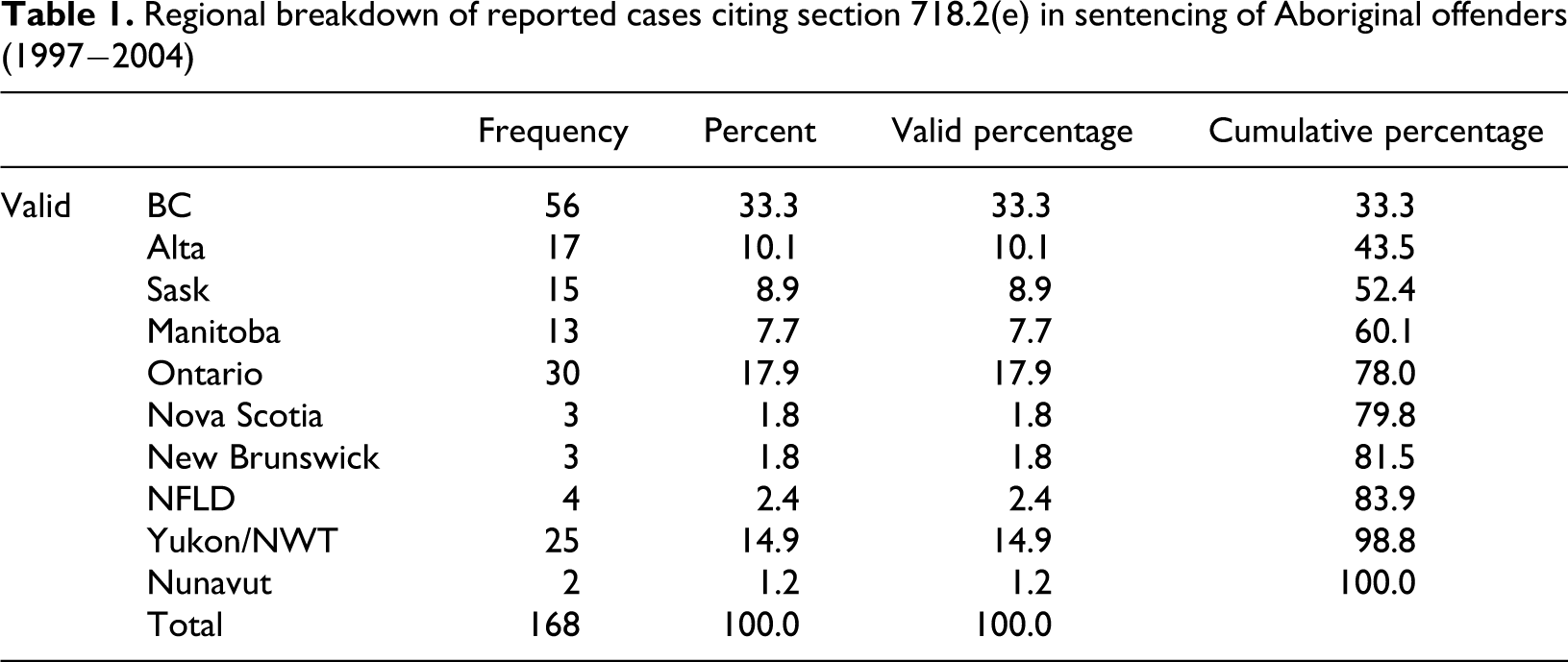
These data also reveal an almost exclusive use of imprisonment in the sentencing of Aboriginal offenders in the Yukon and Northwest Territories and in Nunavut. These regions are exceptional as they are geographically vast and sparsely populated by isolated Aboriginal communities. According to the 2001 Census, Aboriginal peoples comprised 85% of the Nunavut population, 51% of the Northwest Territories population and 23% of the Yukon population. The Canadian Centre for Justice Statistics reports that in 2005 the Northwest Territories had the highest police reported crime rate amongst the three territories, at 41,245 incidents per 100,000. The crime rate was 1.3 times higher than the rate in Nunavut, 1.8 times higher than that in the Yukon and three times higher than that in Saskatchewan, the province with the highest provincial crime rate (Leseleuc and Brzozowski, 2006: 6). As a result of the high concentration of criminalized Aboriginal peoples in these territories, we could expect to find greater use of section 718.2(e) by the courts. However, the data reveal considerable variation in the reporting of sentences citing section 718.2(e). For example, of 168 reported sentencing decisions, only 2 were from the Nunavut region, yet 23 were reported in the Yukon/Northwest Territory region. 19 As was stated earlier, we should be mindful of the corporate practices of reporting services and consider that if these cases are deemed of little value or interest to Canadian lawyers or judges, they will be underreported in commercial databases such as Quicklaw.
To better situate these sentencing practices that suggest little impact of sections 718.2(e) and 742 in these regions, it is important to consider the high rates of poverty, lack of employment and education, as well profound levels of violence within those communities. In 2006, 40% of the population in Nunavut was under the age of 15; the median age in the territory was 25, leading to high demand for waged labour, educational resources and adequate housing. However, 2006 census data show that 31% of the Nunavut population lived in overcrowded houses in need of major repairs; only 51% of the Nunavut population had access to secondary education; and 20% of the people were unemployed (Gionet, 2008). Violent victimization rates in the Northern territories were overwhelming: fully 80% of violent crimes were intimate partner or intra-familial. In the Yukon, the sexual assault rate (per 100,000) was 181, in the Northwest Territories 407 and in Nunavut 797. Comparatively, in the remainder of the provinces, the reported sexual assault rate was 71 per 100,000. Reported assaults in the Northern Territories are eight times provincially reported rates (Statistics Canada, 2006). The shift towards restorative justice practices in these regions appears to be confounded by the staggering rates of interpersonal violence and the lack of community capacity to address needs for education, employment, housing and social services such as shelters, rape crisis centres and addiction services. The limits of law reforms are revealed here in the spaces of profound deprivation.
The lack of consistently reported sentencing decisions overall makes it difficult to discern if such sentencing outcomes are common in cases of all types of violent crimes involving Aboriginal people (for example, sexual and non-sexual violence), and if sentencing reforms are being consistently implemented in regions with higher concentrations of criminalized Aboriginal peoples. In those provinces where non-custodial sentences of violent offenders are handed down, it is important for future research to consider the distinctive aspects of the sentencing process in cases of violent crimes if we are to assess the impact of section 718.2(e) and shifts in judicial attitudes towards sentencing.
Offence categories by gender
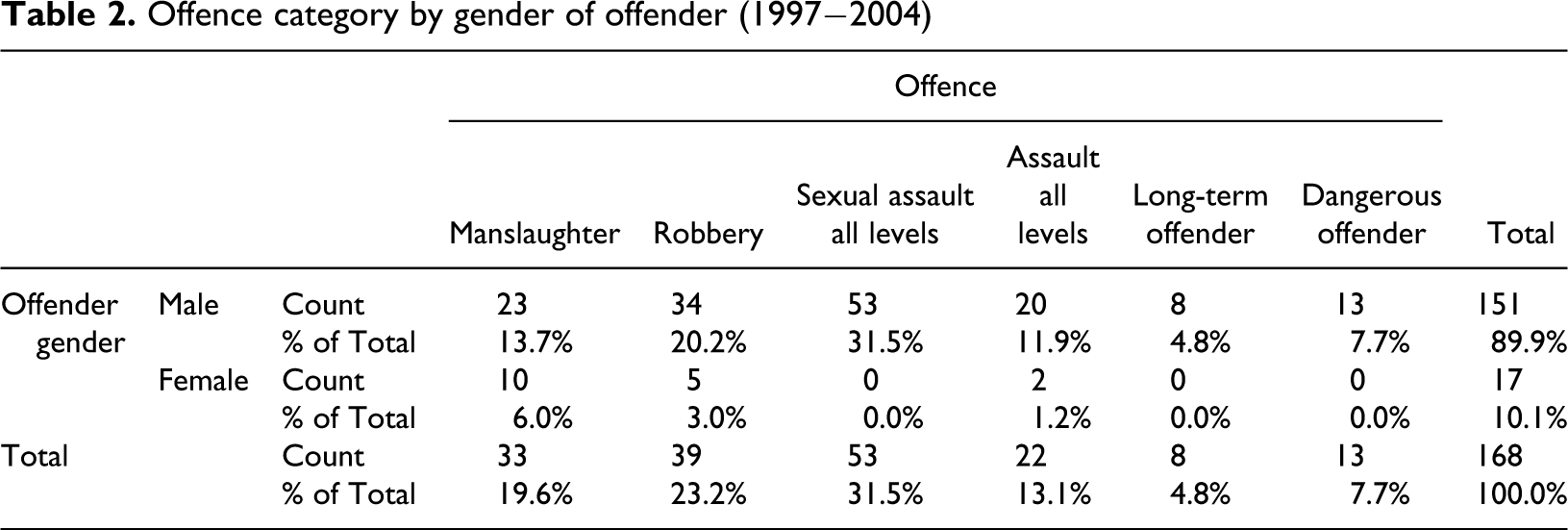
As indicated below in Table 2, of the 168 reported decisions, Aboriginal men represented 90% of cases. Aboriginal men convicted of sexual assault were most likely to seek special consideration or a conditional sentence than any other offender group (30%). Although women represented only 10% of reported sentencing decisions, over half of those women were sentenced for manslaughter and approximately one-third for robbery offences.
Offence category by gender of offender (1997−2004)
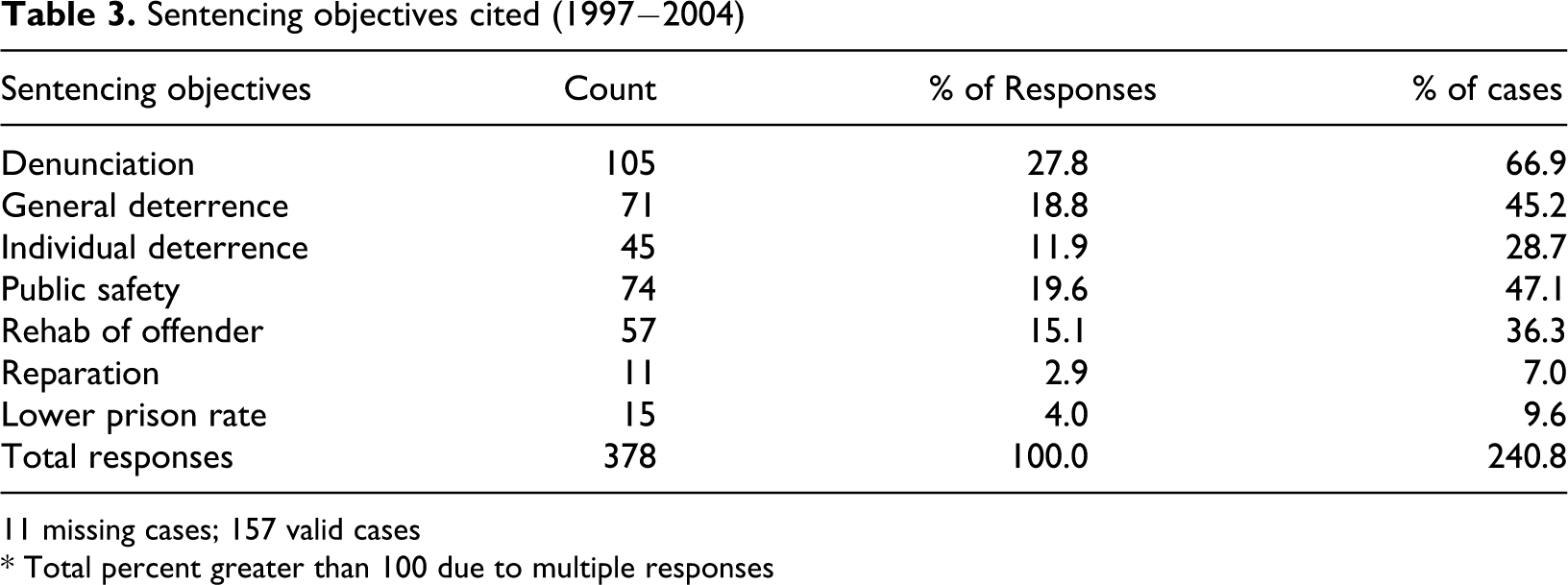
Sentencing objectives cited (1997−2004)
11 missing cases; 157 valid cases
* Total percent greater than 100 due to multiple responses
As in other countries with Aboriginal populations, the findings of this study are consistent with other empirical data showing that Aboriginal women are criminalized for violent offences more often than non-Aboriginal women (Brzozowski et al., 2006; Leseleuc and Brzozowski, 2006; Perreault, 2009). However, what is less theorized and empirically understood is the relationship between Aboriginal women’s own use of violence and their victimization. Statistics Canada reports based on the General Social Survey, the Adult Criminal Court Survey, and offender population data indicate that violence against Aboriginal women is three and a half times greater than that against non-Aboriginal women. Twenty-one percent of Aboriginal women experience ‘much higher levels of spousal violence by current or ex-partners than non-Aboriginal women (6%) … suggesting that the prevalence of family violence is more extensive in Aboriginal communities’ (Brzozowski et al., 2006: 6). Aboriginal women were five times more likely to be victims of homicide than were non-Aboriginal women (Cameron, 2006; Crvnkovich, 1995). Not surprisingly, given the prevalence of gendered violence in Aboriginal communities, many women reported profound fear of victimization and death (Brzozowski et al., 2006). These fears were compounded by severe overcrowding due to housing shortages, as well as by the limited availability of emergency shelters and services for women who seek support or safety from violence (O’Donnell and Tait, 2003). In studies of specialized family violence courts in Winnipeg, Manitoba and Toronto, Ontario, researchers found that police were more likely to counter-charge low-income and racialized women when responding to domestic violence calls (Comack et al., 2000; Pollack et al., 2005). In another study of Aboriginal women’s experiences of domestic violence on reserves, McGillivray and Comaskey (1999) found police often disregarded women’s calls for help, and band councils would force women to recant their testimony against their abuser: The failure of the criminal justice system to protect Aboriginal women living in reserve communities was attributed to the disregard that police show for Aboriginal women, as well as to the power of chiefs and band councils to force women to recant their testimony. Moreover, many of these women were themselves charged by the police for domestic violence when they attempted to defend themselves against their abusers (McGillvray and Comaskey, 1999, cited in Comack and Balfour, 2004: 157).
Thus, Aboriginal women’s victimization appears to be more serious on reserves, yet police resources were less effective, and reserve governance seemed dismissive of women’s needs for safety.
Given the context of violence against Aboriginal women, especially in reserve communities, and the high numbers of Aboriginal women criminalized for violence, we could expect consideration of the gendered conditions of endangerment under section 718.2(e) at the time of sentencing or upon appeal of a lower court ruling. However, a very small number of cases were reported involving Aboriginal women, making it difficult to surmise how often section 718.2(e) is applied on behalf of women with regards to the prevalence of gendered violence. We are left with little understanding of the sentencing process involving Aboriginal women criminalized for violence. Future research with regard to the sentencing of Aboriginal women should develop a methodology outside reported sentencing decisions to discern if the procedural requirements set out in Gladue with regard to special consideration of the circumstances of the offender and alternatives to incarceration have been implemented.
In contrast with the invisibility of Aboriginal women in reported sentencing decisions, the sentence and/or appeal of sentence in cases of Aboriginal men convicted of sexual assault is far more likely to be reported than any other crime category. Compared to other crime categories, appeals were heard in 37% of manslaughter cases, 73% of robbery cases and 83% of sexual assault cases. Feminist socio-legal scholars have demonstrated the sexual victimization of women to be a highly contested space within law, where rape myths operate to cast women as liars and temptresses and thus men are mistaken in their belief in a woman’s consent (Gotell, 2007). It would seem that sentencing decisions in sexual assault cases are contested spaces. Given the high rates of sexual violence against Aboriginal women, we should carefully consider the implications of section 718.2(e) for Aboriginal women and the denunciation of sexual violence.
Aboriginal women’s organizations were cognizant of the negative implications of section 718.2(e) for sexually assaulted women in their communities, and opposed Bill C-41 on these grounds. During hearings before the Standing Committee on Justice and Legal Affairs on Bill-C41, the Native Women’s Association of Canada (NWAC) argued that the proposed legislation would be likely to result in less protection for Aboriginal women in their communities, as perpetrators of sexual violence could receive non-carceral sentences. Murdocca’s (2009: 32) study of Inuit and Aboriginal women’s groups’ presentations to the standing committee points out how section 718.2(e) could ostensibly ‘transfer responsibility for incarceration rates of Aboriginal and Inuit communities with the intent of having the community deal with its own problems’. Thus, rather than the nation state taking responsibility for the over-incarceration rate of Aboriginal peoples, it assumed ‘social problems were somehow both the ontological property of Indigenous people’. Murdocca suggests that section 718.2(e) enables a cultural paradigm that locates such social problems as an outcome of dysfunctional community and family norms. Murdocca’s critique of Bill C-41 echoes earlier findings of a study of rape trials in the North West Territories. Nahanee (1994) found that racialized and gendered narratives operated throughout rape trials, trial judges often viewing Aboriginal women as deserving of rape because of their drunkenness or involvement in prostitution, or the rape as innate to Aboriginal communities and the immoral conduct of Aboriginal peoples. These culturalized explanations of sexual violence hold the Canadian state as not responsible for the gendered conditions of endangerment wrought by colonialist policies.
In sum, although Aboriginal women experience high rates of the most serious forms of sexual and physical violence and are being incarcerated at higher rates than Aboriginal men, Aboriginal men convicted of sexual assault are more likely to argue for special consideration under section 718.2(e). This suggests sexual violence against Aboriginal women continues to be viewed by the courts through a cultural paradigm that devalues women. In the next section we move on to examine mitigating and aggravating factors at work in sentencing decisions.
Mitigating and aggravating factors
With regards to mitigating and aggravating factors, it is important to note that in over 70% of cases, there were no factors reported in sentencing decisions so as to justify the sentence given. Despite procedural requirements set down in R v Gladue that directed defence counsel to submit to the courts an account of resources and opportunities as alternatives to incarceration, and judges to be flexible and innovative in their sentencing decisions, sentencing decisions analysed here show little judicial notice paid to the unique circumstances of Aboriginal offenders and the availability of non-carceral alternatives. In the 168 cases examined, the offender’s Aboriginal background was mentioned by judges in their reasons for sentence in only 19% of cases. Within these 40 cases wherein the offender’s Aboriginal identity was directly addressed by the judge in their reasons for sentence as a mitigating factor, 39 cases involved a male offender and only one case a female offender.
Overall, the most prevalent reported mitigating factors recognized by sentencing judges were if remorse was expressed by the offender (n = 70 or 41%); if a guilty plea was entered (n = 65 or 39%); if the offender reported personal histories of victimization (n = 50 or 30%); if the offender was compliant with police and/or pre-trial conditions (n = 25 or 15%); and finally, if the offender had no prior criminal record (n = 18 or 10%).
The most commonly reported aggravating factors were the seriousness of the offence (n = 104 or 62%); if the offender had a prior criminal record for violence (n = 86 or 51%); the degree of violence and harm involved in the offence (n = 69 or 41%); substance abuse (n = 62 or 37%); and the risk of reoffending (n = 52 or 31%). While not a comparative analysis with those sentences handed down in cases of non-Aboriginal offenders, these data do suggest the sentencing decisions were consistent with conventional concerns for the moral character of the offender and static offence characteristics. Decision narratives did not indicate judicial notice of the special circumstances of Aboriginal peoples or the socio-cultural context of their criminal behaviour, such as those Gladue factors outlined by the Supreme Court of Canada: economic deprivation, cultural dislocation, family breakdown and systemic racism.
Like other studies of penality that indicate a ubiquity of risk logics and practices across various criminal justice sites, such as conditional release decision-making (Hannah-Moffat, 2004) and correctional management of offenders (Maurutto and Hannah-Moffat 2006), this study found the risk of reoffending was given judicial notice at sentencing in 30% of cases. The process, however, for the determination of an offender’s risk of reoffending was not clearly explained in the sentencing decision. Rather, risk functioned as a composite of the following: aggravating factors such as lack of compliance with police or remand treatment program requirements; a not guilty plea and/or a lack of remorse; and a criminal record for violence. Unlike the sentencing of non-Aboriginal offenders wherein logics saturate the assessment of the offender’s conduct, resulting in an emphasis on therapeutic management, Aboriginal offenders were not deemed to be transformative subjects. In an earlier study of non-Aboriginal and Aboriginal men sentenced for sexual assault offences, Balfour and Du Mont (2012) found white middle-class men were seen by the courts to be deserving of a conditional sentence because of their status in the community as an employer or professional. For these men, ‘embarrassment was denunciation enough’ (R. v. K.R.G. [1996] No. 3867 (Q.L.) para 28). By contrast, Aboriginal men who received a conditional sentence were viewed by the courts as men of limited intellect and low self-esteem; ‘poorly educated and unsophisticated men also needed to be protected from the dangers of imprisonment’ (R. v. Tulk [2000] O.J. No. 4315 (Q.L.) para 15).
Such findings suggest, first, that conventional retributive factors are, for the most part, still at play in the sentencing process. In the context of violent offences, no judicial notice is paid to systemic factors acknowledged by the Supreme Court of Canada in Gladue. Second, it appears that little if any consultation is conducted with Aboriginal community agencies to develop effective and meaningful sentencing alternatives. This study suggests community representatives and elders rarely provided the court with information regarding support services and alternatives to incarceration for the offender. For example, in 80% of reported decisions, a community submission was not mentioned; in 94% of decisions, an elder’s submission was not mentioned. While these data could suggest that defence counsel and sentencing judges did not seek out alternatives to imprisonment, and instead relied upon liberal rationalities of denunciation and deterrence, these findings also highlight that Indigenous communities are ill-equipped to participate in the development of alternative sentencing plans, with few resources to provide supervision and treatment of offenders with profound needs for mental health services, addiction treatment and housing, alongside needs for victim safety. The implementation of progressive sentencing law reforms is constrained by community infrastructures ravaged by colonialism that have resulted in staggering rates of addiction, family violence and unemployment. Despite these legislative and procedural reforms intent on limiting the use of incarceration especially in the sentencing of Aboriginal peoples, retributive justice remains ubiquitous.
Retrenchment of denunciation and deterrence
As presented in Table 3 above, sentencing decisions were coded for sentencing objectives cited by the judge. Multiple objectives were noted. In over 60% of cases, denunciation was the most often reported objective, followed by public safety (44%) and general deterrence (42%). Rehabilitation was cited by judges in 34% of cases, whereas reparation to the victim and community was reported in only 7% of cases, and the objective of reducing over-incarceration of Aboriginal offenders was noted in only 9% of cases. Thus, the restorative sentencing objectives of reparation and less reliance on incarceration were the least likely to be cited in this study.
In R. v. Gladue, the Supreme Court held there should be no difference in sentencing outcomes between Aboriginal and non-Aboriginal offenders convicted of violent offences because of the need for denunciation. However, Roberts and Melchers (2003) point out that, despite this assertion by the Supreme Court, offenders convicted of serious crimes often receive a mitigated sentence, for example, juvenile offenders or offenders who enter guilty pleas. Yet the reduction of incarceration rates of Aboriginal peoples has not been realized in the years since Gladue; instead, more Aboriginal offenders (especially women) are being sentenced to custody, and rates for non-Aboriginal offenders have declined. Pelletier (2001: 480) asserts that disallowing the application of section 718.2(e) for the most serious cases “does more than limit its remedial force – it renders the provision virtually useless”. Yet, as we have seen in the sentencing decisions examined here, section 718.2(e) has been strategically applied in certain kinds of cases (sexual assault), in certain regions (British Columbia and Saskatchewan), and upon appeal in sexual assault cases more frequently.
Discussion
While some legal scholars had hoped section 718.2(e) and Gladue would encourage greater flexibility and innovative sentencing outcomes that recognized the pathway between the impacts of colonialism and the life chances of Aboriginal peoples, the sentencing decisions examined here suggest judges remain tied to common law principles of individual moral blameworthiness and punishment proportionate to the seriousness of the offence. This study has explored how competing sentencing objectives and mitigating and aggravating factors have been assembled in the narratives of sentencing decisions, in an effort to understand the limited effectiveness of sentencing reforms. The findings discussed here suggest that the inconsistent application of section 718.2(e) by judges reflects strategic sensibilities about the practice of law in cases of violent crime involving Aboriginal offenders. Regardless of the intent of procedural requirements set out in Gladue to connect historical traumas to contemporary social worlds of exclusion and disadvantage, and to generate consultative processes with First Nations communities in the sentencing process, Aboriginal women are disqualified from receiving the full benefits of progressive sentencing reforms as their own violence is not situated in the context of gendered conditions in Aboriginal communities.
This disconnect between intended sentencing law reforms and realized outcomes lies in the limits of law, the frailties of Indigenous communities that constrain their ability to provide effective and appropriate support to victims and offenders, and also the limits of socio-legal inquiry. The high rates of criminalization, victimization and imprisonment of Aboriginal peoples are often linked to colonialism theoretically, yet how social forces of colonialism interact in the daily lives of Aboriginal people remains to be explored. For example, as stated by Brownridge (2008: 356) in his comparative study of victimization rates between Aboriginal and non-Aboriginal women, ‘while it is possible to theorize a connection between colonization and violence, it is difficult to extrapolate from Aboriginal peoples’ experiences of colonization why ... some Aboriginal women experience violence and others do not’.
There is a complicated relationship between the prevalence of gendered violence in Aboriginal communities and violence committed by Aboriginal women. Smith and Ross (2004: 1) argue that there is an ‘inextricable relationship between gender violence; the colonial process itself is structured by sexual violence’. In this sense, ‘a victimization-criminalization continuum appears, but one that is situated in historical, cultural, economic, and political practices that deny Aboriginal women their dignity and respect, autonomy, and self-determination, thereby, contributing to their endangerment’ (p. 105).
How do we begin to connect colonialism to these contemporary social worlds in which Aboriginal men and women are both victimized and criminalized? Evans-Campbell (2008: 328) developed a “colonial trauma response that is a theoretical and empirical approach to understanding historical and contemporary trauma responses to collective and interpersonal events that organizes individual, familial, and community life”. Evans-Campbell identifies contemporary assaults against Aboriginal peoples, including prostitution and violent victimization, and ‘micro-aggressions’ such as arbitrary police stops and racial slurs, as stressors that can result in a heightened sense of injustice or fear of harm that in turn can trigger substance abuse, suicide attempts or violent behaviour. The Gladue methodology proposed by the Supreme Court of Canada and the conceptual framework of ‘colonial trauma response’ both seek to locate Aboriginal peoples’ contemporary daily lives in the intergenerational transmission of historical trauma. It would seem, however, that the form and practice of law should be informed by empirically grounded studies of Aboriginal community histories, and social and familial indicators of well-being and caring capacity, as well as the individual offender’s responsibility. From this study, we see no historical, social, cultural or economic context of the offender’s familial or community life provided for consideration at sentencing. Moving forward, it may not be feasible to require defence counsel already overburdened with excessive case-loads to amass such information for submission to the courts. Nor do Aboriginal communities have the resources or trust to participate in research collaborations to document colonial traumas that have undermined family and community life, such as parenting, substance abuse and family violence.
Future sentencing research should more closely examine if indeed 718.2(e) has been “rendered useless” (Pelletier, 2001: 480) in the sentencing of Aboriginal men and women convicted of violence crimes. Also, regional disparities in the application of section 718.2(e) reported here indicate a need to investigate compliance with sentencing law reforms, especially in those regions with high levels of police reported crimes involving Aboriginal people. This study has shown disproportionately lower reporting of sentencing decisions in those regions with large Aboriginal populations and/or high crime rates. Researchers could consider if lower reporting of sentencing outcomes implies a lack of compliance with section 718.2(e). In contrast, regions with greater reporting of sentencing decisions indicating consideration of 718.2(e), such as British Columbia, could reveal important civic and governance differences that enable greater consultative resources between First Nations communities and the criminal justice system. Finally, future research would do well to consider the gender disparities in the application of section 718.2(e) given the disproportionately higher number of Aboriginal women sentenced to prison, and the prevalence of appeals in sexual assault cases. Aboriginal women’s organizations spoke out against section 718.2(e) because of the need to denounce sexual violence and to protect women in Aboriginal communities. A decade of sentencing data suggests they were right.