







Abstract
The article unwraps the concepts of political trauma, recognition, and reparation; it discusses how victims experience group support as a recognising-reparative space from traumatic experiences. The goal is to demonstrate that group spaces can become not only instrumental in academic or therapeutic approaches but also positive catalysts for agency, recovery, and a politicising element for victims of human rights abuses to experience recognition and reparation. For survivors of political violence, the group space becomes a liminal space between the individual and the social, where the long-isolated suffering is socialised and politicised again, and where subjectivity has restored confidence, received, and provided recognising experiences, and facilitates the elaboration of the injured individual. I aim to demonstrate that group settings may become supportive and trustful environments in which new meanings to the experiences of horror might be subjectively and politically recognised and re-signified. This article explores the subjective and psychosocial conditions, as well as potential risks and setbacks of group processes, to be meaningful for survivors. The research is based on empirical data from seven focus groups composed of victims of human rights violations from the Truth Commission of Ecuador (TCE) and a sequence of eight in-depth focus groups with torture survivors. The study’s main conclusions are that working in group formats with trauma survivors may become a psychosocial and political recognising and reparative space as a response to traumatic events, and explore how group support may become a positive catalyst for recovery.
Aim
Groups are considered some of the primary political spaces (Kaës, 1976; Pichon Rivière, 1977) as the group is precisely the space where human subjectivity is articulated with the social structure. This intersection between the individual and society is mediated by group dynamics. When working with groups that are properly structured and well run, they can be powerful containers of individual stress, as well as agents of recognition and change. Likewise, group support approaches have been suggested as the best avenue for trauma recovery (Bion, 1966; Foulkes and Anthony, 1964; Herman, 1997; Langer et al., 1974; Martín-Baró, 1990).
Group support may be seen as a political constituent and may be experienced as a valuable element in how victims and survivors experience recognition and recovery. Group formations may become one of the primary political spaces because relationships with others are constructed within groups. The group is precisely the space where human subjectivity is articulated with the social structure. This intersection between the individual and the society is mediated by power dynamics. In this sense, group formation may be experienced as a valuable element in how victims and survivors experience recognition and reparation, addressing the intra-(subjective) and inter-subjective (social and cultural) dimensions of human rights violations’ acknowledgement. ‘In a group, it is possible to move once more from passivity to activity, through being contained while in a helpless state to being part of the container for others' helplessness’ (Garland, 1998: 197).
In this article, the focus will be on the psychosocial impact at the meso-levels, meaning the effects of political trauma on the survivors’ main family and affiliation groups. The micro or individual levels are helpful but not enough, and the macro (community, society) is usually limited and, in many cases, simply non-existent (Donoso, 2018b).
The predicament is not merely the dislocation or misallocation within the individual psyche, but the disconnect between inner reality and social reality . . . How meaning systems are altered by macro processes and what the relationship is between intrapsychic processes and social reality. (Hamber, 2009: 88)
The paper explores the group space as a political catalyser where participants share, listen, and re-define their stories. The group becomes a seminal space where empathy and the solidarity among its participants are vivid and powerful political expressions of life and resistance.
As the research is based on empirical data from focus groups composed of victims of human rights violations from the Truth Commission of Ecuador (TCE) and a sequence of eight in-depth focus groups with torture survivors, the Sabanilla case, relevant information on the methodological aspects of this work is fully considered and developed further in this paper.
Introduction
Human rights violations such as torture, illegal detention, and enforced disappearances in the contexts of dictatorships and violent repressive States impact deeply upon victims and communities. Mechanisms to prosecute and convict both individual and State perpetrators of these crimes have been designed. International law and transitional justice 1 aim to assist and provide redress and acknowledgement to victims and societies. Different kinds of reparations have been designed as part of these processes, which may include financial compensation, but also symbolic reparations like memorialisation sites and monuments, among others.
Nevertheless, numerous of these violent crimes remain unpunished, quashing victims’ expectations of social validation and leaving them in despair and helplessness. The silence and the lack of effective official reparative mechanisms and institutions may generate a deeper traumatic sequence. For victims of political trauma and human rights abuses, justice is simply a fundamental pillar, and it should be included in any comprehensive reparation programme provided by formal political institutions (Hamber, 2009; van Dijk and Letschert, 2011).
For the purpose of this paper, I am using Arendt (2005) and Maritain’s (1947) understandings of the political. For Maritain, the political refers to the pursuit of the ‘common good’ where shared social assets and power must be used for the benefit of the person. Human beings participate and have obligations to the social order. The right to exercise power is not possessed only by the rulers but by the community. According to Arendt’s insights, as Adamson (2012) infers, one of the best examples of the political is Athens in the 5th century, when the Agora was a plural space and people used to meet to speak freely about their common problems. The Agora became the social and political space to understand and decide on the realities of the polis.
Broadly speaking, political traumas are highly stressful episodes caused by politically motivated behaviour and experienced by human collectives (Vertzberger, 1997). According to Montiel (2000), during social conflicts, unlike interpersonal or family trauma, political trauma is instigated by an individual or a group with a political agenda that rationalises the righteousness of using violence. The systematic practice of human rights violations has a frightening effect not only on those affected, their families, and their political organisations, but also on society in general. Human rights abuses generate a threat of annihilation directed to the existence of the subjects in their condition as social beings.
Likewise, under the name of political trauma, within the Latin American literature on political psychology, reference is made in general to the violence intentionally exercised by States’ apparatuses, resulting in a massive and systematic violation of human rights. This type of State violence is also known as State terrorism. Its most extreme procedures are the systematic and widespread torture of detainees, enforced disappearances, and illegal executions. The Ecuadorian case is just another example of state terrorism in the region during the 1980s.
An orthodox idea of recovery puts victims in a passive, alienated, vulnerable position, in need of rescue. For the purpose of this paper, I understand recovery as a broader, comprehensive process beyond the medical, psychological, or legal ideas. According to Herman, the recovery process implies establishing safety, reconstructing the trauma story, and restoring the connection between survivors and their community (Herman, 1997: 2).
The concept of recovery has been appropriated by medical and psychological discourses; on the other hand, the concept of justice has been broadly appropriated by legal discourse. In legal discourse, the pursuit of justice is seen as some kind of unique panacea for righting past wrongs, which distorts the enormity of the task of rebuilding shattered communities (Stover, 2005).
Similarly, as will be developed in the next section, the concept of reparation in this paper will be used to stress the non-static nature of trauma, which can be symbolised only partially. If the surplus of horror, now transformed into anger, fear, indignation, or feelings of annihilation, receives proper context, support, and guidance – without any intention to romanticise – trauma may become an agent of change. Painful memories can find some rest through artistic expressions, family relationships, and religion, among other creative and solidarity forms of action for the self and others. (Donoso, 2018a). Yet it is important to highlight that, as Viñar (1990) states, even if part of the traumatic experience is transformed (which is only possible within a bond that reflects and recognises the commotion), there is still a part of it that can never be symbolised. There remains an amount of horror impossible to symbolise, a part that remains beyond words, that belongs to the category of the unthinkable and the unknowable.
Transitional justice experiences like the ones established in South Africa, Peru, Chile, Sri Lanka, and the Democratic Republic of the Congo, among others, show us that legal and political spheres of reparation are slow, bureaucratic, and highly politicised (Hayner, 2011; IDEA, 2003). This leaves victims trapped for extensive periods of time in the middle of an unfavourable social context with limited access to psychological care, which, depending on the context, might not be specialised in political trauma (Donoso, 2018c).
The intra-psychic and societal impacts of politically generated violence have been broadly researched. However, psychologists usually examine political trauma from an inner-world perspective. As a result, mental sufferings caused by social conflicts have been comprehensively studied (Montiel, 2000), but the socio-political sphere is frequently overlooked. This has created gaps and contradictions between the individual and the political processes. As Hamber (2009: 89) states, In societies in transition, there is often a desire to rebuild the state as soon as possible, which means that very often, survivors and their attempts to come to terms with what has happened to them . . . are asked to hurry up and find closure, very often before processes such as truth, justice and reparation, which may assist with the process of closure, have been put in place.
According to Maercker and Muller (2004), a number of studies demonstrate that the way people are treated after a traumatic event affects how they recover. Differences in social recognition may have an impact on how trauma survivors emotionally and cognitively process their traumatic experiences. However, the political context is not only a source of trauma but also of healing (Montiel, 2000). For many victims and survivors, the reparative process has been linked to multiple and diverse aspects: family support, religious affiliation, social activism, art, and sports practices (Beristain, 2010; Paloutzian and Kalayjian, 2009). Best practice on reparation indicates that a range of measures that consider the victims’ past, present, and future realities are necessary (Danieli, 2009).
Recognition and reparation
The concept of recognition 2 emerges from the master-slave dialectic developed by Hegel (1977 [1807]) in his Phenomenology of the Spirit. For Hegel, recognition is the mechanism by which individual identity is generated. Therefore, successful integration as an ethical and political subject within a particular community depends upon receiving (and conferring) appropriate forms of recognition. As Vanheule et al. (2003: 323) affirm from a Lacanian perspective, symbolic recognition by the other is the foundation of subjectivity. ‘Only because they are recognised by other people can human beings acquire a place in a social network’.
Jessica Benjamin (2016), in her work on the Palestine and Israel conflict, has developed ideas about the need for justice and public recognition after a collective trauma. According to Benjamin, the acknowledgement of injuries and injustice not only aims to heal suffering but serves ‘to affirm the possibility of lawful social behaviour and responsibility for fellow human beings’ (Benjamin, 2016: 11). She holds that the possibility of feeling recognised is essential for victims to believe in the possibility of a lawful caring (Benjamin, 2016). Along the same lines, Frosh (2011: 227) affirms that ‘recognition politics demands that space is made for these stigmatised groups, that they are acknowledged as a site of existence, of actuality and value’.
Psychoanalysts from South America, where numerous gross human rights violations were perpetrated during the 1970s and 1980s, and most have remained in impunity, have worked extensively on the idea of recognition as a pathway to subjectivity and intersubjectivity reconstruction. As Díaz (2005) has put it, Recognising involves linking current feelings with history, putting possible words to horror: validating the shock. Symbolization establishes continuity in one’s own history, allows one to construct and reconstruct a sense of identity that makes it possible to recognise oneself both in the past and in the present, to fill the empty spaces in the psychic structure with meaning, to link the fragmented pieces of memory, to reconstruct the continuity of existence.
Acknowledging the wrongfulness of the past through trials, transitional justice mechanisms, etc. represents a historical struggle to redress wrongs and allows the possibility of making an unambiguous cut between present and past times, as well as between good and evil in society. Nevertheless, a narrative account of traumatic experiences in legal contexts may result in an experience for the victims which is perceived as a distant story, a story filled mostly by the legally required data, and not necessarily as an intimate and shared experience with others. Groups may be functional to reconstruct collective narratives and to rebuild the mutual trust that victims may not find in a larger social or legal scenario.
Reparations, literally ‘to repair’, come etymologically from the Latin verb reparare, which means ‘to be prepared again’. Symbolic reparation means to get ready for a new existence, without terror, without impunity, through juridical and symbolic acts (Guillis, 2007). The concept of reparation may be understood from a variety of disciplines, including but not limited to law, psychology, victimology, criminology, sociology, anthropology, and politics.
One of the most significant goals of reparations for victims of political violence is that it allows them to channel their frustration, aggression, and feelings of revenge through language and symbolic acts. Well-processed reparations can endorse the mourning, provide symbols of healing, and even bring closure (Beristain, 2010; Donoso, 2007; Hamber, 2009).
Reparation in psychoanalysis is a mechanism mentioned by Melanie Klein (1882–1960) (Klein and Riviere, 1964). Klein described reparation as a powerful impetus to creativity. According to her, it is deeply dependent on the social context to provide useful directions for the effort to be channelled.
From a legal perspective, particularly the international legal framework, different concepts fall under the overarching concept of reparation. 3 The implementation of these various forms of reparations at a legal level often represents a signal of hope for the victims and their communities, although the legal proceedings are usually not simple or linear. However, victims are often neglected during the legal processes (Lira et al., 1991; Zehr and Mika, 2004) or even experience secondary victimisation during judicial proceedings (Trulson, 2005).
From a psychosocial perspective, reparations are an attempt to recover the victim’s vital project and to understand the origins and motivation of the repressive action. Reparations should always be understood from a holistic standpoint, to assume the entire complexity of the individual and the collective damages produced by violence. For the purpose of this paper, reparation is considered according to the complex and interrelated legal, psychosocial and psychoanalytical definitions.
The recognising group
In summary, if we assert that the core experience of trauma is disempowerment and disconnection from within and with others, then recovery should entail the empowerment of the survivor and the creation of new connections. Group or collective spaces, if well structured, are helpful for this endeavour. As Herman (1997: 94) puts it, ‘Recovery can take place only within the context of relationships; it cannot occur in isolation. In her renewed connections with other people, the survivor re-creates the psychological faculties that were damaged or deformed by the traumatic experience.
Prager (2008: 417) states that ‘since traumatic memory involves the present-day enactment of the failure of the world to offer protection, the world – so to speak – is responsible for redress’. However, the world usually does not work in this way, so the group may be used as the liminal or transitional space to activate subjects’ capacities.
The creation of a meso-level in the form of a group which contains the more macro and social may be considered as a liminal space between the individual and the social, where the so long-isolated suffering is socialised and politicised again, and where subjectivity has restored confidence and facilitates the elaboration of the injured individual. This liminal or meso-level space creates the possibility of a sense of mutuality among the group participants and will be further explored in this paper.
Group approaches have been suggested as the best avenue for this process (Bion, 1966; Foulkes and Anthony, 1964; Herman, 1997; Kaës, 1976; Langer et al., 1974; Martín-Baró, 1990; Pichon Rivière, 1977). But, for within individual work, especially with survivors of torture and political violence, the explicit focus has been on creating a conscious, political understanding of the traumatic events as deliberate and repressive strategies (Lira and Castillo, 1993; Sveaass and Lavik, 2000).
The context
Massive atrocities, such as massacres and systematic use of torture and rape in contexts of dictatorships and violent, repressive States, not only impact deeply upon victims and communities but also have consequences in national and international political and legal arenas. As a result, mechanisms to prosecute and convict both individual and State perpetrators of these human rights violations have been designed.
Different kinds of reparations have been designed as part of these processes, which may include economic compensation to victims and relatives as well as symbolic reparations such as memorialisation sites and monuments, scholarships, medical and psychological services, and public apologies, among others. By 2017, nearly 40 truth commissions had been launched around the globe: in South Africa, Argentina, Canada, Rwanda, Tunisia, Uruguay, and the Philippines, to name but a few (ICTJ, 2008).
Most countries of the Latin American region experienced dictatorships and repressive regimes that perpetrated gross human rights violations during the 1970s and 1980s. In South America, the infamous Condor Operation was the epitome of State violence. The Operation or Plan Cóndor was a clandestine coordination of action and mutual support among the leaders of the dictatorial or repressive regimes of Chile, Argentina, Brazil, Paraguay, Uruguay, Bolivia and sporadically Peru, Colombia, Venezuela, and Ecuador – with the participation of the United States. This coordination officially involved monitoring, surveillance, detention, interrogation with torture, transfers between countries, and disappearance or executions of thousands of people who were suspected of having affiliations with radical leftist movements considered by those regimes as subversive of the established order (McSherry, 2005).
Numerous of these crimes have remained in impunity, squashing victims’ expectations of social validation and leaving them in despair and helplessness. The silence and the lack of effective official reparative mechanisms and institutions have generated a deeper traumatic sequence (Beristain, 2010; Donoso, 2015; Lira et al., 1991).
At the time this article is written, the political scenario in Latin America seems complex. Latin America is a region with great economic inequality, and the majority of people are living in poverty (Bárcena, 2016), although dictatorships and repressive regimes that perpetrated gross human rights violations during the 1970s and 1980s in most countries of the region have finished, and a democratic transition has made significant progress in the last quarter-century. Nevertheless, new neocolonial threats to democracy and human rights in Latin America have arisen in recent years. Among them is the so-called Lawfare, which is a weapon for fighting political enemies, combining apparently legal actions and widespread media coverage (Zanin Martins et al., 2017). Through lawfare strategies, political enemies are ashamed of becoming extremely vulnerable to baseless accusations, and once weakened, they lose popular support and any power to react. This has been the case for Cristina Fernández de Kirchner in Argentina, Luiz Inácio Lula da Silva and Dilma Rousseff in Brazil, and Rafael Correa and Jorge Glas in Ecuador (Zanin Martins et al., 2017).
The TCE
Ecuador, like most South American countries, experienced a regime of repression and gross human rights violations during the 1970s and 1980s. In 2007, a TCE was created to investigate these crimes, and in 2010, its Final Report ‘No Justice without Truth’ was officially launched. The Commission received more than 600 testimonies that led to 118 legal cases, involving the violation of the right to life and the rights to personal integrity and personal freedom, including cases of disappearances, extrajudicial executions, torture, sexual violence, and illegal deprivations of liberty. 4 One of the cases investigated by the TCE was the Sabanilla case. This case is about 35 students who were arbitrarily detained and tortured by the army in Célica, Loja, in August 1986, after attending a student camp (TCE 2010: 358). This paper will analyse eight in-depth focus groups which were carried out with victims from this case.
The TCE started its work in 2008. Up to the point at which this article was written, judicial proceedings have been initiated in only seven cases of the TCE. The Reparations Program of the Ombudsperson Office officially started its duties in November 2014. Within this Unit, the psychosocial component was emphasised, although the team is mostly formed of young and inexperienced members, who are trying their best to reach the whole universe of victims in the country. Likewise, as is the case with most of the academia and institutions in Ecuador, there is a structural lack of training and awareness of the complexity and specificities of the psychosocial work on political trauma scenarios (IRCT, 2014; Valencia, 2011). A member of one of the very few organisations working with traumatised victims in the country affirmed that the ‘demand is higher than the capacity of the centre to provide psychosocial rehabilitation’ (IRCT, 2014: 49).
The Reparations Program has conducted reparatory activities in areas like education, culture, social inclusion, and work, among others. In the psychosocial sphere, it has provided psychological evaluations of the victims who have already accessed the programme. This evaluation, carried out in the Ombudperson’s Office, allows the Ministry of Health to have this input to initiate differentiated care for the victims.
The Sabanilla case
One of the cases investigated by the TCE was the Sabanilla case. This case is about 35 students who were arbitrarily detained and tortured by the army in Célica, Loja, in August 1986, after attending a student camp (TCE, 2010: 358).
The participants of this group are torture survivors who were illegally detained and physically and psychologically abused by the military because they were confused with guerrilla fighters. The participants suffered a series of torture sessions that included beatings, electrical shocks, insults, death threats, and mock executions.
The participants belong to a group that at the time of the detention and torture was formed of 35 youngsters from 11 to 19 years old. They were students who belonged to youth organisations, and they were camping when they were illegally imprisoned for 2 days in a small cell that had no ventilation and no sanitary services. They were later transferred to a common prison, where they remained for 4 months. After their release, some of the participants maintained regular contact, but others did not and only met again during the TCE proceedings. As in many other TCE cases, members of the Sabanilla case received some forms of financial compensation, but the other reparations have not been complied.
Methodology
One of the first steps to approach the participants was to meet the gatekeepers, such as former TCE colleagues and leaders of victims’ groups. I explained to them the goal of the research and the methodology so they could provide me with the contact details of the victims and give me potential suggestions for selecting the cases to be studied. In some cases, the gatekeepers contacted the potential participants directly, but in others, especially when communication was difficult, I contacted them myself. I am certain that without previous knowledge of my position, as a former member of the TCE, and the trust endorsed by the people on whose behalf I contacted them, the contact details and other relevant victims’ information would not have been so easily released. I understood I was receiving these details with the immense responsibility for conducting my research in the most helpful way possible for the participants.
Groups were conducted in Spanish, which is the researcher’s and the participants’ native language. Seven focus groups were held during the first field trip. Eight additional in-depth focus groups were held with participants of the Sabanilla case for a second phase of the research, which was more focused on the topic of trauma recovery. Focus groups were based on semi-structured questions about what helped participants cope with their experiences (e.g. justice, psychotherapy) and what they would have liked to happen (or still to happen). I facilitated all focus groups. At the beginning of each session, all participants were instructed about the objective and methodology of the research, at which time I usually emphasised the academic nature of the study, highlighting that their participation was not related to any of their administrative or legal processes for reparations and therefore would not affect those procedures. They received detailed information about the potential beneficial and negative psychological effects of disclosing distressing situations. Each focus group session was videotaped or audiotaped, self-convened, and maintained flexibility in terms of topics and time to discuss. At the end of each session, I offered the participants my contact details in case they needed future assistance. I made random calls to different participants after each focus group session to check their well-being. All the persons agreed to continue, with no reported incidents.
To encourage participation and agency from the respondents, validity check sessions were implemented during the second field trip. In these sessions, the researcher shared the most relevant ideas and conclusions of this article while encouraging active participation and discussion. Two important elements surfaced after these sessions: (1) participants agreed with the key ideas and conclusions of the present study, and (2) participants unanimously requested their names and the specific cases be mentioned in this article without any concern for anonymity. They explicitly requested their names to be used since they considered this research on their cases and stories as another form of recognition.
5
You are doing so much right now also, albeit to graduate, you are doing a lot, you are researching our case, and for us, it is a relief. To me, talking to a person like you is so nice; it gives me relief and comfort. (Daniel, focus group participant)
I learned that one of the groups gathered after our session and recounted some of their stories and old jokes. They discussed current family problems and potential legal actions. For instance, I was told by one participant: Last night was really helpful, we listened to ourselves, we identified our experiences, and we shared our ways to deal with the same problems we are going through. We went for a drink later on and remained talking, and we agreed to meet to talk more often. (Augusto, focus group participant)
Every group of participants suffered different forms of human rights violations; their contexts and particularities were different, but all of them experienced emotional impacts, some level of impunity, and a lack of recognition. All of the cases discussed in this article were investigated by the TCE. I aimed to give the survivors the possibility of voicing the emotional impact on themselves and their families.
We have a feeling of powerlessness. When someone attacks us, we have to respond. It’s a defence mechanism. We used to say ‘people should not judge us’. In this way, we try not to feel powerless, not to feel judged as we felt at the moment when we were arrested. We were tortured atrociously. Now we react with anger. It is a sense of justice. When they arrested us illegally and tortured us, we felt powerless. Then, when we find people who judge us, we feel free to answer them with anger. Because we haven’t found justice until now. The people who tortured us were even promoted . . . We are outraged, and we continue to be stigmatised. Sometimes we have tried to overcome it with humour. It has affected our families, our wives and children . . . (Yoder, focus group participant)
In March 2015, during the first trip of the field research, I conducted seven focus groups with participants from different cases of the TCE. I chose a methodology based on groups because of the limited structures of formal support to the participants at the time of the field research. I designed an inclusive approach intended to be a helpful tool of self-validation and to have a recognising effect. Each group consisted of four to seven participants. Every group met once for an average duration of 2 hours. Group formation met the following conditions: (1) homogeneity among the members (were part of the same legal case or were victims of the same type of violation), (2) with different levels of legal achievements of their cases, (3) the members know and trust each other, (4) the groups were based in different provinces of Ecuador: Pichincha, Guayas, Loja, and Azuay to contrast difference between the capital and other regions (see Figure 1).
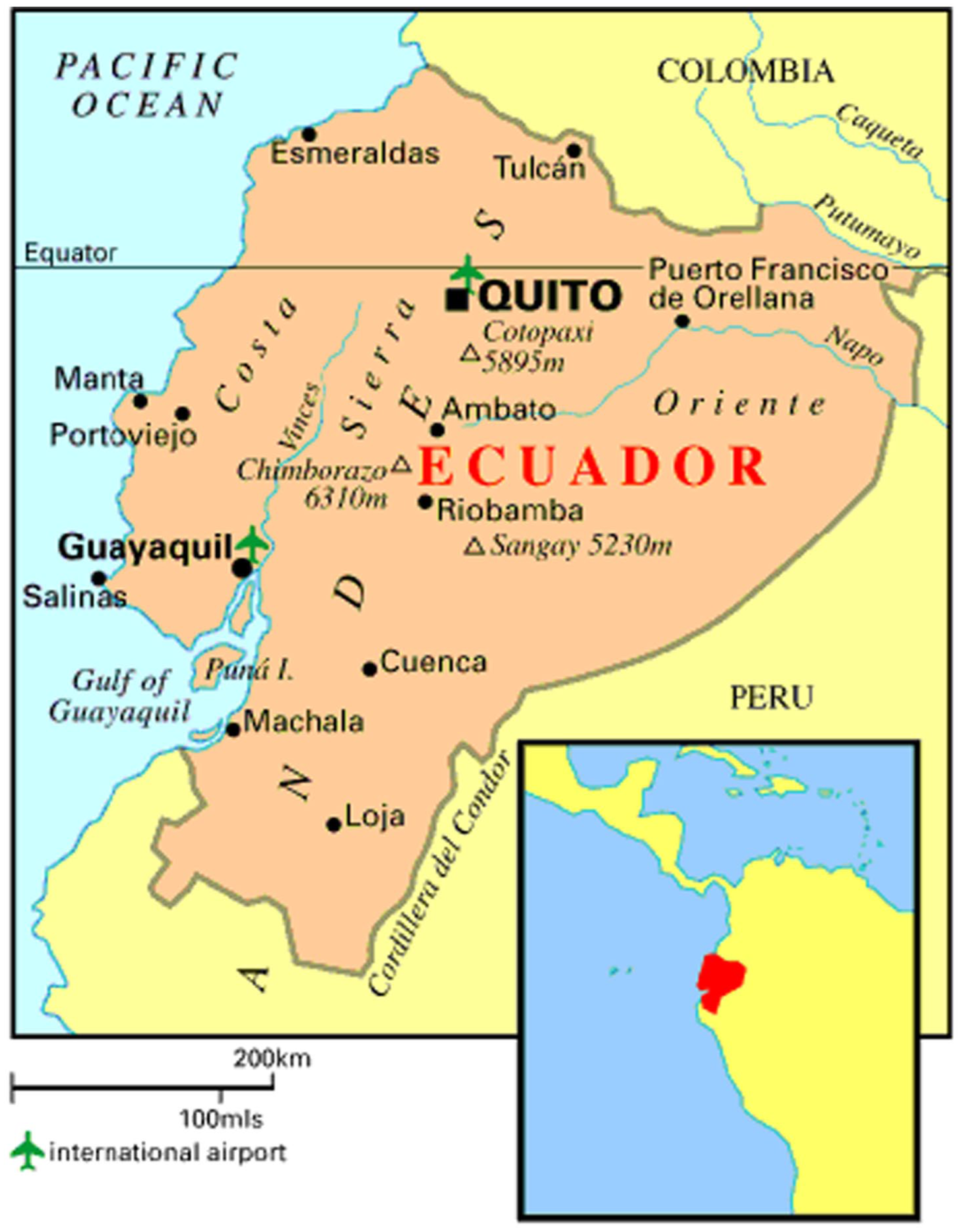
Political map of Ecuador with its main cities.
All focus groups were facilitated by the researcher. At the beginning of each focus group, all participants were instructed about the objective and methodology of the study, and they received information on the potential psychological effects of disclosing distressing situations. The respondents were also informed of their right to cease collaboration at any point. Based on this information, all participants signed an informed consent form. Focus groups were asked semi-structured questions about what helped them to cope with their experiences (e.g. justice, psychotherapy) and what they would have liked to happen (or still to happen in the future). Each focus group session was video- and audiotaped. 6
In the second field trip for the research, validity checks were conducted with participants of the former focus groups. As noted earlier, validity check sessions were designed to provide feedback to the participants and to confirm data and preliminary conclusions, as well as involve them in the study – in short, to give them some voice. Another goal was to effectively check with the respondents if the research findings matched their reality and perceptions.
Likewise, during the second part of the research, the sessions with the Sabanilla group took place. Eight in-depth focus group meetings were set up with three to eight regular participants from the legal case ‘Sabanilla’, located in Loja, a southern province of Ecuador. The researcher and the participants agreed to meet two times per week for 2 hours (Wednesdays and Fridays) from 18.00 to 20.00. The first meeting took place on 2 October 2015, and the last one was on 28 October 2015. The meetings took place in the city centre of Loja at the community room of a public building where one of the participants worked.
The researcher contacted one of the group leaders to propose and explain the goal and methodology of the in-depth focus groups. He accepted and agreed to explain and invite the rest of his companions. All participants were members of the same case; they had lived through the same experiences of torture and incarceration, and there was mutual trust and friendship among them. Yoder, Miguel, Anibal, and his wife, Margarita, were those who showed more interest in participating in the focus groups, and they were present in almost every session. However, it was possible to include other members of the same case and to invite close relatives who showed interest in joining. 7
Positionality
Before moving forward, I want to present some reflections about the position from which I research and write. The interest in the topic of this research paper started many years ago. My academic and professional journey took me into different contexts where human rights violations occurred.
Working in the field of human rights and psychosocial interventions in different countries and diverse capacities, I witnessed the unfulfilled needs of the people regarding reparations and their psychological demands. I worked for the TCE from March 2009 to November of the same year. My work consisted mostly of the systematisation and analysis of the testimonies previously collected by the Commission. Nevertheless, I had direct contact with some victims through other work-related activities.
Victims’ voices are often unheard and under-researched. In this sense, my academic concerns are directly focused on the psychological well-being of victims and this paper is written with a victim-centred epistemology. I acknowledge my sympathy with their struggles in search of justice, and I admire their strength to maintain it. As an Ecuadorian, I also have my political position, which aligns with the former government of President Correa, but as an academic, I have maintained my objectivity, especially during the field trip and the data analysis, listening and exploring the different perspectives. As Martín-Baró (1998: 186) stated through all his academic work: ‘The scientist is required to situate his analysis within the framework of political confrontation and even to assume a personal position in relation to them, which draws him out of his traditional squares of academic asepsis’.
For most of the victims I interviewed during this time, their stories had remained silent for decades. As Prager (2008) states, acknowledging the wrongfulness of the past is difficult because the testimonies are often produced out of a defensive distancing from affective experience and inner personal conflicts. This participatory research offered participants a space to speak about their experiences, one in which these experiences would not be denied, giving the participants some voice and recognition that they had been looking for.
Results
Overall, 30 people were part of this study. The dynamic was, in general, overwhelming. Participants had suffered violence and torture, but each one had experienced its consequences differently.
Participants shared in a very supportive form their struggles and legal battles for reparations. Participants vividly shared their stories during the torture episodes and discussed what had been helpful for them, emphasising that the possibility of talking within the group about the past tortures was a form of relief from the suffering.
It feels like as I am talking, I’m freeing myself. I do not have that much of a grudge anymore. I do not have so much impotence. I no longer have so much anger. It does not hurt much anymore . . . We have been talking a lot here in these groups, which helps. (Miguel)
Group discussions were about family support, religion, humour, their own group support, and so forth. This resulted in a sharing and caring dynamic, which oscillated between serious moments when talking about challenging circumstances and how they lived them and a series of entertaining anecdotes they shared during their time in jail. The conversation was filled with humour and complicity.
Most sessions were quite emotional, and the participants recalled and explained their traumatic events with lively feelings. They experienced the support of the researcher, but most importantly, of other members of the group. The environment of confidence, trust, and rapport allowed them to share intimate information and to find some comfort with their fellow group members.
The support from the researcher has been analysed in-depth elsewhere (Donoso, 2018a). However, during the focus groups, the participants’ expectations regarding the involvement of the researcher and their specific request re waiving anonymity were even clearer. As Yoder explains, This study also allows us to make visible our political positions and struggles. It would be great if the article that you are writing makes us visible. It would be a form of reparation as well. That is great, because that article is surely indexed in a journal, then it will be read by many people, and not only politicians but also academics, to understand the reparation process. Then, it will help us a lot! (Yoder)
For the group participants, the group space within the academic research provided a form of recognition that was valuable for them beyond the political and legal spheres. The fact that they could recount their story, and this story can be known and ‘re-cognised’, was reparative, as Yoder clearly put it.
The group as a political space
In most of the sessions, participants discussed how they felt isolated before the TCE, how important having the company of one another was for them, and how being together gave them the possibility of talking and listening to one another. As some of them stated, previously, they had to present their testimony or similar statements before the TCE or other legal body regarding their experiences of torture and incarceration. Likewise, they had also met among themselves a number of times to discuss their experiences in informal social settings. However, as they asserted, ‘We never had this kind of experience to hear each other’s history and to share the family and health problems that each one of us had to endure’. In this sense, the group dynamics not only allowed them to politicise their suffering, but also their capacities of reparation, to explore their sense of agency within an adverse political context, and to recover their urges for solidarity among each other.
When we really had the opportunity to tell in detail what happened to us, it was totally different. I realised that many things had been stored inside me for a long time. I started to cry . . . but as I was telling, it felt like I was liberating. (Miguel)
The group space was one of the first instances where they could socialise their individual impacts and transform the isolated effects of violence into a collective memory and a politicised experience. They remembered different episodes of their incarceration and torture, comparing and completing their ideas with the others’ accounts. This resulted in new memories and meanings about the violence and its effects; this is precisely the politicisation movement they did from their private and individual experience to a collective one. In the aftermath of their traumatic experiences, several of them had struggled with domestic violence and alcohol abuse. Within the group, participants started to realise that their subjective or family struggles were intimately related to their history of trauma and political violence. And sometimes . . . almost the same thing happened to me . . . what happens to him . . . when someone honks to me in the car . . . I learned to control myself, but before I used to react in the same way . . . I was violent. My nature was never like that, but . . . circumstances made me that way. (Male participant)
In some cases, these problems were known; in others, they were hidden. During the meetings, a couple of participants felt the need to share their family problems and alcohol issues within the group. When these issues arose, the rest of the participants were understanding and supportive. As a result, they shared their own difficulties in controlling anger and sadness. They realised that their different problems were not isolated individual or family issues but a different manifestation of their common experience of political violence, and the fact that they were able to speak up and contain their traumatic experience and its effects was a political self-reparatory act by itself.
There is something that I have not disclosed here with the companions, but I believe that it is the right moment . . . the last time when I left my home . . . I left, breaking my wife’s house door. My children are afraid of me because of that . . . My son was six years old, and when he saw me angry, he said, ‘Look, daddy, you’re going to act like Hulk again, and you’re going to break everything. It’s something that hurts more than anything . . . because it was my own action. And I do not know if someday we can totally . . . overcome . . . this situation. (Male participant)
Participants had a history of different emotional struggles – anger, guilt, shame, and addiction were only some of them. Most of the survivors had not associated their feelings and behaviours with the political roots of their traumatic history immediately, and although some of them had already elaborated this connection, the possibility to verbalise and share with the others helped everyone to understand even more deeply the political implications and impacts of the trauma on their lives.
The group as a space of mutual recognition
During the focus group meetings, participants spontaneously talked about their need for recognition and how this need was partially met during the focus group. Like many victims, they suffered from exclusion and stigmatisation by their own families, friends, and colleagues. They were labelled as ‘guerrillas’ and ‘terrorists’, resulting in feelings of loneliness, difficulties in finding jobs, and stigmatisation of their family members, especially their children at school.
For them, it was equally important to be recognised not only as victims but also as political actors instead of guerrilla fighters. Likewise, it was important to receive recognition from macro or political spheres (e.g. State institutions) about their human rights violations (vertical recognition), and that people from their community learned the truth about their identities and about what really happened to them (horizontal or mutual recognition) (Donoso, 2018b). They lost their original life projects 8 because of the social and psychological impacts of the violations. However, they survived and started their work paths all over again. The group formation allowed them partially and temporarily to obtain acknowledgement from the researcher (vertical) and from the group itself (horizontal).
I did not build my life project as I wanted, but I built another one, and I continue to build it with much difficulty, but, hmm . . . if the Government back then wanted to break us, it failed, most of us continue . . . (Yoder)
It was important for their current identities and professional activities that this process of recovery was mutually recognised. One especially interesting and rewarding result was the spontaneous acknowledgement of ‘being seen’ and ‘being heard’. This was especially important to those participants who had not experienced any kind of vertical recognition. There was a shared feeling of being recognised and understood for the first time. It is not uncommon, in Ecuador and elsewhere, to find survivors’ histories full of mistreatment, negligence, and secondary victimisation, especially from legal operators and State functionaries. Victims may be seen, or may fear being seen, as difficult and irritating, full of impossible demands. During the present research, this subjective inter-relationship became a key element. The researcher was initially experienced across a power differential, which then gradually became more horizontal. Participants felt recognised and willing to share thoughts, share ideas, and plan new actions.
Miguel is a musician, he receives social recognition because he is a good musician, and this allows him to be recognised for other things than for the facts of the case. I find recognition in my professional job [he is a psychologist], and that fulfils me. Manito is very good at what he does, and that is a matter of social recognition as well. I want to re-empower those issues of recognition for every one of us.
As Herman argues (1997: 154), traumatic events destroy the sustaining bonds between individuals and their community. Those who have survived learn that their sense of self, of worth, and of humanity depends upon a feeling of connection to others. The mutuality in the recognition process, the solidarity of a group, provides the strongest protection against terror and despair, and the strongest antidote to a traumatic experience. Trauma isolates; the group re-creates a sense of belonging. Trauma shames and stigmatises; the group bears witness and affirms. Trauma degrades the victims; the group exalts them. Trauma dehumanises the victims; the group restores their humanity.
If we ourselves do not validate ourselves as people? No one! Finally, if the State gives us some material things, that will not repair anything, if we do not face this and dignify ourselves as people. That’s why coming to talk here is important, because I’m giving myself my own personal worth, which is very useful for me. (Yoder)
As victims and survivors themselves affirmed, social recognition is not enough and will not replace justice or economic compensation. During the group space, the victim could trust an ‘other’ to tell their story, to experience a transitory recognition by this other who can share their grief in a safe environment, and who makes them feel ‘important’. This was something that certainly helped and gave them some hope. These victims of State violence were injured in a legal, political, and social arena, and only in such arenas will they be able to integrate their trauma. Often this integration must be done at a purely symbolic level: the disappeared will not come back, and torture injuries will always leave scars. However, the strength of reparations, their function, is to produce the legal, social, and political components that allow people to mobilise their psyche and their subjectivity, towards processes that integrate trauma into their lives.
The group as a reparative space
Reparation was a recurrent topic during the discussions. As they stated, they were angry and frustrated with the State’s reparations programme. They considered that this programme had not been participative enough, that they had not been able to share their viewpoints. Likewise, they said that until now, few measures have been implemented, and everything has gone slowly and has been limited.
One of the participants, Yoder, who has a background in psychology, differentiated between two levels of reparation: (1) from the State and (2) from themselves. According to him, the survivors do not have the autonomy or power to influence the reparation coming from the State, nor the possibility to make it more subjective.
We have to repair ourselves, guys. That’s why these meetings are important. It is important to talk and stay together. We are only waiting for the administrative procedures. The process is long, and we are going through false expectations. We need to continue fighting for our rights, but it is something that must not create bitterness . . . That is affecting me, and it must be repaired either individually or collectively, but someone has to help us because if not, the wound will remain . . . (Yoder)
Another participant, Manito, was also pursuing his own psychotherapeutic process at the time the focus groups started. He mentioned he went only twice to therapy, and then he stopped attending. As he stated, it was far from his home, and the therapist had just asked too many questions without providing any help. Manito said that this approach did not help him because he is too shy and quiet. Interestingly, he compared this therapeutic process with the focus group sessions in the following terms: It’s better here. I’ve spoken here because I have more confidence with them [the other participants]. When they talk, I start to speak. I do not have the competence to speak, but seeing everyone speak makes you want to talk. And one is more relaxed. I love coming here. I thank you very much, it has helped us to vent a little. (Manito)
One element across all the focus groups was that participants found some relief when they found support from an ‘other’. Also, they felt recognised when they realised that they had the capacity to contribute to someone else’s well-being with their actions, usually someone from their close family and social network. For groups with a political background, their ideological beliefs were a strength and a resource to contribute to the whole society, to change or improve the Other. The focus groups were one of the few places where participants could share their traumatic experiences among themselves. They shared the need to be seen as someone who can contribute to the community. Repairing trauma from State violence can take place only within the socio-political context. The traumatic experience was produced on the macro level, affecting important capabilities such as trust, autonomy, identity, and intimacy, also at the more subjective level.
Discussion
Most of the literature and research on trauma has been related to inner-world perspectives. Increasing political violence and human rights violations around the world directed against civilians have resulted in the academic and clinical development of recovery processes, most of which are mainly from cognitive and neuropsychological approaches. This produced the well-known post-traumatic stress disorder (PTSD) paradigm (Maercker and Muller, 2004; Volkan, 2013), which has been largely used within legal and political fields, medicalising a social-political problem, neglecting cultural differences in grief and recovery, and denying the importance of the collective dimension on this issue (Hamber, 2008).
Research has shown the pervasive effects of violence at the community level. In situations of protracted conflict, psychosocial impacts of violence and social strife are not primarily individual but social, such as losses of meaning, trust, order, relationships, safety, and the sense of a just world. The PTSD paradigm and the traditional Western theories have a focus on individual pathology, which has been defined at large because of its potential to hide the political and social reality of repression and political violence (Pupavac, 2004; Summerfield, 1999).
Political trauma has usually been examined from inner-world perspectives and mental suffering, but the socio-political sphere is frequently overlooked. However, the way people are treated after a traumatic event affects how they recover. This is directly related to the impact that social acknowledgement may have on trauma recovery experiences.
Recovery as well as reparations entail basically a psychosocial perspective with two dimensions, the individual (psychological) and the collective (political), which always stand in a relationship, and often in tension with one another when trauma interventions are referred. The study of political trauma often uses inappropriate political contextual assumptions, which are implicitly integrated into psychological discourses, distorting the therapeutic picture and generating psychological interventions alien to large collectives of traumatised individuals (Montiel, 2000).
Furthermore, transitional justice has some limitations. First, the public and political character of trials and truth commissions places victims as the target of suspicions. Second, catharsis is not properly contained in these scenarios, where often security is an issue and professional mental health providers are limited and poorly trained (Beristain, 2010; Donoso, 2015). Third, the narrative of the traumatic facts is usually directed to the account of external events (e.g. dates, potential perpetrators), and the subjective history and intimate impacts are overlooked (Guillis, 2007).
The group as a container and liminal space in these contexts is a partial response to these limitations.
Drawing from the experiences of Latin American liberation psychology 9 and psychoanalysis during the repressive regimes of the 80s in this region will bring up similarities and complementarities with contemporary psychoanalytical approaches discussed above, and more importantly, it will enrich the discussion with concepts that were born or configured in the middle of politically charged contexts. This is important for two reasons: (1) The social and political spheres become a central issue, and (2) a potential theoretical Eurocentrism is avoided in terms of examining Latin American issues from its own perspective.
The trauma affects the whole society in different ways. Martín-Baró reflects the collective trauma as one coming from social domination and neocolonialism. He thinks that the consequence of a traumatic event is not present only in individual minds but also psychosocially. Social trauma, therefore, affects individuals precisely in their social character – that is, as a whole, as a system. Edelman and Kordon (2012: 89) stated that the characteristics of the traumatic event and especially the presence of intentionality and, later, the possibilities of response and social reparation have a high degree of incidence in the possibilities of personal elaboration of the trauma, that is to say that the social is the text itself.
The term psychosocial is related to the dialectical relationship of the individual or intra-psychological factors with social, political, and environmental elements, and the main objective in these kinds of interventions is the attempt to restore the relationship of the individual with reality, recovering his or her capacity to link with other people and the world, as well as their capacity to plan the future by means of better self-knowledge and their reality (Lira and Castillo, 1993).
Latin American psychoanalysis (Díaz, 2005; Edelman and Kordon, 2012; Viñar, 1990) has outlined that social recognition implies a historical and subjective validation of the suffered trauma. A renovated sense of self and social identity is constructed from the Other’s gaze. Successful integration as an ethical and political subject within a community depends upon receiving (and conferring) appropriate forms of recognition.
The social and political contexts provide scenarios not only for the root cause of trauma but also for its healing. I aimed to demonstrate that a reliable and facilitating (institutional, family, group, research) environment may become a liminal or transitional space to activate the capacities of a subject for non-defensive engagement with the rest of the world.
The acknowledgement of injuries and injustice not only aims to heal suffering but also to affirm the possibility of lawful social behaviour and responsibility for fellow human beings. This envisages a possible return of a more lawful Other who is able to regulate clearly societal rules and power relationships. Nevertheless, justice is imperfect and usually is a long-term process. Other forms of recognition are important during the long years of waiting. Group support might be one of them.
State terrorism and impunity have left indelible marks on victims. The goal of group interventions is not to erase their identity as victims but to provide ethical and relational support to produce new symbolisations or understandings, new meanings to their experiences of horror through social validation and recognition. For instance, survivors might come to understand and recognise that the trauma cannot be undone and that their wishes for compensation or revenge can never be truly fulfilled. Survivors also may identify that their fight for accountability is important not only for their personal well-being but also for the health of the larger society (Herman, 1997: 151).
Group support can become a privileged modality for work with subjects who have experienced political trauma situations, if methodological, cultural, gender, relational, and security aspects are deeply considered. ‘The wounds in the subjectivity of victims of torture and other severe violations can be rebuilt in the inter-subjective space created by all the participants of the group’ (Díaz, 2005: 424).
During most of the sessions of the focus groups, participants verbalised the meaning of the shared group experience. The members validated the group experience not only as a space to provide information about their case but also as a space of recognition, of what they had experienced as subjects with a traumatic history and specific demands. As Robaina (2002: 106) stated, ‘We believe that group function has a social function in the processing of social traumas, in the recovery of memory and of lost values. To make this passage from the individual body to the social body, groups are necessary.
Likewise, the group space allowed them to rebuild trust in the ‘other’. Solidarity, acceptance, recognition, and collective identity were part of the common experiences lived by the group. Participants shared their family problems or work struggles, their experiences of incarceration, the moments of happiness and political activism, and their professional achievements and painful events.
The group became a safe place for them because they knew they were not being judged or stigmatised, in contrast to their usual experience during their lives. They could speak freely; they were not afraid to express their feelings of vulnerability, their family and work-related problems. They felt listened to and understood, and they identified with each other’s struggles. As Mondaca (2002: 262) put it, ‘the fear of being repetitive is diluted since there is explicit acceptance of the persistence and fluctuations in intensity of the pain produced by the traumatic situation experienced by each of the members of the group’.
Reparation requires a liminal time and space, set apart from a past and even a present. At the societal level, transitional justice mechanisms have been established for this purpose. Within the subjective and inter-subjective levels, a well-structured group in which individuals can find this liminal time and space to provide new shared meanings to their experience might be an important reparative process until the legal and political world might be able to respond to their demands.
The group became a political space where participants were able to speak openly about many of their daily struggles for overcoming their traumatic experiences. They shared experiences and listened to each other, rewriting stories and even discussing their own political action in relation to their demands for reparations. The group became a political catalyser where empathy and solidarity among its participants were not only emotional or moral expressions, but vivid and powerful political expressions. To be together and feel again accompanied by each other was a way to claim that their human bodies, subjectivities, and political struggle were not killed. The group experience itself was proof that they were not defeated.
This article has analysed some of the potential positive elements that a group methodology has when working with small and safe groups in (post) conflict scenarios. Although it is not part of the scope of this paper, it is necessary to consider some serious limitations that bigger groups encounter when working in these mentioned (post) conflict settings: (1) Within authoritarian regimens, people may feel wary of expressing their social views as they might be watched by the intelligence services. Sharing on a group basis might feel distressing and frightening. (2) Moreover, group approaches in conflict or post-conflict environments could endanger the physical security of the participants. (3) In cases of sexual violence, confidentiality might be an issue as well. (4) When within group settings, internal power dynamics or types of victims’ groups may potentially censor some individual narratives to fit with the collective narrative of the group. (5) When natural victims’ groups are not neutral or safe spaces, and the groups become sites of power struggles, politicisation, and where victims’ needs and voices can be marginalised. (6) How the group can also constitute a ‘carrier group’ maintaining trauma as a master identity narrative for a collective. Groups can act as spaces to (re)produce and maintain a sense of collective victimhood based on a shared understanding of past trauma and contribute to fuel and entrench politicised narratives of collective trauma. 10
For instance, Verhaeghe (2004: 327) states that in cases of collective trauma, ‘the processing will almost always happen in the group, which in itself creates the possibility for the construction of a collective discourse’. The reality in (post) political conflict situations is that this is not the case. Fear, distrust, and imposed silence among communities do not allow easy elaboration in the group and the construction of a collective discourse. In the Kurdistan Region of Northern Iraq, for instance, during one of the psychosocial training events conducted by this article’s author in early 2017, it was common that women survivors from captivity by ISIS had only received individual therapy because of the stigmatisation, fear, shame, and suspicion among them. Psychotherapists found it problematic and challenging to work with groups at that time.
During the focus groups in the current study, several participants shared their feelings of fear, anxiety, and rage, but some of them highlighted one emotion in particular: helplessness. In Spanish, the signifier desamparo is related to abandonment and lack of protection. Integrating trauma in the life of people who have suffered terrible acts of violence is not an easy task; it might take their whole life to feel that those events are not a threat anymore (Herman, 1997). Laurent (2002) states that after a trauma, one has to construct an Other that no longer exists. Isolated and short encounters with a researcher, a lawyer, or a therapist, if well conducted, may help the subject to construct this new Other, to invent a new path. As political trauma survivors suffered impairment with an unfair and silent Other, recognition by a mediating Other is necessary for the process of recreating meaning in their lives.
The role of group processes is important as they may provide some partial recognition effects on the condition that psychotherapists participate with the other in an active process of encounter, without expectation or hope of uncovering some transcendent truth (Frosh, 1999: 309). This study has focused on what is necessary for these encounters to be truly reparative. The empirical analysis and the literature reviewed during my research allow me to state that interventions with an ethical focus on the subject may become a positive reparatory intervention by themselves. The shared bond – the encounter – that is created during the different forms of inter-relation between victims and researcher/psychotherapists/attorneys and other legal staff may produce positive or negative recognising effects, which in turn may generate a subjectifying and reparative impact on the survivor’s life.
The groups are a privileged space of testimony and support. From these group encounters, the testimonies could be taken to other spaces, public or not, penetrating the social field. We consider that this process would be restorative, not only for the direct victims of state violence but also for a whole society which was marked by the dictatorship’s evils and that did not have the opportunity to be heard regarding that period. To create a space or group encounter that intermediates the traumatic experiences and the production of testimonies and memory. (Tavares Antunes, 2015: 49, author’s translation)
Footnotes

Ethical considerations
Information about ethical considerations is in the Methods section of this manuscript.
Consent to participate
Informed consent to participate in this study was written. More information about participation consent is in the Methods section of this manuscript.
Consent for publication
Not applicable.
Funding
The author received no financial support for the authorship, and/or publication of this article.
Declaration of conflicting interests
The author declared no potential conflicts of interest with respect to the research, authorship, and/or publication of this article.