






Abstract
On October 7, 2023, a large-scale terrorist attack on the Nova Psytrance Festival in Israel resulted in mass casualties and widespread collective victimization. In response, Immediate Therapeutic and Support Spaces (ITSS) were rapidly established to provide an early, large-scale, and culturally attuned victim support response outside conventional clinical settings. This qualitative phenomenological study explores survivors’ experiences within these spaces, with particular attention to the role of immediacy, scale, and alignment with survivors’ social and cultural preferences. In-depth interviews were conducted with 10 survivors, and thematic analysis was applied from a victim-centered perspective. The findings indicate that the immediate availability of these spaces functioned as a critical bridge between acute trauma and continuity of life, enabling survivors to engage in recovery without disruption to their identities, social ties, or cultural practices. The spaces fostered collective belonging and mutual recognition while emphasizing autonomy, self-worth, and nonjudgmental support tailored to survivors’ needs, including acceptance of psychoactive substance use. Grounded in positive victimology and the principle of continuity, the study highlights how timely, culturally responsive interventions for large groups of victims can facilitate emotional processing alongside social reintegration. The findings offer victimological insights into the design of immediate, community-based responses following extreme collective violence.
Keywords
Introduction
At dawn on 7 October 2023, Hamas, a militant organization governing the Gaza Strip, launched a large-scale terrorist attack on Israel, resulting in the deaths of approximately 1200 people, alongside the abduction of 250 individuals into Gaza. Among the main targets were music gatherings in southern Israel, most notably the Nova Psytrance Festival, which became the deadliest terror attack in Israel’s history. At Nova, 364 civilians were killed, hundreds were injured, and dozens abducted (Levi-Belz et al., 2024; Lidman, 2024). This unprecedented event profoundly affected survivors and Israeli society (Kimhi et al., 2025; Shechory-Bitton et al., 2024; Zak et al., 2025), generating urgent needs for immediate psychological support.
Over 3000 individuals survived the massacre at the Nova Psytrance Festival and other gatherings in southern Israel. Its unprecedented scope and nature, combined with the targeting of a close-knit, young community, underscore the necessity for tailored intervention responses for the survivors. These interventions aim to help as many survivors as possible cope with the trauma effectively and avoid developing chronic post-traumatic stress disorder (PTSD) in the future (Mazurkiewicz et al., 2022). The scale and characteristics of the survivor population required forms of support capable of reaching large groups rapidly while remaining sensitive to their shared social and cultural context.
In the immediate aftermath of the attack, several independent initiatives swiftly established ITSS to offer survivors timely care and support. These spaces combined therapeutic services, community-based resources, and culturally relevant interventions to address both emotional and practical needs during the critical early stages of recovery (Foster, 2023; Haninovich, 2023). The rapid emergence of such immediate community-based therapeutic environments highlights an evolving form of early response that warrants systematic victimological examination.
The aim of this study was to investigate the subjective experiences of survivors of the October 7 terror attack, who received care and support in these ITSS. The findings were examined through the positive victimology framework (Ronel and Toren, 2012), which seeks to amplify victims’ voices and promote effective therapeutic interventions. Adding to traditional victimology, which emphasizes vulnerability and risk, positive victimology directs attention to the strength, growth, autonomy, and resilience that many victims demonstrate throughout their healing processes (Nikolic-Ristanovic and Copic, 2015; Shechory and Ronel, 2015; Wager, 2015).
In addition, the continuity principle, as presented by Omer and Alon (1994), offers a unified approach to understanding responses to collective trauma. It highlights the importance of maintaining stability in individuals’ lives, as disruptions to routines, roles, and social connections can exacerbate distress and hinder recovery. Omer and Alon identify three interrelated levels of continuity: physical continuity, which involves preserving environments and routines; social continuity, which emphasizes maintaining relationships and community ties; and existential continuity, which refers to reinforcing personal identity and values. Continuity-based interventions promote stability across these dimensions, supporting coping and resilience (Omer and Alon, 1994). Together, positive victimology and the continuity principle frame recovery as a process grounded in autonomy, meaning, and the restoration of continuity through supportive social environments, providing a conceptual foundation for examining survivors’ experiences within ITSS.
Collective trauma and early intervention
Trauma is an emotional response to physical, psychological, or cultural violence that disrupts core beliefs and triggers physiological and psychological symptoms, affecting both individual and societal stability (Caruth, 2016; Herman, 2015). PTSD affects approximately 5% to 10% of the population, with a higher prevalence among women, and is associated with disturbances in sleep, anxiety, flashbacks, and avoidance, as well as broader neurobiological and physiological effects (Yehuda et al., 2015). The risk of severe psychological harm increases in events involving extreme violence, physical assault, or exposure to death (Herman, 2015). When such events affect large groups simultaneously, trauma extends beyond individual experience and acquires collective dimensions. Collective trauma emerges when groups or societies are exposed to life-threatening events such as terrorism, war, or disasters, producing psychological and social consequences at both the individual and collective levels (Guerra et al., 2014; Hirschberger, 2018; Storozhuk et al., 2022). Such events disrupt personal, communal, and national dimensions of social identity, often generating distress, mistrust, and emotional disintegration that require responses adapted to multiple levels of social functioning (Kropf and Jones, 2014). These multilevel disruptions highlight the importance of timely responses that address both individual distress and collective social processes in the immediate aftermath of traumatic events. Accordingly, the literature underscores the importance of early and context-sensitive interventions following emergencies, aimed at reducing acute distress and supporting recovery rather than preventing inevitable psychopathology (Bonanno et al., 2010; Hobfoll et al., 2007; McCabe et al., 2014). Evidence suggests that most victims do not develop chronic mental disorders but benefit from timely support that facilitates a return to daily functioning (Galatzer-Levy et al., 2018). Early interventions, implemented within hours or weeks after trauma, have been shown to reduce post-traumatic stress reactions, particularly when they reinforce existing coping systems rather than rely solely on diagnostic or clinical treatment models (Bryant, 2022; Hobfoll et al., 2007; Roberts et al., 2019; Rothbaum et al., 2012).
Terrorism, victimization, and community coping
Terrorism is defined as the deliberate use of violence or threats against unarmed civilians to instill fear or advance political, religious, or ideological objectives (Schmid, 2021). It targets not only direct victims but also the broader public, aiming to create widespread fear and uncertainty (Crenshaw, 1983; White, 2002). The randomness of terrorist attacks amplifies their societal impact and undermines victims’ sense of control and meaning, often intensifying psychological distress (Shichor, 2007; Silver et al., 2002). Empirical findings indicate that victims of terrorism may experience higher levels of distress than survivors of other traumatic events. For example, PTSD rates among terror attack survivors were found to be higher than among car accident survivors (37.8% vs 18.7%) (Shalev and Freedman, 2005), with more pronounced avoidance and emotional numbing symptoms (Pozza et al., 2019). Even without physical injury, exposure to terrorism is associated with increased risks of PTSD, depression, and anxiety, with consequences extending beyond the individual to affect social and familial environments (Lynch, 2023; Rigutto et al., 2021).
International research on mass trauma and disaster response has emphasized the role of social connectedness, collective coping, and community-based support in facilitating recovery following large-scale traumatic events (e.g. Bonanno et al., 2010; Hobfoll et al., 2007). Similarly, research in Israel highlights the communal dimension of coping with terrorism—interpersonal factors such as belonging, cohesion, solidarity, and mutual commitment have been identified as central protective elements for terror victims (Bleich, 2017). Community-based and clinical–community interventions have been shown to enhance collective security and resilience in contexts of ongoing threat (Possick et al., 2017). Comparative studies further indicate that community solidarity and trust in authorities function as protective factors under chronic exposure to violence and are positively associated with post-traumatic growth following large-scale conflicts (Gelkopf et al., 2012; Zanbar et al., 2020). Together, these findings underscore the importance of socially embedded responses that mobilize communal resources, providing a conceptual basis for examining immediate community-based support spaces such as ITSS.
The cultural context of psytrance communities
The 7 October attack on the Nova Festival targeted a ‘psytrance’ event centered on music, dance, and altered states of consciousness. Psytrance parties, which emerged in Israel in the late 1990s and expanded during the 2000s, are characterized by immersive electronic music, prolonged communal dancing, and a strong emphasis on openness and collective experience (Milshteyn and Bensimon, 2025; Rill, 2010; Schmidt and Navon, 2017). Despite their popularity, these events have not achieved full social legitimacy and are often portrayed as unconventional or stigmatized in public discourse (Gristina, 2019). Participants frequently describe themselves as part of an alternative ‘tribe’, unified by values of sharing, acceptance, and freedom of expression, across political and social differences (Meadan, 2006). The sense of liberation associated with these gatherings is further shaped by their remote settings and the common use of psychoactive substances (Bonny-Noach et al., 2023; Rill, 2010).
Empirical studies indicate that cannabis was the most commonly used substance at Israeli nature parties in 2022, followed by MDMA, LSD, psilocybin, ketamine, and cocaine (Bonny-Noach et al., 2023). Qualitative research among Israeli psytrance participants highlights a complex experiential profile, encompassing both short-term adverse effects and positive outcomes such as heightened interpersonal connection, reduced stress, and enhanced self-acceptance (Milshteyn and Bensimon, 2023). At the same time, stigma and restrictive drug policies have been shown to undermine participants’ sense of safety and increase anxiety, underscoring the cultural context in which survivors’ needs and preferences are embedded.
Emerging empirical research has begun to examine psychological outcomes among survivors of the Nova Festival attack. Quantitative findings indicate that pre-trauma recreational substance use was associated with differentiated post-traumatic responses, with some substances linked to reduced acute distress alongside complex emotional processing patterns (Nacasch et al., 2024). Complementary qualitative research has shown that survivors described altered states of consciousness during the attack as shaping meaning-making processes and recovery narratives (Simon et al., 2025).
These characteristics shaped survivors’ expectations regarding safety, autonomy, and nonjudgmental environments, highlighting considerations relevant to the design of supportive responses for groups affected by mass trauma.
Immediate support spaces after the Nova Festival attack
In the immediate aftermath of the massacre at the psytrance parties near Gaza, ITSS were established to provide voluntary mental health first aid and timely support for survivors. This study focuses on two central ITSS that operated between October and December 2023.
Healing Space—Ronit Farm was opened a few days after the attack and attracted over 2000 visitors by November, some attending daily. According to media reports, the space offered a diverse therapeutic and communal environment staffed by mental health professionals and therapists with expertise in trauma and psychedelic-assisted approaches. Services included individual and group therapeutic encounters, body-based and expressive practices, music, creative activities, and accessible communal spaces for rest, reflection, and memorialization. Participation was free and voluntary, allowing survivors to attend independently or with close friends and family (Foster, 2023).
Izunova—Kochav Hayam operated daily with volunteers and served hundreds of visitors each day, offering group workshops, individual counseling, social gatherings, music, and body–mind treatments, alongside family support sessions for survivors’ parents. In addition, representatives from governmental welfare agencies offered rights advocacy and practical assistance (Haninovich, 2023; Izunova, n.d.).
Study aim and research question
Together, these ITSS functioned as novel, practice-based form of community response to mass victimization. In this study, ITSS are understood as immediate therapeutic environments emerging from practice rather than predefined institutional models. While existing literature underscores the value of early and continuous intervention following collective trauma, empirical research on immediate therapeutic spaces tailored to survivors’ needs remains limited. Accordingly, this study explores survivors’ subjective experiences within ITSS and examines how these spaces facilitated coping and recovery in the aftermath of the October 7 Nova Festival attack. The findings offer implications for understanding immediate, culturally attuned, community-based responses to mass victimization and their role in supporting continuity and early recovery across diverse contexts.
Method
This study employs a qualitative approach to understand the experiences of care and support provided in ITSS for survivors of the October 7 psytrance party attack. The research uses a phenomenological method, focusing on the meaning participants ascribe to their experiences as a core element of human experience and on identifying central themes through systematic analysis (Giorgi, 2009; Moustakas, 1994; Worthington, 2013). In line with phenomenological methodology, the analysis sought to foreground participants’ lived experiences while maintaining reflexive awareness of the researcher’s interpretive role. This approach enables an in-depth understanding of survivors’ experiences within these therapeutic spaces.
Research population
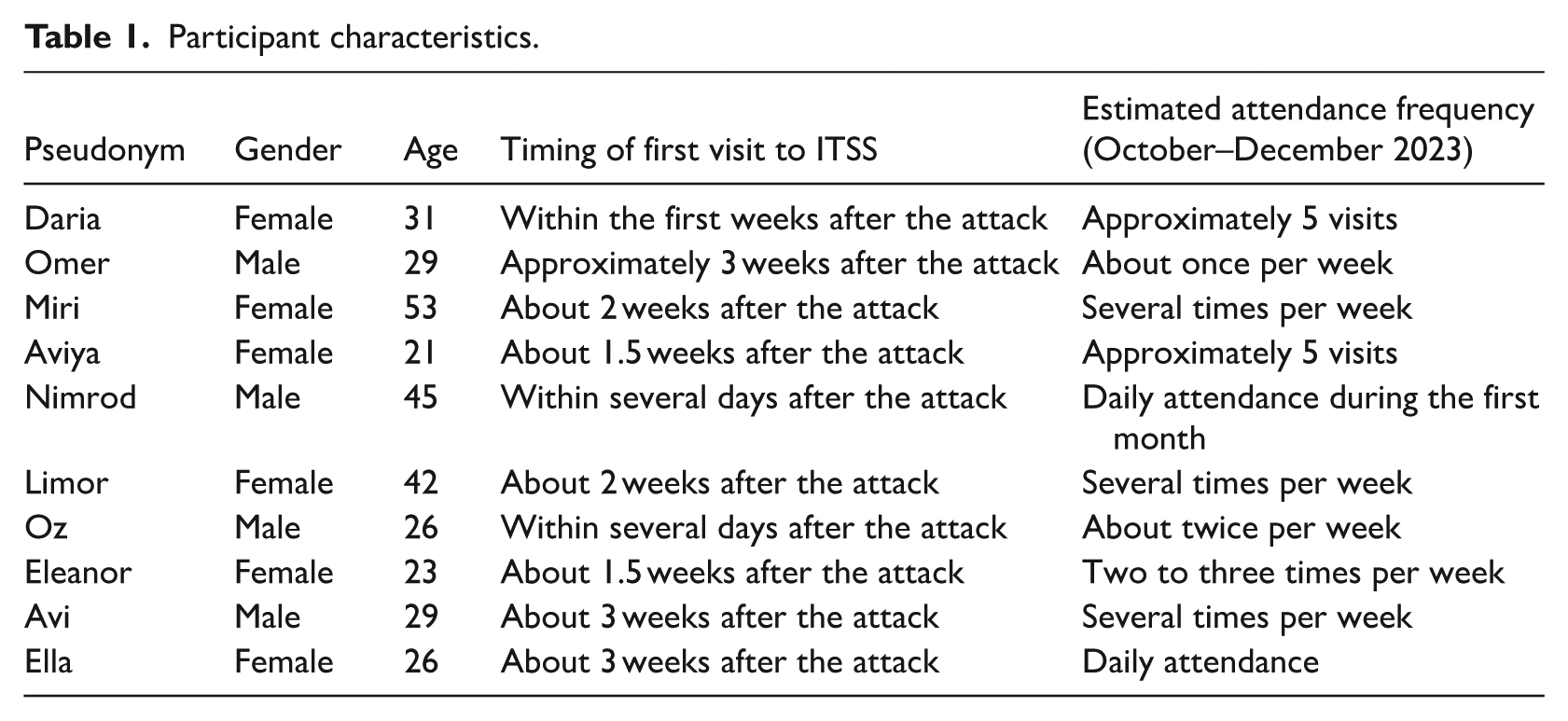
The study recruited 10 participants (four men and six women), all survivors of the October 7 attack on the ‘Nova’ party, who attended the ITSS established for their support. Participants, aged 21–53 years, exhibited varying attendance patterns, from daily visits to occasional ones, during the first 2 months’ post-trauma (October–December 2023). The sample size was selected to ensure thematic saturation (Guest et al., 2020). Their first visits to the ITSS occurred within days to 3 weeks after the attack, with some returning daily during the first month, while others attended 2–3 times a week or several times a week in the following months. All participants voluntarily consented to the study, adhering to ethical research standards. Pseudonyms are used throughout the study to protect participants’ anonymity. A summary of the participant characteristics is presented in Table 1.
Participant characteristics.
Research tools
Data collection was conducted through semi-structured in-depth interviews (Alshenqeeti, 2014). The interviews included open-ended questions designed to elicit detailed descriptions of their experiences (Stuckey, 2013). Interviews followed a structured interview guide covering several thematic domains, including participants’ experiences within the ITSS, perceptions of collective space and belonging, interactions with staff and peers, and reflections on coping and recovery processes. These domains were designed to align with the study’s aim of understanding survivors’ lived experiences within immediate therapeutic environments. Example questions included: ‘Can you describe your personal experience in the therapeutic space?’ and ‘Would you suggest any changes or additions to the therapeutic space?’
Procedure
Participants were identified through purposive sampling, a method designed to select cases rich in relevant information about the phenomenon under investigation (Palinkas et al., 2015). The study included 10 Nova party survivors, a sample size consistent with phenomenological research prioritizing depth. Recruitment occurred via announcements in survivor support groups, relevant social media platforms, and referrals through snowball sampling. Interviews were conducted approximately one year after the 7 October attack and participants’ initial attendance at the ITSS. Participants were fully informed of the research objectives and procedures, with strict privacy protections maintained. Interviews, lasting between 60 and 75 min, were conducted primarily via Zoom (n = 9), with one in-person interview (n = 1) based on participant preference. All interviews were one-on-one with the researcher, and participants provided informed consent, including permission for audio recording. They were asked about their experiences in two primary ITSS: ‘Izunova’ and ‘Healing Space’. As both spaces operated under a similar framework, no distinctions were made between them in the interview questions or subsequent analysis.
Data analysis
Data analysis followed a categorical approach, which involves stepwise coding of key themes emerging from the interviews. Repeated topics were collected and grouped into main categories (themes), which were then conceptualized into a theoretical framework (Silverman, 2013). All interviews were first read in full to achieve familiarity with the data, followed by repeated readings to identify meaning units and recurring patterns in participants’ narratives. These were grouped into categories and subcategories, which were refined through comparison across interviews and synthesized into central themes and sub-themes forming the basis of the findings chapter. The coding process was conducted by the first author. Throughout the analytic process, ongoing discussions were held with an external academic reviewer, supporting reflexive examination of interpretations and strengthening analytic rigor. During this process, some preliminary themes were merged or excluded to maintain conceptual coherence and focus within the scope of the article.
Validity
Validity in this study was ensured through several strategies. First, data collection adhered to a standardized interview guide, maintaining consistency and reliability across interviews. This approach minimized variation, facilitating effective comparison and the identification of recurring patterns and themes (Imran and Yusoff, 2015). Second, the analytic process included ongoing discussions with an external academic reviewer, who provided critical feedback during the development and refinement of themes, thereby strengthening interpretive credibility. Third, transparency was maintained throughout the study, with detailed documentation of data collection, interpretation, and analysis, supported by participant quotes to substantiate findings (Smith, 2016). Reflexivity was maintained throughout the study. Neither of the authors had direct personal exposure to the October 7 Nova Festival attack or involvement in the ITSS examined in this research. The analysis was conducted with ongoing awareness of the researchers’ positionality and the sensitive sociocultural context in which the study was situated.
Ethics
Given the sensitive nature of this study, strict adherence to ethical guidelines was maintained throughout the research process. Participants provided informed consent, agreeing to participate in interviews and analysis solely for research purposes, with full assurance of privacy (Matua and Wal Der Van, 2015). Given the potentially distressing nature of recalling traumatic experiences, participants were reminded that they could pause or discontinue the interview at any time, and information about available psychological support resources was provided when needed. Anonymity was maintained using pseudonyms, and any identifying information that could compromise confidentiality was excluded without affecting data integrity (Shaw, 2023). Furthermore, the study received approval from the Institutional Review Board (IRB). All data were securely stored with password protection to ensure confidentiality and prevent unauthorized access.
Findings
The findings revealed three central themes that illustrate the diverse coping processes experienced by trauma survivors within the ITSS: the first theme describes transitions from life to death and back to a life-focused experience; the second explores the role of the collective and group spaces; and the third addresses the creation of a personal space that fosters choice and autonomy. The results indicate that the ITSS, offering an integrated array of responses, played a significant role in initiating survivors’ recovery processes.
Transitions from the party to the experience of death—and back to a life-focused healing space
The survivors’ accounts reveal significant transitions—from the vitality and enjoyment of the party to the unfathomable experiences of death, and then further transitions to feelings of connection, unity, and vitality, enhanced by encounters with others and through the ITSS. The testimonies reflect how these ITSS acted as a ‘bridge’, facilitating the dramatic shift between the experiences of death and trauma and the early stages of recovery. These spaces provided a crucial sense of hope, human connection, and reinforcement of collective survival, gradually enabling survivors to reconnect with life.
Confrontation with death during the traumatic event and post-event recovery
Several participants described their experiences during the attack on 7 October, recounting the abrupt and terrifying shift from exhilaration at the height of the ‘Nova’ party to prolonged hours of violence. Omer shared his experience of that moment: It was a surreal situation to be there, really. You’re lying there, and you don’t understand—how did I get here? What am I doing here? Where am I? What’s happening? Everything suddenly flips from the craziest joy, the sunrise and fun, to utter chaos.
Some survivors recounted direct and vivid encounters with death, including witnessing horrifying sights, hearing artillery fire, and accepting the seeming inevitability of their fate when any attempt to escape or hide appeared futile. Nimrod, along with his partner—both parents—described the despair and helplessness he felt, intertwined with vivid memories that haunt him: That’s where I said goodbye to life. That’s where I felt gratitude, where I worried about my kids . . . I was already in death. I didn’t see a way out. What were the chances? We were surrounded. Time passed, no one came. It was constant gunfire, constant explosions . . . It was like the Holocaust. You lie under a tree; you can’t move because if you do, they’ll hear you. My eyes saw so much death. There are things that are seared into you . . . Essentially, you drive, and you see countless bodies.
Survivors’ reflections on the days following the trauma reveal a shared pattern of confusion, apathy, and emotional paralysis. Miri described the emotional numbness she experienced after the event: Something happened to me after Nova. It was like an emotional disconnection—boom. It’s like living in some kind of robotic reality, and it’s not fun. You see and remember how you felt, but at memorials, I felt nothing. It didn’t move me. What . . . am I still a human being?
Eleanor spoke about emotional disconnection in the aftermath as well, emphasizing moments of paralysis during the event itself—experiences that continued to affect her in the following weeks. She reflected on the shock and pain of losing close friends, who were initially reported missing and later confirmed dead: It was like a rain cloud. During my escape, I lost my friends. I froze in place. Everything happened around me—people kept running, I saw terrorists running—and I just froze. That’s how I felt the entire time. It’s like so much is happening, and Eleanor isn’t moving. I didn’t know death before, not of young people . . . and suddenly, you lose your two best friends. You say to yourself, ‘What the hell is going on?’ You can’t believe it.
As reflected in the testimonies, the period following the event was marked by profound emotional upheaval, shock, and a sense of detachment from the new reality. Participants struggled to process the magnitude of the tragedy that unfolded around them. Avia described her experience of dysfunction in the initial weeks: I don’t really remember that period. It was hard for me because I hadn’t processed it yet. That was also when the sirens were still going off daily here, so I stayed at home all the time . . . At that point, I didn’t know what I wanted to recover from. I just tried to block out my thoughts. I slept a lot, waking up in the morning, smoking a joint, going back to sleep, just looping like that.
Participants emphasized the intensity of the disconnection and shock they experienced in the weeks after the event. They described the difficulty of readjusting to daily life, with emotional processing manifesting in states of paralysis, anxiety, loss of functioning, and a sense of alienation from the world around them. Omer reflected on the changes in his behavior and the fears that plagued him in the initial weeks: I had a lot of tension in my jaw . . . At first, it was nightmares every night, terrorists chasing you . . . I was afraid to drive at first or to go into somewhat enclosed spaces. I couldn’t listen to music at all; I just needed silence. I really did change, becoming more irritable.
‘Energy of love’: reconnecting with life in the support spaces
Against this backdrop of shock and emotional paralysis, participants described their first encounters with the ITSS as marking an important turning point. In these spaces, many survivors experienced a renewed sense of connection, care, and recognition. Miri described why she initially visited the ITSS and her first impression of warmth from the staff and fellow survivors: We just wanted to understand what was going on; we wanted to see other people. It still didn’t make sense to us. Everything felt too chaotic as we tried to piece together the puzzle. The first feeling was that there was someone to take care of us, like ‘mom and dad’, You feel love . . . It seemed very inviting. I really experienced an energy of love, care, and concern. People hugged you, surrounded you, wanted to listen to you.
Limor spoke about her encounter with other survivors, describing how it created a powerful connection between life and death, giving her hope and light amid the darkness: First of all, when I arrived and saw everyone who had survived, that was a big light for me. There was so much death, and then you arrive and see people you remember from the party, and suddenly you see sparks of life. It automatically healed me and gave me a different feeling. It was a great light, For the first time in all that darkness. I saw this girl who really got into my heart—I had been constantly worried about her, thinking she had been kidnapped or murdered—and then when I saw her, it gave me so much hope. It was like, ‘Look, there is life’.
Omer similarly described the atmosphere in the ITSS and the relief he felt when meeting other survivors: Suddenly, you see survivors. When you’re in that situation, you think everyone was killed or that something happened to them . . . And then you see other people smiling, and there’s a good vibe. People from the parties that you know, familiar faces—it makes things easier for you.
For some survivors, meeting others who had survived served as a profound reminder of collective survival and resilience, helping to alleviate the feelings of loss and death imprinted by the trauma. Nimrod spoke about his need to meet other survivors who were part of his escape: In the first month, I was there almost every day because it was really important for me to meet the survivors. What mattered to me most at first was meeting the people who had been in the car with us, just to understand that it really happened. I still can’t fully comprehend it, but I know it happened because people told me it did. It’s like getting a stamp of validation that it happened. And meeting the people, hugging them—that was crucial.
For some survivors, these encounters acted as a form of ‘stamp’ confirming the reality of their trauma and shared experience. Nimrod’s account highlights the need for validation—acknowledgment and affirmation of one’s traumatic experience as legitimate and comprehensible (Herman, 2015).
The collective space: connection, support, and safety for survivors
The ITSS served as safe and attractive places to visit, offering a healing group experience and an intimate setting for expressing grief. These spaces enabled survivors to strengthen their sense of community belonging and restore a feeling of normalcy and connection to life through social interactions and music. However, survivors noted that when large numbers of non-survivors joined these collective spaces for musical events, the sense of partnership and belonging was somewhat disrupted.
‘Getting out of the house’: the spaces as safe zones promoting action
Several participants emphasized the importance of the ITSS as a starting point for action, helping them overcome paralysis and build a new routine. Ella shared her perspective: First, just getting out of the house for a purpose—going somewhere and doing something for myself—that was important. At the beginning, I was really like a zombie for a month and a half, barely functioning except for going to the spaces. For me, that was definitely my first step. Getting out of the house, showing up, being there, experiencing it.
Similarly, Eleanor described the space as a catalyst for action and leaving home. She highlighted not only the importance of the safe space but also the role of the enjoyable and social atmosphere, which helped her create a routine despite the personal loss she had experienced: These spaces got us out of the house, you know? If it weren’t for these spaces, we might not have left home for a long time. They’d tell you, ‘Come, there are performances . . .’ As silly as that sounds, it was fun, and it got you out of the house, A week after your friends died. It’s crazy!
The positive experience created in these spaces was also tied to a sense of comfort and safety. Avia described how the design and physical location of the spaces, which connected with nature, provided a safe place that allowed her to experience moments of calm and peace in a supportive and inclusive atmosphere: It was just an amazing place. The space was by the sea, so you could sit by the water, and it was incredible. No fears, no worries. The whole place was full of good people, with lots of beanbags to sit on, and there were workshops to learn, create, and practice. There was plenty of food and drink. Everywhere, there were people who knew how to support and give. Nothing was missing. I was always surprised by how they had thought of everything.
Shared trauma, identification, and pain
Some participants described arriving at the ITSS as an emotional turning point that enabled them to connect intimately with the shared pain experienced by the community of survivors. Omer recounted his first experience at the ITSS, where a friend encouraged him to attend a candle-lighting ceremony in memory of his murdered friends. For the first time, he was able to express his grief: I had a really hard time expressing myself. I couldn’t do it; I was very cold. And then my friend said, ‘Go, try it’. So, I went to light a candle for my friends who had been killed, because I couldn’t say goodbye to them. And there, I just broke down. In the end, it was hard, but it helped a lot, it really freed me.
Nimrod also noted the initial difficulty in expressing his emotions. He described his first encounter with a volunteer therapist at the ITSS: Right at the beginning, that was the first place where I really cried, where I broke down. Someone (a therapist) came to me without even talking to me. I didn’t want to talk, didn’t want to share anything. She asked, ‘Can I put my hand on you? Can I hug you?’ And I just broke down.
The spaces provided participants with a unique sense of connection where they could express their emotions individually while also experiencing solidarity and empathy for others’ pain, which reflected their own. Limor emphasized this feeling of identification in her encounters with others: In these Nova spaces, you come in, and you see people who are just as lost as you . . . You see your pain. You see your reflection as if everyone is in the same place. So, as they say, ‘Misery loves company’.
The shared experience that developed within the ITSS served as a framework for a profound connection based on mutual understanding and a shared language that, according to survivors, could not be fully communicated to those who had not been part of the traumatic event. Miri described how this connection fostered a sense of belonging: It feels like we were all speaking the same language. we understand each other. It feels like a tribe—this connection where I know what you went through . . . There’s a pain here that one person can understand in another, something that someone else might sympathize with but can’t truly experience. It’s different.
Ella emphasized the significance of the ‘survivors’ community’, describing her participation in the ‘Nova mentoring’ program, which she joined through the ITSS. Since its inception, she has been actively involved in bi-weekly meetings. The mentor training process included content focused on psychological self-help, while the current meetings center around personal sharing and peer support. Ella described the program as a turning point in her recovery and a new source of meaning in her life after the trauma: The mentors—that’s the most critical thing, I think. The group, the content we went through together. It’s a place where people come to be vulnerable. They come to expose their vulnerabilities, in all kinds of areas, not necessarily related to Nova . . . Honestly, it helped me realize that being vulnerable is a great way to build trust. It’s this kind of magic that happens in the groups.
Peer support within these meetings appeared to facilitate processes of sharing, validation, and collective meaning-making. Through these interactions, participants described developing new ways of understanding their experiences and supporting one another in coping with the aftermath of the trauma. Ella shared that she now mentors in the program, leading discussion circles in active support spaces. The weekly meetings, inspired by self-help groups and the 12-step model, offer a supportive framework for behavioral change through spiritual principles and mutual aid (Ronel, 2000): We start each meeting with announcements . . . Then we begin an emotional check-in round . . . Before I got here, I didn’t know what it meant to have people truly listen to me . . . No one gives feedback, they just say, ‘We love you, Ella’ . . .. We finish with the Serenity Prayer: ‘God, grant me the serenity to accept the things I cannot change, courage to change the things I can, and wisdom to know the difference’. It’s life-changing, especially that prayer. It’s amazing! Once it becomes part of your bloodstream . . . It’s the most significant thing I’ve done for myself in my life.
Music: from setting of trauma to resource for recovery
Music and live performances in the ITSS emerged as a central attraction for some participants. These events helped break the harsh routine imposed on the survivors and provided an opportunity for gathering and renewed excitement within a safe environment. Avi described how live performances revived a sense of enjoyment and social connection among his group of friends who had shared similar traumatic experiences: What I connected to most in the space—and maybe this sounds a bit self-serving—was the performances. It was like two or three weeks after October 7th, and we were sitting around as ten friends, and no one was talking; there was no fun anymore. Then suddenly, being surrounded by people who had all been through the same thing, and getting a little bit excited because a famous singer was sitting next to you and singing along . . . That’s what I think drew people into the space.
For some survivors, music seemed to facilitate a renewed connection to emotions such as excitement and enjoyment, particularly considering the emotional detachment many experienced after the traumatic event. The use of the term ‘self-serving’ suggests that Avi, like other survivors perhaps, may have been reluctant to be perceived as seeking enjoyment or entertainment beyond emotional support, despite its essential role in his experience at the ITSS. Oz reflected on his own and his friends’ coping styles, emphasizing how music became the primary motivation for attending the support spaces: I can tell you that we mostly went to the spaces when there was a good performer. We wouldn’t just go for no reason because we weren’t really into all those conversations, like I told you. We’re a very cynical group, full of dark humor, always joking around.
For participants who may feel discomfort or resistance toward direct therapeutic content, music appeared to offer an accessible space that did not require self-disclosure or direct emotional expression yet still provided community support. Daria shared how live performances created a healing space where art and words became therapeutic tools, providing a more natural form of recovery than structured personal conversations: When they brought bands and stuff that I really love . . . It felt like they let art play a healing role, letting words be part of the healing process. That was much more comfortable for me than sitting on the grass and having a therapist come over to talk to me.
Recognizing that survivors experienced the trauma during a large musical event is crucial. In the ITSS, gradual re-exposure to music, starting with intimate acoustic performances and progressing to larger events, allowed survivors to reintegrate these experiences according to their emotional needs. Participants exercised control over their engagement, attending or leaving performances when crowds felt overwhelming. This highlights the importance of choice and autonomy in recovery. Omer emphasized the ITSS’s uniqueness as a safe, social space blending music and relaxation, providing relief from the ongoing tension of the war: For me I couldn’t go out to bars and parties, but here I could. It didn’t feel like a bar or anything, but you could still have a beer with friends. There was music in the background, a good vibe, and no pressure . . . And there was still a war going on . . . So suddenly, that sense of calm, just being able to sit and decide what I wanted to do, and still being in a safe place—if I felt something, I could talk to someone.
For survivors who experienced the Nova Festival as a traumatic event, the social gatherings and performances within the ITSS facilitated their re-engagement with music and social interaction in a therapeutic context. Participants described how this gradual re-engagement with music allowed them to reconnect with elements of their pre-trauma lives in a supportive and controlled environment. It helped survivors reintegrate aspects of their pre-trauma lives in ways that suited their emotional and psychological needs.
Maintaining a protected community
However, despite their positive impact, music performances sometimes led to overcrowding and compromised the sense of safety when large numbers of non-survivors attended. The ITSS model allowed survivors to bring close family or friends to provide security and companionship during recovery. While some survivors valued this support, others at times perceived it as an ‘intrusion’, feeling that the spaces were exploited and became a magnet for those who had not experienced the trauma. Oz reflected on this experience: They brought in performers who volunteered to cheer us up, which was great at first. But over time, people started inviting 15-20 friends each. What was supposed to be a space for people who shared a sense of ‘fate’—those of us who were on the dance floor when it all happened—suddenly turned into something else. Everyone brought more and more people, and it became like a concert hall. I didn’t enjoy it at all.
Nimrod also emphasized the importance of preserving the uniqueness of the space and described the measures taken to address the issue: At first, it was chaotic. I didn’t enjoy coming there—it got so big, and it felt uncomfortable. Like, ‘What are you even doing here?’ This is our place, a place of uniqueness. Show some respect! I mean, I was almost murdered! What’s this party vibe? That’s not the point of this place! But soon after, they put a stop to it.
Nimrod’s account, along with others, emphasizes how survivors’ needs for an intimate and secure space were acknowledged and addressed. The ITSS responded by implementing measures such as restricting guest access, setting time limits for visitors, and requiring special approval for non-survivors to preserve a supportive and survivor-centered environment. Although the musical performances were a key attraction that helped restore a sense of normalcy and freedom, they also introduced challenges by attracting friends and family members who were not survivors. Their presence sometimes disrupted the intimacy and sense of safety crucial for recovery. This highlights the importance of maintaining clear boundaries within the ITSS to foster a space focused on survivors, providing safety, belonging, and emotional support.
Personal space: the need for choice and preservation of self-worth
Alongside the significance of a collective space, the findings emphasize the importance of maintaining a personal space that allows free choice, self-worth, and the avoidance of coercion. Survivors expressed the need to decide when and how to receive treatment, highlighting the importance of protecting their autonomy. They emphasized a desire for nonjudgmental therapeutic approaches, including acceptance of the use of psychoactive substances.
Integrative healing approaches: beyond traditional psychotherapy
Survivors described a variety of therapeutic and supportive services available in the ITSS, including emotional support through conversation, creative workshops, and alternative treatments such as body therapy, sound healing, yoga, and Bach flower remedies. This diverse and flexible range of options enabled participants to engage in forms of support beyond traditional talk therapy. The freedom to choose among these options was seen as a crucial aspect of their recovery experience. Eleanor described the variety of treatments available: There was a space for massages, all kinds of body therapies, different types of therapists, different kinds of treatments. It was like, ‘Come try it out, see what suits you. Everything is here—come and find what works for you’.
Participants repeatedly emphasized the importance of being able to choose which forms of support to engage with and when to do so, describing this freedom as an important part of their recovery experience. Avi referred to art and creativity as a therapeutic tool that enabled him to process his experiences beyond verbal expression, particularly considering the difficulty he faced in articulating his emotions after the event: I found myself at 30 years old, sitting and painting, gluing sequins and studs—things I wouldn’t have done otherwise. But I see that as therapy. It was a time when we weren’t talking, when no words were coming out. Suddenly, I was sitting with a friend, painting . . . It was different.
Maintaining self-worth and autonomy: choosing the time and manner of support
Participants shared mixed perceptions of the therapeutic and support staff in the spaces. While many appreciated their presence and voluntary efforts, others felt unprepared to seek support in the early stages. Some participants described certain interactions as intrusive, emphasizing the importance of controlling when and how they received care. Limor, for instance, felt that certain therapists treated her as a research subject: I didn’t feel comfortable sharing, it felt like these therapists came to gather information from us—like ‘data collectors’. A therapist would sit in front of me, notebook in hand, like to make notes about aliens landing on Earth. Do you know how many therapists came to me? We would sometimes laugh and say, ‘Look, look at her chasing him with the notebook!’
Participants expressed a desire to be recognized as individuals beyond their trauma, emphasizing that they had rich lives and identities prior to the traumatic event. This was a response to the tendency for their identities to be reduced to ‘survivors’. Nimrod shared his experience: Hundreds of therapists showed up. Some were genuinely good listeners, but then there were the ‘overly nice’ ones: ‘Come, tell me everything, sit down, breathe like this and that’. Dude, what do you even understand? Just give me a hug. Don’t drill me with theories right away. You don’t know who I am or what I’ve been through. Give me a moment to rest.
Nimrod emphasized the need for a quiet, non-intrusive presence without pressure to share or engage in deep emotional exploration. He highlighted the importance of survivors maintaining control over how and when to express emotions, which enhances their sense of control. Nonverbal approaches provided valuable alternatives, fostering connections without the pressure of verbal interaction. Eleanor, now in integrated therapy combining talk therapy and acupuncture, met her current therapist in the ITSS during an acupuncture session. She reflected on her discomfort when approached by volunteers and therapists early on: I didn’t enjoy someone coming up and bombarding me with questions. Sometimes you just want to disconnect, and talking requires you to turn inward in a way that isn’t always comfortable.
Accordingly, several participants described experiencing a sense of pity from others, both in their surroundings and within the support spaces, particularly in the initial weeks following the trauma. As they sought to regain a sense of control, some found these expressions of pity unsettling. Daria recounted those unsolicited approaches from therapists and supporters in these spaces caused her discomfort and frustration: What bothered me were all the looks—when you’d go to a place and someone would approach you like, ‘Do you want me to sit with you?’It made me feel like, ‘Leave me alone’. I have my therapist. I don’t need these pitying eyes. I already have enough on my mind without you adding to it.
Daria’s experience illustrates how pity from others can become an additional burden, counterproductive to the goal of providing support. Ella further reflected on this dynamic: A lot of survivors felt that certain helpers came because they saw us from a higher position, thinking we needed their help . . . But we didn’t ask for it. Our community WhatsApp is an amazing tool—we vent there and find solidarity. One of the things people said there was, ‘Don’t approach me. I didn’t ask for help, so don’t offer’. It’s not ‘when I want’, it’s ‘if I want’. Everyone experiences their healing process individually beyond the support spaces.
This reflects a broader tension among survivors, who sought to avoid being perceived as victims in need of care, emphasizing the balance between the need for emotional support and the desire to maintain self-worth and autonomy during recovery. Avi expressed similar discomfort with the pity he encountered, noting how the ITSS gradually adapted to survivors’ needs by fostering a welcoming atmosphere centered on community, music, and enjoyment: I’ve always had an issue with feeling like a victim. In the beginning, there was no music—it was all quiet, just groups of people everywhere. It felt like a welfare day trip for victims of parties. Later, when things became more relaxed, with music and a stronger sense of community and fun, it didn’t feel that way anymore. At first, though, everyone who spoke to us looked at us like we were pitiful.
A nonjudgmental approach to the use of psychoactive substances
A key aspect of the ITSS therapeutic approach was its nonjudgmental stance on substance use during and after the trauma. Some participants hesitated to disclose their use, fearing judgment from both society and therapists. A judgmental attitude can heighten shame and stigma, deter treatment, reinforce harmful patterns, and erode trust in therapeutic relationships (Substance Abuse and Mental Health Services Administration (SAMHSA), 2014). Daria shared that she disclosed her substance use gradually, fearing it might affect perceptions of her mental state: When you’re in the depths of intense psychological struggles, you also fear this . . . At different stages, whether in therapy or with a figure of authority, it’s hard to share. You don’t want them to judge you or say, ‘Oh, you’re in danger because you did drugs’.
Despite these challenges, several participants noted that when they eventually disclosed their substance use in the ITSS or during private therapy sessions, they did not feel judged. Miri reflected on the significance of this information as part of the trauma-processing journey: I know that some people disclosed it and others didn’t. When I thought about it, I said, ‘There’s nothing like the truth’. You’re also helping the therapy by being truthful. You get real support because the response will match what you share. So you choose—if you want real help, tell the truth.
Omer emphasized the importance of open discussion about substance use, pointing out that it may provide a means of coping for trauma survivors. Rather than being purely ‘negative behavior’, substance use may help numb emotional pain and reduce hyperarousal. This perspective aligns with trauma-informed approaches that acknowledge survivors’ emotional needs and promote collaborative support (Najavits, 2002): I know that everyone shared eventually. Maybe not at first, but later on, they all did because they realized it could trigger problems if they didn’t. Even psychologists didn’t always understand how to handle this, but eventually, everyone talked, and everyone was accepted. For example, with weed—most people continued using it afterwards, daily. No one judged them or told them to stop. They understood that this was their coping mechanism at that moment, even if it didn’t truly solve their problems.
This approach emphasizes the need for a safe therapeutic environment where survivors can disclose sensitive information. Recognizing the complex link between trauma and substance use, therapists can build trust, reduce stigma, and support survivors in adopting healthier coping strategies at their own pace.
Discussion
The October 7 massacre at the music parties was a collective trauma of unprecedented scale within the context of a party. In its aftermath, ITSS were established to provide timely assistance to survivors. In this study, ITSS are conceptualized as immediate, practice-based therapeutic environments characterized by (1) rapid post-event establishment, (2) voluntary and low-threshold access, (3) integration of psychosocial support with communal and culturally meaningful activities, (4) a survivor-centered ethos emphasizing autonomy and nonjudgment, and (5) linkage to practical resources (e.g. rights advocacy) alongside emotional support.
This study examined the experiences of party survivors within these spaces to understand their impact on the recovery process. Interviews with ‘Nova’ party survivors emphasized the critical role of ITSS in their recovery, offering insights into how trauma-informed support can be tailored for survivors.
Key themes that emerged include (1) transitions from life to the experience of death—and back to a life-focused experience within the ITSS, (2) the strengthening effect of the collective spaces, and (3) the importance of personal space, promoting autonomy and self-worth.
A key finding of the study was the importance of immediate support in addressing survivors’ need for connection and unity, countering the fragmentation and chaos caused by the trauma. In the aftermath of the massacre, survivors experienced shock, emotional detachment, and confusion from direct encounters with death and loss. The ITSS facilitated a shift toward healing and reconnection with themselves and others. In the context of positive victimology (Ronel, 2015), this shift represents a transition from isolation to integration, belonging, and mutual support. The findings also align with the continuity principle, which emphasizes preserving stable and familiar elements to aid recovery (Omer and Alon, 1994). Functional, identity, and interpersonal continuity help bridge the gap between trauma-induced chaos and a return to full functioning and a cohesive life narrative.
Survivors reported emotional detachment and dissociation in the early weeks following the trauma, a defense mechanism aimed at avoiding overwhelming emotions (Busch et al., 2011). The ITSS played a crucial role in early recovery by encouraging survivors to leave their homes—an initial step toward functional continuity and renewed engagement with their environment. Rapid intervention is essential to provide a structured space for processing fragmented thoughts, emotions, and fears (Lahad and Ayalon, 1997). At the time of the study, nearly a year after the trauma, an ongoing war in Israel continued to affect survivors’ daily lives. Despite this, survivors identified the ITSS as a safe refuge and a key factor in their recovery. They emphasized the spaces’ sense of investment, proximity to nature, and range of activities as supportive elements. These spaces offered a pathway to healing, with survivors frequently describing their experiences using terms like ‘hope’, ‘light’, and ‘love’. Encounters with other survivors helped validate their experiences and restore coherence in their personal narratives—an essential aspect of trauma-focused narrative therapy (Tuval-Mashiach et al., 2004).
Another key theme focuses on the collective space, emphasizing survivors’ need for identification with and validation from others who shared the trauma, the unifying role of music, and the importance of maintaining boundaries to preserve group homogeneity. Trauma survivors often face isolation due to negative social reactions or the tendency to hide their trauma. Positive victimology promotes reintegration into social networks to reduce isolation and strengthen belonging (Ronel, 2015). The continuity principle highlights the importance of preserving significant relationships to support recovery (Omer and Alon, 1994). The findings show that the ITSS provided a space for connection, where survivors developed a shared language based on common trauma experiences, mutual support, and solidarity. Such processes resemble peer-support dynamics described in recovery communities, where shared narratives and mutual validation contribute to identity reconstruction following traumatic experiences (Van de Ven, 2020). From a victimological perspective, this suggests that immediate post-trauma environments that combine peer presence, shared cultural practices, and voluntary participation may play a critical role in restoring social belonging and meaning after mass victimization.
The ‘Mentorship’ program established by the Nova Foundation illustrates the potential of group support and peer assistance. Composed entirely of survivors, it draws on the 12-step model, which includes a spiritual component (Ronel, 2000). This spiritual aspect may play a significant role in trauma recovery, partly by encouraging survivors to share the message of healing with others (Eytan and Ronel, 2023). Self-help groups, described as small, voluntary collectives, provide mutual aid to address life-altering challenges or achieve social change. They foster universality, hope, interpersonal learning, and therapeutic transformation (Solomon, 2004), emphasizing participation and recognizing personal and community resilience even in high-risk situations. This approach aligns with strengths-based mental health, which promotes survivors’ capacities rather than focusing solely on symptoms (Repper and Carter, 2011), and reflects principles of positive victimology (Ronel, 2015). A study on a support group formed after the 2017 Manchester Arena bombing found that peer support improved survivors’ coping and resilience, leading to the development of a sustainable peer network (Eyre, 2022).
Music played a central role in survivors’ experiences within the ITSS, serving as both a unifying element in trance party culture and a significant part of their pre-trauma lives, linked to the principle of continuity of identity (Omer and Alon, 1994). Recognized as a powerful therapeutic tool (Koelsch, 2014) and a medium for spiritual well-being (Lipe, 2002), music helped survivors reconnect socially and emotionally, encouraging engagement. This gradual re-engagement with music may resemble exposure-based processes described in the trauma recovery literature, in which individuals confront emotionally charged stimuli within a controlled and supportive environment (Rothbaum et al., 2019). The ‘We will dance again’ message from the Nova Tribe underscores the importance of maintaining life continuity. However, music performances also drew non-survivors, disrupting for some the sense of shared fate and unity. Survivors stressed the need to distinguish between those who experienced the trauma and those who did not, reinforcing both personal and collective identity (Hogg, 2016). This distinction is crucial in early trauma recovery, where survivors seek to rebuild meaning and coherence in their narratives (Herman, 2015). Some perceived the presence of outsiders as a threat to group cohesion. This finding raises questions about balancing accessibility with maintaining boundaries that protect survivors’ healing.
The third theme highlights the importance of personal space within the collective framework. Survivors emphasized the need to preserve self-worth, resist pity from others, and reject the stigma of being seen as ‘needy victims’. Some expressed opposition to unsolicited approaches by therapists and volunteers. Positive experiences were reported regarding the freedom to choose treatments and attend sessions at their own pace. Alternative therapies, including bodywork, creative activities, and art, were noted for their effectiveness in supporting emotional and physical processing of trauma (Van Der Kolk, 2014; Malchiodi, 2020). The findings affirm these benefits but also raise questions about balancing the need for immediate psychological support with respecting personal space and survivors’ autonomy in their recovery process.
Proactive outreach and Psychological First Aid (PFA) aim to reduce distress, foster adaptive functioning, and connect survivors to further support. PFA requires minimal training and can be delivered by non-mental health professionals. It focuses on five core elements: safety, calming, connection, self-efficacy, and hope, emphasizing compassionate, non-intrusive contact (Brymer et al., 2006). The establishment of ITSS reflects proactive outreach by providing essential trauma support. However, for some survivors, unsolicited approaches within the spaces were perceived as intrusive, disrupting their sense of personal space. This reaction may relate to avoidance mechanisms common in early trauma recovery, which can impede survivors’ willingness to seek help or express emotions. Thus, it is essential to create a supportive, empathetic, and nonjudgmental environment that enables survivors to process their trauma and share at their own pace (Muller, 2018). In addition, the findings revealed that some survivors received from others what they experienced as pity, which provoked resistance. An experience of pity might reinforce victim stereotypes, deepen social disconnection, and disrupt recovery by undermining continuity of life. Negative public perceptions of trauma survivors—such as assumptions of instability or incapacity—can lead to social withdrawal and reluctance to seek help due to fears of diminished self-worth (Clapp et al., 2023).
The study also highlights the stigma surrounding psychoactive substance use. Survivors were often hesitant to disclose their use, fearing judgment from both society and therapists (Palamar, 2013). For some, substance use occurred during the trauma itself, underscoring the need for trauma-informed care. Despite this stigma, the ITSS offered a nonjudgmental environment where survivors felt safe to share their full experiences, allowing for more personalized support. Positive victimology emphasizes the importance of compassionate social responses that acknowledge survivors’ needs (Ronel, 2015). Post-traumatic growth relies on survivors’ ability to redefine their identity by moving beyond victimhood and recognizing their strengths and resilience. Therefore, interventions that foster self-worth and support autonomy are essential (Tedeschi and Calhoun, 2004). Importantly, the data indicate that autonomy and dignity operate as core conditions of perceived helpfulness, suggesting that immediate responses to mass victimization may be strengthened when support is offered as invitational and choice-based rather than directive.
The study’s limitations include the timing of data collection, conducted about a year after the event. While this timing enabled reflection on the recovery process, data collected at earlier or later stages might have revealed different perspectives. In addition, survivors experiencing more severe trauma-related difficulties may have been less likely to participate. Alternative explanations for perceived positive change should also be considered, including natural recovery over time, external psychotherapy, support from family and friends, or broader community responses outside the ITSS. Accordingly, the findings should be interpreted as participants’ meanings and attributions regarding the ITSS rather than as evidence of causal effects. As a qualitative phenomenological study based on a small purposive sample, the findings are not intended to be generalizable to the broader population of Nova survivors or to survivors of other mass victimization events. In addition, the accounts reflect only survivors who engaged with the ITSS and agreed to participate in interviews; individuals who did not attend the spaces or chose not to participate may hold different experiences or perspectives.
As the recovery process for survivors of the October 7 parties remains ongoing, future research could examine the mentorship program and self-help groups discussed in the findings, as well as the long-term support spaces currently operating under a modified model. Further studies could also explore survivors’ confrontation with death during the trauma and the impact of substance use on their perceptions of the experience.
Conclusion
This study presents an integrative model of immediate therapeutic spaces that served as safe environments for survivors to gather and heal. The immediate establishment of these spaces was crucial for initiating the healing process, providing an essential bridge from the rupture of trauma to the beginning of recovery. These spaces offered free choice among various therapeutic and supportive activities, including psychological support, body therapies, creative expression, music, and social gatherings. Aligned with the principles of positive victimology, the model emphasizes the importance of supporting survivors in ways that prioritize their integration, autonomy, choice, and emotional wellbeing, while preserving a shared identity and sense of belonging, and fostering a nonjudgmental approach that respects their self-worth. In addition, grounded in the continuity principle, the model emphasizes maintaining a connection to familiar social and cultural elements. By balancing structure with flexibility, these spaces created a supportive atmosphere that empowers individuals to navigate their healing process at their own pace. Beyond the local context, the findings suggest that similar immediate, community-based therapeutic environments may inform responses to mass victimization in diverse cultural settings.
Footnotes

Ethical considerations
The study was approved by the relevant institutional ethics committee and conducted in accordance with ethical standards for research involving human participants.
Consent to participate
Approved by the Institutional Review Board (IRB); all participants provided consent.
Funding
The authors received no financial support for the research, authorship, and/or publication of this article.
Declaration of conflicting interests
The authors declared no potential conflicts of interest with respect to the research, authorship, and/or publication of this article.
Data availability statement
Due to the sensitive nature of the qualitative data and ethical considerations regarding participant confidentiality, the data supporting the findings of this study are not publicly available.