






Abstract
Background:
The six-item version of the Positive and Negative Syndrome Scale (PANSS-6) has shown promise as a brief measure of the severity of core symptoms of schizophrenia. However, since all prior analyses of the PANSS-6 were based on data extracted from studies using the full 30-item PANSS (PANSS-30), it remains unknown whether it is possible to obtain valid information for the PANSS-6 ratings via a brief interview, such as the Simplified Negative and Positive Symptoms Interview (SNAPSI).
Aims:
We aimed to validate the PANSS-6 ratings obtained via the SNAPSI using the PANSS-6 scores extracted from the PANSS-30 ratings obtained via the comprehensive Structured Clinical Interview for PANSS (SCI-PANSS) as the gold-standard reference.
Methods:
The PANSS-6 ratings based on the SNAPSI and the PANSS-30 ratings based on the SCI-PANSS were conducted by independent raters with established inter-rater reliability.
Results:
Seventy-seven inpatients with schizophrenia (Mage = 35.1 ± 11.7 years; males = 57%; paranoid schizophrenia = 75%) participated in the study. The intraclass correlation coefficient (ICC) of the PANSS-6 total scores obtained using the SNAPSI and the PANSS-30-derived PANSS-6 total scores via the SCI-PANSS was 0.77 (p < 0.001). The ICC for the PANSS-6 total score and the PANSS-30-derived PANSS-8 (Andreasen’s remission criteria) was 0.75 (p < 0.001). Spearman’s rank correlation coefficient for changes in PANSS-6 total scores via the SNAPSI and changes in PANSS-30-derived PANSS-6 total scores was 0.70 (p < 0.001).
Conclusions:
Using the SNAPSI to rate the PANSS-6 enables a focused and brief assessment of the severity of core symptoms of schizophrenia, which facilitates measurement-based care and clinical decision making in the treatment of schizophrenia.
Keywords
Introduction
In the treatment of schizophrenia, assessment and quantification of the severity of symptoms using rating scales is essential for optimal, ideally measurement-based, care (Correll et al., 2011). Among rating scales employed in schizophrenia, the 30-item Positive and Negative Syndrome Scale (PANSS-30) introduced in 1987 remains the most widely used tool to measure symptom severity and efficacy in antipsychotic drug trials (Kay et al., 1987). Due to the many items, the interview dedicated to the PANSS-30 – the comprehensive Structured Clinical Interview for PANSS (SCI-PANSS) – can be burdensome and time-consuming to complete (Kay et al., 1992b). This has precluded widespread use of the PANSS-30 in clinical practice and created a serious measurement gap between research and clinical practice (Correll et al., 2011). To bridge this gap, efforts have been directed towards developing shorter and psychometrically valid subscales of the PANSS-30. As part of these efforts, we have previously assessed the scalability (also referred to as unidimensionality) and transferability of the PANSS-30 and two proposed shorter versions – the PANSS-14 (Santor et al., 2007) and the PANSS-8 (Andreasen et al., 2005) – using item response theory analysis (Østergaard et al., 2016). Scalability requires that each item in a rating scale provides unique information regarding the latent trait (here, the severity of schizophrenia symptoms), while transferability refers to the consistency of scalability over time (Bech, 2012). Psychometrically, in order to allow the use of sum scores of individual items in a rating scale as a meaningful measure of the overall illness severity, both scalability and transferability must be present (Bech, 2012). In the study of acutely exacerbated patients with schizophrenia, we found that the PANSS-30, PANSS-14 and PANSS-8 were not scalable. However, when removing two items (G5 = mannerism and posturing and G9 = unusual thought content) from the PANSS-8, the remaining six items (PANSS-6: P1 = delusions, P2 = conceptual disorganization, P3 = hallucinatory behaviour, N1 = blunted affect, N4 = passive/apathetic social withdrawal and N6 = lack of spontaneity and flow of conversation) constituted a scale that was scalable, transferable and able to separate the efficacy of antipsychotic agents from that of placebo (Østergaard et al., 2016). Subsequently, we assessed the psychometric properties of the PANSS-6 among outpatients with chronic (Østergaard et al., 2018a) and treatment-resistant schizophrenia (Østergaard et al., 2018b) based on a reanalysis of data from different phases of the CATIE study (Lieberman, 2007; McEvoy et al., 2006). Again, we found that the PANSS-6 was scalable, whereas the PANSS-30 was not. Furthermore, the PANSS-6 was able to identify symptom remission according to the Andreasen et al. criteria, that is, a score of mild or less for each item in the PANSS-8 (Andreasen et al., 2005), with very high accuracy (Østergaard et al., 2018a, 2018b). Since the PANSS-8 is based on the DSM-V diagnostic criteria of schizophrenia, the close relationship between the PANSS-6 and the PANSS-8 suggests high content validity of the PANSS-6.
However, an important limitation of our prior studies of the PANSS-6 is that the PANSS-6 data were extracted from studies using the PANSS-30 and hence are based on a much more comprehensive and time-consuming assessment of psychopathology than is required to rate the PANSS-6. Therefore, it remains unknown whether obtaining sufficient information for a valid PANSS-6 rating is possible via a brief and focused interview, which is a prerequisite for the feasibility of using the PANSS-6 in clinical practice. Recently, we developed such a brief interview that focuses specifically on extracting information regarding the six PANSS-6 items, namely the Simplified Positive And Negative Symptoms Interview (SNAPSI; Kay et al., 1992a; Kølbæk et al., 2018; Østergaard et al., 2017). In order to subject the SNAPSI + PANSS-6 combination to clinical validation, we designed a study addressing the following three primary research questions:
(1) What is the criterion (concurrent) validity of the PANSS-6 ratings obtained using the SNAPSI, that is, the correlation between the PANSS-6 ratings obtained via the SNAPSI and PANSS-30-derived PANSS-6 ratings?
(2) What is the content validity of the PANSS-6 ratings obtained using the SNAPSI when using the items defining remission based on the diagnostic criteria (PANSS-8; Andreasen et al., 2005) as the reference, that is, the correlation between the PANSS-6 ratings obtained via the SNAPSI and PANSS-30-derived PANSS-8 ratings?
(3) What is the construct validity of the PANSS-6 and its positive and negative subscales when using the PANSS-30 and its positive and negative subscales as reference, that is, the correlation between the PANSS-6 ratings via the SNAPSI and the PANSS-30 ratings via the SCI-PANSS, as well as the correlation between the PANSS-6 and PANSS-30 corresponding positive and negative subscales scores?
(4) What is the responsiveness (sensitivity to change) of PANSS-6 ratings obtained using the the SNAPSI, that is, the correlation between the changes in the PANSS-6 ratings obtained via the SNAPSI and changes in PANSS-30-derived PANSS-6 ratings obtained using the SCI-PANSS?
Methods
Participants
Inpatients were recruited from three acute wards and one long-term ward at the Department for Psychoses, Aarhus University Hospital – Psychiatry, Denmark, between January 2018 and September 2019. Eligibility criteria were: (a) age ⩾18 years, (b) schizophrenia diagnosis according to criteria of the ICD-10 classification of mental and behavioural disorders (World Health Organization, 1993; ICD-10 codes = F20.x) according to the treating psychiatrist, (c) understanding written and spoken Danish and (d) providing written informed consent. Excluded were patients with co-morbid organic mental disorders (ICD-10 codes = F0x.x) or mental disability (i.e. estimated IQ ⩽ 70), those currently under the influence of psychotropic substances including alcohol (as per clinical assessment by the referring clinician) or patients undergoing involuntary treatment. In Denmark, ethics review board approval is not needed for non-interventional studies. All data were processed and stored in accordance with the European Union General Data Protection Regulation.
SNAPSI and SCI-PANSS interviews
The SNAPSI consists of a brief semi-structured patient interview and a brief informant interview (Kølbæk et al., 2018; Østergaard et al., 2017). As for the SCI-PANSS, the patient section of SNAPSI contains questions probing for hallucinatory behaviour and delusions. Furthermore and unlike the SCI-PANSS, the patient section of the SNAPSI contains two questions intended to tap into emotions (to facilitate rating of blunted affect) and an ‘assignment’, where the patient is asked to describe a series of steps required to complete a specific task (to facilitate rating of conceptual disorganization). The informant interview contains questions covering hallucinatory behaviour, delusions and passive/apathetic social withdrawal. If no informant is available to provide information regarding the patient’s symptoms, the patient section of the SNAPSI contains two questions addressing the degree of passive/apathetic social withdrawal (ideally to be rated solely based on reports from informants). The SNAPSI is freely available for non-commercial use in research and clinical practice (https://www.medavante-prophase.com/snapsi/). In the present study, a staff member who had observed the participant in the week prior to the interview acted as the informant. The informant was interviewed prior to the participant whenever possible in order to facilitate a focused interview of the participant.
The SCI-PANSS is a semi-structured patient interview (Kay et al., 1992a; Lindström et al., 1994). The informant information for the PANSS-30 rating was obtained from an inpatient staff member who had observed the participant in the week prior to the interview (typically the participant’s contact person) using the Informant Questionnaire for PANSS (IQ-PANSS; Kay et al., 2006). The PANSS-30 rater conducted an unstructured interview with the informant whenever information from the SCI-PANSS and the IQ-PANSS were highly discrepant or if time constraints did not allow for the staff member to complete the IQ-PANSS.
PANSS-6 and PANSS-30 ratings
The PANSS-6 ratings based on the SNAPSI and the PANSS-30 ratings based on the SCI-PANSS were performed independently within eight hours by raters blinded to the other assessment (PANSS-6 raters were blinded to the PANSS-30 ratings and vice versa). The interview order was quasi-randomized based on the participants’ birth year: participants born in an even year were interviewed/rated with the SNAPSI/PANSS-6 combination first followed by the SCI-PANSS/PANSS-30 and vice versa for those born in an uneven year. To assess sensitivity to change of the PANSS-6 over time, interviews and ratings were conducted at two time points: as soon as possible after admission and as close to discharge as possible (or during a later admission if a second assessment could not be conducted prior to discharge). As the reference period for the PANSS-6 and PANSS-30 is the past seven days, a minimum of eight days between the baseline and end-point assessments was required.
PANSS-6 raters
Seven raters (two psychiatrists, three first-year psychiatry residents, one clinical psychologist and one research psychologist) conducted the SNAPSI interviews and PANSS-6 ratings. One rater was PANSS Institute certified prior to study initiation, and one rater became certified during the study. The training and inter-rater reliability testing of these raters is described in detail elsewhere (intraclass correlation coefficient (ICC) for the PANSS-6 total score was 0.74, F = 2.84, p = 0.03; Kølbæk et al., 2018). To avoid drift in ratings, the inter-rater reliability was tested every second month throughout the study period (see Supplemental Material for further details).
PANSS-30 raters
Two certified PANSS-raters (one medical doctor and one clinical psychologist) conducted the SCI-PANSS interviews and PANSS-30 ratings in the study. The test of inter-rater reliability based on the PANSS-30 ratings of 12 patients with schizophrenia yielded an ICC of 0.90 (F = 38.44, p < 0.001) for the PANSS-30 total score (see Supplemental Material for details).
Demographic and clinical data
Information on age, sex and psychiatric diagnosis was provided by the treating psychiatrists and verified via chart review. Information regarding psychopharmacological treatment, electroconvulsive therapy and any coercive measures employed during the course of the admission was retrieved from the participants’ medical chart. As dates for admission and discharge were added to the consent form during the study period, these data were only available for 48 participants. Data regarding duration of illness and prior use of psychiatric services were retrieved from the Danish National Patient Register (Lynge et al., 2011) and the Danish Psychiatric Central Research Register (Mors et al., 2011).
Statistical analyses
Criterion validity of PANSS-6 ratings obtained using the SNAPSI
The COnsensus-based Standards for the selection of health status Measurement INstruments (COSMIN) has defined criterion validity as the degree to which the scores of an instrument are an adequate reflection of a gold standard (Mokkink et al., 2010). Here, we used the PANSS-6 ratings derived from the PANSS-30 as the gold standard. Specifically, the agreement between the PANSS-6 ratings obtained using the SNAPSI and the PANSS-30-derived PANSS-6 ratings obtained using the SCI-PANSS was tested by computing the ICC (two-way random-effects model, single rater, absolute agreement). According to Cicchetti (1994), the level of agreement as quantified by the ICC may be interpreted as excellent (ICC > 0.75), good (ICC = 0.60–0.74), fair (ICC = 0.40–0.59) and poor (ICC < 0.40).
Content validity of PANSS-6 ratings obtained using the SNAPSI
The correlation between the PANSS-6 total score via SNAPSI and PANSS-30-derived PANSS-8 total score via SCI-PANSS was calculated using Spearman’s rank correlation coefficient.
Construct validity of PANSS-6 ratings obtained using the SNAPSI
The correlations between the PANSS-6 ratings via the SNAPSI and the PANSS-30 ratings via the SCI-PANSS as well as the correlation between the three-item positive and negative subscale scores of the PANSS-6 obtained via the SNAPSI and the seven-item positive and negative subscale scores of the PANSS-30 obtained using the SCI-PANSS were calculated using Spearman’s rank correlation coefficient.
Sensitivity to change of PANSS-6 ratings obtained using the SNAPSI
The correlation between the baseline–end-point change in the PANSS-6 total scores obtained using the SNAPSI and the baseline–end-point change in the PANSS-30-derived PANSS-6 total score was calculated using Spearman’s rank correlation coefficient. The secondary analyses included calculating Spearman’s rank correlation coefficient for the correlation between changes in the three-item positive and negative subscale scores of the PANSS-6 obtained using the SNAPSI that were compared to changes in the seven-item positive and negative subscale scores of the PANSS-30 obtained using the SCI-PANSS. Similarly, the correlation between change in the PANSS-6 total scores obtained using the SNAPSI and change in the PANSS-30-derived PANSS-8 and the PANSS-30 total score obtained using the SCI-PANSS was tested using Spearman’s rank correlation coefficient. In addition, relative mean baseline–end-point differences were calculated.
All analyses were conducted using Stata v16.0 (StataCorp, College Station, TX), were two sided and with an alpha of 0.05.
Results
Sample characteristics
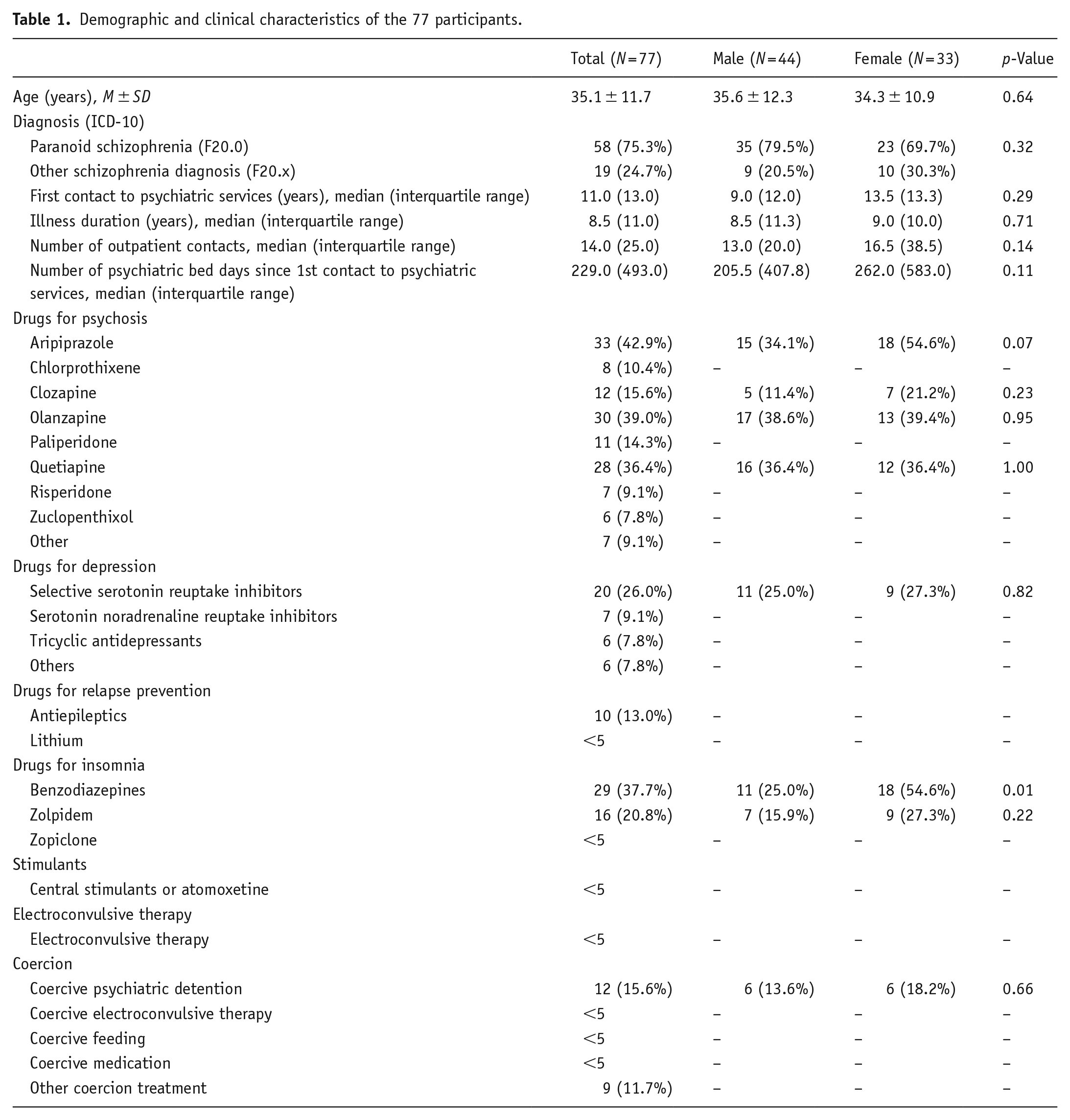
A total of 82 patients consented to participate in the study. Five were either discharged before completion of the baseline rating or withdrew consent. Hence, the final sample comprised 77 inpatients with schizophrenia (Mage = 35.1 ± 11.7 years, male = 57.1%, paranoid schizophrenia = 75.3%). The median duration of admission (n = 55) was 25 days (interquartile range (IQR) = 18–44). For eight participants, the baseline and end-point assessments took place during separate admissions. Most of the participants (93.5%) were treated with a second-generation antipsychotic, 20.8% with a first-generation antipsychotic and 66.2% with two or more antipsychotics. Among patients treated with antipsychotics, 45.5% received concomitant antidepressants. The mean PANSS-30 total score at baseline was 81.2 ± 15.9 (range = 48–126). The mean values for the individual PANSS-30 items can be found in Supplemental Table S2. Further participant characteristics are listed in Table 1.
Demographic and clinical characteristics of the 77 participants.
The SNAPSI informant interview was conducted prior to the SNAPSI participant interview for almost all ratings (97%, n = 124). The mean duration of the SNAPSI and SCI-PANSS interviews was 18.3 ± 6.8 and 49.2 ± 12.8 (n = 127) minutes, respectively. Three severely ill participants were unable to complete the full SCI-PANSS baseline interview at once, so these were conducted and completed over two to three consecutive days. The mean duration of the SNAPSI at the end-point interview (n = 50) was significantly shorter when the same rater interviewed the participant at both baseline and end point compared to when the raters differed (14.7 ± 6.4 vs. 20.6 ± 8.9 minutes, p = 0.012).
Criterion validity
The ICC between the PANSS-6 total scores obtained by the SNAPSI and the PANSS-30-derived PANSS-6 total scores obtained using the SCI-PANSS was 0.77 (95% confidence interval (CI) 0.62–0.85). Table 2 lists the ICCs for the six individual PANSS-6 items ranging from 0.45 (N1 = blunted affect) to 0.89 (P3 = hallucinatory behaviour). The relative mean difference between the PANSS-6 total scores obtained using the SNAPSI and the PANSS-30-derived PANSS-6 total scores was –1.22 ± 2.8 points (n = 127).
Criterion validity of PANSS-6 ratings obtained via SNAPSI using PANSS-30-derived PANSS-6 ratings obtained via SCI-PANSS as a reference (n = 127).

PANSS-6: six-item version of the Positive and Negative Syndrome Scale; SNAPSI: Simplified Negative and Positive Symptoms Interview; PANSS-30: 30-item version of the PANSS; SCI-PANSS: Structured Clinical Interview for PANSS; SD: standard deviation; ICC: intraclass correlation coefficient; CI: confidence interval.
Content validity
Spearman’s correlation coefficient of the PANSS-6 total score obtained using the SNAPSI and the PANSS-30-derived PANSS-8 total score was 0.75 (p < 0.001).
Construct validity
Spearman’s correlation coefficient of the PANSS-6 ratings obtained via the SNAPSI and the PANSS-30 total score and the PANSS-30-derived subscale scores via the SCI-PANSS (positive subscale and negative subscale) ranged between 0.57 (PANSS-30) and 0.69 (the PANSS-6-derived three-item positive subscale via the SNAPSI vs. the PANSS-30-derived seven-item positive subscale via the SCI-PANSS; p < 0.001). Figure 1 illustrates the correlations between all comparisons of the PANSS-6 via the SNAPSI and the PANSS-30 via the SCI-PANSS total scores and subscale scores. The squared Spearman rank correlation coefficients ranged between 0.32 and 0.56, indicating that 32% and 56% of the variance in the PANSS-30 and the PANSS-8, respectively, was explained by the PANSS-6 ratings via the SNAPSI.

Spearman’s correlation coefficients between the six-item version of the Positive and Negative Syndrome Scale (PANSS-6) via the Simplified Negative and Positive Symptoms Interview (SNAPSI) and the 30-item version of the PANSS (PANSS-30) via the Structured Clinical Interview for PANSS (SCI-PANSS) total scores and subscale scores (n = 127).
Responsiveness (sensitivity to change)
A total of 27 participants were not assessed at the second time point (primarily because they were discharged before the second assessment could be carried out). The median duration between the two assessments (n = 30) was 26 days (IQR = 13–160 days). For eight of these, the baseline and end-point assessments took place on different admissions. The median duration between baseline and end-point assessment if taking place within the same admission (n = 22) was 18.5 days (IQR = 12–29 days). The correlation between changes in baseline–end-point PANSS-6 and PANSS-30-derived PANSS-6 total scores for the 50 participants who were assessed at both time points is shown in Figure 2 (Spearman’s ρ = 0.70, p < 0.001). Spearman’s correlation coefficient of the baseline-end-point PANSS-6 ratings obtained using the SNAPSI and the PANSS-30 total score and subscale scores (PANSS-8, positive subscale and negative subscale) ranged between 0.49 (negative subscale) and 0.74 (PANSS-8; p < 0.001). The relative mean deviation between baseline–end-point changes of PANSS-6 total scores and PANSS-6 derived from PANSS-30 total scores (n = 50) was 0.70 ± 3.0.
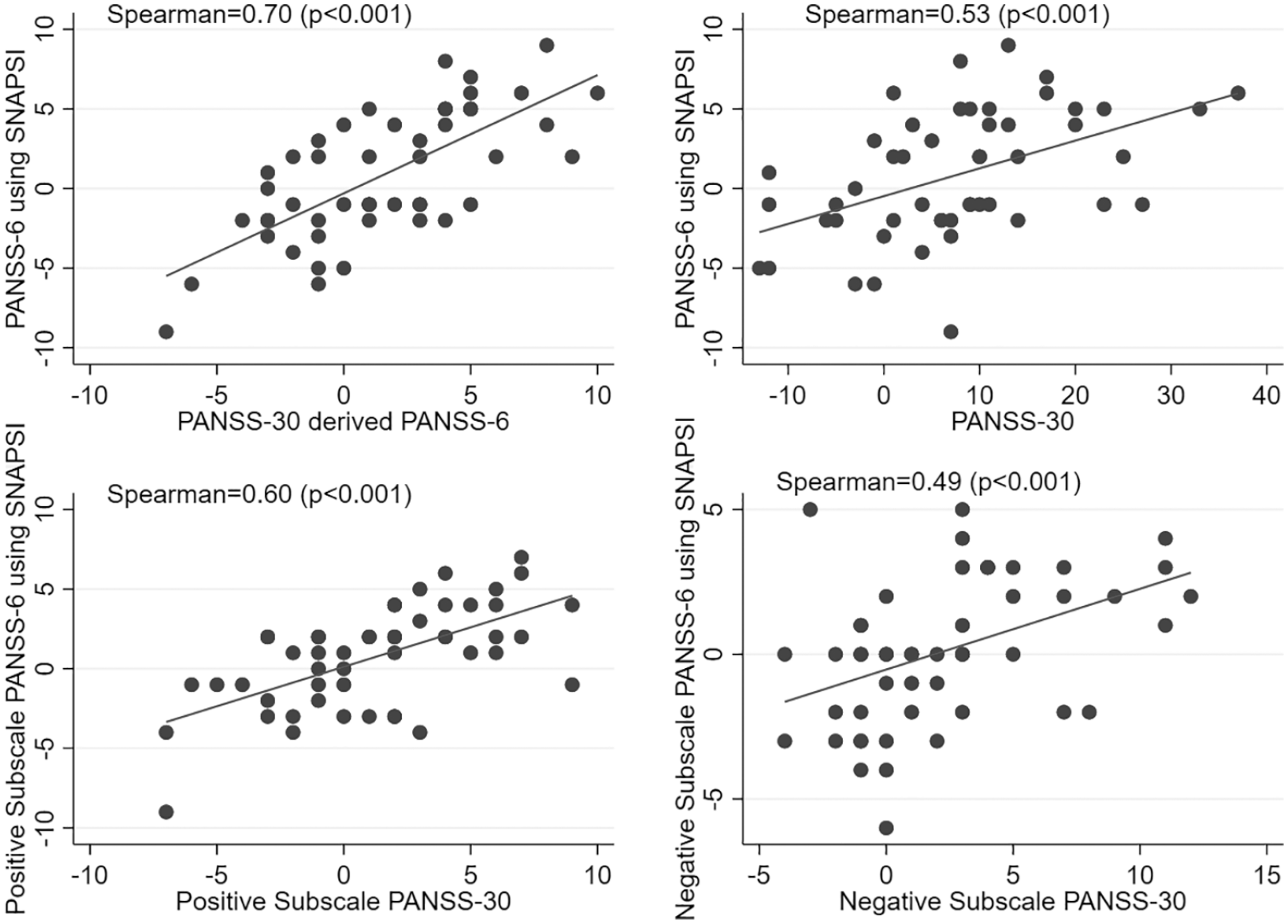
Spearman’s correlation coefficients for baseline–end-point changes between the PANSS-6 via the SNAPSI and the PANSS-30 via the SCI-PANSS total scores and subscale scores (n = 50).
Discussion
This is the first study to validate PANSS-6 ratings obtained via the SNAPSI against PANSS-30-derived PANSS-6 ratings obtained via the comprehensive SCI-PANSS. The main findings were: (a) the criterion validity, that is, the correlation between the PANSS-6 ratings obtained via the SNAPSI and the PANSS-30-derived PANSS-6 ratings obtained via the SCI-PANSS, was good; (b) the content validity, that is, the correlation between the PANSS-6 ratings obtained via the SNAPSI and the eight PANSS-30-derived items defining remission (PANSS-8) obtained via the SCI-PANSS, was good; (c) the responsiveness (sensitivity to change) of the PANSS-6 ratings obtained via the SNAPSI, that is, the correlation between the change in the PANSS-6 ratings via the SNAPSI and the change in the PANSS-30-derived PANSS-6 ratings, was good and; (iv) the SNAPSI could be completed in <15 minutes if the rater had prior knowledge of the patient being rated.
The good psychometric properties of the PANSS-6 have already been established (Lin et al., 2018; Østergaard et al., 2016, 2018a, 2018b). However, the primary limitation of these studies was that the PANSS-6 ratings were extracted from the PANSS-30 ratings via the SCI-PANSS. The present study was designed specifically to address this limitation, and the findings provide robust evidence that valid PANSS-6 ratings can be obtained via the brief and focused SNAPSI. The correlation between the PANSS-6 ratings obtained using the SNAPSI and the PANSS-30-derived PANSS-6 ratings is similar to the level of test–retest reliability of the PANSS-30 where correlation coefficients ranging from 0.60 to 0.80 have been found at the subscale level (Kay et al., 1987). Thus, the information necessary for the PANSS-6 ratings can be obtained by the SNAPSI, although this focused interview is considerably briefer than the SCI-PANSS. Specifically, the mean duration of the SNAPSI was 18.3 minutes (compared to 49.2 minutes for the SCI-PANSS) and significantly briefer at the end point (M = 14.7 minutes) if the same rater had interviewed the participant at baseline. For clinical practice, this finding suggests that the SNAPSI can be completed in even less time by an interviewer with an established rapport and prior knowledge of the patient’s psychopathology. Also, if administered towards the end of a session that includes other interviews or a more unstructured conversation, less time may be required to complete the SNAPSI, since this would allow for a more targeted interview.
The estimates of validity for the individual PANSS-6 items were highest for the positive items. Notably, the correlation between the three-item positive subscale of the PANSS-6 via the SNAPSI and the seven-item positive subscale of the PANSS-30 via the SCI-PANSS was lower than the correlation for the individual positive items (delusions, conceptual disorganization and hallucinatory behaviour). A plausible explanation for this finding may lie in the overlap in content of the seven items in the positive subscale of the PANSS-30. For instance, delusions may be rated on three of these seven items (i.e. P1 = delusions, P5 = grandiosity and P6 = suspiciousness/persecution). Hence, a delusion with both grandiose and paranoid content (e.g. being surveilled by foreign intelligence agencies for having developed a brilliant technology that can instantly double the speed of the Internet worldwide) will contribute to a high rating on all three of these items (P1, P5 and P6), which is not necessarily meaningful (redundancy). Such redundancy is less likely to be an issue for the PANSS-6, which only contains P1 and not P5 and P6.
Notably, the inter-rater reliability of the PANSS-6 via the SNAPSI raters was lower than that of the PANSS-30 via the SCI-PANSS raters. This is likely due to the fact that the PANSS-30 raters (the gold standard reference in the present study) received extensive training and were certified by the PANSS Institute, whereas the PANSS-6 via the SNAPSI raters only received minimal training (Kølbæk et al., 2018). While this difference may have led to conservative estimates of the validity of the PANSS-6 ratings obtained via the SNAPSI, it likely strengthens the generalizability of the results to most clinical settings, where only basic training will be feasible. The level of agreement between the six individual SNAPSI-derived and PANSS-30-derived PANSS-6 item scores is equivalent to that reported in our PANSS-6 via SNAPSI inter-rater reliability test, where the lowest item-level inter-rater reliability was observed for N1 = blunted affect (ICC = 0.52), N6 = lack of spontaneity and flow of conversation (ICC = 0.45) and P2 = conceptual disorganization (ICC = 0.49; Kølbæk et al., 2018). However, for the latter two items, the agreement between the SNAPSI-derived and the PANSS-30-derived scores was higher in the present study (ICC = 0.62 and 0.70, respectively), possibly due to more variance in symptom severity. Thus, the low inter-rater reliability of P2 and N6 in our inter-rater reliability test was likely a result of sampling bias (n = 12 participants). Notably, the variance of N1 in the present study was also low. Thus, the poorer correlation between the PANSS-6 ratings via the SNAPSI and the PANSS-30-derived PANSS-6 ratings via the SCI-PANSS may also be explained by reduced variance in symptom severity in the study population. Nonetheless, the relatively lower reliability found for N1 = blunted affect and N6 = lack of spontaneity and flow of conversation is quite consistent with the PANSS-30 literature (Igarashi et al., 1998; Lindström et al., 1994; Von Knorring and Lindström, 1992; Yehya et al., 2016). Furthermore, the reliability for these two items was also among the poorest in the PANSS-30 via SCI-PANSS inter-rater reliability test in the present study of the two PANSS-certified PANSS-30 raters (Supplemental Table S1). Taken together, there appears to be a general need for improving the evaluation of N1 = blunted affect and N6 = lack of spontaneity and flow of conversation. Potential ways to accomplish this goal include refining the anchoring points for the two negative symptom items in question, optimizing interviews/interview technique, or training raters more thoroughly with regard to the observation of the targeted psychopathology.
The correlation between the baseline–end-point changes in the PANSS-6 total scores obtained using the SNAPSI and the baseline–end-point changes in the PANSS-30-derived PANSS-6 total scores was good. This finding demonstrates that the PANSS-6 ratings obtained via the brief SNAPSI are sensitive to change in the core symptom severity during the treatment of schizophrenia. Relatedly, we also found a strong correlation between the PANSS-6 total scores obtained using the SNAPSI and the PANSS-8 total scores, suggesting that the PANSS-6 explains a very large fraction of the variance in the PANSS-8, which represents the items of the remission criteria (Andreasen et al., 2005) and the core diagnostic criteria of schizophrenia, thereby confirming the content and construct validity of the PANSS-6 via the SNAPSI approach (American Psychiatric Association, 1994; WHO, 1993). The correlation between the PANSS-6 total scores obtained using the SNAPSI and the PANSS-30 total score obtained using the SCI-PANSS was lower compared to our previous studies (Lin et al., 2018; Østergaard et al., 2016, 2018a, 2018b). This result is likely due to the fact that the PANSS-6 was extracted from the PANSS-30 ratings in the previous studies and thereby not affected by inter-rater reliability and test–retest reliability as in the present study where the ratings were conducted by independent raters on the basis of independent interviews. Furthermore, 14 of the PANSS-30 items are rated partly (12 items) or solely (2 items) based on informant data. For the PANSS-6 rating via the SNAPSI, the informant information was collected by the SNAPSI informant interview, whereas for the PANSS-30 rating, this information was collected using the IQ-PANSS and often supplemented by an unstructured interview of the informant. Unfortunately, the informant for the SNAPSI and the IQ-PANSS was not always the same staff member. These methodological differences and the fact that the informant providing the information for the PANSS-6 ratings and the PANSS-30 ratings differed in more than a third of the ratings may have contributed to discrepant ratings.
In the present study, the baseline–end-point PANSS-6 total score mean change was minimal. This apparent lack of improvement in the core symptoms of schizophrenia during inpatient treatment was somewhat surprising. Notably, the PANSS-6 via the SNAPSI exclusively measures core symptoms of schizophrenia (six out of the eight symptom items in the remission criteria defined by the Expert Schizophrenia Working Group based on the diagnostic symptom criteria for schizophrenia; Andreasen et al., 2005). However, in some research/clinical settings, a broader assessment of symptoms may be required – for instance using the SCI-PANSS and the PANSS-30. In this regard, it is important to keep in mind that factor analyses of the PANSS-30 have quite consistently failed to replicate a common underlying factor structure across samples (Van Der Gaag et al., 2006), while shorter versions of the PANSS may be more robust across samples (Lindenmayer, 2017). In other words, choosing psychometric tools for a given sample is not straightforward. We believe that the PANSS-6 via the SNAPSI represents a good ‘basic measure’ that will be informative in most clinical settings and in many research projects. Although not being core symptoms of schizophrenia, depression and anxiety symptoms are very common in schizophrenia (Emsley et al., 1999), and the presence/severity of suicidality also often determines the decision to admit or discharge patients. In the present study, the minimal change on the PANSS-6 may be explained be admission due to other causes than psychotic exacerbation. For example, a relatively large proportion of the participants were treated with antidepressants, and the mean depression and anxiety scores were high. If these symptoms are of interest as outcome measures, neither the PANSS-6 nor the PANSS-30 has proven to have adequate psychometric properties to measure these symptoms. For the measurement of depressive symptoms among individuals with psychotic disorders, scales with the ability to discriminate depressive symptoms from negative symptoms, such as the Calgary Depression Scale for Schizophrenia (Lako et al., 2012), are recommended. Likewise, for measuring anxiety, the Scale of Anxiety Evaluation in Schizophrenia (Smith et al., 2019), which is currently the most widely evaluated scale in the population, would be preferable. Ideally, in order to facilitate time-friendly clinical implementation of measurement-based care, future studies should aim at developing brief versions of scales specifically measuring symptoms of depression, anxiety and other syndromes that often accompany core schizophrenia symptoms. Since time is limited in most clinical settings, the use of self-report scales measuring symptoms and other important treatment outcomes, such as medication side effects and quality of life (Correll et al., 2011; Palmier-Claus et al., 2012; Schouby Bock et al., 2020; Suzuki, 2011; Topp et al., 2015), may further facilitate shared decision making and measurement-based care.
Several limitations should be considered when interpreting the results of this study. First and foremost, in most cases, our raters had no prior knowledge of the participants’ psychiatric history or psychopathology (aside from the SNAPSI informant interview). This is likely to have prolonged the duration of the SNAPSI compared to the time needed to conduct the SNAPSI in clinical practice. However, the lack of the PANSS-6 raters’ familiarity with the patients before the interview could also be considered as a strength of this study, as it underlines that sufficient information for the PANSS-6 rating can be obtained using the SNAPSI without prior knowledge of the patient. When the same rater conducted both the baseline and end-point PANSS-6 rating, the duration of the interview was substantially reduced. This length of the SNAPSI (approximately 15 minutes) will probably translate well to clinical practice. Second, the participants’ schizophrenia diagnoses were not confirmed via structured diagnostic interviews. However, prior studies have shown that the validity of the diagnoses of schizophrenia assigned as part of standard clinical practice at psychiatric hospitals in Denmark is high (Jakobsen et al., 2005; Uggerby et al., 2013). Third, our study was carried out only among inpatients with schizophrenia. Although we have no reason to expect that the PANSS-6 ratings obtained via the SNAPSI would be less reliable and valid in other settings (e.g. outpatient clinics), this should be subjected to future testing. Finally, depending on the research questions and areas of individual need, in both research and clinical practice, the PANSS-6 ratings might need to be accompanied by ratings on measures of other constructs that are relevant in relation to the care of individuals with schizophrenia, such as depression (Addington et al., 1996), anxiety (Llorca et al., 2014), cognition, medication side effects (Lingjaerde et al., 1987; Waddell and Taylor, 2008), level of functioning and quality of life (Topp et al., 2015).
In conclusion, we find that the PANSS-6 ratings obtained using the brief SNAPSI are valid measures of core symptoms of schizophrenia and their changes over time. We therefore believe that the combination of the SNAPSI and the PANSS-6 represents a viable, effective and clinically feasible solution for the core symptom assessment in the clinical care of patients with schizophrenia. The seven raters who conducted the SNAPSI and rated the PANSS-6 had varying levels of clinical experience and received sufficient training with minimal use of time, which suggests that our findings translate well to most clinical settings. With regard to use in clinical practice, we recommend that patients are rated with the PANSS-6 at intervals that match the clinical setting and the severity of illness (more often among acutely ill inpatients than among stable outpatients). Furthermore, whenever changes in medication occur, pre and post measurements using the PANSS-6 obtained via the SNAPSI and a valid side-effect measure (Lingjaerde et al., 1987; Schouby Bock et al., 2020) are critical to monitor treatment response. In clinical research, the PANSS-6 obtained via the SNAPSI may serve as a psychometrically sound and brief alternative to the PANSS-30. Future studies should explore the validity and utility of the combination of the SNAPSI and the PANSS-6 in other treatment settings.
Supplemental Material
sj-docx-1-jop-10.1177_0269881121996890 – Supplemental material for Clinical validation of ratings on the six-item Positive and Negative Syndrome Scale obtained via the Simplified Negative and Positive Symptoms Interview
Supplemental material, sj-docx-1-jop-10.1177_0269881121996890 for Clinical validation of ratings on the six-item Positive and Negative Syndrome Scale obtained via the Simplified Negative and Positive Symptoms Interview by Pernille Kølbæk, David Dines, Tine Holm, Anne B Blicher, Rune D Sørensen, Kathrine M O’Leary, Sandra G Feller, Chanette W Buus, Cecilie M Nielsen, Mark Opler, Ole Mors, Christoph U Correll and Søren D Østergaard in Journal of Psychopharmacology
Footnotes
Acknowledgements
This work is dedicated to the memory of Lewis Opler and Per Bech. The authors are grateful to the participating patients and the staff at the Department for Psychoses, Aarhus University Hospital – Psychiatry, Aarhus, Denmark and to statistician Maria Simonsen Speed for conducting the register-based analyses.
Declaration of conflicting interests
The authors declared the following potential conflicts of interest with respect to the research, authorship and/or publication of this article: Dr Opler is a full-time employee of MedAvante-ProPhase Inc. Dr Correll has been a consultant and/or adviser to or has received honoraria from: Acadia, Alkermes, Allergan, Angelini, Axsome, Gedeon Richter, Gerson Lehrman Group, IntraCellular Therapies, Janssen/J&J, LB Pharma, Lundbeck, MedAvante-ProPhase, Medscape, Neurocrine, Noven, Otsuka, Pfizer, Recordati, Rovi, Sumitomo Dainippon, Sunovion, Supernus, Takeda and Teva. He has provided expert testimony for Janssen and Otsuka. He served on a Data Safety Monitoring Board for Lundbeck, Rovi, Supernus and Teva. He received royalties from UpToDate and grant support from Janssen and Takeda. He is also a stock option holder of LB Pharma. Dr Dines has received financial support from Lundbeck to cover expenses for travel/accommodation in relation to conference participation. The remaining authors declare no conflicts of interest. Aarhus University, The Feinstein Institute for Medical Research and MedAvante-ProPhase Inc. each hold one-third of the copyright for the Simplified Negative and Positive Symptoms Interview (SNAPSI).
Funding
The authors disclosed receipt of the following financial support for the research, authorship, and/or publication of this article: This work was supported by grants from The Independent Research Fund Denmark, Aarhus University Research Foundation, The Riisfort Foundation and The Faculty of Health — Aarhus University.

Supplemental material
Supplemental material for this article is available online.
References
Supplementary Material
Please find the following supplemental material available below.
For Open Access articles published under a Creative Commons License, all supplemental material carries the same license as the article it is associated with.
For non-Open Access articles published, all supplemental material carries a non-exclusive license, and permission requests for re-use of supplemental material or any part of supplemental material shall be sent directly to the copyright owner as specified in the copyright notice associated with the article.
