







Abstract
Background:
Since 2000, the prevalence of recreational nitrous oxide (N2O) use has increased in the Western world. Although N2O is a relatively safe drug, the overall increase in the use of N2O has concomitantly also initiated a modest but important increase in the number of young excessive users. The recent introduction of large 2 kg N2O tanks, allowing high and prolonged dosing, has facilitated this excessive use. This is of concern, because repeated exposure to high doses of N2O for a prolonged time is known to induce neurological damage, such as (irreversible) neuropathy and paralysis due to N2O-induced vitamin B12 deficiency. The increasing trend of recreational users with N2O-induced neurological damage at emergency departments confirms the urgency of this development.
Objective/Methods:
This narrative review describes recent trends in N2O use and misuse, the adverse health effects associated with excessive use and the risk factors of excessive use.
Results:
Considering the rising trend in N2O use, particularly among young and other vulnerable people, we propose to take legislative action to limit the availability of N2O, and also advocate for better and timely education of non-users, users and medical professionals about the serious side-effects associated with excessive N2O use.
Conclusion:
It is concluded that the increase in excessive N2O use is of serious concern.
Introduction
Nitrous oxide (N2O: laughing gas) is a colourless gas that is commonly used as an anaesthetic and analgesic agent in dentistry, obstetrics and ambulances because of its lack of respiratory depression. However, N2O also is growing in popularity as a recreational drug because it induces a short-lived (20 s) high. N2O is mostly administered via inhalation from balloons that are filled from (small; 10 mL) non-reusable metal bulbs/whippets/cannisters or larger cylinders.
Since 2000, recreational N2O use has become a widespread phenomenon (Frank et al., 2020; Kaar et al., 2016; Randhawa and Bodenham, 2016; van Amsterdam et al., 2015, 2021; Xiang et al., 2021). N2O is often perceived as harmless (e.g. Kaar et al., 2016), however, especially in the young population, it increasingly poses a serious health threat due to misuse or excessive use, that is, use of hundreds of 10 mL bulbs daily for prolonged periods of time (Chien et al., 2020; Xiang et al., 2021). In addition to the trend of a growing number people aged below 18 years being exposed to this psychotropic drug, misuse of N2O by a limited number of young adults (18–29 years old) belonging to a specific ethnic minority (i.e. Moroccans) was also recently reported (Nabben et al., 2021). Excessive N2O use may lead to vitamin B12 deficiency (Lan et al., 2019; Razaq and Qureshi, 2020; Winstock and Ferris, 2020), which can cause neurological damage with sometimes irreversible sequelae if diagnosis and treatment are delayed (Bethmont et al., 2019; Garakani et al., 2016; Nutt et al., 2020; Oussalah et al., 2019; Xiang et al., 2021; Zheng et al., 2020). More specifically, the spinal cord is an important injury site associated with problematic N2O use, and – considering the growing number of published case reports – paraplegia following frequent N2O use is no longer uncommon. Timely vitamin B12 supplementation is essential for the prevention and reversal of N2O-induced neurological damage (Blair et al., 2019; Garakani et al., 2016).
The apparent increasing use and misuse of N2O has attracted attention from the media (Marcus, 2021). In response, some countries, like the Netherlands and Belgium are considering legislative measures aiming to limit the availability of N2O for recreational purposes. The present update on recreational N2O use will address recent trends in prevalence and patterns of use, clinical findings following misuse and risk factors of excessive N2O use.
Methods
Using the Preferred Reporting Items for Systematic Review and Meta-Analysis (PRISMA) protocol (Liberati et al., 2009), a systematic search was performed on 30 July 2021 to retrieve eligible studies published since 2015 in PubMed and EMBASE about recreational use of N2O, abuse/misuse of N2O, adverse effects, including neurological disorders following N2O use. ‘Human’ was used as filter and case reports were excluded (cf. search string in Appendix). Further reasons for exclusion were: (a) studies written in a language other than English, German, French and Dutch, (b) studies not directly referring to recreational N2O use (n = 192), such as N2O anaesthesia (n = 145), nitrification and greenhouse gas (N2O) emissions (n = 47).
The selection of appropriate studies was performed by JvA and TN in two rounds. A total of 245 publications were identified from the initial search and 221 articles remained after duplicates were removed. These 221 studies were further processed, that is, the title and abstract were screened to determine eligibility, which finally resulted in 28 eligible studies, including one commentary, four editorials and four letters. In addition, 30 additional relevant studies (e.g. recent prevalence data), published by national governmental and non-governmental organizations, were retrieved via Google (Scholar) using appropriate keywords, resulting in 58 eligible studies in total. Figure 1 shows the PRISMA flow chart for the identification, screening and inclusion of the studies.
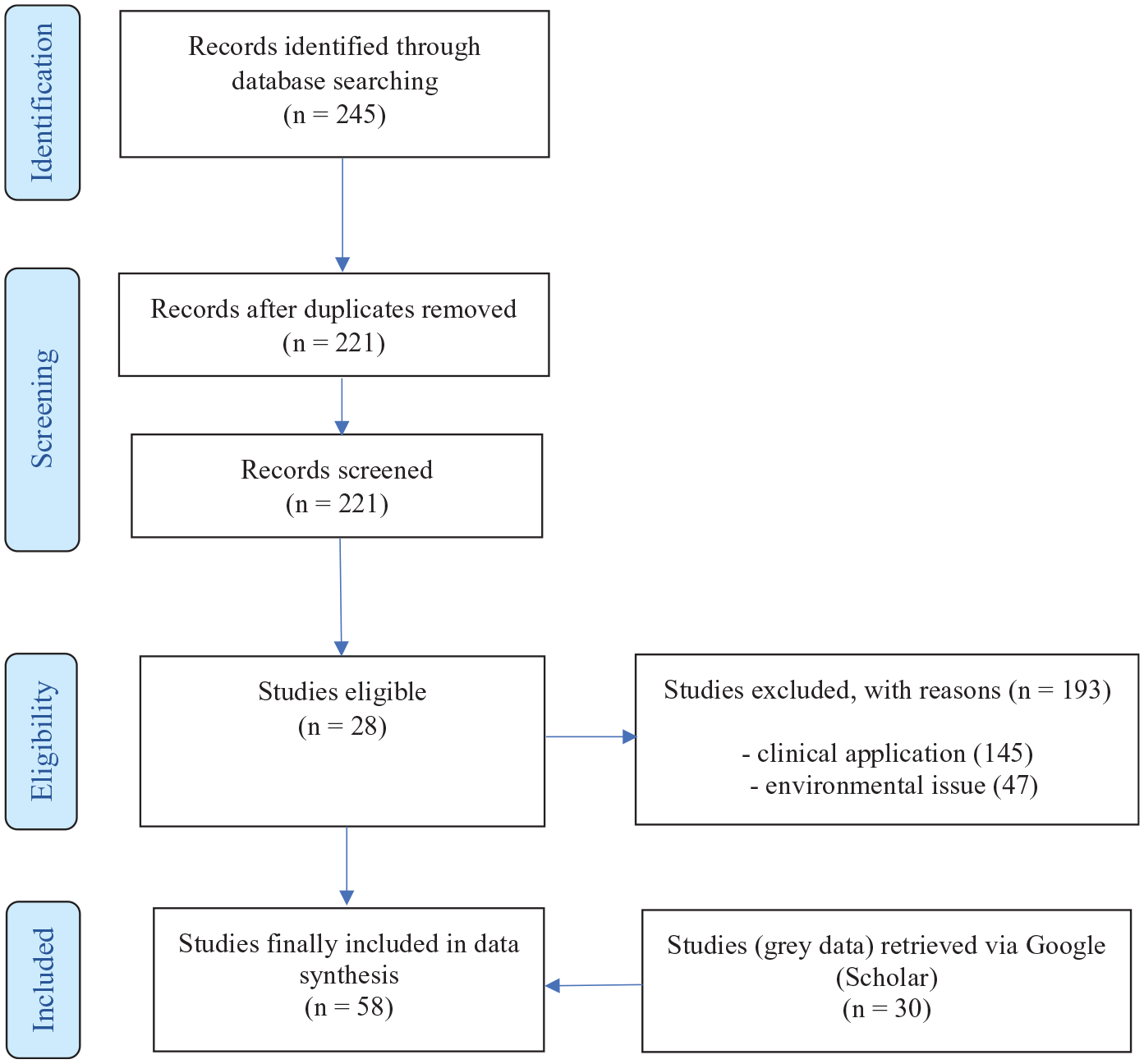
PRISMA flow diagram.
Prevalence of use
In most countries, N2O is not classified as an illicit substance, but as a consumable or pharmaceutical drug, so that, it is not routinely monitored by drug use surveys. Still, increasing prevalence rates of recreational N2O use have been reported in the Western world (cf. Table 1). Abuse of N2O has been reported to continuously rise among adolescents and young adults with ranges between 2% and 15.8%, with rates being higher in males compared to females (Garland et al., 2009; Wu and Ringwalt, 2006). The 2019 Global Drug Survey (GDS), an online drug survey among a self-selected sample of drug users from over 30 countries, showed that 91% of all participants (n = 123,814) had used N2O at least once, implying that N2O is the 10th most popular drug, excluding alcohol and tobacco, in the Western world (GDS, 2019).
Prevalence of recreational nitrous oxide use and incidents related to its use.
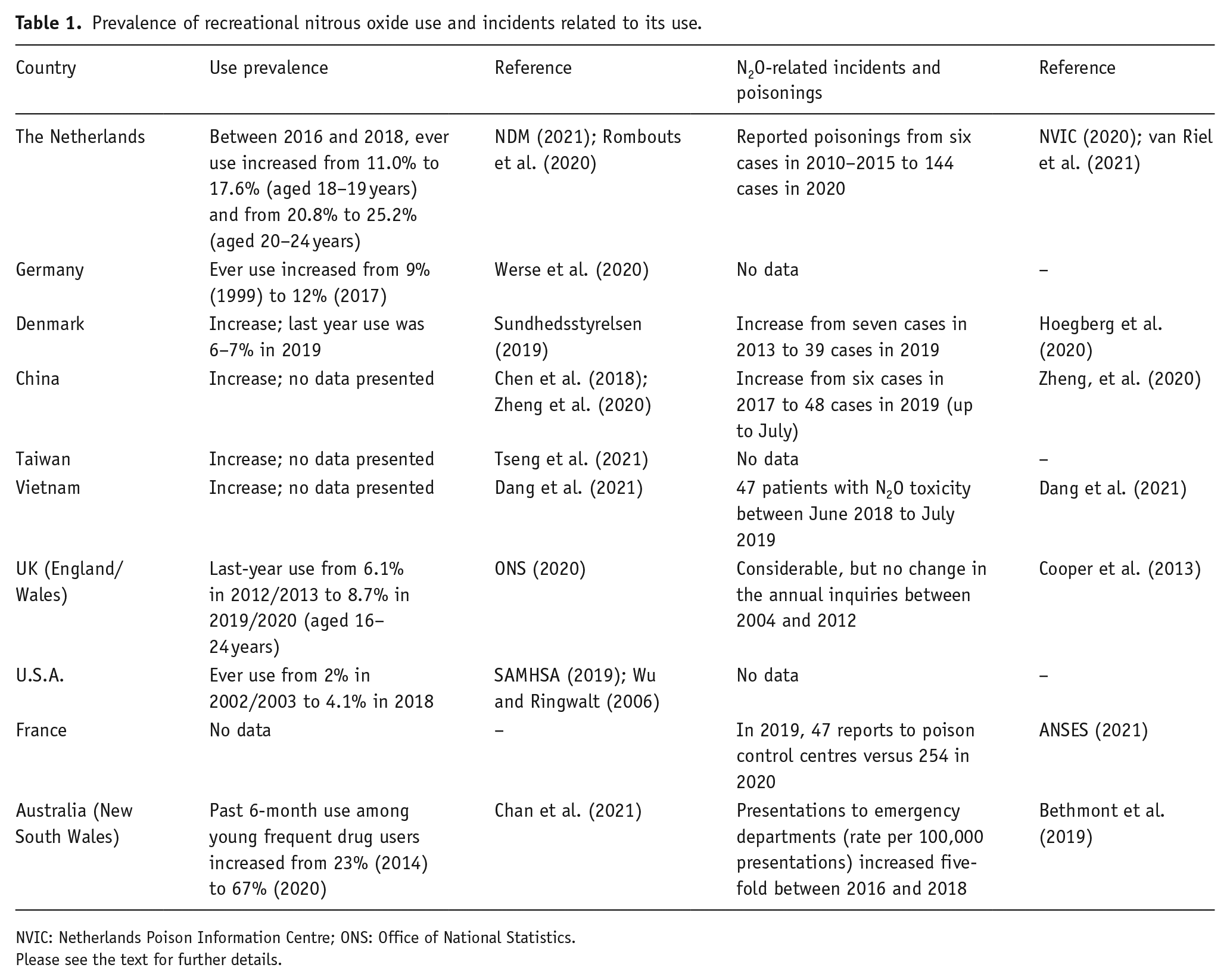
NVIC: Netherlands Poison Information Centre; ONS: Office of National Statistics.
Please see the text for further details.
Europe
The 2019/2020 ‘Household Survey’ of the Office of National Statistics in the United Kingdom, the highest rate of last year N2O use in adolescents (16–24 years) was 8.7% in England and Wales (ONS, 2020). Though this an increase compared to 6.1% in 2012/2013, the rate stabilized over the past 4 years (8.80% ± 0.12%) (ONS, 2020). According to this report, N2O was second only to cannabis in use among those aged 16–24 in England and Wales (ONS, 2020). For adults aged 16–59, the rate in 2018/2019 was lower with a last-year N2O use of 2.3% up from 2% in 2012/2013; also in this age group, the rate stabilized over the past 4 years (2.33% ± 0.08%) (Home Office, 2019). A previous UK study among 140 students aged 18–25 performed in south-west London showed that 28% had taken N2O in the previous 12 months (Ehirim et al., 2018).
Recently, recreational N2O use became very popular in the Netherlands, especially among adolescents and the highly educated (NDM, 2020). Between 2016 and 2018, ever use of N2O predominantly increased among adolescents aged 18–19 and 20–24 years (11.0–17.6% and 20.8–25.2%, respectively) (NDM, 2021; Rombouts et al., 2020). In 2019, last-year use of N2O was 3.2% for adults (18–65 years) and 6.7% for adolescents aged 12–16 years (NDM, 2021; Rombouts et al., 2020), and the mean starting age was 13.6 years (Rombouts et al., 2020). N2O use was especially high among young non-Western immigrants, that is, with one parent born in Africa, Latin America, Asia (excluding Indonesia and Japan) or Turkey, aged 12–16 years with rates of ever use and last-month use of 12.8% and 3.9%, respectively (their Dutch peers: 8.9% and 2.0%, respectively) (Rombouts et al., 2020).
A German survey performed among school children aged 15–18 in Frankfurt showed a lifetime prevalence rate of 9% (boys: 12%; girls: 6%) and a last year prevalence rate of 4% which implies a small decrease (lifetime prevalence in 2017 was 12%) (Werse et al., 2020). The rate of last year N2O use among high school and vocational school students aged 15–25 in Denmark was 6–7% with a rate in boys of 8–9% (Sundhedsstyrelsen, 2019).
The United States
According to the National Surveys on Drug Use and Health (NSDUH) in 2015, the lifetime prevalence of N2O use in the United States was 4.6%, implying more than a doubling compared with the rate of 2% reported in 2002 and 2003 (Wu and Ringwalt, 2006). In the last few years, this rate seems to have stabilized with a rate of 4.1% for ever use of N2O by subjects aged 12 years and older in 2018 (SAMHSA, 2019). Still, N2O was reported to be the fourth most prevalent inhalant among adolescents in the United States (Oussalah et al., 2019).
Australia
In New South Wales, recent use of N2O by regular users of ecstasy or other stimulants increased from 20% in 2013 to 75% in 2018 (Gibbs and Peacock, 2018). Similarly, in 2019, 53% of 797 recent West-Australian ecstasy users (>16 years) also reported N2O use in the preceding 6-month period (8% in 2003), the highest proportion observed since data collection started (Peacock et al., 2019). A more recent paper reported a decrease in the prevalence of N2O use among recreational drug users from 75% in 2018 to 67% in 2020 in NSW (Chan et al., 2021).
Asia
Almost no epidemiological data are available about the prevalence of recreational N2O use in Asia. However, N2O has been reported to be the most commonly used illicit drug among teenagers in Taiwan (Tseng et al., 2021), and its recreational use was declared a public health issue (Chen et al., 2018).
In summary, it seems that the prevalence of recreational N2O use has increased in the Western world, that is, Europe, North America and Australasia, and became particularly popular among adolescents/young adults aged 16–24 years old.
Excessive N2O use and health damage
Neurological complications
Most recreational users of N2O do not experience adverse health effects. However, when used for prolonged periods of time and/or in high doses, N2O may induce serious health risks (Table 2). A lower limit of high dose, that is, safe dose limit, has not been described, but is presumably 10 balloons or more per occasion (Cheng et al., 2013; Kaar et al., 2016). In their systematic review of 77 case reports/case series with a total of 91 cases, Garakani et al. (2016) found that in 72 of the 91 cases, neurologic sequelae were reported, including myeloneuropathy (31 cases), subacute combined degeneration (17 cases), peripheral neuropathy or polyneuropathy (15 cases) and myelopathy (14 cases). The most common complaints were numbness (32 cases), paraesthesia (31 cases) and weakness (27 cases). Of these cases with primary neurological signs and symptoms, neuroimaging (magnetic resonance imaging (MRI)) results were reported in 50 of the 72 cases and were positive in 39 cases (78%). Nerve conduction studies were positive (or partially positive) in 35 cases (88%) and negative in five (12%) of the cases in which they were reported. Vitamin B12 levels were below normal in 33 cases (54%), low-normal in 12 cases (20%) and normal or elevated in 16 of the cases (26%) in which they were reported.
Adverse health effects following N2O use for prolonged periods of time and/or in high doses.
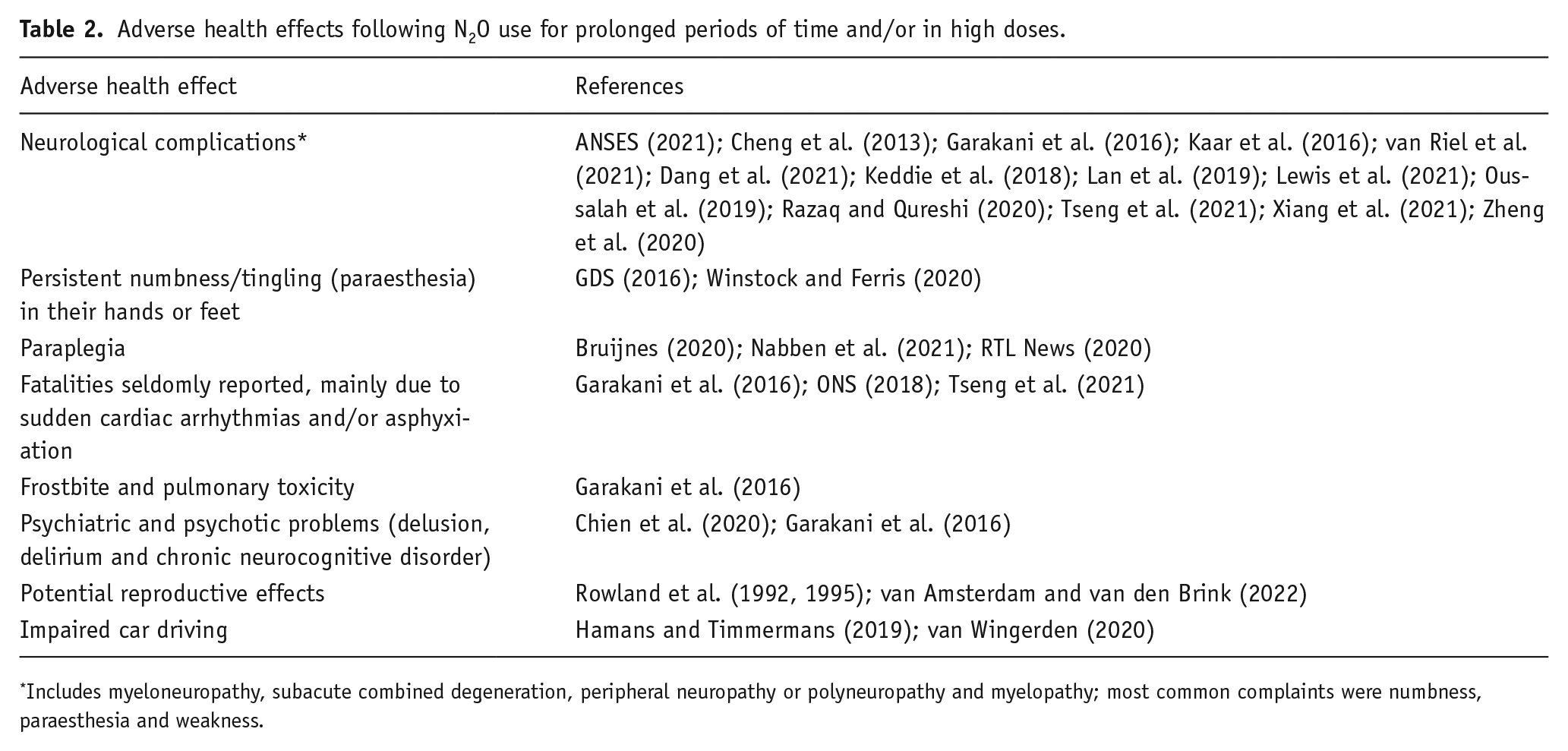
Includes myeloneuropathy, subacute combined degeneration, peripheral neuropathy or polyneuropathy and myelopathy; most common complaints were numbness, paraesthesia and weakness.
The GDS 2015 survey, performed in a self-selected group of substance users, reported that 9% of N2O users had used N2O more than once per month, with 3.3–4.0% of the 17,000 recent users reporting symptoms consistent with nerve damage, such as persistent numbness/tingling (paraesthesia) in their hands or feet, in the following year (GDS, 2016; Winstock and Ferris, 2020). Side effects, like nausea are seen following lower doses (14 hits/session), whereas severe health incidents, that is, neurologic complications are more common following prolonged use with 10–100 hits/session (Cheng et al., 2013; Kaar et al., 2016), suggesting a dose–response relationship (Kaar et al., 2016). More specifically: the probability of reporting paraesthesia was 1.8% and 8.5% for those who used one to two doses and 100 doses per session, respectively (Winstock and Ferris, 2020). Unfortunately, the latter daily dose of 100 doses per session is nowadays no longer an exception. Various sources have reported cases of excessive use, that is, daily use of 150–500 balloons/cartridges (Keddie et al., 2018; Lewis et al., 2021; Marcus, 2021; Netherlands Poison Information Center [NVIC], 2020; Thompson et al., 2015) or prolonged periods of use (Fidalgo et al., 2019).
Reported N2O-related incidents
In the Netherlands, the incidence rate of N2O poisonings reported to the Netherlands Poison Information Centre (NVIC) steeply increased from around 6 per year between 2010 and 2015 to 144 N2O reported poisonings in 2020. Only 15% of the N2O cases had concomitantly used other drugs and the median age of patients was 22 years (NVIC, 2020; van Riel et al., 2021). In 2019 and 2020, 79% of the N2O inquiries at the NVIC indicated heavy and/or frequent N2O use, 42% of them had used 2 kg tanks (9% in 2018; 31% in 2019; and 51% in 2020) and 38% reported signs of peripheral neuropathy (van Riel et al., 2021). Since their introduction, large 2 kg tanks or even 10 kg tanks are used, instead of the standard cartridges of 8 g, to fill the balloons. Using such tanks, larger volumes of N2O can be inhaled in a short period of time resulting in a deeper effect, prolonged exposure and presumably more neurological damage. Also in France, so-called ‘smart whip’ cylinders can currently be purchased containing around 0.6 kg of N2O (Micallef et al., 2020), which facilitate higher dosing. In France, in 2020, 134 cases of misuse were reported to the poison control centres (PCC; 46 in 2019), and 254 cases to the addiction monitoring centres (CEIP-A): 47 in 2019 (ANSES, 2021). Interestingly, the number of such cases related to using cylinders reported to PCC increased from 3% in 2019 to 20% in 2020, while almost one-third of cylinder-related cases was reported to CEIP-A in 2020 (ANSES, 2021). Following a 5–10% increase between 2019 and 2020, the rate of neurological and neuromuscular disorders was 69–76% of all notifications in 2020 (ANSES, 2021).
According to the Dutch Association of Neurologists, 64 adolescents (mean age: 22 years) have been hospitalized over the past 2 years due to problematic N2O use (RTL News, 2020). They were diagnosed with paraplegia, resulting from progressing neurological damage due to vitamin B12 deficiency, and in some cases, they remained permanently dependent on wheelchairs. Most probably, the actual number of affected by N2O use is even higher, because the sampling was based on data from only 42 of the 78 hospitals that reported N2O-related injuries. In the Netherlands, the first cases of spine damage due to N2O use were seen in 2017, and the number of cases has increased steadily since. For example, 13 adolescent patients mean age: 21 years, who had used large volumes of N2O for a prolonged time, were treated between 2017 and 2019 at the Heerlen Medical Center, The Netherlands. The patients mainly reported paranaesthesia (tingling and numbness in the hands, legs, arms and feet) and weakness in the lower limbs. Axonal polyneuropathy was diagnosed in eight patients (62%), spinal cord degeneration in two patients (15%) and clinical symptoms of both conditions in three patients (23%) (Bruijnes, 2020). All patients fully recovered following vitamin B12 supplementation.
Also in the United Kingdom, adolescents regularly present with the neurological complications of repeated N2O use in east London emergency departments (Keddie et al., 2018). Though the UK Poisons Information Database (UKPID) reported between 2004 and 2012, no changes in the annual rate of N2O inquiries (Cooper et al., 2013), the number of telephone inquiries about N2O received by National Poisons Information Service has increased 36-fold between 2019 and 2020, and entered the top 10 list with 37 inquiries (NPIS, 2021). Fatalities following N2O use, mainly due to sudden cardiac arrhythmias and/or asphyxiation, are seldomly reported (ONS, 2018). The Danish Poisons Information Centre (DPIC) reported an increase in the annual rate of N2O inquiries from one in 2015 to 25 in 2018 with few chronic cases following daily doses of less than 50 whippets for at least 5 days (Hoegberg et al., 2020). Presentations to 60 emergency departments across NSW dramatically increased five-fold between 2016 and 2018 with 24% indicating chronic or heavy use (Bethmont et al., 2019).
A total of 47 patients with N2O toxicity were admitted from June 2018 to July 2019 to the Vietnam Poison Control Center in Hanoi, the only PCC in the north of Vietnam (Dang et al., 2021). In China, both the number of reports and patients with neurological disorders due to N2O use gradually increased annually between 2016 and 2019 (Zheng et al., 2020). However, no epidemiological data on the prevalence of recreational N2O use in China are available.
Dependence liability
Considering that N2O is often used repetitively in one session with an increasing frequency of drug use sessions over time, one may question whether N2O has some dependence potential. Recent observations indicate that N2O, at subanaesthetic concentrations, acts as an opioid receptor agonist (Gillman, 2021). Based on the information about 59 subjects who had used N2O in larger quantities and for longer than intended, Fidalgo et al. (2019) identified an ‘N2O use disorder’ according to Diagnostic and Statistical Manual of Mental Disorders, fifth edition (DSM-5) criteria and suggested that N2O has a dependence potential. The presented data are, however, more suggestive of a mild substance use disorder (SUD) as only two to three DSM-5 criteria are met. Unfortunately, there are no animal studies (e.g. self-administration, drug discrimination) on compulsive N2O use. Finally, it seems that only very few patients with a primary N2O use ‘disorder’ are referred to addiction treatment centres. Therefore, there is yet no evidence for the existence of N2O dependence.
Other adverse effects
In their review of 91 case reports, Garakani et al. (2016) also mentioned several other adverse events related to N2O abuse with eight cases referring to frostbite and pulmonary toxicity (emphysema or acute respiratory distress with pneumothorax and cardiopulmonary arrest), and 11 cases referring to psychiatric problems (delusion, delirium and chronic neurocognitive disorder). Irritability, psychotic symptoms, self-harm or violent behaviours following N2O use have occasionally been reported (Chien et al., 2020; Fidalgo et al., 2019). The association between occupational exposure of dental assistants and midwives to N2O (Rowland et al., 1992, 1995) may imply a reproductive risk, particularly for heavy recreational female users of N2O (van Amsterdam and van den Brink, 2022). A specific harm, observed in the Netherlands, was the growing number of N2O-related traffic accidents. Since 2019, 1800 N2O-related traffic accidents were reported by the national police; 63 involved fatal cases and 362 involved (serious) injury (NOS, 2021). However, no distinction was made between accidents due to N2O intoxication and accidents due to filling balloons while driving. Of the drivers, 47% were unaware that N2O use affects their driving style (Hamans and Timmermans, 2019; van Wingerden, 2020). Despite the rapid elimination of N2O, residual subjective effects of N2O have been observed at 15-min post-inhalation (Kamboj et al., 2021), so that, the risk for traffic accidents may still be increased within at least 15 min after inhalation of N2O.
Improved registration of the N2O-related adverse events (e.g. coding) may partly explain the increasing trends in N2O-related adverse events but several studies from other countries have shown a similar gradual increase in clinical cases (Bethmont et al., 2019; Oussalah et al., 2019; Zheng et al., 2020). We, therefore, conclude, that N2O-related adverse events are on the rise, including severe neurological sequelae and physical damage due to traffic accidents.
Risk factors of excessive N2O use
High availability, low costs, legal status and being told that N2O is a safe drug may all facilitate recreational N2O use (Nabben et al., 2017a; Spronk et al., 2020). The usual price of N2O is €0.30–€0.60 per 10 mL whippet and €40 for a 2 kg tank. For instance, the majority (77%) of N2O users in the Netherlands were unaware of the drug’s harmful effects (Kaar et al., 2016) and believed that the drug was safe because of its legal status, though for most adolescent ‘party users’, the latter was irrelevant to their decision to use N2O (Nabben et al., 2017a). On one hand, there are (especially younger) users, usually those who do not regard N2O as a drug, who think that there are hardly any risks. Others, often those who do see N2O as a drug, recognize that there are risks, but do not always take these seriously (Nabben et al., 2017b). Furthermore, N2O canisters/whippets are readily available to purchase in night and kitchen shops, on the Internet or via street dealers. With respect to the overall safety of N2O use, the emerging use of larger tanks or ‘smart whip’ cylinders, containing 0.6–10 kg of N2O, is of concern, because they efficiently allow a much higher exposure of individual users to N2O (higher dose, longer continuous duration) compared to whippets, which has meanwhile led to increased reports of peripheral neuropathy (van Riel et al., 2021). In the ethnic minority group of young Dutch Muslim migrants, marginalization, boredom, unemployment, deteriorated social interactions, social isolation and macho behaviour were important drivers of excessive N2O use (Nabben et al., 2021). Many of these young adults (18–29 years old) waited too long before consulting a practitioner, because of shame and distrust of the Dutch medical system. Part of these drivers is specific for adolescents with a Muslim background, but most are probably also applicable for younger users among them (< 18 years) who are afraid of their parents’ repercussions and penalties when they find out about their N2O use (Nabben et al., 2021). Furthermore, users may become confident that N2O can be safely used while using at relatively low dose, so that, they are not vigilant for arising neurological symptoms when they start using higher dosages. Finally, clinicians may overlook that neurological signs may result from N2O use or are left uninformed by the patient about his or her N2O use.
Discussion
In summary, this systematic update shows that the prevalence of N2O use has increased in the Western world with occasional concomitant excessive abuse. Such excessive use, especially among adolescents and other vulnerable users, may easily lead to (irreversible) neurological damage. The increasing availability of larger N2O tanks in some countries is of specific health concern, regarding the higher chance of becoming exposed for several hours to very high concentrations of N2O. It remains to be established whether such prolonged and heavy use of N2O leads to N2O dependence.
Policy makers mostly react to emerging health problems related to the use of a certain psychotropic substance (drug) by banning the drug (scheduling of the substance, prohibition of sales). However, it has been noted that repressive measures, like prohibition of N2O sales, will facilitate the market being controlled by street dealers, many of whom will be offering other more hazardous drugs as well, therefore, putting particularly adolescents at risk of exposure to a myriad of controlled drugs (van Amsterdam et al., 2021). This is probably also true for measures targeting safe transport of N2O-cannisters and sales to minors. Although, under the UK’s Psychoactive Substances Act 2016, it is illegal to supply N2O as a recreational drug, this has, considering its good availability and high use in the United Kingdom, not acted as a deterrent in illicit drug use. Furthermore, legislative measures to ban the drug may be an overreaction because most users consider N2O is a relatively safe drug with a low dependence potential, if at all. Instead, N2O users should be approached with credible information to limit their use, to raise awareness of early symptoms of complications (e.g. persistent numbness and tingling in feet, mouth, tongue or fingers) and to seek help without delay (Nutt et al., 2020). Awareness about the risks of prolonged/heavy use should be increased, particularly among young users aged below 18 years who belong to vulnerable subpopulations.
In conclusion, the increase in excessive N2O use is of serious concern. Education and awareness strategies among both users and medical professionals about the risks of excessive N2O use are therefore indicated. Legislative measures to reduce the availability of N2O may be considered, but prohibition of N2O may endanger effective monitoring of N2O use and lead to sales by illicit suppliers.
Supplemental Material
sj-docx-1-jop-10.1177_02698811221082442 – Supplemental material for Increasing recreational nitrous oxide use: Should we worry? A narrative review
Supplemental material, sj-docx-1-jop-10.1177_02698811221082442 for Increasing recreational nitrous oxide use: Should we worry? A narrative review by Jan GC van Amsterdam, Ton Nabben and Wim van den Brink in Journal of Psychopharmacology
Footnotes
Author contributions
van Amsterdam and Nabben performed the systematic search, and van Amsterdam, Nabben and van den Brink drafted the paper.
Declaration of conflicting interests
The author(s) declared no potential conflicts of interest with respect to the research, authorship and/or publication of this article.
Funding
The author(s) received no financial support for the research, authorship and/or publication of this article.

Supplemental material
Supplemental material for this article is available online.
References
Supplementary Material
Please find the following supplemental material available below.
For Open Access articles published under a Creative Commons License, all supplemental material carries the same license as the article it is associated with.
For non-Open Access articles published, all supplemental material carries a non-exclusive license, and permission requests for re-use of supplemental material or any part of supplemental material shall be sent directly to the copyright owner as specified in the copyright notice associated with the article.
