







Abstract
The goal of this study was to build the capacity of early childhood teachers to implement evidence-based strategies. We investigated the efficacy of professional development with bug-in-ear peer coaching in improving teachers’ use of communication strategies, the teachers’ maintenance of strategies post intervention, and the social validity of the intervention. Four early childhood co-teacher dyads participated in the single-case design study. Data were analyzed through visual analysis and masked visual analysis. Results indicate that three of the four teacher dyads increased the frequency with which they used the strategies, with one dyad sustaining their use of targeted strategies post intervention. All teachers perceived that the intervention had positive effects on their children and indicated that bug-in-ear peer coaching was an acceptable form of professional development. Nonetheless, implications for research and practice are discussed to ensure that performance-based feedback is as meaningful as possible.
Keywords
Delays in young children’s communication have been associated with enduring academic and social challenges (Kaiser & Roberts, 2011). Specifically, children identified with communication delays are at risk of manifesting behavioral challenges as well as delays in school readiness and literacy development (Horner, Carr, Strain, Todd, & Reed, 2002; Lonigan & Shanahan, 2009; Rayner, Foorman, Perfetti, Pesetsky, & Seidenberg, 2001). Early intervention has been identified as a technique to change the developmental trajectory of young children experiencing delays and disabilities (Dunlap et al., 2006; Peters-Scheffer, Didden, Korzilius, & Matson, 2012; Talay-Ongan, 2001), and therefore, it is critical to consider and utilize interventions associated with positive communicative outcomes for children.
One way to enhance the communication skills of young children is utilizing the child’s natural environment to embed intervention (Hancock & Kaiser, 2002; Stanton-Chapman, Kaiser, Vijay, & Chapman, 2008). One evidence-based practice that takes advantage of the natural environment is naturalistic intervention, which utilizes typically occurring routines to embed learning opportunities throughout the day (DiCarlo, & Vagianos, 2009; Wolery & Hemmeter, 2011). Naturalistic intervention has been identified as an effective strategy for children at risk of and identified with disabilities and is recommended for enhancing skills such as communication (Rule, Losardo, Dinnebeil, Kaiser, & Rowland, 1998; Stanton-Chapman et al., 2008).
Although evidence-based practices, such as naturalistic intervention, have been identified as effective in enhancing children’s development, there is a recognized research-to-practice gap during implementation under typical classroom conditions (Odom, 2008). Namely, teachers do not always utilize naturalistic intervention to embed communication strategies into typically occurring routines (Ottley & Hanline, 2014; Schwartz, Carta, & Grant, 1996). Several strategies have been researched as potential solutions to this problem, such as trainings that include interactive activities and teacher reflections paired with coaching (Brown & Woods, 2012; Charteris, & Smardon, 2013; Dunst & Trivette, 2009; Raver et al., 2008). Coaching techniques with demonstrated effectiveness include providing performance-based feedback that is specific, immediate, positive, and corrective (Scheeler, Ruhl, & McAfee, 2004). When these techniques have been utilized, coaching has enhanced teacher outcomes, such as increasing teachers’ use of positive behavior interventions and support, instructional strategies, and interactions with children (e.g., Kretlow, Cooke, & Wood, 2012; Reinke, Stormont, Herman, & Newcomer, 2014; Zan & Donegan-Ritter, 2014). Coaching has been adopted by several states to support teachers’ implementation of evidence-based practices and ameliorate the research-to-practice gap (Woulfin, 2014).
One specific type of coaching with great potential to reduce the research-to-practice gap is peer coaching, which is defined as teachers observing one another and providing reciprocal feedback with the goal of enhancing instruction (Scheeler, Congdon, & Stansbery, 2010). Peer coaching has benefits over other types of coaching, such as assisting teachers in overcoming barriers associated with assignments in their respective professional roles, being contextually relevant, and receiving feedback from someone with whom teachers have rapport and a positive relationship (Fry & Hin, 2006; Scheeler et al., 2010). Importantly, peer coaching has positively affected teachers’ content knowledge, problem-solving skills, teaching techniques, and self-efficacy (e.g., Jang, 2010; Latz, Speirs Neumeister, Adams, & Pierce, 2009; Slater & Simmons, 2001).
Another specific type of coaching is bug-in-ear (BIE) coaching. This form of coaching emphasizes the immediacy of coaching feedback by using technology to deliver feedback in real time while teachers interact with children in their classrooms. Most notably, in early childhood (EC) environments, BIE coaching has enhanced the communication strategies used by EC general and special education teachers during coaching sessions when delivered by researchers (Coogle, Ottley, Rahn, & Storie, 2016; Coogle, Rahn, Ottley, & Storie, in press; Ottley & Hanline, 2014). However, when coaching was removed in these studies, teachers’ use of the strategies was variable.
A few researchers have combined BIE coaching with peer coaching to enhance teachers’ instructional practices. For example, Scheeler et al. (2010) utilized BIE peer coaching with three general and special education teacher dyads in second-, third-, and seventh-grade classrooms. Results suggested BIE peer coaching increased teachers’ acquisition and maintenance of complete learning units. In addition, Fry and Hin (2006) utilized peer coaching over 4 weekly lessons to enhance communication across pre-service teacher dyads. Dyads provided feedback to one another during physical education lessons with results suggesting that the teachers received regular reinforcement on their teaching practices and were satisfied with the responsibilities of their collaborative roles.
Because there is a research-to-practice gap specific to utilizing communication strategies, and previous research suggesting positive outcomes associated with peer and BIE coaching on teachers’ communication strategy use, we sought to further examine the efficacy of BIE peer coaching as a component of a professional development (PD) package. More specifically, the purpose of this study was to determine the efficacy of PD that included BIE peer coaching on EC teachers’ (i.e., co-teacher dyads) use of evidence-based strategies. The first aim of this study was to determine the extent to which PD (i.e., training, BIE peer coaching, weekly reflections) improved the frequency with which EC teachers used evidence-based communication strategies within typical classroom routines. Because differences between conditions were large in other studies with EC teachers (e.g., Coogle et al., 2016), we hypothesized that the frequency of usage would at least triple during intervention compared with baseline. The second aim was to determine the extent to which EC teachers sustained their use of strategies post intervention. Given the variability of sustained outcomes from previous studies (e.g., Ottley & Hanline, 2014), we hypothesized that the frequency of strategy use would decline, but would remain at least double that of baseline. The third aim was to identify the extent to which EC teachers perceived BIE peer coaching to be a socially valid form of PD. Based on our previous results (Ottley, Coogle, & Rahn, 2015), we hypothesized that teachers would perceive BIE peer coaching to be an appropriate form of PD.
Method
Participants
Four EC teacher dyads (i.e., (a) Desi and Alante, (b) Deanna and Bess, (c) Elise and Francesca, (d) Zaire and Iza, pseudonyms; see Table 1) participated in this research. Seven teachers completed all phases of the research; one teacher (Alante) completed the first two phases. All teachers taught children between 6 weeks and 3 years of age in a university-affiliated EC center in a large city in the Midwest. Each teacher provided their informed consent to participate in the research prior to starting the project. Teachers’ ages ranged from 24 to 35 years, and they had between 1 and 12 years of experience working with children birth through 3 years. Four teachers were Caucasian, two were African American, one was Asian Indian, and one was of more than one race. Teachers’ highest level of education was an associate’s (n = 1), bachelor’s (n = 4), or master’s (n = 3) degree. Four teachers were master teachers, two were lead teachers, and two were assistant teachers. Master and lead teachers developed the curriculum and were responsible for monitoring children’s learning progress. Master teachers were also responsible for managing the teaching team, supervising the other teachers, and providing them with feedback. All teachers provided instruction to the children.
EC Teachers’ Demographic Descriptions.
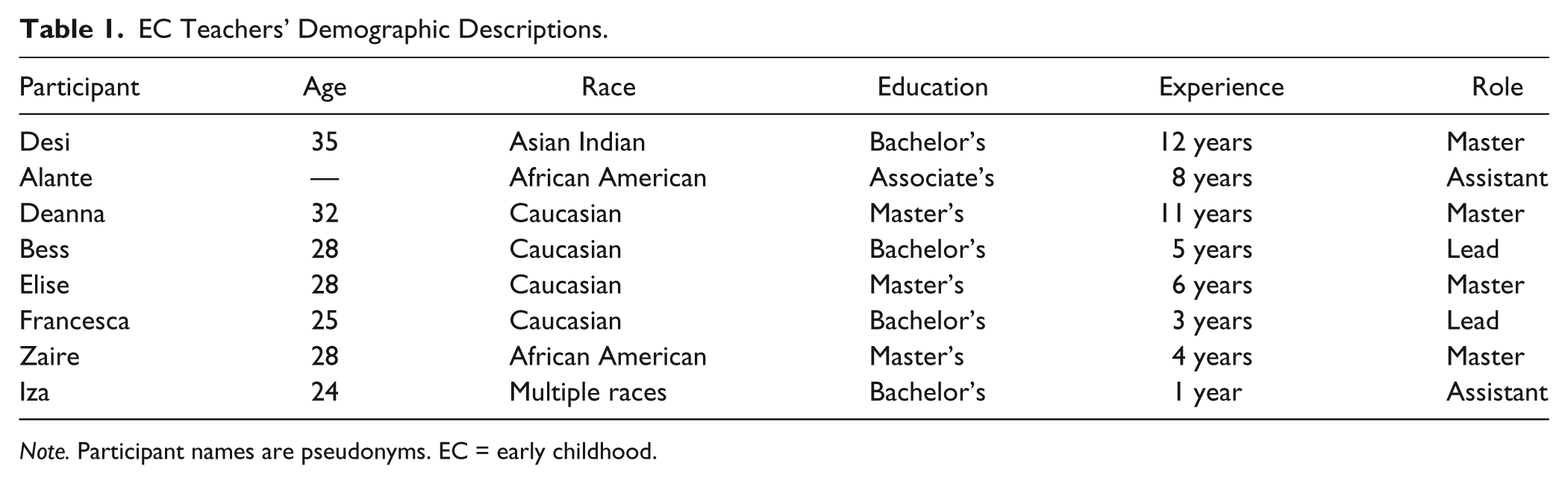
Note. Participant names are pseudonyms. EC = early childhood.
Single-Case Research Design
We used a multiple-baseline single-case research design to determine the effects of the PD on teachers’ use of communication strategies. The study’s design met What Works Clearinghouse standards (v. 3) for single-case research without reservations (Kratochwill et al., 2013). In addition, we randomized the order in which the four dyads received intervention as well as the start point for intervention and maintenance phases (Kratochwill & Levin, 2010).
Measures
Communication strategies
The primary outcome of interest was the frequency with which the EC teachers used targeted communication strategies (e.g., Delaney & Kaiser, 2001; Macy & Bricker, 2007). The targeted strategies were naturalistic in nature and selected because they could be easily implemented across a variety of EC routines. During the first 3 weeks of baseline, data were collected on the following six communication strategies: commenting, modeling language, providing wait time, imitating language, expanding language, and contingent reinforcement (see Table 2 for definitions and examples). We identified each dyad’s three target strategies using the following procedures: (a) We calculated each teacher’s mean use of the six strategies from the first five sessions, (b) we created means for each dyad by averaging the two teachers’ scores together for each strategy, and (c) we selected the two strategies with the lowest mean scores for intervention. Each dyad’s selected strategies are presented in Table 3.
Evidence-Based Communication Strategies.
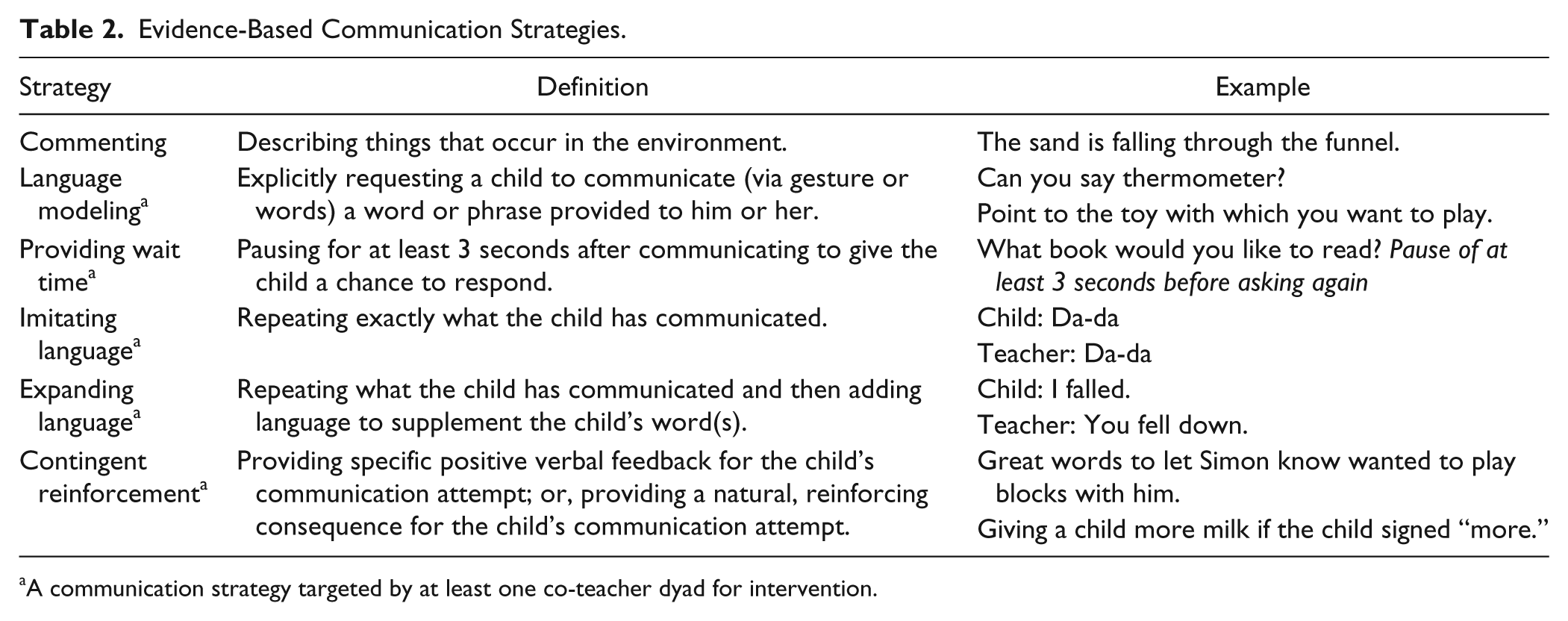
A communication strategy targeted by at least one co-teacher dyad for intervention.
Teachers’ Mean Use of Three Targeted Evidence-Based Communication Strategies per Session Across Research Phases.
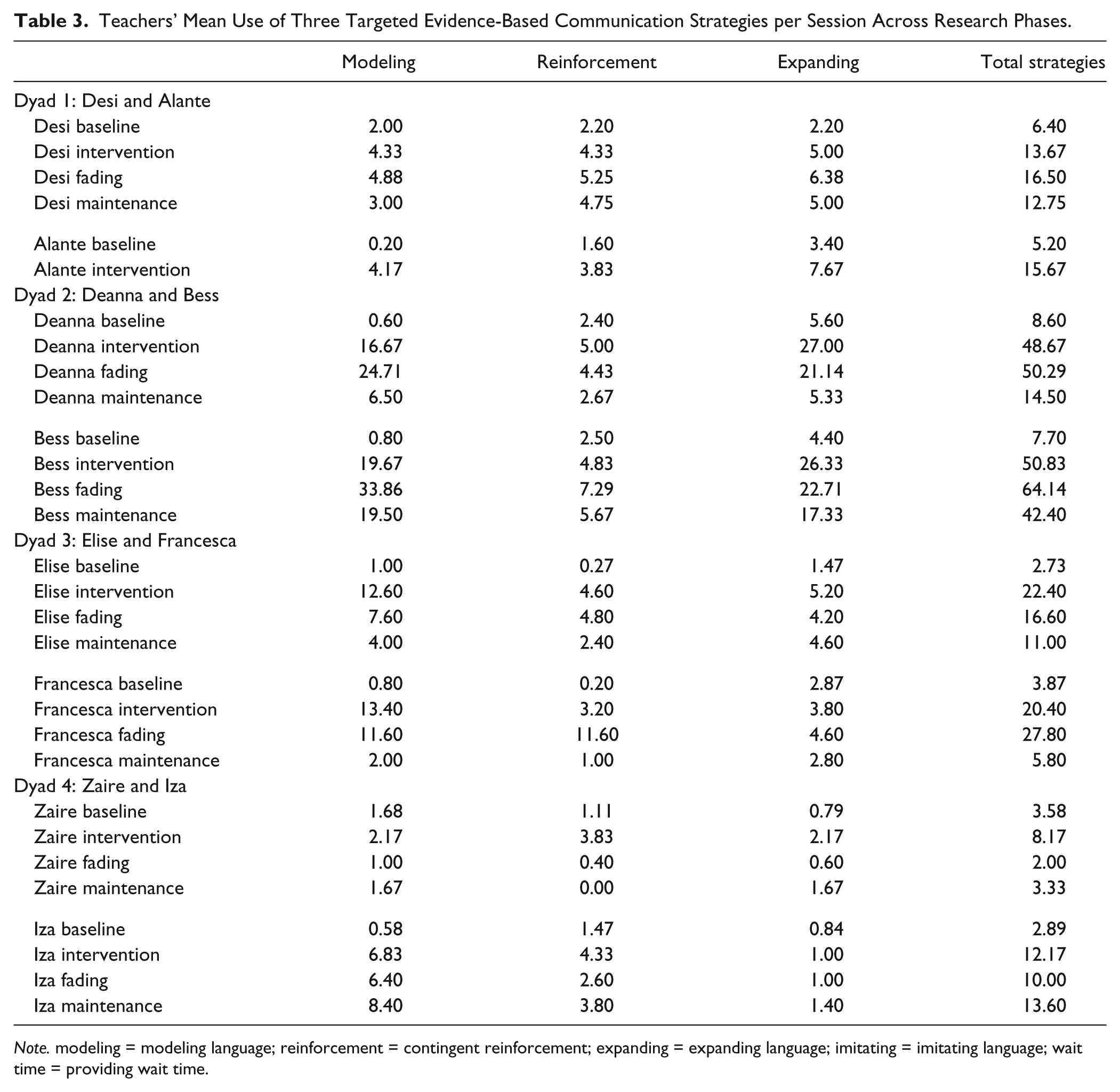
Note. modeling = modeling language; reinforcement = contingent reinforcement; expanding = expanding language; imitating = imitating language; wait time = providing wait time.
Social validity
Teachers’ personal evaluations of BIE peer coaching were collected via semi-structured interviews to measure the intervention’s social validity. Interviews were conducted one-on-one by the first author 4 weeks after the conclusion of the maintenance phase. The purpose of the measure was to identify teachers’ perceptions of the importance and effectiveness of the intervention, as well as teachers’ satisfaction with the BIE intervention.
Procedures
Across all research phases, researchers video-recorded teachers providing instruction to the children in their classrooms. Each video recording lasted 10 min, and trained research assistants coded the videos at a later time. Teachers were asked to interact with children as they typically would while a researcher followed them throughout the room to capture their instructional practices with children. Teachers were instructed to interact with any and all children during the data collection sessions.
Baseline
Baseline sessions served as the teachers’ control phase as these sessions occurred prior to the receipt of PD. Data were collected for five (Dyad 1) to 19 (Dyad 4) sessions. Teachers received no training, coaching, or reflection sessions during baseline.
Intervention
The PD consisted of three components. First, co-teacher dyads received a 90-min training. Then teachers participated in between a range of 5 and 7 weeks of BIE peer coaching. In addition, beginning in Week 2, teachers participated in weekly reflection sessions.
Teachers received the 90-min training session in their co-teacher dyads between their last baseline session and first intervention session, which resulted in either 1 or 2 days elapsing between the training and the first coaching session. The training was separated into the following three parts: (a) importance of children’s communication, (b) communication strategies, and (c) coaching strategies. Training included instruction on the dyad’s three targeted communication strategies (e.g., definitions, examples), modeling of the strategies (i.e., video, instructor), and opportunities to practice using them. The coaching aspect of the training included an overview of high-quality coaching strategies and BIE coaching. Teachers were instructed to provide at least one prompt or praise to their co-teacher per min so that sufficient feedback could be received each session. Co-teachers practiced using the BIE technology with each other during the training.
All dyads started with walkie-talkies and push-to-talk receivers (i.e., a wired earpiece with a button that could be pressed and spoken into so that the co-teacher could hear the feedback). These BIE materials were chosen because of their affordability and ease of use, which proved to be true for the duration of the study for Dyads 1 and 4. However, given the acoustics of Dyad 2 and 3’s classrooms, teachers experienced difficulties hearing one another during coaching sessions. Consequently, they switched from walkie-talkies to cell-phones (with wired in-the-ear headphones) to perform the BIE coaching. Each BIE peer-coaching session took place in the teachers’ typical environments (e.g., classroom, gross-motor room). Teachers either buckled the walkie-talkie to their clothes or placed it beside them during coaching sessions. For all BIE sessions, teachers wore their earpiece to receive feedback from their co-teacher. When co-teachers were serving as coaches, they were in the environment with the other teacher and children, but they did not provide instruction during this time. Rather, they used their respective BIE technology to observe their co-teacher for 10 min, providing performance feedback (i.e., prompts to use the strategies, praise for using strategies correctly) as opportunities arose during the activity. During each of the data collection sessions, a research assistant was present in the classroom to help manage the children while peer coaches focused on providing feedback to their co-teachers. Intervention included either five (i.e., Dyad 3) or six (i.e., Dyads 1, 2, and 4) BIE peer-coaching sessions across 3 weeks. Coaching sessions occurred twice a week and included 10 min receiving and 10 min delivering BIE coaching.
Reflection sessions began during the second week of intervention (after either the second or third BIE session). Teachers received four 30-min group reflection sessions. Each reflection session included a co-teacher dyad and the first author; the only exception to this was that Desi participated in two of Deanna and Bess’s reflection sessions during her fading phase. We decided to include reflection sessions to increase understanding of the teacher processes that occur in BIE peer coaching, and to provide teachers additional support and opportunities for discussion. During reflection sessions, teachers spent between 5 and 10 min writing reflections on (a) their use of the strategies during the previous week, (b) the children’s response to the strategies, (c) their experiences with BIE peer coaching, and (d) their relationship with their co-teacher. Then, co-teachers orally reflected on these same four topics during the remaining 20 min. The first author’s role was to facilitate discussion between the co-teachers and ask probing questions to assist teachers in thinking more deeply about the information shared (e.g., thinking about methods to use contingent reinforcement that aligned with their philosophical beliefs). Reflection sessions ceased during the final week of the fading phase.
Fading
Each co-teacher dyad received an individualized fading phase that reduced the intensity of the PD. Each dyad selected a preferred fading procedure from two options (see Table 4 for options and selections). The rationale for providing two options was to ensure that teachers continued to feel supported in their PD while enhancing their buy-in to the intervention’s reduced intensity. The two choices varied per dyad based on the first author’s perceptions of what would be most helpful to support teachers’ maintenance of skills; decisions primarily arose from information shared by teachers during reflections. The fading options were presented to co-teachers during their final reflection of the intervention phase, and dyads were asked to select one of the two options. Fading phases lasted between five and eight sessions (3–4 weeks).
Fading Procedures Among Teacher Dyads.
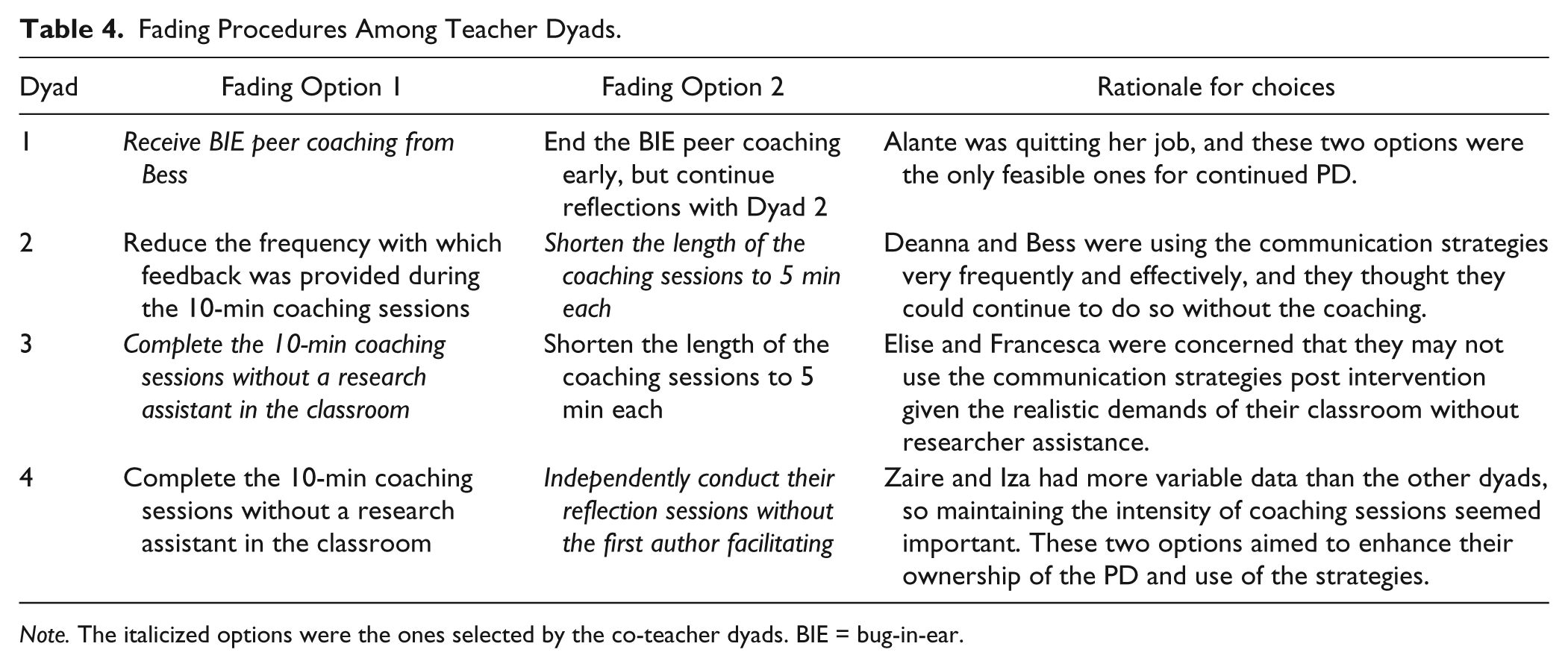
Note. The italicized options were the ones selected by the co-teacher dyads. BIE = bug-in-ear.
Maintenance
Teachers received no PD during the maintenance phase, and there were no interactions between the research team and teachers, with the exception of continued video recording of each 10 min maintenance session. For Dyads 1, 2, and 3, maintenance sessions occurred once per week and for Dyad 4, maintenance sessions occurred twice per week. This resulted in between 3 and 8 weeks of maintenance data collected.
Reliability and Implementation Fidelity of BIE Peer Coaching
Interobserver agreement (IOA) was calculated following Kennedy’s (2005) total agreement method, which stipulates to divide the number of raters’ agreements by the total number of their agreements plus disagreements. Randomly selected sessions were coded for baseline (20%), intervention (24%), and maintenance (33%) phases. In addition, an average of 25% of data were double coded for all participants (range = 21%–27%). IOA was calculated on a session-by-session basis and then averaged across sessions with means equaling 94.8% (range = 91.7%–99.2%) for expanding language, 93.2% (range = 79.2%–99.1%) for imitating language, 97.8% (range = 90.8%–100%) for modeling language, 97.6% (range = 90.8%–100%) for contingent reinforcement, and 96.1% (range = 89.2%–100%) for wait time.
Implementation fidelity of BIE coaching
Trained research staff coded audio recordings for the quality and quantity of feedback provided during each coaching session. Implementation fidelity was determined for quality based on whether the immediate feedback was specific, positive, corrective (as needed), and on topic (Scheeler et al., 2004). Specific feedback included a cue of which strategy to use and how to use it. Prompts that were encouraging in nature with respect to both content and tone, as well as all praise, were deemed to be positive. Corrective feedback was defined as prompts that included information describing (a) what the co-teacher did and (b) how the co-teacher could use the strategies more effectively in the future. Finally, coaching was considered to be on topic if it cued the teacher to use one of her target strategies and off topic if the content was about anything other than a strategy. Implementation fidelity was also determined for quantity based on teachers’ rate of feedback equaling one cue per min.
The manner in which the peer coaching was implemented was consistent among the teachers (i.e., quality), but the intensity of feedback provided varied by teacher (i.e., quantity; see Table 5). Co-teachers delivered zero prompts or praises during baseline or maintenance (IOA = 100%). Generally speaking, all of teachers’ feedback during the intervention and fading phases aligned with Scheeler and colleagues’ (2004) recommendations to be immediate, specific, and positive. Very little feedback (M = 1.3%) was corrective. Teachers delivered a mean of 1.61 prompts (range = 0.5–5.0) and 6.75 praises (range = 2.0–13.6) per session. Approximately 0.98 of these feedback cues (range = 0.4–2.3) were off topic prompts/praise per session.
Implementation of BIE Peer Coaching.
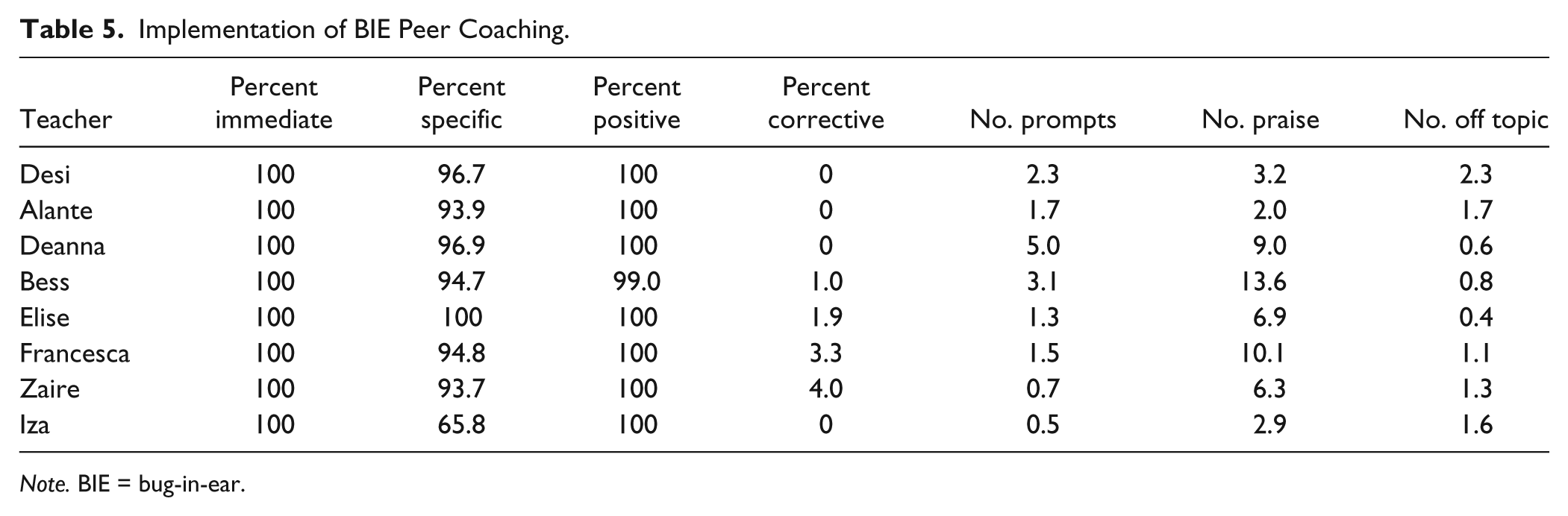
Note. BIE = bug-in-ear.
Data Analysis
We analyzed the data using visual analysis procedures outlined by Horner et al. (2005) and Kratochwill et al. (2013). Namely, we examined the data’s level, trend, variability, overlap, immediacy of effect, and consistency of patterns across research phases. However, given our interest in teachers’ increased use of strategies, we focused primarily on level changes across research phases.
We completed masked visual analysis (Ferron & Jones, 2006) to determine whether an individual naive to the progression of the research could identify the order in which our EC teacher dyads received intervention. The second author was not provided any information regarding the progress of the research until she conducted a summative analysis (Ferron & Levin, 2014) at the end of the study by viewing eight individual line graphs of EC teachers’ data. She was instructed to select two teachers who she thought received intervention first, two who received it second, two third, and two fourth. We randomized based on dyad (n = 4) order, so there were 24 (= 4 × 3 × 2 × 1) possibilities for random assignment.
Results
Efficacy of the PD
In this research, we aimed to identify whether a peer-coaching PD package improved EC teachers’ use of evidence-based communication strategies by at least 3 times their baseline performance and whether those outcomes were sustained over time by at least twice their baseline performance. Results are presented in Figure 1 and Table 3. Results are also described below individually for each EC teacher dyad and then summarized across dyads.
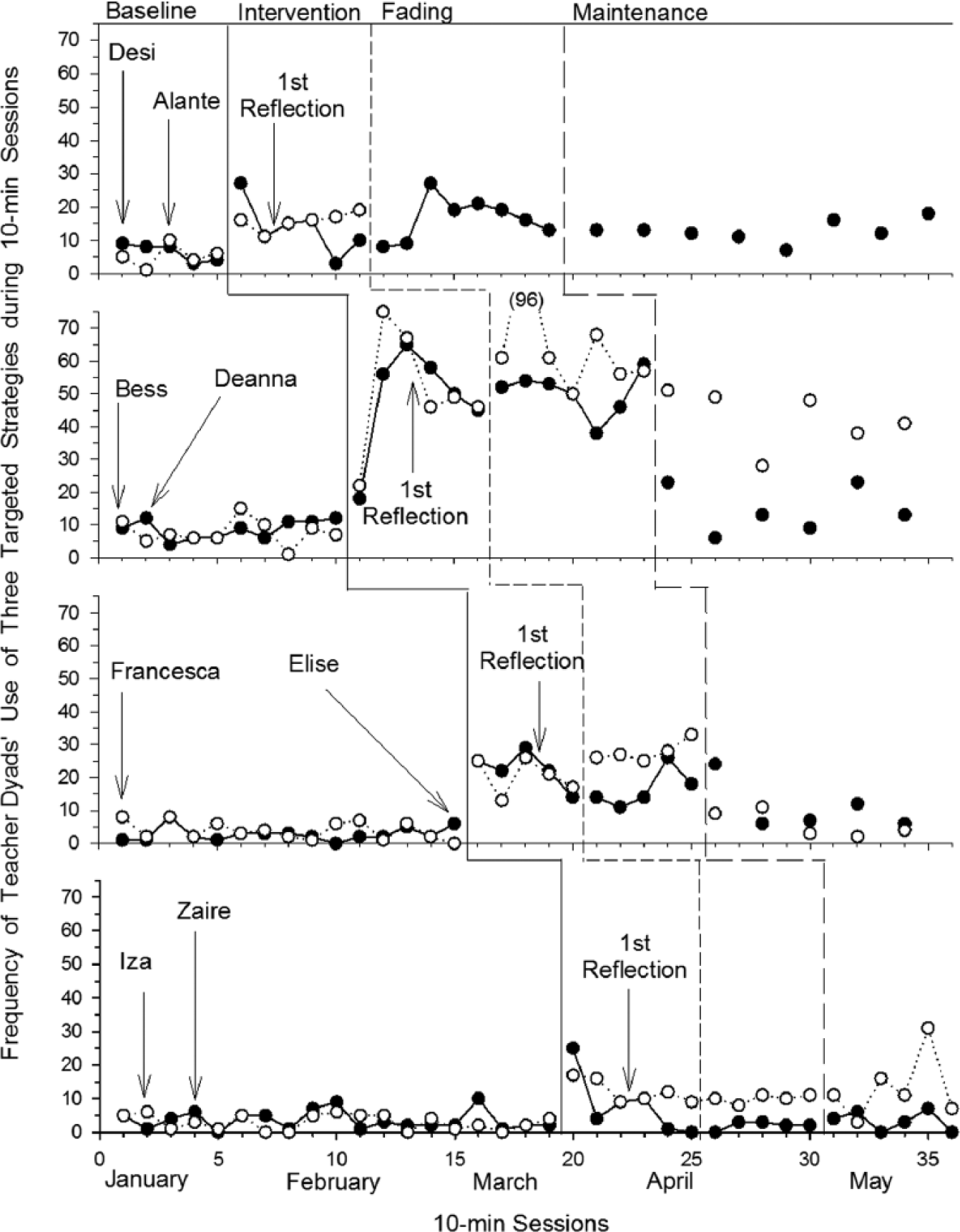
Early childhood teacher dyads’ total use of three targeted evidence-based communication strategies within naturally occurring classroom routines and activities.
Dyad 1: Desi and Alante
Desi and Alante used an average of 6.40 (range = 3–9) and 5.20 (range = 1–10) total communication strategies per baseline session, respectively. Desi had a decelerating trend in baseline, whereas Alante exhibited an accelerating trend. On receipt of the PD, there was an immediate improvement in their total use of the communication strategies, but their patterns were different. Desi had a large increase followed by a decelerating trend throughout intervention. None of Dyad 1’s intervention data overlapped with their baseline data, but Alante’s accelerating trend in baseline continued into the intervention phase. Desi was the only teacher from Dyad 1 who completed the fading phase. By the third fading session, she peaked in performance at a level of 28 strategies per session; a decelerating trend was again noted, and she concluded the fading phase at a level of 13 strategies per session. Desi sustained this level of performance (M = 12.75; range = 7–18) for 8 weeks after intervention concluded. Overall, Desi and Alante demonstrated an increase in all three strategies during intervention (with Desi’s usage 2.1 times greater than her baseline performance and Alante’s 3 times greater than baseline). Desi also continued to increase her use of strategies into the fading phase (2.6 times greater than baseline), but she only sustained her use of reinforcing (2.2 times baseline) and expanding language (2.3 times baseline) at levels comparable with her performance during intervention (modeling was 1.5 times greater than baseline; see Table 3).
Dyad 2: Deanna and Bess
Deanna used 8.60 (range = 4–12) and Bess used 7.70 (range = 1–15) total communication strategies on average throughout the baseline phase. They had moderate variability, but a stable trend in their baseline data. Beginning the second session after the receipt of PD, there was a large increase in their use of communication strategies. Both teachers’ total strategy use declined after peaks on the second (Bess, n = 65) and third (Deanna, n = 75) sessions of intervention; however, they continued to use strategies at levels 5 times greater than their use during baseline phase throughout both the intervention and fading phases. At the start of the maintenance phase, there was a large decrease in Deanna’s performance, with her mean use of communication strategies equal to 14.50 (range = 6–23), which was 1.68 times greater than her baseline performance. Deanna used modeling language 10.8 times more in maintenance than baseline, but this was not observed for imitating language (.95 times baseline) or contingent reinforcement (1.1 times baseline). There was a decline in Bess’s maintenance performance by roughly 15 communication strategies per session compared with intervention/fading, but she still maintained an increase in her use of all three strategies when compared with baseline (modeling = 2.4 times baseline; imitating = 3.9 times baseline; and contingent reinforcement = 2.3 times baseline).
Dyad 3: Elise and Francesca
Elise used an average of 2.73 (range = 0–8), and Francesca used 3.87 (range = 0–8) total communication strategies throughout baseline. Both teachers’ baseline data demonstrated minimal variability and stable trends. There was an immediate effect of the PD on their use of the strategies in the intervention phase (i.e., more than 5 times greater than baseline; Elise, M = 22.40, range = 14–29; Francesca, M = 20.40, range = 13–26), which was maintained during the fading phase (i.e., more than 6 times greater than baseline; Elise, M = 16.60, range = 11–26; Francesca, M = 27.80, range = 25–33). There was more variability in Elise and Francesca’s intervention data than in baseline. This variability continued into the fading phase for Elise but stabilized for Francesca. For the first week following completion of PD, Elise used the strategies at levels comparable to the intervention phase. Elise’s performance throughout the rest of maintenance, and Francesca’s performance during the entire maintenance phase was more similar to baseline than intervention (Elise, M = 11.00, range = 2–11, 4 times greater than baseline; Francesca, M = 5.80, range = 2–11, 1.5 times greater than baseline).
Dyad 4: Zaire and Iza
Zaire and Iza had stable baseline trends with minimal variability. Their mean use of total communication strategies was 3.58 (range = 0–10) and 2.89 (range = 0–6), respectively. On initiation of the PD, Zaire’s performance demonstrated an immediate effect for the first session, but then her strategy use declined back to baseline level throughout the remainder of data collection (intervention performance was 2.3 times baseline, fading was 0.56 times baseline, and maintenance was 0.93 times baseline). Five out of six intervention sessions, as well as all of the fading and maintenance sessions, overlapped with baseline. These patterns were not the same for Iza, who, on receipt of the PD, demonstrated an immediate increase in her use of total strategies. Iza’s strategy use decreased slightly after the first two intervention sessions; however, she maintained this elevated level with minimal variability through the remainder of the intervention phase (4.2 time baseline performance) and through her fading phase (3.5 times baseline). Iza sustained the growth she made from the PD into the maintenance phase, but her performance was more variable (M = 13.60, range = 3–31, 4.7 times baseline). Iza’s maintenance performance reflected increases at least double baseline performance for the strategies of modeling (14.5 times baseline) and contingent reinforcement (2.6 times baseline), but not wait time (1.7 times baseline).
Efficacy across teacher dyads
The dyads’ baseline data were consistently low with minimal variability and stable trends. The PD had an immediate effect on teacher dyads’ use of total communication strategies from the first intervention session for Dyads 1, 3, and 4, and from the second session for Dyad 2. In their interviews, Dyad 2 teachers indicated that at the start of intervention, they needed extra time to familiarize themselves with the strategies; this may have been why it took an extra coaching session to observe an effect. Throughout the intervention and fading phases, dyads demonstrated more variability in their use of the strategies when compared with their baseline data, with trends that were mixed among dyads.
Notably, the level changes in dyad performances were diverse, ranging from improvements of seven (Dyad 1) to approximately 40 (Dyad 2) strategies per session. This variability in performance was observed across the fading and maintenance phases as well. During the intervention and fading phases, Dyads 2 and 3 at least tripled their baseline performance (our hypothesis for Aim 1) and Dyad 1 at least doubled their baseline performance. For the maintenance phase, only Dyads 1 and 2 sustained their use of the strategies at a level at least double that of their baseline performance (our hypothesis for Aim 2). In addition, when considering growth in teacher dyads’ use of individual strategies (see Table 3) during PD (i.e., intervention and fading phases), Dyads 1 and 2 improved in all three of the strategies, Dyad 3 improved in two strategies, and Dyad 4 did not improve in any strategies. Maintenance was observed for at least one strategy for Dyad 2, but then results were mixed for the other dyads with only Desi, Elise, and Iza maintaining strategies for Dyads 1, 3, and 4, respectively.
According to What Works Clearinghouse guidelines, this research demonstrates moderate evidence that the PD affected teacher dyads’ use of the strategies (i.e., determined because the PD improved the total frequency with which three of the four dyads used the communication strategies; Kratochwill et al., 2013). Moreover, the masked visual analyst identified the order in which dyads received intervention on the first try, so one was divided by 24 (total random assignments) to determine the probability that the PD affected the frequency of teacher dyads’ use of communication strategies. Thus, outcomes of our masked visual analysis resulted in a value of p = .042, which provides additional confidence in our visual analysis, demonstrating a functional relation between the PD and teacher dyads’ practices.
Social Validity of BIE Peer Coaching
All dyads reported some challenges associated with BIE peer coaching (e.g., ensuring feedback was not repetitive), but they also thought that it was an acceptable form of PD, which was evidenced by their indication that they were willing to use BIE peer coaching again and that they would recommend it to other teachers and families. Teachers identified the most important aspects of BIE peer coaching to be receiving immediate (n = 7), specific (n = 2), and positive (n = 1) feedback; real-world practice opportunities (n = 2); and the dual coaching nature of the intervention (n = 1). Teachers perceived that BIE peer coaching enriched the quality of their teaching by improving their ability to use the strategies (n = 5) and producing a more conducive language and literacy environment (n = 3). They also perceived that it improved their children’s communication (n = 7), vocabulary (n = 2), social–emotional development (n = 2), and engagement in classroom activities (n = 2)—although they indicated that when using the strategies, some children did not respond (n = 2).
Discussion
The purpose of this study was to examine the effects of a PD package with BIE peer coaching on four EC teacher dyads’ use of evidence-based communication strategies. This study adds to the body of literature on BIE coaching by utilizing co-teachers as BIE peer coaches.
Efficacy of BIE Peer Coaching
The results of this research provide preliminary evidence that BIE peer coaching can be effective for increasing EC teacher dyads’ use of evidence-based strategies. Our findings were more variable than those obtained by previous researchers, as all teachers in Scheeler et al.’s (2010) study coached each other to use complete learn units, with all teachers demonstrating positive outcomes. In contrast, in our study, teacher dyads coached each other on three strategies, and usage of the strategies varied from 12 to 50 strategies for the three teacher dyads with demonstrations of an effect. Given that this was the first study to examine BIE peer coaching in an EC setting, replications are necessary to inform the intervention’s use with other EC teacher dyads.
In addition, the considerable variability in outcomes across teacher dyads warrants future research. Multiple explanations are plausible to explain why outcomes were variable across teacher dyads, such as differences in (a) the opportunities available to use strategies during sessions, (b) teachers’ views regarding how often they should be using the strategies, (c) types of classroom activities, (d) complexities associated with coaching multiple strategies, (e) teacher- and dyad-level characteristics, (f) selecting strategies based on dyad instead of teachers as individuals, and (g) BIE implementation. Consequently, future research should systematically examine these aspects to determine whether there are associations among these variables and the outcomes of teacher dyads receiving BIE peer coaching.
Fading as a Method for Promoting Maintenance
Based on the recommendations of previous BIE researchers (Ottley & Hanline, 2014; Scheeler, Bruno, Grubb, & Seavey, 2009; Scheeler et al., 2010), we used a systematic fading procedure to increase EC teacher dyads’ maintenance of the communication strategies. Although three of the four dyads sustained their use of total coached strategies during the fading phase, only one dyad maintained their use of the strategies post intervention. We hypothesized that teachers’ frequency of strategy use would decline, but remain at least double that of baseline levels. Although this pattern was found for some dyads, not all teachers maintained the use of communication strategies at levels that could be considered having practical importance when coaching was no longer in place, despite the systematic implementation of fading procedures.
Our procedures differed from Scheeler et al.’s (2010) study in that we faded the amount of PD support provided to teacher dyads, instead of the use of BIE technology. Some of these procedures (e.g., shortened BIE sessions) may have been more effective in supporting teachers’ maintenance of communication strategies than others. In addition, Scheeler and colleagues required a level of teacher mastery. Although our teacher dyads demonstrated correct use of strategies, their levels of strategy use were much more variable, which may have contributed to the variability in sustained outcomes. Finally, Scheeler et al.’s maintenance data were collected between 1 and 3 weeks after intervention ceased, but our maintenance data were measured for 3 to 8 weeks following the conclusion of the fading phase. These differences make it difficult to compare our teachers’ maintenance with that of teachers from other studies. Collectively, these findings lend themselves to multiple areas for additional research, such as (a) examining the benefits of teachers achieving a criterion level before ceasing intervention, (b) exploring the use of different fading procedures, and (c) evaluating the long-term maintenance of teachers’ skills.
Social Validity of BIE Peer Coaching
All EC teachers in our study reported BIE peer coaching to be a socially valid approach to PD in terms of the intervention’s importance and perceived effectiveness, with some challenges noted with the intervention’s feasibility (i.e., technology, maintaining attention to the coach while working with children, keeping the feedback from becoming redundant). However, even with these feasibility challenges, EC teachers perceived that BIE peer coaching increased the quality of their teaching and improved children’s communication. Our results were consistent with those obtained in other BIE studies in which researchers implemented the coaching with EC teachers (e.g., Ottley et al., 2015) and teachers implemented the intervention with their co-teachers (Fry & Hin, 2006; Scheeler et al., 2010). Even so, given the diversity in EC classrooms, future researchers should examine methods to improve the feasibility of BIE coaching to aid in the ease of its use among other EC teacher dyads.
BIE Peer Coaching as a Method for Addressing the Research-to-Practice Gap
Despite the growing body of knowledge on evidence-based strategies in EC education (Odom et al., 2010; Odom & Wolery, 2003), lack of teacher implementation of evidence-based strategies remains an ongoing concern of leaders in the field (Cook & Odom, 2013; Odom, 2008). Coaching may be a particularly promising form of PD for increasing teacher use of evidence-based strategies (Fixsen, Naoom, Blase, Friedman, &Wallace, 2005) because the feedback is situated within the teacher’s daily practice and is immediately relevant. Peer coaching may provide added benefit because the coaching is not only inherently contextually relevant, but also provided by a colleague, thereby minimizing power differentials between members of the dyad (Scheeler et al., 2010). Thus, this study provides preliminary evidence that BIE peer coaching may be one means for decreasing the research-to-practice gap in EC education. However, additional research is warranted to identify whether these findings replicate with other (a) EC teacher dyads, (b) instructional practices, and (c) types of EC environments.
Limitations
A limitation of this study is that one peer-coaching dyad was disrupted when one co-teacher terminated her teaching position at the EC center. This resulted in limited data for this teacher and may have affected results for her co-teacher, who received the remainder of her coaching sessions from another EC teacher participating in the study. In addition, all teachers in this study worked in the same childcare center, which limits our ability to generalize the findings beyond this setting. This also allowed for the possibility of contamination as teachers had opportunities to communicate about the study and their participation with other dyads. Another area of concern is that we selected teachers’ targeted strategies at the dyad level. This was done for practical purposes; however, one teacher in the dyad may have had different needs, and because we did not address individual teacher needs, we were unable to make conclusions regarding the intervention’s efficacy at the individual teacher level. In addition, we did not systematically examine fidelity data for training teachers on the coaching practices, nor did we investigate differences in teachers’ coaching processes, which may have affected the efficacy and implementation of BIE peer coaching and teachers’ use of targeted strategies. Last, our masked visual analysis procedures were different from those outlined by Ferron and Jones (2006), because our masked visual analyst identified phase changes at the dyad level; this may have increased the likelihood of an accurate response by the masked visual analyst.
Conclusion
In this study, we examined the effects of PD including BIE peer coaching on four EC teacher dyads’ use of evidence-based communication strategies. Although three EC teacher dyads in our study at least doubled their use of the communication strategies during intervention, only one dyad maintained their use of all three strategies post intervention at levels at least twice that of their baseline performance. The research-to-practice gap remains a critical issue in education with progressive approaches to PD (e.g., coaching; Odom, 2008) remaining one of the most promising avenues for bridging this gap and for weaving evidence-based practices into EC classrooms. BIE peer coaching is one such approach that should be examined further to increase the consistency in effects across EC teacher dyads and to promote sustained use of coached strategies post intervention. With fine tuning, BIE peer coaching may be an avenue to bridge the research-to-practice gap in EC education.
Footnotes
Authors’ Note
The opinions expressed are those of the authors and do not represent views of the Institute, the U.S. Department of Education, or the Ohio State University.
Declaration of Conflicting Interests
The author(s) declared no potential conflicts of interest with respect to the research, authorship, and/or publication of this article.
Funding
The author(s) disclosed receipt of the following financial support for the research, authorship, and/or publication of this article: This research was supported by the Institute of Education Sciences, U.S. Department of Education, through Grant R305B120008 to the Ohio State University and by the Ohio State University through the Researcher in Residence grant.