







Abstract
Evidence-based treatments for young children with developmental language delays include caregiver-implemented naturalistic interventions. However, there is little research on culturally appropriate interventions for Spanish-speaking caregivers from low–socioeconomic status (SES) households and their young children with identified language delays. We compared interaction strategies of Latino Spanish-speaking caregivers from low-SES backgrounds and non-Latino English-speaking caregivers from high-SES backgrounds with their children with language delays. Caregivers’ interactions were coded for (a) interaction characteristics, (b) use of naturalistic language support strategies, and (c) linguistic input. Results indicated Spanish-speaking Latino caregivers from low-SES backgrounds used a more directive, responsive, and warm interaction style than non-Latino caregivers. Non-Latino, English-speaking caregivers from high-SES backgrounds used more cognitively stimulating strategies, spent more time observing and narrating play, and used longer utterances and more lexical diversity. Findings provide directions for future research and guidance for clinicians working with Latino families from low-SES households.
Keywords
Young Latino children are a large and rapidly growing population in the United States (Child Trends, 2018). Although not all Latinos speak Spanish, an estimated 13% of the U.S. population comes from Spanish-speaking homes (U.S. Census Bureau, 2017). There is a growing body of research describing the language development of Latino children from Spanish-speaking families who are or will be dual language learners and are considered at risk for academic difficulties (Brannon & Dauksas, 2012; Ijalba, 2015; Pratt et al., 2015; Restrepo et al., 2013; Saracho, 2010). Epidemiological studies of children in the U.S. which include a small percentage of Latino children have estimated that the incidence of young children with language delays is between 6% and 5% (Law et al., 2000).
Latino families come from a wide range of socioeconomic status (SES) backgrounds, may speak Spanish or English, or be bilingual in Spanish and English. Latino families residing in the U.S. have varying levels of acculturation. Families may adhere to the cultural values of their country of origin, U.S. mainstream culture values (e.g., cultural values of middle to upper class, English-speaking families who represent the dominant population), or a mix of values from both cultures and identify as bicultural (Schwartz et al., 2010). For Latinos in the United States, language use, acculturation, and SES are interrelated. Latinos who speak only or primarily Spanish are likely to be less acculturated and to come from low-SES backgrounds (Schwartz et al., 2010). Spanish-speaking Latinos from low-SES households also are more likely to live in segregated communities and have limited financial and neighborhood resources; this includes access to high-quality schools, health care, libraries, and parks (García Coll & Pachter, 2002; Magnuson & Duncan, 2002). Thus, Spanish-speaking children from low-SES households who have developmental language delays are at higher risk for persistent delays and subsequent limitations in academic performance because of these limited resources.
Caregiver-implemented intervention is recommended for young children with developmental language delays, including Spanish-speaking children (Kohnert et al., 2005). However, families who speak languages other than English historically have been systematically excluded from research on early language interventions (Baxendale & Hesketh, 2003; Girolametto, 1988; Roberts & Kaiser, 2015; Van Balkom et al., 2010). A recent review found that caregivers and children who spoke Spanish represented only 5% of participants in studies of caregiver-implemented interventions for children with disabilities (Akamoglu & Meadan, 2018). Although cultural considerations in clinical research are a growing area of interest, most existing evidence-based interventions have been developed by and tested with those who represent mainstream U.S. language and culture and have not systematically addressed cultural and linguistic considerations (Durán et al., 2016; Larson et al., 2020; Van Kleeck, 1994).
A range of research is needed to develop culturally and linguistically appropriate caregiver-implemented language interventions to address language delays in young Latino children from low-SES Spanish-speaking households. It is important to examine differences in how Latino caregivers who are Spanish-speaking and come from low-SES households interact with their children as compared to non-Latino English-speaking high-SES families to adapt existing interventions typically tested with the latter group, then evaluate their effectiveness with the former population or develop new approaches to intervention that are more culturally appropriate. To date, there have been no studies of Latino Spanish-speaking caregiver interactions with young children with language delays.
Characteristics of Caregiver–Child Interactions
Early caregiver–child interactions provide the foundation for language development. The majority of research describing caregiver–child interactions have been conducted with English-speaking caregivers and their young children who are typically developing (Girolametto & Weitzman, 2002; Hirsh-Pasek & Burchinal, 2006; National Institute of Child Health and Human Development Early Child Care Research Network [NICHD ECCRN], 1999; Whiteside-Mansell et al., 2003). Although there are individual differences, generally caregivers from mainstream U.S. culture tend to value independence and children being talkative (Van Kleeck, 1994). Thus, caregivers’ interactions foster responsive interactions, value independence, and provide support for child cognitive, behavioral, and academic outcomes (McCall et al., 2019; McFadden & Tamis-Lemonda, 2013). Research has found positive associations between child language outcomes and caregiver responsiveness to the child, following the child’s lead, warmth toward the child, and providing cognitively stimulating statements and questions (Hirsh-Pasek & Burchinal, 2006; NICHD ECCRN, 2001; Leigh et al., 2011; Nozadi et al., 2013).
Characteristics of Caregiver–Child Interactions in Latino Families
Research with Latino families is most often conducted with families who have typically developing children. In contrast to the English-speaking caregivers in the U.S., research describing caregiver–child interaction in Latino families has found that caregivers tend to value interdependence and respeto, or the obedience of authority and respectful behavior (Calzada et al., 2010; Garza et al., 2009; Guilamo-Ramos et al., 2007; Halgunseth et al., 2006; Kummerer et al., 2007; Rodríguez-Jenkins, 2014). Latino families from low-SES backgrounds have also been described as having a protective parenting style that is high on both warmth and demandingness and low on autonomy granting (Domenech Rodríguez et al., 2009). In one study, Latina Spanish-speaking mothers from low-income households who had typically developing children described cariño, or emotional support and affection, and discipline to foster buena educación (e.g., becoming good moral people, having manners, having a strong foundation for learning, and respecting the family unit), as very important child-rearing values (Cycyk & Hammer, 2018). Researchers examined the mothering profiles of 210 Latina mothers (English and Spanish-speaking) from low-SES households with typically developing 2- and 3-year olds and found that 50% of mothers identified as “child-oriented” and 45% of mothers identified as “directive” (Dyer et al., 2014). Mothers identified as “child-oriented” were highly responsive to their children, very warm, and provided many opportunities for cognitive stimulation. Mothers in the “directive” group were high in intrusive behaviors that attempted to control the child (e.g., taking materials away from the child, giving the child few opportunities to lead play or take communicative turns), and were still highly warm toward their children. However, Dyer and colleagues did not examine differences in parenting style based on acculturation or language use (Spanish-speaking, bilingual, and English-speaking). Thus, it is possible that the two distinct Latina parenting styles that emerged reflected (a) more acculturated, English-speaking or bilingual Latina mothers who exhibited to a child-oriented style and (b) Spanish-speaking, less acculturated mothers who exhibited a more directive style.
Using a subsample of 100 Latina Spanish-speaking mothers from Dyer and colleagues (2014)’s sample, Peredo et al. (2015) examined the association between maternal sensitivity and child lexical diversity in mother–child interactions when children were 2 years old. Maternal sensitivity within this Latina sample was moderately correlated with child lexical diversity. This finding suggests that higher levels of maternal responsiveness and warmth in interactions with their children are associated with children’s expressive language. These findings suggest some similarities across cultures in the features of caregiver interactions that support children’s language development.
Caregiver Use of Naturalistic Language Support Strategies
A core set of naturalistic caregiver interaction strategies have been identified as supporting early language and communication development (Adamson et al., 2019). These include responsiveness to child communication attempts, balancing communication turns with the child, modeling language at the child’s level, expanding the child’s language and communication attempts with verbal responses that add words or concepts, and asking open-ended questions. A recent meta-analysis of caregiver-implemented language interventions for young children with language delays with English-speaking participants found that when caregivers are taught such naturalistic teaching strategies, children have better receptive and expressive language outcomes (Heidlage et al., 2019).
Latino Caregivers Use of Naturalistic Language Support Strategies
A recent study demonstrated positive effects of a caregiver-implemented language intervention specifically adapted for low-income Spanish-speaking Latino families (Peredo et al., 2017). Mothers were taught naturalistic language support strategies and were able to apply these strategies in home interactions with their young children with language delays. The children showed modest improvements in their lexical diversity during the short-term intervention. Social validation from Latino families, care providers, and bilingual therapists informed the adaptations which included: adapting language targets to match Spanish language development, conducting intervention and assessment in the home, allowing caregivers to be more directive in play, and simplifying time delay and milieu prompting procedures.
Caregiver Linguistic Input
Caregiver linguistic input (e.g., number of different words [NDW] and mean length of utterance in words [MLUw]), home environment, and family SES have been shown to impact children’s later language and cognitive abilities (Hart & Risley, 1995; Hoff, 2003). Specifically, caregivers from low-SES backgrounds have been shown to provide less high-quality linguistic input along with less variability in the quantity of input (Hoff, 2013). Similarly, research with Latino caregivers indicates that the quantity, quality, and complexity of linguistic input in Spanish and/or English to children affects their language development (Hoff et al., 2012, 2014; Hurtado et al., 2008; Weisleder & Fernald, 2013). Higher quantity and quality of linguistic input positively benefits children’s early language development. Latino families from low-SES households tend to be less conversational, talk less to their children, and use a more restrictive vocabulary (Hoff, 2013).
Current Study
Although there is research describing the interactions of Spanish-speaking Latino caregivers from low-SES backgrounds with their young children who are typically developing, no published studies have examined how this group of caregivers interact with their young children with identified language delays or how these interactions are similar to or different from the interactions of English-speaking caregivers from high-SES backgrounds and their children with language delays. Comparing the interactions of Spanish-speaking caregivers from low-SES backgrounds with those of English-speaking caregivers from high-SES backgrounds may be informative because caregiver-implemented interventions have been developed and tested with the latter population. While there are limitations in this approach, such a comparison may highlight how caregiver-implemented interventions should be adapted to better fit caregivers who are both Spanish-speaking and from low-SES backgrounds.
We examined the caregiver–child interactions of Spanish-speaking Latino caregivers from low-SES households and those of non-Latino caregivers from high-SES households with their children with identified language delays during a play activity. We addressed the following research questions: (a) What are the characteristics of interaction of Spanish-speaking Latino caregivers from low-SES backgrounds and non-Latino caregivers from high-SES backgrounds with their young children with language delays? (b) In each of the two groups, how frequently do caregivers use naturalistic language support strategies during interactions with their young children with language delays? (c) In each of the two groups, are there differences in linguistic input as indicated by lexical diversity (NDW) and MLUw observed during interactions of caregivers with their young children with language delays?
Method
Participants
Recruitment
Caregivers in the non-Latino subsample were recruited through local pediatrician offices, ads in local parenting magazines, and through the Tennessee Early Intervention system (Roberts & Kaiser, 2015). Caregivers in the Latino subsample were recruited through the Tennessee Early Intervention system, Head Start, and community programs that work with Latino immigrant families. Protocols were approved by the university Institutional Review Board.
Participant samples
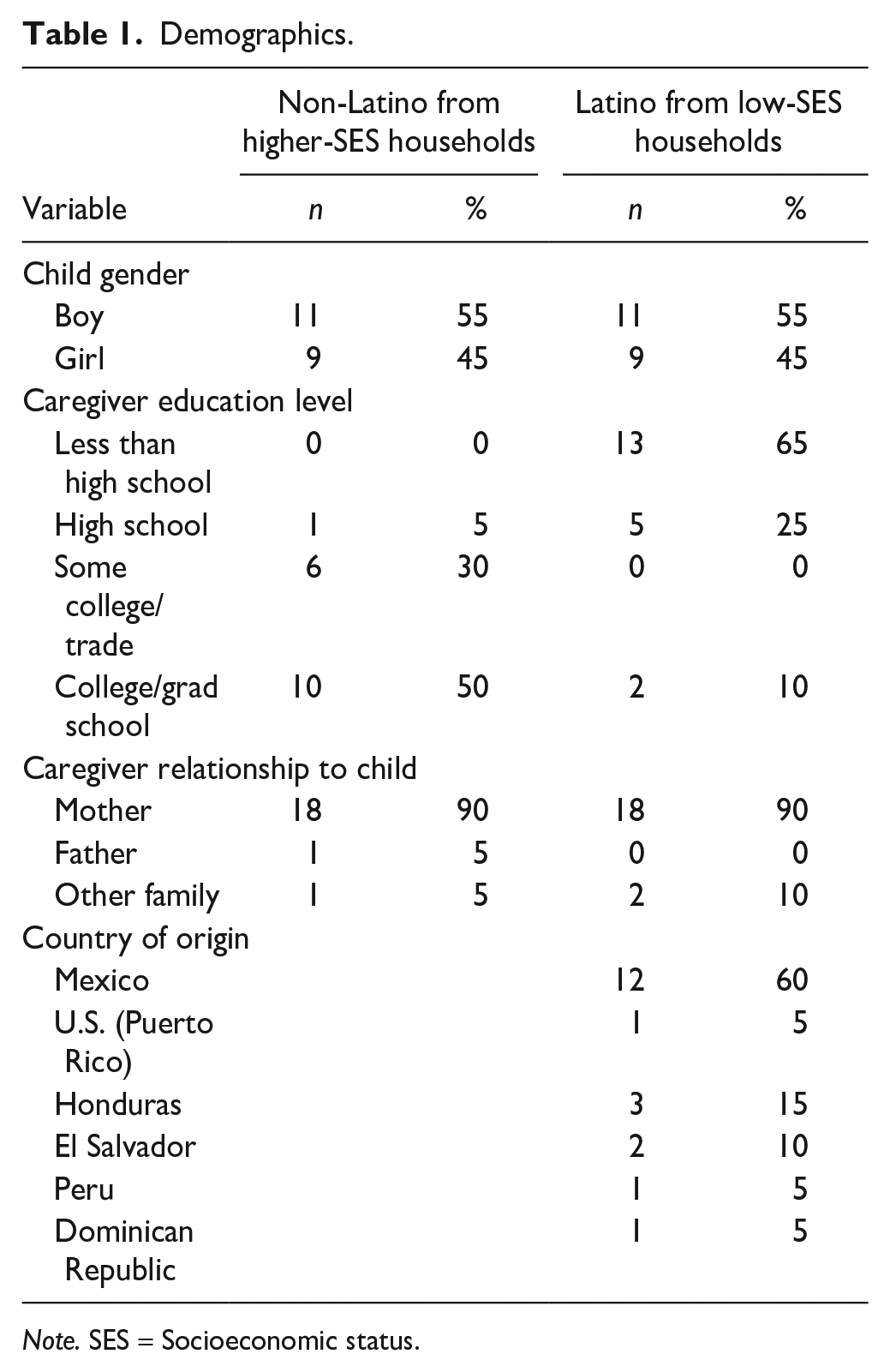
The 40 caregiver–child dyads for this study were selected from two samples participating in caregiver-implemented communication intervention studies: a randomized control treatment study of Enhanced Milieu Teaching (EMT; Roberts & Kaiser, 2015) and a small randomized trial of a culturally adapted version of the same approach, EMT en Español (Peredo et al., in preparation). All data were from the pretreatment (baseline) assessments of caregiver–children interactions. Table 1 summarizes the demographics of caregivers and children.
Demographics.
Note. SES = Socioeconomic status.
Twenty Latino Spanish-speaking caregivers and their children comprised the first group of participants. All caregivers identified as Latino, spoke only or primarily Spanish as reported by the home language scale (adapted from Francis et al., 2005), and 19 were foreign born (one mother was born in Puerto Rico). Eighteen were mothers, one was an aunt, and one was a grandmother. Caregivers had resided in the United States for 3 to 20 years (M = 10 years). Caregivers were identified as coming from low-SES households based on their reports that they participated in programs that serve low-income families (e.g., Medicaid, Woman Infants and Children, and Head Start) or by their reported household size and gross income (families who had 200% or less of the poverty income threshold for a household of that size were designated low income).
Twenty caregiver–child dyads were selected from 97 dyads who participated in a randomized control trial of EMT (Roberts & Kaiser, 2015). The 20 English-speaking caregiver–child dyads were matched to the Spanish-speaking dyads on child variables only including standardized cognitive scores, standardized language scores, sex, and age. Eighteen caregivers identified as White, non-Hispanic, and two did not provide information on race and ethnicity. Eighteen were mothers, one was a father, and one was a grandmother. All 20 caregivers and children spoke only English, as required by the study inclusion criteria. No families in the English-speaking sample reported participating in programs that serve low-income families.
The 40 children selected for this study ranged from 30 to 42 months (M = 32, SD = 3.21). The majority (55%) of children were male. All children were identified as having language delays and cognition within the typical range.
Measures
Setting and procedures
Data collection took place in a university clinic for families in the non-Latino group and in families’ homes for the Latino group based on accessibility. Non-Latino families were able and willing to participate in sessions in a university clinic. This setting was unfamiliar to the Latino caregivers and many families reported they did not have reliable transportation to the university. In both samples, all data collection followed standardized protocols and was implemented by research staff trained to fidelity. Children in the Spanish-speaking subsample were tested by a bilingual developmental psychologist or a bilingual master’s level clinician with a speech and language pathology educational background. Children in the English-speaking sample were tested by master’s level speech and language pathologist. Transcriptions were completed by research assistants who had a bachelors or master’s level educational background in psychology, speech and language pathology, child development, or a related field. All research assistants were trained to research reliability and considered reliable when they met the threshold of 90% agreement on three master transcripts. Interobserver agreement (IOA) on coding was calculated for 20% of randomly selected transcripts using an exact agreement formula. IOA was 94% for the Spanish sample and 95% for the English sample.
Demographics
Caregivers completed a demographic survey at the start of the study (in Spanish or English). Variables collected from this survey included: child and caregiver age, child and caregiver race and ethnicity, country of origin for the Latino sample, child sex, caregiver relationship to the child, and caregiver education level.
Child language
The Preschool Language Scales, Fourth Edition (PLS-4; Zimmerman et al., 2002) was used to assess children’s language skills from the non-Latino sample, and the Preschool Language Scales, Fifth Edition Spanish (PLS-5 Spanish; Zimmerman et al., 2012) was used to assess children’s language skills from the Latino group. Children in this study had scores at least 1 SD below the normative sample on the receptive and expressive scales of the PLS-4 and PLS-5 Spanish. Scores are standardized, so the mean is 100 and the SD is 15. The PLS-4 has an 83% sensitivity and a specificity of 80%. The PLS-5 Spanish has a 78% sensitivity and an 89% specificity.
Child cognitive skills
The Bayley Scales of Infant Development (BSID; Bayley, 2005) was used to measure child cognitive skills for the English-speaking non-Latino sample. The Leiter-R (Roid & Miller, 1997) was used to measure of children’s cognitive skills in the Latino Spanish-speaking sample. The Leiter-R was selected because the test is non-verbal and no other standardized measures of cognition for children under three were available in Spanish and normed in a Spanish-speaking population residing in the United States. Both cognitive assessments are standardized and norm-referenced with a mean of 100 and SD of 15.
Characteristics of caregiver–child interactions
Observations of caregiver–child interactions were based on 10-minute, video-recorded samples during play with age-appropriate toys. Before the observation began, the research staff member read a short script in the caregiver’s language describing the procedures and purpose of observation. Caregivers were provided a standard set of toys (toy utensils, pretend foods, ball, blocks, shape sorter, puzzle, hats, and sunglasses) and asked to play with their children how they normally would. Research staff observed the interaction and ensured both caregiver and child were visible on the video recording but did not comment on or intervene in their interaction.
An interaction characteristics code was developed for this study (available upon request) to measure how caregivers interacted with their children during play. This code was based on codes used in previous studies describing caregiver sensitivity with non-Latino and Latino samples (Dyer et al., 2014; McFadden & Tamis-Lemonda, 2013; Peredo et al., 2015; Whiteside-Mansell et al., 2003), studies that examined caregiver use of specific language and cognitive support strategies (Adamson et al., 2004, 2012; Cline & Edwards, 2017), and studies examining cultural values of Latinos residing in the United States (Calzada et al., 2013; Cycyk & Hammer, 2018; Domenech Rodríguez et al., 2009). The interaction style code recorded occurrences of specific caregiver behaviors in 30-second intervals (presence or absence of behavior within each interval) because this approach was thought to be more sensitive in identifying cultural differences in discrete behaviors than more global rating scales used in some previous studies. A summary of the code categories with examples is in Table 2.
Interaction Characteristics Code Example Behaviors.
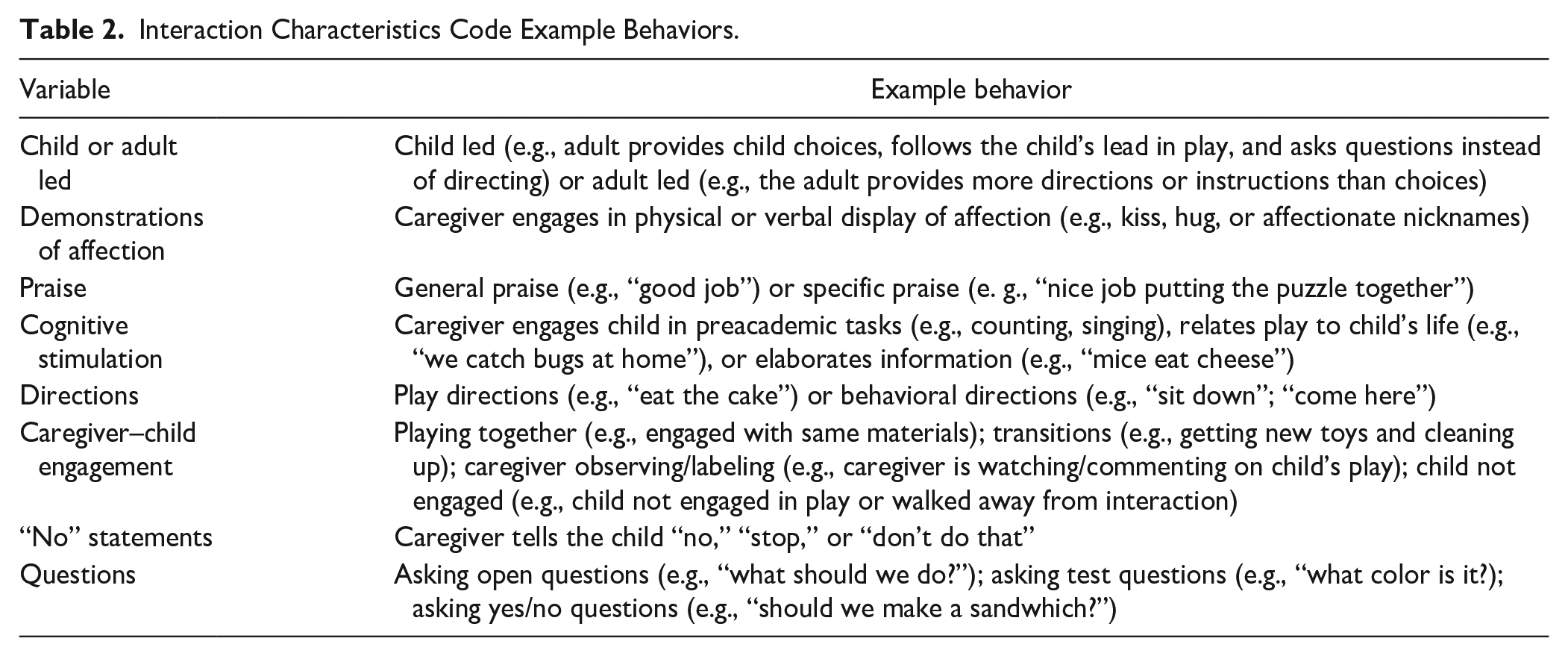
Coders watched the 10-minute videos, segmented into 30-second intervals, and rated several behaviors during each 30-second interval. Coders included a trained research assistant and doctoral-level student in early childhood special education. Coders were bilingual in English and Spanish and completed coding for both the Latino and non-Latino samples. To establish initial reliability of the coding system, coders watched and rated four videos using the pilot version of the interaction code (two videos from the Latino sample and two from the non-Latino sample). Revisions were made based on issues identified in the initial behavior ratings. Using the revised code, coders independently coded 12 (30%) videos. Discrepancies in coding were discussed and then consensus coded. The two coders then independently coded the remaining 28 videos; 20% of the independently coded videos were randomly selected to assess reliability between coders. IOA (reliability expressed a percentage, based on exact occurrence agreement) averaged of 88% agreement across all behaviors for the Latino sample and 89% agreement across all behaviors for the non-Latino sample.
Caregiver use of naturalistic language support strategies
Video-recorded interactions were transcribed and coded by monolingual English-speaking research assistants for the English-speaking sample and by bilingual English/Spanish-speaking research assistants for the Spanish-speaking sample. These transcriptions were then coded for naturalistic language support strategies including: (a) responsiveness, (b) matched turns, (c) use of target-level language appropriate to the child’s level, and (d) expansions of child utterances. Each transcribed caregiver utterance was coded to assess the occurrence of naturalistic language support strategies. Variables are expressed as a percentage of use of these strategies based on opportunities.
An adult turn was coded as responsive if the adult responded to a child utterance within 3 seconds. Adult turns were coded as matched if the adult response was temporally contingent and related to the child’s communication. Turns were also coded as matched if the adult used the “imitate and describe” strategy by imitating the child’s play or physical action and verbally describing the joint child and adult action. Target-level language was determined for individual children based on their performance during the assessment period; all children in the sample were either at the one word/one concept level or the two words/two concepts level. An adult utterance was coded as a target utterance if it matched the child’s target level for productive language and the utterance was grammatically correct. Adult utterances that were not coded as targets included: questions, command and instructions, language that was too complex for the child’s level, nonspecific language (e.g., “that one” “good.”), and utterances that were not grammatically correct. Adult utterances were coded as expansions when the adult responded within 3 seconds, repeated the child’s utterance, and added content words or grammatically corrected the child’s utterance.
Linguistic input
The transcripts of the 10-minute interactions followed standard procedures for transcription using Systematic Analysis of Language Transcripts (SALT: Miller & Iglesias, 2012); English and Spanish transcription conventions were applied as appropriate to the specific sample. All research assistants were trained to research reliability on transcription (described above). Transcripts were verified by a second research assistant. Caregiver’s MLUw (length of utterances) and NDW (lexical diversity) were analyzed directly from the SALT software transcripts.
Analysis
Nonparametric Mann–Whitney tests were used to evaluate differences between groups because of the small sample size and the noncontinuous nature of variables.
Results
Demographics, Child Language, and Child Cognitive Assessments
Caregivers in the Latino and non-Latino group differed significantly by education level (Latino range 0–10, M = 4.35, SD = 4.35, non-Latino range 6–10, M = 9.1, SD= 5.23, z = 4.53, p = 0). Caregiver education level was coded in a scale from 0 to 10 in the following manner: no education = 0, some elementary school = 1, completed elementary school = 2, some middle school =3, completed middle school = 4, some high school = 5, completed high school = 6, some years of community college = 7, vocational training = 8, some college = 9, completed college or above = 10. Children had a mean of 70 and an SD of 9.83 on the PLS-4 and PLS-5 Spanish. The children had a mean score of 95 and an SD of 9.34 on the cognitive measures (i.e., BSID and Leiter-R).
Characteristics of Caregiver–Child Interactions
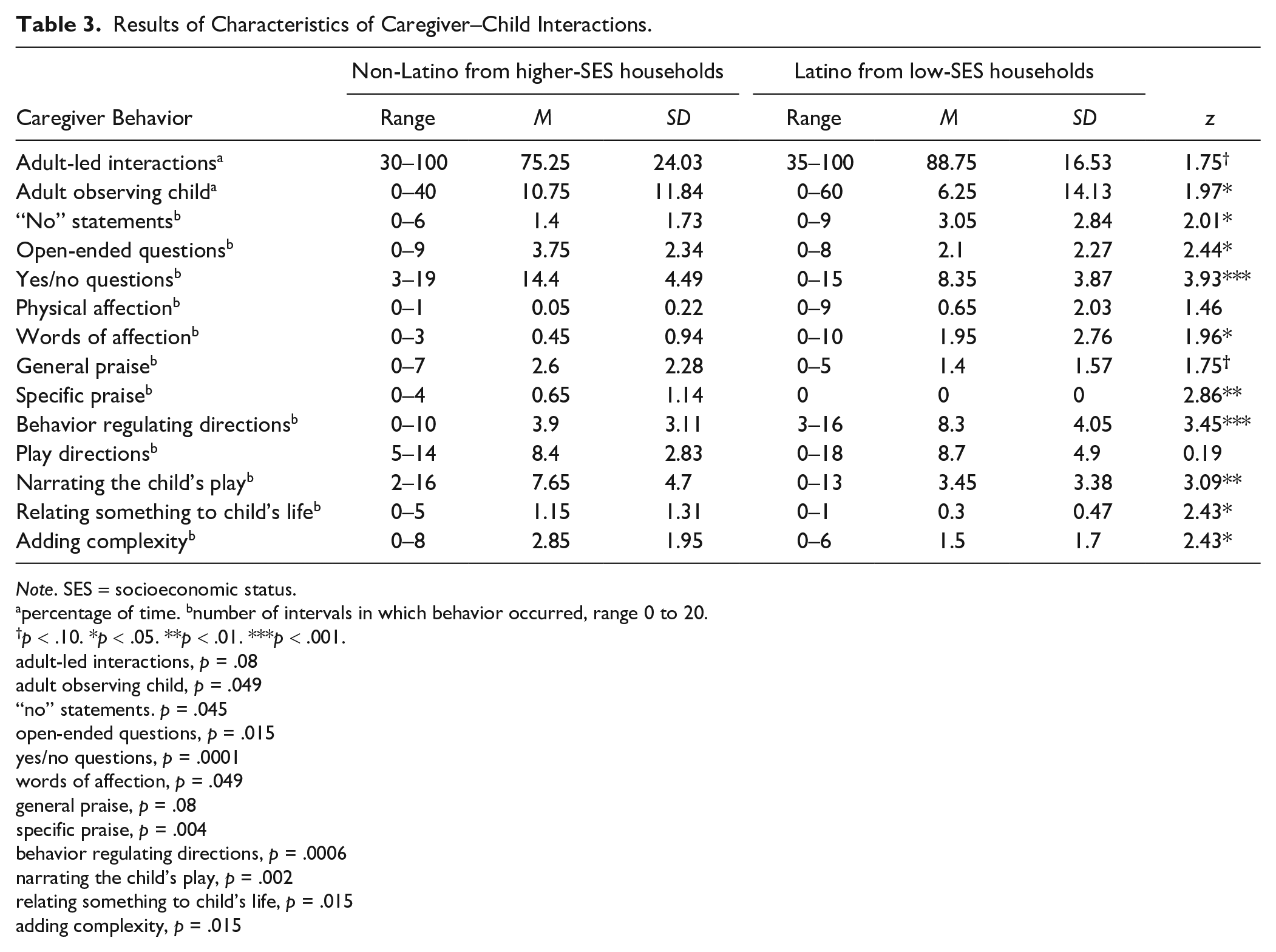
Table 3 shows the results of the characteristics of caregiver–child interaction. Spanish-speaking Latino caregivers from low-SES households spent higher percentages of time of the interaction in adult-led interactions (z = 1.75, p = .08) and had more intervals that included behavior regulating directions with their children (z = 3.45, p < .001) than non-Latino English-speaking high-SES caregivers. Latino caregivers used words of affection during more intervals with their children (z = 1.96, p = .049) than non-Latino caregivers. Latino caregivers also had more intervals that included “no” statements to their children than non-Latino caregivers (z = 2.01, p = .045).
Results of Characteristics of Caregiver–Child Interactions.
Note. SES = socioeconomic status.
percentage of time. bnumber of intervals in which behavior occurred, range 0 to 20.
p < .10. *p < .05. **p < .01. ***p < .001.
adult-led interactions, p = .08
adult observing child, p = .049
“no” statements. p = .045
open-ended questions, p = .015
yes/no questions, p = .0001
words of affection, p = .049
general praise, p = .08
specific praise, p = .004
behavior regulating directions, p = .0006
narrating the child’s play, p = .002
relating something to child’s life, p = .015
adding complexity, p = .015
Non-Latino English-speaking high-SES caregivers used praise during more intervals, both general praise (z = 1.75, p = .08) and specific praise (z = 2.86, p < .01) with their children. No instances of specific praise were observed in the Latino sample. Non-Latino caregivers spent more percentage of interaction time observing and narrating their children’s play than Latino caregivers (z = 1.97, p = .049, and z = 3.09, p = .002, respectively). Non-Latino caregivers used some cognitive stimulation strategies more frequently than Latino caregivers. They related the play to the child’s life (z = 2.43, p = .015) and added complexity to the child’s statement (z = 2.43, p = .015) in more intervals.
Caregiver Use of Naturalistic Language Support Strategies and Linguistic Input
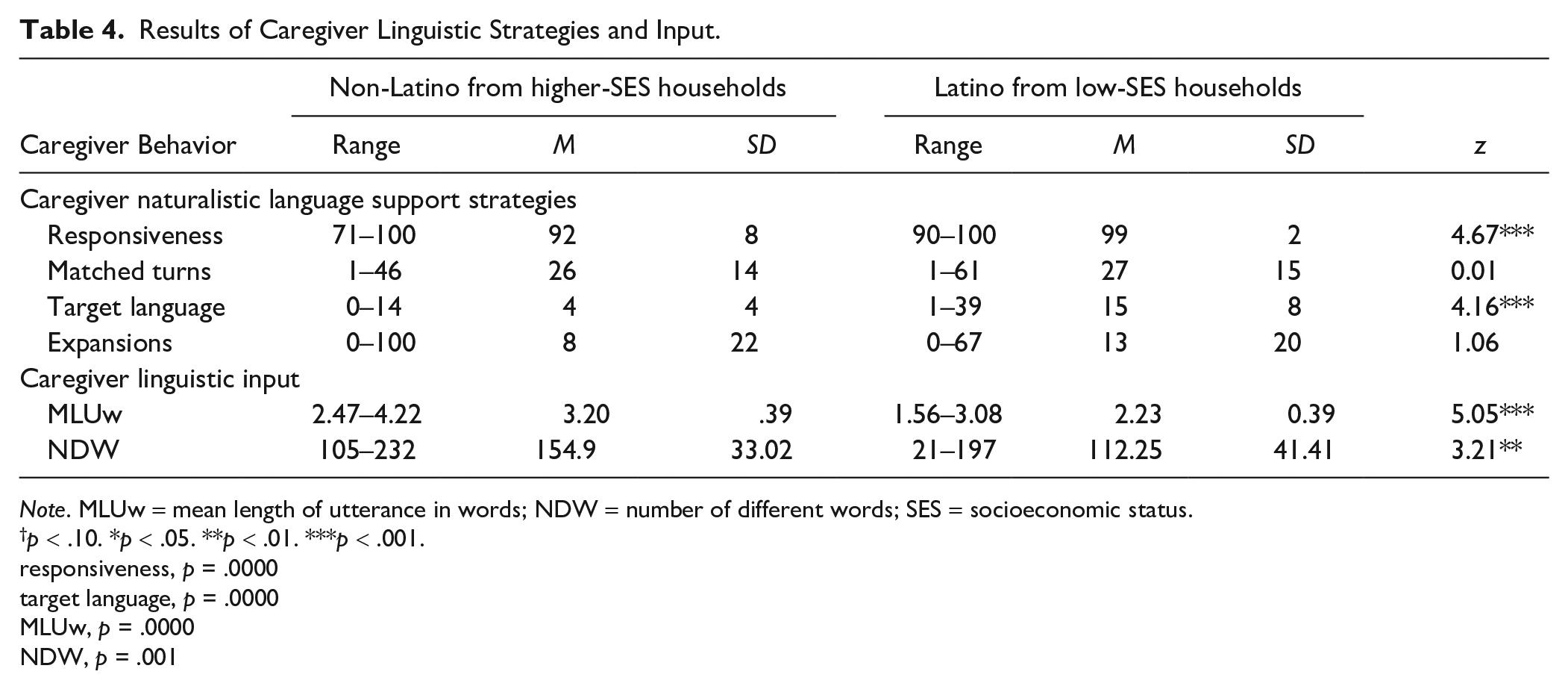
See Table 4 for results of caregiver language support strategies and linguistic input. Both Latino and non-Latino caregivers demonstrated use of strategies that have been shown to support children’s language development. Latino caregivers had higher percentages of utterances that were responsive to their child’s communication (z = 4.67, p < .001) and had a higher percentage of total utterances that were at the child’s target level (z = 4.16, p < .001). Non-Latino caregivers had more intervals that included yes/no (z = 3.93, p < .001) and open-ended (z = 2.44, p = .015) questions with their children.
Results of Caregiver Linguistic Strategies and Input.
Note. MLUw = mean length of utterance in words; NDW = number of different words; SES = socioeconomic status.
p < .10. *p < .05. **p < .01. ***p < .001.
responsiveness, p = .0000
target language, p = .0000
MLUw, p = .0000
NDW, p = .001
On average, non-Latino caregivers used longer utterances (MLUw) than Latino caregivers (z = 5.05, p < .001). In addition, the non-Latino caregivers displayed more lexical diversity (NDW) in their interactions with their children (z = 3.21, p < .001).
Discussion
We examined the interactions between Latino Spanish-speaking caregivers from low-SES backgrounds and non-Latino English-speaking caregivers from high-SES backgrounds with their young children with language delays. Our findings may provide additional empirical guidance for adapting evidence-based early interventions to address the needs of Spanish-speaking families from low-income households. We were the first to use observational measures of Spanish-speaking Latino caregivers from low-SES backgrounds and their children with identified language delays to examine caregivers’ interaction characteristics, use of naturalistic language support strategies, and linguistic input.
Characteristics of Caregiver–Child Interactions
Similar to previous researchers who examined parenting in Latino caregivers from low-SES backgrounds (Domenech Rodríguez et al., 2009; Dyer et al., 2014), we found that caregivers were more directive in interactions with their children but also warm and responsive. By contrast, the non-Latino caregivers, who may be more likely to endorse values of child autonomy (Van Kleeck, 1994), were more likely to follow the child’s lead by observing and narrating their child’s play, which is typically taught as a part of naturalistic language intervention and important for increasing opportunities for joint attention (Kaiser & Hampton, 2016). When adults follow children’s lead in play and routines, children do not have to shift their attentional focus to comprehend the adults’ linguistic input (Adamson et al., 2019; Snow & Gilbreath, 1983). Sustained focus while processing linguistic input is assumed to make language learning easier for the child (Brady et al., 2009; Tomasello & Farrar, 1986). Praise was used more frequently by non-Latino caregivers. Calzada and colleagues (2013) found that Latina mothers reported using praise as a method of boosting children’s self-esteem but did not report using it contingently as a means of changing children’s behavior, which might explain why no instances of specific praise were observed during the caregiver–child play interaction for the Latino sample.
Caregiver Use of Naturalistic Language Support Strategies
Importantly, there were no significant differences in caregivers’ uses of matched turns or expansions of language. Caregivers in both groups used these strategies infrequently. Although Latino caregivers were more likely to use targets matched to their child’s language level (M = 15% of utterances) than non-Latino caregivers (M = 4% of utterances), neither sample of caregivers approached the 50% criterion level for target-level language use established for evidence-based EMT (Roberts et al., 2014).
Caregiver Linguistic Input
Non-Latino caregivers used longer and more diverse utterances directed to children than the Latino caregivers. However, the non-Latino caregivers from this sample came from high-SES households; thus, these differences may be related to differences in income and education level between the samples rather than to culture alone (Hoff, 2003).
Implications for Practice
Responsiveness appears to be a unique strength of Latino caregivers and forms a strong foundation for caregiver-implemented language support. Latino caregivers responded to 90% to 100% of their child’s utterances (M = 99%). Responding to children’s communication may be congruent with beliefs that children should feel loved and not neglected or ignored (Calzada et al., 2013; Cycyk & Hammer, 2018). They might benefit from interventions that focus on responding to their children’s communication with diverse vocabulary and complex phrases rather than interventions that focus talking more. Improving the quality and complexity of linguistic input is likely to be more effective in supporting their children’s language than increasing the quantity of speech directed at the child (Hoff et al., 2014).
For Latino Spanish-speaking families, teaching caregivers to notice the child’s specific interests within activities that are led by adults may be more culturally congruent than asking caregivers to follow the child’s lead and shift activities as the child’s attention shifts. For example, instead of teaching caregivers to have several toys available and allow the child autonomy in leading the play, practitioners can teach caregivers to notice and talk about what their child is looking at, pointing to, requesting, or commenting on within a more structured activity or toy set chosen by the caregiver (Peredo et al., 2017). This small change maintains the function of the strategy by easing the cognitive load on the child and creating opportunities for joint attention, while maintaining cultural congruence for Latino caregivers.
Caregivers in both groups used similar amounts of play directions (e.g., corta la fruta. [cut the fruit]), but caregivers in the Latino group utilized significantly more behavior-regulation directions (e.g., siéntate. [sit down]). Using more behavior-regulating directions may be a characteristic of more directive parenting observed in other research including Spanish-speaking families from low-SES households (Domenech Rodríguez et al., 2009; Dyer et al., 2014). In tailoring interventions to align with directive parenting styles, it is important to examine the role of play- or activity-related directions that do not disrupt child engagement and rather enhance the child’s play or conversation. It may be appropriate to teach Latino caregivers from low-SES backgrounds to limit the behavior regulating directions (e.g., Ven acá. [Come here]), but encourage a moderate level of use of directions that serve to keep play going for the child (e.g., Sirveme un café por favor. [Serve me a coffee please]).
There were no instances of behavior specific praise observed in the Latino sample, and Latino caregivers have reported that they do not use praise in that way (Calzada et al., 2013). Providing warm contingent affectionate responses may be a more natural and culturally congruent way of reinforcing child behavior. For example, saying something like “me gusta que estás sentado para jugar [I like that you are sitting to play],” to reinforce the child sitting and playing may not fit with how Latino caregivers teach and discipline their children. Instead, practitioners can encourage caregivers to use warm and affectionate statements contingent on desired behaviors. For example, the caregiver might say “me encanta jugar con ti mi amorzito [I love to play with you my little love]” paired with a kiss or hug when the child is sitting and playing nicely. Although this does not tell the child exactly what the behavior is that they are doing that is being reinforced, it does provide positive attention contingent on positive behavior, making it more likely the child will continue to engage in the appropriate behavior.
Limitations and Future Research
A primary limitation of the study was the use of samples of Latino and non-Latino families who were not matched for SES. The Latino families who participated in this study all came from low-income households and were Spanish-speaking; thus, these findings cannot be generalized to higher income Latino families and to Latino families who speak primarily English or who are bilingual. Because of the significant differences in SES between the Latino and non-Latino sample and the small sample size, we cannot differentiate between effects of culture and of income within this study. However, we intended to determine if there were baseline differences in caregiver interactions with children who had language delays that would indicate the types of modifications in caregiver-implemented language intervention to adapt to the low-SES Spanish-speaking Latino caregivers’ style and linguistic input. It is also important to note that SES, language use, and acculturation are highly correlated within Latino families residing in the United States. It is more likely that families who are Latino and speak English (who are bilingual or English-speaking only) may adhere to some mainstream U.S. cultural values and have less barriers (both culturally and linguistically) to access to existing interventions. Although the comparison in this study has its limitations, the comparison groups were purposefully chosen to inform adaptations of interventions specifically for Spanish-speaking Latino families from low-SES backgrounds who reside in the United States.
Another limitation that may impact findings is that interactions were observed in different settings (at home for the Latino sample and in the clinic for the non-Latino sample). The choice of setting was based on what seemed most appropriate for the population of participants. In addition, the observations were didactic with one caregiver and the child. It is unknown how interactions and strategy use would have differed if siblings or multiple caregivers took part in the interaction. This may be an especially important in the Latino sample where interactions with multiple caregivers or siblings may be more common (Cycyk & Hammer, 2018; Van Kleeck, 1994). Observing interactions across caregivers or with multiple caregivers present (including siblings) is an area for future research.
Longitudinal and larger replications of our study are critically needed before we can generalize our results. Furthermore, our analytic approach was limited. Given this small sample size, the alpha value was not adjusted for multiple comparisons to avoid false negatives. A more conservative nonparametric approach was used, and the findings fit with existing research. In addition, in a larger sample, correlates of parenting style and linguistic input could be examined to provide a better understanding of variability within and across populations. Latent class analysis could be utilized to identify different profiles of caregiver interaction styles and the impact on child language outcomes. Importantly, children in Latino and non-Latino groups for this study were matched on language and cognitive abilities; thus it was not possible to determine how differences in caregivers’ interaction styles may have contributed to children’s language and cognitive abilities or the extent to which caregivers were adapting to these differences in their children’s abilities.
Conclusion
We found important differences and similarities in how caregivers from Latino Spanish-speaking low-SES households and non-Latino English-speaking high-SES households interact with their young children with language delays. These findings support previous research with typically developing children that indicated Latino caregivers are directive, warm, and responsive to their children. Specific information about the interaction strategies that caregivers from Spanish-speaking and Latino backgrounds naturally use when interacting with their children with language delays provides some guidance for adapting caregiver-implemented communication interventions to be culturally congruent and potentially effective.
Footnotes
Acknowledgements
Lauren Perrillo contributed to developing the interaction style code, coded data, and drafted tables; the authors appreciate her contribution to this manuscript. They also acknowledge the contributions of the Vanderbilt KidTalk Research Group for their support in completing this project.
Declaration of Conflicting Interests
The author(s) declared no potential conflicts of interest with respect to the research, authorship, and/or publication of this article.
Funding
The author(s) disclosed receipt of the following financial support for the research, authorship, and/or publication of this article: This research was supported by grants from the National Institute of Deafness and Communication Disorders (grant no. 1R21DC015850) and the Institute for Educational Sciences (grant no. R324A090181).