







Abstract
Raising a young child with challenging behavior can have a significant impact on families’ well-being and family functioning. Despite advancements in the field, there is a paucity of research focused on effective ways to address their unique experiences. This qualitative meta-synthesis aims to identify the needs of families with young children who exhibit challenging behavior to inform more robust and responsive family-centered practices. Using a constant comparative approach, we used axial coding to examine six studies involving 49 families and a critical appraisal approach to evaluate their strengths and weaknesses, based on recommendations articulated by the Cochrane Collaboration. We determined that six major themes were most salient: (a) the family system, (b) families’ self-concept, (c) families’ capacity, (d) families’ social and emotional needs, (e) families’ experiences with professionals, and (f) families’ initial concerns. Our findings indicate that studies were conducted with acceptable rigor and all studies established credibility and trustworthiness of their results. The importance of family-centered practices, parenting interventions, and addressing the mental health needs of families are discussed.
Recent estimates suggest that 10% to 20% of children between the ages of 2 and 5 engage in behaviors that are recognized as challenging (Hemmeter & Conroy, 2018). Although externalizing behavior problems typically emerge in a child’s second year of life, these behaviors often dissipate when children enter their school-age years (Heberle et al., 2015). However, for some children, challenging behaviors persist and negatively affect their long-term behavioral, emotional, social, and academic outcomes (Jones et al., 2015). While challenging behavior has an adverse impact on children’s relationship with their teachers and peers, it is particularly burdensome for families. Furthermore, despite research advancements in evidence-based supports for young children with challenging behaviors (Hemmeter & Conroy, 2018), there is a paucity of research that focuses on effective ways to address families’ unique experiences while raising young children with serious social and emotional concerns.
Challenging behavior has a profound impact not only on the child’s social and academic success but also on the psychological functioning and overall well-being of their families. Higher levels of stress associated with raising children with challenging behavior can make families more vulnerable to mental stress and poor physical outcomes (cf. Eisenhower et al., 2009; Neece et al., 2012). For example, Feinfield and Baker (2010) found a reduction in child behavior problems after a parent treatment program mediated changes in parent attitudes and stress. For this reason, it is important to underscore the need for responsive and comprehensive approaches that address not only the social and emotional needs of young children who exhibit challenging behavior, but the mental health outcomes of their caregivers as well.
A number of factors contribute to the well-being of families raising a child with challenging behavior. Perceived social support has been associated with positive family outcomes and healthy adaptation (cf. Heberle et al., 2015; Respler-Herman et al., 2012). Heberle and colleagues (2015) examined the buffering effects of perceived social support (e.g., advice, validation, and assistance with daily tasks) as a protective factor for parent and child outcomes in a diverse group of 1,161 mother–child pairs. One of the main findings from this study demonstrated that social support moderated psychological distress and parenting behavior and may increase positive child outcomes. Second, self-efficacy has been noted in the literature as a mediator for psychosocial outcomes in families. Studies have found that the more depressive symptoms and parenting stress a mother experiences due to child behavior problems, the lower the mother’s estimate of their self-efficacy (Jackson & Huang, 2000). In fact, self-efficacy is a critical risk factor in both parent and child emotional well-being, with higher parent self-efficacy predicting better behavioral outcomes in children (Albanese et al., 2018). Fortunately, research documents that strong parent–professional partnerships positively affect parental stress and families’ quality of life, including their self-efficacy (cf. Popp & You, 2016; Trivette et al., 2010). For example, Trivette and colleagues (2010) conducted a meta-analysis of eight studies that examined the influences of family-centered practices on self-efficacy beliefs, parent well-being, parent–child interactions, and child development. Results indicated that family-centered practices are directly and indirectly related to parenting self-efficacy beliefs and the psychological well-being of families. Although research suggests that families who feel validated and supported are better equipped to help their children achieve academic and social and emotional success, a responsiveness to the voices of families is still largely absent in the field of education.
Ecological Systems Theory
A relevant theoretical framework for conceptualizing the experiences of families who have children with challenging behavior and understanding its impact on primary caregivers’ psychological well-being and quality of life is the ecological systems theory (Bronfenbrenner & Ceci, 1994). An ecological perspective suggests that the influences of challenging behavior do not exist in isolation but occur within five systems (e.g., microsystem, mesosystem, exosystem, macrosystem, and chronosystem). The microsystem involves the child’s direct environment (e.g., family, school, and community) and its immediate influence on their social and emotional development. While the mesosystem highlights the relationships within the microsystem and the impact of these relationships on the child’s growth and development, the exosystem describes experiences that indirectly affect the child, such as the loss of a caregiver’s job. The macrosystem represents systems within the larger culture that affect the child and their family and the chronosystem charts positive and negative environmental events they experience across time. In using this framework, risk and protective factors can be identified and interpreted within a broader context that would enable schools to develop more responsive programs that meet the critical needs of families with children who have challenging behavior. Much evidence exists to support the notion that systems that are responsive to the child and their family early on lead to better life outcomes for the child (Shonkoff, 2000).
Purpose of Meta-Syntheses
We conducted a qualitative meta-synthesis to integrate and compare findings from qualitative studies focused on families’ experiences raising young children with perceived challenging behaviors (Grant & Booth, 2009). A new method for identifying qualitative evidence within a body of literature, a meta-syntheses allow for systematic examination of thematic ideas across individual studies to allow for a new interpretation of a research field (Gough & Thomas, 2016). Specifically, this approach has the capacity to enhance our understanding of young children with perceived challenging behaviors and their families while allowing for examination of the quality and rigor of included studies. Timulak (2009) suggests that data analysis should follow the descriptive-interpretative approach which includes three processes: (a) assigning data into domains that represent the conceptual framework (e.g., microsystem, mesosystem, exosystem, macrosystem, and chronosystem), (b) breaking the text into distinct meaning units (e.g., impact of challenging behavior on the family system, impact of challenging behavior on families’ emotions and self-concept, and families’ knowledge of disabilities and/or challenging behaviors), and (c) generating themes through comparison of the defined meaning units (e.g., discipline practices, changes in family activities, and self-advocacy efforts). New knowledge gathered from this analysis can inform directions for future research, family-centered policies, and practice initiatives. Hence, the purpose of this article is to identify and recommend interventions to implement with families to contribute new understandings of a phenomenon by interpreting existing research on the topic (Nye et al., 2016). To date, no systematic analysis has been conducted on this body of literature. Our research questions are as follows:
Method
We aimed to synthesize the qualitative literature on families’ experiences with young children with challenging behavior. Here, we define challenging behavior as any repeated pattern of behavior that disrupts learning and engagement, family functioning, places children at risk for preschool suspension or expulsion, negatively affects their social and emotional growth, and affects their relationships with teachers and peers (Smith & Fox, 2003). We use the term “family or families” (e.g., biological parents, primary caregivers, and legal guardians) to define our population. Our operational definition of family-centered practices is in accordance with recommendations from the Division for Early Childhood (2014): Practices that treat families with dignity and respect; are individualized, flexible, and responsive to each family’s unique circumstances; provide family members complete and unbiased information to make informed decisions and involve family members in acting on choices to strengthen child, parent, and family functioning. (Division for Early Childhood, p. 10)
Procedure
For this review, we separately searched three online databases (Education Resources Information Center [ERIC], PsychINFO, and Academic Search Complete) and the Preferred Reporting Items for Systematic Reviews and Meta-Analyses (PRISMA) guidelines (Moher et al., 2009) were followed related to search strategy, study selection, and data collection process to strengthen and clarify the methodological description of our research. The following search terms were used: (challenging behavior) AND (parent mental health); (challenging behavior) AND (child mental health); (challenging behavior) AND (trauma); (challenging behavior) AND (social-emotional development); (challenging behavior) AND (family perspectives), (challenging behavior) AND (early childhood); (challenging behavior) AND (family life); (challenging behavior) AND (family functioning); (challenging behavior) AND (expulsion or suspension). Keywords were chosen (e.g., trauma, expulsion) to capture the population of young children who may demonstrate challenging behavior as a result of environmental events. Keywords commonly used to describe older children with challenging behavior (e.g., problem behavior, disruptive behavior) were excluded. Studies had to meet the following inclusion criteria to be identified for the review: (a) published in a peer-reviewed journal; (b) published in English; (c) published between 1987 and 2019; (d) caregivers and/or family members of children with challenging behavior were participants; (e) sample included at least one child with challenging behavior below the age of 8 years; (f) researchers used a qualitative design as defined by nonnumerical, mathematical, or formal transformations of data collected through situated activity (e.g., unstructured open-ended interviews, focus groups, narratives, and case studies; Crawford, 2019); and (g) reserachers focused on family perspectives, family life, and/or functioning as it relates to supporting a child with challenging behavior.
Database searches led to the identification of 2,112 articles. Immediately following the online search, an additional 107 articles were identified through backward (i.e., reference harvesting) and forward searches (i.e., citation searches) for a final total of 2,219 articles. Backward searching was conducted by reviewing the reference list of the articles that met our inclusion criteria, and a forward search was conducted using Google Scholar’s “cited by” feature. After 71 duplicates were removed, 2,148 articles were screened by the first author at the title level, which resulted in the exclusion of 1,954 articles. Articles were excluded based on the following criteria: (a) articles only used a quantitative design (n = 151), (b) articles did not capture the experiences of families in the United States where results are transferable (n = 68), (c) articles did not include a family member as a participant (n = 25), (d) articles did not focus on family perspectives (n = 18), and (e) articles were not peer reviewed (i.e., unpublished dissertations; n = 7). The remaining 194 articles were screened at the abstract level and an additional 128 articles were excluded. Sixty-six articles were examined at the full text level to determine inclusion in our systematic review. Of the 66 articles, six studies met our inclusion criteria and were subsequently included in our review.
Interrater reliability
We conducted interrater reliability for our search process in two ways. First, we randomly selected 30% of the 194 articles (n = 59) examined at the abstract level and achieved an interrater reliability of 91.6%. Second, we randomly selected roughly 30% of the 66 articles (n = 20) examined at the full text level and achieved an interrater reliability of 100%. Supplemental Table 1 provides a summary of the six studies that met the inclusion criteria. Figure 1 displays a PRISMA diagram that summarizes the screening process.
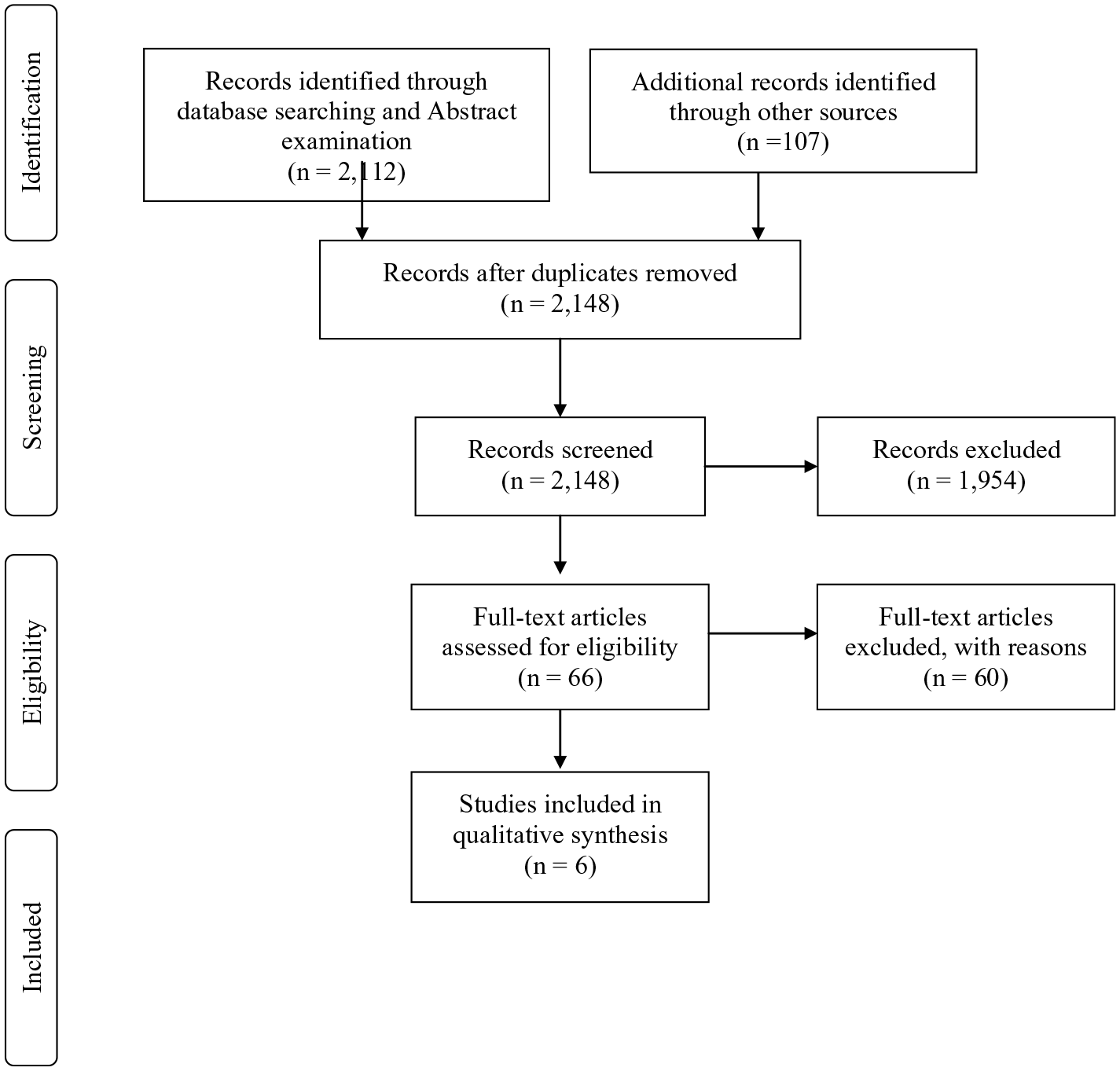
PRISMA flow diagram.
Data Coding and Analysis
Studies identified for inclusion were coded based on descriptive characteristics and study outcomes. Studies were also coded based on type of qualitative method employed (e.g., interview, focus group), including measures to document credibility. In addition, studies were coded based on participant demographics that included number of participants, race/ethnicity, relation to child (e.g., mother, father, grandmother, and grandfather), education, age of child participants, geographic location of conducted studies, and disabilities identified, including reported challenging behaviors. We also coded study design characteristics and critically appraised study findings based on five criteria from the Cochrane Collaboration of Qualitative Methods (i.e., reflexivity, credibility, transferability, dependability, and confirmability; see Supplemental Table 3; Hannes, 2011).
To analyze data across the six studies, we followed two recommendations for conducting a meta-analysis of qualitative studies put forth by Timulak (2009). Data analyzed were findings published in included studies. Both authors read all six articles to familiarize themselves with the purpose of the studies, method, and outcomes. To facilitate the analytic process, the “Results” section of each article was extracted and axial coding was used to conduct line by line analysis using Microsoft Excel™ (Corbin & Strauss, 1990). Second, authors coded one article together and met to discuss the ecological systems theory (Bronfenbrenner & Ceci, 1994) as a system for organizing data and emergent themes and subthemes. Disagreements were reviewed and discussed until consensus was reached. A list of emergent themes was compiled in a Word document. Distinct meaning units were determined based on the salience of each category across each study. In addition, for each emergent unit, operational definitions were created based on how themes emerged across each study. The first author coded all six articles independently using the themes and subthemes generated. A third coder reviewed all data to confirm alignment across all five levels of the ecological systems theory (Bronfenbrenner & Ceci, 1994). See Supplemental Table 2 for examples of codes that were generated.
Critical Appraisal Approach
To address our first research question, we employed a method for critically appraising findings from qualitative research for trustworthiness based on five criteria from the Cochrane Collaboration of Qualitative Methods (Hannes, 2011): (a) reflexivity, (b) credibility, (c) transferability, (d) dependability, and (e) confirmability. The emergence of these five techniques is the result of a growing recognition for increased rigor in qualitative research. Reflexivity was used to examine authors’ own rigor and bias during the process of data collection and analysis. With the use of a more analytical framework to critique qualitative studies, researchers can examine the strengths and weaknesses of studies, identify whether research questions are related to the intervention employed and study findings, and discern whether the quality of study findings are appropriate for practice. Thus, the goal of the critical approach is to identify the best evidence from well-designed qualitative authors studies to establish a body of evidence that inform practice. To establish interrater reliability, the authors reviewed each study separately to determine evidence of the five criteria. Average interrater reliability was 95.83% (range = 75%–100%). Interrater reliability was calculated by dividing the number of agreements plus total number of ratings by the number of agreements multiplied by 100.
Reflexivity
The process of examining oneself as a researcher, and how this positionality affects research decisions, is critical for minimizing bias in data analysis and coding. During data coding and analysis, the authors engaged in critical reflection at all phases of integration, synthesis, and interpretation of the data to increase the rigor of the meta-synthesis. The authors were aware that their individual experiences affected how they analyzed outcomes from each study. As such, we attempted to limit our bias by openly discussing our perceptions, prior experiences with supporting families with children with challenging behavior and/or disabilities, and our goals for the meta-synthesis. In addition, as a result of our awareness of our positionality, we recruited an outside reliability coder to ensure accuracy of the data and to minimize bias in our findings.
Credibility
Credibility evaluates the accuracy and verifiability of findings to ensure that the views of the participants studied are accurately reflected. To establish credibility, studies can report evaluation techniques such as member checking, peer debriefing, or independent analysis of the data by more than one researcher. The authors reviewed each study for evidence of the aforementioned. If studies reported evidence of these measures, agreement for credibility was established.
Transferability
A primary goal of conducting a meta-synthesis is to identify whether research findings generalize to other target groups under similar conditions and/or settings. To examine transferability, evaluation techniques included review of participant demographics, background information on study context, and the theoretical framework for each study. The authors examined the level of detail provided on participant demographics across a range of categories, which included age, ethnicity, gender, socioeconomic status, education level, marital status, and disability diagnosis of child and/or evidence of persistent challenging behavior. The authors also examined whether information was provided about the theoretical framework of the study and study context.
Dependability
To ensure dependability, decisions made on data coding and analysis should be clearly delineated for replication purposes. The authors reviewed all studies to identify whether methods such as triangulation, reflexivity, peer review, audit trails, and/or other debriefing methods were employed across studies to ensure logical documentation of research decisions. If evidence of such methods were observed, evidence of dependability was recorded.
Confirmability
Confirmability is the process by which studies are examined to ensure that participants’ narratives are authentically shaped by their own words and not influenced by researcher bias. The authors examined studies to identify whether reflexivity methods were employed and information on researcher’s background, education, perspective, and/or school of thought were provided. If either one of these methods were employed, it was decided that confirmability measures were established.
Reliability
All six studies were selected for reliability coding. The second author conducted reliability on three studies and a graduate student in special education was trained to conduct reliability on the remaining three studies. First, the first author divided findings from each study into meaning units (i.e., the smallest unit of data that can stand on its own) and coded all six studies independently, using the previously agreed upon themes. Second, the first author transferred all meaning units to Microsoft Excel™ for reliability coders. Reliability coders matched identified themes and subthemes from the coding manual to the meaning units in the Microsoft Excel™. Identified themes and subthemes were arranged into a table and the number of occurrences (i.e., frequency) of each theme and subtheme was calculated across each study. Reliability was calculated by dividing the total number of agreements by the number of agreements plus disagreements and multiplying by 100. The average reliability for the main themes was 93.5% (range = 87.8%–97.8%) and the average reliability for subthemes was 98.8% (range = 92%–100%). Frequency calculations of each theme and subtheme were also coded by counting the number of times each theme or subtheme emerged across articles.
Findings
All six articles described the experiences of families of young children with challenging behavior, including families’ perspectives on challenging behavior, the significant impact of challenging behavior on the family system, family functioning, and families’ experiences when seeking assistance to address their child’s social and emotional development (Doubet & Ostrosky, 2015, 2016; Fox et al., 2002; Turnbull & Ruef, 1996, 1997; Worcester et al., 2008). It is important to highlight that the data for four articles came from two sets of identical authors with identical participants (Doubet & Ostrosky, 2015, 2016; Turnbull & Ruef, 1996, 1997). Our first research question is addressed by our critical appraisal findings and subsequent research questions are addressed by our findings discussed within the ecological systems framework.
Participant Characteristics
A total of 49 families of preschool children with challenging behavior were identified across all six studies. Race/ethnicity categories were reported as 55.32% White (n = 26), 21.28% African American (n = 10), 14.89% Latina (n = 8), 6.38% Hispanic (n = 3), 2.13% biracial (n = 1), 2.13% Nigerian (n = 1), 2.13% Ghanaian (n = 1), and 2.13% West Indian (n = 1). The educational background of family participants comprised less than a high school diploma (n = 5), associate’s degree (n = 1), bachelor’s degree (n = 2), and graduate school completed (n = 4). Family participants comprised mothers (n = 42), fathers (n = 7), grandmothers (n = 2), a grandfather (n = 1), an aunt (n = 1), and a sibling/roommate (n = 1). The studies reported children with challenging behavior ranging in age from 2 to 12 years. The family participants of one study included youth and adults with challenging behavior (Turnbull & Ruef, 1996). Families reported that their children had been diagnosed with autism, intellectual disabilities, multiple disabilities, cerebral palsy, language delay, developmental delay, and William’s syndrome. Families in two studies reported that their children had no diagnosed disabilities but engaged in persistent challenging behavior, were expelled from childcare a total of 10 times, and were at risk for expulsion 4 times (Doubet & Ostrosky, 2015, 2016). Challenging behaviors described by study participants included physical aggression, verbal aggression, property destruction, pica, and self-injurious behaviors. Studies reported that participants were from a variety of settings, including Midwest and Southeastern region of the United States, as well as from suburban, rural, and small-town areas.
Study Design and Analysis Approach
All studies used a qualitative design and data were collected using semi-structured interviews in person or by telephone. Four studies analyzed their data using content analysis as described by Johnson and LaMontagne (1993), Krueger (1988), Morgan (1988), and/or Skrtic (1985; Doubet & Ostrosky, 2015, 2016; Turnbull & Ruef, 1997). Fox and colleagues (2002) reported analyzing data through open coding. Turnbull and Ruef (1996) reported using constant comparative method of data analysis as described by Glaser and Strauss (1967). Worcester and colleagues (2008) reported that they analyzed complete transcripts through a systematic process; however, specific details of their method were not discussed. See Supplemental Table 1 for a description of participant demographics, study design, and outcomes.
Ecological Systems Theory
Six major themes and 34 subthemes emerged across all six studies. The thematic units identified related to three aspects of the ecological systems theory (Bronfenbrenner & Ceci, 1994). At the microsystem level, three major themes were identified: (a) families’ knowledge of disabilities and/or challenging behavior, (b) families’ social and emotional needs, and (c) impact of challenging behavior on families’ emotions and self-concept. At the mesosystem level, one major theme was identified, namely, (d) families’ experiences with professionals; at the exosystem level, one major theme was identified, namely, (e) impact of challenging behavior on the family system; and, at the macrosystem level, an overlapping theme with the microsystem, was identified, namely, (f) families’ knowledge of disability and/or challenging behavior. Finally, at the chronosystem level, one major theme was identified, namely, (g) initial concern and worry about the child’s future. See Supplemental Table 2 for themes, subthemes, and example statements. Please note that n represents the number of statements made, relating to each theme and/or subtheme.
Microsystem level
Impact of challenging behavior on families’ emotions and self-concept
All families in the analysis discussed the impact of challenging behavior on their emotions and self-concept (n = 31). The subthematic units included discussion of how challenging behavior caused significant stress and changes in their mood (n = 10), families’ mental well-being and quality of life (n = 6), feelings of frustration and guilt when they had to cancel family plans as a result of their child’s challenging behavior (n = 1), and feeling embarrassed and judged by strangers when the behavior escalated in public (n = 5). The subthematic units also included discussion of families’ frustration, stress, and disappointment regarding their child’s inability to appropriately engage in play, shared hobbies, and social interaction without demonstrating violent tantrums (n = 3); families’ concern about their child’s behavior at school and in community contexts (n = 5); and the impact of challenging behavior on the child’s future (i.e., imprisonment; n = 1).
The reviewed studies showed that parenting a child who engages in persistent challenging behavior greatly affects families’ beliefs about their parenting capabilities and their feelings of competence in managing challenging behavior. For example, Fox et al. (2002) reported that one family shared as follows: “And there are times when you’re just so emotionally and physically exhausted that you just don’t want to do anything more. You just want to scream” (p. 446). Similarly, Doubet and Ostrosky (2015) reported that one family doubted their parenting skills and questioned their own judgment. For example, “And then I started to second guess myself sometimes . . . maybe he is just being a boy. . .” (Doubet & Ostrosky, 2016, p. 181).
Families’ knowledge of disabilities and/or challenging behavior
Thematic units in this category discussed caregivers’ knowledge of disabilities and/or challenging behavior (n = 29). The subthematic units included a description of the type of disability, corresponding disability characteristics, including challenging behavior (n = 8), families’ attempts to seek and gain new knowledge about a disability (n = 6), families’ lack of understanding about causes of the child’s challenging behavior at home and across contexts (n = 3), appropriate discipline practices (n = 3), and implementation of strategies to address a child’s challenging behavior and/or their desire to learn new strategies (n = 9).
Families described their child’s challenging behavior as ranging from mild (i.e., self-talk, provoking embarrassment, and annoying) to severe (i.e., tantrums, aggression toward others, or property destruction). Caregivers in Doubet and Ostrosky (2016) noted that their children had ongoing challenges in the area of social and emotional development that resulted in expulsion. Families reported not understanding the cause of their child’s challenging behavior, including methods for prevention. Although families used the internet as a primary source of information to gain access to strategies and resources to support their child’s social and emotional development, they found recommended strategies to be ineffective.
Families’ social and emotional needs
All families discussed a variety of social and emotional needs they may have as a result of having a child who exhibits challenging behavior (n = 25). Subthematic units discussed the needs of caregivers with regard to their mental and physical health (n = 10), self-advocacy efforts (n = 5), avenues of support from family members, professionals, and community members (n = 10) who served as a benefit to the family unit. Across all studies, families expressed a need for a “shoulder to lean on.” For example, in Fox et al. (2002), families expressed a need for support from extended family, emotional support and encouragement from professionals, and parent-to-parent support. Families also expressed that it is helpful for them to engage in religious practices and spirituality but often do not have the time or energy to access these supportive networks. Families reported a need for respite care which families admitted can be challenging as they feel chronically “on duty.” Notably, in Turnbull and Ruef (1996), mothers reported that while on a physical break, they continue to experience feelings of guilt and worry, which underscores their need for social and emotional supports. Finally, families expressed a need for practical information that could aid in supporting their overall mental health, such as how to develop self-care practice, sustain their energy levels, find childcare, and enjoy vacations (Turnbull & Ruef, 1996).
Mesosystem level
Families’ experiences with professionals
Families across all six studies discussed their experiences with professionals (n = 68). Subthematic units discussed families’ concern about use of non-evidence-based strategies such as suspension and/or expulsion (n = 3), discussion of inclusive practices (or the lack thereof; n = 13), not addressing the challenging behavior (n = 3), new to special education specific knowledge about a child’s challenging behavior (n = 10), families’ negative/positive interactions with professional staff (n = 18), challenges experienced seeking assistance from professionals (n = 11), and difficulties accessing appropriate services for their children (n = 10). Across all studies, families were told that their child was at risk of expulsion or would be expelled which further complicates families’ access to services. Families expressed concerns about practitioners’ use of non-evidence-based strategies and lack of responsiveness to managing their child’s challenging behavior. Specifically, families reported frustration with seeking assistance (Doubet & Ostrosky, 2016). One family shared, “People just kept patting my back, ‘Oh, it’ll be alright. It’s just a rough year.’ I’m like, no, no, no, let’s get some action going. Let’s do something about this . . . Very frustrating.” Families also shared that teachers lacked training and knowledge about developmentally appropriate instruction for behavioral supports or were unwilling to implement strategies in school that were working for families at home (Doubet & Ostrosky, 2016). Three of the six studies discussed positive aspects of the parent–professional relationship (Doubet & Ostrosky, 2016; Turnbull & Ruef, 1997; Worcester et al., 2008). Specifically, school personnel used positive communication skills, tried new strategies to support their children with challenging behavior, taught the families these strategies, provided adequate referrals, validated families’ concerns, engaged in appropriate coping mechanism, and reassured families that they would meet their needs.
Exosystem level
Impact of challenging behavior on the family system
All families included in the analysis discussed the impact of challenging behavior on the family system (n = 59). Subthematic units included discussion of changes in family discipline practices (n = 4), activities (n = 18), and the negative impact the behavior or disability has on sibling relationships (n = 10), extended family members (n = 6), and finances and employment (n = 6). Subthematic units also discussed the impact of challenging behavior on need for respite care (n = 4), family stress and isolation (n = 8), and the impact of challenging behavior on daily tasks (n = 2). Families across studies reported that they tend to avoid public spaces and events to prevent challenging behaviors triggered by external stimuli (i.e., candy in the checkout line at stores; Doubet & Ostrosky, 2015; Turnbull & Ruef, 1997). Families reported not being able to enjoy certain activities as a family, which often resulted in feeling isolated and not having emotional ties to family, school, or community contexts. Notably, avoidance of public activities had a negative impact on the siblings of the child with challenging behavior (Doubet & Ostrosky, 2015; Turnbull & Ruef, 1997). Data indicate that siblings’ feelings of resentment about their sibling with challenging behavior, frustration about having property destroyed, and embarrassment about challenging behavior that occurred in public contributed to physical and verbal interactions between siblings.
Challenging behavior also has affected interactions with extended family. For example, one family shared the impact of her child’s behavior on her relationship with her family, “My son created too many problems. My parents are considering a divorce right now because of everything. It’s caused a lot of tension. My father and I no longer speak” (Worcester et al., 2008, p. 520). Although families reported strained relationships with extended family members due to their child’s challenging behavior, families also reported that positive support from extended family members was invaluable. Worcester et al. (2008) described the impact of challenging behavior on families’ economic resources and categorized families’ financial stressors regarding expenses directly related to the child’s needs (e.g., cost of medications, health insurance, and childcare), the difficulty of advancing in a career while raising a child with challenging behavior, and accessing insurance for medical coverage. Families reported that raising a child with challenging behavior made daily tasks, such as preparing and eating meals, cleaning, or helping with homework much more challenging to complete (Fox et al., 2002). Families expressed a need for respite care, especially on the weekend as they needed to adhere to a specific structured routine to minimize their child’s challenging behaviors. Specifically, families reported that children with challenging behavior required constant attention and supervision which contributes to a lack of leisure time for them.
Macrosystem level
Families’ knowledge of disabilities and/or challenging behavior
The subthematic units included a description of the self-advocacy efforts that families desired (n = 5). Families expressed a desire to learn new strategies to support their child’s development, including an interest in “family-oriented” tips in nontechnical language that provides translation of research-based strategies to practice. Families expressed the need for access to information on specific issues related to the challenging behavior exhibited by their child, such as establishing a sleep cycle for their child (Turnbull & Ruef, 1996). Families also desired to gain knowledge on how to obtain services that are individualized for their child’s preferences (Turnbull & Ruef, 1996). In turn, families also expressed a need to educate the general public about their child’s challenging behavior and/or disability and expressed a commitment to self-advocacy efforts as a medium for disseminating this information. For example, families suggested creating a team to educate the local social services personnel, retailers, and the local medical community about the importance of inclusion and community integration.
Chronosystem level
Initial concern and worry about the child’s future
All families included in the analysis discussed the concern and worry they have about their child’s future (n = 14). Subthematic units highlighted caregivers’ discussion about when they first realized their child was having medical problems, details about the medical problem, or challenging behavior (n = 4). Subthematic units also described the initial journey regarding obtaining a diagnosis and the difficulty with grappling with their child’s diagnosis, medical problems, and birth. (n = 1). In addition, subthematic units discussed families’ concern and/or ambitions about children making friends at school (n = 5), and their positive and/or negative relationships with their peers (n = 5).
With regard to families’ initial concerns and worries about their child’s social and emotional development, families became concerned when their child was not developing normally at 2 and 3 years of age, and behaviors did not improve with maturation. Families reported seeking assistance from childcare staff and medical professionals to obtain a diagnosis for their child and expressed that a significant amount of time was spent waiting for adequate support (e.g., 16 months; Doubet & Ostrosky, 2016). Although families expressed concern for their child’s future and how their child’s challenging behaviors would affect their opportunities to develop friendships at school (n = 5), families also felt encouraged about their child’s future (Fox et al., 2002).
Critical appraisal
Credibility
To ensure that the data accurately reflected the participants studied, all studies reported conducting member checks in which segments of transcripts were shared with the participants. All studies used direct participant quotes in their findings to further highlight participant perceptions. Turnbull and Ruef (1996, 1997) reported sharing their results with stakeholders who actively participated in state or national family organizations. All studies reported having the data independently analyzed by more than one researcher.
Transferability
All studies provided some demographic data on study participants to evaluate whether study outcomes were transferable to other settings and groups. However, not all studies included information regarding participants’ socioeconomic status, marital status, educational status, type of challenging behavior, or disability diagnosis. All studies reported similar purposes for their study, which include identifying supports for families raising children with challenging behavior by examining family functioning. Only one study reported using a theoretical framework to guide their analysis (Worcester et al., 2008).
Dependability
All studies reported that the data were analyzed systematically through a sequential and verifiable process. All studies used triangulation to increase their dependability. One study used external auditors to verify their data (Doubet & Ostrosky, 2015). Three studies conducted an audit trail to establish the trustworthiness of their findings (Doubet & Ostrosky, 2015; Fox et al. 2002; Turnbull & Ruef, 1996, 1997). Doubet and Ostrosky (2015, 2016) reported having a naive coder code 36% of the segments which resulted in 94% interrater reliability.
Confirmability
All studies reported that their process of analysis was grounded in their data. Only half of the studies reported data on the researchers’ background and noted that researchers engaged in reflexivity to ensure that minimal bias affected the results in a significant way (Worcester et al., 2008; Doubet & Ostrosky, 2015, 2016). Fox et al. (2002) reported that a “support specialist” with substantial experience and training in providing behavior support for children with disabilities conducted their family interviews. Turnbull and Ruef (1996, 1997) did not report any background on their data collectors.
Discussion
In this meta-synthesis, we analyzed data from six studies and used the ecological systems theory (Bronfenbrenner & Ceci, 1994) as a lens to understand what systems were implicated in families’ experiences with raising children with perceived challenging behavior. We also examined studies for qualitative rigor and acceptability. We found that, although only half of the studies provided evidence of reflexivity, studies were conducted with acceptable rigor and all studies established credibility and trustworthiness of their results based on recommendations articulated by the Cochrane Collaboration (Hannes, 2011). Furthermore, using axial coding, we have identified six themes and 34 subthemes that emerged across all six studies. Major findings highlighted include the impact of challenging behavior on the family system and families’ self-concept. In addition, whereas some families reported positive relationships with professionals, other families reported rather difficult experiences. Families expressed concern and worry about their child’s future and discussed how their child’s challenging behavior affected their own social and emotional health. Families also acknowledged having limited understanding of their child’s disability or the process required to access disability services. Given these results, there are several points for discussion, which we will address within the context of Bronfenbrenner’s ecological systems theory.
At the microsystem level, the first theme we examined is families’ knowledge of their child’s challenging behavior. Families’ new to specialized knowledge about challenging behavior impacts their ability to address their child’s behavior in the home using recommended practices (Division for Early Childhood, 2014). Aligned with our findings, the results of numerous parenting intervention studies indicate that training families on evidence-based practices significantly reduces children’s challenging behavior (Neville et al., 2013; Webster-Stratton & Reid, 2010). Furthermore, several studies provide evidence for the benefit of enhancing families’ capacity to address their child’s challenging behavior and the impact this has on the child’s development (Brotman et al., 2011; Webster-Stratton et al., 2008).
A second theme that emerged at the microsystem level is the impact of perceived challenging behavior on families’ emotions and self-concept. The stress of navigating supports for both a child with challenging behavior while attending to ones’ needs as the primary caregiver can take an unimaginable emotional toll. Often articulated in an Individualized Education Program (IEP), wraparound supports prioritize the social and emotional concerns of the family, and extend beyond school-based services for children. Researchers have suggested that wraparound supports have the potential to yield positive outcomes for children and their families (Painter, 2012) although more rigorous studies are needed (Coldiron et al., 2017). Relatedly, a theme that emerged at the exosystem level is the impact of children’s challenging behavior on the family system including their relationships with extended relatives. Although families discussed experiencing strained relationships with extended relatives due to their child’s behavior, the social support some families received served as a buffer for the psychosocial stressors they experienced. Consistent with previous research, mothers of children with specialized needs who received emotional support from their spouse or other family members reported higher levels of quality of life and an increase in their self-efficacy (Cohen et al., 2015). Given our findings, adopting a broader framework that addresses targeted and comprehensive mental health services, including social support, for families with young children who exhibit challenging behavior may increase strong and healthy family systems for families of young children who demonstrate behaviors recognized as challenging.
A fourth theme that emerged at the mesosytem level, and overlapped with the macrosystem as well, is families’ experiences with professionals across a variety of settings. Families’ experiences with professionals have been identified as a critical factor that affects families’ ability to successfully navigate the disability service system for young children. Our findings highlight families’ mixed experiences with accessing services and receiving support from professionals for children with challenging behavior (Doubet & Ostrosky, 2015, 2016; Fox et al., 2002; Worcester et al., 2008). The literature clearly documents teachers’ need for training and support to adequately serve children with challenging behavior and their families. For example, one survey study indicated that although 89% of early childhood and elementary school teachers agree that schools should be involved in addressing the mental health needs of children, only 34% of teachers feel they have sufficient training to meet student needs (Reinke et al., 2011). To facilitate a more robust parent–professional partnership, early childhood teachers need expertise in responsive strategies that reduce significant challenging behaviors with a targeted focus toward eliminating use of exclusionary practices (Gilliam, 2005). A number of studies have demonstrated that practitioners can obtain the requisite skills needed to support children in schools using evidence-based practices (cf. Artman-Meeker & Hemmeter, 2013; Hemmeter et al., 2016). Furthermore, enhancing the ability of professionals to develop family-centered practices would ensure the sustainability of these practices across home and school contexts (Dunst & Espe-Sherwindt, 2016).
A fifth theme that emerged at the macrosystem level is families’ knowledge of disabilities and/or challenging behavior. While it is important that families have the specialized knowledge to support their child’s social and emotional development at home, it is also critical for families to know how to access services and advocate for resources for themselves and their child. Parenting interventions that utilize a packaged model focused on skills training, parent education, parent support, and coaching are associated with increased levels in families’ self-efficacy and improved behavioral outcomes for children aged below 5 years (Michelson et al., 2013). Families’ engagement in self-advocacy efforts that articulate a greater investment in early intervention, medical care, and extended work leave provisions is paramount given their experiences (Vanegas & Abdelrahim, 2016). Hence, service systems, public institutions, and governing bodies should adapt by creating policy-level changes that address the concerns of families.
At the chronosystem level, a final major theme was identified. Families shared their initial concerns and worries for the future of their child’s academic and social well-being. Research has documented that, without intervening early on young children’s challenging behavior, a life course of negative outcomes ensues (Jones et al., 2015). Hence, families’ concerns mirror the evidence that without adequate support, the life outcomes for children with challenging behavior is quite poor. However, hope resides in the empirical evidence that shows intervention supports provided early on can alter the negative trajectory for children with behaviors that are recognized as challenging (Hemmeter & Conroy, 2018).
Limitations
There are some limitations to our meta-synthesis. First, we reviewed a small number of studies due to our inclusion criteria. Second, the second author was familiar with the literature, which may have enhanced bias when coding the data. However, a graduate student was recruited as a reliability coder to address any presumed bias although they were not trained to a level of criterion. Our search strategy did not include observational studies, studies conducted outside of the United States, and studies that were not peer reviewed (i.e., unpublished dissertations). Two studies (Turnbull & Ruef, 1996, 1997) presented a wide age range for participants (i.e., 3 to 35 years of age) and because the authors did not describe the data based on age groups, it is difficult to evaluate the experience of only families with young children. In addition, the samples for the included studies were predominately White women and studies are not current (i.e., only half of the included studies were published after 2004). Supports, service provision, and practices for children and families have likely evolved and may currently be experienced differently by children and families. Finally, data for four articles were from two sets of identical authors with identical participants (Doubet & Ostrosky, 2015, 2016; Turnbull & Ruef, 1996, 1997).
Implications and Future Research
The results of this meta-synthesis highlight two implications for improving the quality of care for children with challenging behavior who may receive specialized services under the Individuals With Disabilities Education Act (IDEA, 2004). Services provided to families should focus on the unique mental health needs of families raising a child with perceived challenging behavior. Mental health supports should be mandated by state and federal policies and individualized for early childhood families, with a focus on respite care, social support, and coping strategies. Second, increased and effective communication between families and professionals may reduce the chronic stress that families experience when raising a child with challenging behavior. The unique knowledge that families have about their child, coupled with the related expertise of professionals, may prove invaluable for the development of the whole child. Most importantly, to bridge the research to practice gap, practitioners should have access to evidence-based parent interventions through professional trainings, ongoing coaching support, and recommended practices (cf. Barton & Fettig, 2013; Division for Early Childhood, 2014). To address the need for transferability of knowledge, future research should examine the experiences of racially and/or ethnically diverse families in urban communities who have children with behaviors recognized as challenging, as studies in this review were concentrated in only two areas of the United States.
Conclusion
The purpose of this meta-synthesis was to critically examine families’ experiences of raising children with perceived challenging behaviors and their relationships with practitioners. Results indicate that families raising children with challenging behavior face numerous challenges, including mental health needs, access to social support, and improved partnerships with professionals. Given the perspectives shared by families, comprehensive approaches should be developed in schools to build positive relationships with families, including family-centered practices, identifying supports for families’ social and emotional concerns, as well as training families on strategies that can be implemented across various ecological contexts.
Supplemental Material
sj-pdf-1-tec-10.1177_02711214211036924 – Supplemental material for Understanding Families’ Experiences Raising Young Children With Challenging Behavior Through an Ecological Lens: A Qualitative Meta-Synthesis
Supplemental material, sj-pdf-1-tec-10.1177_02711214211036924 for Understanding Families’ Experiences Raising Young Children With Challenging Behavior Through an Ecological Lens: A Qualitative Meta-Synthesis by Agata Freedle and Charis L. Wahman in Topics in Early Childhood Special Education
Supplemental Material
sj-pdf-2-tec-10.1177_02711214211036924 – Supplemental material for Understanding Families’ Experiences Raising Young Children With Challenging Behavior Through an Ecological Lens: A Qualitative Meta-Synthesis
Supplemental material, sj-pdf-2-tec-10.1177_02711214211036924 for Understanding Families’ Experiences Raising Young Children With Challenging Behavior Through an Ecological Lens: A Qualitative Meta-Synthesis by Agata Freedle and Charis L. Wahman in Topics in Early Childhood Special Education
Supplemental Material
sj-pdf-3-tec-10.1177_02711214211036924 – Supplemental material for Understanding Families’ Experiences Raising Young Children With Challenging Behavior Through an Ecological Lens: A Qualitative Meta-Synthesis
Supplemental material, sj-pdf-3-tec-10.1177_02711214211036924 for Understanding Families’ Experiences Raising Young Children With Challenging Behavior Through an Ecological Lens: A Qualitative Meta-Synthesis by Agata Freedle and Charis L. Wahman in Topics in Early Childhood Special Education
Footnotes
Authors’ Note
The authors contributed equally to this article and they are listed alphabetically.
Declaration of Conflicting Interests
The author(s) declared no potential conflicts of interest with respect to the research, authorship, and/or publication of this article.
Funding
The author(s) received no financial support for the research, authorship, and/or publication of this article.

Supplemental Material
Supplementary material for this article is available online.
References
Supplementary Material
Please find the following supplemental material available below.
For Open Access articles published under a Creative Commons License, all supplemental material carries the same license as the article it is associated with.
For non-Open Access articles published, all supplemental material carries a non-exclusive license, and permission requests for re-use of supplemental material or any part of supplemental material shall be sent directly to the copyright owner as specified in the copyright notice associated with the article.
