







Abstract
The Individuals with Disabilities Education Act (IDEA, 2004) governs the Early Intervention (EI) system for families of children aged birth-3 with developmental delays and disabilities. Within this system, families have a key point of contact, their service coordinator (SC), who manages their evaluations and services. Although their responsibilities are vast, the literature examining service coordinator supervision practices is limited. This scoping review was conducted to examine service coordinator practices and supports, and to identify areas of need that their supervisor could address. SC practices in EI are influenced by both program-level factors, such as service delivery models, and individual-level factors, including SCs’ background knowledge and training. Supervisors emerged as a central yet underexplored influence that can shape SCs’ accountability, facilitate professional development opportunities, and provide emotional support. These findings highlight supervision as a critical role for strengthening service coordination. Implications for future research on service coordination and supervision are discussed.
Introduction
Every state operates an Early Intervention (EI) system as governed by Part C of the Individuals with Disabilities Education Act (IDEA, 2004). EI provides a variety of services such as developmental therapy, occupational therapy, physical therapy, hearing and vision therapy, and speech-language pathology, to eligible families of children with or at risk for disabilities or developmental delays (IDEA, 2004). Although EI is federally mandated, its implementation varies widely across states and agencies, resulting in differences in families’ access to EI services and the quality of their experiences. These EI services are coordinated for a family through their key point of contact, their EI service coordinator (SC). Although in some states a SC is referred to by a different name (e.g., Family Resource Coordinator; Child Development Supports: Early Intervention Services, n.d.) they all provide the same EI service, service coordination. Service coordination is the only EI service mandated by Part C of IDEA to be provided to eligible families (IDEA, 2004). Individuals providing service coordination are responsible for educating families on their rights, scheduling evaluations, identifying resources that meet a family’s needs, developing IFSPs, communicating with providers and families, overseeing the implementation of a family’s EI services, monitoring service outcomes, and supporting transition planning (Fulton et al., 2024; Gilkerson & Kopel, 2005; Nolan et al., 2005; Romer & Umbreit, 1998). Within these responsibilities, SCs and their supervisors must work to navigate issues such as EI provider shortages, financial constraints, EI timelines, and family preferences (Fulton et al., 2026a). Given the complexity of these numerous responsibilities, the effectiveness of service coordination is highly dependent on how SCs are trained, supported, and supervised within EI systems.
When a family is identified for EI, a SC contacts them to set up an initial evaluation. The results from this evaluation help identify if the child is eligible under IDEA Part C for services and help determine what types of services the child may need (IDEA, 2004). This early phase of EI is particularly time-sensitive, as delays can postpone access to critical developmental supports during a period of rapid brain and motor development. The evaluation focuses on five areas: cognitive development, physical development including hearing and vision, communication development, social-emotional development, and adaptive development (Illinois Early Intervention Clearinghouse, 2023; Nolan et al., 2005). Federal guidance on eligibility states that a child must be between birth-36 months old, is experiencing developmental delays in one or more of the areas of development or has a diagnosed physical or mental condition that has a high probability of resulting in a developmental delay. After areas of need are identified, the family may receive EI services from a variety of providers. Entry into the EI system is facilitated by the SC who contacts the needed EI providers for the family. The SC and identified providers collaborate with the family to develop an Individualized Family Service Plan (IFSP) to meet the family’s goals and needs for their child. Despite the critical nature of this coordination, limited attention has been paid to SC supervision and its influence on the quality and consistency of SC performance.
There are three different service coordination service delivery models that may shape SC practices. These models are the dedicated (independent) model, the intra-agency model, and the blended model (Dunst & Bruder, 2006). In the dedicated model the SC provides only service coordination, and this job is independent of the agency that is providing EI. In the intra-agency model a SC provides only service coordination but works for the same agency that provides EI services. Finally, in the blended model a SC also provides EI services (Dunst & Bruder, 2006). Each of these models introduces unique supervisory challenges related to role clarity, conflicts of interest, workload, and ethical decision-making. For example, the model used can impact the type of supervision needed. Regardless of the model used, SCs can select which providers they refer families to for services (Harbin et al., 2004). Research has shown that SCs using the blended model may be more likely to assign families to their own caseload that they perceive as easy to work with and share the same socioeconomic status as themselves (Dinnebeil & Rule, 1994). Supervisory oversight may serve as one mechanism for mitigating bias and promoting equitable access to services. Supervision of SCs becomes especially important for critically examining such practices and ensuring the equitable distribution of families and services. There is no published research about how supervisors monitor SC practices such as ensuring consistent communication with families and the equitable assignment of providers to families in their area, representing a significant gap in the EI literature.
While SCs are largely responsible for overseeing the intake process, little is known about the role of supervisors in overseeing SCs. Additionally, how SC supervision is delegated and structured varies by state and EI agency which may impact how a SC is guided, supported, and mentored. This variability in supervisory practices raises concerns about accountability, fidelity to EI regulations, and the equitable delivery of services to families. Unfortunately, there is no consistent framework or evidence base describing how SC supervision occurs across state EI systems. Without understanding supervisory practices, it is difficult to ensure that SCs are adequately supported to manage their large and often complex caseloads. This lack of clarity is particularly concerning given unwieldy caseload demands, workforce shortages, and increasing needs for family-centered and culturally responsive practices within EI. Furthermore, prior research on SCs has focused largely on their responsibilities, skills, and models of service delivery (Bruder & Dunst, 2008; Dunst & Bruder, 2006; Harbin et al., 2004), without a focus on the influence of supervision on their effectiveness, well-being, and on family outcomes (Childress et al., 2019). As a result, this important systems-level factor influencing service coordination quality remains underexamined. Without clear guidance for how supervisors can best teach, monitor, and support SCs, the impact on the quality and equity of services provided to families served within the EI system remains unknown.
SCs greatly impact infants’ and toddlers’ outcomes. If a SC is disorganized, lacks rapport with families or providers, struggles to communicate, and/or is not held accountable when executing their job responsibilities, then a child may miss out on services, or encounter delays in scheduling IFSP meetings and setting up transition services (Fulton et al., 2024). Such disruptions can negatively impact child development and family stress, particularly for families already navigating complex systems of care. Supervisors are responsible for ensuring that SCs are held accountable, use effective practices, communicate with families, adhere to timelines, are trained effectively, and more. However, without a clear understanding of how supervisors fulfill these responsibilities in practice, it is difficult to identify leverage points for improving EI systems. The limited literature about these sectors of EI is problematic because it hinders our ability to understand, support, and improve the supervision practices necessary to ensure high-quality service coordination for all young children and their families.
Despite the central role of service coordination within EI and the influence of SCs on family access, timeliness, and quality of services, there remains a critical gap in the literature regarding how SCs are supervised, supported, and held accountable across EI systems. Existing research does not adequately describe SC supervisory structures, practices, or expectations. Without a clear understanding of the current state of SC supervision, EI systems lack the empirical knowledge needed to strengthen leadership practices, promote consistency across service coordination models, and ensure that federally mandated services are delivered equitably and effectively. This scoping review addresses this gap by systematically mapping the existing literature on service coordination supervision, thereby providing a necessary foundation for future research, policy development, and the implementation of evidence-informed supervisory practices in EI.
Unlike systematic reviews, scoping reviews typically address broad research questions and focus on describing key characteristics and gaps in the research, rather than synthesizing statistical outcomes or evaluating the effectiveness of interventions (Peters et al., 2021). A scoping review is particularly well-suited to address the gap in research because the literature related to SC supervision is sparse and has not yet been comprehensively mapped. Through this review, we aim to identify gaps in SC supervision knowledge, such as discovering areas that could be supported by supervisors to help SCs be more effective at their jobs. Although SCs’ responsibilities are vast, the research examining service coordination, in relation to supervision, is unclear (Fulton et al., 2026a). Thus, the following research question guided this literature review: What is the landscape of the literature on service coordination supervision?
Method
For this study we conducted a systematic scoping review, using systematic review procedures for the database searches, inclusion/exclusion criteria, and PRISMA documentation, while also using a scoping approach to map the methods and findings of existing research on service coordination supervision. For the review, a systematic search was conducted across three electronic databases: ERIC, Education Full Text, and EBSCO Professional Development Collection using the following search terms: early intervention OR birth to three* AND supervisor* OR manager* OR coordinator* AND service coordinat*. These search terms were chosen so that if a research team discussed EI providers providing service coordination the term service coordinat* would capture articles that included the use of other job titles for individuals who provided service coordination. Articles were included if the researchers analyzed service coordination practices, SC management, and/or EI leadership (i.e., Part C coordinators, EI administration). Because our purpose was to examine service coordination within the broader EI system, we included studies that provided insight into service coordination even if participants were not exclusively SCs. In these cases, we coded participant roles carefully to distinguish SC perspectives from those of supervisors, administrators, or other professionals. The search for relevant studies was limited to 2004 to 2023 to reflect data that were published after the most recent IDEA reauthorization (IDEA, 2004). Additionally, studies needed to be written in English and to represent the US population since service coordination is a mandate of Part C of IDEA which is a federal law in the United States. Finally, studies needed to be empirical or peer-reviewed (e.g., dissertations, Open Access works); therefore, we elected to include Open Access works (e.g., Workgroup on Recommended KSSC, 2020).
At the time the search was conducted, it yielded 74 potentially relevant studies. An additional 28 studies were identified by reading the reference lists of these studies. After duplicates were removed, 72 studies were screened for eligibility against the inclusion criteria by reading the titles, abstracts, and methods. For example, articles were excluded if they reflected EI systems without a focus on service coordination or described studies from countries outside the US. Ultimately, 13 studies, representing 12 research teams, met the inclusion criteria and are included in this literature review (Bruder et al., 2005; Bruder & Dunst, 2007, 2008; Childress et al., 2013; Childress et al., 2019; Dunst & Bruder, 2006; Edwards & Gallagher, 2016; Gilkerson & Kopel, 2005; Hallam et al., 2005; Harbin et al., 2004; Nichols et al., 2023; Nolan et al., 2005; Workgroup on Recommended KSSC, 2020). See Figure 1 for the PRISMA process and detailed exclusion process (Page et al., 2021).
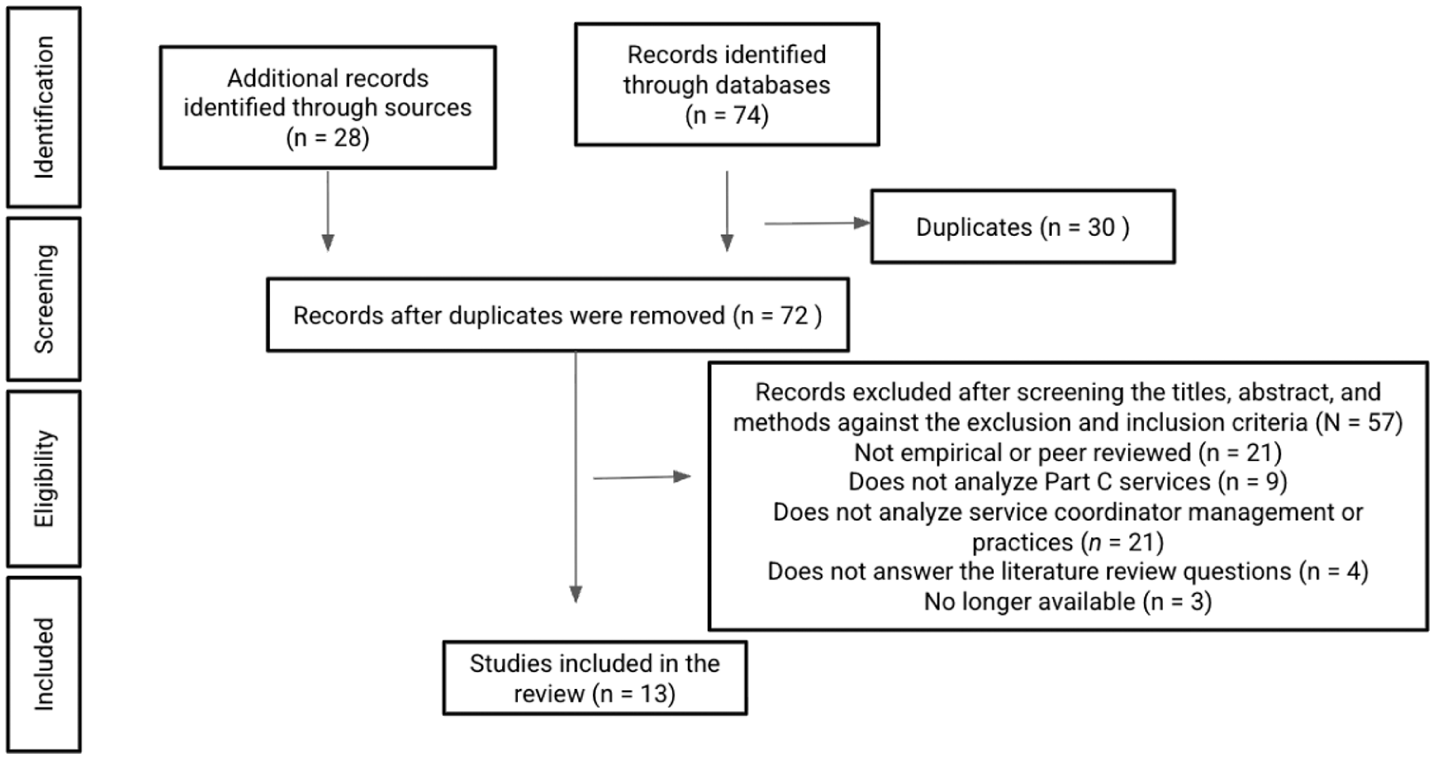
PRISMA Chart of Included Studies.
These 13 articles were read in full, analyzed, and inductively coded by the first author based on design, participants, and study findings. Using Google Sheets, the first author created a data-tracking matrix to systematically record relevant information extracted from each study. The final matrix contained the extracted data for each study including the purpose, methodology, participant demographics, and key findings which was reviewed by the third author. Each study was coded in terms of design (i.e., quantitative, qualitative, multi-method, mixed method, or an intervention). If a study used multiple designs, it was coded as such. For each study, participants were coded in terms of: (a) the total number of participants, (b) the job title/role of participants (e.g., SCs, EI supervisors/administrators, EI providers, caregivers), and (c) the number of each type of participant. For the study findings, themes from the results sections were coded. After all articles were coded, the extracted data were organized into tables to summarize the findings (Tricco et al., 2018). The data were exported to Google Sheets for further analysis, and frequencies and percentages were calculated, as appropriate, for coded variables (e.g., study design, participant characteristics). These sheets were then reviewed by the third author to confirm the findings. Based on scoping review guidelines, and the purpose of this review, we did not evaluate the quality of the studies (Tricco et al., 2018). Next, we provide a synthesis of the 13 studies and themes that were generated from the literature.
Results
Synthesis of Studies
Before discussing the themes that were developed across the studies, it is important to describe the 13 studies themselves. In addition to highlighting the type of methodology implemented, we spend time describing the samples in these targeted studies. See Table 1 for a description of the study designs and participants.
Descriptions of Studies.
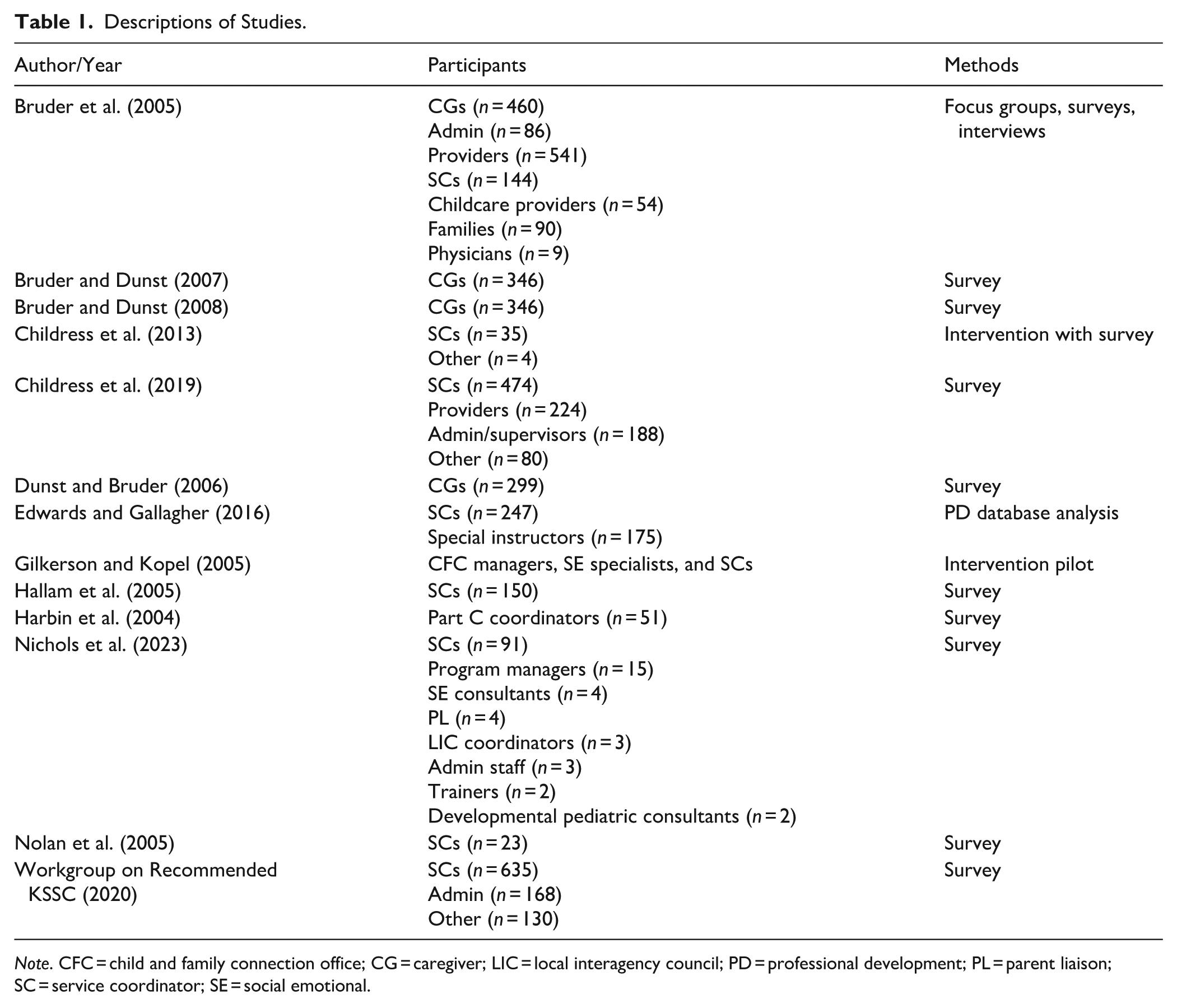
Note. CFC = child and family connection office; CG = caregiver; LIC = local interagency council; PD = professional development; PL = parent liaison; SC = service coordinator; SE = social emotional.
Study Designs
Of the 13 studies, 12 used quantitative methods and one study used multi-methods (i.e., included both quantitative and qualitative methods). In the multi-method manuscript, Bruder et al. (2005) conducted a series of four methods (focus groups, Delphi survey, a national survey, and family/SC interviews) to examine the status and structure of service coordination.
Across the 12 quantitative studies, researcher-created questionnaires were used in eight (Bruder & Dunst, 2007, 2008; Childress et al., 2019; Dunst & Bruder, 2006; Hallam et al., 2005; Harbin et al., 2004; Nolan et al., 2005; Workgroup on Recommended KSSC, 2020). On the other hand, Nichols et al. (2023) used a 15-item questionnaire that was created by a SC colleague group. The purpose of this national survey study was to inquire about topics that impacted all SCs (i.e., “What opportunities are available for individuals seeking growth, satisfaction, and recognition as professionals in early intervention?” and “What skills do you think SCs need?”). Their questionnaire included Likert scales, checkboxes, and open-ended questions that focused on demographics, professional growth and recognition, and required knowledge and skills. Gilkerson and Kopel (2005) piloted an intervention and gathered quantitative data to analyze the effect of social-emotional professional interventions (relationship-based strategies such as listening carefully and demonstrating concern and empathy) and techniques on EI professionals, SCs, SC supervisors, and EI-enrolled families. Another research team (Childress et al., 2013) implemented a two-phase training and adapted previously used pre- and post-knowledge measures which were reviewed by EI professionals and the training team. They also used a researcher-created follow-up questionnaire to evaluate the usefulness of the training content. Finally, Edwards and Gallagher (2016) examined data collected from a professional development database in one state following a two-phase training. They analyzed participant demographics and satisfaction with the training to identify patterns across demographic variables and motivation to attend trainings.
Participants
Across the 13 studies, there were 4,800 participants with sample sizes ranging from 23 (Nolan et al., 2005) to 1,374 participants (Bruder et al., 2005). Notably, two studies used the same sample of 346 caregivers (Bruder & Dunst, 2007, 2008) and were therefore only counted once in the total number of unique participants. Information about participants was not always disclosed. For example, Gilkerson and Kopel (2005) did not report their number of participants stating that the SCs and social-emotional specialists from local agencies participated in their study. Therefore, the total number of participants is difficult to ascertain. Across the 13 studies in which participants roles were identified, 1,798 were SCs. One research team described their sample as 211 participants who were solely SCs and 36 participants who were SCs, and they also worked as service instructors (i.e., provided direct service to infants and toddlers; Edwards & Gallagher, 2016). Of the total number of participants, 1,538 were identified as caregivers.
Of the 13 studies reviewed, only five included EI administrators (Bruder et al., 2005; Childress et al., 2019; Gilkerson & Kopel, 2005; Nichols et al., 2023; Workgroup on Recommended KSSC, 2020). These administrators may have been assuming the role of SC supervisors however, only one of the studies, Nichols et al. (2023), explicitly stated that 15 of their participants were program managers who supervise SCs.
Themes From the Literature
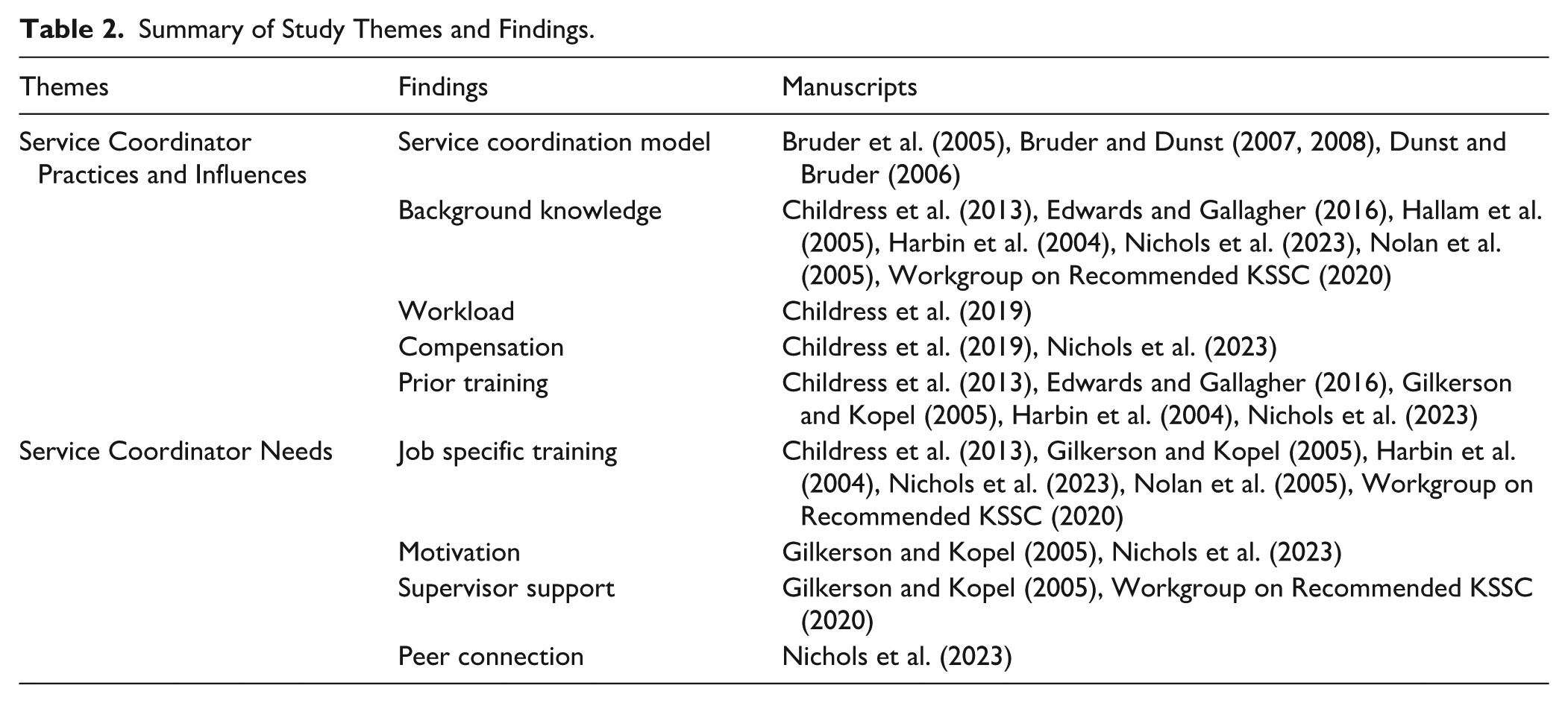
Overall, the literature indicates that SC practices in EI are influenced by both program-level factors, such as service delivery models, and individual-level factors, including SCs’ background knowledge and training. Supervisors emerged as a central yet underexplored influence that can shape SCs’ accountability, facilitate professional development opportunities, and provide emotional support. Together, these findings highlight supervision as a critical role for strengthening service coordination. See Table 2 for a summary of the themes and codes.
Summary of Study Themes and Findings.
SC Practices and Influences
According to the literature reviewed, SC practices are influenced by the models they use and the SCs’ background knowledge. As stated previously, Dunst and Bruder (2006) describe three different types of service coordination models that may shape SC practices (i.e., dedicated or independent model, intra-agency model, and blended model). Four of the 13 studies in this scoping review included an analysis of these three models (Bruder et al., 2005; Bruder & Dunst, 2007, 2008; Dunst & Bruder, 2006). The blended model appears to be an effective SC model for supporting communication with families. In their quantitative study, Dunst and Bruder (2006) found that this model was associated with more frequent SC contacts with families. SCs who used the blended model and family-centered help-giving practices used a wider range of SC practices (e.g., family participation and decision making for IFSPs and service provision), and they provided different kinds of child/family resources, supports, and services based on each family’s specific needs (Bruder & Dunst, 2008). This suggests that the blended model may create multiple avenues for families to participate and to access supports and therefore be aligned with the family-centered values of EI. On the other hand, when compared to the intra-agency and blended models, the dedicated model appears to be an ineffective model for some aspects of service coordination as it was associated with less frequent provision of special instruction/special education (Bruder & Dunst, 2007) and considerably fewer SC contacts with families (Dunst & Bruder, 2006). These findings highlight that the type of service delivery model directly impacts to how much contact SCs have with families, the range of practices used, and the extent to which family-centered approaches may be carried out. Supervisors play an important role in encouraging SCs to consistently use family-centered practices and supervisors can coach SCs to help them navigate challenges that they encounter. Supervisors also can help mitigate limitations of less effective service coordination models by supporting SCs to maintain family engagement and use recommended practices, even when barriers arise.
In addition to the model used, prior knowledge based on a SC’s background can influence the amount of support needed. In five of the 13 studies, the researchers analyzed SCs’ baseline EI knowledge and considered ways to increase their expertise (Childress et al., 2013; Edwards & Gallagher, 2016; Harbin et al., 2004; Nichols et al., 2023; Nolan et al., 2005). For example, Nolan et al. (2005) found that SCs sought more support and training on a variety of topics including medically fragile children, feeding disorders, positioning and adaptive equipment, interventions for cancer, prosthetic devices, cultural diversity, and advocacy. The SCs felt they needed more training in these areas to better recommend appropriate services. These findings reflect how SCs’ professional backgrounds and lived experiences shape their confidence and ability to meet the needs of diverse families. Supervisors can work with SCs to identify knowledge and skill gaps and ensure that SCs receive the training, mentoring, or learning opportunities they need. One way that some of this information could be provided is through interagency collaboration, which is essential to getting EI families the support they need. For example, Harbin et al. (2004) suggested that states should provide both developmental and medical services on the IFSP; this would require IFSP teams to review both developmental and medical service options so that nothing is missed. Team members’ knowledge could be enhanced through such reviews and discussions. An individual’s knowledge base can be also strengthened through direct training. Childress et al. (2013) reported that participants who attended trainings on EI practices such as IFSP development and timelines, SC roles, and the EI process increased their overall knowledge in these areas from pre- to post-test. To make training most effective, Edwards and Gallagher (2016) found that professional development trainers should assess baseline knowledge due to EI providers having a diverse array of academic backgrounds which often influences a provider’s service provision. The training described in their study included options based on a participant’s baseline knowledge. Conversely, Nichols et al. (2023) found that all SCs regardless of their background, region (rural vs. urban), or experience level desired more support related to their knowledge and skills. SC supervisors can advocate for ongoing professional development for SCs and help tailor support to individual SC’s needs, so that with the addition of coaching support they can help ensure that recommended practices in EI service delivery are used consistently by SCs.
Findings from the reviewed studies revealed several additional factors related to SC practices that influence the information shared with parents. SCs’ priorities varied in terms of the EI services they shared with families and the types of services provided (Hallam et al., 2005). For example, SCs with education backgrounds were more likely to prioritize collaborating with childcare staff (Hallam et al., 2005). Additionally, the age of the child impacted the SC practices used (Bruder & Dunst, 2008). For instance, if a child was closer to age 3, the point at which they typically transition out of EI, the SC used more transition practices whereas with younger children who were new to the EI system SCs used practices that helped the family procure childcare and healthcare for their child. Supervisors can support SCs with adjusting their practices to different family and child needs by providing reflective supervision and helping SCs problem-solve to tailor their services to the individual needs of families and their children.
Finally, Childress et al. (2019) found that SCs and other respondents (i.e., EI providers, caregivers, and administrators) from eight states perceived their state’s strongest EI activities to be: informing families of their rights, coordinating evaluations and assessments, assisting parents with accessing services on the IFSP, and coordinating EI services. When asked how SCs could be better supported and prepared, SCs shared a need to decrease or balance their workload, increase compensation, and improve the quantity and quality of professional development available to them. Taken together, service coordination is impacted by program level influences such as the service delivery model implemented and individual SC influences such as if SCs have specific knowledge and skills related to family-centered EI practices. Supervisors are central to addressing these challenges, because they can advocate for manageable caseloads, ensure equitable access to high quality and relevant training, and provide consistent and targeted support that helps SCs consistently implement family-centered practices.
Service Coordinator Needs
Five of the reviewed studies highlighted the fact that SCs need and want training to improve their practice. SCs reported that they need more clarity in terms of their job description and responsibilities (Harbin et al., 2004). Some researchers found that attending training improved SCs’ knowledge (Childress et al., 2013; Nichols et al., 2023) and increased their comfort with service coordination responsibilities (Nolan et al., 2005). Like many EI providers, SCs also need professional development and opportunities for ongoing learning to expand their knowledge base, strengthen their skills and improve their confidence. Training on topics such as family-centered practices, interagency collaboration, and transition planning can help SCs better serve families (Childress et al., 2013; Edwards & Gallagher, 2016; Harbin et al., 2004). SC supervisors play a critical role in connecting SCs to these opportunities, encouraging participation, helping SCs apply new knowledge and skills in their interactions with families, and reflecting on their practice. In fact, to address the need for increased knowledge, learning opportunities should be provided in a variety of formats such as online training, in-person training, and through high-quality preparation programs. Noteworthy, Edwards and Gallagher (2016) found that most EI providers in one state preferred face-to-face training, however, motivation to attend trainings differed across EI provider types. For example, SCs were found to have higher rates of completion for annually offered in-person, full-day voluntary credentialing workshops compared to other attendees such as special instructors. Similarly, when Nichols et al. (2023) asked 107 participants (i.e., SCs, SC supervisors, parent liaisons) to rate the importance of ongoing professional development, 72% of respondents deemed it as highly important. Research has shown that SCs and their supervisors not only want and value trainings, but they are also more effective in performing their jobs when they are properly trained (Harbin et al., 2004). However, a lack of adequate training in many states was and remains a concern.
Four of the 13 reviewed studies included data on the need for provider preparation and motivation. Preparation and motivation varied based on providers’ professional backgrounds (Hallam et al., 2005; Nichols et al., 2023), recognition and incentives offered (Nichols et al., 2023), and years of service (Edwards & Gallagher, 2016). In terms of preparation, Hallam et al. (2005) discovered that SCs are more apt to be familiar with, and work with, agencies that are most closely related to their own professional backgrounds. For example, SCs with human services backgrounds rated themselves higher in terms of knowledge of children’s health insurance whereas SCs with education backgrounds rated themselves as more knowledgeable about state preschool programs. Service coordination is conducted by a variety of professionals with different educational backgrounds; this background knowledge can impact one’s awareness of community resources and services (Hallam et al., 2005). While SCs enter the field with diverse strengths, these differences can create gaps in practice if professional development opportunities (i.e., trainings, coaching sessions, communities of practice) do not address them.
Gilkerson and Kopel (2005) stated, “Service coordinator is an entry-level position, with high stress, low satisfaction, and high turnover” (p. 361). Motivated individuals are needed to provide the best support to EI families, and they are more likely to be satisfied in their jobs which subsequently results in lower turnover rates (Nichols et al., 2023). In fact, research has shown that turnover rates can be improved through supervisor support. Gilkerson and Kopel (2005) piloted a relationship-based model through training, small group supervision, and reflective consultation by partnering social-emotional specialists with each child and family connection office (CFC). Prior to their pilot, 64% of the SCs had limited or no supervision. After the pilot, 100% of SCs received reflective supervision during which they felt they could openly express their feelings and receive emotional support. In turn, the SCs felt motivated to remain in their job long term. Thus, supervisors can influence motivation by recognizing SCs’ efforts, celebrating successes, and offering encouragement during challenging situations. Similar to the benefits realized from a supervisor’s support, Nichols et al. (2023) found that 63% of their survey respondents rated connecting through a network of peers (i.e., a community of practice) as highly important for it motivated them to provide high-quality service coordination. These findings highlight the needs of SCs that extend beyond technical or initial training to include relational and emotional support, mentorship, and EI systems that value their contributions. When SC supervisors assume the role of mentors and coaches, they can create a culture of appreciation and growth. Without such supports, SCs may face high stress and leave the field, which ultimately impacts the EI services provided to families.
Discussion
The purpose of this scoping literature review was to examine the literature surrounding service coordination supervision to systematically map research that has been conducted and to identify existing gaps such as areas that could be supported by SC supervisors to help SCs be more effective at their jobs. Three main findings emerged from this literature review that are worthy of further examination.
First, SCs use a variety of models of service coordination in their practice, leaving the implications for families, SCs, and SC supervisors unclear. There is evidence to support the effectiveness of some models of service coordination over others, such as the blended model, which may be more effective than the dedicated model, which was associated with less frequent provision of special instruction/special education (Bruder & Dunst, 2007) and considerably fewer SC contacts with families (Dunst & Bruder, 2006). Although it is important to give states autonomy within the EI system, currently there is no federally mandated EI model, nor are states encouraged to use a specific model. Notably, many states report using a dedicated model (Infant & Toddler Coordinators Association, 2019). Bruder et al. (2005) proposed that the type of model used, in conjunction with SC funding, caseload size, and personnel standards, had immediate outcomes for families such as the type and how a family obtains support, how they communicate their child’s needs, their ability to make informed decisions, the quality of services they receive, and how they are connected to agencies and professionals. However, none of the studies included in this scoping review explored the relation between the type of model used and SC supervision. For example, supervisors may need to provide different types of oversight and support depending on whether a SC is working in a dedicated, intra-agency, or blended model. Supervision in the blended model may be especially complex, as SCs face the dual responsibility of being both an EI provider and a coordinator. Without adequate supervision and guidance, SCs working within this model may struggle to balance these competing roles, potentially affecting the quality and consistency of services delivered to families. More research is needed to tease out these nuances.
The second topic worthy of further discussion is the influence of an individual’s prior knowledge and skills on service coordination. When SCs receive the same training, they are likely to be more consistent in suggesting appropriate services for families, informing families of their rights, creating and monitoring IFSPs, and fulfilling their other SC responsibilities. However, when SCs enter the field with different background knowledge and skills, this may not happen. Supervisors can help equalize SCs’ knowledge and skills by providing training and reflective supervision to address gaps. They also should monitor the practices used by SCs as they carefully and critically look at strengths and inconsistencies and determine ways to increase SCs’ knowledge and skills in EI. Tools such as the Knowledge and Skills for Service Coordinators (KSSC) can be used by SCs and their supervisors to evaluate SCs’ current knowledge levels; this tool also can be used to support reflective supervision (Workgroup on Recommended KSSC, 2020). SC Supervisors can use the KSSC Quality Indicator Assessment (KSSC QIA; Fulton et al., 2026b; Early Intervention Training Program, 2021) to guide these conversations. In conjunction with the SC, supervisors can use the KSSC QIA to conduct an overall assessment of the SC’s skills, generate short- and long-term goals, and identify strategies to close gaps in the SC’s abilities. For example, if a SC’s supervisor knows that background knowledge influences a SC’s practices, they can intentionally monitor service provision to look for KSSC domain areas where additional training might be needed (Childress et al., 2019). The supervisor and SC may make a goal to increase the SC’s family-centered practices by attending a professional development seminar on trauma-informed care. Hallam et al. (2005) emphasized that ongoing training and professional development for SCs are essential, particularly when they help bolster the varied backgrounds and training experiences that SCs bring to their roles. This type of professional learning ensures that SCs are equipped with the tools needed to be effective in their jobs such as providing accurate information to families and making appropriate and timely referrals.
The third and final topic worthy of discussion is related to the fact that in addition to a strong knowledge base, SCs need to be motivated and encouraged to fulfill their job responsibilities at the highest level to improve EI family outcomes. As noted in the literature, extrinsic motivation can generate high quality service coordination such as through recognition and the provision of incentives such as adequate compensation (Nichols et al., 2023). Supervisors play a critical role in this process by not only recognizing staff accomplishments, but also by creating spaces for SCs to receive support, resolve conflicts, manage job stress, and process feelings of being overwhelmed by their caseload (Gilkerson & Kopel, 2005). As discussed previously, supervisors using tools such as the KSSC QIA to recognize staff strengths can foster a supportive working environment for SCs. However, without clear policies that define SC roles and supervisory practices, and the time to complete them, these supportive structures may not be available or implemented consistently across programs. At the state level, there remains a significant lack of policies outlining the responsibilities and job requirements of SCs and this lack of guidance can contribute to inconsistencies across EI agencies and lower quality service provision by SCs (Harbin et al., 2004). This systemic gap highlights the importance of examining SC supervision more closely, as supervisors may be a key to bridging policy shortcomings and ensuring consistent, high-quality service coordination for families who access the EI system.
Limitations
There are several limitations to this scoping review that need to be acknowledged. For instance, SC is referred to by different names in different states. For example, in Washington, SCs are referred to as Family Resource Coordinators (Child Development Supports: Early Intervention Services, n.d.). In all 13 studies reviewed for this manuscript, the term SC was used. Therefore, due to the key terms used, some studies may not have been identified for inclusion. Future reviews should consider expanding the search terms and inclusion criteria to ensure a more comprehensive representation of SC practices. Additionally, the first author conducted the data analysis for this review which may introduce potential bias and limit inter-rater reliability. Future reviews could strengthen credibility by involving multiple reviewers to independently code and verify the findings. Also, the literature reviewed spanned the publication years of 2004 to 2023. Therefore, some findings may be out of date or vary from the current landscape of the EI system. Finally, this scoping review is constrained by the search process, in which we exclusively targeted articles in peer-reviewed journals and reputable online scholarly databases. Future research can address this limitation by employing broader search terms, such as exploring other data repositories to include articles in practitioner journals and unpublished data in open access registries. These sources may include valuable insights that may not have been captured in this review.
Implications for Future Research
Findings from this literature review suggest a need to examine how SCs are prepared, guided, supported, and held accountable as they maintain the legal tenants of IDEA (e.g., monitoring service provision, educating families on their rights, arranging assessments, identifying resources, developing IFSPs, communicating with providers and families; Fulton et al., 2024; Nolan et al., 2005; Romer & Umbreit, 1998) to ensure that families receive high quality EI services. Future research should focus on SC practices, training, and EI state compliance data to ensure that service coordination is equitable for all EI families regardless of where they reside.
Across the 13 studies only five included SC supervisors as participants (Bruder et al., 2005; Childress et al., 2019; Gilkerson & Kopel, 2005; Nichols et al., 2023; Workgroup on Recommended KSSC, 2020). While there were an additional 460 administrators, the type of administrator was not clearly described so it is possible that there were more SC managers/supervisors represented in the data. Importantly, none of the studies included only SC supervisors as participants and none of the researchers analyzed SC supervisory practices or SC supervision in general. The Division for Early Childhood emphasized in its 2015 Leadership in EI position statement that more research is needed on leadership skills in EI; the topic of SC supervision certainly falls under this call for additional focused attention.
The findings from this review reveal a gap in the research focused on the perspectives of SC supervisors, their roles, and the impact they have on the EI system. Gaining these insights can help guide the field in developing strategies to better support SC supervisors, the service coordinators they oversee, and ultimately the families who rely on EI services. SC supervisors could be a source of support to empower and educate the SC workforce by examining what currently influences their coordinator practices and what needs they have that must be supported as they do their work. One possible solution to supporting SCs is through the training, guidance and mentorship of their workplace supervisor.
Finally, qualitative studies need to be conducted to gather a more comprehensive picture of service coordination and to better understand the lived experiences of these professionals. Qualitative research can be used to examine phenomena as it is purpose-driven with the goal to create changes that are equitable and socially just (The QR Collective, 2023). Qualitative work also can offer a more comprehensive understanding of an individual’s experience with a phenomenon such as service coordination practices. The need for qualitative research focusing on Part C service coordination is essential so that targeted efforts can be made to improve SC service delivery and working conditions. These changes could help ensure that families obtain meaningful support during EI.
Conclusion
Through this scoping review of the EI literature, 13 studies were identified that focused on SC practices and support needs. The research shows that although the blended model appears to be the most effective, there is no consistent service coordination model used across the US. Also, this targeted review revealed that a SC’s background knowledge can influence their need for additional skills and information. Effective job training and professional development are crucial for equipping SCs with the necessary skills to provide high-quality service to infants and toddlers with disabilities and their families. Due to variations in service coordination models and the knowledge that SCs bring to their jobs, the information shared with families may vary. There is a need and desire among SCs for training to enhance their knowledge and practice, and the EI families in their care will benefit from SCs’ motivation and support to deliver optimal services. Ensuring equity across families is crucial in delivering EI services therefore researchers, practitioners, and policymakers should explore systemic adjustments to enhance uniformity and quality across service coordination models and practices. To achieve these goals, more research is needed to identify how SCs can best be supported by their supervisors as they provide critical services to the EI families on their caseload. As stated by Dunst and Bruder (2006) “Service coordination is one practice sorely in need of reexamination. Evidence-based findings can and should inform this reexamination” (p. 163). This statement, from nearly 20 years ago, still rings true today and highlights the need for additional, in-depth research in this important area.
Footnotes
Declaration of Conflicting Interests
The authors declared no potential conflicts of interest with respect to the research, authorship, and/or publication of this article.
Funding
The authors received no financial support for the research, authorship, and/or publication of this article.
