







Abstract
We hypothesized that in adolescence, maladaptive narcissism interacts with low self-esteem to predict a preoccupied attachment style (attachment for self-affirmation hypothesis), and with high self-esteem to predict an avoidant attachment style (attachment for self-enhancement hypothesis). We expected gender differences in narcissistic adolescents’ attachment strategies, with girls more likely to be motivated to self-affirm, and boys more likely to self-enhance. Early adolescents in England (N = 306, 156 girls, 150 boys,
Narcissism is a personality trait that reflects a strong need to be admired for a grandiose self. It is a multidimensional construct that includes adaptive components, for example, confidence in one’s abilities and self-perceived agency, and also maladaptive aspects, for example, a sense of entitlement, exploitativeness, and exhibitionism (Emmons, 1984; Raskin & Terry, 1988). It is conceptually distinct from self-esteem, which is a global evaluation of respect and liking for the actual self. Although narcissism has typically been studied in adults (e.g., Bushman & Baumeister, 1998; Emmons, 1984; Raskin & Terry, 1988), individual differences in narcissism emerge in middle childhood (Brummelman et al., 2015; Thomaes, Brummelman, Reijntjes, & Bushman, 2013) and there is a nascent literature on the implications of narcissism for child and adolescent behavior (e.g., Barry, Frick, & Killian, 2003; Barry, Grafeman, Adler, & Pickard, 2007). Maladaptive narcissism is problematic not just for adolescents’ psychological well-being (e.g., Aalsma, Lapsley, & Flannery, 2006; Barry & Kauten, 2014; Barry & Malkin, 2010; Pauletti, Menon, Menon, Tobin, & Perry, 2012), but also for their interpersonal relationships (e.g., Barry & Kauten, 2014; Grafeman, Barry, Marcus, & Leachman, 2013; Pincus et al., 2009). We explored whether narcissism is linked with insecure attachment styles in adolescence.
Attachment theory (Ainsworth, 1979; Bowlby, 1969) proposes that attachment insecurity derives from children’s sense that the attachment figure is unavailable or rejecting when needed (safe haven insecurity) or that the attachment figure does not support autonomy, exploration, and individuation (secure base insecurity). Insecure attachment may develop due to parenting and socialization practices starting in infancy, although the child’s temperament is also likely a contributing factor (Thompson, 2006). In childhood and adolescence, attachment is typically assessed using either a categorical approach (children are assigned to secure and insecure attachment categories based on behavioral observations or interviews; for example, Ainsworth, 1979; Cassidy, Kirsch, Scolton, & Parke, 1996; Main & Solomon, 1990; Shmueli-Goetz, Target, Fonagy, & Datta, 2008) or a dimensional approach (children are assigned scores on continuous measures of attachment based on their responses to self-report scales; for example, Finnegan, Hodges, & Perry, 1996; Kerns, Klepac, & Cole, 1996; Yunger, Corby, & Perry, 2005). In our study, we adopted the dimensional approach to measure insecure attachment in adolescents.
In numerous studies with children, adolescents, and adults, people’s responses to self-report measures of attachment-related behavior, cognition, and emotion reduce to two dimensions—a preoccupied attachment style and an avoidant attachment style (Allen & Hauser, 1996; Brennan, Clark, & Shaver, 1998; Feeney & Collins, 2004; Finnegan et al., 1996; Fraley & Shaver, 2008; Fraley & Spieker, 2003; Furman, Simon, Shaffer, & Bouchey, 2002; Hodges, Finnegan, & Perry, 1999; Mikulincer & Shaver, 2007; Roisman & Groh, 2011; Yunger et al., 2005). The preoccupied attachment style is one wherein individuals view themselves as showing clingy, anxious behaviors with the attachment figure. The avoidant attachment style is one wherein individuals perceive themselves as shunning the attachment figure and denying any emotional connection to them. Preoccupied and avoidant attachment styles tend to be negatively correlated, are moderately stable over a 1-year period, and forecast behavior problems, in middle childhood and adolescence (Finnegan et al., 1996; Hodges et al., 1999; Yunger et al., 2005). We measured preoccupied and avoidant attachment to two attachment figures—the mother and a close friend—due to the salience of both parent and peer relationships in adolescence (Collins & Steinberg, 2006). Studies indicate that children and adolescents show similar styles of attachment with their mother and a close friend, although the associations are only small to moderate in size (Hodges et al., 1999; Menon, 2016), suggesting that the measures might be better retained as separate, rather than collapsed across attachment partner.
Morf and Rhodewalt’s (2001) self-regulatory model of narcissism provides the theoretical basis for our proposed links between narcissism and insecure attachment styles. Per this model, narcissistic individuals are mistrustful of, and hostile toward, relationship partners due to negative experiences with significant caregivers in childhood (e.g., Brummelman et al., 2015; Otway & Vignoles, 2006). The mistrust might take the form of doubts regarding the relationship partner’s commitment to them, and in their continually asking the relationship partner to validate their fragile self-views (reflected in a preoccupied attachment style), whereas hostility to the relationship partner might be evidenced by an adversarial interpersonal stance and partner repudiation (reflected in an avoidant attachment style). Although Morf and Rhodewalt’s (2001) model describes interpersonal strategies in adult narcissism, individual differences in narcissism are seen by middle childhood (e.g., Thomaes et al., 2013); thus, the interpersonal styles described by Morf and Rhodewalt (2001) might be evident sooner in development. Adolescence is a period when separation-individuation challenges become salient (Collins & Steinberg, 2006). Although some theorists posit that narcissism might benefit adolescents as they navigate these separation-individuation challenges (Lapsley & Stey, 2012), we propose that narcissism in its maladaptive form is more likely to interfere with the successful resolution of separation-individuation conflicts, by promoting insecure attachment styles during adolescence.
If narcissistic individuals are motivated by the desire to build a grandiose self, or bolster a fragile self (Morf & Rhodewalt, 2001), then self-esteem might moderate the association between narcissism and insecure attachment styles. Levels of trait self-esteem govern distinct patterns of social motivation, such that individuals with low self-esteem are motivated to self-protect whereas those with high self-esteem are motivated to self-enhance (e.g., Hepper, Gramzow, & Sedikides, 2010; Tice, 1991). We tested two noncompeting hypotheses of how individual differences in self-esteem might guide the attachment strategies of narcissistic adolescents. First, per the attachment for self-affirmation hypothesis, preoccupied attachment might serve the self-regulatory needs of narcissistic adolescents with low self-esteem. Specifically, they might be more likely to seek self-affirmation through merger or enmeshment of the self with the attachment figure in the form of a preoccupied attachment style, so that their fragile sense of self might be bolstered by their idealized views of the partner and by their persistent demands for validation from the partner. Children and adolescents who report a preoccupied attachment style with their mother do tend to see her in an overly positive light, as being protective of them and concerned about their safety (e.g., Cooper et al., 2013; Yunger et al., 2005). Similarly, adults with a preoccupied romantic attachment style also report idealized partner-perceptions (e.g., Bartholomew & Horowitz, 1991), and are hypervigilant to, and distressed by, the possibility of separation from the partner (Mikulincer & Florian, 1998).
Our second hypothesis relates to the attachment strategies of narcissistic adolescents with high self-esteem. Per the attachment for self-enhancement hypothesis, narcissistic adolescents with high self-esteem might be more likely to build their grandiose self via downward social comparisons that denigrate and devalue the attachment figure and thus exhibit an avoidant attachment style. Resentment and anger at the perceived failure of the attachment figure to meet their needs may lead to compulsive self-reliance (Modell, 1986), and distancing themselves emotionally from the attachment figure may also help maintain narcissistic adolescents’ idealized self-image by cutting off any perceived criticism and avoiding intense emotion (Pistole, 1995). Indeed, adults with avoidant romantic attachment do psychologically distance themselves from their partners—by seeing them as bad and as different from themselves and by projecting unwanted traits onto them, and by seeing the self as positive (Hart, Shaver, & Goldenberg, 2005; Mikulincer, Dolev, & Shaver, 2004; Mikulincer & Horesh, 1999). At earlier developmental periods too, children with avoidant attachment see their mother as a hostile, unsupportive, and uncaring parent who deserves the avoidant treatment she is receiving (Cooper et al., 2013; Yunger et al., 2005). Furthermore, these negative perceptions of the mother are heightened in avoidant children who report high self-esteem (Menon et al., 2007).
Self-affirmation and self-enhancement attachment strategies in narcissistic adolescents might be further differentiated by gender. Morf and Rhodewalt (2001) theorize that a gender-differentiated pattern of unempathetic parenting in childhood (of mothers responding to their sons as a significant other, but to their daughters as an extension of the self; Philipson, 1985) contributes to narcissistic boys and girls utilizing different self-regulatory strategies to compensate for an inadequate sense of self. Whereas narcissistic girls are more likely to overidentify with the mother (and subsequent relationship partners), narcissistic boys are more likely to distance themselves from her (and subsequent relationship partners) in order to establish their “otherness.” Although a recent empirical study by Brummelman et al. (2015) suggests that parental overvaluation, rather than a lack of parental warmth or empathy, contributes to the development of narcissism, they did not explore whether the influence of parental empathy on childhood narcissism differs by gender. Regardless of the specific parenting origins of narcissism, there is reason to believe that preoccupied and avoidant attachment might each serve the interpersonal goals of narcissistic girls and boys with low and high self-esteem, respectively. Narcissistic individuals are especially likely to emulate gender stereotypes that provide some social benefits, prestige, or admiration, and to avoid those that might interfere with their social status (Morf & Rhodewalt, 2001). Starting in middle childhood, boys tend to be more avoidant than girls, and girls tend to be more preoccupied than boys (Del Giudice, 2009); furthermore, children with gender-atypical attachment styles (preoccupied boys and avoidant girls) report greater peer victimization and poor psychological well-being (Finnegan et al., 1996; Menon, 2011). Presumably, narcissistic adolescents are aware of the negative social repercussions of a gender-atypical attachment style, and might then be motivated to emulate gender-typical attachment styles, rather than gender-atypical ones. Thus, we explored whether the attachment for self-affirmation and attachment for self-enhancement hypotheses hold especially true for girls and boys, respectively.
The hypotheses of this study are consistent with clinical perspectives that link attachment insecurity with adult psychopathology, including pathological narcissism (e.g., Crawford et al., 2007; Dickinson & Pincus, 2003; Mikulincer & Shaver, 2013; Pistole, 1995; Wink, 1991). Specifically, in the clinical psychology literature, a distinction is drawn between grandiose and vulnerable (also referred to as overt and covert) forms of maladaptive narcissism (Cain, Pincus, & Ansell, 2008; Dickinson & Pincus, 2003; Wink, 1991). Both grandiose and vulnerable narcissists are self-absorbed, lack empathy, have an underlying sense of entitlement, and exhibit a tendency toward exploitativeness (e.g., (Dickinson & Pincus, 2003; Hendin & Cheek, 1997; Miller & Campbell, 2008; Miller et al., 2011; Pincus et al., 2009; Sedikides, Rudich, Gregg, Kumashiro, & Rusbult, 2004). However, they differ in their sensitivity to emotion, in the nature of their relational schema, and in their self-evaluations. Whereas the grandiose form of narcissism is characterized by a need for dominance, a lack of affiliative concern, self-reliance, and suspiciousness of relationship partners, the vulnerable form of narcissism is characterized by feelings of inferiority, hypersensitivity, and poor emotional regulation (Hendin & Cheek, 1997; Wink, 1991). Studies examining the associations between insecure romantic attachment and narcissism in adults link the grandiose form of narcissism to the dismissive (avoidant) attachment style (e.g., Dickinson & Pincus, 2003; Kealy, Ogrodniczuk, Joyce, Steinberg, & Piper, 2013; Rosenstein & Horowitz, 1996) and the vulnerable form of narcissism to the preoccupied attachment style (e.g., Besser & Priel, 2009; Dickinson & Pincus, 2003; Otway & Vignoles, 2006; Smolewska & Dion, 2005). Interestingly, a gender-differentiated pattern was evident in at least one of these studies: the preoccupied romantic attachment style (but not the avoidant attachment style) was positively associated with vulnerable narcissism in women (Smolewska & Dion, 2005). We are not aware of any studies that have examined insecure attachment in relation to narcissism in nonclinical research with children and adolescents.
In summary, we tested two hypotheses of the interactive influences of maladaptive narcissism and self-esteem on adolescents’ insecure attachment styles. We expected that narcissism would predict a preoccupied style of attachment to the mother and a close friend when adolescents report low self-esteem (attachment for self-affirmation hypothesis), and that this would be more likely to be evident in girls than in boys. We also expected that narcissism would predict an avoidant attachment style to the mother and a close friend when adolescents report high self-esteem (attachment for self-enhancement hypothesis), and that this would be more likely to be evident in boys than in girls. We did not have a strong basis to expect associations to be stronger in one attachment context relative to the other.
Method
Participants
Participants were a predominantly White sample (86% White, 7% Asian, 7% Other) of 306 early adolescents (150 boys, 156 girls) who were in the eighth (n = 129) and ninth (n = 177) year groups (equivalent to U.S. seventh and eighth grades) of a secondary school in Surrey, England. Children ranged in age from 12.30 years to 14.25 years,
Procedure
Consistent with the ethical standards of the British Psychological Society, the school Head Teacher (equivalent to the Principal of a school in the United States) served in loco parentis and gave permission for the study to be conducted at the school following review and approval of study procedures by the University Ethics Committee. All students in the eighth and ninth year groups were invited to participate in the study. Parents were informed about the study via a letter sent home with each student. Parents were requested to sign a statement indicating their denial of consent if they did not want their child to participate in the study. Approximately 3.5% of students in these year groups were denied parental consent. Students also received a written description of the study procedures and were requested to sign a statement if they did not wish to participate in the study. No student declined written assent.
Teachers were provided with written instructions on the procedures to be followed for administration of the survey. Students were tested in their classrooms in groups of 20 to 25 students. Students who did not receive parental consent were directed to engage in a quiet activity (e.g., reading) by the teacher. The teacher read aloud a script that introduced the study, and students were requested to give their verbal assent. No student refused assent. The teacher then read the instructions for the first set of questions and the students completed the survey without any further group instructions. Students were asked to raise their hand if they had a question. Additional measures not relevant to the present study were also included in the survey packet. Surveys took approximately 1 hour to complete and were returned to the teacher in a sealed envelope.
Measures
Narcissism
Narcissism was assessed using the 17-item Maladaptive Narcissism Scale (Cronbach’s α = .68) of the Narcissistic Personality Inventory for Children (NPIC; Barry et al., 2003). The scale captures aspects of exploitativeness, exhibitionism, and entitlement, which are dimensions of narcissism that relate to problem behavior in children, adolescents, and adults (Barry et al., 2003; Morf & Rhodewalt, 2001; Pauletti et al., 2012; Raskin, Novacek, & Hogan, 1991; Raskin & Terry, 1988; Washburn, McMahon, King, Reinecke, & Silver, 2004). For each item, children indicated which of the two statements was more like them (e.g., “It scares me to think about ruling the world” vs. “If I ruled the world, it would be a better place”), and a child’s narcissism score was the proportion of items for which the child chose the narcissistic option (the second statement above) and thus could range from 0 to 1. This scale has been used effectively as a measure of narcissism in nonclinical samples of children and adolescents (e.g., Barry et al., 2003; Menon, 2011; Pauletti et al., 2012) with acceptable internal consistency (Cronbach’s α of .72 in prior studies). Evidence for the validity of the scale is provided by Barry et al. (2003), and the scale also relates meaningfully to psychosocial adjustment in children and adolescents (Menon, 2011; Pauletti et al., 2012). Items on the scale are comparable with items of another recently developed scale of childhood narcissism (Thomaes, Stegge, Bushman, Olthof, & Denissen, 2008).
Self-esteem
Children’s self-esteem was assessed with Harter’s (1985) six-item Global Self-Worth Scale. Cronbach’s alpha was .86. Items used a double-stem response format wherein two types of children are described (e.g., those with low self-esteem and others with high self-esteem), and the participant is asked to note which kind of child is more like them, and whether that is “very true for them” or “sort of true for them.” Such a response format is recommended to minimize social desirability response set (Harter, 1985). Participants’ responses were scored on a 4-point scale with higher scores representing greater amounts of self-esteem.
Attachment styles
Adolescents’ styles of attachment to their mother and a close friend were assessed using the Coping Strategies Questionnaire adapted from Finnegan et al. (1996) and Hodges et al. (1999). These measures too used the double-stem response format recommended by Harter (1985). The friend scales asked the participant to answer the questions with their close school friend in mind, but they were not asked to name or identify this friend. The preoccupied toward mother (10 items, Cronbach’s α of .89) and the preoccupied toward friend (nine items, Cronbach’s α of .78) scales captured distress over separation from the mother/friend, a strong need for the mother/friend in novel and challenging situations, prolonged upset over minor threats to the relationship, and hypervigilance to the possibility of rejection by the mother/friend. A sample item (from the mother scale) is, “Your mother has been busy and hasn’t been able to show you much attention lately. Some kids would not be very upset that their mother has been busy BUT Other kids would be very upset and would try to get their mother to pay them more attention.” The avoidant toward mother (10 items, Cronbach’s α of .89) and the avoidant toward friend (nine items, Cronbach’s α of .78) scales captured children’s denial of the emotional importance of the relationship, lack of feeling during separation and reunion, and avoidance of the mother/friend when distressed or challenged. A sample item (from the friend scale) is, “Your friend has to move to another school. Some kids would be sorry that their friend has to move BUT Other kids wouldn’t care that their friend has to move.” Participants’ responses to these measures were scored on a 4-point scale with higher scores reflecting greater preoccupied attachment or avoidant attachment.
Results
Influence of Gender and Age on Measures
Table 1 presents the mean and standard deviation of each measure separately for girls and boys. To identify the influence of gender and age, multiple regressions were conducted with each measure serving as the dependent variable and age in months and gender entered as simultaneous predictors. In this and all subsequent analyses, gender was dummy-coded (0 = girls, 1 = boys). There were a few significant gender differences in the measures: Boys scored higher than girls on avoidant style with mother and friend, whereas girls scored higher than boys on preoccupied style with mother and friend (see Table 1). These gender differences are in accord with reports of previous studies that have examined attachment styles in middle childhood and early adolescence (e.g., Del Giudice, 2009). Age predicted greater avoidant attachment with the mother, B = .01, t(303) = 2.16, p = .032, and lower preoccupied attachment toward mother, B = −.02, t(303) = −3.97, p < .001, and a close friend, B = −.01, t(303) = 6.88, p = .009. These findings indicate a need to control for age and gender in subsequent analyses.
Means and Standard Deviations of Measures by Participant Gender.
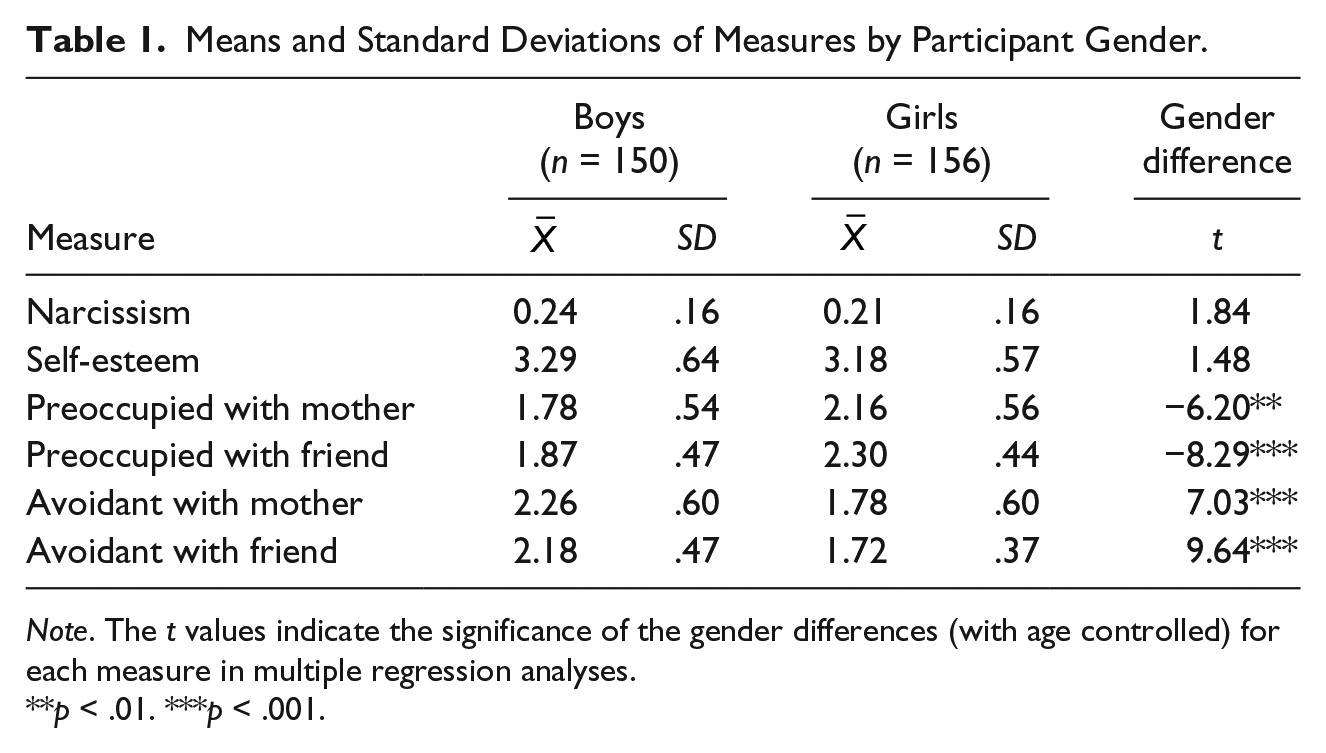
Note. The t values indicate the significance of the gender differences (with age controlled) for each measure in multiple regression analyses.
p < .01. ***p < .001.
Correlations Among Measures
Table 2 displays the partial correlations among the measures (controlling for age) separately by gender. Many of the measures were intercorrelated. In line with previous reports, preoccupied and avoidant attachment styles were negatively associated and the same style across relationship partners was positively correlated. Narcissism was associated with lower self-esteem and with higher avoidant attachment to the mother and a close friend for both genders. Narcissism was not associated with preoccupied attachment to the mother or friend for either gender. However, this does not preclude the possibility that these associations are further moderated by self-esteem. Those analyses are described next.
Correlations Among Measures Separately for Boys (n = 150) and Girls (n = 156).
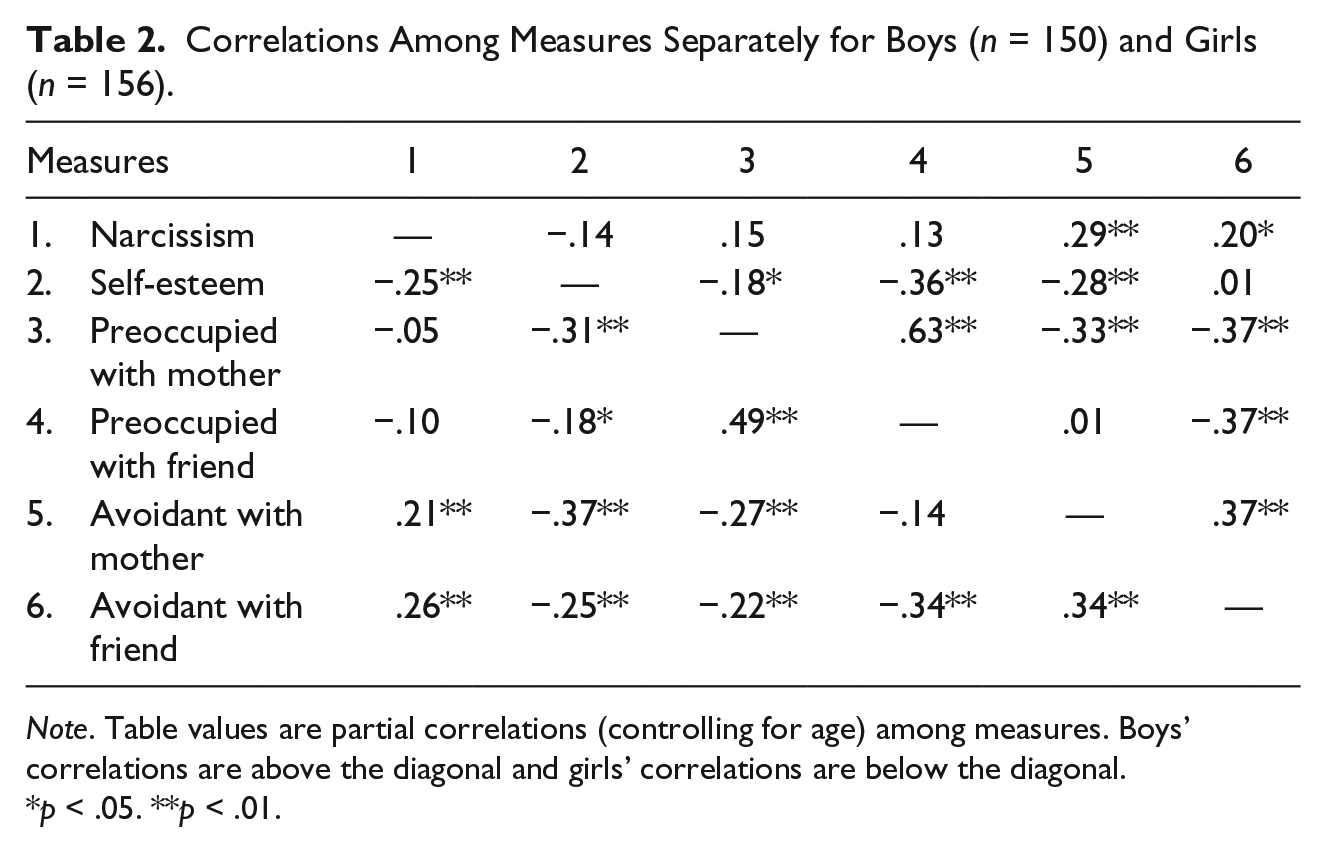
Note. Table values are partial correlations (controlling for age) among measures. Boys’ correlations are above the diagonal and girls’ correlations are below the diagonal.
p < .05. **p < .01.
Interactive Influences of Narcissism and Self-Esteem
The purpose of this study was to examine whether narcissism interacts with self-esteem to predict insecure attachment styles in adolescence. Hierarchical multiple regressions were run in which the preoccupied and avoidant attachment style measures (toward the mother and a friend) served as the dependent variable in separate analyses. Thus, a total of four regression models were run (one for each attachment style toward the mother and a friend). In each analysis, gender and age were entered as controls on the first step; narcissism and self-esteem were entered together on the second step; and the interaction of narcissism and self-esteem was tested on the third step. Gender differences in the interactive influence of narcissism and self-esteem on attachment styles were also explored. This was done by entering the interactions of Gender × Narcissism and Gender × Self-Esteem on the fourth step (as controls), and entering the three-way Gender × Narcissism × Self-Esteem interaction term on the fifth step. Continuous variables were centered prior to running the regression model. The two-way Narcissism × Self-Esteem interaction on Step 3 and the three-way Gender × Narcissism × Self-Esteem interaction on Step 5 were of focal interest. The results are described in relation to each hypothesis.
Attachment for self-affirmation hypothesis
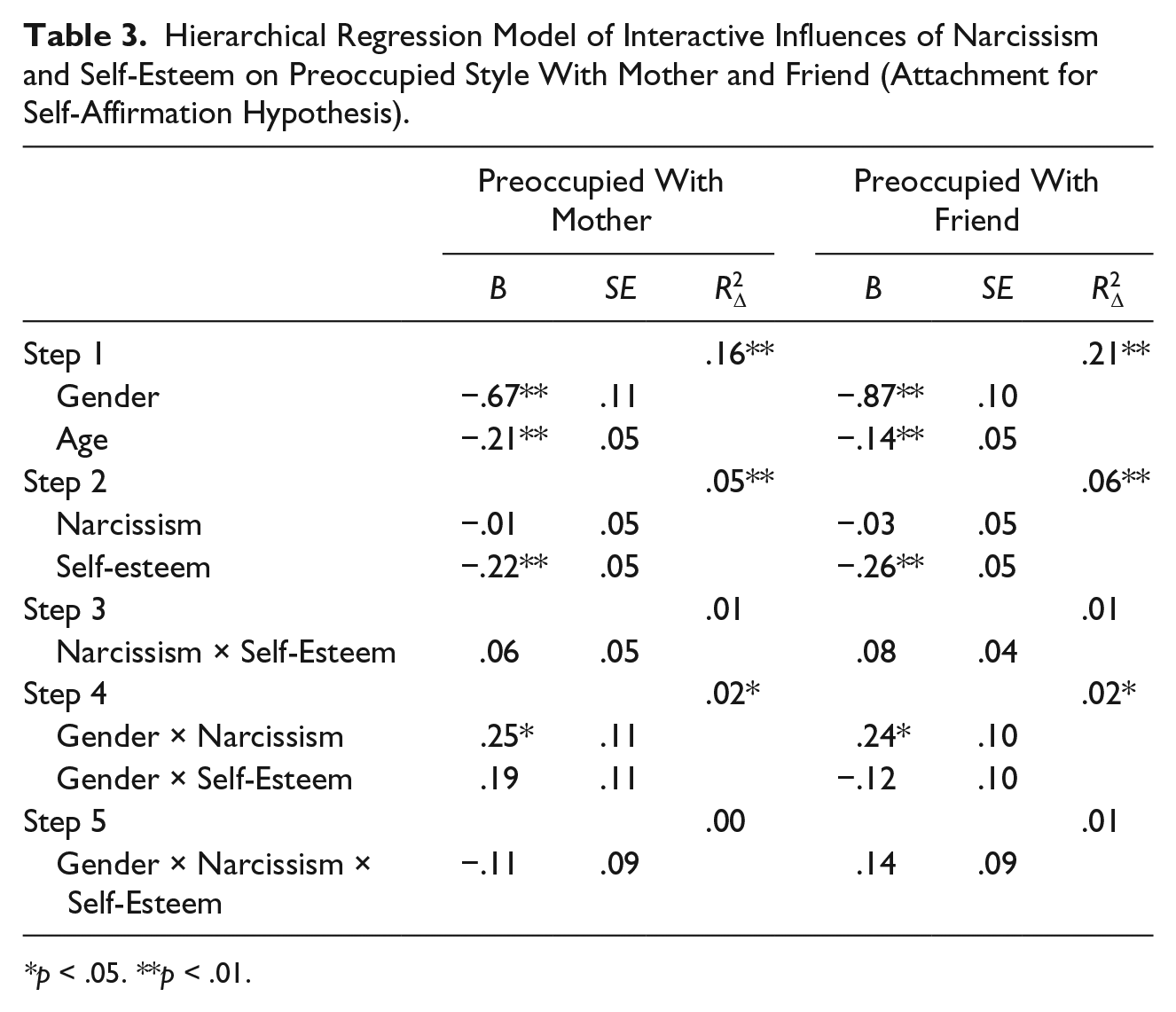
The regression model predicting preoccupied attachment styles is presented in Table 3. It had been hypothesized that narcissism would predict preoccupied attachment at low levels of self-esteem, especially for adolescent girls. However, neither the two-way interaction of Narcissism × Self-Esteem (on Step 3) nor the three-way interaction of Gender × Narcissism × Self-Esteem (on Step 5) was significant. Thus, there was no support for this hypothesis. Although the interactions with gender on Step 4 had been included only as controls for the three-way interaction on Step 5, the interaction of Gender × Narcissism significantly predicted preoccupied attachment to both the mother and a friend. These interactions were further probed by running a modified model (including Steps 1, 2, and 3 only, but without gender on Step 1) separately by gender. The results indicated that narcissism was positively associated with a preoccupied style in boys, but negatively associated with a preoccupied style in girls. However, neither slope was statistically significant for either attachment partner.
Hierarchical Regression Model of Interactive Influences of Narcissism and Self-Esteem on Preoccupied Style With Mother and Friend (Attachment for Self-Affirmation Hypothesis).
p < .05. **p < .01.
Attachment for self-enhancement hypothesis
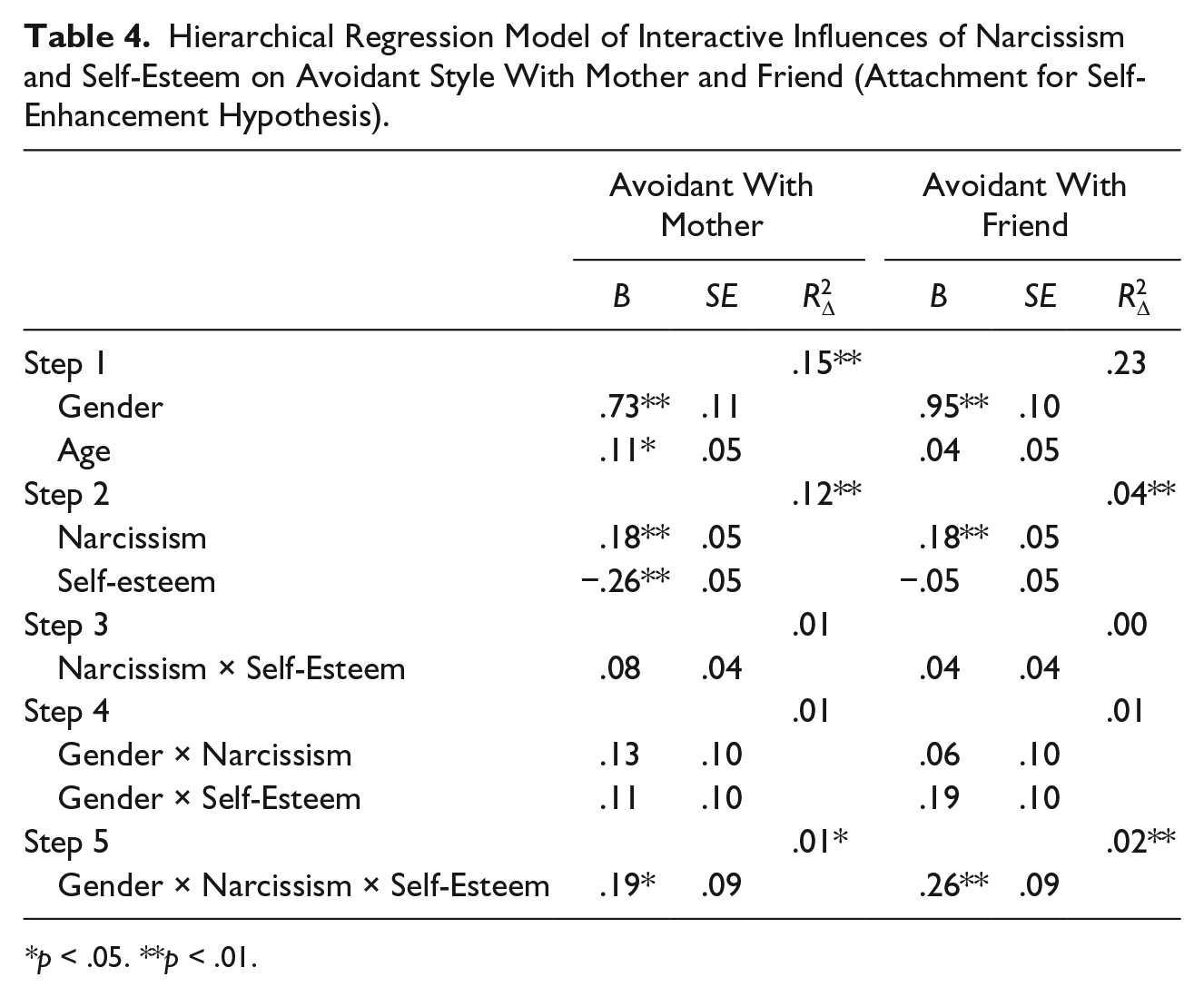
The regression model predicting avoidant attachment styles is presented in Table 4. It was expected that narcissism would predict avoidant attachment with the mother and a close friend when adolescents report high self-esteem. The two-way interaction of narcissism and self-esteem did not predict avoidant attachment to either the mother or a close friend, but the three-way interaction with gender predicted both avoidant attachment toward the mother, F(1,295) = 4.42, p = .036, and avoidant attachment toward the friend, F(1,295) = 9.08, p = .003. To further explore the significant three-way interactions, a modified regression model (one that omitted gender from the first step and any interactions with gender on subsequent steps) was run separately for boys and girls. Results revealed that the Narcissism × Self-Esteem interaction predicted avoidant attachment toward the mother and friend for boys, F(1,143) = 7.44, p = .007, and F(1,143) = 6.01, p = .015, respectively, but not girls, F(1,151) = 0.08, p = .774, and F(1,151) = 3.23, p = .074, respectively. These interactions are graphed for boys (upper graph) and girls (lower graph) in Figures 1 and 2. The significant interactions for boys were further probed by examining the influence of narcissism on boys’ avoidant attachment styles at low (−1 SD) and high (+1 SD) levels of self-esteem. The pattern indicates that for boys, narcissism predicted greater avoidant attachment toward the mother and a close friend at high levels of self-esteem (B = .49, p < .001, and B = .43, p = .001, respectively) but not at low levels of self-esteem (B = .12, p = .171, and B = .08, p = .395, respectively). These findings support the attachment for self-enhancement hypothesis, at least for adolescent boys.
Hierarchical Regression Model of Interactive Influences of Narcissism and Self-Esteem on Avoidant Style With Mother and Friend (Attachment for Self-Enhancement Hypothesis).
p < .05. **p < .01.
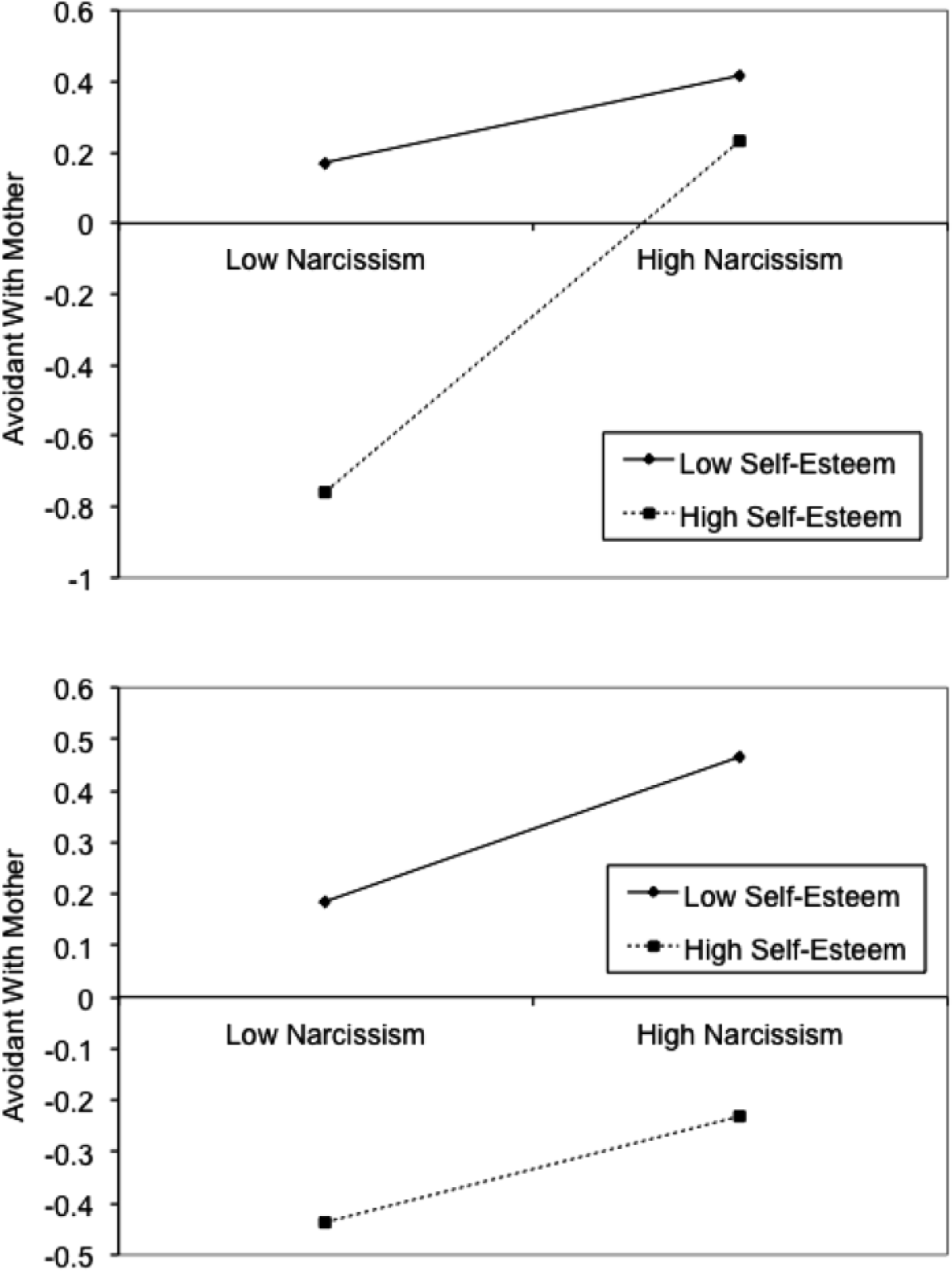
Interactive influence of narcissism and self-esteem on avoidant attachment with the mother in boys (upper graph) and girls (lower graph).
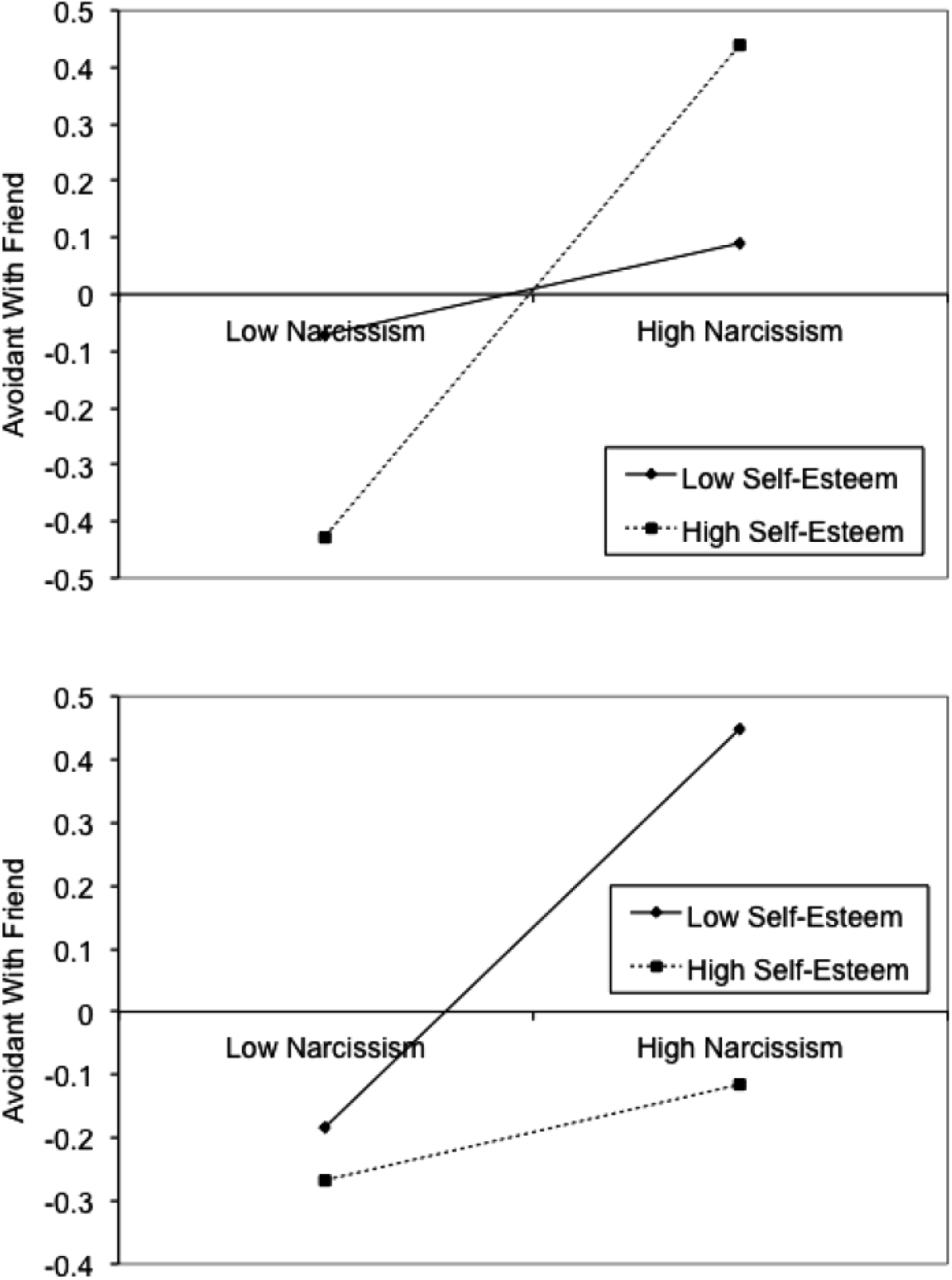
Interactive influence of narcissism and self-esteem on avoidant attachment with a friend in boys (upper graph) and girls (lower graph).
Discussion
This study was designed to examine the interactive influences of maladaptive narcissism and self-esteem on attachment styles during early adolescence. We explored two noncompeting hypotheses that derive from Morf and Rhodewalt’s (2001) self-regulatory model of narcissism, of how narcissism might interact with self-esteem to predict insecure attachment styles. These were based on the rationale that narcissistic adolescents with low and high self-esteem employ different sociocognitive strategies to maintain their self-image. As per the attachment for self-affirmation hypothesis, narcissism was theorized to encourage psychological enmeshment with attachment figures when adolescents report low self-esteem, presumably so that narcissistic adolescents may salvage a fragile sense of self, perhaps through a process similar to introjection. As per the attachment for self-enhancement hypothesis, narcissism was theorized to encourage adolescents to maintain a psychological and emotional distance from close relationship partners when adolescents report high self-esteem, so that they may avoid criticism and maintain the belief that they are superior to others.
Narcissism was not associated with the preoccupied attachment style toward the mother or a close friend, either alone or in combination with low self-esteem. Perhaps the association between these two constructs is limited to romantic attachments in adult populations (e.g., Smolewska & Dion, 2005), but in the current study, there was little evidence for the idea that narcissistic motivation promotes self-affirmation by developing a clingy, dependent attachment with the mother or friend during adolescence. Thus, there was no support for the attachment for self-affirmation hypothesis.
The interaction of narcissism and self-esteem was related to boys’ avoidant attachment styles toward both the mother and a close friend. Specifically, narcissism was associated with greater avoidant attachment to both relationship partners when adolescent boys reported high (but not low) levels of self-esteem. These findings support the attachment for self-enhancement hypothesis. Presumably, the relational schema characteristic of individuals with an avoidant attachment (i.e., of positive self-perceptions and negative partner-perceptions, Bartholomew & Horowitz, 1991; Mikulincer et al., 2004) is conducive to the self-enhancement goals of adolescent boys with strong narcissistic motivation and high self-esteem, as they may further enhance their own positive self-image by devaluing and denigrating the relationship partner. By keeping a psychological and emotional distance from the relationship partner, narcissistic boys with high self-esteem also avoid being exposed to criticism. Perhaps this association was limited to boys because avoidant attachment may not fulfill the self-enhancement needs of narcissistic girls with high self-esteem. The avoidant attachment style is gender-atypical in girls, and adolescents who view the self as using gender-atypical styles evaluate themselves negatively and report negative affect (Menon, 2011). Future research may explore alternative interpersonal strategies via which narcissistic girls may maintain their grandiose self.
A few comments on how the results of this study align with prior research on narcissism and self-esteem are warranted. First, both Figures 1 and 2 show that it is primarily those boys who have low scores on narcissism that benefit from high self-esteem, as they report the lowest scores on avoidant attachment to the mother and to the friend. These results are in accord with studies indicating that high self-esteem benefits children and adolescents only when it is accompanied by an absence of problematic personality traits and antisocial tendencies, because high self-esteem encourages children to rationalize their behavioral conduct (Menon et al., 2007). Second, our results closely match the attachment correlates of grandiose narcissism in clinical studies. Specifically, adult grandiose narcissists report an avoidant attachment style in their romantic relationships (Dickinson & Pincus, 2003; Miller et al., 2011). It is important to note that we found a link between narcissism and avoidant attachment (for boys with high self-esteem) even though our sample of adolescents had not been a priori selected for narcissism-related traits or antisocial tendencies. However, we did not find a pattern of results in our study that conformed to the attachment correlates of vulnerable narcissism. It is possible that our measure of maladaptive narcissism captures more overt, exhibitionistic aspects of narcissism than the insecure and covert nature of vulnerable narcissism, which is why our results match results of clinical studies examining attachment and grandiose (but not vulnerable) narcissism. Thus, although we did not find support for the attachment for self-affirmation hypothesis, we believe it may be premature to abandon the hypothesis altogether. Future research might focus on developing measures of vulnerable narcissism in youth.
The results of this study should encourage further research on narcissism in adolescence; however, this study is not without its limitations. First, all the measures in this study were self-reports, therefore some of the significant associations may be attributed to shared methods variance. We were interested in examining implications of self-evaluations on narcissistic adolescents’ attachment styles; therefore, self-report measures of the predictors (narcissism and self-esteem) were necessary. Future research might examine whether the interactive effects of narcissism and self-esteem hold true for attachment measured via different (non-self-report) means. Second, although the results have been interpreted to mean that narcissism interacts with self-esteem to influence avoidant attachment in adolescent boys, the results may just as well support the reverse causal hypothesis, that avoidant attachment contributes to the development of maladaptive narcissism. Experimental or longitudinal research might help ascertain the direction of effects between narcissism and avoidant attachment. Finally, the conclusions drawn from this study pertaining to avoidance of mother and friend may be limited to adolescence, given that this is a period when relationship functioning is especially salient (e.g., Collins & Steinberg, 2006). Future research may also investigate whether the interactive effects of narcissism and self-esteem are limited to adolescence, when separation-individuation challenges are salient, or whether they are sustained over time and at earlier or later developmental periods.
In conclusion, the results of this study shed light on self-regulatory strategies that narcissistic adolescents employ to maintain their grandiose self-image. It appears that narcissistic adolescent boys with high self-esteem are inclined to distance the self from their relationship partners, presumably to further enhance their grandiose self-image via downward social comparisons. That maladaptive narcissism likely promotes avoidant attachment has important implications for how narcissism might subvert the normative separation-individuation challenges of adolescence, and draws attention to the developmental significance of narcissism in adolescence.
Footnotes
Declaration of Conflicting Interests
The author(s) declared no potential conflicts of interest with respect to the research, authorship, and/or publication of this article.
Funding
The author(s) disclosed receipt of the following financial support for the research, authorship, and/or publication of this article: Preparation of this manuscript was supported by Grant 54189 from The British Academy awarded to the first author.