






Abstract
Adolescents’ attitudes predict sexual behavior; therefore, attitudes are targeted in sexually transmitted infection (STI) and pregnancy prevention programs. However, attitudes and behaviors do not always align. Young adolescents who have had penile vaginal intercourse (PVI) and have attitudes supportive of PVI have two risk factors for future health risks while those with attitudes in conflict with PVI experience (i.e., attitudes not supportive of PVI) only have one risk factor, that is, early sexual debut. Rural sixth- to eighth-grade students in southern, central Florida who had PVI experience (N = 162) completed surveys about their sexual history, substance use, PVI refusal skills, and PVI attitudes. Logistic regressions found that longer time since PVI, never trying other drugs, and better PVI refusal skills predicted higher odds of attitude-behavior conflict; thus, youth with attitude-behavior conflicts have fewer predictors of sexual health risk than those without attitude-behaviors conflicts. Those without attitude-behaviors conflicts likely need more focused and intensive interventions.
Keywords
Adolescent pregnancy and sexually transmitted infection (STI) prevention research often utilizes urban and metropolitan samples due to the high risk of these populations (Goesling, Colman, Trenholm, Terzian, & Moore, 2014; Kirby, 2007). However, in 2010 the birth rates for adolescents living in rural areas surpassed the rates for adolescents living in suburban and urban areas. And while nationally, adolescent birth rates have been declining, the rates of decline are markedly slower for rural youth than for urban youth (Stewart Ng, Kaye, & National Campaign to Prevent Teen and Unplanned Pregnancy, 2013). Recent research has begun to recognize these disparities and has called for more investigation of risk and protective factors for youth living in rural areas as they may differ from risk and protective factors for youth in urban areas (Hill, Lynne-Landsman, Graber, & Johnson, 2016; Kozhimannil et al., 2015).
Predictors of risky sexual behaviors come from biological, contextual, social, and intrapersonal domains and include characteristics such as early sexual debut, having multiple partners, and previously failing to use contraception (Hendrick, Cance, & Maslowsky, 2016; Lansford, Dodge, Fontaine, Bates, & Pettit, 2014; Shneyderman & Schwartz, 2013; van de Bongardt, Reitz, Sandfort, & Deković, 2015). In particular, adolescents’ own values, beliefs, and attitudes have been identified as the factors that relate most strongly to sexual behavior (Shneyderman & Schwartz, 2013), and thus these cognitions are targeted in many intervention and prevention programs (Goesling et al., 2014; Kirby, 2007). Preventive efforts that target attitudes and beliefs are based on the various health behavior theories that posit that having positive attitudes toward healthy behaviors will result in engagement in those healthy behaviors (Fishbein, 2000). Conversely, generalized theories of behavior acknowledge that the temporal order may be reversed, with previous behaviors influencing current attitudes (Bem, 1972; Festinger, 1957). Regardless of temporal order, attitudes and behaviors may be in conflict. As such, not all young adolescents who have had penile vaginal intercourse (PVI) have positive attitudes about engaging in PVI in the future, and vice versa.
Little is known about young adolescents who have PVI attitude-behavior conflicts. The current study seeks to learn more about the characteristics of PVI experienced youth with discrepant PVI attitudes and how they differ from PVI experienced youth with congruent PVI attitudes. It is important to note that we used a sample of PVI experienced young adolescents (
In the current study, we investigated the relationship between PVI attitude-behavior conflicts and three commonly used categories of characteristics known to be related to adolescent sexual risk taking: sexual history (Epstein et al., 2014), substance use (Hendrick et al., 2016), and PVI refusal skills (Kirby, 2007). In general, more active sexual histories (i.e., more lifetime partners, younger age at first PVI, less time elapsed since most recent PVI), more substance use, as well as lower levels of PVI refusal skills are predictive of early PVI and are characteristics of youth at greater risk for negative health outcomes (Epstein et al., 2014; Hendrick et al., 2016; Kirby, 2007). We hypothesize that, among young adolescents with PVI experience, a more active sexual history, more substance use, and lower levels of PVI refusal skills will be predictive of being in the riskier subgroup, those with attitude-behavior agreement.
Method
Design
The sample for this study is drawn from a larger evaluation study of a multifaceted health initiative conducted over the course of the school year in three rural counties in south, central Florida. The project is part of a federal initiative that provided funds to community agencies to conduct pregnancy prevention programming. Evaluation/research activities were contracted to the University of Florida and the protocol was approved by the university’s Behavioral/Non-Medical Institutional Review Board (IRB). The IRB also approved a waiver of active parental consent for all evaluation activities. Parents received information about the programming and evaluation activities. If they did not want their child to participate in the program, they notified the agency implementing the program and the child was not included in program or evaluation activities. If a parent wanted their child to participate in the program but did not want their child to participate in the evaluation research activities, then they notified either the agency or the research office at the University of Florida and those children did not complete surveys. The participating counties were selected as they had high rates of teen pregnancy, lower educational attainment, and higher rates of poverty in comparison to state averages (Florida Department of Health, 2011). Two of the three counties had one middle school and the other county had four middle schools. Overall, during the 2009-2010 school year students in sixth to eighth grades received one or more of four different programs depending on grade in school, sex, and school district. For the purposes of the present study, only data collected at pretest were used.
Participants
The original sample was 54.5% female and included 1,717 students in sixth to eighth grades with a mean age of 12.59 years (SD = 0.98). The full sample was 41.9% Caucasian, 12.5% African American, 38.2% Hispanic, and the remaining 7.4% were classified as “other.” Only the 162 students who indicated that they had voluntarily had PVI were included in the present study (9.4% of the total sample). This subsample was 35.2% Caucasian, 18.5% African American, 35.8% Hispanic, and 10.5% from the other group. The subsample ranged in age from 11 to 15 years (
Measures
Throughout this article, we use the term PVI for clarity. In the actual survey, students were provided with the following definitions: Some of the statements in this survey say “having sex” or “sex.” This means having sexual intercourse—“going all the way” and is the act that makes babies . . . Sexual activity refers to any type of genital contact or sexual stimulation including, but not limited to sexual intercourse.
Exact language used in the definitions was mandated by the funding agency and the definitions were repeated periodically throughout the survey.
Attitudes about PVI
Participants were asked to indicate how much they agreed with seven statements about personally engaging in PVI and about unmarried adolescents, in general, engaging in PVI (e.g., “It is important to me to wait until marriage before having sexual intercourse” and reverse coded “It would be OK for teens who have been dating for a long time to have sex”) using a five-point scale from 0 (strongly agree) to 4 (strongly disagree). Four items were developed by the Administration for Children and Families (ACF; 2009) for use in program evaluation of pregnancy prevention programs, and three items were from the Views Supportive of Abstinence scale used in the Mathematica Policy Research (MPR; 2007) program evaluation. The seven items were averaged to create a total score for attitudes about PVI (
Sexual history
Sexual history items assessed the time elapsed since the last incidence of PVI on a scale of 1 (within the last week) to 7 (more than 12 months ago), age in years at first PVI, condom use at last intercourse (yes = 0; no = 1), and the number of lifetime sexual partners. Time elapsed since last PVI was recoded into a dichotomous variable with 0 representing those who had PVI within the past 6 months and 1 representing those who had PVI more than 6 months ago. Because the number of lifetime sexual partners was originally measured categorically, it was also recoded into a dichotomous variable with 0 representing those who had only one lifetime sexual partner and 1 representing those who had more than one lifetime sexual partner. These items were from the ACF (2009) Specific Performance Measure and from the Middle School Youth Risk Behavior Survey (YRBS; Centers for Disease Control and Prevention, 2009). The instructions at the beginning of this section reminded participants about the definitions of “sex” and “sexual intercourse” and stated that the questions were only asking about instances when participants willingly choose to have PVI.
Substance use
Items from the Middle School YRBS were used to assess initiation of substance use. Three separate yes (0) or no (1) items asked whether or not participants have ever tried cigarettes, alcohol, and other drugs (Centers for Disease Control and Prevention, 2009).
PVI refusal skills
Four items from the Refusal Skills Scale (MPR, 2007) were used to assess beliefs about personal efficacy for avoiding sexual situations and sex. Items posed hypothetical situations in which the participant’s significant other wanted to have PVI and the participant did not. Likelihood of sticking with the decision to not have PVI or avoiding situations that lead to PVI was rated on a scale ranging from 0 (definitely would not) to 3 (definitely would). The four items were averaged to create a total refusal skills score with higher scores indicating more refusal skills (α = .71).
Analysis Plan
We used three separate logistic regressions to analyze the predictive value of each set of characteristics (sexual history, substance use, and PVI refusal skills) on attitude-behavior agreement. Agreement was coded as 0 representing the youth with consistent attitudes (i.e., positive toward engaging in PVI) and behaviors and 1 representing the youth with conflicting attitudes (i.e., positive toward delaying PVI) and behaviors. Ethnicity, sex, and age were also examined as controls. We conducted a final model that included all of the significant main effects while continuing to control for sex, ethnicity, and age. Using both the domain specific models and the large, full model is helpful in two important ways. First, the models specific to one category are able to identify weak main effects which can be lost in larger, more extensive models. Second, the full model is advantageous in that it indicates the relative strength of the predictors in relation to one another as they do not function in isolation. Nagelkerke’s R2 and model χ2 statistics were used to assess all models, while odds ratios and their 95% confidence intervals were used as measures of effect sizes.
We also conducted follow-up analyses to investigate whether our results would have been different if we made different decisions about the creation of our outcome variable. Specifically, this study dichotomized attitudes about PVI to identify those with attitude-behavior conflicts and those without. However, the range of attitudes an adolescent could hold is much broader; hence, we checked whether our results were maintained when we used the full range of the attitudes about PVI scale and linear regression models (as opposed to the dichotomized scale and logistical regression models).
To differentiate between adolescents with attitude-behavior conflicts versus those without conflicts, we distinguished youth with attitude scores that more clearly indicated rejection of delaying PVI from all others. Hence, in our primary analyses we grouped the 14 adolescents with neutral scores (i.e., 2) as disagreeing with adolescent PVI. However, we also investigated our logistical regression models if these adolescents were instead included in the group in agreement with adolescent PVI.
Results
Descriptive Results
A little more than half of the participants had PVI in the past 6 months (58.1% of those who responded to the item, n = 160). Of the participants who reported age at first PVI (n = 157), the responses were also fairly evenly distributed with 22.9% having their first PVI at 11 years old or younger, 29.3% at 12 years old, 31.8% at 13 years old, 15.3% at 14 years old, and one participant (0.6%) at 15 years old. The majority of participants used a condom the last time they had PVI (74.5% of those who responded to the item, n = 157) and a majority indicated they have engaged in PVI with only one person (58.5% of those who responded to the item, n = 159). About half of the participants have tried cigarettes (51.3% of those who responded to the item, n = 160) and even more participants have had at least one alcoholic drink (73.9% of those who responded to the item, n = 161). Fewer participants had tried other drugs at least once (34.6%). Participants, on average, had moderate scores for PVI refusal skills (
Logistic Regressions Predicting Attitude-Behavior Conflict
Sexual history model
The sexual history model used four predictors of attitude-behavior conflict: time elapsed since last PVI, age at first PVI, number of lifetime PVI partners, and condom use at last PVI (Table 1). Overall, the model was statistically significant with a success rate of 69.5% of participants correctly identified. Specifically, the model correctly identified 83.2% of adolescents with consistent attitudes and behaviors and 42.0% of adolescents with conflicting attitudes and behaviors. Adolescents who had a longer time lapse since last PVI had significantly higher odds of having conflicting attitudes and behaviors. Females also had significantly higher odds of having an attitude-behavior conflict. The remaining variables were not statistically significant predictors of attitude-behavior conflicts.
Logistic Regression Predicting PVI Attitude-Behavior Conflicts With Sexual History Variables.
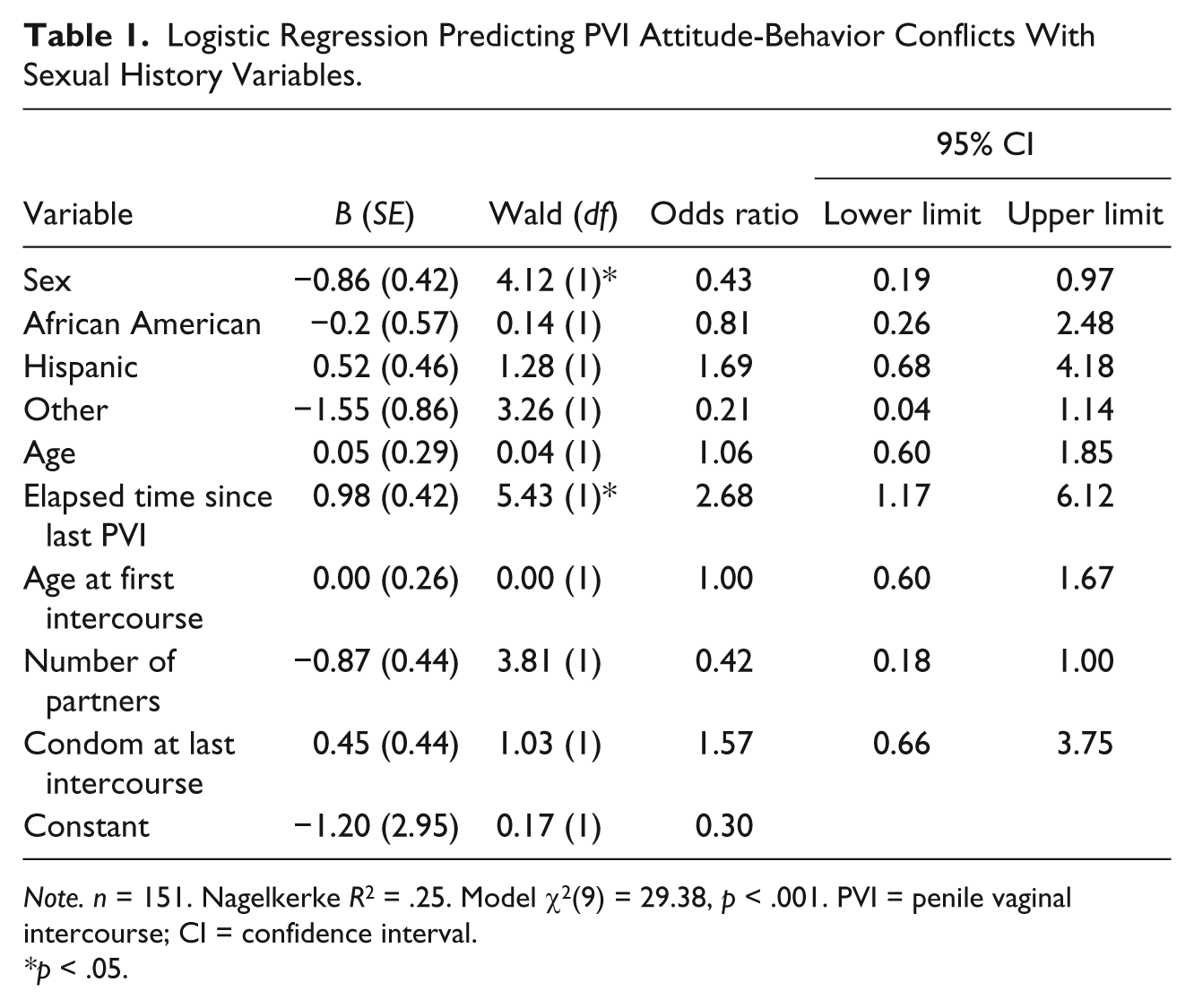
Note. n = 151. Nagelkerke R2 = .25. Model χ2(9) = 29.38, p < .001. PVI = penile vaginal intercourse; CI = confidence interval.
*p < .05.
Substance use model
Similar to the sexual history model, the substance use model was statistically significant with 69.4% of participants classified correctly (Table 2). The model successfully identified 90.7% of adolescents with consistent attitudes and behaviors and 25.0% of adolescents with conflicting attitudes and behaviors. As hypothesized, youth who have already engaged in substance use in middle school are more likely to have consistent sexual attitudes and behaviors. This relationship was found for other drugs use but not alcohol or cigarettes. Again, females had significantly higher odds of having an attitude-behavior conflict.
Logistic Regression Predicting PVI Attitude-Behavior Conflicts With Substance Use Variables.
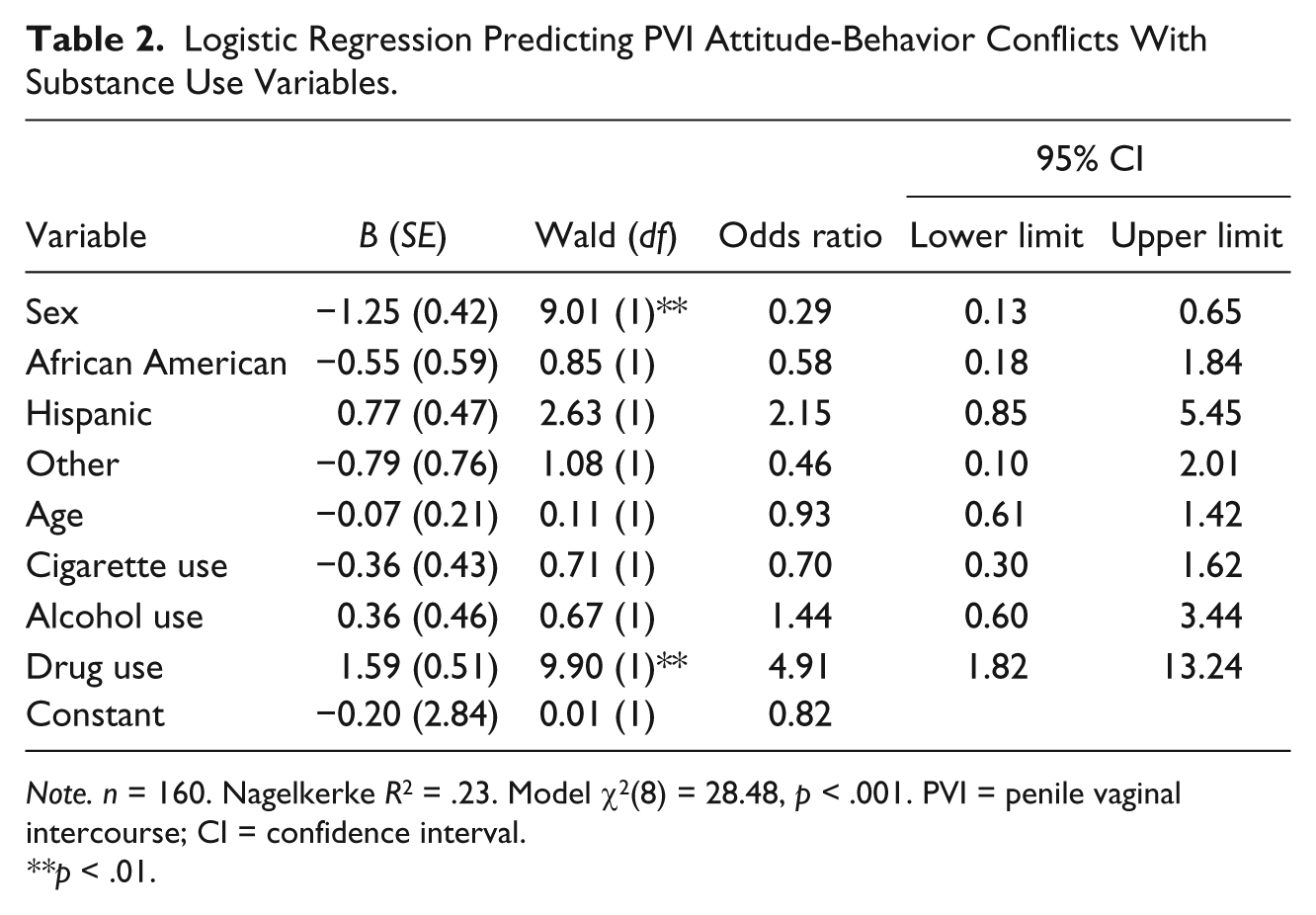
Note. n = 160. Nagelkerke R2 = .23. Model χ2(8) = 28.48, p < .001. PVI = penile vaginal intercourse; CI = confidence interval.
**p < .01.
PVI refusal skills model
Despite having only a single predictor (in addition to sex, ethnicity, and age), this model also significantly predicted adolescents’ attitude-behavior conflicts (74.7% correctly identified; Table 3). The model correctly identified 88.7% of adolescents with consistent attitudes and behaviors and 46.2% of adolescents with conflicting attitudes and behaviors. Youth with higher PVI refusal skills scores are more likely to be on healthy developmental trajectories, and as hypothesized, these youth had higher odds of having conflicting attitudes and behaviors. An increase of one point on the PVI refusal skills score increased the odds of attitude-behavior conflict more than threefold.
Logistic Regression Predicting PVI Attitude-Behavior Conflict With Refusal Skills.
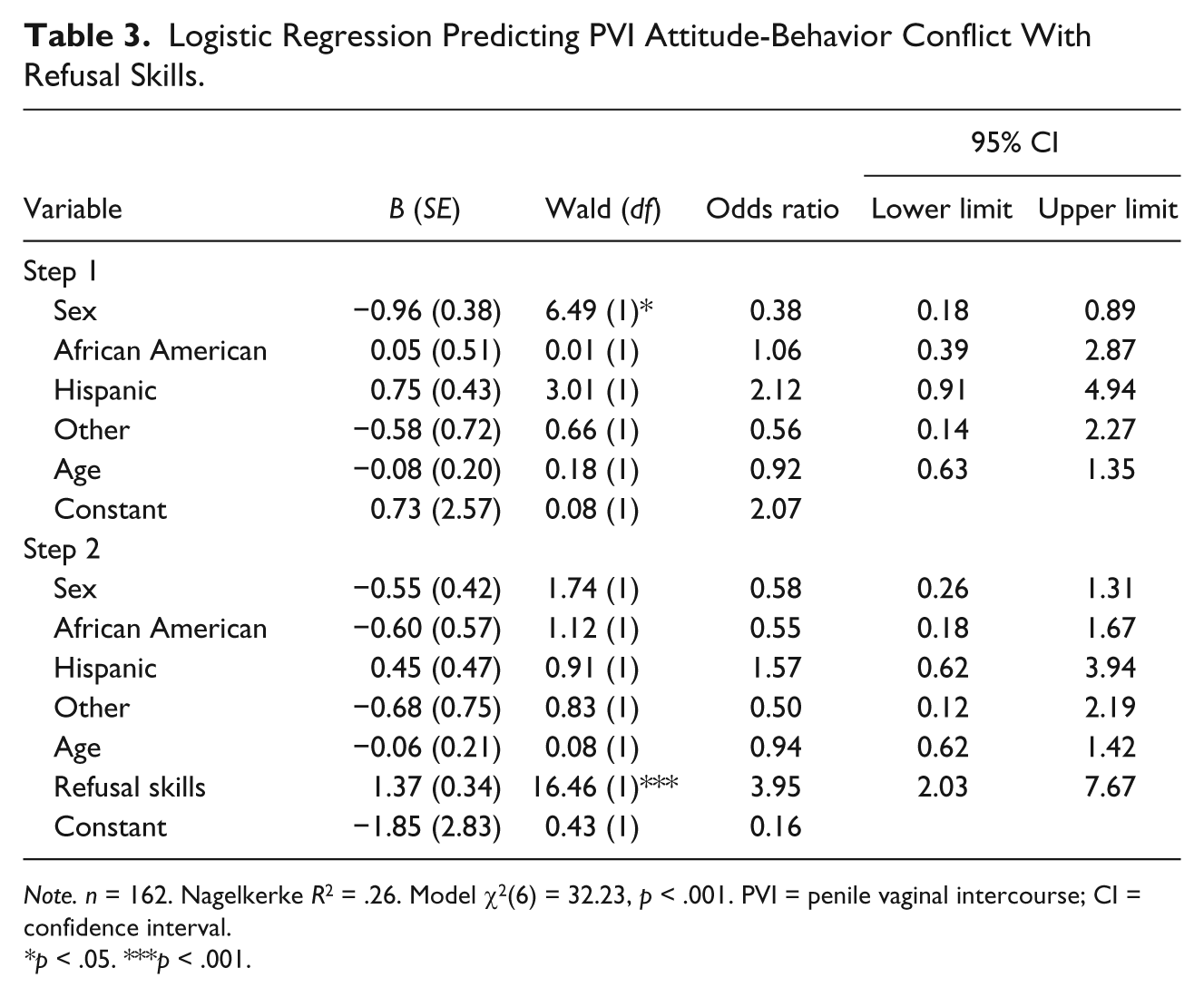
Note. n = 162. Nagelkerke R2 = .26. Model χ2(6) = 32.23, p < .001. PVI = penile vaginal intercourse; CI = confidence interval.
*p < .05. ***p < .001.
Unlike the previous two models, sex did not significantly predict attitude-behavior conflicts. Because this was different from the previous models, we followed up by rerunning the logistic regression as a hierarchical logistic regression with the control variables entered in Step 1 and refusal skills entered in Step 2 (Table 3). Sex was only a significant predictor in Step 1, with females having higher odds of conflict than males. Once the refusals skills variable was entered into the model, sex was longer significant.
Full model
All of the statistically significant main effects were entered into a final logistic regression model with age, ethnicity, and sex as covariates (Table 4). This model significantly predicted adolescents’ attitude-behavior conflicts (71.8% correctly identified). This model correctly identified 83.7% of adolescents with consistent attitudes and 48.1% of adolescents with conflicting attitudes and behaviors. Adolescents who have more time since their last PVI, no other drug use, and higher PVI refusal skills scores continued to have significantly higher odds of having attitude-behavior conflicts. Sex was not a significant predictor of attitude-behavior conflicts in this model.
Final Logistic Regression Model Predicting PVI Attitude-Behavior Conflicts With Previously Significant Variables.
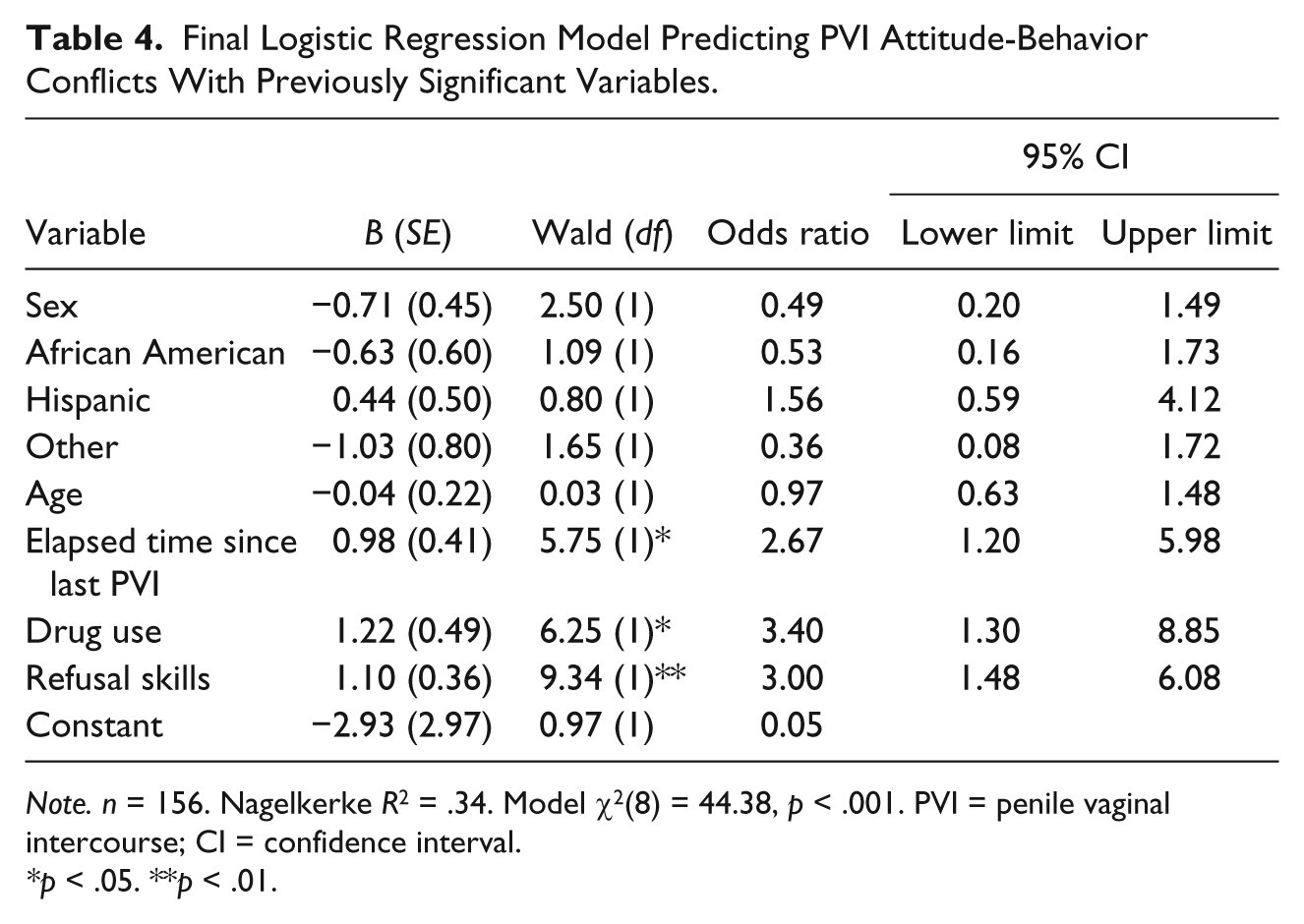
Note. n = 156. Nagelkerke R2 = .34. Model χ2(8) = 44.38, p < .001. PVI = penile vaginal intercourse; CI = confidence interval.
*p < .05. **p < .01.
Follow-Up Analyses
A linear regression was run using the continuous version of the attitudes about PVI scale. The results of these models matched those of the current study: Having more elapsed time since most recent PVI, no drug experience, and more PVI refusal skills were predictive of lower acceptance of PVI, which is indicative of having a behavior-attitude conflict. A table of these results is available by request from the corresponding author.
We also conducted all of our logistic regression models a second time, but reclassified the 14 adolescents with mean attitude scores of 2 (neutral) as feeling positively about adolescent PVI. These analyses found all of the same variables to be predictive of attitude-behavior conflicts in the same direction with one exception. In the sexual history model, having more than one lifetime sexual partner predicted lower odds of an attitude-behavior conflict (B = −1.02, SE = 0.51, Wald = 3.92, p = .048, odds ratio = 0.36, 95% confidence interval [CI]: [0.13, 0.99]), and participants from other races had significantly lower odds of an attitude-behavior conflict than participants who were Caucasian (B = −2.30, SE = 1.12, Wald = 4.23, p = .040, odds ratio = 0.10, 95% CI: [0.01, 0.90]). It is not surprising that the significance of these predictors changed given that the 95% confidence intervals in the original analyses were very close to producing a significant odds ratio and the original Wald statistic had a p value close to .05. The tables of these results are available by request from the corresponding author.
Discussion
This study used an understudied sample, rural youth, to address a gap in our knowledge about PVI experienced adolescents. Specifically, this study investigated predictors of sexual attitude-behavior conflicts in young, rural adolescents with PVI experience, a group generally considered to be at high risk for teen pregnancy and STIs. As demonstrated, young adolescents’ attitudes about PVI are not always in line with their behaviors. We found that females have higher odds of attitude-behavior conflicts (i.e., disapproval of PVI even though they have engaged in PVI); however, this effect does not remain significant when the other predictors are accounted for. Specifically, youth have much higher odds of having attitude-behavior conflicts when more time has elapsed since their last PVI experience, they have never tried drugs, and they have higher PVI refusal skills. Notably, these findings speak to the need to account for attitude and behavior consistency and discrepancy when developing health programming for young, rural adolescents rather than using a one-size-fits-all model.
Previous retrospective work demonstrated that it is common for youth who voluntarily engage in PVI at young ages to feel ambivalent or negative about their experience (Houts, 2005). In the current study, those youth with negative feelings about sex are classified as having conflicting behaviors and attitudes as they have previously engaged in PVI. Perhaps having more elapsed time since the most recent PVI is indicative of being unsatisfied with the previous decision to engage in PVI, and thus these youth have subsequently chosen to abstain, which in turn has created a larger amount of elapsed time. As for the other youth, having less elapsed time might be indicative of satisfaction with the initial decision to have PVI, which in turn could promote continued engagement in the behavior and thus a smaller amount of elapsed time since the most recent PVI.
All of the adolescents in this sample have engaged in PVI, a behavior not considered developmentally appropriate or healthy for middle school students (Finer & Philbin, 2013). The adolescents who have also decided to use drugs have made at least two decisions that go against society’s norms for middle school students, and in support of our hypothesis, these youth had much higher odds of having consistent attitudes and behaviors. These findings are also consistent with Jessor’s problem behavior theory (Jessor, 1992) which emphasizes the importance of evaluating multiple antisocial behaviors and interconnections with risk factors to identify common causes. As such, future research should investigate attitude-behavior conflicts about other types of problem behaviors.
Finally, the results confirmed our hypothesis that youth who have better PVI refusal skills also have higher odds of attitude-behavior conflicts. Perhaps higher refusal skills are related to being more socially competent which suggests better understanding or awareness of social influences. That is, those with more social competency might be more aware of the general societal disapproval of middle school students having PVI, thus influencing their attitudes to be against engaging in PVI. Or better refusal skills may have supported their belief that they should wait to engage in PVI in the future, as supported by the effect of longer time since last intercourse in this group.
While the current study is not longitudinal, attitude-behavior conflicts about PVI are associated with characteristics predictive of fewer future risky sexual behaviors. Conversely, the characteristics of the adolescents with consistent attitudes and behaviors (e.g., more substance use and fewer PVI refusal skills) are risk factors for developing serious behavior and substance use problems during adolescence, especially in light of the young age of the sample (Hendrick et al., 2016; Kirby, 2007). Thus, it may be important to identify sexually experienced young adolescents who have consistent attitudes and behaviors and target these youth in more intensive prevention and intervention programs focused on managing these risks. Adolescents with conflicting attitudes and behaviors, on the other hand, may need programs that help them navigate the potential dissonance that may be caused by the conflicting attitudes and previous behaviors. This group, in particular, may benefit from the recommended prevention programming for this age group that promotes their positive attitudes toward abstaining from PVI until some point in the future when better decision making and self-regulation skills have developed (Goesling et al., 2014; Kirby, 2007; Steinberg & Cauffman, 1996).
Limitations and Conclusions
As previously mentioned in our follow-up analyses, this study dichotomized attitudes about PVI to identify those with attitude-behavior conflicts and those without. Dichotomizing attitudes loses the broad range of attitudes youth may hold. We investigated linear regression models using the full range of attitudes and found the same results, suggesting that dichotomizing attitudes was not problematic. We also reclassified the 14 adolescents with mean attitude scores of 2 (neutral) as feeling positively about adolescent PVI and then conducted all of our logistic regression models again. These follow-up analyses found all of the same results except for small differences in the sexual history model. In this model, the number of lifetime sexual partners and having an ethnicity that was not Hispanic, African American, or Caucasian were now significant predictors of having congruent attitudes and behaviors. As indicated, it is not surprising that the significance of these predictors changed given that the 95% confidence intervals for these variables in the original analyses were very close to producing a significant odds ratio and the original Wald statistics had a p value close to .05. We are not concerned about these changes in significance because they are due to values being very close to the significance cutoff; a larger sample size with more power would help determine whether these are in fact important predictors.
Another limitation is that the sample was restricted to young adolescents who have had PVI. As such, the predictors of attitude-behavior conflicts may not be generalizable to all youth, particularly those who are not sexually experienced. However, it is important to study this population in isolation because, given the young age of the current sample, being sexually experienced is a risk factor for sexual health risks including teen pregnancy and STIs (Finer & Philbin, 2013). As noted, the age range of the sample (11-15 years old) suggests that some of the participants may have repeated a grade as the sample was composed of sixth to eighth graders. This might indicate that some participants also have academic problems that were not assessed in the current study.
Despite these limitations, this study utilizes an understudied population to provide a clearer picture of sexually experienced youth. The results indicate that sexually experienced adolescents are not only a heterogeneous group in regard to their beliefs about the acceptability of PVI, but that the two belief groups are also unique based on the three targeted domains of sexual health risk. In particular, the characteristics and behaviors of the adolescents with consistent attitudes and behaviors are associated with negative health outcomes more so than those of adolescents with attitude-behavior conflicts. This suggests that attitude-behavior conflicts could be predictive of healthy future behaviors for sexually experienced youth. In addition, youth with attitude-behavior conflicts may be more receptive to messages focused on delaying sexual behaviors. In contrast, youth with consistent sexual attitudes and behaviors demonstrated behaviors, which given their ages, suggest that they are on pathways to sexual health risk, substance use, and behavior problems; these youth likely need more focused and intensive interventions that include information about reducing risk to offset these trajectories. Studies have found that prevention programming is most effective when the content is developmentally appropriate for the participants, for example, focusing on condom and contraceptive use for high school students while emphasizing appropriate attitudes about PVI and reasons to delay initiation for middle school students (Goesling et al., 2014; Kirby, 2007). The current findings suggest that while a focus on attitudes is important for many middle school students and may be enough to keep them on healthy trajectories, some middle school youth may need more intensive interventions, including information about reducing the risks of PVI or how to safely navigate internal conflicts regarding PVI.
Footnotes
Authors’ Note
Julie C. Hill is now at the Department of Psychology, University of Wisconsin–Platteville. Esther Jean-Baptiste is now at the College of Public Health, University of South Florida. Kelly J. Johnson is now at the Department of Pediatrics, Emory University.
Declaration of Conflicting Interests
The author(s) declared no potential conflicts of interest with respect to the research, authorship, and/or publication of this article.
Funding
The author(s) disclosed receipt of the following financial support for the research, authorship, and/or publication of this article: This research was supported by an Administration for Children & Families, CBAE Program Grant (#90AE0276) awarded to Heartland Rural Health Network.