







Abstract
We illustrate how early adolescents use different patterns of ability feedback to promote a positive self-concept of ability (SCA) in mathematics. Students can simultaneously use ability appraisals from parents and teachers, while also drawing information from peer, dimensional, and temporal comparisons. Although we find these five sources are equally important for promoting students’ positive SCA, on average, we use a pattern-centered approach to show that students who believe they are good at math often select certain feedback sources as more important to develop this belief. We find that students’ patterns of ability feedback are unstable, with evidence suggesting different patterns may emerge depending on the availability of ability feedback. Findings suggest early adolescents attempting to promote their own positive SCA in mathematics may know to seek different feedback sources depending on their individual circumstances. Implications are discussed through the lens of social comparison theory.
Introduction
“Are you good at math?” Whether you work for a living or are still in school, it likely won’t take long for you to respond to this question with one of two choices. A simple answer of yes, however, will belie a related, yet more complicated question: “How do you know?” From this question, a much wider variety of answers may emerge. For one teenage girl, positive feedback from parents and teachers might be the first memories to come to mind. For another, the question may trigger flashbacks to finding out that she passed a test many of her friends failed. A final student might not have any of these experiences, but still think that she is somewhat good at math if her English grades are much worse. Each of these is a possible way a person may come to decide they are good at math. Yet, we know little about whether students engage equally in all of these processes. If they differ in the sources they use to promote their self-concepts, what might those differences look like, and how might they develop?
Academic self-concept of ability (SCA), or the perception of one’s academic abilities, is a widely studied self-belief (Bong & Skaalvik, 2003; Harter, 2012; Marsh, Martin, Yeung, & Craven, 2017). The study of self-concept explores both how we come to develop beliefs about ourselves (Harter, 1998; Rosenberg, 1979) and how those beliefs impact academic motivation (Guay, Ratelle, Roy, & Litalien, 2010), performance (Guo, Marsh, Morin, Parker, & Kaur, 2015; Moller, Retelsdorf, Koller, & Marsh, 2011), and choices (Nagy, Trautwein, Baumert, Köller, & Garrett, 2006; Umarji, McPartlan, & Eccles, 2018; Updegraff, Eccles, Barber, & O’Brien, 1996). SCA is a central component of popular theories of motivation, including expectancy-value theory and self-determination theory (Deci & Ryan, 1985; Eccles et al., 1983). Such theories have been used to empirically show how, in the early adolescent years, students’ SCA is predictive of the choices they will make about what math-based courses they will take in high school and what majors they will select in college (Eccles, Barber, Updegraff, & O’Brien, 1998; Musu-Gillette, Wigfield, Harring, & Eccles, 2015; Umarji et al., 2018). Consequently, researchers have sought to understand the different influences that contribute to the development of students’ math SCA during the early adolescent years.
Feedback Sources That Inform Self-Concept Development
The development of SCA in a given domain is influenced by several information sources, as Bong and Skaalvik (2003) summarize in their review. Perhaps the most heavily studied of these influences of SCA have been frames of reference, or the standards against which one compares his or her achievements (Bong & Clark, 2010; Marsh & Parker, 1984). As Marsh’s (1986) internal/external frame of reference model suggests, frames of reference illustrate how the same objective academic accomplishments can lead to quite different self-concepts depending on one’s standard of comparison (Marsh, Aduljabbar, et al., 2015). Transitioning into a classroom with higher-achieving peers, for instance, may paradoxically improve a student’s abilities, but lower that student’s SCA (Marsh & Parker, 1984). Social comparisons, in which students use the achievement of peers as a frame of reference, become quite salient for early adolescents as they develop a keener sense for subtle comparison cues (Harter, 2012) and are encouraged to engage in comparisons due to the increasingly normative grading structure of early adolescents’ schools (Eccles & Midgley, 1989). Another frame of reference is dimensional comparison, which uses perceived ability in one subject to contextualize perceived ability in another subject. A student comparing their math grade against their worse English grade is making a downward comparison, and is likely to raise their math SCA and lower their English SCA (Möller & Marsh, 2013). Furthermore, dimensional comparison theory highlights that when students have low achievement in a domain especially dissimilar from mathematics (e.g., English), the dimensional comparison’s effect on math SCA will be especially positive (Jansen, Schroeders, Lüdtke, & Marsh, 2015; Marsh et al., 2014; Umarji et al., 2018). Finally, studies on temporal comparisons, which evaluate one’s current achievements relative to one’s stronger or weaker past achievements, have shown that SCA is also influenced by students’ perceptions of improvement over time (Marsh, Ludtke, et al., 2015; Möller, 2005).
Academic self-concepts can also be influenced by reflected appraisals from significant others, including parents and teachers (Bong & Skaalvik, 2003; Eccles et al., 1983; Harter, 1998; Rosenberg, 1979; Shavelson, Hubner, & Stanton, 1976). This is based in the assertion that people come to view themselves as they believe others view them, especially in the absence of absolute standards for judging one’s abilities (Bong & Skaalvik, 2003; Rosenberg, 1979). Empirical work focusing on parents and teachers as socializers has shown a positive relationship between parent and teacher expectations and students’ SCA (Kaminski, Erickson, Ross, & Bradfield, 1976; Neuenschwander, Vida, Garrett, & Eccles, 2007; Spinath & Spinath, 2005). Parent and teacher beliefs about their children’s abilities can affect their role modeling, encouragement, provision of experiences, and coactivity toward their children, ultimately influencing their children’s own ability beliefs (Eccles, 1993; Midgley, Feldlaufer, & Eccles, 1989a; Simpkins, Fredricks, & Eccles, 2012; Tiedemann, 2000). Overall, the influence of comparison processes (i.e., frames of reference) and adult socializers (i.e., reflected appraisals from significant others) illustrates the colorful array of influences through which SCA is shaped.
Although there is empirical support for how one’s SCA is influenced by social comparisons (Marsh & Parker, 1984), dimensional comparisons (Marsh, Ludtke, et al., 2014), temporal comparisons (Möller, 2005), parents’ ability appraisals (Simpkins et al., 2012), and teachers’ ability appraisals (Burnett, Craven, & Marsh, 1999), we know little about how the confluence of these feedback sources ultimately shapes one’s SCA. Although each source of feedback has been shown to have its own unique effects on SCA, the bodies of literature on frames of reference and appraisals from significant others have remained largely separate. We know little about whether students may be placing greater importance on some of these feedback sources, or if students differ in which feedback sources they consider more important for SCA development.
Selective Importance for Different Sources of Ability Feedback
Multiple theoretical frameworks related to academic ability beliefs support the idea that students may not, in fact, be placing equal importance on all sources of ability feedback when constructing SCA. First, individual differences in students’ values may lead students to see some sources of feedback as more important than others. Shavelson and colleagues point out that how we organize the massive amounts of feedback we receive is likely dependent on cultural beliefs (Shavelson et al., 1976). Similarly, based on John Nicholls (1984) foundational notion that “ability” may be conceptualized in different ways, achievement goal theory proposes that whereas some students judge their own ability based on peer comparisons (i.e., performance-oriented), others judge their ability based on perceptions of improvement over time (i.e., mastery-oriented) (Ames, 1992; Murayama, Elliot, & Friedman, 2012). Students who differ in this regard may be more inclined to place more importance on either temporal or peer comparisons.
Research on developmental processes, particularly during early adolescence, show that the sources of ability feedback we consider most important can change as our frames of reference change. Students transitioning into a new peer group in middle school may discount the accuracy of peer comparisons from elementary school, instead emphasizing parental appraisals as more stable and valid assessments (Gniewosz, Eccles, & Noack, 2011). As time goes on though, the greater presence of normative grading practices in middle school may encourage students to place even greater importance on peer comparisons, and discount parents’ ability appraisals (Eccles & Midgley, 1989). These findings are rooted in the belief that both developmental and contextual changes can encourage us to shift our beliefs about which sources of ability feedback provide the most useful information.
Selective Importance When Engaging in Self-Enhancement
In addition, work related to social comparison theory has shown that individuals who have motives for different self-images may engage in selective processing of available information as they construct self-beliefs (Elliot & Mapes, 2005; Festinger, 1954; Sedikides, 1993). Students’ pursuit of self-assessment (striving for accurate self-knowledge) may lead them to prioritize parent appraisals over peer comparisons, and vice-versa, in certain circumstances (Gniewosz et al., 2011). Meanwhile, students’ pursuit of self-differentiation (striving to identify strengths and weaknesses) may lead them to prioritize dimensional comparisons (Wolff, Helm, & Möller, 2018). Ultimately, self-concept construction is a flexible, adaptive process (Gniewosz et al., 2011; Sedikides, Skowronski, & Gaertner, 2004), in which adolescents demonstrate their ability to place greater importance on sources of ability feedback that fit their individual needs.
When this need is self-enhancement, or the striving for positive self-image, less is known about which ability feedback sources adolescents attend to. This is somewhat surprising considering research showing that students are often more motivated to engage in self-enhancement (striving for positive self-knowledge) than self-assessment (striving for highly accurate self-knowledge) (Sedikides, 1993). Although there is utility to having highly accurate self-knowledge, self-enhancement processes are positively associated with a variety of mental health indicators (for review, see Sedikides et al., 2004). Motivation for self-enhancement is especially salient when evaluating one’s ability in an important domain, for which negative feedback would be especially harmful to one’s self-image (Sedikides, 1993). Experimental studies have shown that students are often more motivated to engage in self-enhancement than self-assessment, selectively retrieving feedback that positively depicts important personality traits than similarly diagnostic feedback that reflects negatively on those traits (Green & Sedikides, 2004). Given the centrality of mathematics to many academic domains, especially in the sciences, it is likely that students are often motivated to engage in self-enhancement when considering their math ability. However, the confluence of feedback sources adolescents use during this process remains unstudied.
The Present Study
A large body of work on adolescent students’ academic SCA details the sources of feedback that inform SCA (Bong & Skaalvik, 2003; Harter, 2012), the nuances of the conditions that affect SCA (Marsh et al., 2017), its multidimensional and hierarchical nature (Shavelson et al., 1976), and achievement-related behaviors and choices that depend on SCA (Musu-Gillette et al., 2015). Yet in a time when designing more equitable learning environments is a top priority, and modern learning management tools allow instructors to customize ability feedback (Aguilar, 2018), it is more necessary than ever to ensure educational stakeholders are armed with research on individual differences. Moreover, there is perhaps no more important developmental period for studying students’ self-enhancement than early adolescence, when students’ expectancies of success in math often begin to decline (Midgley, Feldlaufer, & Eccles, 1989a).
In the present study, we explore students’ reports that certain sources of ability feedback are more important than others for promoting positive math SCA (hereafter referred to as “selective importance”). Theoretically, this is due to a combination of developmental processes, contextual changes, and value judgments. Here, we focus on early adolescents’ SCA in the domain of mathematics, which has been studied across several countries for its associations with parent appraisals (Neuenschwander et al., 2007; Simpkins et al., 2012; Tiedemann, 2000), teacher appraisals (Burnett et al., 1999; Spinath & Spinath, 2005), peer comparisons (Chmielewski, Dumont, & Trautwein, 2013; Marsh & Parker, 1984), dimensional comparisons (Marsh, 1986; Marsh, Ludtke, et al., 2015), and temporal comparisons (Möller, 2005). To our knowledge, this study is the first to explore individual differences in students’ patterns of selective importance among several of the most prominent sources of ability feedback. A strong reason for doing so is the need to better understand the simultaneous impact of multiple influences upon SCA, and whether this is associated with ability beliefs and achievement. Furthermore, we explore these patterns across two waves of data to investigate whether such individual differences are stable traits or contextually influenced states. Overall, the present study is guided by three research questions:
Do students report different patterns of feedback sources used to improve math SCA?
Are patterns of self-enhancement associated with SCA and achievement?
How stable are these patterns over time?
Method
Participants
The participants in this study were drawn from the Michigan Study of Adolescent Life Transitions (MSALT). This is a longitudinal data set that followed 2,451 sixth grade students attending 124 classrooms in 16 predominantly White (97%) middle schools in 12 middle-to-working-class school districts in Southeastern Michigan. The sample included approximately 80% of the student population in these classrooms. Across this study, data were collected from students, teachers, parents, and school records throughout their middle school, high school, college, and post-college years. We used Waves 1 and 2, which were collected at the beginning and end of sixth grade, respectively. These waves of data collection occurred in 1983 to 1984. Therefore, before generalizing findings to today’s students, it is important to consider whether the psychological processes explored in this study (i.e., middle school students’ SCA construction) would have fundamentally changed in the past 30 years.
Procedure
Sixth grade students completed a questionnaire about their SCA-related beliefs in their math classrooms during each of two semesters, taking approximately 1 hour to complete. Parent questionnaires were administered and returned by mail. Participants’ semester-long grades and test scores were received from school record data at the end of each semester. At each wave of data collection, students were asked, “Are you good at math?” Students’ responding yes were considered to have “positive SCA,” whereas responding no was considered “negative SCA.” Positive-SCA students were directed to self-enhancement items asking how important different sources of information were to the belief that they were good at math (e.g., “Knowing what my parents think about my ability in math has helped me to decide that I’m good at math.”), whereas negative-SCA students were asked to indicate how they determined they were not good at math. Because negative-SCA students did not answer questions regarding self-enhancement, this study focused on positive-SCA students (n = 1,769; 72% of sample at Wave 1).
Measures
Student surveys measured a large number of theoretical constructs across multiple-activity domains, most measured with 5- or 7-point Likert-type response scales. The questionnaire assessed a broad range of students’ beliefs, values, and attitudes concerning mathematics, English, physical skills, and social activities, as well as other constructs.
Math SCA
Math SCA was a single item that measured how good students perceived themselves to be at math (“How good at math are you?” on a 1-7 scale from 1 = not at all good to 7 = very good). We kept this measure as a single item because other similar items would have conflated self-concept with self-efficacy (e.g., “How well do you think you will do in math this year?”) (Bong & Skaalvik, 2003). However, we considered this item sufficient for the purposes of this study for three reasons. First, the strong correspondence of the item’s phrasing with the definition of SCA presents high face validity. Second, we believe the 7-point scale provides sufficient sensitivity. Third, the correlation between Waves 1 and 2 was r = .78, suggesting acceptable test–retest reliability.
Math self-enhancement influences
Students who indicated they had a positive math self-concept answered questions asking about the importance of various influences on their self-enhancement. These items were all on a 1 to 4 scale from (1) not at all important to (4) very important. These items were grouped into scales reflecting five distinct sources of ability feedback, including two sources of ability appraisals (i.e., parent appraisals, teacher appraisals) and three frames of reference (i.e., peer comparisons, dimensional comparisons, temporal comparisons; Table 1). Although parent and teacher appraisals have been combined in some studies (e.g., Hattie, 1992), Eccles and colleagues, along with other more recent studies (e.g., O’Mara, Marsh, Craven, & Debus, 2006), have assumed parent and teacher influences operate independently of one another, leading to their separation in the present study.
Categories of Math Self-Enhancement Influences.
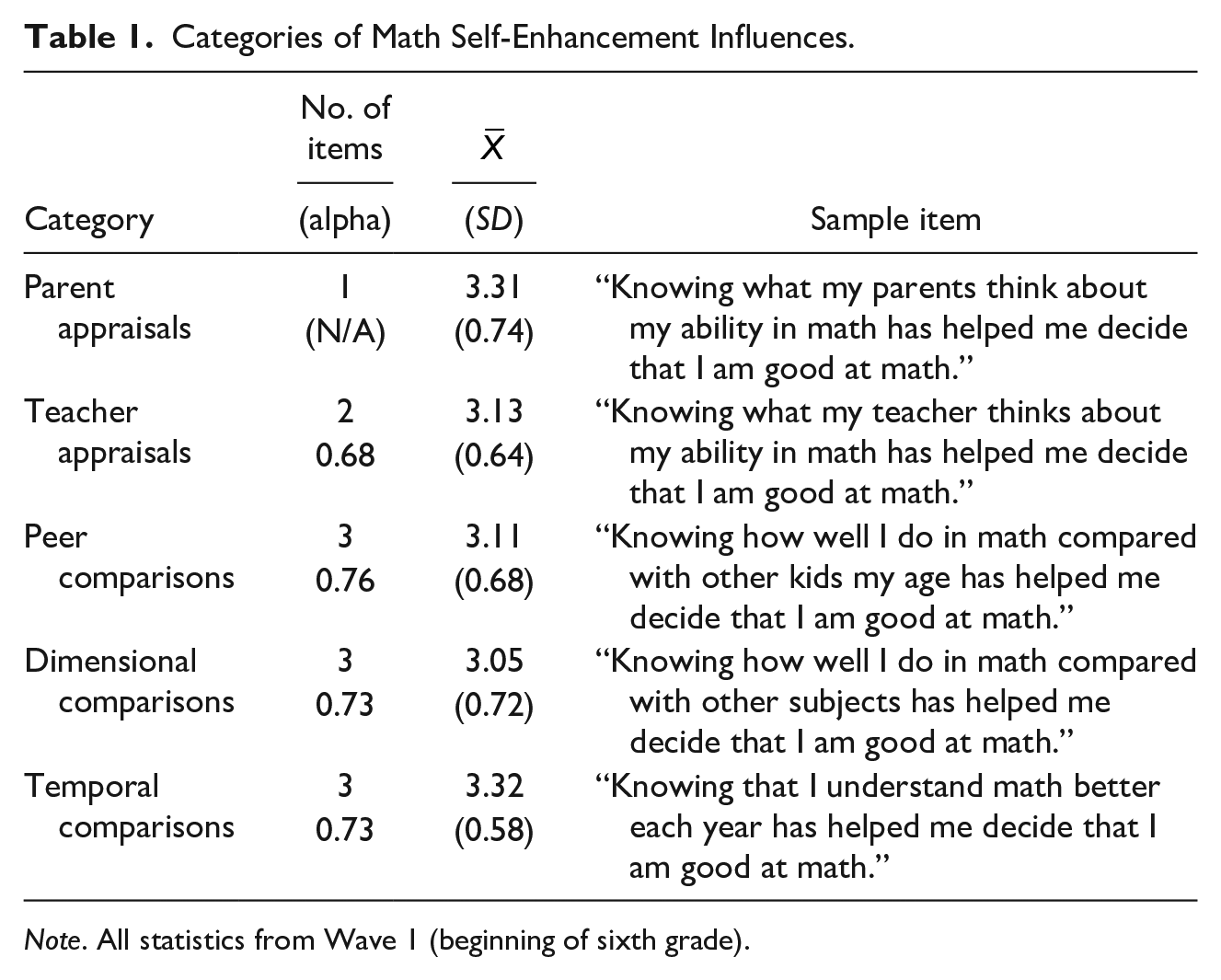
Note. All statistics from Wave 1 (beginning of sixth grade).
Math achievement
School record data provided end-of-semester math grades. Semester 1 grades were considered Wave 1 and Semester 2 grades were considered Wave 2. Each of these grades was recoded using a standardized scale of 1 to 16 so that math achievement scores were on the same scale across all schools.
Feedback-related variables
Finally, to prepare for post hoc analyses, we found variables in our data set that we considered proxies for the amount of positive feedback each source may have been providing students. Among the available variables were items related to students’ relational quality with their parents and teachers, including trust and care, which has been shown to be positively associated with positive ability feedback and perceptions (Bong, 2008; Skipper & Douglas, 2015; Wagner & Phillips, 1992). The item “My parents trust me to do what they expect without checking up on me (1 = never true to 4 = always true),” was hypothesized to be associated with student perceptions of more positive feedback from parents, and the item “The teacher cares about how we feel (1 = not very often; 2 = sometimes; 3 = usually; 4 = very often),” was hypothesized to be associated student perceptions of more positive feedback from teachers. Higher math achievement, along with the item “I compare my math ability to other students in my math class (1 = never to 4 = very often),” was hypothesized to be associated with peer comparisons presenting more positive feedback. English achievement, measured the same way as math achievement, was hypothesized to be associated with dimensional comparisons presenting more negative feedback. Our data set did not present any variables we thought would be related to a greater likelihood of getting positive feedback from temporal comparisons.
Analysis Plan
Research Question 1 (RQ 1)
Are there different patterns of important feedback sources? Given the multidimensional nature of SCA development, students’ self-enhancement was investigated using a pattern-centered analysis. This allows for a detection in the heterogeneity of the co-occurrence of self-enhancement influences. The five categories of math self-enhancement influences in Table 1 were used to create profiles of selective importance. We used ROPstat for these analyses, a program designed to support pattern-centered approaches (Vargha, Torma, & Bergman, 2015). Of the students who had missing values for these clustering variables (n < 5% of sample), imputation was conducted for students who had values on at least two thirds of the clustering variables. Imputation used the twin (nearest neighbor) method, which calculates average squared Euclidean distance. This calculation was deemed suitable for a pattern-centered analysis in which the goal was to group cases that were most similar to each other (Vargha et al., 2015). Outliers were determined by plotting a distribution of each case’s “nearest neighbor,” which is its average squared Euclidean distance to the case with the most similar configuration of the five variables. A scree-like plot was used to identify the first relatively large “jump” in the distribution, which we used as a threshold for excluding cases whose “nearest neighbor” was relatively far away. K-means clustering was then conducted. In line with the two-step process used in clustering for exploratory analyses (e.g., Conley, 2012; Vargha et al., 2015), we began by using Ward’s method to first identify a suitable number of clusters to use in k-means analysis. We proceeded with this clustering technique, as opposed to a model-based approach (e.g., latent profile analysis), due to simulation and empirical studies showing that cluster analysis complemented by validation procedures can perform as well as model-based approaches, particularly in analyses such as this when the number of clusters is unknown (McLachlan, 2011; Robinson et al., 2017; Steinley & Brusco, 2011a, 2011b; Vermunt, 2011; Wormington & Linnenbrink-Garcia, 2016).
To identify cluster solutions with statistically justifiable levels of within-cluster homogeneity, a scree-like plot was used to visualize large changes in within-cluster homogeneity as clusters were collapsed (Wormington, Corpus, & Anderson, 2012). This is represented as the increase in error sum of squares (ESSplus) when collapsing clusters (read Figure 1 from left to right) (Bergman, Magnusson, & El-Khouri, 2003). Scree-like plots like this are meant to identify intuitive cutoff points in a series by visually depicting large increases in error between consecutive cluster solutions (Conley, 2012). Although dendrograms are commonly used to represent the tree-shaped process of hierarchical cluster analyses, we reference a scree-like plot for the purpose of visually depicting the data used to decide our final cluster solution. In this instance, a large increase in the error sum of squares indicates that collapsing clusters (i.e., combining two of five existing clusters so you are left with four clusters) resulted in an especially large increase in error. This would suggest that the most recently combined clusters were relatively dissimilar, resulting in a new cluster comprised of quite different individuals. A range of clusters was chosen for closer examination based on their ability to balance parsimony and within-cluster homogeneity. After using these statistical considerations to select solutions with strong within-cluster homogeneity, the final solution was selected for its theoretically unique (heterogeneous) clusters (Bergman et al., 2003). The centroids of the solution were used for our final k-means analysis, optimizing within-group homogeneity of the desired cluster solution (Conley, 2012; Vargha et al., 2015). The same process was then used at Wave 2.
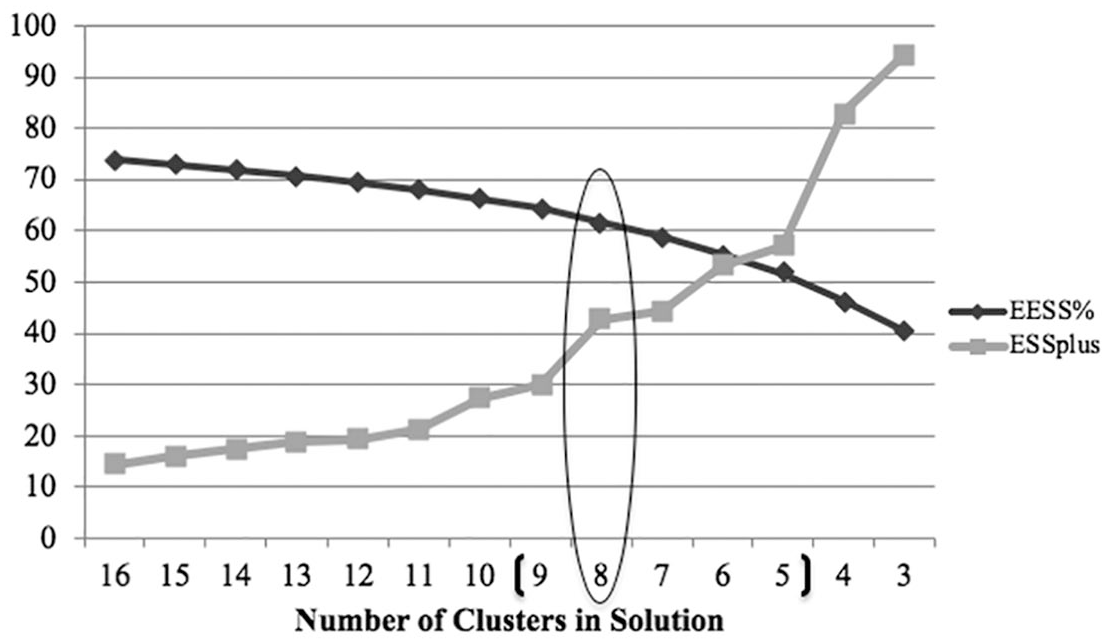
Scree-like plot of potential cluster solutions at Wave 1.
To establish the reliability of cluster solutions, we attempted to replicate the clusters in Wave 1. Four independent, random draws of 60% of the overall sample were subjected to the same clustering method as the overall sample to see if the same clusters emerged consistently in Wave 1 (Conley, 2012). The subsamples did not differ significantly from the full sample on measures of self-concept, nor did they differ significantly on any of the clustering variables. All but one of the clusters (“Dimensional not important”) were reproduced in 75% to 100% of the subsamples, with only minor variations in the mean values of each cluster.
Research Question 2 (RQ 2)
Are patterns of feedback importance associated with SCA and achievement? We assessed this question using analysis of variance (ANOVA), associating cluster membership with SCA and achievement at the same timepoint. For statistically significant ANOVAs, we then conducted post hoc pairwise comparisons of means among all cluster pairs, using a Bonferroni adjustment due to the exploratory nature of the analysis. We replicated these analyses in Wave 2 to reinforce our understanding of which associations were consistent over time.
Research Question 3 (RQ 3)
How stable are these patterns over time? We examined the stability of cluster membership from the beginning to the end of students’ sixth grade year. We used configural frequency analysis (confirmatory factor analysis [CFA]) to detect whether any configurations of stability or transfer occurred more frequently (“types”) or less frequently (“antitypes”) than expected by chance (von Eye, Mair, & Mun, 2010). This allowed us to assess whether the likelihood of students staying in specific groups or transferring from one group to another was greater than chance alone. In this exploratory study, the base model was one that expected all categories would be totally independent of each other. Observed frequencies for all cells were then analyzed for significant differences from the base model, using a Bonferroni adjustment to limit the likelihood of a type I error (von Eye & Gutiérrez Peña, 2004). Because students could change from positive to negative SCA across waves, we included students who changed to negative SCA as a final category alongside the other selective importance clusters.
Post hoc analysis
Finally, we considered the possibility that the CFA might reveal these patterns to be unstable, which would suggest patterns are not trait-like differences. To shed more light on how state-like patterns may emerge, we prepared to explore an alternate hypothesis: that early adolescents select certain sources as more important for self-enhancement simply because those sources are providing more positive feedback than others. To do so, we conducted ANOVAs on each of the feedback-related variables we identified in our data set. We developed specific hypotheses, outlined below, after identifying the best cluster solution.
Results
RQ1: Are There Different Patterns of Important Feedback Sources?
Cluster analyses did reveal patterns of selective importance among an eight-cluster solution, which was the most statistically and theoretically meaningful at both Waves 1 and 2. “Theoretically meaningful” clusters were those that exhibited distinct patterns of selective importance, which is a students’ belief that certain sources of ability feedback are more important others. The scree-like plot (Figure 1) revealed that, in Wave 1, the 9- and 5-cluster solutions were both followed by solutions that combined dissimilar clusters, meaning they depicted the most relatively homogeneous subgroups. From within this range of statistically viable clusters, the 8-cluster solution was chosen because it contained all the distinct, theoretically interesting groups found in the 9-cluster solution. Yet, when collapsed into a 7-cluster solution, theoretically distinct groups (Clusters 4 and 6 in Figure 2) were combined. For Wave 2, a scree-like plot suggested cluster solutions five through eight. The 8-cluster solution was so similar to the Wave 1 solution that it was the most theoretically meaningful.
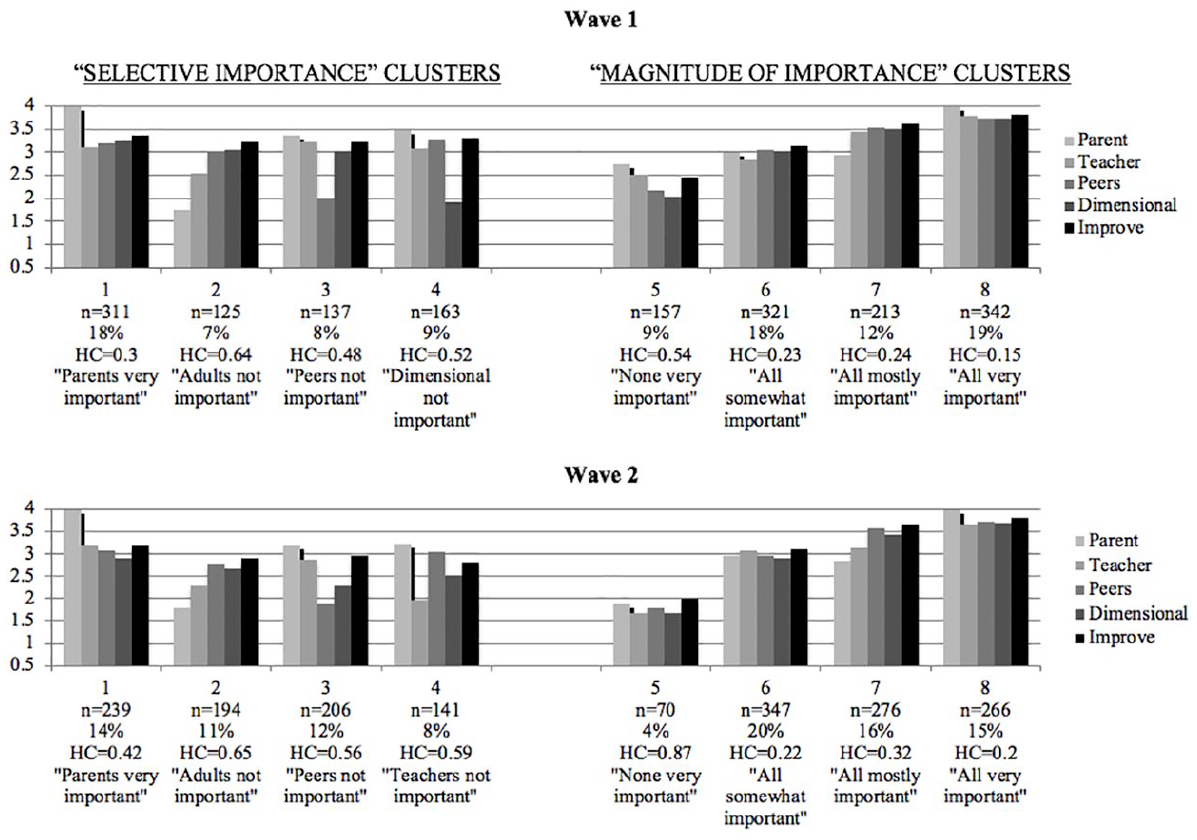
Patterns of selective importance for self-enhancement in math.
Although we were primarily interested in the patterns that showed selective importance, four of the eight clusters endorsed all feedback sources as equally important. These four groups differed, however, in the magnitude with which they reported attending to the five sources of information. “Selective importance” clusters were therefore those in which at least one of the sources of information was more important than another by a full standard deviation (using standard deviations of the entire sample), whereas “magnitude of importance” clusters were those for which the importance of all five sources of information were all within one standard deviation of each other. Individual selective importance clusters were labeled according to the sources of information that they did or did not consider important, whereas magnitude of importance clusters were labeled by the level of absolute importance attributed to all influences.
The “selective importance” clusters (Clusters 1-4) exhibited patterns of significant within-person variation, and comprised 42% our sample. A “Parents very important” cluster emerged, in which parents were especially important for students’ SCA, whereas the other sources were all near the mean. In addition, an “Adults not important” cluster emerged, in which both parents and teachers were relatively unimportant relative to frames of reference such as peer, dimensional, and temporal comparisons. Meanwhile, “Peers not important” rated all feedback sources as mostly important, except for peer comparisons, which was considered only somewhat important. “Dimensional not important” exhibited the same pattern, except dimensional comparisons were considered only somewhat important compared with the others. Together, these two clusters suggested that students may differ in which frames of reference are most important to promoting their math SCA.
The magnitude of importance clusters (Clusters 5-8) comprised 58% of students. These four clusters simply differed in the level of importance all five feedback sources tended to center around. In the “None very important” and “All somewhat important” clusters, all feedback sources were considered less important than the mean. Conversely, an “All mostly important” cluster rated all feedback sources more important than the mean, and students in the “All very important” cluster rated all feedback sources at near maximum importance.
Almost all Wave 1 clusters reappeared at Wave 2 except for one: “Dimensional not important.” This was replaced by “Teachers not important,” which similarly showed mean-level importance for all sources, but substantially less importance for teacher appraisals.
RQ 2: Are Patterns of Feedback Importance Associated with SCA and Achievement?
ANOVAs indicated there was not a consistent relationship between cluster membership and math achievement, but there was a significant relationship between cluster membership and SCA at both waves (Table 2). Figure 3 graphically depicts the between-cluster variability of standardized SCA and achievement, highlighting how between-cluster variations in SCA were noticeably larger than variations in actual achievement.
ANOVAs of Cluster Membership With SCA and Achievement (Unstandardized).
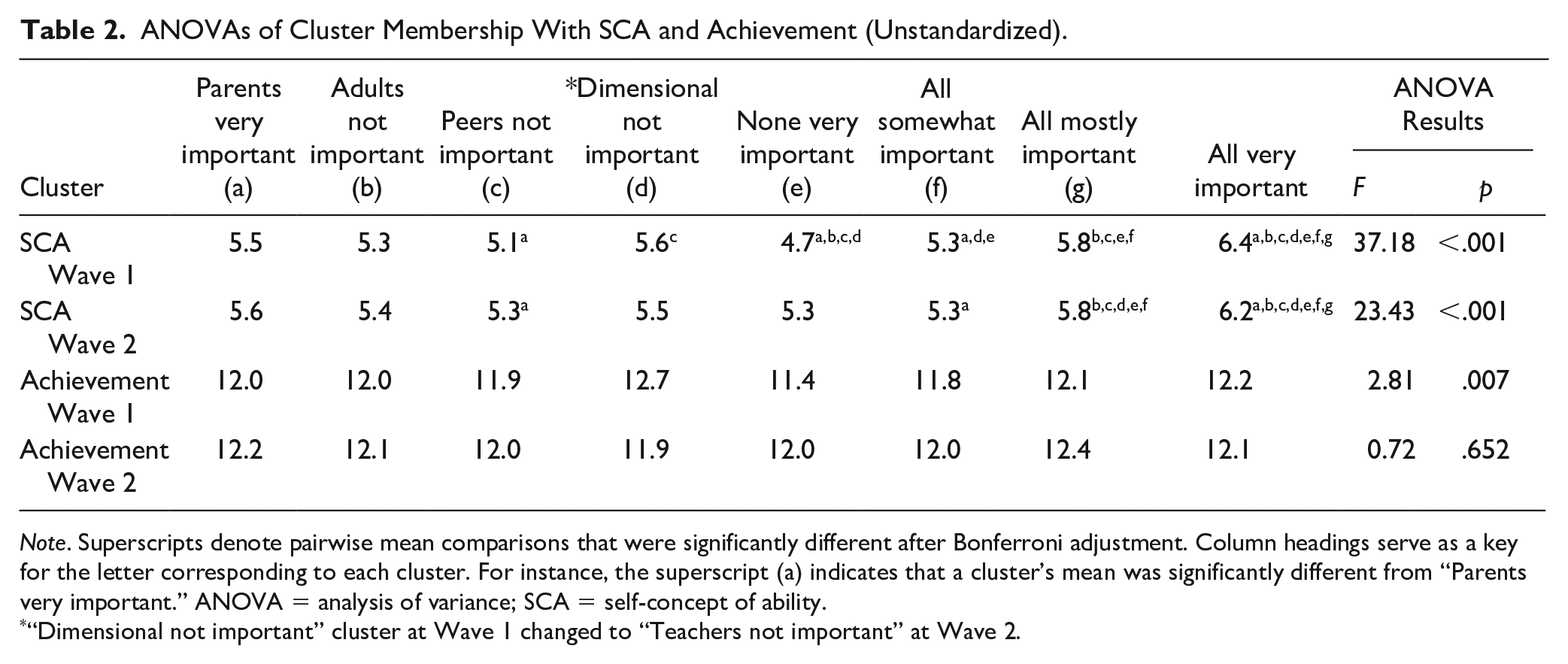
Note. Superscripts denote pairwise mean comparisons that were significantly different after Bonferroni adjustment. Column headings serve as a key for the letter corresponding to each cluster. For instance, the superscript (a) indicates that a cluster’s mean was significantly different from “Parents very important.” ANOVA = analysis of variance; SCA = self-concept of ability.
“Dimensional not important” cluster at Wave 1 changed to “Teachers not important” at Wave 2.
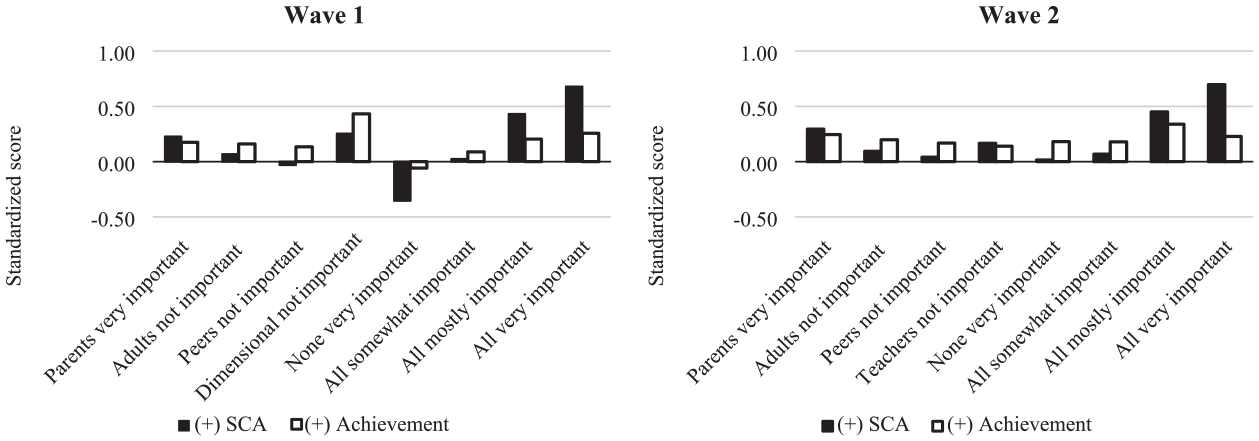
Standardized SCA and achievement by cluster.
Because both ANOVAs regarding SCA were statistically significant, we then conducted Bonferroni-adjusted pairwise comparisons of each cluster’s SCA against that of every other cluster (see superscripts in Table 2). Among the selective importance clusters, there were almost no pairwise differences in SCA. The “Parents very important” and “Adults not important” cluster, for instance, offered the starkest contrast between preferred sources of feedback, but these two clusters did not have significantly different SCA. The only consistent trend was that the “Peers not important” cluster had significantly lower SCA than the “Parents very important” cluster at both waves. In contrast, the magnitude of importance clusters demonstrated significant variation in SCA. We see a linear increase in SCA from “None very important” to “All very important.” This suggests an association between the magnitude of importance attributed to different sources and the amount of positive influence it has on one’s SCA. Again, these differences in SCA emerge despite highly similar levels of achievement among them.
Overall, the selective importance clusters show that when engaging in self-enhancement, students can use different configurations of positive ability feedback and still develop quite similar SCAs in math. Meanwhile, students with the highest SCA are more likely to report that all feedback sources are very important for their self-enhancement (i.e., “All mostly important,” “All very important”).
RQ 3: How Stable Are These Patterns Over Time?
We evaluated the stability of selective importance over time in light of two factors. First, the majority of patterns that appear in Wave 1 also appear in Wave 2. Second, the CFA (Table 3) demonstrates that students were most likely to reappear in the cluster they had previously been in 17 of the 36 “types” that appeared more frequently than expected by chance (bolded numbers), appeared on the table’s diagonal. This indicates that stable configurations occurred more frequently than would be expected by chance.
Configural Frequency Analysis of Change in Cluster Membership.
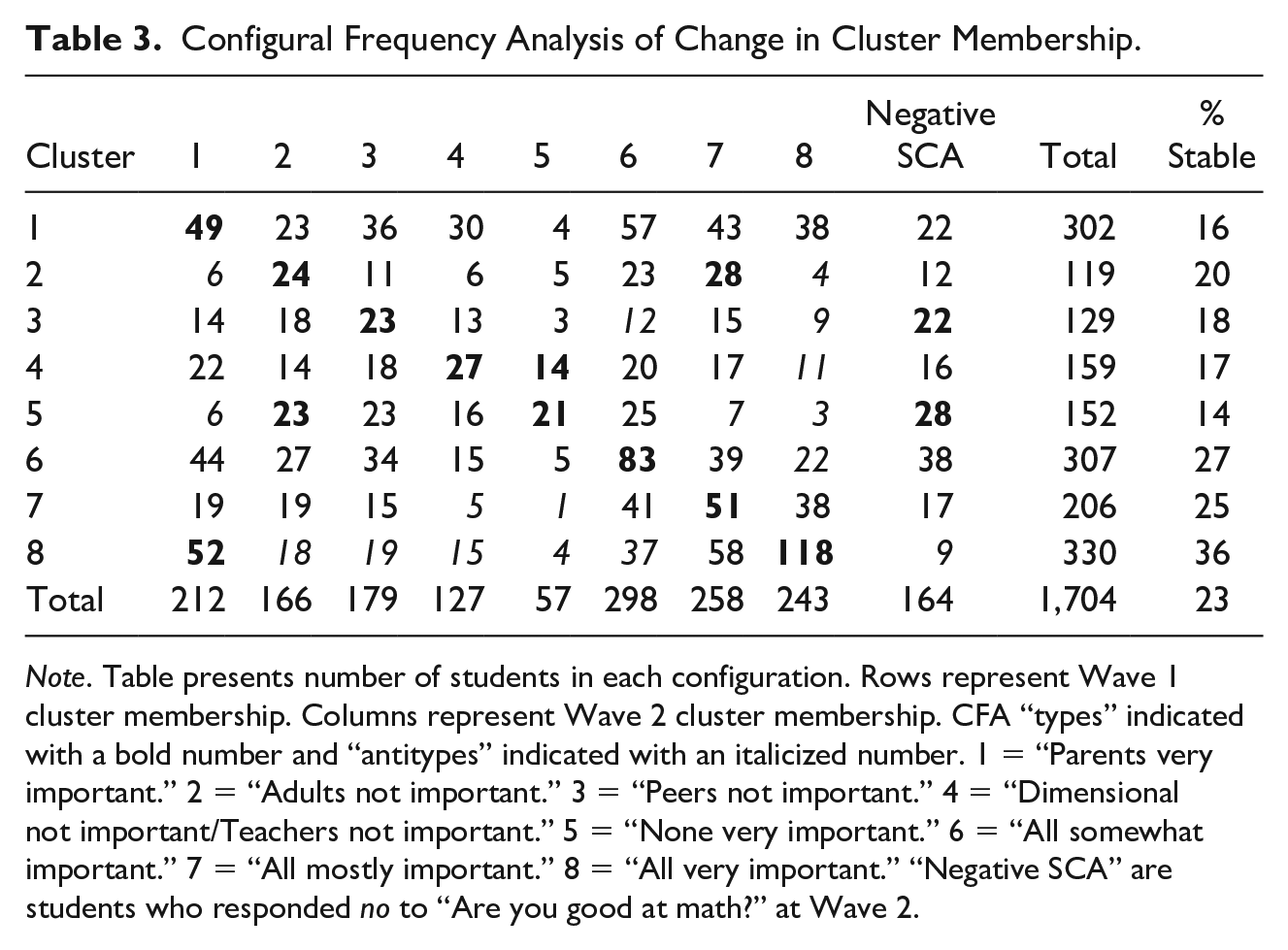
Note. Table presents number of students in each configuration. Rows represent Wave 1 cluster membership. Columns represent Wave 2 cluster membership. CFA “types” indicated with a bold number and “antitypes” indicated with an italicized number. 1 = “Parents very important.” 2 = “Adults not important.” 3 = “Peers not important.” 4 = “Dimensional not important/Teachers not important.” 5 = “None very important.” 6 = “All somewhat important.” 7 = “All mostly important.” 8 = “All very important.” “Negative SCA” are students who responded no to “Are you good at math?” at Wave 2.
Although stable membership in one’s cluster over time was the most likely occurrence, we consider this stability somewhat low. The baseline model, which assumes complete independence among all categories, predicts that each cluster should distribute 11% of itself, or one ninth, to each of the eight subsequent clusters and a ninth possibility that the student switched to “Negative SCA” (i.e., they no longer believe they are good at math). Considering this, it is interesting that the overall stability was only 23%, with stability of any given cluster ranging from 16% to 36%. These results suggest that certain patterns of selective importance may reliably appear over time, yet students have little stability within them.
Several transfers occurred more frequently than expected by chance. “Adults not important” students (Cluster 2) were especially likely to transfer into the “All mostly important” cluster (Cluster 7). Students making this transfer still indicated that adults were at least slightly less important than frames of reference, and generally rated the importance of all feedback sources as more important. “None very important” students (Cluster 5) were especially likely to transfer to the “Adults not important” cluster (Cluster 2), the only other cluster in which all feedback sources were rated less important than their respective sample means. “All very important” students (Cluster 8) were especially likely to transfer to the “Parents very important cluster,” (Cluster 2) the only other cluster that rated parents as maximally important. “Peers not important” students and “None very important” students, who had the lowest SCA of all eight clusters at Wave 1, were especially likely to say they were not good at math in Wave 2.
Many antitypes suggested that students were least likely to transfer into clusters especially different from their original cluster. “Adults not important” students were especially unlikely to change to “Parents very important” or “All very important,” and “None very important” was especially unlikely to change to “All mostly important” or “All very important.” However, some seemingly unlikely transfers happened with regularity. “Parents very important” to “Adults not important” was not an anti-type, nor was “Peers not important to “All mostly important.” Overall, students reappeared in similar clusters at slightly higher rates than would be expected by chance, but many switched to substantially different clusters.
Post Hoc: Do Students’ Self-Enhancement Patterns Reflect What Their Environment Is Giving Them?
After identifying several prevalent patterns of selective importance for self-enhancement, but then discovering that these patterns are not especially stable or trait-like, we explored whether patterns may be associated with differences in the amount of positive feedback coming from different sources. If this were true, we hypothesized that clusters attributing especially high or low importance to some sources would respectively be high or low on variables related to positive feedback from that source. Specifically, we hypothesized “Parents very important” and “All very important” students should report the highest values of parent trust. We hypothesized that “Peers not important” students should have the lowest math achievement and lowest tendency to compare with others, while “Dimensional not important” should have the highest English achievement. Because importance of teacher feedback had the lowest between-cluster variance, we did not expect to see significant between-cluster differences on ratings of how much their teacher cared for them. Our data set did not present any variables we thought would be related to a greater affinity for making temporal comparisons, but there was also little to no between-cluster variation in the importance of temporal comparisons.
ANOVAs on each of these variables showed that students’ selective importance profiles were significantly associated with indicators of parent trust, math achievement, and frequency of peer comparisons. In Figure 4, standardized values illustrate that “Parents very important” and “All very important” students, who endorsed parent opinions as very important to their self-enhancement, also reported their parents had relatively high amounts of trust in them. “Peers not important” and “None very important” students, who said peer comparisons were unimportant to their self-enhancement, had the lowest math achievement and reported the lowest frequency of actually comparing their math ability to classmates. “Dimensional not important,” which said dimensional comparisons contributed the least to their self-enhancement, had by far the highest English achievement. This supports the likelihood that the importance students attributed to each source may be related to the amount of positive feedback they would be getting from that source.
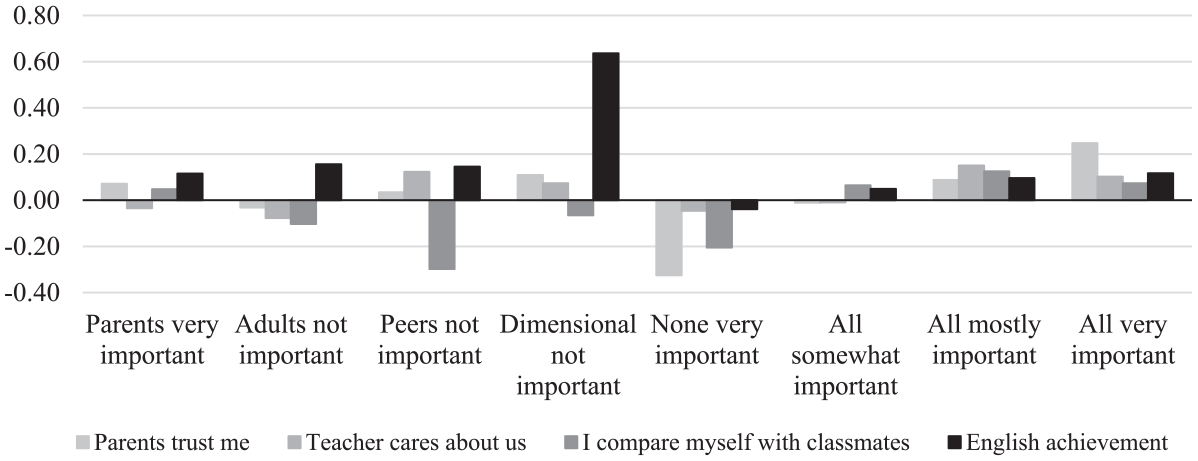
Variables related to feedback sources by patterns of selective importance.
Discussion
In this study, we consider many sources of feedback known to affect adolescents’ ability beliefs, exploring how the confluence of those sources can shape positive SCA through self-enhancement. Several theories imply that individual differences in values (Shavelson et al., 1976), goals (Nicholls, 1984), desired self-images (Festinger, 1954), and developmental stage (Harter, 1998) may lead students to find certain sources of ability feedback more important than others. Recent work on social comparison theory, especially, has empirically shown that striving for self-assessment or self-differentiation can influence which ability feedback sources students find most relevant (Gniewosz et al., 2011; Wolff et al., 2018). Our findings provide further empirical evidence that this phenomenon, which we term “selective importance,” does indeed occur.
We add to this body of work by depicting individual differences in selective importance through a person-centered approach. Despite each of these ability feedback sources being equally important, on average, patterns of importance showed that students have different configurations of what feedback they consider important for improving SCA. Eighteen percent of the early adolescents in our sample, for instance, found parent appraisals especially important, whereas 24% fell into a cluster reporting that one or two feedback sources was especially unimportant. But although these patterns of selective importance were quite different, none of these configurations was associated with especially high SCA. This suggests that students do not need equally positive feedback from all sources to promote their SCA.
A few trends surrounding our data led us to suspect that students may be capitalizing on feedback sources that provide especially positive information and avoiding sources that may provide negative information. First, the magnitude of attention clusters showed a linear association between the overall importance attributed to different feedback sources and those students’ SCA. Students with the highest SCA said that each source was maximally important for promoting their ability beliefs. In addition, cluster membership was relatively unstable, raising the possibility that these individual differences may reflect states of exposure to different types of ability feedback more so than trait-like preferences. The most frequent transfers among clusters also aligned with this hypothesis, occurring between clusters either with similar shapes but different magnitudes, or similar magnitudes, but different shapes. Transfer to a cluster with a similar shape, but a different magnitude seems likely to be related to a change in the magnitude of SCA itself; whereas transfer to a cluster with a similar magnitude, but a different shape may signal a new awareness of an especially positive or negative feedback source. Similarly, transition to negative-SCA seems most likely to stem from increased salience of negative peer comparisons, as clusters originally attributing the least importance to peer feedback (“Peers not important” and “None very important”) were the most likely to transfer to negative-SCA at the next wave. Finally, our post hoc analyses showed that students who found certain feedback sources more important may have been especially likely to be getting positive information from those sources (e.g., “Parents very important” had best relationships with their parents), whereas those who found certain feedback sources less important than others were especially likely to be getting negative information from those sources (e.g., “Dimensional not important” had highest English grades).
This suggests students may know which feedback sources they should seek or avoid if their goal is self-enhancement. Many early adolescents, for example, reported their parents as an especially important source of positive feedback. Conversely, many other early adolescents reported peer or dimensional comparisons as especially unimportant. This demonstrates an awareness that can be used to engage in self-protection, which is a form of self-enhancement focused on avoiding feedback that will degrade one’s self-concept (Green & Sedikides, 2004). “Peers not important” students, for instance, had the lowest math achievement and admitted that they engaged in peer comparisons less frequently than students in any of the other clusters. Therefore, students driven by the motive of self-enhancement may engage in selective processing of feedback when some feedback sources are more positive than others. Two students in different circumstances may differ accordingly in which feedback sources they seek or avoid when engaging in self-enhancement.
Patterns of selective importance in SCA construction may therefore be connected to differences in individuals’ circumstances. However, it is important to note that our findings only extend to the process of seeking positive ability information, or self-enhancement. In contrast, seeking accurate ability information, or self-assessment, may be less prone to individual differences. Gniewosz and colleagues (2011) identify that when trying to obtain accurate ability information, starting at a new school may lead students to consider peer comparisons less important, on average. But at the individual level, it is unclear whether one student may believe that parent appraisals provide the most accurate ability information while a classmate believes parent appraisals provide the least accurate information. Future work may therefore involve similar analyses on students’ patterns of self-assessment, investigating whether and why students differ in the feedback sources used to provide accurate ability information.
Knowing that early adolescents may prioritize different feedback sources for self-enhancement, educational stakeholders may consider the benefits of making available the widest range of ability feedback possible. Especially in digital platforms, students’ motivation can be affected by performance data when it is manipulated to make either peer or temporal comparisons more salient (Aguilar, 2018). Knowing that these are not the only feedback sources adolescents use to construct their SCA, learning management systems may want to consider making information for dimensional comparisons and even parent/teacher appraisals equally salient. Data from this study suggest that students would know how to navigate that range of ability feedback to best satisfy the motive for self-enhancement, a process often associated with adolescents’ mental well-being.
Limitations and Future Directions
One limitation of our study’s data was that self-enhancement processes were only captured among positive-SCA students. Although this portion of the sample was relatively large (72%), we did not provide information on the self-enhancement of negative-SCA students, which is an important group to understand when trying to increase early adolescents’ overall persistence in mathematics. Missing data analysis (17% of sample missing) suggested that because missingness was highly associated with lower achievement, the majority of students with missing data were likely to have been negative-SCA students, and would not have been included in our analyses. But by administering identical self-enhancement items to all students without first classifying them as positive- or negative-SCA, future work may be better able to identify patterns of self-concept development among students with the lowest levels of motivation and achievement.
Future research in this area would also be wise to carefully measure the construction of students’ SCA to separate hypothetical, trait-like preferences for certain feedback sources from reflections on the contextual forces have shaped their current SCA. In our study, we point to evidence suggesting that students may have considered some sources more important because some were getting more feedback from that source, and not necessarily because they were characteristically predisposed to lend more weight to it. One way researchers could remedy this is by using online courses to control the amount of feedback students receive from a given source. Teacher appraisals and peer comparisons could be controlled through graded assignments, and feedback from classmates could be controlled through discussion forums.
We would also recommend that researchers consider measuring trait-like preferences of selective importance by using hypothetical examples. For instance, students asked to think about how they will decide if they are good at math next year may be more able to consider what feedback they will select without conflating that characteristic with what their environment has already given them. Fictitious vignettes may also be helpful in controlling for individual differences in unmeasured contextual influences (see Wolff et al., 2018).
At the same time, like we did in this study, encouraging students to reflect on all feedback they have been receiving from a wide range of sources could add equally valuable information. We would encourage researchers, however, to give students the option to indicate whether any given feedback contributed positively or negatively. As opposed to this study, which asked students to reflect on how each source improved their SCA, future work should give students the potential to express how they may be receiving both positive and negative feedback, simultaneously. Examining how students construct ability beliefs when receiving conflicting feedback may have the greatest potential to add to our understanding of how students prioritize certain feedback sources, both through self-enhancement and self-assessment.
Finally, future studies of SCA construction should consider various person-centered research methods. In addition to hierarchical and k-means clustering, model-based approaches such as latent profile analysis (LPA) and latent transition analysis (LTA) may offer additional insights. These methods offer more rigorous statistical tests of model fit and permit measurement error to be taken into account for factor models. Analysis utilizing LPA can also include covariates that allow for predicting profile membership parsimoniously. Ultimately, using various methods to explore different questions surrounding selective importance profiles will add to the robustness of how we understand it.
Conclusion
Nearly four decades of research on adolescents’ SCA development has identified a cadre of individual feedback sources that shape students’ SCA and the nuances that moderate their individual impacts. However, we are only beginning to understand how early adolescents combine these messages to ultimately decide how good they are at math during a period that often sees declining math motivation. As technology and pedagogy evolve, allowing us to better tailor learning experiences to each student, a sophisticated understanding of students’ individual differences is more useful than ever. This work helps illustrate individual differences in how early adolescents construct ability beliefs in math, depicting the complexity surrounding a self-belief critical for students’ academic choices.
Supplemental Material
Appendix – Supplemental material for Selective Importance in Self-Enhancement: Patterns of Feedback Adolescents Use to Improve Math Self-Concept
Supplemental material, Appendix for Selective Importance in Self-Enhancement: Patterns of Feedback Adolescents Use to Improve Math Self-Concept by Peter McPartlan, Osman Umarji and Jacquelynne S. Eccles in The Journal of Early Adolescence
Footnotes
Declaration of Conflicting Interests
The author(s) declared no potential conflicts of interest with respect to the research, authorship, and/or publication of this article.
Funding
The author(s) disclosed receipt of the following financial support for the research, authorship and/or publication of this article: This work was supported by grants from NIMH (grant number MH31724), NSF (grant number BNS 85-10504), and NICHD (grant number HD17296) to Jacquelynne Eccles and by grants from NSF, (grant numbers DBS-9215008, DBS-9215016), the Spencer Foundation (grant number 199500053) and the W.T. Grant Foundation (grant number 94145992) to Jacquelynne Eccles and Bonnie Barber.

Supplemental Material
Supplemental material for this article is available online.
Author Biographies
References
Supplementary Material
Please find the following supplemental material available below.
For Open Access articles published under a Creative Commons License, all supplemental material carries the same license as the article it is associated with.
For non-Open Access articles published, all supplemental material carries a non-exclusive license, and permission requests for re-use of supplemental material or any part of supplemental material shall be sent directly to the copyright owner as specified in the copyright notice associated with the article.
