







Abstract
Early adolescence is a critical period for habit formation and trust development, with increased engagement in online video platforms raising privacy concerns. However, these aspects are not adequately considered in studies regarding willingness to disclose personal data online. This cross-sectional study surveyed 321 Chinese early adolescents to explore levels of willingness to disclose personal data to online video platforms and related privacy factors (perceived risks, utilitarian benefits, hedonic benefits, habits, and trust), examine demographical (age, gender, and grade) differences, and explore privacy factors associated with willingness to disclose personal data. Participants reported significantly lower willingness to disclose personal data, trust, and habits than risks and benefits. Significant differences were observed in all factors between grades. Participants’ willingness to disclose personal data was significantly associated with their trust and habits. We discussed possible explanations for findings and recommended strategies to promote responsible habits and informed trust among early adolescents in online video platforms.
Introduction
Early adolescence, a developmental stage between the ages of 10 and 15 that marks the transition from childhood to adulthood, is characterized by increased smartphone ownership, heightened engagement with online video platforms, and decreased parental intervention (Ofcom, 2022; Wisniewski et al., 2022). Consequently, using online video platforms has become early adolescents’ daily routine worldwide (China News Network, 2022; CINIC, 2021; Ofcom, 2023). For example, more than half of Chinese middle and high school students (aged 12–18) are using diverse online video platforms, including Douyin, Bilibili, Tencent Video, and iQIYI (Su, 2022). A survey of 10,092 adolescents aged 11 to 15 in the US found that 69.5% had at least one social media account, with TikTok and YouTube being the most frequently used platforms among them (Nagata et al., 2025).
Along with the growing popularity, online video platforms are attracting increased criticism from scholars and the public due to their invasion of children’s data and privacy (Chen et al., 2022). Compared to other online platforms, online video platforms facilitate the sharing of not only demographical data provided by children but also interaction-based data generated through their engagement, which can be exploited for profiling, complicating efforts to secure children’s privacy (Grace et al., 2023). This kind of excessive data sharing can enable platforms to influence or even manipulate users’ behaviors and content consumption (Zhao et al., 2022). For example, if algorithms in online video platforms analyze users’ background and interaction data to profile a user as a young girl who frequently engages with fitness or beauty-related content, they will infer an interest in body image and recommend additional videos that reinforce idealized beauty standards. Continued exposure to such video content may negatively impact young girls’ body satisfaction (Maes & Vandenbosch, 2022).
Furthermore, early adolescents are often willing to share their data online in exchange for enhanced services (Livingstone et al., 2019). For instance, 86% of Chinese minors reported sharing personal details such as gender, address, and age online (China Children’s Center, 2022). Understanding factors that are associated with adolescents’ willingness to disclose personal data to online video platforms at the beginning of their heavy engagement can provide a concrete starting point to safeguard them throughout adolescence. Moreover, studies have explored the differences in users’ willingness to disclose personal data online and privacy perceptions between demographic factors, such as gender and age group, while the conclusion has not reached consistency (Alrawad et al., 2023; Farinosi & Taipale, 2018; Valkenburg et al., 2011). Further investigation is essential to clarify these differences between demographic factors in early adolescence.
To explain consumers’ intentions to disclose data to/on digital platforms, the privacy calculus theory, a risk-benefit trade-off theory in the information disclosure context, is commonly used (Al-Jabri et al., 2019; Keith et al., 2013; Rehman et al., 2023). However, limited studies analyze early adolescents’ willingness to disclose personal data through the privacy calculus perspective.
Compared to adults, early adolescents are at the beginning of cognitive, psychomotor, and affective development (Aleksić, 2018). They demonstrate a greater ability to understand abstract concepts, such as online data risks and privacy awareness, compared to younger children (Zhu et al., 2024), which may suggest that they are capable of weighing the privacy benefits and risks when disclosing personal data (Soffer & Cohen, 2014). On the other hand, they may not be mature enough to fully understand the long-term impact of datafication on online platforms and may have an impulse on decision-making regarding disclosing personal data on video platforms (Acker & Bowler, 2017; Holvoet et al., 2022; Kumar et al., 2017). These developmental factors may contribute to decision-making processes around willingness to disclose personal data that differ significantly from those of adults (Walrave & Heirman, 2013). For example, Turow and Nir (2000) found that adolescents aged 10–17 were significantly more likely than adults to share personal information with online marketers, especially when incentivized with gifts.
Specifically, early adolescence is a critical phase for habit formation and trust development due to the enhanced ability to process social and emotional information, adapt their behaviors, and respond to environmental stimuli (Yurgelun-Todd, 2007). Habitual behaviors are triggered by environmental stimuli and are often carried out without deliberate thought (Gardner et al., 2022). Habitual behaviors are regulated by contextual stimuli rather than a conscious decision-making process, which can lead people to act contrary to intentions (Gardner et al., 2022). Previous studies focus on the establishment and reinforcement of children’s physical world habits, such as reading habits (Hu et al., 2024), work habits (Simpkins et al., 2020), and media use habits (Akçay & Akçay, 2019). These habits have the potential to influence their lives or behaviors until adulthood. With their interaction with online video platforms daily, their digital privacy habits are also important and have the potential impact on their future online data disclosure and privacy issues.
Regarding trust, in the online video platform context, it can depict early adolescents’ confidence in online video platforms’ reliability and integrity, including safeguards for their shared data (Malhotra et al., 2004). Studies indicate that early adolescents had significantly higher levels of social trust compared with middle and late adolescents, and the significant, positive effect of interpersonal trust on social trust for early adolescents faded with age (Flanagan & Stout, 2010). Early adolescents’ higher levels of interpersonal and social trust may make them more likely to disclose personal data to online platforms, assuming those platforms are trustworthy. However, limited research considers both habits and trust in early adolescents’ process of data disclosure.
This study integrates privacy calculus theory (perceived hedonic benefits, hedonic utility, and risks) with both trust in platforms and data-disclosure habits as privacy factors associated with early adolescents’ willingness to disclose personal information to online video platforms. It aims to explore the current level of early adolescents’ willingness to disclose personal data to online video platforms and associated privacy factors, the differences of both across demographic factors (gender, age, and grade), and the significant privacy factors associated with the willingness to disclose personal information to online video platforms. Specifically, we aim to address the following research questions: (1) What are the current levels of early adolescents’ willingness to disclose personal data to online video platforms and associated privacy factors? (2) How are demographic factors associated with early adolescents’ willingness to disclose personal data to video platforms and associated privacy factors? (3) How are privacy factors associated with early adolescents’ willingness to disclose personal data to video platforms? Notably, this study investigates early adolescents strictly as content consumers rather than creators.
Related Work
Early Adolescents and Their Data Disclosure to Online Video Platforms
Early adolescence marks the initial transition from childhood to adulthood, characterized by rapid physical development, enhanced cognitive abilities, and substantial social-emotional shifts (Berndt, 1982). During this phase, children begin to deviate primarily from parent-led activities, seek greater independence, and engage more with their peers (Wisniewski et al., 2022). During this process, ownership of digital devices and increased access to online platforms profoundly affect their daily activities, information accessibility, and identity formation at this stage (Bossen & Kottasz, 2020).
This has raised concerns about early adolescents’ online safety, well-being, and privacy issues (Cao, 2023; Gennari et al., 2023). Specifically, when early adolescents sign up for online platforms, they have to accept the terms of use and provide personal information before they access services; their digital footprints are analyzed through algorithms and even further shared through application programming interfaces 1 to other third-party developers (Boeschoten et al., 2022). Compared to other online platforms, online video platforms further increase the likelihood of data disclosure to these platforms by interactive behaviors (e.g., comments, challenges, and likes) and the “content communities” culture, where users, including early adolescents, are encouraged to disclose information in video-content-related online communities (Bartolome & Niu, 2023; Jhaver et al., 2022).
Moreover, video platforms routinely collect and analyze a plethora of personal information from early adolescents, like viewing preferences and user interactions, potentially exposing them to online risks (Jain et al., 2021). This data collection has sparked a series of privacy concerns, ranging from explicit security issues like data breaches (Sarwatay et al., 2023) to subtler issues like the potential manipulation of young users’ perspectives and behaviors through algorithm-driven content curation (Arlt & Wolling, 2018).
Despite the potential harms associated with data disclosure to video platforms, many adolescents habitually share their personal information (Walrave & Heirman, 2013). Existing research indicates that adolescents might lack the awareness or cognitive development to fully understand the implications of sharing their data to digital platforms (Acker & Bowler, 2017; Kumar et al., 2017). For example, some American children aged 8–11 were beginning to recognize the risks associated with data collection online, while their concerns were often limited to ’stranger danger’ (Kumar et al., 2017). Similarly, Wang et al. (2022) found through one-to-one interviews with UK children aged 7–13 that while children could identify and articulate certain privacy risks well, they still had less awareness of other risks, including the potential loss of data ownership due to opaque data inferences online.
While a lack of risk awareness may result in adolescents sharing data, many, even when cognizant of the risks, still choose to disclose their information to online platforms for various reasons (Bryce & Fraser, 2014; Laohabutr et al., 2022). For instance, a study on 1318 Belgian adolescents aged 12 to 18 found that 69.2% expressed concerns about online data collection and processing, while over half were willing to share profile data to the platform, like gender and hobbies, to get more personalized products and entertainment (Walrave & Heirman, 2013).
Demographic Factors Associated with Users’ Willingness to Disclose Personal Data Online
Studies have explored the possible relationship between willingness to disclose personal data online and demographic factors, such as gender and grade, while the conclusion has not reached consistency. Regarding gender, some studies found that females, including girls, are more concerned with online privacy than males (Farinosi & Taipale, 2018; Garbarino & Strahilevitz, 2004; Hoy & Milne, 2010; Liebermann & Stashevsky, 2002). Females also tend to have less willingness to disclose sensitive personal data (Baruh et al., 2017; Michota, 2013; Moscardelli & Divine, 2007; Sørum et al., 2022; Walrave & Heirman, 2011; Weinberger et al., 2023). For example, girls exhibit a sharp increase in online self-disclosure during pre-adolescence (10-11 years) and early adolescence (12-13 years), which then stabilizes in middle and late adolescence. Boys follow a similar pattern in online self-disclosure, but their increase begins approximately two years later (Valkenburg et al., 2011). Whereas Cottrill and Thakuriah (2011) found there are no gender differences regarding willingness to share position and personal identifier.
Whether willingness to disclose personal data differs among different age groups has not reached consistency. Some studies found that older adolescents may be more likely to disclose personal data (Feng & Xie, 2014; Valkenburg et al., 2011). For example, girls and older teens are more likely to use Social Network Sites (SNS), implement more privacy-setting strategies on SNS, and set their online platforms’ profiles to private than boys and younger teens (Feng & Xie, 2014). Yan (2005) found significant age differences in understanding of the complexity of the Internet across the four age groups, particularly between 9-10- and 11-12-year-olds. On the other hand, some studies found that age was not associated with the level of perceived online data release concerns (Alrawad et al., 2023; Park, 2015).
Grades may also be associated with early adolescents’ willingness to disclose personal data. Children who are taught to value privacy are less likely to disclose sensitive information online (De Souza & Dick, 2009). Consumers who are more knowledgeable about privacy practices may perceive greater control over their information (Youn, 2009). The importance of cybersecurity education has been recognized in primary and secondary schools (Ibrahim et al., 2024). For example, to empower educators and caregivers with the resources and training needed to deliver cyber content to students, the Cyber Innovation Center in the US published a series of K-12 Cybersecurity Learning curricula, aiming to ensure that students not only have a foundational understanding of cybersecurity, but also the skills and knowledge needed to pursue cybersecurity careers in greater numbers (Cyber Innovation Center, 2024b).
Thus, our study aims to explore whether demographic factors, including gender, age, and grade, are associated with willingness to disclose data to online video platforms and related privacy factors. Considering the developmental characteristics of early adolescents, we assume that girls, older, and higher-grade early adolescents may demonstrate higher levels of perceived privacy risks and lower levels of perceived benefits, trust, habits, and willingness to disclose personal data to online video platforms.
Privacy Factors Associated with Users’ Willingness to Disclose Personal Data Online
To unravel early adolescents’ data disclosure tendencies, studies have sought to construct models delineating the factors associated with this behavior (Chen et al., 2022; Kang et al., 2022). For instance, Youn (2005) conducted a survey with 326 American high school students and found that the higher they perceived the risk, the less willing they were to share personal data, whereas perceived benefits led to increased willingness to disclose such information.
The privacy calculus theory is widely adopted to explain an individual’s privacy disclosure process. The privacy calculus theory consists of perceived risks and perceived benefits, both of which directly affect consumers’ willingness to disclose information (Culnan & Armstrong, 1999). Specifically, when users prioritize benefits over risks, they are more likely to disclose their data and continue using the product. According to privacy calculus theory, perceived risks are customers’ fear of potential losses due to the disclosure of personal information (Dienlin & Metzger, 2016), such as privacy losses due to a loss of control over personal information.
Perceived benefits have been divided into perceived usefulness, namely, utilitarian benefits, and perceived enjoyment, namely, hedonic benefits (Fernandes & Pereira, 2021; Li et al., 2010). Specifically, utilitarian benefits are characterized by their functional and practical value, fulfilling a consumer’s need for efficiency, quality, or economic advantage; hedonic benefits are emotional and experiential, providing affective gratification such as pleasure or enjoyment (Chitturi et al., 2008; Okada, 2005; Osei et al., 2024; Wang & Oh, 2023). Both hedonic and utilitarian benefits influence consumers’ satisfaction, continuance intention, engagement, and willingness to disclose personal data (Buf & Ștefăniță, 2020; Falgoust et al., 2022; Osei et al., 2024; Wang & Oh, 2023; Yassen et al., 2022). Perceived utilitarian benefits have been proven to be positively related to users’ willingness to disclose personal data in the context of online platforms like online social networks (Rehman et al., 2023). Video platforms, by offering information, convenience, and aiding the learning process, further support this trend (Meng & Leung, 2021).
Hedonic benefits represent an additional facet of perceived benefit associated with online video platforms, especially short-formed video platforms like TikTok (Vaterlaus & Winter, 2021). Given that early adolescents predominantly use video platforms for entertainment (Buf & Ștefăniță, 2020), early adolescents might share their data to enhance their relaxation and enjoyment on these platforms.
Early adolescence represents the beginning of cognitive, psychomotor and affective development (Aleksić, 2018) and a pivotal stage for habit formation and trust development, driven by an enhanced capacity to process social and emotional information, adapt behaviors, and respond to environmental stimuli (Yurgelun-Todd, 2007). During this developmental period, the ways in which individuals form habits and establish trust have long-term implications for their interactions with digital platforms. Existing research on adult consumers indicates that willingness to disclose personal data on online platforms is influenced not only by rational risk-benefit calculations but also by habitual behaviors (Fernandes & Pereira, 2021) and trust in the platform (Urbonavicius et al., 2023). These findings suggest that, for early adolescents, whose cognitive and emotional processes are still maturing, the interplay between trust, habits, and rational decision-making requires further exploration.
A habit represents a mechanism by which individuals acquire a context-response association through repeated behavioral engagement in a particular context and trigger an automatic impulse to execute the associated response when encountering similar contextual cues (Gardner & Lally, 2022). Fernandes and Pereira (2021) found that habits surpassed the effect of factors in traditional privacy calculus theory (perceived risks and perceived benefits) and became the most significant predictor of users’ data-disclosure willingness with self-selected companies. In other words, users who habitually disclose personal data to the platform demonstrate an increased willingness to do so. Habits also significantly influence users’ behavioral intentions, including customer loyalty and retention (Chou & Hsu, 2016) and intention to engage in privacy protection measures (Ho et al., 2017). Thus, early adolescents who used to disclose data to online video platforms may be more willing to disclose their information.
Trust positively influences the data disclosure process (Urbonavicius et al., 2023). Users with a higher level of trust tend to feel safer when sharing information (Geng et al., 2021). Sandhu et al. (2023) integrated trust, among other factors, with privacy calculus theory to explain experts’ continuance intention of using video conference apps, and found trust not only mediated the relationship between information privacy concerns and the perceived risks but also positively, though insignificantly, correlated to continue usage intention. Indeed, trust positively predicts users’ behavioral intention on online platforms, including willingness to disclose personal information (Malhotra et al., 2004; van der Schyff & Flowerday, 2023). Early adolescents with higher trust in online video platforms may be willing to share more data with the platform.
A moderator variable is defined as one that modifies the direction or strength of the relationship between an independent variable and a dependent variable (Herrando et al., 2019; Judd et al., 2014). Trust has been found to moderate the relationship between perceived risks and customer online behaviors, such as online purchase behaviors (Bhatti et al., 2020). In the context of disclosing data to online video platforms, trust, as a moderator, may also influences early adolescents’ responses to data disclosure requests and can either increase or reduce individuals’ perceived benefits, risks, and habits. In other words, cost-benefit assessments may not be static attributes, but trust-specific reactions. Studies have shown that higher levels of trust can mitigate privacy concerns and increase the likelihood of data sharing by reducing perceived risks (Bhatti et al., 2020).
Previous studies have shown that trust influences an individual’s assessment of both risks and benefits related to online behaviors (Chen et al., 2015; Grosso et al., 2020; Sandhu et al., 2023; Xu et al., 2023). Trust has been found to positively moderate (strengthen) the relationship between perceived satisfaction and continuance intention of using e-finance apps (Zhou et al., 2018). Similarly, trust may strengthen the influence of perceived utilitarian and hedonic benefits on the willingness of early adolescents to disclose personal data on video platforms.
The degree to which habits translate into actual willingness to disclose is often contingent on the level of trust in the platform or organization involved. When individuals trust that their data will be handled securely and responsibly, they may be more likely to let their habits guide their disclosure behavior without second-guessing the safety of their actions. Trust may act as a psychological buffer, reducing concerns about data misuse or privacy violations, thereby enhancing the effect of habitual tendencies. On the contrary, in low-trust environments, even well-established habits may be overridden by caution or reluctance, as users may question the safety of disclosing their personal information. Thus, higher trust may enhance the strength of habitual behavior in data-sharing contexts by minimizing perceived risks, ultimately fostering a greater willingness to disclose personal data.
Hypothesis
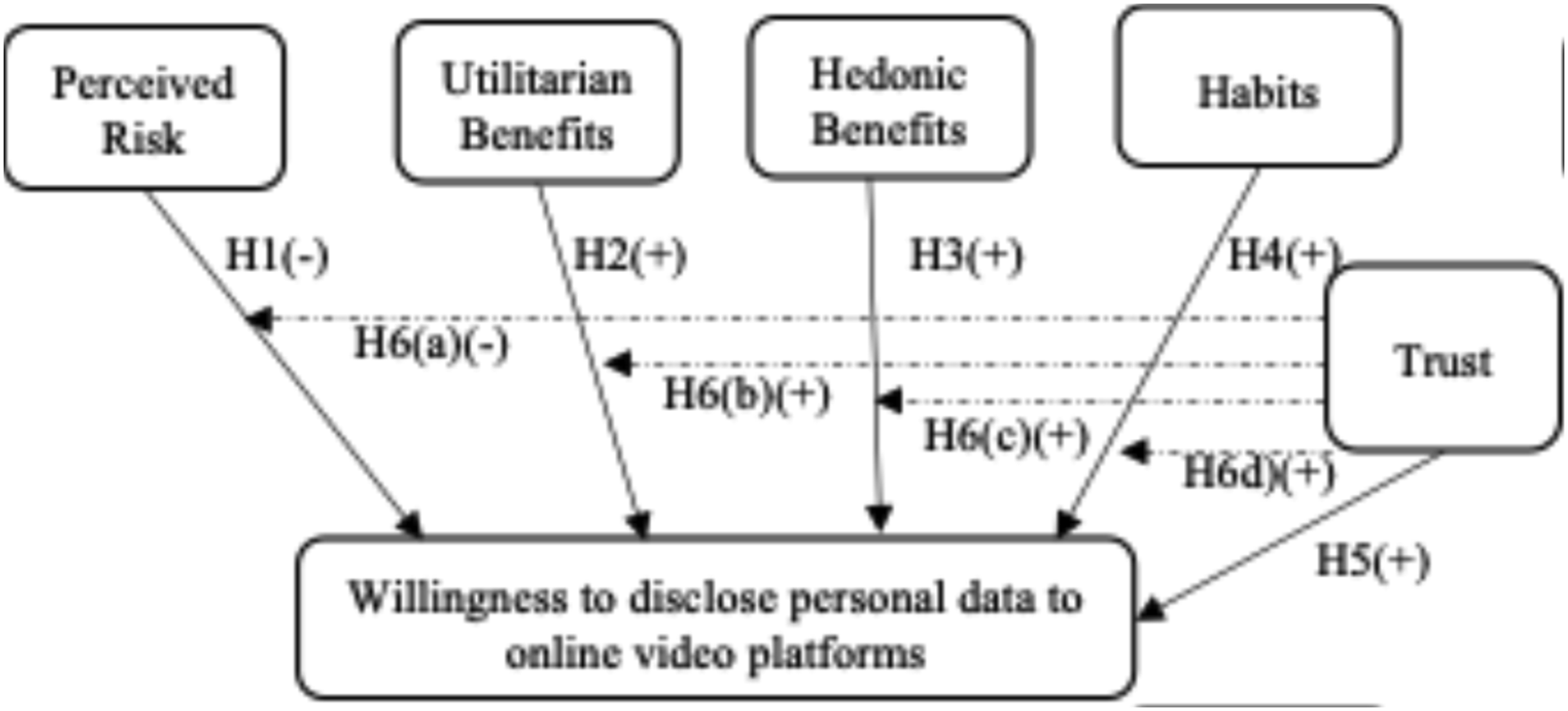
The key factors (constructs) and related hypotheses that are investigated in this study are depicted in Figure 1. Based on the privacy calculus theory, incorporating users’ trust and habits, we propose six hypotheses: H1. Perceived risks are negatively associated with willingness to disclose personal data to online video platforms. H2. Utilitarian benefits are positively associated with willingness to disclose personal data to online video platforms. H3. Hedonic benefits are positively associated with willingness to disclose personal data to online video platforms. H4. Habits are positively associated with willingness to disclose personal data to online video platforms. H5. Trust is positively associated with willingness to disclose personal data to online video platforms. H6(a). Trust negatively moderates the association between perceived risks and willingness to disclose personal data to online video platforms. H6(b/c). Trust positively moderates the association between utilitarian/hedonic benefits and willingness to disclose personal data to online video platforms. H6(d). Trust positively moderates the association between habits and willingness to disclose personal data to online video platforms. Conceptual model and hypotheses regarding early adolescents’ willingness to disclose personal data to online video apps. Note: The research model posits that early adolescents’ willingness to disclose personal data to online video platforms is negatively associated with perceived risk (H1) and positively associated with their perceived hedonic (H2) and utilitarian benefits (H3), habits of disclosing data (H4), and trust in video platforms (H5). Additionally, Trust negatively moderates the association between perceived risks and willingness to disclose personal data to online video platforms (H6(a)), positively moderates the association between utilitarian/hedonic benefits and willingness to disclose personal data to online video platforms (H6 (b/c)), and positively moderates the association between habits and willingness to disclose personal data to online video platforms (H6(d)).
Methods
Participants
Ethical approvals were obtained from relevant institutions before the investigation. This study is a pilot study for a large program that aims to design an AI ethics curriculum in the context of video apps for early adolescents. Data were collected from a collaborative public middle school for this program, which offered us the opportunity to send the link to children in the Computing classes held in the computer lab. The school was in the urban area of Southeastern China.
We focused on early adolescents aged 11–14 for our study because prior research indicates that Chinese adolescents become significantly more engaged in online activities, such as video watching, starting from age 11 (CYR & CINICIP, 2022). This age group, having more experience with video platforms, often finds themselves in situations where they may disclose personal data (Mittmann et al., 2022; Ofcom, 2023). Furthermore, while platforms like YouTube and Netflix set age thresholds of 13 or 14, many platforms in China have no such age limits (Kaye et al., 2021). Understanding the factors that impact early adolescents’ willingness to share personal data offers a vital foundation for protecting their privacy as their engagement intensifies through adolescence. Moreover, early adolescents demonstrated some rudimentary understanding of data disclosure risk online (Wang et al., 2022; Zhu et al., 2024).
Instrument
To evaluate the conceptual model, we designed an instrument based on constructs and items from published literature on privacy calculus theory, perceived trust in video platforms, habits, and willingness to disclose personal data. All items were adopted and adapted from previous studies, with a five-point Likert scale, ranging from strongly disagree (1) to strongly agree (5). The measurement of perceived risks and trust constructs were adopted and adapted from Sandhu et al. (2023). The measurements of utilitarian benefits, hedonic benefits, willingness to disclose personal information, and habits were adopted and adapted from Fernandes and Pereira (2021). Specifically we adapted the context to an online video platform, annotated the types of data that video platforms may collect from children, and slightly modified the questions with popular slang, aiming to improve children’s comprehension. We then translated all questions. To ensure consistency in cross-lingual surveys, the questionnaire was back-translated between English and Chinese by the bilingual authors (Klotz et al., 2023).
While early adolescents are more capable of abstract, multidimensional, and hypothetical thinking compared to late childhood, they may not possess the same level of information processing and logical reasoning skills as adults (Christie & Viner, 2005; Steinberg, 2005), which could influence the quality of their responses to survey questions. Thus, this study followed the guiding principles proposed by Bell (2007) to refine our measurement tools, including an expert panel feedback and a pilot test section before the large-scale survey.
Overview of the Instrument for Each Factor.
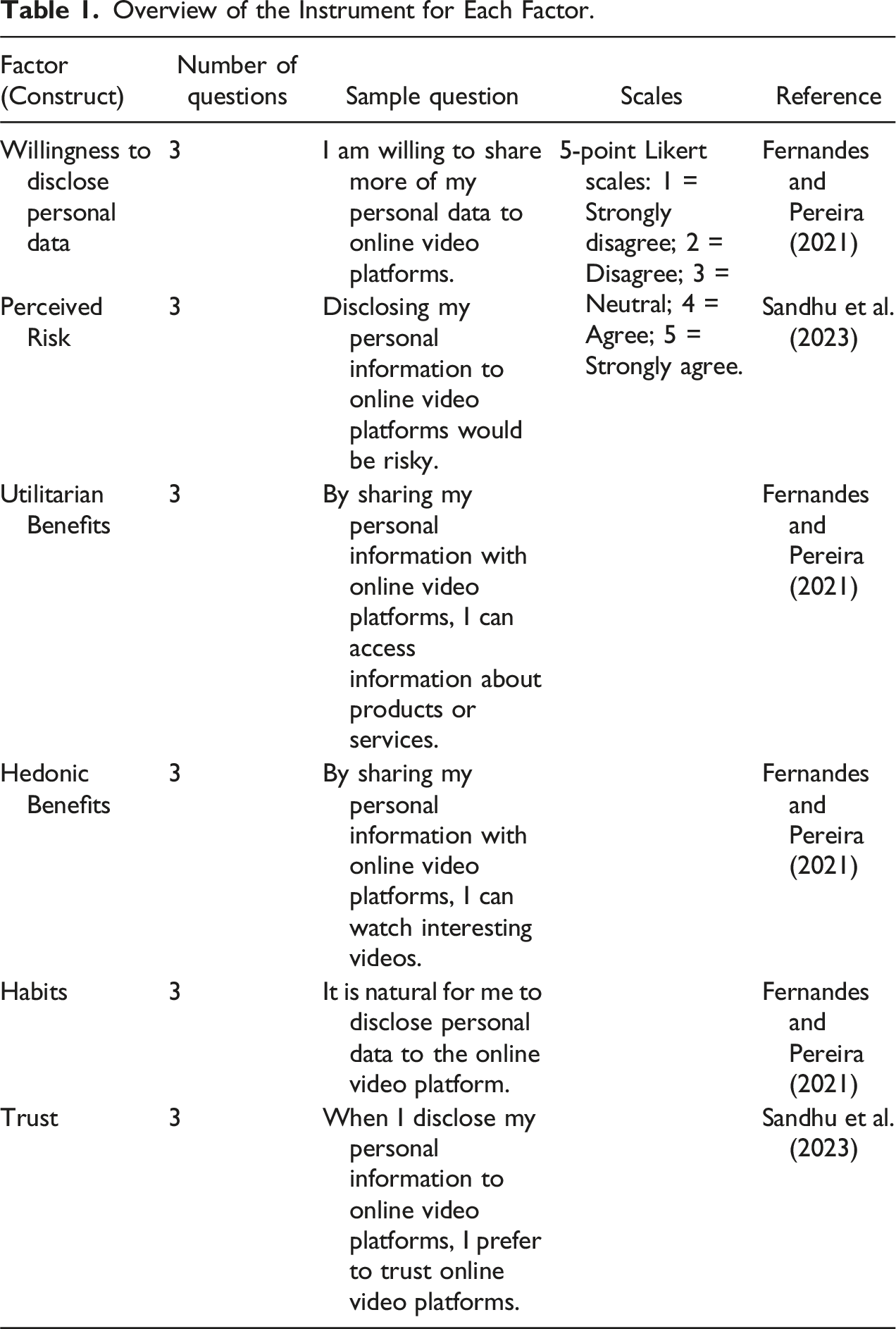
Our instrument has three sections: (1) Demographics: participants’ gender, age, and age group (7th and 8th grade). (2) Hypotheses Assessment: 18 questions to measure participants’ perceptions of perceived risks, perceived utilitarian benefits, hedonic benefits, habits, trust, and willingness to disclose personal information to video platforms.
To minimize misunderstanding of our survey, we conducted five one-to-one semi-structured interviews as the pilot test with potential participants. Participants were recruited through convenience sampling. Written informed consent was obtained from parents and children before the interview. In the interview, participants were encouraged to think aloud while completing the survey and to discuss with researchers whenever they encountered confusion. We recorded participants’ feedback and modified the questions for the large-scale research. Two children suggested that including the term ‘online video platform’ in each question would help them recall the survey’s context. We refined the wording for each question accordingly.
Data Collection
Consent was first obtained from teachers and school officers by signing a paper version of the informed consent form offline. Then, we delivered the same informed consent to each student in class before they began to join in the study. Children took the form back home and both them and their parents signed the forms, respectively. Throughout this process, parents, teachers, and children had the opportunity to ask any questions before providing their consent. Participants received no financial incentives. All participants have been ensured that de-identification will not take place, and can withdraw their data before April 2023.
After their consent, we sent the survey link to children at school. Before the survey, the first author introduced the class to the definition of online video platforms and provided some screenshots of online video platforms (including Bilibili, Douyin, Little Red Book, and Kuaishou), making it clear that the focus of this study was on video platform consumers. The first author and the school teacher addressed students’ questions as they completed the survey in class.
The survey was delivered to 369 children from November to December 2022. 321 children completed the questionnaire. Each participant had experience in using video platforms. Both gender and grade were encoded as dummy variables where zero represented female and Grade 7, and one represented male and Grade 8. Age was measured in years. 321 complete and valid responses were included for further analysis. As the response rate was 86.99%, the non-response bias was unlikely to influence the results (Armstrong & Overton, 1977).
Data Analysis
As our data is not normally distributed (Kolmogorov-Smirnov test, D (321, 0.05) range from 0.138 to 0.182, p < .001), we applied the Wilcoxon Signed-Rank test to assess the median difference between two factors based on individual responses, the Mann-Whitney U test to examine the median differences of willingness to disclose personal data to online video platforms between grades and gender, and the Kruskal-Wallis test to examine the median differences of these factors across age (Sheskin, 2003).
We applied PLS-SEM technique to test the hypotheses. First, our data was not normally distributed, and PLS-SEM is well-suited to this situation (Goodhue et al., 2012). Second, we were testing a conceptual model that had not been previously examined and PLS-SEM is valuable for analyzing such models (Hair et al., 2012). Lastly, our sample size was 321, and PLS-SEM performs particularly well with small sample sizes (Afthanorhan, 2014). The analysis followed the guidelines proposed by Hair et al. (2019) for PLS-SEM use, model specification, and evaluation.
Results
Demographic Statistics
Among 321 participants, 148 were boys (46%) and 173 were girls (54%), with 172 from grade 7 (54%, age 11–13, M = 12.51 years, SD = 0.626) and 149 from grade 8 (46%, age 13–15, M = 13.30 years, SD = 0.564), averaging 12.87 years old (range = 11–15, SD = 0.714).
Levels of Early Adolescents’ Willingness to Disclose Personal Data to Online Video Platforms and Associated Privacy Factors
Descriptive Statistics of Participants’ Willingness to Disclose Personal Data to Video Platforms and Associated Privacy Factors.
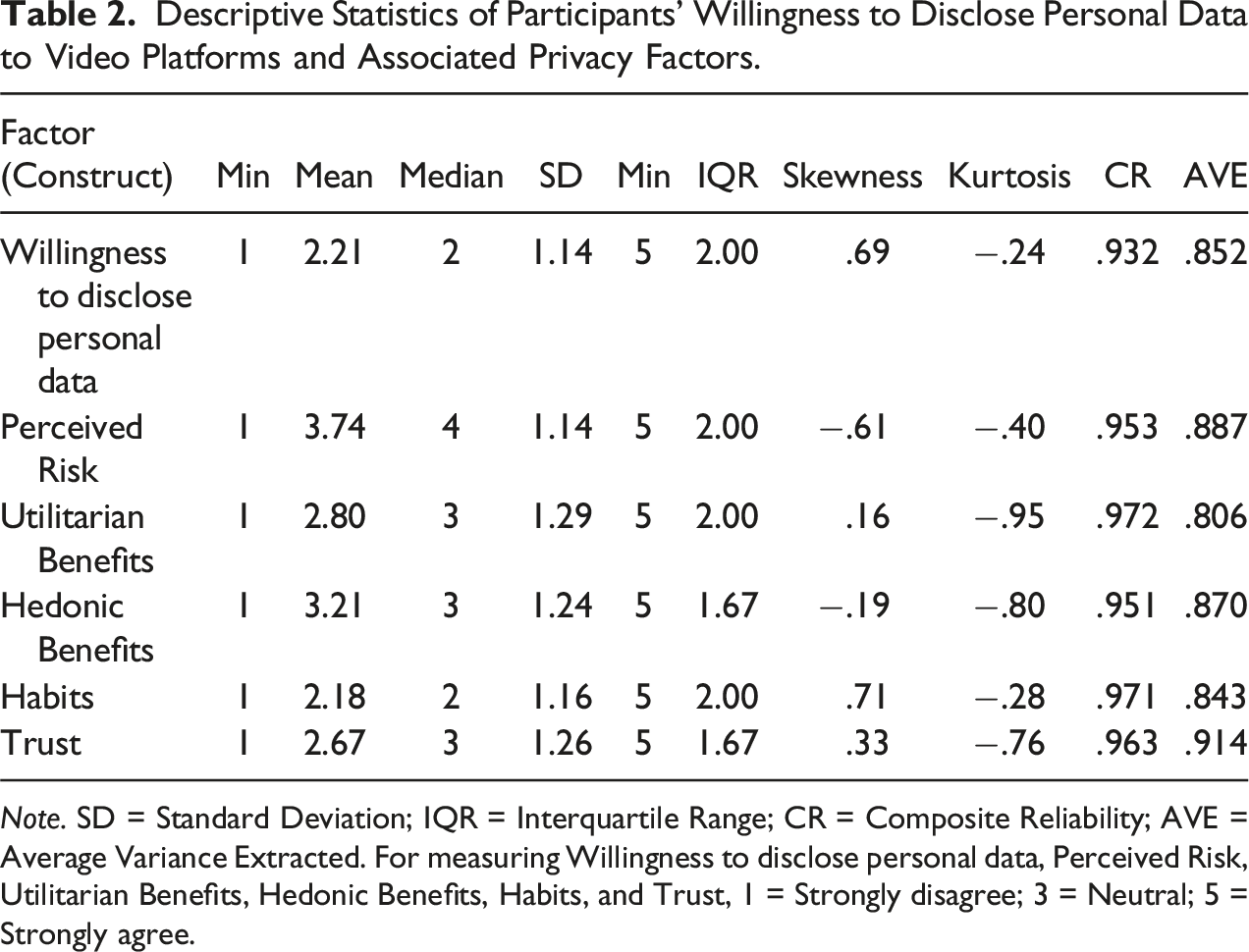
Note. SD = Standard Deviation; IQR = Interquartile Range; CR = Composite Reliability; AVE = Average Variance Extracted. For measuring Willingness to disclose personal data, Perceived Risk, Utilitarian Benefits, Hedonic Benefits, Habits, and Trust, 1 = Strongly disagree; 3 = Neutral; 5 = Strongly agree.
The level of participants’ perceived habits was significantly lower than that of perceived risks (Wilcoxon Signed-Rank test, Z = −12.62, p < .001, r = .704, large effect), utilitarian benefits (Wilcoxon Signed-Rank test, Z = −7.70, p < .001, r = .430, medium effect), hedonic benefits (Wilcoxon Signed-Rank test, Z = −11.06, p < .001, r = .617, large effect), and trust (Wilcoxon Signed-Rank test, Z = −6.70, p < .001, r = .374, medium effect).
The level of participants’ perceived trust was significantly lower than that of perceived risks (Wilcoxon Signed-Rank test, Z = −10.09, p < .001, r = .563, large effect), utilitarian benefits (Wilcoxon Signed-Rank test, Z = −2.18, p < .001, r = .122, medium effect) and hedonic benefits (Wilcoxon Signed-Rank test, Z = −8.20, p < .001, r = .458, medium effect).
The level of participants’ perceived risks was significantly higher than that of hedonic benefits (Wilcoxon Signed-Rank test, Z = −5.77, p < .001, r = .322, medium effect) and utilitarian benefits (Wilcoxon Signed-Rank test, Z = −8.92, p < .001, r = .498, medium effect). Perceived hedonic benefits were significantly higher than utilitarian benefits (Wilcoxon Signed-Rank test, Z = −8.30, p < .001, r = .463, medium effect).
The Association of Demographic Factors with Early Adolescents’ Willingness to Disclose Personal Data to Online Video Platforms and Associated Privacy Factors
Differences Among Genders, Ages, and Grades in Willingness to Disclose Personal Data to Online Video Platforms and Associated Privacy Factors.
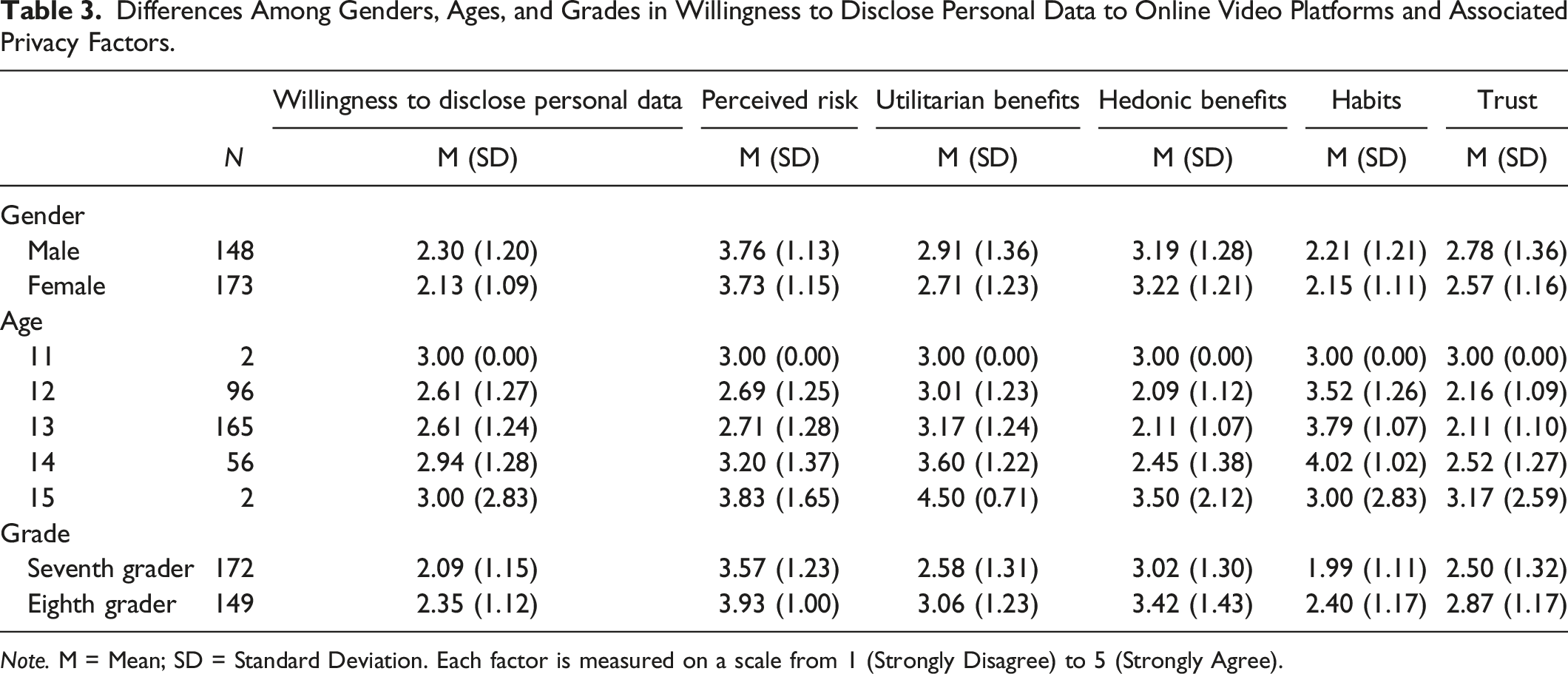
Note. M = Mean; SD = Standard Deviation. Each factor is measured on a scale from 1 (Strongly Disagree) to 5 (Strongly Agree).
According to the Mann-Whitney U test, significant differences were observed in willingness to disclose personal data to online video platforms and related privacy factors between seventh graders (M = 12.51 years, SD = 0.63) and eighth graders (M = 13.30 years, SD = 0.56). The older group scored significantly higher in willingness to disclose personal data (Z = −2.513, p = .012, r = .140, small effect), perceived risk (Z = −2.640, p = .008, r = .147, small effect), utilitarian benefit (Z = −3.554, p < .001, r = .198, small effect), hedonic benefit (Z = −2.851, p = .004, r = .159, small effect), habits (Z = −3.267, p = .001, r = .182, small effect), and trust (Z = −2.868, p = .004, r = .160, small effect).
According to the Kruskal-Wallis H test, significant differences were found in hedonic benefits across different ages (H = 11.591, p = .021, η 2 = .024, small effect). The distribution of hedonic benefits positively correlated with age. However, no significant differences were observed in the distributions of trust (H = 3.591, p = .464, η 2 ≈ .00, negligible effect), utilitarian benefit (H = 6.553, p = .161, η 2 = .008), habits (H = 5.608, p = .230, η 2 = .005), perceived risk (H = 8.264, p = .082, η 2 = .013), and willingness to disclose personal data (H = 7.174, p = .127, η 2 = .010, negligible effect) across age groups. In general, each factor shows an upward trend with age.
The Association of Privacy Factors with Early Adolescents’ Willingness to Disclose Personal Data to Online Video Platforms
Model Validation
Statistical analysis validated the suitability of our research model for detailed interpretation. All items’ factor loading values (ranging from .859 to .964) exceeded .800, signifying convergent indicator reliability (Hair et al., 2012). All constructs had CR values higher than .700 (see Table 2), indicating the internal consistency of the constructs (Churchill Jr, 1979). All constructs had Average Variance Extracted (AVE) values higher than .500, demonstrating the validity of the measurement model (Fornell & Larcker, 1981). We assessed cross-loading and the Fornell-Larcker criterion to evaluate the discriminant validity of the constructs. All of our items met the requirement that each item loaded highest on its respective construct and met the Fornell-Larcker criterion (Fornell & Larcker, 1981). We concluded that the structural model provided a good measurement model and was suitable for detailed analysis and interpretation.
Hypothesis Evaluation
Overview of the Research Hypotheses Calculated by PLS Analysis.
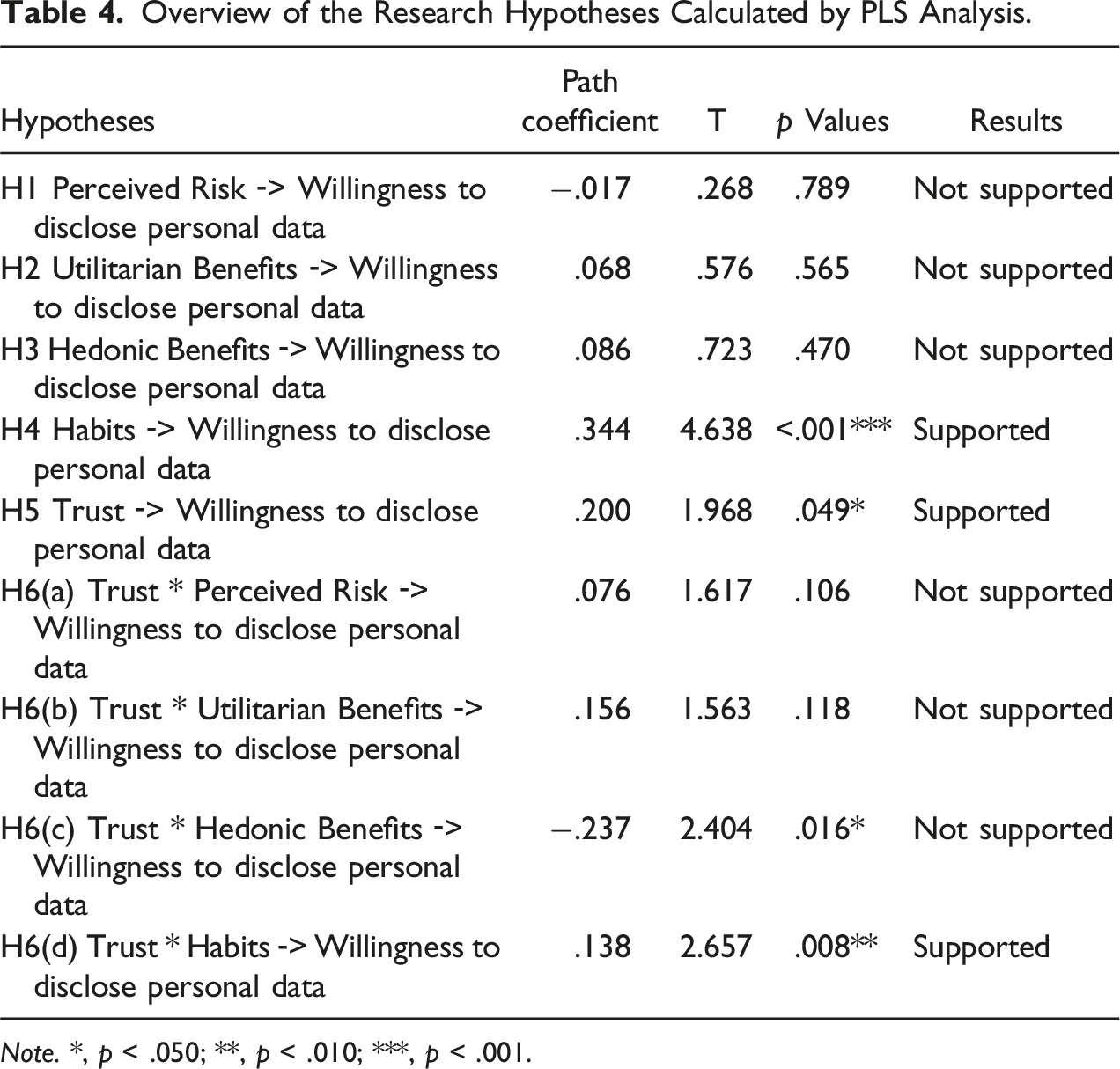
Note. *, p < .050; **, p < .010; ***, p < .001.
Discussion and Implication
Online video platforms are facing growing criticism from scholars and the public for their invasion of children’s data and privacy. Early adolescents increasingly own digital devices and have greater access to online video platforms, which heightens their vulnerability to privacy risks. This developmental stage, characterized by rapid physical growth, enhanced cognitive abilities, and significant social-emotional changes, may lead to unique decision-making processes regarding online data disclosure. Additionally, this period is critical for the formation of habits and the development of trust, further influencing their data disclosure to online platforms. Understanding the factors associated with adolescents’ willingness to disclose personal data to these platforms at the onset of their heightened engagement provides a valuable foundation for safeguarding them throughout adolescence. However, limited research has focused on early adolescents’ developmental characteristics to explain their willingness to disclose personal data to online video platforms. To address these gaps, the present study explores the levels willingness to disclose personal data to online video platforms and associated privacy factors (perceived risks, utilitarian benefits, hedonic benefits, habits, and trust) among 321 Chinese early adolescents. It then examines how these factors vary across demographic characteristics such as age, gender, and grade. Finally, the study proposes and validates a conceptual model that integrates privacy calculus theory with trust and habits.
To begin with, participants’ willingness to disclose personal data was found to be significantly lower than their perceived risks, benefits, and trust in online platforms. Their perceived risks were significantly higher than the other factors. This suggests that early adolescents may recognize the risks associated with disclosing personal data and may not always be willing to disclose it to online video platforms. However, this finding stands in contrast to the actual data disclosure behaviors on these platforms (China Children’s Center, 2022). Such a discrepancy implies that other factors may influence the gap between children’s stated willingness and their actual behavior, such as peer influence (Giletta et al., 2021), social norms (Masur et al., 2023), and website interface design (De Souza & Dick, 2009). Our participants reported a higher level of perceived utilitarian benefits (M = 2.80) than perceived hedonic benefits (M = 3.21), which aligns with previous findings that children’s hedonic motivation is higher than their utilitarian motivation for using online video platforms such as TikTok and YouTube (Dias & Duarte, 2022; Khalifa et al., 2021).
Compared to perceived risks, benefits, and trust, our participants reported a significantly lower level of habits of disclosing data to online video platforms (M = 2.18). This may imply that early adolescents, due to a lack of consistent or intentional engagement with online video platforms, are still in the process of exploring or adjusting interaction patterns, including their data-disclosure habits, on these platforms. Educators could help early adolescents build data-disclosure habits online through learning activities. For example, the educational game A Day in the Life of the JOs, developed for Canadian tweens aged 11–14, taught essential cybersecurity, privacy, and digital literacy skills through engaging gameplay. This game, grounded in procedural rhetoric and game design principles, covers 25 critical online safety topics aligned with the school curriculum and provides a simulated environment for practicing safe online behaviors, resulting in significant improvements in tweens’ knowledge and intentions to engage in safe practices (Maqsood & Chiasson, 2021).
Second, we found that grade has a significant impact on early adolescents’ willingness to disclose personal data, perceived risk, perceived utilitarian benefits, trust, and habits. The insignificant gender differences do not align with previous research on adults (Farinosi & Taipale, 2018; Sørum et al., 2022) or children aged 12–18 (Moscardelli & Divine, 2007; Walrave & Heirman, 2011). Prior studies suggest that gender differences in willingness to disclose personal data, privacy perceptions, and privacy rule adoption behaviors may be explained by variations in online privacy literacy (Choi, 2023; Desimpelaere et al., 2020; Kaya & Yaman, 2022). Online privacy literacy refers to individual awareness and knowledge of institutional data practices online and the ability to apply different privacy coping strategies online (Desimpelaere et al., 2020; Wissinger, 2017). Considering that most of our participants were still in early adolescence, with relatively limited awareness and knowledge of the datafication process and related privacy issues in online video platforms, they may have limited online privacy literacy (Acker & Bowler, 2017; Kumar et al., 2017; Zhu et al., 2024). Thus, one possible explanation for our insignificant gender differences is that both boys and girls in our study are at the early stages of developing online privacy literacy and have no differences at the beginning of this development trajectory. Previous longitudinal research has found that boys and girls follow similar trajectories of increasing online self-disclosure between the ages of 10 and 17, with boys typically beginning this trajectory two years later than girls (Valkenburg et al., 2011). Compared to self-disclosure on online platforms to users, the disclosure of data to online platforms happens through tracking, monitoring, profiling, and even surveillance, where users may unknowingly disclose personal data through their interactions with platforms (Prince et al., 2021). This requires users to be aware of the transition of their data through this process and critically reflect on their data disclosure behaviors with these platforms. Future longitudinal research could explore the developmental trajectory of children’s willingness to disclose personal data, their online privacy literacy, and related critical reflections.
Regarding the significant differences between grades rather than age, we propose that differences in educational experiences, combined with the developmental trajectory of adolescence, may offer some insights. The eighth graders were more willing to disclose personal data, even with their heightened perceived risks. This may suggest that eighth graders are more willing to engage in high-risk-benefit behaviors. This may stem from the general developmental trajectory of risk-taking behaviors, which is known to increase from early adolescence and peak in late adolescence (Blankenstein et al., 2020). Our results partly align with previous research, which has demonstrated a positive relation between age and disclosure, with older adolescents disclosing significantly more personal details online than younger adolescents (Madden et al., 2013; Valkenburg et al., 2011; Youn, 2005).
The differences between grades in willingness to disclose personal data to online platforms and related privacy factors may also stem from participants’ different educational experiences rather than merely from adolescent developmental trajectories. Compared to the seventh graders, who had been in middle school for only two months, the older participants eighth graders had completed a full year of Computing curricula, which included instructions on internet mechanisms, online data and privacy, and the benefits and risks of online applications (Ministry of Education of the People’s Republic of China, 2022). This education experience may have led the eighth graders to have a higher level of online privacy literacy, perceiving both higher risks and benefits associated with online video platforms. Previous studies validate the effectiveness of learning activities in improving early adolescents’ online privacy and digital literacy (Cyber Innovation Center, 2024a; Ibrahim et al., 2024; Yap & Lee, 2020). For instance, the Would You Rather game, designed for children aged 9–12, has demonstrated its ability to help children assess privacy and security risks while considering the social and emotional dimensions of these dilemmas (Blinder et al., 2024). Similar learning experiences that encapsulate engaging gamified elements, course alignment, and real-life relevance could also be further designed for early adolescents.
Third, we observed a disconnection between early adolescents’ perceived risks/benefits and their willingness to disclose personal data to online video platforms (H1–H3), which is contrary to most of the previous research which focused on adults (Rehman et al., 2023; Wang et al., 2019; Xie et al., 2021), as well as older adolescents in high schools (Youn, 2005). Our findings suggest that the traditional privacy calculus theory may not be sufficient to explain early adolescents’ willingness to disclose personal data to online video platforms. According to this privacy calculus, internet users rationally weigh privacy risks and disclosure benefits (Culnan & Armstrong, 1999; Fu et al., 2023). In other words, participants weigh privacy risks and benefits based on reasons of their own rather than an external force (Moshman, 2013). Early adolescents may still be at the initial stage of rationality development (Steinberg, 2005; Steinberg & Cauffman, 1996). They may be susceptible to external influences, especially from engaging and persuasive environments like video platforms. Indeed, video platforms are increasingly being criticized for their 'dark patterns’, i.e., user interfaces designed to lead users to make unintended decisions, including disclosing personal information (Chaudhary et al., 2022; Nygren & Tran, 2024; Radesky et al., 2024). These features may encourage early adolescents’ impulsivity or a desire for immediate rewards, making them less likely to balance risks and benefits.
Considering the high score of perceived risks and benefits, another possible explanation is that our participants may fail to connect their perception of video platforms when they disclose personal data to online video platforms. In other words, they may theoretically understand the privacy risks and benefits of disclosing personal data to video platforms, but they may not transfer these abstract concepts in daily scenarios (Zhu et al., 2024). According to interviews with 36 Chinese children aged 11–14, Zhu et al. (2024) found that although many early adolescents demonstrated a theoretical understanding of privacy data and privacy risks, they failed to recognize the risks in their actual use of video apps. This failure in transferring theoretical privacy knowledge and values into the subsequent execution of the risk-benefit trade-off could be attributed to a lack of privacy literacy (Trepte et al., 2015), as well as the neurodevelopment of our participants. Previously learned value associations influence the subsequent execution of cognitive control differentially because the connectivity with the striatum undergoes a medial to lateral shift during adolescence (children aged 13–20); while early adolescents may show neural signatures of value-based learning persisting beyond the learning context, this does not confer behavioral benefits (Insel et al., 2019).
Early adolescents may be at an initial stage of trust-building and habit formation concerning data disclosure to online video platforms, and these two factors are significantly positively associated with willingness to disclose personal data (H4, H5). The significant association between habits and willingness to disclose personal data (H4) aligns with prior research on adult consumers (Fernandes & Pereira, 2021; Wagner et al., 2020). One potential explanation is that early adolescents integrate their perceived risks and benefits into their daily data-disclosure decisions, which eventually become ingrained as habits. These habits shape how they respond to data-disclosure requests online, potentially leading them to make quicker, more automatic decisions when making decisions regarding data-disclosure requests from online platforms. In this context, habits can serve as cognitive shortcuts, streamlining decision-making processes by reducing the need for extensive deliberation each time they are prompted to disclose personal data.
Habits formed in early adolescence may have a long-term impact on their performance into adulthood (Simpkins et al., 2020). This underscores the importance of helping early adolescents develop responsible data-disclosure habits, as these behaviors may influence not only their immediate digital interactions but also their future approaches to online privacy and engagement. Video app designers could design age-appropriate toolkits related to online data disclosure to support children in cultivating responsible data-disclosure habits through informally balancing risks and benefits during their data-disclosure process online. This could be realized by incorporating features like timely prompts, help buttons, and storytelling about digital concepts in online video platforms (Kumar et al., 2018; Wang et al., 2023).
Our result shows that besides habits, children’s trust in platforms also outweighs perceived risks and benefits (H5). This finding is consistent with previous research showing that trust positively influences users’ behavioral intention and willingness to disclose personal information (Sandhu et al., 2023; Urbonavicius et al., 2023). While trust in online video platforms undeniably contributes to an enhanced experience, it’s imperative to acknowledge the delicate balance required. Over-reliance or blind trust in such platforms may lead to improper data disclosure and exploitation by companies, potentially resulting in privacy infringement (Shin et al., 2022), platform manipulation (Gimpel, 2015), and even violation of early adolescents’ digital rights (Sargeant, 2022). Compared to middle and late adolescents, early adolescents showed less capacity to critically evaluate and overcome prior social information and adapt their trust behaviors accordingly (Lee et al., 2016). This makes them particularly vulnerable to both the benefits and potential risks associated with online interactions. As a result, platform designers and educators should prioritize strategies to help early adolescents build informed trust with platforms.
Early adolescence increases in perceived uncertainty of prior beliefs, which leads to more information-seeking during the development of initial trust (Flanagan & Stout, 2010). Video platform developers may offer more information regarding early adolescents’ data disclosure. For instance, CHAITok is an Android app designed for children to visualize and manage online data collection, data processing, and data inference (collectively known as datafication). It includes examples and panels that illustrate the datafication process in online platforms, as well as help buttons that explain the app’s functionality. Additionally, it provides messages prompting children to reflect on data disclosure processes on online platforms (Wang et al., 2024). This tool fosters a sense of security, empowerment, and respect for children, though some children find CHAITok’s requirements for background knowledge challenging (Wang et al., 2024). Further toolkits could be developed to better align with children’s existing knowledge to provide them with more age-appropriate information, thereby fostering their informed trust in online video platforms.
We also found it interesting that H6 (c) was not supported. The absence of a significant main effect for hedonic benefits (H3) suggests that hedonic benefits alone was not associated with early adolescents’ data disclosure willingness without the moderating influence of trust. Instead, this finding underscores the pivotal role of trust in shaping how early adolescents evaluate and respond to perceived benefits when making decisions about data disclosure. When early adolescents perceive low hedonic benefits, higher trust can enhance their willingness to disclose personal data. In such cases, trust can serve as a substitute for hedonic benefits in influencing data disclosure willingness. Adolescents may rely on their trust in the platform rather than solely weighing the potential hedonic rewards. Conversely, when hedonic benefits are perceived as high, lower trust may increase their willingness to disclose personal data compared to those with higher trust. Early adolescents might prioritize gratification over mistrust. In other words, trust becomes less critical because the high rewards dominate their decision-making process. This may stem from the early adolescents’ ongoing brain development, particularly in the prefrontal cortex, which leads to impulsive decision-making leaning towards instant rewards, diminishing the role of trust (Hartley & Somerville, 2015).
Conclusion, Limitation, and Future Research
Early adolescents are an avid yet vulnerable group on online video platforms, exposing themselves to potential risks when they disclose personal data. This study investigated demographic factors and privacy factors correlated with early adolescents’ willingness to disclose personal data to these platforms. A conceptual model was proposed based on privacy calculus theory, integrated with trust and habits. Through an online survey of 321 Chinese early adolescents, we found significant differences by grade in participants’ willingness to disclose personal data and related privacy factors. Only hedonic benefits varied significantly across ages. No significant differences were observed by gender. Trust and habits were significantly associated with early adolescents’ decisions regarding data disclosure to online video platforms, whereas perceived risks and benefits showed no significant association with this willingness. Admittedly, there are several limitations in our study. Although we have done our best to design age-appropriate questionnaires for early adolescents, we acknowledge that some participants might have experienced confusion when they filled out the survey if they did not seek clarification from researchers or teachers when needed. Secondly, due to the limitation of our cross-sectional research design, we only proposed theoretical explanations and frameworks to explain our results and related implications. Future research could explore whether educational experiences and external influences (such as dark patterns) influence early adolescents’ willingness to disclose personal data to video platforms, potentially through experimental studies. Thirdly, this study focuses specifically on online video platforms, the most widely used online platforms by early adolescents. They may also disclose data to other platforms, such as learning platforms, online shopping platforms, and e-health platforms. Our study may serve as a theoretical framework for future research exploring data disclosure across these online contexts. Future studies could also distinguish different types of data, such as demographic information, behavior data, learning data, etc. Another limitation of this study is the variability in participant responses, which could arise from differences in individual backgrounds, experiences, or interpretations of the survey items. To better understand the underlying causes of variability, future studies should consider stratified sampling techniques or qualitative approaches that delve into participants’ experiences. Finally, different social norms and video platform ecosystems may influence adolescents’ perceptions of data disclosure. Further studies could include and compare children from diverse cultural backgrounds to explore how these factors influence their perceptions and willingness to disclose personal data to online platforms.
Despite the limitations of this study, our findings deepen the understanding of early adolescents’ willingness to disclose data online and related demographic and privacy factors and discuss possible explanations for our results. We provide insights into theoretical discussions to explain our findings and practical strategies for designers and educators in cultivating early adolescents’ responsible data-disclosure habits and informed trust towards online video platforms.
Footnotes
Acknowledgements
The authors would like to extend our gratitude to Jinhui Middle School and its IT teachers for their help with data collection.
Declaration of Conflicting Interests
The author(s) declared no potential conflicts of interest with respect to the research, authorship, and/or publication of this article.
Funding
The author(s) disclosed receipt of the following financial support for the research, authorship, and/or publication of this article: The authors would like to acknowledge the funding support of National Natrual Science Foundation, ‘Research on the Design, Development and Application of Intelligent Chinese Writing Platform Based on Certical Domain Large Language Models’ (62477040); 2024 Zhejiang University Undergraduate ‘AI Empowerment Demonstration Course Construction Project (EDU2013M); Zhejiang Higher Education ‘14th Five-Year Plan’ Undergraduate Teaching Reform Project (JGBA2024838).

Data Availability Statement
Data will be made available on request.