







Abstract
The study examined the role of digital parenting, explicitly focusing on the effectiveness of parental mediation regarding YouTube and online gaming. The analysis highlighted the complex yet distinct nature of media usage duration and dependency by employing a dyadic approach incorporating both children’s and parents’ perspectives. While restrictive mediation effectively reduced usage time on platforms like YouTube, it also appears to increase the risk of over-dependency in both YouTube and gaming contexts. The findings are especially noteworthy when children perceive their parents as active mediators, suggesting substantial benefits in mitigating dependency on both platforms. Parents’ perception of the appropriateness of their guidance in children’s media use was more effective in reducing usage time than in alleviating media dependency. Another significant finding revealed through this dyadic approach is the impact of smartphone use as a “digital pacifier” on increasing children’s digital media usage time and potentially leading to dependency.
Introduction
The development of information and communication technologies, including smartphones, and the ubiquity of digital media are having a profound impact on children’s lives. This escalation in usage has raised considerable concerns regarding potential adverse effects, leading to a paradigm shift towards the development of effective digital parenting strategies. In an era where digital technologies evolve rapidly, it is crucial to understand not only how children engage with these technologies but also the implications of such interactions on their overall development and well-being. Consequently, there is an escalating interest among parents to identify and adopt appropriate digital parenting approaches (Livingstone & Blum-Ross, 2020).
From a developmental perspective, parents constitute one of the most proximal and influential environmental factors in children’s lives. Through interactions with parents, children learn how to adapt to their environments and gradually become members of society. Accordingly, parents exert a direct influence on children’s self-efficacy, emotional development, and competence (Baumrind, 1991, 2005; Bronfenbrenner, 1979; Darling & Steinberg, 1993). Ecological systems theory posits that development occurs through ongoing interactions between the child and multiple layers of environmental systems, among which the family represents the most immediate and enduring microsystem (Bronfenbrenner, 1979). From this perspective, a substantial body of research has examined how parents’ childrearing approaches shape developmental outcomes.
Classic theories of parenting highlight systematic differences in how parents guide and regulate children’s behavior. Parenting styles are commonly conceptualized along two fundamental dimensions: responsiveness and demandingness (Baumrind, 1996, 2005; Maccoby & Martin, 1983). Responsiveness refers to the extent to which parents are attuned to children’s needs and provide emotional support and acceptance, thereby fostering autonomy and self-assertion. Demandingness, in contrast, refers to the degree to which parents regulate children’s behavior through rule setting, expectations for maturity, and supervision or monitoring of activities (Baumrind, 2005). The intersection of these two orthogonal dimensions yields four prototypical parenting styles: authoritative (high responsiveness and high demandingness), authoritarian (low responsiveness and high demandingness), permissive (high responsiveness and low demandingness), and disengaged/neglectful (low responsiveness and low demandingness). Empirical work by Baumrind demonstrated that children of authoritative parents exhibit the most favorable developmental outcomes, including higher levels of competence and self-regulation (Baumrind, 1971, 1989, 1991). A substantial body of research, including studies conducted in Korean cultural contexts, has supported these findings, demonstrating that authoritative parenting is associated with more positive social, emotional, and behavioral adjustment compared with other parenting styles (e.g., An & Rho, 2022; Chu & Choi, 2021; Maccoby & Martin, 1983; Steinberg et al., 1994).
Subsequent research has emphasized the need to distinguish between general parenting styles and domain-specific parenting practices, suggesting that broad childrearing orientations influence development through their enactment in particular contexts (Darling & Steinberg, 1993). Within this framework, today’s parental mediation—defined as parents’ guidance and/or regulation of children’s media use through everyday parent–child interactions (Livingstone & Helsper, 2008; Nathanson, 1999; Nikken & Jansz, 2006)—can be understood as a domain-specific expression of broader parenting orientations in the context of digital media
A significant number of children are engaging with digital screen media for durations exceeding those recommended by pediatric health experts (Lauricella et al., 2015). Among children, there is an increasing trend in digital screen time for entertainment or recreational purposes. According to a report by Common Sense, the entertainment screen time for children aged 8 to 12 has surged dramatically, from 4 hours and 44 minutes in 2019 to 5 hours and 33 minutes in 2021 (Common Sense, 2022). According to a survey conducted by the Korea Press Foundation in 2022, specifically targeting students in grades 4 to 6 of elementary school, the mobile device usage time for these students significantly increased from 3 hours and 18 minutes in 2019 to 6 hours and 4 minutes in 2022 (Korea Press Foundation, 2022). Recent national data from Korea indicate that smartphone overdependence is particularly prevalent among adolescents. Among youth aged 10–19, the proportion classified as at risk of smartphone overdependence increased from 29.3% in 2018 to 35.8% in 2020 and further to 42.6% in 2024, underscoring the growing seriousness of problematic smartphone use among Korean adolescents (National Information Society Agency, 2024).
Exceeding 2 hours of screen time daily can heighten the risk of problematic media use in young children (Rega et al., 2023). Experts in child development and digital media studies propose that the approach should go beyond simply monitoring the amount of screen time (Livingstone & Blum-Ross, 2020). Understanding and preventing the pathological aspects of digital media use, such as addiction and overdependence, is a crucial need, as emphasized by experts in the field (Beard, 2011; Kwon, 2011; Livingstone & Blum-Ross, 2020).
It is indisputable that overdependence on digital media adversely impacts the quality of life in children. This study aims to offer implications for digital parenting in the digital age by examining the effectiveness of parental mediation, with a focus on YouTube and gaming—two platforms widely used by upper elementary school students aged 10 to 12 (Bai et al., 2020). Ultimately, the study seeks to equip parents with strategies to more effectively manage digital media use and prevent overdependence among children.
Importantly, the meanings of parenting and the practices of parental mediation may vary across cultural contexts (Chao, 1994). Much of the existing literature has been developed in Western societies, where childrearing norms often emphasize autonomy and negotiation. In contrast, prior Korean research suggests that parenting attitudes are shaped by sociocultural factors such as collectivism, strong educational aspirations, and family-centered norms, which are associated with relatively high levels of parental involvement in children’s daily lives (Kim & Lee, 2020).
The present study is situated in Korea, where parenting is characterized by strong parental responsibility for children’s development and close monitoring of children’s everyday activities, alongside early and widespread exposure to digital media within a highly developed digital infrastructure. This context offers a particularly relevant setting for examining how parental mediation and digital parenting practices are associated with children’s media use and dependency.
Literature Review
Conceptualizing Parental Mediation: Active, Restrictive, and Co-Using Approaches
Parental mediation, a key aspect of family communication, involves parents interacting with their children to provide guidance on media use. This concept aims to optimize the benefits and mitigate the risks associated with media consumption. Although the parental mediation theory originated from concerns about media’s negative effects, it also aims to investigate the positive influences of various factors in children’s environment (Clark, 2011). The early research categorized parental mediation into three main types: restrictive mediation, active/instructive mediation, and co-viewing/co-using (Nathanson, 1999; Nikken & Jansz, 2006; Valkenburg et al., 1999).
Restrictive mediation primarily aims to shield children from potentially harmful media influences (Lee, 2012; Lee et al., 2016a; 2016b; Nathanson, 1999; Park, 2015; Valkenburg et al., 1999). This approach involves setting limits on the type and amount of media content accessible to children. By implementing rules such as screen time limits and parental controls, restrictive mediation seeks to reduce exposure to negative content like violence, explicit material, or misleading information. With the advent of digital media, new forms of mediation, such as technical/surveillance mediation have emerged (Benrazavi et al., 2015; Livingstone & Helsper, 2008). This approach involves using software or applications to monitor and regulate digital media use, paralleling the intent of restrictive mediation, to minimize negative online experiences.
Active/instructive mediation is characterized by parental engagement in discussions and explanations about media content, fostering a more critical understanding of media (Ahn, 2003; Clark, 2011; Lee & Chae, 2012; Nathanson, 1999; Valkenburg et al., 1999). One of the main purposes of active mediation is to openly discuss media content with children and adolescents to help them develop critical thinking skills about the media content being consumed. Active mediation, a parenting practice regarding media, is typically categorized into two types. Positive active mediation involves discussing the positive aspects of media content and its consumption with children, such as educational values or moral lessons (Austin et al., 1999; Clark, 2011; Meeus et al., 2018; Nikken & Jansz, 2014; Valkenburg et al., 1999). On the other hand, negative active mediation refers to pointing out the unrealism or expressing disapproval of certain behaviors and actions depicted in media, such as media violence (Austin et al., 1999; Nathanson & Cantor, 2000).
Co-viewing/co-using is when parents and children watch/use media together without explicit guidance or discussion (Collier et al., 2016; Livingstone & Helsper, 2008; Nathanson, 1999; Valkenburg et al., 1999). Co-viewing/co-using represents a more passive behavior where the parent and child are simply watching TV or using digital media platform together. While numerous studies have shown that co-viewing or co-using mediation, as opposed to active and restrictive types, can lead to increased media usage and potential negative outcomes, such as heightened aggression (Collier et al., 2016; Nathanson, 1999), the research on the impact of co-viewing or co-using on child and adolescent behavior remains inconsistent.
Recent trends in parental mediation appear to favor active and restrictive methods over co-viewing or co-using. Research indicates a trend where European parents are increasingly favoring active mediation over restrictive mediation (Kalmus et al., 2022), aligning with findings in the United States, where active mediation has been identified as the most common form (Austin et al., 1997). It is important, however, to recognize that parents often do not exclusively choose one form of mediation; instead, they tend to utilize both active and restrictive mediation strategies together as needed (Nikken & Jansz, 2014).
Expanding the Research Scope in the field of Parental Mediation
While initial studies on parental mediation primarily focused on television, recent research has expanded to encompass various digital media forms, including the Internet (e.g., Lee, 2012; Livingstone & Helsper, 2008; Ren & Zhu, 2022), video/online gaming (e.g., Benrazavi et al., 2015; Martins et al., 2017), and smartphones (e.g., Lee et al., 2016a; 2016b; Son et al., 2021; Yang et al., 2022). The evolution of parental mediation research extends beyond the diversification of media forms, also encompassing an expansion in the range of topics measured—such as media usage time, aggression (e.g., Nathanson, 1999), cyberbullying (e.g., Sasson & Mesch, 2017; Wang & Jiang, 2021), and sexual behaviors (e.g. Guo & Nathanson, 2011). The expansion of research topics not only tackles the adverse effects of media but also signifies a rising interest among scholars in the positive outcomes of media interaction under parental guidance (Clark, 2011). For instance, this includes exploring areas such as healthy media use (e.g., Nikken, 2018), the development of self-regulatory competencies (e.g., Chen & Chng, 2016), and the fostering of prosocial behavior (Meeus et al., 2018). Moreover, recent research during the COVID-19 pandemic have shown that active parental mediation can significantly influence children’s emotional regulation, highlighting its importance during high emotional involvement events (Morelli et al., 2022). Ultimately, these developments mirror the dynamic nature of the media environment, leading to a rich and varied body of research on how parental mediation influences children’s media usage and their engagement with digital platforms.
Research has shown that the impact of parental mediation varies based on the child’s age, gender, the type of media involved, and the operational definitions used to measure its effects. Generally, parental mediation is found to be more influential for younger adolescents (Chen & Shi, 2019). In cases where children are younger, parents tend to implement restrictive mediation more than active mediation (Wang et al., 2023). Restrictive mediation can effectively reduce the amount of time children spent on media, while active mediation is more beneficial in preventing addiction and online risky behaviors such as aggression, substance use, and sexual outcome (Chen & Shi, 2019; Collier et al., 2016; Lee & Chae, 2012). Previous studies have explored factors that predominantly engage in restrictive or active mediation. The critical thinking of parents towards media positively correlates with their involvement in active forms of mediation (Rasmussen et al., 2016). It was found that the more negative the perception of media, the more preference is given to restrictive mediation over active mediation (Martins et al., 2017; Wang et al., 2023).
Emerging Gaps in Parental Mediation Research
Despite these advancements in parental mediation research, there still exists a need for further studies to fill the gaps in our understanding. This research was conducted as part of an effort to address these shortcomings. As shown in the meta-analysis study on parental mediation of children’s media use conducted by Wang and colleagues (2023), while substantial research has focused on parental mediation of television, games, and social media, the role of parental mediation in YouTube usage has been largely overlooked. Our study aims to address this gap, providing valuable insights into how parents can effectively mediate their children’s YouTube use, thereby filling a crucial void in the current literature. In addition to this, the current study aims to explore three critical areas that have been overlooked yet are vital in previous research.
First, numerous studies have attempted to determine the effectiveness of parental mediation without taking into account the specific characteristics of adolescents’ media consumption behaviors. While there has been significant focus on identifying effective types of parental mediation for various media platforms such as TV, smartphones and games, there is a crucial need for a more nuanced understanding of children’s media usage patterns to accurately assess the impact of parental mediation. For instance, in television viewing, the effects of media on children can differ based on whether the viewing is ritualistic or instrumental (Comstock & Scharrer, 1999).
The concept of ‘ritualistic viewing,’ initially explored in the realm of television research, involves prioritizing the medium itself over any specific content (Rubin, 1984). This approach to viewing is characterized by engaging with the medium in extended blocks of time, where the quantity of consumption is minimally influenced by the availability or nature of specific programs. In a parallel observation, this phenomenon of ritualistic viewing, as seen in traditional television practices, bears a notable resemblance to contemporary viewing behaviors on platforms like YouTube. In this digital context, the emphasis frequently shifts towards the platform’s experience rather than the individual offerings it hosts, underscoring a broader, more medium-centric approach to content consumption.
In contrast to the more passive engagement often associated with watching platforms like YouTube, gaming can be classified as a media activity that demands a higher level of active involvement from its participants. The immersive qualities of games are attributed to their sensory elements, challenging mechanics, and narrative features, which effectively engross users (Cairns et al., 2013; Hilgard et al., 2013; Strasburger et al., 2013). Reflecting growing concerns about excessive gaming, the World Health Organization has included gaming disorder in the 11th revision of the International Classification of Diseases (ICD-11) as a disorder due to addictive behaviors (WHO, 2020). This classification underscores that gaming represents a media activity characterized by a relatively high level of involvement, in which engagement with the medium may become particularly intense compared to other forms of media consumption.
Considering the distinct contrasts between ritualistic and active media consumption patterns, this study then delves into the realm of parental mediation, examining its effectiveness within these varied contexts. This study aims to shed light on how different engagement levels in media usage– from the passive absorption in ritualistic activities like YouTube watching, to the more actively involved nature of online gaming – can influence the success of strategies parents use to guide and control their children’s media interaction.
Secondly, while numerous studies on parental mediation have focused solely on adolescents, research incorporating both parents and children in surveys remains scarce. The necessity of incorporating both parents and children in parental mediation research is underscored by the need to understand bidirectional perspectives, which provides a more accurate insight into how each party perceives and communicates about media. Beyens and Valkenburg (2019) highlight the limitations of relying solely on reports from either parents or children in research, arguing that a comprehensive understanding of parental mediation effects requires consideration of both perspectives. In their 2019 study, Beyens and Valkenburg found a moderate correlation in parent-child dyads’ data regarding parental mediation type. Similar findings have also been observed in other dyads studies like Nathanson (2001) and Nelissen and den Bulck (2018), reinforcing the notion of perceptual differences in how parents and adolescents view parental mediation strategies. Specifically, the concordance was moderate for restrictive mediation and lower for active mediation, indicating varying degrees of agreement between parents and children in reporting these strategies. Additionally, acknowledging the complexity of parent-child relationships is vital, as these dynamics significantly influence the design and effectiveness of media mediation strategies. By capturing the nuances within these relationships, research can more effectively tailor mediation strategies to suit the unique characteristics of individual families.
Thirdly, alongside parental mediation, the digital parenting approach significantly influences young children’s media usage patterns. While recognizing media’s utility, the American Academy of Pediatrics (AAP, 2016) cautions against its habitual use for calming children, as it may affect their ability to self-regulate emotions and establish behavioral limits. Research consistently indicates a strong correlation between parents’ and children’s media usage times (Duch et al., 2013; Lauricella et al., 2015; Paudel et al., 2017). However, since current research into early smartphone exposure and its role in digital pacification tactics is still relatively scarce, there is a gap in understanding the impacts of digital pacification in early childhood. Investigating how early parents introduce smartphones to their children and their tendency to use smartphones as a digital pacifier for boredom or fussiness can provide deeper insights, potentially offering a broader perspective beyond traditional parental mediation.
Determining the relative effectiveness of current parental mediation strategies applied to teenagers versus the impact of earlier digital parenting practices (such as delaying the age of first smartphone possession and avoiding digital pacification) in fostering healthy media habits and minimizing associated risks, is crucial. This comparison offers valuable insights for parents, who as digital immigrants, are raising digital natives. This study consequently broadens the scope of traditional parental mediation research by incorporating analyses of variables such as the onset age of smartphone usage in children and the ramifications of digital pacification strategies, thereby contributing to a more holistic understanding of digital parenting’s long-term effects on adolescent media use behavior.
Based on the comprehensive literature review and the core focus of this study, the following Research Questions have been established: RQ1: How effective is parental mediation in influencing the duration and extent of dependency of children on media usage? RQ2: How does the effectiveness of parental mediation differ between gaming, which requires higher user involvement, and YouTube watching, which involves lower user engagement? RQ3: Which has a greater impact on reducing media usage and dependency among children: parents’ perceptions of the appropriateness of their mediation, or children’s perceptions of the type of mediation received? RQ4: How do parents’ digital pacification methods affect the duration and extent of dependency of their children’s media usage?
Method
Survey
In September and October 2020, a nationwide survey was carried out, involving more than 5,000 South Korean students and their parents. The survey employed a stratified probability sample design, using data from the 2019 Education Statistical Yearbook. This design allowed for the selection of participants based on their provincial region and school level. The survey included 2,723 elementary students in the 4th to 6th grades and 2,530 parents or guardians. The mean age of the overall student participants was 10.97 years (SD = 0.82). By grade level, the mean ages were 10.01 years (SD = 0.08) for 4th graders, 11.01 years (SD = 0.12) for 5th graders, and 12.00 years (SD = 0.09) for 6th graders. The students completed a self-administered survey in their classrooms under the guidance of a surveyor. Afterward, the students were requested to bring a hard copy of the questionnaire home for their parents to complete.
A total of 2,447 pairs of students and their parents who completed the survey were included in this study. This study received ethical approval from the Institutional Review Board of the National Youth Policy Institute (Approval No. 202007-HR-014) on August 26, 2020. Written informed consent was obtained from parents, and assent was obtained from participating children prior to data collection. Children were informed that personal information such as gender and year of birth would be collected solely for research purposes. Parents were also informed that information regarding their gender, age group, and household income would be collected and used for research purposes with their consent.
The gender distribution was nearly equal, with 1,241 males (50.7%) and 1,205 female students (49.3%). An equivalent number of respondents were found in both 4th and 5th grades, totaling 782 each (32% each), while 883 students were in the 6th grade (36.1%).
A significant portion of the schools (41%) were situated in metropolitan areas, and the majority (53.5%) were located in mid-sized cities. In the parent/guardian sample, mothers dominated, with 2,119 participants (86.6%), whereas fathers were a minority with 290 participants (11.8%). Grandparents and other guardians made up less than 2% of the sample. Notably, three out of four mothers or fathers had completed college or graduate school.
Measures
Children’s online or mobile game usage hours were assessed based on children’s self-reported weekday (SD = 1.63) and weekend playing time (SD = 1.72). The median value of both items was 3 (“a half to 1 hour”). Three out of four students spent more than 2 hours on games during the weekend (inter-item correlation, r = .78, p < .001). Over-dependence on games was assessed by combining two questions (inter-item correlation, r = .45, p < .001): “I often find myself spending more time on games than I had planned” (Mdn = 3, “Neutral,” SD = 1.18) and “I feel anxious and nervous when I cannot play or reduce my game time” (Mdn = 1, “Strongly disagree,” SD = .84).
The next set of parental mediation variables was derived from children’s self-reported perceptions: “My parent intervenes and controls my use of digital media, including smartphones and games” (restrictive mediation, Mdn = 3, SD = 1.11) and “My parent explains the positive and negative effects of using digital media, such as smartphones, games, etc., to me” (active mediation, Mdn = 3, SD = 1.12). The questions were measured on a five-point scale ranging from “strongly disagree” (1 point) to “strongly agree” (5 points). Each type of parental mediation was assessed from the children’s perspective using a single question.
Previous research has demonstrated the significant impact of parents’ education, income, and other socioeconomic factors on children’s development (Dubow et al., 2009; Martinez et al., 2022; Wimer & Wolf, 2020). The location of the school was also included as a control variable to account for neighborhood effects. In Korea, all elementary and middle schools (except international schools) assign students based on geographic proximity. Numerous studies have highlighted the substantial influence of neighborhood context on children’s well-being and academic achievement (Chetty et al., 2016; Laliberté, 2021).
In addition to demographic variables, parents’ own YouTube and game usage hours during weekdays and weekends were assessed via parent self-reports and included as control variables. Responses were measured on a 7-point scale (1 = never used, 7 = more than 4 hours), with median values of 2 (less than 30 minutes) across all four questions. Half of the parent respondents reported watching YouTube for less than 30 minutes on both weekdays (SD = 1.47) and weekends (SD = 1.60), while one in four indicated they never used it at all. The inter-item correlation for parents’ YouTube usage was strong (r = .87).
Regarding game usage (inter-item correlation r = .88), approximately half of the parents reported never playing games. Among those who did, the most common duration was 30 minutes to 1 hour on both weekdays (SD = 1.45) and weekends (SD = 1.60), reported by about 17% of the sample.
Results
Effects of Control Variables
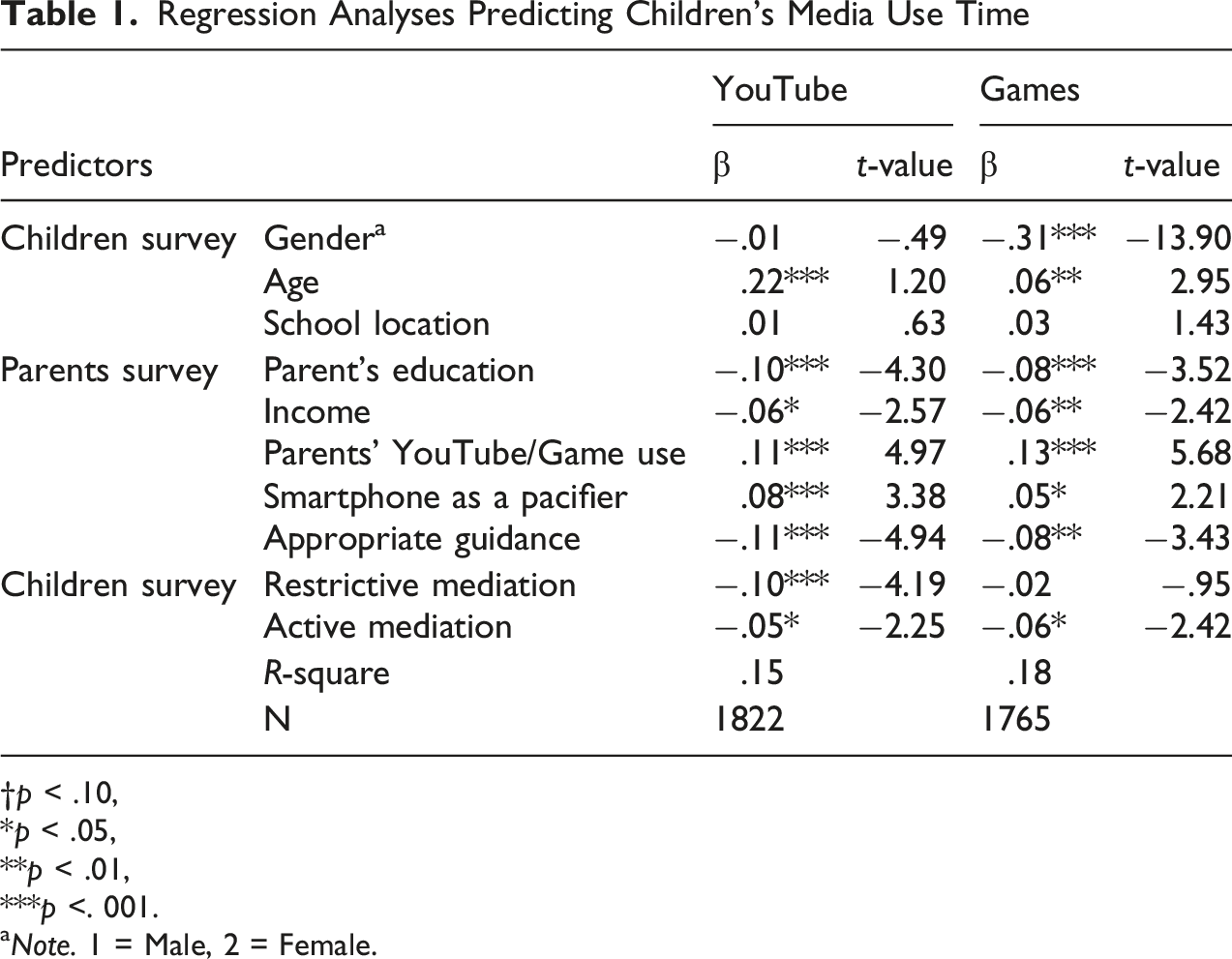
Regression Analyses Predicting Children’s Media Use Time
†p < .10,
*p < .05,
**p < .01,
***p <. 001.
aNote. 1 = Male, 2 = Female.
While gender was not associated with YouTube time, it was a significant predictor of game hours (β = −.31, p < .001). Male students were more likely to spend extended periods playing games than their female counterparts. Notably, gender exhibited the highest t-value (−13.94) among all independent variables in the regression analysis.
Other noteworthy control variables included variables of parents’ media usage. Children showed similar tendencies if their parents invested more time in YouTube and games (p < .001). When their parents enjoyed online games, they tended to play games for longer durations (β = .13). Parents’ YouTube-watching hours were also positively associated with children’s YouTube hours (β = .11).
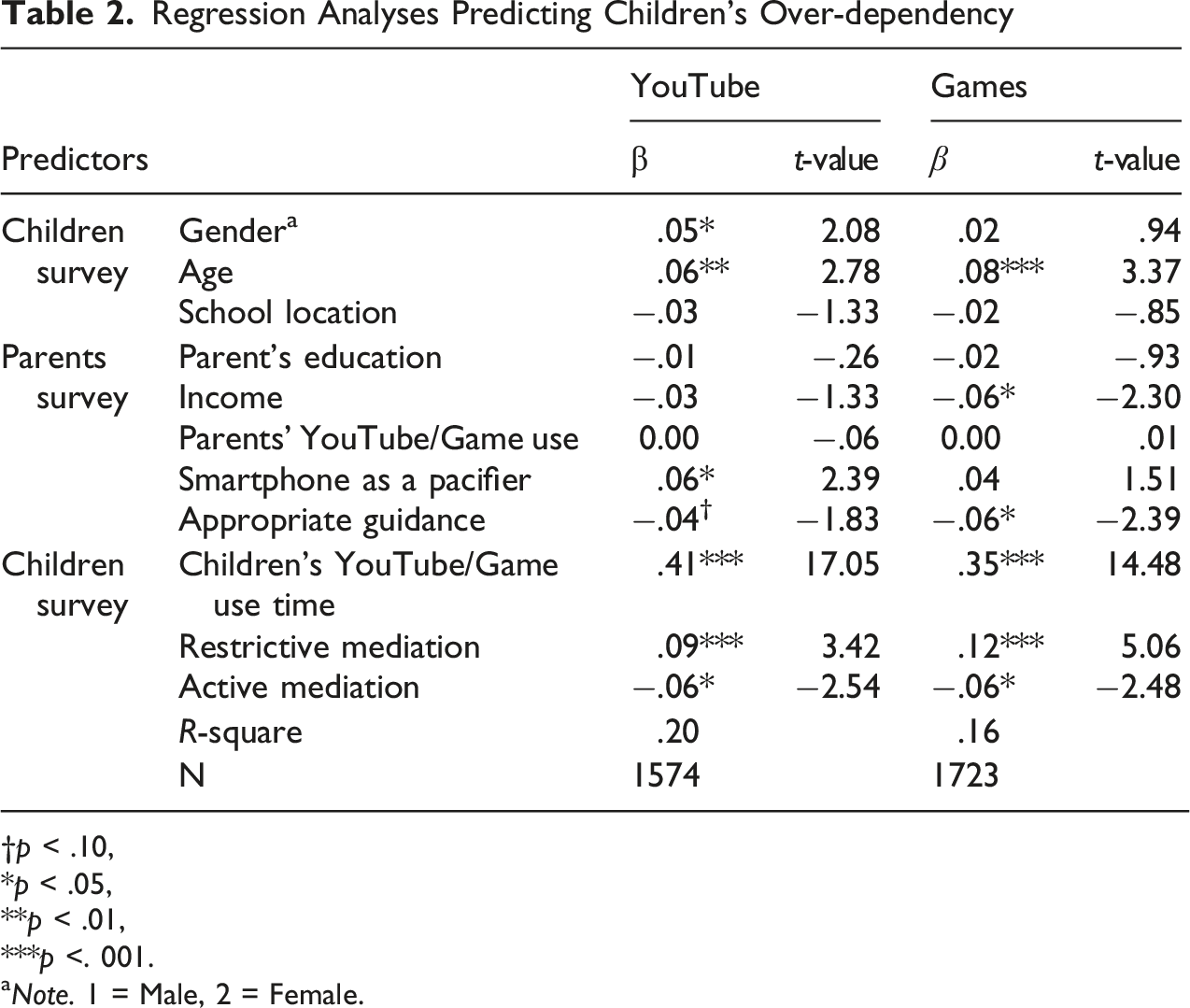
Regression Analyses Predicting Children’s Over-dependency
†p < .10,
*p < .05,
**p < .01,
***p <. 001.
aNote. 1 = Male, 2 = Female.
The effects of parents’ media use also vanished in the relationship with over-dependency, while they were strong predictors of duration for both YouTube and games. As expected, the most prominent predictor of over-dependency in both regressions was the matching media usage hours (YouTube, β = .41; Games, β = .35). Consistent with numerous previous studies, a longer duration of using a particular medium was associated with a higher risk of addiction, and vice versa.
Main Findings
Regarding over-dependence on both media, the effects of parents’ self-evaluated mediation were less impressive. Table 2 shows parental guidance at home was significant for games only (β = −.06, p = .017). In contrast, children’s perceptions worked as significant predictors for both media.
Discussion
Our study’s analysis framework involved multiple dimensions of parental mediation and its effects, encompassing various aspects of media usage, such as duration and dependency, different levels of user engagement (YouTube vs. games), and notably, different perspectives (children vs. parents). Additionally, within the broader concept of digital parenting, we examined parents’ reliance on smartphones as a pacifier.
In alignment with prior research, we underscore the intricate yet distinct nature of media usage duration and dependency. Our results show that while the total time children spend on YouTube and games is a key predictor of media over-dependence, the effectiveness of parental mediation strategies, particularly restrictive mediation, varies based on the nature of engagement in these media. Specifically, we found that restrictive parental mediation effectively reduces the time spent on YouTube, a platform associated with more passive, ritualistic consumption patterns. However, this same mediation approach does not significantly affect gaming time, an activity requiring more active involvement. This disparity suggests that the impact of restrictive mediation is more pronounced in media environments characterized by ritualistic engagement, such as YouTube viewing, as opposed to more actively engaging platforms like gaming. Overall, while restrictive mediation may reduce usage time on platforms like YouTube, it appears to increase the risk of over-dependency in both YouTube and gaming contexts. This finding emphasizes the intricate challenges of applying parental mediation in digital parenting, as it can yield unintended consequences, particularly in fostering media over-dependence. This complexity underlines the need for a sophisticated approach to parental mediation strategies within digital parenting practices.
In terms of duration, we found that parental mediation and digital parenting variables were more consistent and substantial predictors for YouTube than for games. This can be interpreted as a difference arising from the type of user engagement with the media (ritualistic vs. active). In other words, it suggests that YouTube’s media usage time is more susceptible to fluctuations, increasing or decreasing depending on the situation, compared to gaming.
Our findings suggest that active mediation is more effective in reducing children’s digital media dependency compared to restrictive mediation. Active mediation involves parents engaging in discussions with their children about media content, fostering critical thinking, and educating them about the positive and negative aspects of digital media use. This approach enables children to experience their interactions with media in a more meaningful and responsible manner, potentially having a more fundamental impact than merely limiting usage time. Therefore, we recommend that parents adopt more active strategies in their digital parenting practices to address and mitigate media dependency in children.
Parents’ perception of the appropriateness of their guidance in children’s media use demonstrates a significant impact in reducing media usage time, yet it does not wield equivalent influence in alleviating media dependency. The findings are particularly noteworthy when children perceive their parents as active mediators, suggesting substantial benefits in mitigating dependency on both YouTube and gaming. Parental mediation is an act of communication that occurs through interaction between parents and children. Given the nature of communication, even when the sender conveys a message with specific intentions and objectives, it can be interpreted differently depending on the receiver’s subjectivity and psychological characteristics (Benedetto & Ingrassia, 2021; Beyens & Valkenburg, 2019; Nelissen & den Bulck, 2018). This underscores the critical role of how children perceive and internalize their parents’ approach to media guidance in the effectiveness of parental mediation.
One of the merits of our study is its dyadic approach, which incorporates perspectives from both children and parents, enabling a comprehensive understanding of the real effects of digital parenting. We effectively implemented a dyadic approach, accurately tailoring the questions for either parents or children based on the information needed. By asking parents about early childhood digital parenting practices and other aspects like their educational and income levels, as well as their own gaming habits, we obtained precise insights about factors usually best known to the parents. Similarly, by directing questions about media usage and perceptions of parental mediation to the children, we captured their direct experiences and viewpoints. This dual method of inquiry enabled us to achieve a comprehensive and accurate understanding of the dynamics involved in digital parenting.
Another important finding revealed through our dyadic approach is the impact of the early adoption of smartphones and their use as a ‘digital pacifier’ on increasing children’s digital media usage time and potentially leading to over-dependency. Specifically, allowing children access to smartphones from a young age influences an increase in media usage time. This could be interpreted as the result of children becoming accustomed to and integrating YouTube and gaming into their daily routines due to their media-savvy upbringing. However, this factor does not significantly impact over-dependency. In contrast, children raised with a digital pacification parenting style show a higher likelihood of developing over-dependency. This can be attributed to the habituation of using digital media to avoid or alleviate psychological discomfort such as boredom or fussiness, leading to challenges in regulating digital media usage time and increased susceptibility to withdrawal symptoms.
In addition to the key findings and implications previously discussed, our study corroborates the consistent theme in prior research that children’s digital media usage time is higher when parents spend more time using media and when the socioeconomic status (SES), including parents’ educational level and household income, is lower. Notably, however, parents’ media usage time does not influence children’s over-dependence on media.
Based on the findings of this study, several policy implications emerge for effective digital parenting. First, policies should encourage parents to adopt active mediation strategies that involve discussing and explaining the positive and negative aspects of digital media use, as this approach has been shown to be more effective in mitigating digital media dependency. Educational programs and resources should be developed to support parents in understanding and implementing these strategies. Second, policies should address the risks associated with using smartphones as “digital pacifiers” by promoting awareness campaigns that educate parents on the potential long-term impacts of early and excessive smartphone use on children’s development. It is crucial for parents to fully understand the potential adverse effects of smartphone use before allowing their young children, especially those of elementary school age or younger, to own one. While it may not be feasible to completely restrict smartphone use, a policy should be considered that mandates parents to undergo a thorough process to understand the risks, such as over-dependence and exposure to harmful content, before permitting their children to own a smartphone.
This study focused on key quantitative aspects of adolescents’ digital media use, including usage time and media dependency, which are central concerns in research on youth media engagement. As noted by Livingstone and Blum-Ross (2020), however, effective parental mediation extends beyond regulating screen time to include attention to qualitative aspects of media use, such as the context of use, content exposure, and parent–child interactions, among other factors. While the present findings contribute to understanding the role of parental mediation in relation to adolescents’ media use and dependency, future research could build on this work by incorporating qualitative dimensions of media engagement. Such approaches would help to provide a more comprehensive understanding of adolescents’ media use and its associations with parental mediation and youths’ digital experiences.
We also acknowledge the potential influence of social desirability bias in this study. While no survey is entirely free from this issue, children may be particularly sensitive to how they are perceived by others. As with many survey-based studies, children’s self-reported media use may be subject to social desirability bias, which should be considered when interpreting the findings.
An additional limitation concerns the wording of the parent-reported item assessing “appropriate media use.” This measure was designed to capture parents’ perceived adequacy of their guidance on their child’s media use, rather than specific parental mediation strategies or an objective standard of appropriateness. It was included to examine whether parents’ perceptions of the adequacy of their media guidance, together with children’s perceptions of parental mediation, are associated with children’s actual media use behaviors. Nevertheless, future research would benefit from further examination of what constitutes “appropriateness” in the context of media guidance. In particular, employing more specific and behavior-based measures would help to more clearly identify the components underlying parents’ judgments of appropriate guidance for children’s media use.
The data used in this study were collected in 2020, prior to the rapid expansion and increasing sophistication of AI-driven recommendation systems on platforms such as YouTube and within digital games. Since then, algorithmic personalization has become more pervasive, continuously shaping users’ media exposure and potentially intensifying patterns of repetitive and prolonged media use. From this perspective, the associations observed in this study between parental mediation, media use, and dependency may be even more pronounced in contemporary media environments. As AI-based recommendation systems increasingly curate content based on prior engagement, adolescents may be more likely to encounter highly engaging or immersive media experiences, underscoring the growing importance of parental mediation that goes beyond time-based regulation to address content exposure and usage contexts. Future research should explicitly examine how algorithmic recommendation systems interact with parental mediation practices to influence adolescents’ media dependency.
For future research, we recommend investigating whether similar patterns and effect sizes are observed in older adolescents. For example, while elementary students may already experience the impact of restrictive mediation, the better approach for middle or high school students remains uncertain. Despite the noteworthy implications, our study also reveals the limitations of cross-sectional surveys. Long-term observation using panel data is recommended to clarify the causality between children and parents’ interaction. Another limitation of our study is that the single-item, broad measures used for assessing parental mediation may not fully capture the complexities of this concept. However, despite these limitations, our study provides valuable insights and contributes to a deeper understanding of digital parenting and mediation strategies. Future research should more thoroughly validate measurement tools for key variables to enable more comprehensive analysis and enhance the reliability and accuracy of findings.
Footnotes

Funding
The authors disclosed receipt of the following financial support for the research, authorship, and/or publication of this article: This work was supported by the National Youth Policy Institute under the 2020 research project “Study on the Media Usage Patterns of Elementary School Children and Targeted Policy Strategies.”
Declaration of Conflicting Interests
The authors declared no potential conflicts of interest with respect to the research, authorship, and/or publication of this article.
Data Availability Statement
Author Biographies
Appendix
Descriptive Statistics for Survey Items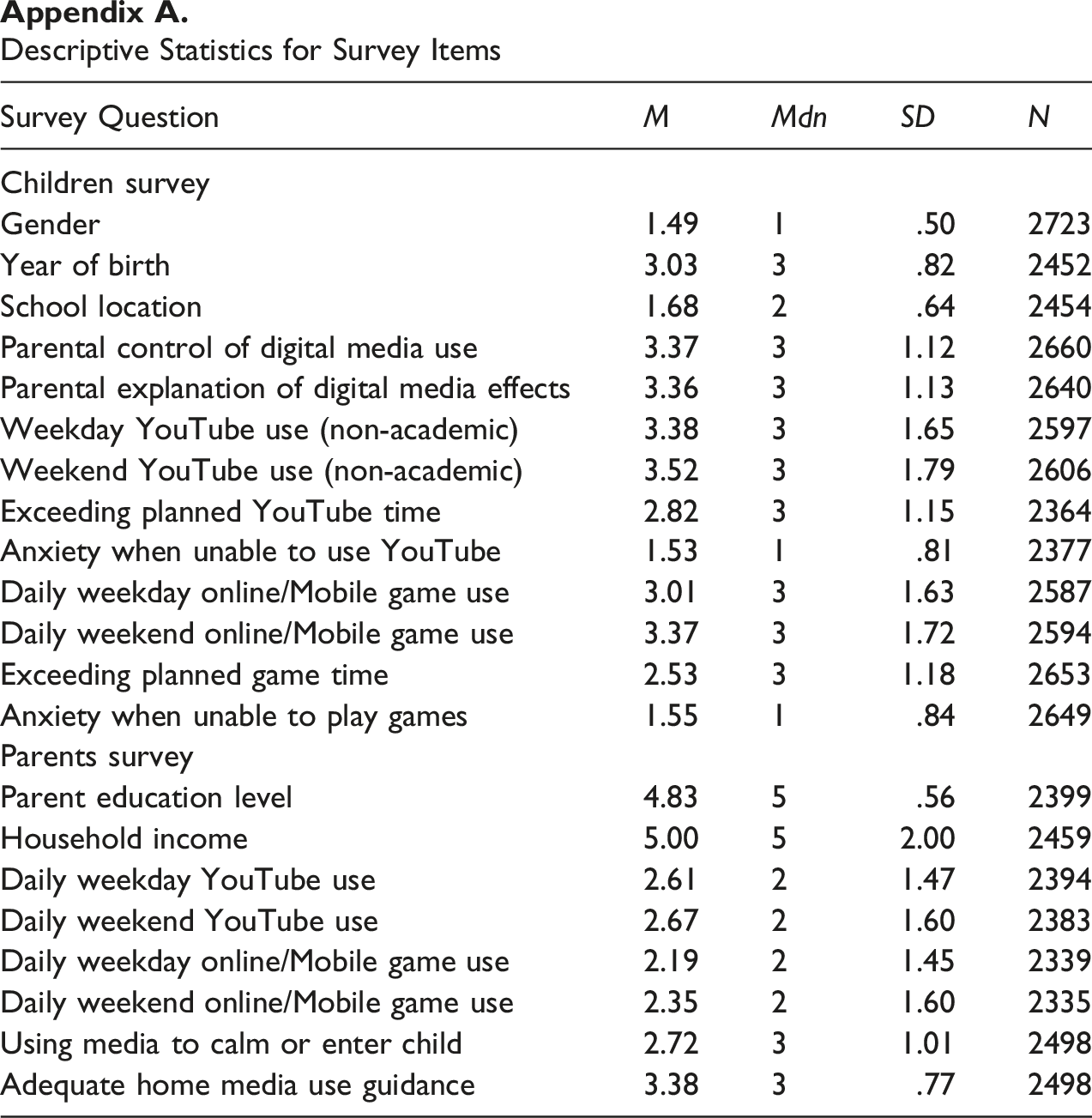
Survey Question
M
Mdn
SD
N
Children survey
Gender
1.49
1
.50
2723
Year of birth
3.03
3
.82
2452
School location
1.68
2
.64
2454
Parental control of digital media use
3.37
3
1.12
2660
Parental explanation of digital media effects
3.36
3
1.13
2640
Weekday YouTube use (non-academic)
3.38
3
1.65
2597
Weekend YouTube use (non-academic)
3.52
3
1.79
2606
Exceeding planned YouTube time
2.82
3
1.15
2364
Anxiety when unable to use YouTube
1.53
1
.81
2377
Daily weekday online/Mobile game use
3.01
3
1.63
2587
Daily weekend online/Mobile game use
3.37
3
1.72
2594
Exceeding planned game time
2.53
3
1.18
2653
Anxiety when unable to play games
1.55
1
.84
2649
Parents survey
Parent education level
4.83
5
.56
2399
Household income
5.00
5
2.00
2459
Daily weekday YouTube use
2.61
2
1.47
2394
Daily weekend YouTube use
2.67
2
1.60
2383
Daily weekday online/Mobile game use
2.19
2
1.45
2339
Daily weekend online/Mobile game use
2.35
2
1.60
2335
Using media to calm or enter child
2.72
3
1.01
2498
Adequate home media use guidance
3.38
3
.77
2498
Correlation Matrix of Survey Items Note. *p < .05, **p < .01, ***p <. 001.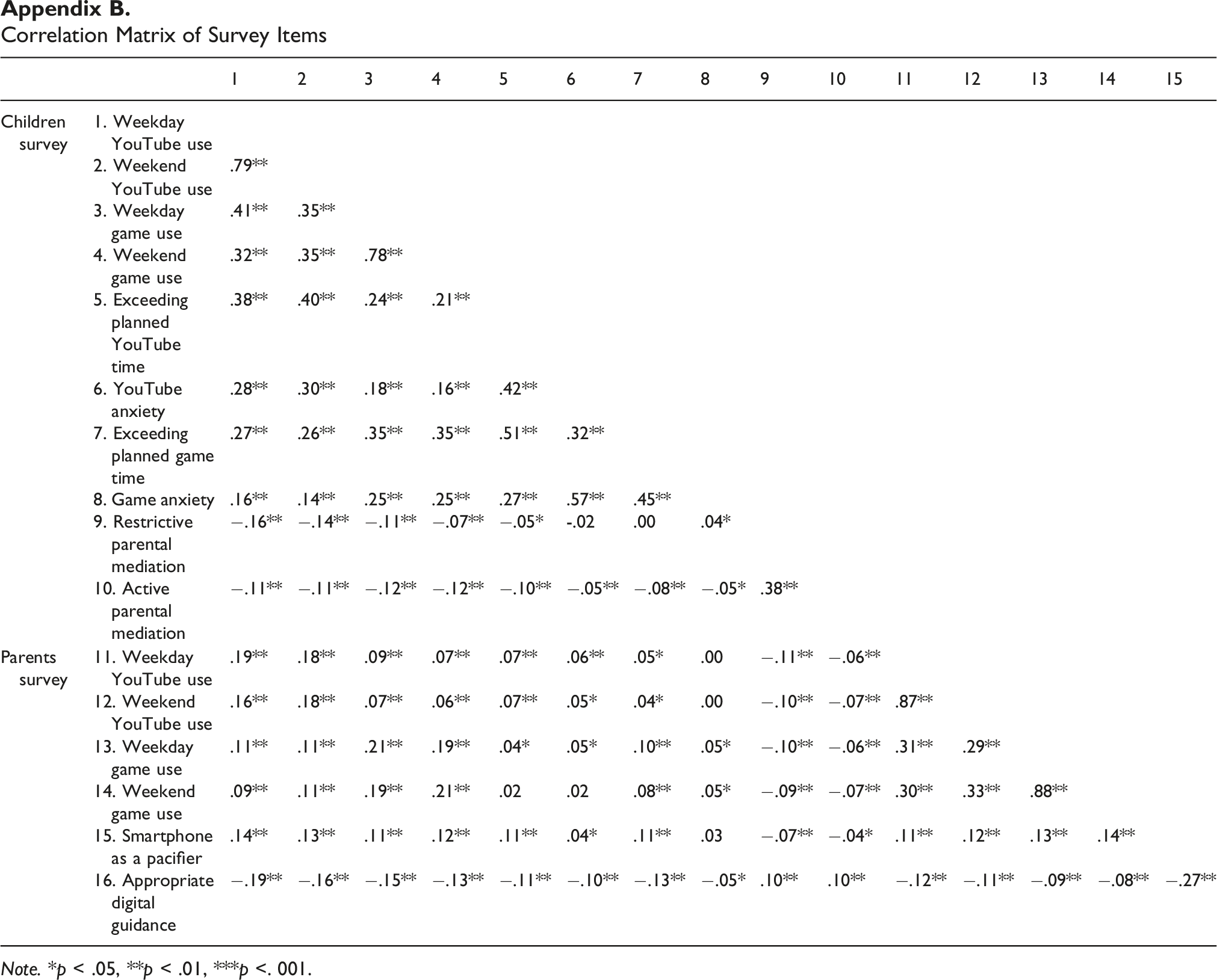
1
2
3
4
5
6
7
8
9
10
11
12
13
14
15
Children survey
1. Weekday YouTube use
2. Weekend YouTube use
.79**
3. Weekday game use
.41**
.35**
4. Weekend game use
.32**
.35**
.78**
5. Exceeding planned YouTube time
.38**
.40**
.24**
.21**
6. YouTube anxiety
.28**
.30**
.18**
.16**
.42**
7. Exceeding planned game time
.27**
.26**
.35**
.35**
.51**
.32**
8. Game anxiety
.16**
.14**
.25**
.25**
.27**
.57**
.45**
9. Restrictive parental mediation
−.16**
−.14**
−.11**
−.07**
−.05*
-.02
.00
.04*
10. Active parental mediation
−.11**
−.11**
−.12**
−.12**
−.10**
−.05**
−.08**
−.05*
.38**
Parents survey
11. Weekday YouTube use
.19**
.18**
.09**
.07**
.07**
.06**
.05*
.00
−.11**
−.06**
12. Weekend YouTube use
.16**
.18**
.07**
.06**
.07**
.05*
.04*
.00
−.10**
−.07**
.87**
13. Weekday game use
.11**
.11**
.21**
.19**
.04*
.05*
.10**
.05*
−.10**
−.06**
.31**
.29**
14. Weekend game use
.09**
.11**
.19**
.21**
.02
.02
.08**
.05*
−.09**
−.07**
.30**
.33**
.88**
15. Smartphone as a pacifier
.14**
.13**
.11**
.12**
.11**
.04*
.11**
.03
−.07**
−.04*
.11**
.12**
.13**
.14**
16. Appropriate digital guidance
−.19**
−.16**
−.15**
−.13**
−.11**
−.10**
−.13**
−.05*
.10**
.10**
−.12**
−.11**
−.09**
−.08**
−.27**