







Abstract
Background
Adolescence is a significant period of life which is crucial for life long health. The purpose of the study was to develop a puberty intervention-training program using an intervention mapping approach (IMA).
Methods
The present study was a study protocol where IMA was used as a planning framework for developing a puberty intervention-training program (PITP). Six intervention mapping steps have been described in this protocol. As the first step, needs assessment was performed by reviewing the studies, qualitative evaluation, and interviews. In the second step, the matrix of change objectives was designed from the intersection of performance goals and determinants. Later on, after designing the program and planning the program implementation, the program evaluation plan was developed.
Results
IMA guided us in designing and implementing a control-oriented training program with the participation of the participants along with the definition of outcomes, performance goals and determinants, theoretical methods and practical applications, intervention program, implementation and step by step assessment.
Conclusion
Intervention mapping is a control-oriented, systematic, participation-based approach to design and implement targeted and on-going health promotion programs.
According to the statute of the World Health Organization (WHO), health is considered as an individual and social value, and one of the most obvious human rights and needs. 1 Adolescence is one of the most significant periods in every person's life and the beginning of development. This period is the physical, psychological, and social puberty stage and transition from childhood to adulthood formed simultaneously to the onset of reproductive life, mental abilities and cognitive and emotional abilities. 2 According to a report by WHO, one out of every five people is in puberty age with 85% of them living in developing countries. 3
Human goes through different stages from birth to develop the personality and attain mental health in adulthood with each stage having crises, and failure to cope with these crises will result in problems in later stages of life. 4 Puberty is one of the most complex and important stages of a person’s life as a result of the activation of sexual glands associated with physical and mental changes. 5 Puberty is divided into three stages: 1- Pre-puberty stage: at this age, the child is still a child yet progresses towards puberty little by little and the secondary sexual traits gradually begin to appear. 2- Puberty stage: this stage separates childhood and adulthood. At this stage, menstrual appears in the girls and nocturnal emission in boys. This stage is from 12 to 17 years of age. 3- Post-puberty stage: at this stage, called adulthood by some, the secondary sexual traits are well developed and some of the psychological puberty problems are solved. 2
Puberty and how to deal with it are critical issues that have to be dealt with by authorities and parents. Children reaching adolescence may be confused upon seeing their physical changes, and in most cases, families are frustrated by their lack of awareness in puberty education. 6 Various studies have shown that adolescents, families, and most trainers lack enough information on the natural process of adolescence and the characteristics of adolescence. 6 , 7 While dealing with common puberty problems in adolescents guarantees the generation health, and in most cases, it can be observed that families and school educators are often unable to respond to puberty problems of the adolescents' problems, and their information on common puberty problems is inadequate. Even in some cases, families cannot even provide their adolescent girls with a definition of puberty, adolescence, and health. However, addressing their health issues is beneficial not only for the adolescents but also for the family, community, and the next generation as they are the tomorrow mothers. 8
In our society, besides parents, most adolescents do not have access to the correct information for cultural reasons, and on the other hand, lack of awareness of adolescents makes it possible to obtain information from untrustworthy sources, which poses the greatest challenge to the adolescent's health plan. This shows the significance of proper training planning in this context. 9
Training is a process that bridges the gap between health information and behavior, and given the relationship between knowledge, attitude and performance improvement in an intervention-training process, the significance of proper information provision and the provision of learning opportunities for adolescents become evident. 10 Designing a targeted intervention program needs using an evidence-based planning framework, the theory, and curriculum for adolescent special education programs. Different models have been developed for designing, implementing, and evaluating training programs by experts, one of which is IM. 11 , 12 This approach is a planning approach based on the significance of developing evidence-based programs that assess and intervene in health-related issues adopting an ecological approach. 10
IMA has a problem solving-based approach and enables the implementation of the program through six steps: need assessment, objectives matrix design, selection of theory and practical application-based intervention methods, production of components and materials of the intervention program, adoption planning, implementation and sustainability and evaluation planning of health training and promotion programming. 11 This approach focuses on behavioral change and the individuals who are influential on the behavior of those at risk known as environmental agents and individuals’ health issues at different ecological levels to make changes. 12 This is done to change individual behaviors besides focusing on changing environmental agents' behavior to improve the life quality and health of the target group. Thus, it was decided to develop a health promotion program based on IMA for a puberty training program in adolescent girls.
Methods
Study Design
The Intervention Mapping (IM) protocol is a planning framework for the development of theory- and evidence-based behavior change programs Intervention Mapping requires interventionists to identify intervention change objectives (or change targets) and specify behavior change methods that have been proven effective to bring about these planned changes. By basing such decisions on previous evidence and documenting the way in which intervention materials are designed, interventionists can communicate clearly about the intervention content, which facilitates replication and subsequent intervention development and improvement. 13 The IM process involves six steps: 1) needs assessment, 2) formulation of change objectives (intervention objectives and their determinants), 3) selection of theory-based methods and practical strategies, 4) intervention development, 5) development of adoption and implementation plan, and 6) evaluation planning. This paper will focus on steps 1–6, as these represent the progress made on the project thus far (Figure 1). 13
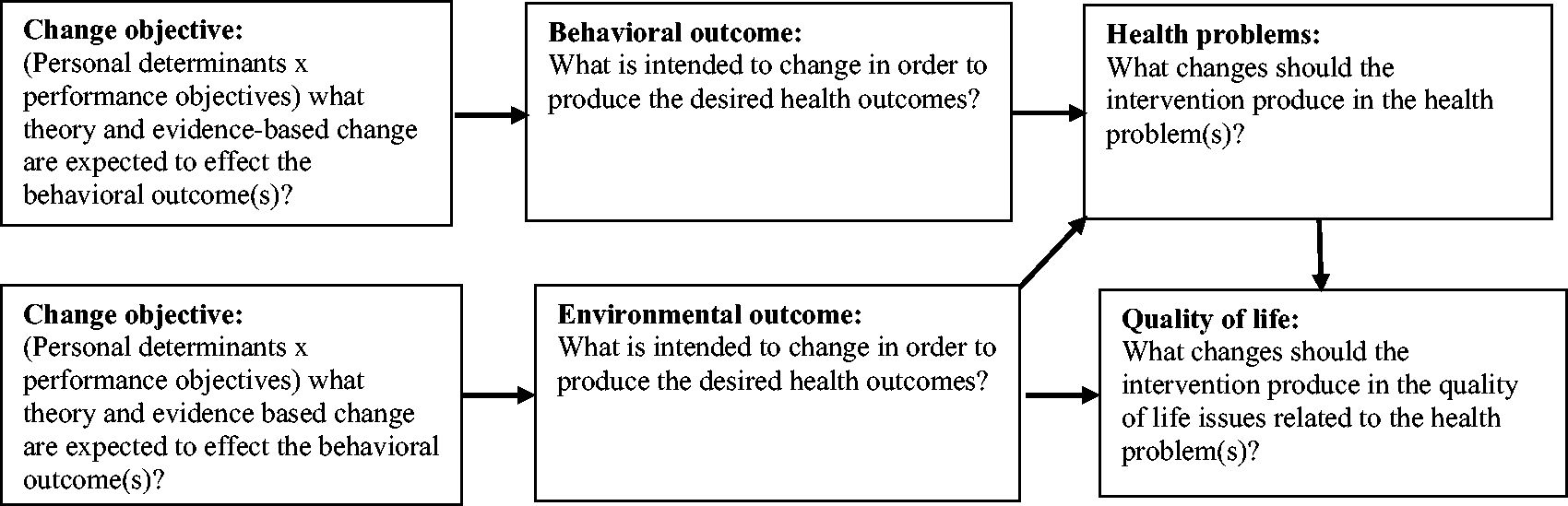
Logic Model in Intervention Mapping.
Step One: Needs Assessment
The key purpose of this step was to assess the need for design educational intervention for girl’s puberty. As the first part of intervention mapping, needs assessment is defined as a systematic study to identify the difference between what the status is and what should be in a given group and the intended state.
13
In the current study, the planning group was established to identify the health issue and examine the life quality of adolescents with the presence of stakeholders, stakeholders are the best people who can express the needs of the target group stakeholders participating in this study were representative of:
Specialists in the field of health education, reproductive health of the department of health in Ardabil medical university of Iran. Public school manager, from the subset of education in Ardebil city of Iran. Health educators. parents of first-grade high school students in Ardabil and student representatives.
Using a health needs assessment group we examined life quality and behavioral and environmental determinants of female adolescents using the PRECEDE model. 14 This assessment was done using a review of the studies conducted, and a qualitative study was conducted. Finally, the results of the needs assessment were determined by identifying the health and life quality outcomes of the evaluation program.
In the review of the studies conducted to select the papers, PubMed, Embase, and Google Scholar databases were searched for English papers and Iranmedex, SID, and Google Scholar databases for Persian ones. Given the differences in searching Iranian and foreign scientific databases, various Persian and English keywords were selected. The search was performed based on keywords among the papers of the past 5 years. After extracting the papers from the databases, the ones related to the topic were examined.
After coordination, an invitation letter was sent to stakeholders to participate in group discussion sessions to conduct the qualitative study. The samples were selected using purposive and voluntary sampling methods, and the main criterion for the inclusion was the individuals’ willingness to participate in group interviews and their interest in working with project executives. After obtaining informed consent, the data were collected through 5 focus group discussions from 18 girls' school health educators, 26 parents, and 14 adolescent girl students (14–18years) and other specialists. Sampling continued until data saturation (until the end of the fifth session) in all groups. The sessions were conducted by the researcher using a semi-structured index based on how the researcher interacted and discussed. All sessions and interviews were audio-recorded and transcribed by the researcher and analyzed adhering to encoding in a basic thematic method. Finally, the results of the needs assessment were linked to the health planning and quality of life assessment and planning program. 15
Step Two: Matrix
Step 2 of IM is important because in this step the expected change or program outcome is stated. It describes who and what will change as a result of the intervention? The main tool in IMA is a matrix of change objectives. 15 At this step, change objectives determine what to be done to reach performance goals to bring about changes in behavioral and environmental conditions and ultimately improve the life quality of the target group. 7 , 16 The planning group sets performance objectives breaking down each behavior and environmental condition into subcomponents. The expected outcomes were performed in two distinct behavioral and environmental levels, focusing on these outcomes, and the next step was the expected outcomes divided by the performance goals 17 where the matrix of change objectives was obtained from the midpoint of the performance goals using determinants. In the present study, this matrix was designed to meet the four expected outcomes according to the results obtained from the first step. Also in this step to make decisions about determinants that should be targeted with the intervention, IM guides planners through involving representatives from the target population, stakeholders, and implementers in brainstorming in the planning group.
Stage Three: Theoretical Methods and Practical Applications
In the third step, while the planning team predicted the ideas of the plan, the theoretical methods affecting the determinants of change were selected, and practical solutions were selected, and the evaluation program was designed to implement the predicted theoretical methods the planning group discusses initial ideas for the program and selects theory- and evidence-based behavior change. In this way a number of systematic reviews health promotion programs show that reasonable use of theory-based methods increases intervention effectiveness in changing behavior. 7 , 16 The ultimate goal of this step was to answer questions such as “How many target groups will there be in the program and at what environmental levels?” “How long is the scope of the program and how long is the program?” “How many themes does the program have?”
Step Four: Program Plan
The program plan for the implementation strategy was developed on the basis of the preceding steps: need assessment, the matrix from step 2, and the theoretical model from step 3. Input for the program development. At this step of designing the intervention program, while holding a group meeting with the participants and considering their priorities and suggestions, the implementation, scope, and implementation sequence themes of the program were identified along with the constraints. For instance, if one part of the program had been planned for the school program during the school year, the resources needed by the principal and teacher along with the financial constraints of the program and the stages of program implementation were determined. The planning team then decided on the intervention methods to achieve the goals of change, and finally pre-tested the messages and other parts of the program before final production.
Step Five: Program Implementation Plan
At this step, the tasks of the individuals and what they must do so that the outcome is fully met and implemented acceptably were determined. Then similar to Step 2, matrix planning was defined to guide the intervention program. In this matrix, the operational goals and determinants were determined for adoption, implementation, and maintenance of the program. For instance, determinants responded to the question of why do decision-makers decide to use the program and why those in charge try to make sure the program continues over time? The answers to these questions determine the adoption, implementation, and maintenance of the program.
Stage 6: Assessment Planning
In the final step, the assessment program was defined to determine the effectiveness of the program and the extent to which the performance goals and objectives were changed. Assessment questions were identified from the defined outcomes and objectives, and a criterion was identified. 18
The results of the first step, Needs Assessment: The results of a review of studies (30 related papers) showed that adolescent girls' need for information on sexual health, puberty, and menstruation is quite high. Moreover, the a large majority of adolescent girls do not have a proper definition of puberty and menstruation and took fewer showers during menstruation, and had no familiarity with the symptoms of Premenstrual Syndrome (PMS), physical and mental disorders prior to the onset of menstruation and puberty. The results of this qualitative study, besides confirming the results of the literature review, showed that despite the girls' desire for puberty awareness, most of them did not know the meaning of puberty and the changes due to it. Moreover, girls' lack of awareness and self-efficacy were identified as the most important individual determinant of health behaviors. In this study, mothers were the most reliable channel of transmission of information in various areas of puberty health, while the majority of girls in the study did not have a good relationship with the family. The results of the needs assessment showed that the most important environmental level of the intervention program was the mutual relationship between mothers and daughters.
The results were categorized into 4 outcomes:1- Increasing physical activity and reducing hours of watching television and computer games, 2- Adhering to a healthy diet, 3- Strengthening parent-adolescent relationship, and 4- Puberty period health.
Increasing Physical Activity and Reducing Hours of Watching TV and Computer Games
The results showed that 40% of the girls in the study were overweight, and 8 out of ten had no physical activity for at least half an hour a day. However, the standard rate of physical activity in this age group is at least one hour per day. 18 Childhood and adolescent obesity is important as besides determining the health of this period, it is an index determinant of obesity in adulthood. 19 The results also show a significant inverse relationship between physical activity of children and adolescents with body mass index (BMI), meaning that adolescents with proper physical activities had normal body weight. 20
Watching TV and computer games lead to adolescent obesity in three main ways: 1) inactivity and disturbance of the balance of the energy received and consumed 2) advertisement effect and 3) providing a context for binge eating and eating small amounts of food. 21
Adhering to a Healthy Diet
Studies show a significant relationship between the consumption of sugar and sweet foods in children and their obesity. 21 Moreover, consuming adequate amounts of fruits and vegetables in the daily diet is one of the important strategies for preventing diseases and promoting health during adolescence. 22 However, the amount of fruit and vegetables consumed by students as defined in the food pyramid is significantly lower, with 79% of students not consuming at least an average of 5 units of fruit and vegetables daily. 23 In the current study, 27.5% consumed unhealthy snacks at least once a week, and 11.5% consumed sausages, salamis, pizza, and hamburgers daily. Breakfast, known to be the most important daily meal, is often overlooked by children and adolescents. 24 , 25 The results showed that 16.8% of the female students go to school without eating breakfast, and the group who did not eat breakfast, had a higher consumption of unhealthy snacks. Thus, the increase in fruit and vegetable intake and healthy snacks, and replacing them with sweet and nutritious foods was the next goal in the current study.
Strengthen the Parent-Adolescent Relationship
Studies have shown that adolescents without strong family relationships with their parents are more exposed to stress and depression. 26 A review of the studies, as well as group discussion sessions in the current study, showed that appropriate adolescent parent engagement (play, homework help, doing homework and personal and social issues) had a significant role in fostering emotional communication between adolescents and their parents and passing the puberty stage healthily.
Health in Puberty
The results of the previous studies and the qualitative study in the current study showed that about 1.5% of adolescent girls have correct health beliefs about menstruation and puberty, and only 10.8% of them adhere to healthy diets, 50% are deterred from bathing in menstruation by their mothers, and most of them do not have the correct definition of puberty and its importance. 27 Overall, girls' health performance is poor during puberty. 28 , 29
Step 2 Results (objectives matrix): The planning team drafted the performance goals based on theories of planned self-efficacy at the beginning of this phase according to the 4 individual and environmental outcomes of the program. Then, they got help from a three-person group including a health education specialist, a child and adolescent psychologist, and a behavioral specialist to evaluate the validity, and based on their views, the drafted performance goals were revised (Tables 1 and 2).
Individual-Level Matrix of Adolescent Puberty Program.
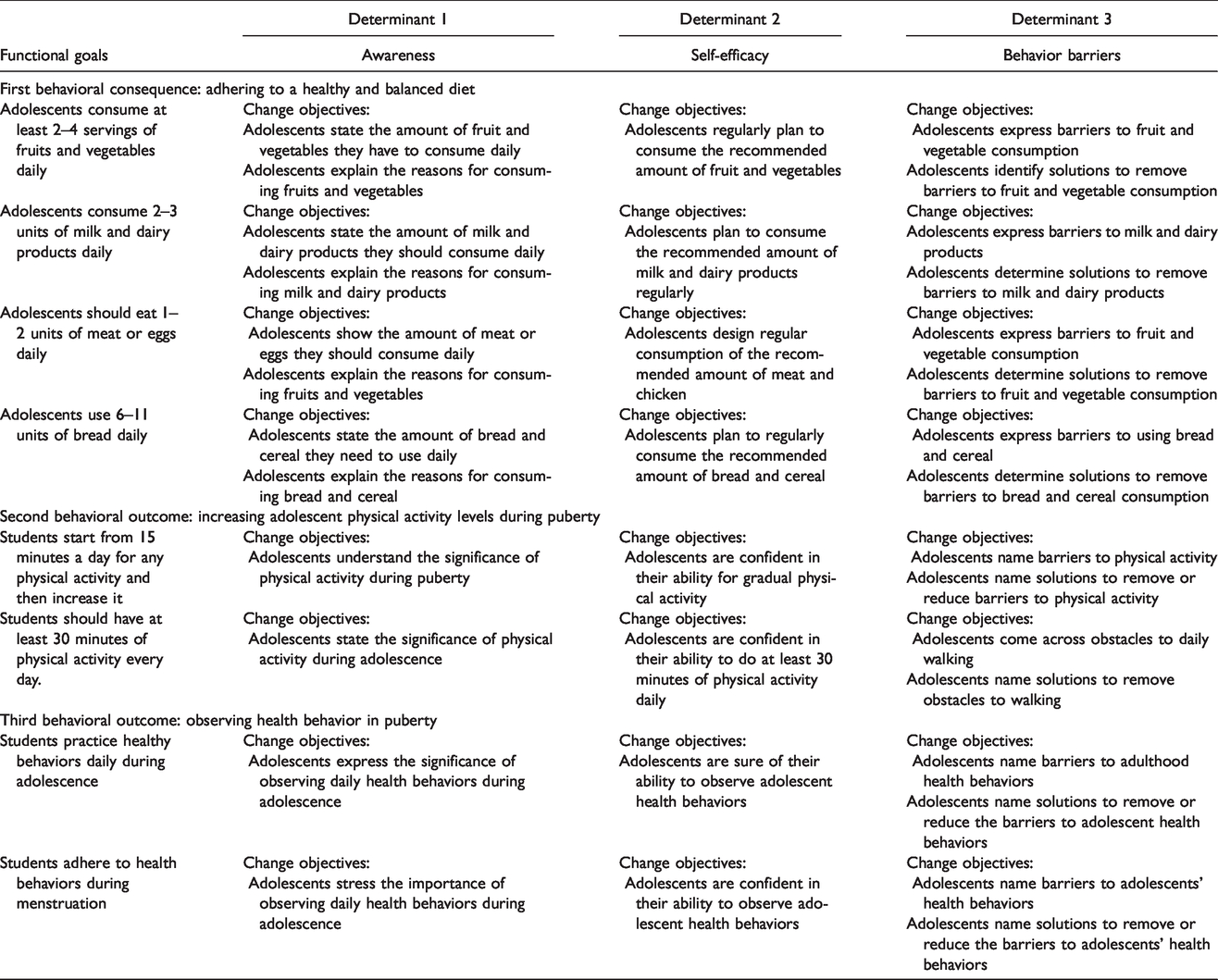
Interpersonal Level Matrix Behavioral Outcome: Positive Family Support.

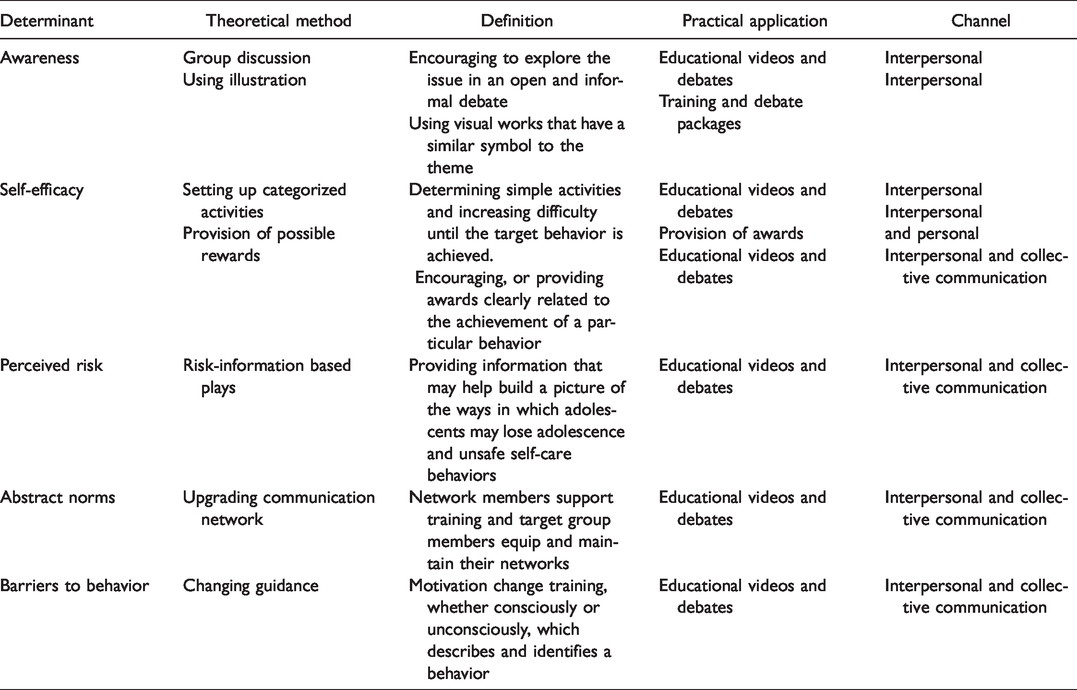
The results of step three, defining theoretical methods and practical applications in this step, the theoretical methods and practical applications for each determinant were defined with the participation of the planning team (Table 3).
Theoretical Methods, Practical Applications, Communication Tools Channels.
The results of step four: Intervention on Planning: The intervention planning team identified the intervention implementation plan that includes the program sequence, program training channels, training materials, and how the program was implemented at each level. 7 The intervention program was designed over a period of 6 months for 6 hours, one hour per week according to the specified sequence, and the best channel was selected based on theoretical methods and practical uses, interpersonal communication channels, and mass media. Professional designers and educational resources of the Ministry of Health were used to produce educational materials. In this step, a pre-test was designed and implemented to evaluate the overall program. The pre-test results showed the efficacy of most of the predicted theoretical methods and their implementation and were applied where necessary. For instance, in a part of the intervention program to remove barriers of menstrual health behaviors, the planning team had anticipated the individual commitment, and in the practical application of this theoretical approach, a decision was made to prepare a recognizance. 30 The pre-test of the program showed that the individual commitment according to the mothers and students participating in the study was not an appropriate approach, and finally, the change in guidance suggested by parents and adolescents was validated as the theoretical method of removing the proposed behavioral barriers. 31 Thus, some changes were made in the program implementation at this point with some hints. Moreover, the presenters found that engaging in peer-to-peer discussion leads to better feedback and more effective interaction.
Results of Step Five (Adoption and implementation planning): At this stage, the theory of persuasive communication and programmed behavior plans were used to organize the adoption and implementation plans. 31 The adopter of the puberty intervention program of adolescent girls, mothers, trainers, and school principals, as well as implementers of health coaches and educators' programs, were considered as well. It should be noted that in carrying out the tasks related to this step, all stated in previous steps concerning the beneficiaries were repeated as well.
Results of the sixth stage (Evaluation planning): Since one of the significant goals of evaluation is using evaluation results, 32 at this stage, the planning team identified the evaluation stakeholders - such as planners, study participants, program managers and executives - to evaluate the effect of the program, designed questions based on outcomes, performance goals, and individual and environmental determinants (Table 4). In this study, 50 students were selected to participate in the study performance. Those included attended training sessions for 6 weeks once a week 32 (not more than 5% of participants should have been absent in each training session).
Evaluation of Outcome, Effect, and Program Process (Sample Questions).
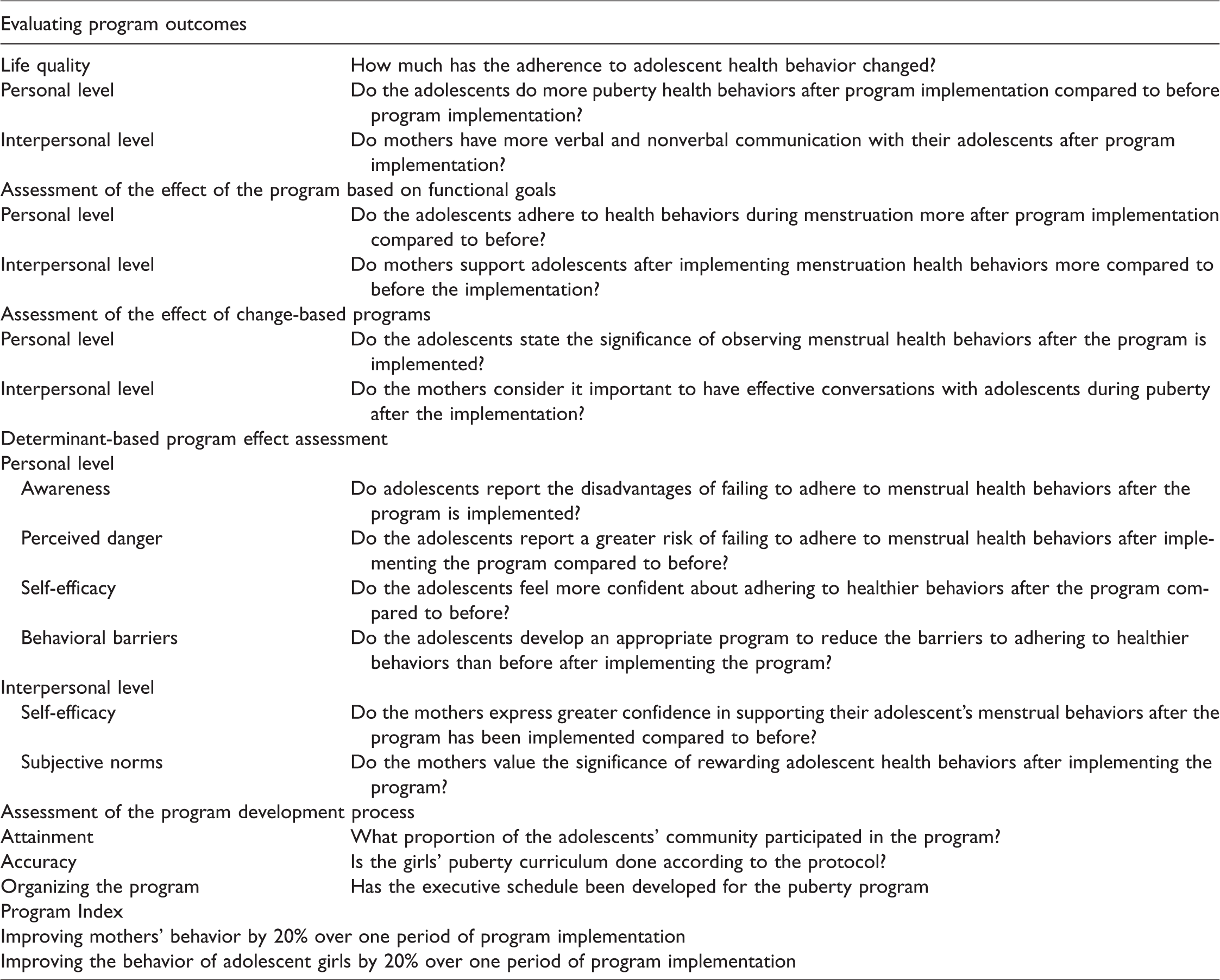
Curriculum index: Individual and interpersonal performance change was determined. According to the studies conducted, the mothers’ and adolescents' behavior improvement index was considered to be 20% over one period of program implementation. 33 Then, a measurement tool was designed to evaluate the outcomes, behaviors, and determinants of personal and interpersonal levels. The evaluation program was implemented six months later, and to examine the made changes, the experimental study design with randomly dividing the participants into intervention and control groups was used. 34
Discussion
This program was done to design and develop the puberty training program using IMA. The results indicated that IMA is a good step-by-step framework for developing a systematic and community-based program in adolescents. Moreover, IMA provides a practical and usable guide to adapt and promote health promotion programs for other planners to be used elsewhere. 34 It has to be noted that IMA is highly practical and user-friendly 35 despite its complex and its time-consuming nature. 36 Our results indicated that IMA can help develop a theory-based and evidence-based problem-solving approach, 36-38 produce outcomes, performance goals, change objectives, determinants, theoretical change methods, and practical applications and evaluation.
Conclusion
Intervention Mapping has been successfully used to plan, implement and evaluate educational interventions. This study has provided a good understanding of the role of intervention mapping in designing educational interventions for teenage girls, and a good foundation upon which subsequent reviews can be guided.
Footnotes
Acknowledgments
Our grateful thanks go to all participants in the present study.
Declaration of Conflicting Interests
The author(s) declared no potential conflicts of interest with respect to the research, authorship, and/or publication of this article.
Funding
The author(s) disclosed receipt of the following financial support for the research, authorship, and/or publication of this article: This study was drawn from a research project (No. IR.AUMS.REC. 1397.064) sponsored by the Deputy of Research and Technology at AUMS.
