







Abstract
This research uses the Kano model of satisfaction to investigate professor characteristics that create student satisfaction as well as those attributes that can cause their dissatisfaction. Kano questionnaires were handed out to 104 undergraduate students at a university in the Southwest and to 147 undergraduate students at a university in the Midwest of the United States. The two resulting Kano maps show the same delighting attributes although other satisfaction attributes are also similar. The findings reveal the importance of the personality of professors and the characteristics of professors that (a) are desired by students, (b) are not desired by students, (c) affect student satisfaction the most, and (d) affect satisfaction the least. The results also demonstrate how professors and universities can focus attention on those attributes most likely to influence satisfaction. No attributes of professors are classified as basic or taken for granted factors by students, although three attributes are excitement factors that have the potential to delight students. The findings illustrate that there is a set of multiple attributes that professors need to possess for satisfying student–professor classroom service encounters. Student populations appear to show strong similarities in their preferences for characteristics of professors that lead to satisfaction and dissatisfaction outcomes.
Increasingly, higher education is being regarded as a service industry and universities are beginning to focus more on meeting or even exceeding the needs of their students (Davis & Swanson, 2001; DeShields, Kara, & Kaynak, 2005). As a consequence, the evaluation of students’ satisfaction becomes all the more important to institutions that want to retain current and recruit new students (Helgesen & Nesset, 2007). Research indicates that the recruitment of students is several times more expensive than their retention (Joseph, Yakhou, & Stone, 2005) and so student retention becomes an important management task for universities, which gives rise to increasing emphasis on student satisfaction with the learning experience (Lala & Priluck, 2011). In this regard, Arambewela, Hall, and Zuhair (2006) regard student satisfaction as a key strategic variable in maintaining a competitive position, with long-term benefits arising from student loyalty, positive word-of-mouth, and image of the higher education institution. Consequently, increasing levels of student satisfaction and decreasing sources of dissatisfaction would be beneficial to universities (Douglas, McClelland, & Davies, 2008). Finally, Appleton-Knapp and Krentler (2006) suggest that students’ satisfaction with their educational experiences should be a desired outcome in addition to learning and knowing.
Although higher education institutions are beginning to see themselves as part of the service industry, there is a debate on whether students are customers (Desai, Damewood, & Richard Jones, 2001; F. Hill, 1995), partial employees (Mills & Morris, 1986), coproducers (Hennig-Thurau, Langer, & Hansen, 2001), partners (Clayson & Haley, 2005), or even products of the educational system (Yeo, 2008). However, regardless of whether students are treated as customers, coproducers, or products, it is imperative for educational institutions to actively monitor the quality of service they offer to students in order to recruit and retain students in the face of strong competition for students and the revenue they generate (Dorweiler & Yakhou, 1994; Hwarng & Teo, 2001; Shank, Walker, & Hayes, 1996).
This article regards students as partners (Clayson & Haley, 2005), who have to be willing to take responsibility for their own education and who cannot merely consume the service offered (Svensson & Wood, 2007). Students also have to show motivation and intellectual skills to attain their goals (Hennig-Thurau et al., 2001). Nevertheless, as “partners,” students can expect to receive a valuable learning experience in general and good teaching quality in particular. We therefore agree with Desai et al. (2001), who posit that professors can be more service oriented “without giving the store away” (p. 143), and we especially believe that it is pedagogically valuable and professionally prudent to help professors develop the skills needed for successful student–professor interactions.
In particular, given the need for more research on classroom encounters (Swanson & Frankel, 2002), this study investigates which attributes of professors have the strongest impact on student satisfaction and dissatisfaction. Knowing what students regard as satisfying and dissatisfying attributes helps professors improve the classroom experience either by developing or improving interpersonal skills or by just having a better understanding of the student’s perspective (Davis & Swanson, 2001).
As the attributes of professors that are desired by students are key drivers in improving the overall education experience (Faranda & Clarke, 2004), it would be particularly valuable to know with more precision which attributes of professors are (a) desired by students, (b) not desired by students, (c) which attributes affect student satisfaction most, (d) which attributes affect satisfaction the least with a view to helping professors and universities manage resources and focus attention on those attributes that make a difference to satisfaction.
Higher Education: A Service Industry
According to authors such as Curran and Rosen (2006) and Desai et al. (2001), higher education can be regarded as a service. Frankel and Swanson (2002) point to the similarities between education and services in their delivery and evaluation processes. Furthermore, Eagle and Brennan (2007) describe higher education as a complex service, and for Hennig-Thurau et al. (2001), educational services “fall into the field of services marketing” (p. 332).
This article focuses on the encounters between students and professors in class. The interaction between students and professors is similar to a service encounter as a form of human behavior that is limited in scope and that has clear roles for the participating actors who pursue a purpose (Czepiel, Solomon, Surprenant, & Gutman, 1986). Moreover, Iyer and Muncy (2008) have recently used concepts from services marketing research to investigate service failures within a classroom setting. Thus, findings from the services literature should be applicable to the context of higher education in general (Hennig-Thurau et al., 2001; Shank et al., 1996) and to the student–professor encounter in particular. Indeed, the adoption of marketing techniques in higher education institutions is not a new phenomenon. Kotler and Levy (1969) were the first to argue the relevance of the marketing concept to higher education institutions and since then much research has been carried out in this area. The literature has focused on the application of marketing principles to higher education in areas such as student recruitment and decision making (Cubillo, Sanchez, & Cervino, 2006; Maringe, 2005), the marketing mix in higher education (Bingham, 1987; Stewart, 1991), student retention and relationship management (Armstrong, 2003; Klayton, 1993), international education marketing (Cubillo et al., 2006; Mazzarol, Soutar, & Seng, 2003), and student services quality and satisfaction (Abdullah, 2006; Athiyaman, 1997; Ivy, 2001).
Following Hemsley-Brown and Oplatka (2006), we believe that there is a demand for more research that explores the application of services marketing concepts to the context of higher education, and our research study aims at making such a contribution.
The Concept of Student Satisfaction
Students, like everyone else, are service literate. It is unreasonable to expect that they will come into college and class leaving service expectations, which they have learned in every other sphere, outside the classroom door. Although a contentious proposition, given the context of the service literate student, professors who are purveyors of knowledge may find it beneficial to be aware of student satisfaction in the delivery of knowledge. It may serve professors well to be familiar with student satisfaction, and marketing professors, by virtue of their discipline, could be expected to be more receptive to the notion of student satisfaction and to convey appropriate service-based behavior toward their students.
Several satisfaction definitions exist in the services marketing literatures. Following Oliver (1999), satisfaction can be defined as pleasurable fulfillment, which means that individuals perceive that “consumption fulfills some need, desire, goal, or so forth and that this fulfillment is pleasurable. Thus, satisfaction is the consumer’s sense that consumption provides outcomes against a standard of pleasure versus displeasure” (Oliver, 1999, p. 34). Recently, the satisfaction concept has also been extended to the higher education context, and several authors such as Marzo-Navarro, Pedraja-Iglesias, and Rivera-Torres (2005a, 2005b) and Richardson (2005) suggest that student satisfaction is a complex construct, consisting of several dimensions. By referring to Oliver and DeSarbo’s (1989) definition of satisfaction, Elliott and Shin (2002) describe student satisfaction as “the favorability of a student’s subjective evaluation of the various outcomes and experiences associated with education. Student satisfaction is being shaped continually by repeated experiences in campus life” (p. 198). As with other industries in the service sector, current research findings reveal that satisfied students may attract new students by engaging in positive word-of-mouth communication as well as returning to the university to take further courses (Helgesen & Nesset, 2007). In this regard, satisfied alumni are important because evidence shows that through word-of-mouth they help attract new students, which in turn increases financial assistance to the university (Helgesen & Nesset, 2007; Martin, Milne-Home, Barrett, Spalding, & Jones, 2000; Marzo-Navarro et al., 2005b). Alumni perceptions have also been found to increase accountability of the university (Mangan, 1992), and alumni who are satisfied with their institution are more likely to consider further study in that institution and recommend it to others (Morgan & Shim, 1990). Another important consideration is that previous research shows that student satisfaction is also linked to student motivation (Elliott & Shin, 2002) and positive learning outcomes (Ramsden, 1991; Richardson, 2005).
As partners in higher education, students can expect to have a satisfying service experience in the classroom (i.e., good-quality teaching) with a valuable learning experience. The concept of student satisfaction should therefore always be seen as a “means to an end” with the end being the creation of more knowledgeable and capable individuals. Professors should therefore provide students with a valuable learning experience (“end”) via satisfying student–professor interactions (“means”). For this purpose, it is beneficial for professors to understand what attributes students want them to have in order to be in a better position to manage valuable classroom service encounters.
The Important Role of Professors During Classroom Service Encounters
Service encounters are fundamentally social in nature and involve interaction between the service provider and beneficiary (Czepiel, 1990; Price, Arnould, & Tierney, 1995). The service literature provides strong evidence that the quality of interpersonal interaction between service provider and beneficiary significantly influences the latter’s evaluation of the service performance of the former (Bitner, Booms, & Mohr, 1994; Iacobucci, Ostrom, & Grayson, 1995).
In the higher education industry, Sohail and Shaikh (2004) found that the most important determinant of students’ evaluation of service quality is “contact personnel” (p. 63). Similarly, previous research studies by authors such as Harnash-Glezer and Meyer (1991) and Y. Hill, Lomas, and MacGregor (2003) stressed the importance of teaching staff and reported that the quality of the professor belongs among the most important factors in the provision of high-quality education. Thus, the characteristics of professors are likely to be primary determinants of student satisfaction in higher education.
Furthermore, Browne, Kaldenberg, Browne, and Brown (1998) suggest that the likelihood of a student recommending the university to friends/relatives is particularly influenced by interactions between the students and university personnel, such as faculty. Y. Hill et al. (2003) also found that aspects concerning the professor are among the most influential factors in student perceptions of service quality. Voss (2009) stressed the importance of teaching staff and concluded that the quality of the professor is vital in the provision of high-quality education. Finally, Frankel, Swanson, and Sagan (2006) and Iyer and Muncy (2008) found that the professor’s response to service failures is the key factor in determining student satisfaction. It is thus clear that the role of the professor is crucial during classroom service encounters.
Professors are in a more advantageous position than service employees in other service industries as they have greater discretion in carrying out the tasks they perceive as appropriate to meet student expectations (Swanson & Davis, 2000). However, to better understand and satisfy students, professors need to be aware of how students expect them to behave in such encounters (Swanson & Davis, 2000). Knowledge of student experiences thus holds important implications, not only for education institutions but also for professors, because satisfied students are likely to attend another lecture delivered by the same lecturer or opt for another course taught by her/him and recommend it to other students (Banwet & Datta, 2003).
Professors are the “contact personnel” associated with the core service, and for universities the core service is still the lecture (Douglas & Douglas, 2006; Sohail & Shaikh, 2004). Therefore, in this study, emphasis will be placed on face-to-face classroom service encounters with professors, these inevitably occurring the most frequently in the higher education context due to the interactive nature of the service.
The Role of Perceived Personality of Professors
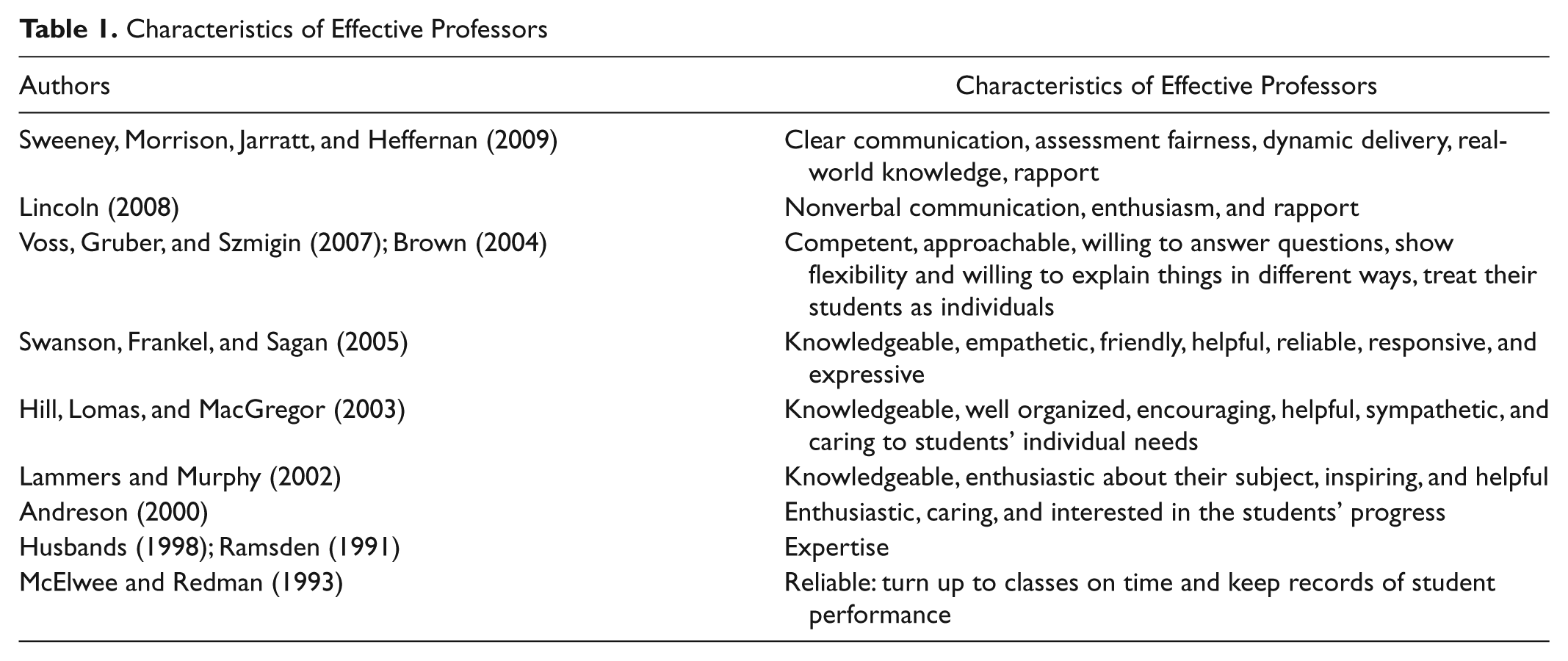
Several authors (e.g., Desai et al., 2001; Lincoln, 2008; Smart, Kelley, & Conant, 2003; Sweeney, Morrison, Jarratt, & Heffernan, 2009) have recently investigated the main characteristics of effective professors. Typical attributes mentioned frequently are communication skills, enthusiasm, empathy, rapport, and use of real-life examples in class. Table 1 gives an overview of some previous findings.
Characteristics of Effective Professors
Within the context of Student Evaluation of Teaching (SET) and the scales used by SET to measure teaching effectiveness, generally accepted by deans of AACSB schools (Clayson, 2005), several studies point to the importance of the personality of the instructor (e.g., Clayson, 1999; Curran & Rosen, 2006). As early as 1990, Clayson and Haley found that the personality of the professor is the strongest determinant of the final evaluation of the professor’s teaching effectiveness. The personality of the professor is not something she/he possesses but rather an interpretation of the professor’s behavior by the student. Clayson and Haley suggested calling the investigated evaluation measurement a “likeability scale.” Using structural equation modeling, Marks (2000) revealed a similar strong impact of liking/concern on the evaluation of the instructor.
More recently, Clayson and Sheffet (2006) also found a positive and consistent relationship, when considering SET results, between personality measures and course and instructor evaluations. Their results indicate that students associate instructional effectiveness with perceived personality and SET are therefore “largely a measure of student-perceived personality” (Clayson & Sheffet, 2006, p. 158). Further research findings suggest that for students, excellent teaching seems to have more to do with who professors are than what they do or know or what efforts students themselves show (Delucchi, 2000; Moore & Kuol, 2007). The fact that the professor’s personality explains between 50% and 80% of the total variance in SET evaluations could also be the reason why several studies have shown that experienced professors do not show improvements in teaching effectiveness as personality changes only minimally over time (Clayson, 1999). This could suggest in some future recruitment and evaluation scenario (a) the psychological profiling in the selection of professorial faculty with a focus on a teaching role and/or (b) the provision of strategies and tactics to connect with the attributes considered more important by the students in the classroom encounter. This article focuses on the latter by investigating which characteristics are more important for students in face-to-face student– professor classroom service encounters. For this purpose, the Kano model of satisfaction will be used.
Methodology: The Kano Model of Satisfaction
Recent research in the services and customer satisfaction/dissatisfaction literature suggests that attributes of products, services, and individuals can be classified into several categories, all of which affect customer (dis)satisfaction differently (Löfgren & Witell, 2008). Cadotte and Turgeon (1988) and Johnston and Heineke (1998) revealed that although some characteristics of services will predominantly lead to satisfaction, others are likely to cause dissatisfaction. Cadotte and Turgeon, for example, found in a hotel context that the factors linked with dissatisfaction (i.e., when customers complained to the hotel) differed from the attributes that created satisfaction (i.e., when customers made compliments). Similarly, in a higher education context, Moore and Kuol (2007) suggest that the factors that create student satisfaction with teaching (“teaching satisfiers”) may be qualitatively different from the factors that create dissatisfaction with teaching. Accordingly, this research uses a model developed by Kano (1984) that reveals the attributes that create satisfaction as well as the attributes that create dissatisfaction.
The Kano model of satisfaction (1984) helps categorize consumer needs and allows researchers to gain an understanding of consumer preferences. Over the past 20 years, the Kano (1984) model has increasingly gained acceptance and interest from both academics and practitioners (Löfgren & Witell, 2008). Early work was conducted in the area of engineering (Kano, 1984). More recently, the Kano model has been applied successfully to diverse domains such as eco-design (Sakao, 2009), quality of life (Lepage, 2009), Six Sigma (Setijono, 2008), e-services (Nilsson-Witell & Fundin, 2005; Witell & Löfgren, 2007), employee satisfaction (Matzler, Bailom, Hinterhuber, Renzl, & Pichler, 2004), bank services (Bhattacharyya & Rahman, 2004), and Internet community bonding (Szmigin & Reppel, 2004).
The Kano model posits that satisfaction is a multidimensional construct consisting of the following categories of quality elements (Kano, 2006; see also Lilja & Wiklund, 2006). Must-be quality elements, or basic factors (Matzler et al., 2004), are features that customers take for granted. Although the fulfillment of these requirements does not increase customer satisfaction, these elements must be designed into the product and/or service if dissatisfaction is to be avoided. If the product or service does not meet these basic quality expectations, then customers will be very dissatisfied. One-dimensional quality elements, or performance factors, are attributes for which the relationship between attribute performance and (dis)satisfaction is linear. The more (less) an attribute fulfils the requirements, the more (less) customers are satisfied. Attractive quality elements, or excitement factors, are attributes that make customers very satisfied or even delighted (Matzler, Hinterhuber, Bailom, & Sauerwein, 1996) if the product or service achieves these factors fully. Customers are, however, not dissatisfied if products or services do not meet these requirements. Beside the three main categories, elements may also be classified as either indifferent quality elements that do not have an impact on customers’ satisfaction levels or reverse quality elements that lead to satisfaction when not fulfilled and to dissatisfaction when fulfilled (Kano, 2006; see also Lilja & Wiklund, 2006).
The Kano model also shows which attributes have the strongest impact on customer (dis)satisfaction. This characteristic of the model is highly valuable for organizations as it reveals which attributes add value by increasing satisfaction and which attributes only meet minimum requirements (Matzler & Sauerwein, 2002). Organizations can then decide which qualities and behaviors of contact employees they should design effective training programs for in order to improve employee performance. Similarly, they can decide which qualities prospective job candidates should possess. As teaching faculty may be deemed contact employees, selection and training considerations both apply.
Data Collection
In Study 1, questionnaires were handed out in two marketing courses to 104 undergraduates aged between 19 and 47 years (X = 24.2, SD = 4.39). Of these students, 56.7% were male and 43.3% were female at a university in the Southwest of the United States. The students were marketing majors taking a Global Marketing Course. All were college juniors and seniors. Two sections were sampled: a morning section and an evening section. More than 80% of the students sampled worked at least 20 hours a week and more than half worked full time.
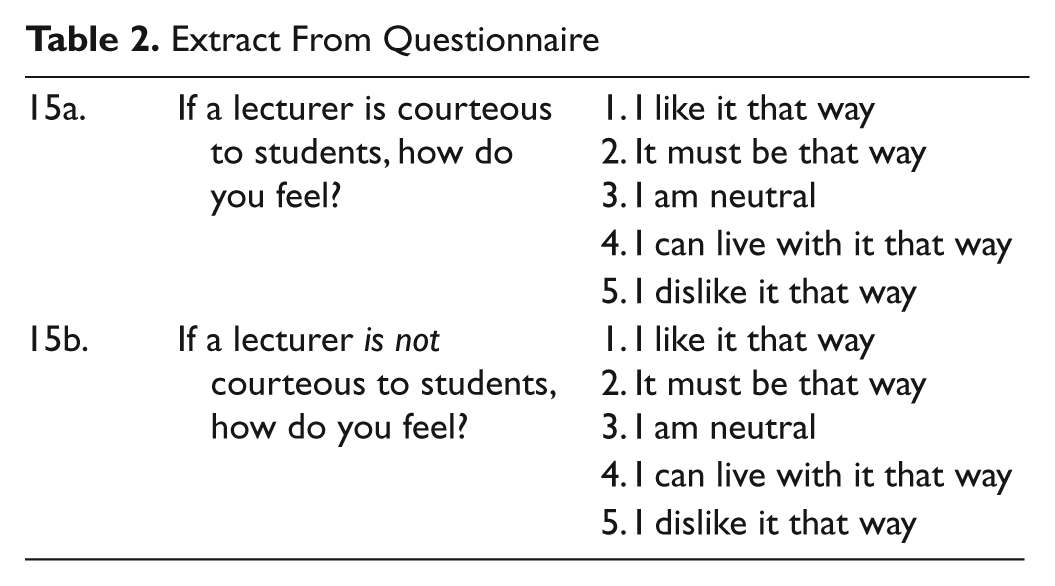
The questionnaire contained 19 attributes derived from previous research studies on service quality in higher education (e.g., Voss, Gruber, & Szmigin, 2007) and focus groups with students. For each professor attribute in the questionnaire, respondents had to answer a question consisting of two parts: “How do you feel if the feature is present?” and “How do you feel if the feature is not present?” Respondents were, for example, asked “If a professor possesses good communication skills (e.g., can tailor the messages to best suit students’ language abilities and preferences), how do you feel?” (functional form of the question) and “If a professor does not possess good communication skills (e.g., cannot tailor the messages to best suit students’ language abilities and preferences), how do you feel?” (dysfunctional form of the question). For each question, respondents could then answer in five different ways: (a) I like it that way, (b) It must be that way, (c) I am neutral, (d) I can live with it that way, and (e) I dislike it that way. Table 2 shows an example taken from the questionnaire used in this study.
Extract From Questionnaire
Using an evaluation table originally developed by Kano (1984), the attributes were then classified as recommended in Berger et al. (1993) and Matzler et al. (1996). In the evaluation table, the functional and dysfunctional forms of the question were combined, leading to different categories of requirements.
An example of an evaluation table is illustrated in Table 3. The combination of the functional and dysfunctional forms of the question in the evaluation table led to different categories of requirements. For instance, if a student answered “I like it that way,” to the functional form of a question—and answered “I am neutral,” or “I can live with it that way,” to the dysfunctional form of the question, then the combination of these questions in the evaluation table produced Category A, indicating that the attribute is an attractive or excitement factor to the student.
Example of an Evaluation Table
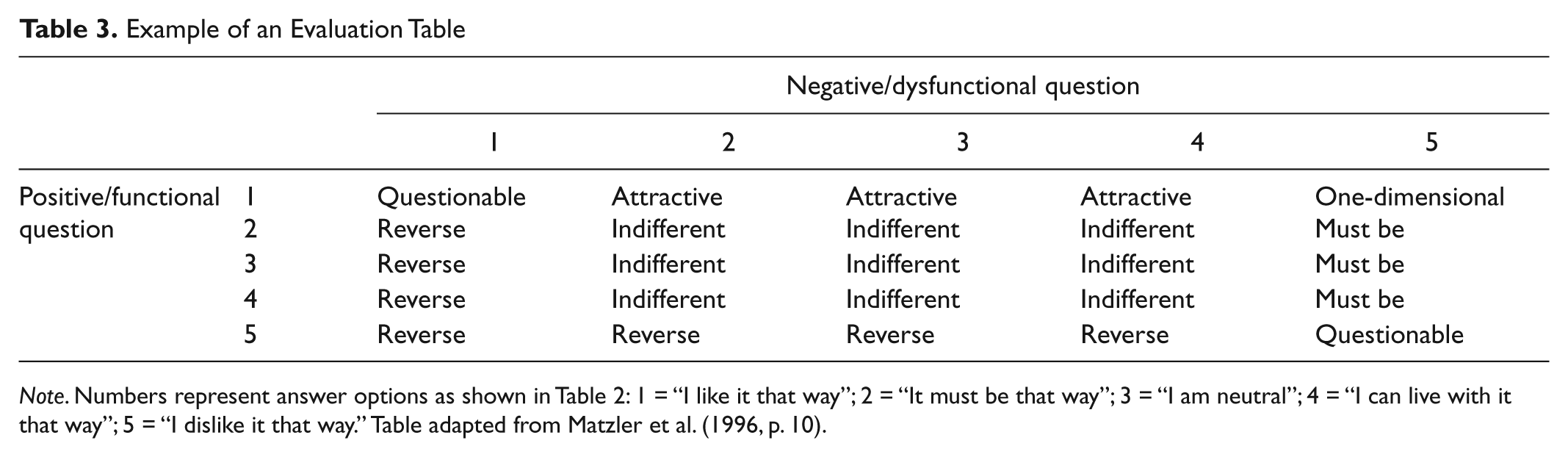
Note. Numbers represent answer options as shown in Table 2: 1 = “I like it that way”; 2 = “It must be that way”; 3 = “I am neutral”; 4 = “I can live with it that way”; 5 = “I dislike it that way.” Table adapted from Matzler et al. (1996, p. 10).
Beside the three categories relevant for our analysis (basic, performance, and excitement factors), the evaluation table also allows for the classification of requirements as indifferent, reverse, or questionable (Witell & Löfgren, 2007). Reverse features are those that are not only unwanted by the customer but also lead to actual dissatisfaction if present (Burchill & Shen, 1993). Questionable results identify a contradiction in the customer’s answer to the question (Berger et al., 1993) and commonly signify a question that was either misunderstood by the interviewee or phrased incorrectly (Matzler et al., 1996; Szmigin & Reppel, 2004). Questionable results therefore act as a form of quality control for the Kano questionnaire. An example of a questionable result would be if a respondent answers to both “If a professor possesses good communication skills, how do you feel?” (functional form of the question) and “If a professor does not possess good communication skills, how do you feel?” (dysfunctional form of the question) with “I like it that way.”
In this study, no requirement led to any questionable results according to the evaluation table. The results of the classification process resulted in a customer satisfaction coefficient (Matzler et al., 1996), indicating the extent of satisfaction and dissatisfaction that was then visualized in a matrix chart. This diagram illustrates which professorial attributes are must be, performance, and excitement factors for students. The areas for basic and excitement factors are separated from the area of performance factors as proposed by Bailom, Tschemernjak, Matzler, and Hinterhuber (1998) and Bailom, Casagranda, and Matzler (1999).
Results and Discussion
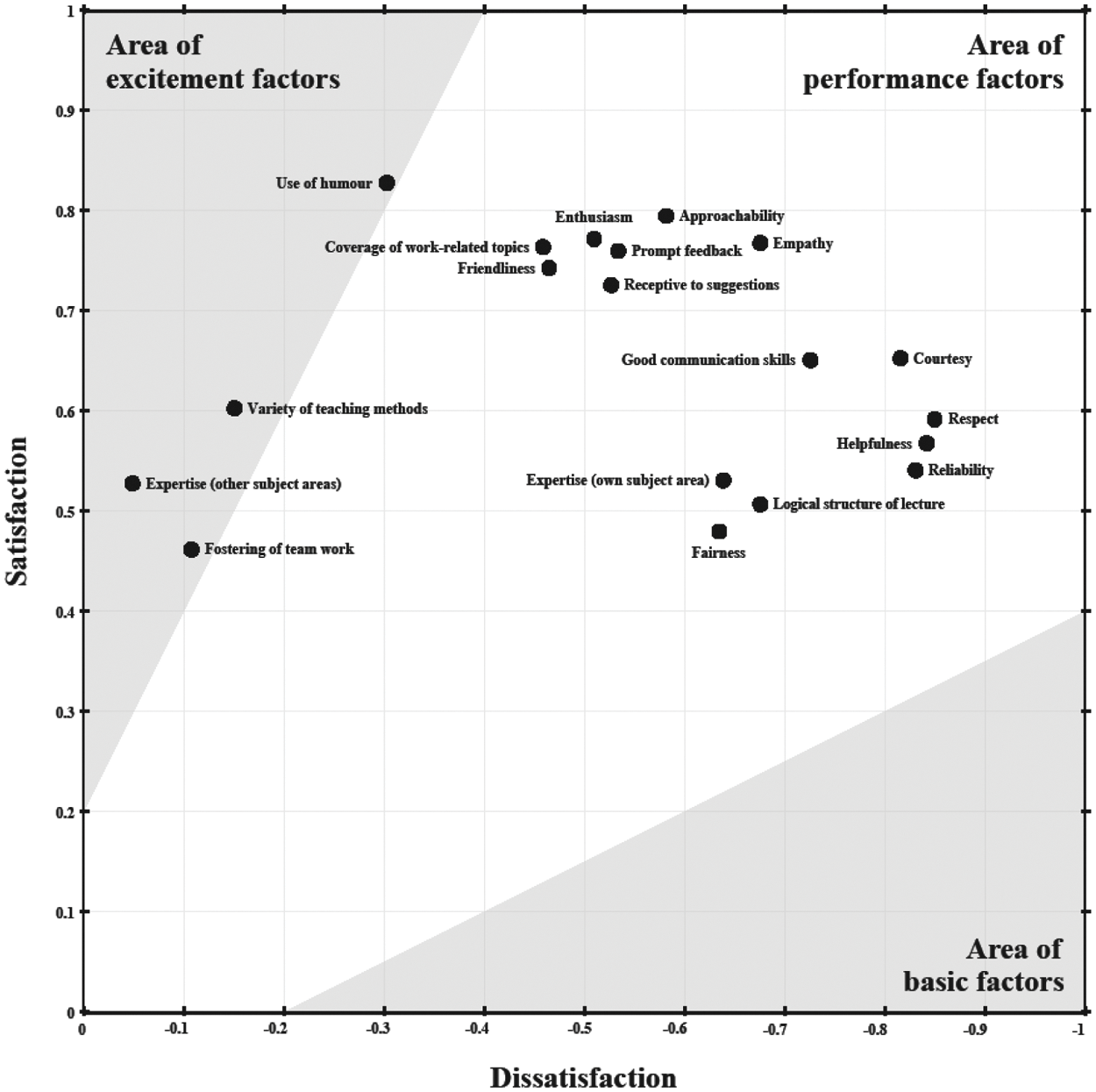
The Kano map in Figure 1 depicts the results of the classification process described above and illustrates which attributes of professors are basic factors that students take for granted (no attributes of professors are classified as basic or taken for granted factors), performance factors for which the relationship between attribute performance and (dis)satisfaction is linear, and excitement factors that delight students.
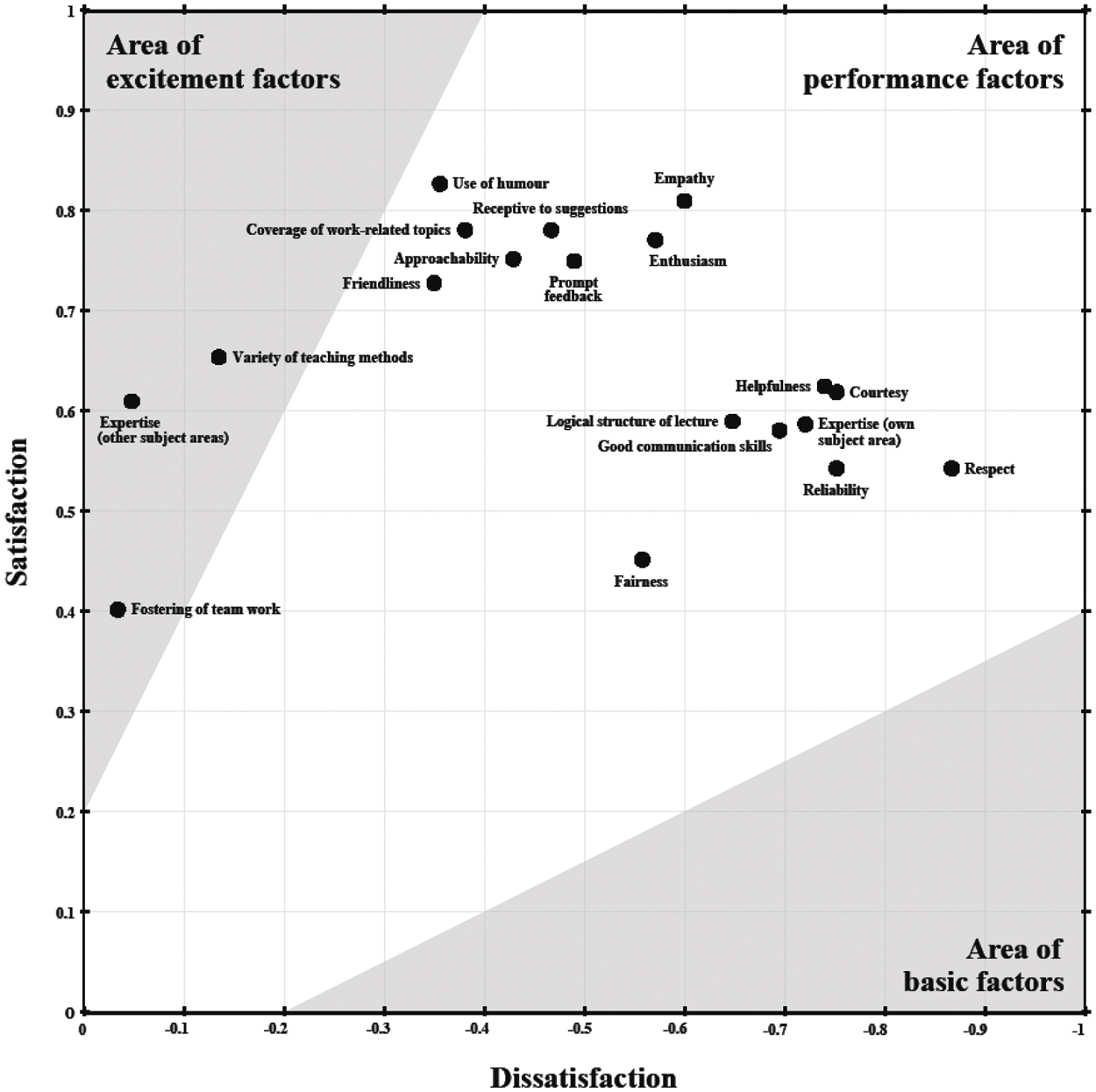
Influence of attributes of professors on satisfaction and dissatisfaction of students (Southwest)
Three attributes are excitement factors (“Expertise in other subject areas,” “Variety of teaching methods,” and “Fostering of team work”) that have the potential to delight students. These attributes suggest that students are both demanding of their professors and have a preference for being challenged by a variety of intellectual and teaching stimuli. The importance of these attributes supports previous findings that show that students value a “mixing up” of knowledge content and delivery that brings life to in-class interaction that also allows them to interact with their peers as well as their professor while discussing topics beyond course-related material (Faranda & Clarke, 2004).
The Kano results also corroborate previous findings that reveal the importance of personality (e.g., Clayson & Sheffet, 2006) in general and support studies that stress the importance of professors creating rapport with their students (e.g., Delucchi, 2000; Faranda & Clark, 2004) in particular. In this context, Faranda and Clarke (2004) define rapport as “the ability to maintain harmonious relationships based on affinity for others” (p. 274). By creating rapport, professors can enhance learning, encourage students to work harder, help students challenge themselves, support the educational process, and increase student engagement (Granitz, Koernig, & Harich, 2009). Attributes such as empathy, enthusiasm, openness, and humor show the highest impact on student satisfaction. In particular, “Humor” verges on being an excitement factor that can delight students, which supports findings by Lantos (1997), who suggests that instructors should use humor as a tool to motivate students, and Clayson (2005), who found that students would give a higher rating to an average instructor because of his or her sense of humor. It may well be that it is not so much about professors telling jokes but rather destressing the learning situation and reducing anxiety.
Professors who exhibit these personality attributes may not only satisfy students but also achieve high teaching evaluation scores (Delucchi, 2000). A recent study by Faranda and Clarke (2004) also stressed the importance of personality factors such as approachability, friendliness, being receptive to student suggestions, sense of humor, and enthusiasm. Professors should also cover “real-world” content, provide prompt feedback, and act on student suggestions, all these being attributes that have a strong impact on satisfaction levels.
In contrast, attributes such as “Communication Skills,” “Teaching Skills,” “Expertise,” “Reliability,” and “Respect” are all mapped more toward the area of must-be factors in the Kano map. In direct comparison to the personality factors mentioned before, students will be more dissatisfied if professors do not exhibit them (higher impact on dissatisfaction), but these attributes will affect satisfaction less by their inclusion (lower impact on satisfaction). This suggests that professors must be able to demonstrate these attributes. It should be noted that the negation of the aforementioned attributes, for example, unreliability and disrespect, may be considered among the least desired attributes. New and inexperienced faculty should concentrate on designing these positive and negative attributes in/out of their learning content and delivery as a base to build on, as their classroom confidence and skills increase. In particular, the attribute “Respect” has the potential to dissatisfy students strongly if professors do not show respect to them. This finding corroborates previous research by authors such as Voss et al. (2007), who showed that students want to be taken seriously and treated with respect. However, it is important to note that even if professors respect students, they will still be less satisfied with them in comparison to, for example, humorous or empathetic professors because those two traits have a higher impact on satisfaction. Nevertheless, it would be difficult to see how a professor would be empathetic and disrespectful at the same time.
Even though the attributes mentioned above are closer to the area of basic attributes than the personality factors, the Kano map shows that students do not take any of the professor attributes for granted (no attributes fall into the area of basic factors).
Replication Study
Study 2 was a replication study to test whether findings similar to Study 1 would result with a subject group from a different region of the country. Data were collected from 148 undergraduate students (53.0% were female and 47.0% were male) aged between 18 and 42 years (X = 21.6, SD = 3.26) at a university in the Midwest of the United States. The data were collected from business school undergraduates taking the following courses: Marketing Research (28), Consumer Behavior (7), Marketing Management (10), Finance (67), and Financial Institutions and Markets (36).
The map shows the same delighting attributes and also the other attributes are in similar positions. No attribute has moved considerably from the area of excitement factors to the area of basic factors or vice versa. For students at the Midwestern university, “Humor” is a delighting attribute and has, like in the map for the Southwestern university, the strongest impact on student satisfaction. The map also shows the strong impact attributes such as “Approachability” and “Enthusiasm” have on student satisfaction levels. In this connection, Kelly and Stanley (1999) found that enthusiasm was the most frequently chosen attribute by faculty to describe themselves and how they thought students would describe them. The fact that both maps are very similar and reveal the same delighting factors is a very strong indicator of the reliability of our findings.
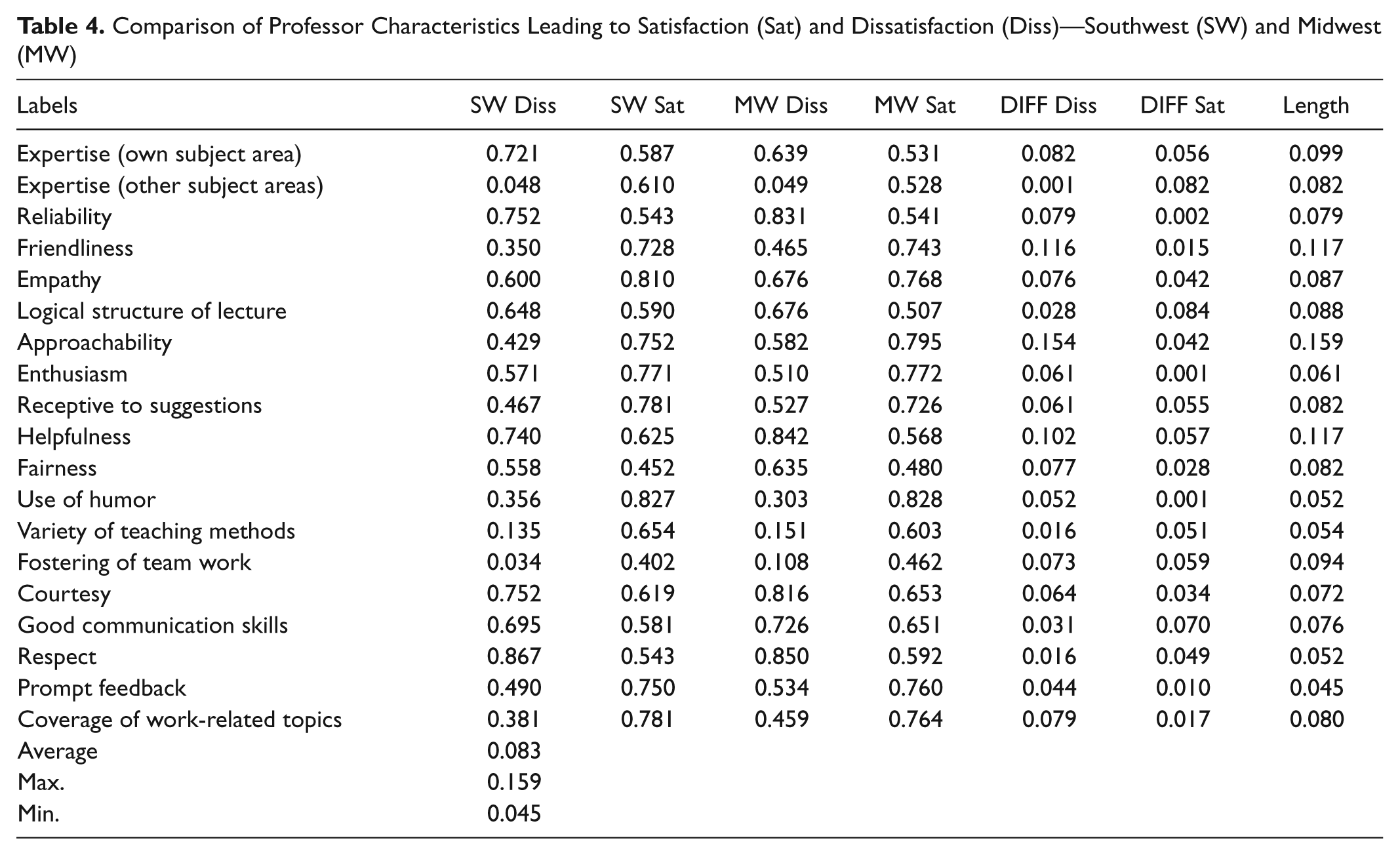
Figures 1, 2, and 3 are based on the data set out in Table 4, which shows that the absolute values for satisfaction and dissatisfaction provide the coordinates for each item shown in the Kano maps for SW (Figure 1) and MW (Figure 2). The difference between satisfaction and dissatisfaction values is used to calculate the length between the position of an item on the Kano map for SW and the corresponding position on the map for MW (Figure 3). The results show that the average length between corresponding SW and MW items is only .083. Therefore, despite the distinct regional difference of the groups, it appears quite evident from the figures that these populations of students are very similar.
Influence of attributes of professors on satisfaction and dissatisfaction of students (Midwest)
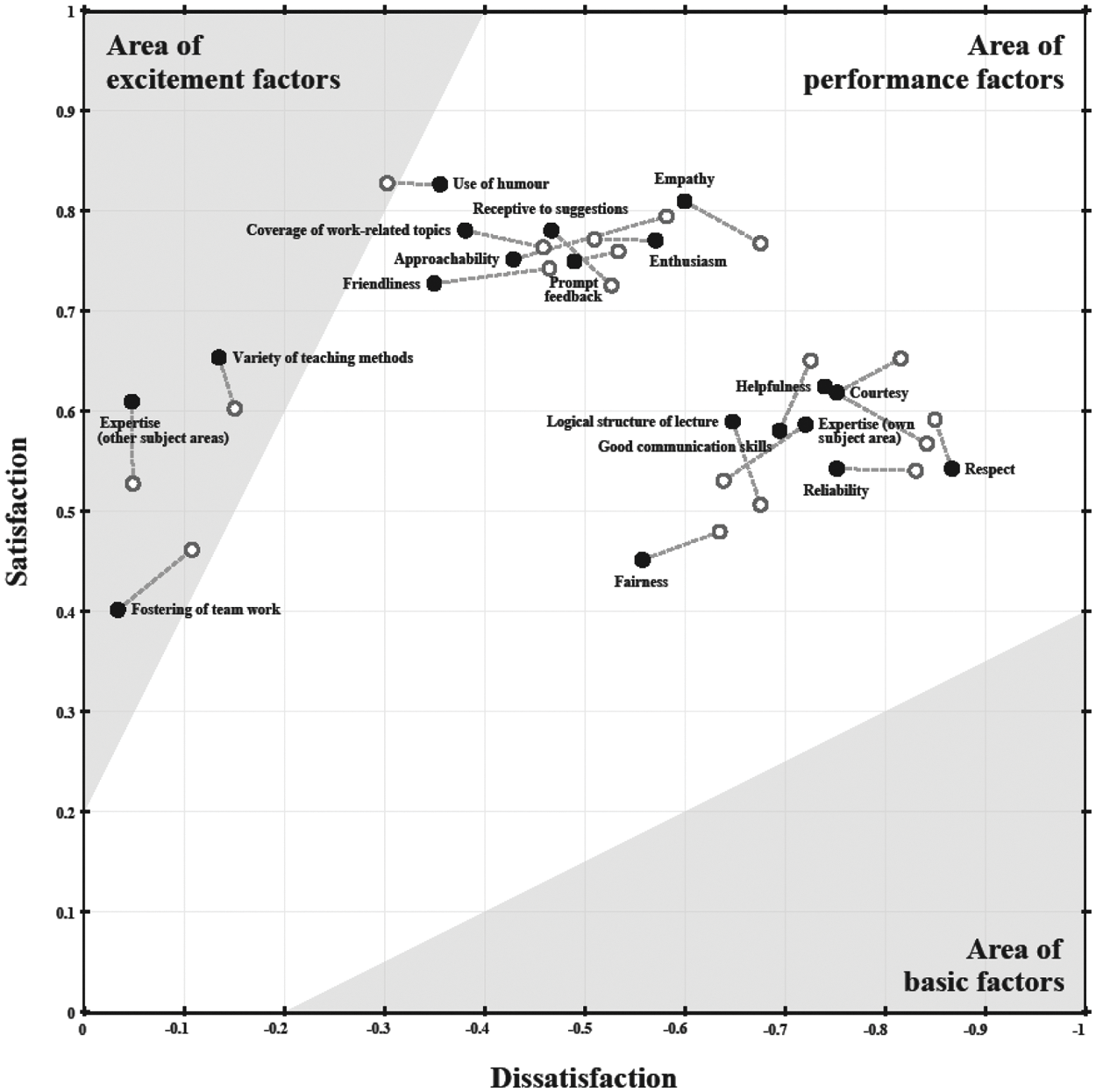
Comparison of Southwest (dark circles) and Midwest maps (light circles)
Comparison of Professor Characteristics Leading to Satisfaction (Sat) and Dissatisfaction (Diss)—Southwest (SW) and Midwest (MW)
To test the hypothesis that the groups are in fact the same across the variables, SPSS was used to compare the two populations by applying a two-sample t test for independent samples with a normal distribution and equal variance. The p value for dissatisfaction = .606 > .05, and the p value for satisfaction = .859 > .05. At 5% level of significance, the data do not provide sufficient evidence that the means of dissatisfaction and satisfaction at the universities are different. There is no significant difference between these groups of students across the 19 variables set out in Table 1 on the dimensions of satisfaction and dissatisfaction.
Summary of Findings and Implications
The findings provide a valuable insight into the nature of the phenomenon under investigation—the (dis)satisfaction of students with the attributes of professors. The Kano results especially stress the importance of personal interactions between students and professors during classroom service encounters. The revealed importance of personality factors underscores the strong need for marketing educators to maintain rapport with students, build strong relationships, and treat students with respect. Students prefer professors who sustain the human interface within the learning environment (Faranda & Clarke, 2004) and who get along well with them (Foote, Harmon, & Mayo, 2003). Although the role of rapport has been receiving increased attention in marketing education (e.g., Faranda & Clarke, 2004; Granitz et al., 2009) and (services) marketing literature (e.g., Gremler & Gwinner, 2008) more recently, this study illustrates (a) that there is a set of multiple attributes that professors need to possess for satisfying student–professor classroom encounters, (b) which attributes delight students, (c) which attributes are linear, and (d) which attributes are fundamental for professors to include in the learning process if student satisfaction is to be achieved. The Kano model of satisfaction is therefore a useful tool in examining the issue of student satisfaction with the attributes of professors in student–professor encounters.
Although many academics are, perhaps rightly, concerned with the heavy emphasis on student satisfaction, the fact remains that faculty member retention, tenure, and promotion decisions are at least partially affected by student evaluations of their teaching. Instructors’ ability to establish rapport with their students, as a driver of student and teacher success, has received growing attention in the marketing education literature. Perhaps enthusiasm, humor, and the ability to mix things up in terms of classroom delivery—those perceived personality traits of professors identified as delight elements in this study—are critical elements for building student–professor rapport that lead to better learning outcomes and educational experiences for both.
Students are not in the best position to judge whether a professor is knowledgeable in his or her particular field. The faculty hiring committees are. Clearly, marketing professors judge one another’s qualifications—degree granting institution, research, and professional experience—and act as gatekeepers in decisions concerning which faculty actually get to teach in the classroom. The results of the present study seem to affirm that students see these qualifications as absolutely essential prerequisites for those who purport to be the experts who teach them. Thus, little needs to be sacrificed—in terms of experience or rigor—as these are the minimum requirements for being hired and students are in no position to hire faculty. The present study indicates that students have left it to the professors to be in control of course content.
However, this study suggests that, while knowledge and mastery of subject matter are necessary qualifications for classroom success, they are not sufficient to guarantee a truly excellent classroom experience for students or optimal results on teaching evaluations for professors. Students also expect their professors to be the human interface that translates abstract, complex concepts into digestible lessons. At least for this generation of students, this can be accomplished by engaging them through effective use of real-world examples accompanied by appropriate doses of humor and tempered with empathy.
For some professors, the ability to establish rapport and translate difficult material into accessible lesson plans come naturally. For others, these skills develop more gradually over time. The goal should not be to hire a particular personality type, nor should it be to change or form instructors’ personalities. Rather, faculty development efforts should focus on assisting professors—throughout their careers—develop the skills and techniques to help them forge and maintain rapport with their partners in the education endeavor—the students.
Although many bristle at the thought of student satisfaction as an intrusion into the domain of the professoriate, there is yet an even greater threat: moving to a completely online, impersonal model of self-study/instruction. Many professors argue that such an approach removes the personal interaction between professors and students that is so critical to learning. This study provides strong evidence that maintaining that personal connection matters very much to students and makes a significant, positive difference in their educational experiences.
Limitations and Directions for Further Research
Further research studies should improve knowledge of this topic. Although this study was conducted with undergraduate students, what is now needed is similar research with different sample populations from different regions in the United States and different countries. Results from these studies could then be compared and differences and similarities revealed. Initial results from a study currently being conducted by the authors in the United Kingdom are similar. Students mentioned four delighting factors that were the same as in the United States (“Fostering of Team Work,” “Expertise in Other Subject Areas,” “Variety of Teaching Methods,” “Humor”) and in addition “Friendliness,” which was close to the area of excitement factors in the U.S. maps. Furthermore, the same attributes were closer to the area of basic factors and “Respect” also had the strongest impact on student dissatisfaction. These results can be seen as yet another indicator of the reliability of the current findings.
Researchers interested in the measurement of service quality and satisfaction in higher education should also take the perspectives of other stakeholders (e.g., families, the government, and faculty) into consideration as well. Thus, fellow researchers could investigate whether student perceptions differ greatly from what other stakeholders believe students want. In this context, first results already indicate that a perception gap exists (Swanson & Frankel, 2002). Fellow researchers could conduct research using Kano questionnaires to both students and their professors. Researchers could then compare the results to highlight different views. Insights gained should help make professors aware of differing perceptions and serve as a basis for continuing development and improvement.
Johnson, Herrmann, and Huber (2006) and Thompson, Hamilton, and Rust (2005) found that customers experience quality attributes differently over time. Similarly, Kano (2001, 2006) showed that attributes are dynamic and not static. In particular, he found that for some products, such as the TV remote control, product attributes have a life cycle with excitement factors deteriorating to performance factors and then basic factors over time. Attributes may start as indifferent factors and then, over time, develop to be excitement factors before they deteriorate to performance and then finally basic factors.
In a service context, a similar life cycle exists. Attributes of newly introduced services can delight customers at the beginning of the life cycle but become expected over time. For example, Nilsson-Witell and Fundin (2005) found that after using an e-service (online ordering of cinema tickets) five or more times customers perceived the service as a performance or even basic factor. According to Löfgren and Witell (2008), the life cycle of quality attributes concept “is one of the most interesting and fruitful developments of the theory of attractive quality” (p. 72). Thus, fellow researchers could investigate if characteristics of professors also follow this lifecycle and what may delight students at the beginning of the life cycle but become expected over time. By gaining insight into what students perceive as satisfying attributes and how these may change over time, professors will be in a better position to have more satisfying student–professor classroom service encounters and may help avoid negative Student Evaluation of Teaching outcomes.
Concluding Statement
The present study revealed the attributes of professors desired by students during student–professor classroom service encounters. However, the importance of knowing what students desire in the service encounter is not the same as acquiescing to all student desires. Rather, more important, clearly articulating expectations and communicating and delivering course content could help professors provide excellent service outcomes and help students learn that would then benefit all stakeholders while also avoiding negative SET outcomes that continue to have a significant impact on retention, tenure, and promotion decisions.
However, students need to be made aware that as partners they also have to take responsibility for their learning experience. For this purpose, universities have to inform students about their roles and what is expected of them. In this regard, Askehave (2007), who analyzed university prospectuses, pointed out that education institutions are competing to offer innovative service offerings to “demanding clients on the look-out for the best possible university experience” (Askehave, 2007, p.739). She, however, also criticized that fact that universities are not communicating that they are also expecting something in return from students. It is therefore of importance to tell students early on that they cannot only take (or consume) but also have to give (e.g., actively get involved and contribute in the classroom, learn independently). Following the emerging marketing and management framework of service-dominant logic (Vargo & Lusch, 2004, 2006, 2008a, 2008b, 2008c, 2011), students have to realize that service providers (e.g., professors) can only make value propositions and thus can only create the prerequisites for value. Value is also always co-created and experienced in a certain (social) context (Edvardsson, Tronvoll, & Gruber, 2011). We hope that fellow researchers build on our findings and develop further studies to investigate the influence of professor characteristics on student satisfaction and dissatisfaction.
Footnotes
Declaration of Conflicting Interests
The author(s) declared no potential conflicts of interest with respect to the research, authorship, and/or publication of this article.
Funding
The author(s) received no financial support for the research, authorship, and/or publication of this article.