







Abstract
Despite the growing literature dealing with social media marketing (SMM) in small and medium-sized enterprises (SMEs), one area that has not been fully explored is the creation of the content itself. SMEs typically do not have the same resources available that larger companies possess. Therefore, they have to find alternative ways to compensate for this weakness. This study analyzes SMEs’ SMM content creation, specifically on Facebook. By first scanning existing literature for essential factors for content creation, a theoretical foundation for the empirical part is presented. A qualitative approach was applied through the use of semi-structured interviews with eight SMEs. The findings suggest that it is difficult for most SMEs to efficiently use available resources, but also that minimal resources are required to create engaging content. Moreover, SMEs are typically aware of the majority of elements that influence content creation, at least to a certain extent, and that they should have established processes and routines to overcome the burden of limited resources. The study concludes with directions for future research and practical recommendations.
Introduction
In an essay written over two decades ago, Bill Gates (1996) stated that “content is king”. Gates described that the “broad opportunities for most companies involve supplying information or entertainment” and that “no company is too small to participate” (para. 4) – therefore, presenting a unique opportunity for SMEs to participate in marketing activities. Today, individuals live in the digital world that has been developed over the past decade. A growing number of companies now integrate these people in the co-production of brands, experiences, design, marketing strategies, and social media marketing (Zwick, Bonsu, and Darmody 2008).
Social media (SM) was initially built as a communication platform for friends but has become a global phenomenon since the launch of Facebook in 2008 (Boyd and Ellison 2007). Nowadays, SM “[…] has the potential to include numerous technologies with social elements at their core.” (McCay-Peet and Quan-Haase 2017, p. 17). It “includes a variety of technologies from video/teleconferencing tools such as Skype and online media repositories such as Flickr, to microblogging tools like Twitter and social networking sites like Facebook” (Gruzd, Staves, and Wilk 2012, p. 2341). SM enables companies to communicate and engage with their customers actively, and customers can communicate with each other. The growing cultural acceptance of social media in general but especially as a marketing tool for business ensures great social significance (Arvidsson 2008). As a consequence, companies are influenced by macro trends (Layton and Grossbart 2006) including the emergence of SM, new platforms and their customers that can be found on these networks and competitors using SM, etc. As such, SM can be regarded as a macro phenomenon that leads companies to communicate with their customers in novel ways.
Traditionally, marketing in SMEs can be problematic (Krake 2005), especially when new technologies are involved (Street and Meister 2004). Not only the direct business environment, but also the owner’s abilities and the lack of available resources play a significant role (O’Dwyer, Gilmore, and Carson 2009). Furthermore, some SME managers have a very limited knowledge of marketing and its applications (Moriarty et al. 2008). For SMEs, this new technology offers a unique opportunity to attract more customers at no or relatively low costs (Schmengler and Kraus 2010). In recent years, SMEs have begun to realize the potential impact of SMM (Gümüs and Kütahyali 2017), but still face challenges in effectively exploiting them (Choi and Hutchinson 2014). Many problems occur at the implementation stage, where barriers and limitations have to be overcome (Çalli and Clark 2015). Recent studies highlight the importance of creating rich content to attract attention (Öztamur and Karakadılar 2014) but also note that creating rich content is a significant challenge for SMEs (Broekemier, Chau, and Seshadri 2015).
The importance of content is frequently highlighted (Eggers et al. 2016). However, few studies consider content creation, the effort and resources the content creation process takes, or what alternative tactics can be employed. Within an SME environment, insights from such studies could be significant. While already lacking resources (Jones et al. 2014), SMEs need to identify the most effective and efficient methods to generate and share content. Further detailed research into content creation is required. Focusing on SM and SMM as a societal trend and their interactions with marketing systems applied in SMEs, this study seeks to identify how resources affect content creation and investigate which methods SMEs apply.
Social Media Marketing: Literature Review
Social Media Marketing: Definition and Objectives
SMM itself is an older phenomenon than it seems, beginning with the launch of LinkedIn in 2003. However, social networks (SNs) started to gain popularity since the beginning of new platforms that were meant for a broader public (Pradiptarini 2011). Typically, SMM is defined as “a series of techniques which target social networks and their users to increase brand awareness or to advertise a certain product. Marketers perceive SMM as more targeted advertising. For this reason, it is considered as being highly effective in the creation of brand awareness.” (Bija and Balaş 2014, p. 159). As such, this technology allows businesses to promote products and services, provide instant support, and to create an online community (Zarrella 2009). SMM is also related to relationship marketing, a form of marketing where the SME is required to change its mindset from “trying to sell” to “making connections” as today’s customers are more powerful and busy (Gordhammer 2009). Therefore, according to the communication model “Many-to-Many” (Hoffman and Novak 1996), companies should be available in as many communication channels as possible.
Content Creation Process for Social Media in the Context of SMEs
The purpose of social media use, in this case, is for marketing and Customer Relationship Management (Harris and Rae 2009). The initiation of the process of content creation on SM is typically triggered by certain events or activities. Then, SMEs decide on which SMM tactic they use and start to create content while considering various factors to different extents. The process ends shortly after the content’s publication.
Few studies have explored the target audience and use of social media by SMEs (Cragg, Caldeira, and Ward 2011), which represent a significant proportion of modern economies. For example, SMEs account for about 99% of firms in the European Union, generating more than 70% of employment (Nieto and Santamaría 2010). In the U.S., SMEs produce around 39% of the country’s gross national product (GNP) and generate about two-thirds of all new jobs (Bruque and Moyano 2007). Thus, “SMEs are the engine of the economies of many countries” (Bruque and Moyano 2007, p. 241).
In the context of the SME sector, this process of SMM content creation is particular. From one perspective, SMM represents an opportunity for SMEs to attract customers at a relatively low cost and increasing numbers, are starting to adopt this marketing technique (Gümüs and Kütahyali 2017). By contrast, despite their willingness to adopt SMM, SMEs face challenges maximizing their usage (Choi and Hutchinson 2014) which typically stem from SMEs’ unique characteristics, regarding resource access and marketing (Carson 1990). These limited resources influence SMEs’ content creation processes and determine their SMM content.
Kozinets, Hemetsberger, and Schau (2008) suggests that less than 1 to 2 per cent of visitors to a Web site will initiate further activity and originate a more formal and extensive form of “content”. However, the definitions of the term “content” remain informal and fuzzy. Definitions are not precisely clarified and fail to clarify what particular form of content is valued by groups, companies, or society.
SMEs’ limited financial, time, human and marketing knowledge resources can constrain SMM content creation as these limitations are a common barrier to new technology adoption, such as the initiation of SMM (Street and Meister 2004). This new dynamic marketing environment requires a dialogical communication style, continuous attention, and content creation. Companies typically underestimate the intensive labor and time required for content creation, (Gilmore, Carson, and Grant 2001). Therefore, marketing in SMEs is likely to be informal, unstructured, spontaneous, and reactive. This lack of resources may, therefore, be a reason why SMEs are not able to fully adopt digital marketing channels (Gilmore, Gallagher, and Henry 2007).
Wamba and Carter (2016) illustrate that larger companies are more likely to use social media tools than SMEs, possess resources (more employees, larger budgets, etc.) that may enable them to devote further attention to recent technological developments. They also support that younger managers are more likely to adopt social media tools than older managers are, which is consistent with the relevant, extant literature. Moreover, younger generations are more likely to use Internet-based innovations than older generations. Finally, Wamba and Carter (2016) suggested that industry sectors affects the adoption of social media tools. In particular, manufacturing companies are more likely to implement such tools than firms from other sectors. Key stakeholders in this sector typically advocate the implementation of technological advancements to improve efficiency and reduce costs.
Prior research has proposed various aspects regarding the extraction of contemporary marketing and co-creation to suggest glimpses into the evolution of capitalism and the marketing responses for dealing with related changes (Nason 1995). As well as focusing on SME’s resources regarding the implementation of SMM (Barnes and Jacobsen 2013; Wamba and Carter 2016), this study seeks to analyze how limited resources affect content creation itself. Thus, the limited resources referred to in this study reference limited time, money, SMM knowledge and human resources.
SMEs’ Facebook Marketing
Facebook is the most dominant SM platform and receives the most attention regarding SMM in SMEs (Derham, Cragg, and Morrish 2011). Researchers identify it as the most common platform (Barnes and Jacobsen 2013), the most effective (Barnes and Jacobsen 2013; Ainin et al. 2015) and user friendly (Augar and Zeleznikow 2013). Moreover, Facebook is easily compatible with the infrastructure of most SMEs, therefore increasing the probability of platform implementation (Odoom, Anning-Dorson, and Acheampong 2017). We selected Facebook for this study as it allows these communications to go beyond a private one-to-one conversation and enables a many-to-many conversation in less time with small entry barriers (Fink et al., 2018).
Facebook can facilitate SMEs business development and marketing, and their transition from push marketing towards a conversational model with the principles of customer engagement (Mizrachi and Sellitto 2015). Indeed, SMEs using Facebook successfully can derive direct and indirect value from their SMM content creation (Hopkins 2012). Direct value can be obtained in the form of transactions due to new customers and an increase in turnover and organization growth. Obtained “Likes” can turn into brand love, which can ultimately result in purchasing activities (Kudeshia, Sikdar, and Mittal 2016). Word-of-mouth, positive recommendations, and the influence of the Facebook community are part of the indirect value that can be gained from Facebook marketing. This also includes increasing brand awareness. Facebook is an essential tool for creating brand awareness and recognition (Nobre and Silva 2014).
Nonetheless, Facebook usage among SMEs varies (Galati et al. 2017), and there are challenges and problems to overcome (Mizrachi and Sellitto 2015). One such challenge refers to how to measure success (Mizrachi and Sellitto 2015). Analytical tools to measure the performance of Facebook pages exist and are offered by SM itself via Facebook Insights. Further analysis of Facebook and sales data are required for SMEs to benefit from technology-intelligence (Augar and Zeleznikow 2013).
Review Method, Process and Selection Criteria
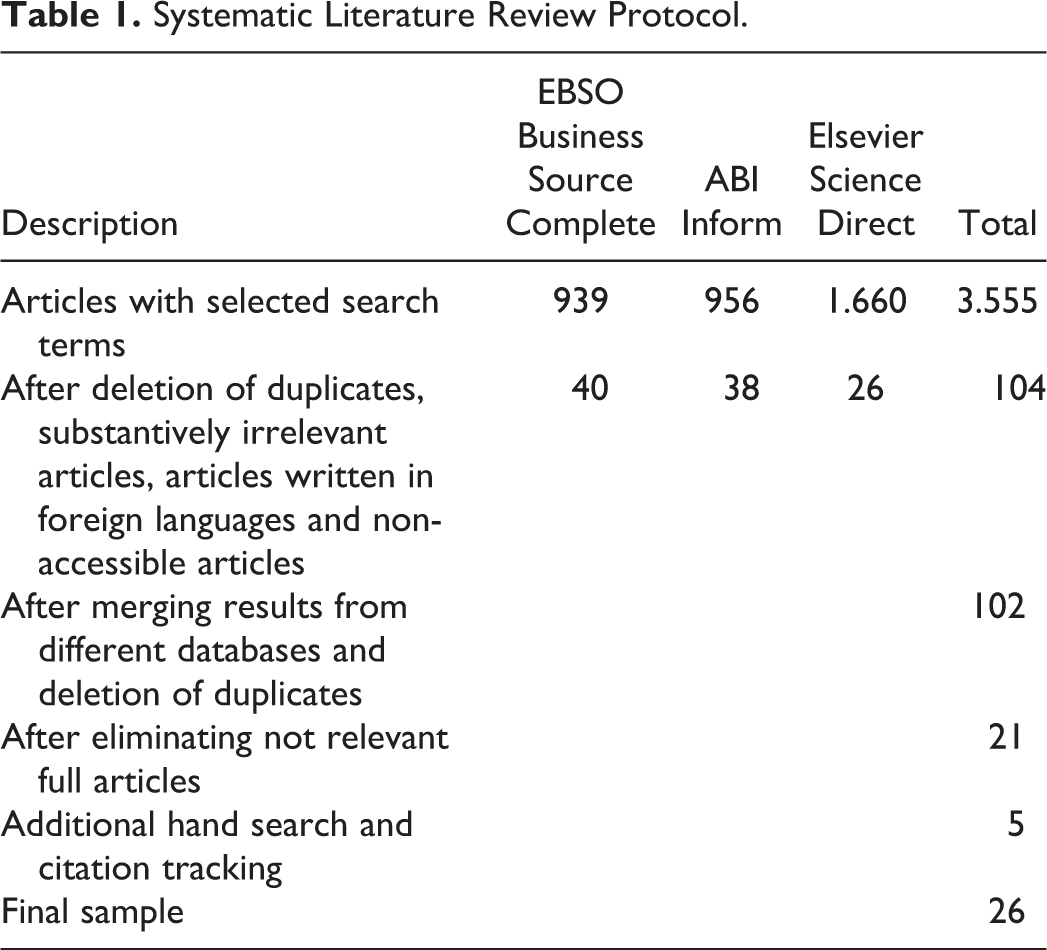
To obtain a critical overview of SMM, facebook marketing, and content creation, a literature review was undertaken. The databases SCOPUS and Web of Science were used, which include scientific journals, books, conference proceedings, and multidisciplinary research to identify contributions related to SMM and content. SCOPUS contains published articles from EBSCO, Thompson Reuters Web of Knowledge, ABI/Inform, and other search engines. The following keywords were identified and included in the first search: “Social Media” OR Social Media Marketing OR Internet Marketing OR Digital Marketing OR Facebook OR Social Networks OR Content* < AND > SME OR Small OR Medium-sized
Systematic Literature Review Protocol.
Elements of SMEs’ SMM Content Creation
Target Audience
To engage effectively with customers, it is crucial to know who they are. Marketers have to determine whom to target, and how (Weinberg and Pehlivan 2011) as to say that “in this day and age, the survival of small businesses can only be attained by understanding and keeping up-to-date with their target consumers and clients” (Webb and Roberts 2016, p. 66).
However, this might represent a challenging endeavor as SM managers face difficulties to define the target audience of their Facebook page and create content accordingly (Mizrachi and Sellitto 2015). Facing these difficulties, businesses sometimes opt to focus on “a more general audience in an attempt to achieve a broad reach of fans” (Mizrachi and Sellitto 2015, p. 74).
Customer Engagement
Many studies dealing with SM content and its creation discuss the importance of customer engagement (Brooks, Heffner, and Henderson 2014; Kuofie, Gholston, and Hakim 2015; Öztamur and Karakadılar 2014). When customers can provide feedback, they feel more engaged. This feedback can occur in the form of criticism, compliments or suggestions, and gives customers a sense of community (Mangold and Faulds 2009) as they can create content themselves through, for instance, reviews, questions or answering posts (Broekemier, Chau, and Seshadri 2015).
Thus, focusing on relationship building instead of sales may ultimately increase the latter (Kuofie, Gholston, and Hakim 2015). The more in-depth relationship building through the creation of SM content seems to be important especially for SMEs with limited resources (Broekemier, Chau, and Seshadri 2015) as a good relationship with a customer leads to more frequent and higher quality conversations, which ultimately results in higher profitability. Furthermore, honesty and transparency showcased through SM can strengthen the relationship with the customer. Indeed, SMEs may gain value through customer engagement and content that contains information and knowledge as it may help to underline a company’s reputation and create trust, which, in turn, can create a competitive advantage (Stockdale, Ahmed, and Scheepers 2012). However, this creation of trust costs time and other resources and SMEs typically have limited resources. So, it may become a disadvantage when human resources and time are limited.
Content Quality
Groups of various ages, education, or economic statuses value different factors when determining the quality of created value (Ungerman and Myslivcová 2014). For economically active users, for example, speed and professionalism of information are important criteria; whereas users aged 13-29 years rather value a more flexible approach. Additionally, the authors identify that factors such as information veracity and clarity, provision of solicited information only, information completeness, and regular updates influence the quality of content. Moreover, the “richness” of content, defined as “depth and detail of two way information between the company and the customer” plays a crucial role for content quality (Öztamur and Karakadılar 2014, p. 515) as well as the degree of novel, original and insightful information as this raises the chances of being shared among more people (Bija and Balaş 2014). Prior results found that SMEs are characterized by limited financial and human resources (Bengtsson and Johansson 2014). They also are marked by poor access to IT knowledge and that they will consequently face challenges when assessing and implementing new technologies (Bruque and Moyano 2007).
Content Schedule
Multiple authors found that one of the significant challenges for SMEs is to regularly publish content (Broekemier, Chau, and Seshadri 2015; Toombs and Harlow 2014). One way to overcome this hurdle is by creating a content schedule, or SM plan (Broekemier, Chau, and Seshadri 2015; Torres and Nevin 2012). When employees are aware that they are expected to undertake certain tasks at a specific time in advance, they can incorporate them into their workflow. Having a clearly defined content schedule also encourages employees to engage in conversations regarding SMM regularly (Toombs and Harlow 2014). This can help to ensure that they have content to discuss when they encounter potential customers on SNs. In this SM plan, however, the aim and objective of SM campaigns should be outlined, and also the limitations and scope of the SMEs concerned (Torres and Nevin 2012).
Next, the timing of SMM content creation plays an important role (Pollák and Dorčák 2016). Posts between 8 p.m. and midnight attract the highest number of Likes. By contrast, content that is posted between noon and 4 p.m. receives almost 13 per cent fewer Likes than average (Pollák and Dorčák 2016). These might be the peak times of the day where large parts of the target audience are accessible, and when most of the SM activities should be scheduled. Regarding weekdays, the study concludes that posts submitted over the weekend receive about 20 per cent more Likes than posts submitted during the workweek (Pollák and Dorčák 2016).
Style of Communication
The style of communication and the tone of voice should be adapted to the characteristics of each platform, audience, and situation. It is vital to retain control of the “who, where, what and why” of the conversations and use of first-person language (e.g., I, We) can be an effective way to humanize and personalize the conversation (Ramsay 2010). Therefore, SMEs should consider the language they use for communication (Toombs and Harlow 2014) and to ensure they reflect their brand personality when communicating on SM (Ramsay 2010). Thus, SMEs are recommended to be sincere, friendly, and demonstrate their “human touch” when communicating with their target customers on SM (Öztamur and Karakadılar 2014). As this might not be straightforward, SMEs may need to consider hiring employees with strong writing skills to create meaningful content for SM (Webb and Roberts 2016).
The creation of regular content that is not only engaging, authentic, and reliable but also favorable to the business requires creativity, sincerity, and is presented in a storytelling manner (Öztamur and Karakadılar 2014). In contrast to large firms, SMEs are restricted by limited resources and creating regular content costs time and requires specific expertise, which most SME employees do not possess. Thus to attract the attention of existing and potential customers, some SMEs, display in-depth industry knowledge by offering appealing textual and visual stories and sharing personal information regarding their employees (Stockdale, Ahmed, and Scheepers 2012). Relatedly, they may post surveys, contests, and questions, hand out expert information or share news on different awards and prizes (Öztamur and Karakadılar 2014; Stockdale, Ahmed, and Scheepers 2012). Some firms decide to post interviews with SMEs in the same industry on their feed while excluding their rivals (Öztamur and Karakadılar 2014).
Moreover, SMEs often share high-quality pictures and videos (Öztamur and Karakadılar 2014; Stockdale, Ahmed, and Scheepers 2012) as images are the most engaging type of post on any SM site (Bija and Balaş 2014). Although it is vital to offer a variety of post-types like links, videos or texts, photos and also infographics offer the most value to customers because it is easier to remember something that can be viewed which increases the chances of the content being shared. Photos that can be shared include, for instance, photos of the company’s facilities or recent events on which people can comment on (Brooks, Heffner, and Henderson 2014).
Research Questions
This study examines SMEs’ content creation for SMM with a particular focus on the effect of SMEs’ resource limitations. Therefore, the main research question of the study reads as follows “How do SMEs create content for SMM while operating with limited resources?”. To answer this central research question, the study is guided by the following two sub-questions: (1) How do resource limitations affect SMEs’ content creation for SMM? (2) Which methods do SMEs apply when creating content for SMM and facing the constraints of resource limitations?
Methodology
Research Design and Data Collection
A qualitative approach was applied to explore SMEs’ SMM content creation. Qualitative methods are well suited to analyze new research areas by gaining novel insights through statements, behaviors, or motivations (Creswell 2014). Furthermore, to discover and understand the decisions and experiences made by SMEs’ SM managers, qualitative methods are more suitable than quantitative methods such as surveys. Qualitative research seeks to interpret social phenomena and therefore helps to answer this study’s underlying research question and to obtain a sufficiently detailed level of insight into the SMEs’ resource limitations or decisions (Hill and Tiu Wright 2001). In contrast, quantitative research is concerned with specifying the world in terms of observable physical phenomena, with a focus on the quantitative measurement of these phenomena and an emphasis on the need for objectivity and empirical, quantifiable data (Eggers and Kraus 2011).
To gather the data, semi-structured, unstandardized interviews were conducted to obtain qualitative data using the interview partners’ narratives and direct quotations regarding their attitudes, beliefs, thoughts, intentions, actions, and experiences (Dana and Dumez 2015). Questions have been formulated beforehand based on existing questions used in similar works and presented in an interview guideline to provide a specific structure. Emphasis was placed on the creation of open-ended questions avoiding technical terms allowing the sharing of the respondents’ experiences and opinions without constrained alternatives (Yin 2009).
First, the data was prepared for the analysis, and the interviews, which had been audio recorded, were transcribed (Creswell 2014). The structure of the interviews was kept as logical as possible, initiating with some questions regarding the SM manager (interviewee) and the resources available for SMM tasks. After that, questions regarding the content creation process were raised. These ranged from the initiation of a new post to the choice of SMM tactics and the characteristics of SMM content creation, ending with the publication of a post and monitoring of its success. Nevertheless, the question order and structure were varied within individual interviews, depending on the natural development of the discussion. This approach provided flexibility and further insight to be obtained whenever the interviewer felt the need for follow-up questions.
Sample
Eight interviews were conducted with employees responsible for the management of SMEs’ SM account. To explore the research question, some specific selection criteria were chosen: Firms fall under the SME category by the number of employees Firms have to be present and active on Facebook; Firms must have more than 250 Likes on their page.
Following these criteria, the study sought to study SMEs, which, according to the European Commission (European Comission 2003), are firms with less than 250 employees. Moreover, given the aim of our study is to discover SMEs’ SMM strategies on Facebook, these SMEs needed to be present and actively engaging on Facebook. Therefore, with criterion 3, the “250 Likes” requirement, the goal was to exclude SMEs that exist on Facebook but did not invest sufficient time or effort in SMM to provide answers that lead to a satisfying conclusion of the research question.
Through a comprehensive search on Facebook, hundreds of potential candidates were identified. SMEs were selected so that the final sample of eight SMEs demonstrated heterogeneous characteristics to obtain a cross-section of different SMEs, who are a heterogeneous group (Chua, Deans, and Parker 2009). The interviews lasted on average between 45-60 minutes and took place at the partners’ offices. Only SM managers were interviewed who were all key informants, possessing excellent knowledge on the studied topic as well as their SMEs overall history and situation.
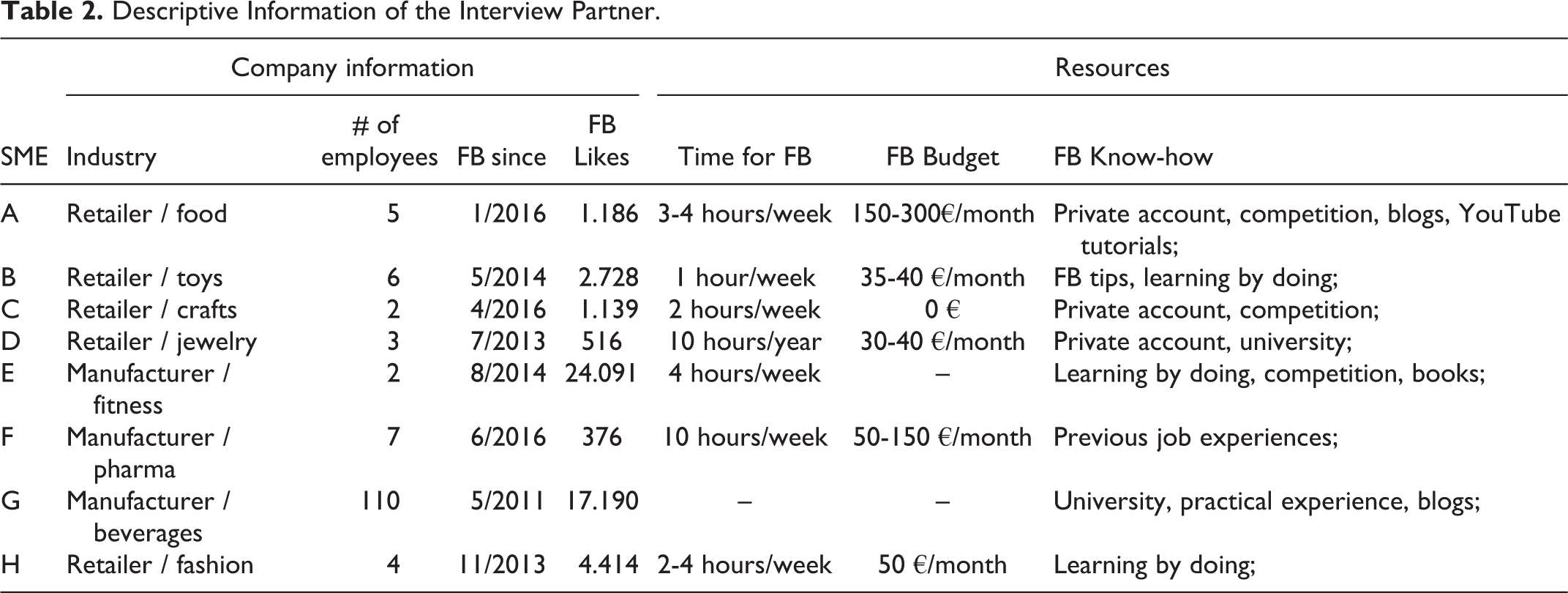
Table 2 shows the descriptive characteristics of the interviewed SMEs, which were all operating in German-speaking countries, including Austria, Germany, Liechtenstein, and Switzerland. Five of the eight SMEs are retailers, while the rest are manufacturers, representing a variety of different types, ranging from crafts to toys and fitness to pharmaceutical. Seven of the eight firms employ less than ten people, while the largest has 110 employees. One of the eight SMEs started Facebook as early as 2011, but the large part started to be present from 2014 onwards. The number of Likes ranges from 376 to 24.091, with a median of 1.957 Likes. Most of the companies set aside weekly hours for SMM, between as little as one hour and up to ten hours a week. One SME stood out by investing only ten hours a year on Facebook, meaning about eleven and a half minutes a week. Not all of the interviewed SMEs wanted to reveal their budget, and several do not even provide budgets for SMM. However, five of the eight SMEs have monthly budgets used to run sponsored ads, ranging from 30 to 150 Euros a month. Additionally, the majority of interviewees stated that they did not have any formal SM education, but instead acquired the necessary skills through their own experiences on the job or observations of their private account. Surprisingly, only three mentioned the usage of blogs, internet articles, or YouTube tutorials to increase their knowledge about SMM.
Descriptive Information of the Interview Partner.
Data Analysis
In preparation for data analysis, the recorded interviews were transcribed in German. After transcribing the interviews, they were analyzed for reoccurring patterns and themes regarding the research- and its sub-questions. Using NVivo 11, a coding system was created to sort the data and reduce it down to the essential parts (Miles and Huberman 1994).
Findings
This section presents the findings regarding the elements that determine the optimization of SMM content creation in the context of SMEs. Particular attention was paid to the elements previously identified based on the systematic literature review and emergent themes identified from the analysis, including target audience, customer engagement, content quality, content schedule, and style of communication.
Resource Limitations Affecting SMEs’ Content Creation for Social Media Marketing
Lack of Time
One of the resources that are limited in SMEs is the resource of time. The respondent SMEs have particular problems with the regular creation of appropriate rich and entertaining content due to time constraints and overlapping roles. Typically, SME owners are in charge of the creation of SMM content and thus SM managers at the same time. Having multiple tasks and roles simultaneously, SME owners hardly find an appropriate amount of time to ensure that enjoyable and entertaining content is regularly created and published as SME D reported, “I do it myself, so I hardly find any time to do it. My initial goal was to post every other week or every month, but I just do not find the time” (SME D). SME B similarly noted, “My goal is to post once a week, but I just cannot do it. It is due to lack of time, for sure. It is not only about writing the post but also taking the time to think about what makes sense.” (SME B). Despite its importance, SMM is thus often just another additional task next to several other duties, which are sometimes considered as more important, and the time and effort needed for the creation of meaningful content are often underestimated.
Lack of Knowledge
The findings reveal a particular lack of knowledge when it comes to two issues. First, the question of how to actively engage with customers is not always easy. Six out of the eight respondent SMEs are insecure about how to involve their customers correctly: “We try to, but sometimes it is hard. You ask them to write a comment, and nothing happens…” (SME B). Participation of customers is often only “about average” (SME E). It is noteworthy to see that the SMEs with the most Likes engage with their customers with more confidence: “We ask our followers to tag others or ask questions. When we post a food picture, for example, we ask something along the lines of ‘what did you have for dinner tonight?’ to involve them” (SME E).
Second, creating vibrant and entertaining SMM content is challenging as it can take much time and requires inspiration. SME C pointed out: “Sometimes you sit down, and you get it within a minute, but the next time you sit there for an hour, and you have no clue what to write. (…) I think because we often use colloquial languages in our lives, it is hard to write in a slightly more formal way without sounding too formal” (SME C). SME F further admits, “Sometimes my own content bores me. I think along the lines of ‘that is boring, again something like that?’ But in reality, outsiders probably do not even remember the last post.” The respondent SMEs are thus aware of the challenging character of SMM content creation.
How to Ensure Regular SMM Content Creation
Understanding the Respective Target Audience
Facing a lack of time for regular SMM content creation, it helps to understand for whom the content is created and who is the particular target group. In this study, two extremes were observed concerning the understanding of the target group. While one SME monitors statistics over a time duration and adjusts their content creation strategy accordingly as they know their audience’s exact demographics, another studied SME only makes vague estimates regarding their followers.
The remaining six SMEs are somewhere in-between with their decent understanding of their target group. They know the age, social status, and gender of the customers they want to attract, as SME A and B noted:”Our ideal target group is between 30 and 35 years old, young families or just young people who are just starting out their professional lives” (SME A) and “Women between 20 and 50-55, young mothers, men as well, but they are usually the ones working during the day, so we tend to target women” (SME B). Although these SMEs’ insights are not based on exact data or insight tools, they seek to create their content according to their information on the characteristics and behavior of their target audience: “Because I am about the same age as my target audience, I just try to be myself and create for people who are like me, without disguising myself too much. Casual and easy” (SME A) and “On some posts, I decide to target mothers with kids aged 3-6, and on others, I post something that a 14-15-year-old kid might like” (SME B). In doing so, the SMEs save precious time as content is tailored to their respective target audience more effectively.
Using Available Support Tools
Furthermore, SMM support tools can facilitate the efficient and appropriate creation of SMM content since these tools offer insights into the characteristics and behavior of the target audience. Despite the availability of Facebook’s Insight tool, which helps to gather valuable information about target groups, only SME E specifically mentions its usage: “You can check on Facebook Insights when your target group tends to be online” (SME E). Although this tool might result in a time saving, most of the respondent SMEs are either not aware of the existence of this tool or not familiar with the efficient use of it. Only SME E makes use of data accessible via Facebook’s Insights tool: “I try to post at times where our statistics over the last two years have shown that it is best to post. This is basically always at noon and in the evenings at about 6 pm. In-between these times, there are holes.” The insights gained through this support tool thus help to ensure timely and regular content.
How to Establish Customer Engagement in SMM Content Creation
Actively Engaging with Customers through Giveaways, Prizes, and Tags
By far the most common and effective way of engaging with customers is by organizing contests with free giveaways, which all studied SMEs did at least once, and all were satisfied with the results: “We have done it once so far. It turned out to be very popular” (SME A) and “We do that at least once a month. (…) New Likes, huge reach compared to other posts” (SME E). Similarly, SME B tries to incentivize customers by offering a small prize to one of the followers who provided feedback: “I tried to combine it, so people are inclined to answer. But I should not have done it that way – if the customer knows he can win something, he is more prone to provide positive feedback, in my opinion”. SME G seeks to engage customers by interacting with them and asking them to tag friends: “We sometimes ask how our new products taste, (…) more as a way to interact than to promote new products”. This SME also occasionally asks their followers to “tag their friends to join a party”, which is appropriate for its target group.
Actively Involving Customers and Employees into SMM Content Creation
All respondent SMEs know about the importance of including media in their content, especially pictures. Given their constraints in time and financial means as well as their intent to involve customers actively into their SMM content creation, the SMEs ask, among others, their customers to take pictures and post them online: “Our customers regularly post pictures of our products on Instagram, tagging us. I screenshot these pictures and collect them to use them for Facebook” (SME E). In addition to customers, SMEs also include employees in their content creation: “Everyone is part of the process, even my employees. They should take pictures and save them onto our cloud, and then I can browse through them and see what I can use.” (SME A). In order to create content, SMEs thus actively involve both external stakeholders, i.e. customers, as well as internal stakeholders, i.e. employees.
Creating Vibrant and Entertaining Social Media Marketing Content
Ensuring the Quality of Created Content
To maintain a certain quality standard, many SMEs perform a double check of their content concerning spelling errors before publishing a particular post since those errors can be embarrassing and reveal a lack of professionalism: “I always check for spelling errors. If it happens, it is embarrassing, unprofessional. I also check if the text makes sense and if it fits with the rest of the post” (SME F) and “My wife or an employee checks it. Often I am in a hurry, and I write ‘ß’ instead of ‘ss’ or something like that” (SME B). SMEs thus highly value the grammatical and spelling correctness of their posts.
Furthermore, SME A and B mention that the quality of posted pictures is “obviously very important. Pictures have to trigger emotions, moods, must have sex appeal, must be of high quality, because the picture is decisive in terms of getting a Like or not. If the picture is bad, the rest does not matter” (SME A), and “Quality of product pictures must be great. Otherwise, they can just go to another cheap store” (SME B). The other SMEs find an adequate quality is often enough for Facebook: “If we just take a snapshot of our warehouse, a picture taken with our mobile phone is sufficient” (SME E) or “It is not necessary for the platform, as content quickly fades.” (SME F). Often, the entertaining value of a picture is more important than its quality: “It is important that the content is funny and entertaining. It does not need to be of the best quality. Sometimes it is even better and more authentic when the quality is not perfect” (SME G). Regarding media quality, opinions thus differ.
Organizing the Schedule and Regularity of Content SMM Creation
When it comes to the timing aspect of content creation, the studied SMEs consider what works best for them. The preferred times and weekdays amongst the SMEs, however, vary greatly, depending on customer preferences, type of product sold, or the industry. Taking into consideration the European culture of our studied SMEs, which were all operating in German-speaking countries, SM managers preferred to post SM content in the morning “between 8 and 9 o’clock, because everyone who is working is checking their Facebook feed (…)” (SME A). Also, “many people check Facebook during their lunch breaks, this is why I always post at noon or 6 in the evening, outside the work times and before prime time on TV” (SME C), “Sunday evening is a must. The SM usage is the highest then, which is understandable” (SME F). SME G, from the alcoholic beverage industry, posts “around 4, 5 in the afternoon, when it is time to buy beer” As well as “rather on the weekends than on Mondays”.
SME B differentiates types of posts for different days and times: “I like to do contests on the weekends, but other than that I do not really pay attention to the timing because my target group has a lot of time to be online”. According to SME H, timing has no real effect on the success of their content: “We have observed it a little bit. (…) It is very dependent on the post itself, it is possible for a post not to get any attention during the best times, and a post during bad times can work quite well too. We lack experience in this department”. SME D admits lacking knowledge by stating, “Sunday morning is probably different than Wednesday afternoon, but I do not know what is better, which is why I do not really care for timing”.
Choosing an Appropriate Style of Communication
All studied SMEs consider their word choice and style when creating content. Two of them use a generic style that fits the platform: “The text should not read like a newspaper ad. It should be Facebook adequate” (SME D) or “We try to write in a young, modern way, narrated in the second person” (SME A). SME C uses the second person to emphasize the personal touch of the message: “I try to talk to my followers directly, (…) for example ‘hello dear’, so it has a personal touch, almost in a friendly way. I also try to put myself in their shoes”. Two other SMEs change their style depending on the nature of the post and the characteristics of their target group: “In a natural, young way, I would say. We sometimes even use colloquial language that is our target group” (SME B), “It depends on the post. If it is a humorous one, I try to write in a casual, fun way. If it is something more traditional, with old pictures, I try to use a more formal language. (…) I adjust a little” (SME F).
Since most people on Facebook do not like to read long texts, the respondent SMEs keep them as short and uncomplicated as possible. They stated, for example, that they “try to not to use more than around 500 characters. (…) I do not like to read long texts either” (SME A) and “Nobody on Facebook likes to read long texts, besides a very few exceptions where it can work” (SME G). Another stylistic element that is currently employed is the use of smileys and emoji. All of the SMEs in the sample highlighted that “Emoji are important as well, to differentiate, to appear young” (SME A) and “I like to include some type of stars, hearts or emoji in my text.” (SME C). In particular, the use of emoji’s helps to get attention for the SMEs’ posts.
SME A presents examples of how to offer followers original and informative content: “We post a weekly ‘product tip of the week’ or our ‘favorite product of the week’ that also contains recipes for people to cook at home”. SME D states, “We do not just want to post pictures of a product but rather try to do something funny with it. (…) A personal touch is important, not just taking an already available product picture and reposting it”. SMEs G and F also try to entertain with humor: “Funny posts, this is also something that reflects my personality. I just think that is cool, saying things how they are, using sarcasm. I like that” (SME F) and “We try to entertain people, to make them laugh. If someone laughs because of our posts, they will probably give us a Like” (SME G).
Opinions vary concerning the content of pictures. SME D states, “Pictures with people in them work best. If there are all three of us in the picture, it gets more shares,” and SME H adds, “it is always good to include other employees. We try to include employees in our pictures if it makes sense”. By contrast, SME A and SME E prefer not to be part of the photos: “It happened once or twice, but we prefer to stay outside the pictures” (SME A), or “we completely stay in the background” (SME E). As far as other types of pictures are concerned, SME F reveals, “Beautiful pictures containing nature always work” and according to SME E real-life “behind the scenes” pictures are beneficial as “people on Facebook want to see the background processes. It can be a picture of the warehouse” (SME E). The interviewee continues, “these pictures are more successful than other posts. Even though you invest more time in other pictures, with better equipment and so on, but somehow, these ‘real’ pictures are always better. Also, people get to see behind the scenes, something they do not know” (SME E). “Behind the scenes” pictures can be an essential way to create value that is appreciated by customers.
SMEs also experiment with videos. While four SMEs produce videos themselves, others depend on partners to obtain product videos. For the SMEs who produce the videos themselves, resources are not a problem. SME A has already published a video, and another one is waiting for it to be published: “We filmed the picking of the winner from a contest we have organized. That was very popular. I have also already created a video on how to make chili ketchup. I filmed, cut, and edited it all on my smartphone! It is a great device. It can do anything a computer can” (SME A). SME C also posted a video using only a smartphone: “I filmed a little tour through our store, (…) using my iPhone. The quality was more than sufficient!” (SME C). One SME even went so far as to outsource video production to a platform: “We did a little explainer video, using the help of Fiverr. (…) I wrote the script, told them what the animation should look like, let them animate it, and then cut it myself. (…) The whole video cost us 400 Euros, doing it with the help of an agency would have cost a couple of thousand Euros. It is a good way of combating limited resources. It is like having an own little agency” (SME F). However, in some cases, the videos are not produced exclusively for Facebook, but other platforms like the company website. However, the interviewed SMEs still lack awareness and competencies as to how to utilize these tools to improve their SM presence effectively.
Discussion
Resource Limitations and SMEs’ Content Creation
In line with prior research, finding the time to create regular SMM content represent a challenge for SMEs (Brooks, Heffner, and Henderson 2014; Toombs and Harlow 2014) as some SMEs do not update and post regularly blaming their time limitations for this inability. It is noteworthy that among the SMEs that do not update regularly; usually, the owner himself is in charge of SMM, while SMEs with co-owners or responsible employees tend to have more time. This is in line with the recommendation that SMEs should have at least part-time SM employees (Brooks, Heffner, and Henderson 2014). We found no evidence for the preparation of SM plans or content schedules (Broekemier, Chau, and Seshadri 2015; Toombs and Harlow 2014; Torres and Nevin 2012) which highlights a lack of SME knowledge concerning the proactive handling of SMM.
Methods Applied by SMEs to Create Content for Social Media Marketing
Several authors noted the importance of knowing the respective target audience in the SM environment for SMEs (Mizrachi and Sellitto 2015; Webb and Roberts 2016; Weinberg and Pehlivan 2011). Although most of the respondent SMEs have a basic understanding of their target group, they typically base their understanding on assumptions rather than on data which may assist them in overcoming the difficulty of defining their target groups (Mizrachi and Sellitto 2015). The fact that only one SME actively uses Facebook’s Insights tool demonstrates that the usage of available evaluation tools is still somewhat unknown but can be of value for SMEs to ensure regular SMM content creation (Mizrachi and Sellitto 2015; Nakara, Benmoussa, and Jaouen 2012). Relatedly, SMEs underuse these available insights and tools concerning the timing of their posts. Even though all SMEs are aware that timing can influence their content creation and its success, most SMEs use previous experiences rather than actual data to obtain specific times when they prefer to post. Only one of the respondent SMEs uses Facebook’s Insights tool to base their timing decision on analyzed data. This lack of knowledge is surprising since a more concrete answer is only a few clicks away and does not take significant time or money to incorporate (Bonsu and Darmody, 2008).
Engaging with customers on SM is an important aspect of SMM (Brooks, Heffner, and Henderson 2014; Kuofie, Gholston, and Hakim 2015; Öztamur and Karakadılar 2014). The goal is to offer customers a chance to provide feedback to criticism, compliments, or suggestions (Mangold and Faulds 2009). In practice, however, the SMEs with a smaller group of Facebook followers (< 3.000 Likes) tend to be hesitant to involve customers actively as they do not expect much participation as long as they do not offer anything in return. Therefore, for our respondent SMEs, an efficient way to engage with customers on Facebook are contests with free giveaways. All studied SMEs have applied this practice and reported success, stating that it helped them to increase the number of Likes and reach a broader audience. The SMEs with the largest number of followers do not seem to have a problem interacting with customers by asking questions etc. However, none of the respondent SMEs effectively engaged with their customers by establishing themselves as experts and answering questions regarding their business, or queried their practices with the goal of initiating active conversations as suggested by Brooks, Heffner, and Henderson (2014).
All of the respondents SMEs are aware that they need to create rich and original content that is adequate for the platform. Rich content means in-depth and detailed information (Öztamur and Karakadılar 2014). Here, however, none of the SMEs’ content is especially detailed. Posts are typically short, meaning that there is not too much space for detailed information. Furthermore, five SMEs mentioned they do not include information like prices in their posts, as this is not appropriate for Facebook.
All studied SMEs acknowledge the importance of visual media in their content (Bija and Balaş 2014). Supporting prior research, respondent SMEs state that the quality of included media should be high (Öztamur and Karakadılar 2014; Stockdale, Ahmed, and Scheepers 2012). Seven of the SMEs, however, agree that it is not necessary to use uber-professional equipment to prepare visual media. Typically, taking pictures or recording videos with a smartphone turned out to be of sufficient quality, suggesting that it is now easier than ever for SMEs to create a variety of content with relatively limited financial resources. As such, limited resources are not perceived as a problem, as SMEs work their way around them. Regardless of if they take the photos themselves with smartphones, ask fellow employees, receive them from the organizations they work with or even use external support by drawing on their network, resources are not an issue in this regard. Sometimes, videos are even produced by the SM managers, again using relatively low-cost equipment only. It is noteworthy that the only SMEs in the study that has not produced their videos yet are the ones whose owners are responsible for SMM (Brooks, Heffner, and Henderson 2014). No respondent SME has created an infographic which may offer value to the followers (Bija and Balaş 2014), suggesting a lack of knowledge concerning the existence and the creation of this type of content.
Focusing on an appropriate style of communication, the SMEs sought to eliminate potential spelling errors, often letting people check their posts before publishing it or saving it for a later review. Further, they consider the common tone and style of the particular SM channel, in our case Facebook, when writing texts and tailoring their posts to their specific target group by taking into account the conversation’s “who, where, what and why” (Ramsay 2010). Additionally, SMEs consider their word choice and style in their content. Regarding stylistic elements, SMEs attempt to keep up with trends, often using emoji and smileys functions to enhance their posts, to differentiate themselves or to give the post increased visibility. SMEs also know from their own experiences that hardly anyone likes to read long texts on Facebook and in consequence, keep them short. Resources do not seem to a problem for SMEs in this regard. However, respondent SMEs note the time it takes to write an adequate text should not be underestimated and that it is often the most challenging activity to produce something of the required standard to post.
Conclusion
Lessons Learned
This study sought to understand how SMEs create SMM content – specifically for Facebook – while operating with limited resources. In this regard, the study focused on two sub-question, reading (1) How do resource limitations affect SMEs’ content creation for SMM? (2) Which methods do SMEs apply when creating content for SMM and facing the constraints of resource limitations? In conclusion, the resources that hinder SMEs to improve their SMM content creation are limited time and knowledge. The SMEs’ lack of time concerns primarily the regular creation of appropriate content, which requires time for inspiration, reflection, and compelling review. The lack of knowledge refers specifically to the SMEs’ constrained understanding of how to effectively establish customer engagement and safeguard the creation of vibrant and entertaining SMM content. Typically, SMEs use their available resources to create engaging content for their target groups, and they find ways to work around potential resource constraints. When it comes to the methods applied to deal with these constraints, the study noted that SMEs find different ways to deal with their resource and knowledge limitations. Based on the frequency of mentioning, the identified methods are the following. First of all, for the studied SMEs, the most critical method is to create a comprehensive understanding of the target groups’ characteristics and behavior enabling the efficient creation of appropriate content for the target audience. Secondly, they realize that they need to use available support tools to enable a more efficient process of appropriate content creation. The third most frequent method is to actively engage with customers through giveaways, contests, prizes, etc. Fourth, we observed that the SMEs actively involve customers and employees into SMM content creation through the publication of pictures, for instance. Fifth, they ensure the quality of SMM content as well as its regular publication. Lastly, SMEs make sure to choose an appropriate style of communication.
With more considerable effort and knowledge, SMEs would be able to optimize their content creation by relying more on statistical data than their feelings and therefore being able to reach and engage their target audiences more effectively, at the right times, with the appropriate content.
Theoretical Contributions
This study contributes to existing literature highlighting the challenging character of SME marketing (Krake 2005), principally when it comes to the use of new technologies (Street and Meister 2004) such as SM. As previously noted in prior research (Moriarty et al. 2008; O’Dwyer, Gilmore, and Carson 2009), a lack of resources such as the owners’ time and their knowledge of and experiences with new marketing methods as well as new technologies affect their SMEs’ SMM content creation. The study also shows that SMEs face difficulties to effectively exploiting these new marketing methods (Choi and Hutchinson 2014) by creating rich content is a major challenge for SMEs (Broekemier, Chau, and Seshadri 2015).
Practical Recommendations
Based on this study’s insights, several actions for SMEs to create enhanced content with their limited resources are proposed. Regarding the target audience, SMEs should seek to use available data insight tools to understand their target group’s characteristics and preferences, which may help to adapt posts to the target group more specifically. To engage with customers, SMEs should not be afraid to involve their customers and incentivize to increase their participation, for instance, by asking simple questions that do not require too much effort to answer. When it comes to content quality, it is vital to check the content for spelling errors and not to post immediately. Instead, it is suggested to save posts for a later review before publication. Concerning the content schedule and timing, again, data insight tools may help to understand when a particular target group is online and thus more approachable. Based on that, SMEs may want to experiment and see which schedule and timing work most effectively for them and their target group. The style of communication should focus on posting original content that informs or entertains customers in a friendly and personal manner, by including, for instance, visual media in the form of pictures and videos, as well as smileys and emoji, to differentiate the own SME and to increase attention. Notably, the insights revealed no need for professional equipment as a smartphone should suffice to take pictures or short videos with the intent to publish them on SM.
Limitations
The study only considered eight SMEs in specific geographical regions. Therefore no generally valid theories can be drawn. However, even with this shortcoming being considered, this study offers valuable insights into how content is created among SMEs. The interviews were all conducted, transcribed, coded, and interpreted by the same team of researchers. While these guarantees consistency, results are likely to be biased by the subjective nature of this approach. Therefore, further quantitative analysis is recommended. Another limitation relates to the sample choice. To explore content creation in SMEs, only companies with at least 250 Facebook Likes were considered for the study. Even though this threshold is not high, it excludes the less successful SMEs on Facebook. Furthermore, the fact that the study was conducted solely in German-speaking countries might be a limitation, as it is possible that other cultures approach content creation differently or have other amounts of resources available. The eight SMEs in this study operate in different business sectors and have alternate expectations regarding the use of SM. Furthermore, this study only considered content creation for Facebook, so no general theories for other SM platforms can be drawn. The impact of privacy laws, changing Facebook algorithms and rules for businesses on the platform, and fake news on engagement leads to the problem that the platform Facebook is less used by younger generations, and thus the focus in SMM is more on Instagram or Twitter. In this study, only Facebook is used since the SMEs are not represented in the social media area except on a Facebook page.
Future Research
SMM content creation is a growing research topic, and there are several different future research directions. First, since not many SMEs rely on Facebook data to create content, future studies could analyze out how much impact such analysis tools like Facebook Insights have for SMEs’ SM success. Are SMEs able to interpret data correctly to use it for the benefit of one’s SM appearance and to tailor their content even more effectively for their target audience?
Furthermore, our study demonstrated that SMEs with a smaller Facebook fan base are often hesitant to engage with their customers actively. Further content analysis or quantitative studies could determine if the perceived reluctance of people to not participate is reasonable and if factors like target audience, branch, number of Facebook followers or the different choice of words influence the participation rate. As SMEs have perceived participation rate to be higher with incentives being involved, determining what kind of incentives are most beneficial for customer engagement could be another objective of future research.
Next, this study noted that most SMEs use a friendly and personal approach using smileys and emoji and attempt to keep texts short. A quantitative approach could examine correlations between text length, word choice, and even the use of emoji/smileys and how they affect content success.
Footnotes
Appendix
Acknowledgment
Johanna Gast is member of the Entrepreneurship and Innovation Chair, which is part of LabEx Entrepreneurship (University of Montpellier, France) and funded by the French government (Labex Entreprendre, ANR-10-Labex-11-01).
Declaration of Conflicting Interests
The author(s) declared no potential conflicts of interest with respect to the research, authorship, and/or publication of this article.
Funding
The author(s) received no financial support for the research, authorship, and/or publication of this article.
