






Abstract
Future food technologies (FFTs) are reconfiguring food provisioning by introducing new product choices, increasing efficiency, and promoting sustainability. However, as FFTs become more agentic, they also surface paradoxical tensions between consumers, producers, and technological infrastructures. This study examines what these paradoxes do: how tensions enacted in consumer discourse constitute the ongoing shaping of FFT-mediated food provisioning markets. Drawing on qualitative data from 24 focus groups (n = 117) in Aotearoa New Zealand, we show how paradoxical tensions constitute market shaping across three areas: (1) algorithmic governance of market choices, (2) corporate dominance in market access, and (3) legitimizing frameworks for market evolution. While FFTs promise optimized, “perfect” food experiences and new forms of market access, they simultaneously constitute predefined autonomy, imbalanced participation, and constrained agency through algorithmic standardization, corporate consolidation, and exclusionary market practices. Applying paradox theory, we show how participants’ discursive practices perform institutional work that keeps FFT markets under continuous negotiation. These tensions are therefore generative rather than merely disruptive, constituting the ongoing configuration of technology-mediated food provisioning systems. This research contributes to macromarketing by showing how paradoxical tensions do not simply accompany FFT market evolution but organize the discursive and institutional work through which food provisioning systems are assembled, contested, and reconfigured. The findings offer insights for policymakers, industry stakeholders, and scholars examining the evolution of food systems in technology-mediated markets.
Keywords
Introduction
Food provisioning is undergoing profound transformations as future food technologies (FFTs), including controlled environment agriculture, gene editing, AI-driven logistics, precision fermentation, and vertical farming (Conroy & Errmann, 2023; Siegrist & Hartmann, 2020; Ulusoy et al., 2024), redefine how food is produced, distributed, and consumed. Traditionally, institutions such as corporations, governments, and regulatory bodies have shaped food markets, controlling production and consumer access (Bagnied & Speece, 2019; Cerovečki & Grünhagen, 2016; Layton et al., 2022; Wiebe & Mitchell, 2022). Within the macromarketing framework, these institutions collaborate to create provisioning systems that position consumers predominantly as recipients of essential goods and services (Layton et al., 2022; Mittelstaedt et al., 2006). However, FFTs significantly reshape these established systems by introducing new efficiencies in crop protection, sustainability, and resource management (Benke & Tomkins, 2017), while using programmed systems to shape consumer food choices (Ali et al., 2022; Latino et al., 2022; Siegrist & Hartmann, 2020). Consequently, FFT advancements surface critical macromarketing tensions: while these technologies promise optimized food systems, they simultaneously reinforce control by dominant firms, embedding consumers within institutionalized infrastructures that condition their agency (Kelleci, 2024b; Koch & Ulver, 2022; Shankar, 2024).
This duality reflects a central paradox of food technology: FFTs appear to democratize food systems by promoting transparency, perfectionism, and participation, yet such democratization is accompanied by reinforced centralized governance and consumer dependency on proprietary ecosystems (Beverland et al., 2021; Kelleci, 2024b; Koch & Ulver, 2022). Rather than simply empowering consumers, FFTs also mediate food provisioning through algorithmic control, market consolidation, and institutional endorsement, structuring how choices are framed and enacted (Aschemann-Witzel et al., 2018; Blanchet & Depeyre, 2016; Steinfield & Holt, 2020).
This study contributes to macromarketing by emphasizing the importance of understanding consumer discourse as a form of institutional work in negotiating the technology-driven transformation of food systems (Ulusoy et al., 2024), and by highlighting the need to reconsider the generative power of paradoxical tensions that emerge from consumer discursive practices (Layton et al., 2022; Septianto et al., 2023). To understand these paradoxical tensions, this paper takes the perspective of market shaping, which conceptualizes markets as dynamically constructed by firms, institutions, governments, and consumers (Blanchet & Depeyre, 2016; Wiebe & Mitchell, 2022). As technological infrastructures restructure food provisioning, tensions emerge over who controls provisioning structures, and whose interests are prioritized (Koch & Ulver, 2022; Steinfield & Holt, 2020).
Paradox theory provides a lens to examine these tensions, recognizing contradictory yet interdependent features that continuously shape market systems (Beverland et al., 2021; Figueiredo et al., 2015; Guillard & Roux, 2014; Little et al., 2023). This study explores how FFTs simultaneously open new forms of consumer participation and reinforce corporate control, creating a contested space of evolving market structures (Kelleci, 2024a, 2024b). Drawing on institutional work (Wiebe & Mitchell, 2022), pluralistic economies (Little et al., 2023), market controversy (Blanchet & Depeyre, 2016), and relational ethics (Henry & Pene, 2001; Varman et al., 2012), we examine how paradoxical tensions are negotiated within technology-mediated food provisioning systems and how these negotiations configure evolving market arrangements.
This study addresses the research question: How do FFTs reconfigure food provisioning markets, and how are these transformations constituted through paradoxical tensions in consumer discourse? While prior research has explored food technology adoption, legitimization, and consumer contestation (Koch & Ulver, 2022; Kravets, 2017; Siegrist & Hartmann, 2020), there is limited understanding of how FFTs actively mediate market shaping, structuring both constraints and pathways for consumer input (Blanchet & Depeyre, 2016; Ulusoy et al., 2024). By positioning technology as an active agent rather than a neutral enabler, this study examines how technological infrastructures mediate the dynamics between corporate actors, governments, and consumers in ways that configure food provisioning, consumer choice, and market inclusivity (Koch & Ulver, 2022; Shankar, 2024).
To investigate these tensions, we conducted a qualitative study involving n = 117 participants across 24 focus groups in both rural and urban Aotearoa New Zealand. New Zealand provides a compelling case study due to its strategic focus on agricultural technology (Ministry of Primary Industries, 2025), and its diverse urban-rural food provisioning dynamics (Ziersch et al., 2009). Using thematic analysis, we explore consumer perceptions of FFT adoption, highlighting how technology-mediated provisioning both expands and constrains market participation.
This study contributes to macromarketing with a paradox-informed framework of market shaping through FFTs. Unlike historical research that views technology adoption as linear or rational (e.g., Mick & Fournier, 1998), we approach responses to FFTs as contested infrastructures shaped by tensions (Blanchet & Depeyre, 2016; Wiebe & Mitchell, 2022). We make three specific contributions to macromarketing research. First, we conceptualize food provisioning as a site of market shaping, where institutions, technology, and consumers negotiate structural constraints and agency (Koch & Ulver, 2022; Wiebe & Mitchell, 2022). Second, we contribute to paradox theory by demonstrating how tensions in FFT adoption constitute ongoing negotiation of governance, participation, and legitimacy rather than a linear shift toward empowerment (Beverland et al., 2021; Guillard & Roux, 2014). Finally, we show how infrastructural arrangements shape the terms of consumer participation and access in technology-mediated markets (Little et al., 2023; Shankar, 2024; Ulusoy et al., 2024). Understanding these paradoxes is critical for developing food systems, urging producers and policymakers to ensure that emerging technologies enhance rather than constrain market involvement.
Theoretical Background
Food Provisioning, Food Technology, and the Reconfiguration of Market Dynamics
Food provisioning, the systems and structures governing food production, distribution, and consumption (Veeck et al., 2010), is undergoing profound transformations as FFTs reshape market dynamics (Monbiot, 2020). FFTs, encompassing genetic engineering, automation, and controlled agricultural environments, have emerged in response to critical challenges such as climate change, soil depletion, and global supply chain disruptions (Conroy & Errmann, 2023). These FFTs promise enhanced sustainability, efficiency, and resilience within food systems (Benke & Tomkins, 2017; Septianto et al., 2023). By integrating big data analytics, robotics, and personalized food systems, FFTs appear to expand consumer participation while simultaneously embedding provisioning within corporate infrastructures (Siegrist & Hartmann, 2020; Thomaier et al., 2015).
This transformation foregrounds paradoxical tensions between decentralization and control, where food technologies decentralize access and offer greater consumer engagement while simultaneously reinforcing reliance on proprietary market-driven structures (Beverland et al., 2021; Shankar, 2024). Rather than representing a problem to be resolved, this paradox constitutes an ongoing tension through which market arrangements are negotiated and reconfigured.
Historically, food provisioning was dictated by structured agricultural systems, with consumers playing a passive role in food availability and production methods (Bagnied & Speece, 2019; Cerovečki & Grünhagen, 2016; Kunchamboo et al., 2023). However, FFTs reconfigure this relationship, positioning technology as an active market force mediating consumer choice and institutional control (Ulusoy et al., 2024). Kravets (2017) contends that technology is not merely a neutral efficiency tool but a market infrastructure shaping participation, accessibility, and constraints. Technology's influence in food provisioning also blurs boundaries between production and consumption, challenging traditional hierarchies. Participatory provisioning models, such as digital platforms and decentralized food systems, offer consumers new engagement modes. Yet, the extent to which this shift democratizes food systems remains uncertain, as alternative food movements often remain embedded within corporate structures (Koch & Ulver, 2022). For instance, sustainability claims often mask corporate control, reinforcing economic hierarchies rather than transforming provisioning systems (Kravets, 2017).
Despite claims that FFTs foster consumer autonomy, their adoption remains contingent on trust, transparency, and perceived risk (Siegrist & Hartmann, 2020). Research indicates that food technologies altering traditional production practices, such as genetic modification or lab-grown meat, elicit skepticism due to concerns over artificiality, health implications, and ethical considerations (Butkowski et al., 2017; Zheng et al., 2019). Moreover, effective macromarketing interventions targeting consumer segments based on food-related lifestyles may address such skepticism and encourage adoption (Aschemann-Witzel et al., 2018). Consumers tend to evaluate food innovations differently than other technological advancements, associating greater perceived risks with interventions in food production (Seegebarth et al., 2019). Some studies suggest that framing FFTs as tools of consumer empowerment, rather than efficiency-driven solutions, can enhance acceptance by fostering a sense of control over food choices (Conroy & Errmann, 2023). However, this framing risks obscuring the institutional dependencies created by FFTs, reinforcing the paradox that sovereignty appears to increase while governance remains externally controlled.
At a macro level, FFTs are reshaping market structures and regulatory landscapes, introducing both innovation and restriction. Bagnied and Speece (2019) illustrate how FFTs have been used in regional food security strategies, but their adoption has also increased reliance on global agribusinesses, reducing local food sovereignty. Similarly, Koch and Ulver (2022) argue that the commercialization of alternative food technologies is embedded in paradoxical market arrangements, where sustainability narratives justify corporate expansion rather than genuine market transformation. The rise of AI-driven decision-making, blockchain, and gene editing exemplifies this tension; while these technologies promise efficiency, they also introduce data-driven monopolization and regulatory challenges that reinforce corporate control over food systems (Shankar, 2024).
From a consumer perspective, the expansion of food technologies both enhances and constrains choice. While participatory provisioning models offer hyper-personalized food options which aim to deliver a “perfect” consumer experience, concerns persist over food sovereignty, transparency, and sustainability (Guillard & Roux, 2014). Kravets (2017) warns that technology obscures the underlying social and political structures of provisioning, creating a “magical” perception of food technology as inherently beneficial. These studies highlight the dual role of FFTs in contemporary food markets; they broaden consumer choice while embedding participation within governance systems. Taken together, this literature suggests that paradox is not incidental to FFT development but constitutive of how food markets are assembled, contested, and stabilized over time.
Market Shaping as a Paradoxical Process
Market shaping refers to the dynamic process through which firms, institutions, governments, and consumers collectively restructure food systems, altering norms, decision-making frameworks, and participation structures (Wiebe & Mitchell, 2022). Following Wiebe and Mitchell (2022), we conceptualize market shaping as institutional work: the ongoing discursive and material practices through which actors create, maintain, and constitute the arrangements that organize markets. In this sense, market shaping is not defined by outcomes but by the practices through which markets are assembled and negotiated. FFTs play an increasingly central role in this process, introducing new modes of engagement, reconfiguring production and distribution systems, and transforming consumer decision-making pathways (Koch & Ulver, 2022). However, market shaping in FFTs unfolds as a paradoxical process, characterized by competing logics of empowerment and control, participation and constraint, efficiency and legitimacy, and technological progress and plural provisioning values (Beverland et al., 2021; Little et al., 2023; Mohorčich & Reese, 2019).
Blanchet and Depeyre (2016) argue that market shaping occurs through controversies, where competing actors negotiate control over emerging systems. Controversies are not merely reflections of market tensions but sites through which markets are performed and rendered durable. In food provisioning, these conflicts center around who defines “sustainable” or “ethical” food systems, as firms and institutions leverage technological innovation to shape consumer adoption narratives (Wiebe & Mitchell, 2022). FFTs introduce new participation models, such as algorithmic food recommendations, urban agriculture, and lab-based production, yet these systems remain structurally embedded within corporate-controlled infrastructures (Koch & Ulver, 2022). Consumers may believe they are shaping markets through demand-driven engagement, but their agency remains conditioned by algorithmic governance, regulatory restrictions, and proprietary decision-making models (Shankar, 2024).
Paradox theory provides a valuable lens for understanding tensions as they are articulated in how food provisioning systems mediated by FFTs are interpreted and negotiated. Unlike traditional perspectives that frame market evolution as a linear shift toward either empowerment or restriction, paradox theory highlights the simultaneous presence of paradoxical yet interdependent forces (Guillard & Roux, 2014; Little et al., 2023). These tensions are not transitional stages to be resolved but enduring conditions that structure how market arrangements are stabilized and contested over time. These paradoxical tensions reflect broader debates on how market-driven strategies may simultaneously advance and constrain societal welfare objectives (Figueiredo et al., 2015).
We use paradox theory as a sensitizing lens that highlights enduring, interdependent tensions in market change. These paradoxes emerge from participants’ accounts of FFTs and serve to frame the tensions consumers must navigate. Drawing on institutional work (Wiebe & Mitchell, 2022) and pluralistic economies (Little et al., 2023), we interpret these tensions as forms of negotiation through which market arrangements are maintained, constituted, and reassembled.
The tensions inherent in food technology adoption manifest in multiple ways, including the illusion of consumer choice in perfection-delivering food systems, the simultaneous decentralization and corporate consolidation of agricultural markets, and the competing priorities of sustainability and efficiency (Ulusoy et al., 2024). Additionally, regulatory frameworks that seek to promote innovation often introduce new forms of exclusion, reinforcing the paradox that increased technological access does not necessarily equate to democratized participation (Bagnied & Speece, 2019). These tensions provide the theoretical basis for our analysis of how food provisioning systems are organized, contested, and reassembled. In the findings, we develop three empirically grounded paradoxes from participants’ accounts: perfection versus homogeneity, decentralization versus consolidation, and technological necessity versus provisioning pluralism.
Materials and Methods
Paradigm Considerations
Our research was grounded in an interpretivist epistemology, aiming to describe phenomena through participants’ lived experiences and, from this, develop conceptual insight. Specifically, we adopted a theory-enabling approach (Dahl et al., 2014) from a consumer perspective. Focus groups were chosen as our method to facilitate in-depth discussions about how New Zealand consumers perceive FFTs. The goal was not to achieve broad generalizability but to enrich the existing body of knowledge with new insights (Polsa, 2007).
Given the emergent nature of FFTs, focus groups were chosen as they enable collective meaning-making and allow participants to engage in dynamic discussions about hypothetical scenarios. Consistent with Blanchet and Depeyre's (2016) conceptualization of controversy, we treated focus groups not merely as data collection sites but as structured forums in which participants confronted competing visions of food provisioning and articulated the conditions under which FFTs would be considered legitimate or problematic. This method was particularly effective for uncovering market-level tensions and paradoxical consumer responses, as participants could negotiate, contest, and refine their perspectives in real time. In this sense, the focus groups functioned as performative spaces where market meanings were actively constructed rather than passively reported. While in-depth interviews might have provided more individualized reflections, they would have limited the interactive dialogue necessary to explore tensions in food provisioning. Additionally, while focus groups carry risks such as groupthink and dominance effects, we mitigated these through diverse participant sampling, careful moderation, and ensuring balanced participation across urban and rural groups.
Data Collection
The data were drawn from 24 focus groups (n = 117) in New Zealand as part of a broader research initiative exploring attitudes and perceptions toward novel food technologies. The method included online focus groups (90 min), which are useful in enabling participants to project and imagine scenarios in which they actively articulate positions within evolving power structures (Vidal et al., 2013).
Recruitment focused on representing several parameters expected to be key to generating diverse responses to FFTs, specifically age and location. First, it is widely understood that acceptance of new food technologies is more likely in younger groups than it is in mature groups (Galati et al., 2019). To enable this comparison, participants were recruited to represent both younger (20–40 years) and more mature (41–60 years) age groups. Second, participants’ location included both rural and urban groups. Differences in attitudes and perceptions toward food technologies may exist depending on where participants lived, specifically their physical proximity to, or distance from, food production (Benke & Tomkins, 2017). We recruited participants who lived within proximity to major food-growing rural areas in New Zealand, as well as participants who resided in urban centers. Further, we aimed to ensure that recruitment included representation from all major ethnic groups found in New Zealand. This was part of a broader strategy to generate diverse responses to FFTs. Within the sample we recruited to give representation to Indigenous Māori, European, and Asian cultures, representing the general population of New Zealand (Statistics New Zealand, 2024).
Participants were purposively recruited using an external recruitment agency and participant demographics are detailed in Table 1. Holding 24 focus groups (n = 117) was anticipated to achieve saturation of responses from the various demographic and geographic factions.
Demographic Composition of Participants in New Zealand.
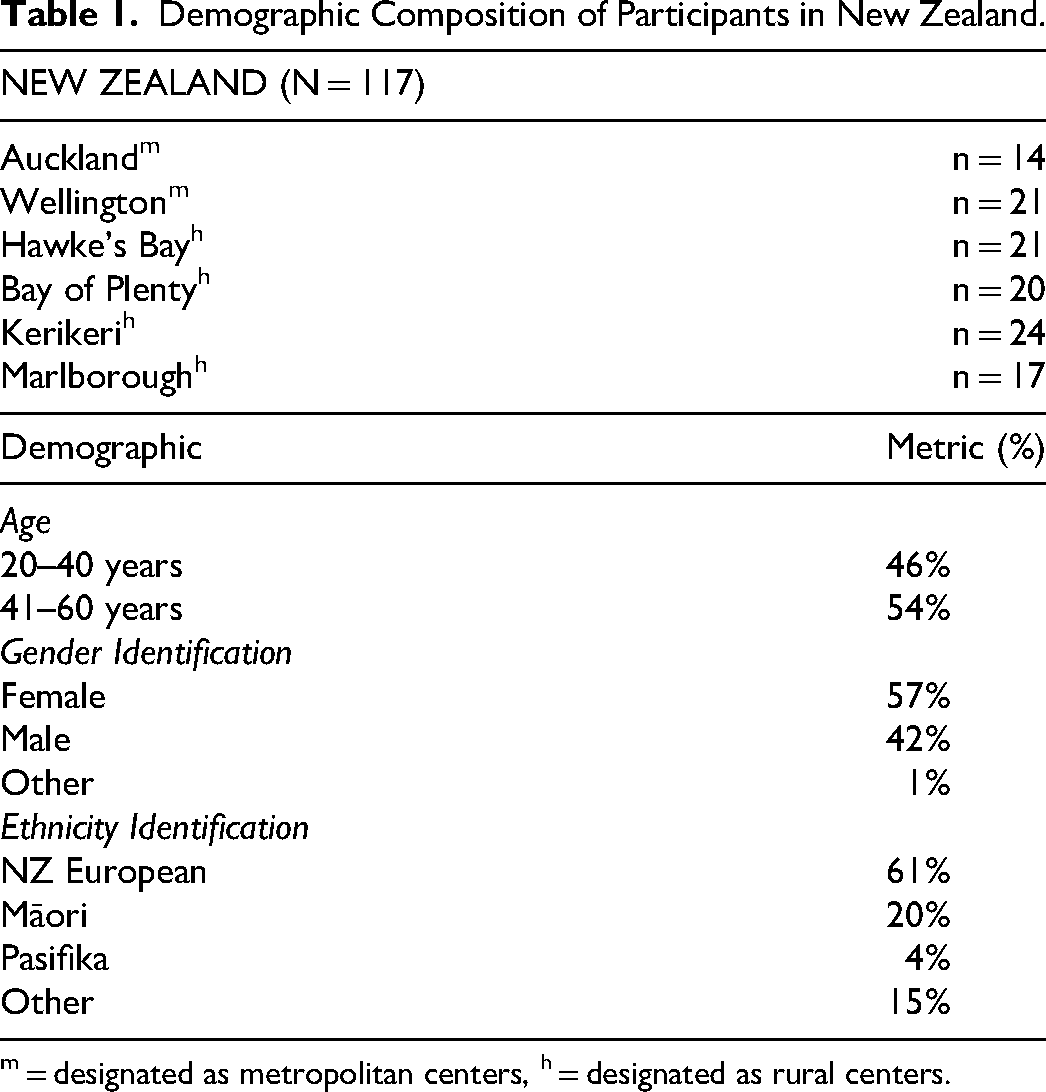
= designated as metropolitan centers, h = designated as rural centers.
This study was conducted in accordance with ethical guidelines approved by Plant and Food Research Institute Ethics Approval P/952001/01, ensuring compliance with research integrity standards. All participants provided informed consent before participation, with a clear explanation of their rights, the voluntary nature of their involvement, data confidentiality, and the voucher incentives provided for participation. To maintain participant privacy, all responses were anonymized, and no identifying information was linked to individual statements.
Given that focus groups involve collective discussions, measures were taken to minimize groupthink and dominance effects. Moderators actively encouraged diverse viewpoints by prompting fewer vocal participants, using neutral follow-up questions, and structuring discussions to allow for individual reflection before group debate. Additionally, participants were assured that disagreement was welcomed and that multiple perspectives would enhance the study's insights. These measures ensured a rich and balanced exchange of perspectives, strengthening the robustness of the findings.
The focus groups were co-moderated by two researchers using a guide that explored participant perceptions of food technologies. To anchor discussions, we presented three examples of FFTs: controlled environment agriculture, automation/robotics, and genetic modification and gene editing (see Appendix A-C). Each technology was introduced with a neutral definition verified by food scientists to minimize bias and ensure clarity (Siegrist & Hartmann, 2020). Participants were asked to envision future scenarios where these technologies exist but are not yet mainstream, enabling detailed discussions about their perceived experiences with them. This approach yielded rich descriptions that informed our understanding of their responses to the technologies (Macnaghten, 2021). Observing that participants often considered these technologies collectively as FFTs, we chose to discuss them as a unified group in our study. Eliciting participants’ imagined interactions with FFTs was essential to gather rich insights, given the emergent nature of these technologies (Macnaghten, 2021). The structure was open conversation; however, the moderators utilized the interview guide if the discussion was not flowing, or if probing was needed.
Data Analysis
Thematic analysis was performed using open and axial coding to identify key themes emerging from the data (Braun & Clarke, 2012). Open coding, the initial phase of analysis, involved identifying recurring patterns and applying codes derived directly from the transcript texts (Strauss & Corbin, 1998). To minimize bias and enhance the analysis, two researchers conducted each focus group, and a third researcher, who had not participated in the focus groups, was introduced to assist with coding. This inclusion aimed to ensure a robust, unbiased analytical process and achieve intercoder agreement. After completing open coding, the transcripts were subjected to axial coding, which involves examining the open codes to uncover more refined themes (Strauss & Corbin, 1998).
The researchers collaboratively identified patterns, refined code definitions, and reviewed the categorization of data to ensure reliability and validity in theme identification. Coding was iterative, involving movement between transcripts, emerging codes, and relevant theoretical concepts to refine theme boundaries. Patterns were distinguished through recurrence across multiple focus groups and through contrastive examination of divergent positions, allowing paradoxical tensions to be identified as structurally significant rather than anecdotal. No significant disagreements were noted among the researchers during the coding process. For data analysis, we utilized NVivo software, which facilitated our coding process and helped in maintaining accuracy and consistency in our thematic analysis.
Findings: The Paradoxes of Technology Shaping Food Markets
This section examines how FFTs operate through paradoxes that are articulated and negotiated in consumer discourse, structuring consumer engagement, market access, and the broader evolution of food provisioning systems. Our analysis identified three paradoxes: (1) algorithmic governance that creates a paradox of perfection versus homogeneity, constituting predefined autonomy; (2) corporate dominance in market access, creating a paradox of decentralization versus consolidation, constituting imbalanced participation; and (3) legitimizing frameworks for market evolution, creating a paradox of technological necessity versus provisioning pluralism, constituting constrained agency (see Figure 1).
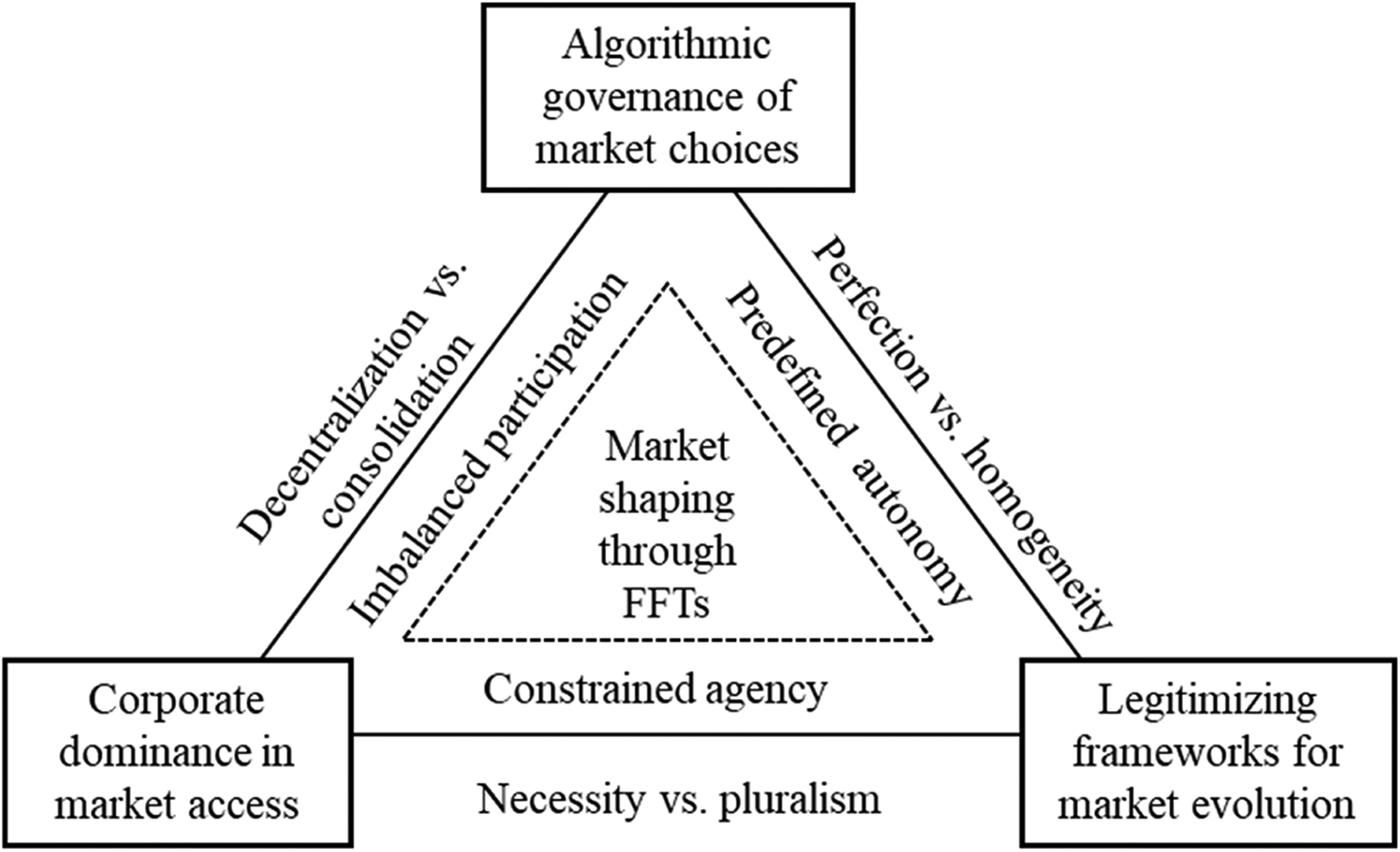
Paradoxical tensions constituting market shaping through FFTs.
Algorithmic Governance of Market Choices
Consumer discourse around algorithmic food governance reveals a constitutive paradox: optimization logics that promise personalized perfection are subject to infrastructural control, while also being framed through logics of homogenization and standardization. Technology-driven food provisioning, precision agriculture, and algorithmic food recommendations promise hyper-personalized choices that aim for an idealized form of food: “Think of different soils that have different kinds of nutrient levels for different people… I kind of like the idea of being able to try those. Try the different variety and experience different nutrients based on what people need.” (FG1, Male, 20–40, Urban)
This comment does more than express enthusiasm for customization. By linking soil composition, nutrient levels, and “what people need,” the participant imagines FFTs as benevolent technological mediators capable of translating bodily difference into provisioning arrangements. The appeal of “different soils” rests not only on variety, but on the promise that technological infrastructures might recognize individualized nutritional needs and reorganize food production around them. In this sense, the comment articulates a form of individualized health sovereignty: consumers are imagined as gaining more precise alignment between bodies, food, and provisioning systems. Yet this sovereignty is already infrastructurally mediated. The consumer does not define need independently; need is made legible through technological systems that classify, optimize, and deliver food through predefined categories. The quote therefore opens the perfection–homogeneity paradox by showing how predefined autonomy is constituted through algorithmic and agronomic infrastructures that promise care while also organizing the terms through which care becomes available. Rather than unfolding as a linear embrace of technological personalization, discussions oscillated between excitement and concern: “Potentially you could end up with like everybody in the world growing one kind of apple because that's the absolute best apple, and you’d lose all these other varieties.” (FG18, Male, 20–40, Rural) “Do we gradually consolidate down the types of foods available to us, and therefore the amount of different meals and stuff you can make using those available foods, because they’re the only ones that can efficiently be grown?” (FG14, Male, 41–60, Rural)
In these moments, participants reframed optimization as homogenization. The very infrastructures imagined as expanding choice were recast as narrowing varietal diversity and embedding decision-making within efficiency-driven parameters. While some participants suggested FFTs could increase varietal diversity through precision-controlled environments, others worried about the standardization of food production and the loss of biodiversity: “I would imagine you can get probably increased varieties too… if it's in a controlled space, perhaps that would give us more opportunity to try different types of vegetables and fruits that way.” (FG2, Female, 20–40, Urban) “I think over time, we’re maybe losing some of the earlier types… not as commonly found anymore. And that might be something that's actually important for certain plants or animals. And we might lose those and create newer ones, which might cause other harms or have unexpected impacts that we don’t know about yet.” (FG5, Female, 20–40, Urban)
This oscillation did not resolve into consensus. Instead, it generated an ongoing negotiation over who defines and what counts as quality, perfection, and diversity in food provisioning, and whose interests would be prioritized. Algorithmic governance in food provisioning therefore emerged as a paradoxical configuration: while infrastructures were imagined as enhancing control over how food is grown, they were simultaneously interpreted as embedding consumer choice within hierarchical governance models oriented toward efficiency and profitability (Wiebe & Mitchell, 2022). Autonomy was not absent, but conditionally structured: “Whose sweetness are we talking about? Who sets the sweetness level? … Again, that's kind of like nature produces the variety, right?” (FG4, Male, 41–60, Urban) “If you go to a farmer's market, for example, like a nectarine or peach season, and they will have all the different varieties. But if you go to the supermarket, there may be like two…. I think moving now to growing indoor plants, you’re going to get even more narrow range of diversity and taste.” (FG23, Female, 20–40, Rural)
Here, participants engaged in boundary work, contrasting algorithmic provisioning with “nature” and local markets to reassert alternative criteria of value. Rather than simply accepting or rejecting FFTs, consumers articulated three forms of engagement: embracing optimization, questioning standardization, and invoking alternative provisioning logics. These engagements reveal how algorithmic governance produces not passive compliance but reflexive positioning.
The perfection–homogeneity paradox is also a case of market shaping through controversy (Blanchet & Depeyre, 2016). Read as market controversy, this discourse makes visible an inventory of actors, including algorithmic systems, corporate producers, consumers, local markets, and “nature” as a competing provisioning reference point; makes connections to wider concerns about biodiversity, taste, quality standards, and control over food values; and offers provisional alternatives, including boundary work around local markets, plural quality criteria, and the preservation of varietal diversity. This inventory clarifies why participants’ concerns about perfectionism extended beyond individual food preference. Their accounts connected algorithmic optimization to wider questions about who defines quality, which forms of diversity are preserved, and how infrastructural standards become experienced as consumer choice (Beverland et al., 2021). Participants were particularly concerned about how perfectionism in food production (i.e., creating foods optimized for taste, nutrition, and appearance) could ultimately eliminate diversity and individual preference: “I think we’re so conditioned into having as nice as possible fruit and veggies that when it is presented that way and grown that way, then it's going to be taken up in preference.” (FG7, Male, 20–40, Urban)
The language of being “conditioned” signals more than aesthetic preference; it invokes a process of socialization through which corporate standards of perfection become normalized as consumer desire. Rather than framing uniformity as imposed from above, the participant articulates how markets naturalize specific visual and sensory criteria as “what people want.” In doing so, the discourse reveals how algorithmic and industrial standards are internalized and reproduced through everyday consumption practices. This conditioning performs institutional work by stabilizing narrow definitions of quality while simultaneously rendering alternative tastes and varietal diversity invisible, undesirable, or obsolete. “Sometimes you want that, maybe not quite industrially produced perfect standard carrot, maybe you want that smaller, sturdier carrot with a slightly more sour taste that no longer exists anymore.” (FG23, Male, 20–40, Rural)
Here, the longing for the “sturdier carrot” evokes not merely preference but nostalgia for lost plurality. The participant frames diversity as something that once existed but has gradually disappeared under industrial standardization. This retrospective framing performs delegitimization work, positioning algorithmic perfection as a force of erasure rather than improvement. The paradox thus intensifies: personalization discourse coexists with historical awareness of homogenization.
Thus, algorithmic governance does not simply broaden or constrain choice; it generates a productive tension in which consumers must continuously negotiate between predefined perfection and diversity, infrastructural priorities and plurality within technologically mediated food systems. The paradox of perfection versus homogeneity thus becomes generative; its persistence sustains reflexive positioning and prevents stabilization around a singular definition of “good food.” Extreme personalization was therefore discussed not as pure empowerment, but as a reconfiguration of autonomy within predefined infrastructural parameters (Koch & Ulver, 2022).
Corporate Dominance in Market Access
Consumer discourse surrounding FFT-enabled decentralization reveals a constitutive paradox: the same imaginaries of hyper-local participation that promise democratized access are simultaneously framed as deepening infrastructural dependency. A defining tension in FFT adoption lies in whether these technologies genuinely expand inclusive participation or subtly reinforce corporate consolidation. At face value, many participants expressed optimism about FFTs as tools of decentralization and democratization. They envisioned a future where food production might become hyper-local, embedded within everyday retail experiences, reducing reliance on traditional supply chains, and accessible on demand: “I love the idea of being able to go into the supermarket in the future. Like, you have the tomato vines running up the wall… you could just pick one and you just watch it do it. Like, how fresh is that?” (FG15, Female, 20–40, Rural)
This “tomatoes on the wall” imaginary invokes proximity, immediacy, and embodied participation. It constructs a prosumption narrative in which consumers are symbolically repositioned as co-producers rather than passive recipients. Such imaginings align with emerging discourses of participatory prosumption (Ulusoy et al., 2024), in which consumers are not merely end-users but symbolically, and sometimes materially, involved in production processes. These narratives imply a shift from passive consumption toward greater inclusion in provisioning, especially through technologically enabled systems such as vertical farming or indoor retail cultivation. Yet this discourse also presupposes infrastructural mediation, platforms, capital investment, algorithmic coordination, without which such participation cannot occur.
Similarly, several participants highlighted the potential for FFTs to alleviate food inequities. Technologies were seen as enabling market participation for marginalized or geographically isolated populations by localizing production: “That also helps with things like food deserts… where people don’t actually have access to fresh fruit and vegetables.” (FG6, Female, 41–60, Urban) “If there's greater control over produce, then you’d probably be able to meet a higher demand and produce fruits and veggies at cheaper rates, making them more accessible.” (FG19, Female, 20–40, Rural)
These comments illustrate the promise of decentralization as a solution to provisioning barriers. Here, participants engage in imagining discourse, articulating FFTs through a discourse of distributive justice and provisioning correction. Yet beneath these optimistic comments, a second narrative emerged, one that reflected skepticism about whether such technological infrastructures could genuinely redistribute control or further consolidate agribusiness control: “I think it is becoming very industrial, to the point that small farms have no chance, which makes it a bit of a monopoly really. And once it's a monopoly, you only get what you get, yeah, as opposed to the one you want.” (FG8, Male, 41–60, Urban) “You’re taking food production out of the hands of a lot of small people and put them into the hands of one large entity, which does worry me.” (FG7, Male, 20–40, Urban)
In these reflections, participants shift from imagining discourse to questioning discourse, interrogating ownership, scale, and structural power. FFTs are no longer seen as tools of empowerment but as infrastructures through which consolidation may be reproduced. This oscillation, hope for access yet concern over enclosure, suggests that participants are not simply commenting on technologies, but engaging in a broader negotiation over institutional control and the terms of participation. To interpret this tension, we draw on Wiebe and Mitchell's (2022) notion of institutional work, where actors engage in purposeful efforts to create, maintain, or constitute institutional arrangements. Rather than treating these accounts as simple opposition, we interpret them as forms of discursive work that question legitimacy, imagine alternatives, and negotiate acceptable forms of infrastructural mediation.
The imagined ability to “pick tomatoes off the wall” is not just a metaphor for proximity but a critique of how agency is structured. While participants may appear empowered in one frame, their reflections reveal an acute awareness that real agency is contingent on control over infrastructure, ownership, and knowledge. Prosumption, in this sense, emerges as ambiguous: it expands symbolic participation while potentially consolidating corporate control over the conditions of participation (Ulusoy et al., 2024).
Consistent with Blanchet and Depeyre (2016), these controversies surrounding the paradox of decentralization versus consolidation manifest as a form of market shaping by generating discursive inventories of relevant actors (e.g., corporations, communities, regulators), connections to broader societal concerns (e.g., climate, equity, sovereignty), and proposed solutions (e.g., regulation, community inclusion), through which FFT markets are continuously elaborated. Rather than reflecting stable transitions, FFTs emerge as arenas of contestation where competing actors, corporations, governments, and consumers struggle to define who gets to participate, under what terms, and with what degree of influence. The promise of decentralization is itself part of a market-shaping narrative: it normalizes new technologies while masking the reproduction of corporate dominance. The discursive struggle becomes more apparent when participants reflect on their limited influence within these emerging systems: “Even if you wanted something different, would you actually be able to get it? Or would it all be just what they give you?” (FG17, Female, 20–40, Urban)
The phrasing “would you actually be able to get it?” expresses not preference but uncertainty about structural access. Rather than rejecting FFTs, the participant names infrastructural constraint as constraint, making visible how participation may be theoretically promised yet materially limited. This articulation constitutes a critique of illusionary democratization by highlighting imbalanced market participation that is perpetuated by corporate dominance. “If possible, it would be good to involve the communities that these factories are placed in as well … we should be including the people that they’re feeding and include some aspect of a cycle back into that system, not just being a consumer but being part of it as well and contributing.” (FG7, Female, 20–40, Urban)
These comments constitute negotiating discourse: participants articulate conditions under which FFTs could become legitimate, invoking community inclusion, shared governance, and cyclical accountability. As Blanchet and Depeyre (2016) argue, controversies do not halt market evolution; they keep competing visions of what the market should be in active negotiation. The decentralization imaginary does not collapse under consolidation; rather, its persistence generates ongoing institutional work around participation, ownership, and infrastructural design.
Consumer responses perform the very institutional work that shapes how food provisioning systems evolve. FFTs introduce new participation models that are embedded within systems of property, code, and capital that condition access and reinforce hierarchies, even as they offer novel forms of inclusion. In Callon's (1998) terms, attempts to frame FFT markets as decentralized and participatory are continually overflowed by concerns about ownership, dependency, and exclusion. Its unresolved nature precludes a definitive closure of the established market hierarchy, ensuring that pluralistic logics of community participation and distributive justice can co-exist with and contest corporate dominance within evolving FFT markets.
Legitimizing Frameworks for Market Evolution
Consumer discourse around FFT legitimacy reveals a constitutive paradox: technologies framed as necessary and rational responses to global crises are simultaneously positioned as culturally, ethically, and relationally disruptive. This constitutes the technological necessity–provisioning pluralism paradox, expressed through conditional legitimacy, relational provisioning values, and concerns about infrastructural lock-in.
While many participants accepted FFTs as an inevitable response to population growth, climate change, and resource constraints, their narratives simultaneously expressed unease, ambivalence, and skepticism. This co-presence of endorsement and critique does not signal confusion, but ongoing negotiation over what forms of technological mediation are legitimate. The very advances that justify FFTs as progress also provoke backlash rooted in cultural, ethical, and relational concerns. Participants framed the adoption of FFTs as a rational step toward addressing global food security, resource scarcity, and sustainability challenges: “Because you are getting maximum productivity to feed a lot more people. And hopefully, if it's a good quality, the price will be down.” (FG23, Female, 41–60, Rural) “Unfortunately (if) you got a country with 100–200 million people with limited space then this is the way you have to go.” (FG3, Male, 20–40, Urban)
These comments illustrate how legitimacy is conferred through narratives of necessity and inevitability, consistent with institutional accounts in which innovations gain acceptance by presenting themselves as solutions to urgent social problems (Mohorčich & Reese, 2019). Here, participants engage in legitimizing discourse, constructing FFTs as rational responses to demographic and ecological pressures.
Yet, when pressed further, participants revealed a more complex view, one that questioned whether such legitimacy also meant the erosion of agency and tradition. Thus, as technology adoption was perceived as inevitable for the future, participants recognized that agency might become structured by availability and affordability: “If that's the only thing that is available, then you would have to adjust to that because there would be no other option.” (FG12, Female, 41–60, Rural)
The expression “you would have to adjust” signals resignation rather than endorsement. The participant distinguishes between acceptance and adaptation under constrained conditions, highlighting how infrastructural availability shapes consumer behavior independently of preference. This discourse makes visible the power of provisioning systems to delimit alternatives, articulating market evolution not as voluntary transition but as structured compliance. In doing so, it performs boundary work around pluralistic provisioning logics and the risk of technological monoculture. “It may become a niche market where foods are grown by people organically, and not massively mass produce. And that may only be a choice for the rich, sadly.” (FG19, Female, 41–60, Urban) “I'm just a little bit skeptical. Cause you know, essentially, they start off all good and proper, and then the profits start rolling in and greed takes over. And before you know it, the whole company's mantra has changed.” (FG6, Female, 41–60, Urban)
These accounts articulate concern over how legitimacy is continually reworked over time, where technologies initially framed as beneficial come to be interpreted as profit-driven and ethically compromised. Participants express concerns about infrastructural lock-in, inequity, and moral drift, revealing how legitimacy remains conditional rather than settled. The presence of simultaneous trust and skepticism is a constitutive dynamic of markets undergoing change (Beverland et al., 2021).
For this interpretation, we draw on Little et al.'s (2023) framework of pluralistic economies, which argues that markets are shaped not only by capitalist logic but also by alternative and incommensurable systems, such as Indigenous, communal, or ecological worldviews. Rather than framing these perspectives as oppositional, we interpret them as articulations of co-present ontologies. Participants who challenged FFTs were not rejecting progress per se but expressing commitments to different provisioning values, including biodiversity, traditional knowledge, and food sovereignty: “If we took the complete component of growing things outdoor and took it indoors for our own benefit, I wonder what kind of insects and animals and things that I guess the whole ecosystem would rely on? And probably like, die because of that?” (FG7, Female, 20–40, Urban) “Not only are people losing jobs, they’re losing a skill set, right? … if robots are doing those things we no longer know how to do that, so we… less self-reliance, right? And we’ve lost even more food sovereignty than we had before.” (FG7, Male, 20–40, Urban)
These perspectives align with moral economy frameworks, particularly in Indigenous and relational paradigms of food. For Māori participants and others embedded in stewardship-based value systems, food is not merely a consumable good but part of an ecosystem of land, ancestry, and community. These insights resonate with kaitiakitanga (guardianship of land and resources) and manaakitanga (care and respect), two foundational Māori concepts (Harmsworth & Awatere, 2013; Henry & Pene, 2001) that position food provisioning as a reciprocal, ethical practice: “I like the idea of supporting the local growers, you know, the little roadside stalls you see the effort they put into everything, and it's nice supporting the little guy. And you know, it's been kind of loved for. When you’ve got the whole idea of the robots doing things, it's just, it's very like machine line, a big production line for it. And maybe we won’t get as much care, or we probably get the quality, but we may not get the care in essence.” (FG17, Female, 20–40, Rural) “Because as humans, we need that connect … and I think that's something that our children are starting to lack now. They’re starting to let that go, personal connection because of technology and just something little as having a robot, go down the aisles of a vineyard, and check what usually a human touch would do… I do think we need to be careful. Because once that disconnect does happen, it's so hard to get it back.” (FG9, Female, 20–40, Rural)
Rather than technophobia, these comments represent a relational epistemology that assesses innovation not just by efficiency or novelty, but by its embeddedness in social, ecological, and spiritual relationships. In this vein, food as taonga (treasure) stands in tension with food as optimized commodity, an instance of ontological pluralism rather than simple opposition to technological change (Varman et al., 2012). These coexisting logics generate friction, not closure. The clash of provisioning values does not demand resolution; its persistence sustains negotiation over what counts as legitimate market evolution.
Legitimacy, in this context, is therefore not achieved through consensus but through negotiated paradoxical tension. Participants’ calls for regulation capture this dynamic: “If you’re growing plants in a controlled environment, then yeah, those plants are going to get less susceptible to pollution that's in the atmosphere anyway. And surely, you’ll think as long as it's well regulated.” (FG12, Male, 20–40, Rural) “I think there definitely need to be guidelines, regulations, and monitoring… If we start getting seven-foot-tall tomatoes, that could be some problems.” (FG15, Male, 20–40, Urban).
Such regulatory appeals constitute negotiating discourse: participants articulate conditions under which FFTs could be rendered legitimate without erasing plural values. Read as market controversy, these appeals make visible an inventory of actors, including regulators, communities, producers, technology firms, and relational knowledge holders; connections to wider concerns about food security, sovereignty, care, ecological stewardship, and equitable access; and provisional safeguards, including oversight, community inclusion, relational governance, and plural legitimacy criteria. These calls for oversight may be expressions of conditional legitimacy: a desire for institutional checks that reflect diverse ethical commitments and safeguard against market overreach. As with institutional work theory (Wiebe & Mitchell, 2022), consumers participate in shaping institutions through everyday discourse when they critique, imagine alternatives, or demand safeguards.
Finally, participants’ projections about future market access, where organic or traditional foods become exclusive luxuries, reflect awareness of infrastructural mediation and algorithmic governance (Koch & Ulver, 2022; Shankar, 2024). These anticipations do not simply predict inequality; they articulate contested futures in which legitimacy, access, and sovereignty remain open questions.
Thus, the paradox of technological necessity versus provisioning pluralism is generative: it renders the legitimacy of market evolution a site of perpetual contestation across divergent ontologies and values of provisioning, while sustaining ongoing institutional work around stewardship, regulatory oversight, and boundary-setting. Rather than converging toward a static consensus, the market evolves through a continuous negotiation between the co-existing values of necessity, sovereignty, profit, and care.
Discussion
This research examines how FFTs reconfigure food provisioning through paradoxes that are constituted in consumer discourse, structuring consumer agency, market access, and the evolution of provisioning systems. Through the lens of paradox theory, our findings reveal that FFTs are not neutral tools of efficiency but actively shape market structures, embedding tensions between perfection and homogeneity, decentralization and consolidation, and technological necessity and provisioning pluralism. We show that these paradoxes do not merely describe competing views of food technology; they constitute the ongoing negotiation through which provisioning systems are assembled, stabilized, and reconfigured. These tensions are not to be resolved but productive forces through which institutional and cultural negotiation unfolds (Beverland et al., 2021).
Taken together, the three paradoxes operate as a unified generative configuration in FFT market evolution. The perfection–homogeneity paradox destabilizes definitions of quality and diversity; the decentralization–consolidation paradox recalibrates participation and infrastructural control; and the technological necessity–provisioning pluralism paradox reopens ontological debates over what food systems should be. Rather than unfolding independently, these paradoxes interact to prevent institutional closure, sustaining ongoing negotiation over governance and ownership, inclusive participation, and conditions of legitimacy in food provisioning. FFT markets therefore evolve not through resolution of tension, but through its persistence across these key domains where pluralistic logics necessitate continuous institutional work.
We position these findings within macromarketing scholarship, demonstrating how FFTs reinforce existing power asymmetries while simultaneously introducing new forms of market engagement. Algorithmic governance in food provisioning systems promises to optimize food production, increase efficiency, and enhance consumer choice. Algorithmic infrastructures, such as curated food recommendations, precision agriculture, and controlled-environment food systems are designed to deliver “perfect” food experiences tailored to consumer preferences (Ulusoy et al., 2024). However, our findings reveal that this promise of perfectionism may simultaneously constrain choice, homogenizing food markets by reducing biodiversity, reinforcing algorithmic standardization, and narrowing the scope of available products. We build primarily on Ulusoy et al. (2024), as well as Koch and Ulver (2022) and Shankar (2024), to argue that these systems mediate consumer autonomy by embedding consumer behavior within infrastructural scripts. Participants’ concerns about losing varietals or cultural preferences reflect anxieties about the transformation of consumers into “provisional agents,” whose autonomy is channeled through opaque systems of optimization.
This paradox aligns with prior research on digital personalization, which suggests that while algorithmic systems appear to enhance consumer control, they ultimately embed consumers within predefined parameters set by corporate actors (Koch & Ulver, 2022). In food markets, this translates into a tension between optimization and predefined autonomy; while data-driven provisioning increases efficiency, it also structures market availability based on economic viability rather than true consumer diversity (Beverland et al., 2021). This tension mirrors broader debates in algorithmic governance, where the pursuit of efficiency reduces plurality and choice (Zuboff, 2019).
The illusion of predefined autonomy in food provisioning is contingent on who defines perfection. As our participants noted, FFTs may privilege food attributes (e.g., aesthetic appeal, nutrient composition) while erasing diversity in taste, cultural preferences, and traditional food varieties. The potential for AI-driven market shaping to marginalize alternative provisioning systems suggests a deeper paradox within technology-mediated food governance, one that reinforces corporate standardization under the guise of choice. Here, paradox generates ongoing boundary work around what counts as “good food,” who defines quality, and which values are institutionalized within provisioning infrastructures.
A key argument in technology-driven food provisioning is that FFTs expand market participation, reducing reliance on traditional supply chains and allowing consumers to engage with food production more directly (Ulusoy et al., 2024). In theory, innovations such as urban agriculture, blockchain-enabled traceability, and AI-driven food distribution should decentralize access, enabling greater market inclusivity. However, our findings suggest that FFTs simultaneously consolidate corporate control, reinforcing consumer dependency on proprietary infrastructures. Participants’ discursive ambivalence and negotiation become forms of lay institutional work that shape evolving market norms (Wiebe & Mitchell, 2022). While consumers appear to participate more, their role is often structurally constrained by infrastructural consolidation.
This paradox reflects broader tensions in digital platforms, where technology is framed as democratizing access while consolidating market power (Srnicek, 2017). While consumers may experience greater transparency in supply chains or localized food production options, these systems remain embedded within corporate governance structures that dictate availability, pricing, and production methods (Wiebe & Mitchell, 2022). FFTs do not necessarily reduce the dominance of agribusiness and digital food corporations; instead, they create new infrastructural dependencies. Paradox here sustains contestation over participation: decentralization is imagined, negotiated, and recalibrated through ongoing public discourse rather than structurally secured.
Finally, our findings demonstrate that consumers view FFTs as both inevitable and contestable. While many participants acknowledged that FFTs are necessary for addressing food security, climate change, and efficiency, they also expressed skepticism and concern over the loss of traditional food knowledge. This reflects the paradox of technological necessity versus provisioning pluralism, where technological advancements gain market legitimacy while remaining entangled with alternative ontological claims. Drawing on Little et al. (2023), we interpret these tensions as evidence of pluralistic economies. Market evolution occurs through clashes between capitalist, Indigenous, ecological, and moral logics, not through convergence. In this case, Māori and relational views of food as taonga (treasure) embedded in kaitiakitanga (stewardship) stand in tension with technocratic and capitalistic provisioning systems. These are not irrational rejections of progress, but incommensurable yet co-present ontologies of what food systems should be (Henry & Pene, 2001).
Across these three domains, we demonstrate that paradox constitutes market evolution rather than merely constraining it. It sustains pluralism, foregrounds governance recalibration, and positions consumers as market-shaping publics whose discourse performs institutional work. By foregrounding paradox as generative, we shift macromarketing analysis from adoption outcomes to the ongoing negotiation of legitimacy, infrastructure, and value in technology-mediated markets.
Implications for Macromarketing and Food System Governance
By conceptualizing food technology as a market-shaping force, this study contributes to macromarketing by demonstrating that FFTs do not simply enhance food provisioning efficiency but actively reshape market logics through paradoxical tensions in agency, choice, and legitimacy. Specifically, we make three contributions: (1) we reconceptualize FFT adoption as a process of market shaping enacted through public discourse; (2) we extend paradox theory by demonstrating its generative role in sustaining contested and plural provisioning systems; and (3) we reposition consumers as institutional actors who participate in assembling, negotiating, and recalibrating food governance structures. This challenges deterministic views of technological progress, instead framing FFT-driven food systems as contested spaces where institutional power and consumer agency remain dynamically negotiated rather than diametrically opposed.
Our findings reinforce the importance of paradox theory in understanding these tensions, not as failures of policy or perception, but as the interdependent tensions that structure food system transformation (Beverland et al., 2021). The paradoxes of perfection versus homogeneity, decentralization versus consolidation, and technological necessity versus provisioning pluralism are not obstacles to be resolved but enduring tensions through which markets are negotiated and reconfigured. From a macromarketing perspective, this invites a shift in focus: from asking how technologies are adopted to how they are contested and co-shaped through market controversies (Blanchet & Depeyre, 2016), institutional discourse (Wiebe & Mitchell, 2022), and cultural pluralism (Little et al., 2023).
For policymakers and industry stakeholders, the findings suggest that managing these paradoxes requires governance frameworks that move beyond simplistic narratives of progress. Policies that foster open technological ecosystems, regulatory oversight of AI-driven food standardization, and consumer co-governance models could mitigate the risks of consolidation and exclusion. Furthermore, acknowledging that markets operate through plural economic and cultural logics, including relational and Indigenous values, offers a more inclusive framework for food system governance (Henry & Pene, 2001; Little et al., 2023). Rather than treating Māori perspectives or traditional knowledge systems as oppositional to innovation, they can be engaged as co-constitutive forces that reshape what sustainable and equitable provisioning means. This expands macromarketing's purview to include not only structural forces and institutional actors, but also the discursive, ethical, and relational work performed by consumers as they engage in shaping food futures.
Furthermore, recognizing consumer skepticism as a legitimate form of market contestation is critical for fostering trust in FFT adoption. Developing participatory logics that allow for consumer-led input in shaping FFT regulations, transparency in digital food provisioning algorithms, and ensuring equitable distribution of benefits across market actors will be central to ensuring that FFTs serve broad societal interests rather than reinforcing existing power asymmetries.
Managerial Implications
The paradoxes identified in this study have significant implications for firms developing and deploying FFTs. While FFTs offer unprecedented efficiencies in food production and distribution, they also introduce structural tensions that require careful management. The perfection-homogeneity paradox suggests that while algorithmic food curation enhances optimization, it risks alienating consumers who value biodiversity, cultural food heritage, and variety. Firms should therefore adopt a hybrid strategy that balances optimization with diversity, ensuring that digital or technology-driven food systems do not inadvertently erase consumer choice. For example, allowing consumers to customize food parameters beyond algorithmic defaults, such as sourcing from regenerative agriculture, prioritizing biodiversity, or preserving traditional food varieties, could enhance perceived agency while mitigating concerns about standardization. This is particularly important in the context of relational and cultural provisioning logics, where food is tied to identity, land, culture, and collective well-being. Firms that ignore these dimensions risk not only reputational backlash but long-term erosion of market legitimacy in communities where FFTs are perceived as extractive or exclusionary.
The decentralization-consolidation paradox highlights the need for firms to balance the benefits of market participation with the risks of corporate dependency. While FFTs may promise more democratized access to food, consumer skepticism over data control, monopolization, and exclusionary market structures suggests that firms should proactively enhance transparency and decentralize governance where possible. Implementing open-source agricultural AI, blockchain-enabled traceability systems, and participatory decision-making platforms could build trust by empowering consumers as stakeholders rather than passive recipients of technological interventions. Such an approach may seem antithetical, or perhaps even naïve, in a profit-driven system of patents and proprietary knowledge; yet firms that position themselves as partners in food sovereignty, rather than gatekeepers of provisioning infrastructures, are likely to see stronger market legitimacy and long-term consumer loyalty. Firms must also understand that consumers are not simply choosing between products, they are negotiating visions of the future. Companies that co-create FFT narratives with communities, scientists, and Indigenous knowledge holders are better positioned to navigate legitimacy challenges while enhancing meaningful engagement.
Finally, the technological necessity–provisioning pluralism paradox underscores the importance of narrative framing in FFT adoption. Consumers may remain cautious of corporate agendas, historical market failures, and the potential erosion of traditional food knowledge. As such, firms should co-create narratives with consumers, scientists, and policymakers to develop transparent, consumer-centric messaging about FFTs. Engaging in consumer education, third-party certifications, and participatory product development can mitigate fears of exclusion and reinforce that FFTs are not imposed upon consumers but shaped alongside them. By positioning technology as a collaborative market force rather than a top-down imposition, firms can better navigate the paradoxes inherent in food provisioning markets.
Limitations and Future Research Directions
While this research provides valuable insights into the paradoxical tensions emerging from FFTs in market shaping, several limitations should be acknowledged. The qualitative nature of focus groups, although effective for capturing nuanced consumer perceptions, limits generalizability beyond the New Zealand context. Future research employing quantitative methods and cross-national comparisons could further validate these findings. Additionally, participants discussed hypothetical scenarios, potentially differing from actual behaviors once FFTs become mainstream. At the same time, this specificity provides a valuable lens through which to examine how pluralistic economies and ontological incommensurability structure market evolution. Future research could build on this by exploring other contexts where FFTs intersect with Indigenous knowledge systems, communal food logics, or postcolonial provisioning structures (e.g., First Nations in Canada, Quechua communities in Peru, or Pacific Island nations).
Methodological challenges such as group dynamics and dominance effects inherent in focus groups were mitigated through careful moderation and diverse sampling. Longitudinal studies could provide deeper understanding of evolving consumer perceptions. Further exploration into culturally specific attitudes toward FFTs would also enrich the findings. Future studies should particularly consider vulnerable consumer populations often excluded from FFT benefits, such as those facing systemic food access inequalities (Cerovečki & Grünhagen, 2016).
Future research directions include employing quantitative methodologies, longitudinal studies, and cross-country comparisons to examine how different regulatory contexts, consumer trust, and market structures mediate identified paradoxes. Experimental investigations into the effects of algorithmic curation on consumer perceptions of choice, diversity, and agency could also expand conceptual insights. Additionally, exploring alternative governance models such as blockchain-enabled participatory frameworks, non-corporate collaborations, and decentralized provisioning systems could identify ways technology might reduce rather than reinforce market constraints.
Our approach focused primarily on consumer perspectives. While this was essential to unpack the cultural and ethical dimensions of market shaping, it excludes the viewpoints of producers, policymakers, and technology developers. Including these additional actors could provide a more holistic understanding of how FFTs are co-shaped across the food system. We also encourage future researchers to examine how different actors perform “institutional work” in relation to FFTs, whether through reinforcing dominant logics or contesting them via alternative provisioning models (Wiebe & Mitchell, 2022). Similarly, applying the concept of market controversy (Blanchet & Depeyre, 2016) to multi-actor ecosystems may reveal how legitimacy is negotiated over time.
Additionally, we focused on three specific paradoxes. While these emerged inductively and proved theoretically generative, other paradoxes may also structure consumer responses, such as abundance vs. waste, innovation vs. precaution, or inclusion vs. surveillance. Future studies could expand this list by investigating how other tensions shape perceptions of food technology and sustainability.
Supplemental Material
sj-docx-1-jmk-10.1177_02761467261466573 - Supplemental material for Market Shaping and the Paradoxes of Food Provisioning in Future Food Technologies
Supplemental material, sj-docx-1-jmk-10.1177_02761467261466573 for Market Shaping and the Paradoxes of Food Provisioning in Future Food Technologies by Denise Conroy, Amy Errmann, Ivy Gan and Michael Lee in Journal of Macromarketing
Footnotes
Associate Editor
Ahmet Ekici

Funding
The author(s) disclosed receipt of the following financial support for the research, authorship, and/or publication of this article. This work was funded by the Growing Futures - Horticulture goes Urban Programme, Plant and Food Research.
Declaration of Conflicting Interests
The authors declared no potential conflicts of interest with respect to the research, authorship, and/or publication of this article.
Supplemental Material
Supplemental material for this article is available online.
Author Biographies
References
Supplementary Material
Please find the following supplemental material available below.
For Open Access articles published under a Creative Commons License, all supplemental material carries the same license as the article it is associated with.
For non-Open Access articles published, all supplemental material carries a non-exclusive license, and permission requests for re-use of supplemental material or any part of supplemental material shall be sent directly to the copyright owner as specified in the copyright notice associated with the article.
