







Abstract
Empathic accuracy, or the ability to accurately know the emotional states of others, is a basic aspect of emotional intelligence. The current study explored the relationship between a standard measure of emotion-detection ability, the reading the mind in the eyes test, along with spontaneous measures of creativity (as well as the Big Five personality traits). To measure spontaneous creativity, participants were asked to come up with brief captions for two New Yorker cartoons. Three independent judges rated all captions along 10 continuous creativity dimensions. Participants also completed Gosling’s brief measure of the Big Five. In a sample of 265 adults from around the world, the reading the mind in the eyes emerged as significantly and positively predictive of 9 of the 10 creativity indices. Regression analyses demonstrated that these relationships existed after controlling for gender and age of participant. Further, of the Big Five traits, conscientiousness emerged as negatively related to several indices of creativity. Implications for the relationship between social-perceptual processes (e.g., empathic accuracy) and social-productive processes (e.g., spontaneous creativity) are discussed.
Creativity is considered a major aspect of human mating intelligence (see Geher & Miller, 2008). While not central to survival in all cases, creative behaviors allow individuals to express details of their particular mental processes, providing windows into several facets of their deeper psychology, such as general intelligence and levels of openness (see Kaufman, Kozbelt, Bromley, & Miller, 2008). Of the many facets of creativity, humor-related production seems particularly central to relationships (including both intimate and nonintimate relationships). In short, people tend to choose highly humorous individuals compared with less humorous individuals as social partners. Humor production also has an emotional component to it, with the immediate function of such behavior being to elicit positive affect in others. Thus, humor production conceptually connects with emotional intelligence, a broad suite of psychological abilities that focus on the cognition or emotion interface (see Geher, 2004).
Past research has generally failed to find a significant link between emotional intelligence and markers of creativity (Ivcevic, Brackett, & Mayer, 2007). Such past research has not included examined markers of humor production in this realm. Given how central emotional processing and expression are to all facets of humor, we expect emotional intelligence to positively relate to humor production. The current research explored the emotional intelligence or humor production link while also examining markers of the Big Five personality traits, age, and gender.
Emotional Intelligence
Emotional intelligence is defined as the use of thoughts, feelings, and intuition to help solve problems. This also includes one's ability to influence thinking and actions based on an understanding of one's own and others' emotions (Brackett, Rivers, & Salovey, 2011; Geher, 2004; Mayer & Geher, 1996). Several measures of emotional intelligence exist—and generally speaking, these measures have been found to be positively associated with social satisfaction and several other markers of life success (Brackett et al., 2011; Geher, Warner, & Brown, 2001). This pattern of findings indicates that there is likely an important connection between one’s emotional intelligence and one’s skills at handling different social situations. Emotional intelligence has been found to predict such outcomes as successful leadership in multiple domains as well (Antonakis, Ashkanasy, & Dasborough, 2009).
A quintessential feature of emotional intelligence is our ability to understand the mental states of others. One study describes this phenomenon as empathic accuracy. It argues that this skill is essential in the way humans relate to each other on a variety of relationship levels (Ickes, Gesn, & Graham, 2000). Based on the work of this research, empathic accuracy involves three different levels of understanding—empathic understanding, empathic expression, and empathic communication. Each of these is crucial to navigating social situations in ways that are accurate and positive. These facets of emotional intelligence have been found to predict several important life outcomes as well as traits such as openness to experience (Mayer & Salovey, 1995).
Creativity and Emotional Intelligence
Creativity has been a historically difficult trait to pin down because of its subjectivity (Roppelt, 2014). However, the concept of creativity has still been vastly studied and can be linked to other phenomena in peoples’ personality. For instance, a study conducted on humor and creativity found that those who endorsed all kinds of humor (including positive and negative humor) scored higher for creative attitudes than those who only endorsed one or the other type of humor (Chang, Chen, Hsu, Chan, & Chang, 2015). Previous research on creativity also has found that various facets of emotional intelligence (e.g., emotional facilitation) may predict markers of creativity (Parke, Seo, & Sherf, 2015). This said, the relationship between emotional intelligence and markers of creativity is actually somewhat unclear based on the broader body of past research. In a major set of studies on this topic, Ivcevic et al. (2007) found that emotional intelligence was, in fact, uncorrelated with markers of emotional creativity, defined as the ability to be creative in expressing emotions (Averill & Thomas-Knowles, 1991). Emotional creativity was partly measured, in this study, via a task that asked participants to describe how they would deal with various emotional scenarios and having their responses rated for markers of creativity. These researchers also found that emotional intelligence was uncorrelated with behavioral creativity (based on tasks such as writing a Haiku that was rated for fluidity and other markers of quality).
The current study seeks to add to the empirical work on the relationship between markers of emotional intelligence and creativity. This particular research focuses on the ability to detect emotions in others, measured via the reading the mind in the eyes (RTME) test (Baron-Cohen, Wheelwright, Hill, Raste, & Plumb, 2001). This test is a highly validated and long-standing measure of emotion-detection ability which tap into one’s effectiveness at knowing what emotions are being expressed in the faces of others. Given the centrality of knowing others’ emotional states, it seems that highly creative individuals may well be those who are effective at this kind of task. Thus, this study seeks to address whether the empathic accuracy facet of emotional intelligence, as marked by the RTME, is predictive of high levels of creativity.
Predictors of Creativity
While the basic prediction here is that empathic accuracy, measured via the RTME test, should predict markers of creativity, we considered other dispositional variables as predictors of creativity as well. In particular, given the ubiquitous nature of the Big Five personality traits in modern psychology, our study also included the Ten Item Personality Inventory (TIPI) which provides a brief measure of the Big Five traits: Extraversion, the degree to which an individual enjoys the company of others, or how social that person is; Agreeableness, which is how trusting or kind an individual is; Openness to Experience, the degree to which someone is open-minded, curious, or imaginative; Neuroticism, which is related to how emotionally stable an individual is; and Conscientiousness, which is considered the degree to which someone is dependable or self-disciplined (Gosling, Rentfrow, & Swann, 2003).
In past research, the Big Five have been found to relate to markers of creativity. For instance, creativity with respect to creating analogies was found to be significantly, positively correlated with Extraversion, Agreeableness, Openness, and Conscientiousness (Kao, 2016).
Measuring Creativity
Creativity is a complex set of processes that has been defined and measured in various ways (Kaufman & Gregoire, 2015). As such, any researchers into this topic need to hone in on a particular method of measurement. We were specifically interested in spontaneous and ability-based (non-self-report) measures of creativity. To tap into this construct, we used a method modified by Greengross and Miller (2011). This particular method is to use New Yorker cartoons and have people write captions (that were later rated by judges). In Greengross and Miller’ (2011) research, creativity measured this way was positively related to both general intelligence and mating success.
The current study sought to elaborate on this pattern of findings to examine if empathic accuracy and the Big Five personality traits are significant predictors of such spontaneous creativity. Using this method, we also explore the psychology of humor, as humor can be the result of spontaneous creativity and is highly relevant to social and emotional functioning. In fact, in a study done on emotional intelligence and humor, it was found that positive humor was correlated with emotional intelligence (Yip & Martin, 2005).
Introduction to Current Study
One's ability to successfully understand the mental states of those around him or her can augment that person's ability to respond to a given situation. In addition, if that person is also high in creative thinking skills, he or she could potentially be able to alter the given situation using humor based on his or her understanding of what is going on. Essentially, someone who is high in both creativity, as well as empathic accuracy, could also be successfully humorous, in a way that is both amusing and appropriate given the situation. (Think of all of the times when someone was trying to be funny but didn't understand what was going on, and such the humor was inappropriate. Or in the opposite case, someone understood the situation, but did not have the ability to remark on it in a creative way such that what he or she said wasn't funny.) For someone to be considered funny in a specific situation (i.e., the situation being illustrated in a New Yorker Cartoon), that person needs to be both high in creativity and high in empathic accuracy.
Based on the previous research establishing a connection between creativity and emotional intelligence, the primary hypothesis of the current study is that empathic accuracy, as measured by the RTME task, is positively correlated with markers of creativity. More specifically, we predict that high RTME scores will correspond to high scores on originality, imaginativeness, humor, and insightfulness. In addition to this, the secondary hypothesis states that the Big Five Personality traits will significantly predict the markers of creativity. Particularly, Openness to Experience, Extraversion, and Agreeableness will positively predict creativity, whereas Neuroticism and Conscientiousness will negatively predict creativity.
Method
A total of 265 adults, who volunteered to complete an online survey, had submitted data that could be analyzed for the current study. Participants were asked to look at two separate cartoons from the magazine The New Yorker, and write captions that they felt adequately summarized the scene depicted in the cartoon. The pictures were chosen based on the potential for high levels of variability in responses. The captions were then rated by three separate judges for creativity, based on 10 different qualities determined by the researchers, which are explained later. The judges were completely blind to each others’ responses to ensure anonymity and avoid bias. A Cronbach’s alpha correlation was run to ensure interrater reliability between the judges.
The training procedure for the judges consisted of several meetings in which each judge rated samples from the data set across these 10 parameters. This process led to our operationalizations of these constructs and ensured that the judges were using the same approach in their ratings. The creativity markers that ended up being included in the study were similarly the result of extensive deliberation among members of our research team. These discussions were initially guided by Kaufman et al.’s (2008) work on creativity and humor.
The first cartoon depicts a man in a suit on a ladder with a large pipe cleaner, holding it toward the opening of a cannon. He is speaking to a man who is about to be shot out of the cannon. Participants would then caption the cartoon with dialogue from the man holding the pipe cleaner.
The second cartoon depicts a congregation of baseball players in a stadium with a shrouded figure who resembles the Grim Reaper. There are two teams of baseball players. One team, in the background, is talking to the Grim Reaper, who has a baseball mitt on one hand and his other hand extended to receive the baseball from a team member. Meanwhile, two players from the opposing team are watching the scene, one of whom is making a comment about it. The participants would then caption what the opposing team member would say to the Grim Reaper about to take the baseball.
After all of the captions had been submitted, three judges rated each caption on several different measures of creativity. The three judges were completely independent from one another, and were responsible for coding on a scale of 0 to 4 for each creativity factor for each caption, with 0 indicating that the feature was not at all present and 4 indicating that it highly demonstrates that feature.
Measures
Creativity markers
For the purpose of this study, for each humor-production sample, 10 independent facets of creativity were judged by three independent judges. These facets were determined via a combination of exploring past research on the measurement of creativity (Kaufman et al., 2008) as well as via discussions among our lab members of the facets of creativity that seemed to emerge in our large sample of humor-related stimuli. The facets we ended up with were as follows: Originality, Congruency, Imaginativeness, Creativity, Fluency, Insightfulness, Randomness, Funniness, Crudeness, and Sophistication. For each humor-production sample, the three judges came up with a rating for each of these facets on a 0 to 4 scale with 0 meaning not present at all and 4 meaning very much present.
For the purposes of making these ratings, our working definitions of each of these facets of creativity were as follows:
Originality: A unique, independent response from the participant that was not repeated by other participants. Congruency: How well the participant’s response aligns with what the photo depicts. Imaginativeness: The extent to which imaginative or fantasy elements were brought into the participant’s response. Creativity: The degree that the participant referenced artistic themes, whether real-world or directly related to the image. Fluency: A measure of grammatical correctness—the extent to which the participant utilized different syntax and grammatical markers for their caption. Insightfulness: The extent to which the participant utilized real-world examples or references in their response, unrelated to artistic examples. Randomness: The extent to which the participant deviated from the format of the photo and brought in unrelated commentary or descriptions. Funniness: A measure of how humorous the judge thought the participant’s response was. Crudeness: The extent to which the participant used unsavory vocabulary or imagery in their response. Sophistication: The quality of language and vocabulary used in each caption.
Big Five personality traits
The Big Five Inventory by Gosling et al. (2003) was administered on a subsequent survey to participants. Each of the Big Five personality traits (Openness to Experience, Conscientiousness, Extraversion, Agreeableness, and Neuroticism) were then analyzed for their relatedness to the participants’ creativity scores. This scale included 10 total items (two per trait) that were each measured on a 1 to 5 scale.
The TIPI by Gosling et al. (2003) was administered on a subsequent survey. The Big Five personality traits were correlated with partner’s creativity scores. In an online note, Gosling (“A Note on alpha reliability and factor structure in the TIPI,” n.d.) discusses that the TIPI will have poor alphas and factor structures. He writes, As noted in the original TIPI manuscript (Gosling et al., 2003), the goal of the TIPI was to create a very short instrument that optimized validity (including content validity). The goal was NOT to create an instrument with high alphas and good CFA fits … If reliability estimates are needed, a more appropriate index would be test-retest reliability. (Gosling, n.d.)
Reading the mind in the eyes
The RTME task (Baron-Cohen et al., 2001) was also administered to participants. Participants were required to look at a series of 36 close-up black-and-white photographs, of different peoples’ eyes, that were of equal size. After looking at the photo, participants were then asked to determine what emotion they believed the person in the photograph was conveying, out of four answer choices. The test is known as a measure of adult “mindfulness” as well as social mindfulness and empathy.
Results
Cronbach’s Alpha Coefficients for 10 Different Creativity Parameters.
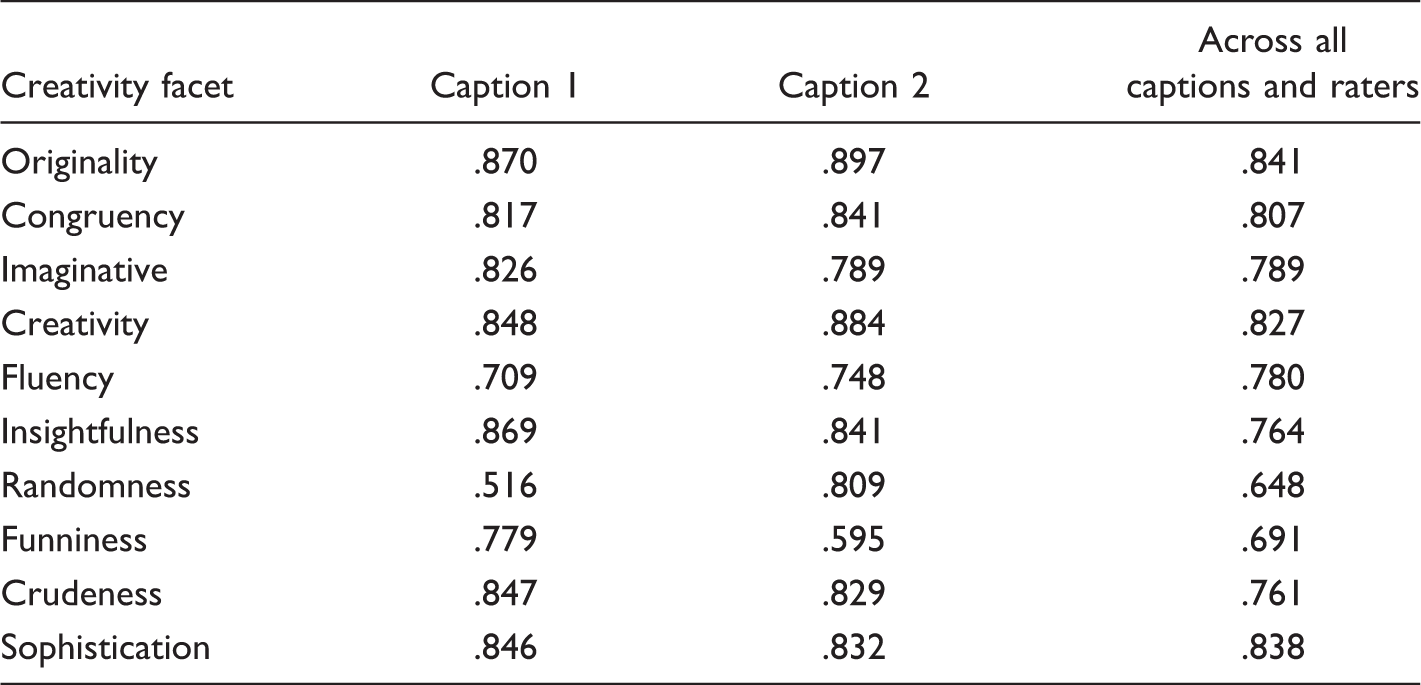
Factor Analysis of Creativity Indices
To examine if the different creativity items mapped onto different empirical factors, we conducted a principal-axis factor analysis on the 10 total scores. This analysis yielded two factors with eigenvalues greater than 1.0. A robust first factor accounted for 56.89% of the variability (with an eigenvalue of 5.69) while a second factor with an eigenvalue of 1.30 only accounted for 12.96% of the variability.
To further explore if a single-factor solution makes the most sense, we conducted a Cronbach’s alpha analysis for all 10 creativity items. An alpha of .91 emerged. For these reasons, multiple subscales beyond the item level were not deemed as warranted.
Correlational Analyses
Correlations Between Creativity Markers and Personality Measures + RTME.
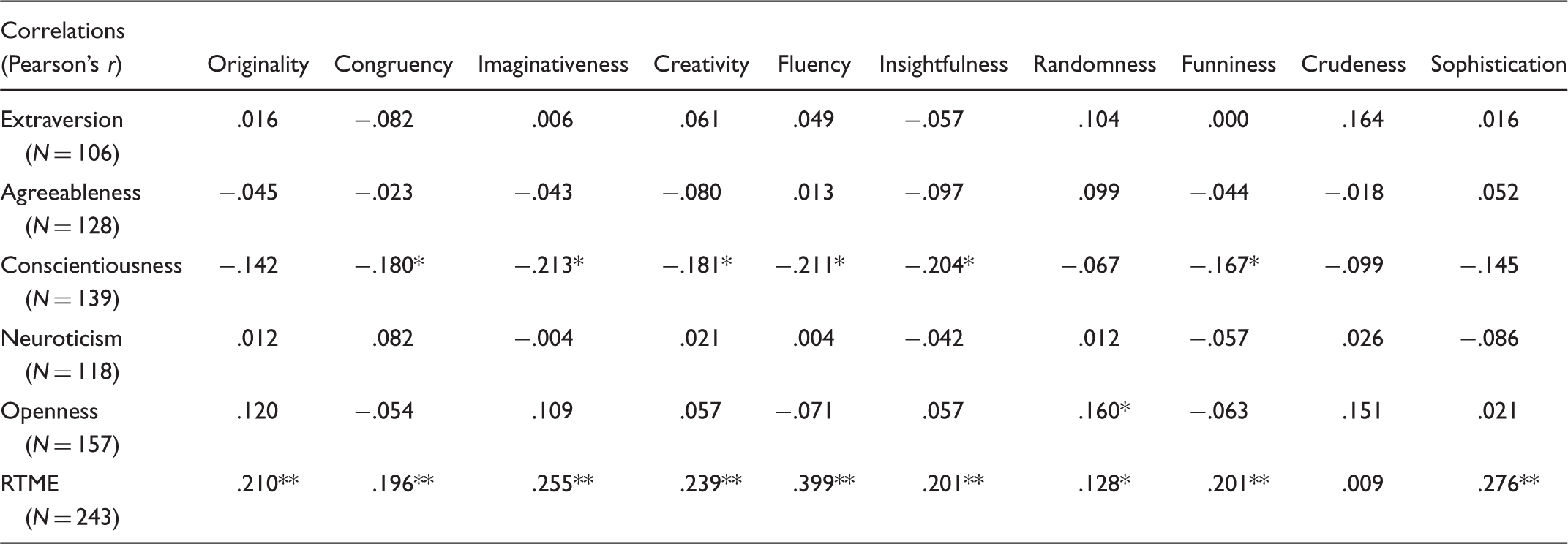
RTME = Reading the Mind in the Eyes.
Correlation is significant at the .05 level (two-tailed).
Correlation is significant at the .01 level (two-tailed).
The RTME task significantly correlated with 9 of the 10 creativity measures, with Crudeness being the only exception. Of the Big Five personality traits, conscientiousness correlated with 6 of the 10 creativity measures: Congruency, Imaginativeness, Creativity, Fluency, and Insightfulness.
Predicting Creativity Using Multiple Regression Analyses
Multiple Regression Predicting Fluency From Conscientiousness and the RTME Task.
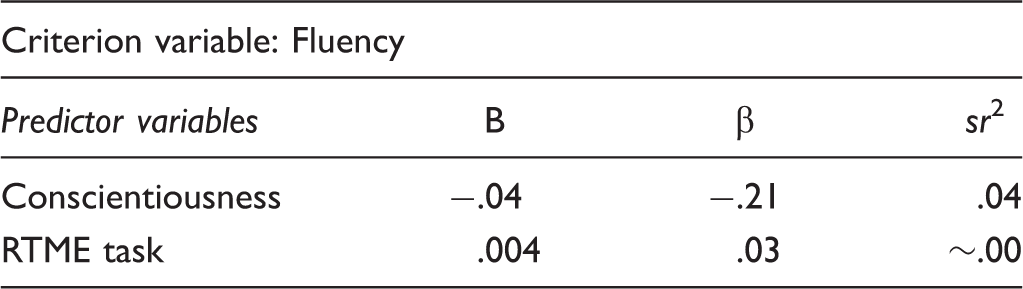
RTME = Reading the Mind in the Eyes. R2 = .045 (p < .05).
To examine the overall amount of variability in fluency explained by Gender and RTME, and to examine the unique amount of variability explained by both gender and RTME on fluency, a multiple regression was conducted as seen later.
Predicting Creativity Measures From RTME Beyond the Effects of Gender
Regression Analysis for Fluency as Predicted by Gender and the RTME.
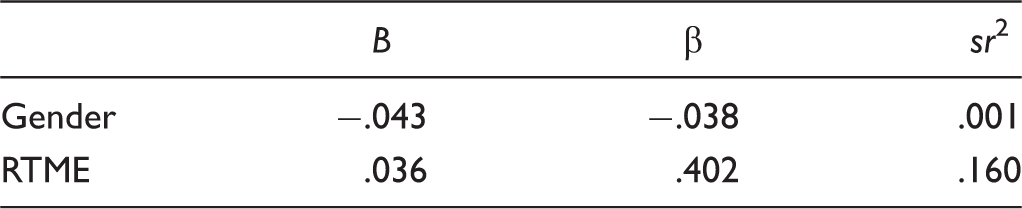
RTME = Reading the Mind in the Eyes.
p < .001.
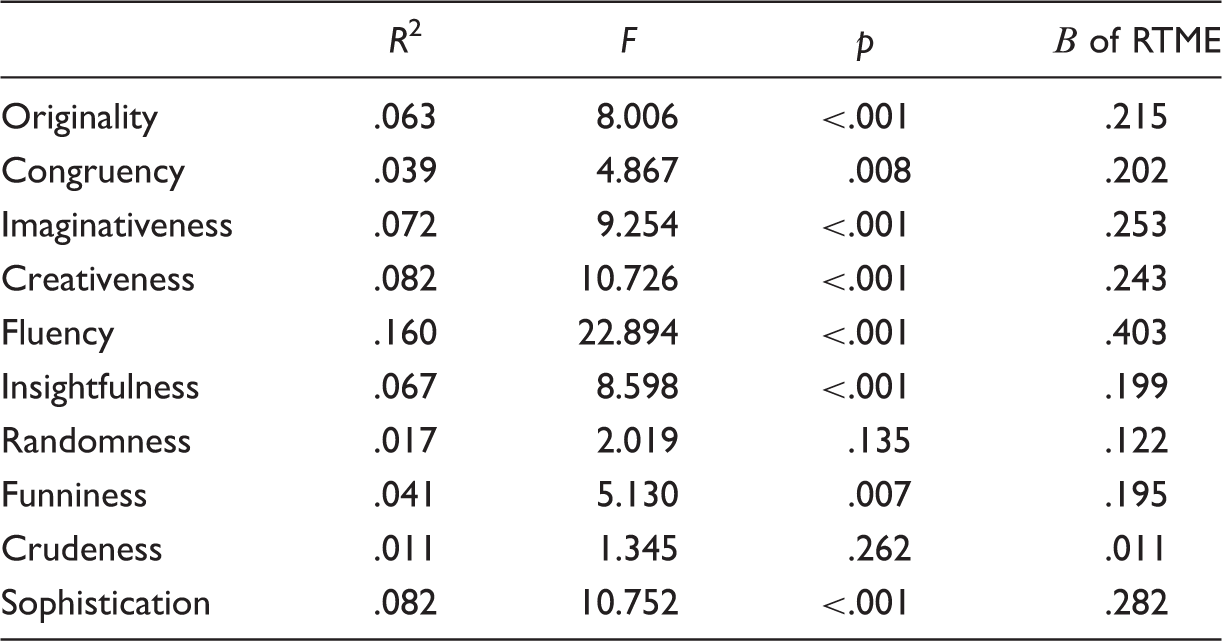
Regression Analysis for Every Measure of Creativity as Predicted by Gender and RTME.
RTME = reading the mind in the eyes.
p < .05.
Discussion
Human creativity is, without question, one of the core features that separates humans from other classes of animals (see Geher & Miller, 2008). Creative processes have paved the way for advances in all human-related fields, such as education, technology, art, and government. Thus, understanding the predictors of creativity gets at our understanding of the essence of our humanity.
Past researchers in the behavioral sciences have found several important predictors of creativity, including general intelligence, openness to experience, and cultural factors. In recent decades, behavioral scientists have shown a strong interest in the emotion–cognition interface—working to understand the nature of emotional intelligence—and the important life outcomes associated with this set of psychological skills (see Geher, 2004). The current research sought to examine the relationship between a basic facet of emotional intelligence, empathic accuracy, and creativity. The basic prediction here was that high levels of empathic accuracy (measured via Baron-Cohen et al.’s (2001) RTME test) should be positively related to markers of creativity—a finding that was supported in our research.
This research also examined relationships between the Big Five personality traits and creativity—with the idea that the Big Five personality traits are ubiquitous markers of personality—and any facet of emotional intelligence that predicts creativity should, to demonstrate discriminant validity, predict variability in creativity beyond what is explained by the Big Five alone. Here, we found no effect for openness in predicting creativity—but we found consistent effects for conscientiousness, generally finding that high levels of conscientiousness corresponded to low creativity ratings.
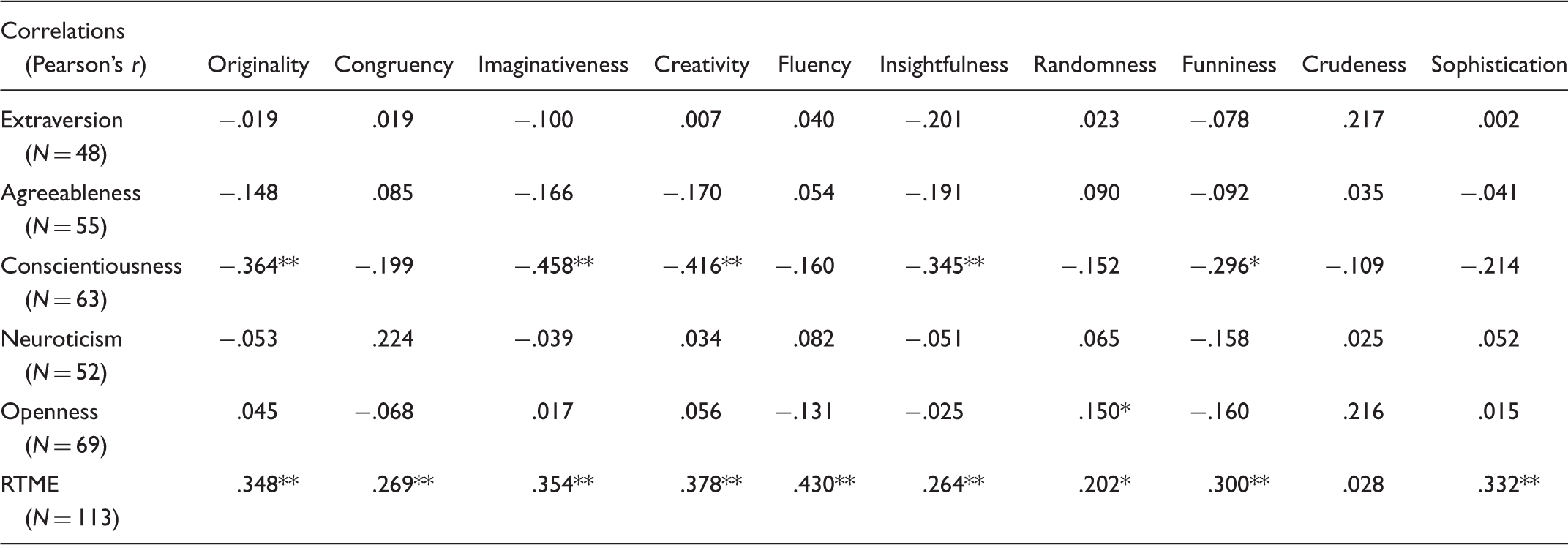
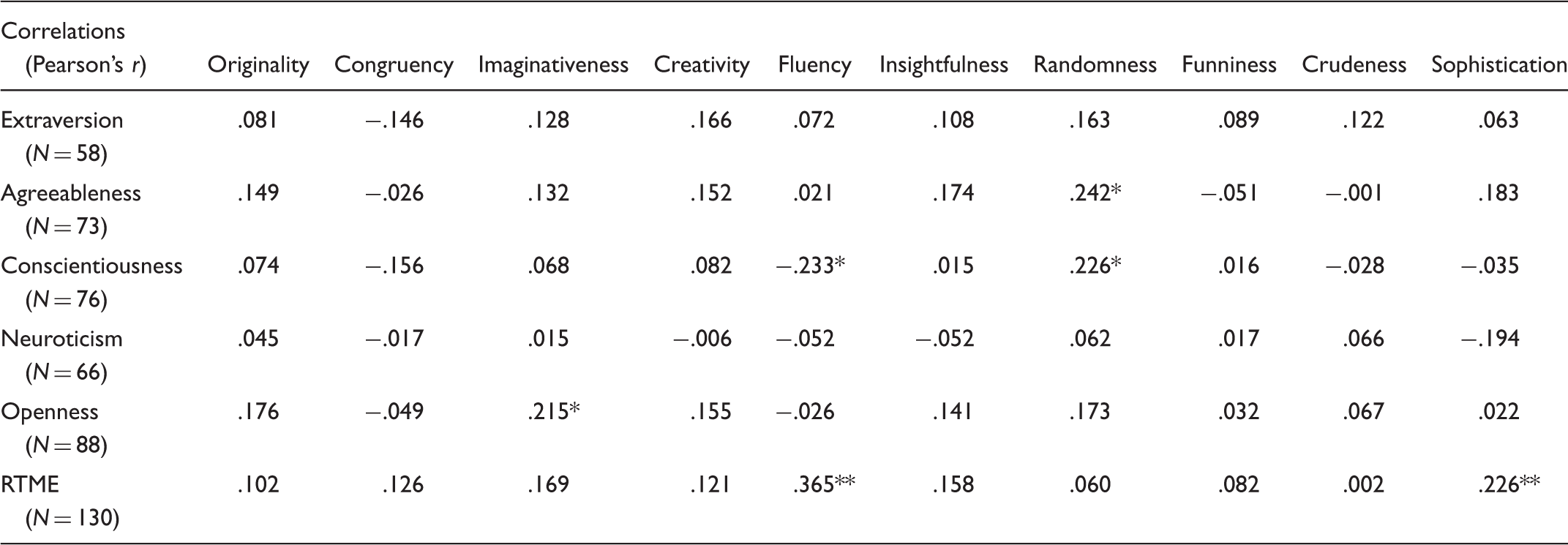
Predicting Creativity Measures From RTME Beyond the Effects of Gender
Correlations Between Creativity Markers and Personality Plus RTME (Males).
RTME = Reading the Mind in the Eyes.
Correlation is significant at the .05 level (two-tailed).
Correlation is significant at the .01 level (two-tailed).
Correlations Between Creativity Markers and Personality Plus RTME (Females).
RTME = Reading the Mind in the Eyes.
Correlation is significant at the .05 level (two-tailed).
Correlation is significant at the .01 level (two-tailed).
Under the assumption that females have higher levels of empathy or emotional intelligence in general (Christov-Moore et al., 2014), their levels of creativity may be irrelevant, and thus there is no correlation between the two. However for males, this relationship between creativity and empathy may indicate that higher empathy in males may allow better or more creative responses to social situations. From an evolutionary perspective, this ability to respond to a social situation creatively could be an advantage when finding a mate.
The only 2 of the 10 measures of creativity that were not predicted by gender and the RTME task were Randomness and Crudeness. This intuitively makes sense, since one’s level of empathy may have no effect on whether that individual chooses to behave randomly, in a given situation. Alternatively, Crudeness, because of its inherent level of inappropriateness, may not correlate with empathy at all since the higher one’s level of empathy, the less likely they may be to respond to a situation in a crude way. This finding also coincides with the earlier correlations, showing that Crudeness seems to be the exception of the 10 creativity measures in relation to the RTME task.
Conscientiousness and Creativity
Conscientiousness is generally considered a positive trait, corresponding to such positive outcomes as success in the domains of work and intimate relationships. Here, we find an interesting caveat to the “conscientiousness is good” rule: High levels of conscientiousness were consistently predictive of low levels of creativity across a wide range of creativity facets. For instance, conscientious was negatively related to imaginativeness. This finding tells an interesting story. Perhaps highly conscientious individuals, who are great at following a blueprint, are, concurrently, less able to “think outside the box”—thus, to stick with the same metaphor, they may be less able to create the blueprint, so to speak.
Given the defining features of both conscientiousness and creativity, it is interesting to see here that these dimensions are negatively related to one another—suggesting that to some extent, they may actually be opposing psychological forces.
Emotional Intelligence and Creativity
Our findings also demonstrate a strong effect for the empathic accuracy (emotion-detection) element of emotional intelligence to positively predict creativity. People who scored high on the RTME test tended to score high on most markers of creativity as well. This pattern is particularly interesting given that empathic accuracy is a social-detection process whereas creativity is a generative process. This pattern then suggests that there is an important link between the ability to know others’ feelings and the ability to create products that others find amusing.
Limitations and Future Research
While the findings here speak to the predictive nature of conscientiousness and empathic accuracy in predicting creativity, there are clearly several limitations to this work. First, the work is inherently correlational in nature, not allowing for an assessment of causal linkages. Thus, the reasons that conscientiousness and empathic accuracy are related to creativity are not fully explicated by the current methodology. Further, creativity is being operationally defined in the current research in a very specific way. On the one hand, this measurement method allows for a clear operationalization of several parameters of creativity. However, on the other hand, creativity is clearly a broad feature of the human experience, including the domains of music, art, dance, poetry, technology, and more. The current research truly only examined a slice of this broad set of abilities.
One important limitation to note was our inability to run comparisons between gender. Part of this was due to lack of data for individual participants on questions about gender and the personality factors. It appeared that some participants did not complete the entire survey, meaning we collected data for certain questions but not others. This was also the case for different measures across the entire survey. For instance, specifically with regard to the multiple regression analysis, N = 145 for measures of the Big Five Personality, despite N = 268 for the RTME. Therefore, while the overall regression analysis turned out significant, the data were misleading in that it only analyzed 145 of the 268 participants that took the RTME task.
The current work sheds important light on the dispositional predictors of creativity. Future research along this same trajectory can help us better understand the relationship between dispositional features of individuals and the nature of human creativity.
Footnotes
Acknowledgments
This project is the result of a true team effort across several generations of the New Paltz Evolutionary Psychology lab. Liz Levy and Morgan Gleason were particularly helpful in the development of the stimuli for this project.
Declaration of Conflicting Interests
The authors declared no potential conflicts of interest with respect to the research, authorship, and/or publication of this article.
Funding
The authors received no financial support for the research, authorship, and/or publication of this article.