







Abstract
We tested preregistered hypotheses (a) examining the structure of supernatural beliefs and perceived experiences and (b) predicting supernatural engagement from the Big Five and cognitive styles. Exploratory and confirmatory factor analysis (CFA) of self-report data in the U.S. undergraduates (Study 1: n = 1,401; Study 2: n = 1,939) showed that beliefs and perceived experiences were characterized by two factors. Positive and Negative Agents factors related strongly to religious belief salience and were defined by God, the devil, angels, demons, and ghosts/spirits, whereas Forces and Spirits factors were unrelated to religious belief salience and were defined by fate/destiny, karma, and ghosts/spirits. Extraversion, conscientiousness, experiential processing, schizotypy, and dissociative tendencies related positively to supernatural engagement. With some nuances, agreeableness, neuroticism, and need for closure were positive predictors, whereas skepticism and analytical-rational processing were negative predictors. Openness and intellectual humility did not relate positively to supernatural engagement, contradicting expectations. Because the literature on individual differences predictors of supernatural engagement is not well integrated, these results may contribute to a more comprehensive understanding of this topic.
Many people believe in supernatural entities—entities that are separate from or extend beyond the physical universe (Pew Research Center, 2018). Some people also perceive experiences with these entities as part of their daily lives (Exline, Wilt et al., 2021; Wilt, Stauner, et al., 2020). Supernatural entities can include personal agents, which are thought to have minds, thoughts, and intentions (e.g., God, gods, angels, ghosts/spirits, demons, the devil), as well as impersonal forces that may or may not be seen as having these agentic qualities (e.g., karma, fate/destiny, and supernatural luck). Supernatural entities have been cornerstones of religious/spiritual (r/s) belief systems over the course of human history and across cultures. People outside of organized religions may also endorse supernatural beliefs; yet many people do not believe in the supernatural or hold weak or tentative beliefs regarding supernatural engagement (Exline, Wilt et al., 2021; Norenzayan & Gervais, 2013). Furthermore, individual differences in supernatural engagement have both positive and negative implications for health (e.g., Flannelly, 2017; Nie and Olson, 2016). Our aim in this project was to take a close, systematic look at what types of people tend to report supernatural beliefs and experiences.
Many scholars have done projects predicting supernatural beliefs and experiences. Some research has focused on relatively dynamic predictors, such as environmental characteristics and transient emotional and cognitive states (e.g., Miner and McKnight, 1999), whereas other studies have examined more stable factors, such as a person's social background, motivational characteristics, and r/s beliefs (e.g., Mercier et al., 2018). In the current project, our focus was broad and integrative. We examined two classes of relatively stable predictors: the Big 5 personality traits and cognitive style variables (e.g., analytical vs. experiential processing, unusual thinking styles, dissociative tendencies). Our project was built directly on earlier work with an expansive focus. We included a variety of supernatural entities and a wide array of individual-difference variables. Using preregistered hypotheses, we did in-depth structural analyses of supernatural beliefs and experiences. We then followed with a close examination of individual differences in relation to these supernatural beliefs and experiences.
Our hope is that this broad-based project might advance the science of personality and individual differences in at least three ways. First, results may add to the literature linking the Big Five and cognitive style variables to broad r/s engagement (Rose & Exline, 2012; Wilt, Exline et al., 2020) by revealing links with supernatural beliefs and experiences, which are specific components of many r/s worldviews. Second, r/s variables such as supernatural beliefs and perceived experiences may be viewed as residing at the level of personality sometimes referred to as characteristic adaptations (DeYoung, 2015a; McAdams & Pals, 2006; McCrae & Costa, 2008), comprising patterns of affect, behavior, and cognition that are narrower than dispositional variables (i.e., the Big Five). Similar to other characteristic adaptations such as values and social attitudes, r/s variables are highly influenced by culture and appear later in development than dispositions (Wilt, Exline et al., 2020). Thus, associations between traits, cognitive styles, and supernatural engagement may represent associations across different levels of personality. Third, people with different supernatural beliefs and experiences may differ from each other at the level of narrative identity, the third level of personality comprised of life stories that connect one's remembered past and imagined future to the present—stories that can imbue life with a sense of meaning, purpose, and coherence (McAdams & Pals, 2006). For instance, individuals who believe strongly in God and see God as very active in their lives will probably emphasize different themes in their life stories than others with atheistic worldviews. As such, a deeper understanding of supernatural beliefs, perceived supernatural experiences, and how these connect with personality and religious belief could help to illuminate a vital domain of many people's life stories.
Additionally, the study broadens not only the study of personality and individual differences but also the scientific study of religion and spirituality. Religion and spirituality are generally defined as phenomena that center around thoughts, feelings, experiences, and behaviors in relation to the sacred (Pargament et al., 2005). Yet relatively few studies have taken a close look at differences in the ways people understand and experience what they hold sacred. This study broadens the scope of religious study beyond conceptions of God to beliefs and experiences in relation to other supernatural entities.
Supernatural Entities
Because we wanted to take a broad view of what we will term supernatural engagement (i.e., beliefs and perceived experiences involving supernatural entities), we wanted to focus not only on God but on a diverse set of supernatural entities. Specifically, we were interested in beliefs and experiences involving God, the devil, angels, demons, ghosts/spirits, fate/destiny, karma, and luck. Several of the entities assessed in our studies, namely God, the devil, angels, demons, and spirits, appear on the Supernatural Belief Scale (Jong et al., 2013), and scores on this scale have shown evidence of reliability and validity in undergraduate samples from the United States, Croatia, and New Zealand (Bluemke et al., 2016; Jong et al., 2013). Large surveys of the United States (Bader et al., 2019; Gecewicz, 2018; Lugo, 2009) and British (Dahlgreen, 2016) participants have shown that there are widespread beliefs in the entities we assessed among people identifying as religious and as nonreligious. Based on this prior work, we expected that the entities we assessed would be relevant to the U.S. undergraduates. We acknowledge that this list is not exhaustive of the entities that are relevant to this population and that the entities are likely to be most salient to Abrahamic r/s faiths. However, because most of our participants are likely to identify within Abrahamic traditions (and particularly Christianity), we decided to focus on these entities for this initial study. 1
Supernatural Engagement: Relevance to Personality Psychology
The topic of supernatural engagement is one that we see as highly relevant to personality psychology. First, supernatural beliefs and experiences may represent fundamental individual differences in the ways that people understand the world. Such beliefs are widespread, highly variable between people, and a common source of strong attitudes relevant to the self and others (Goplen & Plant, 2015; Ysseldyk et al., 2010). Second, supernatural beliefs are often related to well-being and distress. For instance, many studies have shown that perceptions of a positive relationship with God are linked with better mental health, whereas perceived problems with God are linked with emotional distress (Flannelly, 2017). Belief in demons is a strong predictor of negative mental health cross-sectionally and over time (Nie & Olson, 2016), and attributions to the devil also show links with distress (Wong et al., 2019). Third, supernatural beliefs may support integral psychological functions. Beliefs involving God often provide people with a sense of meaning (Park, 2013) and control (Kay et al., 2009), as well as a means of coping with stress (Pargament, 1997). In some cases, beliefs in negative entities may also increase meaning (Routledge et al., 2016) and commitment to r/s worldviews and attitudes (Baker et al., 2020; Martinez, 2013). Although we focused only on divine and demonic beliefs in this section, this logic could apply to a wide range of supernatural entities (Johnson, 2021).
Structural Issues: Grouping Supernatural Beliefs and Experiences into Factors
Our aim for this project was to examine beliefs and perceived experiences involving an array of entities. Before considering predictors of these beliefs and experiences, we first needed to consider some fundamental questions.
First, should beliefs and perceived experiences be considered separately? There are straightforward conceptual reasons for doing so. In our studies, a belief is a cognitive attitude about the likelihood of the existence of a given supernatural entity, whereas a perceived experience is an attribution of direct contact with the entity. Logically, belief does not necessitate experience. For example, a person may accept that God exists without hearing God's voice or being able to point to an instance when God directly intervened in one's life. Further, the distinction between belief and experience is pertinent to the different ways in which people may engage with r/s in general. For instance, some people may primarily do so through religious teachings and texts, which may not prescribe and may even discourage the seeking out of direct contact with spiritual entities. Conversely, other people might search for such contact, for example, through meditation, shamanic journeying, or psychic exercises. Our position is therefore that beliefs and perceived experiences may be sufficiently distinct to consider them as separate outcomes, though they are likely to be highly related to one another.
Second, structurally, how would these belief and experience items relate to each other? Although we assessed eight conceptually distinct entities, we anticipated that many of the associated beliefs and experiences would show strong correlations—and that we would most likely want to combine them into manageable factors that would help to organize our later analyses.
Fortunately, we were able to draw on earlier studies that included structural analyses of beliefs in various supernatural entities. For example, some early exploratory factor analyses (EFAs) (Johnston et al., 1994; Jones et al., 1977; Tobacyk & Milford, 1983) and more recent confirmatory factor analyses (CFAs) (Chauvin & Mullet, 2018; Utinans et al., 2015) showed that beliefs about r/s supernatural entities (e.g., God, the devil, angels, demons) loaded on separate factors from ghosts and spirits; furthermore, beliefs about these entities were also distinct from beliefs about paranormal phenomena such as psi and witchcraft. CFAs of specifically r/s supernatural entities suggested a general factor reflecting individual differences in the tendency to believe in supernatural positive agents (God, angels), negative agents (the devil, demons), afterlife entities (souls, spirits), afterlife places (heaven, hell), and events (miracles, prophecy), as shown in two samples of undergraduates from New Zealand (Jong et al., 2013) and in independent samples of undergraduates from New Zealand and Croatia (Bluemke et al., 2016). In each of these studies, a negative valence factor (for the devil, demons, and hell) and factors reflecting the content groups listed above supplemented the general factor. Furthermore, measurement invariance and structural invariance were supported across the samples from New Zealand and Croatia, as well as across self-and peer reports for the Croatian sample (Bluemke et al., 2016). To the best of our knowledge, no structural studies have included fate/destiny, karma, or supernatural luck; but these earlier studies still provided a good foundation for our hypotheses.
The evidence we have just described, though certainly relevant to our work, did not lend itself to straightforward predictions regarding the structure of beliefs and experiences with entities included in our project. None of the past studies included all of the entities we were interested in, and the studies that do exist provide mixed evidence about whether entities are best represented by one or multiple factors. As a starting point, we began with preregistered EFAs in Study 1 to determine a preliminary structure of entities, and we used the results from Study 1 to inform preregistered CFAs in Study 2.
Predicting Engagement with Supernatural Entities
Of course, many variables predict supernatural engagement. Because any attempt at an exhaustive review is well beyond the scope of this paper, we refer interested readers to large surveys that highlight demographic and religious predictors (e.g., Bader et al., 2019; Baker, 2008; Lipka, 2019), studies looking at situational variables related to supernatural attributions (e.g., Barnes and Gibson, 2013; Lupfer et al., 1994; Wilt et al., 2019), and studies of relatively stable factors (e.g., socialization, motivations, beliefs) that may predispose people to supernatural engagement (e.g., Mercier et al., 2018; Weeks & Lupfer, 2000; Wilt, Stauner, et al., 2020). Another notable class of predictors that falls outside the focus of the current study includes cognitive variables that are related to reasoning about minds, such as ontological confusions (Lindeman et al., 2015), mentalizing deficits (Norenzayan et al., 2012), and teleological thinking (White et al., 2020). Here we focus on classes of relatively stable variables as potential predictors: broad dimensions of personality (the Big 5 traits), which are generally overlooked in studies of supernatural engagement, and more narrowly defined cognitive styles.
Big 5 Traits
Of the Big 5 personality traits (extraversion, agreeableness, conscientiousness, neuroticism, and openness to experience), openness to experience may have the most straightforward theoretical links to supernatural engagement. Components of openness, such as fantasy and imagination (DeYoung, 2015b), might help a person to consider more extraordinary explanations for events (as opposed to mundane explanations), including supernatural attributions. Of the other Big 5 traits, we expected agreeableness to relate positively to supernatural engagement; highly agreeable individuals are more trusting, conforming, have a higher desire to please others (Graziano & Tobin, 2009), and thus more agreeable individuals may be more likely to adopt supernatural attributions that are common in one's culture through socialization processes (Exline, Stauner et al., 2020). Little empirical work has examined whether engagement with individual supernatural entities is predicted by the Big 5. However, a recent study found that a factor reflecting beliefs in ghosts/spirits and reincarnation, as well as a factor reflecting beliefs in God and the devil, related positively to a lower order aspect of openness encompassing fantasy and imagination but not another aspect encompassing intellectual quickness and ingenuity (Chauvin & Mullet, 2018). Another study showed that engagement with ghosts (i.e., beliefs and experiences) related to openness (Langston et al., 2020)
The large body of research linking r/s engagement (i.e., overall religiosity and/or spirituality) to the Big 5 (for reviews, see Rose and Exline, 2012; Saroglou, 2017; Wilt, Exline et al., 2020) is relevant here. Because r/s traditions contain teachings about supernatural entities, it is likely traits linked to r/s engagement will also be linked to engagement with supernatural entities. In sum, research on the Big 5 shows that (a) r/s relates positively to agreeableness and conscientiousness, (b) spirituality, specifically, relates positively to openness, and (c) r/s has mixed associations with extraversion and neuroticism.
Cognitive Styles
Cognitive styles, which constitute the ways in which a person perceives, cognitively engages with, and reflects about, events about the world (Pennycook et al., 2012), may relate to different ways of making sense of experiences and to different worldviews. For events in which causal factors are ambiguous, whether the scope of the event is simple (e.g., a call from a loved one after just thinking of them) or cosmic (e.g., the Big Bang), the causal attribution process—searching for and considering explanations, rejecting some explanations, and retaining and choosing explanations (Weary et al., 1989)—likely varies across individuals according to cognitive styles. For instance, someone who tends to rely on logical analysis may proceed through the attribution process much differently than someone who typically relies on intuition (Kahneman, 2011), as would someone who perceives stimuli within a typical or ordinary range as opposed to someone who has unusual or intense perceptions (e.g., perceiving colors as especially luminous).
Supernatural phenomena often seem to defy conventions of logic, science, and empiricism, or depend on highly subjective or intuitive experiences. Thus, supernatural engagement may be less likely among people who prefer explanations based on critical thinking and more likely among people who process information intuitively, are willing to suspend disbelief, and have low need for closure.
In the current study, we assessed individual differences in cognitive styles that reflect preferences for evaluating evidence and unanswered questions. Skepticism encompasses tendencies to gather objective evidence, engage with issues with a questioning mind, and evaluate multiple potential answers (Hurtt, 2010). An analytical-rational processing style encompasses tendencies to process information in analytical, logical, and systematic ways (Epstein et al., 1996). An experiential processing style encompasses tendencies to process information in holistic ways, to rely on emotion and intuition, and to use heuristics (Epstein et al., 1996). The need for cognitive closure reflects tendencies to be closed-minded, avoid cognitive ambiguity, and make decisions without evaluating all of the evidence (Webster & Kruglanski, 1994). Intellectual humility involves recognizing that one's beliefs may be incorrect and an awareness of the limitations of human reasoning (Leary et al., 2017). Some evidence supports the idea that individual differences in preferences for critical thinking relate to supernatural engagement; people with higher levels of analytic cognitive style had lower levels of belief in God (Pennycook et al., 2012; Shenhav et al., 2012) and lower levels on a scale including beliefs in heaven, hell, angels, demons, miracles, afterlife, and soul (Pennycook et al., 2012).
Intense and Unusual Perceptual Experiences
Though we all exist in the same world, people's sensory and perceptual experiences of the world differ widely. We expected that people who tend to have especially intense or unusual, perceptual experiences would also have more supernatural beliefs and experiences, based on the reasoning that such perceptions lend themselves to attributional searches that go beyond natural explanations. We focused on two distinct cognitive styles that are relevant to intense and unusual perceptual experiences: We assessed a facet of schizotypy concerned with having unusual experiences, and we assessed dissociative tendencies.
Some people tend to have relatively intense sensory experiences; for instance, colors may appear brighter, and sounds and smells may seem especially strong (Wolfradt et al., 1999). In some cases, people have unusual sensory experiences that are not shared with others, such as seeing or hearing things that others do not see or hear, i.e., hallucinations (McCreery & Claridge, 1996). Schizotypy is a multifactorial construct encompassing tendencies to have unusual perceptual experiences (e.g., odd beliefs, intense sensory experiences, and hallucinations), cognitive disorganization, anhedonia, and impulsivity (Claridge et al., 1996). We assessed only the unusual experiences component because it is the only component that seems theoretically relevant to supernatural engagement. There is some evidence linking the intense and unusual perceptions of schizotypy to supernatural engagement, including higher probability of reporting a “spiritual, religious, supernatural, or paranormal” event (Barnes & Gibson, 2013), beliefs in spirits and supernatural agents (Irwin & Watt, 2007), beliefs in various paranormal phenomena (e.g., Wolfradt et al., 1999), and engagement with ghosts specifically (Langston et al., 2020).
Though typically people perceive themselves as a unitary self, existing “inside” a body within the world, some people have dissociative experiences in which they perceive a sense of disconnection from who they are, their bodies, or the world (Ashton & Lee, 2012). Dissociative experiences like those described above are sometimes conceptualized as coping responses to trauma (Waller et al., 1996); however, the tendency to dissociate is a normally distributed trait in the population with non-pathological expressions (Butler, 2006). Higher levels of trait dissociation are associated with higher levels of beliefs in ghosts and spirits (Wolfradt, 1997), as well as higher levels on a scale comprising various supernatural beliefs, such as spirits, apparitions, past lives, and mystical experiences (Thomson & Jaque, 2014).
Overview of the Current Research
As described in the preceding sections, several of the variables we examined have been studied in relation to different kinds of supernatural engagement, however, no studies have taken a relatively comprehensive look across potential predictors and supernatural entities. Thus, we believe that testing several hypotheses that cut across these variables has the potential to integrate relatively disconnected literatures. To begin to examine these hypotheses, we conducted two large-scale, cross-sectional, correlational studies investigating personality and cognitive style predictors of supernatural beliefs and experiences. In Study 1, which involved a large sample of undergraduates, we preregistered exploratory factor analyses (e.g., EFAs) examining the structure of supernatural entities, and we preregistered correlational hypotheses about predictors (https://osf.io/2s3tn/?view_only = 54fe86b924534af28e60e216ee423b7d). After evaluating the results of Study 1, we preregistered analyses and hypotheses for Study 2 (https://osf.io/6zu2y/?view_only = a63693897f6d454a8ba2e8cae85707d0). This study, which involved another large sample of undergraduates, built on the results of Study 1 by taking a confirmatory approach to examining the structure of supernatural entities and by testing whether many of the correlational findings replicated in path analytics. Analysis scripts and de-identified data for both studies are available at: (https://osf.io/379y8/?view_only = 238fa88fd8d2446884017b440a4c2a25).
Study 1
As noted previously, in this study, we took an exploratory approach to examine the structure of supernatural beliefs and perceived experiences with the following entities: (a single God [or Higher Power], the devil/Satan, angels, demons, ghosts/spirits of humans who have died, fate/destiny, karma, and luck). Based on the conceptual framework we presented in the introduction, we preregistered the following hypotheses: supernatural engagement would relate (a) positively to the Big 5 traits of openness and agreeableness (we made no predictions regarding other Big 5 traits), (b) negatively to cognitive styles reflecting tendencies toward critical thinking (high skepticism, high analytical-rational processing style, low need for cognitive closure), (c) positively to cognitive styles reflecting tendencies to favor ways of knowing that do not rely completely on logical analyses (high intellectual humility, high experiential processing style), and (d) positively to cognitive styles reflecting tendencies for unusual perceptual experiences (high levels of the unusual experiences component of schizotypy) and dissociative experiences (high dissociation).
Methods
Participants and Procedure
We recruited from participant pools at three U.S. universities: introductory psychology pools at a large, public university in the Great Lakes region and a private research university in the Great Lakes region, and a liberal studies pool at a large, public university in the southeast. Participants completed measures for the current project as part of a larger, web-based survey, “Personal Beliefs and Experiences” (all measures are listed in the preregistration for the larger study at https://osf.io/379y8/?view_only = 238fa88fd8d2446884017b440a4c2a25). Participants gave informed consent electronically and received partial credit toward their class research participation requirement. Methods were approved by each university's IRB.
A total of 1,668 students completed the survey. We excluded subsets of participants from analyses sequentially for various reasons: failing at least two of three attention checks (n = 175), missing ≥ 20% of responses on scales included in the current project (n = 8), and extreme scores (i.e., outliers) on diagnostic plots for invariant responding on scales included in this project (n = 84). We retained n = 1,401 participants (1,067 women, 327 men, 4 transgender women, 2 “other”, and 1 who preferred not to specify gender) aged 18–39 years (M = 19.6, SD = 1.8). Ethnicities included White/Caucasian/European American (73%), Asian/Pacific Islander (12%), African American/Black (9%), Latinx/Hispanic (10%), Middle Eastern (1%), and other (1%). Multiple ethnicities were selected as appropriate. Religious affiliation and non-affiliation were assessed by asking participants to “describe your present religious/spiritual tradition, if any.” Responses included Catholic (24%), Christian (unspecified or nondenominational) (21%), Protestant (18%), Jewish (4%), Muslim (1%), Hindu (1%), Buddhist (1%), Eastern Orthodox (< 1%), other religion (2%), spiritual (1%), atheist (6%), agnostic (10%), none (8%), and unsure (1%).
Measures
We next describe measures of supernatural beliefs and perceived experiences with supernatural entities, as well as the Big 5 traits and cognitive styles. We also included a general measure of religiousness (religious belief salience) to examine relationships between predictors and supernatural engagement while statistically controlling for religiousness. Composite scores were calculated as the average item score for multi-item measures.
Cognitive Styles
Preregistered and Follow-Up Analyses
We preregistered analysis plans for (a) data reduction of items assessing supernatural beliefs and experiences and (b) correlational analyses using the Big Five and cognitive style variables to predict supernatural beliefs and experiences. Analyses were conducted in R (R Core Team, 2021) via the base functions and psych package (Revelle, 2020).
Data Reduction of Items Assessing Supernatural Beliefs and Experiences
We conducted analyses separately on items assessing (a) beliefs in supernatural entities and (b) perceived experiences with the entities. We screened for normality by examining skews and kurtoses, and then we estimated polychoric correlations. To determine the number of factors to extract from the correlation matrices, we used Very Simple Structure analyses (Revelle & Rocklin, 1979) and Horn's parallel analyses (Horn, 1965). We then conducted EFAs using the minimal residual solution and oblimin rotation to examine those factor solutions. We used statistics from the factor analyses (eigenvalues, factor loadings, factor correlations, communalities, uniqueness statistics, and complexities) and conceptual considerations when evaluating factor solutions. We created variables reflecting each factor using classically computed test scores (i.e., composites of items).
Correlational Analyses
We used Pearson zero-order correlations to test associations between predictor variables and those focused on supernatural beliefs and experiences. Though not part of the preregistered plan, we conducted partial correlations between predictors and the beliefs and experiences variables while controlling for religious belief salience (see Supplemental Material online). We noted that p-values would be used as one piece of information with no privileged role in scientific decision-making (McShane et al., 2019). We specified that effect sizes for correlations would be interpreted according to the following criteria as recommended by Gignac and Szodorai (2016) for the cognitive and behavioral sciences: .10 (relatively small), .20 (typical), and .30 (relatively large).
Results and Discussion
Descriptive Statistics for Items Assessing Supernatural Beliefs and Experiences
Descriptive statistics (Table 1) showed that participants commonly endorsed items close to scale midpoints, with the exception of perceived experiences with the devil and with demons (which were lower). There was substantial between-person variation in all items. Examination of medians/skews/kurtoses and histograms (see Supplementary Figure 1) raised some concerns about departures from normality for perceived experiences with the devil, demons, and ghosts/spirits.
Descriptive Statistics for Items Assessing Supernatural Beliefs and Experiences.
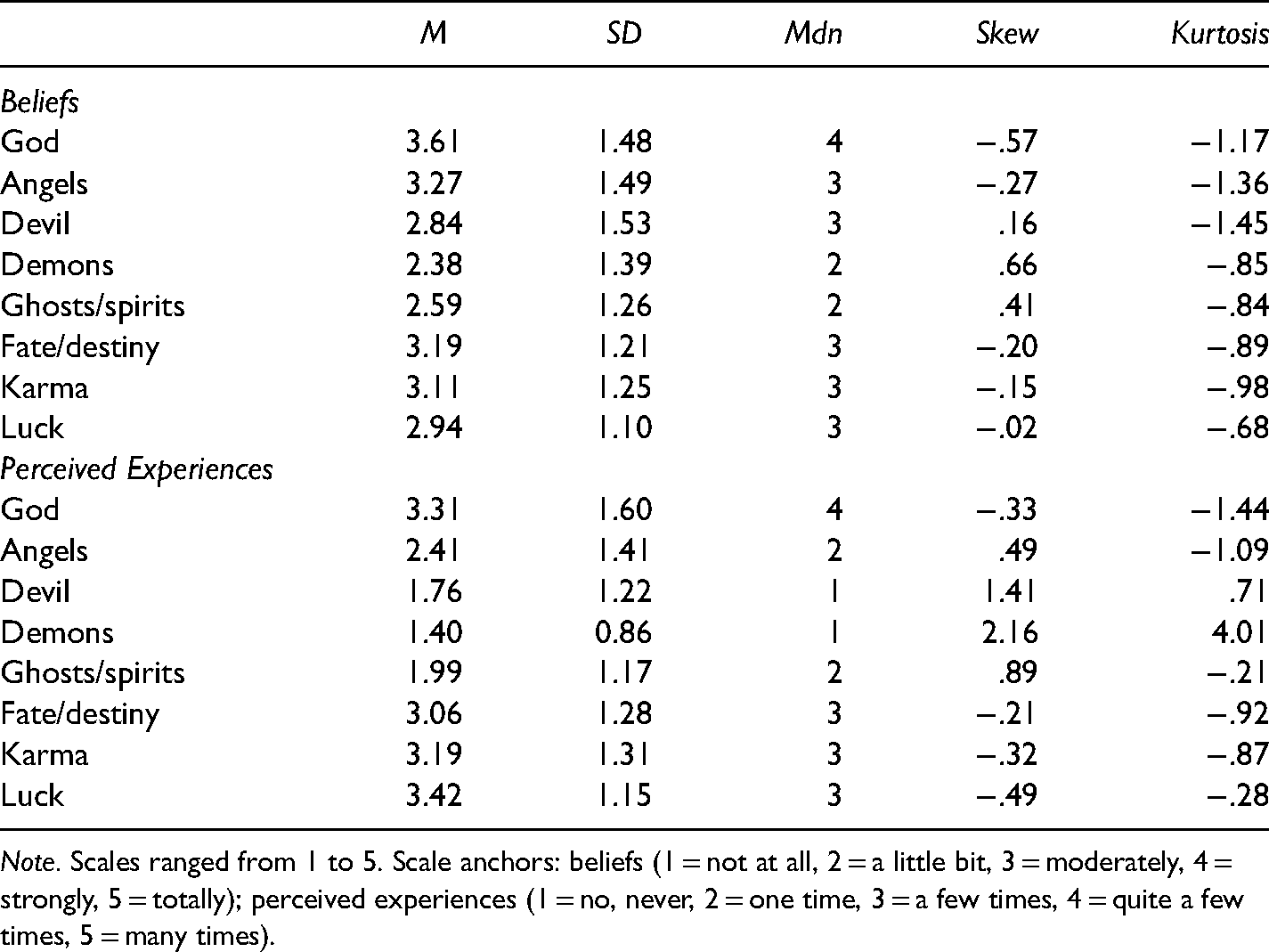
Note. Scales ranged from 1 to 5. Scale anchors: beliefs (1 = not at all, 2 = a little bit, 3 = moderately, 4 = strongly, 5 = totally); perceived experiences (1 = no, never, 2 = one time, 3 = a few times, 4 = quite a few times, 5 = many times).
Data Reduction of Items Assessing Supernatural Beliefs and Experiences
We computed polychoric correlations on belief and experience items separately (Supplementary Figures 2 and 3). Polychoric correlations are relatively robust to violations of normality and produce less biased estimates than Pearson correlations for Likert-type scales with a small number of ordered options (Flora & Curran, 2004; Onoshima et al., 2019). Very Simple Structure and parallel analysis plots (Figure 1) showed that two-factor solutions were optimal for items assessing beliefs and experiences. Table 2 shows parameter estimates for two-factor solutions. The factors we named Positive and Negative Agents were well defined by items assessing God, angels, the devil, and demons; the factors we named Forces and Spirits were well defined by fate/destiny, karma, luck, and ghosts/spirits. Correlations between factors for both solutions (beliefs, r = .23, p < .001; experiences, .19, p < .001) showed that the factors were relatively distinct. Complexities indicated that the ghosts/spirits and fate/destiny items had small but non-negligible cross-loadings on the Positive and Negative Agents factors (Hofmann, 1978).
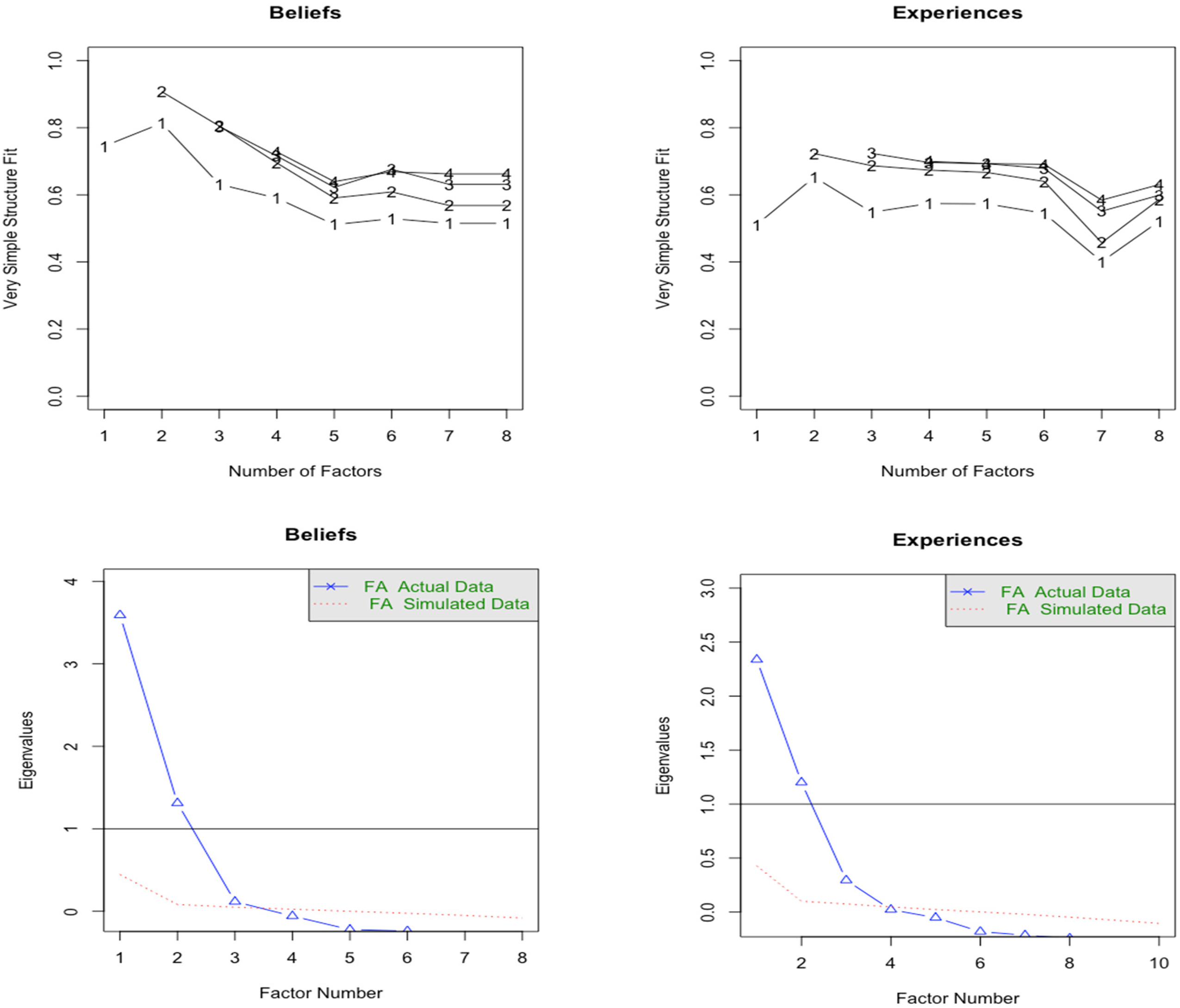
Very Simple Structure and Parallel Analysis Plots.
Parameter Estimates from Minimum Residual Exploratory Factor Analyses (EFAs).
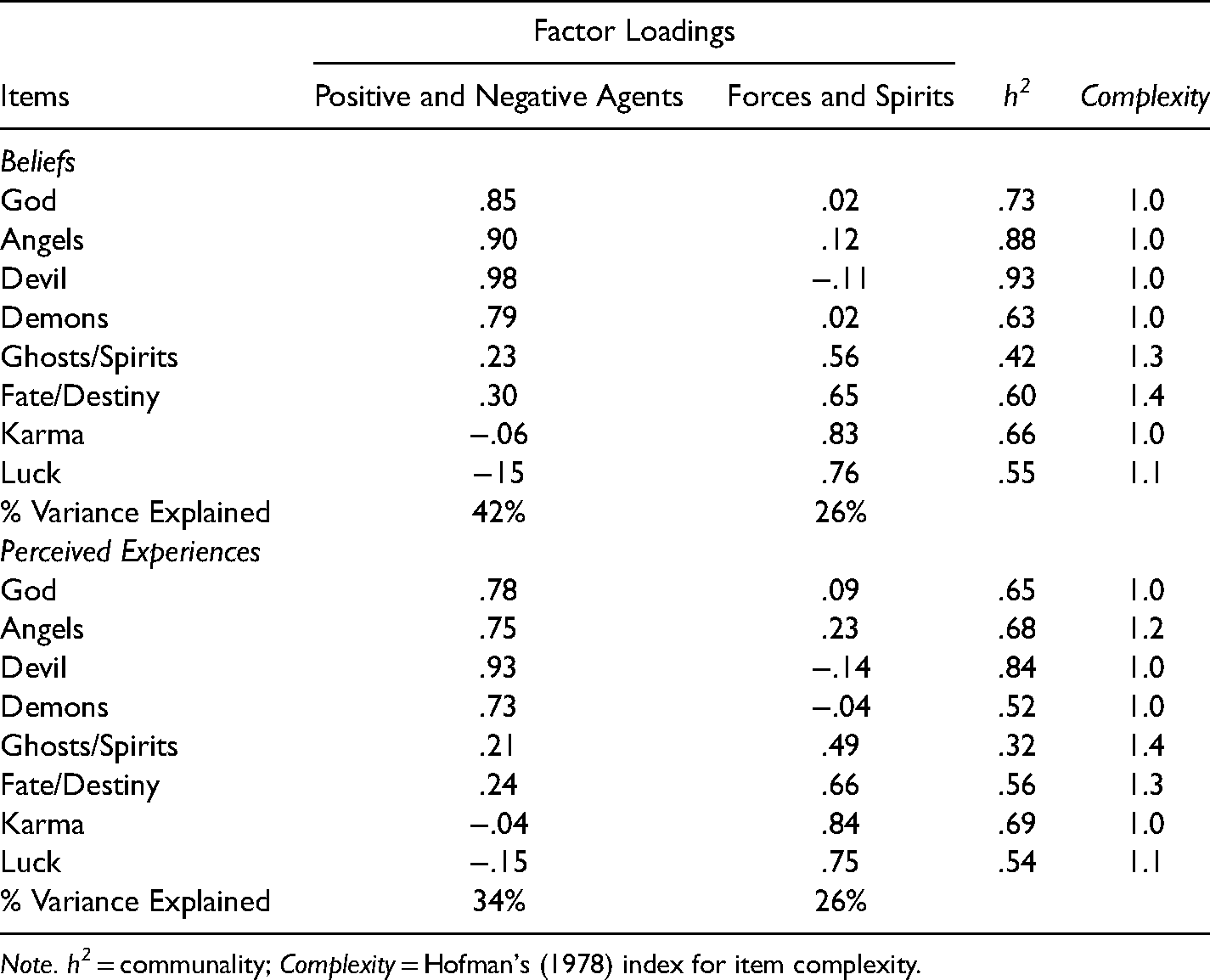
Note. h2 = communality; Complexity = Hofman's (1978) index for item complexity.
The Positive and Negative Agents factors included powerful supernatural agents common to Abrahamic religions, which, due to their inclusion of Christianity, encompass the faith traditions most endorsed by participants and most prevalent in the United States. The weak loading for ghosts/spirits may indicate that people viewed these entities as positive and/or negative agents, though perhaps distinguishable from the other four entities by being (a) less central to Abrahamic theologies and/or (b) less powerful agents. The weak loading for fate/destiny may be due to this entity being an implied part of Abrahamic r/s belief systems (i.e., related to the view of God as omnipotent and omniscient), distinguishable from the other entities loading strongly on these factors because it may be viewed as more of an impersonal force than a personal agent. The Forces and Spirits factors were defined strongly by fate/destiny, karma, luck, and ghosts/spirits. Fate/destiny, karma, and luck may be viewed as more impersonal than agentic, and their loading together with ghosts/spirits may reflect (a) all of these entities being seen as less powerful than those on the Positive and Negative Agents factor and/or (b) all entities being less central to Abrahamic theologies.
Comparing our results to previous research, we first observed that the Positive and Negative Agents entities loaded together consistently (e.g., Chauvin & Mullet, 2018; Jong et al., 2013). In the previous research, ghosts/spirits (sometimes assessed as “souls” or the “spiritual realm”) tended to load with the Positive and Negative Agents entities when supernatural entities common to Abrahamic belief systems were assessed (Bluemke et al., 2016; Jong et al., 2013), yet ghosts/spirits tended to split off onto separate factors when supernatural entities outside of Abrahamic belief systems were assessed (Chauvin & Mullet, 2018; Johnston et al., 1994; Jones et al., 1977; Tobacyk & Milford, 1983; Utinans et al., 2015). Consistent with these findings, our study found some overlap between ghosts/spirits with Positive and Negative Agents factors but stronger loadings on the Forces and Spirits factors.
Descriptive Statistics for Scales
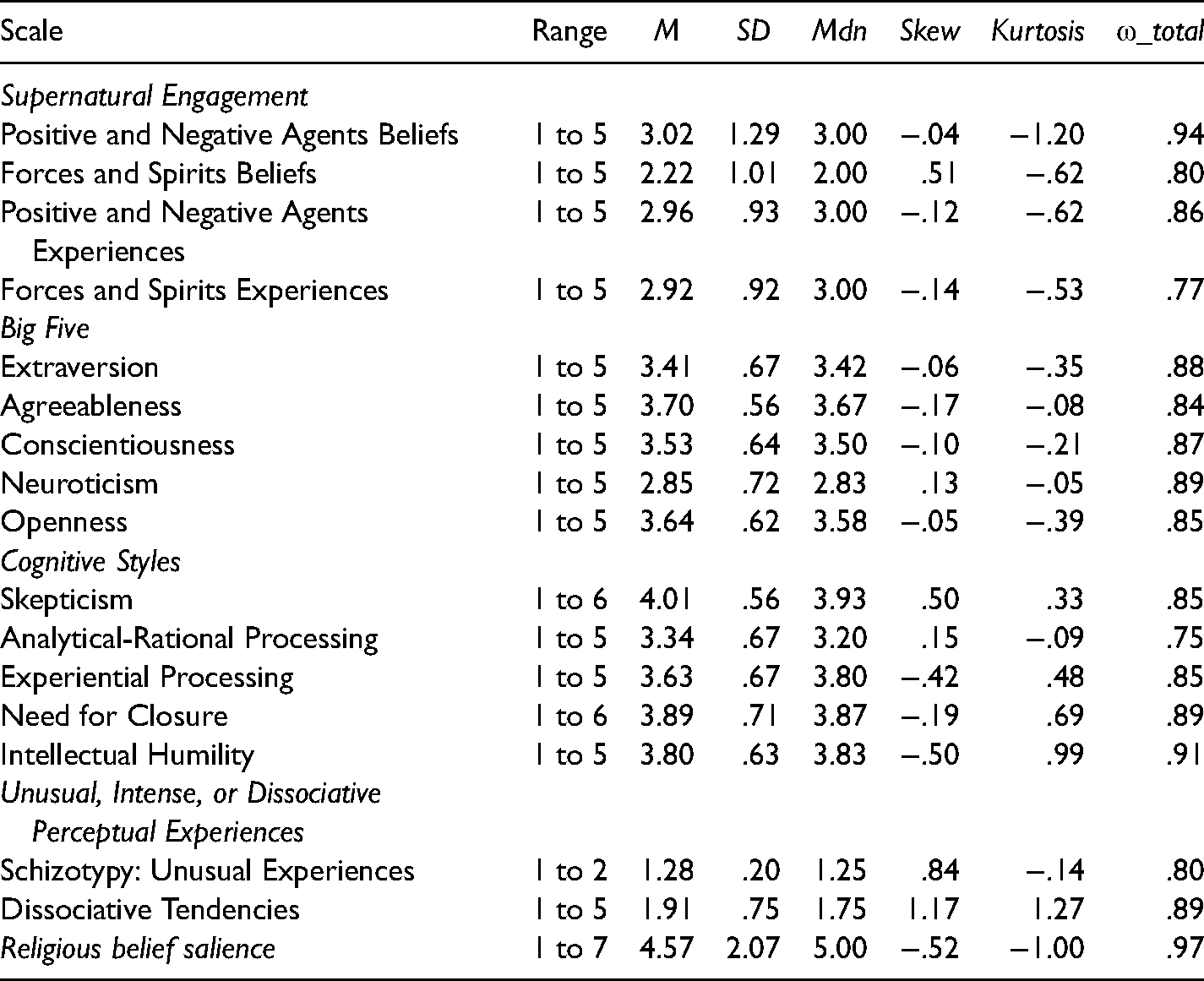
We computed classical scale scores reflecting supernatural beliefs and perceived experiences by averaging across items. The Positive and Negative Agents scales included items on God, angels, the devil, and demons, and the Forces and Spirits scales included items on fate/destiny, karma, luck, and ghosts/spirits. As would be expected, corresponding beliefs and experiences scales had strong, positive correlations (Positive and Negative Agents scales, r = .75; Forces and Spirits scales, r = .74). Table 3 shows descriptive statistics and reliabilities for these scales, the Big Five, cognitive style variables, and religious belief salience. Descriptive statistics raised no concerns regarding range restrictions or normality (all skews and kurtoses < 2). Scales showed high levels of total reliability (ω_total; summed reliability of the general factor and group factors).
Descriptive Statistics for Scales.
Zero-Order Correlational Results
Descriptive statistics suggested that scales could be treated as continuous normal variables, so we estimated Pearson correlations between predictors and supernaturally focused variables (Table 4). First, religious belief salience had strong, positive associations with Positive and Negative Agents variables (explaining about 40%–50% of variance) and moderate, positive associations with Forces and Spirits variables (explaining only 2%–4% of the variance). These findings suggest that Positive and Negative Agents beliefs and perceived experiences are a substantial part of participants’ broader r/s beliefs and experiences, whereas Forces and Spirits beliefs and experiences are only slightly related to participants’ r/s beliefs and experiences. This makes sense given that Positive and Negative Agents entities are central to Abrahamic theologies, and most of our participants identified as Christian (see Supplemental Materials online for partial correlations between predictors and supernatural engagement while controlling for religious belief salience).
Correlations Relating Personality and Cognitive Style to Supernatural Engagement.
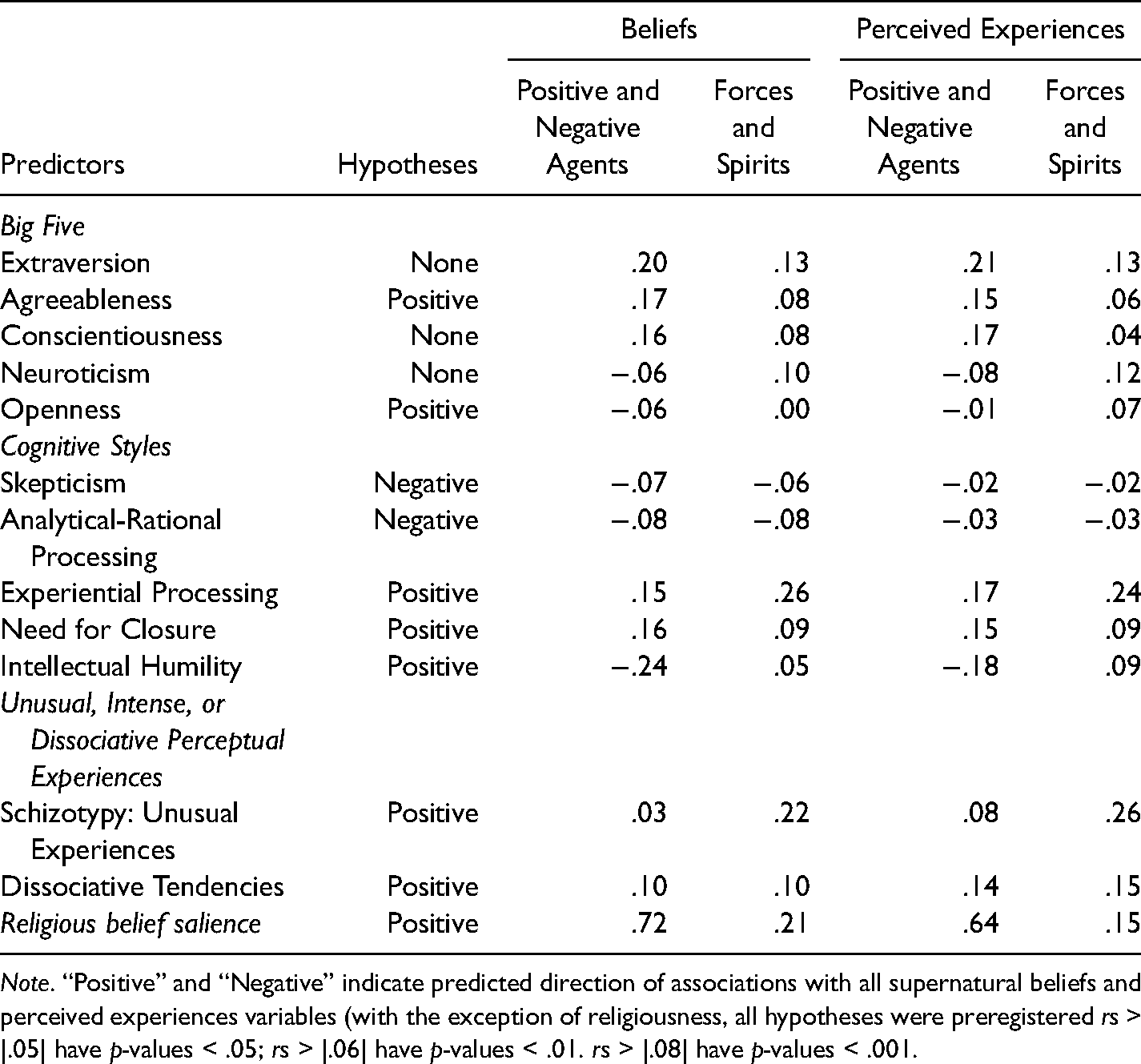
Note. “Positive” and “Negative” indicate predicted direction of associations with all supernatural beliefs and perceived experiences variables (with the exception of religiousness, all hypotheses were preregistered rs > |.05| have p-values < .05; rs > |.06| have p-values < .01. rs > |.08| have p-values < .001.
Turning to associations between predictors and supernatural engagement factors, the results largely supported hypotheses for agreeableness, need for closure, experiential processing, schizotypy, and dissociative tendencies (small-to-moderate positive effect sizes for all variables, with the exception of the trivial associations between schizotypy and Positive and Negative Agents beliefs). In all, these findings are consistent with the rationale that perceived supernatural engagement is more likely among people who (a) hold more normative cultural beliefs (high agreeableness), (b) have higher levels of need for closure, (c) rely on intuitive ways of knowing (experiential processing), and (d) have intense, unusual (i.e., schizotypal) and/or dissociative perceptual experiences.
Results indicated some support for hypotheses about skepticism and analytical-rational processing (small, negative effect sizes for belief variables and trivial, negative effect sizes for supernatural experiences). Because correlations were so close in magnitude across beliefs and experiences variables, we were hesitant to conclude that such differences are reliable without additional evidence.
The null and negative zero-order correlations between most supernatural engagement variables with openness (with a couple of exceptions) and intellectual humility contradicted our hypotheses, whereas the positive associations of Forces and Spirits experiences with intellectual humility supported our hypotheses. Inspection of item content for openness (e.g., “avoids intellectual, philosophical discussions,” reverse-scored) and intellectual humility (e.g., “I question my own opinions, positions, and viewpoints because they could be wrong”) suggests that these variables may encompass aspects of critical thinking in addition to imagination/fantasy (for openness) and for intellectual humility, which possibly resulted in mixed support for our hypotheses. In support of this interpretation, zero-order correlations among predictors (Supplementary Figure 4) showed that intellectual humility and openness related positively to one another and to higher levels of critical thinking (i.e., higher skepticism and analytical-rational processing, lower need for closure).
We did not specify hypotheses for conscientiousness, extraversion, or neuroticism prior to analyses. Given the correlations between supernatural engagement and religious belief salience noted earlier, we interpreted associations between Positive and Negative Agents variables with extraversion, conscientiousness, and neuroticism through the lens of previous work linking broad measures of r/s to these traits. (Because we made no hypotheses about these traits, we are reluctant to interpret their associations with Forces and Spirits variables.) The positive links between Positive and Negative Agents variables and conscientiousness fit with research showing that broad measures of r/s relate positively to conscientiousness across cultures (Saroglou, 2010). Though r/s is sometimes unrelated to extraversion (e.g., Saroglou, 2002), recent work shows positive links between r/s and extraversion measures that include relatively high degrees of positive emotional content (Aghababaei et al., 2016; Silvia et al., 2014). The measure we used, the BFI-2 (Soto & John, 2017), does include a substantial amount of positive emotional content; for instance, the Energy Level aspect of the scale includes “is full of energy” and “shows a lot of enthusiasm.” We speculate that the inclusion of more emotional content, potentially introducing overlap with well-being, which is higher among r/s individuals in the US (Bosco-Ruggiero, 2020), may be responsible for the positive associations between extraversion and r/s. Previous findings linking r/s to neuroticism are highly inconsistent, with research showing positive, negative, and null associations (see Wilt et al., 2020). The current findings showing negative associations with Positive and Negative Agents variables (and positive associations with Forces and Spirits variables) add to this mixed picture. Perhaps delineating between supernatural entities that are more and less central to the predominant r/s tradition in a given sample could shed light on these inconsistent findings.
Study 2
Study 2 focused on confirmatory analyses and replication. As in Study 1, we aimed to (a) examine the structure of supernatural beliefs and perceived experiences and (b) predict supernatural engagement from Big Five and cognitive style variables. Study 1 findings informed our preregistered analyses. First, in regard to structure, we predicted that beliefs and perceived experiences would both show factor structures reflecting the separation of Positive and Negative Agents and Forces and Spirits entities on different factors (see the Preregistered and Follow-Up Analyses section). Following the selection of preferred models, we conducted path models to predict the resultant factors from Big Five and cognitive style variables. We were interested in the degree to which results from path models would replicate the correlational results from Study 1. Because we specified preregistered analyses prior to selecting preferred CFA solutions, we planned analyses for examining associations between predictors and the factors we expected to emerge from the CFAs with flexibility built in to match the preferred factor solutions.
Methods
Participants and Procedure
All procedures were the same as in Study 1, and all methods were approved by the IRBs of each of the three universities (a large, public university in the Great Lakes region; a private research university in the Great Lakes region; and a large, public university in the southeast). A total of 2,635 students completed the survey. As in Study 1, we excluded subsets of participants from analyses sequentially due to various reasons: failing at least two of the three attention checks on the survey (n = 397), missing ≥ 20% of responses on scales included in the current study (n = 101), and scoring at extreme levels (i.e., outliers) on diagnostic plots for invariant responding on scales included in the current study (n = 198). We retained n = 1,939 participants (1,382 women, 537 men, 1 transgender man, 2 transgender women, 11 “other”, and 6 who preferred not to specify gender) aged 18–51 years (M = 19.6, SD = 1.8). Ethnicities included White/Caucasian/European American (70%), Asian/Pacific Islander (16%), African American/Black (9%), Latin/Hispanic (10%), Middle Eastern (2%), and other ethnicities (2%). Participants were able to select multiple ethnicities. Religious affiliation and non-affiliation were assessed by an open-ended question asking participants to “describe your present religious/spiritual tradition, if any.” Responses were categorized as: Catholic (24%), (unspecified or nondenominational) Christian (20%), Protestant (13%), Jewish (4%), Hindu (2%), Muslim (1%), Buddhist (1%), Eastern Orthodox (1%), Other religion (2%), Spiritual (2%), Atheist (7%), Agnostic (11%), None (10%), and Unsure (1%).
Measures
All items and scales were the same as in Study 1. Composite scores were calculated as the average item score for multi-item measures.
Preregistered and Follow-Up Analyses
We preregistered analysis plans for (a) CFAs examining the structure of items assessing supernatural beliefs and experiences and (b) path models predicting resultant factors from Big Five and cognitive style variables. Analyses were conducted within R (R Core Team, 2021): Descriptive statistics were computed via the psych package (Revelle, 2020), and CFAs and path models were conducted with the lavaan package (Rosseel, 2012).
Confirmatory Factor Analyses
We conducted CFAs on the eight supernatural beliefs items and eight supernatural experiences items separately. We treated the data as ordinal (using polychoric correlations between items) and used unweighted least squares estimation with mean and variance adjustments (ULSMV). We handled missing data using listwise availability. We evaluated model fit using relative fit indices (CFI and TLI) and absolute fit indices (RMSEA and SRMR).
Following Figure 2, we tested (a) a one-factor model specifying that all items load on a single latent factor and (b) a two-factor model specifying that Positive/Negative Agents entities would load on one latent factor and items assessing Forces and Spirits entities would load on a second latent factor. Based on Study 1 results, we expected that Model a would not have a good fit and that Model b would have a relatively good fit. However, due to the cross-loadings of ghosts/spirits and fate/destiny on the Positive and Negative Agents factor in Study 1, we thought it would be useful to test multiple variations of bifactor models to account for the potentially complex pattern of loadings for these entities.
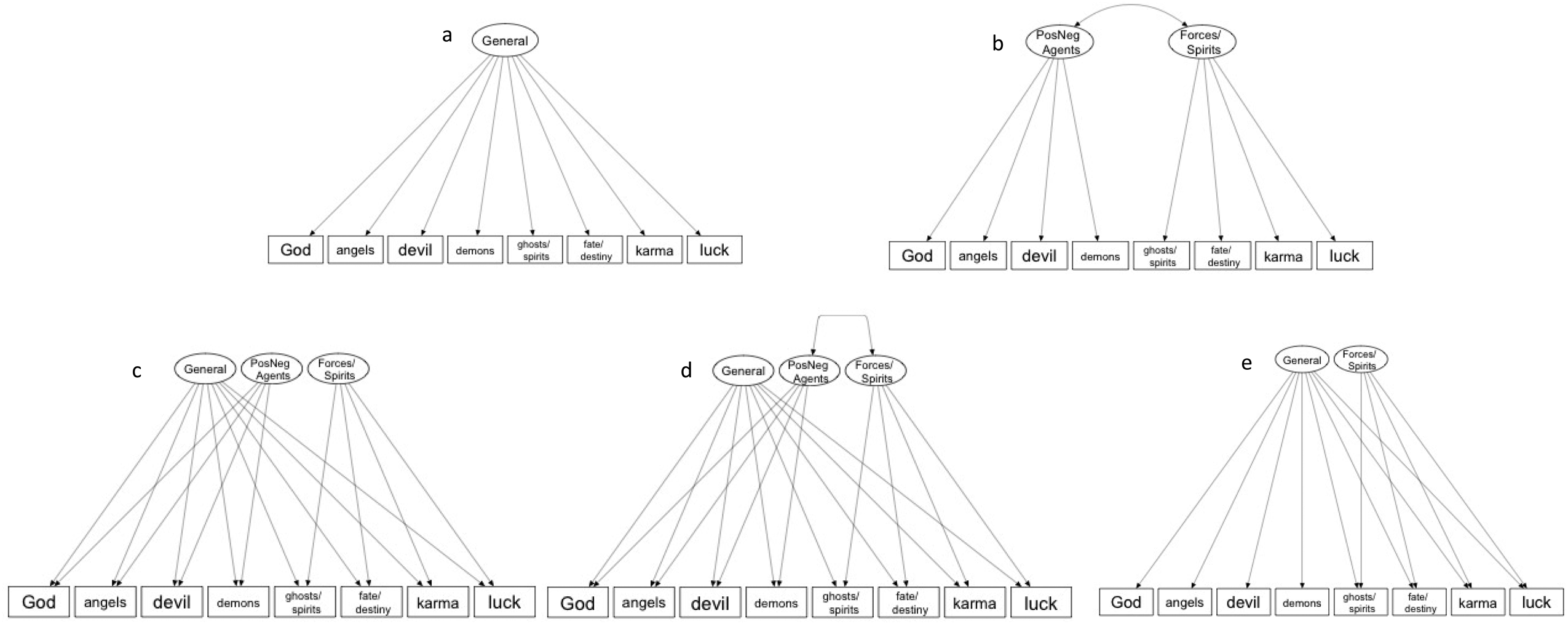
Confirmatory factor analysis (CFA) models.
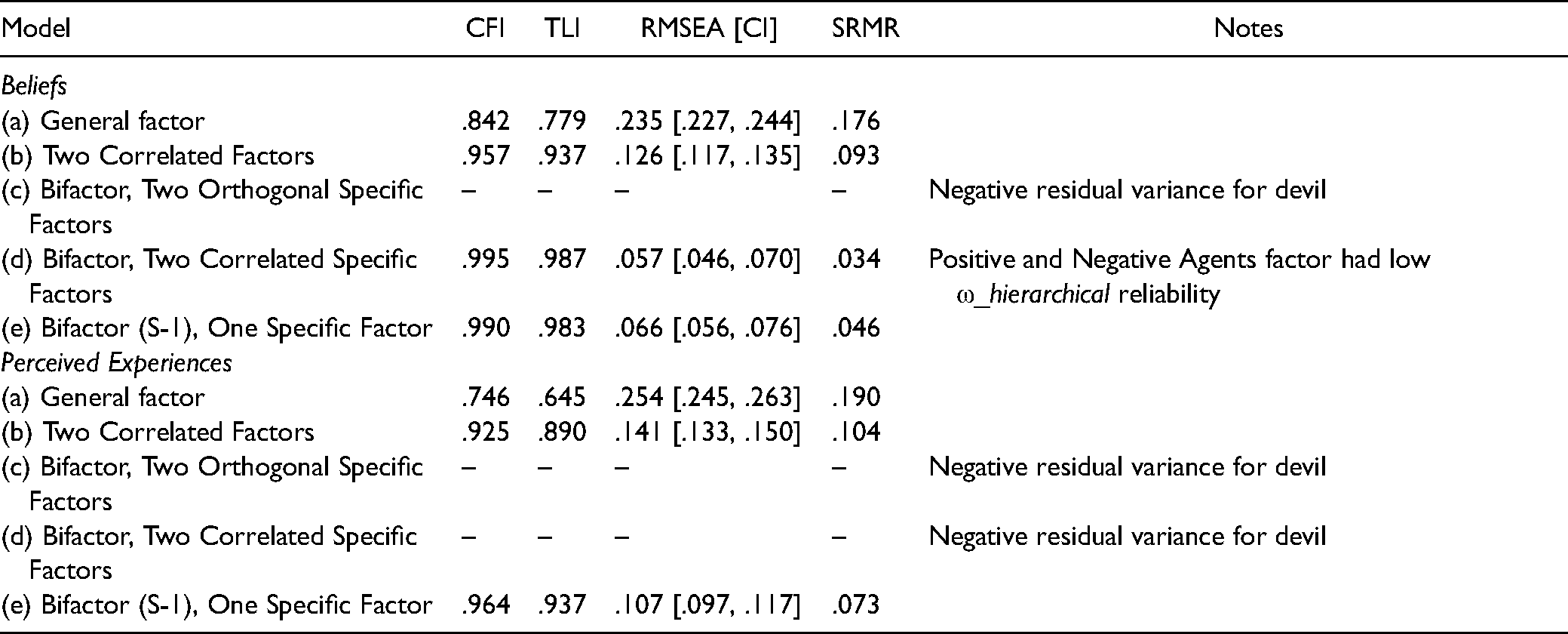
We tested bifactor structures in which all items load on a general factor and two specific factors (orthogonal to the general factor), specifying that Positive/Negative Agent items would load on one specific factor and Forces and Spirits items would load on a second specific factor. Though not preregistered specifically, we conducted two variations of bifactor structures reflecting the separation of Positive and Negative Agents and Spirits and Forces onto separate factors: (c) one in which specific factors were constrained as orthogonal to one another and (d) one in which the correlation between specific factors was freely estimated. Finally, though not preregistered, based on results from the previously described models (negative residual variances for devil-related items in multiple models specifying these items to load on two factors; see Table 6), we conducted an (e) asymmetric bifactor model or S-1 model (Heinrich et al., 2020) specifying all items to load on a general factor and the Forces and Spirits items to load on a specific factor orthogonal to the general factor (this model avoids having items assessing the devil load on multiple factors).
Model Fit Statistics.
Path Models
We tested path models predicting each factor emerging from the CFAs from classically computed scale scores derived from measures of the Big Five traits and cognitive style variables. We treated predictors as continuous and items loading on supernatural beliefs and supernatural experiences as ordinal, using ULSMV estimation. We tested one model predicting the resultant supernatural beliefs factors and one model predicting the resultant supernatural experiences factors. Though not preregistered, we conducted follow-up path models adding religious belief salience as a predictor.
As in Study 1, we noted that p-values would be used as one piece of information with no privileged role in scientific decision-making (McShane et al., 2019), and we specified that effect sizes for standardized path coefficients would be interpreted according to the following criteria recommended by Gignac and Szodorai (2016): .10 (relatively small), .20 (typical), and .30 (relatively large). Additionally, we preregistered equivalence tests (Lakens, 2018) to evaluate whether standardized path coefficients fell inside the predetermined equivalence bounds ( − Δ L and Δ U) of -.10 and .10. Equivalence testing is used to test the null hypothesis of whether an effect is extreme enough to be considered meaningful; the null hypothesis is rejected when the 90% CI of the effect size falls within the equivalence bounds (Lakens, 2018). In this study, the magnitude of equivalence bounds was chosen because the smallest standardized path coefficient interpreted in a previous study predicting supernatural beliefs and experiences was .11 (Wilt, Stauner, et al., 2020) and because this range includes only small effect sizes.
Results and Discussion
Descriptive Statistics for Items Assessing Supernatural Beliefs and Experiences
Descriptive statistics (Table 5) showed that, similar to Study 1, (a) participants commonly endorsed items close to scale midpoints with the exception of perceived experiences with the devil and with demons; (b) there was substantial between-person variation in all items; and (c) medians/skews/kurtoses and histograms raised concerns regarding departures from normality for perceived experiences with the devil, demons, and ghosts/spirits (see Supplementary Figure 5).
Descriptive Statistics for Items Assessing Supernatural Beliefs and Experiences.
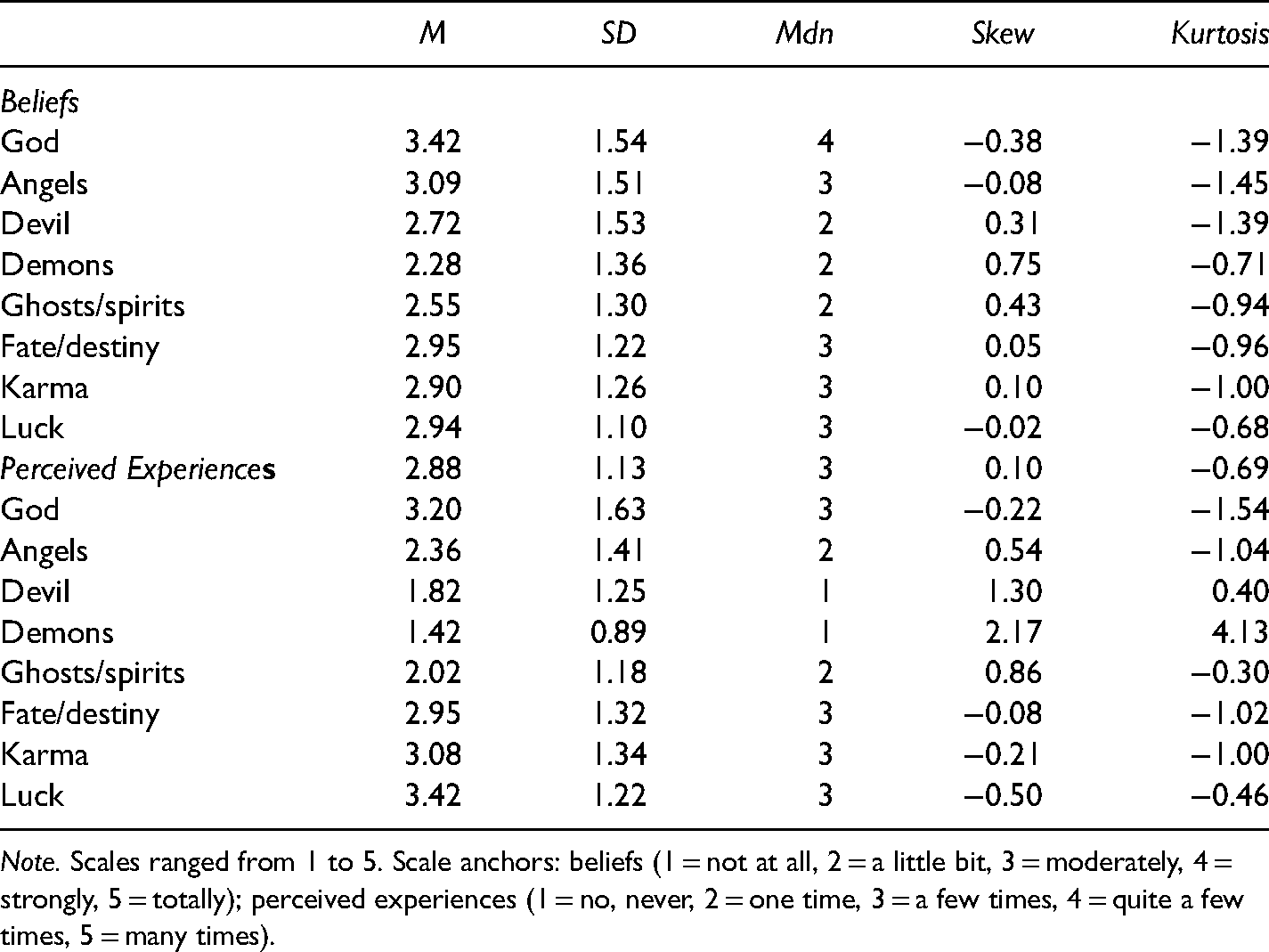
Note. Scales ranged from 1 to 5. Scale anchors: beliefs (1 = not at all, 2 = a little bit, 3 = moderately, 4 = strongly, 5 = totally); perceived experiences (1 = no, never, 2 = one time, 3 = a few times, 4 = quite a few times, 5 = many times).
Confirmatory Factor Analyses
Table 6 shows fit indices for each CFA for beliefs and perceived experiences items separately. Three of the models resulted in negative residual variances for the devil item; this item had strong loadings on multiple factors, resulting in overprediction. With reference to criteria for evaluating model fit for ordered categorical data (Shi et al., 2020; Xia & Yang, 2019), Models d and e fit were good fits for the beliefs data, and Model e was an acceptable fit for the perceived experiences data. Further examination of Model d for beliefs showed that the Positive and Negative Agents specific factor had a very low ω_hierarchical reliability (.16; see Supplementary Table 2), indicating that a low percentage of item variance was due to this factor, so we dropped this model from consideration.
Table 7 shows parameter estimates for the bifactor (S-1) models, which we preferred for both beliefs and experiences items. Based on patterns of factor loadings, we interpreted the general factors similar to the Positive and Negative Agents factors in Study 1; they encompassed powerful agents central to Abrahamic theologies and other entities somewhat central to Abrahamic theologies. We interpreted the specific factors somewhat similarly to the Forces and Spirits factors from Study 1; they encompassed relatively less powerful agents and impersonal forces that are less central to Abrahamic theologies, with the caveat that these factors were positively related to Positive and Negative Agents factors in Study 1 but orthogonal from Positive and Negative Agents factors in Study 2.
Standardized Factor Loadings for Bifactor (S-1) Models.
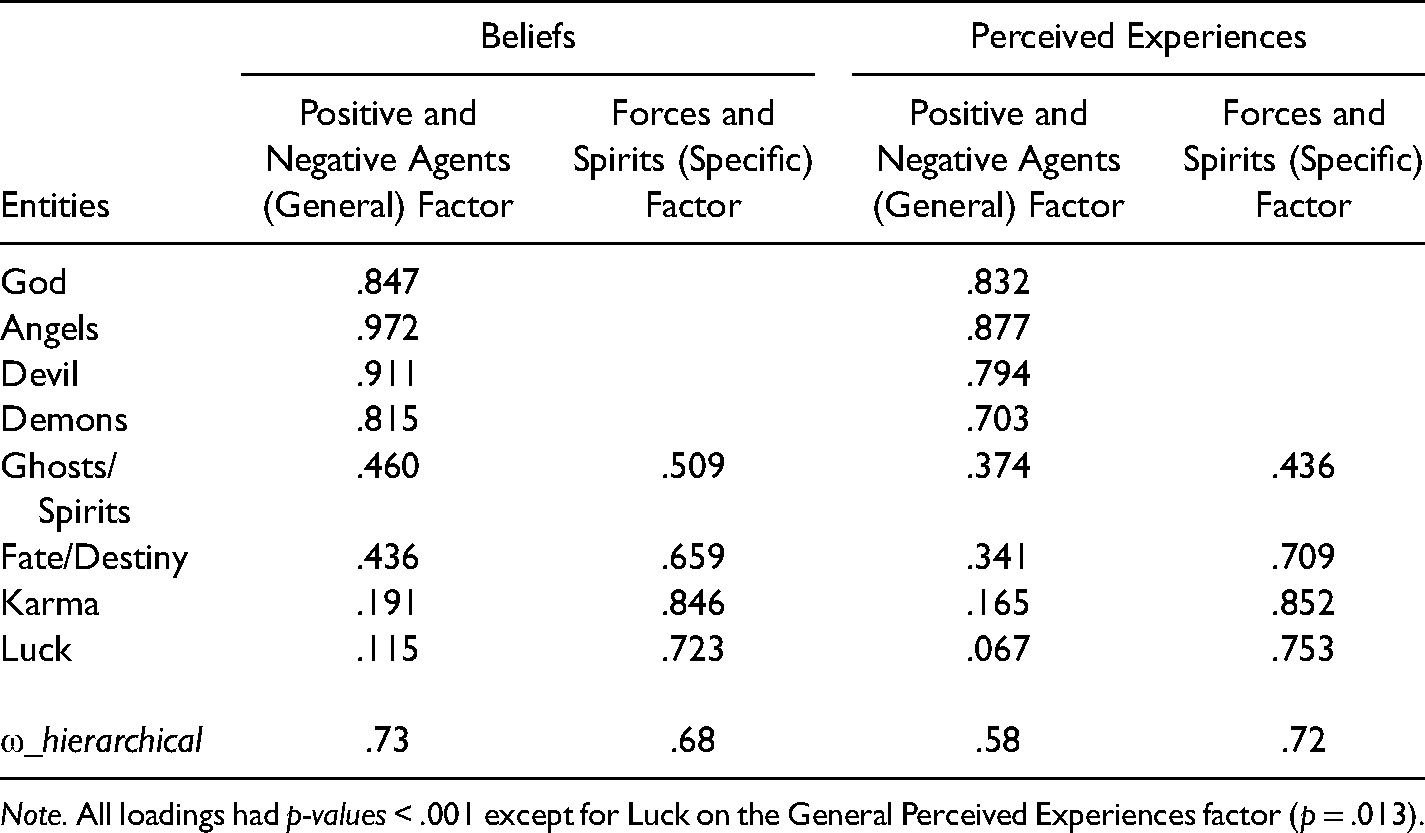
Note. All loadings had p-values < .001 except for Luck on the General Perceived Experiences factor (p = .013).
Descriptive Statistics for Scales
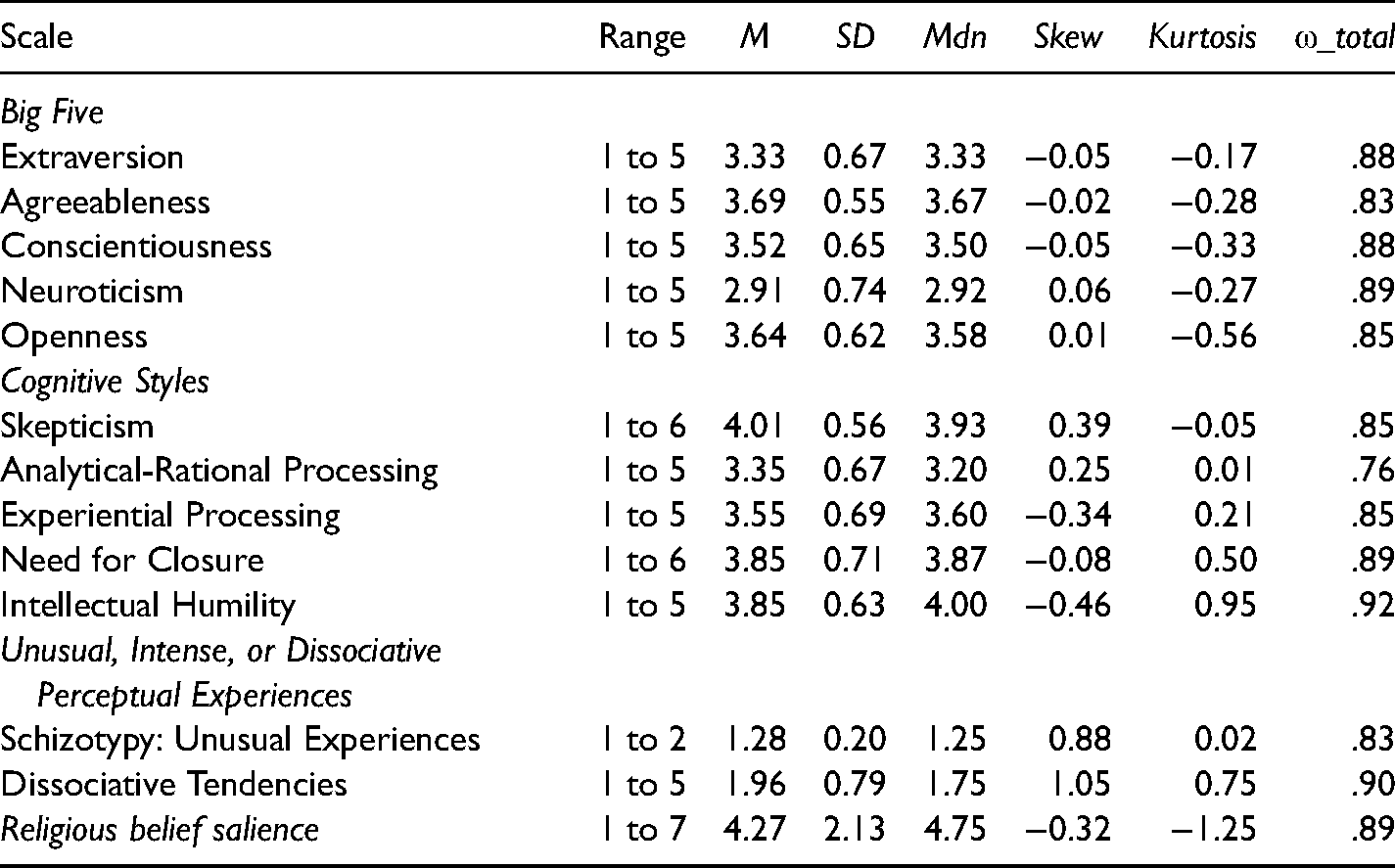
As in Study 1, we computed classical scale scores for the Big Five, cognitive style variables, and religious belief salience (Table 8). Examination of descriptive statistics raised no concerns regarding range restrictions or normality. Scales showed high reliability (ω_total).
Descriptive Statistics for Scales.
Path Models Including Big Five and Cognitive Style Predictors
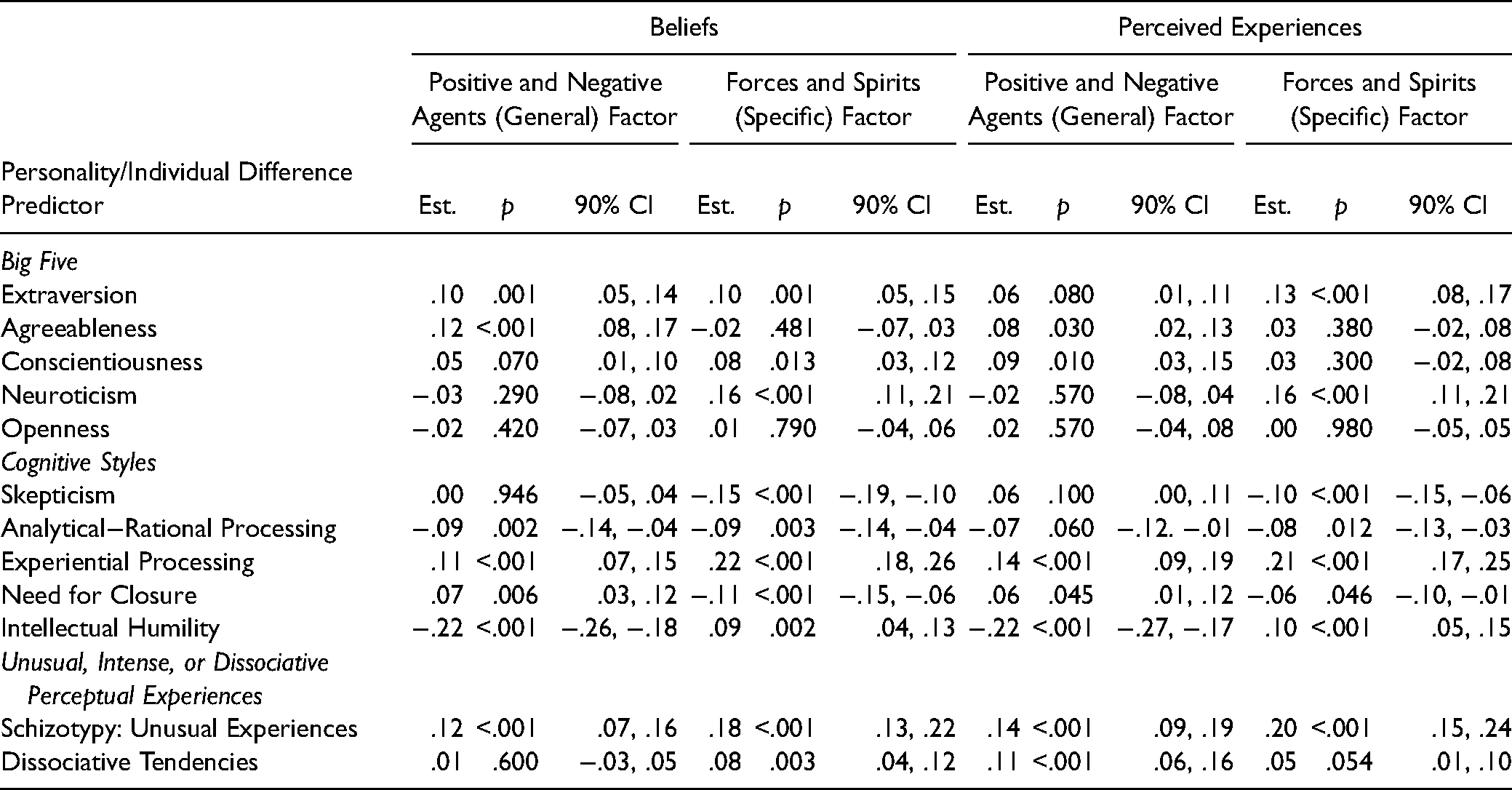
We conducted one path model predicting the bifactor (S-1) factors for beliefs and another path model predicting the bifactor (S-1) factors for perceived experiences. As in the CFAs, we treated supernatural engagement items as ordinal (using polychoric correlations between items), used ULSMV estimation, and handled missing data using listwise availability. All Big Five and cognitive style scales were entered simultaneously in both models. In general, inferences from null hypothesis significance tests and equivalence tests were highly overlapping (Table 9), and results were similar when controlling for religious belief salience (see Supplemental Material online). Next, we describe and discuss results, proceeding roughly in descending order of the consistency of findings and the degree to which they supported our original hypotheses across studies (Table 10).
Standardized Path Coefficients Relating Predictors to Factors from the Bifactor (S-1) Models.
Directional and Null Associations Between Predictors and Supernatural Engagement Factors Across Studies.
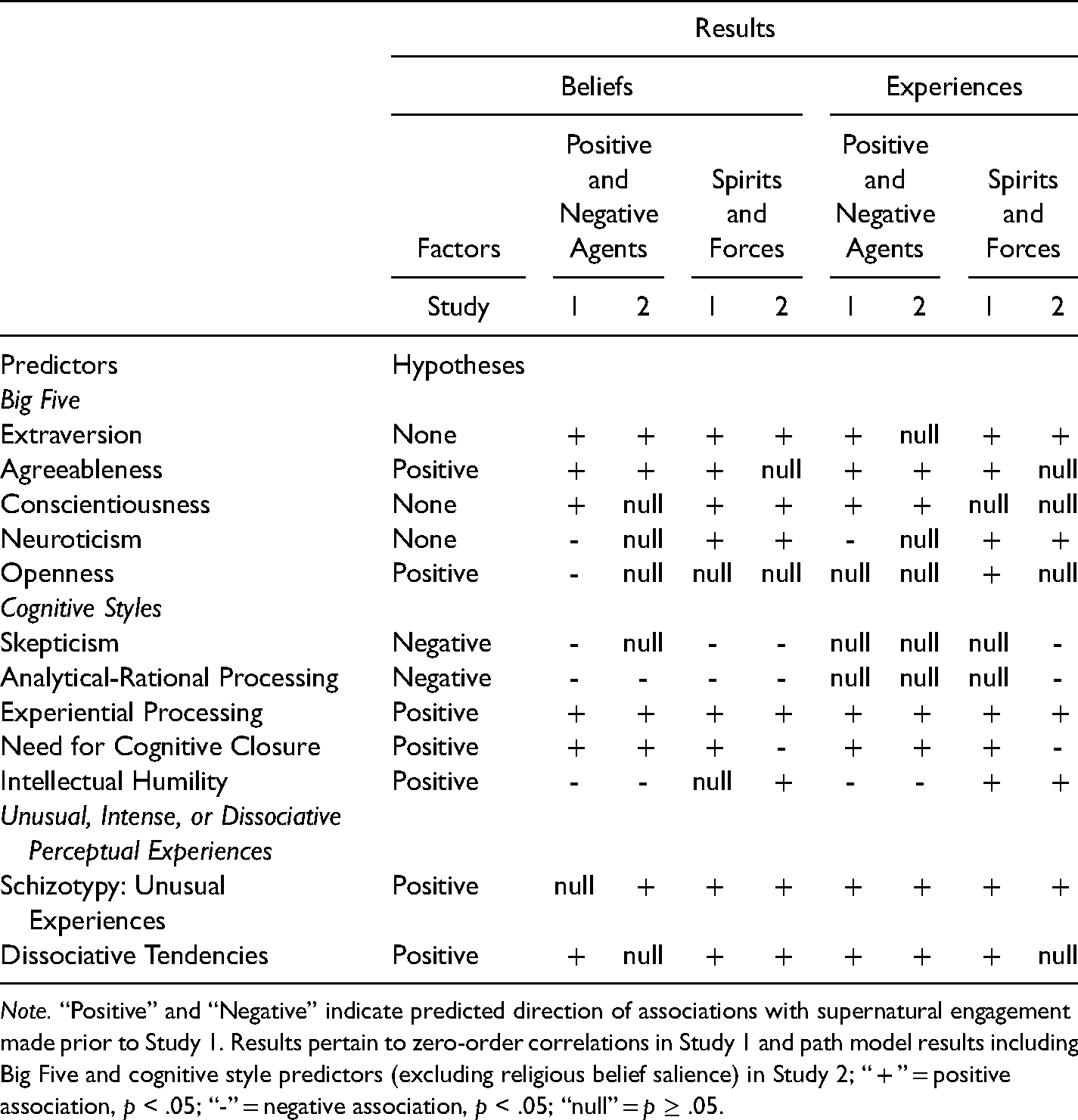
Note. “Positive” and “Negative” indicate predicted direction of associations with supernatural engagement made prior to Study 1. Results pertain to zero-order correlations in Study 1 and path model results including Big Five and cognitive style predictors (excluding religious belief salience) in Study 2; “ + ” = positive association, p < .05; “-” = negative association, p < .05; “null” = p ≥ .05.
Overall, extraversion, experiential processing, schizotypy, and dissociative tendencies showed consistent positive associations across supernatural engagement variables, and conscientiousness showed relatively consistent positive associations with supernatural engagement with the exception of Forces and Spirits experiences (null associations). Some of these variables were originally expected to relate positively to supernatural engagement, based on prior theory about how intuitive ways of knowing (experiential processing) and unusual and intense (schizotypy) or dissociative experiences (dissociative tendencies) could increase the likelihood of supernatural attributions. As noted in the Results and Discussion for Study 1, extraversion may relate to supernatural engagement via overlap with emotional well-being (Aghababaei et al., 2016; Silvia et al., 2014), and conscientiousness may relate to supernatural engagement due to higher levels of r/s engagement in general (Saroglou, 2010). The null associations between conscientiousness and Forces and Spirits experiences may be due to this type of supernatural engagement falling outside of typical r/s beliefs and experiences.
Skepticism and analytical-rational processing showed consistent negative associations with belief factors and relatively consistent null relations with experience factors (though associations with Forces and Spirits experiences were negative in Study 2). In line with prior theorizing and as noted in the Results and Discussion for Study 1, high levels of critical thinking may raise the threshold of evidence required for incorporating supernatural entities into stable belief systems. However, people with greater tendencies to engage in critical thinking might not rule out supernatural attributions for specific experiences that stand up to scrutiny.
Other predictors showed consistent relationships to either Positive and Negative Agents factors (agreeableness and need for closure) or Forces and Spirits factors (neuroticism). The Positive and Negative Agents factors are strongly defined by culturally normative (i.e., Abrahamic, Christian) beliefs and experiences; it is plausible that people who tend to be more heavily influenced by norms (high agreeableness) and people who tend to want to resolve ambiguity (high need for closure) may be more likely to rely on cultural norms when making attributions and constructing their belief systems. People with greater neuroticism have more negative experiences (Suls & Martin, 2005), which may motivate increased levels of attributional search; we speculate that attributing such experiences to ghosts/spirits and especially to impersonal forces outside of personal control may serve self-protective needs.
Openness and intellectual humility showed consistent results across studies; however, the results were not in line with our initial hypotheses. Openness showed consistently null associations with supernatural engagement across studies, and intellectual humility showed consistent negative associations with Positive and Negative Agents factors and consistent positive associations with Forces and Spirits factors. As noted in the Study 1 Results and Discussion, item content reflective of critical thinking in the measures of openness (Soto & John, 2017) and intellectual humility (Leary et al., 2017) may have obscured relations between supernatural engagement and openness and resulted in mixed findings for intellectual humility.
Finally, a few associations were less consistent across studies: agreeableness and Forces and Spirits factors (positive in Study 1, null in Study 2); neuroticism and Positive and Negative Agents factors (negative in Study 1, positive in Study 2); and need for closure and Forces and Spirits factors (positive in Study 1, negative in Study 2). Because all these effect sizes were small, sampling error may be the most plausible explanation for inconsistencies. Given the novelty of the research questions and lack of hypotheses pertaining specifically to different factors of supernatural engagement, we decline to interpret these findings further.
General Discussion
We conducted two studies with the aim of helping address two fundamental questions regarding supernatural engagement: What is the factorial structure of supernatural beliefs and perceived experiences (using a large array of entities), and what stable individual differences are associated with supernatural beliefs and perceived experiences? A unique contribution of our project was that we assessed beliefs and experiences involving a large array of supernatural entities, and we also included a large set of individual-difference variables. We did rigorous structural analyses that also controlled religiousness.
In regard to the question about structure, similar factors emerged for beliefs and perceived experiences across studies, with some nuances that we address in the next section. The Positive and Negative Agents factors were defined strongly by items pertaining to God, the devil, angels, and demons. These factors also were defined moderately by ghosts/spirits and fate/destiny. The Forces and Spirits factors were defined strongly by items pertaining to fate/destiny, karma, luck, and ghosts/spirits.
In regard to stable individual differences predictors (the Big Five and cognitive style variables), results showed a high degree of complexity. We found that some predictors (extraversion, conscientiousness, experiential processing, schizotypy, and dissociative tendencies) related consistently and positively to most factors of supernatural engagement, providing support for a number of our hypotheses. Other predictors related consistently to a subset of factors, providing mixed support for our hypotheses: Some predictors (skepticism and analytical-rational processing) distinguished between beliefs and experiences factors, and other predictors (agreeableness, neuroticism, and need for closure) distinguished between Positive and Negative Agents and Forces and Spirits factors. Also, findings for some predictors (openness and intellectual humility) contradicted our hypotheses. To increase comprehension of findings and their potential implications, we organized the broader discussion into the following three subsections: (a) Structure of Supernatural Engagement, (b) Predictors of Positive and Negative Agents Factors, and (c) Predictors of Forces and Spirits Factors.
Structure of Supernatural Engagement
The Positive and Negative Agents factors that emerged from EFAs and CFAs reflected individual differences in engagement with r/s entities that are relatively central to Abrahamic theologies, particularly powerful agents (God, angels, the devil, and demons), but also less powerful agents (ghosts/spirits) and the impersonal force of fate/destiny, both of which are relevant to but not central to Abrahamic theologies. In contrast, karma and luck, which are not especially relevant to Abrahamic theologies, had small loadings on these factors. The Forces and Spirits factors reflected individual differences in engagement with impersonal forces (karma, luck, fate/destiny) as well as ghosts/spirits, all of which are not central to Abrahamic theologies. The strong associations between religious belief salience and the Positive and Negative Agents factors support these characterizations, as do the weak associations between religious belief salience and the Forces and Spirits factors in these predominantly Christian samples.
In all, factor analyses yielded some findings that are consistent with previous structural work, other findings that are novel, and yet others that may help to resolve some inconsistencies across prior studies. As in previous research, powerful agents loaded together (e.g., Chauvin & Mullet, 2018; Jong et al., 2013). To the best of our knowledge, our studies are the first to distinguish these entities from impersonal forces. In previous studies, entities similar to ghosts/spirits loaded with powerful agents when entities common to Abrahamic traditions were assessed (Bluemke et al., 2016; Jong et al., 2013) but other times loaded on factors separate from powerful agents when entities outside of Abrahamic traditions were assessed (Chauvin & Mullet, 2018; Johnston et al., 1994; Jones et al., 1977; Tobacyk & Milford, 1983; Utinans et al., 2015).
Taken together, these findings suggest that there is some variance in beliefs/experiences involving ghosts/spirits that can be explained by aspects of Abrahamic theologies (e.g., belief in immortal spirits), yet others that are not as well represented by Abrahamic theologies (e.g., hauntings, medium communication, nature spirits). These non-Abrahamic kinds of engagement with ghosts/spirits load may share variance with other entities that are less central to Abrahamic religions but that are relevant to other r/s theologies. For instance, engagement with karma and spirits, or supernatural luck and spirits, are common teachings among Eastern religions, and all entities that are loaded on the Forces and Spirits factors are well represented in New Age belief systems (Johnson, 2021). Further, though much of our speculation about the separation of entities onto different factors pertains to differences in r/s belief systems, it is worth noting that other belief systems or ideologies may also be at play. For example, as most participants in our Western sample likely have relatively individualistic worldviews, some participants may have felt empowered by endorsing engagement with supernatural agents but not with forces that present challenges to individual power, such as fate/destiny and karma (we thank an anonymous reviewer for this suggestion).
With regard to the factor analyses specifically, the complex pattern of loadings for ghosts/spirits and fate/destiny could not have been uncovered without allowing for cross-loadings among factors. Indeed, the simple structure two-factor solutions did not have good fits to the data. Because various entities may be relevant to multiple r/s (and possibly non-r/s) teachings, future research may benefit from allowing items to cross-load, with the recognition that specifying complex loadings for some entities (e.g., the devil) may result in overprediction and convergence issues.
Predictors of Positive and Negative Agents Factors
The following predictors showed relatively consistent, positive associations with Positive and Negative Agents factors (Table 10): extraversion, agreeableness, conscientiousness, need for closure, experiential processing, schizotypy, and dissociative tendencies. Intellectual humility related negatively to these factors, and there was some evidence that analytical-rational processing and skepticism related negatively to Positive and Negative Agents beliefs (but not experiences). Some of these findings supported our original hypotheses and were in line with expectations for supernatural engagement to be higher among people who: (a) are more influenced by cultural norms (agreeableness), (b) tend not to engage in critical thinking (low skepticism, low analytical-rational processing, high need for cognitive closure), (c) tend to be open to intuitive ways of knowing (experiential processing), and (d) tend to report unusual perceptions or experiences (schizotypy and dissociative experiences).
The findings for intellectual humility and openness contradicted hypotheses but may be explained by item content assessing critical thinking. As discussed previously, associations for extraversion and conscientiousness could be explained by associations between these traits and r/s engagement more broadly. Indeed, results pertaining to religious belief salience (e.g., strong associations between religious belief salience and the Positive and Negative Agents factors, as well as diminished unique associations for predictors when controlling for religious belief salience) suggest that engagement with Positive and Negative Agents entities are a large part of our (predominantly Christian) participants’ r/s engagement.
In sum, our findings are aligned with those from various studies focused on predicting supernatural engagement from which we partially derived our hypotheses (reviewed in the Introduction). However, our studies are distinguished by the inclusion of a large set of theoretically relevant predictors and a diverse set of supernatural entities, which allowed for examination of unique associations and a more comprehensive synthesis of results.
Predictors of Forces and Spirits Factors
A similar pattern of associations between predictors and Forces and Spirits factors emerged, with a few exceptions (Table 10). Similar to the Positive and Negative Agents associations, we largely found positive associations between Forces and Spirits factors and extraversion, experiential processing, schizotypy, and dissociative tendencies, and we found negative associations for skepticism and analytical-rational processing. Agreeableness, conscientiousness, and need for cognitive closure showed a few positive associations with Spirits and Forces factors, but the evidence was somewhat inconsistent across studies. Neuroticism and intellectual humility related positively to Spirits and Forces factors; these variables largely had null (neuroticism) and negative (intellectual humility) associations with Positive and Negative Agents factors.
In large part, variables that predicted Positive and Negative Agents engagement also predicted Forces and Spirits engagement. These findings could be explained by an overlap between predictors and/or factors in Study 1, but these explanations are not viable in Study 2 because path analyses controlled for shared variance among predictors and because the asymmetric bifactor solution forced Positive and Negative Agents factors to be orthogonal from Forces and Spirits Factors. Furthermore, unlike associations between predictors and the Positive and Negative Agents factors, the associations between predictors and the Forces and Spirits factors cannot be explained due to religious belief salience. Thus, many Big Five and cognitive style variables predicted supernatural engagement with entities that are both inside (Positive and Negative Agents) and outside (Forces and Spirits) the scope of traditional r/s engagement, which supports the idea that predictors were broadly relevant to supernatural engagement.
Limitations and Future Directions
First, our results do not warrant strong causal claims because they were obtained in the context of cross-sectional, correlational studies. Though the Big Five and cognitive styles are person variables that are not subject to manipulation (at least easily or ethically), there is a broad range of experimental designs that can be employed to strengthen causal inferences about person variables and/or the mechanisms proposed to link person variables to outcomes (Revelle, 2007). For instance, we hypothesized that the links between schizotypy and supernatural attributions could be due to tendencies to have unusual perceptual experiences such as a heightened sense of hearing or odd perceptions of color, which could in turn motivate attributional searches. An experiment could manipulate sensory stimuli to mimic such perceptions (e.g., using virtual reality) and examine whether doing so affects attributional searches and supernatural attributions.
Second, small effect sizes also pose potential limitations. Recent work characterizing the meaning of effect sizes may help to clarify the importance of our findings. Specifically, Funder and Ozer (2019) proposed that small effect sizes are not very useful when trying to predict or understand single events; however, they may be more meaningful when aggregating over longer time periods or multiple events. When applied to our findings, the predicted differences in supernatural engagement between people with different levels of predictors of supernatural engagement, though statistically significant and reliable, may not be practically significant when examined at one point in time. Yet, when these differences are aggregated over time, for instance over years or many experiences, they may have more substantial implications. Longitudinal studies tracking the effects of Big Five and cognitive style variables on supernatural variables over time may document such potentially far-reaching effects.
Third, though we included relatively large numbers of supernatural entities and predictors, we inevitably omitted many entities and potentially relevant personality and cognitive style variables. We encourage future studies to expand the list of supernatural entities outside of the entities that we examined, which, as acknowledged in the introduction, were chosen based on their likely familiarity with WEIRD (Henrich et al., 2010) and predominantly Christian undergraduates. Studies in other cultures or of samples from other faith traditions may benefit from including different sets of entities. Our findings do not generalize to such cultures and faiths. Further, future studies may benefit from examining the generalizability of results across faith traditions. Though our sample included participants across several different traditions, sample sizes outside of Christianity were not adequate for multigroup comparisons. We also encourage future studies to include entities that are considered as supernatural and paranormal but not necessarily religious, such as witchcraft, aliens, and precognition (Schofield et al., 2016; Weeks & Gilmore, 2017), as doing so would help to establish the boundary conditions for our findings. Additionally, the inclusion of these entities and others from non-Abrahamic traditions may help to address issues of privilege and assumptions about the perceived normality of certain r/s beliefs and experiences within the context of psychology of r/s research. Our study, though intended as relatively more inclusive, still perpetuates a bias toward entities that are prominent in Christianity.
Expanding the personality predictors outside of the Big Five to include narrower, facet-level constructs would multiply the number of potential trait predictors. This may be especially useful for openness, as it would allow for distinguishing across facets that may tap imagination and fantasy specifically, as well as those that assess critical thinking (this same reasoning could be applied to examining facet-level measures of a cognitive style variable, intellectual humility).
Regarding the expansion of cognitive predictors, it may be useful to distinguish the unique variance attributable to the styles we included from previously mentioned predictors of supernatural engagement that deal with reasoning about minds, such as ontological confusions (Lindeman et al., 2015), mentalizing deficits (Norenzayan et al., 2012), and teleological thinking (White et al., 2020). Furthermore, exploration of facet-level cognitive characteristics, and perhaps especially those with mental health implications (dissociation and schizotypy), may also be warranted. For instance, the brief measure of dissociation that we used likely does not distinguish between more specific constructs such as depersonalization, derealization, and identity confusion, to name a few (Steinberg & Schnall, 2010). And our brief measure of schizotypy does not capture the myriad manifestations of this thinking style.
Finally, because this study used quantitative methods only, we believe that future qualitative and mixed-methods designs could complement our findings. Such studies may address the phenomenology of the perceived supernatural experiences or characterize salient themes in participants’ supernatural beliefs. We are currently conducting some preliminary studies in service of similar aims. For example, one study aims to develop a qualitative coding system (including phenomenology) for experiences that participants believe may have been caused by a supernatural entity. Another study is developing a coding system for categorizing the ways in which people believe that ghosts/spirits may communicate with people.
Conclusion
Some people believe in and perceive experiences with entities that are supernatural. In our sample of predominantly Christian undergraduates from the United States, one dimension of supernatural engagement, Positive and Negative Agents, was defined strongly by Abrahamic positive and negative agents (God, angels, the devil, and demons) and defined moderately by ghosts/spirits and fate/destiny, each of which is relatively less central to (but still represented in) Abrahamic faiths. Another dimension, Forces and Spirits, was defined strongly by impersonal forces (karma, luck, fate/destiny) as well as ghosts/spirits, entities that are all less central to Abrahamic teachings. Perceived engagement with Positive and Negative Agents was closely related to participants’ broader r/s beliefs and experiences, whereas engagement with Forces and Spirits was not. Big Five and cognitive style predictors of supernatural engagement were similar across dimensions, with some nuances. Supernatural engagement was higher among people with higher levels of extraversion, agreeableness and conscientiousness (predicted Positive and Negative Agents more consistently), neuroticism (predicted Forces and Spirits specifically), need for closure (predicted Positive and Negative Agents more specifically), experiential processing, schizotypy, and dissociative tendencies; supernatural engagement was lower among people with higher levels of skepticism and analytical-rational processing (for both predictors, these claims may apply more specifically to beliefs than experiences factors). Notwithstanding some important limitations (and unexpected but explainable results for openness and intellectual humility), the results suggest that individual differences reflecting between-person variations in critical thinking, intuitive ways of knowing, and unusual/intense and dissociative perceptual experiences may have small but potentially consequential associations with individual differences in supernatural beliefs and experiences. These results are largely consistent with prior theory and findings for these types of predictor variables; however, previous work was not well integrated regarding predictors or supernatural entities. Therefore, the current results have the potential to contribute to a relatively more comprehensive understanding of who engages with various supernatural entities.
Supplemental Material
sj-docx-1-ica-10.1177_02762366211065677 - Supplemental material for Who Engages with Supernatural Entities? An Investigation of Personality and Cognitive Style Predictors
Supplemental material, sj-docx-1-ica-10.1177_02762366211065677 for Who Engages with Supernatural Entities? An Investigation of Personality and Cognitive Style Predictors by Joshua Wilt, Nick Stauner, Ross W. May, Frank D. Fincham, Kenneth I Pargament and Julie J. Exline in Imagination, Cognition and Personality
Footnotes
Declaration of Conflicting Interests
The author(s) declared no potential conflicts of interest with respect to the research, authorship, and/or publication of this article.
Funding
The author(s) disclosed receipt of the following financial support for the research, authorship, and/or publication of this article: This work was supported by the John Templeton Foundation (grant number 59916).

Supplemental Material
Supplemental material for this article is available online.
Data Accessibility Statement
Analysis scripts, de-identified data, and materials for both studies are available at: (https://osf.io/379y8/?view_only = 238fa88fd8d2446884017b440a4c2a25).
Notes
Author Biographies
References
Supplementary Material
Please find the following supplemental material available below.
For Open Access articles published under a Creative Commons License, all supplemental material carries the same license as the article it is associated with.
For non-Open Access articles published, all supplemental material carries a non-exclusive license, and permission requests for re-use of supplemental material or any part of supplemental material shall be sent directly to the copyright owner as specified in the copyright notice associated with the article.
