







Abstract
Previous research has linked extraversion, present-fatalistic time perspective (PFTP) [28], [49], and mental pain tolerance (MPT) [16]. PFTP was used to examine extraversion's direct and indirect effects on MPT. ZTPI [51] measures PFTP, IPIP-NEO-60 Online presentations of Costa and McCrae's (1992) [41] for extraversion and TMPS-10 [39] for MPT were given to 679 participants (M = 23.01, SD = 4.92). The study found that extraversion negatively predicted PFTP (B = -0.162, p < .001). MPT was positively impacted by PFTP (B = -0.119, p < .01). Extraversion and MPT are mediated by PFTP. The cognitive-adaptive model and BAS model may explain why extraverts are more active in regulating mental pain risk factors, lowering PFTP [11]. Variant interactions, cross-generational effects, and multiple dimensions should be studied. Understanding implications helps find perspective-based ways to cope with mental pain. The nuanced associations show that individual differences and cognitive orientations or time perspectives affect psychological responses and coping mechanisms.
Keywords
Introduction
Mental Pain Tolerance
Since mental health exists on a continuum, it encompasses more than just the absence of mental disorders. In addressing and promoting mental health, concepts of mental health risks and protective factors like psychological distress must be investigated (Orbach et al., 2003). Most pain studies focus on physical pain management of chronic illnesses (e.g., França et al., 2019; Orbach et al., 1997). However, understanding mental pain (MP) is equally essential as it operates on the same underlying neural mechanism (Hooten, 2016). Unfortunately, MP often receives less attention. Singularization of MP is challenging because several terms refer to it, including emotional pain, psychological pain, and emptiness (Tossani, 2013). The MPT used in this study is based on Orbach et al.'s (2003) conceptualization of MP as “a wide range of subjective experiences characterized as a perception of negative changes in the self and its function that is accompanied by strong negative feelings” (Orbach et al., 2003, p. 232). MPT refers to an individual's ability to endure pain or the amount of psychological pain one can bear without resorting to maladaptive behaviors like avoidance or suicide (Meerwijk & Weiss, 2018; Orbach et al., 2004). The factors of mental pain are as follows: (1) irreversibility (2) uncontrollability (3) feelings of hurt (4) emotional flooding (5) freezing or inability to react (6) self-estrangement (7) confusion (8) social distancing or avoiding approach during mental pain and (9) emptiness due to pain (Orbach et al., 2003). Factors associated with MPT may include psychopathology, particularly depression (Conejero et al., 2018), anxiety disorders, PTSD (Cimpean & David, 2019), somatic disorders and borderline personality disorder (Vadivelu et al., 2017), passivity or isolation, frustration, and lower activity levels. These factors are related to Orbach's aspects of loss of control, emotional flooding, social distancing, and emptiness (Orbach et al., 2003).
Extraversion and MPT
Several predictors of MPT include psychological and genetic factors and time perspectives (e.g., Gács et al., 2020; Philips, 1988). Personality traits are a psychological factor that impact pain perception through inherited physiological differences in stimulation tolerance, pain thresholds (Harkins et al., 1989), and past experiences (Cimpean & David, 2019). In this study, extraversion is based on the 5-Factor Model by Costa and McCrae (1980) (Costa & McCrae, 1980; Feist et al., 2018). Extraversion is a personality trait characterized by interactivity, spontaneity, pleasing emotions, and elevated energy levels (Lucas & Diener, 2001). Extraversion and MPT are positively related. For instance, Barnes and Eysenck & Eysenck's empirical evidence confirmed that extraverts have higher pain tolerance than introverts (e.g., Barnes, 1975; Brown et al., 1973; Eysenck & Eysenck, 1985; Gatchel & Weisberg, 2000; Park et al., 2014). Although their study focused on physical pain tolerance (PPT), there is evidence that physical and mental pain operate on the same underlying neural mechanism since both activate the brain's insula and dorsal anterior cingulate cortex (dACC) regions (Eisenberger, 2012; Hooten, 2016; Zhang et al., 2019). Considering this overlap, findings on PPT may also extend to MPT.
First, Engel's (1977) Biopsychosocial model encompasses psychological and physiological explanations of the relationship between extraversion and MPT. Understanding extraversion's effect on MPT requires understanding its effect on social relationships, neurotransmitter systems, and coping mechanisms (Engel, 1977; Gatchel et al., 2020). Extraversion may be biologically associated with changes in dopamine activity that affect emotional reactions (Fischer et al., 2018). Psychologically, extraverts may be more resilient to mental distress because they tend to seek social support, whereas introverts may have a more challenging time coping (Card & Skakoon-Sparling, 2023). Socially, the model highlights how the connections and the environment can influence the effect of extraversion on MPT. Second, Eysenck's personality theory explains that higher pain tolerance among extraverts due to their lower excitation levels and increased adaptation to continued stimulation led to diminished pain sensations and higher pain tolerance (Lynn & Eysenck, 1961). Introverts have a higher risk for depressive disorders than extraverts due to higher pain sensitivity (Landi et al., 2020), the tendency to turn inward when experiencing negative emotions, and challenges in regulating emotions. Further, due to their difficulty managing responsibilities and fatigue, introverts struggle to cope effectively with decision-making pressure (Sobol et al., 2021). These findings may support lower MPT among more introverted individuals.
Correlations, Means, and Standard Deviations of Extraversion, PFTP, and MPT.
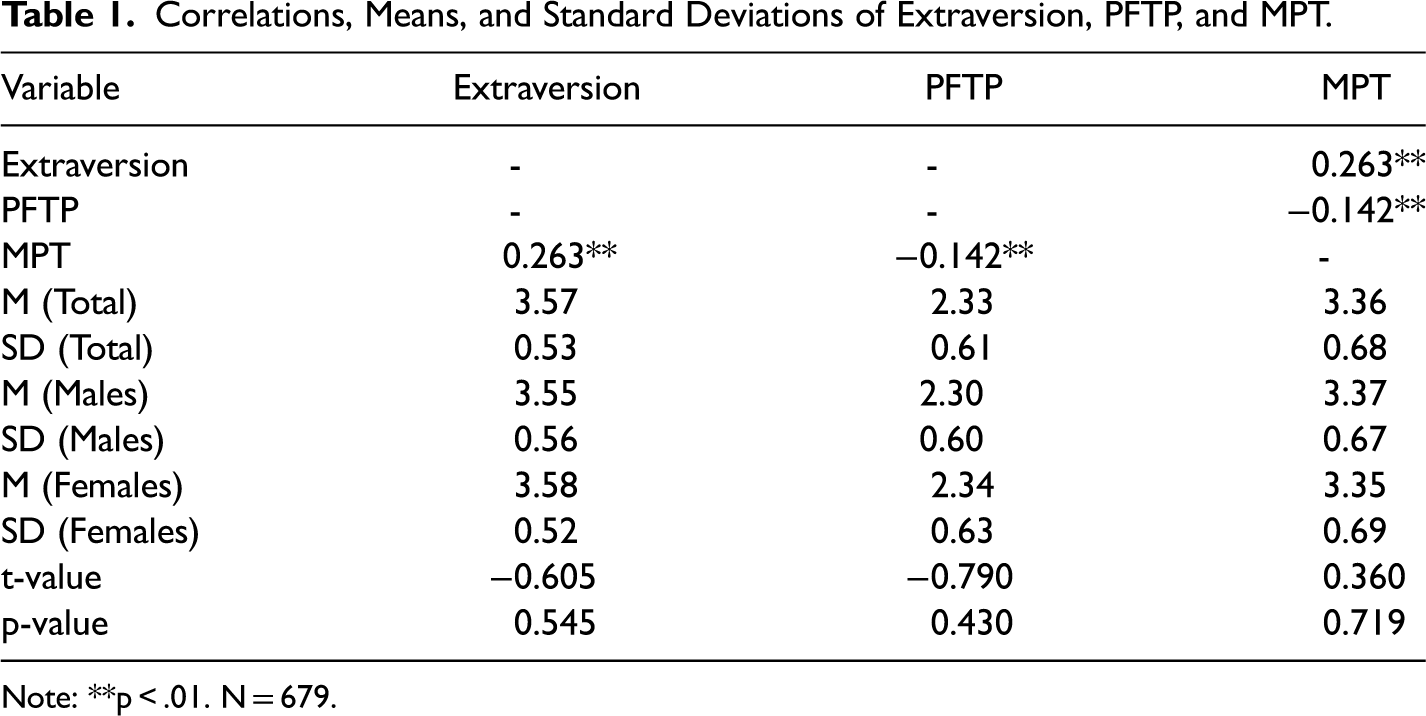
Note: **p < .01. N = 679.
Present-Fatalistic Time Perspective
In addition to psychological and genetic factors, time perspectives’ (TPs) influence psychological functioning by impacting happiness, choices, and likelihood of success (Burzynska & Stolarski, 2020; Maercker et al., 2019). In this study, TP is a viewpoint that provides order, coherence, and meaning to events by assigning time frames to experiences (Zimbardo & Boyd, 1999). Five dimensions of TP are proposed by Zimbardo and Boyd (1999) as being related to past, present, and future aspects. The past positive TP focuses on positive memories and an appreciative view of past experiences. In contrast, the past negative perspective is shaped by regret or negative experiences, which results in feelings of pain or disappointment. The present hedonistic TP focuses on living in the moment, instant gratification, and pleasure-seeking without concerns for future consequences. Moreover, the future-oriented TP involves planning and goal-setting wherein long-term rewards are prioritized over short-term gratification. Finally, the present fatalistic time perspective (PFTP), is characterized by a weak sense of control over the future, helplessness, and resignation to fate or luck rather than hard work. PFTP is relevant as a mediator in the association between extraversion and MPT.
Higher PFTP levels reflect a belief in uncontrollable external forces, predetermined future, and fate, while lower PFTP levels involve conscious agency over life events. The mediating role of TPs between personality traits and risky behaviors that lead to mental disorders has been explored in previous literature (Loose et al., 2018). Among the five TPs, a higher present-fatalistic time perspective (PFTP) predicts lower MPT as the first leads to lower life satisfaction, higher experiences of negative emotions, and psychopathology (Burzynska & Stolarski, 2020; Chen et al., 2016; Cimpean & David, 2019). This study proposes that TP or psychological time integration may mediate between extraversion and MPT.
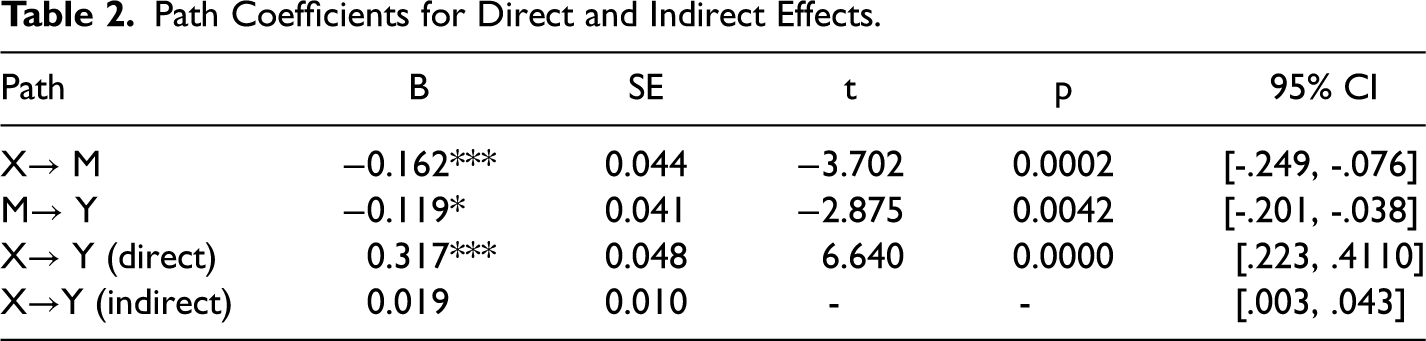
Path Coefficients for Direct and Indirect Effects.
Extraversion and PFTP
Extraversion and PFTP, as the discussed predictors of MPT, are negatively associated. Hogan's model of extraversion supports this, explaining that extroverts’ higher tolerance for external stimulation leads to underestimated time duration. Extroverts experience shorter time, which leads to lower passivity and lower PFTP (Bajec, 2019). They have higher energy levels, stimulus tolerance, and positive affect compared to introverts (Eysenck & Eysenck, 1977; Gács et al., 2020). Therefore, extraverts engage more in exciting and stimulating activities, while introverts avoid such activities to maintain optimal stimulation due to low sensory thresholds (Eysenck & Eysenck, 1977). In contrast, Guzman's model shows that fatalism can be a maladaptive attitude and a personal resource (Bolotova & Hachaturova, 2013; Falicov, 1998; Guzman et al., 2005). Like extroverts, individuals with low PFTP have a more internal locus of control (Crisson & Keefe, 1988; Lynn & Eysenck, 1961; Măirean & Diaconu-Gherasim, 2022). In response, they have more varied coping strategies, believing that they can manage their pain, thus being more active in dealing with pain rather than feeling helpless about their situation.
PFTP and MPT
TP significantly impacts psychological functioning since it affects mental processes, including emotions (Burzynska & Stolarski, 2020; Maercker et al., 2019). Particularly, PFTP is negatively related to MPT. PFTP is an anxiety- and stress-inducing time orientation (Strathman & Joireman, 2005). Individuals with higher PFTP tend to have lower life satisfaction, more negative emotional experiences, and higher vulnerability to psychopathology, which are manifestations of MPT and support PFTP's influence on MPT (Burzynska & Stolarski, 2020; Chen et al., 2016; Cimpean & David, 2019). Higher PFTP is negatively associated with life satisfaction and all positive indicators of well-being (Diaconu-Gherasim et al., 2023). Specifically, PFTP is shown to negatively affect MPT due to its association with feelings of helplessness and lack of control over one's future (Sobol et al., 2021; Strathman & Joireman, 2005).
Conversely, MPT is associated with and considered a protective factor for mental health (Landi et al., 2020), suggesting that people with PFTP have a sense of powerlessness and helplessness (Stolarski et al., 2018), which could be risk factors for psychopathology that are associated with MPT, i.e., depression, aggression, anxiety, isolation, and reduced activity level, also positively correlate with PFTP (Cimpean & David, 2019; Maercker et al., 2019; Zhang & Howell, 2011; Zimbardo & Boyd, 1999; Zuo et al., 2020). The negative relationship between the PFTP and life satisfaction across the lifespan is also explained by the experience of setbacks throughout maturity. Striving to establish their lives causes individuals to feel less control over the external world (Crisson & Keefe, 1988). For instance, a highly present-fatalistic individual may experience learned helplessness when their dependence on fate or destiny is faced by persistent failures, thus leading to lower life satisfaction. This implies that individuals with higher PFTP may develop learned helplessness due to several persistent failures in the past, which impacts their pain anticipation and, consequently, their MPT.
In another study, a lower PFTP is associated with high PTSD symptoms in line with the temporal model of control assumptions, stating that controllability over traumatic past or future events has a vital role in developing these posttraumatic stress symptoms (Măirean & Diaconu-Gherasim, 2022). Notably, TP and MPT are subjective experiences that affect how a person experiences living their realities. While very little research suggests a direct association between these two concepts, it is plausible to assume that TP contributes to how adverse and intense the experience of pain is. This assumption is supported in studies using chronic pain patients and surgery patients (Dany et al., 2015; Sobol-Kwapinska et al., 2017; Sobol-Kwapinska et al., 2019), wherein PFTP is positively associated with greater pain sensitivity (Gács et al., 2020). Lower PFTP's association with higher life satisfaction, better well-being, lower pain sensitivity, and better mood, which are indicators of higher MPT, are also supported in a few studies with subjects who were not explicitly noted to have any illness (e.g., Chen et al., 2016; Desmyter & De Raedt, 2013; Gács et al., 2020; Stolarski et al., 2014).
The study of MPT is vital as variations in levels suggest meaningful application to studying different mental states, life conditions, and life transitions (Orbach et al., 2003). Existing literature generally focuses more on physical pain than mental, as no known study has specifically studied the relationship between TP and MPT (França et al., 2019; Hooten, 2016; Orbach et al., 1997). Furthermore, Averill's study found inconsistencies in related findings and stated that the effectiveness of personal control depends on the nature of the context and the response to the situation. In contrast, other sources emphasized that reactions to stress are not always reduced by a sense of personal control associated with higher PFTP (Averill, 1973). This inconsistency also highlights the relevance of studying PFTP as a mediator in the relationship between MPT and extraversion. Studying PFTP as a mediator provides an understanding of the relationship between extraversion and MPT and can assist in developing intervention strategies to improve psychological functioning and prevent psychological issues.
Overall, there has been little research on the direct relationship between the three variables and the role of TP in studying them, but empirical evidence suggests that PFTP levels can explain the association between extraversion and MPT (Hogan, 1978; Sobol et al., 2021), emphasizing the importance of investigating PFTP's impact on extraversion and MPT.
Research Questions and Hypotheses
Research Questions
Does extraversion predict PFTP?
Does PFTP predict MPT?
Does extraversion predict MPT?
Does PFTP mediate the relationship between extraversion and MPT?
Hypotheses
H1: Higher extraversion levels predict lower PFTP levels.
H2: Higher PFTP levels predict lower MPT.
H3: Higher extraversion levels predict higher MPT.
H4: PFTP mediates the relationship between extraversion and MPT, wherein higher extraversion is associated with higher MPT through lower PFTP.
Materials and Methods
Participants
The researchers gathered a total of 679 participants (M = 23.01, SD = 4.92), of which 41.53% were males (n = 282), and 58% were females (n = 397). G*Power software was used to provide the sample size with a medium effect size of 0.15, which indicated a moderate practical significance of the research outcome, and the tool suggested 119 participants. Additional responses were gathered to increase the results’ reliability. The inclusion criteria required participants to be between 20–59 years old. This criterion is determined based on how the stability of personality traits increases from 20 years old onwards (Milojev & Sibley, 2014). Participants were considered Filipino citizens to avoid inaccurate findings due to intercultural populations. All participants provided online consent.
Questionnaires
To measure participants’ PFTP, the Zimbardo Time Perspective Inventory (ZTPI) (Zimbardo & Boyd, 1999). The ZPTI is a 56-item test on a 5-point Likert scale, where participants rate each item with 1 (Strongly Disagree), 2 (disagree), 3 (neutral), 4 (agree), and 5 (Strongly Agree). The PFTP subscale consists of 9 items. The test evaluates individuals’ orientations toward a future orientation, past orientation, present hedonistic orientation, and present fatalistic Orientation, revealing whether an individual leans toward a time perspective heavier than other time perspectives. Scores range from 56 to 280, with higher scores indicating a stronger preference for certain time perspectives. Internal consistency through Cronbach's a was acceptable, with estimates ranging from .74 to .82 (M = .79), and the PFTP subscale had a Cronbach alpha of .74. The test was administered in English.
Further, participants’ extraversion levels were measured with the International Personality Item Pool - Neuroticism, Extraversion, and Openness-60 Representation of Costa and McCrae (IPIP-NEO-60) (McCrae & John, 1992). It is a 60-item scale of the Five-Factor Model with the extraversion sub facets of friendliness, gregariousness, assertiveness, activity level, excitement seeking, and cheerfulness. A 5-point Likert scale was used to record responses; 1 meant “Strongly Disagree,” and 5 meant “Strongly Agree.” Higher scores corresponded to higher degrees of extraversion. English was used to administer the scale. The domains of IPIP have mean coefficient alphas of .80 and mean interim correlation of .26 across three samples. The scale shows strong evidence for the validity of NEO PI-R and IPIP-300. The extraversion dimension has excellent internal consistency (α = .92).
Finally, the Tolerance for Mental Pain Scale-10 assessed participants’ mental pain tolerance levels (Meerwijk & Weiss, 2018). It has ten items regarding psychological pain experiences rated on a 5-point Likert scale, where 1 indicates “Strongly Disagree,” and 5 indicates “Strongly Agree.” The scale includes “Managing the Pain,” which refers to active coping methods to address psychological pain, and “Enduring the Pain,” which refers to believing one can cope with the pain. The scale was administered in English. The internal consistency of TMPS-10 is good to excellent: Cra = 0.90 for Managing the pain and Cra = 0.84 for Enduring the pain. Using a median split, scores of 3 are considered neutral for all three scales, with scores above 3 categorized as relatively high, and scores below 3 categorized as relatively low.
Procedure
Permission was obtained, and informed consent was given before the surveys were answered. The 3 questionnaires were answered online. First, pre-testing was conducted, and participants were informed about the study's objectives and methods during the data collection phase. Next, the 3 questionnaires were answered for 15–20 min, and 4 raffle draw participants were picked to receive PHP 50.00 as an incentive.
Mediation analysis with Model 4 of PROCESS Macro for SPSS v4.1 was utilized to explore whether PFTP (M) mediated the association between extraversion (X) and MPT (Y). Before conducting the mediation analysis, the assumptions of normality were tested. Further, descriptive statistics like means and SD were utilized to examine demographic data.
The researchers oversaw digital storage, management, and disposal of all data collected. Before answering the online questionnaires through Google Forms, respondents were informed that confidentiality and anonymity of the collected data were guaranteed. Further, each part of the study took all necessary steps to safeguard the gathered information's confidentiality, privacy, and security.
Data Analysis
Mediation analysis with Model 4 of PROCESS Macro for SPSS v4.1 was utilized to explore whether PFTP (M) mediated the association between extraversion (X) and MPT (Y). Before conducting the mediation analysis, the assumptions of normality were tested. Further, descriptive statistics like means and SD were utilized to examine demographic data.
Ethical Approval
This study (with protocol code “2023-019-Baguio et al.”) received ethical approval from the University of San Carlos, University Research Ethics Committee, on March 3, 2023.
Results
A significant positive correlation was found between extraversion and MPT (r = .263, p < .001), while a significant negative correlation was found between PFTP and MPT (r = -.142, p < .001).
Regarding the means and SD of each measure, the measures utilized a Likert scale with a 1–5 rating (1 - lowest and 5- highest). The results revealed that the respondents are generally average on the extraversion scale (M = 3.57, SD = .53) or neutral on the extraversion continuum. Further, the participants had low levels of PFTP (M = 2.33, SD = .61). Finally, for MPT, the respondents scored under ‘neutral’ on the scale (M = 3.36, SD = .68) or were neither low nor high in their MPT. Using a median split, scores of 3 are considered neutral, with scores higher than 3 reflecting relatively high levels of PFTP tendencies, extraversion, and mental pain tolerance and scores lower than 3 reflecting relatively low levels of PFTP, extraversion, and MPT.
An independent samples t-test was conducted to compare the extraversion, PFTP, and MPT levels between males and females. The results revealed no statistically significant differences between males and females in any of the variables. For extraversion, males (M = 3.55, SD = 0.56) and females (M = 3.58, SD = 0.52) did not differ significantly, t(677) = -0.605, p = .545. Similarly, there was no significant difference in PFTP scores between males (M = 2.30, SD = 0.60) and females (M = 2.34, SD = 0.63), t(677) = -0.790, p = .430. Finally, for MPT, males (M = 3.37, SD = 0.67) and females (M = 3.35, SD = 0.69) also showed no significant difference, t(677) = 0.360, p = .719. Overall, gender does not influence extraversion, PFTP, or MPT levels in this study.
The table presents the results of a mediation analysis examining the relationship between Extraversion (X), Present-Fatalistic Time Perspective (M), and Mental Pain Tolerance (Y). Extraversion negatively predicts Present-Fatalistic Time Perspective (PFTP), negatively predicting Mental Pain Tolerance (MPT). The results suggest that extraversion may negatively predict PFTP (B = -0.162, p < .001). In turn, PFTP had a modest negative effect on MPT (B = -0.119, p < .01). The indirect effect of X and Y through extraversion was significant (B = 0.019) as the confidence intervals based on 5,000 bootstrap samples did not include zero (B = -0.019, 95% CI [.003, .043]). Extraversion also significantly and directly affected MPT with the model's mediator, illustrating partial mediation. Overall, the study's results suggest that PFTP mediates the relationship between extraversion and MPT, and the magnitude of the mediation effect is modest.
Figure 1 depicts the mediation model illustrating Extraversion, PFTP, and MPT relationships. The path from extraversion to PFTP (a = -0.162) indicates that higher levels of extraversion are associated with lower levels of PFTP. The path from PFTP to MPT (b = -0.119) demonstrates that higher levels of PFTP are associated with lower MPT. A significant positive relationship between extraversion and MPT is shown by the direct effect of extraversion on MPT (c’ = 0.317). In contrast, the indirect effect (c = 0.019) indicates PFTP's partial mediating role in the relationship between extraversion and MPT.
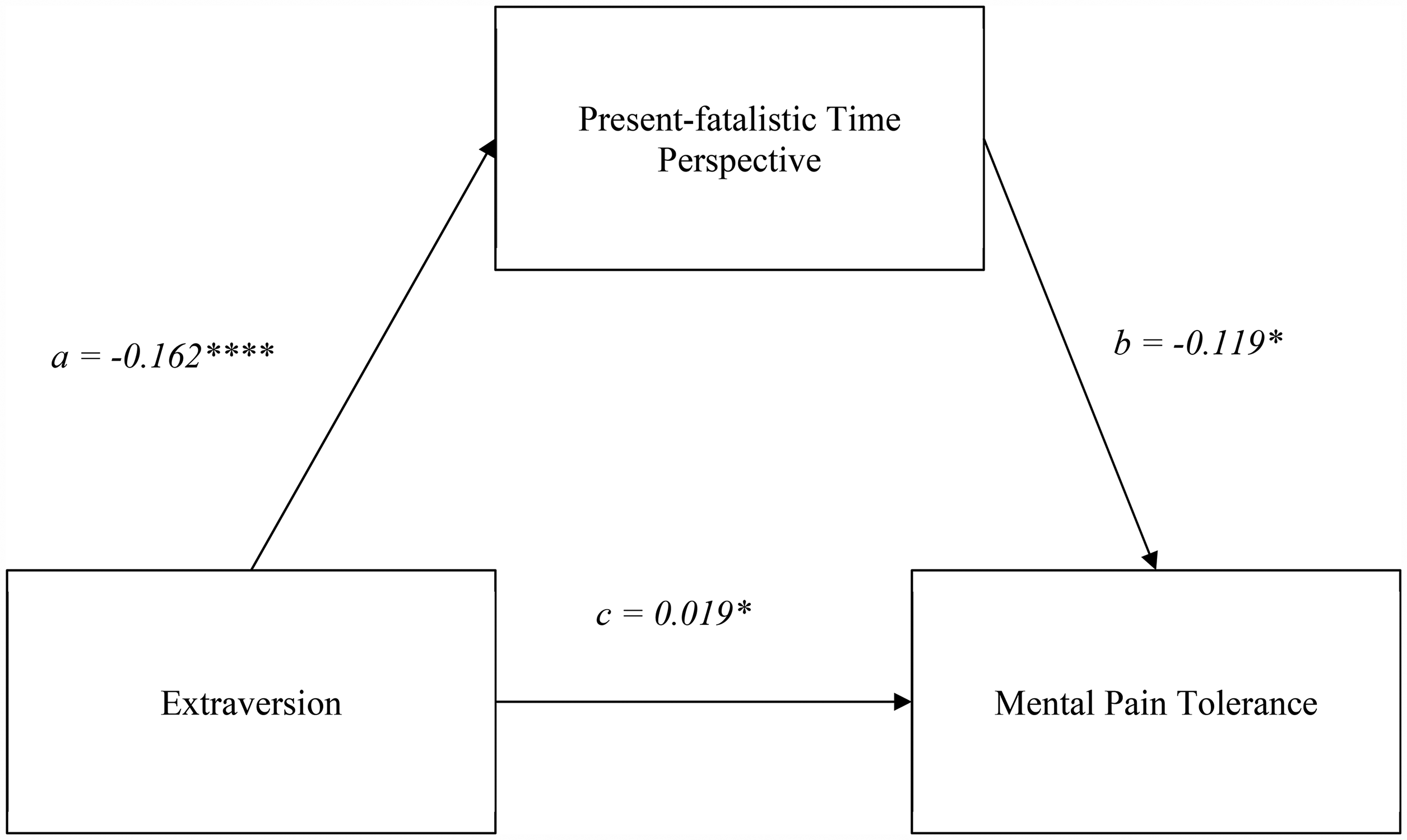
Regression coefficients for the relationship between extraversion and MPT as mediated by PFTP.
Discussion
The results of this study support the model that extraversion is a possible distal predictor of MPT and is partially mediated by PFTP. The model supports the biopsychosocial model of pain (Engel, 1977), which suggests that pain is not just a result of biological factors but also profoundly influenced by psychological and social factors. Extraverted individuals are characterized by sociability and often utilize varied coping strategies and social support, which are factors that may contribute to their higher pain tolerance compared to introverts, who may have reduced pain tolerance due to increased symptom perception. For example, introverts exhibit a greater susceptibility to depressive illness than extroverts, which is attributed to higher pain sensitivity (Landi et al., 2020). Additionally, Eysenck (1967) proposed that extraverts may have higher pain tolerance than introverts because they can quickly inhibit and dissipate prolonged pain sensations. This ability is explained by lower cortical arousal at rest among extraverts, which affects their response to stimuli, including pain (Küssner, 2017). This hypothesis is also supported by findings that extraverts report higher perceived well-being and proactive behavior (Costa & McCrae, 1980). Further, extraverts usually have a more positive outlook and feel more in control of their lives, which could lead to higher MPT. In contrast, introverts are more inclined to introspect when confronted with negative feelings and experience difficulties in emotional regulation. Theoretically, introverts are likely to have higher sensory processing sensitivity (Aron & Aron, 1997; Thomas & Nelson, 2024; Turjeman-Levi & Kluger, 2022), which means that they are more sensitive to environmental stimuli and may experience overstimulation more easily. This heightened sensitivity can lead to increased stress and lower pain tolerance.
PFTP partially accounts for the relationship between extraversion and MPT by influencing how individuals perceive and cope with pain. This finding can be explained through the psychosocial factors related to PFTP: perception of control, coping strategies, emotional regulation, and social support. People with high PFTP, characterized by believing that the future is uncontrollable and uncertain, might have a lower sense of control, leading to lower MPT (Baird et al., 2021). In terms of coping strategies, extraverted individuals tend to use more active and problem-focused coping strategies. However, this type of coping is less aligned with high PFTP, which is often associated with passive coping and is less effective in managing pain, thereby reducing MPT (Chen et al., 2016). Additionally, extroverted individuals tend to regulate their emotions better (Phillips & Gatchel, 2000). In contrast, higher PFTP might impair emotional regulation (Wittmann et al., 2015), making it harder to manage pain, thus resulting in lower MPT. Finally, extraverts typically have more robust social networks. On the other hand, high PFTP might lead to feelings of isolation or disconnection, reducing the availability and effectiveness of social support and thereby leading to lower MPT (Wu et al., 2015).
The finding also aligns with Kruger et al.'s (2008) study suggesting that present-time perspectives mediate the relationship between positive and negative aspects of social environments with risky behaviors. Anchoring on the Evolutionary Life History Theory (LHT), they postulated that time perspective may be a mechanism for functional adaptation. LHT provides insight into the role of time perspective as a mediating factor that helps individuals adapt and adjust to environments. Using LHT, past scholars (Chisholm, 1999; Roff, 2020; Stearns, 1992) suggested that people raised in relatively uncertain environments will develop riskier, short-term behavioral strategies compared to those from stable and predictable environments. In the context of PFTP, there is an association with risky behaviors since present-oriented individuals are more likely to depend on immediate social environment factors (Jochemczyk et al., 2017; Zimbardo et al., 1997). Strathman and Joireman (2005) explain that PFTP is a stress-inducing time perspective related to a sense of powerlessness. Moreover, it is related to posttraumatic stress symptoms mediated by a more significant external locus of control (Măirean & Diaconu-Gherasim, 2022). This supports the earlier idea that individuals with high PFTP often believe that their environment and future are uncontrollable, which contributes to their lower sense of control, leading them to have lower MPT.
The modest mediation effect should not be interpreted as confirmation that PFTP plays a minor role in the extraversion–MPT interaction. The findings are still statistically significant and suggest that PFTP may have an influential role in the relationship between extraversion and MPT. This study's results underline the relevance of PFTP in (1) encouraging the development of interventions that can increase individuals’ active control over time and events to enhance psychological functioning, (2) promoting awareness of how individuals’ adopted TP, MPT, and extraversion levels impact their life quality and aids in preventing psychological issues; (3) guiding healthcare professionals in tailoring treatments that align with patients’ TP, extraversion levels, and MPT to enhance life quality; and (4) helping individuals manage their PFTP levels and MPT to live meaningful lives according to their extraversion levels.
The current study has some limitations and recommendations for consideration. Future studies can use longitudinal designs rather than cross-sectional designs to better establish the causal relationship between personality traits and MPT. Second, since this study relied on self-reported measures, future studies should consider including objective measures to improve the validity of the results. Future researchers are suggested to analyze all five TPs of Zimbardo with other Big Five personality traits. Finally, the researchers recommend exploring variable interactions at different ages as the personality becomes more stable with age (Laureiro-Martinez et al., 2017; Milojev & Sibley, 2014).
Conclusion
Thriving in a generation emphasizing mental health and individual personality differences, this study examined the relationship between extraversion and MPT and the PFTP's mediating role among the Filipino population. The findings corroborate previous results, highlighting the positive association between extraversion and MPT and the negative association of PFTP with MPT. As one of the first studies exploring the associations among PFTP, extraversion, and MPT, this study confirmed the mediation of PFTP between extraversion and MPT. The nuanced associations discovered emphasize the significance of individual variations and cognitive orientations, such as time perspectives, in determining psychological responses and coping mechanisms.
Footnotes
CRediT Author Statement
Declaration of Conflicting Interests
The authors declared no potential conflicts of interest with respect to the research, authorship, and/or publication of this article.
Funding
The authors received no financial support for the research, authorship, and/or publication of this article.
