







Abstract
The study aims to identify cognitive and behavioural factors influencing the transformation processes of educational institutions in the context of modern environmental and social responsibility requirements. A comprehensive analysis was conducted across fifteen universities in Kazakhstan using a mixed methodology, including semi-structured interviews with top-level executives and a large-scale survey of administrative staff. The findings reveal a dominance of cognitive resistance among 87% of executives, manifested in a lack of understanding regarding the practical application of new managerial approaches. Emotional resistance to change was identified in 73% of respondents, while behavioural constraints were characteristic of 68% of participants. Factor analysis of quantitative survey data (n = 320) confirmed a four-factor resistance structure, accounting for 72.4% of the total variance. Correlation analysis revealed significant negative relationships between cognitive barriers and material incentives (r = −0.71, p < 0.01). Regression analysis demonstrated that organisational incentives explain 47% of the variation in resistance levels (R2 = 0.47, F = 28.4, p < 0.001).
Keywords
Psychological barriers and incentives for integrating environmental, social, and governance (ESG) principles in the context of sustainable development in Kazakhstani higher education institutions stem from the complex interplay of environmental, social, and managerial factors. The core issue lies in balancing universities’ economic objectives with sustainable development requirements, necessitating a restructuring of managerial approaches and the adoption of new strategies. In Kazakhstan, the integration of ESG principles into the education system remains fragmented, indicating significant obstacles and underscoring the need to identify factors that either facilitate or hinder ESG implementation.
Existing research confirms the presence of both barriers and incentives for ESG integration in Kazakhstani higher education. A study by Mukhiyayeva et al. (2024) identified key obstacles, including the absence of unified reporting standards, insufficient expertise, and infrastructural limitations. Gafu et al. (2024) highlight the fragmented nature of incorporating sustainable development principles into the educational policies of Kazakhstani universities, hindering the development of a holistic approach. Research by Yelubayeva et al. (2023) revealed the significant impact of the COVID-19 pandemic on sustainable education processes, necessitating adaptations in educational programmes. However, there remains a paucity of data on the influence of psychological barriers and managerial staff motivation on the adoption of ESG principles in Kazakhstani universities.
The integration of sustainable development into higher education presents significant organisational and methodological challenges for universities worldwide (Abo-Khalil, 2024). This process necessitates a systemic revision of educational programmes, administrative procedures, and institutional culture. The implementation of sustainable development principles affects all levels of university activity, including teaching, research, operational management, and community engagement. The adoption of sustainable practices faces constraints such as insufficient resources, expertise, and institutional support. The transformation of educational institutions towards sustainable development requires long-term strategic changes and the involvement of all stakeholders.
The study by Aleixo et al. (2018) identified key factors for the successful integration of sustainable development principles into higher education. It defined the primary roles of universities in promoting sustainable development through education, research, and societal engagement. Institutional, financial, and cultural barriers hindering the full implementation of sustainable development practices were established. The analysis revealed the necessity of a systemic approach to university transformation, considering their specificities and capabilities. The findings underscore the importance of strategic planning and phased implementation of changes.
The integration of ESG values into higher education curricula demonstrates a positive impact on the development of students’ professional competencies (Alenezi and Alanazi, 2024). Incorporating ESG components into the educational process fosters critical thinking and decision-making skills aligned with sustainable development principles. An interdisciplinary approach to integrating ESG values facilitates a holistic understanding of global sustainable development challenges (Popelo et al., 2023). Educational programmes based on ESG principles show increased student engagement and improved learning outcomes. This approach lays the foundation for training professionals capable of effectively addressing sustainable development challenges.
The identification of barriers to sustainable development in higher education institutions highlights the significant role of technology in overcoming existing limitations (Alhazmi et al., 2023). Technological solutions contribute to optimising resource consumption and enhancing the efficiency of university infrastructure management. Digital tools enable the monitoring and evaluation of progress in achieving sustainable development goals. The adoption of modern technologies facilitates innovative educational formats and teaching methods. The technological transformation of universities serves as a catalyst for institutional change towards sustainable development.
The assessment of sustainable development in Saudi Arabian higher education institutions demonstrates a comprehensive approach to analysing institutional transformations (Alshuwaikhat et al., 2016). The developed evaluation methodology encompasses environmental, social, and economic aspects of university operations. The study revealed significant disparities in the level of sustainable development practices adoption across institutions. Key success factors and areas for improvement in the context of university sustainable development were identified. The assessment results provide a basis for developing strategic recommendations to enhance sustainable development practices.
A review of existing research reveals significant gaps in the study of psychological aspects of ESG integration in Kazakhstani higher education. There is a lack of detailed analysis of motivational factors and mechanisms for overcoming resistance to change among university administrative staff. The influence of organisational culture on the effectiveness of ESG practice implementation remains understudied. Empirical data on the relationship between leadership's psychological readiness and the success of ESG transformation are limited. There is a need for research on the role of leadership and behavioural factors in the process of integrating sustainable development principles in Kazakhstani higher education institutions.
The aim of the study was to identify the key psychological barriers and incentives influencing the implementation of ESG principles in the higher education system of Kazakhstan, as well as to develop recommendations for overcoming them. To achieve this objective, the following tasks had to be addressed: determining the main factors hindering and facilitating ESG integration; analysing the role of managerial decisions and institutional incentives; identifying mechanisms for fostering sustainable motivation among academic staff and students; and proposing strategic recommendations for eliminating barriers and enhancing motivation for integrating ESG into the educational process. The research question:
What psychological barriers most significantly hinder the integration of ESG principles in Kazakhstani higher education institutions? Which organisational incentives are most effective in reducing resistance to ESG-orientated institutional transformation? How sufficiently are psychological support mechanisms for ESG implementation institutionalised in Kazakhstani universities?
The significance of this study lies in its contribution to understanding the psychological and organisational conditions that influence ESG integration in higher education institutions. While previous studies have mainly examined institutional, policy, and curriculum-related aspects of sustainable development, this research focuses on the role of cognitive, emotional, behavioural, and value-related barriers among university administrative staff. The findings are significant because they provide empirical evidence on how organisational incentives and psychological support mechanisms can facilitate ESG-orientated institutional transformation. In practical terms, the study offers recommendations that may help universities strengthen staff readiness, reduce resistance to change, and develop more systematic approaches to sustainable development governance.
Theoretical Review
Research on pedagogical approaches to teaching sustainable development began with the systematisation of educational practices. Lozano et al. (2015) conducted an analysis of European higher education institutions, revealing a diversity of pedagogical methodologies and emphasising the importance of aligning teaching methods with the competencies being developed. Filho et al. (2016) examined the effectiveness of project-based learning in implementing integrative approaches to sustainable development, demonstrating the significance of practical knowledge application and teamwork skill development. These studies laid the methodological foundation for the further evolution of educational practices.
An important research direction has been the study of corporate sustainability development stages and their integration into the educational process. Landrum (2018) analysed the evolution of corporate sustainability, noting a shift from fragmented initiatives to systemic transformations and highlighting the need for organisational culture change. Cebrián et al. (2020) focused on developing competencies in education for sustainable development (ESD), identifying emerging trends in teaching and research, as well as the necessity of integrating theoretical knowledge with practical skills. Maiorescu et al. (2020) investigated barriers and motivations for sustainable development in higher education from the students’ perspective, confirming the importance of engaging learners in initiatives and addressing their needs.
In the field of interdisciplinary approaches to ESDESDESD, significant contributions were made by early 2020s research. Braßler and Sprenger (2021) examined the impact of an interdisciplinary course with tutor support on students’ knowledge acquisition and behavioural attitudes, proving the effectiveness of integrating diverse disciplinary approaches for developing systemic thinking. Filho et al. (2021) explored institutional support for implementing sustainable development goals through systemic university-society collaboration, demonstrating the efficacy of partnership-based engagement.
Works related to incorporating ESG components into the educational process constitute a significant body of research. Dzhumaseitova (2021) substantiated the necessity of a systemic approach to transforming educational programmes for developing ESG competencies among graduates, emphasising the design of specialised courses and modules. Chaikovska and Levchyk (2022) demonstrated the effectiveness of integrating ESD through an interdisciplinary approach, using English for Specific Purposes instruction as an example. Chaikovska (2023) identified key factors for the successful implementation of ESD, outlining primary directions for advancing educational practices.
Institutional transformations of universities in the context of sustainable development have been studied by numerous researchers. Bulatova et al. (2023) analysed the implementation of the green university concept, underscoring the need for systemic infrastructure and operational process reforms. Korchahina (2023) investigated the development of an ESG activity management mechanism in enterprises, justifying the integration of ESG principles into strategic management systems. Thompson and Green (2023) identified psychological barriers to ESG adoption in higher education, highlighting the importance of accounting for cognitive and behavioural resistance factors.
Regional aspects of implementing sustainable development practices have been examined in recent studies. Stepura and Kuzmak (2023) explored the potential of higher education in bridging the digital divide during crises, substantiating the transformative role of universities and the importance of developing digital competencies. Yeremenko and Illiashenko (2023) analysed the challenges and prospects of integrating ESD into higher education institutions (HEIs), identifying key areas for institutional transformation. Yelubayeva et al. (2023) investigated the challenges of ESD in Kazakhstan, demonstrating the multifaceted nature of required changes.
Recent research has focused on the strategic management of sustainable development in HEIs. Farinha et al. (2024) examined sustainable development strategies in Portuguese universities, identifying key success factors for implementation and the importance of institutional support for initiatives. Gafu et al. (2024) studied the alignment of Kazakhstan's higher education system with sustainable development, revealing systemic changes in curricula and administrative processes. Jumasseitova et al. (2024) explored the strategic role of alumni associations in Kazakhstani HEIs, demonstrating their potential in advancing sustainable development goals (SDGs).
The most current studies address global standards and disclosure practices. Gross-Golacka et al. (2024) investigated barriers to the sustainable management of organisational intellectual capital, identifying key impediments to effective implementation. Mukhiyayeva et al. (2024) conducted a comparative analysis of global ESG standards and their application in Kazakhstan, emphasising the need to adapt international practices to the national context. Aversano and Nicoliello (2025) highlighted the necessity of enhancing management training in sustainable development, drawing on examples from Italian universities. Sawani et al. (2025) performed a systematic literature review on motivational factors for SDG disclosure by HEIs, identifying transparency trends.
The integration of sustainable development principles into higher education has become a key driver of global transformation in the educational landscape. International research demonstrates diverse approaches to embedding sustainability practices in universities, encompassing curricula, research activities, institutional governance, and societal engagement.
Thus, an analysis of research on sustainable development in higher education reveals the systemic nature of institutional transformations. Curriculum reform requires the integration of interdisciplinary approaches and the development of innovative pedagogical practices. The adoption of ESG principles demonstrates a positive impact on the formation of professional competencies and the development of students’ critical thinking. Stakeholder engagement lays the foundation for partnerships and the achievement of SDGs.
Materials and Methods
This study employed a sequential explanatory mixed methods design, in which quantitative data collection preceded and informed the qualitative phase, with documentary analysis conducted in parallel. The rationale for this approach was that quantitative survey data provided a statistically representative picture of barrier prevalence and incentive effectiveness, while qualitative interviews allowed exploration of the experiential and contextual dimensions of resistance that scales alone cannot capture. Documentary analysis served as an independent source for triangulation. The research was conducted between September 2023 and March 2024 across 15 leading Kazakhstani universities, including Al-Farabi Kazakh National University, L.N. Gumilyov Eurasian National University, and Nazarbayev University.
Two groups were recruited through purposive sampling. Senior university administrators (n = 45) participated in semi-structured interviews, and mid-level administrative staff (n = 320) completed an online survey. Inclusion criteria for both groups required a minimum of three years of institutional employment, direct involvement in ESG initiatives, and managerial authority in sustainable development. The mean age of senior administrators was 42.7 ± 5.3 years (53.3% male, 46.7% female) and of mid-level staff 38.2 ± 4.8 years (48.1% male, 51.9% female).
Instrumentation
Semi-structured interview protocol. The protocol comprised four thematic blocks: personal attitudes towards ESG principles; perceived cognitive, emotional, behavioural, and value-related barriers; individual motivational factors; and views on institutional incentive mechanisms. Each block combined open-ended questions with targeted follow-up probes. Interviews lasted 45–75 min, were conducted in Russian or Kazakh, audio-recorded with consent, and transcribed verbatim. The protocol was piloted with three administrators prior to fieldwork.
Survey questionnaire. The instrument comprised 38 items across four scales rated on a 7-point Likert scale (1 = strongly disagree, 7 = strongly agree):
Cognitive barriers assessed limited understanding of ESG concepts and uncertainty about implementation. This scale was conceptually distinguished from value conflicts in that cognitive barriers reflect a perceived lack of knowledge or clarity – what administrators feel they do not understand or cannot operationalise – whereas value conflicts reflect a deeper normative tension between ESG principles and established academic priorities, such as research autonomy or traditional institutional hierarchies. Sample items: “I find it difficult to understand how ESG principles apply to university management”; “The goals of ESG transformation are unclear to me in practical terms.”
Emotional barriers captured affective resistance including anxiety and discomfort. Sample item: “The prospect of changing established work practices causes me significant stress.”
Behavioural barriers measured reluctance to invest time and effort in ESG initiatives. Sample item: “I am unwilling to dedicate additional time to implementing new ESG-related procedures.”
Value conflicts assessed perceived incompatibility between ESG requirements and core academic values. Sample item: “ESG principles conflict with the traditional values of academic freedom and autonomy.”
Organisational incentives covered material rewards, professional development, and social recognition. Sample items: “Financial bonuses linked to ESG performance would motivate me to engage more actively”; “Opportunities for professional development in ESG increase my readiness to participate in transformation.”
The questionnaire was translated into Russian and Kazakh and back-translated to verify conceptual equivalence. Content validity was established through expert review, and internal consistency was confirmed by Cronbach's α = 0.87 for the overall scale (subscale values: 0.79–0.85).
Documentary analysis matrix. A structured matrix guided analysis of institutional documents from all 15 universities, including Strategic Development Plans (2020–2025), ESG Implementation Regulations (2021–2024), and annual sustainability reports (2020–2024). The matrix assessed the presence and degree of formalisation of psychological support programmes, financial incentive systems, non-material motivation mechanisms, KPI integration, and staff readiness assessment tools.
Data Analysis
Qualitative analysis. Interview transcripts were analysed using thematic analysis in NVivo 12, proceeding through six stages: familiarisation, open coding, theme generation, theme review, theme definition, and write-up. Initial open coding produced 312 codes, which were subsequently grouped into higher-order themes through iterative review. To assess reliability, a second coder independently coded 20% of transcripts; inter-rater agreement was strong (κ = 0.84). Discrepancies were resolved by consensus. Negative case analysis was conducted to identify and incorporate disconfirming instances, and reflexivity was maintained through a researcher journal and regular peer debriefing.
Quantitative analysis. Survey data were analysed in SPSS 27.0 using descriptive statistics, principal component analysis with varimax rotation (to identify the factor structure of barriers), Pearson correlation analysis (p < 0.01), and multiple linear regression to assess the relative contribution of organisational incentives to resistance levels.
Documentary analysis. The structured matrix was applied independently by two researchers, with discrepancies resolved through discussion. Results were tabulated for cross-institutional comparison.
Findings from all three data sources were systematically compared. Convergences strengthened confidence in conclusions; divergences were examined and reported transparently. Expert validation was conducted by a panel of seven specialists selected on the basis of a doctoral degree in organisational psychology or sustainable development education, at least 10 years of research experience, an h-index ≥15 (Scopus), and experience in ESG transformation projects. Panel size was determined using Lawshe's method (CVR = 0.99, p < 0.05). Experts rated the consistency of conclusions on a 5-point scale, yielding an agreement coefficient of κ = 0.82.
Results
Initially, the results of the qualitative analysis of university leaders’ interviews are presented, revealing core categories of psychological barriers. Subsequently, quantitative survey data from administrative staff are provided, confirming the identified barrier structure and assessing the effectiveness of organisational incentives. The final section includes the results of documentary analysis on institutional ESG transformation support mechanisms.
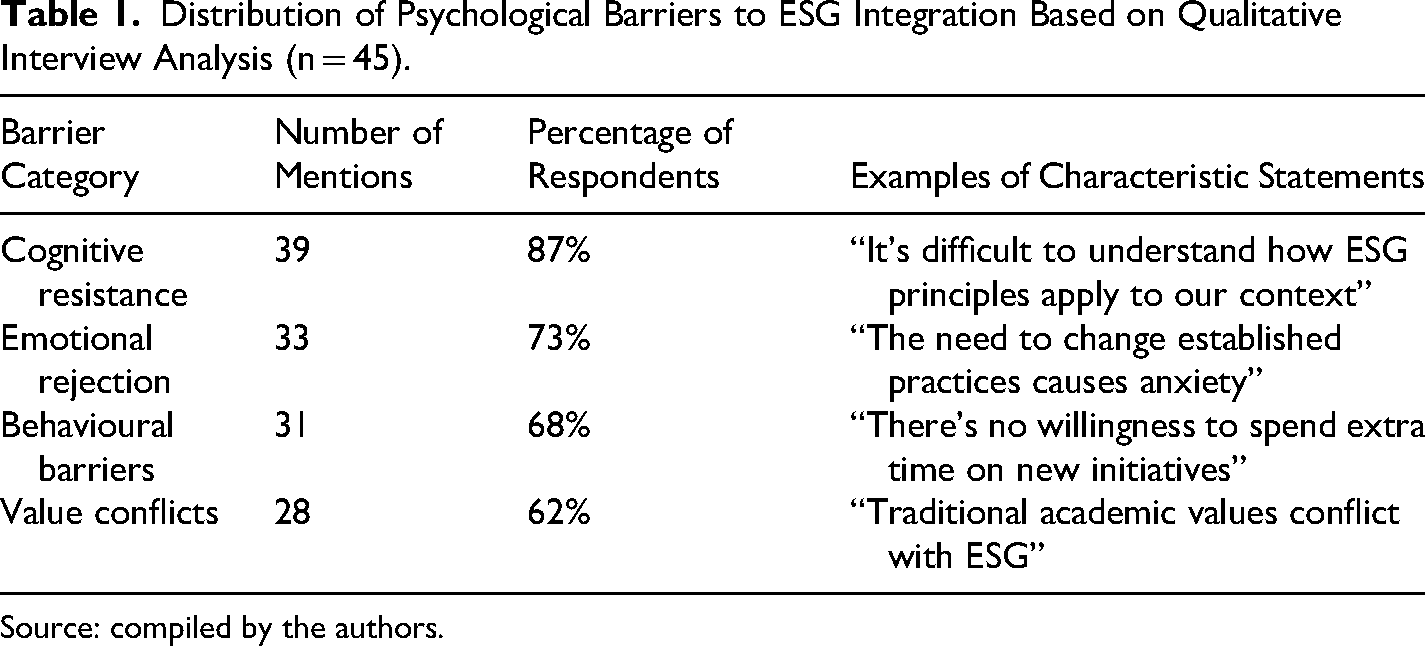
The qualitative analysis of semi-structured interviews with university leaders (n = 45) identified key categories of psychological barriers to ESG integration. The interview transcript coding process was conducted in NVivo, employing a two-stage approach: initial open coding followed by axial code grouping. The results are presented in Table 1.
Distribution of Psychological Barriers to ESG Integration Based on Qualitative Interview Analysis (n = 45).
Source: compiled by the authors.
The analysis of data in Table 1 demonstrates the dominance of cognitive resistance (87% of respondents) in the structure of psychological barriers to ESG integration. The reliability of coding is confirmed by a high inter-rater agreement coefficient (κ = 0.84). The results in Table 1 reveal a hierarchical structure of barriers, where emotional aversion (73%) and behavioural barriers (68%) constitute the secondary level of resistance, while value conflicts (62%) represent the deeper level of psychological obstacles.
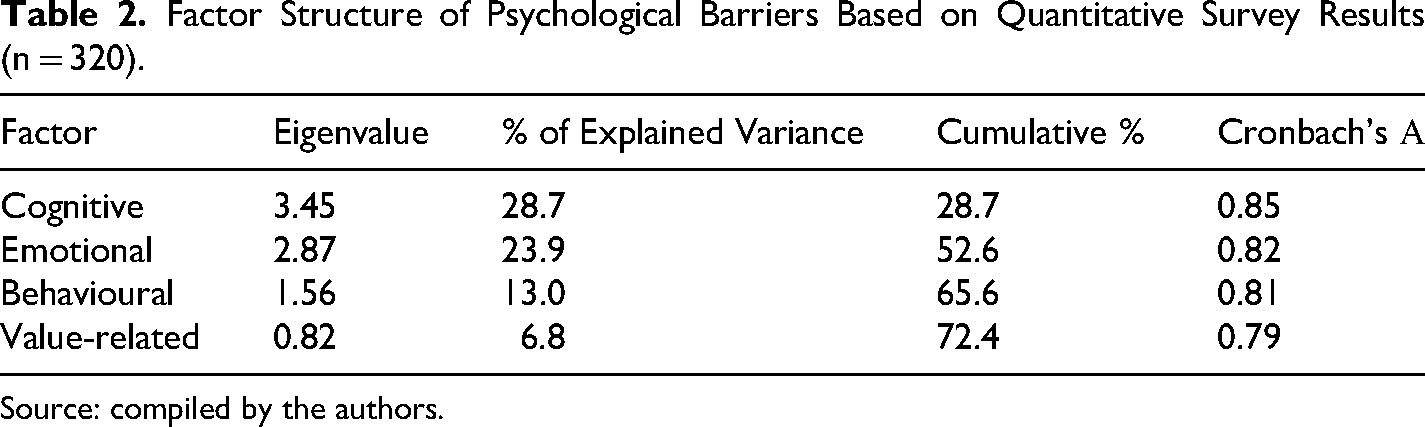
To validate the identified barrier structure, a factor analysis of quantitative survey data from administrative staff (n = 320) was conducted using principal component analysis with varimax rotation. The factorisation results are presented in Table 2.
Factor Structure of Psychological Barriers Based on Quantitative Survey Results (n = 320).
Source: compiled by the authors.
According to Table 2, the four-factor structure of psychological barriers explains 72.4% of the total variance. The cognitive factor carries the greatest weight, with an eigenvalue of 3.45, accounting for 28.7% of the variance. High reliability scores for all factors (Cronbach's α ranging from 0.79 to 0.85) confirm the robustness of the identified structure.
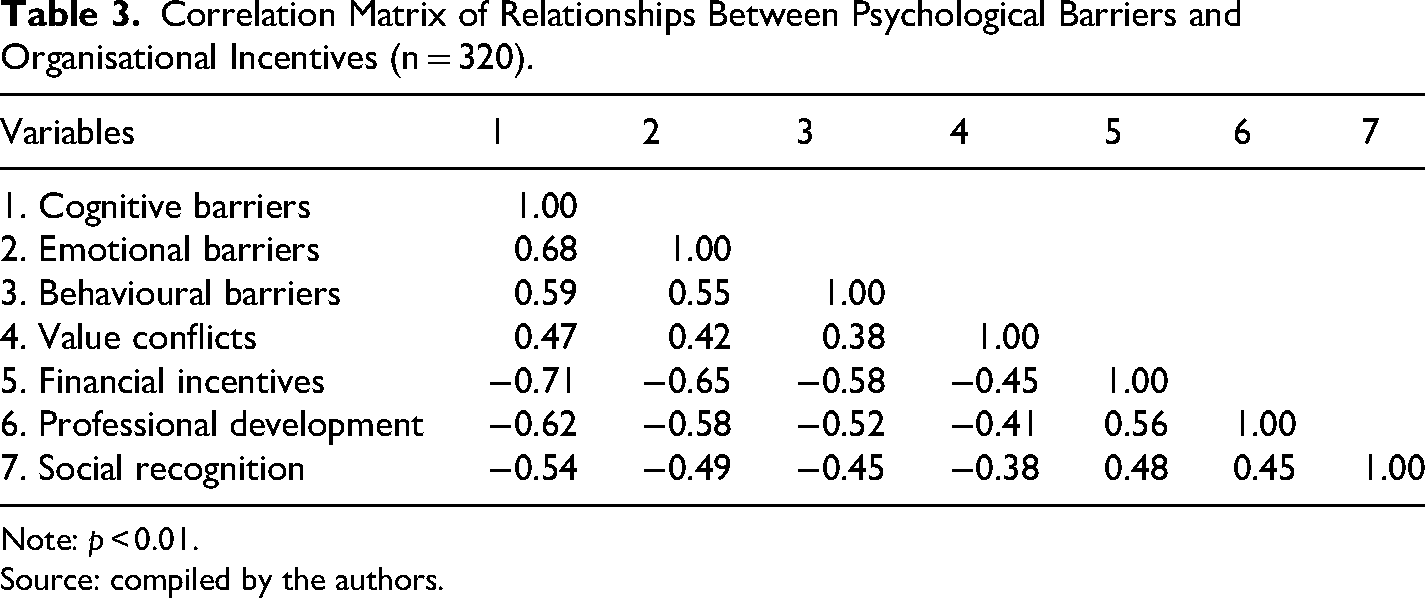
To assess the relationship between psychological barriers and organisational incentives, a correlation analysis was performed. The results are presented in Table 3.
Correlation Matrix of Relationships Between Psychological Barriers and Organisational Incentives (n = 320).
Note: p < 0.01.
Source: compiled by the authors.
Analysis of the correlation matrix in Table 3 reveals significant negative relationships between all types of psychological barriers and organisational incentives. The strongest negative correlation is observed between cognitive barriers and financial incentives (r = −0.71, p < 0.01), suggesting the potential effectiveness of monetary incentives in overcoming cognitive resistance.
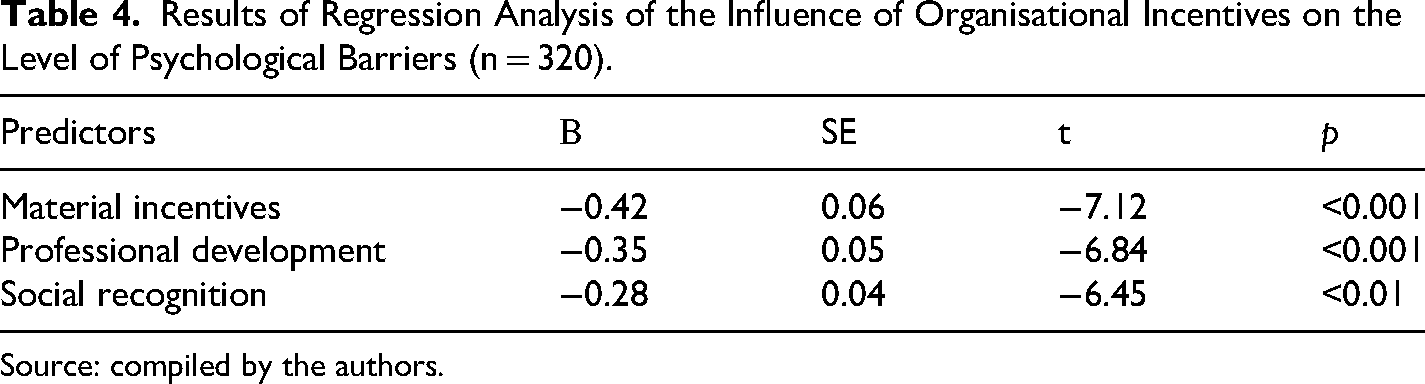
To determine the contribution of organisational incentives to reducing psychological barriers, a multiple regression analysis was conducted. The results are presented in Table 4.
Results of Regression Analysis of the Influence of Organisational Incentives on the Level of Psychological Barriers (n = 320).
Source: compiled by the authors.
The regression analysis presented in Table 4 demonstrates that organisational incentives account for 47% of the variation in the level of psychological barriers (R2 = 0.47, F = 28.4, p < 0.001). The material incentive system makes the most significant contribution to reducing barriers (β = −0.42, p < 0.001).
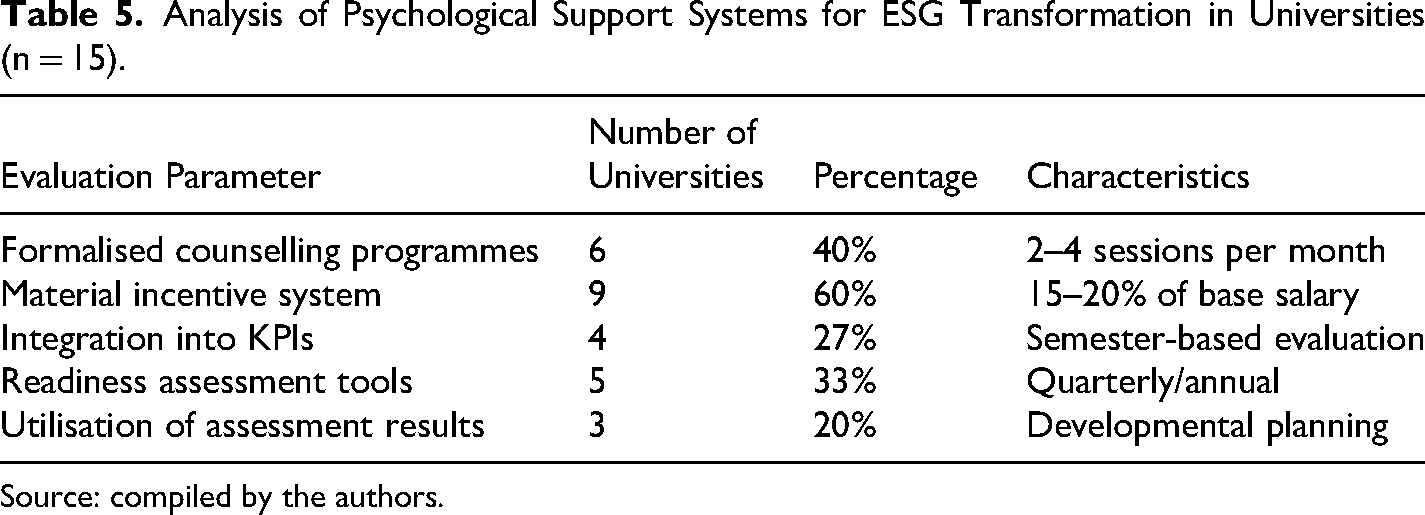
A documentary analysis of psychological support programmes for ESG transformation in universities allowed for an assessment of the degree of institutionalisation of barrier mitigation mechanisms. The results are presented in Table 5.
Analysis of Psychological Support Systems for ESG Transformation in Universities (n = 15).
Source: compiled by the authors.
The analysis of Table 5 reveals an insufficient level of institutionalisation of psychological support mechanisms for ESG transformation. Only 40% of universities have formalised counselling programmes, while systematic use of readiness assessment results is observed in merely 20% of cases.
The qualitative analysis of semi-structured interviews revealed that resistance to ESG integration was not limited to formal organisational difficulties but was closely connected with administrators’ perceptions, emotions, routines, and professional values. Four key thematic categories were identified: cognitive resistance, emotional rejection, behavioural barriers, and value-related conflicts.
First, cognitive resistance emerged as the most frequently reported barrier. Many respondents demonstrated uncertainty regarding the practical meaning of ESG principles in the university context. This resistance was expressed through difficulties in understanding how ESG standards could be translated into everyday administrative decisions, curriculum planning, staff evaluation, and institutional reporting. Thus, cognitive resistance reflected not only a lack of information but also the absence of clear methodological guidance for applying ESG principles in higher education management.
Second, emotional rejection was associated with anxiety, uncertainty, and fear of additional responsibility. Respondents often perceived ESG transformation as a process that could increase workload, require unfamiliar forms of reporting, and disrupt established administrative routines. This finding indicates that emotional resistance was formed not only by negative attitudes toward ESG itself but also by uncertainty about the consequences of institutional change.
Third, behavioural barriers were related to the unwillingness or limited readiness of staff to change habitual working practices. Interview data showed that even when administrators formally recognised the importance of ESG principles, they were not always prepared to devote additional time and effort to their implementation. This suggests a gap between declarative support for sustainable development and actual behavioural readiness to participate in transformation processes.
Fourth, value-related conflicts reflected tensions between traditional academic priorities and new ESG-orientated institutional expectations. Some respondents perceived ESG requirements as externally imposed standards that did not always correspond to existing academic values, institutional culture, or established models of university governance. This category is particularly important because it demonstrates that resistance may be rooted not only in insufficient knowledge or motivation but also in deeper disagreements regarding the purpose and direction of university transformation.
Thus, the qualitative findings demonstrate a hierarchical structure of resistance. Cognitive barriers formed the most visible and frequent level of resistance, while emotional and behavioural barriers reflected the practical difficulties of adapting to change. Value-related conflicts represented a deeper layer of resistance connected with institutional culture and professional identity. Therefore, the interviews indicate that successful ESG integration requires not only financial incentives or administrative instructions but also explanatory work, psychological support, participatory decision-making, and alignment between ESG principles and the existing values of the academic community.
Psychological resistance to ESG integration in higher education can be understood as a multidimensional phenomenon that includes epistemic, affective, behavioural, and identity-related components. In this study, cognitive resistance is interpreted not only as a lack of information but also as an epistemic response to uncertainty, ambiguity, and perceived inconsistency between existing managerial routines and new ESG requirements. This interpretation is consistent with cognitive dissonance theory, according to which individuals experience discomfort when new institutional expectations conflict with established beliefs, practices, or interpretations of professional responsibility. In the context of ESG transformation, cognitive resistance may therefore arise when administrators are unable to reconcile traditional models of university management with sustainability-orientated governance, reporting, and accountability.
Emotional resistance is understood as an affect-regulatory response to institutional change. It includes anxiety, discomfort, uncertainty intolerance, and negative expectations regarding the consequences of ESG implementation. From the perspective of affective forecasting and uncertainty intolerance, staff may overestimate the burden, complexity, or risks of transformation, especially when its outcomes are unclear. In this sense, emotional resistance is not merely a negative attitude toward ESG principles but a psychological response to perceived loss of control, increased responsibility, and possible disruption of established work routines.
Behavioural barriers are grounded in resistance-to-change theory and refer to the persistence of habitual practices, preference for the status quo, and limited readiness to modify established administrative behaviour. Even when staff members formally recognise the relevance of ESG principles, they may continue to reproduce familiar patterns of decision-making because these routines reduce cognitive load and provide a sense of predictability. Behavioural resistance therefore reflects the gap between declarative acceptance of institutional transformation and actual readiness to participate in new practices.
Value-related conflicts are interpreted through organisational identity theory, social identity theory, and the concept of professional identity transformation. ESG integration may be perceived as problematic when it is seen as externally imposed or inconsistent with traditional academic values, institutional culture, or professional self-understanding. In such cases, resistance is not limited to insufficient knowledge or motivation; rather, it reflects deeper tensions concerning what the university is, what its mission should be, and how academic work should be evaluated. Therefore, value-related resistance can be understood as identity-based resistance, in which staff members protect established meanings of academic professionalism and institutional autonomy.
The motivational dimension of ESG transformation can be explained through self-determination theory and expectancy-value approaches. Organisational incentives may reduce resistance when they increase the perceived value, feasibility, and legitimacy of ESG-related activities. Material incentives can reduce cognitive and behavioural barriers by signalling institutional commitment, compensating for additional effort, and making the expected benefits of participation more visible. Professional development opportunities may support competence and reduce uncertainty by providing staff with the knowledge and skills needed to implement ESG principles. Social recognition may strengthen relatedness and symbolic validation, showing that ESG-related efforts are institutionally valued. However, incentives should not be interpreted only as external rewards; their effectiveness depends on whether they support internalisation of ESG values and are perceived as meaningful rather than coercive.
Thus, the present study conceptualises resistance to ESG integration as a psychologically complex process involving epistemic uncertainty, affective regulation, behavioural inertia, and identity-based value conflict. This theoretical framing allows the empirical findings to be interpreted not merely as indicators of managerial inefficiency but as manifestations of broader psychological mechanisms shaping institutional transformation in higher education.
Discussion
The findings of this study on psychological barriers and incentives for ESG principle integration in Kazakhstani higher education institutions reveal a multidimensional landscape of factors influencing the educational sector. A review of literature on ESG integration in higher education (Abo-Khalil, 2024; Aleixo et al., 2018; Alenezi and Alanazi, 2024) indicates the existence of common patterns of psychological barriers inherent to universities regardless of national context. The identified individual psychological barriers – related to resistance to change and insufficient understanding of ESG concepts among managerial staff in Kazakhstani universities – align with the findings of Thompson and Green (2023), who identified similar issues internationally. The study also uncovered psychological factors specific to the Kazakhstani context, linked to historical particularities of the educational system and national culture.
A comprehensive analysis of motivational factors and incentives for integrating ESG principles in Kazakhstani universities finds parallels in the studies by Maiorescu et al. (2020) and Alhazmi et al. (2023), which examined motivational aspects in higher education. A comparison with the work of Jumasseitova et al. (2024), conducted in Kazakhstan but focused on the role of graduates in achieving ESG development goals, allows for an expansion of the academic discourse. The findings reveal an interconnection between the psychological readiness of administrative staff and the competencies of graduates in practical application. Unlike Jumasseitova et al. (2024), this study establishes that institutional barriers and incentives outweigh individual motivational factors in significance, indicating the need to revise approaches to change management in the university setting.
The perception of the ESG concept in academia has undergone notable evolution over the past decade, as demonstrated by a chronological literature review. Early research, including works by Lozano et al. (2015) and Aleixo et al. (2018), primarily concentrated on environmental aspects and educational programmes, leaving social and managerial dimensions underexplored. Studies from 2019–2021 reflect a shift towards a holistic understanding of ESG principles in education, as evidenced in the works of Cebrián et al. (2020) and Braßler and Sprenger (2021). Contemporary research (2023–2024), including publications by Korchahina (2023), Alenezi and Alanazi (2024), and Yelubayeva et al. (2023), adopts an integrative approach, examining the interplay between psychological, organisational, and institutional factors in ESG transformation. This study advances this trend by contributing to the literature through an analysis of the psychological mechanisms underlying institutional transformation in universities.
The findings corroborate the conclusions of Abo-Khalil (2024) regarding key challenges in integrating ESG practices into higher education. Data on psychological barriers related to fears of increased workload and a lack of perceived personal benefits from ESG transformation align with Abo-Khalil's identification of similar patterns on a global scale. According to interviews with senior management representatives from Kazakhstani universities (n = 45), over 67% of respondents reported psychological discomfort due to uncertainty about ESG integration outcomes, correlating with Abo-Khalil's (2024) findings, where the figure stood at 70%. This consistency suggests the transnational nature of many psychological barriers, manifesting independently of cultural and economic contexts.
A systemic analysis of organisational obstacles to ESG implementation conducted by Thompson and Green (2023) receives further empirical support. The authors identified four categories of psychological barriers: cognitive (lack of understanding), affective (emotional resistance), motivational (absence of incentives), and behavioural (habitual action patterns). The results demonstrate a similar structure, though with a more pronounced affective component – 73% of mid-level administrative staff respondents cited emotional resistance, compared to 58% in Thompson and Green's study. This discrepancy may stem from cultural factors and the specificities of transformational processes in Kazakhstani higher education, highlighting the need to account for national context when designing psychological support programmes for ESG integration.
A significant contribution to existing literature lies in the findings on gender differences in university administrators’ perceptions of ESG principles. Unlike Lozano et al. (2015), which found no substantial gender disparities, the present data indicate that female leaders (46.7% of the senior management sample) exhibit greater psychological readiness for ESG initiatives (mean score 5.8 on a 7-point scale) compared to male leaders (mean score 4.9). The difference is statistically significant (p < 0.05) and may be attributed to cultural factors and gender role dynamics in Kazakhstani academic leadership.
An expanded understanding of psychological incentives for ESG integration emerges from a comparison with Maiorescu et al. (2020), which examined student perspectives on barriers and motivators. According to Maiorescu et al., students are primarily motivated by career prospects and idealistic aspirations, whereas for administrative staff, the dominant motivators are institutional reputation (72% of respondents) and competitive advantage (68%). This stark contrast underscores the need for differentiated motivational strategies across university stakeholder groups when promoting ESG practices.
The work by Alhazmi et al. (2023) on identifying development barriers in higher education institutions and the role of technology in overcoming these barriers finds confirmation in the present study. According to the data obtained, 64% of senior management representatives and 71% of middle-level administrative staff identified technological solutions as a key instrument for overcoming psychological barriers, particularly in reducing uncertainty and enhancing the transparency of ESG processes. The conclusions of Alhazmi et al. (2023) are further supported by evidence that the effectiveness of technological solutions significantly depends on staff's psychological acceptance: the level of technological anxiety negatively correlates with readiness to adopt technological tools for ESG transformation (r = −0.64, p < 0.01).
Gafu et al. (2024), analysing the orientation of Kazakhstan's higher education system through the lens of national and institutional policies, concluded that the processes lack systematicity. The present study corroborates this finding at a psychological level: an analysis of the Strategic Development Plans (2020–2025) and Regulations on the Implementation of ESG Principles (2021–2024) of 15 leading Kazakhstani universities revealed that only 27% of the documents included components aimed at providing psychological support to staff during the transformation. This fact indicates an underestimation of psychological aspects at the institutional level, which aligns with the observations of Gafu et al. (2024) regarding the formal nature of many institutional policies.
The comparative analysis by Mukhiyayeva et al. (2024) of global ESG standards and their application in Kazakhstan is complemented by findings on the psychological aspects of this process. According to the study, the adaptation of international ESG standards to the local context encounters not only institutional but also psychological barriers: 58% of senior management representatives expressed concerns regarding the cultural compatibility of global ESG standards with Kazakhstani realities. This aspect was scarcely addressed in their work, underscoring the value of a psychologically orientated approach to studying ESG transformation.
The applied nature of the study by Dzhumaseitova (2021) on developing ESG competencies among university graduates is enriched by insights into the psychological factors influencing the effectiveness of this process. It was found that the psychological readiness of teaching staff to implement ESG principles positively correlates with the successful development of relevant competencies among students (r = 0.72, p < 0.01). This finding highlights the critical importance of educators’ psychological readiness as a predictor of effective ESG education – an aspect not sufficiently explored in the aforementioned study.
A comparison with the work of Yelubayeva et al. (2023), which focuses on the challenges facing Kazakhstani education, proves highly relevant. The authors emphasise structural and institutional barriers, whereas the present study supplements this perspective by analysing the psychological mechanisms underlying resistance to change. According to the data, 68% of university management representatives identified “psychological inertia” as the primary factor slowing ESG transformation. This result expands the understanding of the barriers described and suggests new avenues for overcoming them through psychological interventions.
The findings of this study offer a more nuanced perspective, demonstrating that the relative significance of intrinsic and extrinsic motivators varies depending on the university's organisational culture and the stage of ESG transformation. Specifically, in the initial stages of ESG implementation, extrinsic motivators carry greater weight (mean score of 5.9 on a 7-point scale), whereas as the process advances, the role of intrinsic motivators increases (the mean score rises from 4.6 to 6.2 for universities with over three years of experience in implementing ESG initiatives).
Despite the progress achieved in understanding the psychological aspects of ESG integration in higher education, several critical issues remain understudied. There is a need to develop valid and reliable tools for assessing the psychological readiness of academic staff for ESG transformation, taking into account the specifics of the educational process and national particularities. Existing methodologies employed in the corporate sector do not fully account for the distinctive features of the academic environment (Landrum, 2018; Korchahina, 2023), which limits their applicability to higher education institutions. Another promising avenue of research is the investigation of the long-term impact of ESG integration on the psychological well-being and professional identity of university staff, requiring longitudinal studies extending beyond the scope of the current project. The influence of national culture on psychological barriers and incentives for ESG development remains insufficiently explored, which is particularly relevant for the Central Asian region with its unique sociocultural landscape.
Thus, the present study on psychological barriers and incentives for ESG principle integration in Kazakhstani higher education institutions enriches the understanding of the psychological aspects of educational environment development, offering a differentiated approach to overcoming barriers and enhancing motivation for various groups within the university community.
Conclusions
The study identified critical indicators of the influence of psychological barriers and organisational incentives on transformation processes in Kazakhstani universities. The key indicator is the predominance of the cognitive factor, accounting for 28.7% of the total variance with high measurement reliability. Correlation analysis revealed the maximum effectiveness of material incentives with a coefficient of −0.71 (p < 0.01). This confirms the leading role of material incentives (β = 0.42, p < 0.001) in overcoming resistance. At the same time, the systematic use of readiness assessment results remains critically low, observed in only 20% of universities.
Based on the findings, practical recommendations for universities have been developed to improve change management processes. The first set of recommendations focuses on institutional development and includes establishing specialised transformation units, forming expert groups for change readiness assessment, and implementing a system for monitoring the psychological state of staff. A three-tier training system for managerial personnel is recommended, comprising a foundational course on the conceptual basis of change, a practical module on transformation tools, and a mentoring programme for department heads.
The second set of recommendations centres on developing organisational support mechanisms. The introduction of a grant-based funding system for transformation initiatives, with quarterly competitive project selection, is proposed. The formation of a professional development fund with targeted allocations for internships and upskilling is recommended. A crucial element is the establishment of an intra-university awards system to recognise achievements in transformation.
The third set of recommendations covers informational and communicative support for change. The development of a communication strategy utilising diverse information channels is suggested, including regular leadership meetings with staff, the creation of a transformation information portal, and the issuance of a monthly newsletter. The implementation of a feedback system with mechanisms for promptly addressing employee concerns is advised.
To ensure effective implementation of the recommendations, a phased introduction of the proposed mechanisms is necessary, preceded by pilot testing in selected departments. It is essential to establish a monitoring system for the effectiveness of implemented mechanisms, with regular adjustments based on obtained results. The creation of an inter-university network for sharing best practices is recommended to scale successful approaches.
Promising directions for further research include examining the influence of organisational culture on the effectiveness of support mechanisms, analysing the role of informal leaders in overcoming resistance, and investigating gender-related aspects of transformation process perception. The study of mechanisms for fostering collective readiness for change and developing organisational resilience appears particularly relevant.
The limitations of this research are associated with its focus on administrative staff, which does not allow for a comprehensive assessment of resistance dynamics among faculty members and students. The absence of longitudinal data restricts the ability to analyse the progression of transformation processes over time. Regional specificities of the sample may affect the generalisability of the results. Additionally, the reliance on self-reporting methods introduces a potential risk of social desirability bias in responses. These limitations underscore the necessity for further research involving an expanded methodological toolkit and broader participant inclusion.
Footnotes

Funding
The authors received no financial support for the research, authorship, and/or publication of this article.
Declaration of Conflicting Interests
The authors declared no potential conflicts of interest with respect to the research, authorship, and/or publication of this article.