







Abstract
Intellectuals have debated aesthetic taste since ancient times. However, fragmented definitions and a lack of consensus among authors represent challenges for empirical aesthetics, limiting its practical application in contexts such as consumer research. Despite its relevance, this broad and elusive concept remains underexplored in empirical consumer studies. This article reviews aesthetic taste to reveal three streams of thought and nine perspectives that describe how authors have addressed the concept since the eighteenth century. The challenges posed by these diverse, apparently disjointed views for empirical consumer studies are discussed. This study proposes a comprehensive framework for applying the concept in future studies. Findings suggest that aesthetic taste is a subjective and complex concept, best understood as a multidimensional, multifaceted, and multilevel phenomenon that harmonizes our perception of beauty and dynamically shapes consumer behavior. The study contributes to a deeper understanding of aesthetic phenomena in empirical consumer research.
Introduction
Aesthetic taste (or taste) is one of the main topics dealt with in the study of aesthetics, a term rooted in the Greek verb aesthanomai, meaning to perceive (Berlyne, 1974). Grounded in aesthetics, it was the Romans who started the debate on the nature of taste (Bayley, 1991; Dickie, 1996). For philosophical aesthetics, taste designates a broad range of topics: “an experience, the quality of the object, a feeling of pleasure… a judgment of taste, the capacity of perception… the doctrine of beauty… the faculty of sensibility, a type of subjectivity” (Mandoki, 2016, p. 3). The ancient Latin proverb “de gustibus disputandum non est” (there is no dispute about taste) emerged as the oldest response to the concept's subjective and often confusing nature. Later, this concept began occupying various bodies of literature beyond philosophy (e.g., Hume, 1757), such as psychology (e.g., Berlyne, 1949), empirical studies of the arts (e.g., Levy, 1988), sociology (e.g., Blumer, 1969), and empirical aesthetics (e.g., Berlyne, 1974). In contrast to little understanding of aesthetic taste phenomena in applied contexts, such as consumer behavior applications (e.g., Arsel & Bean, 2013; Hoyer & Stokburger-Sauer, 2012), prolific studies in other fields have continued to address the concept, like product design (e.g., Hekkert, 2006) and psychology of aesthetics (e.g., Berghman & Hekkert, 2017).
The ongoing academic debate around taste extends beyond philosophy and empirical aesthetics, emphasizing its subjective and intricate nature. Research in applied empirical aesthetics related to taste and consumer behavior is important for several reasons. For instance, taste influences material consumption (Arsel & Bean, 2013) and shapes brand image (Vercelloni, 2020). Taste also mediates value creation (Brielmann & Pelli, 2019), influences the design perceptions and evaluations of consumer products (Bloch et al., 2003), and affects consumer decision-making (Hoyer & Stokburger-Sauer, 2012). Studying aesthetic taste offers insights into sociocultural structures (Bourdieu, 1984) and their cultural, political, and economic impacts (Vercelloni, 2020). For example, the public display or exercise of taste can generate economic rewards and social capital for individuals with an audience, such as fashion bloggers (McQuarrie et al., 2013). Taste judgments are also linked to positive aspects, such as cultural capital, social status, ethics, and morals (Cabildo, 2019; Szecsenyi, 2014; Wilde, 2000), as well as cultural understandings (Arsel & Bean, 2013; Mears, 2014). That can be seen in how aesthetic values, such as taste, influence African American women's satisfaction with clothing design and marketing (MacDonald et al., 2009). Ultimately, human communities are formed and sustained by the sharing of tastes (Ronen, 2021).
Taste dynamics play a meaningful role in classifying consumers and products (Bourdieu, 1984; Shapin, 2012) and fostering union among consumers (Gronow, 1993; Simmel, 1957). Conversely, good taste is often associated with social and cultural superiority (Bayley, 1991; Wilde, 2000) and can lead to segregation (Gronow, 1993; Simmel, 1957). Despite its complexity, taste contributes to market success (Bloch et al., 2003; Hoyer & Stokburger-Sauer, 2012; Wang, 2022) by aiding marketers, designers, and managers to create more appealing products (Bloch et al., 2003) and brands (Vercelloni, 2020). In addition, aesthetic taste engenders strong pleasure ratings in consumers (Brielmann & Pelli, 2019) and supports the creation of narratives and symbolism in luxury markets (Wang, 2022). As a result, taste research has emphasized hedonic products and services (Hoyer & Stokburger-Sauer, 2012). For example, in luxury consumption, aesthetic taste is a crucial competence consumers require to enjoy luxury features related to design, craftsmanship, sensory appeal, and sociocultural narratives (Wang, 2022).
Despite its importance, taste is a topic that continues to spark disputes and contradictions. Accordingly, the problematic nature of taste for the construction of scientific knowledge can be examined by deepening understanding through a narrative review (Greenhalgh et al., 2018), which this study proposes as one of the first. Notably, aesthetic literature is found across various disciplines, and the body of work on aesthetic taste in consumer studies remains limited. As consumer behavior is a relatively new field of study that draws on other disciplines (e.g., empirical aesthetics), the primary goal of this paper is to adopt a bridge-building, integrative approach to aesthetics, as Peracchio et al. (2014) suggest. The idea is to weave broad knowledge from various disciplines into a new narrative because “the most promising knowledge development deserves, and requires, integration or… bridges rather than silos” (p. vi). Consequently, the primary objective of this study is to provide a comprehensive interdisciplinary review of the concept of aesthetic taste. We propose the following research questions:
(RQ1) How is the concept of aesthetic taste defined in the literature? (RQ2) What challenges does aesthetic taste present for empirical research? (RQ3) How can the challenges posed by aesthetic taste be addressed in empirical research applied to consumer behavior?
By answering these RQs, this narrative review constitutes an initial effort to clarify the concept of aesthetic taste and to delineate the challenges it poses for empirical consumer research. This document introduces several conceptualizations and discussions, some of which may seem distant from consumer behavior literature. However, they are necessary to achieve the study objectives given the concept's subjective and complex nature, encompassing multiple facets, dimensions, and levels. Given the pervasive influence of aesthetic taste in everyday life, we conclude by proposing a conceptual framework and a unifying definition, derived from those analyzed in the literature, in which taste serves as a harmonizer of perceptions of beauty. We invite readers to consider existing definitions alongside our analysis to fully understand the concept. We acknowledge measurement issues as a challenge to empirical consumer research, but do not examine them in depth because they fall outside the scope of this article.
This study contributes to the empirical investigation of the influence of aesthetic phenomena on individual and collective consumer behavior regarding the consumption of goods and services. By adopting an interdisciplinary approach, the contribution extends beyond summarizing and organizing to differentiating and delineating, which entails distinguishing, “articulating, charting, describing, or depicting” aesthetic taste to reduce its complexity (MacInnis, 2011, p. 144).
Methodology
We conducted a narrative review to provide interpretation and critique on the topic (Greenhalgh et al., 2018). This method is beneficial for linking studies from different perspectives, enabling the reinterpretation and interconnection of new knowledge (Siddaway et al., 2019). A preliminary search in databases revealed limited publications on aesthetic taste and consumer behavior, and that various seminal pieces on the topic were books. Therefore, a narrative approach with a systematic procedure of selecting evidence (Greenhalgh et al., 2018) seemed the most suitable for answering our RQs. We conducted a broad search for “aesthetic taste” across the Scopus and Web of Science databases, extending beyond literature specifically focused on consumer behavior and marketing. This approach helped us minimize the risk of overlooking the variations in the body of work (Greenhalgh et al., 2018) (i.e., definitions of aesthetic taste), incorporate essential evidence on the subject (e.g., seminal books), and ensure that findings remained faithful to the foundational aspects of the concept.
The inclusion criteria emphasized publications on aesthetic taste and aesthetics that could define the concept. During an initial review of titles, we excluded publications that addressed unrelated subject areas, such as medicine, chemistry, mathematics, material sciences, immunology, and microbiology, among others. For example, publications related to medical perspectives on human taste perception and chemical or engineering processes that alter taste perception (e.g., in the taste of water) were excluded. Additionally, we excluded studies that considered taste as a sensory experience associated with haptic capacity, such as bodily taste, as well as other unrelated topics. Out of 3,948 studies, we initially excluded 3,692. After further assessing eligibility by including title and abstract, we removed an additional 116 references. Ultimately, we extracted and analyzed definitions of aesthetic taste from 142 references published since 1757, including some suggested references and seminal articles.
Researchers created a data-extraction form to analyze data and reduce human error and bias (Tranfield et al., 2003) that included categories of analysis, such as publication year, journal, subject area, and taste definitions, among others. The total sample collected (n = 142) was published between 1757 and 2024, primarily in the subject areas of philosophy (n = 55, 38.73%), arts and humanities (n = 36, 25.35%), and sociology (n = 20, 14.08%). Business and management account for only 9.15% of the total data (n = 13). In terms of publication type (e.g., books), the majority were articles (n = 127, 89.43%). When considering empirical versus conceptual publications, the majority were conceptual (n = 119, 83.80%). As for articles, they were published in 85 different journals, the most relevant being the British Journal of Aesthetics (n = 12, 9.45%), An Interdisciplinary Journal of Philosophy (n = 7, 5.51%), and the Journal of Aesthetics and Art Criticism (n = 5, 3.94%). Only ten articles (7.87%) were published in marketing-related journals: Journal of Consumer Culture (n = 3, 2.36%), Journal of Consumer Research (n = 3, 2.36%), and one article (0.79%) in each the Journal of Marketing, Journal of the Academy of Marketing Science, International Journal of Research in Marketing, and Journal of Service Research.
Data analysis explored how authors addressed the concept definition through thematic analysis (Braun & Clarke, 2006) and comparison (Spiggle, 1994). Out of the 142 references, 21 (14.78%) did not include a definition. Among the remaining studies, the identified aesthetic taste definitions were primarily implicit (n = 57, 51.35%) versus explicit (n = 54, 48.64%). Thematic analysis revealed three streams of thought and ten subthemes (or perspectives) related to the concept, identified through patterns in the definitions. After further discussion, one perspective was incorporated into another, reducing the total to nine.
How is the Concept of Aesthetic Taste Defined in the Literature?
To explore the definition of aesthetic taste (RQ1), the review results presented in Figure 1 and Table 1 provide an overview of the analyzed definitions, illustrating how three streams of thought (themes) and various perspectives (subthemes) portray aesthetic taste. The table includes the most relevant supporting quotes per perspective. For clarity, this classification is only the starting point of our exploration of the concept. Later, we further reduce the number of perspectives, as some still overlap and are diffuse. However, for the reader, classifying the concept into three streams, along with their perspectives, clarifies its problematic nature and supports understanding of the manuscript's discussions and conclusions. To help elucidate the complex definitions in the table, we offer concrete examples below, featuring hypothetical scenarios centered on a specific product: a blouse. Following the approach of previous authors (e.g., Gronow, 1993), we chose a fashion product for these examples because this category enables clear explanations of the different perspectives on taste.
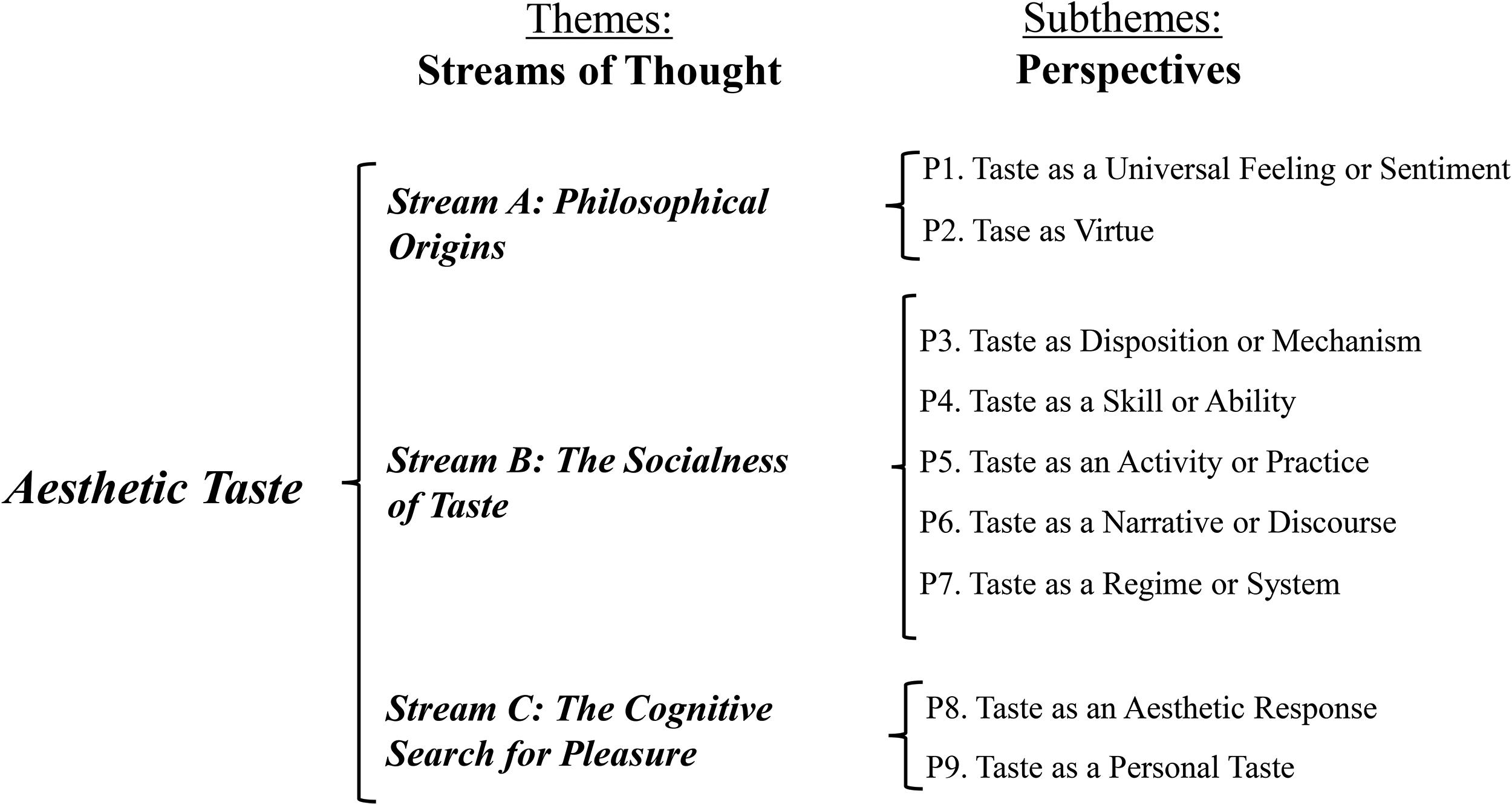
Main themes and associated subthemes.
Perspectives on the Concept of Aesthetic Taste
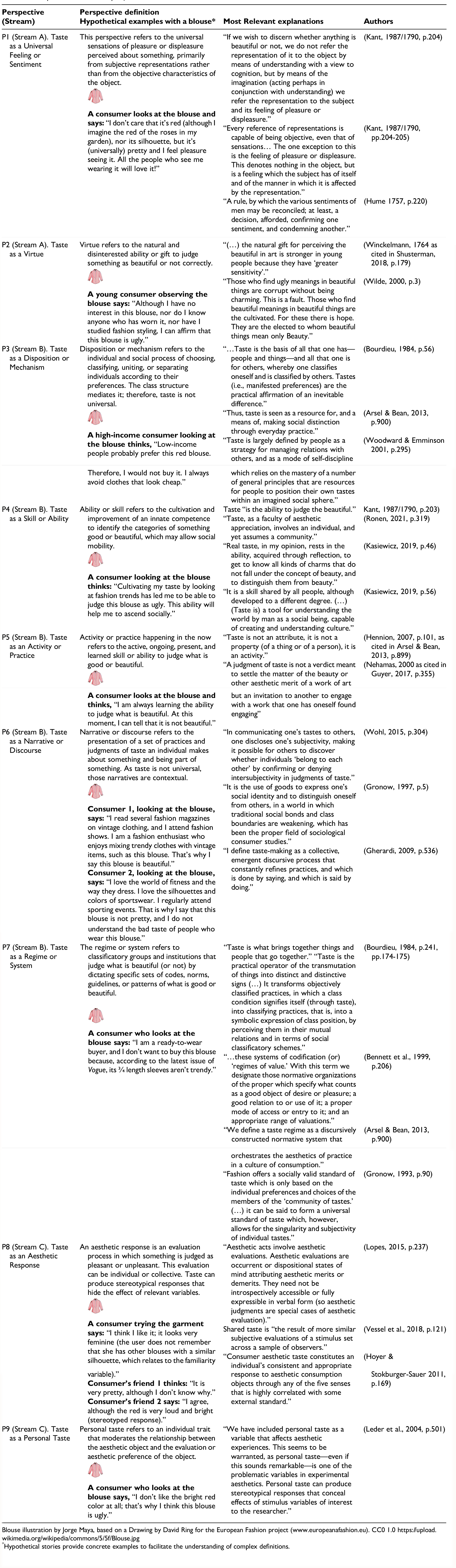
Stream A: Philosophical Origins
Publications in this first theme span three centuries: few manuscripts were published during the eighteenth century (1757–1790), and after a century without publications in the analyzed sources, several were published since the twentieth century (1960 onwards). This discontinuity is called the “taste gap,” in which authors moved the discussion towards aesthetic attitude (Spicher, 2020). In Stream A, philosophy positions itself as the root of the discussion of theories addressing taste. The focal point is Kant (1790/1987) and the later publications (e.g., Guyer, 2017), which address philosophical discussions that reinforce, extend, or contradict Kant's ideas. The major contribution of Stream A is the acknowledgment of the need for a theory of taste, one that should be separated from ethical limitations, such as going beyond the distinction between good and evil (Cabildo, 2019). Consequently, this implies taste as a mature concept for philosophers, as Dickie (1996) stated, “(the eighteenth century) was the century of taste, that is, of the theory of taste” (p. 16). The perspectives identified in this stream describe taste as an internal characteristic of the individual that can be classified as a universal feeling or sentiment and as a virtue.
Stream A – Perspective 1 (P1): Taste as a Universal Feeling or Sentiment
This perspective prioritizes beauty— “the disposition of the representation of an object to arouse a universally subjectively valid pleasure” (Guyer, 2017, p. 353). For Hume (1757) and Kant (1790/1987), taste should be cultivated and experienced similarly by all people and motivated by the agreement that beauty is universal. Accordingly, all individuals should experience the benefits of experimenting with beauty, as beauty is something that relies on everyone. Under the right conditions, two individuals could feel the same way about an object. While Hume debated about a standard of taste in which there is agreement about what is beautiful and good, Kant discussed the universality of liking that determines the judgment of taste. However, Hume remains a sentimentalist because he ultimately bases the personal judgment of taste, as well as a shared standard of beauty and taste, on sentiment, rather than reason or objective properties of the object. Collectively, the authors who adopted this perspective highlighted the relevance of taste as a disinterested sentiment, something spontaneous or even pure, arising from the immediate perception of the object rather than from personal interests.
Stream A – Perspective 2 (P2): Taste as a Virtue
In the ordinary sense, virtue is an individual's moral excellence, goodness, and rectitude. From the origins of taste, a moralistic view was established as an “ethic of good taste” (Cabildo, 2019, p. 451), attributing taste to moral and ethical meanings and linking it to virtue. Szecsenyi (2014) stated that, unlike animals, humans’ ability to separate from instinct transforms uncultivated taste into an elevated one. This elevation uplifts the average human condition, enabling individuals to achieve great things (e.g., genius works of art), connect with virtue or a “divine sense,” and thus experience more beauty, pleasure, and enjoyment (p. 65). Following this perspective, virtue is intrinsically good because it allows the possessor to belong to a “club of good taste” (Bayley, 1991, p. 13). Vice versa, taste helps reveal and perfect an individual's character and virtue (Lopes, 2015), because those who possess taste are often considered virtuous. Philosophers knew the sociopolitical and cultural importance of virtue; therefore, taste was central to training educators, leaders, and cultivated members of society (Shusterman, 2018). As having good taste was associated with a divine connection, those with discerning taste were seen as possessing positive qualities, such as social status, high moral standards, ethics, and character.
Stream B: the Socialness of Taste
Most of the sources analyzed in the second theme, stream B, were published from 1957 onwards. Academics in this period, mainly sociologists, were concerned with the relation of taste and social structures. Thus, taste is a “social marker” (Shapin, 2012, p. 177) or a tool that helps explain the distinction of classes. However, these works neither define taste nor explain an everyday judgment of taste (Schwarz, 2019). The following five perspectives (P3-P7) in this stream address taste as a disposition or mechanism, a skill or ability, an activity or practice, a narrative or discourse, or a regime or system that promotes the socialness of taste.
Stream B – Perspective 3 (P3): Taste as a Disposition or Mechanism
Bourdieu (1984) did not define taste explicitly but concentrated on the concepts of disposition and mechanism that explain how taste classifies (and divides) individuals in society. Disposition is defined as a function of taste that “designates a way of being, a habitual state (…), and, in particular, a predisposition, tendency, propensity, or inclination” (Bourdieu, 1984, p. 214). Following Bourdieu (1984), Daenekindt and Roose (2014) emphasized the assumption that an aesthetic disposition influences the way individuals perceive objects (e.g., artworks) by using the “correct” codes for the perceived object (e.g., artistic movements such as Impressionism). The authors also indicated that the distinction is not grounded in a taste for products, but in how they are consumed. In this view, taste relies more on how we use products as social differentiators than on their aesthetic characteristics. Since the work of Bourdieu, good taste, or even having a taste, belongs to the ruling classes (Gronow, 1993). For taste as a mechanism, Bourdieu (1984) asserted that the recognized hierarchy corresponds to a specific group of consumers with predisposed tastes. This mechanism prioritizes individuals’ class origins while pursuing symbolic profits (Van den Haak & Wilterdink, 2019). Therefore, disposition is individual, while mechanism is shared. Multiple authors (e.g., Woodward & Emmison, 2001) clarified that taste is a mechanism that classifies individuals by their dispositions into a specific level of the social ladder. That is, when a person states their taste by, for example, declaring that they like the product, buy it, or wear it, that disposition immediately functions as a classificatory mechanism. Despite the differences between disposition and mechanism, as explained by Bourdieu, this study assumes that the two terms are closely related and share the same perspective.
Stream B – Perspective 4 (P4): Taste as a Skill or Ability
To understand specific objects, individuals need specific skills or abilities (Kasiewicz, 2019). For instance, when a consumer interacts with a chair, the person sees the product (perceptual capability), understands it (cognitive capability), and appreciates it (aesthetic capability or taste) in terms of their social status. This skill or competence is frequently judged in layman's terms as having a “good eye” for art, a “sense of style” for clothing, or simply “having good taste.” For Mears (2014), it means “having a predictive capability” to know that an individual from a particular social culture will appreciate an object as good (p. 5). The ability to perceive what constitutes “good” or “correct” is assigned to some agents of the cultural hierarchy; it is a task that involves both cognitive awareness and the interpretation of cultural codes and material things (Mears, 2014). Social status results from individuals’ economic, cultural, and symbolic capital (Bourdieu, 1984); hence, the use of this predictive competence creates legitimate tastemakers in various social contexts, including, but not limited to, art curators, top designers, influencers, and personal shoppers. Thus, the social status acquired through good taste can call into question the sincerity of individuals who assume the role of agents.
Stream B – Perspective 5 (P5): Taste as an Activity or Practice
Hennion (2007) argued that taste is an activity and not an attribute of an individual or an object: “taste is to make feel, and to make oneself feel, and also, by the sensations of the body, (…) to feel oneself doing” (p. 101). Thus, a particular activity requires constant practice, from when an individual is an amateur to attaining experience and becoming a critic (e.g., a tastemaker). This view stems from Bourdieu's analysis, which proposes that practice, routines, and competencies are the antecedents of taste distinctions (Mears, 2014). However, unlike Bourdieu (1984), Hennion (2007) claimed that taste is not “mechanical or unconscious” as the mechanism of distinction because “taste as a situated activity is not so pre-established” (p. 101). That is, taste is not an inactive skill or competence, as it must be activated by an action in a specific context. However, doing the action or activity does not mean that the individual has acquired the skill or ability or vice versa.
Stream B – Perspective 6 (P6): Taste as a Narrative or Discourse
When making taste judgments, narratives, or discourses about oneself, others, and objects, highly subjective opinions prevail. To illustrate, a consumer could say, “I like the color blue”; however, this person does not necessarily mean all their clothing is blue. This example suggests that the narratives of taste may, in fact, be the discerning concept of an individual's sensibility and personality (Cabildo, 2019). When taste narratives are socialized (i.e., socialness of taste), likings are socially validated or invalidated, which confirms a sense of identity, community, or groupness (Ronen, 2021; Wang, 2022). Consequently, discourses about taste help individuals to belong or disassociate from their realities and share similar narratives (e.g., codes, symbols, styles).
Stream B – Perspective 7 (P7): Taste as a Regime or System
In this perspective, the taste regime (or system) “propagates a shared understanding of aesthetic order that shapes the ways people use objects and deploys the meanings associated with the material” (Arsel & Bean, 2013, p. 900). Through ritualization, a regime seeks to “legislate” proper relations, as with laws (Mears, 2014). A system of taste is a “classificatory scheme” that, through classifying practices, everyone can find themselves in a class position (Bourdieu, 1984, p. 67). Gans (1999) questioned the limits of the system of taste, arguing that “taste cultures are not cohesive value systems, and taste publics are not organized groups” (p. 94) because even if the individuals of a given group share the same values, their cultural choices could differ. Fashion is presented as the most evident form of taste as a system (cf., Gronow, 1993; Simmel, 1957). Thus, fashion provides a standard of taste, classifying the aesthetic dispositions of system members (Gronow, 1993). These standards relate to the practice or ritualization of the set of rules according to the worldview of those conforming to the regime or system.
Stream C: the Cognitive Search for Pleasure
The reviewed literature classified in Stream C was published between the 20th and the twenty-first century (1946 onwards). Most publications come from psychology, design, and empirical aesthetics, and a few from marketing and consumer culture. These authors are mainly concerned with beauty from an “experimental stimulus-centered perspective” (Myszkowski & Storme, 2017, p. 91). Despite its emphasis on a cognitive psychological perspective, this stream also addresses the sociological nature of taste when reflecting on how individual taste is part of shared tastes (e.g., Vessel et al., 2018). Even though authors in Stream C draw on Streams A and B, they do so to distance themselves from problematic ideas that limit understanding of the taste phenomenon. For instance, Kant (1790/1987) indicated that taste was universal, disinterested, completely subjective, non-cognitive, and confined to the individual; yet he did not consider the characteristics of the object (e.g., product novelty) or the quantifiable nature of taste. Consequently, authors in Stream C concentrate on the objective product characteristics (e.g., Hekkert & Leder, 2008) as well as the “shared subjective evaluations” of the product (Vessel et al., 2018, p. 122) influenced by the cultural and social context (Bloch, 1995), among other topics. Their goal is to understand taste and, possibly, measure it (e.g., Berghman & Hekkert, 2017) beyond philosophical considerations. Perhaps Stream C is only beginning to elucidate taste through empirical research. Thus, since the twentieth century, taste is generally defined in Stream C as having two perspectives: taste as an aesthetic response and as personal taste.
Stream C – Perspective 8 (P8): Taste as an Aesthetic Response
Although most authors in this perspective address taste implicitly, several authors undertake explicit discussions on taste while simultaneously using other/several similar, related, distinct, or unrelated concepts. Authors addressing responses related to taste use terms such as consumer aesthetic taste (Hoyer & Stokburger-Sauer, 2012), aesthetic preference (Leder et al., 2016), aesthetic emotions (Schubert, 2024), aesthetic pleasure (Hekkert, 2006), aesthetic response (Hekkert & Leder, 2008; Hoyer & Stokburger-Sauer, 2012; Leder et al., 2016), aesthetic evaluation (Leder et al., 2016; Lopes, 2015; Vessel et al., 2018), aesthetic experience (Leder et al., 2004; Leder et al., 2016; Szecsenyi, 2014; Yeh & Peng, 2019), aesthetic appraisal (Brielmann & Pelli, 2019), pleasure (Brielmann & Pelli, 2019), preferences or attitudes (Desmet & Hekkert, 2007), attitude (Szecsenyi, 2014), and aesthetic judgment (e.g., Leder et al., 2016; Myszkowski & Storme, 2017; Yeh & Peng, 2019), among others. In contrast to previous perspectives, authors (e.g., Hekkert, 2006) in this perspective mainly acknowledge product aesthetic properties, such as complexity, typicality, and novelty, that influence the relationship between a consumer and the object beyond the mere classification as beautiful or not.
Stream C – Perspective 9 (P9): Taste as Personal Taste
Some authors propose that taste is a personal characteristic, including Bloch (1995), who developed a model in which the consumer characteristic of personal taste moderates cognitive and emotional responses to product form. Similarly, Leder et al. (2004) proposed a model of aesthetic appreciation and judgment that explicitly links these concepts to personal taste. Leder et al. (2016) then discussed shared taste without explicitly defining taste, instead indicating its role as a moderator in evaluating objects. Leder et al. (2016) presented aesthetic experiences and judgments as distinct drivers of taste, in contrast to the equivalence suggested by Hekkert and Leder (2008).
What Challenges Does Aesthetic Taste Present for Empirical Research?
To answer RQ2, findings confirm that a growing body of literature has contributed to the discussion of aesthetic taste over the last three centuries, since the first published works on the subject appeared. However, despite the recent increase in academic interest, the debate around taste continues. Fields that apply empirical aesthetics to understand aesthetic phenomena, such as consumer behavior, often make limited use of the concept of aesthetic taste in conducting empirical research, whether qualitative or quantitative. Moreover, most reviewed authors fail to clearly define the concept of taste or offer implicit, subjective, and complex notions of it. These interpretations can often be similar, highly related, contradictive, antagonistic, convoluted, and even paradoxical. For example, a reader might wonder how taste can be simultaneously defined as both a virtue and an activity, or as both an individual response and a moderating factor. Given the three streams of thought and the nine identified perspectives, the broad concept of aesthetic taste is not only problematic but confusing, making it challenging to propose a single comprehensive definition. This ambiguity may arise from the literature being dispersed across multiple disciplines and the term's subjective, confusing, and fuzzy ontological nature, which lacks well-defined conceptual elements and boundaries. In sum, addressing RQ2, the primary challenges in incorporating aesthetic taste into empirical research stem from its ambiguity and inherent subjectivity and complexity.
To unpack the ambiguity of aesthetic taste, the reviewed literature confirmed the considerable ongoing debate on whether taste is subjective or objective (Hoyer & Stokburger-Sauer, 2012). The objectivity of taste is usually displayed in opposition to its subjectivity, the personal view on the topic, because most academics see the latter as “evil” and the former as “good (…) making a mess out of everything” (Shapin, 2012, p. 171). Reviewed sources rooted in philosophy generally debated the subjective truth of taste, such as those that framed taste as a universal feeling (P1) and a virtue (P2). Other reflections on taste, focused on its subjective nature, shaped by social influence and culture, are found in P3-P7. These perspectives see taste as a social mechanism of manifested preferences (P3), a cultivation of a skill or ability (P4), a narrative or discourse (P5), and a regime or system that classifies individuals into perceptual schemes (P7). Social sciences usually address subjective concepts because consumers make evaluations and decisions influenced by subjectivity, including decisions about taste (Shapin, 2012). Palmer et al. (2013) state that it is widely recognized that there is a “large interobserver variability in aesthetic preferences” among different social, cultural, and economic groups; however, a scientific approach to taste concerns discovering the causes and reasons behind it (p. 17.6). This last approach emphasizes an objective approximation to taste, like when taste is seen as an evaluation or preference (P8) or being personal (P9).
Along with subjectivity, taste must also be understood by addressing its complexity and how this topic is woven together through three principles: dialogical, organizational recursion, and hologrammatic (Morin, 1996). To facilitate this discussion, Table 2 provides an overview of the principles of complexity, each paired with an illustrative image and a reader-friendly definition. These visual examples, such as the yin-yang symbol, aim to clarify their relevance to the complexity of aesthetic taste by analyzing the interconnections among various perspectives.
Complexity Principles (Morin, 1996) Applied to Aesthetic Taste.
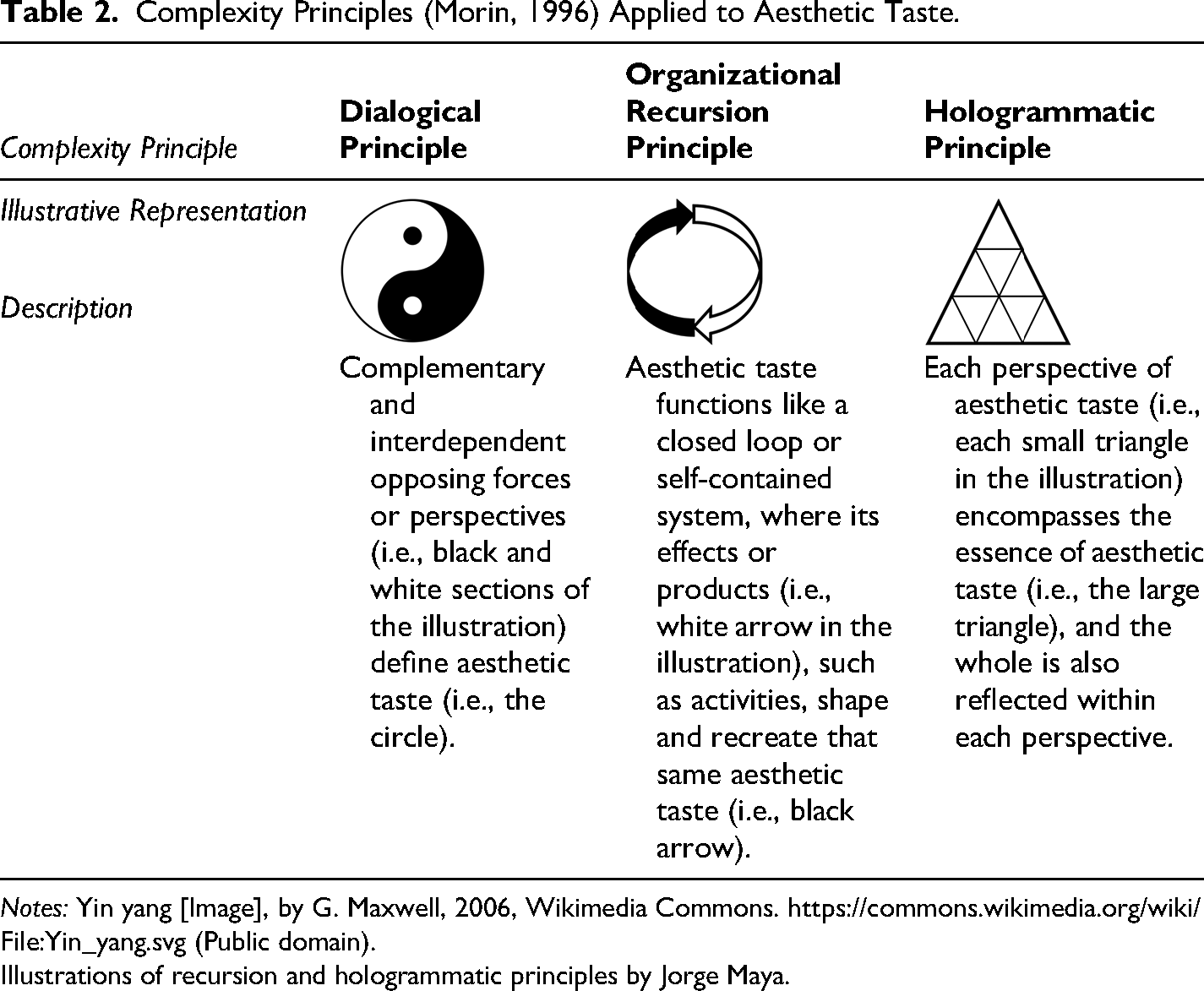
Notes: Yin yang [Image], by G. Maxwell, 2006, Wikimedia Commons. https://commons.wikimedia.org/wiki/File:Yin_yang.svg (Public domain).

Illustrations of recursion and hologrammatic principles by Jorge Maya.
The dialogical principle “links two antagonistic notions, which should be repealed, but which are inseparable and indispensable to understand the same reality” (p. 14). Based on Lomas and Xue (2022) interpretation of the yin-yang, the complexity of aesthetic taste lies in its various aspects blending to create harmony. Thus, taste as a universal feeling (P1), or the power of judgment, is simultaneously private and universal, both individual and social, as well as subjective and objective (Kant, 1790/1987). Similarly, the dialogical nature of fashion taste, for instance, induces both union and segregation (Gronow, 1993; Simmel, 1957), as seen in Perspectives P3-P7, which address social hierarchies, social influence, cultural identities, and cultural capital. Notably, many authors simultaneously utilize various perspectives; for example, Woodward and Emmison (2001) explore taste as a skill (P4), a narrative (P6), and a disposition (P3) when discussing the consumption of domestic objects. Similarly, Kant (1790/1987) argues that taste involves universal feelings of pleasure (P1) and an ability (P4), suggesting perspectives are not mutually exclusive.
The second complexity principle, organizational recursion (Morin, 1996), generates a loop in which products and their effects create what causes them. Thus, taste is produced and maintained through social interactions, whose effects collectively shape taste in society. As such, a change in the system of goods offered induces a shift in tastes and vice versa (Bourdieu, 1984). Furthermore, the appropriate and acceptable taste refers to the “socialness of taste” (Woodward & Emmison, 2001, p. 312), which means that a “world is born” when a person communicates their taste (Cabildo, 2019, p. 454). That is, rather than a cycle, taste resembles a closed loop that implies feedback and self-regulation: changes in taste are influenced by individual taste, which in turn generates effects on the socialness of taste. Finally, the third hologrammatic principle of complexity features the apparent paradox of specific systems, in which the part is in the whole, and the whole is in the part (Morin, 1996). Therefore, taste is present in everyone, as individuals are part of society; however, society also influences individuals through consumer trends, government policies, and tastemakers. The organizational recursion and hologrammatic principles of complexity can be reflected in most perspectives, especially in the dynamics described in P3 (disposition or mechanism) and P7 (regime or system).
Unsurprisingly, the subjectivity and complexity of taste have led to disagreements among scholars and across academic fields about how to define the concept, thereby limiting its measurement and operationalization in consumer research. Although “there is accounting for taste!” (Hekkert & Leder, 2008, p. 259), many objective approximations have either measured other concepts (e.g., Berghman & Hekkert, 2017) or have yet to produce valid measurements for taste.
How can the Challenges Posed by Aesthetic Taste be Addressed in Empirical Research Applied to Consumer Behavior?
To address the challenges posed by taste in consumer studies (RQ3), it is helpful to conceptualize aesthetic taste as a multidimensional, multifaceted, and multilevel phenomenon to clarify its inherent subjectivity and complexity.
Aesthetic Taste as a Multidimensional Phenomenon
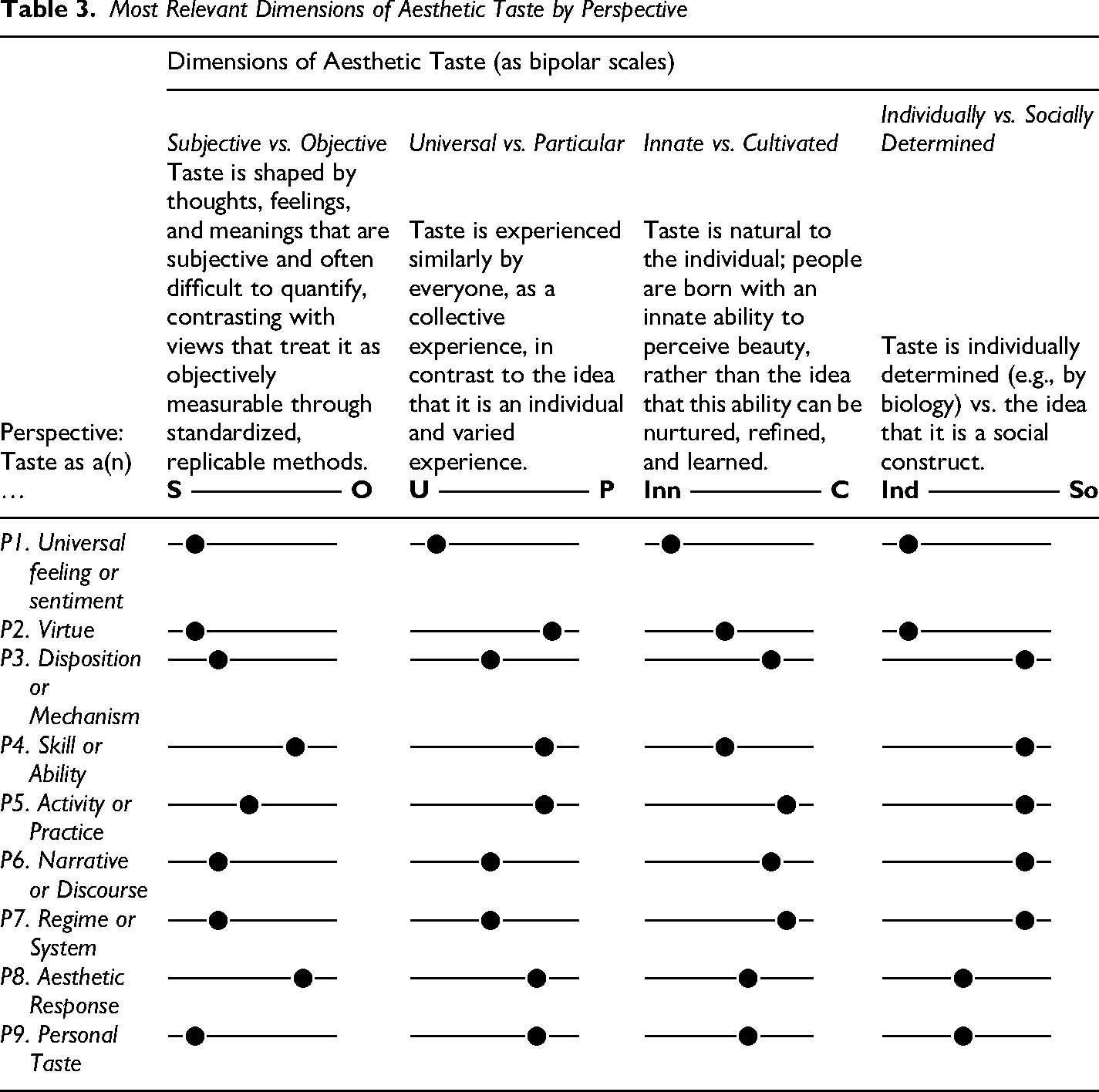
Conceptualizing aesthetic taste first as a multidimensional construct allows its various aspects to be analyzed. Building on the discussions above, Table 3 highlights the core dimensions of aesthetic taste identified in the literature: subjective vs. objective, universal vs. particular, innate vs. cultivated, and individually vs. socially determined. Despite differing views on the topic within each perspective, we propose an estimate of how each perspective (left column) is defined along these dimensions (upper rows). Each dimension is explained in terms of taste and treated as a bipolar scale applied to each perspective. For instance, authors in P1 consider taste to be both subjective and universal, whereas most authors in P8 perceive aesthetic responses as objectively measurable in the individual. Thus, in the table, P1 is more subjective and universal, while P8 is more objective and particular.
Most Relevant Dimensions of Aesthetic Taste by Perspective
Aesthetic Taste as a Multifaceted and Multilevel Phenomenon
Beyond multidimensionality, aesthetic taste is also a multifaceted and multilevel concept. Our initial analysis indicates that the concept´s definition and evolution are shaped by three coexisting streams of thought (A, B, and C) and their associated perspectives (P1-P9). Although these streams emerged sequentially, they now interact continuously; newer streams reference, adapt to, or challenge earlier ones, resulting in their coexistence and ongoing dialogue. Academic studies can selectively focus on one or more streams. For instance, Holbrook and Schindler (1996) positioned their research on consumer tastes within Stream C.
To consider this interaction among streams and further reduce the complexity of taste, we propose a condensed list of four perspectives in Table 4 based on the nine previously identified in the literature (Table 1). This summary includes a justification for combining these perspectives into four integrative perspectives. These taxonomies serve as overarching categories that encompass the grouping of perspectives. The reduction from nine to four perspectives stems from identifying conceptual overlaps and shared underlying assumptions among the initial perspectives, thereby emphasizing the multifaceted nature of aesthetic taste.
Integrative Perspectives on Aesthetic Taste.
The integrative perspectives introduced in Table 4 will now serve as the basis for a multilevel analysis of taste. This type of analysis is especially suitable for addressing complex problems (Hitt et al., 2007), including those in consumer behavior (e.g., Akaka et al., 2022). Thus, treating aesthetic taste as a multilevel phenomenon offers a way to reconcile the perspectives by showing that they pertain to different levels of analysis rather than being mutually exclusive truths. Based on the multilevel approach (Boulet et al., 2021; Hitt et al., 2007), a multilevel framework is proposed in Figure 2 as a tool for researchers interested in examining aesthetic taste in their empirical studies of consumer behavior. The figure shows how the nine individual perspectives outlined in Table 1 are grouped into four integrative perspectives introduced in Table 4. These perspectives are analyzed at three interrelated levels (micro, meso, and macro), enhancing analytical clarity and providing a cohesive framework for both empirical research and theoretical application. To achieve a comprehensive understanding of the concept, it is essential to consider all nine perspectives, as each one captures a distinct facet of aesthetic taste; therefore, the figure includes all perspectives. Thus, the framework offers an approximation for understanding aesthetic taste phenomena in consumer contexts, as taste influences and is influenced by consumer behavior.
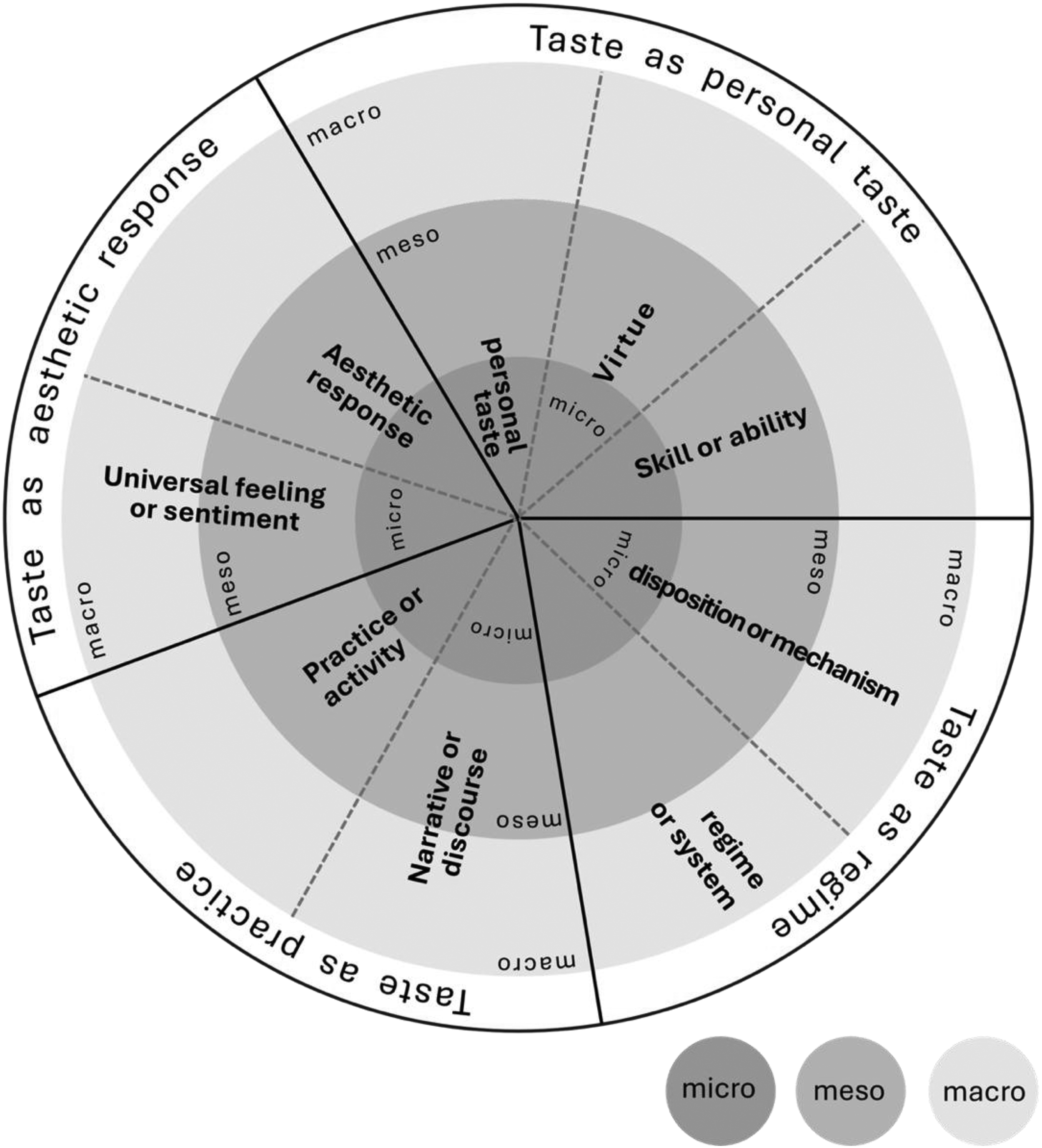
Comprehensive Conceptual Framework of Aesthetic Taste.
In the figure, the macro-level of analysis refers to a higher level of abstraction, providing a more general view of societies on large populations, and considering cultural, social, economic, or political factors beyond individual households (Boulet et al., 2021). The meso-level reveals connections between the macro and micro levels, focusing on the immediate consumer context, such as the household (Boulet et al., 2021). The micro-level is the smallest unit of analysis, primarily focused on the consumer, where aesthetic taste is typically investigated as an individual aesthetic response, personal taste, practice, or skill that can be understood, measured, and predicted. It is sometimes experienced as fleeting and automatic, with roots in biological origins. This three-level structure has guided previous consumer research, such as Akaka et al. (2022), which examined how practice diffusion evolves from micro-level actions to macro-level structures. Similarly, Arsel and Bean (2013) defined taste regimes (P7) by implicitly articulating the micro, meso, and macro levels of market-mediated practice and its role in shaping consumer preferences for objects and related practices. Therefore, complex concepts such as aesthetic taste are addressed more comprehensively by adopting a multilevel perspective, as a single level of analysis cannot adequately capture phenomena (Hitt et al., 2007).
It is important to emphasize that there is also value in examining a specific level of analysis—an elementaristic and deterministic approach to empirical research—such as quantitative studies of taste as an aesthetic response (P8). As seen in the framework, some perspectives, such as taste as regime (P7), are transversal to all levels. Others, such as aesthetic response (P8), manifest more prominently at the micro-level; yet, understanding how aesthetic responses are measured or evolve requires a multilevel perspective. It is essential to recognize that a comprehensive understanding of aesthetic taste should go beyond a multilevel structure and also consider the earlier discussion on complexity. This understanding requires articulating the various levels and perspectives to identify both radial and circular connections among different views on the concept and levels of analysis that reflect the multidimensional nature of taste.
Discussion
Integrating Findings into Practical Examples
To demonstrate the usefulness of our analyses, we first examine aesthetic taste as personal (P9) and then as foundational for describing the fashion phenomenon. These examinations draw on the multidimensionality of the concept (Table 3) and the conceptual framework (Figure 2) that integrates the perspectives (P1-P9) (Tables 1 and 4). Both examples reveal how the various aspects of taste and the multilevel framework can be applied to deepen our understanding of aesthetic taste. Throughout, we consider terminology used in taste discourse. For instance, we use “good taste” to refer to socially valued judgments about taste, while “aesthetic preference” refers to an individual's subjective likes or dislikes—terms sometimes used as synonyms for taste, despite their differences.
Reflecting on Aesthetic Taste as Personal Taste
Personal taste (P9), also referred to in the literature as private taste (Leder et al., 2016) or aesthetic identity (Woodward & Emmison, 2001), involves the use of internal codes that function as an aesthetic standard (González de Prado Salas & Milić, 2018) for filtering aesthetic evaluations (P8) when estimating beauty. The standards built into personal taste (P9) act like filters of reality expressed through narratives (P5), linking consumer choices to personal characteristics (Woodward & Emmison, 2001) at the micro level. Essentially, an individual's taste (P9) moderates their personal preferences (P8) (Bloch, 1995; Woodward & Emmison, 2001), thereby communicating a coherent and plausible narrative (P5) about the desired traits of the self (Woodward & Emmison, 2001). Consequently, consumer choices are not just random; they are symbolic evidence (Woodward & Emmison, 2001) or a systemic expression (Bourdieu, 1984) of personal taste (P9), which can be tracked and measured as manifested preferences in consumption objects (Hoyer & Stokburger-Sauer) (P8) at the micro and meso levels. Besides, during the practice of taste, personal taste can also be deduced by observing consumer activities (i.e., doings) performed with products (e.g., selecting) (P5). These practices are orchestrated in an aesthetically oriented culture of consumption, or a taste regime (P6), at both the meso and macro levels, which also shapes personal taste at the micro level. By exercising, cultivating, and educating personal taste, consumers can achieve taste expertise (a skill, P4), also known as aesthetic expertise (Yeh & Peng, 2019), consumer expertise (Hoyer & Stokburger-Sauer, 2012), the refinement of taste (Gronow, 1997), or the improved ability to distinguish “good” from “bad” taste (LaTour & Deighton, 2019). That is why good taste in experts is seen as a virtue (P2) that elevates the individual (Wilde, 2000).
Reflecting on Aesthetic Taste as Fashion Taste
We now utilize fashion taste as a worthy phenomenon to exemplify aesthetic taste. As taste is highly correlated with external standards (Hoyer & Stokburger-Sauer, 2012) at the various levels, fashion consumer choices (P8) derived from personal taste (P9) also reflect consumer identification with contextual factors, such as social phenomena (e.g., narratives, P6) and the distinctive signs that support social relations (Gronow, 1993). These distinctions are expressed via social classes (Bourdieu, 1984) (P3) and normative components and actors (Arsel & Bean, 2013). Actors such as fashion designers, fashion influencers, and models, among others, orchestrate and disseminate the practice of fashion taste (P5), reshape the aesthetic taste expressed as personal taste (P9), and thus aesthetic preferences, including fashion consumer choices (P8). External standards shaping taste in fashion can also be found in theories and universal design principles (P1) that explain why people like specific objects or what constitutes “good” design. For example, consumers have already formed a set of internal standards or expectations (e.g., product prototypes) based on their prior experiences with similar fashion products, which they use to evaluate the new product (P8) (Ceballos et al., 2021) and shape their personal taste (P9). Thus, some external standards can be internalized when reinforced and appropriated. For example, Mears (2014) analyzed how designers, editors, photographers, and stylists in the fashion modeling market selected models based on their cultivated taste. Likewise, these dynamic external factors shape and evolve the shared tastes, which refer to the collective preferences of specific consumers or fashion trends within a particular group or society (P8). Similarly, Hume (1757)'s standard of taste refers to the point at which individuals agree on what is beautiful and pleasing (P1). Individuals who agree with or impose these fashion standards are generally perceived as having “good taste” (Gronow, 1993). Thus, alongside the fashion tastes of specific individuals, shared taste can also be observed, understood, measured, monitored, and forecast (e.g., via fashion trend reports) (cf. Vessel et al., 2018).
Drawing on Arsel and Bean (2013), the taste regime (P7) refers to the institutions of fashion taste, specifically the rules and norms governing the dynamics of taste (e.g., luxury brands elevate the consumer's status). The taste system (P7) refers to organizations or actors that exercise taste (e.g., magazines) and connect production with consumption (as in aesthetic responses (P8) and activity (P5)) to perpetuate the taste regime. These dynamics are typically expressed at the meso and macro levels, as their role is to cultivate a provisional, socially constructed sense of universality about what constitutes “good” design in fashion trends. Note that various taste regimes and systems can exist. For instance, the Fédération de la Haute Couture et de la Mode (Federation of Haute Couture and Fashion, www.fhcm.paris/en/) dictates the creation of fashion products and promotes the fashion culture in France. Therefore, the French fashion system has an organization (i.e., the federation) that other countries do not have, which creates aesthetic rules and norms governing how fashion production and consumption are exercised in France. Furthermore, the existence of this federation as an institution (i.e., the culture it promotes) also makes the French regime unique and different from other fashion regimes. Now, according to Bourdieu (1984), the disposition of individuals (P3), or the individual and shared preferences regarding fashion (P8), along with the related mechanisms that classify, unite, and separate these individuals, form the basis of fashion taste as a regime (P7). Consequently, the taste regimes and systems are the engines of shared taste, in other words, how the socialness of taste (Egan, 2010; Woodward & Emmison, 2001) in fashion is shaped.
Proposing a Unifying Definition of Aesthetic Taste
Our analysis suggests that aesthetic taste acts as a “harmonizer” in our perception of beauty, providing an initial approximation towards a unified definition of aesthetic taste. In our view, the overall function of taste is to create harmony across dimensions, perspectives, and at the personal (micro), interpersonal (meso), and societal (macro) levels. Lomas and Xue (2022) clarify the conception of harmony, implying that for harmony to exist, there must be balance, coherence, and integration, as well as diversity, and not only sameness, by stating, “Sameness is not harmony; differences are required. Harmony of diversity is lively; sameness without difference is dead. To harmonize a system means to establish a mutually supportive relationship among the different parts and the whole; in contrast, sameness strives for eliminating differences.” (p. 8)
When taste is viewed as a harmonizer, this idea clarifies the notion that aesthetic taste can be explained by complexity principles (Table 2) and the conceptual framework (Figure 2). That is, taste functions as a pervasive form of self-regulation that harmonizes perceptions of beauty across all levels of analysis through its complementary and interdependent streams and perspectives, as described by the dialogical principle. The effects of taste not only shape individual aesthetic preferences but also contribute to the recreation of taste itself, as identified in the organizational recursion. Furthermore, each perspective is integral to the overall concept of aesthetic taste, much like a hologram, in which each part reflects the whole. In this way, the diversity in perceptions of beauty contributes to the richness of consumer experience, including the experience of fashion taste, with aesthetic taste playing a central role in shaping the diversity of consumer likings.
Conclusions and Implications
This review aimed to enhance understanding of aesthetic taste and to address the research questions by integrating what is known about the concept from disciplines beyond empirical aesthetics and consumer studies. By identifying and analyzing definitions of taste, key themes and subthemes emerged, and differences among these patterns were discussed. The analysis revealed three streams of thought and nine associated perspectives that illustrate different interpretations of aesthetic taste. Unfortunately, these perspectives are often confined within disciplinary silos, dispersed across diverse fields, and characterized by limited interdisciplinary dialogue among scholars, with only a few exceptions. Thus, the main challenges identified for empirical research steam from the concept's ambiguity, subjectivity, and complexity. Therefore, we then reduce the nine perspectives into four integrative perspectives and provide a unified conceptualization of taste. By treating aesthetic taste as a multidimensional, multifaceted, and multilevel concept that harmonizes perceptions of beauty, our work provides an interdisciplinary approximation that enhances its relevance for empirical consumer studies.
Implications for Theory
This review makes several theoretical contributions. We offer a better understanding of the concept of aesthetic taste, a constructive step toward integrating theoretical insights across disciplines. Rather than arguing which definition of aesthetic taste is “correct,” as previous research emphasizes, we suggest that the various views on the topic have value at their respective levels. We achieve this by categorizing existing literature into distinct streams of thought and associated perspectives, discussing the challenges associated with this classification, and introducing a multidimensional, multifaceted, and multilevel analysis of the concept. The proposed conceptual framework for conducting empirical research on consumer behavior integrates the perspectives derived from our conceptual synthesis along the various levels of analysis (micro, meso, macro). By differentiating and contextualizing perspectives at these levels, this study provides a framework for researchers to consider aesthetic taste from multiple angles, potentially bridging siloed disciplinary gaps. The framework also enhances the articulation of single-level research efforts and encourages scholars to explore how aesthetic taste operates as a multilevel phenomenon. Accordingly, the findings focus on how taste is defined from various perspectives and at various levels by detecting and organizing information across domains, thereby offering conceptual clarity to a previously fuzzy term. Findings contribute to the literature on empirical aesthetics, the psychology of the arts, and consumer, fashion, and design studies by advancing the theoretical understanding of aesthetic phenomena in relation to consumer behavior.
Implications for Practice
Insights into the nature of taste are relevant to consumers, consumer behavior, and a myriad of business practices. Using consumer multilevel data to analyze taste can help companies conduct more effective consumer segmentation. Incorporating taste insights into marketing actions can, in turn, increase product appeal, strengthen emotional connections with consumers, and improve product and brand differentiation. Going beyond merely classifying a product as having “good” or “bad” taste can also enhance product strategy, particularly when configuring stylistic codes that are more attuned to cultural relevance. Conversely, a deeper examination of “bad” taste can provide exciting product marketing opportunities and support inclusive marketing. Logically, better shared-taste forecasting can increase sales and margins, reduce product waste/markdowns, boost brand sustainability efforts, and enhance success in sensory marketing strategies.
Implications for Future Research and Study Limitations
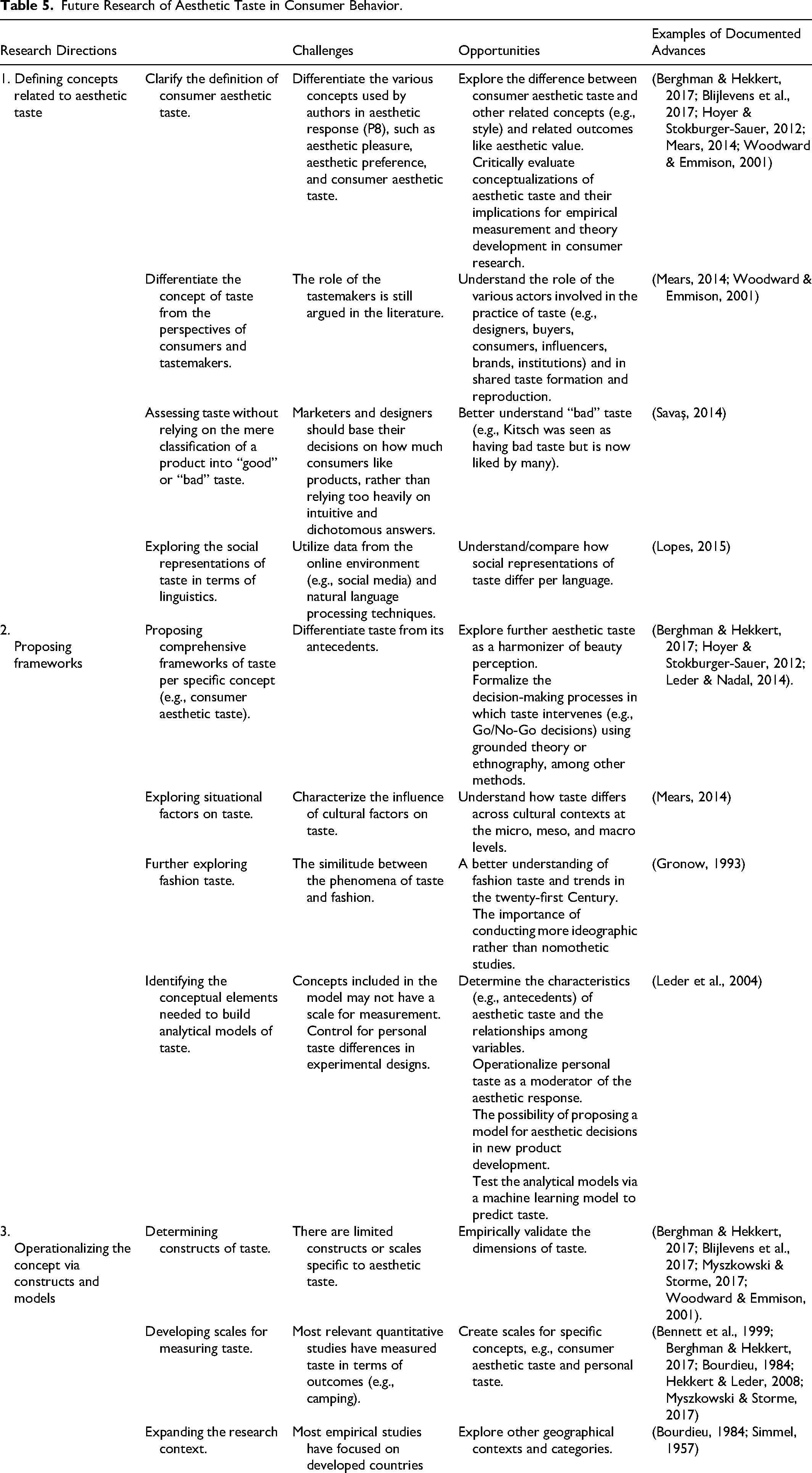
Building on the core challenges of ambiguity, subjectivity, and complexity in the concept of aesthetic taste, Table 5 suggests research directions. It also identifies derived challenges and opportunities for each direction. The directions have been partially or tangentially discussed in previous works referenced in the last column of the table.
Future Research of Aesthetic Taste in Consumer Behavior.
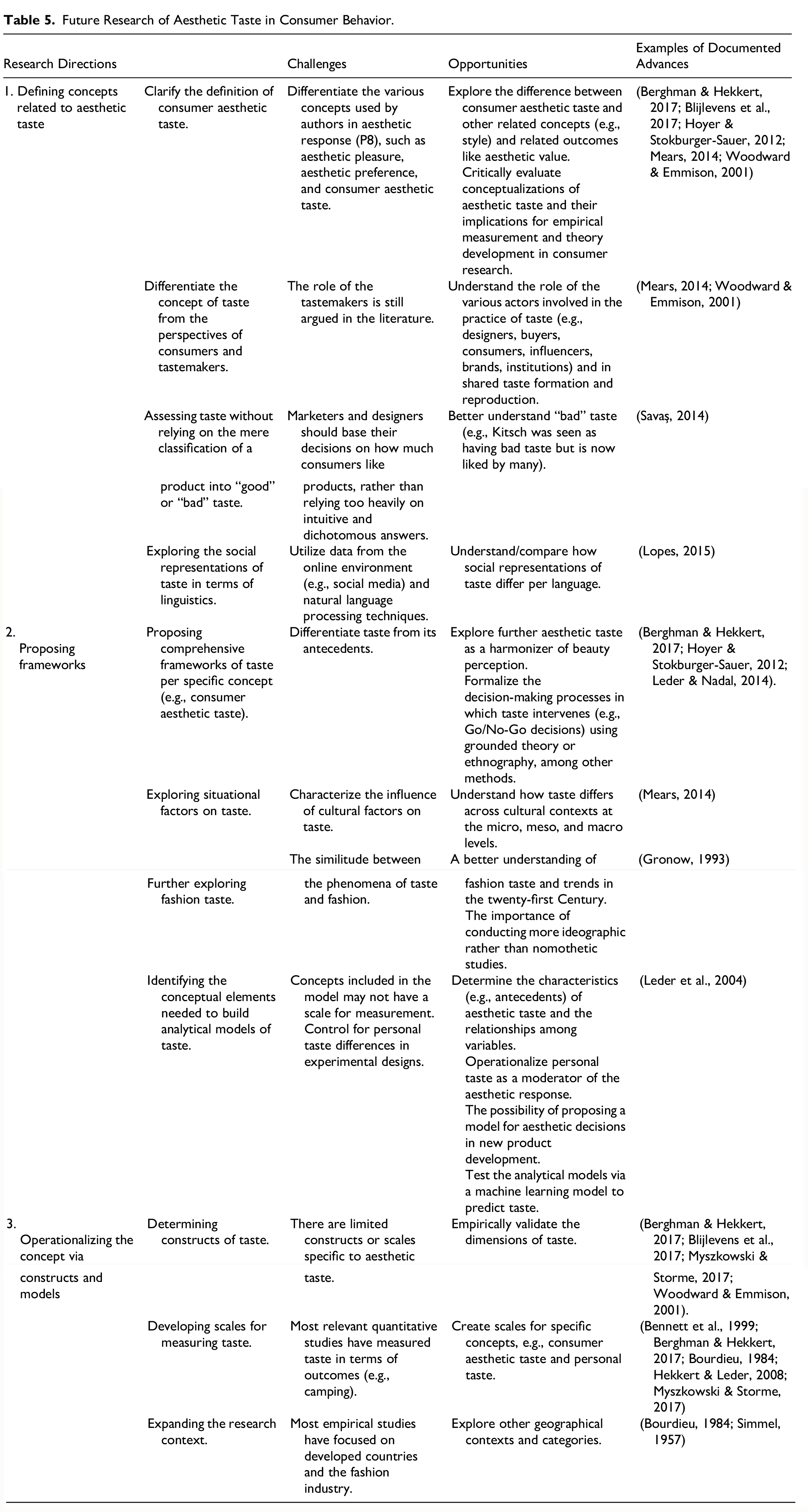
The first research direction is Defining Concepts Related to Aesthetic Taste. Aesthetic taste not only encompasses various perspectives but also multiple specific concepts addressing aspects of taste (e.g., consumer aesthetic taste), as well as related concepts (e.g., style). Therefore, selecting the most appropriate term and its definition will be necessary to incorporate taste appropriately in research. Thus, researchers considering aesthetic taste in their research projects could utilize deductive reasoning questions such as the following to help select suitable terms and definitions: (1) Is the research addressing aesthetic taste specifically and not a related concept (e.g., style)? (2) Who is experiencing aesthetic taste? Is it the consumer? Is it a group or society itself? Is it the tastemaker? Is the researcher observing an individual or collective phenomenon? (3) Which perspective best describes how taste will be addressed?
The second research direction is Proposing Frameworks. New frameworks can be created to gain a deeper understanding of consumer aesthetic taste and how it represents the influence of shared tastes and consumer trends on individual tastes over time. Another option is a framework that considers the designeŕs personal taste, whose work is influenced by design principles, the brand's stylistic codes, budget, product styling, and trend reports, among other factors. The last and third research direction is Operationalizing the Concept Via Constructs and Models. Researchers need to ask themselves additional questions to operationalize the selected concept, such as: (1) Are constructs and/or scales available? (2) How is taste going to be measured and operationalized? While these questions can be helpful to qualitative or conceptual researchers, they are essential for quantitative and/or experimental researchers whose work requires measurements. For the latter, whether the literature offers applicable measures for operationalizing the research determines if the researcher can adapt existing constructs and models or must create their own. As Hoyer and Stokburger-Sauer (2012) stated, “one major barrier to research in this area is that there is currently no sound and valid operationalization of the taste construct” (p. 177).
For researchers creating models, an analytical model of consumer aesthetic taste can be developed, like that of Leder et al. (2004). As personal taste (P9) is one of the most challenging variables in aesthetics literature, a multilevel analysis can help identify the standards embedded in personal taste, how it is shaped and evolves, and its influence on consumer aesthetic taste and other aesthetic responses (P8). Additionally, empirical researchers should note that most previous taste research has focused on fashion and consumer products, while other categories have been neglected. Furthermore, most research has been limited to Western, Educated, Industrialized, and Democratic (WEIRD) societies.
The limitations in this narrative review pertain to the authors’ interpretations (Greenhalgh et al., 2018). Despite efforts to include the most relevant studies, it is possible that noteworthy references were overlooked. Due to the nature of this review, the proposed taxonomy is not exhaustive. Therefore, future studies may extend this work by employing computational text analysis techniques, such as natural language processing, large language models, and machine learning approaches, including topic modeling, which can be trained to detect and interpret implicit meanings and complex conceptual definitions in text.
Footnotes
Acknowledgments
Our sincere gratitude goes to Professor William Cruz from Universidad Pontificia Bolivariana, along with Professors Jairo Andres Campuzano, Maria Cristina Hernandez, and Juan Pablo Roman from Universidad EAFIT, and Ellen Malloy for their valuable feedback on initial versions of this manuscript.
Ethics Approval Statement
The Research did NOT involve human subjects.
Permission to Reproduce Material from Other Sources
Material from other sources was NOT used for this manuscript.
Author Contributions
LMC and JM planned the study, MCM conducted the initial data collection and analysis, LMC conducted additional data collection and analyses; and LMC and MCM wrote an initial draft of the article. LMC and JM supervised the data analysis. LMC completed the writing of the article and prepared the article for publication. JM revised the article for publication.
Funding
This work was supported by an internal grant from Universidad EAFIT for the project ‘Modelo del Gusto Estético” (Code: 974 - 000013).
Declaration of Conflicting Interests
The authors declared no potential conflicts of interest with respect to the research, authorship, and/or publication of this article.
Correction (April 2026):
This article has been updated with formatting changes and to correct the in-text citation from Van den Haak & Wilterdink (2019) to Shapin (2012).
Author biographies
