






Abstract
Gestalt theory posits that individuals perceive and memorize structural wholeness according to grouping principles. Musical interpretation styles may emphasize these entities. The current study analysed historically informed performances of four Chopin pieces that highlighted singing qualities (i.e., cantilena) and included more rubato compared with conventional interpretations of the same music that placed more emphasis on virtuosity. In a recognition task, listeners selected one of three structural motives that best matched the original piece. The historically informed cantilena style resulted in higher judgments of the Gestalt dimension “Praegnanz” (well-formedness), and predicted recognition for one out of the four excerpts in a binominal logistic regression. While the cantilena interpretation was slightly slower and included more tempo variation, virtuosity ratings did not differ from the conventional style. Depending on the composition and on participants’ experience, historically informed interpretation styles may thus influence memory for musical motives and the perception of Gestalt qualities.
Introduction
Musical interpretations in the Western classical tradition vary greatly, based on individual performance styles, historical knowledge, and cultural taste. Typical interpretations that are heard repeatedly may not correspond to the original intentions of a composer. Newly discovered sources and careful re-examinations of the existing material may facilitate more adequate and, in the end, perhaps even more musical approaches. These historically informed interpretations may challenge aesthetic expectations (Leech-Wilkinson, 2012) and may also lead to shifts in perceptions of musical elements and Gestalt qualities. The current study aimed at investigating the perception and recognition of musical motives in historically informed interpretations compared to more conventional performances of Chopin piano pieces.
Apart from cultural influences, psychological research has long investigated common basic principles that shape perception. Max Wertheimer, one of the first theorists of Gestalt principles in psychology, referred to musical examples when describing the appearance of a Gestalt: “…when one hears concise, good, musical melodies — in a musical way“ (Wertheimer, 1923, p. 310). 1 He frequently used the term “praegnant” – meaning “concise/well-shaped/succinct” – to describe how one immediately perceives shapes as a whole that stand out from their background. Gestalt principles were originally formulated mainly for visual perception (Koffka, 1935), but they have often been applied to auditory grouping processes and other sensory modalities (for overviews, see Audissino, 2017; Reybrouck, 1997; Michael Wertheimer, 2014; Wöllner & Hohagen, 2017). While several Gestalt principles such as proximity or similarity have been discovered (Koffka, 1935; Mongoven & Carbon, 2017), Praegnanz has been considered as a higher-order process, affording the rapid perception of “good” (i.e., perceptually efficient) and clear shapes (Trujillo & Holler, 2023).
Current research approaches into music perception follow this definition of Praegnanz, in that concise and well-shaped musical motives should be perceived as standing out from their musical context. Listeners may hear them as particularly “catchy”. A study on Leitmotifs in film music found that perceived Praegnanz was related to mid-level melodic and rhythmic entropy (Ungerer & Wolf, 2022), suggesting that complexity was neither too low nor too high for well-shaped motives in film music (cf. Albrecht & Wöllner, 2015). A further study investigated the Gestalt principle of symmetry in melodic sonification patterns (Mongoven & Carbon, 2017), finding that participants’ recognition accuracy was higher with slower tempo and a lower overall number of tones in the melodies. The Gestalt principle of good continuation offers important cues for expectations and predictions even for unfamiliar melodies (Morgan et al., 2019), demonstrating again that visual Gestalt principles are applicable to auditory patterns. Since Gestalt principles are universal and thought to operate independently from enculturation, they have recently also been found in Turkish music with regard to segmentation (Mungan et al., 2017), and in an auditory-visual transfer study with Chinese participants (Hou et al., 2023). In the current study, the Gestalt principle of Praegnanz is investigated with musical excerpts, and the adjective “praegnant” is used directly in perceptual judgements of listeners, because it is still commonly employed in the German language. In this way, a musical excerpt is praegnant if it affords the perception of clear melodic and/or rhythmic motives or harmonic progressions, which permit rapid internalization and recognition if played again.
There is reason to assume that interpretation styles shape the perception of musical Gestalt structures. A computer-generated “deadpan” version with isochronous meter and no dynamic variation would not facilitate the perception of musical “gestures” or Gestalt qualities in the same way as individual human interpretations (see Repp, 1998; Wöllner, 2013). Assuming that in the context of art music, human performance interpretations are preferable to dry, mechanical renderings, there has long been a debate about how to interpret music of past epochs. On the one hand, there are changes in cultural expectations and interpretation traditions that shape both aesthetic preferences and performance choices (Leech-Wilkinson, 2012), and on the other hand, music notation typically cannot offer comprehensive detail on all expressive intentions, leaving many decisions to the performing musician.
In the case of Chopin's compositions, the notation of expressive characteristics in the scores can be rather limited or deliberately reduced in order to increase the music's readability. Contemporaneous sources, including his piano students and music critics, state that Chopin himself had very clear convictions about the interpretation of his music (see Rittner, 2022; Rink, 2018). For instance, though he did not eschew fast tempi, he stated that his “music was not primarily brilliant/virtuosic” and of a “different genre” than the compositions of his contemporary piano virtuosi Thalberg or Liszt (ibid., p. 134). Today's views of virtuosity are mixed, typically pointing to an overemphasis on technique and tempo rather than musical expression, with the aim to impress and occasionally overwhelm the audience (Ginsborg, 2018; Zhou & Fabian, 2023). Key to adequate interpretations of Chopin's music was what can be identified as “cantilena”, a singable melodic line that includes expressive variation in timing and dynamics (Rittner, 2022). To achieve a cantilena interpretation on the piano, melody notes – including ones which are embedded or hidden in the surface texture – can be emphasized as dynamic or durational accents or played “super-legato” (German: “Überlegato”) to bring them to listeners’ attention. Chopin admired the bel canto opera tradition, particularly the composer Bellini, for his melodically long-breathed arias (ibid.; Abraham, 1939; Frakes, 2012). While this approach to interpretation was typically not notated by musical accents in the scores, Chopin reportedly emphasised individual notes to tease out melodic lines. Even his etudes, which are often performed at piano competitions and in concerts with an emphasis on technical perfection, are understood to have been intended as cantilena-style art music rather than merely highly virtuosic exercises. The C major Etude Op. 10, No. 1 (Example 1 in the current study), for instance, should have been performed “with greatest ease… without the slightest exhaustion” (see Rittner, 2022, p. 89) and “le plus lié possible“ (p. 51), that is the notes should be strongly bound together in a super-legato style. Thus, historically informed interpretations of this etude would emphasize melodic notes. Similarly, the Etude Op. 10, No. 2 may use the thumb of the right hand for revealing the melody in a legato style, and fast-flying linear figurations in the Ballade Op. 23 may be shaped to reveal latent polyphony. While the term “historically informed” may also refer to pedalling or the use of historic instruments, we employ it in the current article to describe Chopin's cantilena approach. It goes without saying that, without very detailed notation and sound recordings, we cannot know exactly how Chopin himself would have shaped the motives and other performance parameters. Historically informed approaches are thus only an approximation, based on evidence of verbal descriptions and the rare cases of other musical passages for which Chopin detailed out the nuances in the interpretation.
Taken together, Chopin emphasized a singing, cantilena quality in interpretations of his piano music and did not favour purely virtuosic playing styles, according to sources of contemporaries (Rittner, 2022). The cantilena style affords the perception of melodic motives that are less perceivable in conventional virtuosic or “athletic” interpretations that focus more on tempo and technique. These motives can be perceived as Gestalt structures, in the sense defined by theorists who offered melody, specifically, as a way to understand the perceptual principles that became influential in the domains of vision, audition and other sensory modalities including haptics (Wertheimer, 1923). Early Gestalt psychologists also investigated memory functions (Koffka, 1935), and there is reason to argue that concise and well-shaped Gestalt structures facilitate memorisation and recognition (cf. Peterson & Berryhill, 2013). The current study thus asked whether historically informed Chopin interpretations in a cantilena interpretation style would be perceived differently from more virtuosic interpretations, and if the musical motives would be remembered more reliably. Since preferences for interpretation styles are subject to expectations based on familiarity and, in some cases, personal performance experiences, we took these variables into account. We limited the source of random variation by using high-quality recordings of the same professional concert pianist playing both versions on the same piano. Finally, we did not simply ask listeners to compare versions directly, but chose a Latin-square between-group design such that each listener was presented with only one version of a given musical composition and heard “cantilena” as well as typical “conventional” versions of different compositions. The conventional interpretation style, laying more emphasis on virtuosity, is representative of most contemporary recordings, and may thus be perceived to be highly adequate by today's listeners.
We hypothesized that (1) cantilena interpretations, as compared to more conventional interpretations of the same music, would result in higher judgments of Praegnanz (a musically “good” and concise Gestalt). Conventional interpretations, in contrast, should result in higher judgments of virtuosity. (2) Melodic and harmonic motives in cantilena interpretations should be more reliably memorized and recognized. (3) Judgments and recognition accuracy should be modulated by participants’ familiarity with the respective pieces and, if applicable, by their own pianistic experiences of playing Chopin.
Methods
Participants
A total of 60 individuals took part in the study. Of those, five did not complete all experimental tasks and were excluded. Of the remaining 55 participants, 34 were female, 18 male, and three answered “other” or chose to give no response. A power analysis (1-β = .8; p = .05; η2P = .15, two groups and two covariates) had resulted in a required sample size of 47 participants. Their age spanned 16–60 years (M = 27.40 years, SD = 9.23). They had taken systematic lessons on a musical instrument or voice from 1–50 years (M = 17.30 years, SD = 7.74). They also indicated whether they had played Chopin on a piano and, if so, how often (from 1: “not at all” to 11: “very often”; M = 5.28, SD = 3.22). The study had been approved by the Ethics Committee of the University of Music Freiburg, Germany, and participants provided their informed consent before taking part.
Music
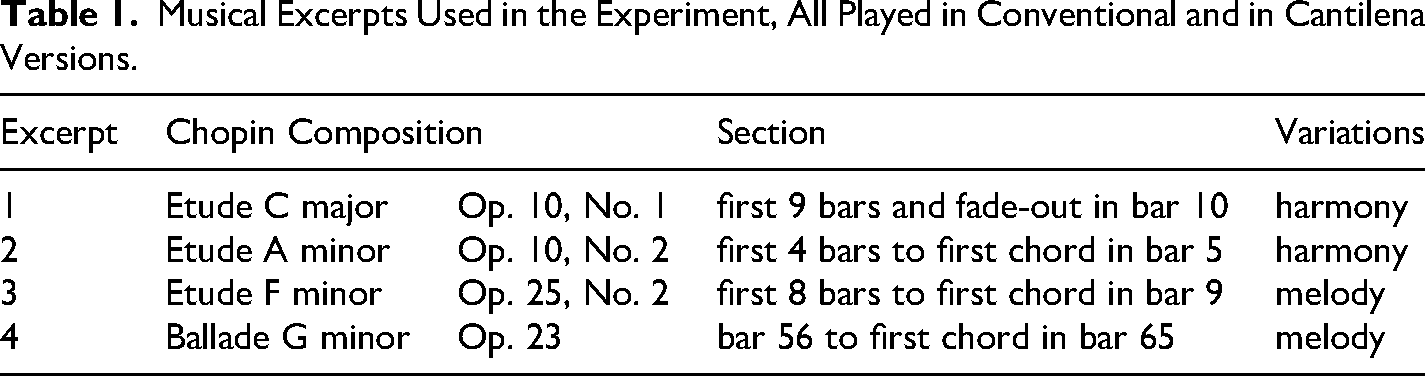
Four excerpts were chosen from piano interpretations by author HR, an acclaimed Chopin expert and professor of piano. Each excerpt used in the experiment was professionally recorded by the same pianist on a Steinway D-274 concert grand piano in two versions: a “conventional” virtuosic version and a historically informed “cantilena” version. The two versions of the first excerpt were taken from recordings of the whole Chopin etude, while Excerpts 2–4 had been specifically recorded as such, and included a slight ritardando towards the final chord of the phrase (Table 1). In addition, melodic and harmonic structural motives of the composition were extracted and performed by author HR, one original for each excerpt as well as two variants with slight modifications of melodic or harmonic progressions that were still plausible in Chopin's musical style (see Appendix for the scores of an example). Excerpts 1 and 2 contained harmonic variants, Excerpts 3 and 4 melodic ones. The musical excerpts, including the motives and their variants, can be found at https://doi.org/10.5281/zenodo.20927400.
Musical Excerpts Used in the Experiment, All Played in Conventional and in Cantilena Versions.
Procedure
After providing informed consent, participants first listened to a practice piece also performed by HR, but not included in the analyses. The purpose was to familiarize them with the online experiment and the tasks, and to allow them to adjust the volume of their headphones or loudspeakers.
They were then randomly assigned to two groups by the online system (SoSci Survey; Leiner, 2024). One group heard Excerpts 1 and 3 in the cantilena version, and 2 and 4 in the conventional version, while this was reversed for the other group. Thus, they heard each of the four pieces in only one interpretation style, and were not informed beforehand about the different styles. Since group allocation was performed automatically by the system, and participants were free to leave the experiment in accordance with the ethics regulations, there were slightly different numbers of 26 and 29 participants per group who completed all experimental tasks. Groups did not differ in age, number of years of instrumental lessons, or how often they had played Chopin on the piano (all p > .49). In addition, there were no significant differences between groups in how well they knew any of the pieces (all p > .12).
Participants could listen to an excerpt as often as they wished. Afterwards, they were asked to rate on 11-point scales the following dimensions:
How virtuosic was the music? Please note that “virtuosic” might refer to the tempo, but also to the pianistic difficulty that you have perceived more generally. How well-shaped (“praegnant”) was the musical material? This is about how well you could perceive certain shapes, melodies, or motives in the music. How well did you know the music? Click at the left-most field if you heard it for the first time, click at the right-most field if you’ve played the music yourself. Use all fields in between, as is appropriate.
Following these ratings, participants were presented with the correct and the slightly altered musical motives in quasi-random order (programmed such that the correct version appeared at different positions). They could click on the motives and listen to them as often as they wished. Participants subsequently selected which of the three harmonic or melodic motives best matched the composition they had heard before (forced choice), and gave confidence ratings for their selection. Following the experimental tasks, they provided demographic information.
Data Analyses
The judgments of virtuosity and Praegnanz (well-formedness) were assessed with analyses of covariance (ANCOVAs), comparing the cantilena and conventional interpretations as a between-groups factor, and taking into account how well participants knew each individual excerpt as well as how often they had generally played Chopin themselves (covariates). The reason for including these two variables was that familiarity with a given excerpt may develop by listening to the music repeatedly, thereby establishing expectations of a specific performance style, and that familiarity can also come from playing the piece, which may generate personal, motor-grounded preferences for a given artistic interpretation.
The responses in the forced-choice selection of the musical structures were analysed with binomial logistic regressions. First, an overall model was calculated with cantilena versus conventional interpretation as a between-groups factor, excerpt and type of musical variation (harmonic/melodic) as covariates, and correct identification as the outcome variable. Second, binomial logistic regressions were analysed separately per excerpt, taking into account familiarity with the excerpts and Chopin performance experience as covariates, in line with the ANCOVAs above. Excerpt 1 (Etude Op. 10, No. 1) was rather well-known and different from the midpoint 6 of the 11-point familiarity scale (M = 7.40, SD = 4.09; t(54) = 2.54, p = .014, d = .34); the other excerpts were lesser known and not significantly different from the midpoint, but resulted in comparable standard deviations from 3.85 to 4.13.
In order to assess global differences in cantilena and conventional interpretation styles, the sound recordings were analysed using Sonic Visualizer (Cannam et al., 2010) in terms of timing and dynamics. Inter Onset Intervals (IOI) were extracted for calculating means and standard deviations of IOI (in milliseconds), and mean tempo (in bpm). For dynamic intensity, the RMS Energy function was used with a moving average window size of 1,000 ms. Mean RMS values as well as standard deviations were calculated across the whole excerpts for estimating whether one of the interpretations appeared louder and fluctuated more in intensity.
Results
Acoustical Analyses of Interpretation Styles
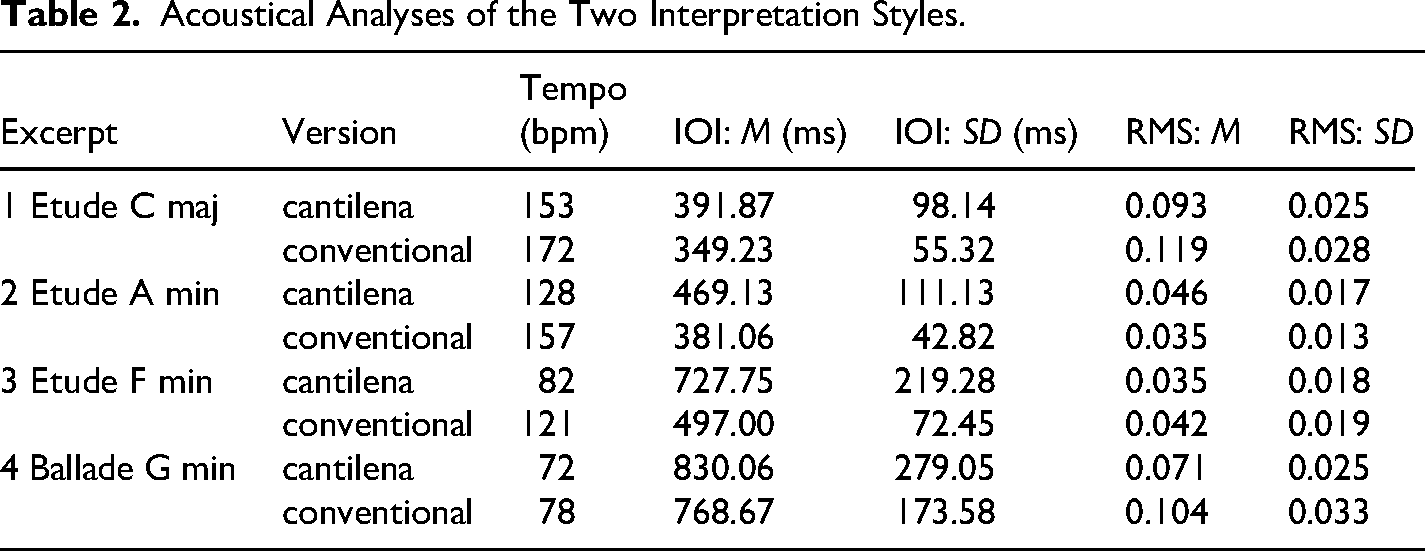
Cantilena versions were played more slowly and varied more in tempo, indicating that rubato was indeed used to a greater extent as compared to the conventional interpretations (Table 2; Figure 1). Differences in mean tempo were particularly pronounced for the three etudes (Excerpts 1–3), while standard deviations differed greatly for all excerpts including the Ballade in G minor. These comparisons are presented descriptively; no inferential statistics were calculated across the four excerpts. Regarding dynamics, interpretations did not differ overall, yet the conventional versions of Excerpts 1 and 4 were played slightly louder, and this was not observed for the two etudes in A and F minor. Hence the dynamic highlighting of individual notes in the cantilena version was at least partially achieved by reducing the overall dynamic intensity of the musical context, so the Gestalt figures could emerge from the background. Taken together, when considering the whole excerpts, acoustical analyses revealed different interpretation approaches mainly in the timing domain with regard to tempo and variability.
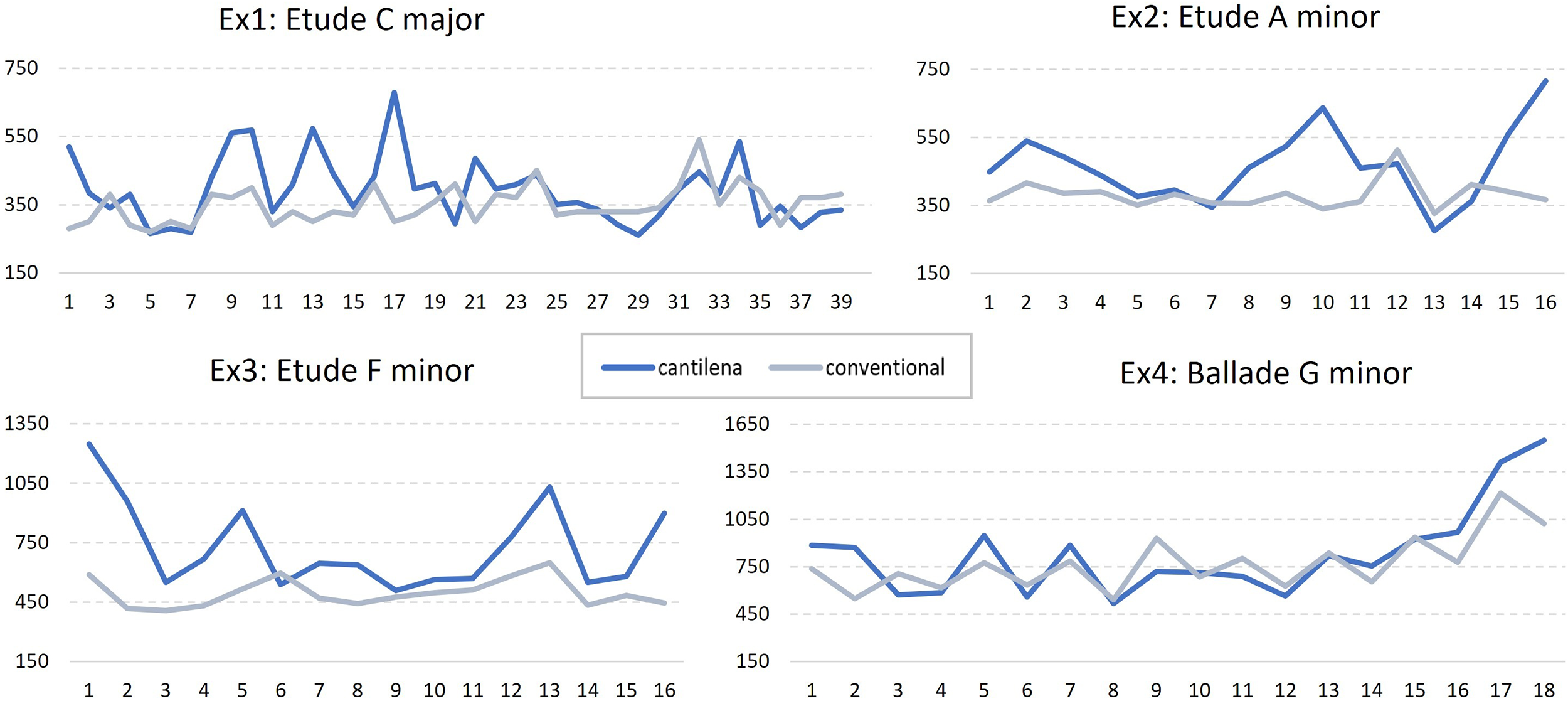
Microtiming profiles of the cantilena (dark blue) and conventional interpretation styles. The y axis respresents IOIs in ms, while the x axis shows the beat number for the excerpts. Ex1 and Ex2: beat at each fourth note (4/4), Ex3 and Ex4: beat at half bar level.
Acoustical Analyses of the Two Interpretation Styles.
Virtuosity and Praegnanz
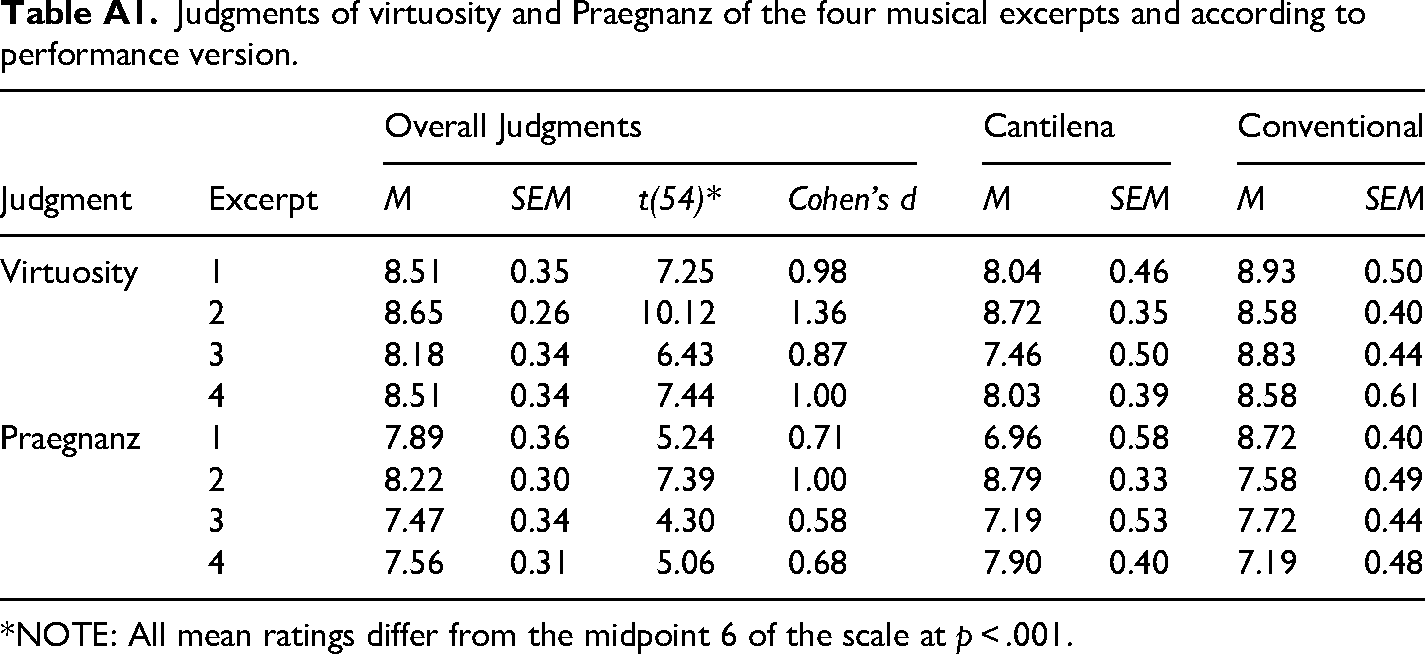
The two interpretation styles of the Chopin pieces did not affect judgments between groups regarding virtuosity (Figure 2). In other words, participants who were presented with the conventional version of the four excerpts did not perceive them to be more virtuosic compared to those who listened to the cantilena version, all F(1, 47) < .72, p > .40. There was no significant effect of the covariates and no interaction. One-sample t-tests showed that all four excerpts were rated to be highly virtuosic (Mmin = 8.18), and significantly different from the midpoint 6 of the 11-point scale (all t(54) > 6.42, all p < .001; complete statistics in Appendix).
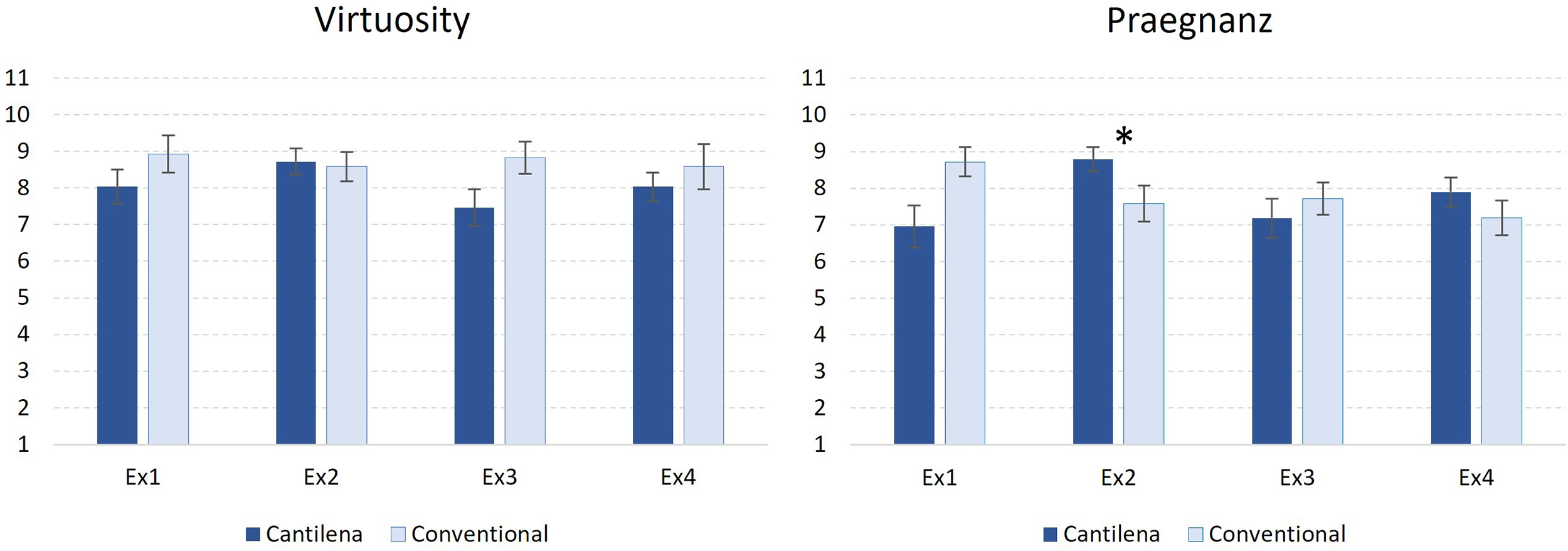
Judgments of virtuosity and Praegnanz (well-formedness) according to the versions presented to participants (means and SEM).
Regarding Praegnanz (how well-shaped the excerpts appeared), Excerpt 2 (Etude in A minor, Op. 10, No. 2) was judged higher in the cantilena group, F(1, 47) = 5.13, p = .028, η2P = .098. Familiarity with the music had an impact on ratings of Praegnanz in all four excerpts, all Fmin(1, 47) = 11.49, p < .01, η2P > .17). There was no effect of Chopin performance experience, and no interactions. It should be noted that there was no significant effect for Excerpt 1 in the model including familiarity and performance experience. Preagnanz ratings for all excerpts differed from the midpoint of the scale (Mmin = 7.47, all t(54) > 4.30, all p < .001).
Taken together, the four excerpts were rated rather highly in terms of virtuosity and the Gestalt principle Praegnanz, the latter being influenced by listeners’ familiarity with the music. The cantilena version of the A minor Etude resulted in higher ratings of Praegnanz compared to the conventional version.
Memorisation and Recognition of Gestalt Structures
An overall binominal logistic regression, taking into account interpretation style (factor) as well as excerpt and variation type (covariates), did not result in a significant model (χ2(3) = 3.53, p = 0.317). Thus, interpretation style (p = .732), excerpt (p = .125), or variation type (p = .071) did not predict the correct identification of the motive. In the following, more in-depth analyses were carried out on each excerpt, including participants’ familiarity with the music and their experience of having played Chopin.
The separate binominal logistic regressions did not predict recognition rates for Excerpt 1 (χ2(5) = 7.36, p = 0.196), Excerpt 3 (χ2(5) = 8.91, p = 0.113), or Excerpt 4 (χ2(5) = 2.40, p = 0.792). The model for Excerpt 2, on the other hand, was significant (χ2(5) = 14.70, p = 0.012), with an acceptable amount of variance explained as indicated by Nagelkerke's R2 = .34. The interpretation style contributed significantly (p = .046) to the prediction of recognition accuracy, as did the interaction between Chopin performance experience and interpretation style (p = .038). Listening to the cantilena version enhanced correct recognition (Odds Ratio = .211, 95% CI = .011, 4.22). No significant contributions to the prediction of recognition accuracy were found for familiarity with the excerpt (p = .059), the interaction between familiarity and interpretation style (p = .788), or Chopin performance experience (p = .129). Figure 3 presents the recognition rates per interpretation style and excerpt, and Figure 4 shows the interaction between interpretation style and own performance experience for Excerpt 2.
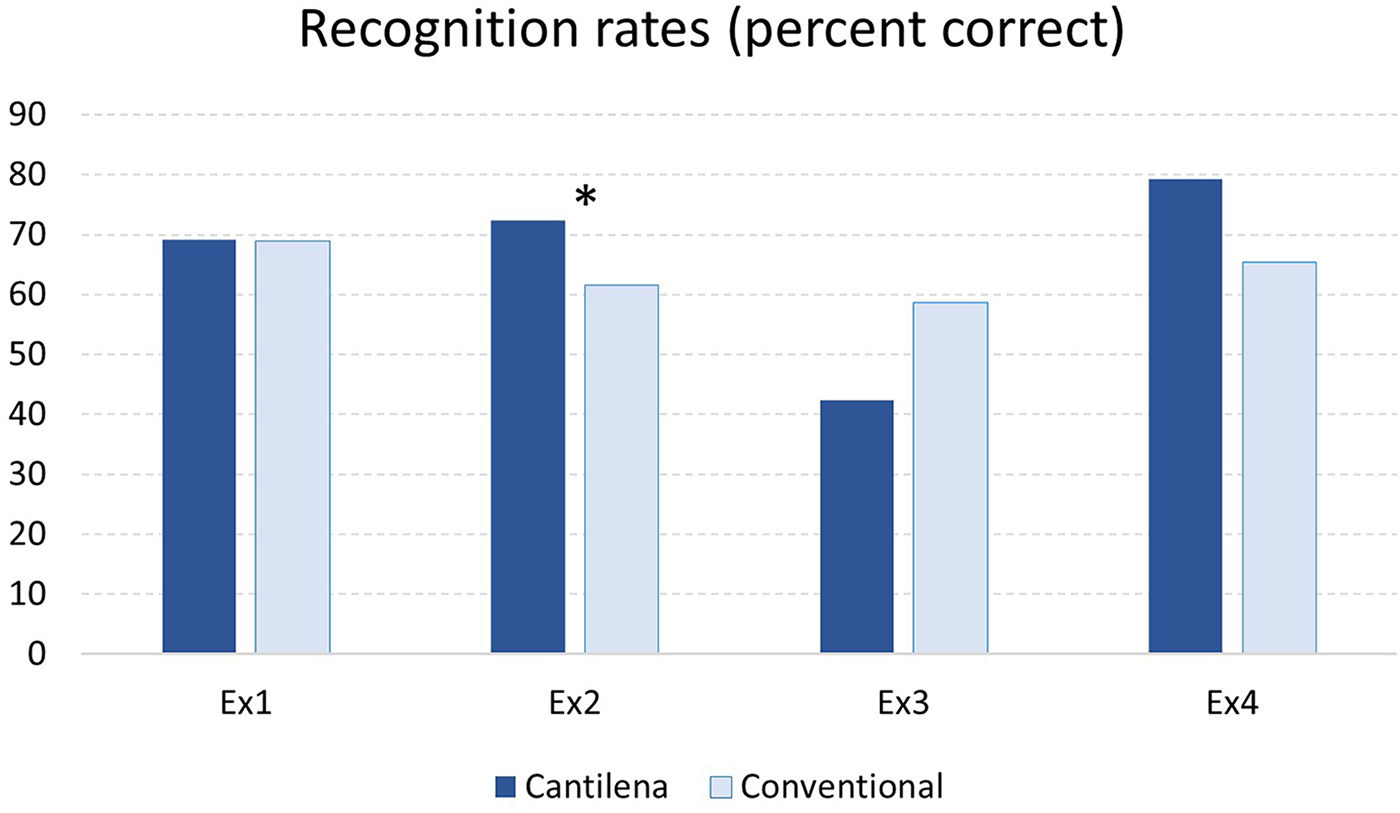
Recognition rates according to the versions presented to participants.
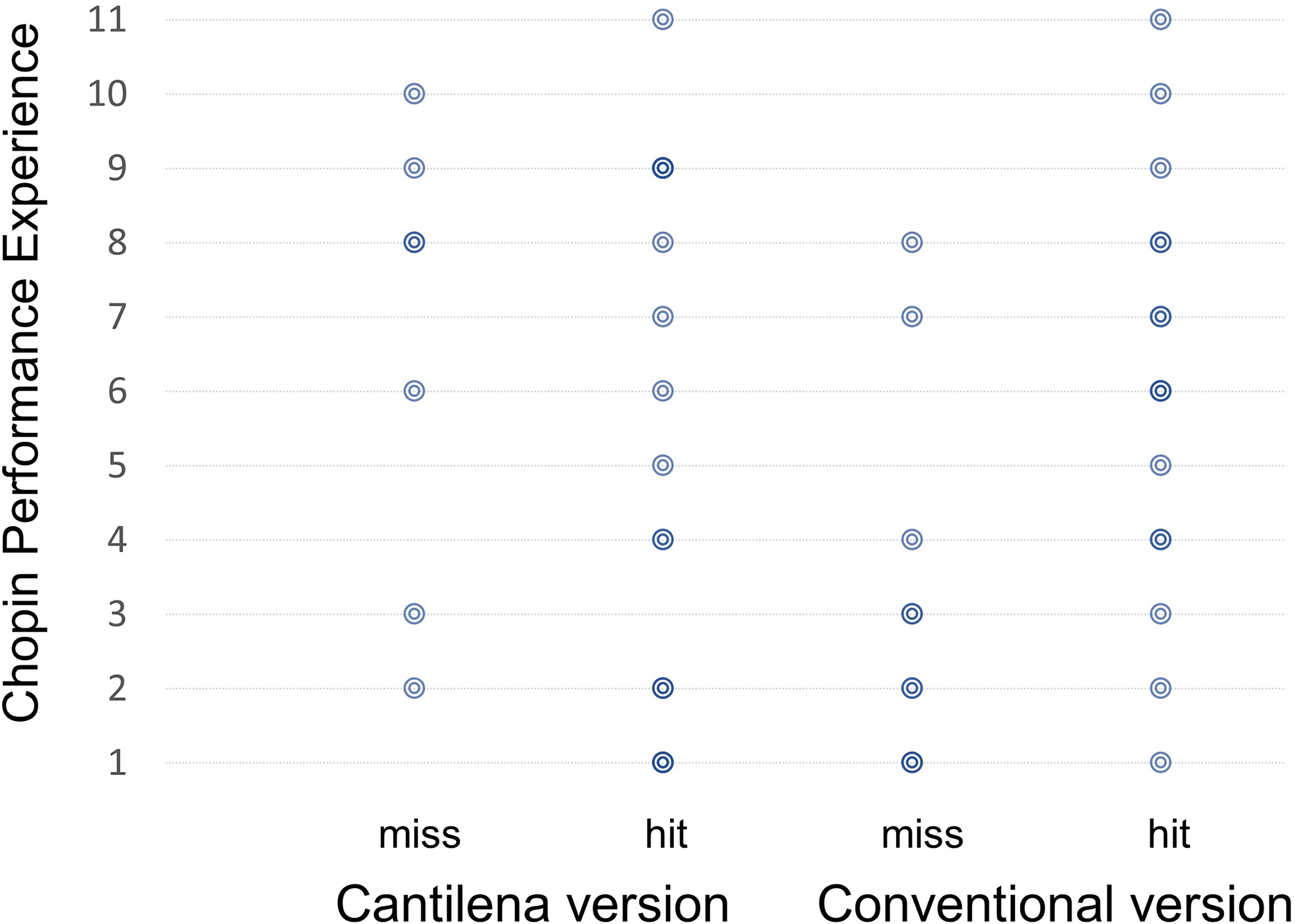
Recognition accuracy for Excerpt 2: Interaction between performance style and participants’ self-rated overall experience of having played Chopin music. Darker circles represent higher numbers.
Regarding Excerpt 3, while the overall model including predictors and interactions was not significant, familiarity with the excerpt contributed to the prediction of recognition accuracy (p = .035), providing some explanation for the counterintuitive findings for the conventional version (Figure 3). Other variables or interaction of variables did not significantly predict recognition of the Gestalt structures.
Discussion
Stylistic interpretation choices for often-performed music may affect listeners’ perception and recognition of auditory Gestalt qualities. The current study contrasted historically informed piano interpretations of excerpts from four Chopin compositions with more conventional interpretations, finding partial evidence for this claim. The cantilena interpretation style, corresponding to Chopin's intentions of a singing melodic quality, predicted recognition of motives as well as judgments of Praegnanz for one of the excerpts. Listeners’ familiarity with the music had an impact on perceived Praegnanz of all excerpts, but not on virtuosity, which was also judged equally across excerpts. These findings point to some differences in perceptual processes and aesthetic appreciation when perceiving the same music in different interpretation styles.
Concise and “good” musical melodies were taken as an example by early Gestalt psychologists to explain the concept of Gestalt qualities and, in particular, of Praegnanz as an overall principle of aesthetic “well-formedness” (Max Wertheimer, 1923; see also the historical overview by his son Michael Wertheimer, 2014). According to contemporaries, Chopin favoured interpretations of his music that emphasised a melodic, singing quality, even if these melodic motives were not always clearly notated but rather hidden in the compositional texture such as in arpeggios, scales, or with notes alternating between the two hands (Rittner, 2022). By minutely studying contemporaneous sources, historically informed performances seek to reconstruct the composer's intentions and provide a possible solution, typically without claiming that this solution would be the only one for a specific musical passage. On a more general level, there is reason to argue that Chopin preferred hearing in his music what would later be coined Gestalt structures, rather than hearing technically brilliant but less musically differentiated performances.
The current study found higher ratings for Praegnanz for only one of the four excerpts that were performed in a cantilena style, and thus only partially supports this idea. The excerpt, the A minor etude (Op. 10, No. 2) is characterised by chromatic scales in the right hand and harmonic chords on each downbeat, providing only fragments of melodic motives if not deliberately performed in a cantilena style. The other three examples might have appeared “praegnant” even in the conventional version. The well-known Etude in C major (Op. 10, No. 1), among them, could be perceived to be praegnant on a surface level in its arpeggios and harmonic progressions, with notated accents on each fourth sixteenth note. While Figure 1 might suggest a difference, the statistical model, taking into account familiarity with each composition and the overall experience of playing Chopin on the piano, was not significant for the C major etude. In contrast to our assumption, all excerpts and the two interpretation styles were perceived to be high in virtuosity, suggesting that highlighting Gestalt qualities does not necessarily diminish this important dimension of nineteenth century piano music (Zhou & Fabian, 2023).
The acoustical analyses had revealed, on a descriptive level, that the conventional interpretation was slightly faster and included less rubato as measured in standard deviations of mean IOIs. Conventional versions of the C major etude and the Ballade were also played with slightly more dynamic intensity, so the singing quality of individual notes highlighted in the cantilena versions were accomplished by reducing the overall dynamic intensity of the musical background. Yet the acoustical cues in conventional interpretations were not perceived to be higher in virtuosity. It should be noted again that Chopin himself did not perceive brilliance or virtuosity as the most important characteristic of his music (Rittner, 2022). Performances of Chopin's music that endeavour to honour his preferences can still be virtuosic to contemporary ears. It is therefore possible to serve both ends of cantilena and brilliance in one performance.
Similarly, the second hypothesis was only partially confirmed. The binominal logistic regression showed that the cantilena interpretation style predicted recognition accuracy for Excerpt 2. For some music, highlighting motives as a Gestalt may thus not only shape predictions for melodic continuations (Morgan et al., 2019), but also memorisation and subsequent recognition. This finding does not depend on how well listeners knew the music, since familiarity did not influence recognition accuracy. Across all examples, it should be noted that recognition was above chance level, yet the forced-choice recognition task was not too simple either, since no ceiling effects were observed for any of the examples.
Familiarity with the excerpt, as in the third hypothesis, had an impact on perceived Praegnanz, but not on virtuosity or recognition accuracy. The finding that familiarity influenced perceptions of Praegnanz points to the role of habituation and repetition as suggested by Huron (2013). According to this view, both processing fluency and perception of larger forms in music depend on repeated listening. For the recognition task, on the other hand, listening familiarity had no impact as stated above. Yet having played any Chopin music on the piano influenced recognition of the Gestalt qualities in Excerpt 2, suggesting that accuracy in this task depended on motor-grounded familiarity with this kind of music. Regarding musical familiarity, a recent study on the perception of large-scale musical structures found that having played the piece is a stronger predictor than self-reported listening familiarity (McDonald & Wöllner, 2022). While the current study investigated short excerpts and small-scale musical motives, it seems plausible that longer passages of music, if expressively shaped and affording the perception of Gestalt structures, are also memorised to a higher degree compared to very even or deadpan performances (cf. Repp, 1998).
There are some limitations that may explain why hypotheses were only confirmed for one out of the four compositions. First, we decided to play each composition in only one of the two interpretation styles to listeners, and the other style to another group of listeners. Direct A-B comparisons may have resulted in stronger effects of the judgments, although this would not have been feasible for the recognition tests. Apart from that, being presented with only one version seems to be a more valid form of music listening; in the context of the study, participants may have been comparing the experimental stimulus with their memory of listening to or even playing that same piece. Second, we chose to use only two interpretative styles, one representing a more conventional version, the other in the cantilena tradition. A larger number of versions could provide further nuances of elements that afford perceptions of Praegnanz and other Gestalt principles (Mongoven & Carbon, 2017). Finally, the same pianist played the two versions. Due to his scholarly research into Chopin's compositional and pianistic intentions, this may have favoured the cantilena version. On the other hand, all versions were perceived to be rather virtuosic and valid interpretations.
Taken together, the current study provides some evidence that Gestalt qualities in music can be perceived directly as in judgments of Praegnanz, and lead to more “memorable” musical experiences that are evident in higher recognition accuracy. Interpretative choices that are guided by historical taste as well as aesthetic preferences may enhance the melodic qualities, yet participants’ familiarity both as listeners and potentially as performers should be taken into account. Given that the Gestalt effect was only present in one of the four excerpts used in the study, these findings can only be seen as a step towards a more holistic picture taking into account a more diverse sample of music.
Footnotes

Funding
The authors received no financial support for the research, authorship, and/or publication of this article.
Declaration of Conflicting Interests
The authors declared no potential conflicts of interest with respect to the research, authorship, and/or publication of this article.
Supplemental Material
Notes
Author Biographies
Appendix
Judgments of virtuosity and Praegnanz of the four musical excerpts and according to performance version.
| Judgment | Excerpt | Overall Judgments | Cantilena | Conventional | |||||
|---|---|---|---|---|---|---|---|---|---|
| M | SEM | t(54)* | Cohen's d | M | SEM | M | SEM | ||
| Virtuosity | 1 | 8.51 | 0.35 | 7.25 | 0.98 | 8.04 | 0.46 | 8.93 | 0.50 |
| 2 | 8.65 | 0.26 | 10.12 | 1.36 | 8.72 | 0.35 | 8.58 | 0.40 | |
| 3 | 8.18 | 0.34 | 6.43 | 0.87 | 7.46 | 0.50 | 8.83 | 0.44 | |
| 4 | 8.51 | 0.34 | 7.44 | 1.00 | 8.03 | 0.39 | 8.58 | 0.61 | |
| Praegnanz | 1 | 7.89 | 0.36 | 5.24 | 0.71 | 6.96 | 0.58 | 8.72 | 0.40 |
| 2 | 8.22 | 0.30 | 7.39 | 1.00 | 8.79 | 0.33 | 7.58 | 0.49 | |
| 3 | 7.47 | 0.34 | 4.30 | 0.58 | 7.19 | 0.53 | 7.72 | 0.44 | |
| 4 | 7.56 | 0.31 | 5.06 | 0.68 | 7.90 | 0.40 | 7.19 | 0.48 | |
*NOTE: All mean ratings differ from the midpoint 6 of the scale at p < .001.