






Abstract
Maya artisans rely on their forests to carve wooden handicrafts that are sold to the tourism industry in Chichén Itzá and the Riviera Maya. Community forest management has played a pivotal role in maintaining the region's woodcarving species. This paper presents the organizations, institutions, and enforcement mechanisms under which forest management in six communities has responded to and adapted to the emergence of wooden handicraft production as an emergent livelihood within the tourism industry. Two organizational types oversee wood extraction for handicraft production: the ejidal and municipal. Both organizations work under the umbrella of the reglamento interno (internal bylaws/regulation), where milpa and de facto forest zoning influence community social dynamics and land use. The ejidal organization has more voice and influence in the decision-making processes related to wood access institutions. Formal and informal institutions were found to regulate the extraction, conservation, and regeneration of wood. Formal institutions are centered around the milpa, and de jure forest zoning policies established in the reglamento interno, the main policy that governs the ejido and community. Informal institutions emerged to promote sustainable use and to avoid depletion of the commons. Internal de facto ejido zoning and routes to harvest control the community's access to, and management of, forest resources. Institutional innovation emerged in one community as a mechanism to avoid wood depletion and allow forest regeneration. Understanding forest governance that encompasses all livelihoods in communities allows us to evaluate the long-term sustainability of forest management practices.
Introduction
This study explores how Maya communities regulate chakáj's (Bursera simaruba) harvesting within their forest governance systems as wood extraction for handicraft production increases to meet tourism demand in the Chichén Itzá and Riviera Maya regions. Maya communities began to carve wooden handicrafts 50 years ago, when the state government began promoting the archeological site of Chichén Itzá as a tourist attraction (Castañeda 2009). Today, more than 6,000 people from the states of Yucatán and Quintana Roo work in the wooden handicraft industry to supply the demand for wooden handicrafts in the Chichén Itzá area (Armstrong-Fumero 2013; Arroyo 2006; Camacho-Servín 2017; León-Campos 2010). This study provides an initial exploration of the organizational structures, policies, and enforcement mechanisms that Maya communities use to incorporate handicraft production into their livelihoods while minimizing forest resource depletion.
Mexico is considered a megadiverse country, containing 10%–12% of global species biodiversity (Llorente-Bousquets and Ocegueda 2008; Mittermeier, Robles-Gil, and Mittermeier 1997). This high biodiversity is, in part, due to the almost 142million hectares of forest cover Mexico has, which represents 73% of the country's area. Forest ecosystems range widely from pine-oak forests to dry tropical forests, and 75% of this forest land (105 million hectares) is under collective tenure, comprising 30,305 ejidos and comunidades agrarias (Merino-Perez 2013).
Collective tenure or communal land ownership emerged from the Mexican Revolution and was legalized by Article 27 of the 1917 Constitution (Rentería Garita, Delgado-Serrano, and del 2014). However, it took an extensive agrarian reform from the 1930s to the 1980s to consolidate and implement it (Merino-Perez 2013). The two legal types of land tenure are ejidos and comunidades agrarias. Most of the collective land tenure is ejido land, which is land granted by the state to petitioners who do not necessarily have a historical connection to the land; such petitioners become ejidatarios and have tenure rights in the ejidos (Baynes et al. 2015; Merino-Perez 2013). Comunidades agrarias are land titles granted to Indigenous communities during the Spanish colonial period and subsequently restored upon recognition of their historical rights (Baynes et al. 2015; Merino-Perez 2013). Although agricultural plots and houses are privately owned in both comunidades agrarias and ejidos, the rest of the land, such as forests, pastures, and water bodies, is considered common property (Merino-Perez 2013). In the ejidos and comunidades agrarias, not all inhabitants are ejidatarios or comuneros with governance rights; there are also avencidados, who live in the communities and can use the land, but they do not have tenure rights.
Madrid et al. (2009) estimated that 51.4% of Mexico is under collective tenure and that 70% of all collective holdings are forest communities, inhabited mostly by Indigenous people. These forests contribute to the community economy through timber and nontimber forest product (NTFP) harvests, tourism, water management, and compensation for environmental services (Klooster and Masera 2000). Under this status, community-based forest management appears to be important for local development and the conservation of biodiversity in Mexico. However, the federal government provides limited financial and policy support for forest use and development within forest communities (Madrid et al. 2009), such that the inhabitants of these forested regions are also among the poorest people in the country (Klooster and Masera 2000). Community-controlled harvest of timber NTFPs, under a state forest management plan, occurs in only about 600 communities in Mexico (Merino-Perez 2013).
Local institutions in community-based forest management refer to the rules known and agreed on by the members of forest communities (Ostrom 1990). Gibson, Mckean, and Ostrom (2000) suggest that local institutions should be placed at the center of the analysis of forest use because they influence the consumption of natural resources. Analyzing community-based forest management in Mexico, Merino-Perez (2013) found that forest communities with strong organization and local institutions for community and forest governance tend to have greater capacity to create local sources of employment and income from their forest resources. Moreover, the author highlighted that institutional development involves not only the crafting of rules for the sustainable harvest of different resources but also their enforcement, which is needed to ensure solid local governance and forest sustainability.
Wood extraction for handicrafts may be considered an NTFP by some authors (Ball and Brancalion 2016; Laird, McLain, and Wynberg 2010; Pierce 2010). However, definitions of what an NTFP vary widely. Globally, various authors include a wide diversity of wood products, apart from sawn timber and fiber, as NTFPs (Arnold and Ruiz-Perez 2001; Magry et al. 2024). Under those criteria, small-dimension wood products, such as those used to craft the wood carvings studied in this work, can be considered NTFPs. In contrast, under Mexican laws, this is not the case; small-sized wood products are regulated together with timber, as ecologically they are all obtained from woody structures (DOF 2024; FAO 1995). More details of the legal framework for wood extraction in Mexico are offered later in this paper.
While governance of timber forest products in community-based forest management has been widely explored (Baynes et al. 2015; Bray et al. 2003; Klooster and Masera 2000; Madrid et al. 2009; Merino-Perez 2013; Toledo-Aceves, Purata-Velarde, and Peters 2009), governance and policy analysis focused on wood harvest for handicrafts carving remains limited. Timber harvesting in Mexican rural communities is based on comanagement practices, in which the government sets legal regulations, local communities arrange management responsibilities within the community, and, sometimes, nongovernmental organizations play a technical support role (Klooster and Masera 2000). A better understanding of the social and environmental contexts of community forest governance can help to implement development projects for communities or propose strategies to improve current management practices (Ball and Brancalion 2016; Chibnik 2003; Chibnik and Purata 2007).
The species of interest in this study is Bursera spp. Some tree species have been traded over many centuries by Mesoamerican civilizations for copal resin, such as Bursera copallifera, while others have a recent history of commercial use as wood for carvings, including Bursera glabrifolia (Chibnik 2003; Chibnik and Purata 2007; Purata et al. 2005) and B. simaruba (Bravo Marentes 1999; Granich et al. 2010). In Yucatán, B. simaruba is commonly known in the Mayan language as chakáj, and it has been extracted from forest communities of southeastern Yucatán for handicraft production over the last 40 years (Arroyo 2006; Arroyo and Teran 2010). Peasant Indigenous communities began making masks from chakáj wood to sell to tourism markets associated with the archaeological site of Chichén Itzá (Castañeda 2009). In the literature, there has been extensive exploration regarding the cultural influences of handicraft production and tourism on Indigenous communities of this area (Armstrong-Fumero 2009, 2013; Breglia 2005; Castañeda 2003, 2004, 2009). At the same time, the analysis of forest governance has been related to formal timber production for sawn-timber products and the traditional milpa system (slash-and-burn agriculture). Few studies have explored community forest governance in relation to harvesting wood for handicraft production (Chibnik and Purata 2007; Cunningham, Belcher, and Campbell 2005).
The purpose of this study is to explore community governance within the broader context of forest land management, with particular focus on wood harvesting of B. simaruba for handicraft production in Maya communities. The overarching research question of this study is: How do communities govern forest use related to wood harvesting for handicraft production? To answer this question, this study analyzes the organization typologies, institutions, enforcement, and implementation around wood harvesting related to handicraft production in six Maya communities of proximity to Chichén Itzá. In the next sections, we present a general context of wooden handicraft production in Yucatán. Then, we provide a deep look at the development and politics of the Chichén Itzá's wooden handicraft production while highlighting the chronology and main events recorded by Castañeda's extensive ethnographic work in the Chichén Itzá area. The purpose of these two sections is to provide context for understanding the role of handicraft production by Maya communities in this study.
Study Context
Wooden Handicraft Production in Yucatán
There is archaeological evidence supporting the use of wood by pre-Hispanic Maya people for construction and for the manufacture of ritual and daily-use utensils (Arroyo and Teran 2010). During the Spanish invasion of Yucatán, the sixteenth-century Catholic priest Bishop Diego de Landa noted that Maya people carefully carved idols from cedro (Cedrela odorata) and other woods obtained from the forest (Rivera 1985). Contemporary Maya people still harvest wood for several uses in rural communities. Some of the uses of wood today in Maya households range from house construction, furniture (small stools), solar use (gallineros/chicken coop, gallineros/pigpen, live fences, horquetas/poles), agricultural use, ritual use, as well as kitchen utensils (spoons, tamulador/morter (Rico-Gray, Chemás, and Mandujano 1991). Over the last 50 years, the use of wood in handicraft production has become a common way to generate income from tourism (Arroyo 2006).
The principal wood species to make wooden handicrafts in Yucatán are guayacan (Guaiacum sanctum L.), cedro (C. odorata L.), and chakáj (B. simaruba) (Arroyo and Teran 2010). These three wood carving species share similarities and differences among them regarding their type of wood, their type of handicrafts prepared which is influenced by the market, and the environmental legislation guiding their management. While guayacan and cedro are both hardwoods (wood air-dry densities of 1.10–1.13 and 0.43–0.45 g/cm3, respectively), chakáj is a softwood that is very easy to manipulate and carve (wood air-dry density of 0.29–0.34 g/cm3) (Reyes et al. 1992; Yin et al. 2022). Guayacan is used in the elaboration of containers for spices, salsas, and chocolate, whereas cedro and chakáj are used to produce masks and other wood carvings related or not to ancient Maya culture (Arroyo and Teran 2010; Castañeda 2009; Scott 2008). This paper focuses on chakáj's wood carving, and the next paragraph provides a brief context of chakáj's current legal, domestic, and international framework for wood extraction.
In Mexico, wood is regulated together with timber, with the only exception of firewood obtained from dead wood or pruned trees (DOF 2024). Chakáj's wood harvest for handicraft carving can then be considered a timber forest product, and, under environmental legislation, it is regulated by the General Sustainable Forestry Law (Ley General de Desarrollo Forestal Sustentable; DOF 2024). Chakáj trees can be harvested only with a specific notice of extraction if they are in nonforest areas (SEMARNAT 2024a). If harvested in forested areas, a forest management program is required, and depending on the scale, an environmental impact assessment may also be necessary (Granich et al. 2010; SEMARNAT 2024b). Chakáj is a nonprotected tree species under NOM-059 (Norma Oficial Mexicana) and CITES (Convention on International Trade in Endangered Species of Wild Fauna and Flora) (CITES 2025; DOF 2010), so it does not require additional legal mechanisms for harvesting than those mentioned above.
Wooden Handicraft Production at Chichén Itzá: Chronology and Main Events
The chronology of handicraft production in Chichén Itzá has many important stages that have shaped it from an important skill for generating income to a high-value feature, to (re)claim heritage and land ownership as Maya people. In this section, we summarize the most important events in handicraft production and heritage tourism at Chichén Itzá, as documented by Castañeda (1997, 2004, 2009).
The handicraft tradition has been documented as beginning in 1974 and consisting of wood carvings stylized with pre-Columbian designs (Castañeda 2004). The successful sales of the wood carvings among visiting tourists at Chichén Itzá were such that local people began to copy this artisanry. When the artisans were still few in number, they were allowed to sell within the archaeological zone near the ruins. By 1980–1981, the number of sellers had increased from half a dozen to over 400, leading to conflicts among the sellers and with employees of the National Institute of Anthropology and History (INAH). Given that INAH employees owned handicraft stores, they attempted to protect Chichén Itzá's tourist consumption for their own economic interests (Breglia 2005; Castañeda 2004).
Between 1982 and 1983, four main factors led to the increase in the number of artisans in Chichén Itzá according Castañeda (2004): (1) a high rate of unemployment due to the end of a construction phase in the Cancun development project; (2) the Yucatán government began to intervene more in the tourist sector of the economy; (3) the construction of a new entrance to relocate INAH families to Pisté and the concentration of tourist businesses; and (4) the Mexican debt crisis from 1983 to 1988. All these factors drove 600 vendors and artisans to enter the archaeological zone in search of strategic spaces and opportunities to sell to tourists without government permits.
As a solution for the end of the invasion (local term for the presence without permits), in 1985, the state government of Yucatán negotiated with the INAH, the Secretary of Public Education (SEP) and the Secretary of Tourism (SECTUR) “to create a state-run agency to regulate the touristic dimensions of the archaeological sites of patrimony that are open to the public” (Castañeda 2004, 25) called Patronage of the Cultural and Touristic Service Corporations of the Yucatán State (CULTUR).
In 1987, CULTUR and the National Tourist Foundation (FONATUR) coordinated the creation and construction of a new entrance complex, or parador, which included a traditional handicraft market with the main purpose of having a place to relocate all the illegal sellers (Castañeda 2004). However, only 120 of the 600 sellers and artisans agreed to enter the market, while the others were relocated by CULTUR and INAH to areas along the outside margins of the archeological zone (Castañeda 1997).
From 1988 to 1994, the popularity of the equinox ritual at Chichén Itzá and its placement on Mexico's World Heritage List led to an increase in tourists each year and the expansion of hotels within the heritage site, which displaced handicraft vendors camped nearby. On the other hand, the sociopolitical movements in Pisté increased interest in greater local involvement and control over the tourism benefits of Chichén Itza (Castañeda 2009).
A second invasion of Chichén Itzá by dislocated vendors occurred from 1994 to 1997. The sellers requested that the government construct a new market inside the archaeological zone. However, the INAH refused this request (Castañeda 2004). In 1997, the state government resolved the second invasion by extending the market area (Himpele and Castañeda 1997).
From 1999 to 2004, the Barbachano family, landowners of part of the property on which Chichén Itzá is located, led the expulsion of INAH employees from the palapas (palm-roof houses) within the heritage site. The Barbachano family took these places to begin handicraft-selling businesses within the heritage site. Legal and illegal sellers disagreed about the monopoly sale of tourism products inside the zone. Also, military and police repression were used against sellers inside the site, particularly during crowded events in Chichén Itzá (Castañeda 2005).
In 2004, artisans re-invaded Chichén Itzá, and asked to expropriate the archaeological zone to recuperate state control and to distribute income benefits of tourism to everyone. Artisans supported their claims to the government by using international Indigenous and human rights conventions, organizations, and laws (Castañeda 2005).
Finally, from 2005 to 2024, artisans continued to settle within Chichén Itzá. New conflicts over ownership and indigeneity have transformed Chichén Itzá from an archaeological patrimony into a heritage resource to be profited from as the number of tourists continues to increase year after year. Governmental management of heritage sites incorporates artisans and Maya people in the lower strata of the pyramid, as a source of cheap labor under unfair labor schemes (Castañeda 2009; Stargardter 2023). As of today, no resolutions or official agreements have been drafted, and artisans are still in resistance to defend their right to sell their handicrafts in Chichen Itza. By the time of this publication, artisans in Piste have started protests and blocking the main entrance to Chichen Itza as result of disagreements with state and municipal authorities (Boffil-Gomez 2026).
Methods
Study Site
Yaxcabá experienced several changes in its population structure, political economy, and settlement systems as a result of the Spanish invasion, which in turn influenced its agricultural ecology (Alexander 2006). During the sixteenth century, before the Spanish invasion of Yucatán, Yaxcabá was part of the cuchcabalob of Sotuta under the leadership of the halach uinic Nachi Cocom (Alexander 2004; Fisher 2020; Roys 1939, 1957). When Spaniards overran the Yucatán Peninsula in 1549, Yaxcabá was granted to the encomendero Martin de Leguizamo under the encomienda system, meaning that its inhabitants owed tribute to the encomendero and the church (Roys 1957).
Alexander (2003, 2004, 2006) and Alexander and Kepecs (2014) have conducted extensive archaeological and historical research on the changing agrarian structure from the mid-sixteenth century to the twenty-first century in Yaxcabá and other sites in Yucatán. Alexander's research suggests that Yaxcabá town emerged as a result of the congregation policy (Alexander 2004). Moreover, Alexander's findings indicate that Maya farmers’ dispersal before Caste War in Yaxcabá resulted in four different types of settlements, with a hierarchical structure: (1) the cabecera (parish seat), Yaxcabá, was the largest town and political power center; (2) auxiliary towns or pueblos were subordinated to the cabecera and usually had churches in it; (3) cattle haciendas were subordinate of either the cabecera or the pueblos; and (4) ranchos independientes or outlying hamlets, which were not authorized or supervised by the cabecera, pueblos, or church (Alexander, 2004, 2006). Later, from the 1940s through the 1980s, Yaxcabá's population began to recover from the Caste War and started to disperse again, thus founding many new rancho settlements and reoccupying older ones (Alexander 2006). During this period, Yaxcabá became a municipality.
This research includes six villages within the municipality of Yaxcabá in Southcentral Yucatán: CH, KA, PO, SM, YA, and YO (pseudonyms used to protect the communities). Yaxcabá, as a municipality, has thirty-eight pueblos, comisarias, or comunidades by locals (in this paper, these terms are used interchangeably), and a total of 102,097 hectares, of which 93,952 are common-use land (INEGI 2010; INEGI Censo Ejidal 2007). The total population of Yaxcabá is 16,350 people, of which 48.9% are female, 51.1% are male, and 61.2% of the total population speaks Maya (INEGI 2020; INEGI Censo Nacional 2020b). Yaxcabá has 3,653 landowners, of whom 2,980 are ejidatarios or common landholders (2,883 male, and 97 females), and 673 are private landowners (INEGI 2007) (Figure 1).
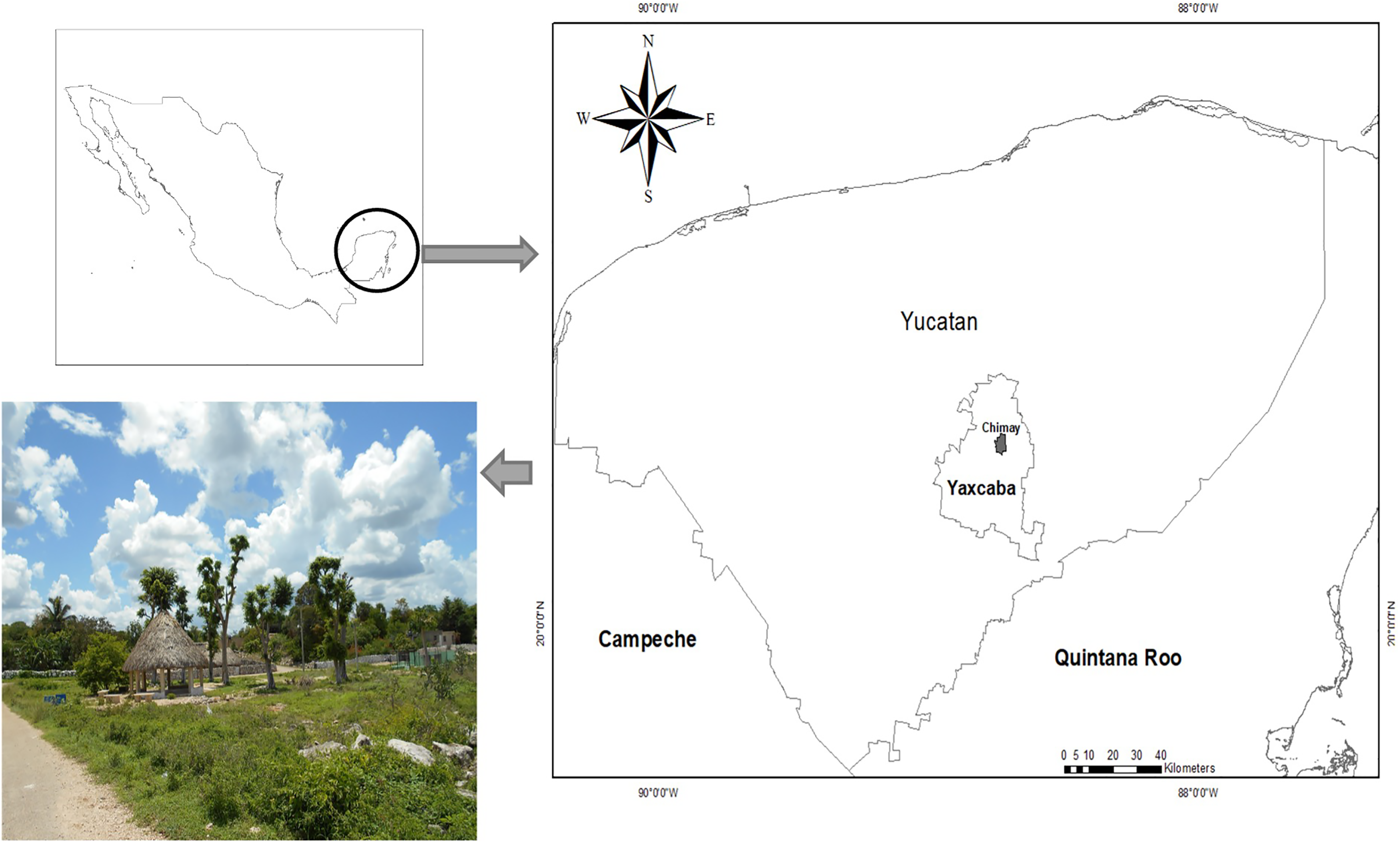
Yaxcabá Municipality in South Central Yucatán, and a random ejido to show the approximate area where the six villages included in this study: CH, YA, KA, SM, and YO. Data Source: INEGI (2024).
Each of the six pueblos in this study has a different distribution across the ejido's total area, population, number of households, ejidatarios, and year of official recognition of the ejido (Table 1). As mentioned in previous sections, an ejido is a form of collective property; a large ejido can include several comunidades, and conversely, a large comunidad can have more than one ejido associated. In these studied cases, there is a one-to-one correspondence between ejido and comunidad, but this is not always the case. Moreover, ejido communities may also be made up of Indigenous communities with rights to land that was taken from them, and most of the people residing in southeastern Yucatán today are the descendants of inhabitants of precolonial political entities (Castellanos 2010).
Demographic Information of Each of the Six Communities in this Study.
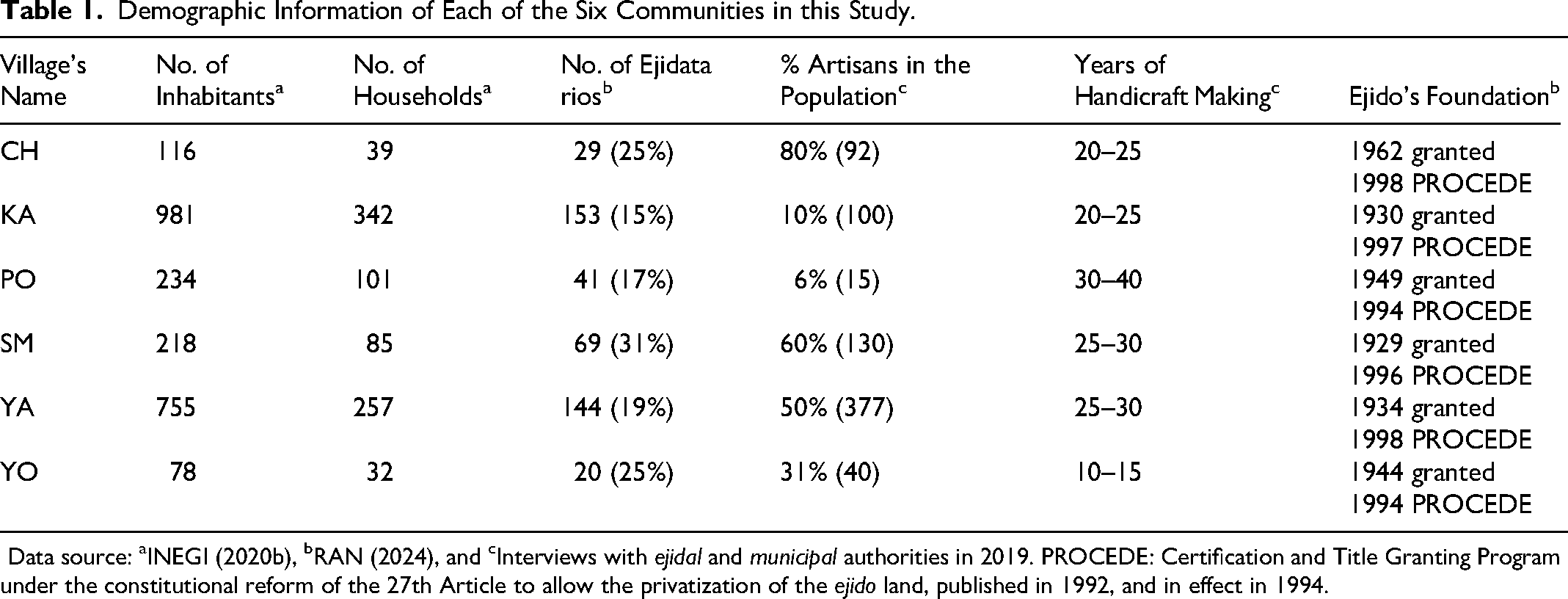
Data source: aINEGI (2020b), bRAN (2024), and cInterviews with ejidal and municipal authorities in 2019. PROCEDE: Certification and Title Granting Program under the constitutional reform of the 27th Article to allow the privatization of the ejido land, published in 1992, and in effect in 1994.
These six pueblos are communal land, with milpa cultivation (KA, YO, and SM) and handicraft production (CH, YA, and PO) as the two main economic activities that generate income for the population (Table 2; INEGI 2020b). Moreover, in all these villages, more than 40% speak Maya (INEGI 2024). In terms of population, KA is the largest village with 981 people, and YO is the smallest with 78 people. In terms of land extension, YA is the largest with 4,070 ha, and YO is the smallest with 1,296 ha. YO is the village farthest from Chichén Itzá, and PO is the closest village to Chichén Itzá.
Livelihood Activities in the Six Communities of Study (INEGI 2024 from the 2020 National Census).
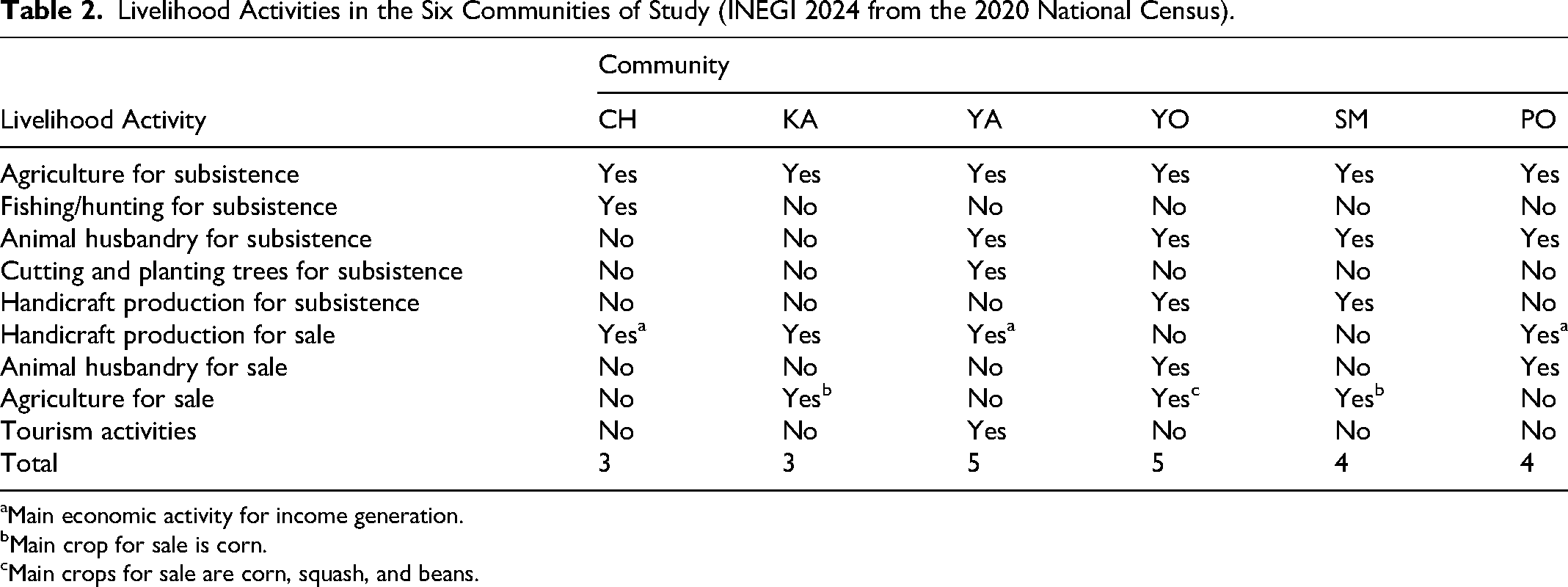
Main economic activity for income generation.
Main crop for sale is corn.
Main crops for sale are corn, squash, and beans.
The six villages share similarities in vegetation types, soils, and climate. The deciduous tropical forest (“bosque tropical caducifolio” sensu Miranda 1963; Rzedowski 2006) dominates the Southcentral Yucatán area. This forest type is also known as deciduous lowland forest (“selva baja caducifolia” sensu Flores and Espejel 1994; Flores-Guido, Durán, and Ortiz 2010), or seasonally dry tropical forest (sensu Bullock et al. 1995). It has experienced several months of severe, even absolute, drought, and its rainfall distribution exhibits strong seasonality that varies year to year (Bullock et al. 1995). A high percentage (∼50%–75%) of trees is deciduous and shed their leaves during the dry season (Flores and Espejel 1994; Flores-Guido, Durán, and Ortiz 2010).
The physical environment in this area is characterized by a tropical wet-dry climate (Aw) with a summer rainfall season (sensu Köppen modified by Garcia 2004), yearly average precipitation ranging from 728.2 to 1,000 mm, and a yearly average temperature ranging between 26 °C and 27.6 °C (Flores-Guido, Durán, and Ortiz 2010). Deciduous tropical forests are present at lower elevations (0–500 m above sea level), situated in karstic terrains with soils dominated by limestones and derived from marine sediments (Bullock et al. 1995; Flores-Guido, Durán, and Ortiz 2010).
Data Collection
Permission for this research was granted and waived by the IRB (ID: STUDY00003602, MOD00011157) of the University of Minnesota. We requested permission from municipal and community authorities in each Maya village before beginning this research. The initial conception and ideation of this research were developed collaboratively with community members of CH and YA. Additionally, written consent to work on this research in Yaxcabá was requested and granted by the municipal authority in 2017. Verbal consent was obtained from Maya artisans who agreed to collaborate in this research. Verbal consent is the culturally appropriate and recommended method that was requested by Maya communities in this study. Meetings with community authorities were held to ensure transparency and reciprocity of this research.
This research included semistructured interviews, which the first author conducted with local authorities from six communities in Yaxcabá, one comisario ejidal, and one comisario municipal per village. To protect study participants, the names of the communities have been anonymized in this paper. In all villages, the interviews were conducted in summer 2019, except for the community of CH, where the first author also conducted interviews with the authorities and artisans in summer 2017 and made a follow-up visit in summer 2022. The first author conducted a total of thirty-three interviews, which were audiotaped and transcribed into Word documents. The average interview duration was 35 min, ranging from 14 to 97 min.
Local authorities and artisans from other communities in the Yaxcabá Municipality were identified using a snowball sampling method, starting with local authorities from the community of CH who participated in the summer 2017 fieldwork. The snowball sampling method was appropriate, given that we started with key informants who recommended other local authorities and artisans we should talk to, given their knowledge (Mertens 1998). Hence, we grew and built a network based on the relationships we had already established. Once the communities were identified, the first author scheduled an appointment to ask their permission to invite them to participate in the research. Wooden handicraft artisans were identified on-site and asked to schedule appointments for interviews. This opportunistic sampling allowed us to take advantage of artisans who were available during the study (Mertens 1998) while respecting their time and minimizing interruptions to their livelihoods.
During interviews with local authorities from the communities, the first author asked about government and nongovernment programs and projects related to forest management, wood extraction, and handicraft production that the communities have participated in over the last five years. The first author also asked the local authorities about formal (e.g., rights, rules, policies) and informal (e.g., harvesting norms, customs) institutions established within the community. Interviews with artisans focused on rules, access to wood to carve, and wood harvesting.
Data Analysis
This study used an interpretative, inductive research design adapted from grounded theory analysis (Corbin and Strauss 2015). The first author read the interviews three times and used QSR NVivo 12 qualitative analysis software to code, identify, and analyze emergent, convergent, and divergent themes (Braun and Clarke 2006; Corbin and Strauss 2015). During the data analysis of the interview transcripts, the first author sought content describing restrictions, rights, rules, and practices associated with forest management, handicraft production, and wood harvesting of B. simaruba in the six villages.
Results
Organizations
Before we explain each organizational typology, we will first explain land-use zoning and inhabitants’ rights within the community to clarify the different areas that each typology oversees. In this study, the land-use zoning of the comunidades includes the human settlement (asentamiento urbano), the fundo legal, the tierras parceladas, and the tierras de uso comun (local inhabitants refer to it as ejido as well; I will refer to ejido henceforth to refer to these common use lands also) (Figure 2). The human settlement is the area where the community has its houses, home gardens, and community buildings (i.e., school, clinic, city hall, church). Around the human settlement, there is a vegetation buffer zone called fundo legal, which consists of a forest approximately 1 kilometer wide. Community members use the fundo legal for selective harvest and firewood gathering. The fundo legal can also serve as common-use land or, potentially, as an open-access area for all local inhabitants, even if they are not ejidatarios. Agriculture or cattle ranching is not allowed in the fundo legal (Rodríguez-Sánchez et al. 2019). The tierras parceladas are the forest area that has been parceled de jure to each ejidatario. A certificado parcelario is issued to each ejidatario, serving as the legal title to their parcelas (land plots). These parcelas are intended to sustain and benefit each ejidatario, but cannot be converted to milpa. These parcelas can be seen to function more as private property. Common-use forest lands de jure encompass most of the ejido area and comprise a mix of landscapes, including milpa plots, cattle ranching, and several successional stages, including mature forest. Common-use forest lands are communally owned and are exclusively for ejidatarios’ (and their families) use and benefit.
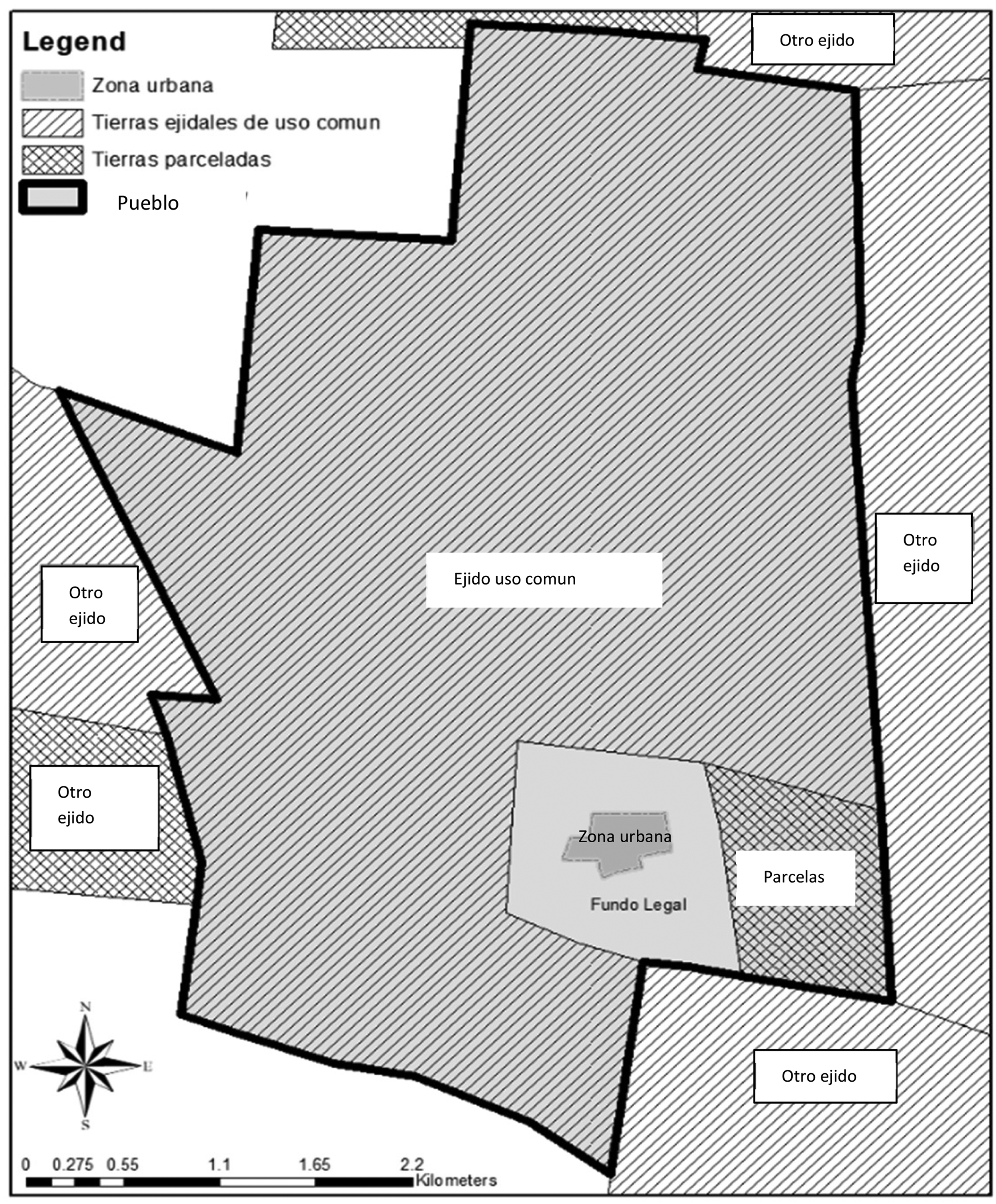
Example of general land-use zoning in a community.
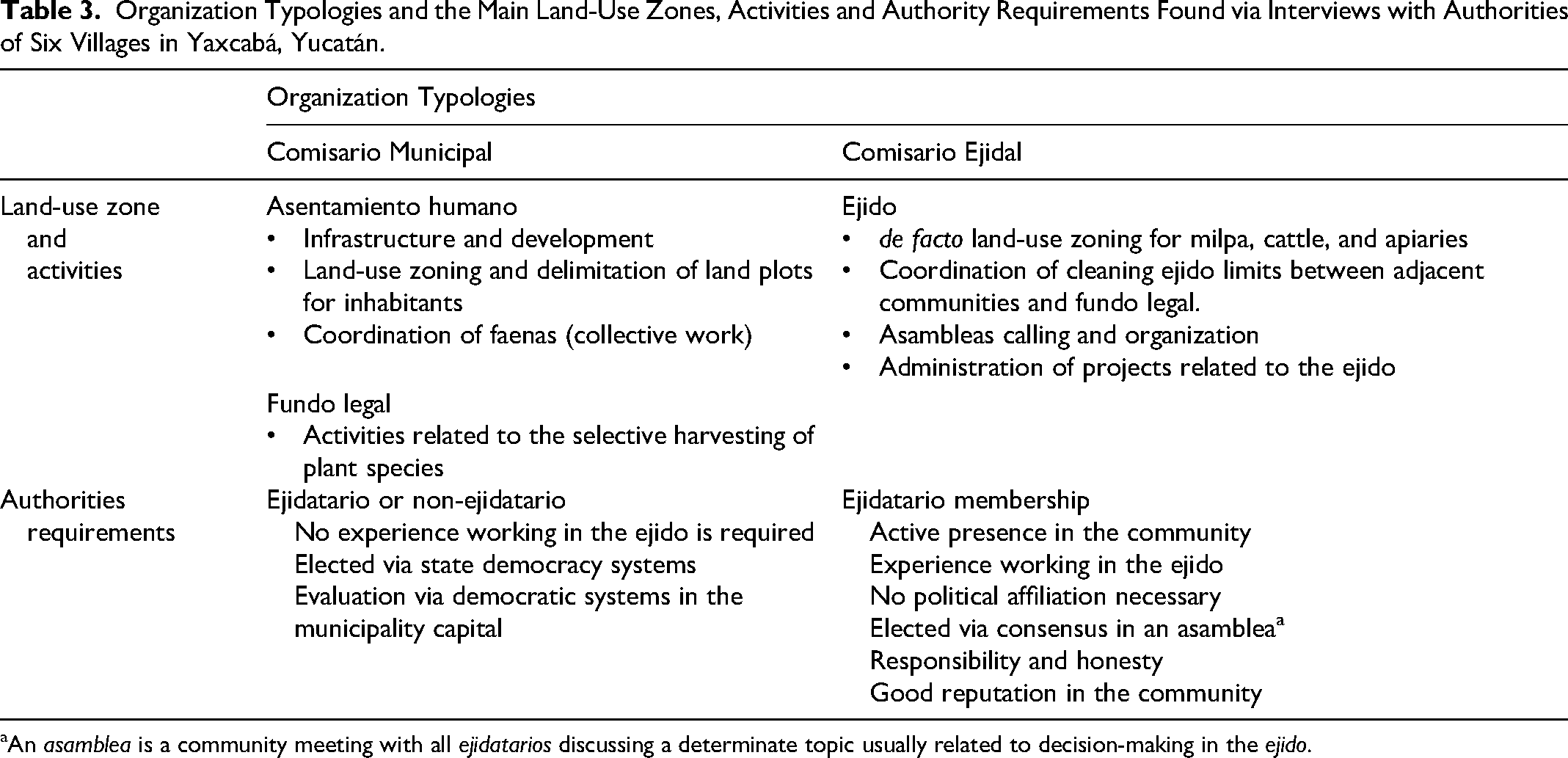
Artisans harvest chakáj's wood for handicraft production in the ejido, their own de jure parcelas and the fundo legal. Artisans’ rights within the ejido usually determine if artisans harvest in the ejido, fundo legal, or both. In a community, not all inhabitants are ejidatarios with land tenure and governance rights. There are also avecindados, people living in the communities who can use the land to establish a house in the human settlement. Avencindados may use the fundo legal to gather firewood and selectively harvest some tree species, but they do not own tenure rights or participate in decision-making about the use of the ejido. While ejidatarios and their families have the right to harvest chakáj in the ejido and fundo legal, avecindados can only harvest chakáj from the fundo legal, or they can buy chakáj's wood from ejidatarios. Each community has two types of organizations that oversee forest governance for handicraft production, the comisaria ejidal (ejido's authority) and the comisaria municipal (municipal authority) (Table 3).
Organization Typologies and the Main Land-Use Zones, Activities and Authority Requirements Found via Interviews with Authorities of Six Villages in Yaxcabá, Yucatán.
An asamblea is a community meeting with all ejidatarios discussing a determinate topic usually related to decision-making in the ejido.
First, the comisaria ejidal oversees all issues related to the ejido and use of the forest that is part of the de jure common land-use zone. Usually, this part of the land is referred to just as the ejido. This organization oversees all paperwork related to the ejido at the local, municipal, and state levels as needed. The comisaria ejidal also oversees calling, organizing, and documenting all asambleas (assembly) during their administration. Asambleas are formal meetings where all decisions about the ejido are made, and all ejidatarios must attend. Comisarios ejidales often referred to the “voz de la asamblea/asamblea's voice” to point out the collective decision-making process that happens during the asambleas. In addition to asambleas, smaller meetings called juntas or reunions (meetings) happen often when consultations about minor issues emerge. Participation in juntas and reuniones is optional, depending on the issue or topic and on whether people are interested or involved. Any type of program or project that involves visiting or working in the community must consult the comisaria ejidal, and a junta would usually be called to consult if community members are interested in becoming involved.
The comisaria ejidal is led by a main leader, called comisario ejidal, and two other helpers whose titles may vary across communities, but usually one is the assistant and another is the treasurer. All comisarios ejidales in each community were male, and their ages ranged from 40 to 60 years. Comisarios ejidales are ejidatarios, and they are usually selected by all ejidatarios by consensus. They hold the charge for three years. Usually, comisarios ejidales are selected based on their experience working in the forest as farmers; they know forest governance from years as ejidatarios, participating in the asambleas and being active community members. Moreover, comisarios ejidales are considered responsible and honorable people, and community members respect them. If a comisario ejidal does not behave responsibly and transparently, the entire community of ejidatarios can remove them from office.
The comisaria municipal oversees the area that encompasses the human settlement and the fundo legal. The main leader of the comisaria municipal is the comisario municipal, and three additional community members serve as secretary, treasurer, and police, respectively. Comisarios municipales in most communities where males, except for SM, where the comisario municipal was a female. The age of comisarios municipales ranged from 30 to 60 years. The comisario municipal oversees the village's relationships with the municipality of Yaxcabá and the state authorities in Yucatán. The comisario municipal also holds this position for a three-year term, as does the comisario ejidal. Comisario municipal oversees all projects and programs targeted at community development, including infrastructure and land-use changes, within the human settlement and fundo legal. Usually, the comisario municipal is linked to political parties, and this is a contested position under state official elections in a democratic system. Given that wood extraction may occur in the fundo legal area, the comisario municipal also has influence over decision-making regarding wood harvesting in that area. Both ejidal and municipal authorities provide governance structures that regulate how individuals engage in landscape management; however, the formal and informal collective institutions that actively carry out forest management are specific to each community.
Policies and Local Institutions
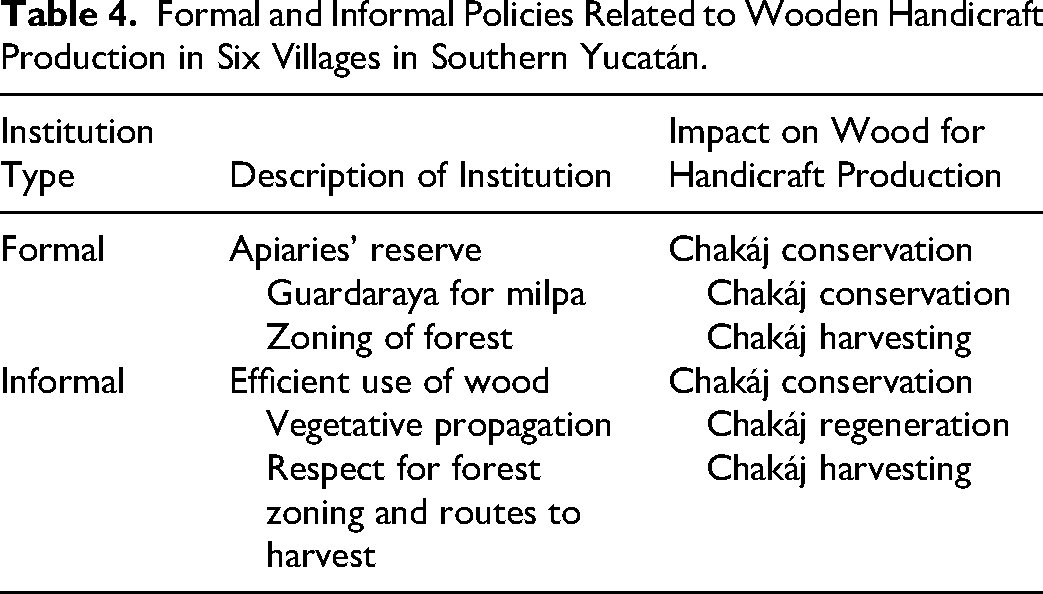
Formal and informal institutions emerged from the interviews with comisarios ejidales and municipales. In the following paragraphs, we first describe the main policy under which all these institutions operate, the reglamento interno (internal bylaws/regulation), by which formal institutions are established. Second, we introduce the formal and informal institutions and their relationship to handicraft production, as reflected in chakáj's wood harvest (Table 4).
Formal and Informal Policies Related to Wooden Handicraft Production in Six Villages in Southern Yucatán.
Most of the local institutions related to handicraft production are under the comisario ejidal authority. Policies related to the ejido to harvest and use the forest are listed in the reglamento interno of each ejido. This reglamento interno is usually established after the ejido was initially granted. The land granted to ejidos is officially recorded by the Registro Agrario Nacional in the presence of official state and federal authorities. The reglamento interno is the equivalent of the major policy in the ejido and comunidad; it can be modified and updated. By the time the reglamento interno was established, a set of formal institutions had been established through asambleas (ejidales meetings), in which all ejidatarios were required to attend.
Among the main formal institutions that interact with wood harvesting for handicraft production, there is the internal de facto zoning of the common-use forest (also referred to as the ejido by the local inhabitants). Forest zoning refers to the different zones of the ejido that correspond to each ejidatario and family to use and manage. This forest zoning corresponds to de facto parcelized ejido land allocated to an individual ejidatario, and it differs from de jure parcelized land. Depending on the number of ejidatarios and the number of hectares of forest, each community may assign from a few to several hectares to each ejidatario. Each ejidatario may establish their milpa, apiary, and cattle ranch, and extract resources from the forest for construction or other subsistence purposes. Commercial extraction is not allowed without prior consent and consultation with the comisario ejidal and the ejidatarios. Thus, ejidatarios and families are allowed to harvest chakáj wood to carve handicrafts for sale, but they are not allowed to harvest chakáj wood for sale outside the community. Given that only ejidatarios and their families may use the ejido, non-ejidatarios must request permission to do so. When non-ejidatarios request the use of the ejido, the comisario ejidal can request an asamblea with all ejidatarios to consult on granting this permission. If permission is granted to the non-ejidatario, there is usually a fee to cover the temporary permission.
Another formal institution is that ejidatarios who have beehives in the ejido are allowed to have a hectare of forest surrounding the location of their hives. These forested areas around the apiaries cannot be cut, and selective logging of trees in this area, including chakáj, can only be carried out or authorized by the ejidatario who owns the beehives. This is for the benefit and protection of bees and to ensure the availability of vegetation as a food source.
Formal institutions under the comisario municipal were found only in the community of CH, where local authorities prohibited the harvesting of chakáj from the fundo legal for a period of three years (2016–2019). According to the interview with the comisario municipal, this policy was intended to reduce the depletion of chakáj trees near the ejido and to allow trees to grow and regenerate. After this period, the new comisario municipal (2019–2022) discontinued this rule.
Another formal institution mentioned was that ejidatarios who plan to make milpa need to carefully carry out guardarayas, which are lines of land that prevent fire escape from controlled burning. Campesinos, as they called themselves, are the ejidatarios who cultivate milpas. Campesinos have a very specialized knowledge of the forest, milpa cultivation, and fire management. Usually, milpa burning occurs among groups of campesinos who take turns helping each other with the guardarayas and burning of their milpa plots.
Regarding harvesting chakáj, two informal institutions that authorities mentioned across the six communities are the vegetative propagation of chakáj and the use of all harvested wood to minimize wood waste. Here, people are instructed to plant any remaining cuttings of chakáj after harvesting, with the purpose of helping chakáj's vegetative reproduction, and to efficiently use chakáj's wood. Related to this, a comisario ejidal pointed out that these two informal institutions are mentioned to artisans during juntas, but ultimately are left to the “conciencia/consciousness” of every person to follow this. This consciousness becomes part of the moral responsibility for maintaining the ejido. This study offers a relatively uncommon case study that showcases a fortunate intersection of factors, in which local governance arrangements take advantage of strong regional demand and the easy propagation of a commercial species.
Enforcement Mechanisms
Authorities mentioned two main enforcement mechanisms when formal institutions are not respected. The first enforcement is llamando la atencion or notifying the person about their fault and asking them not to do it again. During this time, the authority notifies the community member of their fault and conducts research into the causes of the behavior. If needed, the authority will inform and educate the community member to prevent the fault from recurring. If the community member repeats the fault, then a fine is imposed on the person. The fine could be in cash or in-kind, such as doing faena/fajina. Faena is a volunteer community work that every community member is responsible for, such as cleaning the village common spaces, including the plaza (downtown), schools, clinic, church, and so on. When a person cannot pay the fine with cash, a faena is requested, depending on the degree of the fault. If a community member or ejidatario stops fulfilling their community and ejidal responsibilities and fails to respect formal institutions, they can be expelled from the ejido. Calling a state or federal authority is very costly and time-consuming for community members, so their involvement is reserved for major issues such as large-scale disputes, crime, and ejido members’ destitution.
Family zoning applies to other activities such as milpa, wood gathering, apiculture, and so on. It is expected that families will respect each other's zones. If zones are not respected, family members will inform the ejidal authorities (i.e., the authority in charge of forest governance) and can talk with the other families to remind them of the rules for forest use. If a family needs something from outside their zone, they are expected to ask permission from the users of that zone. This expectation helps manage the forest on a large scale, as well as at a small scale, since every family knows they have limited resources in the forest at any given time. Thus, every family is responsible for caring for their forest resources.
Enforcement is also more severe for non-ejidatarios or noncommunity members. For instance, a comisario ejidal highlighted that the community is more serious about restricting people from outside the community from using the forest for chakáj's wood harvesting. Ejidal and municipal authorities agreed that community members may pursue any livelihoods if everyone respects the rules and maintains “convivencia normal” (respectful coexistence). This convivencia normal involves respecting ejido usage rights as established in the reglamento interno, requesting permission when needed, and fulfilling social, moral, and economic responsibilities. Usually, local authorities try to resolve internal conflicts as much as possible to minimize escalation and the involvement of outside organizations.
Discussion
This study provides new insights into forest governance for handicraft production by exploring organization typologies, institutions, and enforcement in six Maya communities in Yaxcabá, Yucatán. Similar to other woodcarving societies around the world, livelihoods depend upon natural resources, and livelihoods directly influence resource management options to ensure the sustainability and long-term availability of resources (Belcher, Cunningham, and Campbell 2005).
The governance arrangement described in this study does not align with the archetypal structures of community forest management in Mexico, where logging is typically carried out more directly by the community (Bray, Antinori, and Torres-Rojo 2006; Hajjar, Kozak, and Innes 2012; Hajjar et al. 2013, 2017). In the present case, local authorities (the ejido and the municipality) appear to regulate individual entrepreneurship rather than directly engaging in forest management. Moreover, community forest management in Mexico often follows the blueprint of conventional forestry and forest engineering, with traditional ecological knowledge (TEK) playing a secondary role (Sierra-Huelsz et al. 2020). In contrast, the case presented here does not follow formal legal procedures, is not organized under the guidance and supervision of professional foresters, takes place in forest–agriculture interfaces, and is integrated with milpa management. In this context, TEK plays a much more central role.
Organizations, institutions, and enforcement mechanisms for handicraft production are interwoven within the ejido forest governance system, encompassing milpa, usage rights, and moral responsibilities. Forest zoning based on the ejidatario's rights to cultivate milpa and practice apiculture greatly influences chakáj's management of access, conservation, and regeneration within the ejido. In this section, we discuss the implications of this study's findings for collaborative and adaptive governance in socioecological systems and for the community-based management literature, with an emphasis on Indigenous contexts.
This study's findings support and update prior literature on key factors influencing collaborative governance and forest governance of socioecological systems (Carr, Kelman, et al. 2023; Poteete and Ostrom 2004). Two main factors are usage rights and clear resource boundaries. In this study, the ejido system, a communal land grant, is based on land-use zoning. The ejido system, among all communities, helped to define clear usage rights based on ejido membership. Regardless of being artisans, ejidatarios, and their families, they are the ones with greater access to and use of wood and a voice in decision-making processes related to the regulation of wood extraction. This ejido membership, in turn, influences resource boundaries that shape access to and management of land-use locations in the forest by actors. Past studies also agree that Mexico's communal land grant systems have been an important facilitator and institutional bedrock for community forest management in Mexico (Bray et al. 2003, 2004; Bray, Antinori, and Torres-Rojo 2006; Chibnik and Purata 2007, Ellis et al. 2015, 2019; Ellis, Navarro-Martínez, and García-Ortega 2021; Purata et al. 2005). Common land tenure is still central to the regulation and control of access to the resources in the ejido's forest, regardless of the novelty of the livelihood.
This study's findings align with those of Chibnik, Purata, and collaborators (2003, 2005, 2007) regarding the governance system of another wood-carving species in Mexico, copalillo (B. glabrifolia). Oaxacan artisans use copalillo to carve alebrijes that sell to domestic and international tourist and nontourist markets. Similarly to chakaj, copalillo is considered a “communally manage resource,” where community regulations control its access, harvest, and management (Chibnik 2003; Chibnik and Purata 2007; Purata et al. 2005). Chakaj and copalillo's harvest and management happen in similar contexts, Indigenous rural communities based on subsistence livelihoods, that regulate the access to resources through collective governance systems. Land in both places, Yucatán and Oaxaca, is predominantly under communal land grant systems, where villages are in forested areas controlled by the community. These contexts greatly influence both species, chakaj and copalillo, which are largely defined by land tenure, sociopolitical arrangements, and collective institutions within the community.
Another factor is that harvesting rules are congruent with ecology and culture (Carr Kelman et al. 2023). In our findings, harvest rules still revolve around the milpa system. Milpa is an ancestral agricultural system that allows food production and forest sustainability. In this study, Indigenous/traditional ecological knowledge (IEK/TEK) on the milpa and forest is the base from which harvesting rules for chakáj are emerging. These findings support Fisher's (2020) historical–political analysis of the milpa's long-term sustainability, which suggests that political authority needs to be consistent with the IEK of Maya milpa farmers. Thus, milpa's long-term sustainability depends on multigenerational forest management practices and support for bottom-up institutions (Fisher et al. 2020).
This study is also the first to highlight the synergic and conflictive relationship between the Maya milpa system and chakáj harvesting for wood carving. Several artisans harvest trees in fallow areas before land preparation and burning for the next agricultural cycle, thereby contributing positively to the wood available for carving handicrafts. In terms of ecology, Chakáj is also fire- and disturbance-tolerant. Artisans are aware that chakaj is easy to propagate by vegetative reproduction, which makes it prone to resprouting, regeneration, and dominance in the early stages of forest regeneration after milpa production (the first 5–20 years after milpa). Even after harvesting, the chakaj tree tends to resprout. In this sense, local governance arrangements may also be taking advantage of strong regional demand and easy propagation of a commercial species. Nevertheless, the vegetation strip required to be left around milpas and apiaries is also a forest area, where artisans are not available to harvest chakáj trees due to the importance of chakáj flowers for bees. This can also create conflict among artisans and farmers if these institutions are not respected.
Another set of factors is associated with decision-making, monitoring, and enforcement (Carr Kelman et al. 2023; Coleman 2009). In this study, the asambleas (assemblies) and juntas (meetings) are spaces where ejidatarios and community members participate in collective decision-making on agreements for the ejido. In the case of monitoring resources, this is done collectively by community members in their daily walks to the forest on their way to their milpas, beehives, and wood gathering. Ultimately, the enforcement in this study aligns with Carr Kelman et al. (2023) on the key factor of graduated sanctions, in which the punishment is proportional to the severity and frequency of the misconduct. Across the six communities, authorities emphasized that enforcement of institutional approaches ranged from low to high intensity, from talking and educating to fees, and in extreme cases, expulsion from the ejido.
The next factor for governance identified in this study was institutional adaptability and flexibility, which aligns with Kelman et al. (2023). We found that the comisario municipal in CH implemented a formal institution to minimize the harvesting of chakáj in the fundo legal, thereby allowing chakáj's regeneration. This aligns with Palaschuk, Gauthier, and Bullock (2024) study with the Missanabie First Nation in Canada, in which they found that maintaining adaptive planning processes was important to account for changes in the quantities and qualities of forest-based resources, as well as community needs and market demands. Like Missanabie, for Maya people understanding the cyclical nature of the NTFP is important to be open to adapting to the changing and unpredictable environments (DiGiano and Racelis 2012). For the Missanabie, even when community values could not converge, there is a convergence that good planning maintains ecosystem function by optimizing NTFP use and extraction, which is critical to supporting ecosystem function and maintaining productive capacity.
Key factors from Carr Kelman et al. (2023), such as long-term commitment and vision, responsibility, transparency, trust, leadership, and capacity, emerged in this study as qualities required for ejidal leaders. These factors have a heavier weight given that the edijal autorities tend to have a stronger voice and influence in the forest governance of the ejido than municipal authorities, whose voice and influence are limited to the fundo legal and human settlement. Overall, a well-functioning ejido governance system can ensure the permanence of the ejido and guarantee the multigenerational continuity of the land for milpa, timber, and NTFP (Bray et al. 2004; Bray and Klepeis 2005; Castellanos 2010; Ellis and Porter-Bolland 2008; Ellis et al. 2015, 2021; Snook, Capitanio, and Tadeo-Noble 2021). Moreover, ensuring those traits in ejidal leaders could help minimize challenges such as corruption and lack of transparency that negatively impact growth and strengthen community forest management (Ellis et al. 2015).
The ejidal authority quality traits mentioned above are associated with the moral and social responsibilities that come with forest rights. These moral and social responsibilities are also extended to ejidatarios and community members. This study's findings support Castellanos’ (2010, 144) statement, “land is converted into a socially regulating mechanism” in the ejido system. In this study, these social and moral responsibilities became evident in the informal institutions, based on respect for others’ rights and resources, on being conscious of the efficient use of wood, and on allowing chakáj regeneration. Therefore, informal institutions and enforcement are based on fulfilling ejidal and communal work obligations and on becoming a good citizen, which local authorities in this study conceive as “convivencia normal.” Eviction from the ejido is a reality if a community member fails to fulfill their labor obligations, moral responsibilities, and obligations to the ejido and community (Castellanos 2010). Ultimately, formal and informal institutions support the sustainable small-scale management of resources to avoid depletion and promote the regeneration of chakáj.
Conclusions
This study analyzed how communities adapt their internal forest management systems to carve handicrafts to sell to the tourism industry in the Yucatán Peninsula. The exploration of organizational typologies, institutions, and enforcements in six Maya communities in the municipality of Yaxcabá provided insights about community forest management for handicraft production. This study's main finding demonstrates that organizations, institutions, and enforcement mechanisms for handicraft production are interwoven within the ejido forest governance system, encompassing milpa, usage rights, and moral responsibilities. The de facto forest zoning, based on the ejidatarios’ rights to cultivate milpa and practice apiculture, greatly influenced chakáj's management of access, conservation, and regeneration within the ejido. Maya communities exercise their Indigenous governance systems through formal and informal rules and policies to self-regulate chakáj harvesting and, therefore, minimize external intervention in their land-management decisions. In this way, Maya communities maintain their autonomy in land decision-making and adjust their policies to meet community livelihoods and needs. Finally, this study's findings support that community-based management of the forest has proven to endure, adapt, and survive changing forest economies, markets, and policies.
Author note
Florencia Pech-Cardenas’ new affiliation is Oregon State University. Florencia Pech-Cardenas was at the Department of Forest Resources, University of Minnesota when this research was conducted.
Footnotes
Acknowledgments
The authors thank the Maya artisans who collaborated in this research. The authors also thank Matthew Young for editorial support for this manuscript. The authors appreciate the anonymous reviewers for this paper.

Ethical Considerations
Permission for this research was granted and waived by the IRB (ID: STUDY00003602, MOD00011157) of the University of Minnesota. Permission from municipal and community authorities was requested before the start of the research in each Maya village.
Consent to Participate
Verbal consent was obtained from Maya artisans who agreed to participate in this research. Verbal consent is the culturally appropriate method requested by Maya communities. Meetings with community authorities were held to ensure transparency and reciprocity of the partnership.
Author Contributions
FP-C contributed to conceptualization, data curation, funding acquisition, methodology, formal analysis, investigation, and writing—original draft preparation, review and editing .
KN contributed supervision, methodology, and writing—review and editing.
Funding
The authors disclosed receipt of the following financial support for the research, authorship, and/or publication of this article: The first author received a scholarship from the Fulbright-Garcia Robles Program and the Mexican National Council for Science and Technology (Consejo Nacional de Ciencia y Tecnologia-CONACYT, Scholar 288653/Scholarship 440682) for doctoral studies. The first author received the following grants to fund fieldwork for this research: the Programa de Fortalecimiento Académico para Indígenas Apoyos Complementarios para Mujeres Indígenas Becarias CONACYT 2017-1, the Jessica Mae Orozco Indigenous Ethnobiologist Fellowship (2019), and Ecological Knowledge Research Fellowship (2021) from the Society of Ethnobiology, the University of Minnesota Thesis Research Travel Grant (2019), the Botany in Action Fellowship (2022) from Phipps Conservatory and Botanical Gardens, and Dr. Michael Dockry provided some financial support for transcriptions. The first author also received several grants to focus on thinking, discussing, and drafting the manuscript, including: the Interdisciplinary Doctoral Fellowship (2020–2021), the NCAIS Graduate Spring Workshop, the Summer Institute on Global Indigeneities (2022), the MnDRIVE Human in the Data Fellowship from the Institute for Advanced Study (2022), and the CLA-RIDGS GRPP Summer Fellowship (2022).
Declaration of Conflicting Interests
The authors declared no potential conflicts of interest with respect to the research, authorship, and/or publication of this article.