







Abstract
Background
Alternative metrics (Altmetrics) based on mentions in online media is a new tool that can help identify articles that have the most influence on diverse public audiences.
Purpose
To determine the 100 most mentioned articles in the field of neuroimaging and to analyze their characteristics.
Material and Methods
We selected the 668 journals that were considered to potentially publish neuroimaging articles. Using the Altmetric.com search tool, we identified the 100 most mentioned neuroimaging articles based on the highest Altmetric Attention Scores (AAS) within selected journals. Each article was evaluated for several characteristics including AAS, number of citations, journal title, impact factor of journal, year of publication, authorship, country, type of document, disease entity, and imaging technique.
Results
The AAS for the top 100 articles were in the range of 145–1467. Frontiers in Human Neuroscience published the largest number of articles (n = 9), followed by Radiology (n = 8) and Neurology (n = 8). All articles were published during 2006–2018, with 56% of articles being published in 2016–2018. The majority of articles originated from the United States (n = 56), were original articles (n = 81), covered normal population (n = 67), and used functional magnetic resonance imaging (n = 56). Sasaki was the most prolific, authoring three of the most mentioned neuroimaging articles.
Conclusion
This study presents a detailed list of the 100 most mentioned neuroimaging articles in online media, thus providing useful information on the dissemination of neuroimaging research to the general public.
Introduction
Accurate measurement of the impact of scientific articles is critical for guiding decisions related to promotion, tenure, and funding, and for identifying the most influential research within a particular field. The number of citations is the most widely used indicator of the impact of individual research articles (1). However, traditional citation analysis has been heavily criticized because citation requires considerable time after publication and essentially reflects only the impact of an article among researchers in the same field (2).
The advent of the Internet and the recent growth of social media have greatly promoted the rapid dissemination of scientific knowledge among more diverse audiences (3). The term “altmetrics” (referring to non-traditional alternative article-level metrics) was coined in 2010 in reference to new metrics that evaluate the early influence of scholarly material on broad audiences in comparison to citation counts (4). Altmetrics measure the scientific and social impact of an article after publication, based on its number of “mentions” across various online sources (3,4).
Neuroimaging is a relatively new discipline within medicine, neuroscience, and psychology that uses various techniques to either directly or indirectly image the structure, function, and/or pharmacology of the nervous system (5). There have been several studies to identify the most mentioned articles from online media in various medical disciplines including dentistry (6), emergency medicine (7), and neurosurgery (8). To our knowledge, however, the bibliometric analysis of the most mentioned articles in the field of neuroimaging has not yet been reported. The purpose of the present study was therefore to identify the 100 most mentioned neuroimaging articles and to analyze their characteristics.
Material and Methods
The present study did not involve human subjects and thus did not require the approval from an institutional review board.
Selection of journals
To identify the most mentioned neuroimaging articles, journals listed under the following five subject categories of the Web of Science (Thomson Reuters, New York, NY, USA) for the year 2016 were evaluated for inclusion: “Clinical Neurology” (194 journals); “Medicine, General & Internal” (155 journals); “Neuroimaging” (14 journals); “Neuroscience” (259 journals); and “Radiology, Nuclear medicine & Medical imaging” (127 journals). The subject category “Medicine, General & Internal” was included in our study because it contains multidisciplinary journals that cover a broad spectrum of scientific research. After 81 duplicated journals were excluded, a total of 668 journals were considered journals potentially publishing neuroimaging articles and were included in our study.
Identification of the 100 most mentioned neuroimaging articles in online media
The Altmetric Attention Score (AAS) of each journal and article was searched separately using “Advanced Search” in Altmetric Explorer (https://www.altmetric.com/explorer, Altmetric LLP, London, UK). The site was accessed on only one specific day (25 May 2018) to avoid changes in the online activity of articles.
Altmetric.com, one of the main providers of alternative indicators, was chosen for the purpose of the study because it is the most comprehensive source covering the vast majority of online media activity associated with scientific papers. Altmetric.com captures real-time online mentions of published articles from public policy documents, blogs, mainstream media, Wikipedia, online reference managers such as Mendeley, research highlights, post-publication peer-review platforms, Open Syllabus, YouTube, and social media networks including Facebook and Twitter since 2011 (3). Altmetric.com provides the AAS to measure the overall level of online impact arising from a particular research output, which is presented as a whole number. The AAS is a weighted score of total mentions of the article across various online media, reflecting the anticipated relative degrees of influence of sources on potential readers (Table 1).
Sources and their weights in calculating AAS.
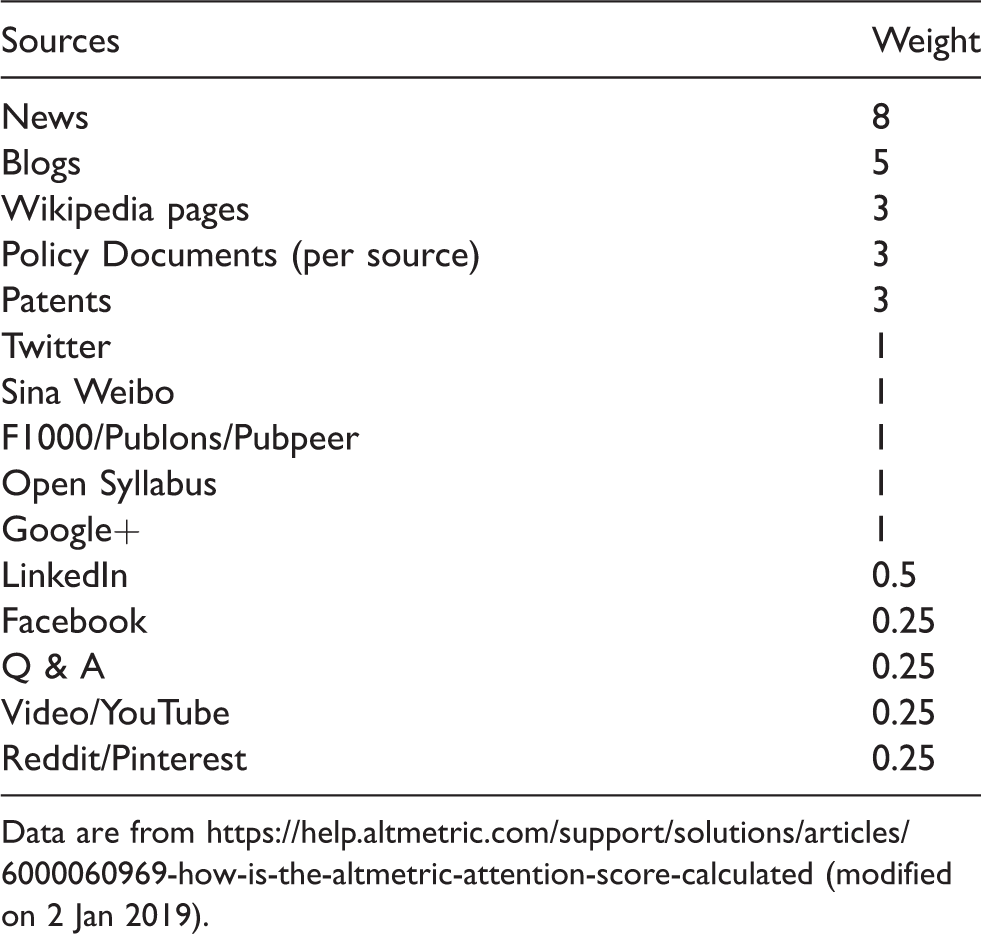
Data are from https://help.altmetric.com/support/solutions/articles/6000060969-how-is-the-altmetric-attention-score-calculated (modified on 2 Jan 2019).
All articles were recorded and then compiled into a single database. These articles were then ranked in descending order based on ASS and reviewed to determine if they were relevant to neuroimaging. A neuroimaging article was defined as any study that mainly focuses on imaging technique, utility of imaging, or diagnostic imaging interpretation for brain and spinal cord. Articles were excluded if they dealt purely with head and neck imaging, contained clinical decisions regarding the use of imaging studies, or focused on patient management (i.e. medication, surgery, radiation therapy, and neurointerventional procedures) (9). No restrictions were placed on the document type, language, or scholarly identifiers for our study.
Analysis of articles
We analyzed the full text of the most mentioned articles and extracted the following information: (i) AAS; (ii) number of citations (obtained from the Web of Science database [Thomson Reuters, New York, NY, USA], retrieved on 10 July 2018); (iii) journal title; (iv) impact factor of journal (based on the 2017 science edition of the Web of Science); (v) year of publication; (vi) authorship; (vii) country; (viii) type of document (original article [reports that investigated clearly stated objectives or hypotheses and contained specifically articulated methods and results sections], review, technical note, guideline/consensus statement, systematic review/meta-analysis, case report, news, or letter); (ix) disease entity; and (x) imaging technique.
The country of origin was defined according to the affiliation of the first author. If the first author was affiliated with more than one country or group name, the corresponding author’s affiliation was used for the origin of the article.
Two reviewers (ESK and HJK, neuroradiologists with ten and eight years of experience, respectively) independently conducted identification and analysis of articles. In case of disagreement between the two reviewers, consensus was achieved through open discussion. The present study adopted a descriptive research approach by means of bibliometric analysis.
Results
The Supplemental Table lists the 100 most mentioned neuroimaging articles in descending order according to their AASs obtained from the Altmetric.com database at the time of the analysis. The Altmetric scores of the 100 most mentioned articles were in the range of 145–1467 (mean = 354.02 ± 262.16; median = 250.5). The number of citations of these articles was in the range of 0–722 (mean = 42.81 ± 92.52; median = 10.5). The most mentioned neuroimaging article was the 2016 paper by Soares de Oliveira-Szejnfeld et al., “Congenital brain abnormalities and Zika virus: what the radiologist can expect to see prenatally and postnatally” in Radiology (10). The second most mentioned article was “Clinical features and neuroimaging (CT and MRI) findings in presumed Zika virus related congenital infection and microcephaly: retrospective case series study” published in British Medical Journal in 2016, by De Fatima Vasco Aragao et al (11).
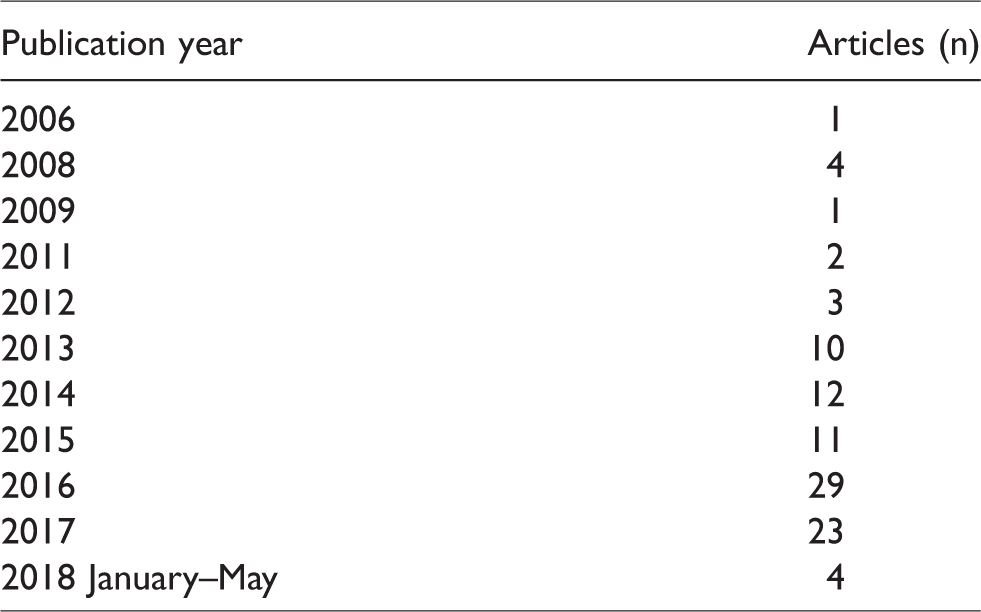
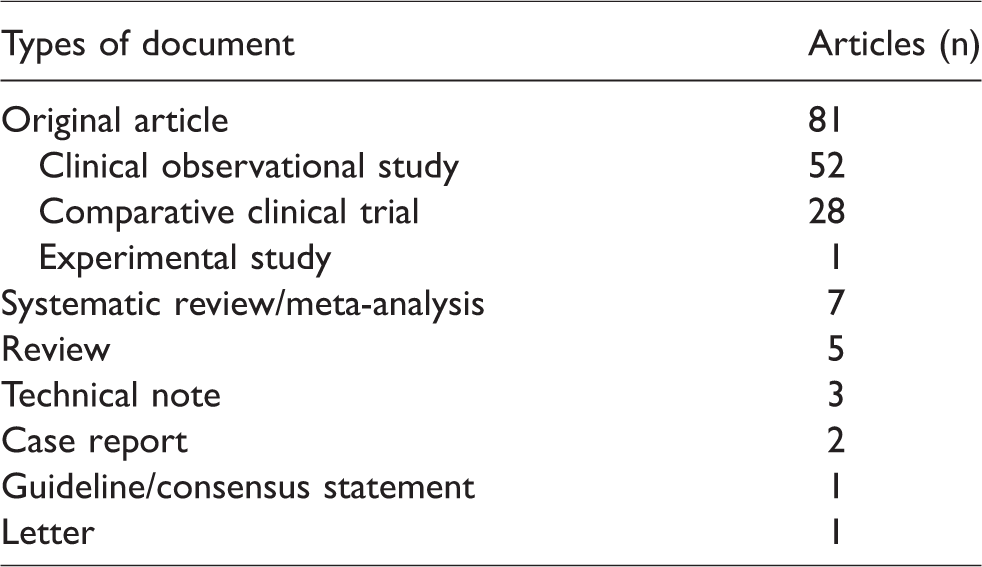
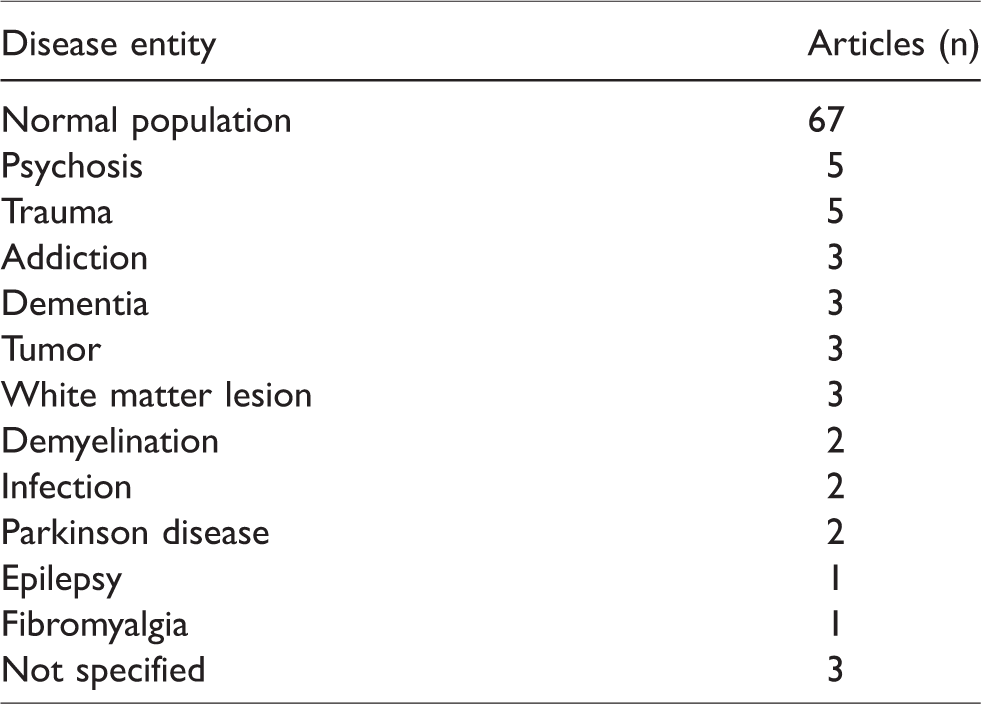
The most mentioned articles were published in 30 journals, primarily in Frontiers in Human Neuroscience (n = 9), followed by Radiology (n = 8) and Neurology (n = 8) (Table 2). All articles were published during 2006–2018, with 56 being published in 2016–2018 (Table 3). Table 4 presents a list of authors, among whom T Sasaki authored the highest number of the most mentioned neuroimaging articles (three articles), followed by DG Amen, S Bouix, RL Carhart-Harris, PS Echlin, A Feilding, LA Forwell, E Fredman, KG Helmer, JD Holmes, AM Johnson, IK Koerte, M Mayinger, S Meysami, D Nutt, O Pasternak, BS Peterson, CA Raji, N Sadato, ME Shenton, EN Skopelja, AZ Snyder, HC Tanabe, and A Van der lugt (two articles). The 100 articles originated from 17 different countries: the majority of the articles originated from the United States (n = 56), distantly followed by Canada (n = 7), Germany (n = 7), the UK (n = 7), and The Netherlands (n = 4) (Table 5). In terms of the type of document, 81 most mentioned articles were original articles, of which 52 were clinical observational studies (Table 6). The most common disease entity was normal population (n = 67), followed by psychosis (n = 5) and trauma (n = 5) (Table 7). The most common imaging technique was functional MRI (n = 56), followed by volumetry (n = 9) and diffusion tensor imaging (n = 8) (Table 8).
Journals in which the 100 most mentioned neuroimaging articles were published
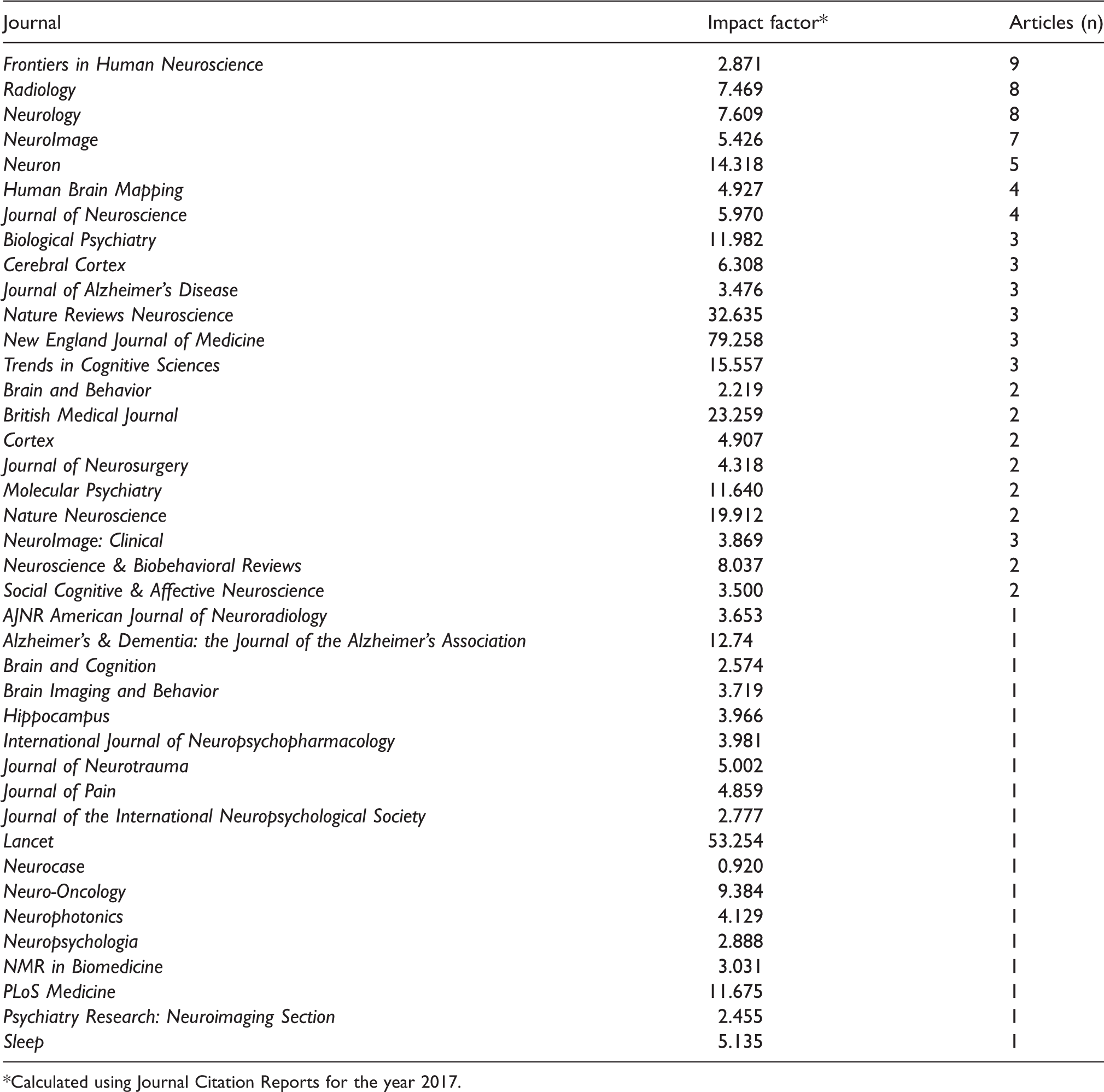
*Calculated using Journal Citation Reports for the year 2017.
Publication years of the 100 most mentioned neuroimaging articles.
Authors who contributed two or more of the 100 most mentioned neuroimaging articles.

Countries of origin of the 100 most mentioned neuroimaging articles.
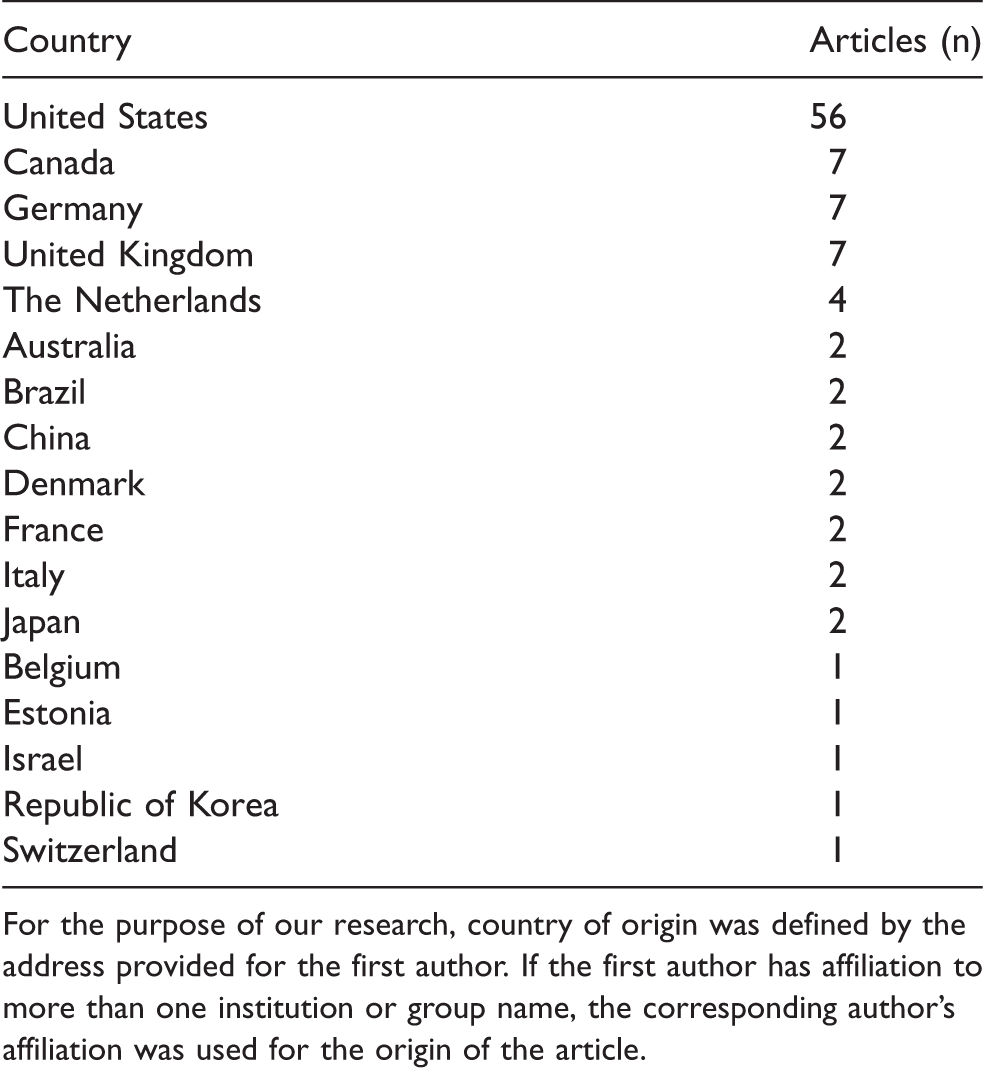
For the purpose of our research, country of origin was defined by the address provided for the first author. If the first author has affiliation to more than one institution or group name, the corresponding author’s affiliation was used for the origin of the article.
Types of document of the 100 most mentioned neuroimaging articles.
Disease entities covered in the 100 most mentioned neuroimaging articles.
Imaging techniques used in the 100 most mentioned neuroimaging articles.
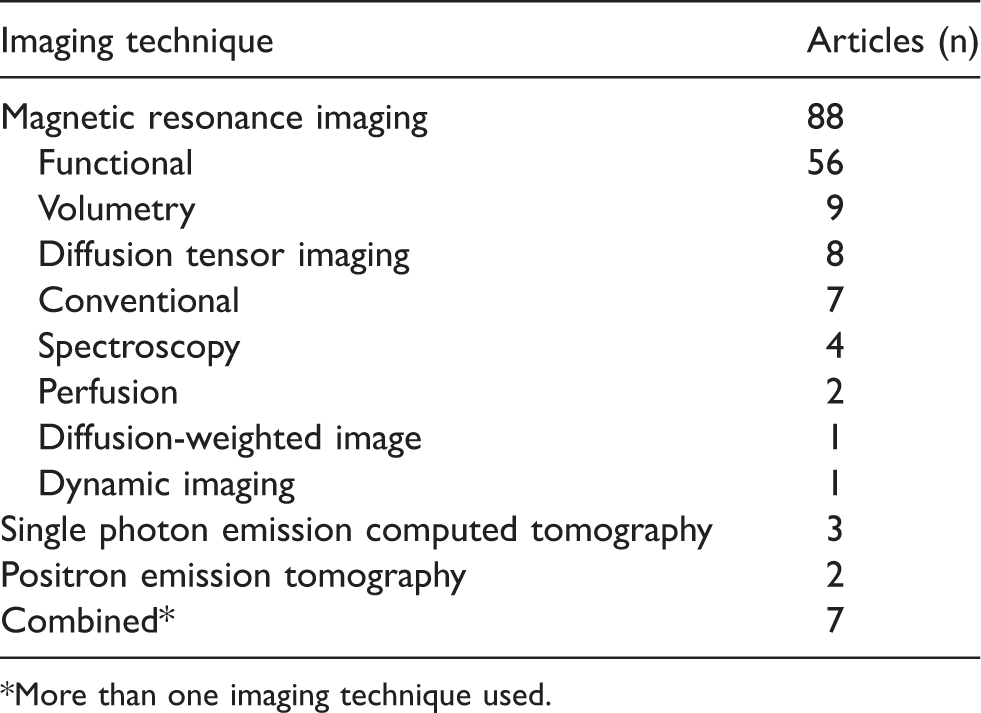
*More than one imaging technique used.
Discussion
With the advent of the Internet and social media, interest in altmetrics has grown rapidly since the concept was first introduced in 2011 (12). Altmetric.com is one of the first companies to work in this area, which contains > 21 million research outputs and captures real-time mentions in online media. Altmetric.com automatically calculates an altmetric indicator, the AAS, which is a weighted count of all mentions a scholarly article has received across various online sources (3).
The AAS for the 100 most mentioned articles was in the range of 145–1457, which was higher than that for neurosurgery (AAS = 45–643), as reported by Wang et al. (8). The higher score of neuroimaging articles in our list might reflect the fact that we searched for articles from 668 journals of various disciplines, whereas the study by Wang et al. was limited to 18 neurosurgical journals. Citation rates differ for each specialty and might depend on the size of the scientific community. By contrast, altmetrics may depend not only on the size of the research field but also on interest from the general population.
The number of citations of the most mentioned articles was relatively low, in the range of 0–722 (mean = 42.81) and 10 articles had the zero citations. A previous citation classic study published in 2016 reported the 100 most cited neuroimaging articles that were cited 673–4384 times (mean = 1327.5 ± 722.0; median = 1043) (9). No article appeared in both the 100 most mentioned articles in our study and the 100 most cited articles in the aforementioned study.
Several studies have examined the relationship between citation rates and altmetric indicators for scientific papers. Most studies have shown very weak correlations between citation rates and altmetric measures (13–15). Recently, two studies correlated the citation rates and AASs for most cited articles in specific medical fields and also found weak positive correlations (7,16). These low correlations suggest that altmetrics operates independently of citations and thus can be used as an alternative measure of research impact. The number of citations can reasonably be used to assess the academic impact of a scholarly article. Conversely, altmetrics appears to reflect the disseminative impact based on public interest, rather than the scientific merits of an article (3).
Recently, Kim et al. performed a bibliometric analysis of the 100 most cited articles in the field of neuroimaging (9). Although a direct comparison is limited because of differences in time of data collection, we observed several different trends using alternative metrics to those identified by Kim et al. First, our study found that the most mentioned neuroimaging articles were recent, with only 11% of articles being published before 2012 and 89% of articles being published in 2013 to May 2018. This finding emphasizes that altmetrics is particularly sensitive to recent news, and more recent publications receive higher AASs. By contrast, Kim et al. reported that 99% of the most cited articles were published before 2010 (9). Second, our study showed that 56 of the most mentioned articles originated from the United States, which is in agreement with the finding of Kim et al. (n = 58) (9). These findings proved not only the scientific impact but also the influence beyond academia in the United States in research related to neuroimaging. Third, regarding the document type of articles, original articles accounted for 81 of the most mentioned neuroimaging articles. This result is higher than the finding of Kim et al., who found 63 of the most cited neuroimaging articles were original articles (9). This result confirms that the document type influences the alternative metrics of publications. Original articles attract the largest audiences that use social media to follow the biomedical literature.
Functional magnetic resonance imaging (MRI) is a non-invasive MR-based brain-mapping technique for assessing both anatomy and function of the brain. Since its inception in the early 1990s, functional MRI has rapidly become a vital methodology in basic and applied neuroscience research, because of its widespread availability, non-invasive nature, relatively low cost, and good spatial resolution (17). Recently, with technical and software advances, many studies have made use of functional MRI in various fields of research including physiologic imaging of normal brain, developing and aging brain, and various brain pathologies such as brain tumor, stroke, psychiatric disorders, epilepsy, dementia, and substance abuse (18). In our study, 56% of the most mentioned articles used functional MRI as an imaging technique. In addition, our results showed that the most disease entity was normal population, which comprised 67% of the most mentioned articles. These findings may reflect that functional MRI studies using normal individuals have been actively promoted to generate great interest to the public.
It was interesting that the first and second most mentioned articles published in 2016 described the imaging of congenital brain abnormalities associated with Zika virus infection (10,11). Zika virus infection is a mild febrile viral illness transmitted by mosquitoes. Previously limited to sporadic cases in Africa and Asia, a large outbreak of Zika virus disease have been recorded in Central and South America, including Brazil in 2015. Symptoms of Zika virus infection are usually mild. However, Zika virus infection in pregnant women may results in congenital Zika syndrome, which includes microcephaly and other congenital brain abnormalities (19). The 2016 Summer Olympics was held in August 2016 in Rio de Janeiro, Brazil. The increasing public awareness of neurological complications of Zika virus infection in the fetus, propelled by spread of Olympic news from Brazil through popular and social media, may be the reason for increased public engagement in the research for Zika virus infection.
The present study has some potential limitations. First, altmetrics has inherent shortcomings that should be considered. Altmetrics does not cover the demographics of those mentioning online research material (professional or public) and the nature of each mention (positive or negative). Furthermore, the credibility of commentators and the validity of their comments in online media is hindered by the anonymity afforded by the Internet (20–23). Second, only data supplied by Altmetric.com were used for assessing alternative metrics. Other tools, such as Plum Analytics, ImpactStory, and ALM-PLoS, also provide article-level alternative metrics that use different online sources and algorithms, which may lead to different results (23).
In conclusion, this study presents a detailed list of the 100 most mentioned neuroimaging articles in online media using the Altmetric.com database. Our findings provide useful information on the dissemination of neuroimaging research among the general public.
Supplemental Material
Supplemental material for The most mentioned neuroimaging articles in online media: a bibliometric analysis of the top 100 articles with the highest Altmetric Attention Scores
Supplemental Material for The most mentioned neuroimaging articles in online media: a bibliometric analysis of the top 100 articles with the highest Altmetric Attention Scores by Eun Soo Kim, Dae Young Yoon, Hye Jeong Kim, Kwanseop Lee, Yerim Kim, Jong Seok Bae and Ju-Hun Lee in Acta Radiologica
Footnotes
Declaration of conflicting interests
The author(s) declare no potential conflicts of interest with respect to the research, authorship, and/or publication of this article.
Funding
The author(s) received no financial support for the research, authorship, and/or publication of this article.
References
Supplementary Material
Please find the following supplemental material available below.
For Open Access articles published under a Creative Commons License, all supplemental material carries the same license as the article it is associated with.
For non-Open Access articles published, all supplemental material carries a non-exclusive license, and permission requests for re-use of supplemental material or any part of supplemental material shall be sent directly to the copyright owner as specified in the copyright notice associated with the article.
