






Abstract
Cartilage injury is a central pathological feature of degenerative joint diseases such as osteoarthritis. Due to its avascular, aneural, and low-cell-density nature, cartilage has a very limited capacity for self-repair. Consequently, identifying agents capable of delaying cartilage degeneration and promoting repair remains a major research focus. Resveratrol, a natural polyphenol, has garnered significant attention for its potent antioxidant, anti-inflammatory, and cytoprotective properties. Based on recent research advances, this narrative review summarizes the multifaceted protective roles and molecular mechanisms of resveratrol in cartilage injury and discusses its potential for clinical application. The effects of resveratrol are not mediated through a single pathway but rather through a complex signaling network, in which AMPK, SIRT1, Nrf2, and PI3 K/Akt serve as core nodes, coordinately regulating and inhibiting NF-κB, a central hub of proinflammatory and catabolic signaling.
Introduction
Articular cartilage injury is a hallmark pathological feature of osteoarthritis (OA), a degenerative joint disease that affects millions of individuals worldwide and represents a leading cause of pain and disability. 1 The limited intrinsic healing capacity of cartilage, attributable to its avascular, aneural, and low-cellularity nature, renders it particularly vulnerable to progressive degeneration following trauma or chronic mechanical stress. 2 Current therapeutic strategies, including pharmacologic interventions, physical therapy, and surgical procedures, primarily aim to alleviate symptoms and slow disease progression; however, they rarely achieve complete structural and functional restoration of damaged cartilage. 3 Consequently, there is an urgent need for disease-modifying agents that can effectively protect chondrocytes and promote cartilage regeneration.
Resveratrol (3,5,4′-trihydroxy-trans-stilbene), a naturally occurring polyphenol abundantly found in grapes, berries, and red wine, has attracted considerable interest in recent decades because of its broad spectrum of biological activities, including antioxidant, anti-inflammatory, antiapoptotic, and anti-aging effects. In the context of musculoskeletal diseases, accumulating evidence from in vitro and in vivo studies has demonstrated that resveratrol exerts chondroprotective effects by modulating multiple molecular pathways involved in cartilage homeostasis and degeneration. 4 These effects include the inhibition of proinflammatory cytokines and matrix-degrading enzymes, attenuation of oxidative stress, suppression of chondrocyte apoptosis, and promotion of autophagy. Despite the growing body of research elucidating the pharmacological actions of resveratrol in cartilage protection, a comprehensive synthesis of its underlying molecular mechanisms remains lacking. Many studies have focused on individual signaling cascades, such as SIRT1, AMPK, NF-κB, and Nrf2; however, yet how these pathways intersect to form an integrated regulatory network is not fully understood. Furthermore, although preclinical evidence is robust, the translational gap between experimental findings and clinical application persists, largely because of challenges related to bioavailability, optimal dosing, and delivery strategies.
This narrative review aims to provide a comprehensive overview of the current understanding of resveratrol's mechanisms in cartilage injury repair and protection (Figure 1). Specifically, we focus on the following: (a) its anti-inflammatory and antioxidant effects; (b) its regulation of chondrocyte apoptosis, senescence, and autophagy; (c) its impact on extracellular matrix metabolism; and (d) the interplay among key signaling pathways (e.g. SIRT1, AMPK, PI3 K/Akt, and NF-κB). Additionally, we discuss emerging strategies to enhance resveratrol's bioavailability, including nanodelivery systems and combination therapies, and identify current challenges and future directions for clinical translation. By integrating mechanistic insights with therapeutic perspectives, this review seeks to inform future research and facilitate the development of resveratrol-based interventions for cartilage disorders.
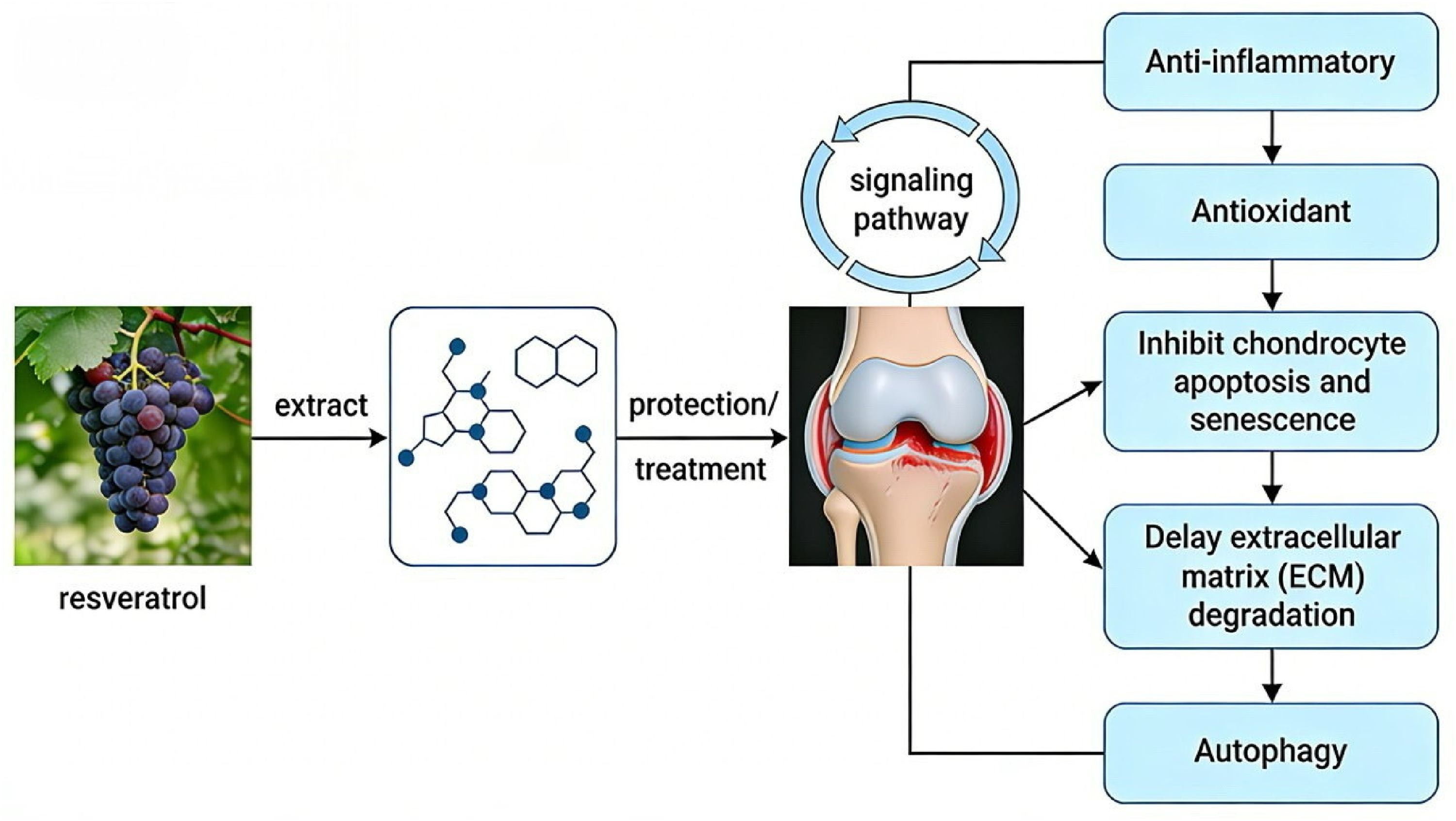
Graphical abstract.
Methods
This article presents a narrative review aimed at synthesizing current knowledge on the mechanisms of resveratrol in cartilage injury repair and protection. A comprehensive literature search was performed using the PubMed, Scopus, and Web of Science databases through December 2025. The search strategy included combinations of the following keywords: “Resveratrol,” “Osteoarthritis,” “Cartilage Injury,” “Mechanism,” “Signaling Pathway,” “Anti-inflammatory,” “Antioxidant,” “Apoptosis,” “Autophagy,” and “Extracellular matrix.” Boolean operators (AND, OR) were applied to refine the search.
Given the narrative nature of this review, no formal systematic review protocol was registered, and no Population Intervention Comparison Outcome Setting (PICOS) framework was applied. This narrative review was guided by the Scale for the Assessment of Narrative Review Articles. 5 However, to ensure transparency and reproducibility, the following inclusion criteria were used: (a) peer-reviewed original research articles, systematic reviews, or meta-analyses; (b) studies investigating the molecular mechanisms, pharmacological effects, or therapeutic potential of resveratrol in cartilage-related pathologies; (c) in vitro, in vivo, or clinical studies; (d) English-language publications; and (e) no date restrictions to capture the full evolution of the field. Studies were selected based on their relevance to the core mechanistic themes of this review, including inflammation, oxidative stress, apoptosis, autophagy, extracellular matrix (ECM) metabolism, and associated signaling pathways. Due to the expert-driven synthesis approach, formal quality assessment tools (e.g. Grading of Recommendations, Assessment, Development and Evaluations (GRADE)) were not applied; however, the level of evidence is noted where appropriate throughout the manuscript.
Protective mechanisms of resveratrol in cartilage injury
Anti-inflammatory effects
When the body is affected by chronic inflammation, increased levels of heat shock proteins attempt to protect tissues from inflammation-induced damage. 6 When necessary, medications can be added to assist treatment, as lycopene reduces oxidative stress and inflammation to alleviate antibiotic toxicity. 7 Chronic inflammation is a key driver of cartilage degeneration. Resveratrol effectively inhibits inflammatory responses through multiple pathways.
Inhibition of the NF-κB pathway. NF-κB is a master regulatory of inflammatory responses. Resveratrol inhibits the activation and nuclear translocation of NF-κB, thereby downregulating the expression of various proinflammatory factors (e.g. TNF-α, IL-1β, IL-6, and IL-8), directly mitigating the inflammatory damage to chondrocytes. 4
Modulation of the Nrf2/HO-1 pathway: Resveratrol can activate the nuclear factor erythroid 2-related factor 2 (Nrf2) pathway, upregulating the expression of antioxidant enzymes such as heme oxygenase-1 (HO-1). Activation of Nrf2 not only counteracts oxidative stress but also “cross-talks” with the NF-κB pathway, generating anti-inflammatory effects. 8
Antioxidant stress
Oxidative stress leads to chondrocyte apoptosis, mitochondrial dysfunction, and oxidative damage to ECM components.
Scavenging reactive oxygen species (ROS). Resveratrol itself possesses direct free radical scavenging capacity. 9
Enhancing endogenous antioxidant defenses. By activating pathways such as SIRT1 and Nrf2, resveratrol upregulates the activity of endogenous antioxidant enzymes, including superoxide dismutase (SOD) and glutathione peroxidase (GSH-Px), thereby enhancing chondrocyte resistance to oxidative damage. 10
Inhibition of cyclooxygenase-2 (COX-2): Resveratrol prevents catabolic effects and chondrocyte apoptosis induced by IL-1β by inhibiting mitochondrial membrane depolarization and ATP depletion. Part of the beneficial effects of resveratrol are attributed to its inhibition of COX-2-derived PGE.
In accordance with hormesis, resveratrol displays biphasic dose-response effects by activating the Nrf2 pathway at low doses, resulting in the upregulation of antioxidant vitagenes. Similar effects have been observed for heme oxygenase-1 upregulation by Hidrox or curcumin and for Sirtuin-1 activation by resveratrol, which inhibits ROS overproduction, microbiota dysfunction, and neurotoxic damage. 11
Inhibition of chondrocyte apoptosis and senescence
Excessive apoptosis and senescence (cellular aging) of chondrocytes under pathological conditions are important causes of reduced chondrocyte numbers and functional decline.
Inhibition of chondrocyte apoptosis
Antiapoptosis: Resveratrol can reduce chondrocyte apoptosis by upregulating antiapoptotic proteins (e.g. Bcl-2), downregulating pro-apoptotic proteins (e.g. Bax), and inhibiting caspase-3 activity. 12
Inhibition of chondrocyte senescence (anti-aging)
Antisenescence: Resveratrol is a well-known activator of SIRT1. 13 The deacetylase activity of SIRT1 can delay cellular senescence, promote the clearance of senescent cells, and maintain chondrocyte homeostasis and function. 14
Delaying ECM degradation
Cartilage function relies on an intact ECM, which primarily consists of collagen, proteoglycans, glycoproteins, and water, providing structural support and nutrition for chondrocytes. 15 Research has reported that an injectable resveratrol thermosensitive hydrogel protects articular cartilage from degradation and reduces joint damage caused by mechanical stress via the SIRT1/ HIF1α/MMP13 pathway. Resveratrol activates SIRT1 by suppressing HIF1α nuclear shuttling, thereby promoting chondrocyte proliferation and reducing hypertrophy. 16
Inhibition of matrix-degrading enzymes. Resveratrol significantly inhibits the expression of matrix metalloproteinases (MMPs; e.g. MMP-1, MMP-3, and MMP-13) and a disintegrin and metalloproteinase with thrombospondin motifs (ADAMTS) induced by inflammatory factors such as IL-1β. 17 These enzymes play key roles in the degradation of type II collagen and proteoglycans.
Promotion of matrix synthesis. Concurrently, resveratrol promotes the synthesis of type II collagen and aggrecan by chondrocytes, thereby maintaining the balance between ECM synthesis and degradation.
Regulation of autophagy
Autophagy is a vital process through which cells degrade and recycle damaged components to maintain intracellular homeostasis. In OA, the level of autophagy in chondrocytes declines. 18
Activation of autophagic flux. Resveratrol can enhance chondrocyte autophagic activity by activating the SIRT1 and AMPK pathways. Moderate autophagy helps clear damaged proteins and organelles and provides energy for cells, thereby protecting chondrocytes from stress-induced damage and delaying OA progression. 19
Regulation of related signaling pathways
SIRT1 pathway. SIRT1 is the most established target of resveratrol. Activation of SIRT1 mediates multiple effects of resveratrol, including anti-inflammatory, antioxidant, antisenescence, and pro-autophagy activities. Within the epigenetic regulatory axis, sirtuins govern macrophage immune phenotypes through the coordinated regulation of DNA methylation, histone modification, and noncoding RNA expression. Resveratrol can modulate epigenetic patterns by altering the levels of S-adenosylmethionine and S-adenosylhomocysteine or by regulating enzymes that catalyze DNA methylation and histone modifications. It also activates sirtuin deacetylases and regulates oncogenic and tumor-suppressor micro-RNAs.
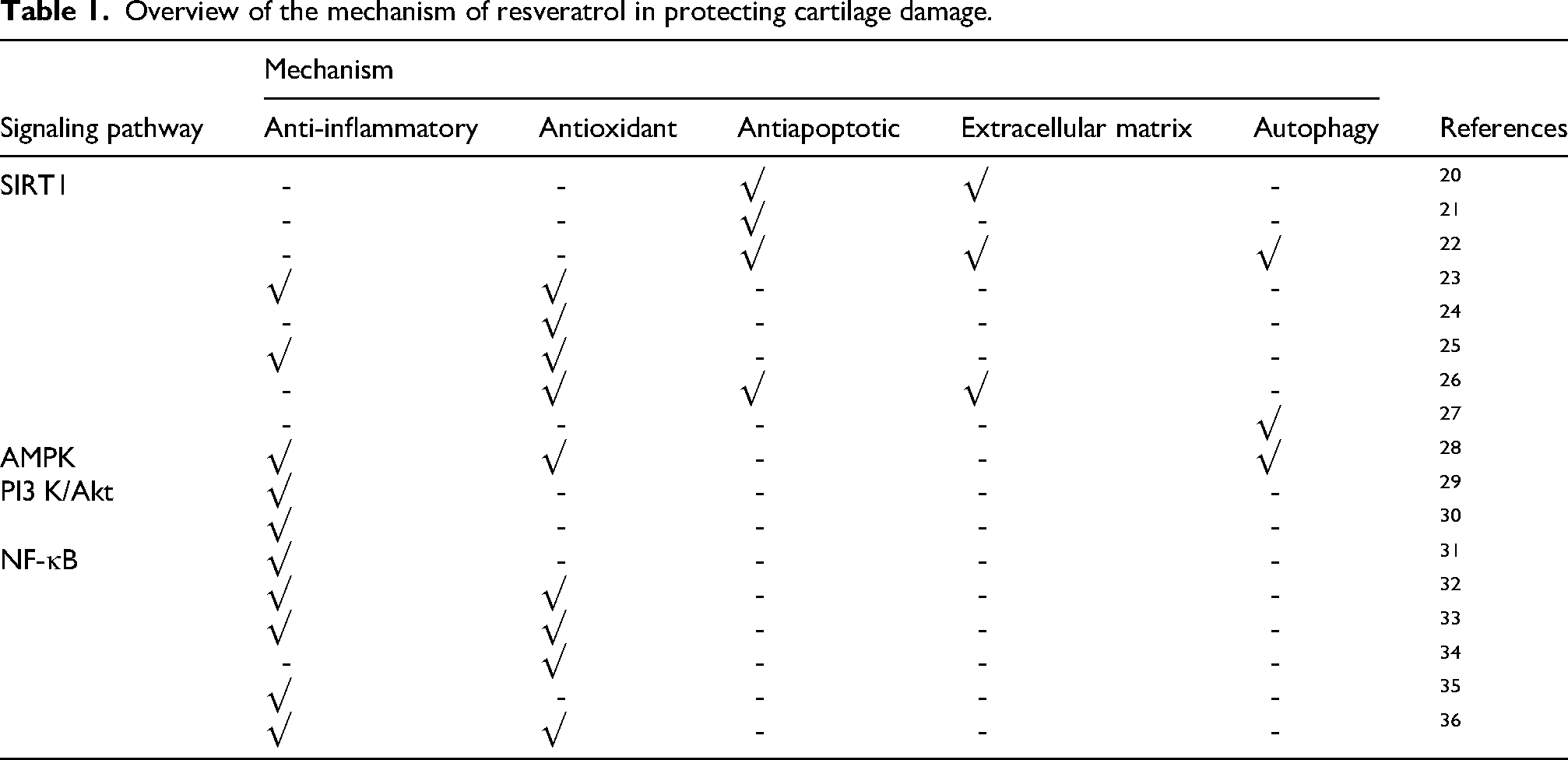
Resveratrol (25 μM) activated SIRT1, inhibited the Wnt/β-catenin signaling pathway, restored ECM homeostasis (type II collagen ↑, TIMP1 ↑), and mitigated HT-2 toxin-induced chondrocyte injury. 20 Resveratrol also activated SIRT1, inhibited the Wnt/β-catenin signaling pathway, and improved the proliferation and subsequent chondrogenic differentiation of mesenchymal stem cells (MSCs). 21 Furthermore, resveratrol (50 μM/mL) activated SIRT1/FOXO1 signaling, promoted chondrocyte autophagy, increased the expression of SOX9 and aggrecan, and inhibited chondrocyte apoptosis and matrix degradation, thereby protecting chondrocytes from IL-1β-induced damage. 22 Resveratrol activated SIRT1, inhibited p65 acetylation, suppressed NF-κB nuclear translocation, and reduced inducible nitric oxide synthase (iNOS) expression and nitric oxide (NO) production, thereby protecting articular chondrocytes from IL-1β-induced inflammatory responses. 23 Resveratrol also activated SIRT1, inhibited NF-κB expression, and suppressed the production of COX-2, MMP-1, MMP-3, MMP-13, and prostaglandin E2 (PGE2) in TNF-α-induced human chondrocytes. 24 In addition, resveratrol activated SIRT1 and inhibited hypoxia-inducible factor-2α (HIF-2α), leading to reduced iNOS and MMP-13 expression in osteoarthritic cartilage and preventing cartilage destruction. 25 Resveratrol activated SIRT1 and regulated chondrocyte apoptosis and ECM degradation through the Wnt/β-catenin signaling pathway. Bax, procaspase-3 and -9, MMP1, MMP3, MMP13, Wnt3a, Wnt5a, Wnt7a, and β-catenin were significantly inhibited, whereas Bcl-2 levels were significantly increased in chondrocytes treated with 10 μM resveratrol. 26 SIRT1 and LOX-1 protein expression were negatively correlated in OA chondrocytes. SIRT1 regulates LOX-1 expression through NF-κB deacetylation, and resveratrol enhanced SIRT1 enzymatic activity, leading to LOX-1 downregulation and autophagy induction. These findings suggest indicate that SIRT1 regulates lipid homeostasis by modulating LOX-1 expression. 27
AMPK pathway. Resveratrol can also activate AMPK, which plays a central role in regulating energy metabolism, suppressing inflammation, and inducing autophagy. Resveratrol treatment increased the expression of ULK1, Beclin1, LC3, HIF-1α, phosphorylated AMPK, collagen type II α1 chain, and aggrecan, while decreasing the expression of HIF-2α, phosphorylated mTOR, MMP13, and ADAMTS5. Intra-articular injection of resveratrol delayed articular cartilage degeneration and promoted chondrocyte autophagy in a surgically induced DMM OA model, partly by balancing HIF-1α and HIF-2α expression and thereby regulating the AMPK/mTOR signaling pathway. 28
PI3 K/Akt pathway. Activation of Akt by resveratrol is context-dependent. Studies have shown that resveratrol may exert anti-osteoarthritic effects and possess preventive potential in OA by inhibiting TLR4 through activation of the mTOR/PI3 K/Akt signaling pathway. 29 Resveratrol and exercise regulate autophagy through key molecular pathways, including AMPK/mTOR and PI3 K/Akt. IL-1β treatment increased TLR4/NF-κB expression and elevated PI3K/Akt and FoxO1 phosphorylation, whereas additional resveratrol further upregulated phosphorylated PI3 K/Akt and FoxO1 while downregulating TLR4 signaling in SW1353 cells. Further analyses demonstrated that TLR4 activation induced PI3 K/Akt phosphorylation, thereby increasing FoxO1 phosphorylation and inactivation. 30
NF-κB pathway—a core inhibitory target. Studies have shown that IL-1β-induced IL-6 secretion activates NF-κB in chondrocytes, which subsequently activates STAT3 protein in macrophages. Furthermore, STAT3 positively regulates IL-6 secretion, creating an IL-1β-induced inflammatory amplification loop. Resveratrol strongly inhibited the secretion of proinflammatory markers. The reduction in IL-6 secretion depended on NF-κB inhibition in chondrocytes, and the resulting decrease in IL-6 levels limited STAT3 activation in macrophages, thereby interrupting the inflammatory amplification loop. 31 After Res treatment, the relative protein expression levels of NF-κB1, IL-6, MMP-13, and caspase-3 were significantly increased, and chondrocyte growth rate was significantly enhanced. 32 Experimental evidence also indicates that resveratrol inhibited the expression of VEGF, MMP-3, MMP-9, and COX-2 in IL-1β-stimulated human articular chondrocytes, and these gene products are regulated by NF-κB. 33 Studies further demonstrated that resveratrol inhibited AGEs-induced iNOS and COX-2 expression, as well as NO and PGE2 production. These effects were likely mediated through inhibition of the AGE-induced IKK-IκBα-NF-κB and JNK/ERK-AP-1 signaling pathways. By targeting these pathways, resveratrol reduced AGEs-stimulated MMP-13 expression and activity and prevented type II collagen destruction. 34 We found that resveratrol prevented the IL-1β-induced decline in cell viability; stimulating chondrocytes with IL-1β led to significant upregulation of TLR4 and its downstream targets MyD88 and TRAF6, leading to NF-κB activation and increased the synthesis of IL-1β and TNFα. These IL-1β-induced inflammatory responses were effectively reversed by resveratrol. 35 In OA rats treated with resveratrol, the protein expression of iNOS, NF-κB, phosphorylated AMPK, and sirtuin 1+ was significantly inhibited, whereas the protein expression of HO-1 and Nrf-2 was enhanced. These findings indicate that resveratrol alleviates inflammatory damage and protects against OA through the NF-κB and HO-1/Nrf-2 signaling pathways. 36
Resveratrol plays an important role in cartilage protection and repair through its potent antioxidant, anti-inflammatory, and antiapoptotic properties. Its effects are not mediated through a single pathway but through a complex signaling network, in which AMPK, SIRT1, Nrf2, and PI3 K/Akt serve as core nodes that coordinately regulate and inhibit NF-κB, a central hub of proinflammatory and catabolic signaling, as detailed in Table 1 and Figure 2. However, most of these studies have used different cell/animal models, concentrations, and treatment durations, increasing the research heterogeneity of the research. The lack of standardized protocols remains a major limitation.
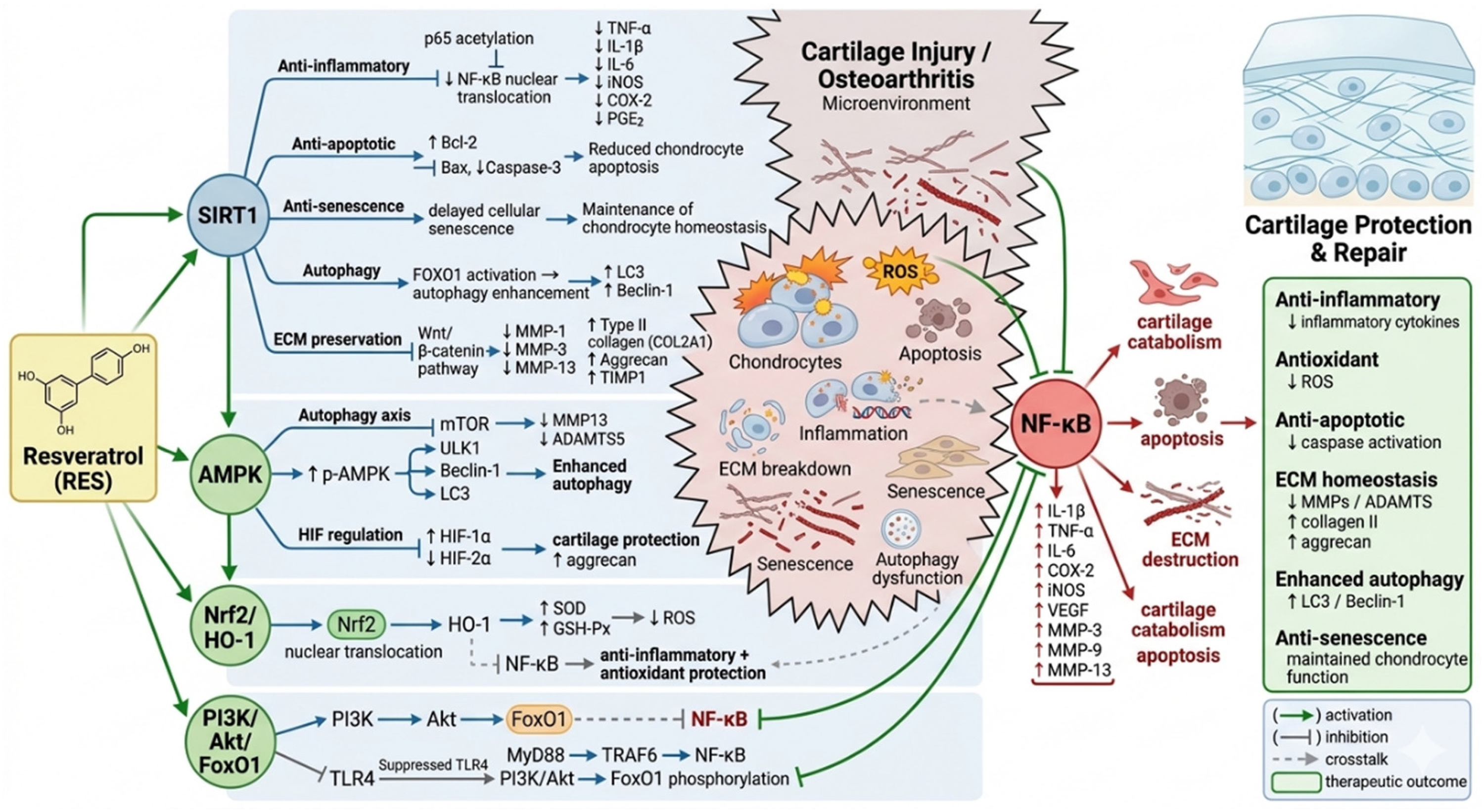
Technical roadmap for the mechanism of resveratrol in protecting cartilage damage.
Overview of the mechanism of resveratrol in protecting cartilage damage.
Regulation of ferroptosis
Osteoarthritis (OA) is a common chronic degenerative joint disease in orthopedics, and ferroptosis is a newly identified mode of cell death implicated in OA. 37 Resveratrol ameliorates OA by modulating autophagy and ferroptosis through GPX4, TFRC, SLC7A11, EGFR, and IL1B, according to a mechanistic study. 38 The concept of the gut–joint axis, including gut microbes and their metabolites, suggests that OA 39 progression may be linked to local and systemic inflammation, thereby facilitating cartilage degradation. Resveratrol shows promise by simultaneously modulating gut–joint signaling and suppressing ferroptosis, potentially promoting intestinal barrier recovery and chondrocyte rescue. 40
Network integration of core signaling nodes
As illustrated in our proposed schematic (Figure 2), AMPK, SIRT1, Nrf2, and PI3 K/Akt do not function in isolation but act as interconnected core nodes that coordinately suppress NF-κB signaling, thereby exerting chondroprotective effects. SIRT1 directly inhibits NF-κB activity by deacetylating the p65 subunit, blocking its nuclear translocation and subsequent transcription of proinflammatory mediators (TNF-α, IL-1β, IL-6, iNOS, and COX-2). Concurrently, SIRT1 exerts indirect protective effects by promoting antiapoptotic (upregulation of Bcl-2 and downregulation of Bax/caspase-3), antisenescence, and autophagy-enhancing (via FOXO1 activation) pathways, all of which counteract the proinflammatory, pro-apoptotic, and catabolic microenvironment driven by NF-κB in osteoarthritic cartilage. The AMPK pathway forms a synergistic feed-forward loop with SIRT1. AMPK activation promotes SIRT1 activity, reinforcing its inhibitory effects on NF-κB. Independently, activated AMPK (p-AMPK) enhances autophagy through ULK1, Beclin-1, and LC3 signaling, thereby attenuating NF-κB-mediated inflammation, extracellular matrix (ECM) degradation (via reduced MMP-13 and ADAMTS5 expression), and apoptosis. AMPK also regulates HIF-1α/2α to maintain cartilage homeostasis, further opposing the NF-κB-driven pathological cascade. The Nrf2/HO-1 pathway contributes to NF-κB suppression through dual mechanisms. First, Nrf2 nuclear translocation induces the expression of antioxidant enzymes (HO-1, SOD, and GSH-Px), which scavenge ROS, a critical upstream trigger of NF-κB activation. Second, activated Nrf2 directly antagonizes NF-κB signaling, creating a negative feedback loop in which reduced ROS levels further diminish NF-κB activity. Finally, the PI3 K/Akt/FoxO1 pathway inhibits NF-κB through two distinct routes: 1. PI3 K/Akt activation modulates FoxO1, which directly suppresses NF-κB transcriptional activity. 2. The pathway inhibits the TLR4/MyD88/TRAF6 signaling axis, a major upstream initiator of NF-κB activation, thereby blocking NF-κB signaling at the receptor level.
Collectively, these pathways form a multilayered regulatory network: SIRT1 and AMPK synergistically inhibit NF-κB at multiple levels, Nrf2 counteracts NF-κB by reducing oxidative stress, and PI3 K/Akt blocks NF-κB activation at both upstream and downstream checkpoints. This coordinated suppression of NF-κB leads to the observed therapeutic outcomes, including anti-inflammatory, antioxidant, antiapoptotic, ECM-preserving homeostasis, autophagy-enhancing, and antisenescence effects in chondrocytes.
Delivery and combination therapy strategies for resveratrol
The poor water solubility, low bioavailability, and rapid metabolism of resveratrol limit its clinical application. 41 To address these limitations, researchers have developed various strategies:
Nanodelivery systems. Encapsulating resveratrol in nanocarriers such as nanoparticles and liposomes can improve its stability, targeting ability, and retention time within the joint. These systems enhance the bioavailability of the active compound, improve drug delivery to sites of inflammation, enable controlled drug release, and facilitate the co-delivery of active ingredients or therapeutic agents to enhance efficacy. 38
Hydrogel-based drug loading. Loading resveratrol into injectable hydrogels enables its sustained release and prolonged effects at the injury site. One study developed an injectable composite consisting of a hydrogel and a chondroitin sulfate@resveratrol liposome package (Gel/Lip@Res + Chs). This injectable hydrogel, based on phenylboronic acid-modified hyaluronic acid (HAPBA) and polyvinyl alcohol (PVA), possesses ROS-responsive degradation properties and sustained drug release behavior. It effectively clears ROS, promotes macrophage repolarization, and reduces the expression of inflammatory mediators and matrix-degrading enzymes *in vitro*. Due to prolonged drug retention within the joint cavity, Gel/Lip@Res + Chs treatment effectively inhibited cartilage degeneration and increased cartilage matrix synthesis, thereby slowing OA progression. 42
Combination with other drugs. Studies have found that combining resveratrol with other natural products such as curcumin and epigallocatechin gallate (EGCG), or with conventional drugs such as diacerein, can produce synergistic effects. The optimal in vivo formulation combining of tetramethylpyrazine, resveratrol, and curcumin at equal mass ratios provides a novel and potent therapeutic approach for acute and chronic inflammation. 43
Challenges and future perspectives
Despite ample preclinical evidence, translating resveratrol into a clinically effective chondroprotective agent remains challenging.
Bioavailability
Developing novel and efficient delivery systems is key to advancing the clinical application of resveratrol.
Optimal dosage and treatment regimen
The optimal effective dose and administration schedule of resveratrol for different disease stages (early-, middle-, and late-stage OA) and different etiologies of cartilage injury require further clarification.
Clinical evidence
High-quality human clinical evidence remains limited. More large-scale, randomized, double-blind, placebo-controlled clinical trials are needed to validate the efficacy and safety of resveratrol.
Traditional Chinese medicine (TCM) bioactive compounds and their chondroprotective effects
Numerous TCM-derived metabolites, including flavonoids, polyphenols, saponins, alkaloids, and polysaccharides, exhibit chondroprotective effects in preclinical OA models by regulating inflammatory mediators, oxidative stress, cartilage matrix degradation, chondrocyte apoptosis and senescence, macrophage polarization, ferroptosis, and gut microbiota composition. These compounds act through pathways such as NF-κB, PI3 K/Akt/mTOR, and Wnt/β-catenin, reflecting their multitarget mechanisms of action. Notably, compounds such as quercetin and resveratrol are ubiquitous plant metabolites rather than compounds unique to TCM and provide valuable insights into structure activity relationships. 44
Comparison with other chondroprotective agents
Compared with other commonly used chondroprotective agents, resveratrol exhibits distinct advantages and limitations. Unlike glucosamine and chondroitin, which primarily support extracellular matrix synthesis with limited anti-inflammatory potency, resveratrol acts as a multitarget polyphenol that concurrently suppresses inflammation, oxidative stress, and apoptosis while promoting autophagy through the AMPK, SIRT1, Nrf2, and PI3 K/Akt pathways. It is particularly notable as a potent SIRT1 activator, providing antisenescence and metabolic regulatory benefits that are rarely reported for traditional chondroprotective agents. Relative to curcumin, another natural polyphenol, resveratrol may demonstrate a favorable safety profile and oral tolerability at therapeutic doses. However, its clinical translation is hindered by poor water solubility, rapid hepatic metabolism, and extremely low systemic bioavailability (<1%), whereas glucosamine and chondroitin have more established oral absorption and clinical safety profiles. In addition, while most alternative agents focus on symptomatic relief or matrix support, the complex network regulation exerted by resveratrol may require higher or more frequent dosing. Its long-term efficacy in large-scale OA cohorts also remains to be validated.
Conclusion
In conclusion, extensive preclinical studies indicate that resveratrol plays a significant protective role in cartilage injury through its multifaceted pharmacological actions, including potent anti-inflammatory, antioxidant, antiapoptotic, pro-autophagy, and ECM homeostasis-maintaining effects. These effects are primarily mediated through the regulation of key signaling pathways, including SIRT1, NF-κB, Nrf2, and AMPK. Despite challenges related to bioavailability and clinical translation, advances in delivery technologies and more in-depth clinical research suggest that resveratrol and its derivatives or delivery systems hold promise as prospective natural agents or nutritional supplement strategies for the prevention and treatment of cartilage injury and related joint diseases.
Limitations
This review has several limitations inherent to its narrative methodology. First, the absence of a systematic search protocol and formal quality assessment tools (such as GRADE) may introduce selection bias in the identification and interpretation of studies. Second, the included studies exhibit considerable heterogeneity in terms of experimental models (e.g. animal species and cell lines), resveratrol concentrations, treatment durations, and outcome measures, which limits the comparability of findings and precludes meta-analytic synthesis. Third, although the molecular mechanisms of resveratrol have been extensively characterized in preclinical settings, high-quality clinical evidence remains scarce, and the translational relevance of many findings has yet to be validated in human studies. Fourth, most studies report short-term outcomes, leaving questions regarding the long-term efficacy and safety of resveratrol in cartilage repair unanswered. Finally, despite efforts to provide a balanced synthesis, the narrative format may inherently reflect the authors’ perspective, and some relevant studies may have been inadvertently omitted. Future research should prioritize standardized protocols, long-term clinical studies, and the development of advanced delivery systems to enhance the translational potential of resveratrol-based therapies.
Footnotes

Author contributions
Funding
The authors disclosed receipt of the following financial support for the research, authorship, and/or publication of this article: This study was supported by Shenyang Science and Technology Plan, Public Health Research and Development Special Fund (Joint Fund) in 2024, number 24-214-3-132 (Sheng Li). This research funding comes from the Basic Research Project of Liaoning Provincial Department of Education in 2024, LJ212410164009, 2024.9.1–2026.9.1 (Sheng Li).
Declaration of conflicting interests
The authors declare that they have no competing interests.
Declaration of generative AI and AI-assisted technologies in the writing process
Artificial intelligence improves language.