







Abstract

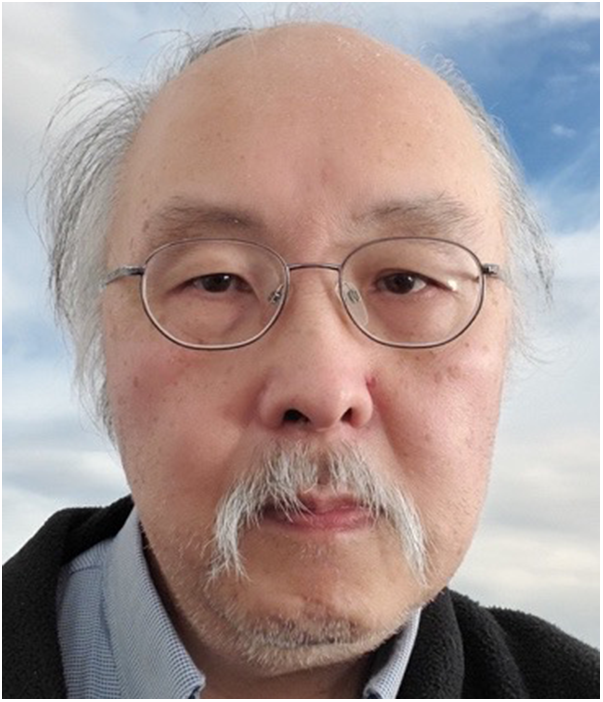
The conundrum of how we improve our research domain has been pondered on by us all, on more than one occasion. Do we need more Open Access? More conferences? Perhaps, smaller but specialised conferences? Maybe, we need larger, multidisciplinary research teams, or rather small, but highly specialised teams? Could access to coffee rooms for more scientific discussion be a necessary condition (Verstraten, 2025)? Albeit each of these suggestions can be plausibly justified.
There was an individual who had a vision that accelerated our field possibly more than anything else, Hoover Chan. Hoover only published one paper in Perception (Cogan et al., 1984), and was never a member of our editorial board, and therefore would not typically be considered for an obituary. However, this icon was more than just instrumental for many of our esteemed authors.
Hoover was Peter Kaiser's successor as the curator of the worldwide mailing list ‘CVNet’ (for
Over the years, I had several interactions with Hoover, mostly about the transfer of information. Perhaps I was too lazy to locate or read the posting instructions. Other exchanges expressed my occasional frustration with CVNet. Hoover and I were also friends on social media, where I once posted my annoyance with the discussion surrounding ‘the dress’. Particularly about the excessive number of emails that followed. Hoover recommended I change my subscription to the daily digest version of CVNet, which I did and still do. It made my life better. Hoover always strived to make CVNet beneficial for all.
At the beginning of 2025, a group of international colleagues wanted to recognise Hoover's contributions by nominating him for the Nakayama Medal. As it turned out, an honorary acknowledgement of some sort was previously recommended already many years ago. However, for reasons unknown, it never crystallised. Incidentally, or maybe fate, one person who was added in the discussion happened to be on the board of the Vision Sciences Society (VSS), and this colleague told us that there would be a special announcement soon, VSS had the same idea. Clearly, the time finally was right! A few months later it was announced that Hoover received a well-deserved VSS 25th Anniversary Lifetime Service Award.
Sadly it also coincided with the end of his time on earth; he died soon after at the age of 69. Several comments from many colleagues on Hoover's CVNet expressed the importance of appreciation and recognition. Exceptional work in our field that falls outside of the generally accepted performance indicators should not be overlooked; rather, appreciation and respect should be expressed much earlier. Let this be a lesson for all of us.
I can only hope that Hoover enjoyed the announcement of the award and knew that he had made a significant difference to our field that was highly appreciated. And what a difference he made! Rest in Peace, Hoover, friend of all perception scientists.
Footnotes
Acknowledgments
I thank Pascal Mamassian, Isabelle Mareschal, Tim Meese, Annabelle Redfern, Renèll Rodrigues, and Christopher Tyler for their help and suggestions.
Declaration of Conflicting Interests
The author(s) declared no potential conflicts of interest with respect to the research, authorship, and/or publication of this article.
Funding
The author(s) received no financial support for the research, authorship, and/or publication of this article.
