







Abstract
Although climate change has been recognized as a “threat multiplier,” its specific effects on conflict-affected areas remain underexplored. This study investigates the nexus between climate change and violent conflict within the “fragile geography” of Balochistan, Pakistan’s largest province. Balochistan’s increasingly fragmented security landscape and recurring natural disasters, notably the 2022 floods, provide a pertinent background for examining the interplay between climate change and violent conflict. A qualitative approach was employed, whereby interviews and group discussions were conducted in two Balochistan districts. The analysis revealed that weak institutional capacity, deep-rooted socioeconomic and political inequalities, and notably, “migration patterns” are critical variables influencing the dynamic interplay between climate change and violent conflict in the region. By analyzing the vulnerabilities inherent in Balochistan’s diverse physiography, this study illuminates how climate change exacerbates violent conflict in a region already beset by instability, highlighting the urgent need for a more nuanced understanding to address these complex challenges.
Introduction
Climate change is a recognized “threat multiplier.” However, as Buhaug and von Uexkull (2021) highlight, the specific effects of climate events in conflict-ridden areas are less understood. Understanding the concurrence of these crises is crucial as it has broader implications for the preparedness and capacity of local communities and governments to manage environmental impacts effectively (Petrova & Rosvold, 2024). The ongoing legacy of past armed conflicts also affects the capacity to adapt to climatic changes (Barnett, 2006). Therefore, this study focuses on the effects of extreme climate on non-traditional security threats in conflict-affected areas to bridge the knowledge gap, address the compounded vulnerabilities and challenges faced by these communities, and inform more effective and targeted adaptation and mitigation strategies.
The conceptualization of climate change as a non-traditional security threat remains fluid. For example, Cook et al. (2016) sought to define the concept in terms of levels of governance, sites of legitimacy and insecurity, and attendant policy processes. This characterization is particularly relevant for understanding climate-induced disasters and their interaction with the contexts prevalent in fragile and vulnerable states. The International Monetary Fund (IMF) highlights the challenges faced by states caught in a “fragility trap,” 1 referring to cycles of low administrative capacity, political instability, conflict, and weak economic performance, which are challenging to overcome (Akanbi et al., 2021).
In this context, Balochistan, Pakistan’s largest yet least populous province, provides a compelling case for examining the climate–conflict nexus. Considered the most “fragile” province, Balochistan endures cyclical conflicts and persistent political infighting, with deep-rooted fault lines remaining largely unaddressed (Hasan, 2016). The province is trapped in a protracted cycle of social unrest and ethno-nationalist militancy fueled by ineffective governance, sociopolitical and economic inequalities, and unequal resource distribution (Shahab Ahmed, 2022; Salman & Ahmed, 2021; Turk et al., 2023; Saha & Chakrabarti, 2021). The ongoing insurgency, which began with the first Baloch uprising in 1948, unfolded in distinct phases—1958–1959, 1963–1969, and 1973–1977—culminating in the current iteration that began in 2005 (Jilani & Mujaddid, 2020; Rizwan et al., 2014). Data from the Uppsala Conflict Data Program (UCDP nd) indicate a significant escalation between 2004 and 2022, with 1,738 conflict-related fatalities recorded among the Pakistani government and Baloch separatist groups (see also Aziz, 2024; Ahmad Wani, 2019; 2021). These reported fatalities represent only a portion of the events, as many such incidents go unreported.
Local grievances in Balochistan include inadequate participatory development planning, marginal political representation, and exploitation of the province’s natural resources (such as oil, gas, and minerals) by the federal center. These issues contribute to acute underdevelopment, extreme poverty resulting from exclusionary policies, and alleged human rights violations by state security forces aiming to “control” dissent.
Besides these socioeconomic and political challenges, environmental conditions such as drought, aridity, and floods aggravate the situation, severely impacting food security and human welfare. Water scarcity renders a significant part of the province dependent on Karez-based irrigation systems and rainfall. 2 As the province with the lowest Human Development Index (HDI) in Pakistan, climate change is expected to intensify existing vulnerabilities (Civil Society Coalition for Climate Change, 2018; IOM 2023; Saad et al., 2024). Unprecedented flash floods in 2022 have worsened the fragile human security situation, causing massive damage to standing crops, livestock, and human settlements. Although the scale of the disaster severely affected provinces across Pakistan, its impact has been particularly grievous in areas with low social development indicators and extreme economic deprivation (Ali et al., 2022; Nanditha et al., 2023).
Viewed through the lens of climate change as a threat multiplier, the fragility of administrative and sociopolitical systems must be contextualized using the nature and frequency of past violent conflict cycles and the potential for recurrence. Spatial disparities and governance issues have long been argued to fuel the extended ethnic-nationalist violence in Balochistan (Mushtaq & Mirza, 2022).
Research Trajectory: Examining Climate Security in Balochistan
It is imperative to investigate the integration of climate security concerns within the sociopolitical and economic fabric of Balochistan from multifaceted perspectives. Additionally, exploring the dual threats of fragility, conflict, and violence (FCV) and climate-induced conflict is crucial. FCV risks relate to the response mounted by the state, people, and communities to tensions catalyzed by climate change in places with a history of violent conflict (Charbonneau et al., 2022). Such responses reflect the prevailing power structures and relationships embedded in local dynamics, given that climate variability may exacerbate pre-existing socioeconomic and political vulnerabilities and conditions with the potential to (re)trigger conflict.
Consequently, this study examines the interplay between climate change and “security” through key intervening variables such as governance, socioeconomic inequalities, and institutional fragility. In doing so, it aims to explore how key administrative and academic stakeholders conceptualize the constitutive nature of climate security praxis in Balochistan, scrutinizing the interaction between climate change and conflict. “Climate security,” as a concept for state officials and academic interlocutors, has normative and embodied implications for how security practices are enacted, questioned, and contested. In the context of FCV-impacted geographies such as Balochistan, representations and discourses on climate security are subject to two broad conceptual framings.
The first views climate-change-induced conditions through the lens of the “emissions question” (by the Global North), citing climate security as an isolated issue beyond an individual state’s capacity to tackle. Such framing tends to conflate the environmental damage caused by misgovernance and maladaptive development practices with climate-induced disasters, attributing both to “global emissions.” This, in turn, emphasizes “traditional” security praxis focused on engineering control by countering and forestalling “tangible” threats to state sovereignty in geographies impacted by climate change. Conversely, the second framing highlights the exclusory and dysfunctional structures underlying the uneven security distribution among communities subjected to changing climate conditions in FCV contexts. Consequently, it situates climate security at the nexus of traditional and non-traditional security praxis, with emergent threats potentially catalyzing pre-existing conflict variables and generating new ones.
To contextualize climate change as a threat multiplier, this study first delineates its relationship with conflict, subsequently analyzing the literature to elucidate the conceptualization of climate security and its influence on conflict dynamics. Building on these insights, it establishes theoretical foundations that position climate change as a non-traditional security concern. Furthermore, it examines how critical factors (such as ineffective institutions, social and political inequalities, governance challenges, and migration patterns) exacerbate pre-existing conflicts in Balochistan because of the impact of climate change. This discussion aims to enhance our understanding of the relationship between climate change and conflict variables, highlighting the need for further research and policy interventions to address climate security challenges in conflict-prone regions such as Balochistan.
Climate Change as a Threat Multiplier in Conflict-Ridden Contexts
Following the increased international focus on the dynamic interplay between conflict and climate change in the mid-2000s, the nature and scope of climate security emerged as a critical concern in both policy and academics. Charbonneau et al. (2022) discuss the pathways through which climate change and variability can be characterized as threat multipliers, tracing the impact of the climate crisis on the systemic fragility of selected governance mechanisms in the African region. These mechanisms are considered the product of a historical gradual process of consensus, collaboration, competition, and conflict, spread over the course of successive generations.
However, given the nature of the climate crisis, these gradual processes are subject to mounting strain vis-à-vis the need for accelerated transformations to ensure sustainability. This acceleration in institutional transformation is further compounded by a temporal disconnect between the immediate concerns of governance in fragile systems with a history of violent conflict, and the demands surrounding long-term planning, prevention, and fundamental systemic transformations necessitated by the climate crisis.
In contexts characterized by deep socioeconomic inequalities, limited essential state services, and weak integration with centralized state systems, climate impacts such as droughts, floods, water scarcity, and earthquakes can serve as catalysts, exacerbating existing insecurities and conflicts (Bell & Keys, 2016; Detges, 2017; Dutta et al., 2021; Ide et al., 2020, 2021). Thus, any analysis of the effects of climate crises in fragile contexts must be situated in its history, sociopolitical dynamics, and underlying power structures used to frame and manage pre-existing conflicts (Scheffran et al., 2012; Benjaminsen & Ba, 2019; Bøås and Strazzari 2020). Climate change does not subsume the core politico-historical dynamics that prompt high FCV risks in vulnerable territories. Rather, it prompts a closer examination of how power structures among the state and local communities shape these risks in conjunction with climate crises.
In light of this, the literature on climate security and attendant policy interventions may be broadly divided into two overarching approaches. The first, characterized by a focus on climate change as a threat multiplier, emphasizes causal explanations whereby climate change is seen as directly impacting national security, and thus carrying the risk of securitization driven by state-centric security responses (Busby, 2007). Here, themes such as resource scarcity, demographic changes, and environmental stresses are conducive to armed conflict (Homer-Dixon, 1999; Kaplan, 1994), with climate change acting as a “conflict catalyst” (Dion, 2016; Ivleva et al., 2019).
An alternative approach analyzes the impact of climate change on pre-existing socioeconomic and political conditions and vulnerabilities (Mach et al., 2019; Xie et al., 2022). It highlights the role of “indirect pathways,” whereby climate crises exacerbate structural incapacities (Barnett & Adger, 2007; Koubi, 2019). Most current literature agrees on the absence of direct effects between climate events and conflict, and prominent scholars have begun to explore intervening mechanisms, such as the role of livelihood conditions, agricultural production shocks (Eklund et al., 2022; Kogachi & Shaw, 2023; Roche et al., 2020; Vesco 2021), economic growth (Koubi et al., 2012), food insecurity (Rudolfsen, 2021; De Juan and Wegenast, 2020), water scarcity (Döring, 2020a), exclusionary political institutions (von Uexkull et al., 2016), and internal migration (Koubi et al., 2021; Linke et al., 2018; Petrova, 2021). Identifying these pathways is further combined with in-depth conflict analyses, given the understanding that while climate change can aggravate conflict variables, it does not necessarily lead to violent conflict (Buhaug, 2015). Although not central to this study, an expanding body of research has explored how climate change may foster opportunities for enhanced cooperation (Böhmelt et al., 2014; Döring, 2020b; Ide et al., 2023).
A key example illustrating this approach is climate-related migration, an adaptive mechanism for coping with changing climate conditions (Ahsan et al., 2022; Mallick & Schanze, 2020; Mobjork et al., 2020). 3 Community and policy responses to such migration, shaped by underlying governance mechanisms, are essential in determining the interplay between migration and conflict dynamics (Barnett & Adger, 2007). 4 Thus, an analysis of indirect pathways, as opposed to a direct causal approach, examines the state’s administrative capacity and provision of public services and goods in confluence with pre-existing social conflicts and needs of vulnerable territories. This introduces the possibility of a feedback loop, whereby the failure of fragile states to respond to climate variability worsens systemic vulnerabilities, reducing their capacity to resolve or prevent conflicts (Adger et al., 2014; Ndaruzaniye et al., 2010a, 2010b).
From floods in Pakistan and Afghanistan, landslides in Colombia, droughts in Chad, and the conflicts in these regions, communities often face natural disasters and violent conflicts simultaneously. Peters and Budimir (2016) noted that deaths from disasters—including those influenced by climate change—frequently occur in the world’s most fragile states (Peters, 2021). 5 While exposure to environmental hazards is a factor, the fragility of sociopolitical institutions amplifies vulnerability and exposure, thereby increasing the likelihood of disasters in such contexts.
Mechanisms of Conflict Driven by Climate Change
In this section, we delve into the two most pertinent pathways in our case study, examining how climate variability and extreme weather influence conflict outcomes. First, structural inequalities and the quality of governance shape the distribution and management of resources, often exacerbating conflicts where governance is weak. Additionally, we explore migration, since climate-induced mobilities can heighten tensions in migrant destinations, particularly when there are pre-existing disparities with the local population. This analysis aims to illuminate the complex interplay between environmental changes and sociopolitical dynamics, providing insights into potential conflict-mitigation strategies.
Weak Institutions and Sociopolitical Inequalities
Both quantitative and qualitative studies have highlighted the significance of the relationship between climate and conflict within political contexts. Although climate variability and environmental changes affect the availability of renewable natural resources, it is crucial to recognize that resource availability and scarcity dynamics are often shaped by governance approaches encompassing state bias, marginalization, exclusion, and dispossession. Therefore, considering the broader political context, researchers can better understand the complex interplay between climate, governance, and conflict dynamics (Barnett & Adger, 2007; Seter et al., 2018). For example, local and national governments can prevent or exacerbate violent conflicts by fueling existing grievances (De Juan and Pierskalla 2015; Wig & Tollefsen, 2016). Eck (2014) argues that weak state-level legal systems that fail to address social groups’ grievances are important conditions that motivate participation in conflicts in times of environmental scarcity. Similarly, Detges (2017) found that fragile state-citizen relations with ethnic discrimination and low trust in the head of the state play essential roles in the processes linking drought exposure and political violence.
Meanwhile, formal institutions such as law enforcement agencies (LEAs), judiciaries, and political systems, together with customary institutions and cultural norms, provide alternative solutions to violence when groups make competing claims for the same resource (Brosché & Elfversson, 2012; Elfversson, 2019; Petrova, 2022; Sarbahi & Koren, 2022; Wig & Kromrey, 2018). Absolute scarcity rarely occurs, as institutions can effectively mitigate the adverse social consequences of climate variability by providing economic support and social services (Bueno de Mesquita & Smith, 2017), investing in technological changes and innovations, and acting as administrative apparatuses to manage resources (Bogale & Korf, 2007; Linke et al., 2018). Biased and corrupt institutions and governance policies are closely related to more intense struggles over scarce resources, as these structures and policies either generate or fail to address social groups’ grievances (Benjaminsen et al., 2012; Eck, 2014). If one group expects a biased judgment in favor of the other, regardless of the crime, they may be less likely to seek help from formal institutions (Turner et al., 2012).
Migration
Recent research has highlighted the connection between climate-induced environmental changes and violent conflict, particularly emphasizing the role of migration patterns in this dynamic. This nexus has drawn heightened attention from policymakers and academics, as noted by Rigaud et al. (2018) and Clement et al. (2021). The suggested mechanisms propose that mobility might escalate the risk of conflict in migrant destinations, particularly if the influx exerts additional pressure on already scarce economic resources or if there are pre-existing ethnic tensions with the local population (Reuveny, 2007). However, Burrows and Kinney (2016) argue that migration flows do not inherently lead to conflict. Nonetheless, some studies indicate that changes in migration patterns, such as herders moving to regions with more water and pasture, can disrupt established resource-sharing practices or strain existing conflict-resolution mechanisms (De Juan, 2015). Consequently, traditional laws and practices may vary or prove inadequate, increasing the likelihood of conflict between immigrant pastoralists and other groups (Adano et al., 2012). Incidents of violence frequently occur in densely populated regions that boast significant concentrations of livestock and natural resources, including areas well sites (Detges, 2014). Notably, internal migration following extreme weather events has been associated with the onset of riots at the destinations. This correlation is particularly pronounced when influenced by the political leanings of the host population (Bhavnani & Lacina, 2015), or when there is political marginalization by the government (Cottier, 2018).
With the focus shifting from rural to urban environments, connections are being explored between climate events and social movements, including protests, strikes, and demonstrations. For instance, Koubi et al. (2021) found a positive link between these phenomena in Kenya, where forced relocations due to climate events stirred unrest. Similarly, Ash and Obradovich (2020) observed that the strain on public services following such events in Syria, coupled with governmental neglect, provoked public dissent. Kelley et al. (2015) highlighted how rapid urbanization in Syria exacerbated the pressure on economic and social services amidst government indifference and fueled political unrest. Conversely, others, such as Ide et al. (2021), either found no significant relationship between these factors, attributing this to the extreme marginalization and social exclusion of migrants, or point to the political regime as a crucial determinant.
Case Studies: Quetta and Gwadar
Balochistan is the largest of Pakistan’s provinces, covering 347,190 sq. km. and constituting 43.6% of the country’s total land area (Britannica, 2023). However, the population is the lowest among the provinces and highly clustered, partly because of the rugged terrain. According to the Pakistan Bureau of Statistics (2017), the population of Balochistan is 12.34 million, almost double that reported in the 1998 census (6.57 million). The population increase indicates an annual growth rate of 3.37% in 1998–2017. Most of the population lives in rural areas (8.93 million, 72.38%), whereas the urban population is 3.41 million (27.62%). Population growth trends must be further contextualized in light of demographic variables underlying ethnic and tribal distribution across the province, with Balochi-speaking groups shrinking from 61% to 55.6% across 21 districts (not including Quetta and Sibi) over a period of 19 years (Malik, 2013).
The decline and ensuing spike in the Baloch and Pashtun populations of the Quetta district may be attributed to conflict-induced displacement from neighboring districts and an influx of groups from Afghanistan. The major tribes in the province are the Baloch (52%), followed by the Pashtun (36%), with the remainder being Brahvis, Hazaras, Sindhis, Punjabis, and others (12%; Malik, 2013). Pashtuns are the majority in northern Balochistan, Brahvis dominate the center, and Baloch are concentrated in the south.
Quetta is the provincial headquarters and administrative nerve center of Balochistan. As the largest city in the province, the different ethnic and tribal settlements presented a promising site for examining the economic and sociopolitical concerns surrounding the climate–conflict–security nexus. Apart from local administrative offices, academic experts, and government officials, organizations such as the Center for Peace and Development, Youth Association for Development, Strengthening Participatory Organization, and Legends Society are also situated in Quetta, providing a unique opportunity to explore contextual dynamics associated with the climate–conflict nexus.
Key Demographic Features of Balochistan.
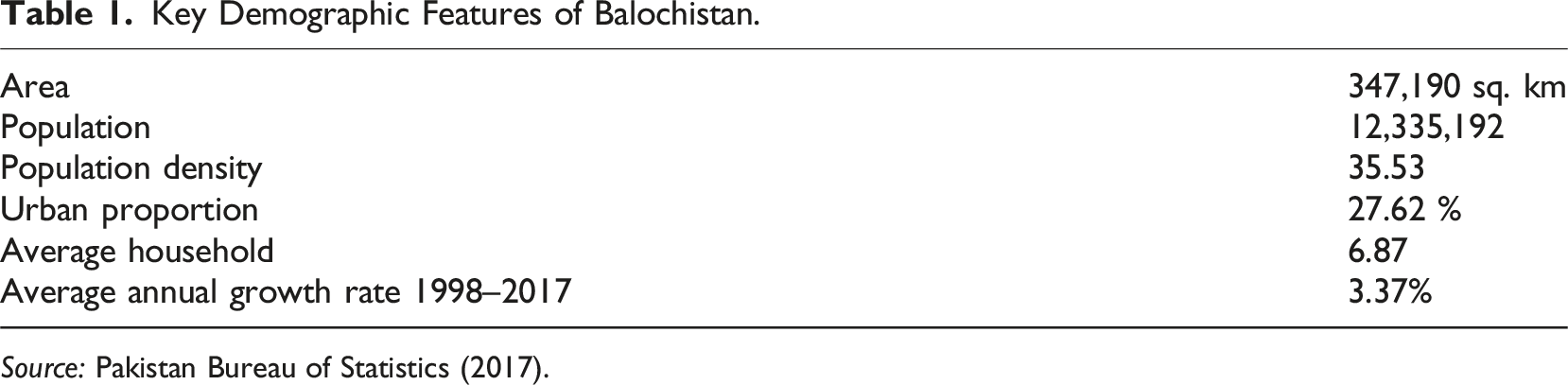
Source: Pakistan Bureau of Statistics (2017).
The population of Gwadar has also increased from 185,498 in 1998 to 262,253 in 2017, albeit at a lower rate of 1.84%. Site of the Gwadar Port, the China–Pakistan Economic Corridor’s flagship project, the district has prioritized infrastructure development headed by the Gwadar Development Authority (GDA), established in 2003. Poorly planned urbanization and the lack of a participatory approach to development have left old neighborhoods vulnerable to seasonal floods, with attendant consequences for planned urban expansion (Anees, 2022).
As per the Monsoon Contingency Plan 2018 provided on the Provincial Disaster Management Authority (PDMA) Balochistan’s official website, southern Balochistan remains acutely vulnerable to flash flooding triggered by torrential rainfall (PDMA 2018). The Turbat and Gwadar districts are identified as being most affected by this phenomenon, experiencing extensive damage to urban infrastructure, croplands, livestock, and water supply systems. The Plan further contains a hazard and risk analysis of Balochistan vis-à-vis natural disasters, categorizing Gwadar as “extremely vulnerable” to floods and earthquakes and “highly” vulnerable to drought. Quetta is assessed as having “moderate” vulnerability to drought and floods and “extremely high” vulnerability to earthquakes. Climate change has also affected sea surface temperature, marine creatures, and local fishermen, forcing coastal communities to migrate for shelter, survival, and economic opportunities. Gwadar has been the subject of protracted protests under the “Gwadar Rights Movement” led by Maulana Hidayat-ur-Rehman. The movement mobilized local communities to protect local “fishing rights” and resist the expansion of the Gwadar Port at the cost of local livelihood.
Furthermore, the sociopolitical landscape in Balochistan is characterized by heterogeneous variations in ethnic and tribal structures, evolving in the context of extreme poverty and underdevelopment. These structures adjust differently to the circumstances in their immediate vicinities, resulting in markedly contrasting tribal orders in the Makrani (Western) versus the Suleimani (Eastern) Baloch tribes. The Makran and Turbat divisions do not exhibit the Sardar-dominated tribal structure found in the Suleimani districts and rank higher in terms of development indicators such as literacy. In the Suleimani districts, the salience of the prevalent orders and their ties to a nascent centralized state apparatus must be gauged through the role of local political and tribal “elites” (Khan & Kasi, 2015; Pastner, 1971).
Socioeconomic Disparities Among Various Provinces of Pakistan.
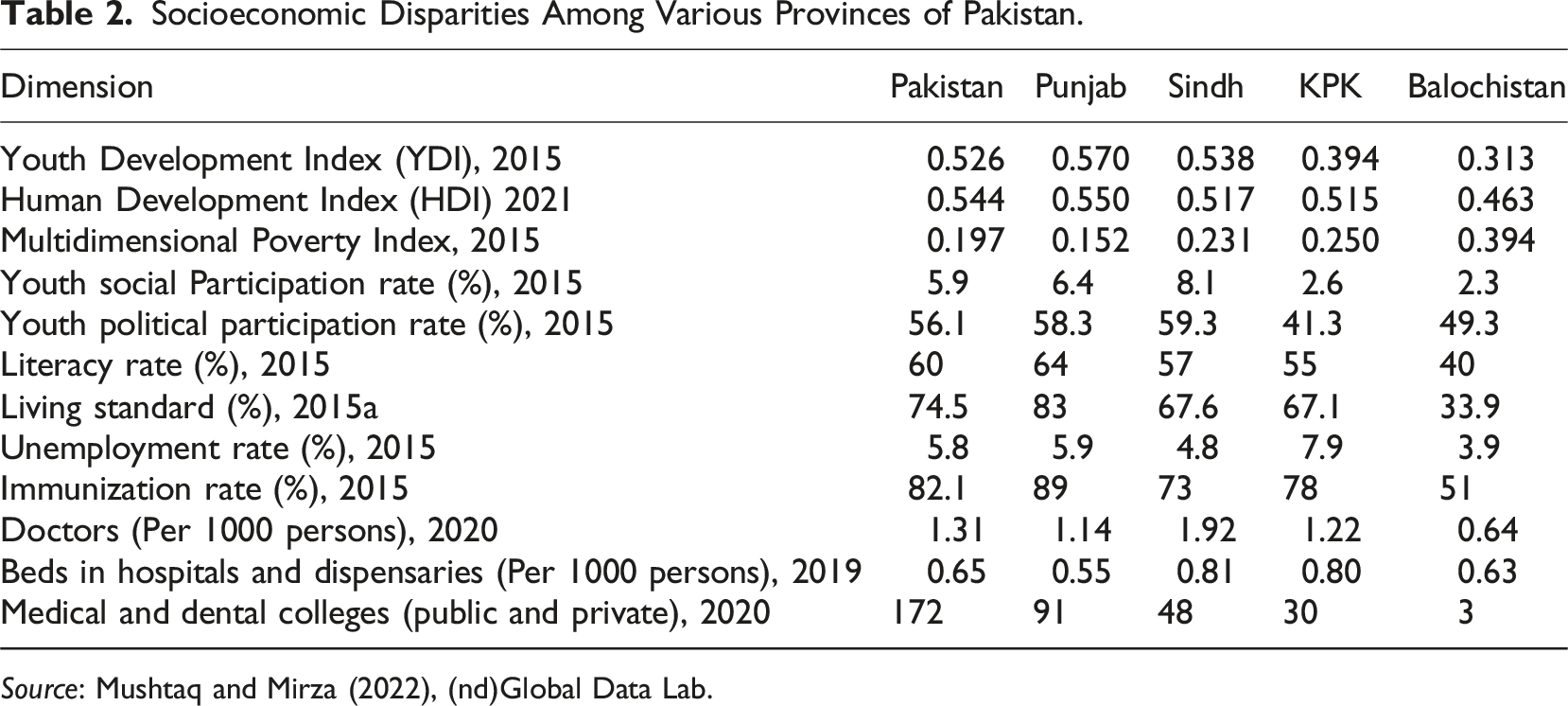
Source: Mushtaq and Mirza (2022), (nd)Global Data Lab.
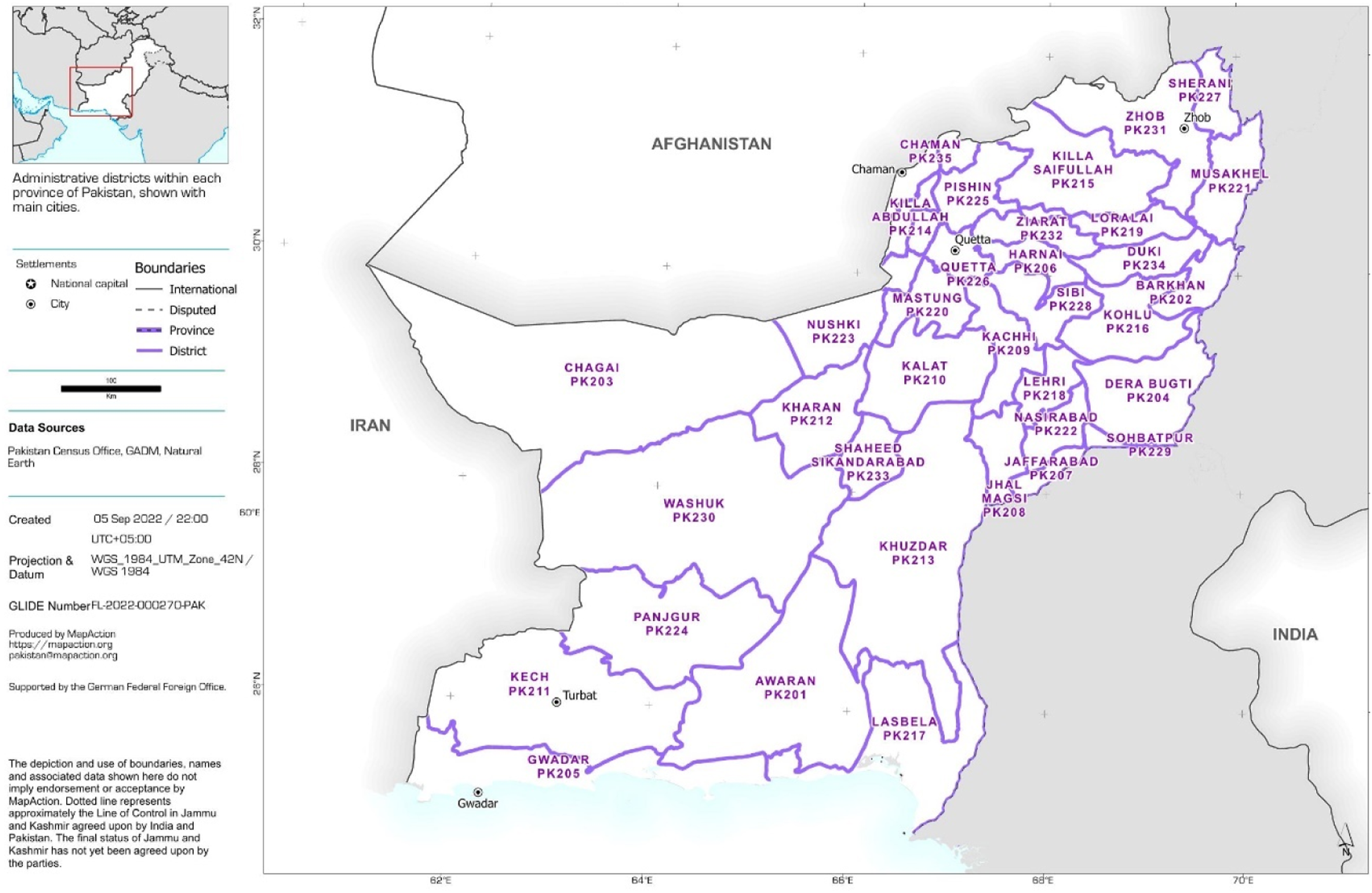
Pakistan floods—administrative districts of Balochistan, Pakistan. Source: Reliefweb (2022): https://reliefweb.int/map/pakistan/pakistan-floods-administrative-districts-balochistan-5-sep-2022.
Projected Poverty for 2019–20 and 2020–21.
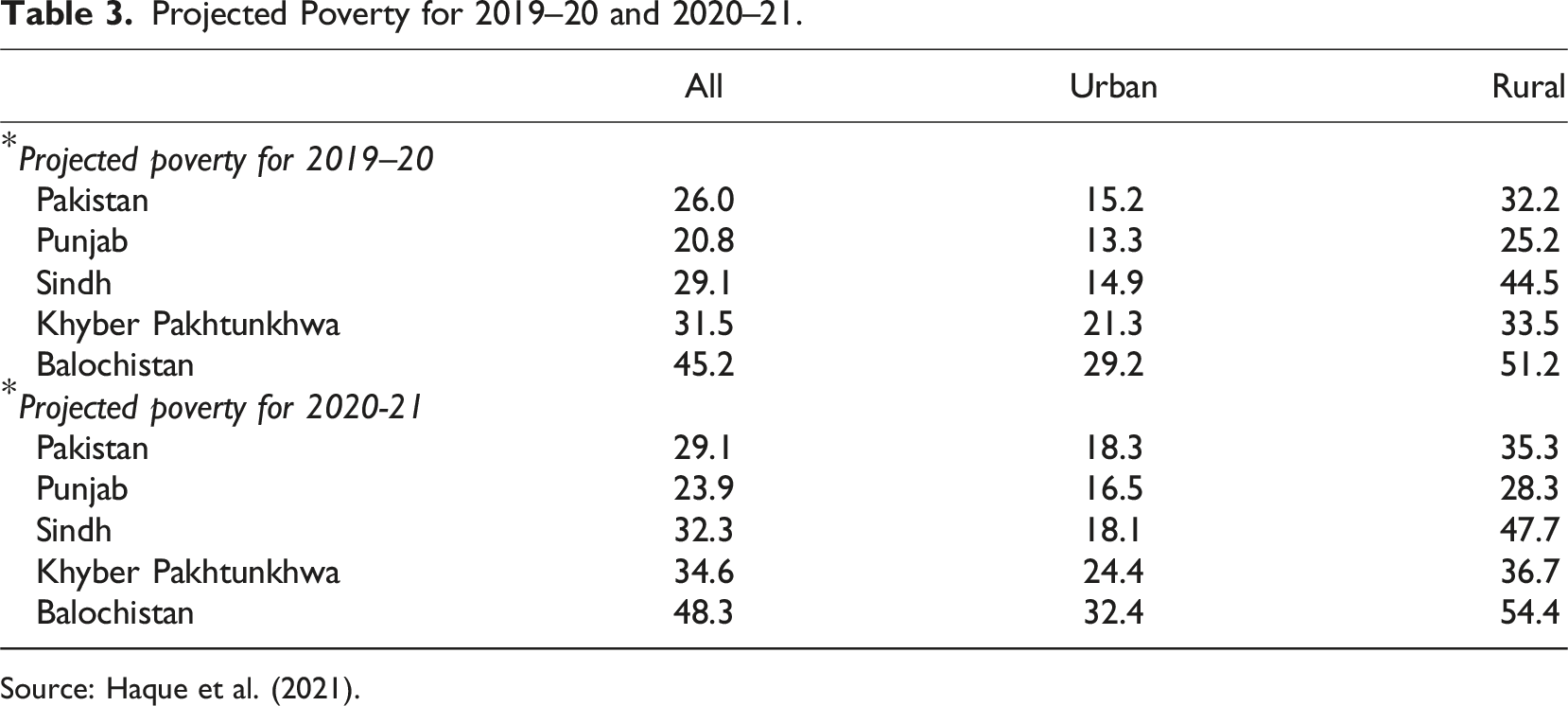
Source: Haque et al. (2021).
The Pakistan National Human Development Report (United Nations Development Programme, 2020) provides crucial insights into the spatial and socioeconomic inequalities in Balochistan, underscoring the significance of addressing them. The report vividly illustrates the stark differences between and within Pakistan’s four provinces (Punjab, Sindh, Khyber Pakhtunkhwa, and Balochistan) with Balochistan emerging the most affected. Since 1999–2000, Balochistan has experienced a significant decline, dropping from second to last place among the provinces, with a 7% decrease in per capita income. This decline has been exacerbated by reduced annual natural gas production, severe water shortages, and the continuous influx of migrants. Balochistan also witnessed the least improvement in HDI values in 2006–2007 and 2018–2019, unlike the other provinces. The province endures the most severe inequalities in education and living standards, with poverty rates significantly exceeding the national average of 37%. These findings emphasize the critical need to consider inequality when analyzing the climate–conflict nexus.
Methodology
Applying a qualitative methodology, interviews and group discussions were conducted in two Balochistan districts. The objective was to understand the broader perspectives of climate change and conflict in Balochistan. Primary data were collected using semi-structured interviews guided by open-ended questions. During the initial data-gathering phase, interviews were conducted with climate experts to develop a general understanding of the technical aspects of climate change and, importantly, to enable a broad contextualization of its impact in Balochistan. Subsequently, extensive fieldwork was conducted in Quetta and Gwadar in November 2022.
Twenty-seven interviews were conducted with local communities, government officials, developmental and non-governmental organizations, and security actors. The interview guide was developed based on themes generated by a literature review. The questions focused on three main themes regarding the climate–security nexus in Balochistan: (i) non-traditional security and governance challenges, (ii) the role of local communities and indigenous knowledge, and (iii) the role of state institutions in dealing with issues related to climate change and security. Open-ended questions facilitated in-depth insights and provided contextual details pertinent to the investigation (Lindlof & Taylor, 2010). All interviews were recorded, translated, and transcribed. In addition to the interviews, two focus group discussions (FDGs) with eight local community members were organized in both Quetta and Gwadar.
During the fieldwork in Gwadar, interviews were conducted with officials from the GDA, the local fisher folk communities, Rural Community Development Council, Human Development Society, Gwadar and Coastal Scientific Society, and members of Gwadar Right Movement. These grassroots organizations were selected based on their active engagement in advocating for climate resilience and carrying out community outreach to enhance awareness of climate change and its impacts. Additionally, individuals from the government and security sectors involved in addressing climate change and security concerns in Balochistan were engaged using purposive sampling (Etikan et al., 2016). These participants contributed valuable insights on climate change as a threat multiplier, especially within the fragile context of Balochistan. Furthermore, secondary data such as institutional or policy reports, socioeconomic assessments, and research articles were used to develop a contextual understanding of the case.
Expert Panel Discussion on Climate–Security Nexus in Balochistan.
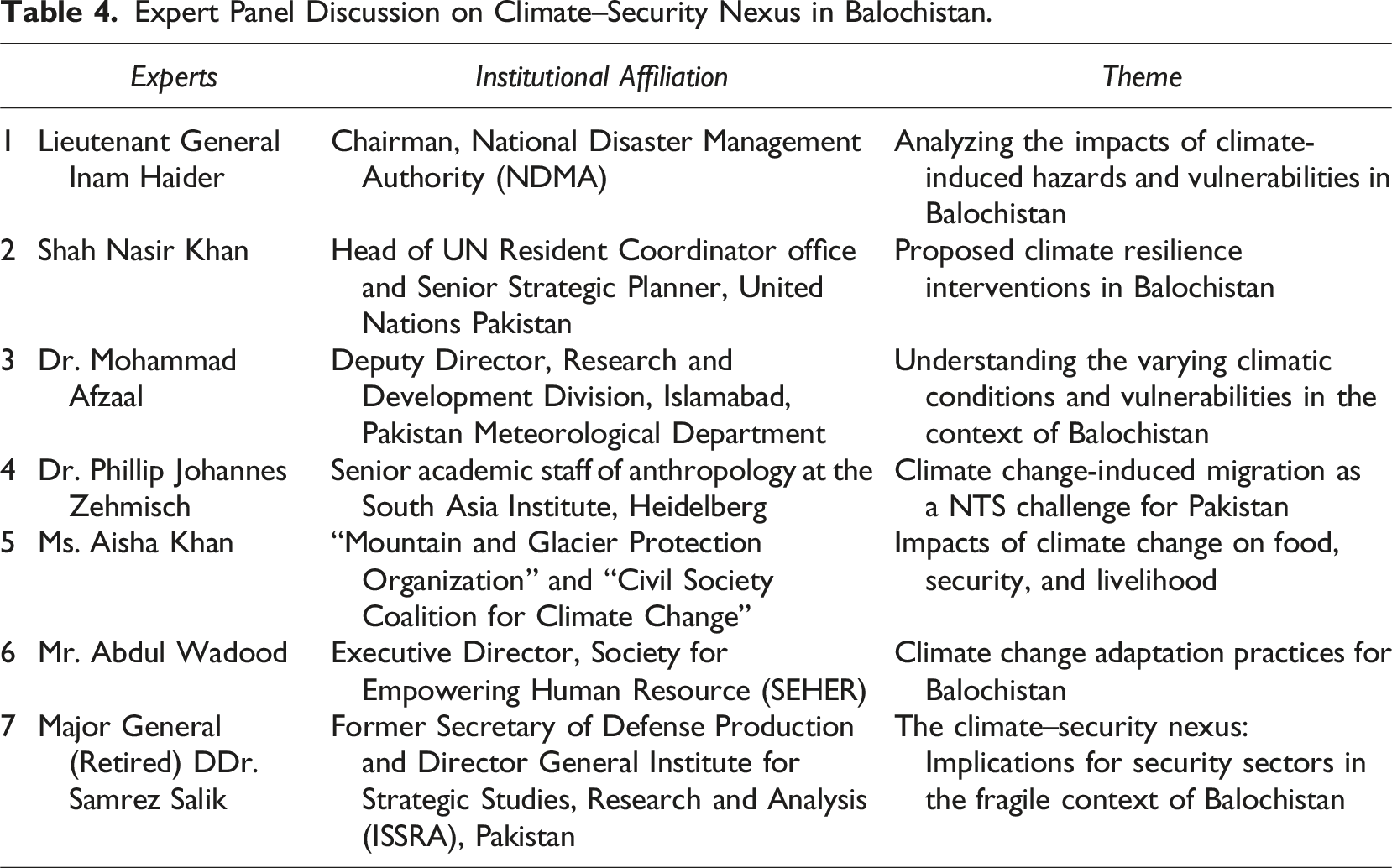
Through the expert panel discussion, this study sought insights into the dimensions of knowledge and experience of multi-sectoral stakeholders working on the identified themes while exploring the interplay between their distinct experiences. 6 The data gathered from fieldwork and the expert panel discussion were subjected to thematic analysis to discern emerging themes. Each theme was contextualized within the broader research framework by aligning it with the research objectives, relevant literature, and theoretical foundations (see Hammersley & Atkinson, 1983; Srivastava & Hopwood, 2009). This approach comprehensively captured nuanced interconnected themes, thus validating its suitability for investigating complex inquiries. A formal research ethics approval process was followed at the Centre for International Peace and Stability (CIPS), National University of Sciences and Technology (NUST). In adhering to ethical guidelines, the principles of anonymity and confidentiality were adhered to.
A potential limitation of this study is the dearth of quantitative data on migration patterns within the province and how these relate to extreme climate events such as floods and droughts. Respondents did not reflect any linear connection between such events and their decision to migrate, with testimonies tending to focus on the economic variables underlying migration (need for sustenance or livelihood) rather than environmental ones (changing precipitation patterns, loss of arable land). Furthermore, the relationship between migration and conflict was subject to a pre-existing security context, whereby protracted militancy in Balochistan was seen as subsuming any effect of climate events as threat multipliers. Time constraints, limited access to peripheral districts near Quetta and Gwadar, and the lack of updated data on livelihood and economic inclusion prevented further exploration of the connection between migration and climate change.
Climate, Security, and Governance: Analyzing Vulnerabilities in Balochistan
Terrain and Connectivity: Understanding the Embedded Vulnerabilities
When queried on the vulnerabilities related to the physical manifestation of climate change characterizing Balochistan, respondents commented on the province’s varied physiography featuring distinct ecosystems spread across 30 districts, namely, deserts, forests, woodlands, drylands, grasslands, inland water bodies, and mangrove forests along a vast coastline (spanning over 800 km from near Karachi to Gwadar Bay). To delineate the broad effects of climate change on major ecosystems, Jamro et al. (2020) categorize the territory into distinct topographical zones. The northern sectors are characterized by mountainous and forested terrain, the southeast and south by continental plains and deserts, the southwest by continental deserts, and the coastal region by the Arabian Sea. These topographical variations were repeatedly highlighted by the expert panel on 25 November 2022, who examined their impact on climate security challenges facing local administrative systems, which are often hampered by limited capacity and political malaise. The diverse ecosystems, habitats, and landscapes within the province demand highly context-sensitive management approaches, which are challenging because of the limited institutional capacity.
Connectivity within the province was highlighted as an acute challenge, compounded by systemic gaps in budgetary formulae used to calculate need-based expansion criteria for local highways. Internal displacement of local people was identified as a serious concern, as the devastation of “kaccha makan” (mud-house) villages by torrential rains forces a choice between remaining stranded or attempting to reach areas where aid is available. Poor connectivity has a two-fold effect on climate security. First, the effective isolation of peripheral districts impacted by extreme climate events such as flooding resulted in what a UNDP field report on the 2022 floods dubbed as geography (becoming) “the unfortunate yardstick of unequal aid distribution” (United Nations Pakistan, 2023, p. 4) Respondents argued that this results in the regions closer to bigger cities, such as Quetta, receiving more aid, whereas remote areas remain cut off from rescue, relief, and rehabilitation initiatives.
The second major effect concerned the relationship between connectivity and socioeconomic development. As illustrated by the economic profile generated by the PDMA (n.d.) for Balochistan, agriculture and livestock continue to employ a large proportion of the population, alongside mining, natural gas production, and fishing in the coastal region. The virtual nonexistence of a concrete road network (Bengali, 2018), combined with the history of the state focusing on select districts for development and service provision, compounds the climate vulnerability of local communities while catalyzing internal migration toward comparatively developed districts such as Quetta. Given this context, poor connectivity and institutional incapacity were considered as effectively embedding climate vulnerability in socioeconomic systems largely characterized by a reliance on traditional subsistence agriculture and low HDIs. Furthermore, poor connectivity effectively isolates peripheral districts during extreme climatic events, hindering relief efforts. These factors create a situation wherein climate events disproportionately impact remote areas that have limited means of recovery and support.
Climate Vulnerability Spectrum: From Droughts to Floods
Experts commenting on the impact of climate change-induced conditions on the socioeconomic status of Balochistan were quick to cite the province’s distinct ecological makeup in shaping developmental trajectories. During data collection, themes such as declining agricultural production and worsening livelihoods were frequently contextualized using geophysical and meteorological phenomena. Consequently, interviewee responses frequently echoed previous findings on themes such as the interplay of climate phenomena and insecurity, such as the combined impact of centralized weather systems emanating from the Bay of Bengal and the Arabian Sea being a key cause of the 2022 floods and the ensuing destruction of livestock and farmland (Devi, 2022). Similarly, the impact on agricultural yields across varied topographic zones was discussed, as illustrated in Khan et al.’s (2021) study of declining output from northeastern orchards and tobacco farms in Zhob.
The western side of the province (including areas surrounding Lokhundi, Dalbandin, Panjgur, and Turbat) has witnessed increased average temperatures from 0.9 degrees Celsius to 1.5 degrees Celsius over the past 30–40 years. The implications of this increase were outlined by a senior official of the National Disaster Management Authority (NDMA) (personal interview, 25 November 2022), who stressed that the ensuing increase in evapotranspiration by 2–4 mm/day posed a serious threat to the local economy. Officials have emphasized the interplay between the province’s ecological zones and long-term agricultural prospects. He argued that the variability in climate threats facing the area, such as floods and droughts, necessitated strategic planning that accounted for distinct weather patterns across arid and semi-arid zones.
While rainwater remains the primary water source for irrigation, approximately 93% is flushed into the oceans annually, amounting to approximately 8.57 billion cubic meters out of an estimated 10 billion (Devi, 2022). Experts discussed the long-term prospects for water scarcity, highlighting the retreating water table and drawdown of natural aquifers coupled with erratic precipitation. The nature of the terrain prevents rainwater from recharging the water table, rendering crop cultivation less viable with each passing year, and extreme droughts affecting the province from 1998 to 2002 and 2018 to 2021. Water scarcity is but one variable of climate vulnerability, with Balochistan experiencing both floods and droughts across its territorial expanse. Another variable is extreme monsoon spells and accelerated glacial melt, which have repeatedly prompted another extreme in the vulnerability spectrum—flash floods in 2022 and 2010 (personal interview, 06 October 2022). These issues disproportionately affect districts in Eastern Balochistan, perpetuating a cycle of climate vulnerability and economic strain. As highlighted by Dr. Afzaal, 7 districts in Eastern Balochistan (Barkhan to Lasbela) have witnessed significant increases in topographical rainfall trends, ranging from 50% to 75% (expert panel discussion, November 25, 2022).
In summary, most of the experts reiterated findings from contemporary literature that cite the role of Balochistan’s distinct ecological composition as a major factor in shaping its socioeconomic progress. They highlighted the absence of need-based mitigation and adaptation strategies in conjunction with the lived experiences of local communities facing climate insecurity. Thus, meteorological variables (i.e., erratic rainfall patterns) combined with existing sociopolitical lacunae (e.g., a strained federal model for inter-provincial water distribution) were seen as culminating in repeated cycles of droughts and flash floods.
Demography, Migration, and the Security Landscape of Balochistan
While most respondents did not see a direct causal link between climate change and conflict in Balochistan, they acknowledged the non-traditional security threat it posed, leading to humanitarian crises characterized by food and health insecurity. Respondents further highlighted the multidimensionality characterizing conflict as a concept, particularly in underdeveloped, multi-ethnic, tribal borderlands, as seen in Balochistan. It was argued that environmental damage catalyzed by a lack of governance, such as the inordinate licensing of tube wells, must be assessed in light of institutional incapacity to promote sustainable development and address the insecurities of local communities.
Authors such as Rasheed et al. (2022) highlight the anxieties of Baloch groups surrounding the demographic changes induced by migration trends. Furthermore, one respondent commented on the role of rampant unemployment and poor infrastructure in triggering internal mass migration within Balochistan, coupled with the influx of Afghan refugees in the aftermath of the Taliban takeover (expert panel discussion, November 25, 2022; personal interview, November 15, 2022). As Baloch and Pashtun tribes become increasingly confined to overpopulated “developed” zones, the potential for ethnic, tribal, and sectarian conflict increases. Additionally, as highlighted by Dr. Philipp Johannes 8 , the search for sustenance and livelihood prompts groups from affected areas to seek greener pastures, raising questions about the legality of resource use by certain groups while excluding others. The inability of institutional mechanisms to ensure equitable resource distribution may trigger violent conflict.
As land in Balochistan remains a vital economic resource owing to its natural resources, trade routes, and agro-pastoral activities, elite patronage emerges as a key mechanism for land settlement within and between ethnic and tribal groupings. While traditional tribal systems were seen as playing a vital balancing role in preventing conflict escalation, the causes and variables impacting conflict (re)emergence were contested. One respondent attributed this to a focus on security-oriented, as opposed to welfare-oriented, state policies, citing an imbalance between the perception of traditional and non-traditional threats in the security hierarchy (expert panel discussion, November 25, 2022; personal interview, November 15, 2022).
Regarding ethnic population distribution across the province, Gazdar et al. (2010) analyzed the interaction dynamics among the Baloch and Pashtun as the two dominant ethnicities in Quetta, shaped by both the war in Afghanistan and successive Baloch insurgencies in Pakistan. Ahmad Wani (2019) further adds that the risk of communal violence has shrunk the space occupied by Hazara, the third largest ethnic group in the city, to two towns, in the east (Marriabad) and west (Hazar Town), in effect becoming “ghettoized.” In commenting on the effect of this distribution of Pashtun in the North, Baloch in the South, and Hazara on the margins on inter- and intra-communal economic and political interaction, the panelists cited the role of intra-provincial displacement, cross-border migration, and the fragility of state systems required for regulation and resource distribution as particularly pertinent. Discussing internal migration induced by disasters such as flooding, the panelists argued that Balochistan’s varied topography and borderland territory status have engendered distinct socioeconomic formations across major districts. These formations are further characterized by ethnic, tribal, and sectarian stratifications that display dynamic inter- and intragroup interactions. The nature and scope of the interactions among the various groupings that characterize key districts have been influenced by cross-border spillover from Iran and Afghanistan.
Regarding the influx of migrants to districts such as Quetta, one respondent considered the specter of fast-dwindling resources, prompting questions about legitimate and “legal” access (personal interview, November 15, 2022). Field visits to Quetta city further highlight issues of overcrowding and urban congestion, as the city originally designed to accommodate 50,000 people currently hosts more than two million, with access to housing and basic utilities such as water and gas presenting key challenges. Unsustainable urbanization is partly attributable to rural-to-urban migration, as declining crop yields and rising temperatures force nomadic tribes to relocate to cities. One respondent outlined ongoing demographic shifts, whereby indigenous groups such as Kassi, Bazzi, and Sherwanis are no longer in the city they once called home (personal interview, 19 November 2022). Furthermore, incidents of land-grabbing, extortion, kidnapping for ransom, and human trafficking have increased exponentially, while groups such as water tank mafias exhaust groundwater supplies to illegally sell to desperate citizens at exorbitant rates.
Population Distribution of Pakistan by Provinces, 2001/2002–2014/2015.
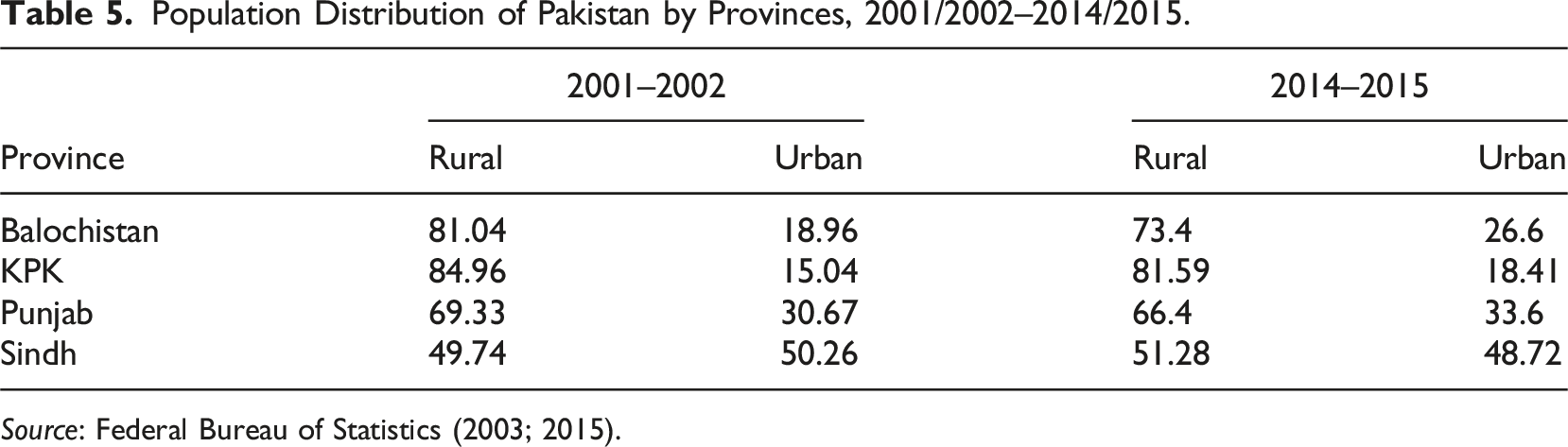
Source: Federal Bureau of Statistics (2003; 2015).
Saturation in developed zones across Balochistan is not limited to Quetta alone, as Turbat, in the Makran division, and Gwadar face the same problem. Settlements in Gwadar, such as Shayabad in Jiwani, continue to see an influx of migrants, while areas such as Faqeer Colony are designated migrant spaces hosting groups fleeing environmental challenges and poor law and order in their home districts (personal interview, November 19, 2022; expert panel discussion, November 25, 2022). Thus, apart from resource scarcity and poverty, migration trends are further shaped by the fallout of the ongoing insurgency. Nonetheless, in terms of the variables that might characterize the nature and scope of the interplay between the insurgency and climate-induced displacement, concepts such as climate security remain under-researched in Pakistan. Given this background, a key question that emerged from the fieldwork was whether the state apparatus in Balochistan possesses the capacity to both assess and address climate change as a potential threat multiplier in pre-existing communal fractures, particularly given the acceleration in climate security events, evidenced by the 2022 floods. Commentors highlighted a disparate focus by state and non-state agencies in southern Balochistan regarding conflict management and prevention compared with Pashtun-dominated districts in the north.
Consequently, our findings highlight how internal migration, influenced by environmental challenges and insurgency, reshapes demographic patterns in cities such as Quetta. Migration leads to overpopulation, resource scarcity, and increasing inter-ethnic tensions, with ethnic and tribal groups such as the Baloch, Pashtun, and Hazara being confined to overpopulated areas, exacerbating conflicts over land and resources. Finally, rapid and unsustainable urbanization in Balochistan, fueled by rural-to-urban migration due to declining agricultural viability, is significantly straining urban infrastructure. Cities such as Quetta, originally designed for far fewer residents, are now facing acute shortages of housing and basic utilities, highlighting the urgent need for effective urban planning and resource management in the face of climate-related displacement.
Weak Institutions and Sociopolitical Inequalities
When asked about the possible causal factors underlying the weak socioeconomic indicators characterizing the province, multiple respondents highlighted sociopolitical and institutional constraints hampering interventions in areas such as agricultural modernization and investment in public infrastructure. An example is the issue of water scarcity and how it relates to institutional and sociopolitical contexts underlying policy design and implementation.
According to the Global Change Impact Studies Centre (2019) report, water scarcity in Balochistan is as a significant factor contributing to declining agricultural yields in the region. This can be attributed to the mechanisms governing water distribution between provinces. Balochistan, which relies on the Indus River for approximately 40% of its total water supply, experiences a disproportionate impact from water scarcity.
Furthermore, the expert panel discussion highlighted that this limited water supply is allocated to only five districts: Sobathpur, Jaffarabad, Nasirabad, Jal Magsi, and certain parts of Dera Bugti. Unfortunately, these districts exhibit the lowest agricultural yields within the province. One panel expert highlighted the significance of water quality of the Indus River. They emphasized the detrimental effects of severe upstream pollution, attributing it to the absence of robust regulations and monitoring of unsustainable urbanization practices. The pollution intensifies the existing water-related challenges in Balochistan. This observation underscores the pressing need for effective measures to mitigate pollution and ensure the provision of clean and sustainable water resources in the region (expert panel discussion, November 25, 2022).
In the context of water scarcity, there is a lack of specific policies tailored to address the growing challenge of groundwater depletion. Moreover, existing legislation concerning tube wells exacerbates an already concerning situation (expert panel discussion, November 25, 2022). Fieldwork findings indicate that the number of officially authorized tube wells in Quetta alone is approximately 30,000. A community elder remarked that while water was previously accessible at a depth of 90 m, it has become increasingly difficult to access water at depths of even 300 m (personal interview, November 16, 2022).
A policy proposed by the Pakistan Agricultural Capacity Enhancement Program (PACE) emphasizes that agricultural practices in the province, including land distribution, cultivation, and irrigation techniques, are highly vulnerable to the impacts of climate change (Rana 2021). The arid conditions in certain regions render unirrigated agriculture unfeasible, leading rural communities to rely on traditional methods owing to the absence of accessible and effective modern alternatives in terms of equipment and training. The panelists highlighted that landholdings in Balochistan are generally too small to facilitate economic and technological investments in machinery. Consequently, productivity continues to decline because of soil erosion, unpredictable precipitation, and extreme climate events such as floods and droughts.
Indigenous water supply mechanisms, such as the ancient Karez system, are being rendered defunct by unsustainable alternatives such as tube wells. One respondent described Karez as a community-driven supply mechanism with a history of supporting sustainable agro-pastoral and sedentary agriculture (expert panel discussion, November 25, 2022). Given the considerable social organization required for maintenance, the system was entirely managed by tribes and local communities, gaining recognition by the UNESCO World Heritage Center as a symbol of widespread and long-lived hydraulic adaptation essential for enabling human interaction with hostile environments. However, as shared by a native of Mastung, Karez cannot function in conditions where groundwater has been depleted below 600 m, and only one remains functional in his district, where there had once been 350 Karez (personal interview, November 17, 2022).
The unavailability of up-to-date and real-time ecological mapping data further hinders the effectiveness of institutions. An interviewee highlighted that the most recent mapping exercise was in 1984. The absence of current agroecological records compromises vulnerability assessments, whereas the lack of data sharing on water management, such as river flow, water quality, and groundwater levels, within and between provinces, exacerbates the risk of conflict. These information gaps resulting from resource allocation challenges and data-driven policy formulation are further compounded by the physical landscape’s characteristics and its influence on population density (personal interview, November 14, 2022).
Given the evidence indicating a rise in average temperatures, unpredictable precipitation patterns, and a growing threat of extreme climate events such as droughts and flash floods, a few respondents expressed their opinions regarding the extent of the state’s ability to address their impacts on local communities. Respondents also highlighted the role of legal instruments and policies adopted by provincial and federal governments to safeguard essential resources, such as groundwater, while generating alternative avenues for “climate proofing” the local economy (personal interview, November 19, 2022).
Findings from the interviews and discussions highlight the intertwined challenges of sociopolitical constraints, inadequate infrastructure, and environmental degradation impacting Balochistan. Key points include the limited water supply allocated to districts with the lowest agricultural yields, severe pollution in the Indus River affecting water quality, and the lack of updated ecological mapping data, all of which hinder effective resource management and exacerbate conflicts. Additionally, our results highlight the small size of land holdings in Balochistan, which impedes economic and technological investment, leading to declining productivity owing to factors such as soil erosion and extreme climate events. This is compounded by outdated agricultural practices and the absence of specific policies addressing groundwater depletion. The situation is further exacerbated by the decline of indigenous water supply mechanisms, such as the Karez system, a sustainable agricultural support system, now defunct due to severe groundwater depletion. These insights highlight the need for comprehensive policy intervention and modernization in agricultural and water resource management to address the province’s unique challenges.
Institutional Efficacy and Subnational (Mis)governance
In examining the structural causes undermining effective climate change policy implementation, (mis)governance at the subnational level emerged as a key concern. This was highlighted in an interview with Ms. Aisha Khan
9
. Initially, our focus was on the national climate change policy. However, recognizing the significance of subnational engagement, we decided to explore whether provincial governments had developed policies that prioritize the well-being of the people and are tailored to their specific geographical contexts. Surprisingly, most provincial governments had not formulated their own climate change policies. This prompted us to engage with these provincial authorities to assess their understanding of climate change policy and the necessity of developing their own strategies. Following the 18th amendment, the implementation of major sectors such as food, environmental protection, energy, and agriculture now falls entirely under the purview of the provinces. While a national authority exists, provinces must assume responsibility for policy development and implementation in these sectors. (Personal interview, October 10, 2022)
Ms. Khan further highlighted how provincial governance structures are yet to address the need for support mechanisms and institutional infrastructure to implement climate change policy. A key aspect is the nature of local governance and the role of traditional tribal systems controlled by Sardars. A few respondents felt that while Balochistan has been receiving significant (economic) resources to address the development needs of the local population, the degree of social and political control exercised by the Nawabs and Sardars obfuscates any state-led efforts to ensure equitable development outcomes.
Regarding the role of political elites, participants frequently cited a historical lack of investment in basic economic and social infrastructure in the context of rampant resource misallocation and corruption. Concerning local development initiatives, traditional structures are subject to appropriation by tribal factions functioning as sociopolitical blocs to secure a larger share for their patrons in government welfare schemes. Tribal and ethnic affiliations manifest as patron–client relationships in a political field characterized by discriminatory and erratic access to basic services. Furthermore, tribal and non-tribal leaders, including religious figures and ethnic-nationalist groups, gain increased relevance in local communities as they work through non-state agencies to fill the gaps left by the state.
On the impact of (mis)governance on the functioning of the NDMA, one respondent stressed that the organization is unable to institute a robust mobilization mechanism for associated provincial authorities, with most emergency relief work being conducted by NGOs and the Pakistani military (personal interview, November 15, 2022). Civil society groups were seen as instrumental in bridging the gap left by the state in providing grassroots services, particularly in the aftermath of extreme climatic events. Nevertheless, multiple civil society actors were found to lack the capacity to establish broadscale relief distribution and management systems, especially in areas cut off by flooding (Eggert et al., 2024; Salman & Ahmed, 2021; Turk et al., 2023).
Our panel discussion and interviews highlighted critical challenges in Balochistan, including (mis)governance and the dominant role of traditional tribal systems, which hinder the implementation of effective climate change policies and equitable development. Political leadership is often blamed for misallocating resources and engaging in corrupt practices, contributing to inadequate infrastructure. Furthermore, the NDMA’s constraints and the vital role played by civil society and NGOs in bridging service gaps, particularly in disaster relief, were emphasized. These factors collectively contribute to the barriers in ensuring effective disaster response and equitable service access.
Conclusion
This study focused on the interaction between climate change, structural inequalities, and security in the conceptualization of the climate–conflict nexus in Balochistan’s fragile geography. The study frames climate security—a construct encompassing climate-induced conditions and their impacts on security—as a critical concept through two conceptual framings. The first concerns the tendency to view climate security not as a contextual framework with long-term implications on socioeconomic structures but as an isolated phenomenon that could be addressed using short-term remedial measures or as beyond the state’s capacity. Such framing exhibits a tendency to conflate the environmental damage associated with unsustainable development practices, weak regulatory mechanisms, and misgovernance in peripheral regions with climate change-induced disasters.
The second framing examined climate security in the context of FCV systems, emphasizing its potential to exacerbate existing conflict dynamics and generate new sources of instability. Focusing on Balochistan (characterized by severe socioeconomic and political inequalities, climate-induced migration, and weak institutions with centralized governance structures), such ‘conditions’ emerge as central to understanding the climate–security nexus, illustrating causal pathways (Peters, 2021) through which climate-induced impacts worsen structural vulnerabilities or insecurities.
The study highlighted the significant research gap on climate security in Balochistan, particularly in relation to the interaction between climate change-induced conditions and FCV variables. The lack of real-time provincial data and ineffective subnational governance further intensify Balochistan’s vulnerability―a region already beset by violent conflict and climate variability. This analysis addresses a critical gap in existing literature and underscores the need to enhance the preparedness and resilience of local communities and governance structures. Thus, it serves as a foundational contribution to future inquiry and policy development aiming to integrate climate change considerations into conflict analysis and response in fragile states.
Footnotes
Acknowledgments
We extend our heartfelt gratitude to the Hanns Seidel Foundation (HSF) Pakistan for their invaluable financial support, which has played a crucial role in facilitating the completion of this research. The generous funding provided by HSF has been instrumental in enabling the realization of our study. Additionally, we would like to express our deep appreciation to all the individuals and institutions who dedicated their time and shared their invaluable experiences. Their unwavering support and cooperation have enhanced the scope and depth of our research.
Declaration of Conflicting Interests
The author(s) declared no potential conflicts of interest with respect to the research, authorship, and/or publication of this article.
Funding
The author(s) disclosed receipt of the following financial support for the research, authorship, and/or publication of this article: This work was supported by the Hanns-Seidel-Stiftung.

Notes
Author Biographies