






Abstract
Self-determination theory (SDT) postulates that environments providing psychological needs satisfaction (PNS) promote quality motivation, thus enhancing engagement and performance in diverse performance domains. SDT and PNS were used to investigate student experience of conservatoire instrument practice. Participants (N = 162) completed standardized self-report questionnaires. Associations between study variables were described and hierarchical multiple regression analysis was conducted to assess the predictive effects of autonomy and competence needs satisfaction and autonomous and controlled motivation on inter-subject flow variations. A considerable part of flow variations was accounted for by study variables. Results showed that conservatoire students, especially those studying instrument performance (n = 109), reported high levels of flow, perceived competence and autonomy, and intrinsic motivation. Autonomous motivation had a direct effect on flow variations, whereas controlled motivation had an inverse effect. Perceived competence was the strongest predictor of flow variations and it was also associated with external regulation (especially among students studying instrument performance), thus indicating that intrinsic and extrinsic motives both play important roles in conservatoire instrument practice. Conservatoire instrument teachers need to acknowledge that perceived competence is critical to flow in instrument practice, in order to provide their students with optimal challenges that avoid frustration and amotivation.
Keywords
Consistently high levels of motivation and performance are needed to successfully cope with the demands of advanced music practice (Hallam, 2014). This has led researchers to engage in the study of the psychological factors affecting persistence in music learning, such as self-efficacy beliefs and performance anxiety (Papageorgi, Creech, & Welch, 2013). However, from a pedagogical perspective it is also important to analyze the role played by the environment in students’ motivation and performance.
With this as the goal, self-determination theory (SDT) was used to investigate conservatoire student experience of compulsory instrument practice. SDT focuses on the conditions that facilitate people’s sense of volition and initiative. It postulates the existence of innate tendencies towards psychological growth, integration and well-being, which are promoted by environments that provide psychological needs satisfaction (PNS) in the areas of autonomy, competence and relatedness (Deci & Ryan, 2000). In an educational setting, students experience autonomy need satisfaction when they choose freely to engage in activities, competence need satisfaction when they feel able to complete an assignment, and relatedness need satisfaction when they feel emotionally close to their classmates (Ratelle & Duchesne, 2014). In this respect, PNS is a relevant concept in the study of learning environments and it is well suited to evaluating student experience in conservatoire instrument practice. PNS has shown significant associations with multiple positive outcomes such as autonomous self-regulation for learning, academic performance (Niemiec & Ryan, 2009), academic adjustment (Ratelle & Duchesne, 2014), well-being and flow (Schüler, Brandstätter, & Sheldon, 2013). Even the satisfaction of one or two needs has been related to positive outcomes, for example daily well-being, which has been argued to depend mainly on feelings of competence and autonomy (Sheldon, Ryan, & Reis, 1996). Inversely, lower fulfilment of psychological needs has been found to have a critical influence on the decision to give up music practice (Evans, McPherson, & Davidson, 2013).
According to SDT, PNS promotes quality motivation and engagement, leading to enhanced persistence, performance and creativity (Deci & Ryan, 2008). In this context, quality motivation is typically described as being self-determined, autonomous and internally regulated, and it has been argued that intrinsic motivation, i.e., pursuing an activity purely for the sake of enjoyment rather than external outcomes (Deci, 1971), is the prototypical form of self-determined motivation (Deci, 1975). One approach to measuring intrinsic motivation has distinguished three types (Pelletier et al., 1995): intrinsic motivation to know (IM-to know), related to the enjoyment of learning, exploring or trying to understand things; intrinsic motivation to experience stimulation (IM-stimulation), associated with experiencing stimulating sensations derived from the activity; and intrinsic motivation toward accomplishment (IM-accomplishment), associated with attempts to accomplish or create something.
In contrast, extrinsic motivation is considered to be poor quality motivation, typically less self-determined and more controlled and externally regulated (Deci, 1975; Deci & Ryan, 2008). In this context, four types of extrinsic regulation have been postulated (Ryan & Deci, 2000): external regulation (behaviors enforced by norms and obligations); introjected regulation (behaviors that are not self-determined, but where external control is replaced by internal control, for example, to avoid feeling guilty); identified regulation (behaviors that are to some extent internally regulated, even though they are performed for motives extrinsic to the activity itself, such as personal goals); and integrated regulation (behaviors that individuals value highly and have fully integrated, thereby performing them autonomously).
Thus, given that at the far end of the self-determined motivation spectrum amotivation signifies the absence of the drive needed to perform an activity, the continuum of self-determined motivation ranges from the least to the most self-determined forms of regulation, as follows: amotivation, external regulation, introjected regulation, identified regulation, integrated regulation and intrinsic motivation (Ryan & Deci, 2000).
Both intrinsic motivation (Burnard, 2012; Lamont, 2011; Renwick & McPherson, 2009) and competence (Evans et al., 2013) are important for persistence in music learning. More specifically, feelings of competence seem to act as an indispensable condition for sustained intrinsic motivation and perseverance, given that people not only perform intrinsically motivating activities because they are interesting, but also because they want to feel competent in those activities (Deci, 1975). Furthermore, feelings of competence have been shown to predict self-determined motivation (Losier & Vallerand, 1994) and to mediate in the effects of verbal feedback on intrinsic motivation, supporting the idea that people’s levels of intrinsic motivation depend on their perceived competence (Vallerand & Reid, 1984). Lastly, further evidence for the importance of feelings of competence in this association is provided by a study that shows that, given a high need for achievement in sports, feelings of competence are linked to subsequent intrinsic motivation (Schüler, Sheldon, & Fröhlich, 2010).
Analogously, flow has also been found to be associated with intrinsic motivation and feelings of competence in music practice (Bakker, 2005) and sports (Schüler et al., 2010). Following on from this, it is possible to establish some links between SDT and flow theory. From an SDT perspective, intrinsic motivation (Burnard, 2012; Lamont, 2011; Renwick & McPherson, 2009) and feelings of competence (Evans et al., 2013) are critical for understanding persistence in music learning. Similarly, flow requires intrinsic motivation and a balance between feelings of competence and demand, given that optimal demand leads to flow and persistence, whereas excessive or subpar demand leads to frustration or boredom, fostering abandonment (Csikszentmihalyi, 1988). Additionally, no task is experienced twice with the same intensity and, consequently, in order to prolong flow, people seek gradually more difficult challenges and develop their competence, knowledge, and skills to cope with them, evidencing that flow is intimately related to learning (Ceja & Navarro, 2012).
Most theoretical definitions of flow agree on three defining elements (Bakker, 2005, 2008): intrinsic motivation, absorption (exclusive focus on the task at hand), and enjoyment (intrinsic reward), while the broader definition of flow experience has eight attributes: (a) Optimal challenge or the relative balance between skills and the task; (b) Clear goals providing immediate feedback; (c) Intense focus and concentration; (d) Merging of action and awareness; (e) Momentary loss of reflective self-consciousness; (f) Sense of control of one’s actions; (g) Distortion of time experience (generally faster); and (h) Enjoyment or intrinsic reward (Nakamura & Csikszentmihalyi, 2014). Both definitions underscore the enjoyment derived from feelings of competence in the context of an intrinsically motivating activity. This makes flow a useful outcome variable for analysis when subjects evaluate their participation as successful and intrinsically rewarding, thereby promoting persistence.
Perseverance and large amounts of time and effort are needed to incorporate the knowledge and skills indispensable for coping with the high demands of music education at conservatoire level. Following on from the SDT hypothesis, which argues that PNS can lead to enhanced levels of intrinsic motivation, persistence and performance, this research analyzed the role of the needs of autonomy and competence, and of autonomous and controlled motivation, in achieving flow in conservatoire instrument practice, understood as the tasks directly derived from participating in compulsory conservatoire instrument lessons.
Method
Participants
The present study had the participation of 162 conservatoire students, of whom 54.8% were males and 45.2% females. Their ages (M = 22.48, SD = 4.34) ranged from 18 to 47 years old, but 86.3% of them were 25 years old or younger. The majority (67.7%) were learning to play an instrument as the main subject on the higher music education curriculum (n = 109), whilst the rest were pursuing careers such as music pedagogy, conducting or composition.
Procedure
Permission for the study was obtained from the conservatoire’s head of research and students were presented with standardized self-report questionnaires that explored their experience of instrument practice as part of their annual course evaluations. Participation was voluntary and anonymous. Teachers were interviewed in advance and given the questionnaires and instructions on how to administer them. The instructions were handed out in writing and also read out loud. Participants had to be attending compulsory second- and third-year instrument lessons. This sampling approach secured data collection within a realistic, variance-rich cohort, controlling the risk of over-representation of highly competent students in later years due to the potential effect of drop-out of individuals with lower perceived competence.
Measures
Flow was measured using an ad hoc adapted version of the nine-item short dispositional flow scale, which has yielded reliability levels of Cronbach’s alpha between .74 and .81 (Jackson, Martin, & Eklund, 2008). Adapting items such as “I do things spontaneously and automatically without having to think” and “the experience is extremely rewarding” to diverse performance domains is a recurrent feature in the study of flow (Martin & Jackson, 2008). Consequently, the main instruction was changed from “when I am practicing my sport” to “when I am practicing my instrument.” Items were translated by the authors and then checked for content validity by experts. Two of the experts were music pedagogues (one was also a psychologist, and the other, an educator) and the third was a conservatoire instrument teacher (also a performer). The experts were interviewed and given all the construct definitions and instructions on how to rate and comment on the content and structure of the items. Following this step, the questionnaire was pilot-tested by higher music education students after making sure that the respondents correctly understood the items.
Perceived competence was measured using the Spanish translation (Balaguer, Castillo, & Duda, 2008) of the five-item perceived competence subscale included in the Intrinsic Motivation Questionnaire (McAuley, Duncan, & Tammen, 1989). The items were adapted to a music practice setting: “I think I am pretty good at my sport” was replaced by “I think I am pretty good at playing my instrument.” The original reliability of this subscale yielded a Cronbach’s alpha of .80 (McAuley et al., 1989), returning an alpha of .79 with Spanish respondents (Balaguer et al., 2008).
Perceived autonomy was assessed with the Spanish version (Balaguer et al., 2008) of the 10-item perceived autonomy scale (Reinboth & Duda, 2006), which yielded a Cronbach’s alpha of .89 with Spanish respondents. The instruction was changed from “in my sport” to “in my instrument practice” and items included “I feel that my choices and actions are based on my true interests and values.”
To make the questionnaire easier to complete, all variables portraying aspects of student experience in instrument practice (flow, and perceived competence and autonomy) were assessed in the same section. Given that Likert scales with an even number of alternatives are well suited to evaluating participants’ opinions in terms of agreement or disagreement (Wakita, Ueshima, & Noguchi, 2012), and that scales with fewer options (two, three, or four) have been found to perform poorly (Prestona & Colman, 2000), participants had to rate items in this section on a six-point scale with no neutral alternative, ranging from totally disagree (1 point) to totally agree (6 points). Participants were asked to rate their agreement on how frequently they considered that each of the aspects represented in the items occurred in their own experience.
Self-determined motivation was measured using the Spanish version (Balaguer, Castillo, & Duda, 2007) of the sport motivation scale (SMS; Pelletier et al., 1995). It includes seven subscales, comprising four items each, respectively, measuring three types of intrinsic motivation (IM-to know, IM-accomplishment and IM-stimulation), three types of extrinsic motivation (identified, introjected and external regulations), and also amotivation. The original question “why do you practice your sport?” was changed to “why do you practice your instrument?” and sample items included the following: “for the pleasure it gives me to know more about the instrument that I practice” (IM-to know); “for the pleasure I feel in living exciting experiences” (IM-stimulation); “because I feel a lot of personal satisfaction while mastering certain difficult practice techniques” (IM-accomplishment); “because it is one of the best ways I have chosen to develop other aspects of myself” (identified regulation); “because it is absolutely necessary to practice an instrument if one wants to play it well” (introjected regulation); “because it allows me to be well regarded by people that I know” (external regulation); and “I used to have good reasons for practicing my instrument, but now I am asking myself if I should continue doing it” (amotivation). Participants had to rate items on a seven-point scale, ranging from not at all like me (1 point) to totally like me (7 points). Previous research with Spanish respondents has confirmed the reliability of the seven subscales, yielding Cronbach’s alphas between .74 and .83 for five out of the seven subscales, and alphas of .68 for identified regulation and .64 for introjected regulation (Balaguer et al., 2007). Following conceptual definitions (Deci & Ryan, 2008), autonomous motivation was calculated as the average of intrinsic motivation and identified regulation, whereas controlled motivation was calculated as the average of introjected and external regulation.
Lastly, participants reported their gender, field of studies and (where appropriate) the instrument they specialized in. Thus, the questionnaire was designed to avoid introducing potential bias by first drawing attention to the characteristics of each participant and their motives for engaging in instrument practice.
Analysis
Analysis was carried out with the aid of the SPSS 23 statistical analysis software package. Descriptives, Cronbach’s alpha reliability coefficients, and Mann-Whitney gender difference comparisons were evaluated for all measures. Furthermore, Spearman correlations between study variables were described and hierarchical multiple regression analysis was performed to assess the predictive effects of autonomous and controlled motivation, gender, autonomy, and competence needs satisfaction on flow variations in conservatoire instrument practice.
Results
Descriptives
Conservatoire students (Table 1), and instrument students in particular (Table 2), scored well on flow and competence and autonomy needs satisfaction in instrument practice. Regarding self-determined motivation, scores were high for all three types of intrinsic motivation and for introjected regulation, moderate for identified regulation, and low for external regulation and amotivation. As a result, both autonomous and controlled forms of motivation were rated moderately while autonomous motivation achieved somewhat higher scores.
Descriptives, Cronbach’s alphas and item-test correlations (N = 162).
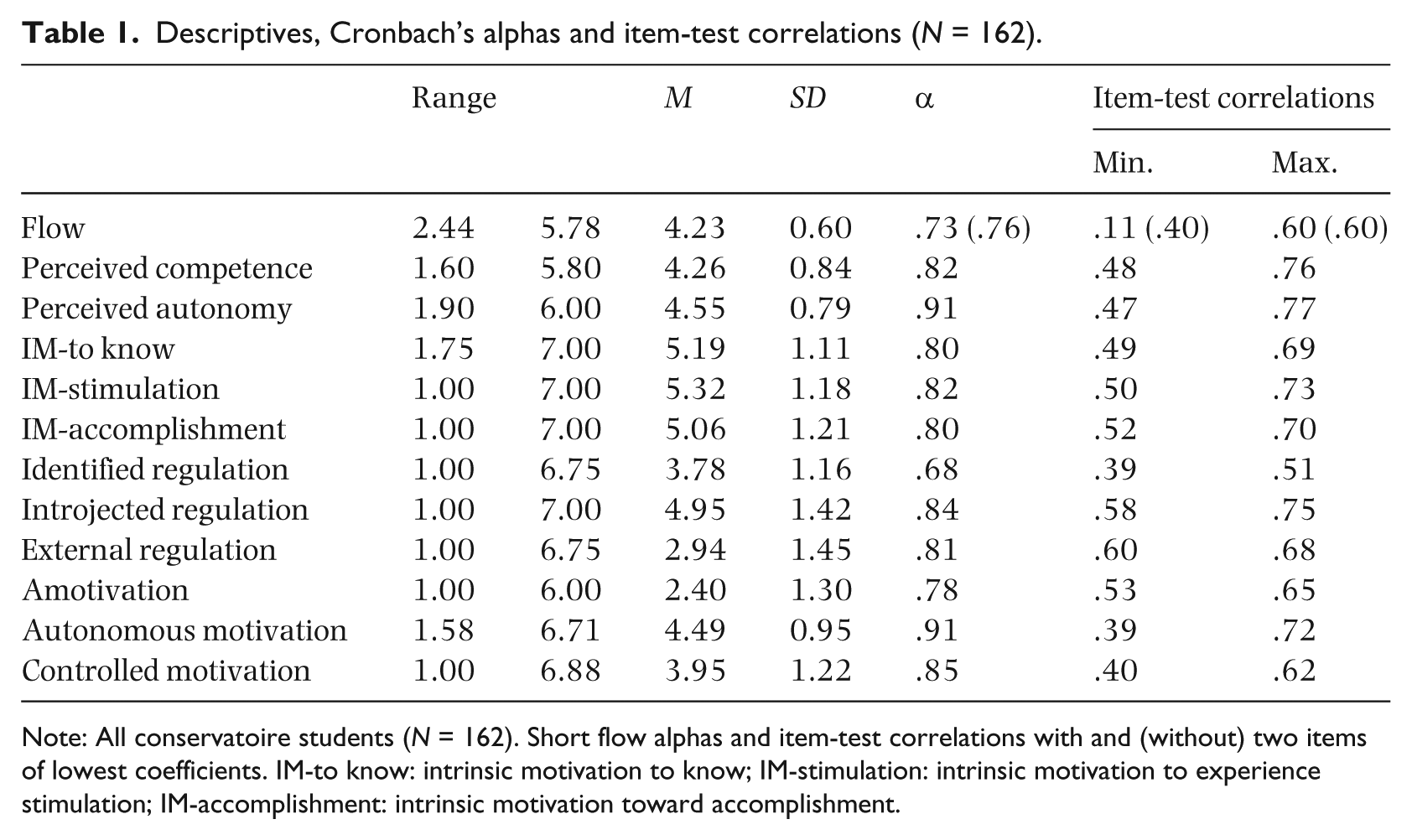
Note: All conservatoire students (N = 162). Short flow alphas and item-test correlations with and (without) two items of lowest coefficients. IM-to know: intrinsic motivation to know; IM-stimulation: intrinsic motivation to experience stimulation; IM-accomplishment: intrinsic motivation toward accomplishment.
Descriptives, Cronbach’s alphas and item-test correlations (n = 109).
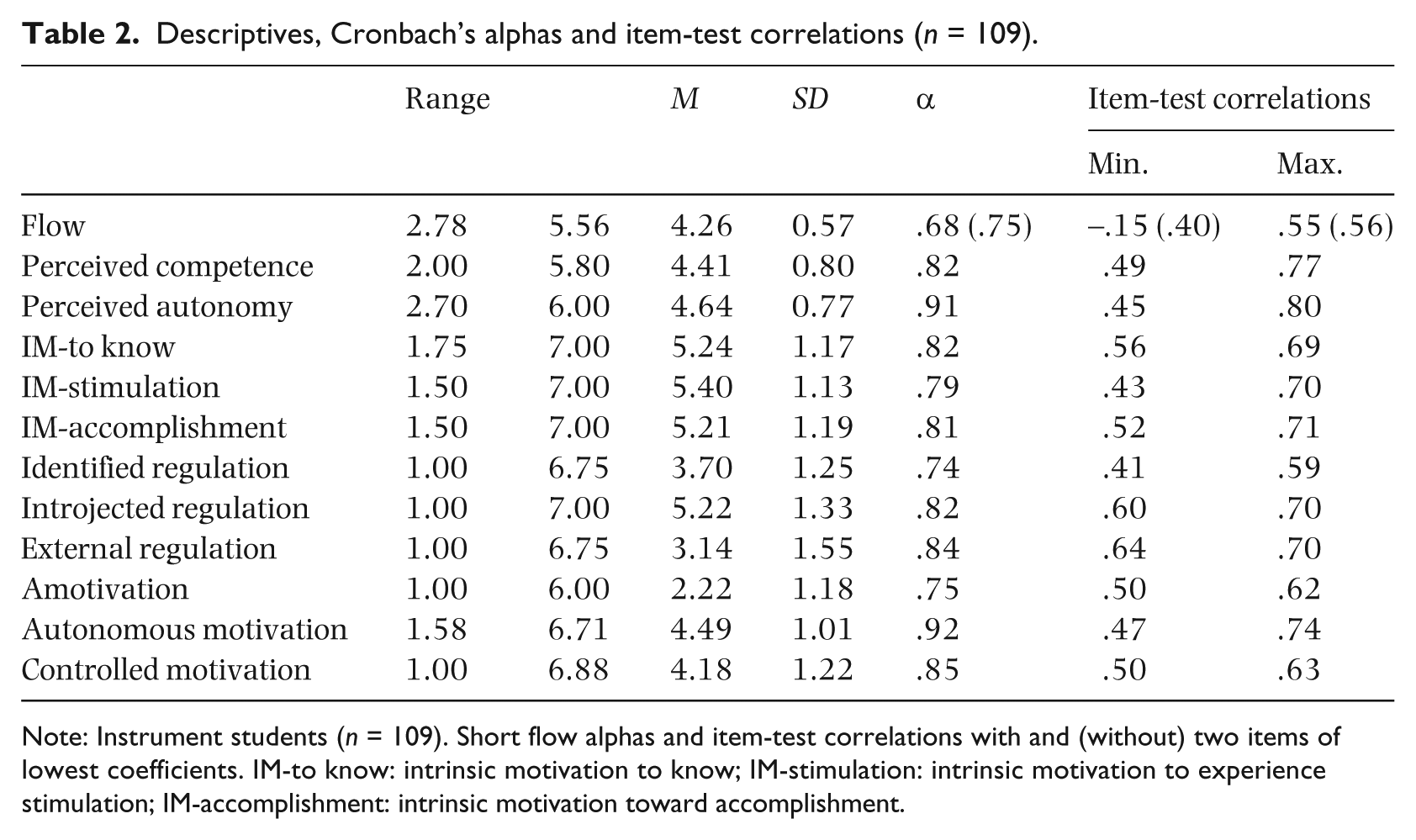
Note: Instrument students (n = 109). Short flow alphas and item-test correlations with and (without) two items of lowest coefficients. IM-to know: intrinsic motivation to know; IM-stimulation: intrinsic motivation to experience stimulation; IM-accomplishment: intrinsic motivation toward accomplishment.
Among all conservatoire students (N = 162), most of the measures (10 out of 12) yielded Cronbach’s alphas of at least .80 and lowest item-test correlations above .40 (Table 1). Only amotivation (α = .78) and identified regulation (α = .68) yielded alphas greater than or identical to the original study (α = .75 and α = .68, respectively) using the Spanish version of the scale (Balaguer et al., 2008). Cronbach’s alpha for flow (α = .73) was also in the same acceptable range as reported in the original study, which was between α = .74 and α = .81 (Jackson et al., 2008). Stepwise deletion of two items, namely, “the way time passes seems to be different from normal” and “I do things spontaneously and automatically without having to think,” raised the coefficients to α = .75 and α = .76, respectively, while the lowest item–total correlation increased to .40. Reliability coefficients and item–test correlations among instrument students (n = 109) were also acceptable and similar to those found in the whole sample (Table 2).
Gender differences
As Table 3 shows, among (N = 155) conservatoire students who reported their gender, males scored higher than females in flow (U = 1972.5, p < .001) and feelings of competence (U = 2270.0, p < .05), whereas female students reported higher levels of amotivation (U = 2226.5, p < .01). Specifically, among instrument students who reported their gender (n = 104), males also scored higher than females in flow (U = 960.0, p < .05), but the difference in feelings of competence was only marginally significant (U = 1530.0, p = .061) and the difference in amotivation was not significant (Table 4).
Descriptives and gender differences (N = 155).
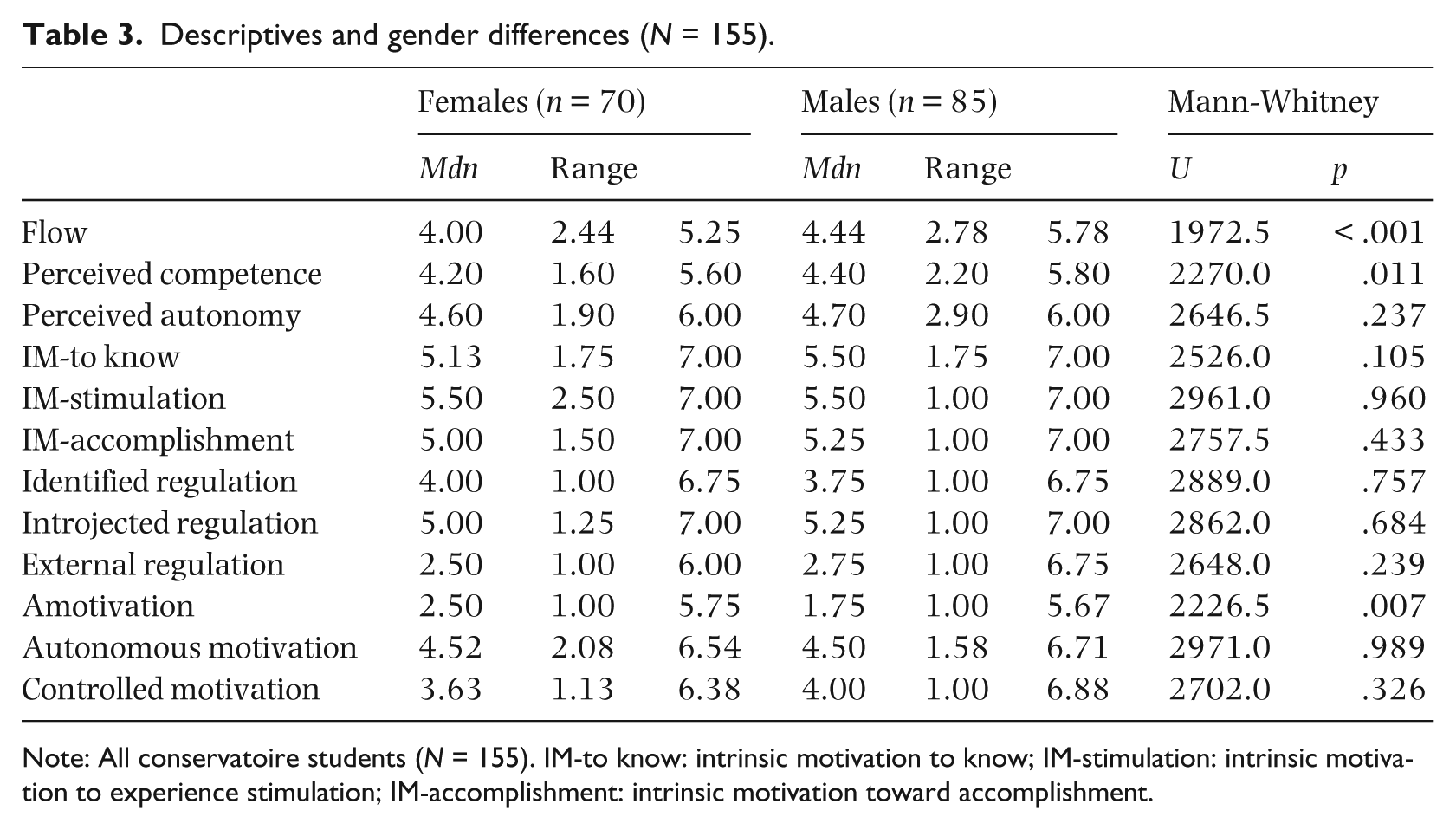
Note: All conservatoire students (N = 155). IM-to know: intrinsic motivation to know; IM-stimulation: intrinsic motivation to experience stimulation; IM-accomplishment: intrinsic motivation toward accomplishment.
Descriptives and gender differences (n = 104).
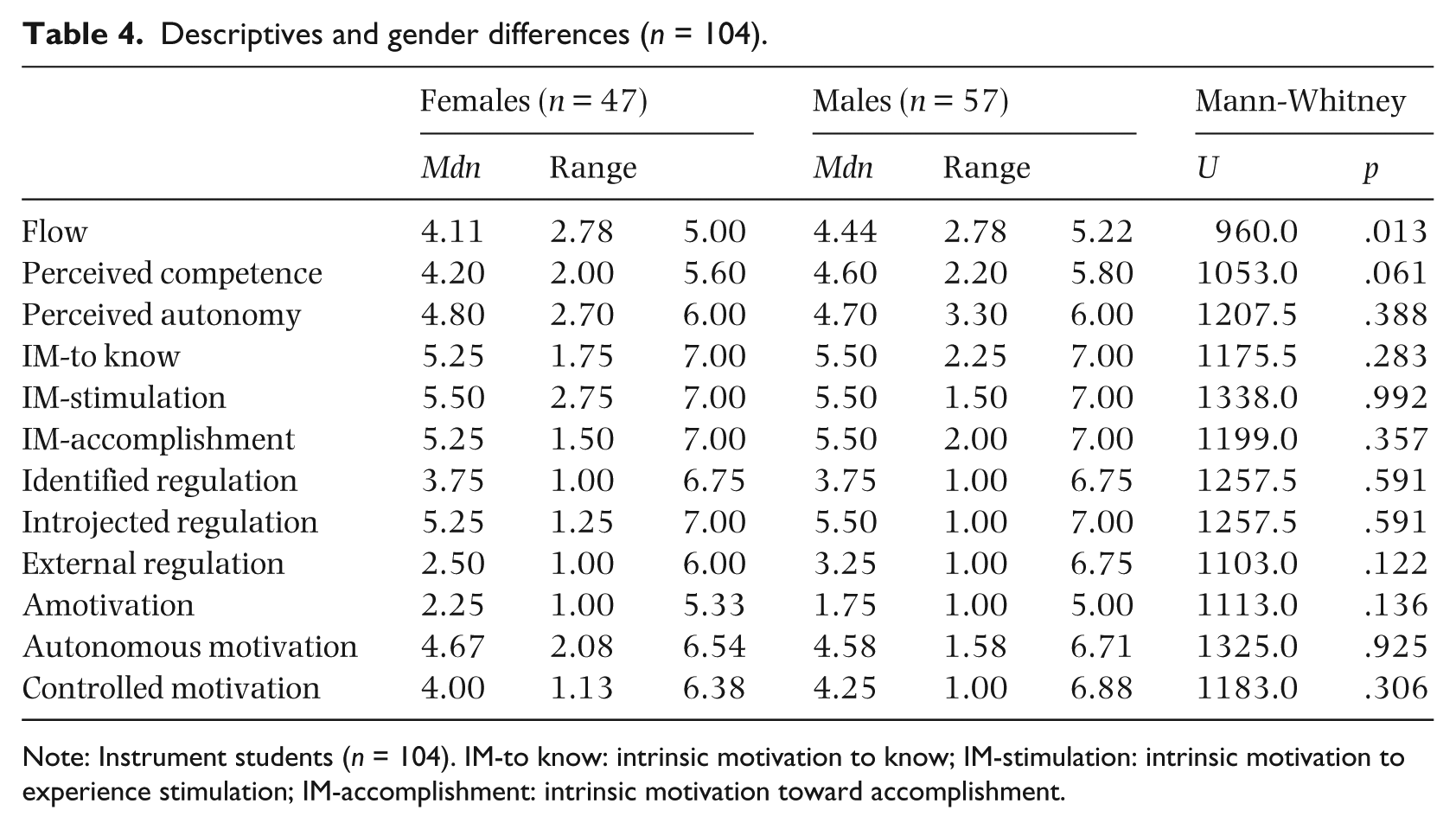
Note: Instrument students (n = 104). IM-to know: intrinsic motivation to know; IM-stimulation: intrinsic motivation to experience stimulation; IM-accomplishment: intrinsic motivation toward accomplishment.
Associations between study variables
As Table 5 shows, flow in instrument practice among conservatoire students in general (N = 162) was positively related to feelings of competence and autonomy and all three types of intrinsic motivation. Feelings of competence were positively related to feelings of autonomy, all three types of intrinsic motivation, and also to external regulation. And feelings of autonomy were positively related to IM-to know and IM-accomplishment (but not to IM-stimulation). Internal consistency of the three intrinsic motivation subscales was high. Identified and introjected regulations were positively associated with each other and with all three types of intrinsic motivation. External regulation was positively related to identified and introjected regulations, and also to IM-to know and IM-accomplishment (but not to IM-stimulation). Lastly, amotivation was negatively related to flow and feelings of competence and autonomy, but positively – though modestly – related to identified regulation. Regarding the relations of flow and PNS with the two broad types of motivation postulated by SDT, flow was associated with autonomous motivation, feelings of competence with controlled motivation, but feelings of autonomy with neither of the two.
Spearman correlations between study variables (N = 162).
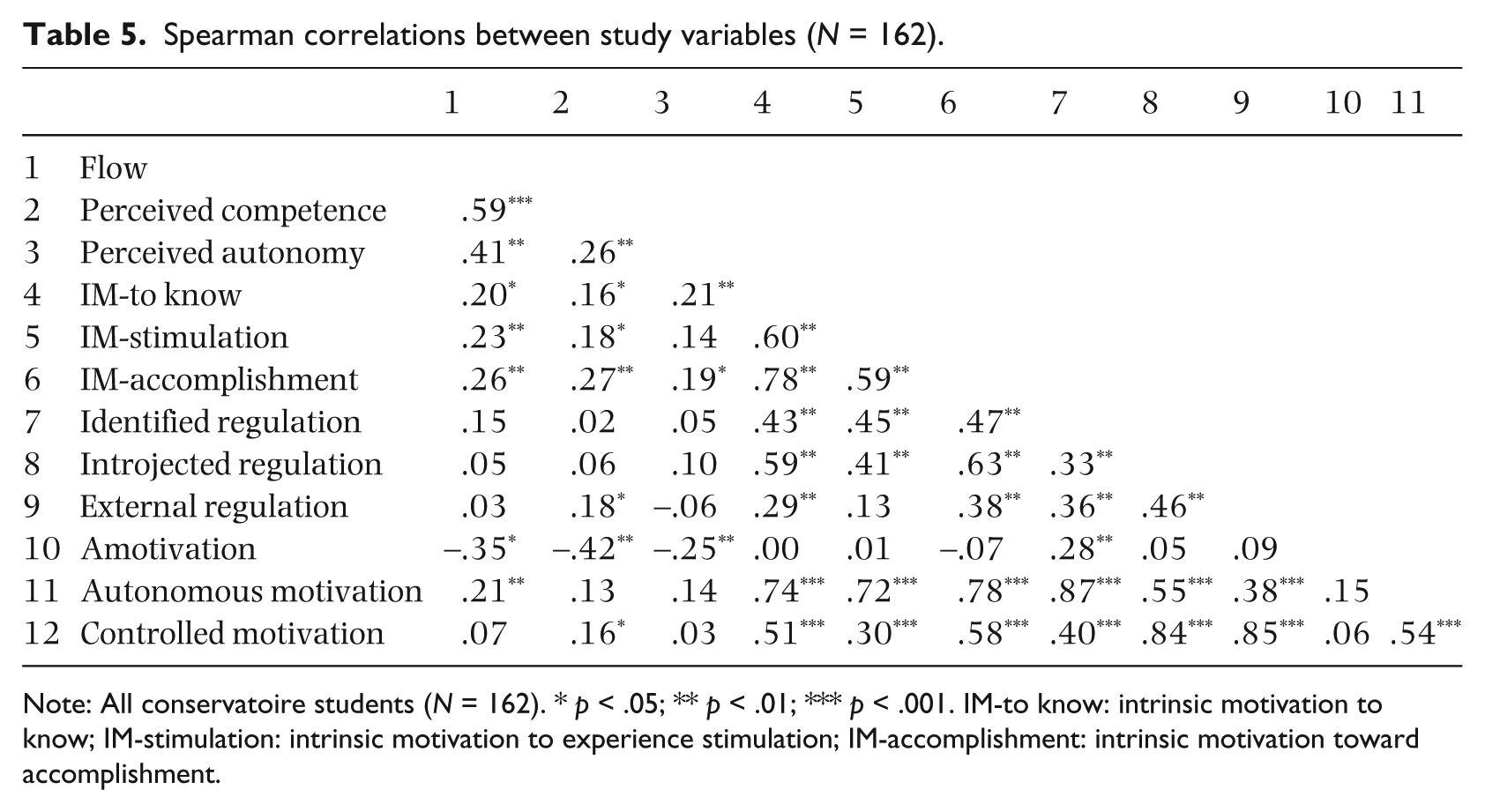
Note: All conservatoire students (N = 162). * p < .05; ** p < .01; *** p < .001. IM-to know: intrinsic motivation to know; IM-stimulation: intrinsic motivation to experience stimulation; IM-accomplishment: intrinsic motivation toward accomplishment.
Among instrument students (n = 109), associations between study variables mostly displayed a similar pattern, but also revealed a few distinct aspects (Table 6): flow was positively related to identified regulation (rs = .26; p < .01) and the association between feelings of competence and external regulation was stronger (rs = .31; p < .01) than in the whole sample of conservatoire students. Also, the associations between external regulation and IM-to know (rs = .31; p < .01), IM-accomplishment (rs = .42; p < .001) and identified regulation (rs = .44; p < .001) were stronger among the instrument students than in the whole sample.
Spearman correlations between study variables (n = 109).
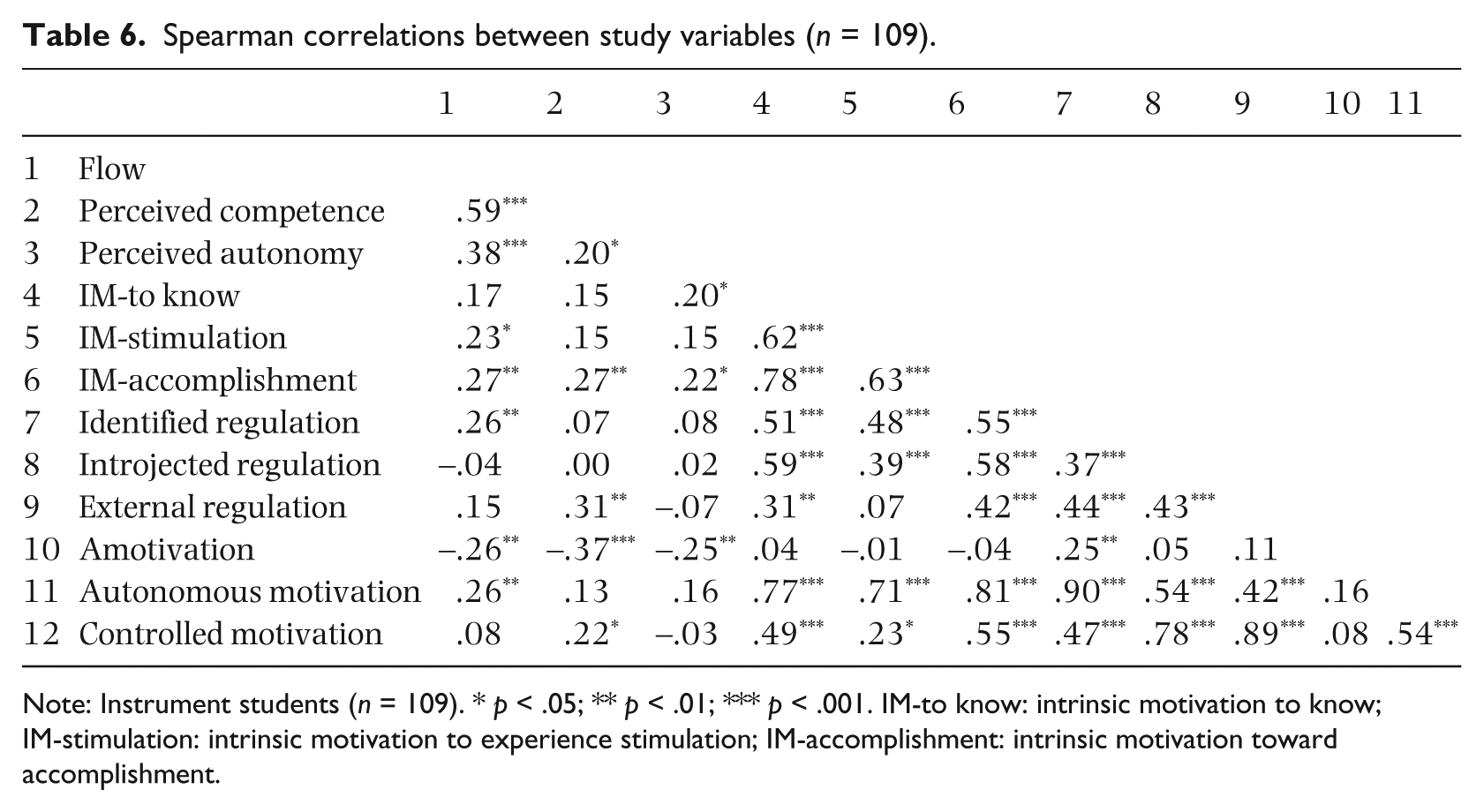
Note: Instrument students (n = 109). * p < .05; ** p < .01; *** p < .001. IM-to know: intrinsic motivation to know; IM-stimulation: intrinsic motivation to experience stimulation; IM-accomplishment: intrinsic motivation toward accomplishment.
Regression analysis of flow in conservatoire instrument practice
Hierarchical multiple regression analysis was conducted to evaluate whether inter-subject variations in students’ flow experience during compulsory conservatoire instrument practice could be predicted by the effects of gender (step 1), psychological needs satisfaction of the needs for autonomy and competence (step 2), and autonomous and controlled motivation (step 3).
With regard to the total sample, 155 participants reported valid records of all variables required for the regression analysis (Table 7). In step 1, gender accounted for 9.1% of flow variations [F(1, 153) = 15.35, p < .001] and it was a significant predictor (β = –.30, p < .001). In step 2, feelings of autonomy and competence were included in the regression, adding 34.8% of variance explanation [F(2, 151) = 46.84, p < .001], accounting for a cumulative 42.8% of flow variations [F(3, 151) = 39.41, p < .001] and gender (β = –.17, p < .01). Therefore, autonomy (β = .20, p < .01) and competence (β = .52, p < .001) were significant predictors. In step 3, autonomous and controlled motivations were included, yielding an additional 3.4% of variance explanation [F(2, 149) = 4.75, p < .05] that explained a cumulative 45.5% of flow variations [F(5, 149) = 26.72, p < .001], showing that gender (β = -.18, p < .01), feelings of autonomy (β = .19, p < 0.01), feelings of competence (β = .52, p < .001), autonomous motivation (β = .21, p < .01), and controlled motivation (β = -.19, p < .05) were significant predictors.
Hierarchical multiple regression analysis model for flow variations in conservatoire instrument practice.
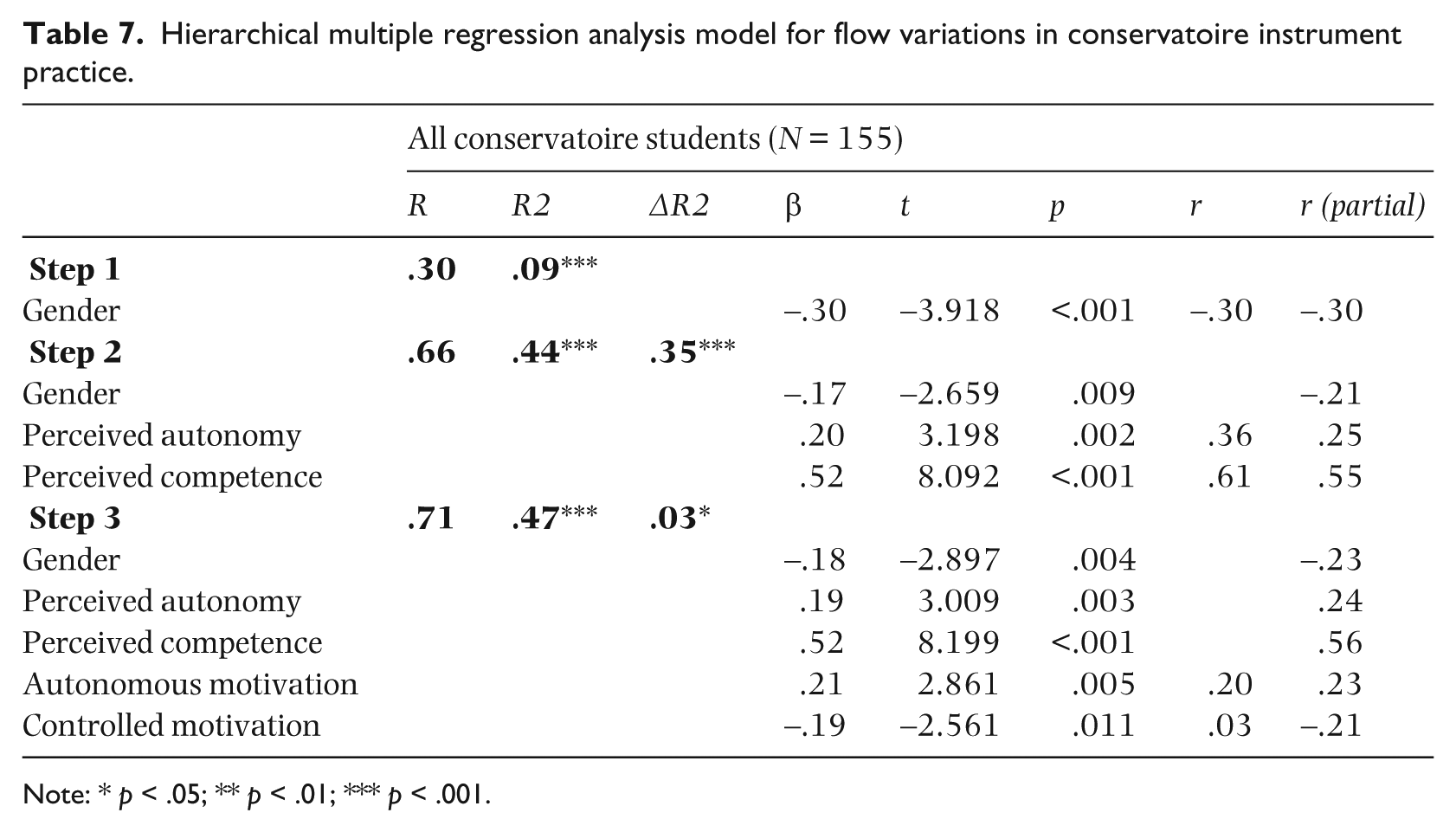
Note: * p < .05; ** p < .01; *** p < .001.
A quick inspection of hierarchical multiple regression analysis for flow variations, specifically among (n = 104) instrument students who reported valid records of all variables required for the regression analysis, mostly revealed similarities but also a few distinct aspects (Table 8). First, the predictive effect of gender on flow variations was weaker and less significant than in the whole sample in step 1 (β = -.26, p < .01) and step 3 (β = -.16, p < .05), while in step 2 it was only marginally significant (β = -.13, p = .077). Second, the effect of feelings of competence on flow variations was greater and more significant among these particular students, both in step 2 (β = .58, p < .001) and step 3 (β = .58, p < .001), thus explaining a higher percentage (40.9%) of flow variations [F(2, 100) = 39.12, p < .001]. And, third, the effects of autonomous motivation (β = .32, p < .001) and controlled motivation (β = –.23, p < .01) on flow variations were also greater and more significant among these particular students.
Hierarchical multiple regression analysis model for flow variations in conservatoire instrument practice.
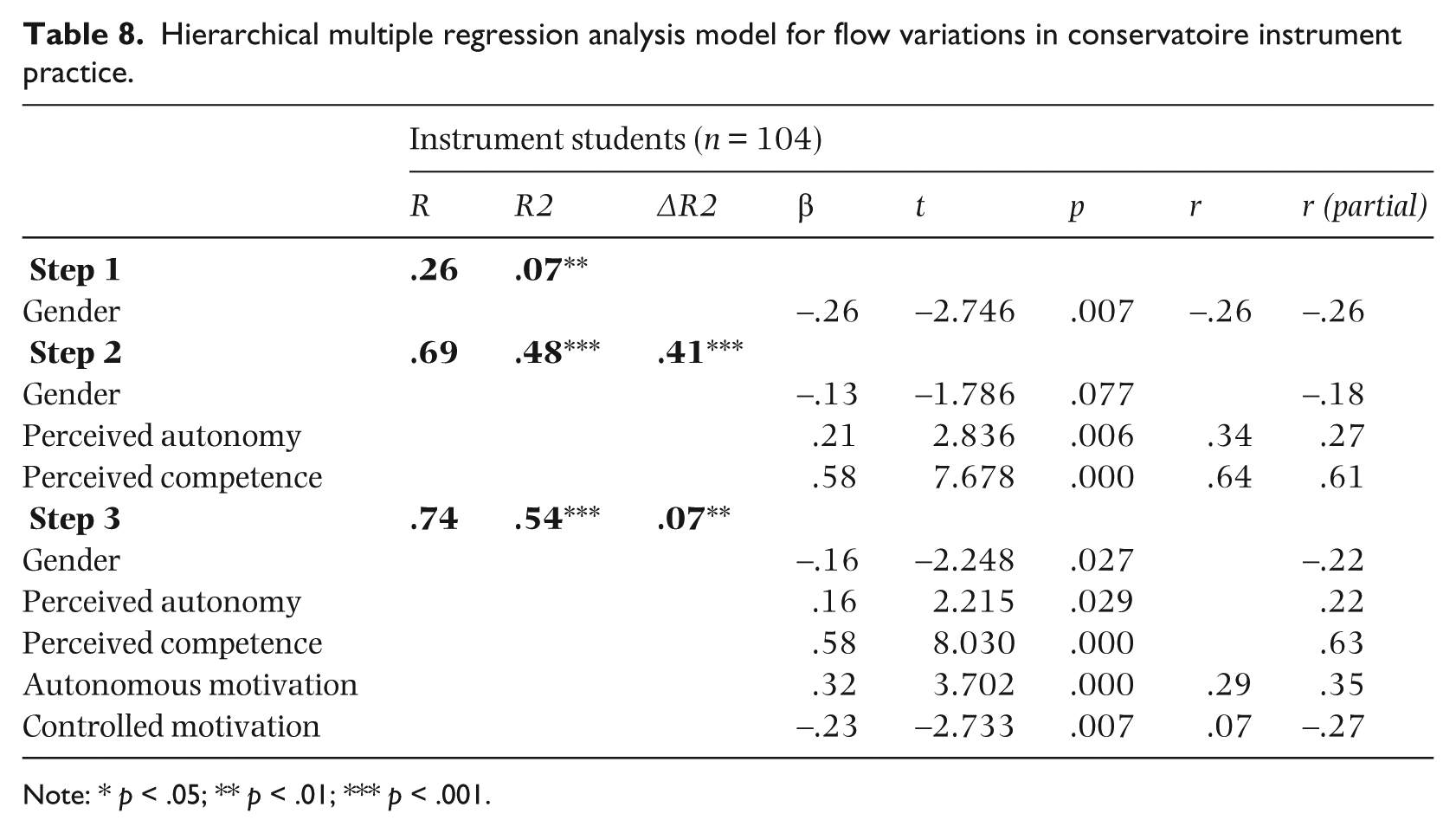
Note: * p < .05; ** p < .01; *** p < .001.
Discussion
Self-determination theory was applied to better understand flow in higher music education, investigating student experience through the assessment of the roles of autonomy and competence needs satisfaction and autonomous and controlled motivation for flow in compulsory conservatoire instrument practice.
Participants reported robust levels of intrinsic motivation, flow and feelings of autonomy and competence in conservatoire instrument practice (Tables 1 and 2), suggesting that these variables are inherent to music practice at this level. This first noteworthy result is in line with previous research signaling the importance of intrinsic motivation (Burnard, 2012; Lamont, 2011; Renwick & McPherson, 2009), feelings of competence (Evans et al., 2013) and flow (Csikszentmihalyi, 1991) for persistence in music learning.
Interestingly, male students reported higher levels of flow and feelings of competence than female students, who scored higher in amotivation (Table 3). On the other hand, when the results were restricted to instrument students (n = 109) the only significant gender difference was that males scored slightly higher in flow (Table 4). These results tie up with studies that show that highly competitive environments can negatively affect self-efficacy beliefs in female musicians (Hendricks, 2014), but also suggest that gender differences, linked to perceived competence and motivation, may be less important (or even insignificant) among conservatoire students aspiring to become professional instrument performers.
Furthermore, flow was robustly associated with intrinsic motivation and feelings of autonomy and competence, evidencing links between SDT, PNS, and flow theory, as reported in previous research (Schüler et al., 2013). The strongest correlate of flow was feelings of competence (Tables 5 and 6), highlighting its importance, which possibly stems from the fact that feelings of competence act as an indispensable requisite for subsequent intrinsic motivation (Losier & Vallerand, 1994; Schüler et al., 2010; Vallerand & Reid, 1984), something flow demands by definition. Therefore, feelings of competence may have gradually become the cornerstone of ongoing intrinsic motivation and perseverance in instrument practice for instrument students at conservatoire level, given their robust association with flow, thus even playing a critical role in the decision to give up instrument practice (Evans et al., 2013).
Instrument students seemingly ascribed more importance to feelings of competence for flow in instrument practice than conservatoire students in general, judging by the greater bivariate and partial correlations between feelings of competence and flow, and the higher beta coefficients of feelings of competence in the regressions (Tables 7 and 8). The explanation for this robust association may lie in the high priority given by these particular students to achievement as professional instrument performers. These results agree with previous research that has argued that, given high achievement motives, feelings of competence are significantly associated with flow (Schüler et al., 2013).
The role of feelings of competence in flow in conservatoire instrument practice admits broader discussion when attention is paid to the fact that feelings of competence were not only associated with intrinsic motivation but also with external regulation and controlled motivation, and that these associations were more significant among instrument students. This suggests, as affirmed previously, that intrinsic and extrinsic motives coexist in higher music education (Renwick & McPherson, 2009), an eventuality that also makes it easier to understand why autonomous and controlled motivations were associated with each other in the context of this study.
Regarding autonomous motivation, significant theoretical implications can be derived from the fact that among instrument students (n = 109) flow itself not only correlated with intrinsic motivation but also with identified regulation, despite this type of regulation being an extrinsic form of motivation. To better understand this finding it is convenient to acknowledge that identified regulation belongs with autonomous forms of motivation, linked to activities people take part in because they see them as important (Deci & Ryan, 2008). In higher music education these findings imply that the integration of extrinsic motives as autonomous motivation, i.e., autonomously embracing the goal of achieving high-quality performance in instrument practice, as determined by external evaluation standards, could play a critical role in coping with high levels of externally regulated demands while still experiencing flow. One plausible explanation for this could be that since instrument students need to regularly perceive themselves as competent in order to maintain high levels of intrinsic motivation and flow, they seek to accomplish this personal goal by trying to achieve the performance standards set by the authorities in the field, by their teachers or through auditions and competitions. In this context, students may feel (or even know) that a high level of performance is required of them to obtain validation, recognition, and future opportunities.
However, in the case of the whole sample of conservatoire students, identified regulation was also associated with amotivation, implying that this type of regulation – even though it is autonomous – does not exclude the possibility of amotivation. One possible way of understanding this seemingly odd association is to bear in mind that the high priority given to performing in front of an audience may lead to performance anxiety (Papageorgi et al., 2013), particularly in the setting of the typical western classical music conservatoire. Furthermore, research has shown that some conservatoire students, in the face of the fierce competition, abandon the goal of performing professionally, judging their own level of performance to be unsatisfactory (Hallam, 2014). In this sense, the obligation to perform in front of others to obtain competence validation and sustain intrinsic motivation may actually be an ongoing task, inherent to instrument practice at higher levels. This circumstance could contribute to an understanding of why identified regulation – or as in this study, ascribing importance to performance according to external standards – may lead to two possible outcomes: flow, or frustration accompanied by the risk of amotivation. These results suggest that the cognitive process that leads a conservatoire student to decide autonomously that instrument practice is important may indeed bolster autonomous motivation and, consequently, flow in a highly competence-oriented and externally regulated activity such as conservatoire instrument practice in the western world. At the same time, however, they suggest that even given high levels of autonomous motivation and flow, an adverse, need-thwarting environment, characterized by excessive demands or competition, may lead to unfavorable social comparisons, perceptions of incompetence, frustration, amotivation, and, ultimately, abandonment.
Music pedagogues trying to promote enhanced engagement and avoid amotivation in their students need to give careful consideration to the conditions that facilitate flow in conservatoire instrument practice. In this regard, gender (step 1), autonomy and competence needs satisfaction (step 2), and autonomous and controlled motivation (step 3) were all significant predictors of inter-subject flow variations, and all the models and steps involved in the hierarchical multiple regression analysis reached significance levels. Among conservatoire students in general (N = 155), study variables accounted for 47.3% of flow variations (Table 7). Among instrument students (n = 104) the percentage was higher, at 54.4% (Table 8).
Though all five study variables displayed significant predictive effects on flow variations, feelings of competence were the strongest predictor in the models and they correlated with flow, even after accounting for the effects of gender, PNS and autonomous and controlled motivations. This further corroborates the idea that feelings of competence should be considered a cornerstone of flow in instrument practice at conservatoire level.
Lastly, autonomous and controlled forms of motivation were both significant predictors of flow variations (Tables 7 and 8), and partial correlations between flow and both forms of motivation, after accounting for the effects of gender and PNS, exceeded zero correlation coefficients. This implies that the predictive effects of autonomous and controlled motivation on flow variations were greater when situated within the context of PNS than when analyzed independently. This finding provides further evidence for the claim that if autonomous motivation is to exert its positive effects on engagement and performance, an environment facilitating PNS is an indispensable support.
Conclusion
One important contribution made by this study is that it provides an integrated account of the roles of feelings of autonomy and competence, and self-determined motivation in explaining inter-subject variations in flow in conservatoire instrument practice. These findings also contribute to previous studies that have found PNS to be associated with positive outcomes such as daily well-being (Sheldon et al., 1996) and flow (Schüler et al., 2013). It also highlights the critical role played by perceived competence in achieving flow in conservatoire instrument practice, especially in the case of instrument students.
Furthermore, these findings contribute to the body of knowledge that endorses autonomous motivation as a form of motivation associated with high levels of positive outcomes in learning processes that demand a high quality of performance and persistence (Deci & Ryan, 2008).
Implications
One of the main implications for music educators is that under circumstances where the achievement motive is high (Schüler et al., 2010), or, in other words, when student experience is extremely focused on performance and competence, excessively high demands may lead to frustration and amotivation. Music teachers should pay close attention to those pedagogical processes aimed at promoting perceived competence and intrinsic motivation among their students. In this respect, they may benefit from assessing their students’ experiences more closely, in order to ensure healthy levels of demand and avoid frustration in instrument practice.
Future research
Studies addressing the relationships between variables such as feelings of autonomy and competence, and intrinsic motivation, with positive outcomes such as flow or well-being in performance-based settings, might benefit by including measures derived from external assessment, as compared to self-report measures such as perceived competence. This would provide more standardized evaluations of competence, enabling researchers to assess the degree to which self-perceived and objectively observed measures of performance agree with each other.
Furthermore, future studies focusing on psychological needs satisfaction and self-determined motivation in conservatoire instrument practice could include more detailed descriptions of personal experiences of music practice and of how current practice is organized, seeking to pinpoint episodes of lower perceived competence or amotivation. This could provide key insights into the roles of autonomy and competence needs satisfaction, and autonomous and controlled motivation for flow, in conservatoire instrument practice. On the other hand, self-report questionnaires would be insufficient in this case, thus making in-depth interviews and observation indispensable.
Finally, based on the fact that among instrument students both feelings of competence and flow displayed significant associations with external regulation, a relevant subject of study might be the learning relationship built up between conservatoire students and instrument teachers, given that teachers are the nearest external authorities and provide external evaluation standards for validating perceived competence. Following on from this, an in-depth study of the characteristics of instrument practice might benefit from a description of issues relevant to the teacher and the student–teacher relationship, in terms of teaching style, level of demand, adaptability to different students, promotion of autonomous or controlled motivation, and other relational aspects which may affect students’ learning processes. This might be accomplished by including relatedness need satisfaction in the design, so that students can describe how they perceive their relations with their teachers, their fellow students and other key figures.
Limitations
The research could have benefited from a larger number of participants, but the design prioritised standardised data collection within one realistic, variance-rich cohort of conservatoire students. Consequently, it was decided to conduct the research with second- and third-year students at just one state conservatoire. Furthermore, due to time restrictions the design did not include the use of in-depth interviews, which could have oriented the interpretations of the results of the quantitative analysis.
Footnotes
Acknowledgements
The authors would like to thank Christopher Gladwin for his invaluable help in correcting the English language manuscript.We thank Escola Superior de Musica de Catalunya (ESMUC) for hosting this research project and all the musicians who participated.
Funding
The authors disclosed receipt of the following financial support for the research, authorship, and/or publication of this article: This study was funded by the Ministry of Economy and Competitiveness of Spain, conjointly with the European Regional Development Fund (project EDU2012-39080-C07-04). English language revision of the manuscript was funded by PsicoSAO-Research Group in Social, Environmental, and Organizational Psychology (2014 SRG 992; Secretaria d’Universitats i Recerca del Departament d’Economia i Coneixement, Generalitat de Catalunya).