







Abstract
Learning the skills to be a musician requires an enormous amount of effort and dedication, a long-term process that requires sustained motivation. Motivation for music is complex, blending relatively intrinsic and extrinsic motives. The purpose of this study is to investigate the motivation of musicians by considering how different aspects of motivational features interact. An international sample of 188 musicians was obtained through the use of an online survey. Four scales drawn from Self-Determination Theory (intrinsic, identified, introjected, and extrinsic regulation) were utilized along with other motivational constructs, including motivational intensity, desire to learn, willingness to play, perceived competence, and musical self-esteem. To integrate the variables into a proposed model, a path analysis was conducted among the motivation variables. Results showed that the intrinsic motives are playing the major role in the maintenance of the motivational system, while extrinsic motives are less influential. Support was found for a feedback loop, whereby desire to learn feeds into increased effort at learning (i.e., motivational intensity), leading to the development of perceived competence, which is then reflected back into increasing desire to learn. Increases in these variables help to create a virtuous cycle of motivation for music learning and performance.
Keywords
The motivation of musicians is a complex, multifaceted, integrated system of internal and external processes that give behavior its underlying energy and direction. The reasons why a person is learning (i.e., the sources of her or his motivation) exert an impact on every aspect of the motivational system. Researchers have examined a number of individual differences that influence motivation and music learning, including student individuality (Gaunt & Hallam, 2016), beliefs (O’Neill, 2011; Hallam, 2013), aptitude (Levitin, 2012; Asmus & Harrison, 1990), socioeconomic status (Dibben, 2006; McPherson, Osborne, Barrett, Davidson & Faulkner, 2015; Corenblum & Marshall, 1998), class curriculum (Winter, 2004), goal structures (Austin, 1991; Marjoribanks & Mboya, 2004), and academic achievement (Johnson & Memmott, 2006). The literature on music motivation reflects something of a patchwork of different theoretical perspectives (Austin, Renwick, & McPherson, 2006; Hallam, 2016). Recently, Evans (2015) reviewed self-determination theory (SDT; Deci & Ryan, 2000) and recommended it as a unifying theoretical framework from which to pursue studies of music motivation. “There is little doubt that a systematic program of research with this perspective is a productive and important endeavor for researchers interested in understanding motivation for music learning” (Evans, 2015, pp. 78–79). However, little is known about the relation between developing skill on musical instruments and the development of self-determined motives, or the dynamics of the processes involved (Küpers, van Dijk, McPherson, & van Geert, 2014). The purpose of the present study is to connect music motivation to core motivational processes reflected in SDT, which is currently one of the most influential frameworks for studying motivation in psychology.
Self-determination theory
SDT is based on the notion that people have a small number of core psychological needs (specifically: autonomy, competence, and relatedness) that are being satisfied to different degrees (Deci & Ryan, 1985a, 1985b, 2000, 2012; Ryan & Deci, 2000; Deci, Ryan & Guay, 2013; Ryan, Legate, Niemiec, & Deci, 2012). Individual differences in self-regulation and different types of motivation emerge from behaviors directed toward satisfying basic needs. SDT focuses on how internalized, or self-determined, one’s actions are in a specific social context. In order to understand goal-directed behavior, psychological growth, and wellness, one needs to address both the core needs that contribute to psychological health and the sources of regulation involved in behaviors relevant to those needs. SDT proposes that sources of regulation lie on a continuum from external to internal regulation. With external forms of regulation, one’s behavior is perceived to be governed by powerful others, rules or directives, and a concern for following imposed rules or social norms; that is, there is external pressure to act. With more internal forms of regulation, one’s behavior is perceived to be governed by a sense of genuine interest, accepted challenges, and personal meaning; there is a willingness to act (Bakker, 2005). The extrinsic–intrinsic ends of the continuum should not be interpreted as mutually exclusive or dichotomous categories because human behavior is often complex and multiply determined (Reeve, 2015). Although SDT allows for the possibility of feeling un-motivated (a state called ‘amotivation’), in most situations where a person does feel motivated to act, it will be possible to identify a blend of external and internal regulation operating simultaneously (Deci & Ryan, 2000).
Initial external regulation of some behavior may become more-and-more internally regulated over time. By focusing on different types of external motives, SDT emphasizes the process of internalization. Reeve (2015) suggests “the more autonomous or self-determined the extrinsic motivation is, the greater is the person’s social development, personal adjustment, and psychological well-being” (p. 150). We can identify four points along the continuum, two of which are regulated relatively externally and two that are more internally regulated (see Table 1):
- Extrinsic regulation, which is the least internalized motives, is externally regulated to attain a reward, such as money, or because of external requirements or pressures. “I practice because my teacher makes me do it.”
- Introjected regulation, which is primarily extrinsic, but with a blend of internalization; this is when the person comes to accept the pressure or duty to perform an action as something they should do. There is a slight change in focus toward the self, as parents and other persons’ values are internalized, but not (yet) fully endorsed (Koestner & Losier, 2002). “I practice because I know I am supposed to.”
- Identified regulation, which is also an extrinsic motive but is clearly transitioning to intrinsic; this is when the person sees value in the behavior to be performed, he or she understands that the behavior is important. With this motive, people accept that they are recognized as a person who does this behavior. It might not be “fun” but they think it is important to do. “I am a musician, I have to practice.”
- Intrinsic regulation, which is engaged in freely, out of one’s own volition, due to personal interest and curiosity. Intrinsic motivation is self-sustaining, as when one plays one’s favorite game for its own sake. “Practice is fun, time flies; it’s another chance to pick up my instrument.” With intrinsic regulation, the emotional quality of the experience is most positive, with genuine interest, enjoyment, and inherent satisfaction (Reeve, 2015).
The self-regulation continuum.*
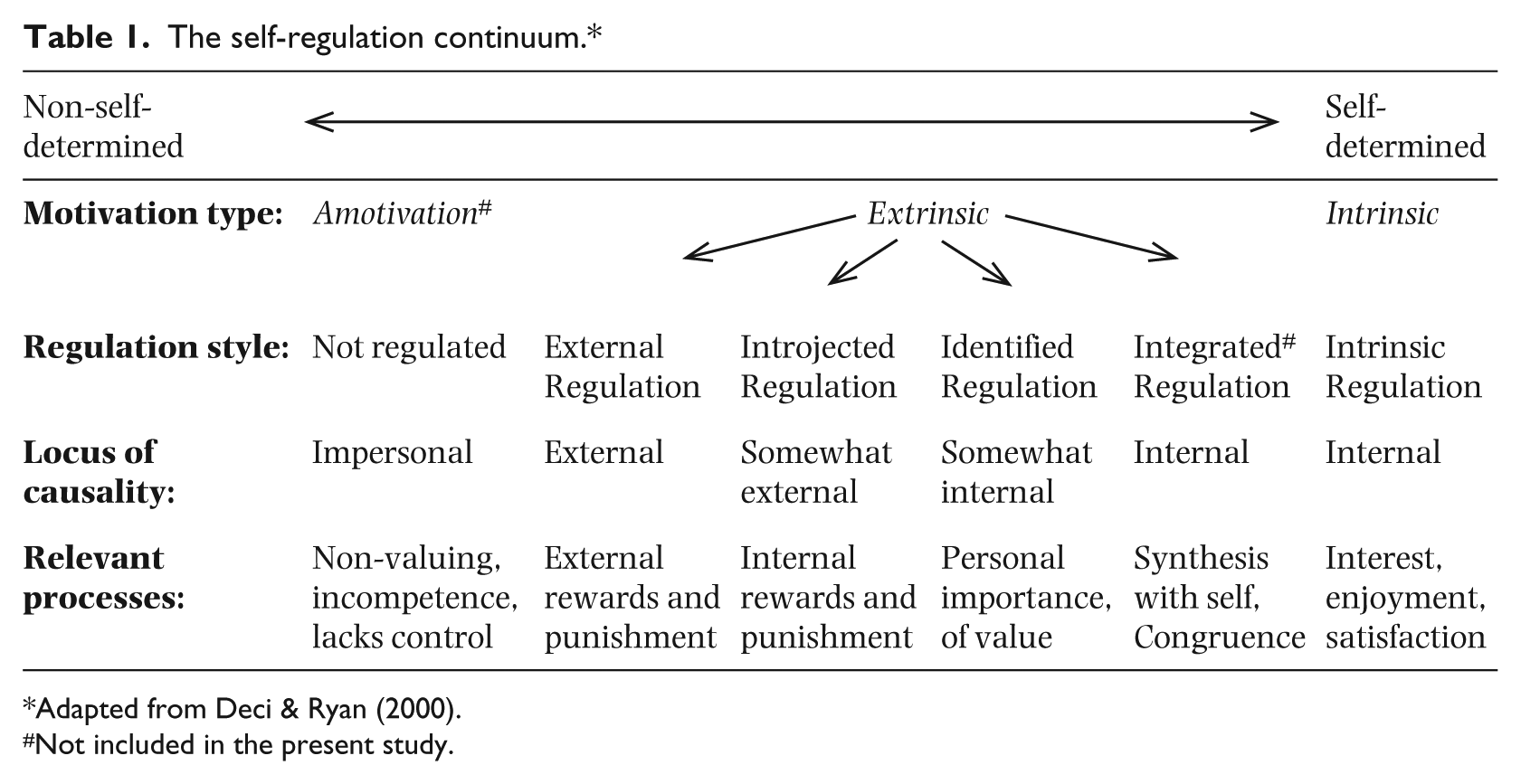

Adapted from Deci & Ryan (2000).
Not included in the present study.
Underlying the continuum of regulation, SDT proposes a set of three core needs: competence, relatedness, and autonomy. These needs form the basis for an ‘organismic dialectic’ process that operates toward healthy psychological functioning by integrating the meaning of behavior with a person’s sense of self (Deci & Vansteenkiste, 2004; Silva, Marques & Teixeira, 2014). Specific behaviors such as music learning or performance may help satisfy one, two or all three of the needs (MacIntyre & Potter, 2013). As a developmental process, it should be emphasized that needs are satisfied to varying degrees (a) for different people, and (b) for the same person at different points in time. SDT proposes that the extent to which behavior generally satisfies a person’s needs has a strong influence on her or his psychological health.
The need for competence involves the desire to be effective in interacting with one’s environment (Deci & Ryan, 2000; White, 1959). This can include using one’s skills, interactions, or capabilities to help control situations and outcomes. The need for relatedness concerns the desire to interact and connect with others, gaining a sense of closeness and acceptance in one’s interpersonal relationships (Deci & Ryan, 2000; Baumeister & Leary, 1995). This desire to belong is particularly important for the process of moving towards more internally regulated behaviors, as it influences one’s inclination to accept and endorse the values and behaviors of others (Deci & Ryan, 2000). The need for autonomy reflects a sense of free will and choice when it comes to one’s behavior. This sense of free will allows persons to act upon their own volition, instead of feeling controlled by external forces (Deci & Ryan, 2000). People want to feel as though they are able to engage in activities and behaviors that are of personal interest and importance.
SDT connects the extrinsic–intrinsic continuum to the needs by noting that the more self-determined one’s motivation for an activity is, the greater extent to which the activity will satisfy one or more of the psychological needs. The SDT concepts of psychological needs and the motivational continuum work together closely, and may be seen operating as individuals develop their sense of self and identity as musicians (see McPherson, 2005; McPherson & Zimmerman, 2011).
Evans (2015) recently reviewed the SDT literature and provided a conceptual overview of its applications to music learning, but there is a need to test the ideas empirically. In describing the continuum of extrinsic–intrinsic regulation, Evans emphasizes that the use of external controls in learning, such as reward and punishment, over time, can actually cause avoidance, shame, and guilt. Although initial learning based on external regulation eventually can lead to engagement and effort, over time learning based primarily on external motivators, combined with teaching in a controlling and competitive manner generally would be expected to be harmful to student’s intrinsic musical motivation and well-being (Bakker, 2005; Küpers et al., 2014). Evans (2015) suggests that feelings of pride, guilt, shame, and other emotions are the feelings most closely associated with introjected regulation, given that introjected regulation is primarily extrinsic, with a small blend of internalization. Therefore, motivation at the extrinsic end of the continuum might be expected to influence a person’s effort and sense of competence, but the role of extrinsic regulation in motivating musicians’ internal desire to learn is likely less than for intrinsic types of regulation.
At the internalized end of the continuum are concepts that reflect identified and intrinsic regulation. 1 Internally motivated musicians accept the importance of practicing and learning skills in order to succeed. They may even internalize their motivation for mundane activities such as practicing scales at home, to a point where they come to enjoy them and value the activity (see the dynamic model offered by Küpers et al., 2014). Being internally motivated reflects a genuine desire to learn, as well as a more intense motivation, which may in turn affect one’s sense of developing competence and self-esteem. All of this suggests that both extrinsic and intrinsic regulation can have an effect on one’s perceived competence and willingness to play music.
Evans (2015) presents a number of studies that support the tenets of SDT in the development of musical abilities. In particular, MacIntyre and Potter (2013) focused on differences in self-determined motives between pianists and guitarists, as well as differences among those who write music, hope to write music in the future, and who have no intention to write music at all. They provided correlations between SDT concepts and a group of five motivation-related variables reflecting processes implicated by SDT. The variables are:
- Desire to learn, which reflects the strength of the emotional attachment the student has towards learning.
- Motivational intensity, which reflects the amount of effort that a student is willing to put towards learning.
- Perceived musical competence, which is adapted from the literature on communication to reflect the musician’s assessment of their present skill and confidence with music.
- Self-esteem for musical abilities, which is adapted from the literature on self-esteem (Rosenberg, 1965) to reflect one’s degree of favorable or unfavorable attitude toward the self.
- Willingness to play (WTP), which is adapted from McCroskey and Richmond’s (1991) Willingness to communicate concept, defined as the readiness to initiate conversation if the opportunity arises. WTP represents a musician’s willingness to play music across various settings that can range from informal jam sessions in a garage to formal recitals on a stage, for audiences of varying sizes.
Strong and significant correlations between the intrinsic regulation side of the SDT continuum and all five of the variables have been reported among both guitarists and pianists (MacIntyre & Potter, 2013). In addition, identified regulation correlated significantly with all five variables for pianists, but with only three variables among guitarists (motivational intensity, perceived competence, and willingness to play). Introjected regulation showed a weak positive correlation with desire to learn and stronger but negative correlation with self-esteem in guitar and piano players. Finally, extrinsic regulation had the weakest correlation of the SDT variables, showing small, negative correlations with desire to learn and perceived competence among guitarists only.
Results such as these suggest the value of applying SDT to understanding music motivation, but might best be seen as a starting point rather than an end point for the development of theory in this area. Following the theoretical contributions of Evans (2015) and MacIntyre and Potter (2013), the present study will statistically test a model of music motivation using data collected via an online survey. We will evaluate how strongly the motivational variables correlate with each other in a sample of musicians that includes more than pianists and guitarists. The major purpose of the present study is to test a proposed model using path analysis. Path analysis is an extension of multiple regression and a variation on structural equation modelling. To create a path diagram, a model is drawn to show each of the hypothesized relationships among concepts that reflect the results of underlying processes. The model begins with one or more exogenous variables that are the starting point(s) from which to conceptualize the underlying processes. The interior of the model shows endogenous variables and their inter-relationships. Arrows are drawn to show how each variable in the model relates to the others. In multiple regression terms, it is possible for a given variable to be conceptualized simultaneously as both a criterion and a predictor variable, with both inputs from and outputs to other variables. For the purpose of constructing the base model, we added more paths than we reasonably expected to find to be significant because we did not want to omit a path from SDT to the music-related variables without testing it first. This is consistent with a hypothesis testing approach to model building (Tabachnick & Fidell, 2013).
The proposed model
The proposed model (see Figure 1) begins with four points on the SDT continuum: extrinsic, introjected, identified and intrinsic regulation. The model shows all of the inter-correlations among the four self-determination concepts (extrinsic, introjected, identified, and intrinsic). These four SDT variables form the basis of the model, starting with self-determination as the foundation of motivation for musicians. Consistent with previous studies using the same scales, it is expected that concepts closer together on the continuum will correlate more highly than concepts that are further apart (Deci & Ryan, 2000). We did not assume the primacy of any of the self-determination variables; therefore, they appear in the model as inter-correlated, exogenous variables.

Proposed model.
The proposed model shows the self-determination framework supporting three specific music-related variables: perceived competence, motivational intensity, and desire to learn. Perceived competence is positioned as an outcome of motivation. This positioning is based on where perceived competence appears in the socio-educational (S-E) model of music motivation (MacIntyre, Potter, & Burns, 2012). Even though the ways in which core processes underlying motivation are described differently between the S-E model and SDT, motivation from different sources would be expected to lead to the actions a musician takes to develop competence. Although all four of the SDT motives are hypothesized to contribute to the development of perceived competence, it seems likely that internalized motives will make the strongest contribution to predicting differences in perceived competence. The second variable in this group, also positioned as an outcome of SDT motives, is motivational intensity or effort. Proposing that increases in effort are an outcome of increased motivation is highly consistent with results from prior SDT studies, Evans’ (2015) theoretical propositions, and the correlations obtained by MacIntyre and Potter (2013). A third variable, desire to learn, is also proposed as an outgrowth of SDT processes, and is likely to best reflect more intrinsic qualities of motivation (Evans, 2015), consistent with prior results (MacIntyre & Potter, 2013). Finally, it is consistent with recent emotion theory to propose that the desire to learn functions is an emotional engine supporting enhanced intensity of effort, and is itself supported by growing sense of competence (see Fredrickson, 2013). This section of the model shows a feedback loop whereby desire to learn feeds into increased effort at learning, leading to the development of perceived competence that is reflected in increasing desire to learn.
Taking motivational intensity and desire to learn as intermediate variables in the path analysis, we can consider their effects on the remaining variables. Over time, expending more effort likely will tend to lead to mastering musical skills, which would be reflected in self-assessments of perceived competence. Therefore, a path from motivational intensity to perceived competence is proposed. Increasing perceptions of competence likely generate feelings of pride and self-esteem for musical abilities; this path is reflected in the model as well. Finally, as the general literature on self-esteem holds that it is best considered a reflection of previous achievements (Reeve, 2015), we propose that motivational intensity also directly supports musical self-esteem.
The final variable in the path model is willingness to play (WTP). WTP represents a behavioral intention to engage with music if the opportunity arises, the final psychological step in preparation to play music. Consistent with prior research into willingness to communicate the two most immediate influences on WTP are proposed to be a perception of competence and the belief in one’s ability to perform musical actions (McCroskey & Richmond, 1990; MacIntyre, Clément, Dörnyei, & Noels, 1998). Therefore, paths from perceived competence and self-esteem lead to WTP. We also included a path from desire to learn to WTP due to the ongoing connection between playing and learning. There is a close connection between practice and learning; it is reasonable to suggest that it is in the playing of an instrument that one learns to play, leading to a proposed connection between the desire to learn and willingness to play. The path model was evaluated using AMOS (IBM Corp., 2012).
To judge the overall fit of the model, a series of indices will be reported as recommended by Hooper, Coughlan, and Mullen (2008). The chi-square test examines residual correlations to determine if the tested model is leaving a significant amount of unexplained variance; a good model will produce a non-significant chi-square. Given the sensitivity of chi-square to sample size, a ratio of chi-square to degrees of freedom of less than 2.0 is recommended. The root mean square error of approximation should be less than .05 for a good fitting model. Finally, fit indices for a good model (the goodness-of-fit index [GFI] and comparative fit index [CFI] will be reported) should exceed .90. To address the issue of parsimony, the GFI and CFI indicators will be adjusted. There is not a well-accepted rule of thumb for parsimony, but coefficients near .50 likely suggest adequately parsimonious model. A final issue in developing a model is considering the possible addition of data-driven paths. The AMOS software produces modification indices that identify paths that are not shown in the model that likely would produce a significant path coefficient. Using modification indices in this way violates the hypothesis testing process, and must be used with caution. However, modification indices can produce valuable suggestions for improvement to the model.
Method
Participants
For this study, adult musicians (N = 188) were surveyed. Participants were recruited first by a posting on a local website for musicians that directed participants to an online survey (built using tools provided by www.googledocs.com). Participants were asked to refer other musicians to the study (snowball sampling). The age range of respondents was between 18 and 69 years, with 68% of the sample between 20 and 39 years of age. Approximately half the sample was male (52%) and half female (48%). Just over half (51%) indicated that they had received formal training of 2 years or more, 31% had less than 2 years of formal training, and 17% reported being self-taught. Participants in the study represent 25 different nationalities, grouped primarily into European (62%), North American (21%), Asian (3%), Aboriginal (2%), and the rest were ‘other’ or chose not to identify (total 12%). Some participants indicated they played as many as 15 instruments, with only 8.5% naming only a single instrument they played. When asked to name their primary instrument, the most frequent responses were guitar (29%), piano/keyboards (16%), brass instruments (10%), bass guitar/upright bass (10%), drums/percussion (9%), and voice (9%). 2
Materials and procedure
Participants were asked for demographic information, instrument(s) and genres played, frequency and duration of average play and practice time, and open-ended questions about their possible future as a musician (reported in Schnare, MacIntyre & Doucette, 2011). Quantitative data used in evaluating the model of SDT and music-related variables was obtained with the scales listed below.
Self-determination measure
A 16-item scale to measure self-determination related to music was developed by adapting Brown, Miller and Lawendowski’s (1999) Self-Regulation Questionnaire (SRQ) to measure self-regulation in music. The scale is divided into sub-sections, with reliabilities as follows: external regulation (Cronbach’s alpha = .80), introjected regulation (Cronbach’s alpha = .83), identified regulation (Cronbach’s alpha = .78), and intrinsic regulation (Cronbach’s alpha = .71). The SRQ assesses individual differences in motivation with specific reference to music. Participants were asked to indicate how true they believe each statement reflects why they “try to practice music on a regular basis,” on a seven-point Likert scale; with 1 being not at all true and 7 being very true. An example item for intrinsic regulation is “Because I enjoy playing music,” while an example item that measures extrinsic regulation is “Because others would be angry at me if I did not.”
Desire to Learn
This 10-item scale reflects the strength of the emotional investment in learning. Responses on a 7-point Likert scale ranged from 1 (strongly disagree) to 7 (strongly agree). An example item is: “If it were up to me I would spend all of my time learning music.” The scale was shown to have acceptable reliability (Cronbach’s alpha = .73).
Motivational Intensity
This nine-item scale reflects the intensity of effort put into learning and playing music. Responses were given in a seven-point Likert scale ranging from 1 (strongly disagree) to 7 (strongly agree). An example item is “I make a point of trying to understand all the music I see and hear.” The scale was shown to have acceptable reliability (Cronbach’s alpha = .75).
Perceived Competence for Music
This four-item scale reflects the self-evaluation of one’s effectiveness and capabilities in learning and playing music. Responses were given on a seven-point Likert scale, which ranged from 1 (not at all true) to 7 (very true). An example item from this scale read as follows: “In music, I feel that I am a person of worth, at least on an equal plane with others.” This scale was shown to have acceptable reliability (Cronbach’s alpha = .88).
Musical Self-Esteem
Rosenberg’s (1979) 10-item Self-Esteem Scale was adapted to measure Musical Self-Esteem. A 9-point Likert scale was used and ranged from 1 (very strongly disagree) to 9 (very strongly agree). An example item from this scale read as follows: “I feel that I have a number of good musical qualities.” The reliability of this scale was acceptable (Cronbach’s alpha = .86).
Willingness to Play
A nine-item scale reflects the willingness to play in formal, informal, and neutral settings in front of friends, acquaintances, and strangers. A 10-point Likert response scale was used, ranging from 1 (I would never feel like playing) to 10 (I would always feel like playing). An example item is “When playing informally for a small group of strangers.” The reliability of this scale also was acceptable (Cronbach’s alpha = .93).
Results and discussion
The results will be presented in two parts, first focusing on the simple correlations among the variables and then testing the hypotheses that make up the proposed path model.
Correlations
Correlations among the measures named above are presented in Table 2, along with the mean and standard deviation for each of the variables. Each of the SDT concepts correlated significantly (p < .05) with its neighbor on the continuum, and one other correlation among SDT scales (introjected and intrinsic regulation) also was significant. These results are consistent with MacIntyre and Potter’s (2013) study of music motivation and reflect the expected the pattern of correlations among the SDT concepts (Deci & Ryan, 1985a). The music-related variables all correlated significantly with each other (all p < .01). The strongest correlations among these variables were between perceived competence and musical self-esteem (r =.68), and desire to learn and motivational intensity (r = .67), a result consistent with MacIntyre and Potter’s (2013) findings.
Correlation matrix.
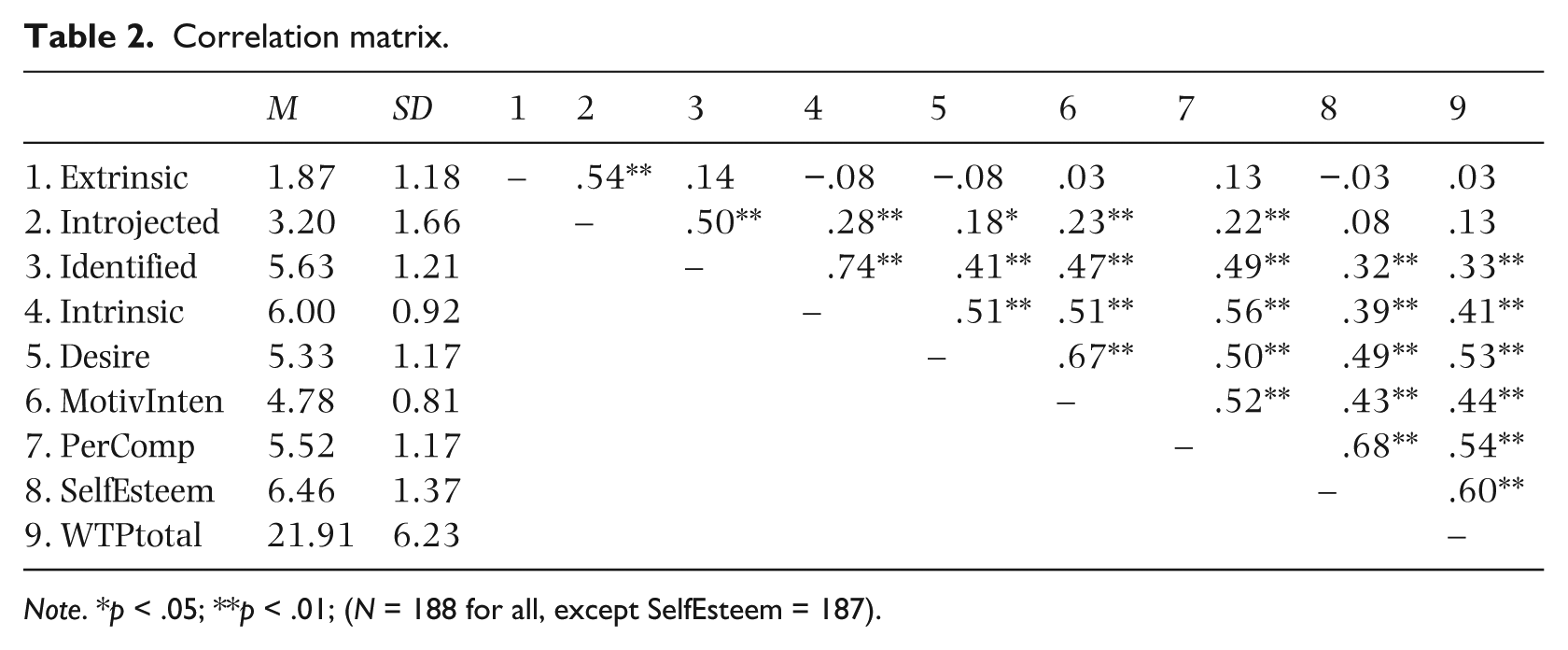
Note. *p < .05; **p < .01; (N = 188 for all, except SelfEsteem = 187).
The pattern of inter-correlations between the SDT and music-related variables can be described as showing larger correlations as the forms of regulation become more internalized—both intrinsic and identified regulation show significant correlations with all five of the music-related variables, with correlations being the strongest for intrinsic regulation. Introjected showed significant but relatively weaker correlations with three of the music variables (desire to learn, motivational intensity, and perceived competence) and extrinsic regulation showed no significant correlations with the music variables. These results are consistent with research that suggests that extrinsic motivation is not an especially successful motivator, and under certain conditions can actually undermine one’s intrinsic motivation (Deci, 1971; Deci, Koestner, & Ryan, 1999; Kohn, 1993).
Path analysis
The proposed model was evaluated using path analysis (AMOS 24, IBM Corp., 2012) in order to examine how well the proposed model accounts for the correlations among the variables. Results of the various fit indices show that the base model summarizes the correlations well, but the model is not especially parsimonious (see Figure 2, Panel A). For the full model, the chi-square test was non-significant, χ2(10) = 14.2, p < .17, and the ratio of chi-square to degrees of freedom was 1.42. The root mean square error of approximation also produced an acceptable value (RMSEA = .048). Both the GFI and the CFI were found to be well above .90 (GFI = .98, CFI = .995). The only indices that provided evidence for the need for model improvement were the parsimony adjustment to the GFI (PGFI = .22) and the parsimony-adjusted CFI (PCFI = .28). The fact that parsimony arises as an issue in this model is not a surprising finding because our approach to model building required testing paths from all four SDT variables to desire to learn, perceived competence, and motivational intensity.
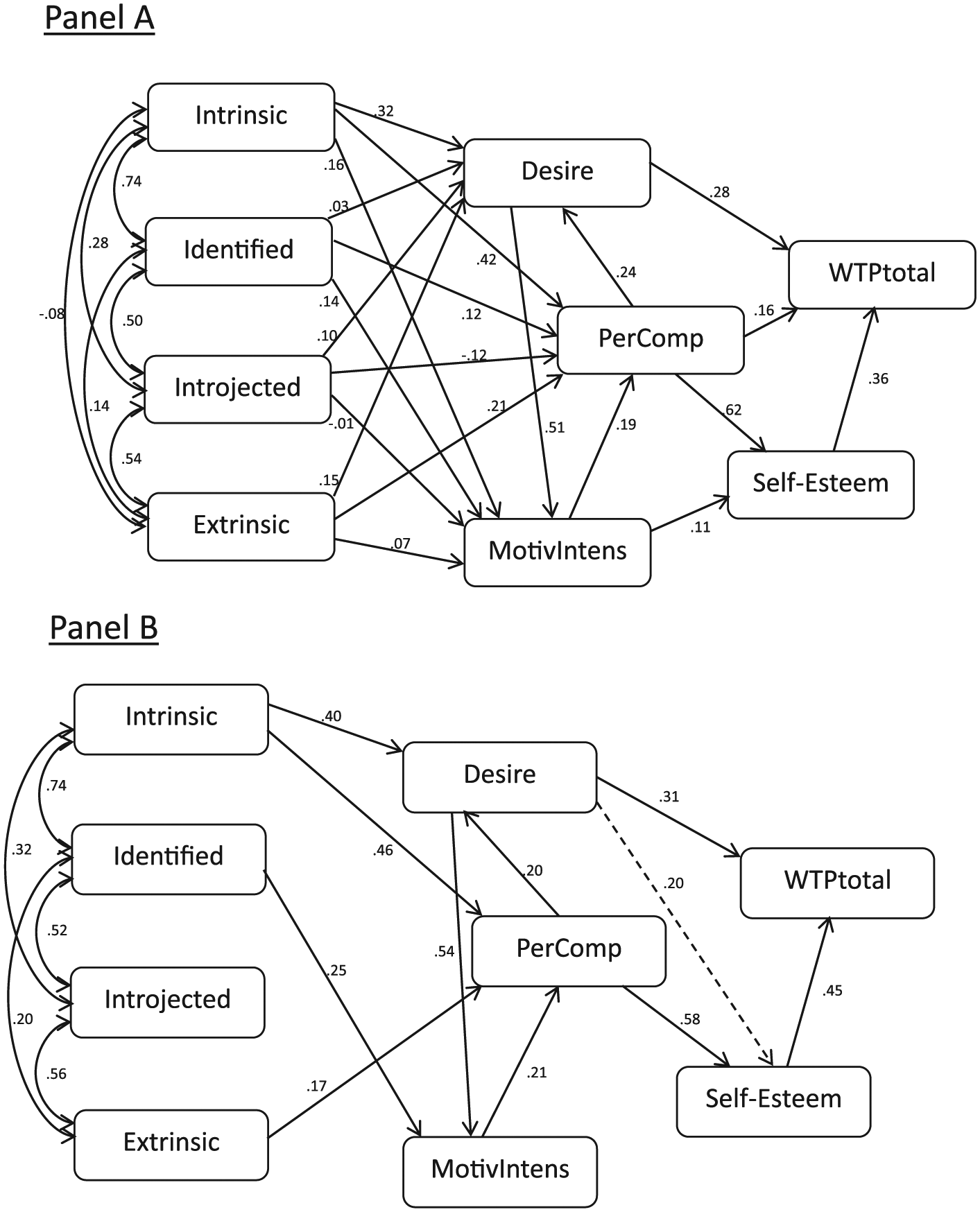
Tested and pruned models with standardized coefficients.
The strength of the relationships among variables in the model is estimated by the size of the standardized path coefficients. All of the standardized path coefficients within the model are shown in Table 3. Ten of the paths were found to be significant (p < .05) and 10 were non-significant. However, nine of the 10 non-significant paths (along with one non-significant correlation) involved the SDT variables. In addition to a lack of correlation between intrinsic and extrinsic regulation, results do not support the notion that each SDT variable makes a significant level of contribution to predicting motivational intensity, perceived competence, and desire to learn.
Standardized regression weights.
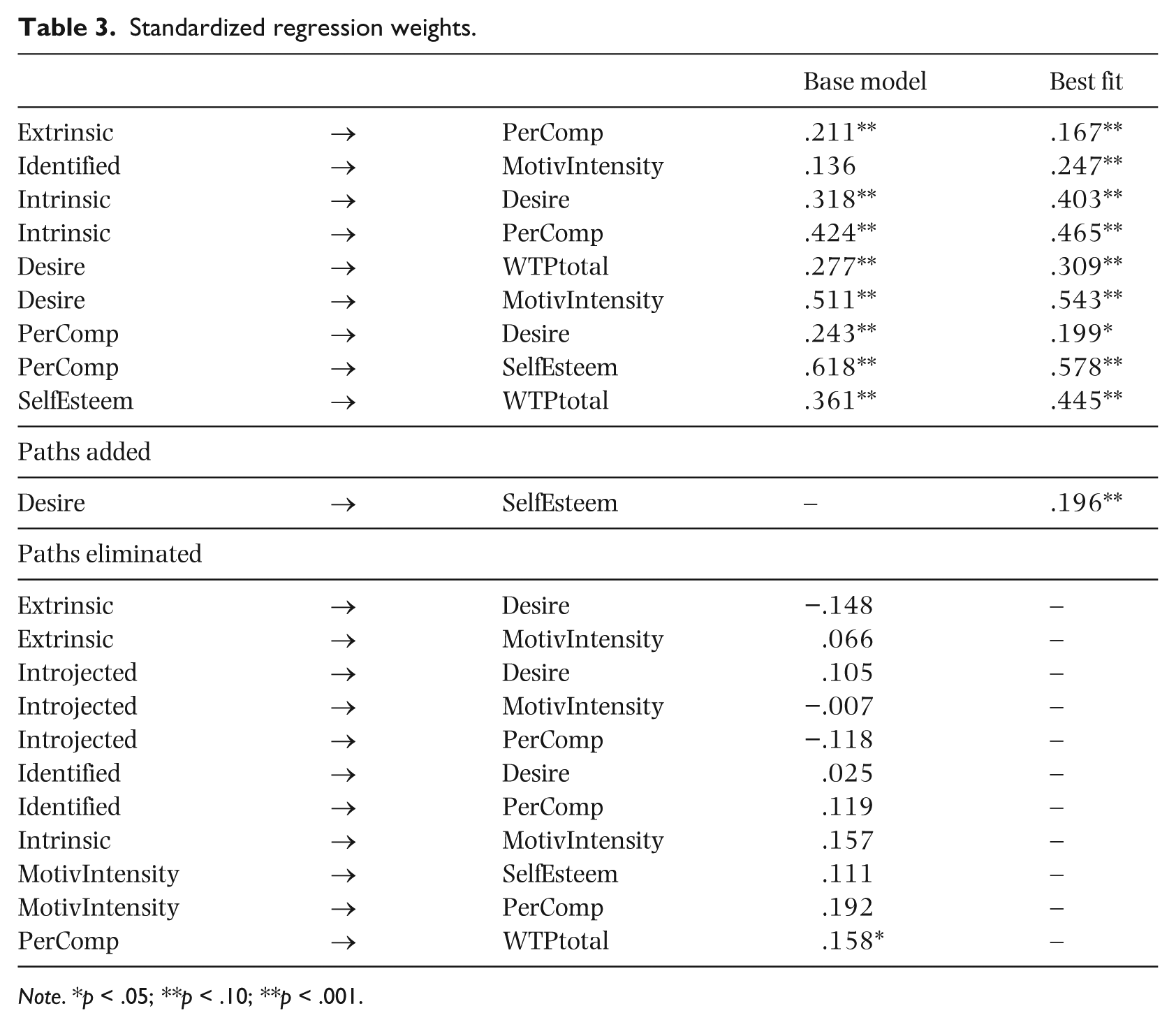
Note. *p < .05; **p < .10; **p < .001.
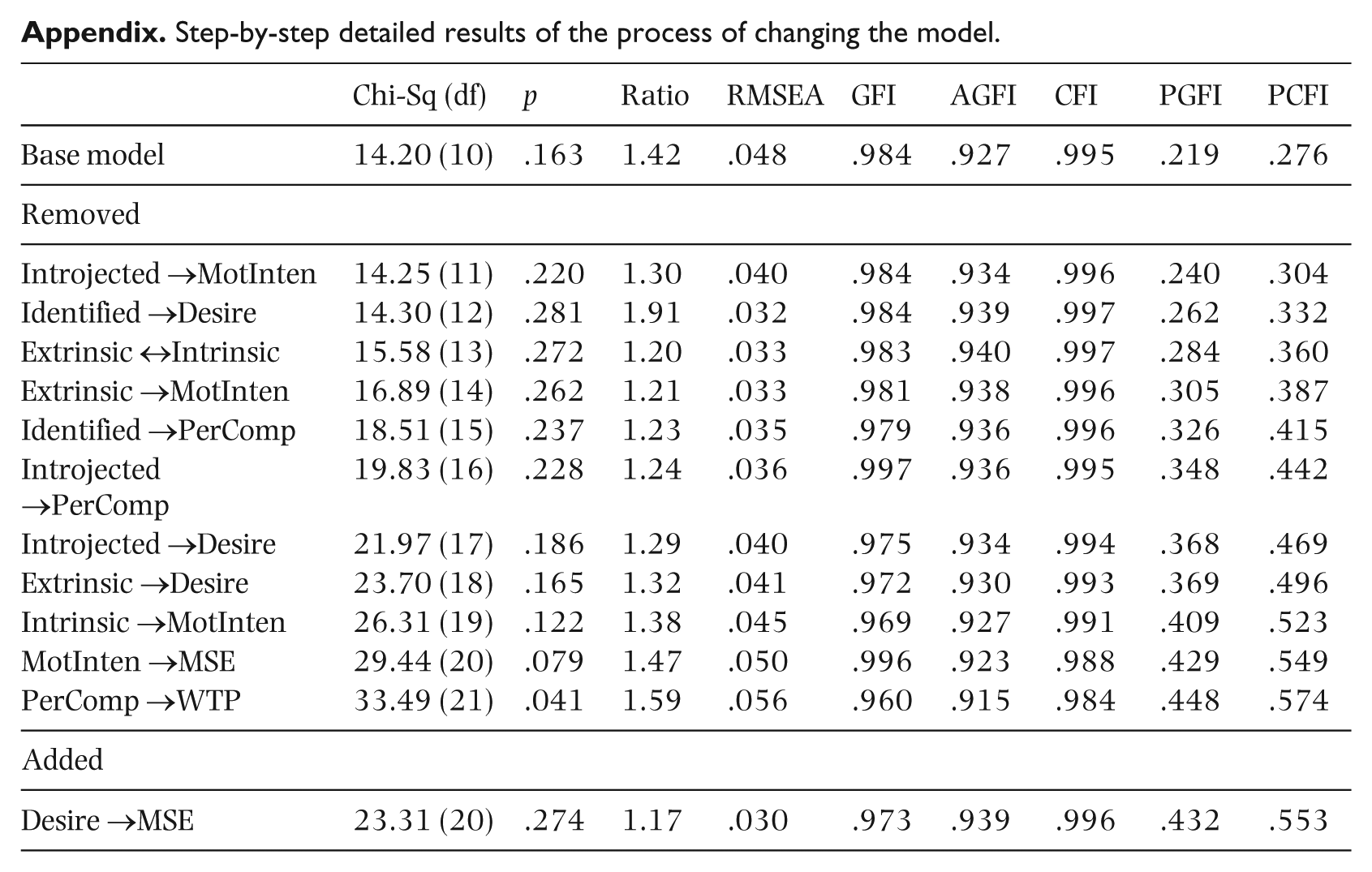
To prune the model, the non-significant paths were removed, one at a time, until only significant paths remained (see Figure 2, Panel B). Step-by-step results of the process of deleting small, non-significant paths is reported in the Appendix. In essence, to the extent that paths shown in the model extract variance from the correlation matrix then the model pruning process (deleting non-significant paths) returns some correlation to the matrix. Therefore, as expected, after removing the non-significant paths, the fit indices declined slightly with the exception of the parsimony-adjusted indices, which improved substantially. For the full model, although the chi-square test became significant, χ2(21) = 33.5, p =.041, the ratio of chi-square to degrees of freedom increased only to 1.60, well below 2.0 and still indicative of acceptable fit. The root mean square error of approximation also produced an acceptable value (RMSEA = .056) and both the GFI and the CFI remained well above .90 (GFI = .96, CFI = .98). The parsimony adjustment to the GFI grew (PGFI = .448) as did the parsimony-adjusted CFI (PCFI = .574).
In the final step of this analysis, we entertained the information emerging from the AMOS modification indices. This step is not required in path analysis and the data-driven results should be interpreted cautiously, if at all. There were only two paths that, if added, would significantly improve chi-square. Modification indices suggested the possibility of a significant potential path from desire to learn to musical self-esteem (MI = 7.4) and a path from extrinsic to musical self-esteem (MI = 5.0); adding one path would improve the overall fit. We decided to add the stronger of the two data-driven paths, the one from desire to learn to musical self-esteem. Doing so resulted in no further suggested modification indices, and only significant path coefficients are present in the model. With the non-significant paths removed, and the new path added, the overall model fit indices improved slightly (χ2(20) = 23.3, p < .28, chi-square ratio = 1.17, AGFI = .939, CFI = .996, RMSEA = .03) and the parsimony indices (PGFI = .43, PCFI = .55) remain near .50.
Although, initially, we tentatively hypothesized that all four of the SDT motives would contribute to perceived competence, motivational intensity, and desire to learn, the strong correlations among SDT variables, especially between identified and intrinsic regulation (r = .74), allowed for several proposed paths to be trimmed out of the model. In the interests of parsimony, the final model shows that extrinsic motivation has a significant effect only on perceived competence, but the more internally motivated side of the continuum shows significant effects on all three variables (intrinsic → perceived competence and desire to learn; identified → motivational intensity). This supports the relevance of SDT to these music variables, as previous research has suggested (Evans, 2015; MacIntyre & Potter, 2013). However, the model shows that not all elements of SDT are equally relevant. Within the present sample, intrinsic motives are playing a major role in the maintenance of the motivational system, and the extrinsic motives appear to be less influential. Even so, extrinsic motives still play a small role in the model, suggesting that intrinsic and extrinsic motives are both present among the experienced musicians in the sample.
The final model provides support for a proposed a feedback loop, whereby desire to learn feeds into one’s motivational intensity, contributing to the development of perceived competence, which is reflected in increasing desire to learn. This pattern suggests that if there is an increase in one of these variables, there might be a reaction in the others, and the positive feedback would flow into the rest of the variables in the loop. For example, if a music instructor is hoping to see increased effort, enhancing the pupil’s desire to learn might be a promising avenue to pursue, especially considering the strength of the path coefficient between them (.54). The desire to learn itself can be affected by drawing upon intrinsic and identified motives (such as interest in music and enhancing a learner’s identity as a musician) along with increasing the pupil’s perception of her/his competence. In the present model, extrinsic motivators (such as the external regulation obtained from having an instructor) also appear to have an effect on one’s perceived competence. This increase in competence can be seen to flow through the feedback loop, affecting one’s desire to learn and the effort put into learning.
Musical self-esteem was linked to both the perception of competence and the desire to learn. In this case, musical self-esteem reflects the overall development of confidence as a musician, supported most strongly by the perception of competence. This makes sense from a performance point of view. The contribution from the desire to learn, a data-driven path not originally proposed in the model, also makes sense as it flows from the most self-determined intrinsic motives and reflects the desire to satisfy the psychological needs in order to improve a sense of self. The positive feedback from perceived competence to desire to learn might suggest the presence of a virtuous cycle whereby the recognition of one’s skill development generates positive emotional responses that feed into both increasing desire to learn more, as well as development of self-esteem as a musician. Musical self-esteem, along with support from desire to learn, each contribute to the final variable in the model, WTP. These paths are consistent with the idea that confidence in one’s musical skills and abilities support a willingness to play or perform in both formal and informal settings. WTP is conceptualized as the final psychological step before overt behavior, the culmination of psychological processes that prepare an individual to act. Because WTP as a readiness to engage with music is a psychological state, it can be carried with a musician from one situation to another and is not directly dependent on the availability of other people (e.g., bandmates), scheduling, or the availability of appropriate venues. WTP therefore has some advantages over frequency of playing as an outcome variable for the model.
Although the path model is based on the correlations, the two analyses tell slightly different stories. On the one hand, the pattern of correlations clearly implicates a role for internalized self-regulation (identified and intrinsic) in all of the music-related variables, a lesser role for introjected regulation, and non-significant correlations for extrinsic regulation. On the other hand, the final path analysis model provides a more parsimonious account of the process, reduces redundancy among the concepts, suggests pathways for key processes, and allows for positive feedback to be shown among the variables. The two analysis strategies provide slightly different perspectives. Whereas the correlations suggest that SDT theory is relevant to the motivation of musicians, the path model helps to theorize more precisely how those processes might work. The model presented here is one of many possible models that could be tested against this correlation matrix. Other models that could be proposed might account for the correlations just as well or even better than the one described here. Judging the quality of the model requires not only evaluation of the indices of statistical fit but also consideration of prior empirical results and the quality of explanations provided by theory.
In terms of studying music motivation and application of SDT in particular, the present study is limited in scope. Participants were recruited through internet-based, snowball sampling, and research ethics required that participants remain anonymous, so it is not possible to assess participants’ claims of musical ability. Further, the results cannot be generalized to all musicians because (a) the sample is non-random, and (b) defining the population of musicians would be a quite difficult task (see Heckathorn & Jeffri, 2001, for a discussion of the difficulty in sampling jazz musicians). Our sample included a fairly large range of ages (18–69), which can make it even more difficult to generalize the findings to a specific group. However, the sampling method used in the present study was advantageous in allowing data to be collected from a diverse sample of respondents around the world, and a power calculation 3 showed that a correlation of .30 would be detected over 99% of the time. 4 The model is sufficiently powered.
Considering our findings, music teachers might consider the ways in which they can influence and work toward satisfying the three basic psychological needs, helping students move along the SDT continuum to a more internalized state of motivation. The holistic, organismic approach of SDT implies that teachers might choose to tailor their attempts to increase motivation to the specific needs of their learners, and be aware of interactions among their students’ needs. For example, providing an autonomy-supportive environment for students might be done by allowing for their more meaningful input and choices in performance and lessons. Klinedinst’s (1991) research showed that self-concept and participation in music are related. Other research shows that internalization of regulation can be enhanced by providing a rationale for the activity in question, by listening to and acknowledging the feelings of the target, and by offering free-choice (Deci, Eghrari, Patrick & Leone 1994). Evans (2015) suggests that providing an environment which supports the need for autonomy, as well as the other psychological needs, helps improve long-term motivation in music learning (Bakker, 2005). The feedback loop described among desire to learn, motivational intensity, and perceived competence is consistent with Evan’s description of the development of intrinsic motives for music over time. Our current research attempts to corroborate and elaborate these findings, illustrating types of regulation that may lead to sustained motivation. We must offer this advice with some degree of caution because the cross-sectional data do not describe the development of the system, nor how these connections came to be. More specifically, the present data cannot address the role of extrinsic and intrinsic motives early in the music learning process, where extrinsic regulation seems likely to play a somewhat stronger role, at least for some learners (Evans, 2015). Therefore, specific recommendations for music educators and learners must be considered in light of the developmental phase of learning and the unique configuration of needs, motives, and experiences present among a group of aspiring musicians (for specific suggestions, see Jones, 2009). The specific instrument being learned also might affect the approach teachers can take to increase motivation to learn, such as emphasizing autonomy for guitar players or emerging competence for pianists (MacIntyre & Potter, 2013).
Future research should consider investigating the emotional component of musicians’ motivation. The degree of emotionality, positive and negative, expressed and felt by musicians very likely would be connected to the degree and quality of their motivation. Addressing individual differences in specific needs for autonomy, competence, and relatedness also could be useful in determining motive strength and how it changes over time. Research also could be conducted into areas of autonomous music learning, and flexible styles of teaching music that allow for participants to achieve a higher sense of autonomy in the learning process. It also might be helpful to consider cultural differences in the connections between motivation, emotion, and music from a wide variety of cultures. Finally, some of the Cronbach alpha reliability coefficients for the scales approach the low end of the acceptable range, specifically the values of alpha that are close to .70, which might attenuate correlations involving those measures, making them lower than they would be with more reliable measurement.
Conclusion
The present study found that evidence that self-determination can be applicable to the motivation of musicians. Internalized regulation correlates more strongly with music-related variables than do extrinsic forms of regulation. The key implication of the path model suggests that aspiring musicians and their teachers who can tap into the intrinsic motives that help to create a desire to learn, intensity of effort, and increasing perceptions of competence, will go a long way toward creating a virtuous cycle of motivation for music learning and performance.
Footnotes
Appendix
Step-by-step detailed results of the process of changing the model.
| Chi-Sq (df) | p | Ratio | RMSEA | GFI | AGFI | CFI | PGFI | PCFI | |
|---|---|---|---|---|---|---|---|---|---|
| Base model | 14.20 (10) | .163 | 1.42 | .048 | .984 | .927 | .995 | .219 | .276 |
| Removed | |||||||||
| Introjected →MotInten | 14.25 (11) | .220 | 1.30 | .040 | .984 | .934 | .996 | .240 | .304 |
| Identified →Desire | 14.30 (12) | .281 | 1.91 | .032 | .984 | .939 | .997 | .262 | .332 |
| Extrinsic ↔Intrinsic | 15.58 (13) | .272 | 1.20 | .033 | .983 | .940 | .997 | .284 | .360 |
| Extrinsic →MotInten | 16.89 (14) | .262 | 1.21 | .033 | .981 | .938 | .996 | .305 | .387 |
| Identified →PerComp | 18.51 (15) | .237 | 1.23 | .035 | .979 | .936 | .996 | .326 | .415 |
| Introjected →PerComp |
19.83 (16) | .228 | 1.24 | .036 | .997 | .936 | .995 | .348 | .442 |
| Introjected →Desire | 21.97 (17) | .186 | 1.29 | .040 | .975 | .934 | .994 | .368 | .469 |
| Extrinsic →Desire | 23.70 (18) | .165 | 1.32 | .041 | .972 | .930 | .993 | .369 | .496 |
| Intrinsic →MotInten | 26.31 (19) | .122 | 1.38 | .045 | .969 | .927 | .991 | .409 | .523 |
| MotInten →MSE | 29.44 (20) | .079 | 1.47 | .050 | .996 | .923 | .988 | .429 | .549 |
| PerComp →WTP | 33.49 (21) | .041 | 1.59 | .056 | .960 | .915 | .984 | .448 | .574 |
| Added | |||||||||
| Desire →MSE | 23.31 (20) | .274 | 1.17 | .030 | .973 | .939 | .996 | .432 | .553 |
Acknowledgements
We would like to thank the participants for their cooperation in sharing their experiences, their referrals of others to the survey, and their insights into the topic at hand.
Funding
The author(s) disclosed receipt of the following financial support for the research, authorship, and/or publication of this article: Publication of this article was facilitated by a grant from the Social Sciences and Humanities Research Council of Canada (Grant No. 435-2013-1944) to the first author.