







Abstract
Recently, models have been developed that recognise the complexity of motivation. These set out the interactions that occur between environmental (cultural, institutional, familial, educational) and internal factors (cognition and affect) enhancing or reducing motivation. Despite this we know very little about gender differences in motivation in relation to playing an instrument. The current study aimed to address this issue, exploring gender differences in motivation and whether these changed as expertise developed. A total of 3325 children ranging in level of expertise from beginner through to Grade 8 level in independent instrumental music examinations completed a questionnaire that included a seven-point Likert scale with statements exploring different aspects of motivation. A principal components analysis was undertaken and six factors emerged: support and social affirmation; social life and enjoyment of musical activities; enjoyment of performing; self-beliefs; enjoyment of lessons, playing and practise; and disliking practise. The only statistically significant gender difference was in relation to self-beliefs with the boys consistently scoring higher. Further research is needed to establish why this is the case. The findings have major implications for education.
There has been considerable research on musical motivation but little exploring gender differences. Musical motivation is complex and models have been developed that have attempted to elucidate the interactions that occur between environmental (cultural, institutional, familial and educational) and internal factors (cognition and affect) that impact on it (see Asmus, 1994; Austin, Renwick, & McPherson, 2006; Evans, McPherson, & Davidson, 2013; Hallam, 2002, 2016; O’Neill & McPherson, 2002; Sichivitsa, 2007). Four main themes have emerged from the research that relate to musical motivation. These focus on music satisfying personal needs (emotional, hedonistic, achievement, self-actualisation, autonomy, need for social affirmation); developing and maintaining a positive musical identity (self-belief, self-efficacy, resilience); acquiring effective approaches to learning music (mastery learning goals and performance learning goals, realistic goals, effective attribution strategies, incremental beliefs about musical ability, effective practise strategies, valuing music); and having a supportive environment (institutional, teachers, family, peers; see Hallam et al., 2016 for more detail).The balance between these motives changes over time as individuals progress through their musical careers (Hallam et al., 2016; Harnischmacher, 1997; Manturzewska, 1990; Sosniak, 1985).
Individuals differ in their level of commitment to making music. McPherson and McCormick (2000) showed that for many children learning to play an instrument is viewed no differently to other recreational activities. In contrast, for others career planning begins at a very early age (MacNamara, Holmes, & Collins, 2006). For some of the most accomplished young musicians, self-motivation becomes almost obsessional (Kemp, 1996). Enjoying musical activities (listening to music, going to concerts, playing in musical groups, having an active social life relating to music) has been shown to be the best predictor of long-term commitment to making music, although the support of family, friends, teachers and self-beliefs were also found to be important (Hallam, 2013).
The evidence relating to gender differences in motivation is limited. More girls tend to play instruments than boys (see, for instance Associated Board of the Royal Schools of Music [ABRSM], 2014; Green, 1997; Hanley, 1998), although there continue to be differences in the instruments played. Girls tend to play the smaller higher-pitched instruments (Abeles, 2009; Abeles & Porter, 1978; Cramer, Million, & Perreault, 2002; Hallam, Rogers, & Creech, 2008; Harrison, 2000; Killian & Satrom, 2011; Sheldon & Price, 2005; Wych, 2012), although they tend to select a wider variety of instruments that they would like to play along the feminine–masculine continuum than boys, particularly at primary school (Zervoudakes & Tanur, 1994). This stereotyping extends to world music instruments (Kelly & Van Weelden, 2014) and is evident in very young children (Marshall & Shibazaki, 2012). Instrument choice to some extent is linked to genre with girls being under-represented in some popular music areas (ABRSM, 2014; Baker & Cohen, 2008). A key issue is whether these preferences have changed over time as women increasingly are taking on roles that traditionally have been seen as belonging to males (Creech, 2010).
There is a tendency for music to be thought of as a feminine subject (Green, 1997; Hargreaves, Comber, & Colley, 1995), although boys who play musical instruments tend to report higher levels of enjoyment of music than girls (Hallam, 2013). Technology plays an important role in the musical motivation of boys, who have more positive attitudes towards and confidence in using music technology than girls (Comber, Hargreaves, & Colley, 1993; Green, 1997; Hanley, 1998). Research that focuses specifically on music in school suggests that girls report higher competence levels and value music more than boys (McPherson & O’Neill, 2010) and tend to perform better in school music examinations (Joint Council for Qualifications [JCQ], 2014; Keiper et al., 2009) although there are no reported consistent gender differences in measured musical ability (Gordon, 1986), or teachers’ ratings of musical ability (Hallam, 2004). Female students also tended to attribute their success to effort more than boys (Schatt, 2011). Despite this, gender differences in musical self-efficacy seem to depend on the context (Hendricks, 2014; Nielsen, 2004; Ritchie & Williamon, 2011a, 2011b; Wehr-Flowers, 2006; Welch et al., 2008).
Boys and girls seem to approach musical tasks in different ways. Girls tend to adopt a more compliant style in music lessons, while boys are more serious (Zhukov, 2007) and in higher education adopt higher levels of critical thinking (Nielsen, 2004). The lessons of female students tend to focus more on expression, those of males on structure (Zhukov, 2008). Female students value the opportunity to hear others and their interpretations in master classes (Long, Hallam, Creech, Gaunt, & Robertson, 2012) and tend to be more influenced in their attitudes towards practise by their teachers and parents, whereas boys are more influenced by their friends (Hallam, 2004). Girls also tend to be more efficient in their use of practise strategies (Hallam et al., 2016).
Despite this body of research on gender differences we know little about the ways in which boys and girls may differ in their motivation in relation to playing a musical instrument. The research reported here aims to address that issue, comparing the nature of motivation in boys and girls, and exploring whether there are any interactions with level of expertise. The specific research questions are: to what extent are there gendered differences in choice of instrument, elements of motivation, and musical aspirations?
Method
The present study adopted a self-report questionnaire as a means of collecting data from a large sample of learners. The questionnaire was devised based on the research evidence outlined above and a prior smaller-scale study (Hallam, 2013). The questionnaire sought information about the level of expertise attained as assessed by the highest examination grade achieved in independent graded instrumental examinations from preliminary to Grade 8. Typically, graded examinations assess candidates’ performance on pieces, scales, sight-reading, and aural tests. Examinations are taken when the teacher believes that the student is ready. They are not age related and can be taken by adults. As such they provide a convenient, widely recognised and impartial means of assessing level of expertise. The questionnaire included a range of statements relating to various elements of motivation including support of family and friends; the respondents’ enjoyment of participating in performance; enjoying playing an instrument and having lessons; listening to music; music as a social activity; enjoyment of practise; self-beliefs about musical ability and potential; beliefs about self-efficacy and the relationship between effort and musical ability; and social affirmation. Respondents were requested to respond to the statements on a seven-point Likert scale with 7 indicating the strongest agreement, 1 the strongest disagreement. There were three statements relating to musical aspirations: to always want to engage with music, wanting to be a musician, and perceiving that playing an instrument would be useful to any future career. The questionnaire was piloted on a small group of young musicians to ensure that the statements were easy to understand. Their feedback indicated that no changes were required.
Respondents
Data were collected by a team of researchers from young people playing all of the classical and popular musical instruments in a variety of settings in England including two junior conservatoires, two Local Authority youth orchestras, two Local Authority Saturday music schools, a conservatoire for popular music and three state comprehensive schools. The children who participated were receiving tuition on their instruments individually or in small groups of no more than four children. The organisations that the children were attending were approached and permission requested for questionnaires to be administered. Parents were informed in advance that the research was taking place and were told that they could withdraw their child.
A total of 3327 children and young people ranging in level of expertise from beginner through to Grade 8 level (the minimum required for conservatoire entrance in the UK) participated in the research facilitating the identification of nine levels of expertise. The age range was from 6 to 19 years. There were 1225 boys and 2027 girls. Seventy-five children did not indicate their gender. Table 1 describes the relationship between level of expertise and age with the minimum and maximum age at each level of expertise. The wide age range at each level reflects the fact that the examinations are independent of school systems and can be taken at any age. The instruments that participants played were representative of the classical and popular instruments played in the UK. The greatest number played the violin (28%) followed by flute (10%), piano (10%), clarinet (10%), cello (8%), trumpet (6%), guitar (4%), viola (3%), voice (3%), saxophone (3%), French horn (3%), trombone (3%), oboe (2%), drums (2%), double bass (2%), percussion (1%), cornet (1%), tuba (1%), recorder (1%), bassoon (1%), harp (1%) with other instruments played by fewer than one per cent of respondents. The sample consisted of 1225 boys (36.8%) and 2027 girls (60.9%); 75 (2.3%) did not indicate their gender.
Percentage of boys and girls playing each instrument.
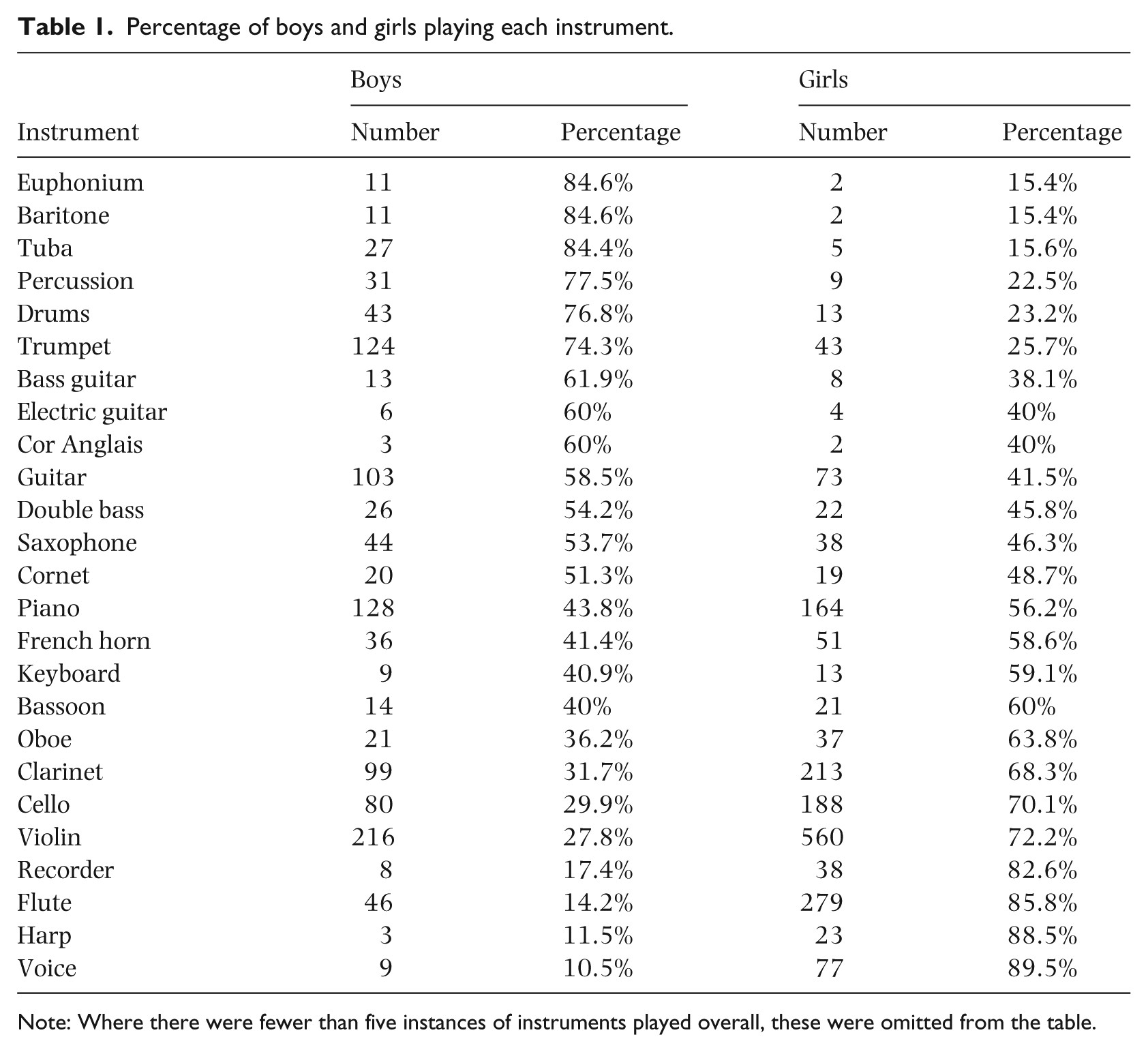
Note: Where there were fewer than five instances of instruments played overall, these were omitted from the table.
Procedure
The research was designed taking account of the ethical guidelines of the British Psychological Society and the British Educational Research Association and was approved by the ethics committee of the Institute of Education, University College London.
The researchers administered the questionnaires to students in the various learning environments. The children and young people were told that they did not need to participate in the research and that it was a voluntary activity. Completion of a questionnaire indicated written consent.
Results
Table 1 sets out the percentage of boys and girls playing each instrument. The boys were more likely to play brass instruments, percussion, drums or bass or electric guitar. The girls were more likely to be singers, play the harp, flute, recorder, violin, cello, clarinet and oboe. The least gendered instruments included the keyboard, French horn, piano, cornet, saxophone, double bass, and guitar.
Analysis of age by level of expertise and gender
Inevitably there is a relationship between age and level of expertise and this was the case in the current study. However, the correlation was far from perfect, r = .62, p = .0001. An analysis of variance, with the level of the expertise as an independent variable and gender as a factor, indicated that there was a statistically significant difference in age between the grade levels, F(1, 8) = 60.12, p = .0001, as might have been expected with older students being more likely to be at a higher level of expertise. There was no statistically significant difference in gender but an interaction between gender and level of expertise, F(1, 8) = 3.31, p = .001. There was a linear upward trend in both genders but there was more variation between the grades in females (see Figure 1).
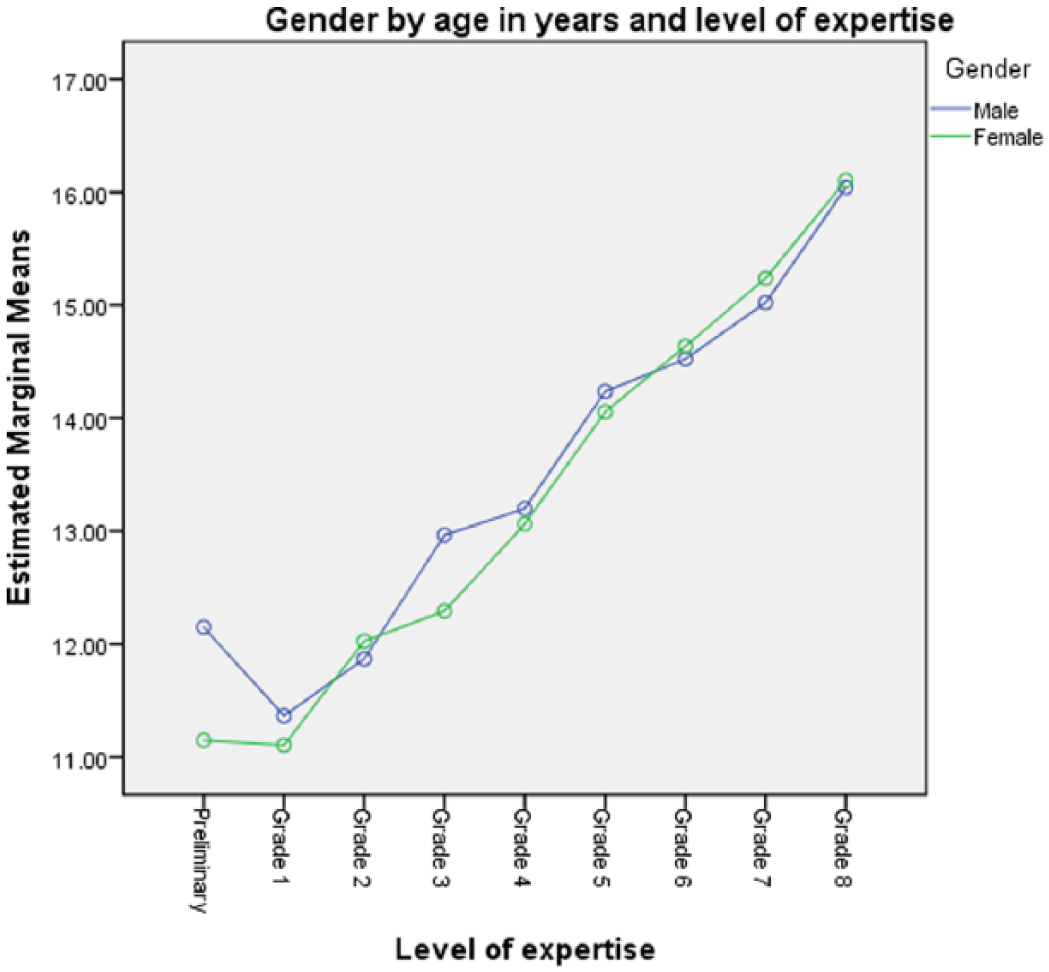
Gender by age in years and level of expertise.
Factor analysis
Exploratory factor analysis was undertaken as a means of establishing the relationships between the variables. All of the variables were entered except those relating to aspirations. These were analysed separately. A principal components analysis was selected as it affords an empirical analysis of the data set (Tabachnick & Fidell, 2001). A varimax rotation was used to enable interpretation and description of results (Tabachnick & Fidell, 2001). Two checks were made to assess sampling adequacy, the Kaiser–Meyer–Olkin (KMO) test (checks whether the sample is large enough to carry out factor analysis) and an anti-matrix of covariances and correlations, which showed that all elements on the diagonal of these matrices were greater than -.5, the necessary requirement. The KMO was 0.916, greater than the 0.5 required to assess the adequacy of the sample (Field, 2009).
The purpose of the research reported here was to explore how the different elements of motivation might differ between boys and girls, taking account of different levels of expertise. It was therefore important that the factors derived distinguished between different elements of motivation. Taking this into account, eigenvalues were retained if they were greater than 1. A scree plot was also used to identify those factors before the breaking point of the elbow of the plot. Following examination of the scree plot, a six-factor solution seemed to be the most appropriate. As the number of components with eigenvalues greater than 1 is usually somewhere between the number of variables divided by 3 and the number divided by 5, between 8 and 5 factors might have been expected (Tabachnick & Fidell, 2001). This supported a six-factor solution. To explore whether a more parsimonious solution was possible a five-factor solution was explored. The factors resulting from this analysis did not provide a theoretically meaningful outcome that could be related to the previous literature. It was therefore concluded that a six-factor solution was the most appropriate. Together the six factors accounted for 59% of the variance. Table 2 sets out the weightings for each variable. Weightings below 0.2 are not included.
Standardised beta weightings for each statement in relation to the six factors.
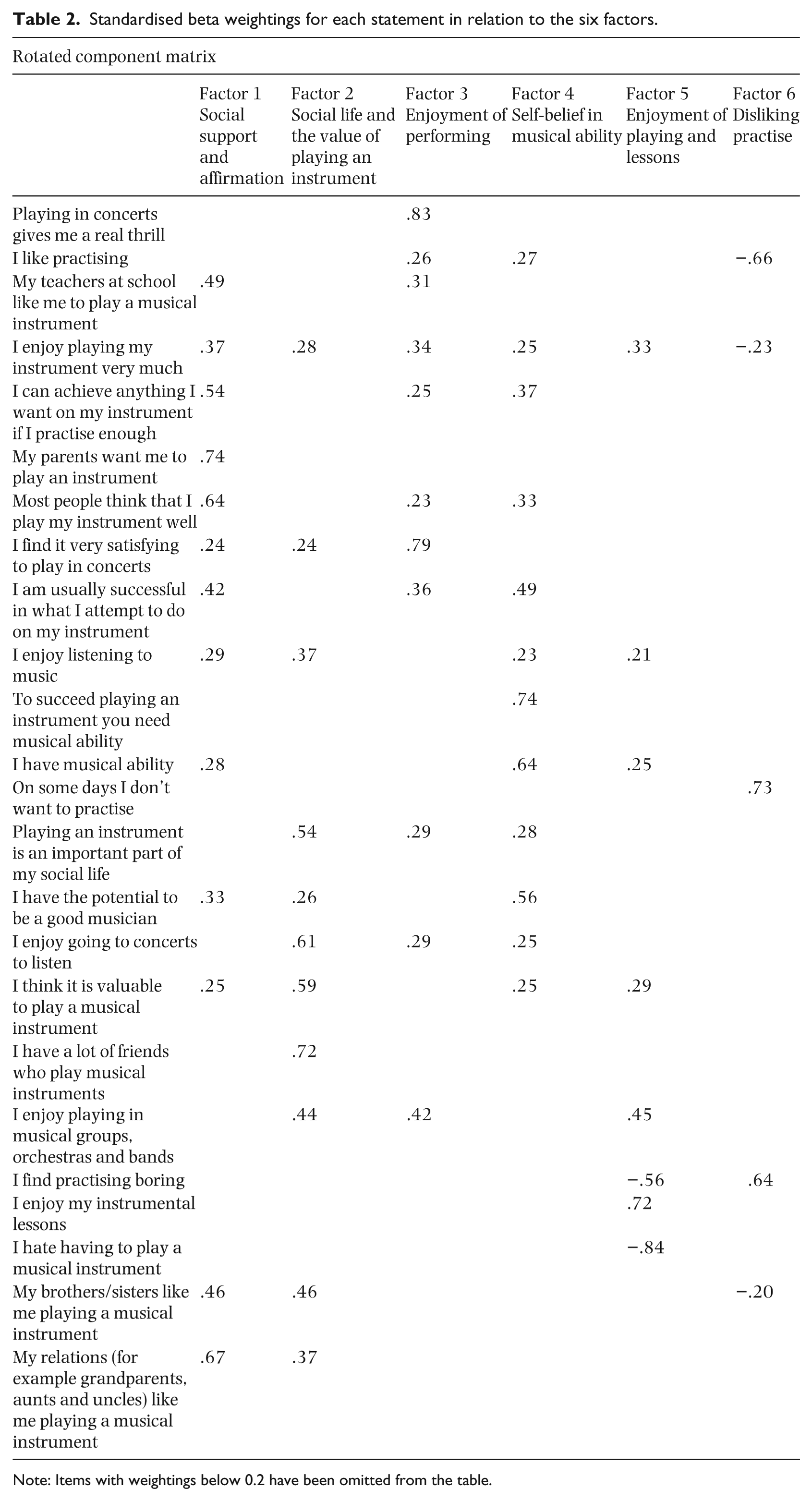
Note: Items with weightings below 0.2 have been omitted from the table.
Factor 1: Support and social affirmation
Factor 1 had an eigenvalue of 7.3 and explained 30.47% of the variance. This factor had high weightings for parents wanting the participant to play an instrument (.74), relatives liking them playing a musical instrument (.66), most people thinking that they played their instrument well (.63), teachers at school liking them to play a musical instrument (.49) and brothers and sisters liking them playing a musical instrument (.46). There was no statistically significant gender difference in Factor 1 and no statistically significant interaction between gender and expertise (see Figure 2). There was a statistically significant relationship between support and social affirmation and level of expertise, F(8, 2776) = 3.72, p = .0001, ηp2 = .012, with support and affirmation decreasing as expertise increased except in the early expertise levels.
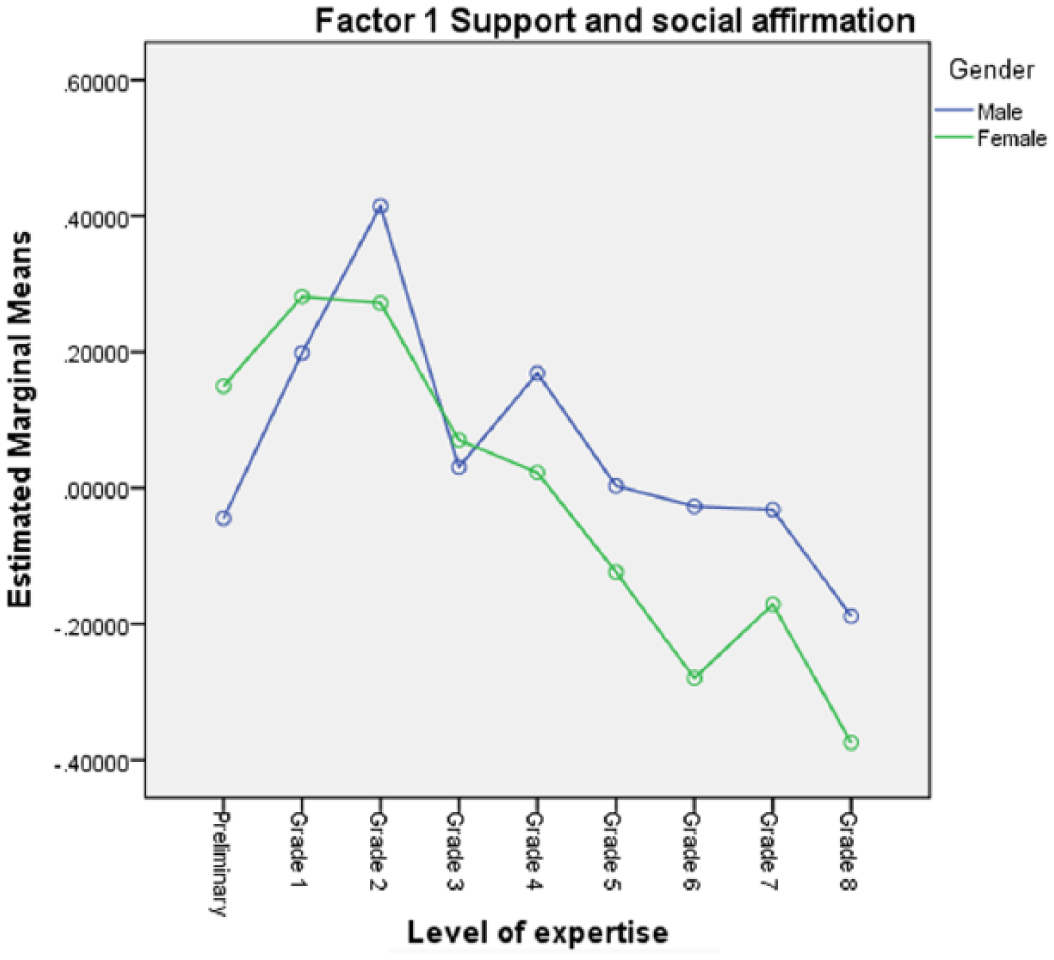
Gender differences in support and social affirmation by level of expertise.
Factor 2: Social life and enjoyment of musical activities
Factor 2 had an eigenvalue of 1.91 accounting for 7.95% of the variance. This factor had high weightings for having lots of friends who played musical instruments (.72), enjoying going to concerts to listen (.61), believing it was valuable to play a musical instrument (.59), playing an instrument being an important part of the participants’ social life (.548) and enjoying playing in musical groups, orchestras and bands (.44). There was a statistically significant relationship between social life and the value of playing an instrument and level of expertise, F(8, 2808) = 31.76, p = .0001, ηp2 = .08. There were no statistically significant gender differences overall but there was an interaction between gender and level of expertise, F(1, 8) = 2.370, p = .015. Whereas girls reported that social life and enjoyment of musical activities gradually increased from Grade 2 onwards, for boys this aspect of motivation seemed to be more complex with a steep decrease at Grade 4 and a steep increase at Grade 8.
Figure 3 sets out the relationship between gender and level of expertise in social life and enjoyment of musical activities.
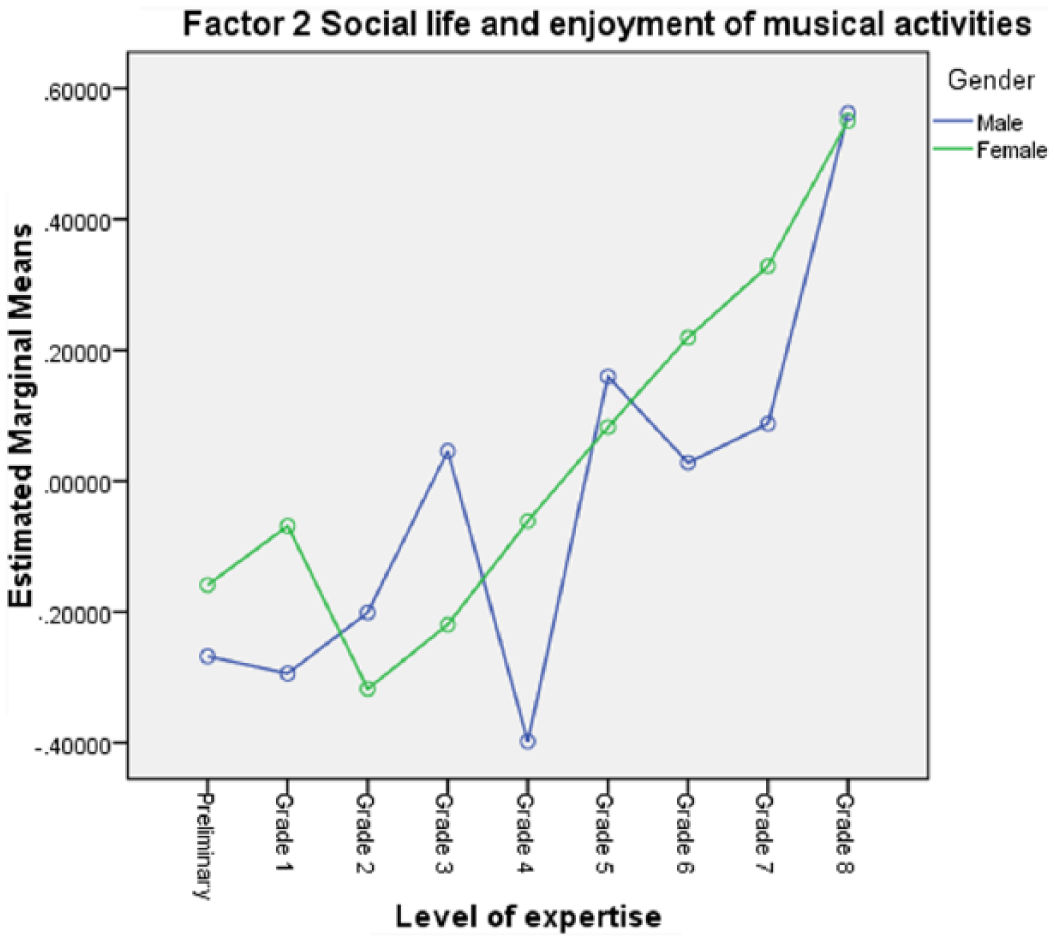
Gender differences in social life and enjoyment of musical activities by level of expertise.
Factor 3: Enjoyment of performing
Factor 3 had an eigenvalue of 1.43 accounting for 5.97% of the variance. This factor had very high weightings for statements relating to finding it very satisfying to play in concerts (.79) and playing in concerts giving participants a real thrill (.83). There was a statistically significant relationship between enjoyment of performing and level of expertise, F(8, 2829) = 26.7, p = .0001, ηp2 = 06. Students at the higher levels of expertise reported greater enjoyment of performing. Analysis of variance revealed no statistically significant gender differences or interactions between gender and level of expertise. Figure 4 illustrates the changes as expertise develops, and the relationship between gender and level of expertise.
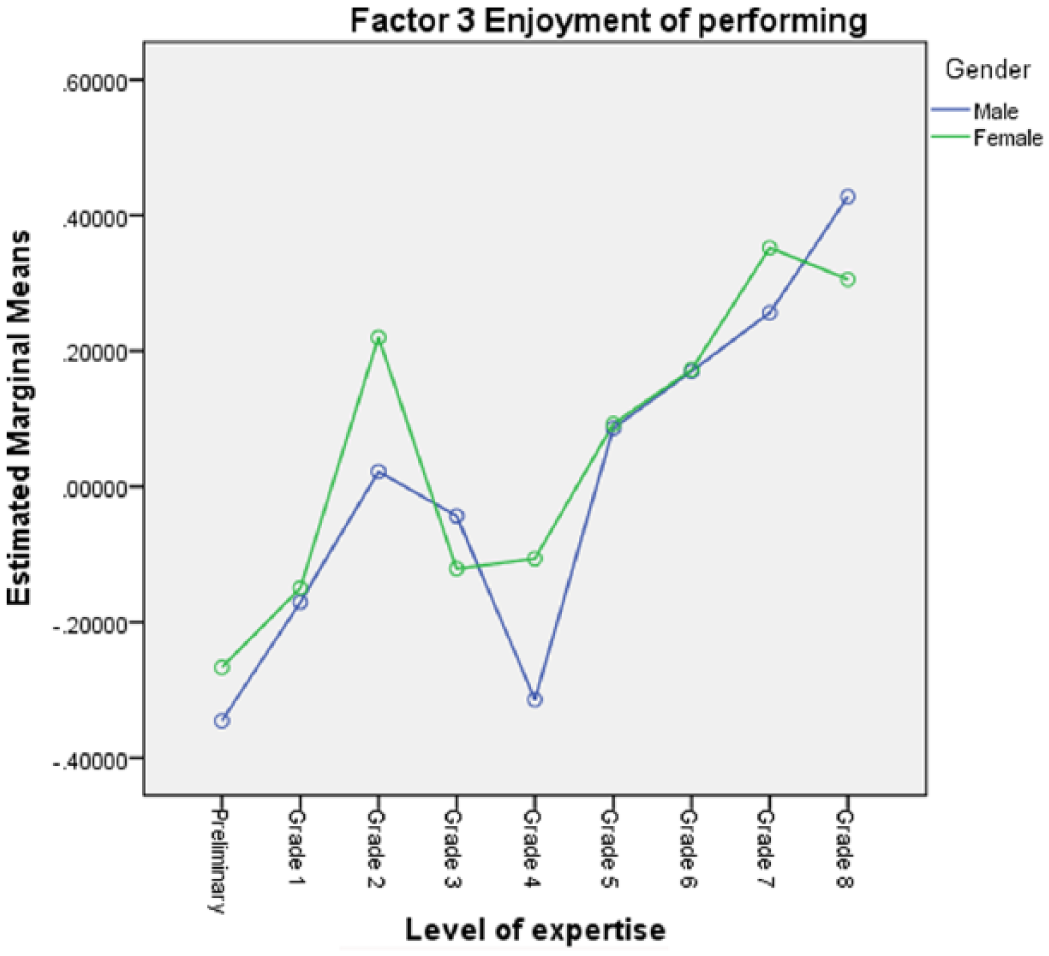
Gender differences in enjoyment of performing by level of expertise.
Factor 4: Self-belief in musical ability
Factor 4 had an eigenvalue of 1.25 accounting for 5.19% of the variance. This factor focused on self-beliefs with a very high weighting for the statements relating to needing musical ability to succeed in playing an instrument (.74) and participants having musical ability (.64). There were also high weightings for statements relating to participants having the potential to be a good musician (.56), usually being successful in what they attempted to do on their instrument (.49) and to a lesser extent being able to achieve anything that they wanted if they carried out sufficient practise (.37), and most people thinking that they played their instrument well (.33). There was a statistically significant relationship between self-belief and level of expertise, F(8, 2817) = 9.44, p = .0001, ηp2 = .02. The students at the higher levels of expertise reported greater enjoyment of performing. Analysis of variance showed that there was a statistically significant relationship between gender and self-belief in musical ability, F(1, 8) = 5.67, p = . 017, but no statistically significant interaction between gender and level of expertise. The boys had higher levels of self-belief (M = .061) than the girls (M = -.04). Figure 5 sets out the relationships between self-belief in musical ability and gender. A multivariate analysis of variance of the variables that had the highest weightings on the factor was statistically significant, F(5, 3126) = 4.935, p < .0001. Table 3 sets out the means and statistical significance of each statement. The boys had statistically significant higher beliefs that they had the potential to be a good musician and that they were usually successful in what they attempted to do on their instrument.
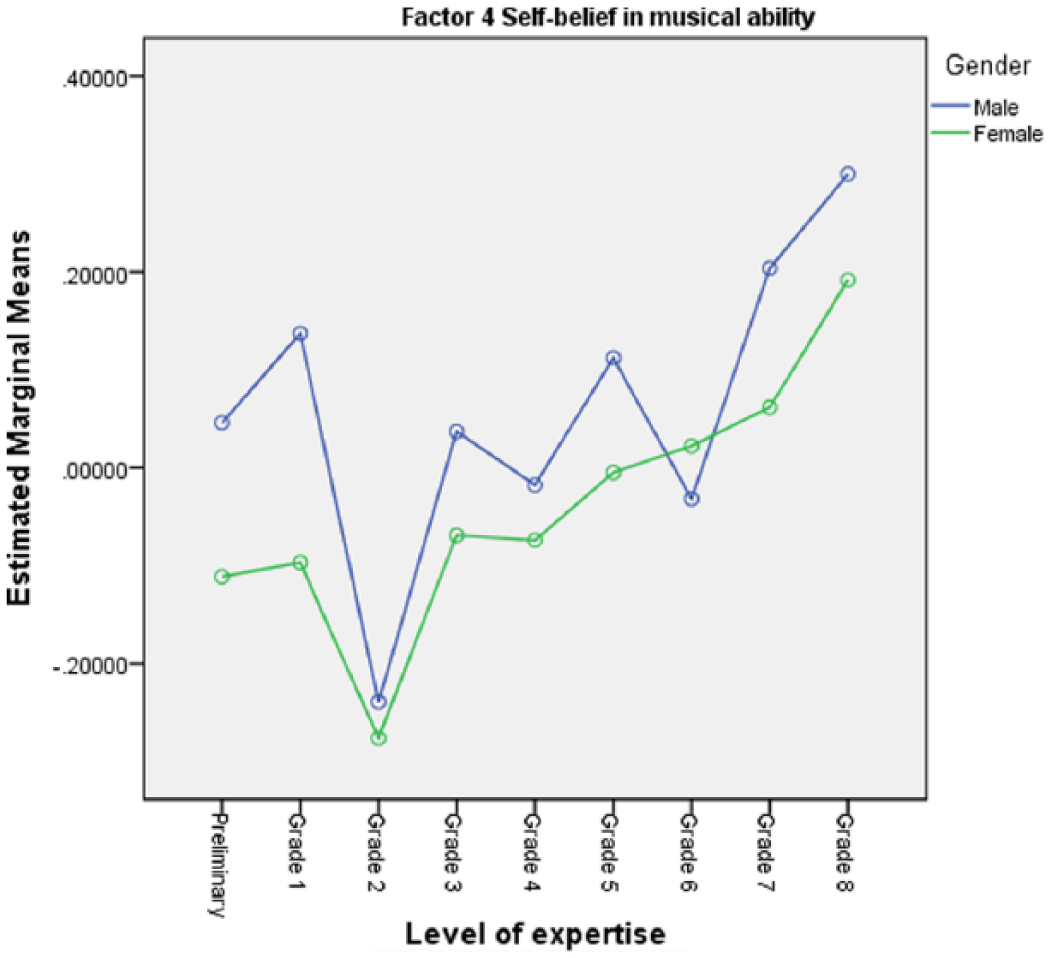
Gender and self-belief in musical ability by level of expertise.
Gender differences in musical self-beliefs.
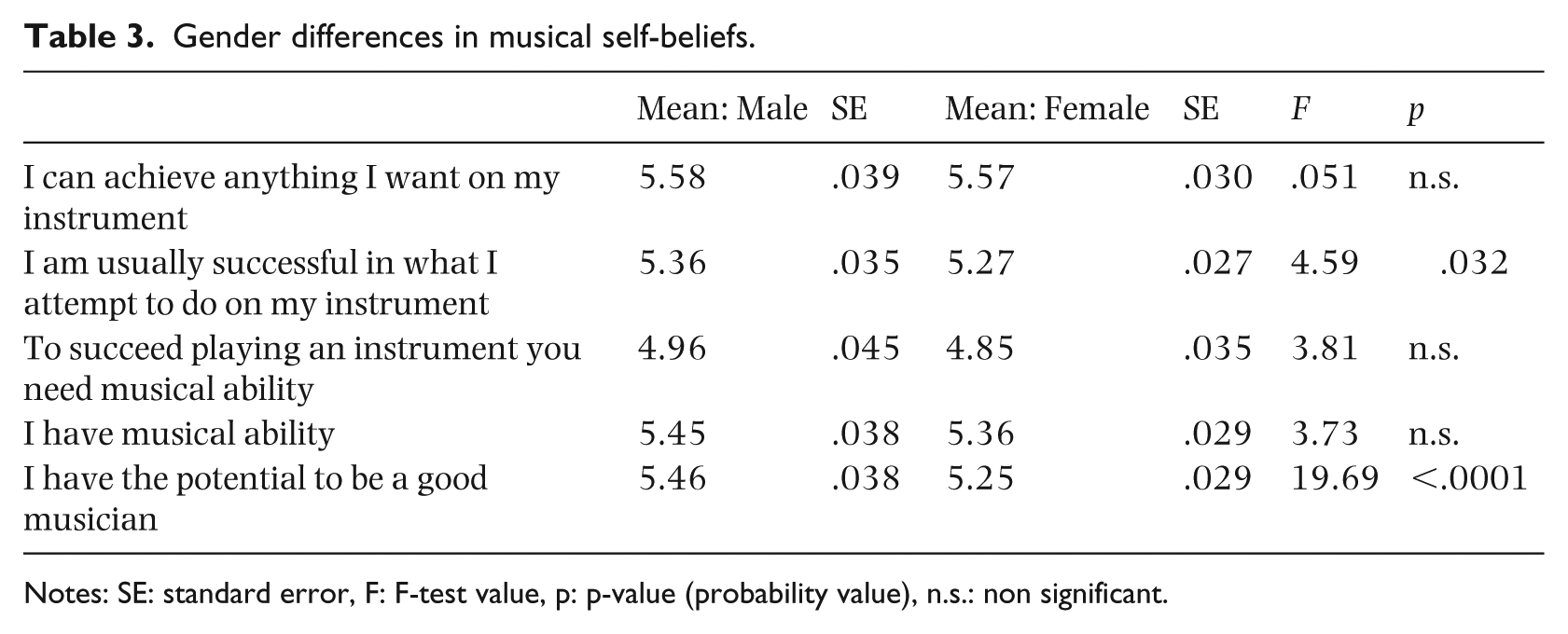
Notes: SE: standard error, F: F-test value, p: p-value (probability value), n.s.: non significant.
Factor 5: Enjoyment of playing, lessons and practise
Factor 5 had an eigenvalue of 1.03 accounting for 4.31% of the variance. This factor had high negative weightings for hating having to play an instrument (-.84) and finding practise boring (-.56), and positive weightings for enjoying instrumental lessons (.72). There was a statistically significant relationship between enjoyment of instrumental musical activities and level of expertise, F(8, 2714) = 15.63, p = .0001, ηp2 = .04. More enjoyment was reported at the higher grades (see Figure 6). There were no statistically significant gender differences in Factor 5 or interactions between gender and level of expertise.
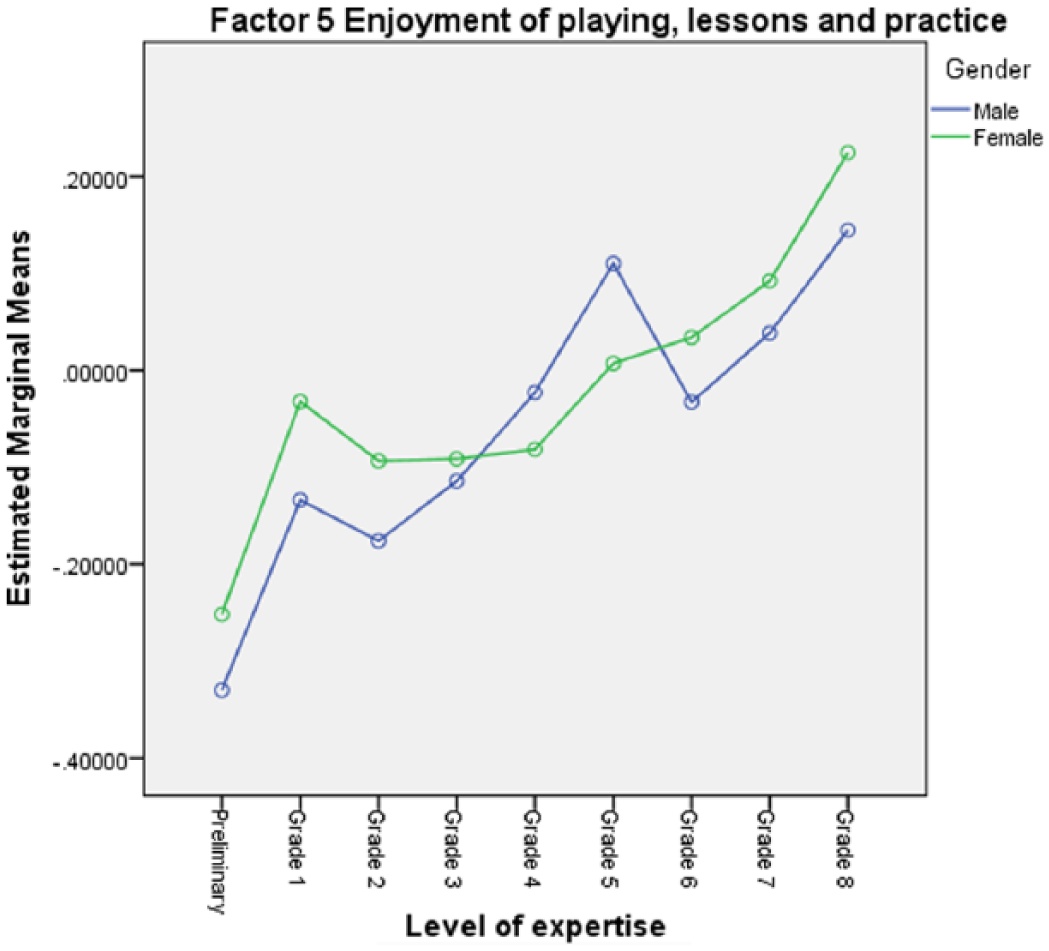
Gender differences in enjoyment of playing, lessons and practise and level of expertise.
Factor 6: Disliking practise
Factor 6, disliking practise, had an eigenvalue of 1.01 accounting for 4.2% of the variance. This factor had a high weighting for not wanting to practise on some days (.73), finding practise boring (.64) and a negative weighting for liking practise (-.66). There was a significant effect of level of expertise on attitude to practise, F(8, 942) = 3.8, p < .0001, and a statistically significant linear trend, F(1, 942) = 12.5, p < .0001, indicating that as expertise increased enjoyment of practise decreased. The data suggest that there is great enjoyment of practise after initially starting to play an instrument, which wanes considerably in the middle examination grades (grades 3–6) with enjoyment and commitment returning beyond this level. There were no statistically significant gender differences in disliking practise but there was an interaction between gender and level of expertise, F(1, 8) = 2.119, p < .031 (see Figure 7). The girls showed an increase in disliking practise up to Grade 4, followed by a sustained relationship up to Grade 6 and a decrease in dislike at the higher levels of expertise. There was no clear pattern in the relationship for the boys.
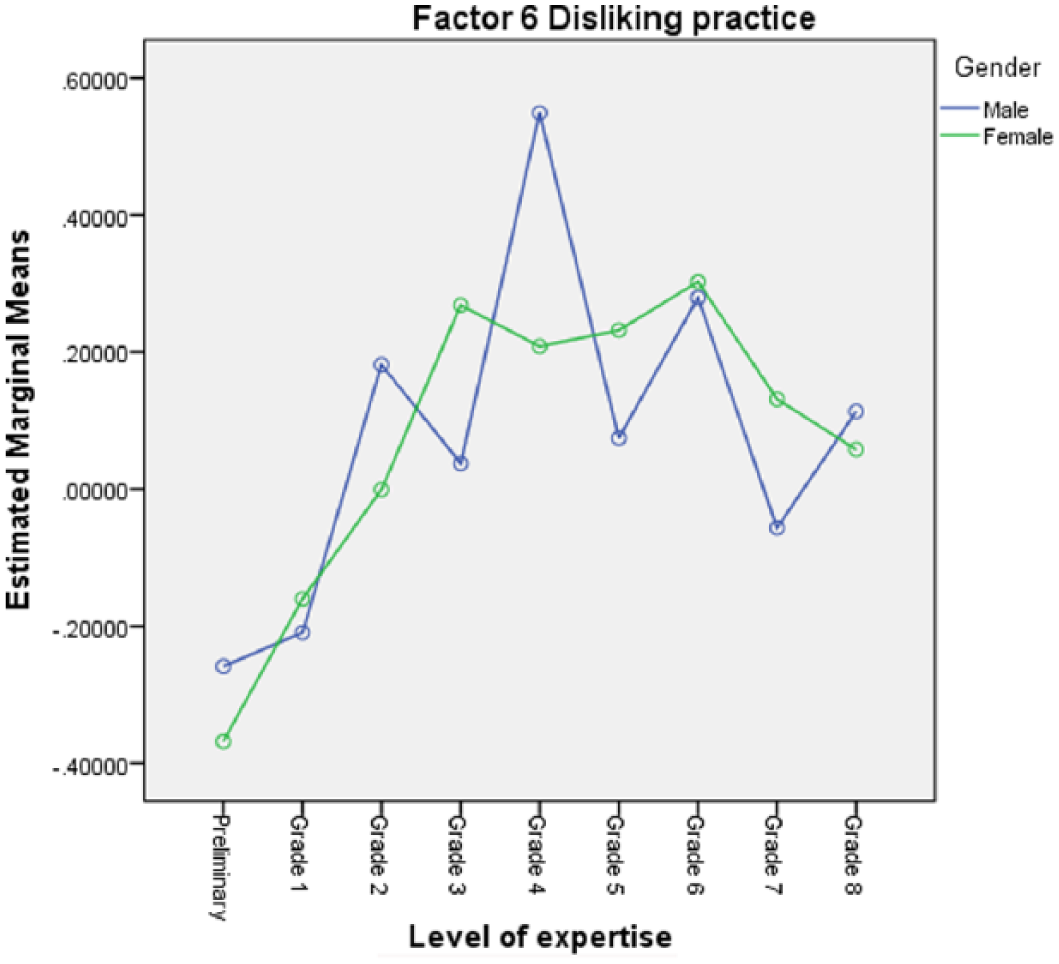
Gender differences in disliking practise by level of expertise.
Musical aspirations
The three statements related to musical aspirations were summed to create an overall aspiration score. There was no statistically significant gender difference or interaction between gender and level of expertise for musical aspirations but there was a statistically significant difference in relation to level of expertise, F(1, 8) = 12.3, p = .0001 (see Figure 8). Overall, aspirations increased as expertise developed.
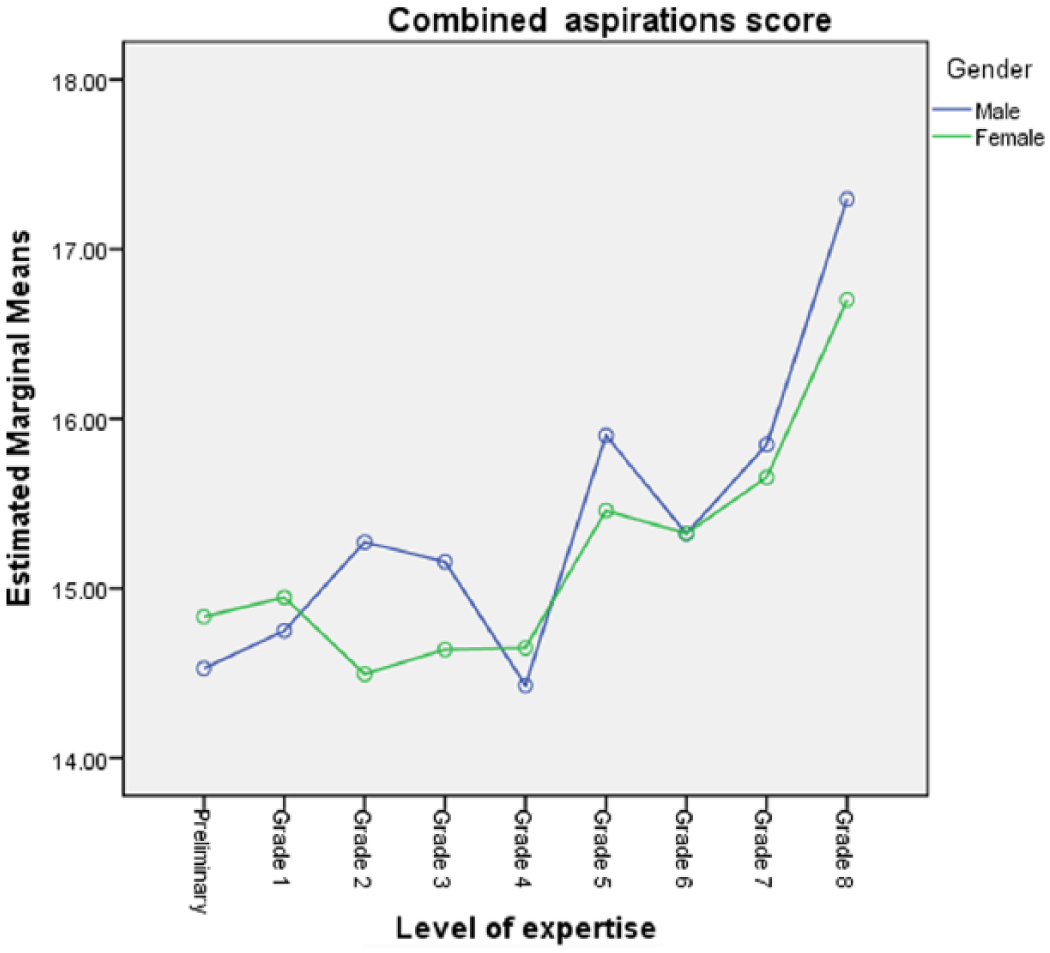
Combined musical aspiration score by gender and level of expertise.
Discussion
There are limitations to this research. The data relating to the proportion of boys and girls playing instruments and the gendered breakdown between them was not based on a national survey, unlike the data reported by Hallam et al. (2008). It is therefore possible that the findings are only relevant for this sample, although the overall gender breakdown is broadly similar to that from the national survey. The data were based on self-report with no means of verification. As this limitation applies to all respondents it can be argued that it is valid to compare responses. Self-report is also adopted in most large-scale research on gender differences and motivation. A further limitation is that the research is cross-sectional, a snapshot of responses of different groups of students at different levels of expertise at one moment in time. It is not a longitudinal study. This means that interpretation of the findings in terms of whether some students might have given up playing was not possible.
Interestingly, the boys in the sample were slightly older at the preliminary grade stage. This may mean that they began playing when they were older than the girls. This in turn may mean that the instruments that they chose were not available to them at a younger age. This may be a reflection of the fact that in the UK some instruments, for instance, kit drum, electric guitar, bass guitar, are usually only available to learn at secondary school.
The evidence suggests that the trend for more girls to play instruments than boys continues, and also that the instruments they play also tend to still be differentiated by gender. Why this should still be the case given the impetus towards more gender equality in the developed world is puzzling. It may be that boys tend to be more interested in other activities, for instance sports (Waters, McPherson, & Schubert, 2014). There may also be insufficient role models that challenge gender stereotypes. When role models do not conform to stereotypical gender behaviours, more children choose to play a wider range of instruments (Bruce & Kemp, 1993). In the music profession, there continues to be discrimination against women (Tick & Tsou, 2013), which means that it is more difficult for them to be accepted in certain musical roles, although there are now highly respected women conductors, most large professional performing groups have at least some women members, and the works of women composers are now being performed and critically acknowledged. However, the instruments that women tend to play professionally and in the public eye generally reflect gender stereotypes. This reduces the number of non-stereotypical role models for both boys and girls.
There were few gender differences identified in relation to the motivational factors. For boys and girls there were no differences with regard to the trend for motivation, in terms of support and social affirmation, to decline and for relating to music being part of social life to increase. However, there was an interaction between gender and level of expertise in relation to the extent to which music played a part in the young people’s social life. For the girls, the trend was consistently in an upward direction, for the boys it was more erratic. There was a particularly low point at about Grade 4. This low point was also in evidence in relation to enjoyment of performance, although in this case the dip occurred for boys and girls between grades 3 and 4, and was more marked for the boys. There was also a marked increase in the boys’ dislike of practise at this level of expertise. Why might there be a particularly low point for boys at about Grade 4? One possible explanation is in terms of puberty. The boys’ average age was just above 13 years when they reached this level of expertise. The onset of puberty for boys is on average at age 11–12, the major landmark in this development being ejaculation, occurring on average at age 13 (Marshall & Tanner, 1970), so hormonal changes may contribute to changes in attitudes towards music. During late puberty, their voices break (Ashley, 2013). They may also come under greater pressure to conform to gender stereotypes, avoiding any activity that might be viewed as feminine (Hallam et al., 2008). Sport as a hobby may become more attractive than music (Waters et al., 2014). Furthermore, the curriculum for instrumental lessons may not offer them sufficient choice in relation to their need to define their developing masculinity, leading to a loss of motivation (Varvarigou, 2014).
The key motivational difference found between boys and girls was in relation to self-beliefs. The girls reported lower self-efficacy in relation to being successful on their instruments and also in relation to the potential to be a good musician. Similar differences have been found in relation to self-beliefs in general education (e.g. Ireson & Hallam, 2009), even though girls tend to outperform boys in examination outcomes (JCQ, 2014; Keiper et al., 2009). The findings are also difficult to interpret in relation to McPherson and O’Neill’s (2010) research, which found that girls tend to report higher competence beliefs and values for music and less task difficulty than boys. The differences might be explained in terms of the different contexts. McPherson and O’Neill were focused on school music where motivation declined as the students progressed through school, whereas the current research focused on extra-curricular instrumental playing where, overall, motivation increased the longer the students engaged with music. Collins (2012) argued that for boys to engage and maintain that engagement with music they needed three elements: interest and a positive attitude, success and accomplishment, and acceptance and praise. These were in evidence for those in the current study at the highest levels of expertise.
Footnotes
Funding
The author(s) received no financial support for the research, authorship, and/or publication of this article.