







Abstract
Music is one of the most pleasurable human experiences. However, the determinants of the variation in individual sensitivity to musical reward are not yet fully unraveled. Empathy has been identified as a determinant of musical affect, including consciously experiencing pleasure from listening to sad music. Additionally, higher musical expertise may enhance pleasurable responses to music, whereas aging decreases individual sensitivity to musical pleasure. We conducted a study to investigate the contribution of empathy and musical abilities on musical pleasure, measured by Interpersonal Reactivity Index, Musical Ear Test, and Barcelona Musical Reward Questionnaire, respectively. To this purpose, we performed a developmental comparison between 48 children (9–11 years old) and 42 adults (18–32 years old). Our findings suggest that individual sensitivity to musical reward is positively correlated with empathy trait in both adults and children, but not with musical abilities. However, when inserted in a regression model including empathy, musical abilities are also predictive of musical reward, but only among adults. These results show that empathy plays a crucial role in determining the individual sensitivity to music reward, whereas musical abilities are less influential. More broadly, this study contributes to shed light on the determinants of the emotional responses to music affect.
Music is generally considered one of the most pleasurable stimuli for humans (North et al., 2004; Pereira et al., 2011). Indeed, for most people, the ability of music to convey and induce different kinds of emotions and affect is what mainly leads to engage in this activity (Juslin & Sloboda, 2001). However, the affective experience associated with music is highly diverse and unique, with individual differences playing a crucial role in determining subjective behavioral and physiological responses (Grewe et al., 2005; Rickard, 2004; Taruffi et al., 2017). To study musical affect, music perception scholars have adopted two main models and conceptualizations of emotions existing in psychology literature, namely the basic emotion and the circumplex models (Eerola & Vuoskoski, 2013). The first one identifies few discrete emotional patterns with specific physiological and motor features that are universal, namely recognizable across ages, cultures, epochs (Ekman, 1992); the second one characterizes affect by two dimensions in the semantic affect space: arousal or tension and valence or pleasantness (Russell, 1980). The first model, when applied to music, has evidenced that happiness and sadness are the emotions that are most robustly expressed and induced through music (Gabrielsson & Juslin, 1996; Krumhansl, 1997). As for the second main model, studies have been focusing on how music can take the listener on a journey through negative and positive valence as well as calm/relaxed and excited/stimulated states (i.e., arousal) (Bigand et al., 2005; Garrido, 2015; Juslin & Laukka, 2003). In recent years, researchers have introduced models that are specific to music, rather than to emotions induced by any kind of stimuli (Brattico, 2020; Eerola & Vuoskoski, 2013; Juslin, 2013; Zentner et al., 2008). These so-called “music specific” models (Eerola & Vuoskoski, 2013) increasingly focused on “positive emotions,” such as nostalgia and wonder (e.g., Juslin, 2013; Omigie, 2016), rather than basic emotions such as happiness and sadness. Among them, pleasure or enjoyment is a central aesthetic response to music (Brattico & Pearce, 2013; Reybrouck et al., 2018). Since Kant, pleasure has been conceptualized as a sensorial response directly stemming from the stimulus features. In turn, to become a “conscious” emotion of enjoyment and liking for a musical piece, sensory pleasure must be followed by subjective value attribution mediated by, for instance, personal associations and knowledge (for a review, see Brattico, 2015). This dissociation between the bottom-up sensorial pleasure to sounds and the top-down subjective feeling of pleasure explains the paradoxical phenomenon of enjoyment of negative-valenced music (Brattico et al., 2016; Vuoskoski et al., 2012). Notwithstanding this dissociation, music represents an abstract reward for individuals, and as such it generates feelings of pleasure and enjoyment that are akin to other rewards, namely pleasures induced by the satisfaction of primary survival-related needs. This is confirmed by both behavioral and neuroimaging studies, which consistently report the involvement of dopaminergic mesocorticolimbic brain regions in the experience of liking music (Blood & Zatorre, 2001; Brattico et al., 2016; Ferreri et al., 2019; Karmonik et al., 2016; Martínez-Molina et al., 2016; Salimpoor et al., 2011). The involvement of the reward circuit in the brain may underlie the great value that people recognize to the music, which persists over generations and cultures (Zald & Zatorre, 2011). However, the emotional rewarding experience associated with music listening is highly subjective, as it is depending, inter alia, on listener’s preference and culture (Chamorro-Premuzic & Furnham, 2007; Mas-Herrero et al., 2012), as well as on personality profile and situational factors (Sachs et al., 2020). Yet, still little is known about the sources of this variability. Recently, a novel proposal was introduced linking aesthetic judgment in music to empathy, also inspired by research in other artistic domains, which indicated the origins of aesthetic emotions from the ability to be moved to others’ emotions. Empathy can be defined as the ability to infer and share emotional experiences (Gallese, 2003), and it is a central mechanism to positive social adjustment in childhood and into adulthood (Beadle et al., 2015). To date, the study of empathy as a mechanism inducing musical emotions has reached a voluminous body of research. For instance, Juslin and Västfjäll (2008), in their BREVCEM model indicated various mechanisms for music emotion induction: brainstem reflexes, evaluative conditioning, visual imagery, episodic memory, contagion, rhythmic entrainment, and musical expectancy. As shown, also emotional contagion is listed as an intra-musical mechanism, which the authors described as one of the mental processes underlying empathy. Similarly, Scherer and Zentner (2001), in describing several emotion production rules, reported empathy as one of five basic psychological mechanisms that are involved in generating emotional responses to music. Behavioral evidence of this comes from Wöllner (2012), who found that people with higher levels of empathy show greater accuracy in perceiving and identifying a musician’s intentions than those with lower levels. Similarly, Egermann and McAdams (2012) demonstrated that perceived and induced emotion from music is moderated by empathy. Furthermore, empathy influences physiological reactions to music (Miu & Balteş, 2012), and it is associated with susceptibility to induced sadness from music (Vuoskoski & Eerola, 2012), and enjoyment of sad music in both children (Kawakami & Katahira, 2015) and adults (Vuoskoski et al., 2012); for a review, see Sachs et al. (2015). Also, empathy processes are important operations in determining preferred music (Gabrielsson, 2011; Rentfrow & Gosling, 2006). Neuroimaging studies confirm that brain structures and their connections, such as the medial prefrontal cortex, associated with cognitive empathy (Omigie, 2016), are involved during listening to music from the favorite genre as opposed to music of a dislike genre (Wilkins et al., 2014). Consistently, in an fMRI study, Wallmark et al. (2018) found that empathy is primarily associated with activity in prefrontal and reward areas. Thus, empathy may impact on how people experience reward associated with music, partly determining the variability of this experience across individuals. Although previous studies searching for the origin of individual differences in music pleasure highlighted that personality traits such as Openness to experience, Intellect and physical anhedonia are associated with musical reward (Mas-Herrero et al., 2012), the involvement of empathy in the musical reward domain is still open to debate. In addition, prior evidence indicated that individual differences in musical reward may partly be age-related. Specifically, decreases in certain components of musical reward across the lifespan have been recently reported in a cross-sectional study including adults ranging between 20 and 85 years old (Belfi et al., 2021). This is in line with previous studies suggesting that the combination of reduced sensitivity to rewards and reductions in both basic and higher level auditory and music perception may result in a negative relationship between overall musical reward and age (Bones & Plack, 2015; Chowdhury et al., 2013; Halpern et al., 1995; Samanez-Larkin et al., 2014). However, despite a growing interest in investigating individual differences in musical reward, to date, musical reward experience in childhood and how it differs from adulthood has not been explored. A further determinant of emotional experience in music concerns listener’s musical abilities. Indeed, musical training can influence emotion recognition in music (Castro & Lima, 2014; Virtala & Tervaniemi, 2017), and even musical preference in the brain (Brattico et al., 2016). Also, the level of musical abilities is linked to pleasurable experience when listening to music (Gold et al., 2013), probably due to the listening style in musicians and the involvement of the musically activated reward system that is also implicated in reinforcement learning (Salimpoor et al., 2013; Zatorre & Salimpoor, 2013). More specifically, higher musical expertise leads to enhanced arousing and pleasurable responses to music (Chapin et al., 2010), resulting in higher connectivity of the regions controlling reward and pleasurable experience (Alluri et al., 2015). Given the findings described, with this study, we aimed at determining whether trait empathy (measured through the Interpersonal Reactivity Index [IRI] and musical abilities (measured by the Musical Ear Test [MET]) may predict the individual variations in musical reward sensitivity (measured through the Barcelona Musical Reward Questionnaire [BMRQ]), and whether and how age affects these relationships. For this purpose, we included adults and children enrolled in their last year of primary school (i.e., 9–11 years old) since this age represents a crucial developmental stage during which empathy emerges (Kawakami & Katahira, 2015; Litvack-Miller et al., 1997). For both groups, we expected the levels of empathy to have a reflection on the subjective experience of music-related pleasure, since feeling of empathy is an emotion reflective of reward experience (Saarikallio et al., 2019) and is strictly correlated with musical preferences (Egermann and McAdams, 2012). Moreover, considering that musicians tend to differently process emotions in music from non-musicians (Brattico et al., 2016), we expect musical abilities to contribute to determining individual variation in musical reward sensitivity.
Methods
Participants
The experiment included 90 participants: 42 adults (M = 25; standard deviation [SD] = 6.9) and 48 children (M = 10.5; SD = 0.5). The adult population mainly consisted of students enrolled in Psychology courses at University of Bari “Aldo Moro” (Italy) and were recruited on a voluntary basis. The children were enrolled in their last year of a primary school based in Andria (Italy) and recruited on a voluntary basis. The study was approved by the local Ethical Committee of the Department of Education, Psychology, Communication at the University of Bari “Aldo Moro.” As for musical training, 17 of 42 adults, and 13 of 48 children had played an instrument/sang for at least 2 years. All participants declared themselves to be healthy, not under any kind of medication and to have normal hearing. Moreover, participants had no history of neurological or psychiatric disorders.
Materials
BMRQ
The individual differences in music reward experience were measured by the BMRQ, originally developed by Mas-Herrero et al. (2012). This questionnaire provides a specific assessment of sensitivity to music reward by examining five main facets that characterize musical reward experience in individuals: musical seeking, emotional evocation, mood regulation, social reward and sensory-motor. Musical seeking evaluates the tendency in pursuing music-related activities (such as attending concerts or playing an instrument) or look for further information about music they listen to (performers, composers). The emotion evocation aspect of music reward concerns the emotional impact of music on individuals. The use of music as an emotional modulator (e.g., to release emotions, to comfort) is indexed as mood regulation. The social reward facet refers to the social bonding effect of music on individuals, whereas the sensory-motor facet assesses the capacity of music to intuitively induce body movements synchronized to a rhythm’s beat in certain individuals. The questionnaire is composed of 20 items with the participants self-reporting the level of agreement to each statement on a 5-point scale ranging from 1 = fully disagree to 5 = fully agree. Since its introduction, the BMRQ has been largely employed in the field of musical research, and it is currently considered the standard measure for assessing individual differences in musical reward (Belfi et al., 2021). Indeed, BMRQ scores are associated to both physiological (skin conductance) and neural (mainly dopaminergic mesolimbic reward system) outcomes (see, for example, Martínez-Molina et al., 2016; Mas-Herrero et al., 2014).
IRI
This index was developed by Davis (1980) to provide an estimation of people’s ability to empathize with others, yet recognizing the uniqueness of its cognitive and affective components (Davis, 1980, 1983). The IRI consists of two different domains: the first one allows an evaluation of empathy from a cognitive perspective, and it is composed by a Fantasy Scale (FS) and a Perspective Taking (PT) scale. The second domain concerns the affective component of empathy through the Empathic Concern (EC) and Personal Distress (PD) scales. Each of these four dimensions has seven statements, resulting in a total of 28 items. It is a self-reported questionnaire scored on a 5-point Likert scale ranging from 0 = doesn’t describe me at all to 4 = describes me very well. The IRI test is widely used in literature as cross-cultural research with this test has established theoretical and practical predictions about empathy (Fernández et al., 2011).
MET/MiniMET (MET for children)
Musical abilities were measured by the MET (Wallentin et al., 2010), which consists of 104 trials on which participants are asked to judge whether two short musical phrases are identical or not. The test is composed of two different sections: the melodic part, containing 52 pairs of melodic phrases, played with sampled piano sounds and the rhythm section, including 52 trials with rhythmical phrases, played with wood block sound. In each section, half of the trial is identical whereas half is not, and the participants respond to each item by marking “yes” or “no” on an answer sheet. For testing musical ability in youngest participants, we used the children version of the MET (MiniMET), developed by Derdau Sorensen (2020), which consists of the same discrimination task divided in melodic and rhythmic part, like the original test, but shorter (a total of 52 items instead of 104). However, the MiniMET, similar to the adult version, requires no prior knowledge of music or music theory. For both versions of the test, performance on each trial was evaluated by the experimenter as being correct (1 point) or incorrect (0 points). Although MET and MiniMET consist of a simple auditory short-term memory test, their scores are strongly associated with the real musical abilities, successfully distinguishing different levels of musicianship (Wallentin et al., 2010). Indeed, this test has the further advantages of (1) being applicable to both musicians and non-musicians and (2) results seem not to be affected by other demographic variables, such as gender or level of education (Wallentin et al., 2010).
Procedure
The three tests were administered online in the period from May 2020 to December 2020, with the supervision of at least one experimenter during all the administration. The order of data collection was (1) IRI, (2) BMRQ, and (3) MiniMET for children (MET for adults).
Statistical analysis
Statistical analyses were performed for the two samples of adults and children both separately and jointly. We first conducted an independent sample t-test in order to compare adults and children scores in musical reward and empathy domains. Eventually, zero-order Pearson correlations between musical reward, empathy, and musical abilities were computed. Hierarchical regression analysis was then conducted to assess the specific contribution of the different predictors (empathy and musical abilities) to the variance of the dependent variable (musical reward). Moreover, the assumptions for linear regressions were tested. Specifically, by adopting Durbin–Watson and Kolmogorov–Smirnov tests, we assessed whether the residuals of the regressions were linear, independent, normally distributed and had an equal variance. These conditions must be met to compute proper and reliable linear regressions (Kafadar, 1997). All analyses were performed using SPSS statistical software, and scatterplots were generated through R Studio 1.3 (ggplot2 package).
Results
Comparison analysis
To test the difference between adults and children in both empathy and musical reward scores, an independent sample t-test was performed, as the adults and children scores distribution was sufficiently normal for the purpose of conducting a t-test (i.e., skew <|2.0| and kurtosis <|9.0|). Also, the assumption of homogeneity of variances was tested and satisfied via Levene’s F test. There was a significant difference in musical reward overall scores between children (M = 65.31, SD = 17.59) and adults (M = 81.14, SD = 11.75), t(82.564) = −5.073, p < .001. Moreover, to deepen the differences in musical reward experience in children and adults, we performed a comparison analysis of BMRQ subscales scores between these two groups (Table 1). We found that adults and children scored nearly equal in the sensory-motor subscale (mean difference: −0.229, p = .778), whereas the largest difference was found in the emotional evocation subscale (mean difference: −7.170, p < .001). As for the empathy trait results, we found a statistical significance, t(88) = −2.042, p = .044, with adults scoring higher than children, (M = 72.76, SD = 13.55 and M = 66.23, SD = 16.40, respectively). Figure 1 shows the significantly different scores obtained by children and adults in BMRQ and IRI. Finally, in measuring musical abilities, adults scored a mean of 68.1 (SD = 10.88), whereas children’s mean was 33.75 (SD = 5.57). Both groups’ performances resulted significantly above chance levels (One Sample Test, p < .05) and were normally distributed.
Independent Samples Test for BMRQ Subscales in Children and Adults.
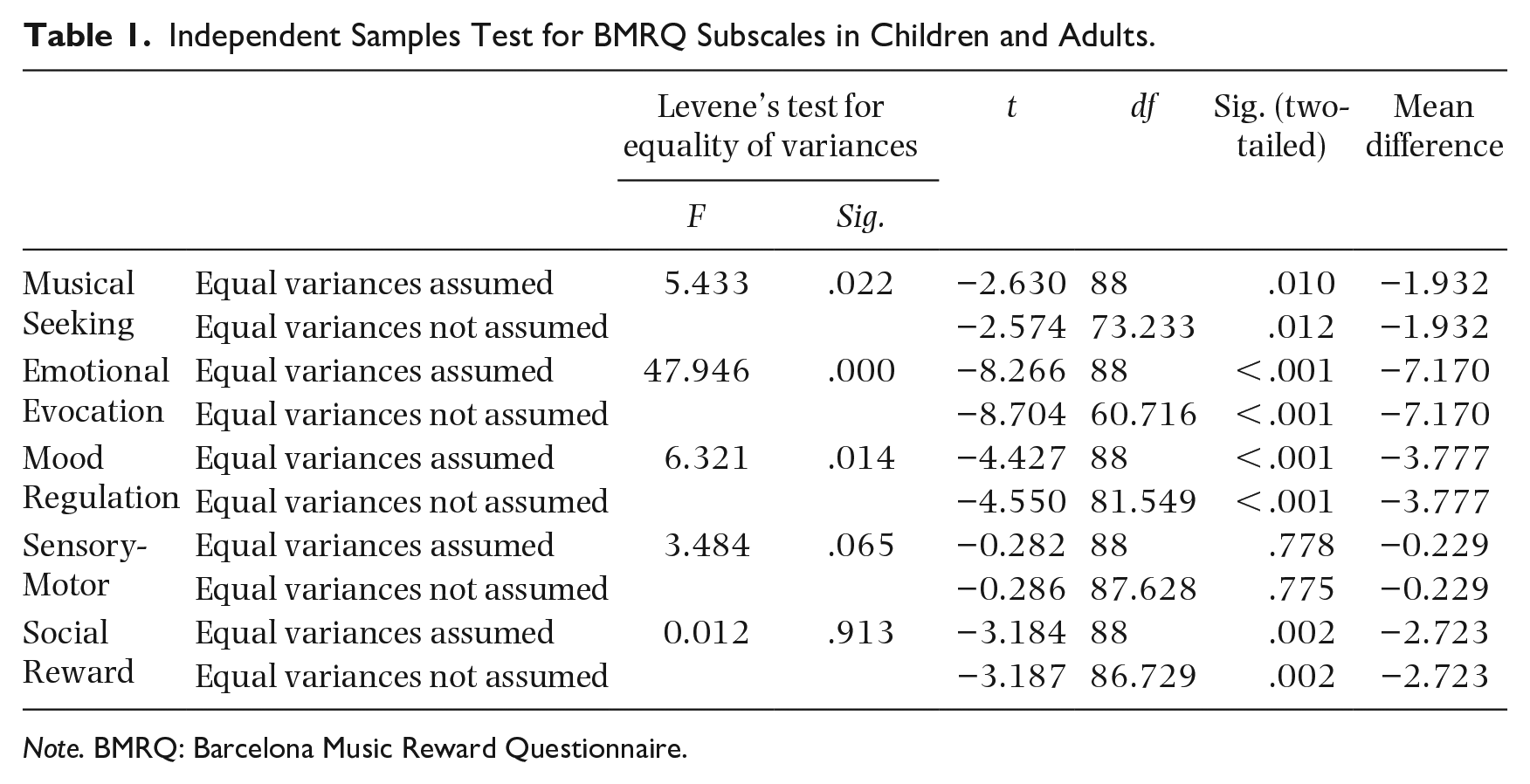
Note. BMRQ: Barcelona Music Reward Questionnaire.
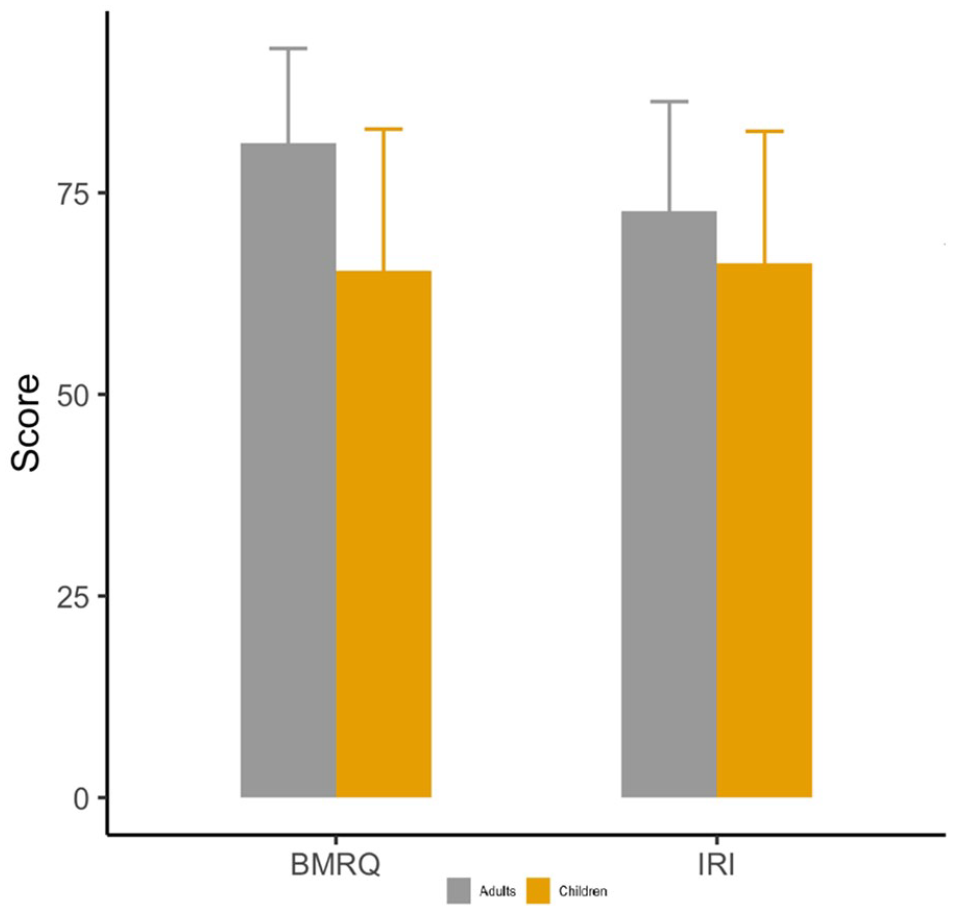
Mean Scores of Musical Reward (BMRQ) and Empathy (IRI) in Adults (in Gray) and Children (in Orange).
Pearson correlations
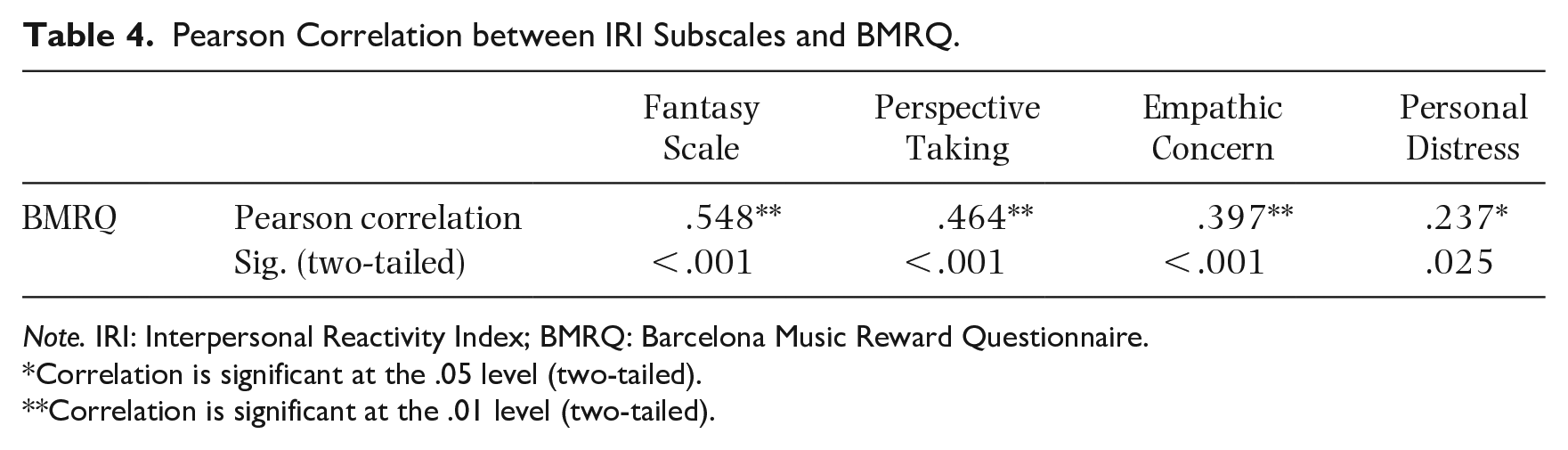
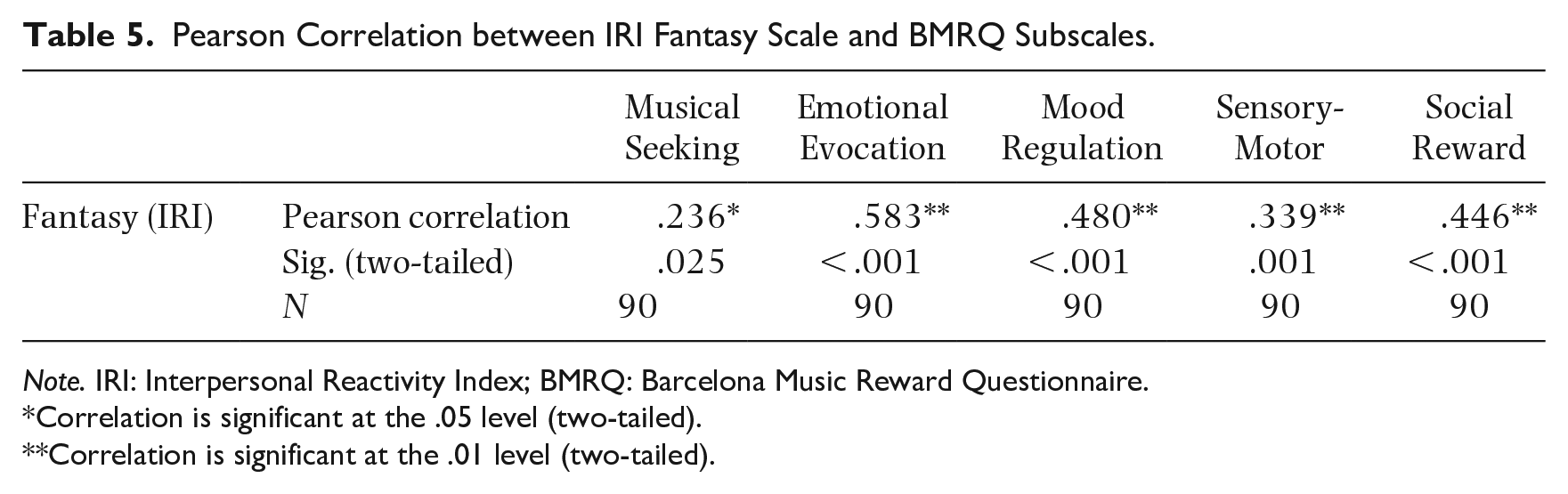
Pearson product correlation between individual’s empathy and musical reward experience among children (Table 2) was highly positive and statistically significant, r(46) = .597, p < .001. Strikingly, no significant correlation was found between musical abilities and musical reward experience, r(46) = −.121, p = .411, or between level of empathy and musical abilities, r(46) = −.112, p = .449. Similar results were obtained in the adult population (Table 3). Musical reward experience was, indeed, positively correlated with the level of empathy, moderate in strength and statistically significant, r(40) = .422, p = .005, but not significantly correlated with musical abilities, r(40) = .213, p = .181. Contrarily to children, however, in adults, we found a weak statistically significant correlation between musical abilities and empathy, r(40) = −.310, p = .049. In addition, when considering both adults and children overall empathy and musical reward results, we found a strong significant correlation, r(88) = .563, p < .001, whereas the correlation was significant but weaker between musical ability and musical reward, r(88) = .433, p = < .001. Finally, when looking at the IRI subscales, we found that EC, FS and PT significantly correlated with BMRQ scores (Table 4), with FS showing the strongest correlation, r(88) = .548, p = < .001. In Table 5 is reported a correlation analysis between IRI FS and BMRQ subscales, with the result showing that IRI subscale of fantasy mostly correlated with BMRQ emotional evocation subscale, r(88) = .583, p = < .001. Taken together, these results suggest that individuals with higher levels of empathy tend to experience a greater pleasure derived from music, regardless of their musical abilities and age (see Figure 2 for a graphical depiction of the results).
Pearson Correlation between Empathy (IRI), Musical Reward (BMRQ), and Musical Abilities (MiniMET) in Children.
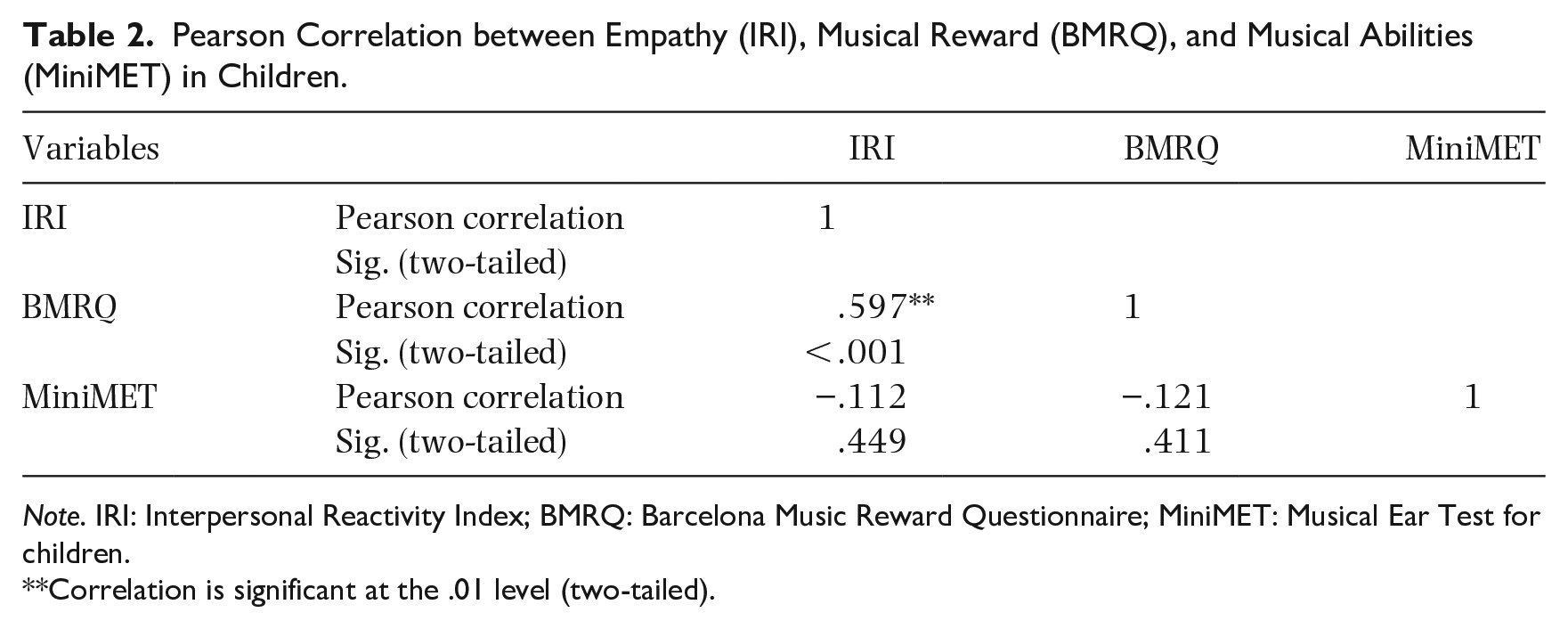
Note. IRI: Interpersonal Reactivity Index; BMRQ: Barcelona Music Reward Questionnaire; MiniMET: Musical Ear Test for children.
Correlation is significant at the .01 level (two-tailed).
Pearson Correlation between Empathy (IRI), Musical Reward (BMRQ), and Musical Abilities (MET) in Adults.
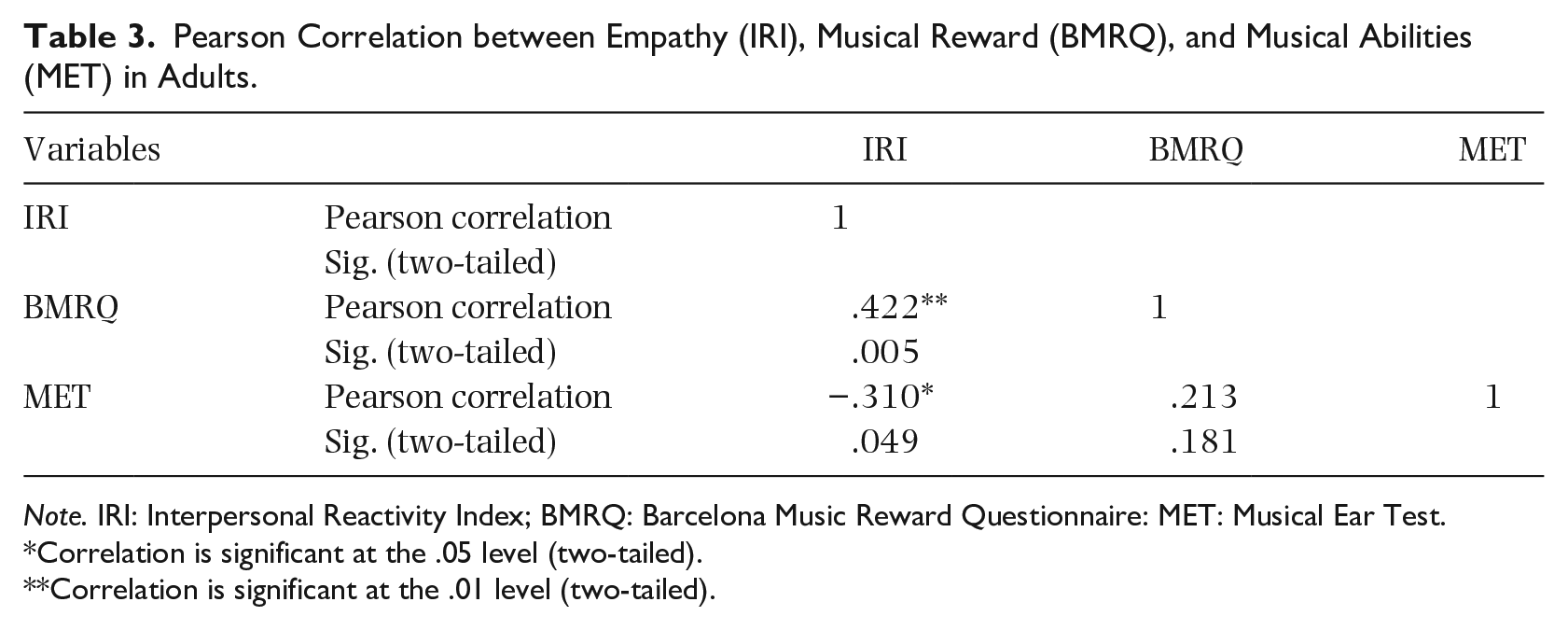
Note. IRI: Interpersonal Reactivity Index; BMRQ: Barcelona Music Reward Questionnaire: MET: Musical Ear Test.
Correlation is significant at the .05 level (two-tailed).
Correlation is significant at the .01 level (two-tailed).
Pearson Correlation between IRI Subscales and BMRQ.
Note. IRI: Interpersonal Reactivity Index; BMRQ: Barcelona Music Reward Questionnaire.
Correlation is significant at the .05 level (two-tailed).
Correlation is significant at the .01 level (two-tailed).
Pearson Correlation between IRI Fantasy Scale and BMRQ Subscales.
Note. IRI: Interpersonal Reactivity Index; BMRQ: Barcelona Music Reward Questionnaire.
Correlation is significant at the .05 level (two-tailed).
Correlation is significant at the .01 level (two-tailed).
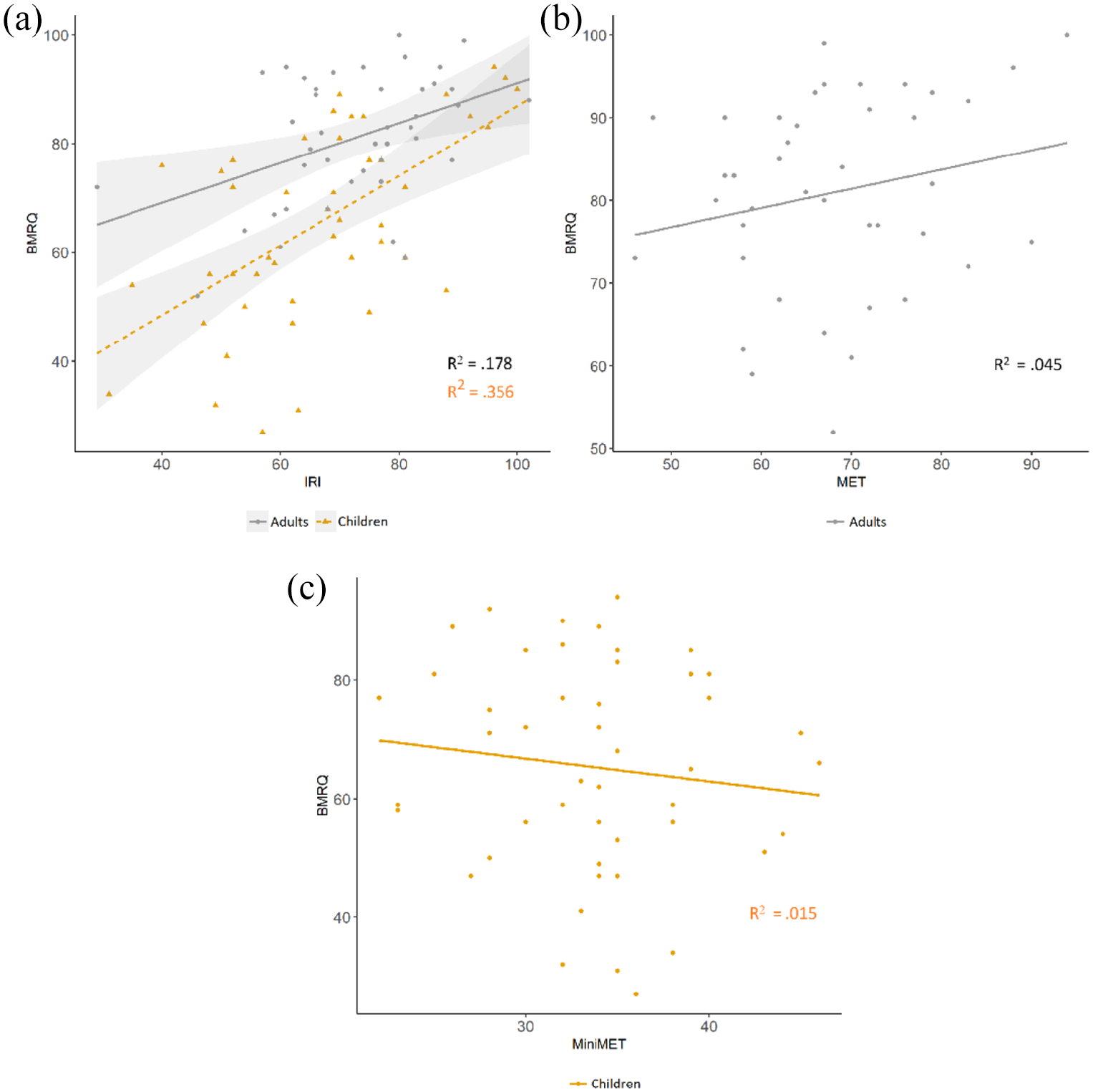
Graphical Depiction of Correlation Coefficients. Gray Shading Indicates Standard Error. (a) Scatterplot Showing the Significant Correlation between BMRQ and IRI Scores in Both Adults ( Dots, Solid Line) and Children (Yellow Triangles, Dashed Line); (b) Scatterplot Showing the Non-significant Correlation between BMRQ and MET Scores in Adults; (c) Scatterplot Showing the Non-significant Correlation between BMRQ and MiniMET Scores in Children.
Regression analysis
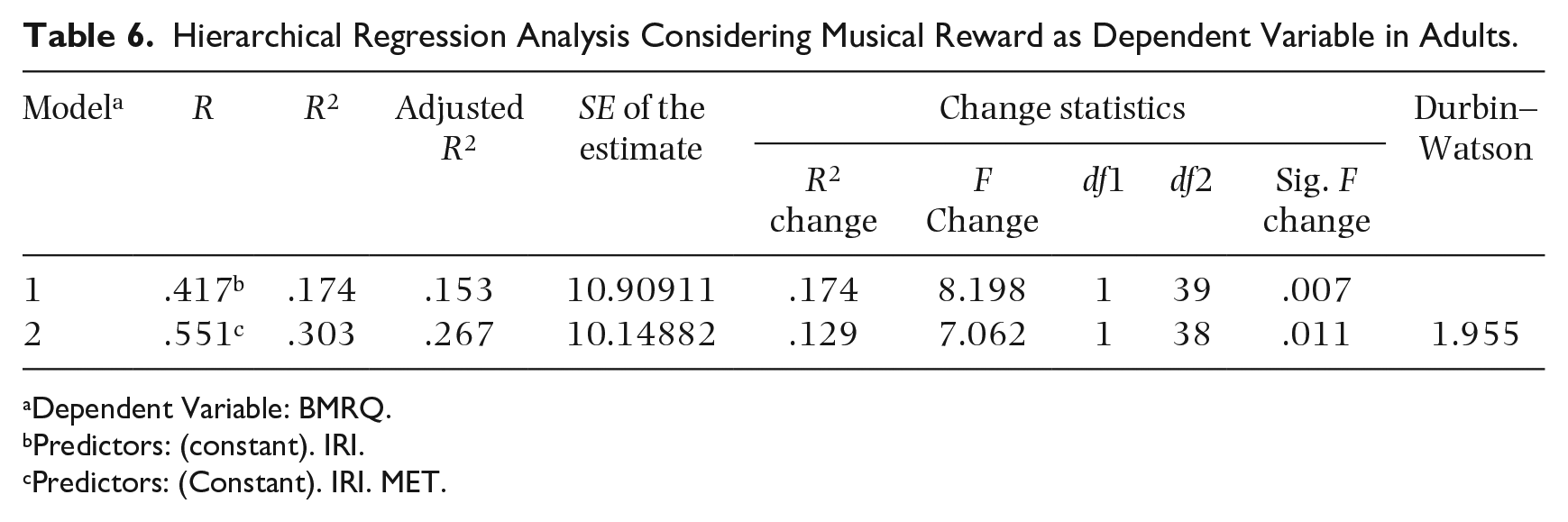
The correlation analysis was complemented by a hierarchical regression analysis in order to obtain a stricter control on variables manipulation and a better exploratory analysis. We therefore considered the level of empathy and musical abilities in two separate blocks as independent variables, and the musical reward as dependent variable. In line with our previous results, we found a significant regression equation between empathy and musical reward, both in adults, F(1, 39) = 8.198, p = .007, and children, F(1, 46) = 25.442, p < .001. Specifically, the 15.3% (R2 = .153) and the 34.2% (R2 = .342) of the variance in musical reward can be explained by individual’s empathy in adults and in children, respectively. Considering both groups jointly (i.e., N = 90), the linear regression showed a significant relationship between trait empathy and musical reward (p < .001), with a R2 value of .310, and a significant yet lower relationship between musical abilities and musical reward (p < .001, R2 = .178). Consistently, musical abilities were not a good predictor of musical reward among both adults, F(1, 39) = 1.853, p = .181, and children, F(1, 46) = .688, p = .411. However, our hierarchical regression model showed that in adults, the highest prediction of musical reward was observed when empathy and musical abilities were combined (R2 = .267), explaining the 26.7% of the variance in musical reward. Among children, in contrast, the model including both empathy and musical abilities indicated a slightly lower prediction strength of musical reward (R2 = .331) than empathy alone (R2 = .342). These results were confirmed by performing a partial correlation to determine the relationship between an individual’s musical abilities and musical reward in adults while controlling for empathy. There was a moderate, positive partial correlation between musical abilities and musical reward while controlling for empathy, which was statistically significant, r(38) = .396, p = .011 (see, Tables 6 to 8 for the full results of the models and Figure 3 for a graphical depiction of the results). These findings are particularly relevant since, as mentioned above, zero-order Pearson correlations showed that there was no statistically significant correlation between musical abilities and musical reward, r(40) = .213, p = .181. Taken together, these results suggest that empathy has high influence in controlling for the relationship between musical abilities and musical reward in adults. Consistently, when we included both adults and children in our model, we found that the combination of trait empathy and musical ability is the strongest predictor of musical reward, F(2, 86) = 36.792, p < .001, R2 = .449, accounting for the 45% of the variance in our dependent variable (musical reward). We also performed a regression analysis considering empathy as a predictor of BMRQ subscales. Our results suggest that empathy trait is a good predictor of social reward, F(1, 88) = 22.684, p < .001, R2 = .196, mood regulation, F(1, 88) = 31.184, p = < .001, R2 = .253, emotional evocation, F(1, 88) = 40.407, p = < .001, R2 = .307, musical seeking, F(1, 88) = 14.203, p = < .001, R2 = .129, but not sensory-motor scale, F(1, 88) = 6.636, p = .012, R2 = .060.
Hierarchical Regression Analysis Considering Musical Reward as Dependent Variable in Adults.
Dependent Variable: BMRQ.
Predictors: (constant). IRI.
Predictors: (Constant). IRI. MET.
Hierarchical Regression Analysis Considering Musical Reward as Dependent Variable in Children.
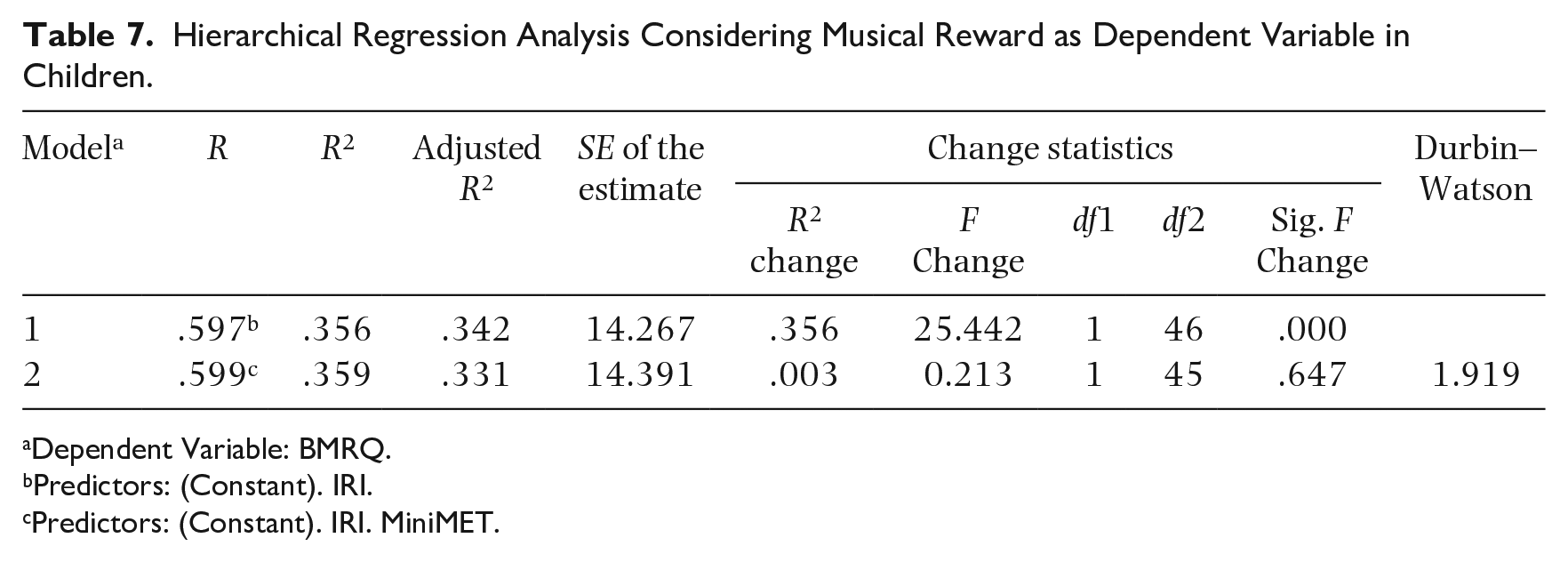
Dependent Variable: BMRQ.
Predictors: (Constant). IRI.
Predictors: (Constant). IRI. MiniMET.
Hierarchical Regression Analysis Considering Musical Reward as Dependent Variable in Adults and Children.
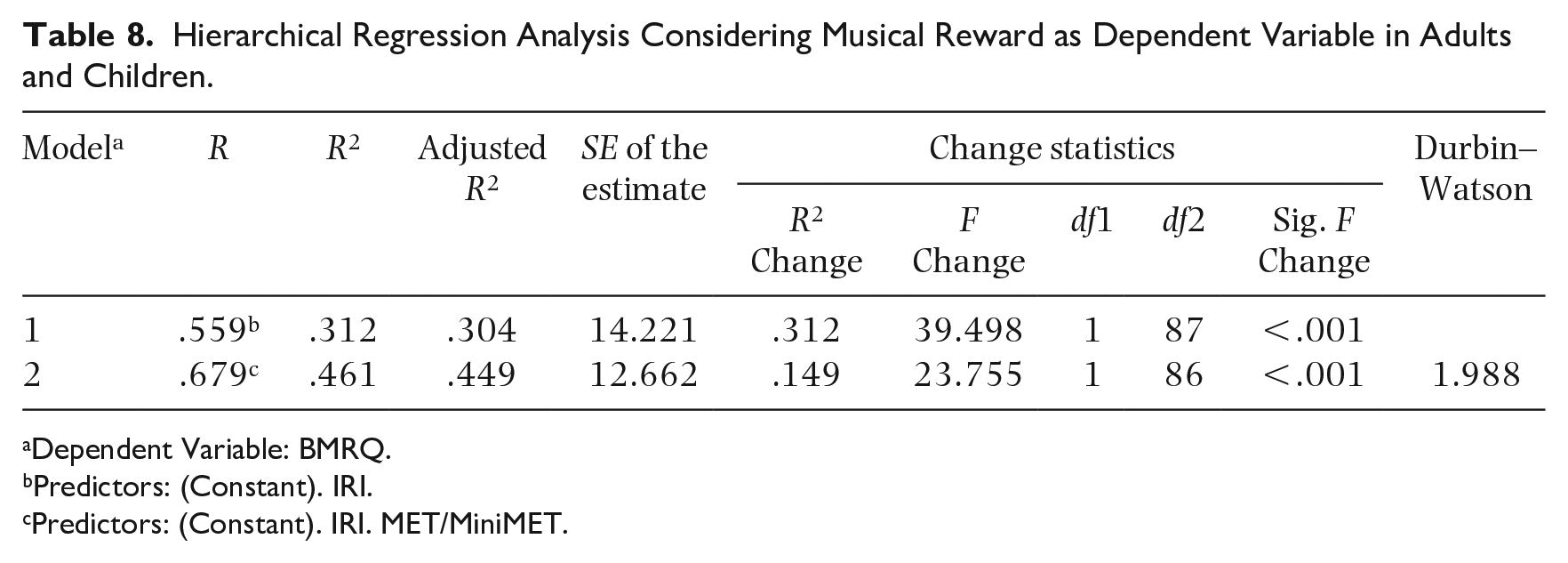
Dependent Variable: BMRQ.
Predictors: (Constant). IRI.
Predictors: (Constant). IRI. MET/MiniMET.
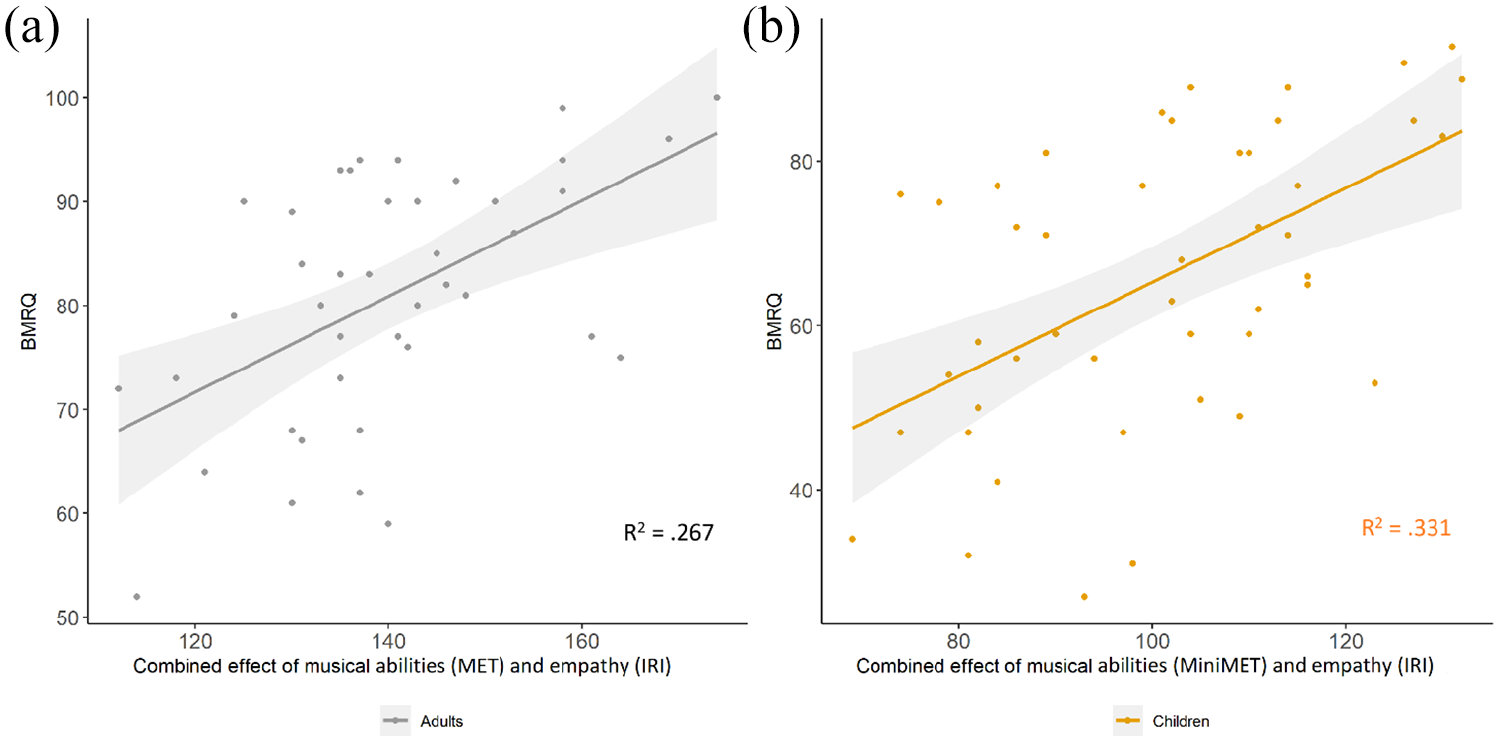
Graphical Depiction of the Regression Models. Gray Shading Indicates Standard Error. (a) Scatterplot Showing the Significant Regression Arising from the Combination of IRI and MET in Predicting BMRQ Variance in Adults; (b) Scatterplot Showing the Significant Regression Arising from the Combination of IRI and MiniMET in Predicting BMRQ Variance in Children.
Discussion
Relationships between trait empathy, musical reward, and musical abilities
With this study, we aimed at exploring the contribution of trait empathy and musical abilities on musical reward sensitivity. We measured musical reward using the BMRQ, which assesses various components of reward experience associated with music. Trait empathy was measured with the IRI, composed of four subscales, whereas for evaluating musical abilities, we used the MET for adults and MiniMET for children. Our main finding shows that musical reward sensitivity is strongly, positively correlated with trait empathy in both children and adults. This positive correlation is in line with our hypothesis, considering that trait empathy associates with perception, interpretation, and emotional reactions to music (Greenberg et al., 2015). Our findings are also in line with previous studies showing that empathy associates with the emotional response to music in both adults and children (Eerola et al., 2016; Garrido & Schubert, 2011; Kawakami & Katahira, 2015; Vuoskoski et al., 2012).
All these findings converge in recognizing the central role of empathy in modulating affective reactions to music, including pleasure and enjoyment. Neuroimaging evidence of this effect comes from a recent neuroimaging study reporting that highly empathic people show a significantly higher overall brain activation, specifically, in prefrontal and mesolimbic areas, which are part of the reward circuitry (Wallmark et al., 2018). Our study confirms and extends these results also on a behavioral level. That is, people more empathic find music listening more pleasurable than people with lower empathy levels. Current findings are also in line with previous studies specifically investigating the relationship between trait empathy and enjoyment of music using the IRI. In a series of experiments, Vuoskoski and Eerola (2012), Vuoskoski et al. (2012) and Eerola et al. (2016) reported statistically significant correlations between EC and FS subscales and self-reported liking for sad music, whereas Kawakami and Katahira (2015) found that FS and PT were associated with preference and intensity of emotional reactions to sad music. Consistently, we found EC, FS, and PT subscales significantly correlated with BMRQ scores, remarking that these subscales are crucially involved in an individual’s musical reward experience. Moreover, we found that the highest correlation between musical reward and empathy concerned the IRI subscale of fantasy (FS), which, specifically, mostly correlated with the BMRQ subscale of emotional evocation. Similarly, Vuoskoski and Eerola (2012) found that scores on the fantasy subscale correlated with the intensity of emotional responses evoked by music, which is an important predictor of music preference (Vuoskoski et al., 2012). This suggests that a putative explanation for our results may be related to the degree of emotional arousal arising from reward experience. In fact, Salimpoor et al. (2009) reported a strong positive correlation between ratings of pleasure and emotional arousal. This association might be mediated by the subjective empathy trait, since based on previous research, heart rate variability and cognitive empathy are positively related (Blair, 2008; Shamay-Tsoory & Aharon-Peretz, 2007). That is, higher empathy associates with higher emotional arousal which, in turn, might lead to higher musical reward experience. However, if on one hand, the link between emotion and music is widely established, on the other, an increase in emotional arousal does not necessarily imply pleasurable states. Indeed, according to Van den Bosch et al. (2013), increases in experienced pleasure in response to novel music pieces do not necessarily correspond with an increase in emotional arousal, since both responses appear, instead, more related to familiarity, expectation, and predictability. Interestingly, though, higher empathy leads to higher appreciation of music also during the listening of unfamiliar music (Wallmark et al., 2018), which, in contrast, typically tends to elicit less reward and enjoyment than familiar music (Salimpoor et al., 2013). In sum, empathy appears to be a major determinant of musical reward, independently, or at least complementary, to factors typically associated with this domain, as well as a factor determining an enhanced openness to music. Contrary to our expectations, we did not find any significant direct correlation between musical abilities and musical reward when children and adults were investigated separately. Prior evidence reported that musical abilities may modulate how emotions in music are recognized (Castro & Lima, 2014) which, in turn, might lead to enhanced arousing and pleasurable responses to music (Alluri et al., 2015; Brattico et al., 2016; Chapin et al., 2010), although the effect of musical expertise on reward experience appears more prominent at the neural rather than behavioral level (Alluri et al., 2015; Madsen et al., 1993). Our results, instead, suggest that in order to experience an intense and highly rewarding musical experience, musical abilities do not represent an essential determinant. However, we found that musical abilities are significantly, positively correlated with musical reward when empathy is controlled. Interestingly, this result only concerns adults, since among children the regression model including both empathy and musical abilities showed nearly the same predictive strength than the one including empathy alone. The predictive effect of musical abilities arising in combination with trait empathy may lead to different interpretations. Primarily, according to our and previous results, empathy would represent a sort of predisposing factor toward musical reward and music in general. Reasonably, individuals who experience deeply rewarding music-related emotions are more drawn to engage in music-related activities than individuals experiencing less reward and pleasure from music. In support of this, we found that empathy trait is also a significant predictor of the BMRQ subscale of musical seeking (R2 = .129), which consists, inter alia, of looking for further information about music we listen to (performers, composers, meaning). This music-related information acquisition increases situational empathy (O’Neill & Egermann, 2020) which, moreover, also moderates the effects of emotional response to music (Egermann & McAdams, 2012; O’Neill & Egermann, 2020). Therefore, although musical ability and expertise modulate the emotional responses to music and the ensuing reward experience, the latter seems only partially related to listener’s musical abilities. In other words, musical abilities may affect the reward experience in response to music, although other factors, such as empathy, seem more central in determining pleasure and enjoyment in music, especially among children. Based on this and prior evidence, it might be suggested that musical abilities can influence the aesthetic processing of music (see, for example, Vuvan et al., 2020), yet not significantly impacting the overall aesthetic sensitivity (Brattico et al., 2013; Madsen et al., 1993). On a broader view, music does not require specific knowledge and competence in order to appreciate and derive reward and pleasure from it.
Differences in musical reward experience between children and adults
In this study, adults scored significantly higher than children in both trait empathy and musical reward. Higher trait empathy scores in adults compared to children are in line with prior evidence (Oh et al., 2020); however, both Mas-Herrero et al. (2012) and Belfi et al. (2021) suggested that musical reward declines with age, although the above-mentioned studies did not include children. Typically, by employing the BMRQ, individuals who score lower than 65 are considered musically anhedonic. Using this cutoff score, we found that 5 adults out of 42 resulted in the anhedonic group, in line with prior findings (Belfi et al., 2021). In contrast, among children, the number of participants scoring less than 65 on BMRQ was 23, nearly 50% of the participants. This discrepancy was expectable since the BMRQ is designed for the adult population and, to date, it is not yet validated for children, although a large amount of data has been collected within the Danish Mass experiment as reported by Derdau Sorensen (2020). Once again, these differences emphasize the need for a deeper exploration of musical reward experience among children by employing research constructs appropriate to the unique characteristics of this age group. In this regard, our results contribute to shed new light on the different type and conceptualization of pleasure and reward associated with music from childhood to adulthood and allow to discuss some plausible assumptions. Firstly, it might be proposed that lower musical reward scores among children may be ascribed to the fact that, as previously mentioned, in the experience of emotional arousal and musical pleasure, familiarity, expectation, and predictability play an important role (Van den Bosch et al., 2013). For instance, Huron (2006, 2009) suggested that during listening, we use our former encounters with music and our implicit knowledge of musical conventions to consciously or implicitly anticipate the outcomes of the musical “paths,” wondering where they might lead us. Also, in investigating the mechanisms that allow music to be translated into emotion and pleasure, it is important to mention the well-known dichotomy between extra-musical mechanisms that rely, for instance, on associations with past events or other emotional sounds, and the intra-musical mechanism of anticipation (Meyer, 1956; see also Brattico, 2020; Huron, 2006; Koelsch, 2012; Patel, 2008; Vuust & Kringelbach, 2010). In other words, in addition to the mediation of several extrinsic factors such as psychological traits and individual inclinations (Brattico, 2020), a musical structure is aesthetically pleasing when it optimally challenges learned predictions for incoming events. In this perspective, children are less likely to engage in music-related activities, such as attending concerts or simply playing music on phones or computers, resulting in a general lower exposure and direct access to music compared to adults. Reasonably, this may impact on musical expectation and predictability, and in turn, on the rewarding experience. In addition, also listener’s musical preferences, which are seen as a major constituent of the aesthetic experience of music (Nieminen et al., 2011), are strongly modulated by previous exposure (Salimpoor et al., 2015), and stabilize only in early adulthood (LeBlanc et al., 1996). It might be assumed therefore, that the experience of musical reward in childhood is only partially related to familiarity, expectation, and predictability, as seen among adults. Specifically, due to the less musical-engagement and musical preferences not yet crystallized, pleasure and enjoyment derived from music in children might mainly rely on intrapersonal factors, such as trait empathy. In accordance with this view, in our study, empathy was a good predictor of musical reward significantly more for children (R2 = .342) than for adults (R2 = .157). Secondly, the different musical reward sensitivity found in adults and children may partly arise from the neural mechanisms underlying the aesthetic judgment of music. Indeed, some of the brain structures involved in decision-making processes, such as the dorsolateral prefrontal cortex, are situated in the frontal lobe, which continues its maturation during adolescence, reaching its adult shape only during the early 20s (Yurgelun-Todd, 2007), as well as the cingulate cortex has been observed repeatedly in aesthetic judgment tasks (Jacobsen et al., 2006; Kawabata & Zeki, 2004; Reybrouck et al., 2018; Vartanian & Goel, 2004). Supposedly, the maturation of those structures (along with the acquisition of culture-specific knowledge of music) is necessary for reaching full confidence in aesthetic judgments of music (Nieminen et al., 2011). In support of this, individual musical taste stabilizes and crystalizes in early adulthood, with only minor changes occurring in later years (LeBlanc et al., 1996). Nevertheless, the aesthetic response to music is a salient concept also for children (Nieminen et al., 2012). Along with the effect of individual differences, indeed, certain features of the aesthetic processing are presumably universal, common to all individuals, and, hence, common during development. For example, even infants show a considerable interest in music, as suggested by various head-turning experiments (Trehub, 2003), in which the aesthetic responses to music activated the motor system of the listener (Patel, 2008). It might be proposed that, in addition to the aforementioned intrapersonal factors, an early concept of pleasure derived from music is likely related to its capacity to intuitively induce body movements synchronized to a rhythm’s beat, an ability expressed even by infants (Nieminen et al., 2011), a sort of reflex-like response. In addition to this, the gradual acquisition of Western tonal music rules, based on both implicit and explicit learning, also plays a role in the development of aesthetic responses to music. In fact, prior evidence has shown that 6- and 7-year-old children prefer diatonic over non-diatonic melodies and judge them more beautiful (Krumhansl & Keil, 1982; Nieminen et al., 2011, 2012). In our study, this is reflected in the nearly equal scores obtained by children and adults in the BMRQ sensory-motor subscale. In contrast, the experience of musical reward in adults, more than in children, appears significantly related to developed preferences and conscious associations between certain music with autobiographical memories, hence attributing to music an attentive and experienced emotional connotation, which in turn may lead to enjoyment. In support of this, in our study the largest difference between children and adults arose in the BMRQ emotional evocation subscale, strictly related to the emotional impact of music on individuals, with adults who scored significantly higher than children.
Limitations and outlook
This study presents certain limitations which might partially limit the generalizability of the findings. Although we adopted questionnaires and tests widely validated by several published psychology and neuroimaging studies, the main caveat is related to the operationalization of the constructs we intended to address with this study. Musical abilities were measured by the MET, which loads heavily on working memory: besides the limitations related to the test per se, it is unlikely that the complexity of musical competence can be entirely captured by a single test. Similarly, musical reward is a broad and debated construct, although BMRQ is generally considered to provide a reliable evaluation (Ferreri et al., 2019; Gold et al., 2019; Martínez-Molina et al., 2016). Accordingly, as the aesthetic responses to music in childhood are poorly investigated, with this study, we encourage further research and attention to the question. In this regard, and in light of our findings, we believe that music perception research would greatly benefit from a psychometric measure of musical reward sensitivity specifically developed for children. Lastly, it should be noted that previous studies exploring empathy in the realm of music reward showed that this trait mainly affects susceptibility and enjoyment of sad and tender music (Kawakami & Katahira, 2015; Vuoskoski & Eerola, 2012). Our results confirmed and emphasized the pivotal role of empathy as strong predictor of music reward sensitivity. However, the current study does not allow to exclude that the relationship between empathy and musical reward is mainly or even exclusively driven by negatively valenced music. Future studies should address this topic by investigating whether higher empathy levels may lead to higher enjoyment of positively valenced music as well.
Conclusion
The current study has shown that empathy is a central construct in music reward sensitivity for both children and adults, whereas musical abilities are only partially involved. On a broader view, this developmental comparison performed between adults and children allowed us to shed new light on the different factors underlying how people experience pleasure associated with music.
Footnotes
Acknowledgements
We wish to thank Dr. Daria Valente who provided substantial graphical assistance. We also acknowledge all the participants involved in this study.
Funding
The author(s) disclosed receipt of the following financial support for the research, authorship, and/or publication of this article: The Center for Music in the Brain (MIB) is funded by the Danish National Research Foundation (DNRF117).
