







Abstract
This study investigates the impact of positive or negative performance evaluations on general self-efficacy and subsequent choice of a solo or group performance among professional musicians (N = 53; women 58.2%, men 36.4%, non-binary 5.5%). Participants completed personality questionnaires, sight-read an unfamiliar musical piece, received computer-generated feedback, and reported post-manipulation self-efficacy. Results showed that positive evaluations, even computer-generated, increased self-efficacy and were associated with a higher likelihood of choosing solo/a cappella performance. While self-efficacy correlated with a greater preference for solo/a cappella performance, it did not mediate the relationship between evaluation and performance choice. Findings align with Bandura’s self-efficacy theory, emphasizing the influence of mastery experiences and external feedback on self-efficacy development.
Professional development has been described as a long-term process that begins in childhood and continues into adulthood (Conway, 2008). As the socio-cognitive approach to career development posits, self-efficacy is an important factor in acquiring an ability (SCCD; Lent et al., 1996). A prosperous career in music performance necessitates a combination of proficient abilities and self-efficacy, enabling individuals to actualize their full potential (McPherson & McCormick, 2006). Thus, the focus of our study is on personality and situational factors that impact general self-efficacy (GSE) in professional musicians and the role of GSE in the choice of a solo performance, as a proxy of a solo career. Solo performance, as understood in this context, refers to the independent execution of a musical piece without the accompaniment of other individuals or instruments (a cappella). No research so far tested the effect of GSE on the choice of solo vs group performance in musicians.
General and specific self-efficacy
Bandura (1977) defines self-efficacy as people’s judgments of their capabilities to organize and execute courses of action required to attain selected types of performances. Thus, self-efficacy is a belief about one’s ability. It is one of the factors that predict what people will do with their knowledge and skills (Pajares & Schunk, 2002). Researchers also distinguish between general and specific self-efficacy. General self-efficacy (GSE) is the perception that a person has of their ability to perform in a variety of situations (Schwarzer & Jerusalem, 1995), and task-specific self-efficacy (SSE), is the belief that a person has of their ability to perform in a specific situation (Judge et al., 1997). Previous research has shown that general and task-specific self-efficacy are positively related (Dullard, 2014) and GSE may influence SSE (Sherer et al., 1982). SSE for music performance may in turn transfer to the musician’s GSE. This is consistent with research confirming a strong correlation between GSE and SSE in work fields (Chen et al., 2001). Therefore, of relevance to our study will be SSE (musical self-efficacy) concerning musical ability and performance, but also GSE (Jerusalem & Schwarzer, 1992).
Mastery-experience as a predictor of general and music performance self-efficacy
Bandura’s (1977) research identifies four main sources based on which people form their self-efficacy beliefs. These include mastery experiences (e.g., getting high marks in exams, winning contests), observing social role models being effective in obtaining their goals, positive social persuasion (e.g., positive, positive communication from a teacher that supports self-efficacy), and positive emotions related to performance (e.g., feeling confident and motivated during a presentation). In the context of the formation of GSE and also efficacy convictions in the professional context, the aspect of the so-called “mastery experience” can be extremely important. Previous research measuring self-efficacy in musicians also recognizes enactive mastery experiences as one of the most effective sources of self-efficacy formation (Kaleńska-Rodzaj & Pietras, 2014; Schunk & Usher, 2012; Zelenak, 2015). Also, musicians who recall their unsuccessful performances rather than their successful ones underestimate their abilities (Hendricks, 2015). Furthermore, music students with higher self-efficacy interpret information about sources of self-efficacy differently than those lower self-efficacy students, reacting stronger to information about mastery experiences, whereas those who were lower on self-efficacy were more sensitive to vicarious experiences (Hendricks, 2009). Evaluation of performance (providing mastery-oriented feedback) also serves as feedback on what the assessed person can improve, so it directs further development and determines further successes and motivation for learning (Kaleńska-Rodzaj, 2008, 2014). Participation in competitions is usually reserved for students with the best performance and examination results and the later work of the soloist is granted to those who win those competitions. Thus, soloists have excellent technical skills and a wide repertoire, which is confirmed by their excellent performances, reviews, and competition results. Furthermore, winning contests and obtaining high scores from music performance teachers should increase general and SSE in musicians, which may affect further musical achievements and music performance choices (solo performance).
Self-efficacy as predictor of musical achievement and career
Occupational self-efficacy is an important factor in working life (Fullemann et al., 2015; Paggi & Jopp, 2015). Previous studies have reported a positive relationship between occupational self-efficacy and, for example, work motivation, job performance (Çetin & Aşkun, 2018) and work engagement (Guarnaccia et al., 2018; Liu, 2019). Therefore, since professional self-efficacy is related to performance at work, it can be assumed that musicians, who have high musical performance self-efficacy, will also be more effective in terms of musical performance. Indeed, musical performance self-efficacy has long been recognized as a factor influencing musical achievement (Zelenak, 2010). Prior research has found performance self-efficacy to be the best predictor of musical achievement compared to intrinsic value, GSE, and self-regulation (McCormick & McPherson, 2003; McPherson & McCormick, 2000). It has also been found to mediate between other variables, including formal practice and achievement outcomes (McPherson & McCormick, 2006; Pajares et al., 1999).
Moreover, self-efficacy influences the choice of life goals; individuals with higher self-efficacy set more ambitious goals and show greater commitment to their intended behavior, even in the face of obstacles and setbacks (Locke & Latham, 1990). Therefore, it is possible that high self-efficacy is not only related to better musical performance but also to more ambitious performance choices, such as solo performances.
Individual differences related to GSE and choice of musical performance
One of the strongest correlates of self-efficacy is self-esteem (Diseth et al., 2014). Higher self-esteem tends to be associated with more ambitious career goals, increased motivation, and perseverance in pursuing a musical career. It also fosters a positive outlook, greater resilience, and the determination needed to achieve ambitious musical goals. (Hays, 2005, 2006; Kenny & Aram, 2015; Mills, 2002; Zimmerman, 2000).
Another trait that might be of importance to self-efficacy and choice of performance is narcissism. It is the ability to regulate self-esteem and to manage needs for affirmation, validation, and self-enhancement from the social environment (Pincus & Lukowitsky, 2010). Narcissism is associated with good psychological health (Pincus et al., 2009; Sedikides et al., 2004), social self-efficacy (Ksinan & Vazsonyi, 2016), GSE (Brooks, 2015; Mathieu & St-Jean, 2013), as well as domain-SSE (Edubirdie, 2022; Hegde & Shetty, 2020). In addition, research has shown that narcissistic traits are positively related to professional success (Hirschi & Jaensch, 2015).
Even though grandiose narcissism in previous studies was positively associated with self-efficacy (Molińska, et al., 2024), successful performance, and career development, a vulnerable narcissism might be negatively associated with those variables. Although these two forms of narcissism have common features like exaggerated sense of self-importance, self-centeredness, or disagreeableness (Miller et al., 2011), grandiose narcissism is characterized by high self-esteem whereas vulnerable narcissism is described by low self-esteem, defensiveness, avoidance, insecurity, and being hypersensitive to criticism (Miller et al., 2011; Wink, 1991). Moreover, vulnerable narcissism is negatively related to self-efficacy, beyond self-esteem.
A trait that is also associated with anxiety and insecure attachment is rejection sensitivity (RS). It is defined as a tendency to anxiously expect, readily perceive, and overreact to rejection (Downey & Feldman, 1996) and was previously found to be positively related to vulnerable narcissism (Besser & Priel, 2010). For individuals sensitive to rejection, negative feedback can interfere with engagement in further learning opportunities (Mangels et al., 2018). Furthermore, research provides evidence of links between self-efficacy and RS (Terada & Kawamoto, 2017), which is also related to lower job performance (Khan et al., 2019). Also, performance anxiety coping strategies might be relevant to our research, as performance anxiety was associated with musical success (Zarza-Alzugaray et al., 2020).
Current study
This study aimed to verify whether the evaluation of professional performance in musicians would affect GSE, which in turn would shape the choice for later solo (in the meaning of a cappella) performance or group performance. We assume that solo performance is more ambitious and difficult, which in musical career is reserved for the most talented and qualified artists. Throughout their training, artists participate in several musical competitions and performances, receiving feedback on their skills and building their self-efficacy. Based on that feedback and self-efficacy they choose their preferred way of performance, a solo career or band (orchestra) career path. In this study, we wanted to experimentally test the hypothesis that computerized feedback on musical performance would affect self-efficacy of a musician and determine the performance choice of the artist. Yet, we acknowledge that just one choice does not fully resemble more complex career development choices and should be treated as one step in the process of career development.
Though Bandura (1997) claimed that the established level of self-efficacy is rarely subject to change, an increase in self-efficacy over time has been noted in the context of music performance (Hendricks, 2014). Previous research (Daniels & Larson, 2001; Kim & Lee, 2019) has shown that self-efficacy increased when the feedback was positive and decreased when it was negative. Additionally, a meta-analysis describing the effects of feedback interventions found that compared to non-computerized feedback, computerized feedback was associated with greater participant confidence, leading to increased self-efficacy, better strategy development, and better outcomes (Kluger & DeNisi, 1996). According to the researchers, the supervisor feedback intervention focused participants’ attention on so-called meta-talk processes, that is, assessing the supervisor’s intentions and their implications for one’s own goals. The computerized feedback intervention focused on the task and the details of the task (Kluger & DeNisi, 1996). In our study, the performance task and related self-efficacy were key areas. For this reason, we also chose to use a computerized feedback intervention. In our study, we manipulated self-efficacy by making participants believe that their musical performance is being evaluated by a computer program, and next, we gave them an option of performing the piece of music again solo or with an accompaniment of other musicians and predicted that:
Hypothesis 1 (H1). Positive feedback will increase self-efficacy, while negative feedback will decrease it. Self-efficacy will be higher after positive feedback compared to negative feedback.
Hypothesis 2 (H2). Positive feedback will be associated with a higher probability of choosing a solo performance over negative feedback.
Hypothesis 3 (H3). Post-manipulation GSE will be related to higher odds of choosing solo performance than accompanied performance.
Hypothesis 4 (H4). Post-feedback GSE will mediate the relationship between feedback (positive/negative) and the choice of performance mode.
Hypothesis 5 (H5). The effect of feedback on a solo performance choice will remain significant when controlling for baseline GSE, musical self-efficacy, musical performance coping styles, narcissism and rejection sensitivity.
Method
Participants
Participants (N = 53) were professional musicians, aged 23–58 (M = 30.13; SD = 7.06), among which 32 identified as women (58.2%), 20 men (36.4%) and 3 non-binary (5.5%). All participants had a university degree and had received a full musical education and training. All study participants were artists who actively practiced their profession as musicians as their main source of employment. They were instrumentalists (playing string, keyboard, and wind instruments) as well as singers. Participants were recruited using a snowball sampling method, leveraging recommendations and sharing the research procedure link on social media. Artist communities on social platforms played a key role in helping to acquire potential participants. All participants were volunteers, received no payment, remained anonymous, and could withdraw from the study at any time without any consequences. All information about the study was presented online, along with a contact address for individuals interested in discussing the research. The study was conducted in accordance with the ethical standards of the Declaration of Helsinki.
Materials
General self-efficacy
The Generalized Self Efficacy Scale, GSES (Jerusalem & Schwarzer, 1992; Juczyński, 2000) was used to measure general self-efficacy. GSES consists of 10 statements describing individuals’ general belief that they will be able to cope with difficult situations and obstacles. Participants declare whether they agree with the statements using response options from 1 to 4 (1—no, 2—probably not, 3—rather yes, 4—yes). The change to the original scale was adding the word “now” to all the statements (but not changing the statements) to underline the possibility of having transient, state-like self-efficacy feelings, e.g., “I am confident
Musical performance self-efficacy (MPSE)
To measure self-efficacy in terms of musical performance, we used the 24-item Self-Efficacy Music Performance scale (Zelenak, 2010). The measure consists of four scales: (1) mastery experiences (e.g., “I have had positive experiences performing music in the past,” 7 items), (2) vicarious experiences (e.g., “I have improved my music performance skills by watching professional musicians, who are similar to me in some way, perform well,” 5 items), (3) verbal/social persuasion (e.g., “My friends think I am a good performer on my primary instrument,” 6 items), (4) physiological state (e.g., “I enjoy participating in musical performances,” 5 items). Participants use a 10-point response scale ranging from 1—strongly disagree to 10—strongly agree. In this study, we used the total (averaged) score, and the reliability of the scale was very good, α = .95.
Strategies to cope with musical performance anxiety
To measure performance anxiety strategies, we used a “Cognitive strategies and self-statements” questionnaire (Steptoe & Fiedler, 1987; Tokarz & Kaleńska-Rodzaj, 2005). The measure consists of 20 statements with the following instruction: “Here is a list of things that musicians tell us they sometimes say to themselves just before a performance. Please read each one carefully and decide whether you say similar things to yourself.” Each item was rated on a three-point scale from 1 = “no, I never say such things to myself” to 3 = “yes, I almost always say this to myself.” The measure includes 6 scales referring to strategies that musicians undertake in response to their performance anxiety. In this study, the reliabilities of the subscales were low (Positive thinking α = .49, Realistic Appraisal α = .49, Catastrophizing α = .64, Distancing α = .49, Helplessness α = .68, Underestimating α = −.10), as in previous studies (Tokarz & Kaleńska-Rodzaj, 2005). The reliability of the Underestimating scale was so poor that we decided not to include it in further analysis. However, other scales were included in the analysis because musical performance anxiety may relate to performance choice and self-efficacy affecting the results.
Grandiose narcissism
Narcissistic Personality Inventory, NPI (Bazinska & Drat-Ruszczak, 2000; Raskin & Hall, 1979) was used to measure grandiose narcissism. It consists of 34 items with a 5-point response scale. The reliability of the scale in our study was α = .93.
Vulnerable narcissism
Vulnerable narcissism was measured with the Highly Sensitive Narcissism Scale (Czarna et al., 2014; Hendin & Cheek, 1997). The scale consists of ten statements with a 5-point Likert scale. The reliability of the scale in our study was α = .78.
Rejection sensitivity
The Rejection Sensitivity Questionnaire for Adults (Berenson et al., 2009) was used to measure rejection sensitivity, an individual difference in the tendency to anticipate rejection in interpersonal situations. The measure presents hypothetical situations in which rejection is possible (e.g., “You ask a friend to do you a big favor”). Participants rate each situation using six-point Likert-type scales on two dimensions: anxiety related to rejection (i.e., “How anxious or concerned would you be about whether or not your friend would do this favor?”) rated from 1 = very unconcerned to 6 = very concerned and anticipation of rejection (‘I would expect that he/she would willingly do this favor for me’) rated from 1 = very unlikely to 6 = very likely. To calculate an RS score for each situation, the expectation is reverse coded so that a higher score indicates a higher expectation of rejection, and the rejection expectation score is multiplied by the anxiety score. Finally, the total RS score is the average RS score across all situations. The reliability of the measure in our study was good, α = .84.
Research design and procedure
The design of the study was 2 (feedback: positive; negative) × 2 GSE measurements (time: before; after feedback). The dependent variable was a dichotomous choice of solo (a cappella) or accompanied performance of a music piece. The study was conducted online using Qualtrics—an online survey tool. First participants responded to demographic, education, and professional career questions (i.e., age, gender, and musical education), and next, they completed measures of individual differences presented in random order, followed by the first general self-esteem measurement (GSE time 1). Next, the procedure of
Evaluative feedback
Participants were asked to perform a cappella the piece of music a vista (without prior preparation). It was a piece of a contemporary arrangement of a Polish folk melody, specially composed for the study so it would be new to all participants (notes are presented in Appendix 1). At the beginning, before starting the study, the participants were informed that participation in the study involved answering several questions and performing the piece a vista. When the questionnaire part of the study was completed, the subject was informed that the next stage would involve performing a piece of music, which would be recorded after moving to the next section, where the notes for the piece would be shown. Participants were reminded to have a working microphone on their computers so their performance could be recorded automatically after moving to the next part of the study. The recordings were audio only, with no opportunity to see the musician performing. In fact, no recordings took place, and the musician was deliberately misled. After playing the melody, the participants were informed that the automatic computerized evaluation of their recording had begun. Before the result of the feedback was revealed, the participants answered the following questions: “Are you happy with your performance?” (using an answering scale from 1—definitely not to 5—definitely yes), and “How do you evaluate your performance?” (using an answering scale from 1—very negatively to 6—very positively). Next, the feedback was displayed on the screen. Participants were randomly divided into two conditions: positive feedback (N = 28) and negative feedback (N = 25). In the negative feedback, they learned that “The computer evaluation of your performance has ended. We regret to say that your performance was rated negatively. The performance of the music piece does not meet the requirements and is not eligible for further independent performance.” In the positive feedback condition participants learned that “The computer evaluation of your performance has ended. We are happy to say that your performance was rated positively. The performance of the music piece meets the requirements and is eligible for further independent performance.” Following the feedback, participants rated (using a 7-point scale) how happy, scared, angry, frustrated, satisfied, appreciated, fairly evaluated, not appreciated, hurt, and unfairly evaluated they felt. Unfairly evaluated and not appreciated were reverse scored and averaged with fairly evaluated and appreciated, respectively.
The choice of solo vs accompanied performance
Participants were asked the following question:
‘The final part of the examination consists of a repeat performance of the piece presented earlier. Due to the level of your performance, you can decide whether you want to play the piece again solo (a cappella) or with the support of instrumentalists from your section (recorded accompaniment)’.
Participants chose one from 2 options—solo performance or with other instrumentalists.
Statistical procedures
The first hypothesis regarded the effect of feedback on GSE and was tested using a repeated measures analysis of variance with one between-participants variable—feedback, and one within-participant variable—time of GSE measurement. H2 and H4–H5 predicted the effects of feedback, baseline GSE, and other individual differences on dichotomous choice of performance, so logistic regression was applied to test these effects and relationships. The analysis also included zero-order Pearson correlation to test for bilateral relationships between variables (including H3) and a t-test to verify the simple effect of the feedback condition, ensuring that groups were equal in terms of individual differences before the manipulation.
Results
Preliminary results
Results of simple effects of evaluative feedback show that before feedback, there were no significant differences in self-efficacy, but after the manipulation (H3), in the positive feedback condition, self-efficacy was higher than in the negative feedback condition. Also, feedback affected reported emotions. In the positive feedback condition, participants felt more appreciated, happy, and satisfied, while reporting feeling less angry, frustrated, and offended. There were no differences between conditions in feeling scared or fairly evaluated. Additionally, participants did not differ in narcissism, music performance self-efficacy, coping strategies, and rejection sensitivity between conditions, indicating that they were randomly allocated to conditions. In Table 1, means and standard deviations for study variables are presented with the results of a t-test comparing means between conditions.
Descriptive statistics with results of difference tests (t-tests) between conditions.
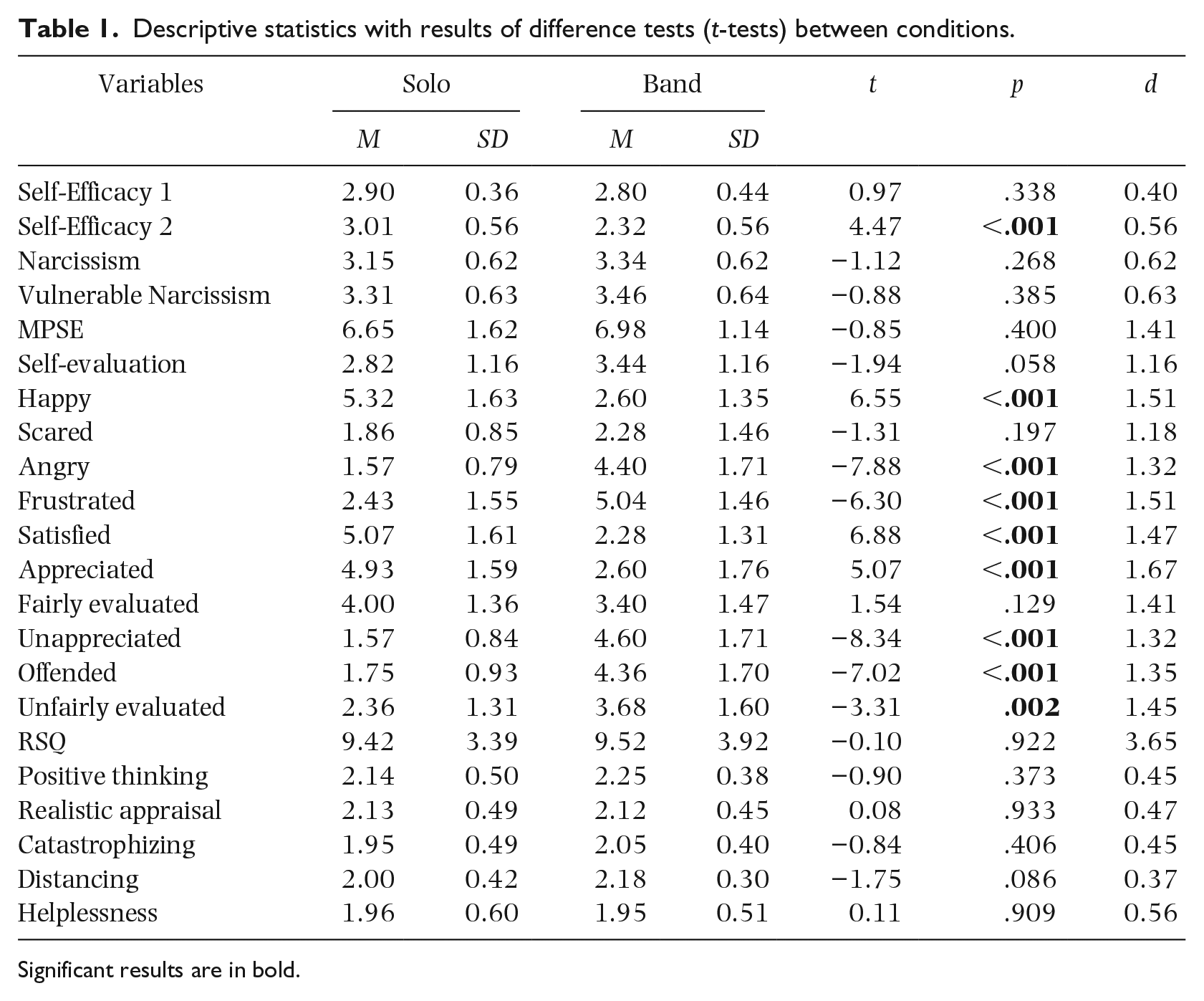
Significant results are in bold.
Results of Pearson zero-order correlation analysis, presented in Table 2, showed that GSE measured before and after feedback was negatively associated with the choice of performance (coded: 0—solo performance; 1—group performance), supporting H3. Also baseline and post-feedback GSE were positively related to music performance self-efficacy. However, GSE measured before feedback was positively related to vulnerable and grandiose narcissism but negatively related to rejection sensitivity. In contrast, post-feedback GSE was positively associated with the Positive Thinking Strategy and the Realistic Appraisal Strategy. Besides GSE, Choice of performance was negatively related only to Realistic Appraisal strategy (higher realistic appraisal scores were in participants choosing a solo performance).
Correlation between all measured variables and choice.
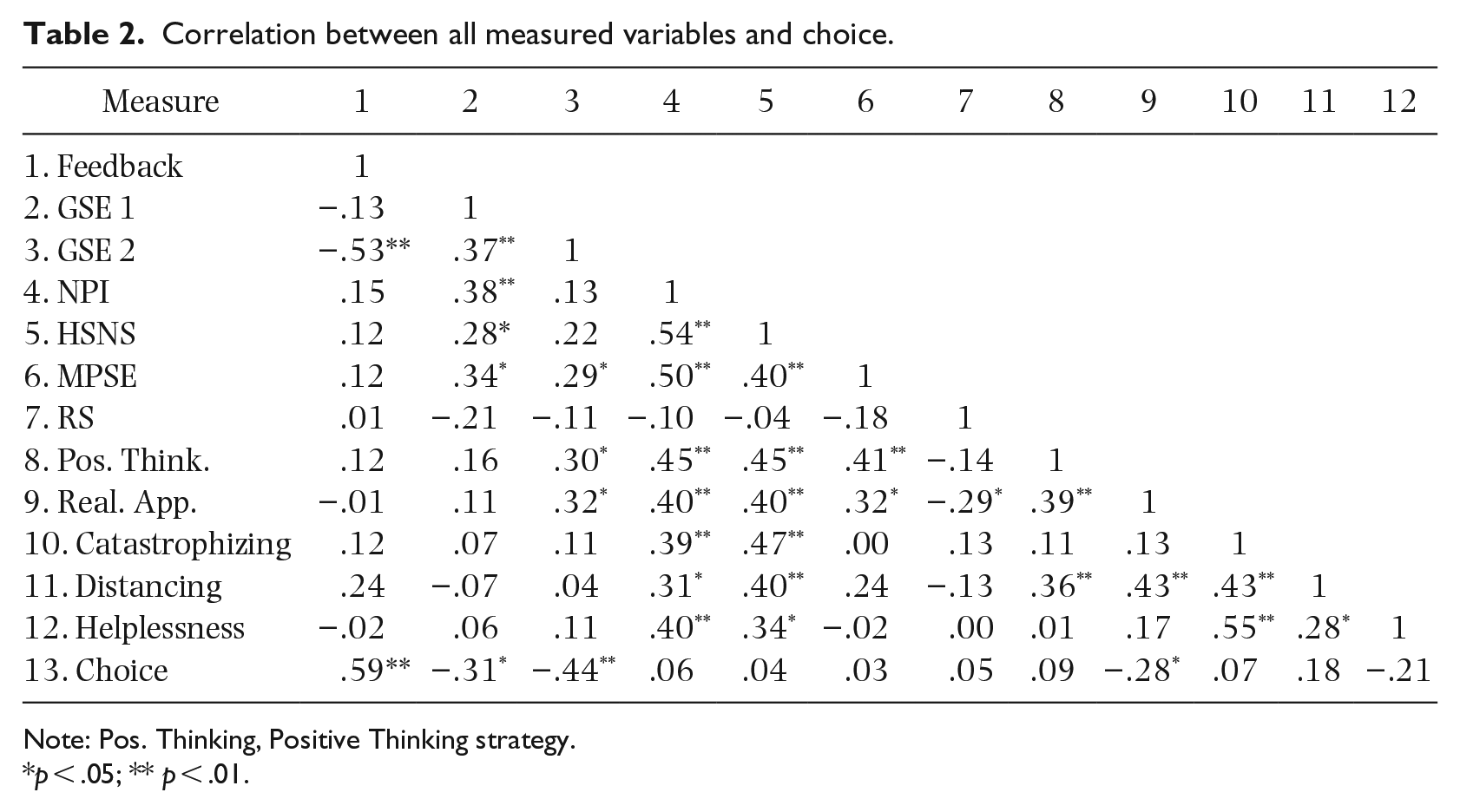
Note: Pos. Thinking, Positive Thinking strategy.
p < .05; ** p < .01.
Primary results
In the study, we hypothesized that GSE would increase in the positive feedback condition and decrease in the negative feedback condition (H1). Based on our hypothesis, we conducted a repeated measures ANOVA, including positive and negative feedback as between subjects variable and time of measurement as within-subjects variable. The results showed a main effect of condition, F(1, 51) = 13.12, p < .001, η2 = .20. Mean GSE was higher in positive feedback condition, M = 2.96, SE = 0.07, than in negative feedback condition, M = 2.56, SE = 0.08. There was also the main effect of time. Independently of the condition, participants had higher self-efficacy before, M = 2.85, SE = 0.06, than after the feedback, M = 2.66, SE = 0.08, F(1,51) = 5.60, p = .022, η2p = .10. However, the main effect of time was qualified by the condition F (1,51) = 14.11, p < .001, η2p = .22. Results of simple effects tests showed that before feedback differences in self-efficacy means were insignificant (see results in Table 1, η2p = .018), but after the manipulation they became significant (Table 1, η2p = .282) and GSE was lower in negative feedback condition than in positive feedback condition, which supports H1. In the positive feedback condition, self-efficacy did not change significantly, p = .316, η2p = .020, but in negative condition, self-efficacy decreased significantly, p < .001, η2p = .258. This result supports hypothesis H1 with reference to the negative feedback effect on GSE. Means are presented in Figure 1. Moreover, the analysis was repeated with MPSE, coping strategies, Grandiose Narcissism, Vulnerable Narcissism, and Rejection Sensitivity included as covariates, but the interaction remained significant.
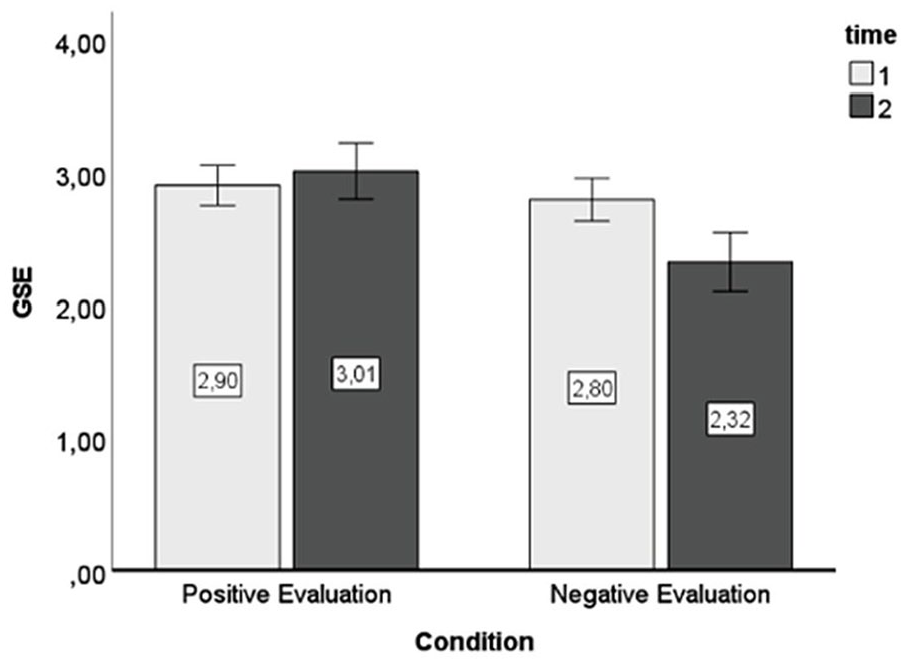
Mean Self-Efficacy Scores Before and After Feedback Manipulation.
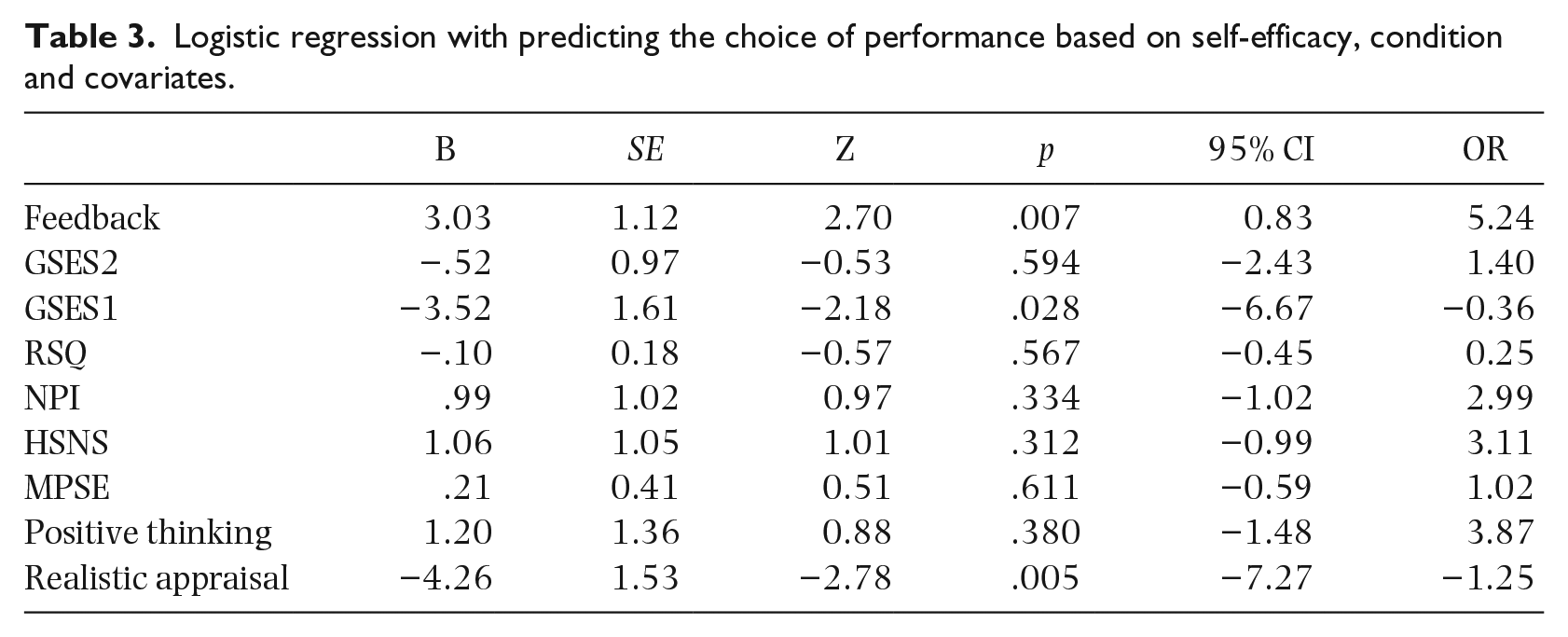
In the next step, we conducted a logistic regression analysis, to answer whether a higher sense of self-efficacy would lead to the higher odds of choosing solo performance (H2). First, we found that feedback affected the choice of solo vs group replay option, B = 2.77, SE = 0.70, Wald = 15.79, p < .001, Ex(B) = 16.07. Because the predictor was coded 0 for positive and 1 for negative evaluation, and the dependent variable was coded 0 for solo and 1 for group performance, the positive relationship between these variables indicated that exposure to negative feedback resulted in higher odds of choosing the group performance. This result supports H2. In the next stage of the analysis, we added post-feedback self-efficacy to the model predicting performance choice based on evaluative feedback. Results showed that although self-efficacy reduced the effect of evaluative feedback to B = 2.30, SE = 0.75, Wald = 9.28, p < .001, 95% CI [0.81; 3.77], Ex(B) = 9.95, it was not a significant mediator of condition effect on performance choice, B = 0.55, SE = 0.62, 95% CI [−0.46; 2.05], so H4 was not supported. Also, self-efficacy was not a significant predictor of choice of music performance when included with conditions, B = −0.80, SE = 0.60, Wald = 1.79, p = .181, Ex(B) = 0.45. In the next step, testing H5, we repeated the analysis including covariates: time 1 GSE, grandiose narcissism, vulnerable narcissism, positive thinking and realistic appraisal, music performance self-efficacy and RS, but the effects remain similar to the effects obtained in the uncontrolled model, which supports H5. The model is presented in Table 3. Out of all included covariates only time 1 GSE and Realistic appraisal were related to performance choice.
Logistic regression with predicting the choice of performance based on self-efficacy, condition and covariates.
Discussion
In this study, we hypothesized that musicians would experience a decrease in self-efficacy relative to a baseline after receiving negative feedback about their performance of an unfamiliar piece. Conversely, we expected an increase in self-efficacy relative to baseline after receiving positive feedback, with post-evaluation self-efficacy being higher in the positive feedback condition than in the negative feedback condition. The results confirmed this hypothesis, but only partially. Among the negative feedback condition, the level of self-efficacy decreased, and after manipulation, it was lower than in the positive feedback condition, which was in line with H1. However, in the positive feedback condition, GSE did not increase self-efficacy as predicted in H1. The results support the assumptions of Bandura’s (1989) self-efficacy theory, according to which mastery experience has an important impact on shaping self-efficacy, and results of previous research (Kim & Lee, 2019) showing a decrease in self-efficacy after negative feedback. Results of our study show that these assumptions apply also to musicians’ GSE. Results also supported H2; musicians receiving positive feedback more often decided to choose solo performances. The results regarding the effect of performance feedback on performance choice are also in line with Berger et al. (2019), showing that immediate feedback improves self-efficacy in career decisions and aligns with individuals’ aspirations.; However, although higher self-efficacy was related to a more frequent choice of performing solo (a cappella), as predicted by H3, GSE did not mediate the relationship between evaluative feedback and performance choice, so H4 was not supported. Therefore, we cannot conclude that self-efficacy is the mechanism that facilitates the choice of a solo performance. We can conclude that feedback affected both GSE and performance choice, which shared some variance. Even though post-manipulation GSE was responsible for 19.8% of the feedback effect on performance choice, this indirect effect would probably need a bigger sample size to become significant.
Additionally, results indicated that when included with feedback, post-feedback GSE and other individual variables baseline GSE, not related to feedback, predicted performance choice. Although baseline GSE was positively correlated with SSE in music performance, our study indicated that pre-feedback general self-efficacy predicted performance choice controlling for specific music performance self-efficacy and other individual differences. In addition to baseline GSE, only the realistic appraisal anxiety coping strategy predicted performance choice in a complex model. Our result seems to contradict theoretical assumptions that SSE is a stronger and more accurate predictor of task performance than GSE (Bandura, 1989), but this observation needs further study.
Limitations and future research
However, when interpreting the obtained results, attention should be paid to the limitations of the study. One limitation of this study is the number of participants; including more participants would possibly enable the detection of weaker relationships. Also, SSE for musical performance was measured only before the manipulation. It would be interesting to see whether SSE would change after receiving positive or negative feedback and whether it would mediate the feedback–choice relationship. What is more, the voluntary participant sampling method may introduce self-selection biases, limiting the overall representativeness of the results. Additionally, the small sample size might impact the generalizability of the findings to a broader population of musicians. Perhaps also the way in which the feedback was communicated could have been suggestive for the musicians’ later choices, even though the control questions suggested that participants believed in the truthfulness of the manipulation. Despite this, conducting the study online may differ from real-life musical performance environments, posing a limitation to the ecological validity of the results. Moreover, the absence of a control group with no feedback or feedback with no valence (positive vs negative) in the study design could be another limitation. This problem, however, was partially solved by inclusion of baseline measurement of GSE. Positive feedback did not increase GSE, thus it could be similar to control conditions. Finally, the reliability of music performance anxiety coping scales was not satisfactory (below .60 with one scale excluded). This low reliability of the scale has been noted for the Polish adaptation previously (Tokarz & Kaleńska-Rodzaj, 2005), and could have led to less reliable results. The scale, however, was used only as a covariate so its poor reliability did not affect the main findings.
Conclusions
Our study aimed to test whether self-efficacy can guide a solo or ensemble performance choice in professional musicians based on receiving negative or positive feedback regarding their musical performance. The results supported the hypothesis about the effect of evaluative performance feedback on performance choice and GSE. Positive feedback increased GSE and was associated with a higher probability of choosing a solo (a cappella) performance, but GSE did not mediate this relationship. It is worth conducting further research to determine what may lead to the choice of a solo music performance and even more broadly, solo career path, which is considered prestigious, but also difficult as it involves constant evaluation. For aspiring professional musicians, awareness of the significant impact of feedback on self-efficacy and choices related to their music career may play an important role in their professional development. Also, for music teachers, understanding the impact of immediate feedback on students’ self-efficacy and performance choices is crucial in the teaching process. The ability to provide constructive, well-balanced feedback can be a key tool in developing students’ talents and self-efficacy.
Footnotes
Appendix 1
Declaration of conflicting interests
The author(s) declared no potential conflicts of interest with respect to the research, authorship, and/or publication of this article.
Funding
The author(s) received no financial support for the research, authorship, and/or publication of this article.
