






Abstract
Intrapreneurship has become established as an essential element for innovation and the continuous improvement of quality in organizations, promoting, through employees’ initiative, the creation of new products, processes, and services. In this way, it contributes to strengthening organizational competitiveness, adaptability, and sustainability. However, despite the growing relevance of the topic, the literature on the relationship between intrapreneurship and organizational quality is scattered, justifying the need for a systematic literature review (SLR) to consolidate existing knowledge and identify research trends. In this context, the present study aims to review the existing literature on the relationship between intrapreneurship and organizational quality, as well as to identify the main research streams in this field. To this end, the methodology was based on the PRISMA method for the rigorous selection of studies. The Web of Science (WoS) and Scopus databases were used, applying inclusion and exclusion criteria to ensure the relevance of the analyzed articles. The results revealed the existence of two main clusters: (1) Sustainability and Organizational Performance, highlighting how intrapreneurship influences organizational efficiency and sustainability, and (2) Creativity and Innovation, demonstrating that intrapreneurial practices drive organizational transformation and competitiveness. Finally, a gap in the literature was identified regarding the relationship between intrapreneurship and quality in the healthcare sector, suggesting the need for future research in this area. Additionally, the analysis of management models that foster an intrapreneurial culture and their influence on organizational quality is proposed.
Introduction
In recent years, intrapreneurship has become an important subject of study, especially in the areas of management and innovation. According to Huang et al. (2021), this phenomenon is based on the ability and initiative of employees within an organization to act entrepreneurially, promoting innovation and developing new products, services, or processes, with the aim of adding value to their work and the organization. In this context, the Theory of Intrapreneurship stands out, which understands innovation as the main driver of organizational transformation and competitiveness through human capacity, with intrapreneurship being an internal mechanism driving this innovative dynamic (Shepherd and Williams, 2022). In addition, Ljunge and Stenkula (2021) highlight the positive impact of intrapreneurship on organizations’ adaptability and competitiveness, especially in times of rapid technological change and economic uncertainty. For Alam et al. (2020), by fostering an environment that encourages creativity and change, intrapreneurship is seen as a strategic response to the need for innovation, enabling organizations to reinvent themselves internally and adapt quickly to market demands.
In the literature, intrapreneurship is closely related to similar concepts such as internal entrepreneurship (Steward et al., 2010; Yang and Kacperczyk, 2023), entrepreneurial behavior (Badoiu et al., 2020; Lara-Bocanegra et al., 2024; Luu, 2017), and corporate entrepreneurship (Bagis et al., 2013; Gil-López et al., 2020). Yang and Kacperczyk (2023) refer to internal entrepreneurship, such as intrapreneurship, as the set of actions conducted within an organization to promote innovative and entrepreneurial initiatives. Lara-Bocanegra et al. (2024) address entrepreneurial behavior as the individual attitudes that characterize employees with an entrepreneurial spirit and that involve, at the same time, the creation of an environment that encourages them to identify and explore new opportunities. Gil-López et al. (2020) and Sugangga et al. (2026) refer to corporate entrepreneurship as an intrapreneurial practice with structured programs and entrepreneurial orientation to support innovative ideas, serving as a tool to ensure organizations’ sustainability and competitiveness.
In parallel, Kim et al. (2018) state that intrapreneurship, in addition to boosting adaptability, promotes a culture of quality within organizations, with an emphasis on the search for more efficient processes and their continuous improvement. In this way, organizational quality becomes the central axis of innovation and consists of a management philosophy that aims to promote efficiency, effectiveness and organizational competitiveness in a sustainable way. In this sense, it is important to highlight the Total Quality Management (TQM) model, which understands quality as a management philosophy oriented towards continuous improvement, organizational efficiency, and the involvement of all stakeholders in service improvement processes (Ferreira et al., 2023). Thus, employees who act as intrapreneurs develop their performance according to quality standards, recognizing that this generates value not only for the organization, but also for stakeholders (Marañon-Lizarraga et al., 2023).
João-Roland and Granados (2020) also studied the main factors driving social innovation in organizations, associating the concept of social entrepreneurship with intrapreneurship. The authors conclude that the success of innovation is linked to organizations’ ability to create collaboration networks and adapt to changes in the external environment, through their intrapreneurs’ creativity and internal involvement. Falola et al. (2018) add that it is essential to nurture employees’ intrapreneurial spirit, in the search for quality and organizations’ permanent development. In this connection, Santos et al. (2026) explore the concept of intrapreneurs and professionals who, working within organizations, find and develop innovative initiatives to create value and promote change. For intrapreneurship to flourish, he also highlights the need for an organizational environment that encourages these innovative behaviors. According to Kim et al. (2018), providing space for employees to explore their ideas and find opportunities also ensures the organization’s sustainability and guarantees the path to quality.
Within this extending scope of research, an important gap was found in the literature on the relationship between intrapreneurship and organizational quality and its application in specific sectors. Thus, filling this gap is crucial, as it allows us to understand how intrapreneurial behaviors can directly influence the improvement of quality, innovation, and sustainability of healthcare organizations. On the other hand, although a diversity of studies addresses intrapreneurship and organizational quality in areas such as technology (Badoiu et al., 2020; Boyles, 2015; Gil-López et al., 2020), industry (Alnahedh and Alrashdan, 2021; Ljunge and Stenkula, 2021; Sahoo and Yadav, 2017), and tourism (Luu, 2017; Njoroge et al., 2020; Usman et al., 2021), few focus on the health sector (Apriza et al., 2024; Burkholder and Hulsink, 2022; Layman et al., 2023). Therefore, this study consists of an unpublished systematic literature review aiming to highlight the importance of developing research and strategies that encourage intrapreneurship as a means of responding to the unique challenges and complexity of several areas, driving improvements through a new conceptual framework that contributes to a progressively innovative and quality-focused healthcare system.
Within the scope of this study, three research questions related to the interaction between intrapreneurship and organizational quality arise: (1) “How does intrapreneurship influence the quality of processes, products and services within an organization?”, (2) “What organizational factors are related to the influence of intrapreneurship on quality management?”, and (3) “How does the implementation of intrapreneurial practices contribute to the sustainability and continuous improvement of the organization?”. Therefore, the relationship between these two concepts, assessing both the direct impact of intrapreneurial practices on quality improvement and the organizational contexts that influence the effectiveness of these practices (Huang et al., 2021).
Based on the research questions, this study aims to: (a) review the existing literature on the relationship between intrapreneurship and organizational quality and (b) identify its main research trends. Therefore, this study intends to contribute to a deeper understanding of the scientific knowledge about the relationship between intrapreneurship and organizational quality, through the integration of different theoretical perspectives and the identification of the main trends and research gaps in this area. Simultaneously, it seeks to understand how organizations can integrate intrapreneurial practices to improve service quality, as well as analyze the mechanisms by which intrapreneurship contributes to innovation and continuous improvement. Furthermore, it seeks to identify the main challenges and best practices that organizations can adopt to maximize the influence of intrapreneurship on quality management.
Literature review
Intrapreneurship
According to Yitshaki et al. (2026), intrapreneurship is a concept that describes the practice of fostering entrepreneurial behavior within organizations, allowing employees to act as agents of innovation and change. Introduced by Gifford Pinchot in 1985, the term refers, according to Arz (2017), to workers’ ability to develop ideas, products, processes or services that create value for the organization, even without being owners or managers.
According to Augusto-Felício et al. (2012), intrapreneurship can be analyzed from the perspectives of definition, process and results. In the definition, authors such as Antoncic and Antoncic (2011) relate employees’ entrepreneurial attitude to the renewal of practices and behaviors to improve quality within organizations. From the point of view of the process, intrapreneurial behaviors, such as creativity, proactivity and risk-taking, are the driving force of innovation (Neessen et al., 2018), aiming to improve performance and make organizations increasingly competitive. From the perspective of results, intrapreneurship contributes to strategic renewal and better performance, resulting from the spontaneous behaviors and proactivity of employees who generate value and competitiveness for services and organizations (Naksung and Piansoongern, 2020; Vargas-Halabí et al., 2017).
According to Scuotto et al. (2022), values of social responsibility and sustainability are associated with intrapreneurship, inspiring employees to create solutions to achieve a positive impact through their performance. These concepts are relevant in the context of organizations because they tend to integrate ethical and sustainable practices into their strategy (Liu et al., 2022; Luu, 2017; Rodríguez-Peña, 2025). In any case, nothing would be possible without the driving force that transforms ideas into concrete results, that is, the intrapreneur (Arz, 2017). For Bogatyreva et al. (2022), intrapreneurs have unique skills and characteristics that make them transformative agents within organizations: resilience, the ability to deal with calculated risks, and creativity focused on problem-solving. According to Bracht and Werlang (2015), these skills are entrepreneurial competencies and are intrinsic characteristics of employees.
There are also some extrinsic factors that influence intrapreneurship, namely: the contribution of managers, the availability of resources and the organizational structure (Blomkvist et al., 2024). Leaders who encourage autonomy and create a constructive environment significantly increase intrapreneurs’ willingness to innovate (Kuratko, 2017; Rigtering et al., 2019). The availability of resources, such as funding, time, technological tools and access to information, are also decisive, as they provide the necessary ingredients for the implementation of ideas (Neessen et al., 2018). Furthermore, the organizational structure, such as flexible hierarchies and processes that allow for experimentation and collaboration, helps the execution of entrepreneurial initiatives within the organization. If all these factors are aligned, they not only encourage innovation but also have a direct impact on organizational quality (Soliman, 2018).
Organizational quality
Quality plays an increasingly significant role in organizations and has therefore become a multifaceted concept encompassing practices and philosophies aimed at improving organizations’ performance, ensuring efficiency, effectiveness and stakeholder satisfaction (Permana et al., 2021). For Bahia et al. (2023), organizational quality can be described as a philosophy of striving for excellence, which must exist at all levels in an organization, going beyond the production or delivery of the good or service, focusing on the organization itself by considering a philosophy of continuous improvement, since excellence must always be pursued and is never considered finally achieved.
Quality is a continuous and dynamic process supported by several critical factors, such as professional training, effective leadership, organizational culture, results monitoring, communication and focus on user needs. These elements are intrinsically linked to the principles of quality management, which seeks to ensure organizational excellence through structured and integrated practices (Lourenço et al., 2017; Ma et al., 2025). Quality management is based on setting up consistent processes, guided by continuous improvement, strategic leadership, creating an organizational culture that prioritizes user satisfaction and sustained performance. According to García-Fernández et al. (2018) and Ganguly et al. (2019), these factors are essential pillars for aligning organizational objectives with stakeholder expectations.
The concept of TQM emerges. According to Sahoo and Yadav (2017), this consists of a structured system creating a whole set of conditions for the participation of all the organization’s stakeholders in planning, implementing improvements and evaluating based on teamwork, to meet and exceed user expectations. Thus, the content of TQM, successfully applied in most sectors of activity, allows the expectations of all stakeholders to be met, based on organizations’ excellence, effectiveness and efficiency (Lim et al., 2021; Mbongui-Kialo, 2022; Soliman, 2018).
TQM is currently a philosophy that every organization looks for, with a view to excellence. Lim et al. (2021) state that achieving that excellence involves a certain number of strategies to improve quality and reduce costs. These strategies lead to finding and satisfying user needs, reducing the variability of results, using statistical methods to find and check processes, and continuously working to improve organizational quality (Eissa et al., 2025; Kaur et al., 2019).
For García-Fernández et al. (2018), achieving excellence at all levels depends on the collaboration and joint effort of everyone involved in the organization. Thus, quality management acts as a structured system that applies these strategies, boosting not only internal efficiency, but also the adaptability, competitiveness and sustainability of organizations in dynamic and constantly changing environments.
Intrapreneurship and organizational quality
According to Soliman (2018), intrapreneurship is crucial for promoting the quality of services and organizations, especially when it is understood as a management philosophy focused on continuous improvement and meeting stakeholders’ expectations. Sahoo and Yadav (2017) state that intrapreneurial projects gain greater consistency and add value in a sustainable way when they are integrated into a culture of quality. Quality is not seen simply as compliance with standards, but as a dynamic practice that involves improving organizational processes. For Soliman (2018), intrapreneurial initiatives, when guided by a culture of quality, can create even more efficient solutions, improving the user experience and ensuring that the organization is always on the path to excellence.
According to Falola et al. (2018) and Woo (2025), intrapreneurship can generate significant transformations in organizational performance. By continuously promoting organizational quality, intrapreneurial initiatives have a positive impact on organizations, as they tend to improve operational efficiency. This impact leads to results such as increased user satisfaction, cost reduction, and product and service innovation (Huang et al., 2021). Bracht and Werlang (2015) state that, by stimulating an environment of constant innovation, entrepreneurial skills create more adaptable organizations, able to respond quickly to market changes and user needs. Thus, the impact of intrapreneurship is not limited to immediate results but also sets up a solid foundation for organizations’ continuous growth and long-term success.
For intrapreneurship to drive organizational quality, organizations must promote a culture that favors autonomy, creativity and the active pursuit of knowledge (Aboramadan et al., 2020). Organizations that encourage their employees to take innovative initiatives create an environment where continuous improvement becomes part of the organizational identity (Sahoo and Yadav, 2017). Another relevant aspect is the relationship between intrapreneurship and TQM. According to Weintraub and McKee (2019), continuous quality improvement requires the active participation of all hierarchical levels, something that is directly aligned with intrapreneurship. Organizations that adopt this approach integrate innovation as part of the quality improvement cycle, resulting in greater efficiency and greater satisfaction with the services provided.
The relationship between intrapreneurship and organizational quality goes beyond the simple execution of incremental improvements (Hernández-Perlines et al., 2016). It involves creating an organizational ecosystem conducive to innovation, in which employees are encouraged to experiment, learn from mistakes and develop solutions that make the organization more competitive and efficient (Shrotriya et al., 2018; Song and Welbourne, 2024). In this way, intrapreneurship becomes an essential vector for sustainable organizational quality and success.
Methodology
A systematic literature review (SLR) is a type of research that seeks to understand and give some logic to a corpus of documents, through its analysis, in each context (Denyer and Tranfield, 2009). This study sought to evaluate the impact of publications emphasizing the relationship between intrapreneurship and quality in organizations, where the journals with greater scientific rigor were found, as well as the most cited articles, to guarantee greater scientificity in these areas. This approach aims to guarantee the relevance of the data used, ensuring that the analysis is based on consistent and representative sources in the study area (Siddaway et al., 2019), contributing to the scientific rigor of this research.
WoS and Scopus databases were used, the main reason for the choice being the broad coverage of internationally indexed scientific journals and of quality recognized by the academic community (Brundin et al., 2021). At the same time, some studies such as those by Zhu and Liu (2020) and Chinchilla-Rodríguez et al. (2024) use more than one database to create a global and more comprehensive perspective of the area studied. A quantitative analysis of documents grouped in WoS and Scopus increases the scientific rigor of the studies, also highlighting new trends and the evolution of the different research topics (Norouzi et al., 2021).
Through these two databases, an exploratory and analytical study of several scientific articles was developed, to find all the evidence related to the topic, relate it and enable a future research agenda for new research. The review was conducted by defining inclusion and exclusion criteria beforehand, following the steps of identification, screening, eligibility, and inclusion of studies, according to the guidelines of the PRISMA method (Preferred Reporting Items for Systematic Reviews and Meta-Analyses). According to Rethlefsen and Page (2022), this method offers guidelines that promote greater transparency, rigor, and reproducibility in systematic reviews and meta-analyses. Subsequently, the selected articles were analyzed descriptively and thematically, allowing the identification of research trends, main theoretical approaches, and relationships between intrapreneurship and organizational quality. Furthermore, the PRISMA methodology organizes all stages of systematic review, from the identification of studies to the synthesis of data, promoting scientific quality in the most diverse areas of knowledge (Donato and Donato, 2019).
The study was carried out in the last quarter of 2024 and to identify the articles in the two databases the search equation (“intrapreneur*” OR “corporate entrepreneur*” OR “intra-entrepreneur*” OR “intrapreneur* behav*” OR “employ* entrepreneur* behav*” OR “profession* entrepreneur*”) AND (“quality*” OR “service quality”) was used, producing a total of 242 articles, of which 110 appeared in WoS and 132 in Scopus.
To refine the results, a screening process was carried out. According to Page et al. (2021), this is the stage in which the articles identified in the initial search are analyzed to determine their relevance in relation to the themes of the systematic review, in this case, the relationship between intrapreneurship and organizational quality. In WoS, the research was refined with some inclusion criteria, such as the typology of categories (which included “Business,” “Management,” “Economics,” and “Social Sciences Interdisciplinary”) and document types (“Articles” and “Review Articles”), which resulted in 65 relevant articles. In Scopus, identical criteria were applied, that is, the typology of categories (“Business, Management and Accounting,” “Economics, Econometrics and Finance,” and “Social Sciences”) and documents (“Article” and “Review”), obtaining 79 articles.
To a total of 144 articles, the eligibility criteria were applied, eliminating 30 duplicate articles. According to Rethlefsen and Page (2022), it is essential to eliminate duplicate articles to avoid distorting the results, save time and ensure that each study included in the review is unique. Thus, 114 articles were obtained.
Finally, after analysis, 12 articles were excluded due to a lack of relation between the keywords and the object of study, 21 works whose content was not aligned with either intrapreneurship or organizational quality, and 14 studies for which access to the full text was not possible for analysis, resulting in the exclusion of 47 articles. Thus, 67 articles were considered relevant and included in this systematic review, with the aim of exploring and understanding the relationship between intrapreneurship and organizational quality (Figure 1). Article selection process with the PRISMA method. Source: Created by the authors.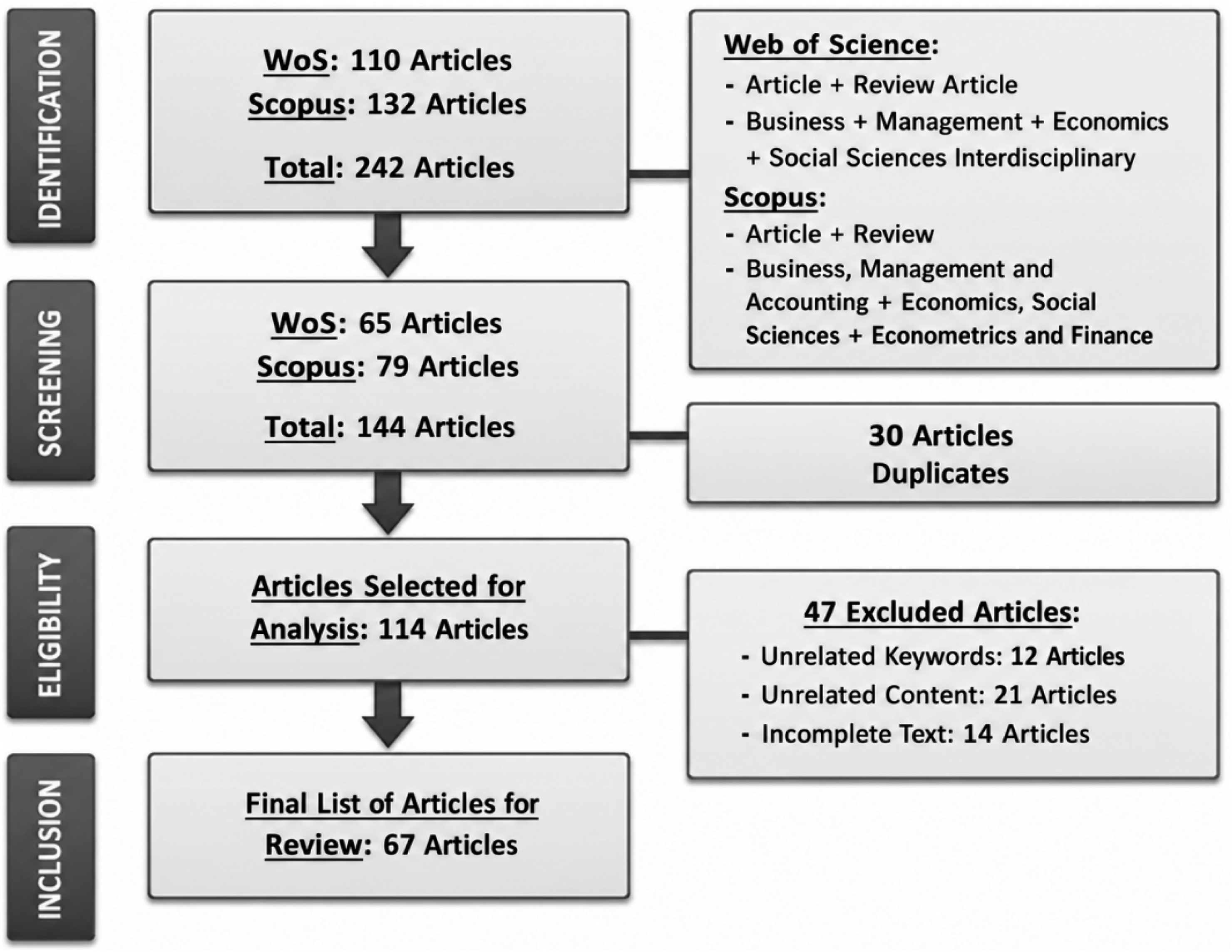
Results and discussion
This section presents the main results of this SLR, focusing on the relationship between intrapreneurship and organizational quality. It is subdivided into two points: descriptive analysis, giving an overview of the publications analyzed, and analysis of co-occurrence clusters, which explores deeper connections between the concepts.
Descriptive analysis
Analysis of the selected articles showed that the first study was carried out more than 30 years ago, in 1993. Several contributions followed until 2013, when the first peak of three publications appeared. From then on, growing interest is noted in the relationship between the themes of intrapreneurship and organizational quality, particularly in 2020 (with nine publications) and in 2021 and 2022, with a total of eight in both years.
The number of citations reached a peak in 2001, with the article by Antoncic and Hisrich (2001), which refined the concept of intrapreneurship within organizations and showed a solid theoretical basis that influenced other researchers and later studies. However, from 2009 onwards, there was a growth in citations in the various articles published in WoS and Scopus, with a new peak appearing in 2022, with a total of 709 citations in eight publications (Figure 2). Number of articles and citations per year. Source: Created by the author, using Microsoft Excel®.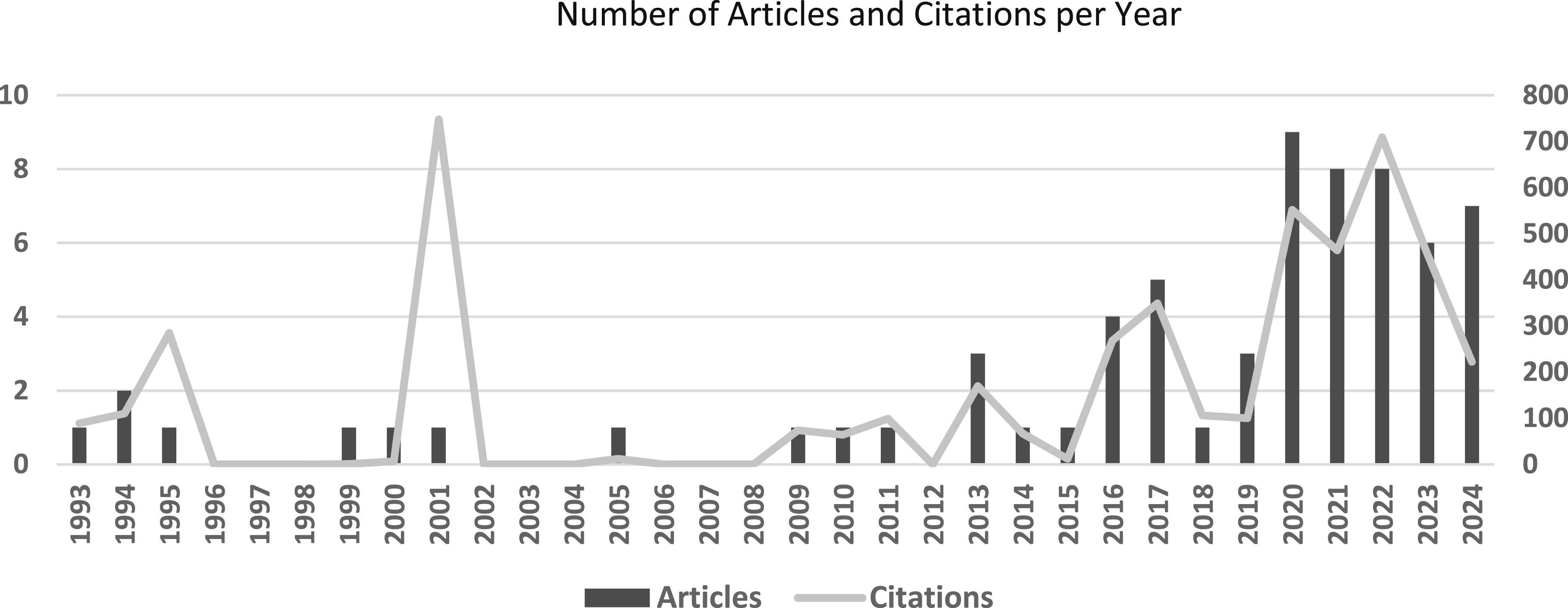
Top ten most cited scientific journals.
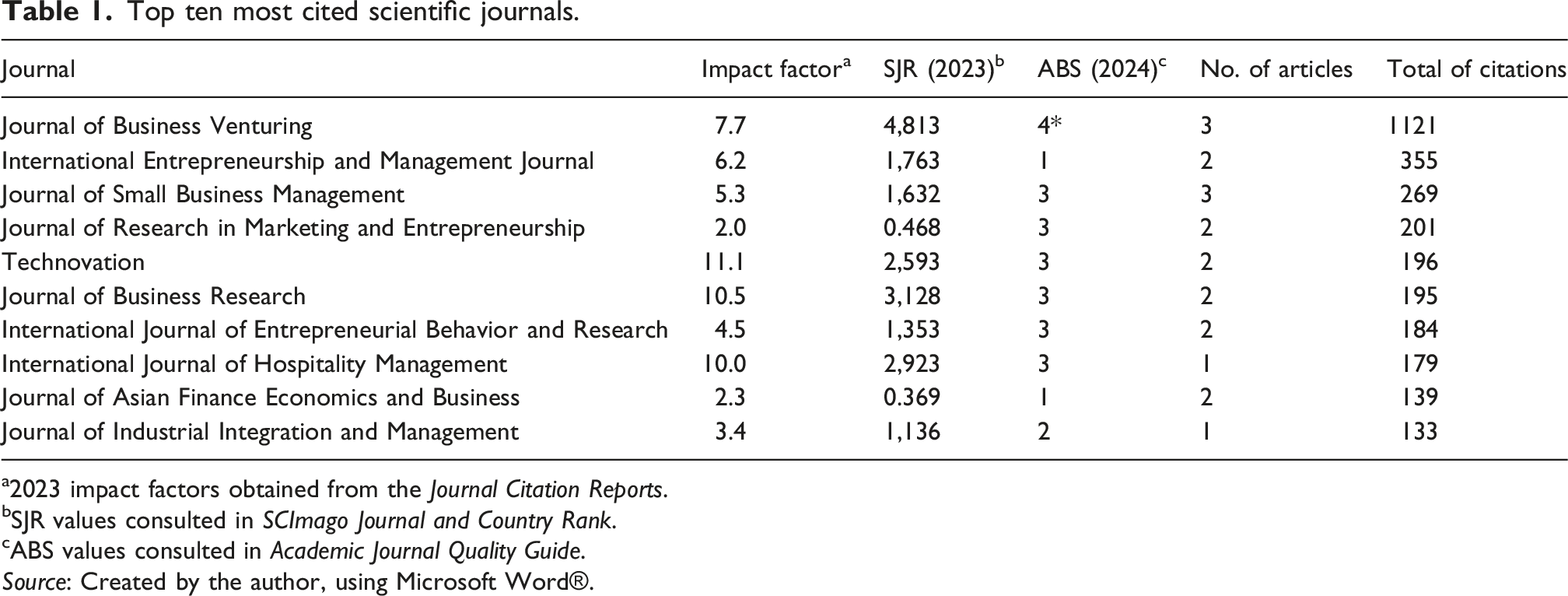
a2023 impact factors obtained from the Journal Citation Reports.
bSJR values consulted in SCImago Journal and Country Rank.
cABS values consulted in Academic Journal Quality Guide.
Source: Created by the author, using Microsoft Word®.
Top ten most cited authors.
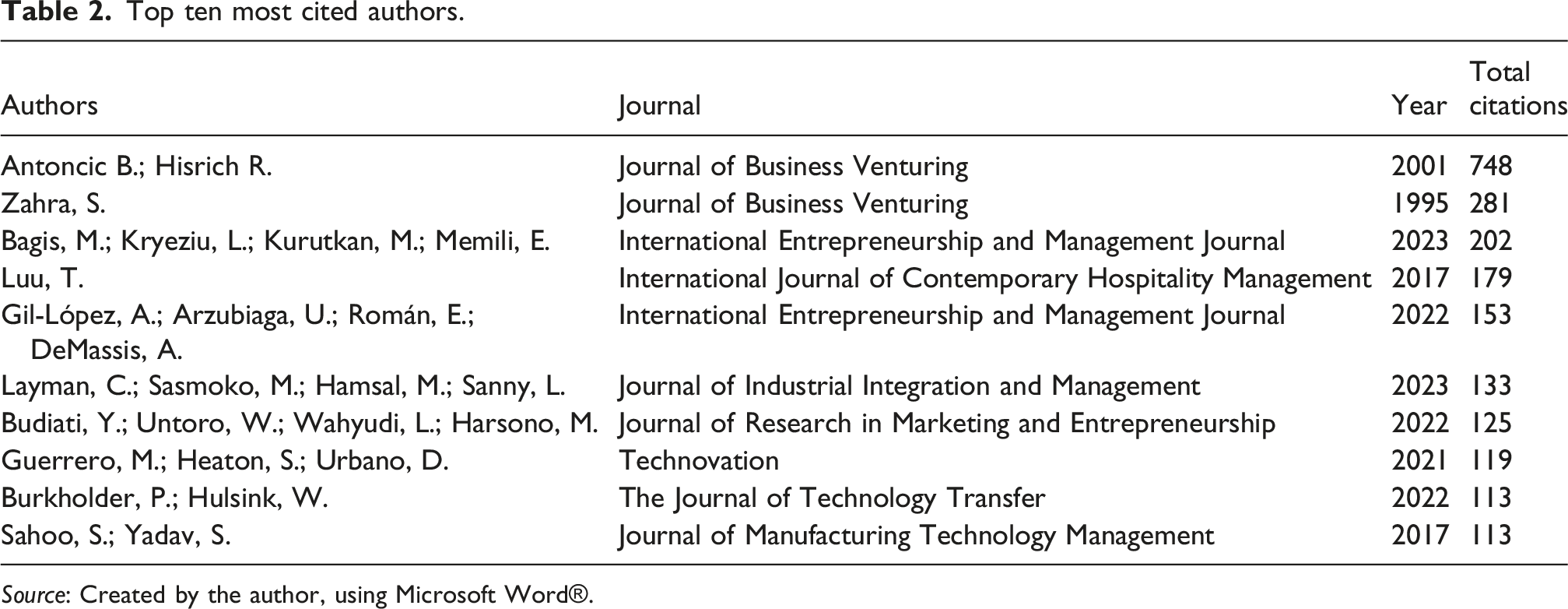
Source: Created by the author, using Microsoft Word®.
Regarding the origin of publications, of a total of 27 countries indicated, the United States of America (USA) was by far the most representative country with 15 articles, followed by England (7), India (5), Spain (4), and Indonesia (4), as seen in Figure 3. Publications by country. Source: Created by the author, using Microsoft Excel®.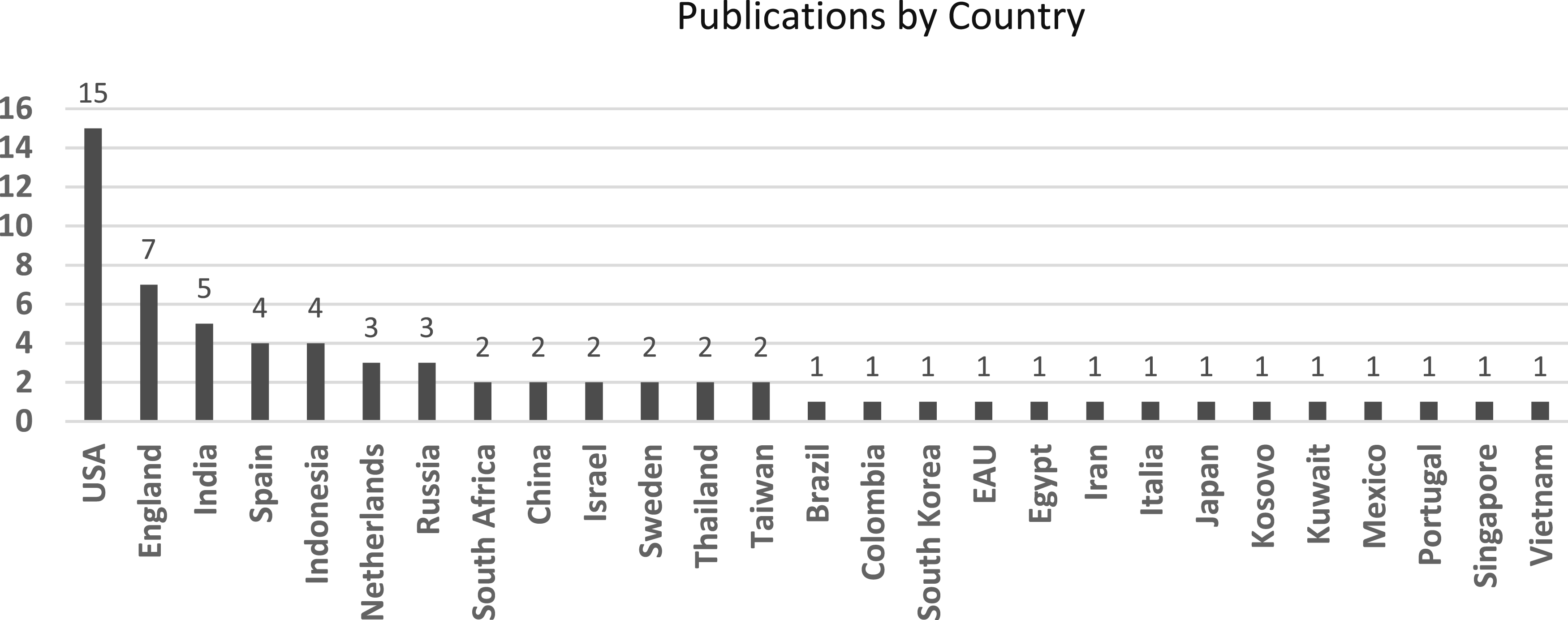
Regarding the typology of articles, more than half the 67 scientific articles analyzed were found to adopt a predominantly quantitative methodological approach, with a total of 38 articles. Qualitative studies appeared in second place, accounting for 15 articles. The theoretical or conceptual typology and the mixed typology appear next, with 7 and 5 studies, respectively (Figure 4). Publication typology. Source: Created by the author, using Microsoft Excel®.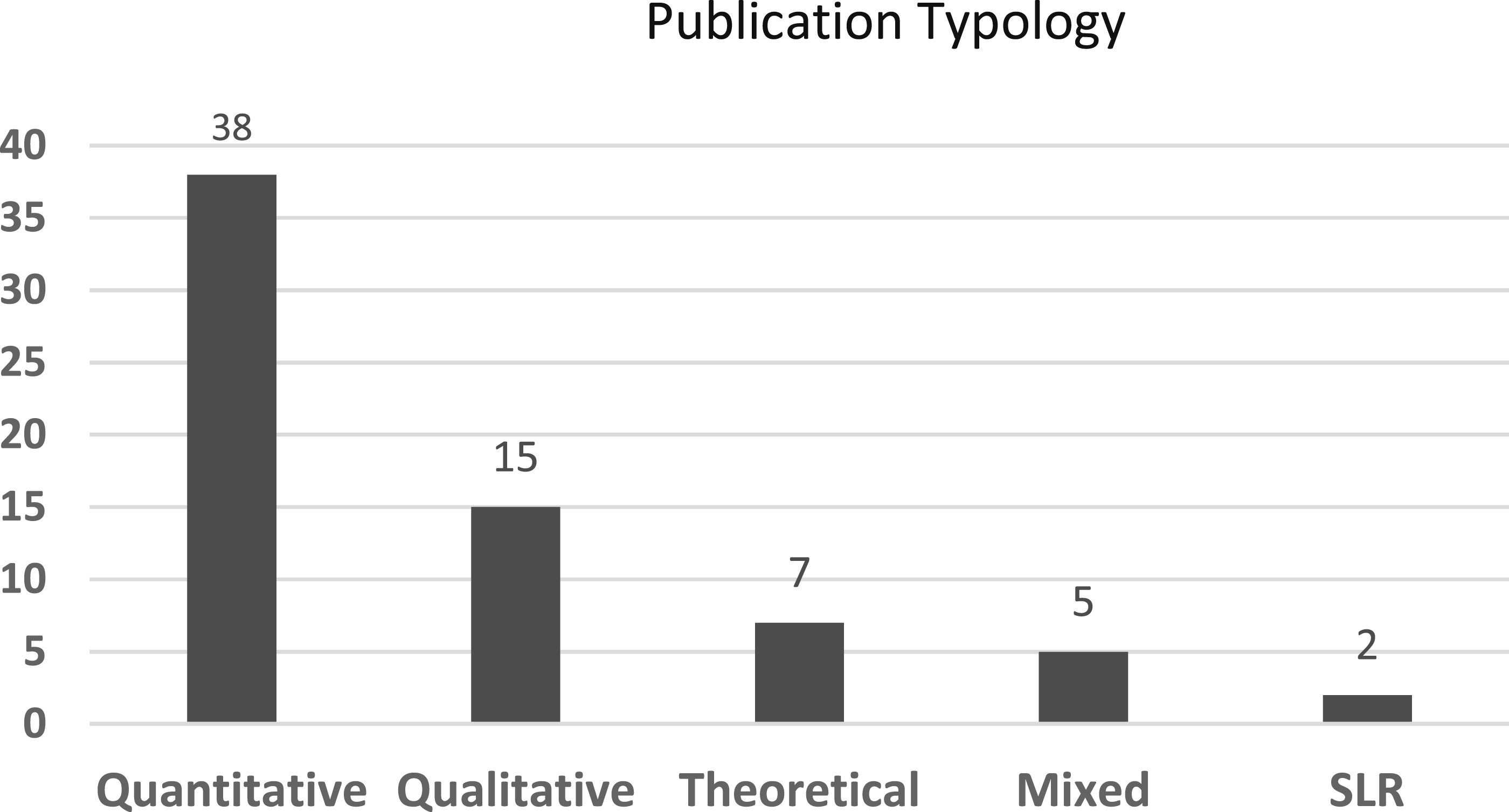
Co-occurrence cluster analysis
To analyze the different themes and main trends in literature related to intrapreneurship and organizational quality, the bibliometric co-occurrence technique was used. According to Scharp (2021), co-occurrence cluster analysis is a widely used technique to find thematic patterns in a set of bibliographic data, allowing exploration of the relationships between the main concepts present in the literature.
In the context of this study, a complete count of the keywords in articles on intrapreneurship and organizational quality was carried out, with the aim of mapping the connections and thematic axes that emerge from the interaction between these two concepts. Thus, through an analysis of 183 terms extracted from the titles, abstracts, and keywords of the 67 articles, using the VOSviewer® software (version 1.6.20), an analysis revealed clear patterns of co-occurrence that allowed the articles to be grouped into two main clusters, whose interpretation was based on the 7 most frequent keywords and the connections between the terms (Figure 5). Co-occurrence clusters. Source: Created by the author, using VOSviewer ® software.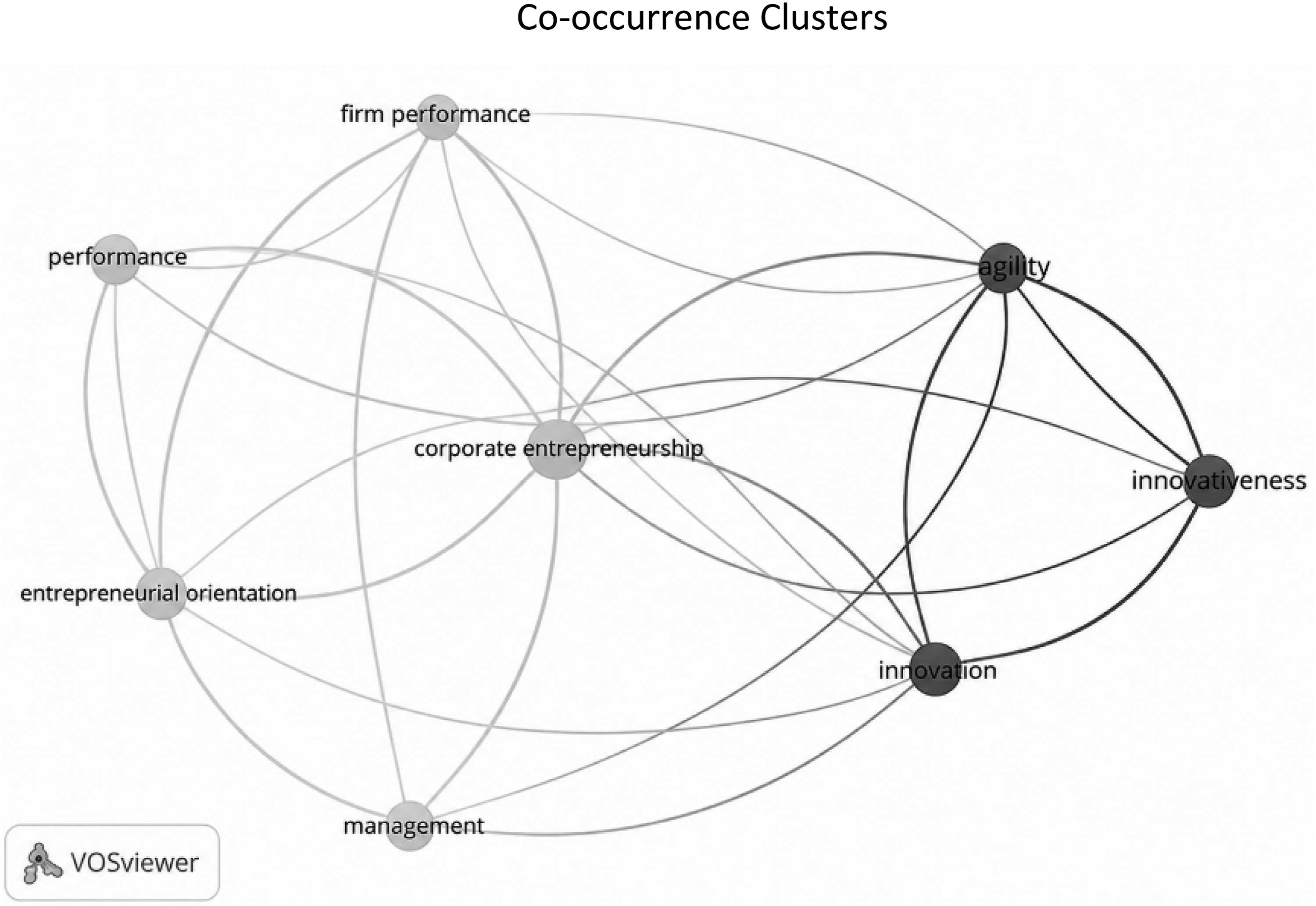
Analysis of co-occurrence clusters helped to find the main themes structuring the literature on the relationship between intrapreneurship and organizational quality, according to bibliographic coupling of the articles. According to Khasseh et al. (2017) and Marchiori and Franco (2020), this technique highlights the most recurrent thematic axes and the relationships between the concepts studied. From this analysis, two clusters appeared to represent the central topics addressed by researchers in this field: Sustainability and Organizational Performance (Cluster 1, containing the keywords “corporate entrepreneurship,” “firm performance,” “entrepreneurial orientation,” “management,” and “business performance,” with co-occurrence frequencies of 17, 8, 6, 6, and 5, respectively.) and Creativity and Innovation (Cluster 2, containing the keywords “innovation,” “quality,” and “intrapreneurship,” with co-occurrence frequencies of 7 each).
In Cluster 1, including the largest number of articles, 43 studies (64.18%) were found, highlighting the impact of intrapreneurial practices and sustainability on organizational performance. Cluster 2, with 24 articles (35.82%), brought together articles focusing on internal innovation and the search for excellence and organizational quality, often associated with intrapreneurship.
Cluster 1 (n = 43): Sustainability and organizational performance
Cluster 1 examines the relationship between organizational trends and practices and organizational performance, with a particular focus on sustainability and operational efficiency, aiming for service quality. This thematic group explores how organizations can improve their performance by adopting sustainable strategies and practices aimed at the continuous improvement of services.
One of the main studies in this cluster is that of Zahra (1995), who investigated the impact of Leveraged Buyout on intrapreneurship and financial performance, stimulating innovation and significant financial gains, through strategic decisions to boost organizational results. The studies by Gil-López et al. (2020) and Kim et al. (2018) addressed the impact of entrepreneurial practices in state-owned companies, proving that they can improve service quality, operational efficiency and sustainability, especially when adapted to different market regulations. Paoloni et al. (2021) conclude that intellectual capital is one of the main drivers of intrapreneurship, as it is the skills and experience accumulated within organizations. According to Pesotsky et al. (2021), it can create innovative solutions, improve process efficiency, and strengthen competitiveness in the market, finding new growth opportunities. This tool undoubtedly includes knowledge, which plays a fundamental role in entrepreneurial practices, as it enables more strategic and informed decision-making, in addition to stimulating creativity, improving problem-solving and making the environment more dynamic and conducive to the development of new ideas (João-Roland and Granados, 2020).
Intrapreneurship can be influenced positively by emotional and spiritual factors. Yasmin et al. (2023) and Soto-Simeone and Biniari (2024) report that the emotional factor interferes with employee motivation, productivity, and well-being. Usman et al. (2021) refer to the spiritual factor as influencing an organization’s purpose and values, helping to create a more ethical and collaborative environment. Both play a constructive role in organizations, as opposed to the concept of incivility that can also occur in the workplace, having the opposite effect, harming creativity, cooperation and team performance (Yariv and Galit, 2017).
Bagis et al. (2023) reinforced the relevance of intrapreneurship when analyzing family businesses, showing that entrepreneurial capacity and family influence contribute significantly to sustainable organizational changes. Dada and Watson (2012) explored how entrepreneurial orientation in the franchise system can positively affect the quality of relationships between franchisors and franchisees, promoting more effective collaboration and improving organizational performance. Klein and Zwilling (2022) highlighted that quality certification acts as a moderator, enhancing the positive effects of entrepreneurial orientation on organizational performance and emphasizing the importance of mechanisms that reinforce the impact of corporate entrepreneurship.
Luu (2017), Sierra and Valencia (2020) and Layman et al. (2023) added an important perspective by investigating how Corporate Social Responsibility (CSR) influences employee behavior and contributes to organizational sustainability. The results show that CSR practices not only strengthen employee commitment and motivation but also create favorable conditions to achieve long-term organizational sustainability (Rolf, 2023). This connection between CSR and corporate entrepreneurship reveals that integrating social and environmental values at the core of organizational strategies can strengthen performance by creating a balance between innovation and social responsibility.
The studies by Baker and Sinkula (2009), Wang and Juan (2015), Hernández-Perlines (2016), and Budiati et al. (2021) confirmed the impact of entrepreneurial orientation on the performance of small and medium-sized enterprises (SMEs), analyzing the mediating role of market development strategies. According to the authors, the results show that entrepreneurial orientation, combined with well-defined market development strategies and government support in aspects such as access to financing and the creation of support networks, substantially enhances performance and quality in organizations.
Bogatyreva et al. (2022) report that intrapreneurial experience is a mediator in the relationship between favorable institutions and entrepreneurial intentions. Thus, when considering the impact of intrapreneurship, favorable institutional dimensions are seen to increase the opportunity costs of starting new businesses and fostering new opportunities (Alnahedh and Alrashdan, 2021; Ghura et al., 2022). However, for Naksung and Piansoongnern (2020) and Turro et al. (2020), there are several individual and organizational factors that promote intrapreneurial behavior and activities in an organization, namely proactivity (Djubaedi et al., 2024; Mutalimov et al., 2022; Rigtering et al., 2019), employees’ risk-taking behavior (Abreu and Grinevich, 2024), various personal preferences (Apriza et al., 2024; Yang and Kacperczyk, 2023), organizational stability (He and Hui, 2020; Nayager and Van Vuuren, 2015), support from managers and management (Heng and Loosemore, 2013; Rivera, 2017), teamwork (Boon et al., 2013), the quality of relationships between colleagues (Badoiu et al., 2020; Rekha et al., 2014), and autonomy at work.
Description of the top ten most cited articles in Cluster 1.
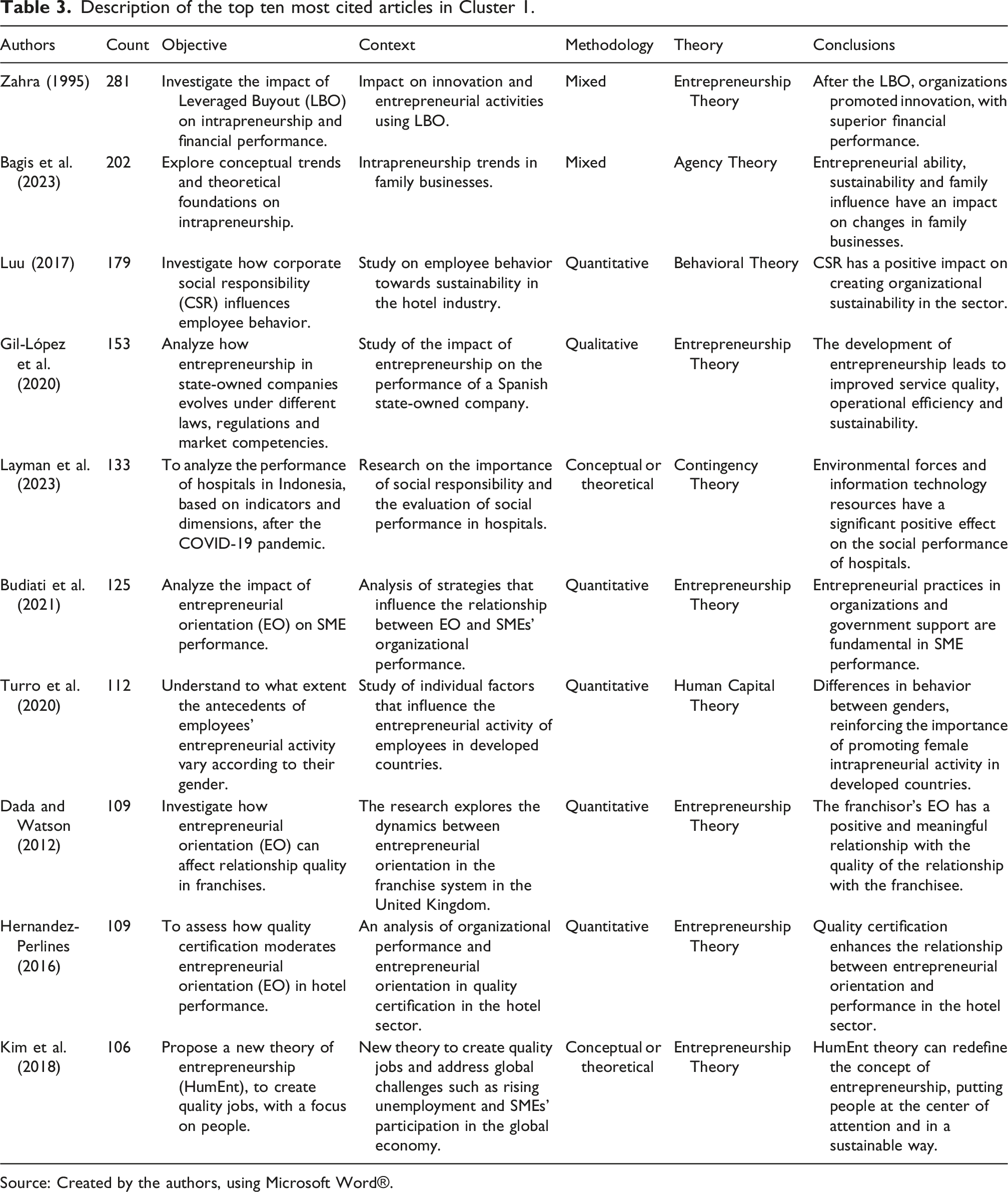
Source: Created by the authors, using Microsoft Word®.
The studies presented cover a diversity of methodological approaches and contexts, offering insights into the factors that drive organizational performance. Each study highlights theories that underpin their analyses, with Entrepreneurship Theory being the most recurrent, with significant application in various scenarios, such as the impact of organizational strategies, development of entrepreneurial practices and creation of sustainable value in organizations (Budiati et al., 2021; Dada and Watson, 2012; Gil-López et al., 2020; Hernández-Perlines, 2016; Kim et al., 2018; Zahra, 1995). Its predominance reflects the relevance of understanding and promoting behaviors that improve organizational efficiency and results.
Overall, these studies highlight intrapreneurship as an essential driver of organizational transformation, capable of fostering innovation, promoting sustainability, and improving performance and quality. In addition, factors such as entrepreneurial motivation, encouragement from superiors, government regulations, family influences, corporate social responsibility (CSR) practices, and market development strategies play a key role in perfecting the benefits of intrapreneurship, highlighting, for management, the importance of creating an environment that encourages employee initiative, supported by appropriate leadership and organizational practices that promote innovation, thus contributing to better results and continuous improvement in organizational quality.
Cluster 2 (N = 24): Creativity and innovation
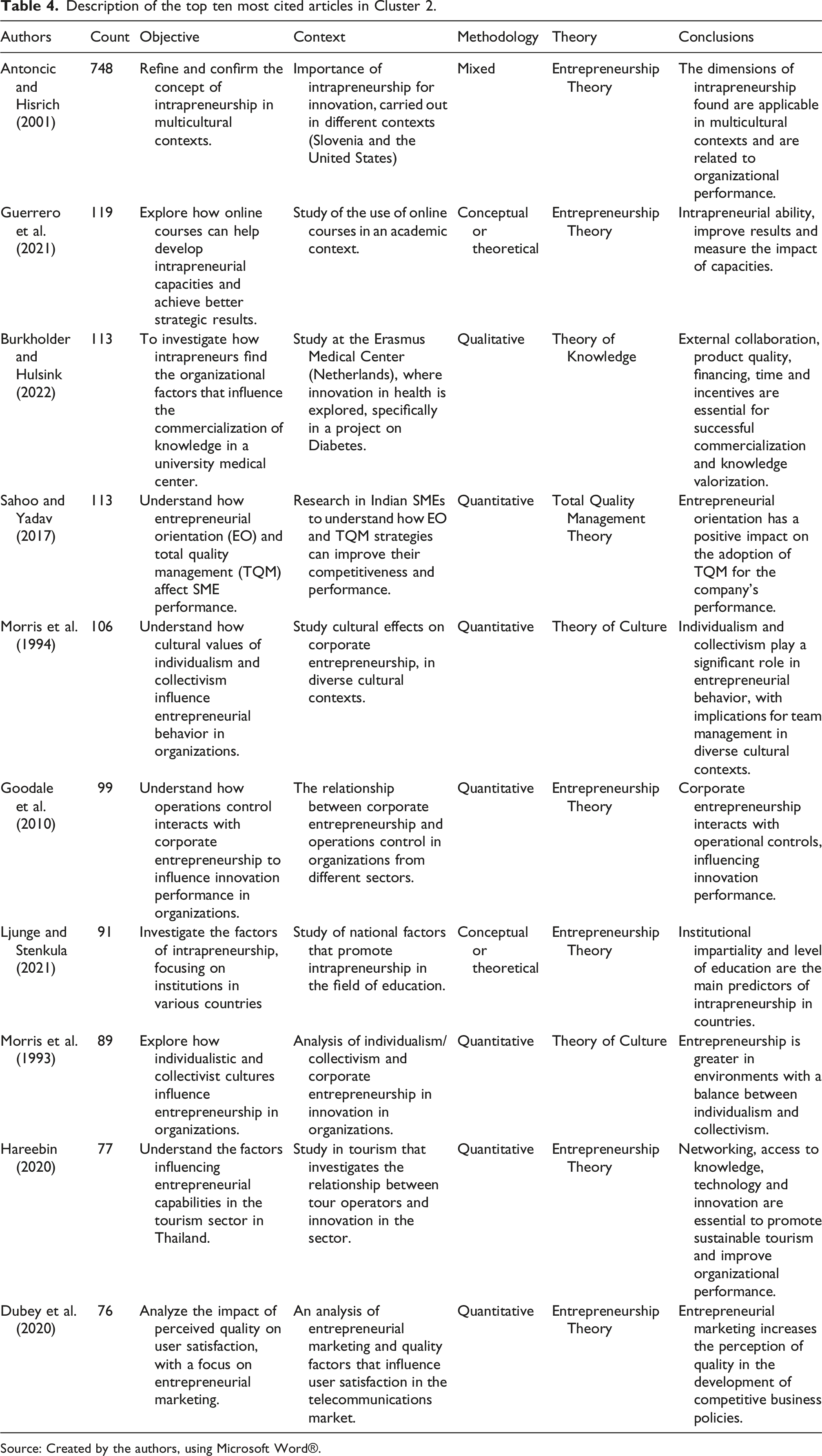
Description of the top ten most cited articles in Cluster 2.
Source: Created by the authors, using Microsoft Word®.
Sahoo and Yadav (2017) investigated the impact of entrepreneurial orientation and total quality management on SMEs. According to the authors, when these concepts are combined, the results of innovation in SMEs are amplified, as they ensure that new ideas and initiatives are implemented efficiently and with quality, concluding that the adoption of intrapreneurial strategies contributes to improving organizational performance.
According to Dubey et al. (2019), entrepreneurial marketing can directly influence the perception of quality, which impacts user satisfaction and organizations’ competitiveness. The integration of these two approaches strengthens SMEs by balancing the search for innovation with the need to keep high quality standards, resulting in improved organizational performance and a more solid position in the market.
Intrapreneurship is a common practice which, by promoting environments that stimulate employee participation and involvement, makes it possible to achieve a significant increase in the quality of organizations’ processes, products, and services (Marañon-Lizarraga et al., 2023; Ravjee and Mamabolo, 2019). Morris et al. (1993), and more recently, Araki et al. (2024) also explored the influence of cultural values, such as individualism and collectivism, on entrepreneurial behavior within organizations, pointing out that these cultural differences play a significant role in the way innovation is promoted and in the way teams interact in international environments, directly influencing organizational dynamics and collective results. Ljunge and Stenkula (2021) also address how national policies and factors promote intrapreneurship, suggesting that institutional impartiality and level of education are important predictors of the level of intrapreneurship in different countries. Chang et al. (2024) report that entrepreneurial education is widely considered a fundamental means of fostering individuals’ entrepreneurial intentions.
Goodale et al. (2010) investigated how management control can interact with intrapreneurship and affect innovation performance in organizations, in the search for more effective results. Leadership can influence employees’ intrapreneurial behavior and individual performance. The results show that transformational leadership is positively related to intrapreneurship and individual performance, where it acts as a mediator in this relationship and improves innovative performance in organizations (Moraes et al., 2021; Ravine-Ripoll et al., 2023).
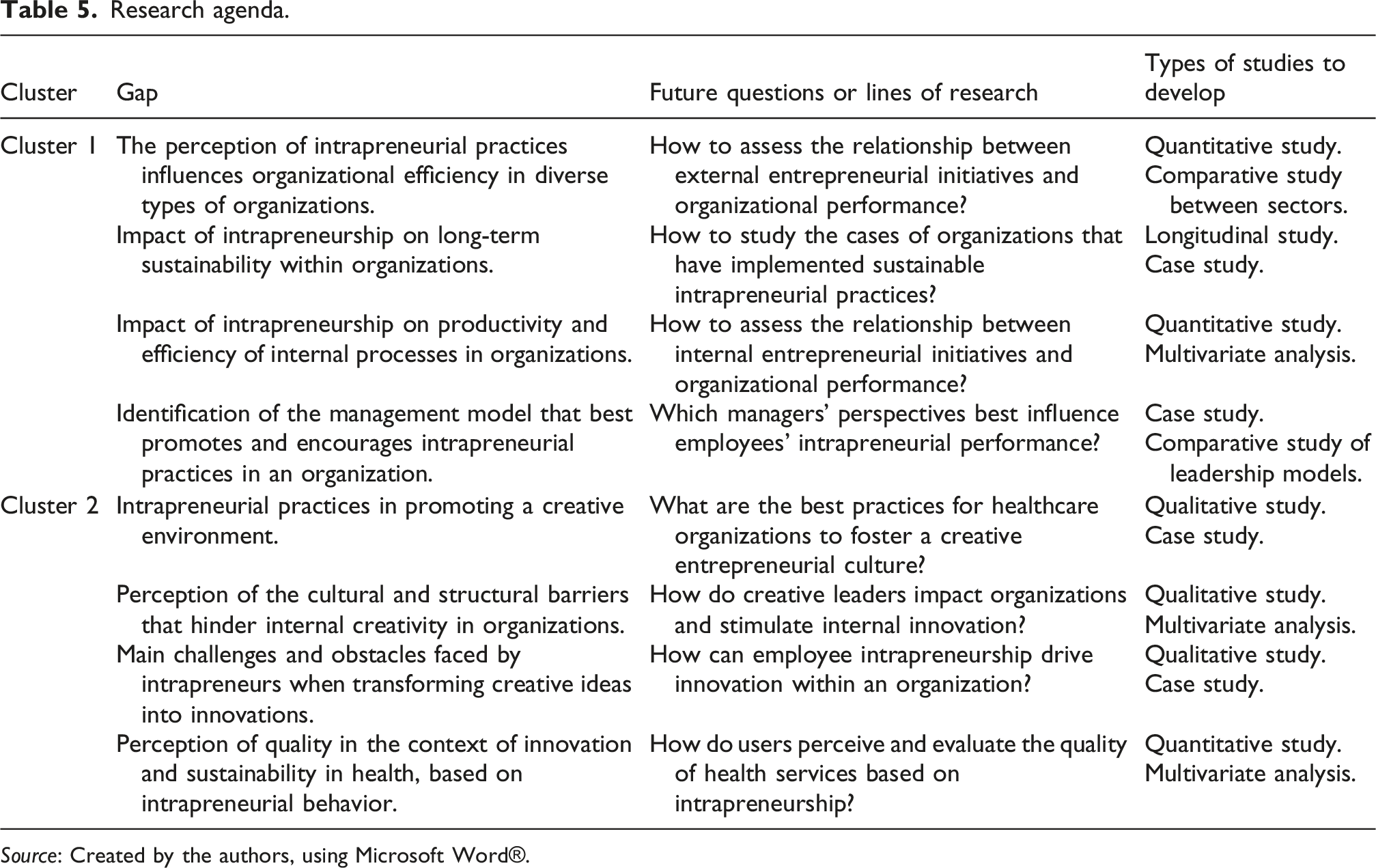
Research agenda.
Source: Created by the authors, using Microsoft Word®.
Table 5 brings together the top ten most cited articles in the second cluster, which generally address different perspectives on how intrapreneurial practices can be applied to drive innovation, improve organizational performance and understand organizational influences on the development of intrapreneurial capacities. As in the previous cluster, each study highlights the main theories underpinning its analyses, and also in this cluster, Entrepreneurship Theory is the most mentioned (Antoncic and Hisrich, 2001; Hareebin, 2020; Guerrero et al., 2021; Ljunge and Stenkula, 2021). This theory, focused on the study of entrepreneurial practices within established organizations, was used to understand the relationship between leadership, innovation, strategic orientation, and the impact of intrapreneurial capacities on organizational performance. The predominance of this theory reflects its relevance in explaining intrapreneurial dynamics in diverse organizational and cultural contexts, with an emphasis on how internal and external factors influence intrapreneurial practices and strategic outcomes in organizations.
The articles in this cluster show that intrapreneurship, combined with innovation, is essential for organizational success and quality. Addressing the importance of fostering an internal entrepreneurial culture, these studies highlight the need for constant adaptation to changes in the global market, which drives competitiveness (Dubey et al., 2020), the development of intellectual capital (Ataei et al., 2024) and sustainability (Hareebin, 2020). They also highlight that intrapreneurship can be a powerful management tool for achieving significant strategic results, contributing to growth and innovation and continuous improvement of quality within organizations, regardless of the sector or context.
Integrative framework proposal
Based on analysis of the two clusters presented in the previous section, an integrative framework is proposed, aimed at strengthening intrapreneurship as a vehicle for organizational transformation and targeting quality (Figure 6). Integrative framework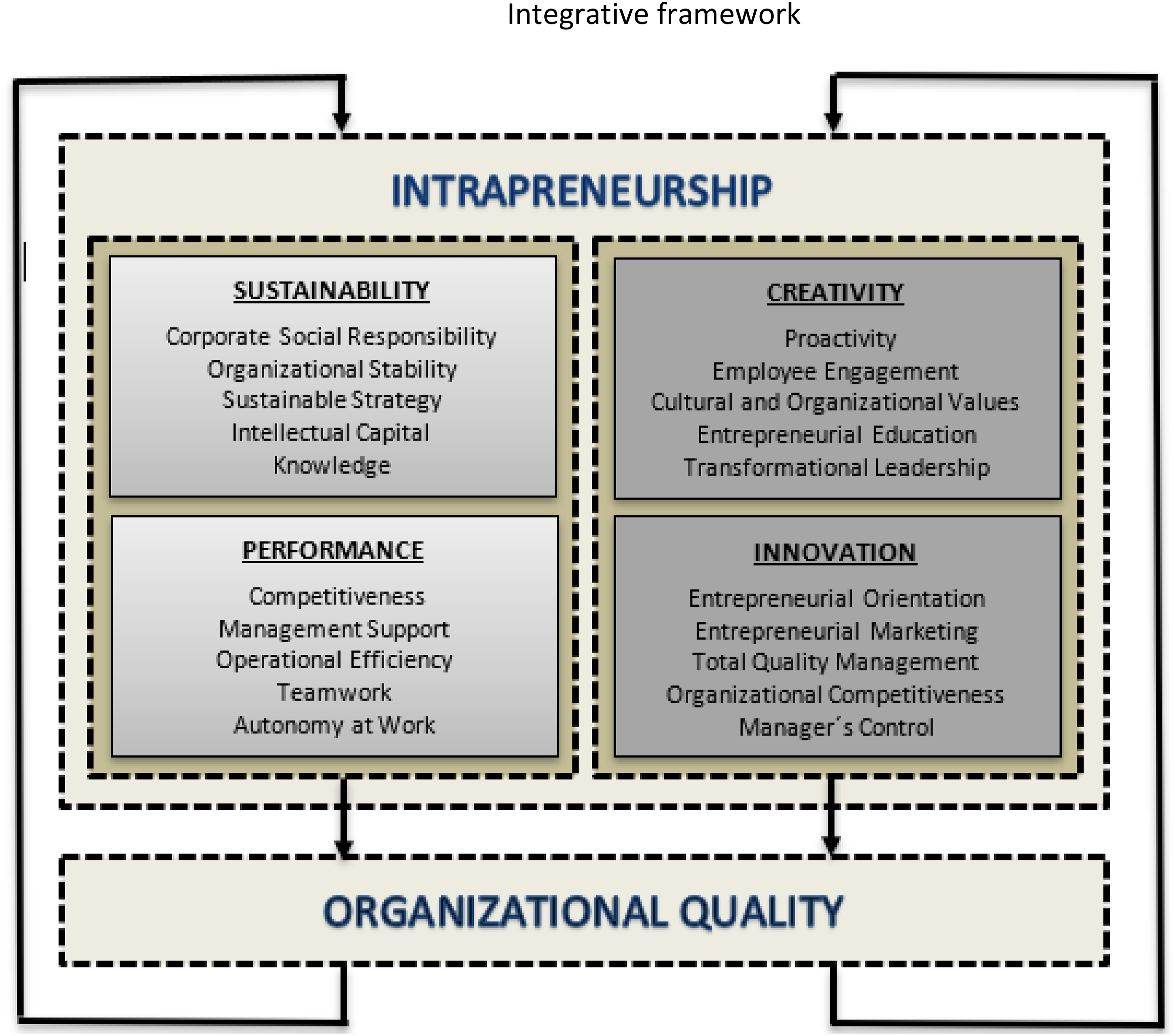
Analysis of the studies reveals that factors such as corporate social responsibility (Luu, 2017), total quality management (Sahoo and Yadav, 2017), and the practice of incentives (Burkholder and Hulsink, 2022) play a significant role in stimulating entrepreneurial practices and improving organizational results. All these concepts, which encompass innovation, sustainability and operational efficiency, have proven essential to improve organizational performance in multiple sectors, from education (Ljunge and Stenkula, 2021) to tourism (Hareebin, 2020).
The integrative framework highlights the relationship between intrapreneurship and organizational quality, proposing a dynamic structure where intrapreneurship is positioned as the central element, promoting innovation and continuous improvement within organizations. This concept is divided into two thematic groups: one with a strategic dimension, composed of sustainability and performance, and another, with a creative typology, supported by creativity and innovation. These two axes complement each other, ensuring that the organization is at the same time efficient, adaptable and innovative, directly impacting the quality of services.
Intrapreneurial practices have a sustainable impact and are geared towards organizational performance. Huang et al. (2021) and Alnahedh and Alrashdan (2021) also mention that the adoption of intrapreneurial behavior within organizations directly contributes to achieving efficient organizational results aligned with the principles of sustainable development. Pandey et al. (2021) explored the role of intrapreneurial behavior in promoting organizational sustainability, where autonomy, innovation, and proactivity are related to the creation of sustainable practices in organizations, generating greater resilience and competitive advantage. Promoting an environment favorable to intrapreneurship can lead to significant improvements in organizational performance (Wang and Juan, 2015; Yang and Kacperczyk, 2023), aligning innovation with sustainable practices (Scuotto et al., 2022).
The second cluster, with a creative dimension, focuses on the efficiency of internal processes, productivity and operational excellence, ensuring that resources are optimized and that deliveries meet high quality standards. Creativity is the starting point for generating innovative ideas, solving complex problems and finding opportunities for improvement. Here, Antoncic and Hisrich (2001), João-Roland and Granados (2020), Pushkarskaya et al. (2021), and Beresford-Dey et al. (2024) also state that creativity emerges as one of the main characteristics of intrapreneurs and that it can drive innovation within organizations, if they find an environment that supports the implementation of ideas and projects. Thus, the adoption of intrapreneurial practices is strongly correlated with a greater ability for innovation within organizations. According to Mohammad et al. (2024), innovation generates value not only at an individual level but also organizes solutions that are strategically applicable in the corporate environment, thus promoting sustainable competitive advantages.
The interaction between the two thematic groups thus generates a direct impact on quality, which becomes the integrating element of the framework. At the same time, the bidirectional arrows between the clusters show that their interaction is a dynamic process, where the synergy between them tends to promote a continuous cycle of innovation and excellence. Thus, this model strengthens the organizational culture, making the organization more effective, consistent, resilient, and prepared for market challenges.
Conclusion and contributions
Conclusions
Intrapreneurship has proved to be a determining factor for innovation and continuous improvement within organizations. Thus, by stimulating employees’ creativity and initiative, organizations can boost the quality of their processes, products and services, ensuring greater competitiveness and sustainability.
This SLR sought to understand the relationship between intrapreneurship and organizational quality, addressing three central research questions: (1) “How does intrapreneurship influence the quality of processes, products and services within an organization?”, (2) “What are the organizational factors related to the influence of intrapreneurship on quality management?”, and (3) “How does the implementation of intrapreneurial practices contribute to the sustainability and continuous improvement of the organization?”.
In response to the first question, the various articles analyzed proved that intrapreneurship acts as an essential driver for dynamics, sustainability and innovation within organizations. The study revealed that intrapreneurial practices directly impact organizational quality by promoting more efficient processes, developing innovative products and improving services in a sustainable way. This relationship is especially clear in dynamic sectors, such as education, technology and tourism, where the ability to adapt and innovate is essential in order to offer excellent services.
Regarding the second question, several organizational factors were found to influence the ability of intrapreneurship to impact quality. Among these factors, the following stand out: organizational culture, leadership support, organizational structure, and mechanisms to encourage creativity and innovation. Organizations that foster an environment conducive to intrapreneurship are more able to respond to market changes and tend to set up a continuous cycle of quality improvement.
Regarding the third question, the implementation of intrapreneurial practices contributes to the sustainability and continuous improvement of organizations by promoting more efficient processes, optimizing resources, and encouraging continuous learning. In this way, organizations strengthen their resilience, ensure constant innovation, and maintain high quality standards in a sustainable manner.
Intrapreneurship appears as a fundamental element for organizations’ development, driving the continuous evolution of quality. This dynamic cycle between both concepts is essential to ensure organizations’ sustainable growth, making them more capable and competitive.
Contributions to theory and practice
In addition to finding the relationship between intrapreneurship and organizational quality, this study makes valuable contributions both to the theoretical field and to practice within organizations. By analyzing how intrapreneurship can affect an organization’s processes, products and services, it offers new insights into how internal innovation practices can promote continuous improvement and sustainability.
The theoretical contributions of this study show intrapreneurship as an essential factor for organizational transformation, highlighting its role in promoting innovation, sustainability and improving performance and quality. It explores how factors such as entrepreneurial motivation, government regulations, support from hierarchical superiors and corporate social responsibility practices contribute to increasing the benefits of intrapreneurship within organizations. In addition, the study reinforces the importance of developing and implementing organizational strategies, as well as internal policies that encourage intrapreneurship as a quality management tool, to achieve more effective and sustainable results.
In practice, the study’s contributions are particularly valuable for managers looking to improve their operations and show a cycle of continuous improvement. It offers clear guidance on how to create and cultivate an environment that stimulates intrapreneurship, highlighting the importance of policies that encourage creativity, innovation and employee autonomy. Organizations that implement these practices can improve their competitiveness and sustainability over time. In addition, the results provide a solid basis for strategic decision-making, such as setting up incentive mechanisms and creating an organizational culture that supports intrapreneurial practices in organizations, regardless of the sector.
For management, in a global sense, this study contributes by highlighting the need for a more integrated and systemic approach to organizational management, where intrapreneurship is not treated as an isolated initiative, but rather as an integral part of the organization’s overall strategy. In this sense, the importance of aligning strategic objectives with people management, innovation, and quality practices is reinforced, promoting greater organizational coherence.
The role of leadership in creating favorable conditions for intrapreneurship is also highlighted, namely through the promotion of a culture of trust, tolerance for error, and continuous learning, essential factors for experimentation and the development of new ideas. Thus, managers from different functional areas can benefit from this evidence by adapting leadership styles and management models to be more flexible and participatory.
Finally, the study contributes to management by emphasizing the relevance of performance monitoring and evaluation mechanisms associated with intrapreneurial initiatives, allowing organizations to measure their impact and adjust strategies in a more informed way. This aspect is particularly relevant in a competitive and dynamic context, where the ability to adapt and continuously innovate becomes a critical factor for organizational success. In short, these practices reinforce management effectiveness and promote greater long-term organizational sustainability and competitiveness.
Limitations and research agenda
Although this study has contributed significantly to understanding the relationship between intrapreneurship and organizational quality, some limitations should be considered. First, analysis of the articles was based on a systematic literature review using only two databases, which may have limited the analysis to specific sources and contexts, without fully considering the practical realities and variations between different sectors and organizational cultures. At the same time, more than half the articles analyzed were quantitative in nature (56.72%), which may have restricted the depth of the analysis because, by providing objective and generalizable data, they tend to simplify complex and subjective aspects of intrapreneurship, such as organizational dynamics, individual motivations and specific company contexts. It is understood that the lack of a qualitative approach may be a limitation, as it prevents richer, more detailed research of the factors that influence intrapreneurship in organizations.
The generalization of the results to all organizations can also be considered a limitation, given that each organization has distinctive characteristics and contexts that can influence the implementation and results of intrapreneurship. The lack of a longitudinal analysis, which could observe the effects of intrapreneurship over time, is another limitation since this would allow clearer understanding of the benefits of intrapreneurship in the long term and the difficulties organizations face when adopting these practices.
Although the concepts of intrapreneurship are well documented in terms of their influence on improving quality and innovation in various sectors, it is worth mentioning that there is still little evidence of their application and impact in the health sector. The lack of studies in this area is considered a gap that can be filled. According to Bradford et al. (2024), this gap highlights the need for a research agenda to analyze how intrapreneurial practices can be used to address challenges and opportunities for improvement.
In addition, it is important to explore the concepts of the proposed framework to generate relevant contributions, both for academic literature and for practical application in the professional field. Similarly, Woo (2025) highlights that, despite the growing academic interest in the topic of intrapreneurship in organizations, there are still significant gaps in specific contexts, emphasizing the need for studies that address areas such as health to better understand how intrapreneurial practices can generate value and innovation in a more sustainable way.
Thus, a research agenda was proposed, exploring the research gaps in each cluster, from which future lines of research appear (Table 5).
From the analysis of the gaps and future lines of research, intrapreneurship plays a fundamental role in organizational efficiency, sustainability, creativity and innovation. However, for these practices to be fully exploited, it is necessary to deepen knowledge about the factors that drive or limit their implementation, including in the health sector.
The strategic dimension, related to the first cluster, proves the importance of aligning intrapreneurship with performance and sustainability, ensuring that its initiatives are effective and contribute to organizations’ sustainable growth. Thus, the need to develop clear and consistent metrics and indicators that allow for the continuous evaluation of the impact of these initiatives over time becomes evident, not only at the financial level, but also in terms of innovation, operational efficiency, and organizational value creation. It is also important to consider the differences in application across distinct organizational contexts, such as the public and private sectors or organizations of different sizes, allowing for a more contextualized and tailored analysis of intrapreneurial practices.
The creative dimension, related to the second cluster, highlights the need to overcome structural and cultural barriers to foster an innovative environment, as well as to evaluate the quality of intrapreneurial initiatives. For this purpose, it becomes fundamental to deepen the understanding of the cultural, organizational, and behavioral factors that condition creativity, including aspects such as resistance to change, risk aversion, and hierarchical rigidity. Simultaneously, it is important to better understand the processes and mechanisms that facilitate the transformation of ideas into concrete innovations, such as access to resources, leadership support, and the existence of formal incentive structures, especially in more complex and regulated sectors, such as healthcare.
This research agenda proposes several theoretical lenses for future studies, aiming not only to expand academic knowledge, but also to apply these insights in practice in the corporate environment in a variety of sectors, such as healthcare. Furthermore, other management approaches such as empowering leadership and organizational ambidexterity can be used in future research, analyzing how promoting autonomy, empowering employees, and balancing innovation and efficiency can influence intrapreneurial behavior and organizational quality. Thus, empirical analysis of these approaches could contribute to a better understanding of the mechanisms through which intrapreneurship is linked to continuous quality improvement, promoting more agile, innovative, and competitive organizations capable of sustainably adapting to the demands of their operating contexts.
Footnotes
Acknowledgments
The authors are grateful to the anonymous referees of the journal for their extremely useful suggestions to improve the quality of the paper. The authors gratefully acknowledge financial support from National Funds of the FCT –Portuguese Foundation for Science and Technology within the project “UIDB/04007/2025.”

Funding
The authors disclosed receipt of the following financial support for the research, authorship, and/or publication of this article: The authors gratefully acknowledge financial support from National Funds of the FCT – Portuguese Foundation for Science and Technology within the project «UIDB/04007/2025».
Declaration of conflicting interests
The authors declared no potential conflicts of interest with respect to the research, authorship, and/or publication of this article.