






Abstract
Citizen science (CS) is met with a range of expectations regarding trust-building that originate in policy frameworks and academic studies. These tend to understand trust as an outcome of participatory research. Adopting a different approach, our praxeological study examines trust as a context-dependent mechanism. Drawing on qualitative interviews, surveys, and document analysis, we analyze the experiences of project leads and volunteers in two contrasting German CS initiatives. Our comparative case analysis reveals that trust should be understood not as a desirable outcome, but as demands arising from collaboration objectives and contextual factors, and as practices that entail specific commitments from the actors involved. The contrast between standardized data collection in natural science and interpretative methods in health and educational research shows how methodological frameworks generate distinct trust demands. Examining research settings through the lens of trust while considering resource and power constraints exposes tensions between objectives for inclusion, knowledge production, and knowledge transfer. Moreover, interpersonal trust is built partly through critique of conventional research practices, challenging whether generalized trust in CS or in science constitutes an appropriate analytical frame for these situated practices.
Introduction
The rise of participatory research approaches, including citizen science (CS), has been accompanied by a range of expectations about their transformative potential for both science and society more broadly. One such expectation is the formation of trust among various stakeholders. In studies of trust and CS, as well as in German science policy, there has been a tendency to view trust as an outcome of research initiatives.
This study adopts a praxeological perspective, examining trust as a context-dependent social mechanism embedded in research practices. Drawing on a conceptualization of knowledge production as culture (Knorr Cetina, 1999, 2007) and sociological trust theory (Barbalet, 2019; Giddens, 1990, 1991; Luhmann, 1979, 1988), we analyze how trust relationships form, evolve, and constrain research activities across disciplinary contexts. Rather than asking whether CS builds trust, our study is guided by the question: What trust experiences do CS participants have, and how do contextual factors shape them? Based on our findings, we discuss how trust demands arise from research objectives and contextual factors, and how trust functions as a practice through which actors pursue their interests. Comparing cases across epistemological frameworks—standardized versus interpretative research—reveals how different methodological approaches generate distinct trust demands and consequences. We hope to contribute to the study of trust in CS by highlighting the complex power dynamics of different relationship types that do not naturally align with the objectives of all involved actors.
Our analysis is based on a qualitative interview study conducted across seven German citizen science initiatives (CSIs) and comprised 15 interviews with project leads, volunteers, and practice partners. The interviews were conducted between June and December 2024. We followed theoretical sampling principles, but during data collection decided to focus on experiences of reliability and security in two contrasting cases: one in landscape ecology, and another in health research. This decision was driven by an emerging pattern around epistemic objectives, methodological choices, and organizational structures that shape trust-related experiences. It was also motivated by practical constraints, including limited resources and the exploratory nature of our research.
The focused analysis is based on three interviews conducted for each initiative, complemented by survey responses, field notes from post-interview reflections, and analysis of CSI websites. Limitations arise from our focus on university-led CSIs with invited participation in Germany, where specific funding structures and institutional cultures shape how trust demands manifest. Cases of community-led participation may reveal different dynamics in trust formation and governance.
Participatory Research and Trust
Trust in, Within, and by Means of Citizen Science
According to a prominent view in STS, the experiences that members of the public have with scientists shape their perceptions of, and ultimately their trust in, science (Eyal, 2019, pp. 43–63; Weingart, 2023). Such experiences may arise through media exposure or direct, face-to-face interaction. Giddens’s term ‘facework’ at ‘access points’ of expert systems has been a popular description for these contexts (Giddens, 1990, pp. 83–88; Hedgecoe, 2012; Reif et al., 2024; Topp et al., 2022; Wintterlin et al., 2022, p. 5). Public engagement formats, including participatory research initiatives, are expected to foster public trust in science.
This expectation extends to an array of activities grouped under the CS label since the 2010s. The professionalization and institutionalization of these activities were accompanied by programmatic initiatives at both the national and European levels, which establish numerous connections between trust and CS. Two major programmatic papers developed by the German CS community illustrate this trend: the ‘Citizen Science Strategy 2020 for Germany’ (‘Green Paper’; Bonn et al., 2016) and the ‘Citizen Science Strategy 2030 for Germany’ (‘White Paper’; Bonn et al., 2022). In 2016, the idea of trust appeared only in relation to ‘web-based infrastructures that provide trustworthy environments in compliance with data protection regulations’ (Bonn et al., 2016, p. 6). A few years later, references were made to a reinforced ‘public trust in science’, the value of ‘sustainable relationship[s] of trust [between volunteer coordinators,] volunteers and other stakeholders’, ‘trust in Citizen Science’ as a research approach, and ‘trust between healthcare professionals and patients’ as a result of participatory research (Bonn et al., 2022, pp. 11, 22, 47, 79, 102). Accordingly, trust concerns social relationships within research initiatives and the research approach itself. At the same time, CS is viewed as an instrument building trust in the scientific system. This perspective is echoed by the German Ministry of Research, which states that CS bears the potential to foster trust and openness towards research and research policy as well as a knowledgeable society in times of disinformation (Federal Ministry of Research, Technology and Space, 2023, p. 5).
Likewise, the ‘Science of Citizen Science’ (Vohland et al., 2021) takes up this issue. The many-sidedness of the trust concept as found in the community’s programmatic initiatives is also evident in related research questions and conceptual approaches. Several studies have examined trust in scientific results or science as a system (Bedessem et al., 2021, 2023; Gilfedder et al., 2019; Millar et al., 2023). For example, in their examination of trust in CS, Bedessem et al. (2023, p. 3) asked respondents about researchers’ honesty and integrity, the role of science in society, and whether technical solutions can help address environmental problems. Many studies make a link between interpersonal trust and judgements about the credibility of data generated by CS projects (Millar et al., 2023; Skarlatidou et al., 2024; Thornton & Leahy, 2012). In addition, trust between participation groups, for example, teachers and students, adult volunteers, the local population (Thornton & Leahy, 2012), or farmers and scientists (Metcalfe, 2022) is a recurring topic in research on trust in CS.
Researchers have often focused on volunteers’ experiences. Trust and distrust towards the project team or affiliated institutions have been identified as factors influencing decisions to participate (Benyei et al., 2021). In addition, transparency, confidentiality, and the sensitive handling of information have been found as matters of concern to this group of participants (Benyei et al., 2021, p. 778; Eleta et al., 2019, pp. 6–7; Skarlatidou et al., 2024, pp. 7–8). Concerning the perspective of scientists, there is also some evidence that those who engage in participatory research value trusting relationships with other participants (e.g., Golumbic et al., 2017, p. 8; Vegt et al., 2023, p. 731).
With a few exceptions (cf. Skarlatidou et al., 2024), these studies tend to treat trust as a desirable outcome of project work rather than a necessary context-dependent mechanism. In contrast, we argue that trust is an important social mechanism across virtually all research contexts. Even the sophisticated and machine-driven physics conducted at CERN involves elements of trust (Knorr Cetina, 1999). Given the normative expectations regarding the instrumental value of CS for building trust in science, as well as the conceptual ambiguity across empirical studies, we propose reorienting the discussion towards the problem definition that was formulated by Irwin (1995, p. 167) early on in the debates on public participation in science: integrating a ‘plurality of knowledge forms’ in scientific research and ‘engag[ing] with the “problem situations” that give rise to citizen concerns’.
Trust in Epistemic Cultures of Inclusion
CSIs are built around the aim of conducting scientific research while striving for social and epistemic inclusivity. They typically operate as time-bound projects that bring together individuals from diverse professional and personal backgrounds. The projects are settings of knowledge creation with specific objectives and methods. But they are also social settings. We attempt to capture this notion with recourse to the concept of ‘epistemic culture’ as developed by Knorr Cetina (2007, p. 364): ‘a nexus of lifeworlds … and lifeworld processes’. The change in perspective brought about by laboratory studies and a cultural understanding of science has questioned the idea of science as a unitary system. In a sense, the trend towards public participation in research is one way of bringing this idea back into practice by acknowledging that knowledge creation is contingent and modifiable. The reference to culture in the case of CS pays tribute to the multifaceted character of those activities, which results from the cumulation of a broader cultural undercurrent, institutional logics, networks, personal histories, familiar procedures, and shared imaginations.
Generally speaking, trust in research concerns the constitution of the ‘epistemic subjects’ who exercise agency in the research process. It raises questions such as: Who can contribute? What types of knowledge are needed to make a contribution? Whose contributions are recognized? Trusting may also be involved in how people relate to research objects. What strategies are used to gain knowledge about the object? How is this knowledge agreed upon (Knorr Cetina, 2007, pp. 365–367)? Finally, trusting may concern the ‘spatial arrangements’ of research work (Knorr Cetina, 2007, p. 366). This encompasses the locations and organizational structures, often shaped by the ‘projectification’ of research activities, hence the arrangements that result from funding-related constraints (Felt et al., 2023, pp. 3–4; Torka, 2006). These dimensions involve decisions that reflect power relations: about who counts as an epistemic subject, which knowledge is legitimate, and how research is organized. They reflect social processes that require bridging the unknown, taking risks, and accepting vulnerabilities.
What makes trust distinctive in participatory and co-creative research is the opening of research to broader participation, which introduces new uncertainties. Research teams exhibit increased heterogeneity in knowledge, skills, and expectations (Lambley, 2025). Diverse interests and motivations of participants—from research, business, policy, or civil society—must be aligned toward collaborative goals. Novel ethical questions arise regarding power relations, data governance, and recognition of contributions (Kasperowski et al., 2022; Loveridge et al., 2024), while participants must learn new practices and technologies (Golumbic, 2024, pp. 5–6; Golumbic et al., 2017). Beyond these internal dynamics, research teams also face external pressures from a scientific environment marked by high expectations and skepticism. In a phase of professionalization and institutionalization, CS is being evaluated for the quality of methods employed (Skaržauskienė et al., 2024), and its epistemic risks and advantages (Bedessem & Ruphy, 2020). We can assume that trust plays a role in bridging these differences and managing uncertainties. How this is done, however, remains an open question.
Epistemic Foundations of Trust
Trust relationships are formed through communicative processes that underlie the multifaceted interactions between a trustor and a trustee. These processes involve actors’ self-portrayals, risk-taking while observing the other’s response, and the establishment of explicit and implicit thresholds for when trust is lost (Luhmann, 1979, pp. 39–46). Hence, trust decisions require epistemic grounds—at least those that outlast momentary encounters. One must know something about another actor’s ability, integrity, and intentions (Baier, 1986, p. 259; Mayer et al., 1995, p. 715). Within disciplinary and institutional boundaries, scientific actors may use established markers of competence, such as expressions of methodological or theoretical knowledge. Hierarchies and predefined roles help clarify incentive structures and motives. In participation and co-creation, trust must operate across those boundaries between differently positioned actors who may not have been socialized into similar disciplinary norms. Which forms of knowledge then become recognized as valid grounds for establishing trustworthiness?
Concentrating on specialized knowledge and organizational or institutional roles alone would narrow our understanding of trust to a functional mechanism. To understand how trust comes about, and what this engagement means for the actors involved, an analysis of trust must remain open to capturing and describing a wider array of interpretative schemes that actors draw upon. These may include regulatory schemes such as legal norms and organizational structures, but also references to morality (e.g., the sanctioning of trust breaches)—a dimension that some scholars have put at the center of their accounts (Baier, 1986; Uslaner, 2002). For the analysis of trust processes, this involves examining the symbolic resources that actors use to claim, gain, and maintain trust in collaboration. These might include credentials, institutional authority, diverse forms of knowledge and skills (e.g., theoretical, methodological, but also local or experience-based), demonstrations of shared commitments or values, or other symbolic resources that establish trustworthiness. Among these, we give particular attention to what we call personalized trust work: the production of knowledge about individual motives, values, experiences, or emotional and affective states. In the discussion, we show how this practice operates as a mode of conduct that sustains participation and facilitates epistemic work, and how the trust it helps build in a project lead can substitute for shared decision-making.
Methodology
Semi-structured Interviews
This study takes a praxeological approach to the question of how contextual factors shape trust dynamics in CS research. Our approach is exploratory: Rather than testing a hypothesis derived from previous research, the study aims to open up a new perspective on the phenomenon of trust in the context of participatory research.
We conducted a series of 15 semi-structured interviews between June and December 2024, and collected additional data in the form of a short pre-interview survey, field notes from post-interview reflections, and the websites of the CSIs involved.
Our approach to sampling was iterative, involving data analysis after a first round of interviews. The results informed our decisions about further data collection (Corbin & Strauss, 2008). Initially, we decided to look at CSIs across different research fields and individuals with different roles (project leads, volunteers, and practice partners). We included CSIs with high degrees of in-person interaction, to capture social processes of trusting in research work. Previous research often concentrated on experiments (Bedessem et al., 2021) or cases of large-scale, interface-driven CS (Benyei et al., 2021; Gilfedder et al., 2019). We acknowledge that our focus on high-interaction initiatives limits our analysis to one part of the heterogeneous field of CS.
In the course of data collection, emerging patterns around trust led us to focus on the connection between research design and experiences of reliability and security—rather than other visible themes such as the credibility and functional logics of institutions. This thematic focus guided our sampling decisions towards cases likely to yield more data on these relationship characteristics. Data collection was stopped when we had enough material to derive tentative theoretical relationships on epistemic objectives and trust demands across disciplinary research contexts. As our broad research question and exploratory process would allow for a much more comprehensive analysis, our decision to stop collecting data was based on theoretical and pragmatic considerations.
Interviews via video call or in person averaged 44 minutes in length. The sample covers individuals from seven German CSIs operating in the health, life, and social sciences. It includes project leads, volunteers, and practice partners. We would have preferred to include multiple participants with different roles for each CSI. However, sampling was sometimes difficult, because we relied on gatekeepers (initiative leaders) to establish contact with volunteers and other affiliated partners, and they sometimes denied us access. This is a frequent challenge faced by studies on CS (Finger et al., 2023, p. 9).
We created the initial interview guideline based on available research on cooperation within CS as well as conceptual considerations on interpersonal trust in sociological theory (Barbalet, 2019; Giddens, 1990; Luhmann, 1979). In our pre-interview survey, we asked respondents about their age, education and participation in the CSI to relieve the interview situation from questions about respondents’ personal background.
Qualitative Content Analysis
In our analysis of the interview transcripts, we attempted to strike a balance between a theoretically grounded operationalization of trust and participants’ subjective understanding of it. Therefore, we used the structured procedure of Qualitative Content Analysis as developed by Mayring (2014, 2019). It combines the openness of inductive category formation with a deductive element, a selection criterion (Mayring, 2014, pp. 79–87). 1 We chose this approach to analyze trust across different cultural settings that have shaped respondents’ experiences. By considering trust-related experiences, roles and tasks within the project, perceptions of expertise, and institutional affiliations, we capture contextual factors that vary between CSIs. Our analysis of trust formation and erosion is grounded in a process-oriented understanding that is attentive to changes in interpersonal relationships over time.
Two authors conducted the coding. To ensure reliability, we took a qualitative approach that involved cross-checking 20% of the material and having ongoing debates on the category system. 2 We modified or dropped codes that did not prove feasible (O’Connor & Joffe, 2020, p. 4). The coding scheme allows us to compare trust-related experiences between individuals and CSIs. Since trust operates differently across cultural settings, intercoder reliability checks help ensure consistent interpretations. We analyzed the transcripts in German and translated only individual sections for the purpose of citation.
Contrasting Case Comparison
For the final analysis, we selected two CSIs that illustrate different trust dynamics. They differ across research disciplines (agriculture and health research), organizational form (emergent network development and funded project with fixed timeline), and the role of scientists and volunteers in research activities (biological fieldwork and qualitative interviewing). While these two cases cannot represent the full diversity of disciplinary contexts in CS, we use an in-depth comparative analysis to illustrate how epistemic objectives, methodological choices, organizational structures, and social practices condition different trust-related experiences in project leads and volunteers. Our analysis is based on three interviews conducted for each of the two initiatives, as well as survey results, field notes from post-interview reflections and the CSIs’ websites. This focused case analysis is contextualized by insights from our broader study of an additional five CSIs.
The analysis is informed by sociological trust theory as well as the research perspective laid out above. Through iterative engagement with our data, our analysis increasingly attended to trust practices within these organizational and epistemic contexts. Our cases differ from the form of participation identified by Kasperowski and colleagues in their studies of large-scale, interface-driven CS projects (Kasperowski & Hagen, 2022; Kasperowski & Hillman, 2018). In one of their analyzed cases, volunteers appeared as epistemic subjects either in a highly collectivized form, dissolved in an anonymous mass, or as an individual discoverer, even until the point of being ‘raised to the status of cultural hero’ (Kasperowski & Hillman, 2018, p. 576). We understand our contribution as a further differentiation of what happens in projects that operate somewhere in between the anonymous mass and individual recognition.
Findings
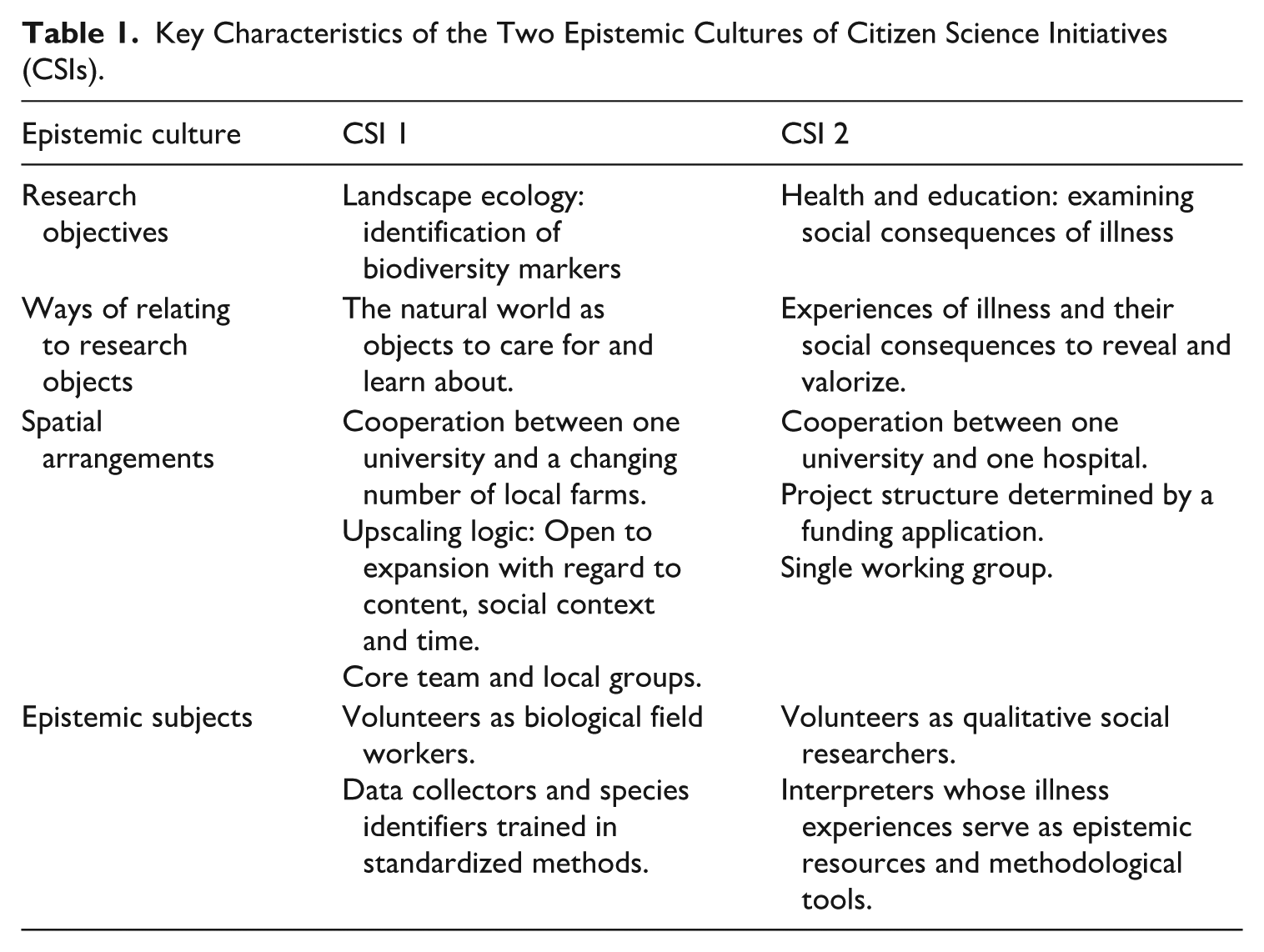
Table 1 summarizes key characteristics of the epistemic cultures found in the two CSIs we selected for in-depth analysis. In our contrasting case study, we examine connections between these characteristics and trust dynamics.
Key Characteristics of the Two Epistemic Cultures of Citizen Science Initiatives (CSIs).
Case 1: Landscape Ecology
The first initiative we discuss is concerned with the effects of an agricultural innovation on biodiversity. A team of university researchers collected data on species occurrence together with local volunteer groups. The field work took place on farms across the country that engage in this innovative practice.
Formation and Structure
CSI 1 was launched by a group of students in landscape ecology at a large German university, motivated by what they perceived to be an underrepresentation of a particular sustainable agriculture practice in their field of study. They began with an educational and networking approach, organizing lectures and conferences on the topic. A project management class then provided a stepping stone into the creation of their own participatory research initiative. They could refer to existing civil society organizations—associations and privately run networks—on the regional and federal level, that were active in the promotion of, and consultancy for, this innovative practice. They went through two of those ‘companies’ to establish contact with farms that are active in this area (Lead researcher, CSI 1).
To recruit volunteers, the students engaged in public outreach at the farms, inviting local community members to talks and discussions about sustainable agriculture, the farms, the initiative’s objectives, and opportunities for participation. This fieldwork led to the successful recruitment of farmers and volunteers. In the following years, the initiative grew to cover almost 20 locations across Germany, evolving towards a center–periphery structure. The lead group mostly consisted of former students and early-career researchers, associated with the same university. They oversaw the strategic development of the initiative, including funding and partnerships, while maintaining authority in data analysis and methodology. They cooperated with local volunteer groups affiliated with farms that actively practiced this innovation. The initiative received funding from several environmental and sustainability foundations.
CSI 1 was not organized as a traditional project. Described as a ‘network’ by members of the lead group, the initiative was intended to serve as lasting infrastructure between practice and academia (Lead researcher, CSI 1).
A Transformative Approach to Agriculture, Science, and Society
The initiative’s epistemic objectives were rooted in a transformative approach to agriculture. This transformation was deemed necessary in light of climate change and biodiversity loss. Its three key objectives were to adapt agricultural practices to a changing climate, to enhance biodiversity in agricultural areas, and to integrate agriculture with society. In this context, CS was viewed as a means of bringing research into practice on farms and of establishing connections between local communities and farm life.
And it was in this context that our understanding of citizen science emerged, because we said we no longer wanted to work incognito and for the drawer, but we wanted to research [innovations for sustainable agriculture] with local people, using the ecological tools we learned during our studies. And we want to pass this on to the population and not set up our own trial area here at the university, but contact real farms and provide accompanying research. (Lead researcher, CSI 1)
For this lead researcher, the participatory initiative served to distance the project from ‘conventional science’ that aims to use the ‘most expensive machine or method’ (Lead researcher, CSI 1). They expected to produce knowledge that has an impact on agricultural practice, instead of ending in the drawers of scientific publishing. The method emerged as a central motif across multiple aspects of the research process. We emphasize two of these aspects to illustrate mechanisms of integration in the epistemic culture, and how trust relationships emerge and evolve in that process.
First, shared values underpin a transformative approach to the ‘method’ in this CSI. This approach involves developing and adapting methods to the knowledge needs of agriculture, to the capabilities and resources available in participatory research (while proving that volunteers can in fact collect useful data), and to the values that unite researchers, volunteers and farmers. For instance, the volunteers we interviewed reported collecting data on ground beetles using both live and lethal traps. The aim was to show that killing the insects is not necessary to obtain valid data.
In the first year we had … dead traps for beetles. We had to do that so that a scientific paper could be written about the fact that you don’t actually need dead traps, so that the reliability of the data is also given with live traps. And a few mice fell into these dead traps for the beetles and died … the only thing that helped me was, okay, we are researching it now so that we don’t do that anymore. (Volunteer B, CSI 1)
This moral approach to the method itself, manifest in the value conflict expressed by this volunteer, exemplifies the extent to which research work is tied to ecological sustainability and nature protection. The prospect of harmonizing scientific research with these values in the long term makes it easier to accept short-term violations. Unlike the laboratory settings described by Knorr Cetina and others, researchers here directly engaged with the natural world. This allowed for immediate experiences and fostered different ways of relating to objects (being surprised by lifeforms found in the field, for instance). The CSI created a space for connecting with like-minded individuals in response to the ecological crisis and a society that does not seem to care enough.
[T]his whole issue of sustainability or, for example, the extinction of species is not an issue in our society at all. I heard a scientist say that global warming defines how we continue to live, species extinction defines whether we continue to live. So, we are dependent on it. It is not an issue at all. And I am now in a group where other people also see this. (Volunteer A, CSI 1)
Participants in this project created ties by sharing their expressions of vulnerability to climate change and of their care towards the natural world. This bond existed not only between volunteers and team leads, but also with farmers, who took financial risks by making changes in their agricultural practices. Reassurance that other participants shared similar values came from moments of informal exchange, such as a picnic at the farm, or during an evening meal at the farmer’s house.
And I would say that with the citizen scientists, it’s also amazing how much they tell us about their private lives. You get so close to them. You lay out the ground beetle traps and they tell you their whole life story without any therapeutic training. … It’s so open and warm and on such a very personal level. … we address climate change, the extinction of species. How do we locate ourselves as human beings in nature, in the world in general? What is our place? How much self-efficacy do we still have? These are issues that we are addressing with our project. (Lead researcher, CSI 1)
While the actual impact of the research (as distinct from the conservation measures implemented at the farms) on environmental protection remained uncertain, the personal interactions between project leaders, farmers, and volunteers helped validate their shared commitment to these values. The informal encounters appeared to function as an ethical practice, on the basis of which a motivation to participate in research work could be developed and sustained.
Volunteers as Biological Field Workers
When research is put into practice, a different form of trust becomes relevant. It concerns the application of methods on farms. Fieldwork focused on collecting and classifying specimens and recording observations as biodiversity indicators. Here, the methods themselves became an object of care for participants. They needed to be chosen or adapted according to the capabilities of those applying them in the field—often volunteers without technical training. Choosing a method, learning how to apply it, testing it on the farm, reflecting on its use, analyzing the resulting data, and making changes were activities and concerns shared by the lead group and local groups—though with differing roles. Selecting methods, preparing educational resources for volunteers, and analyzing data were primarily carried out by the lead group, in cooperation with local groups and farmers. A guideline was used to structure this process. During the field season (in summer), the lead group then joined local groups on the farms to provide training.
Local groups, on the other hand, were committed to the lead group to apply a set of methods determined essential to the initiative. Continuity and data quality were two criteria that had to be met. Local groups formed working groups for different methods. The diversity of methods, the required know-how, and the need for cooperation in their application were reflected in a sense of responsibility and an emphasis on reliability, both among volunteers in local groups and between volunteers and the researchers of the lead group. This sense of reliability concerns adherence to agreements and appointments, as one volunteer, who served as central coordinator for his local group, describes:
We meet during the campaigns, but there are different small working groups for different methods. They coordinate themselves. And you have to rely on the fact that this happens, … that they also say, here, we are having difficulties, we don’t have enough people for the method. (Volunteer A, CSI 1)
But mutual reliability was also important after coordination, when methods were to be applied at the farm. Here, volunteers depended on each other’s know-how:
[I]t is challenging for me, for example, when I have the feeling that I don’t really understand the methods. … Some people are perhaps even more meticulous when it comes to the methods than I am. You get to know each other and I like to know, hey, yes, this person always had such a precise eye and has good thoughts about it. (Volunteer B, CSI 1)
Reliability in agreements and in the joint search for the right techniques or procedures is a core element of trust relationships around data collection in the initiative. The complexity of the social system and the heterogeneity of methodological objectives make a division of labor necessary. While researchers in the lead group invested effort to be present at farms, the initiative’s objective was to enable local groups to work independently. This division of responsibilities was perceived to work well for our respondents. The lead researcher with whom we spoke described a case in which a volunteer did not adhere to agreements and caused a data gap. This was addressed by reminding the person of the need for reliability and by supervising data collection in the next season. However, our respondent had difficulty recalling the incident. It appeared to have caused neither significant concerns nor the end of cooperation with this volunteer.
Volunteers within local groups, on the other hand, relied on training and advice from the lead group, but also relied on each other to apply the methods. While these relationships enabled the application of methods, they were also the result of cooperation. As one volunteer noted, ‘because you simply do things together and find solutions to problems together, get through crises together, … that’s how you bond with each other’ (Volunteer A, CSI 1). Trust relationships and experiences of reliability are mutually constitutive. Reliability expectations—adhering to agreements, showing up for appointments, communicating difficulties—allow for collaborative relationships to function. But the relationships themselves make methodological reliability possible. This dynamic was facilitated by the possibility of joint data collection and a layered group structure, which diminished the individual risk of failure.
Case 2: Health and Education
This initiative addressed the social consequences of illness. A team of university researchers cooperated with a hospital to recruit a group of volunteers with relevant experiences to serve as co-researchers. Together they designed and conducted a qualitative interview study investigating the repercussions of a patient’s serious illness on their relatives.
Formation and Structure
CSI 2 took the form of a traditional project, jointly initiated by a German university and a local hospital. The project was led by two university researchers: a professor and a lead researcher. Both worked part-time on the project, though with a substantial difference in available time. The team also included a student assistant who supported the project. Together with a representative from the hospital (the practice partner) and a small number of volunteers, they formed a single research group. In contrast to CSI 1, the research group remained in its original composition for a predetermined period. The project was locally anchored, with the hospital as the primary institutional partner. Rather than following an upscaling logic, as CSI 1 did, this project aimed to deepen cooperation among group participants and to anchor participatory research at the hospital.
Research questions and methods were determined collectively before entering the field. About half a year was invested in fostering relationships and building a theoretical and methodological foundation for the volunteers. This was aimed at ‘enabling them to take decisions’, as the lead researcher put it, and was followed by a period of data collection and analysis, and finally the presentation of results to practice and scientific communities (Lead researcher, CSI 2).
A Transformative Approach to Health Care, Science, and Society
From the project’s perspective, alleviating the negative effects of serious illness on patients’ social circles is seen as an educational challenge. The project was designed to produce knowledge relevant not only to patients and their relatives, but also to external stakeholders such as healthcare and social service professionals. From the hospital representatives’ point of view, the project was seen as an opportunity to improve its patient assistance programs, and to support the establishment of a science shop within the organization. Researchers and practitioners from the hospital held additional meetings to advance the formation of this permanent structure and participants aimed to set a precedent and demonstrate the advantages of participatory research.
Similarly to CSI 1, transformative aspirations are directed towards science, the health care system, and society at large. In both cases, research objects were perceived as pressing matters deserving more attention. Regarding academia, the lead researcher described discipline-specific blind spots. Accordingly, health sciences concentrate on ill people themselves, while educational sciences tend to neglect health-related behavior due to their focus on the social system. The project then appeared as a means to provide evidence for the interrelatedness of patients’ illnesses and the well-being of their relatives, promoting an interdisciplinary perspective on the problem at hand. Researchers, practitioners, and volunteers represented an ‘interest group’ attempting to increase the visibility of connections between illness and social challenges (Lead researcher, CSI 2).
Regarding the issue’s broader societal embeddedness, political action was among the shared expectations, though it did not appear to be an immediate goal. Other targets included training health professionals and raising awareness of support services among affected individuals. The research project was aimed at increasing the overall visibility of the issue: ‘There is no voice for it because it hasn’t been researched yet’ (Volunteer B, CSI 2). Producing scientific evidence was hoped to demonstrate that the issue deserves greater attention; in the previously discussed case, it framed an innovative agricultural practice as an opportunity, and in this case it highlighted the social consequences of illness. Once again, the shared values and objectives, as part of the transformative approach, helped foster bonds among participants early in the project.
I already had the feeling [that the collaboration would work] from this meeting onwards … because I thought they all had a story to tell. They had experienced something and they all wanted to change something. In that respect, we had a lot in common at first, as different as we all are, you know. And I think, whether it is Fridays for Future [an environmental movement prominent in Germany] or / They want to make a difference. With some you meet privately but not with the others. But that is not the point. It’s about wanting to change something in society. (Volunteer B, CSI 2)
Another unifying factor was the similarity in participants’ histories of illness, gender, and family backgrounds. Volunteers and the two university researchers shared similar family and gender characteristics, which may have facilitated the disclosure of personal information. However, shared experiences of illness created a sense of vulnerability in relation to the research subject that was most strongly felt among volunteers:
And when I just say, oh, do you remember this and that after chemo, then you just look at each other and don’t need to talk about it. And how can someone who hasn’t experienced it, who can’t empathize with it or know it? (Volunteer B, CSI 2)
One volunteer reported having perceived the project as a type of ‘therapy’ in the beginning, using the scientific approach to gain distance from personal experiences (Volunteer A, CSI 2). This points to a particular tension in the epistemic culture of this project: For both project leads and volunteers, inclusion took place on the grounds of volunteers’ personal experiences. As the lead researcher put it: ‘we address them as researchers with their own experiences’ (Lead researcher, CSI 2). These experiences represented the unique resources available to the project. But evoking them meant awakening emotional reactions in volunteers that had to be acknowledged and integrated into the process.
Volunteers as Qualitative Social Researchers
Data collection took place primarily through interviews with patients. These interviews were conducted jointly by the lead researcher (or, in a few cases, the professor) and a volunteer. Volunteers’ personal experiences served as an interpretive lens during the interviews, as well as in developing the guideline and analyzing the data. They also helped identify key issues, which the lead researcher described as a ‘red flag’ (Lead researcher, CSI 2). This positioned volunteers as qualitative researchers with a particular sensitivity to the research object. According to the lead researcher, volunteers’ personal histories of illness also helped establish trust with respondents during the interviews.
However, for the benefits of personal experience to unfold, volunteers needed training in theory and methodology, sustained by a culture that provided them with a sense of security and reliability. The activities and personal involvement required for this were largely provided by the lead researcher:
I have learned a lot of moderation skills. This ability to get back on topic. That’s what I didn’t expect or what I didn’t learn as a scientist. That’s a soft skill that was important for building trust. (Lead researcher, CSI 2)
The lead researcher’s tasks were wide-ranging, including: project management (e.g., documentation, evaluation, finances, and meeting planning), research (e.g., software use and analysis, and training volunteers to conduct interviews), and science communication (e.g., transferring results to practice and sharing experiences from participatory research with academia). In our interview, the lead researcher jokingly described their role as the ‘girl for everything’, having a ‘motherly function’ within the project (Lead researcher, CSI 2). These remarks point to the asymmetrical distribution of capabilities and resources among participants. Volunteers, the hospital partner, and the professor worked only a few hours a week on this project, and most of the work was carried out by the lead researcher. Due to the efforts, patience, and ‘warm-heartedness’ invested, the lead researcher became central not only to the implementation of organizational and research-related tasks but also to caring for individual concerns (Volunteer B, CSI 2).
Although the research process was designed to be concurrent and collaborative, asymmetries in experience, available time, and the overlap of research subject and the co-researchers’ personal histories led to a sense of ‘friction loss’ in the lead researcher, meaning that the need to collaborate in all steps of the research process slowed down progress (Lead researcher, CSI 2). This became apparent when information had to be repeated due to memory loss between meetings or pauses had to be taken during group meetings due to individual group members’ physical or mental condition. Centralizing responsibilities around one person added to the challenge of progressing in research work. Unlike conventional qualitative research, where participants are usually interviewees or subjects of observation, volunteers in this project could intervene at any stage of the research process. This was at times perceived as overwhelming by the lead researcher:
For me [it was] a surprise how challenging it is. Also, emotionally challenging. … keeping all these balls in the air and not losing sight of the matter at hand, namely the research and the research question. That was the biggest challenge that I hadn’t expected. (Lead researcher, CSI 2)
While aspirations for epistemic inclusion are far-reaching, limitations were apparent within this project arrangement. The accounts of both volunteers we talked to indicated that they relied on the lead researcher in moments of uncertainty. This was reflected in hesitance when it came to ‘democratic’ decision-making in the project, or when project work takes place in small groups of volunteers without a pre-defined leadership (Volunteer A, CSI 2). Also, data analysis and interpretation remained primarily in the hands of the university researchers. Although volunteers felt secure enough to share personal experiences, they sometimes lacked confidence in their ability to make judgements, and in return relied on the project lead’s decisions. How those decisions were made was experienced differently across the two: One respondent perceived the process as a sharing of authority over decision-making, while the other was torn between approving the leadership’s decisions and feeling excluded from them (Volunteer A and B, CSI 2).
From what we understand, the university researchers neither claimed to enable greater inclusion, nor were they reluctant to share responsibilities, and ultimately power, over the research process. Rather, the demanding role assigned to volunteers introduced limits to inclusion with limited time and resources.
Summary
Across our two cases, we found different types of trust relationships. Participants were subject to relationships that emerged from roles and tasks within the project, but they also formed personalized ties that transcended these organizational and methodical frameworks for collaboration. In research practice, these types of trust were not thought of separately. Rather, they emerged from experiences made when interacting in contexts that allowed for expressing oneself by means that exceeded standardized contributions. They emerged from moments when the personal shone through—or was in the spotlight. While this finding is likely the result of our focus on CSIs that involve face-to-face encounters, the results of our case studies may help us develop a more nuanced understanding of trust in research.
We went into the analysis asking for trust-related experiences of CS participants. In our discussion, we seek answers to how those experiences were formed, and how they relate to the objectives for inclusion and epistemic benefit set by these participatory and co-creative initiatives.
Discussion
How Personalized Trust Drives Participation
In both of our cases we find a tendency to personalize relationships, initiated and intensified by both project leads and volunteers. In our view, this is one important aspect of the use of trust as a mode of conduct that drives the participation of both scientists and volunteers in research work by creating commitments to a shared cause. A previous study by Benyei et al. (2021) has already identified trust and distrust as barriers and drivers for participation in CS. Our study supports this interpretation and illustrates how trust-related practices create commitments for the actors involved.
To make sense of this property of trusting in research settings, we draw on Foucault’s conceptualization of power as conduct. Foucault (1982) describes conduct as a mode of action upon actions (pp. 788–790). As used here, the term ‘conduct’ carries a double meaning: both to lead others, and to conduct oneself. This form of power is subtle: rather than using coercion or force, it operates by structuring the range of possibilities within which subjects act freely. It relies on the freedom of those being governed by shaping their choices without eliminating choice itself. This aligns with a conceptualization of trust as a voluntary relationship that creates obligations and commitments. Its use as a mode of conduct becomes possible because trusting is simultaneously a practice inseparably connected to the experience of modern life (Giddens, 1990, pp. 114–124), and the set of moral beliefs that govern society (Baier, 1986). In our cases, this moral dimension manifests as participants believing that if others place their trust in them, they are morally obligated to honor that trust.
Our case studies illustrate the use of personalized trust work to mitigate structural gaps. Scientists and volunteers produce knowledge about individual motives, values, experiences, or emotional and affective states. In some situations, this personalized trust work functions as a practice that exerts power over collaboration by creating a sense of responsibility and purpose. It involves vulnerability and risk-taking, not solely as the result of a trusting connection, but as an act that demands benevolent behavior from those that it addresses. It emerges from the social practices that we have pointed out, but we suggest that it flows through a wide range of other practices that we could not capture by means of conducting individual interviews. The effects of personalized trust work are likely to depend on many contextual factors, including the authority of values such as participation, inclusion, or democratization, among others—in conjunction with the moral obligation that trust itself is attributed to.
The conduct of collaboration by means of personalized trust involves creating conditions for sharing personal information. In CSI 2, this happened in a planned and designated manner. Knowing about the emotional risk involved for volunteers, and building upon a tradition of scientist–subject–relation in health research, project leads introduced resources and techniques for relationship management beginning with the project proposal. Volunteers’ role as qualitative researchers involved the strategic deployment of personal experiences during interviews: ‘I sometimes went in and revealed my personal medical history, and sometimes I didn’t’ (Volunteer A, CSI 2). In contrast, while in CSI 1 the prospect of doing CS was immediately linked to the social dimension of agricultural practice and research, the need to actively engage in relationships emerged rather as a byproduct of building durable forms of collaboration. For project leads, this involved reiterating informal encounters such as private conversations or shared meals during field trips. In CSI 1 this relationship work served a different function: In the absence of material reward or visible short-term results, the recognition and belonging arising from such encounters sustained participants’ commitment to a shared cause. Hence, within CS research work, project leads and volunteers may deploy trust strategically as part of project design or planned research practices, but understanding the use of trust can also emerge as a learning experience from social practice itself.
This leads to another aspect of trust as a mode of conduct: the conduct of oneself. The trust-related experiences that we encountered in both cases contain unforeseen and transformative elements for scientific project leads. They were astonished by the depth of personal information volunteers shared, which required new sensitivities and techniques, such as ‘moderation skills’ (Lead researcher, CSI 2) and learning to respond when volunteers ‘tell their whole life story’ (Lead researcher, CSI 1). Demonstrating trustworthiness means embodying the transformative aspirations that research initiatives are grounded in. For the early career researcher that led CSI 1, this was done by signaling expertise towards objects that are valorized (the natural world), an ethical stance that built and maintained a positive reputation among farmers and volunteers, as well as curiosity towards the people they work with. The CSI 2 project lead served as an expert on project management, research, and science communication, while assuming a nurturing role by acknowledging volunteers’ emotional needs.
In both cases we studied, personalized trust work drives participation in research work, whether mobilized deliberately, as in CSI 2, or emerging as a learned practice within durable collaboration, as in CSI 1. The possibility for this use of trust emerges from the structural conditions of our cases: the labor intensity of participation, the epistemic heterogeneity requiring trust across knowledge forms, and the small-to-medium scale, face-to-face collaboration that allows for intimate interactions. In settings with different conditions—especially large-scale, interface-driven CS—the means for creating a shared commitment likely differ. However, as Kasperowski and Hagen (2022) have shown, the need for producing personal information persists through the platformization of CS. Their analysis concentrates on epistemic trustworthiness rather than the obligations that trust-inducing practices create, but it indicates that digital means of creating collaboration across spatial and temporal distances do not eradicate the need for personalized trust work. Understanding how personalized trust is used to conduct collaboration, and the consequences that arise from these practices in settings of knowledge production, seems therefore relevant not only for cases that are similar to the ones we studied, but across the spectrum of participatory and co-creative activities.
Tensions Between Inclusionary Aspirations and Epistemic Practices
Our study points to resource and power related tensions between research objectives and trust practices, both of which are interconnected.
Creating conditions in which participants with different knowledge and skills, belief systems, and available time to cooperate takes resources. Some of these conditions can be determined by the actors involved, such as the scope and exigencies of epistemic practices or participants’ capabilities. Some are predetermined by many contextual factors, including institutional affiliations and the content of project proposals, which may sometimes be adjustable during collaboration. Our theoretical perspective and interview data demonstrate that ensuring trustful cooperation also involves meeting the knowledge demands that trust decisions entail. From this point of view, we should ask: What must and can participants know about each other in order to allow for trustful cooperation in line with research objectives?
One important factor to consider is the methodological design. In CSI 1, data collection was standardized through a guideline for observation and documentation, as is common in the natural sciences. The initiative’s rapid growth to cover multiple farms and local groups across Germany within a few years was made possible by this standardized approach, which did not require project leads to gather detailed knowledge about each contributor. However, training and consultation were necessary, requiring them to travel from farm to farm during the field season. These demands limited the initiative’s scalability, but delegating those activities to volunteers might have enhanced capabilities. In this case, personalized trust operates primarily as a driver of participants’ social integration, while epistemic integration depends on procedural compliance and consistency.
In contrast, the qualitative approach in CSI 2 relies on openness, reflexivity, and volunteers’ personal experiences with illness. Here, the lead researcher needed to know volunteers’ illness histories to determine whether their contributions were genuine and valuable for the collective interpretative work. Hence, personalized trust is a necessary condition for epistemic integration. As responsibilities for training, research activities, and relationship maintenance became concentrated in one lead researcher, that person faced the challenge of balancing individual needs with advancing the research process, resulting in emotional strain. This strain may have been linked to exposure to traumatic content, as experienced by others in health research (Nguyen et al., 2021). Whether trauma was a contributing factor or not, the need to maintain personalized trust throughout the research process heightened the need for cognitive and emotional involvement.
While trust commitments enable cooperation, they are also involved in power-related tensions around interaction opportunities. What do people actually do when they get together? Who guides research activities, and how? As we established above, trust can serve as a mode of conduct that structures the space of possible actions. The (sometimes productive) messiness of research in social settings results from an interplay of practices that form trust demands: personalized trust work alongside methodological specifications, organizational hierarchies, and different forms of expert authority.
In CSI 1, the lead group maintained authority over procedural aspects of data collection, as well as data handling, analysis and publication. This asymmetrical repartition of power over research activities was largely unchallenged. Volunteers stressed the collective character of research work, which indicates that the standardized method catalogue in conjunction with the organizational structure (local groups, and working groups within those) managed to distribute responsibilities without overwhelming individual participants. Given that volunteers in CSI 2 reported hesitance when collaboration required them to take decisions independently, the limited decision-making power granted to volunteers in CSI 1 enabled them to inhabit their roles confidently.
Maintaining reliability in research-related tasks was challenging in CSI 2. The project lead reported having difficulties in pushing role expectations while respecting volunteers’ emotional needs. For volunteers, in return, the shared trust commitment provided grounds on which they could address individual needs during group meetings. While one volunteer perceived them ‘more like a therapy session’ (Volunteer A, CSI 2), the lead researcher suffered from a sense of ‘unpredictability’ (Lead researcher, CSI 2). Personalized trust can thus not only be considered as a mode of conduct that scientists may use to drive volunteer participation, but also as a commitment that redistributes power—especially if the epistemic objectives of the research endeavor themselves depend on its continuation. This redistribution showed most clearly in how decisions were made: Where restraints in time and differences in resources between scientists and volunteers made the normative expectations of co-creation hard to achieve, volunteers’ trust in the project lead served as a functional equivalent to shared decision-making.
Our cases point to a fundamental tension: Close relationships between academic and non-academic researchers that integrate the experiences of the latter and respond to their needs and preferences are a promise of some forms of CS—particularly those labelled as ‘co-creative’ (Hidalgo et al., 2021). Our analysis indicates that when the need for personalized trust work is high (to drive participation or to make volunteers’ personal knowledge available for epistemic work) this binds resources and creates commitments. Researchers may invest so much in relationship work that research activities suffer; conversely, trust can sustain collaboration by bypassing the participatory procedures that co-creation requires. While transdisciplinary research has previously identified tensions between relationship-building and epistemic goals (Harris & Lyon, 2013; Harris et al., 2024; Suldovsky et al., 2018), these accounts have primarily examined tensions at the organizational or project level. Our cases demonstrate how specific trust practices are involved in constituting and resolving these tensions.
We understand our analysis as a contribution to understanding the complex relationship between research objectives and trust demands. It points to further questions such as: What are the conditions under which the actors involved prefer trust in people over shared decision-making, and when do such mitigating practices become problematic? Further analyses could examine the conditions under which particular trust configurations remain viable or become unsustainable over time (Armstrong et al., 2023). This is where resource and power-related challenges overlap. If the projectification of research limits the time for recruiting, training, and developing methodical and organizational proceedings, this has implications for the power that certain actors need in structuring the research process. We have attempted to show that more trust isn’t necessarily a solution to this challenge. Specific trust engagements entail commitments that do not necessarily coincide with epistemic objectives.
Trust Through Critique: Positioning Citizen Science Practices
How do the dynamics that we observe in our two cases relate to the trust-building expectations that we identified above in our section ‘Trust in, within, and by Means of Citizen Science’—namely trust as part of social relationships within research initiatives, but also trust in CS as a research approach and trust in science? Trust research has not yet established how these referents of trust relate to each other. Does more interpersonal trust in the projects lead to more trust in CS and more trust in science overall? While our data does not allow for a comprehensive analysis of these relationships, it points to a further tension between the specific context of CS practices and the wider institutional and discursive context of science. In both of our cases, critique of ‘conventional’ research is part of the expertise claims and ethical stances that scientific project leads demonstrate in order to gain trust.
We also question our own role in science. We question science itself. We position ourselves quite transparently between scientific or academic theory and our activism. (Lead researcher, CSI 1)
Hence, interpersonal trust may be built by nurturing criticism towards some aspects of scientific research or its institutions.
In our view, rather than signaling negative consequences for trust in science, this invites us to question whether generalized trust in ‘science as a system’ or ‘CS as a research approach’ is the appropriate analytical frame. The contexts in which science is produced and applied are so diverse that, without taking them into account, both the risks that trust addresses and the sources of trustworthiness are obscured. The trust-building practices we observe work because they are situationally embedded. Whether participants come to ‘trust’ science or CS more broadly likely depends on whether these initiatives substantiate their critique—whether they deliver on the epistemic and social transformation they promise.
Conclusion
In current debates on CS, there are different expectations concerning trust-building within and through participatory and co-creative research. This study links these debates with the reality faced by practitioners. Based on our comparative case analysis, we argue that current approaches to trust in CS often frame the problem inadequately: Rather than treating trust as a desirable outcome of these initiatives, it should be understood as a demand arising from collaboration objectives and contextual factors, and as practices that entail specific commitments from the actors involved. Examining the social configuration of research settings through the lens of trust, while considering resource and power constraints, can expose tensions between objectives for inclusion, knowledge production, and transfer. This approach has the potential to reveal how trust functions as a mechanism for structuring knowledge production, shaping what forms of collaboration become viable. In our cases here, this operated through personalized trust work, which we read as a mode of conduct: It sustained participation and, in the case of a qualitative research project we studied, was deployed as an epistemic tool. It operated in combination with other symbolic resources such as markers of expertise and institutional authority. Where collective decision-making proved unworkable, volunteers’ trust in the project lead stood in for it. However, this latter practice comes with tensions: between trusting and participating, for volunteers, and between being trusted and being able to carry it all, for the project lead. Hence, while trust is used to navigate the challenging territory of participation and co-creation, it manages rather than resolves the gap between normative expectations for inclusion and impact, and the limitations faced by practitioners.
Footnotes
Acknowledgements
We would like to thank the following colleagues from our joint project, ‘Trust in Citizen Science’ (funded by the German Federal Ministry of Research, Technology and Space), for their valuable feedback throughout the development of this study: Friederike Hendriks, Monika Taddicken, Mario Gollwitzer, Marlene Altenmüller, Anne Forstmann, Katharina Dürmeier and Jane Momme. Special thanks also go to our colleagues from the citizen science team at the Museum für Naturkunde Berlin, as well as the respondents and facilitators from the German citizen science community, for their support.

Ethical Considerations
The study was conducted with the approval of the institution’s data protection officer. This meant that all participants were given information about the conditions of our study and their legal rights. Before the interview, participants were provided with information on the research interest and procedures of our study. They were also asked if they had any questions regarding the information provided or about how their data was used. We emphasized that participation was voluntary and that questions could be skipped. Participants provided informed written consent before the beginning of the interview. Respondents were interviewed with regard to their participation in research initiatives. Information regarding their being affected by illness or other personal matters was provided voluntarily when answering interview questions. Providing this type of information was neither a condition for participation in our study, nor were respondents encouraged to provide any personal information against their will. Interviews were recorded, transcribed, anonymized and stored in a different location than participant declarations. Audio files are deleted one year after recording. Remaining data is stored at the Museum für Naturkunde Berlin, with access for research purposes only.
Funding
The authors disclosed receipt of the following financial support for the research, authorship, and/or publication of this article: Three of the four authors obtained financial support for the research, authorship, and/or publication of this article from the German Federal Ministry of Research, Technology and Space (grant no.: 01WK2310C).
Declaration of Conflicting Interests
The authors declared no potential conflicts of interest with respect to the research, authorship, and/or publication of this article.
Data Availability Statement
All data used in this study are stored at the Museum für Naturkunde Berlin. Requests for access to the data can be directed to the corresponding author,* who will facilitate appropriate data sharing in accordance with institutional policies and ethical guidelines.