







Abstract
The Manufacturing Processes course includes the main principles of the processes, engineering materials, tools, machines, and examples of manufactured goods. Transferring the up-to-date knowledge to the students may change over time although core topics remain the same. This paper aims to attract attention to the need for change to obtain a well-prepared course content that combines theory and practice. For this purpose, the study is structured in two phases. In the first phase, teaching and grading activities for an Industrial Engineering undergraduate course is considered for nine years period. Statistical analysis confirm that workshop sessions have a positive effect on students’ success. To identify the overall learning experience during the course and the awareness of flipped classrooms, a feedback questionnaire is conducted in the second phase. The questionnaire results verify that students can benefit from audio-visual course materials that are shared with them before the class. Case discussions and hands-on practices may be helpful to increase the success of undergraduate engineering students for courses like Manufacturing Processes. However, strict health-safety regulations and unexpected occasions such as pandemics may restrict hands-on learning. Learning environments equipped with new technologies can replace traditional methods soon when it is not possible to conduct such training physically.
Keywords
Introduction
Pedagogy is defined as the “interactions between teachers, students, the learning environment, and the learning tasks”. 1 Traditional methodologies that rely on learning through memory or the application of simple processes are still valid today. In a recent paper, Nayar and Koul 2 attract attention to the importance of highly technology-driven pedagogies for the learners who belong to Generation Z. Bafna 3 states that millennials and centennials prefer active learning methods with the use of multimedia, collaborating with peers rather than lectures. Koul and Nayar 4 provide a literature review of the current industry and educational arrangements, then introduce the required modifications and define a new concept as Classroom 4.0. Oakley 5 states that The Holistic Learning-Educational Ecosystem (HLEE) is a symbiotic vision of Industry 4.0, Education 4.0, and Classroom 4.0. Although the term ‘Classroom 4.0’ has not attracted much attention in the academic literature, the use of innovative pedagogies in the current curriculum is still being discussed.
Literature review
The traditional lecture method is still the most popular method where the instructors deliver knowledge to students, verbally, in the classroom. In a case-based instruction method, real-life or simulated scenarios are utilized to assist students applying the learned knowledge and analytical skills to solve a problem. Yadav et al. 6 assess the impact of case-based instruction on 73 undergraduate Mechanical Engineering students. Results confirm that the case studies include significant realism and students are more engaged with the class.
Project-based learning method encourages students to participate projects that are set around challenges and problems they may face in the real world. The method may provide deeper learning for the improvement of important skills linked to college and career readiness. Wengrowicz et al. 7 develop and implement an assessment approach for a compulsory Systems Engineering course. Results confirm that the meta-assessment tool is also suitable for other project-based learning courses. Usher and Barak 8 focus on the peer feedback quality and grading accuracy in a project-based course to compare on-campus, small private online courses, and massive open online course (MOOC) methods. It is determined that the MOOC participants provide more feedback comments and volunteer to assess more projects.
Sanchez-Gomez 9 applies example-based learning (EBL) and problem-based learning (PBL) to improve learning outcomes at the computer-aided manufacturing lab. 149 Mechanical and Mechatronics Engineering undergraduate students are selected as participants of the study. The learning activities are based on EBL for the 73 students (the control group). The learning activities are based on EBL and PBL for the 76 students (the quasi-experimental group). Results confirm that EBL and PBL support the development of technical and non-technical skills in engineering educational practice.
Flipped learning, inverted learning, or flipped-classroom approach is a pedagogical method where course materials and/or audio-visual lectures are provided in the digital platforms for the students before the class. The classrooms can be flipped with the theoretical part learned outside the classroom and the practical part taught face to face or interactively that enables optimal use of the limited course time. Mavromihales and Holmes 10 consider a topic from the Manufacturing Technology and Workshop Appreciation modules using a flipped-classroom approach. Based on the feedback questionnaire answers from more than 100 participants and peer observation, it is concluded that the flipped-classroom approach is favored by the students. Clark and Besterfield-Sacre 11 compare pre-flip versus flip exam and homework results. Results illustrate that the flipped-classroom program with a mixed assessment plan is promising for engineering students.
E-Learning provides opportunities for remote and self-paced learning. Students can benefit from the asynchronous activities and the course materials (course videos, animations, graphics, short case studies, etc.). Students learn to enhance their organizational, collaborative, and time-management skills with practical application and can use these skills in their careers. An internship is a form of instruction and education to utilize off-campus learning environments. The internship helps students to learn and improve specific skills, to develop a better understanding of the workplace, operational procedures, organizational structure, and to explore career alternatives.
Blended learning is defined as the effective integration of computer technologies to enhance the teaching and learning experience of both lecturers and students. Liyanapathirana and Mirza 12 assess outcomes of a flexible student-centred learning environment where recorded lectures and tutorials are provided. The feedback from engineering students and lecturers confirms that this learning environment is useful, especially for the students who may not be able to attend lectures regularly due to work commitments, compared to traditional face-to-face teacher-centred education.
Table 1. summarizes the studies in concern based on the teaching style and publication year. There are several studies on E-learning focusing on courses such as language education, programming, web design etc. However, based on the accessible literature review of engineering courses, it was surprising that e-learning and internship was not considered.
Summary of literature review.
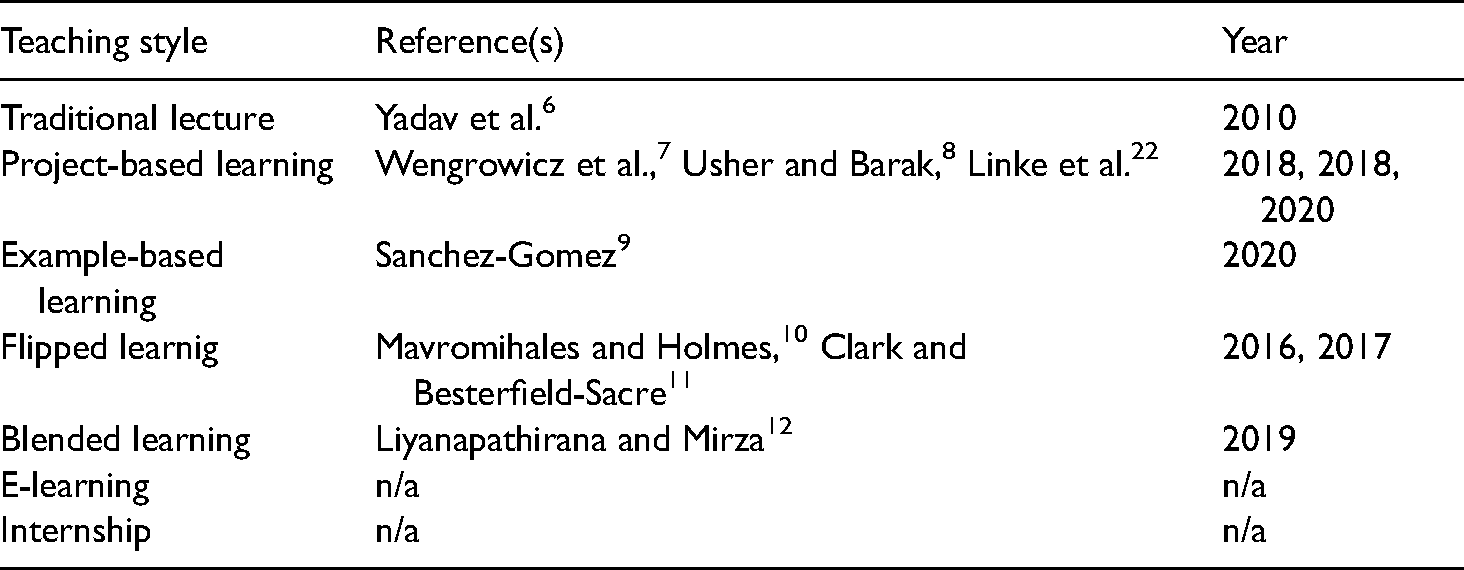
The studies in concern had considered generally focus on a single teaching term. It is important to consider the change in technology and student profiles. Therefore, this paper aims to assess different teaching strategies, their effect on grading activities, and students’ success.
Research questions
A manufacturing process defines the phases of raw materials that are transformed into a final product. Unoriginal teaching methods based on long lectures and simple imprecise sketches on the blackboard may no longer attract the attention of undergraduate students. Students may have different learning styles. Also, they may never have experienced a manufacturing environment physically or virtually. Therefore, there is a need to design a learning environment that integrates everyday examples to the course, inspires, and motivates engineering students for their professional working life.
It is a fact that there are several different teaching and learning methods. The basics of the Manufacturing Processes course can be explained by lectures. Graphical illustrations and photographs can be helpful for undergraduate students to visualize the process. Visual support by using short demonstrations, case examples, and other online learning materials can assist the learning process. When possible, more enjoyable learning experiences can be achieved by enabling greater interaction for some topics. This study aims to identify a better teaching strategy that may improve student success.
Heywood 13 states that the curriculum is a continuing process of minor changes. However, the teachers’ perspective for continuous quality improvement may not form the formal perspective of quality assurance. Some departments may make a major curriculum update without any external pressure. It is more common that external agencies may request a revision. The Accreditation Board for Engineering and Technology (ABET) in the United States and Standards and Routes to Registration (SARTOR) in the United Kingdom are the two well-known agencies. On the other hand, agencies such as the National Science Foundation (NSF) sponsored coalitions in the United States and the United Kingdom Employment Department's Enterprise in Higher Education Initiative may influence the professional organizations. Kardanova et al. 14 assess developing and validating instruments to compare the quality of engineering education. Felder and Brent 15 explain the learning objectives (program outcomes, Bloom's taxonomy, and instructors’ goals), instruction activities (lectures, instructional technology, labs, active-cooperative learning, and problem-based learning), and assessment activities (classroom assessment techniques, tests, other measures, and surveys) to meet ABET requirements. Association for Evaluation and Accreditation of Engineering Programs (MUDEK) is a non-governmental organization in Turkey that contributes to the enhancement of the quality of engineering education through accreditation and evaluation. It provides information services for engineering education programs in various disciplines. 16
Flumerfelt et al. 17 summarize The Toyota Education Model where workers learn by themselves instead of someone else telling them how to do the work. By this means, workers are encouraged to become a lifelong learner in and outside the company, that is based on continuous improvement.
This study focuses on various teaching environments and strategies and assesses their contribution to the continuous improvement of the course design. Providing course materials, essential for students for a better understanding of the topics, on online platforms before or after the course is considered. Finally, the questionnaire aims to identify if the students in concern are ready/willing for flipped classrooms.
Methodology
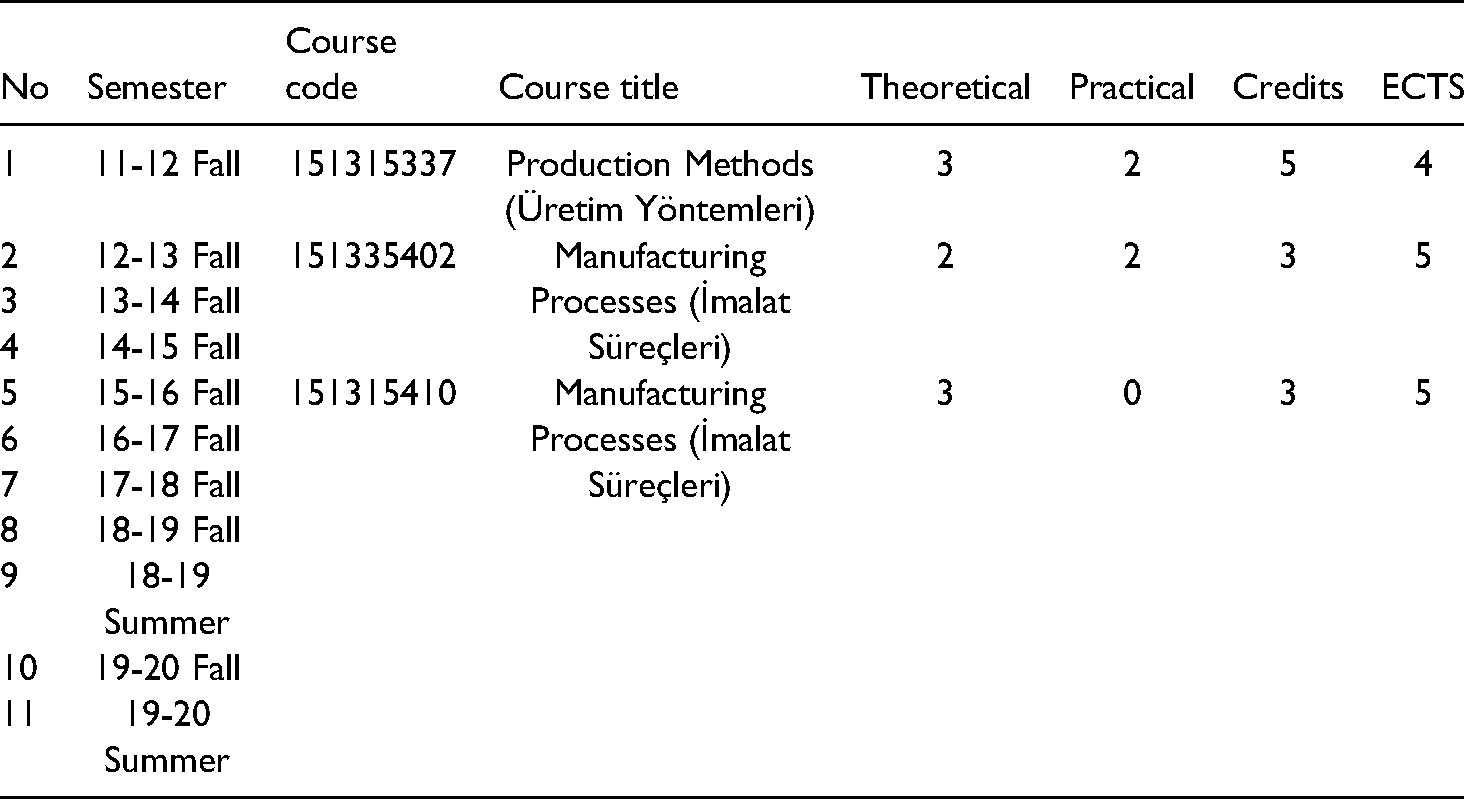
The Manufacturing Processes is currently a 3-credit compulsory course thought in Turkish during one academic year (fall semester). The third-year undergraduate students of 4 years Industrial Engineering program at the Faculty of Engineering and Architecture are enrolled in the course. Table 2 summarizes the minor changes in the course starting from 2011 to 2020. The course was titled as Production Methods during the 2011–2012 Fall term with 3 h theoretical and 2 h practical. The Industrial Engineering curriculum was revised in terms of learning outcomes to meet the certification requirements by MUDEK. Therefore, the course was renamed as Manufacturing Processes. Also, the theoretical and practical hours were revised as 2 h respectively. Starting from 2015–2016 Fall term, the course hours were revised as 3 h in theoretical.
Information for the course in concern.
Summary of teaching strategies and educational material
An Industrial Engineering undergraduate student should be familiar with the up-to-date concepts of Manufacturing Processes. The compulsory courses such as Engineering Materials, Work-Study, Production Planning, and Accounting can also contribute to understand manufacturing systems design. In addition to the courses, the internships also help students to understand the processes, machines, and workflow at a manufacturing workshop.
Table 3 summarizes the teaching activities conducted during the nine years. Starting from 2011–2012 Fall semester, the author has been assigned to teach the course. Well-established and commonly used three textbooks in the subject area are “Principles of Modern Manufacturing” by Groover, 18 “Manufacturing Engineering and Technology” by Kalpakjian et al., 19 and “DeGarmo's Materials and Processes in Manufacturing” DeGarmo 20 were considered as course books. Face-to-face lectures were completed in class by utilizing an overhead projector and reflecting the mono-colour course slides (printed on acetate films) to the mobile curtain. When used for several hours and overheated, the old-fashioned device was starting to make noise in some of the lectures, so loud to distract the attention of students. Explanations of the topic were made based on simultaneous English to Turkish translation. The important points for the process in concern were underlined with colourful pens on the acetate films. The graphical illustrations from the course books were used to help students visualize the process. However, many of the students were complaining about their English level was not adequate to track the course and understand the details of the process, especially when they could not attend the course. Therefore, the author of this paper started to work on a book project that was originally written in Turkish. The first edition, title translated as “Manufacturing Processes for Industrial Engineering”, was published and ready for the 2012–2013 Fall semester (Erol and Ulutas. 21 ) By this means students were able to access the course notes before the class. Then the PowerPoint slides were prepared that included detailed notes for each module based on reference sources. Then, it was possible to use a projector to reflect the colorful course notes and photos in the class. However, a copy of the slides was not shared with the students. A course session (2 h) was scheduled to visit the university's Metal Process Workshop for the students to experience and a better understanding of cutting, welding, and chip removal processes. The course was taught during the 2013–2014 Fall and 2014–2015 Fall semesters with the same teaching strategy as in 2012–2013 Fall.
Summary of the teaching activities for the course.
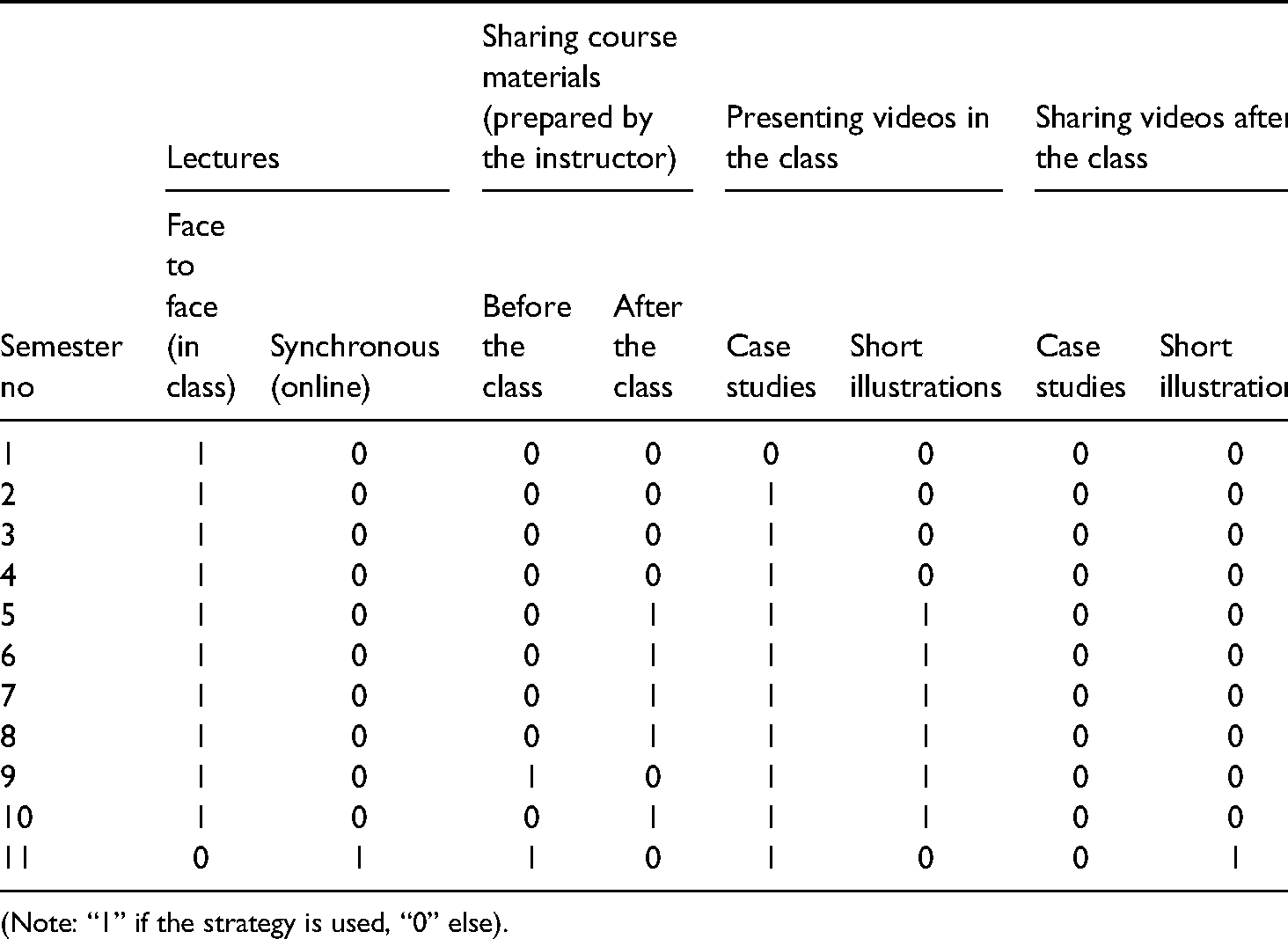
(Note: “1” if the strategy is used, “0” else).
The videos were recorded at the companies with a duration of 15–45 min to explain the related manufacturing processes. These recordings were presented in the class just after the technical information was given. However, due to the confidentiality of the companies and the file size, it was not possible to share the company videos with the students.
It is important to attract the attention of the students before and after the timetabled course hours. New generation students like to watch video records that may trigger their curiosity about the topics in concern. Therefore, suitable educational audio-visual demonstrations, available in the public domain through the World Wide Web, were carefully selected. Starting from the 2015–2016 Fall semester, short videos were shared with the students after basic definitions of the subject in concern. It was possible to share these video files upon request
During 2015–2016 Fall and 2019–2020 Fall semesters, the lectures were given in class, the videos were presented and explained during the course hours, and the course materials, prepared by the author, were shared after the class from the university's Course Management System (CMS, Moodle Platform). The lecture-based materials that include a copy of the PowerPoint slides were uploaded to the CMS and were available for access before the scheduled course hours for the 2018–2019 Summer term. Students were encouraged to print out the slides and take notes for the subject covered during the class to be revised later.
The Covid-19 pandemics emerged in late December 2019. It started to spread in Turkey around March 2020. Therefore, this course was revised as online teaching in 2019–2020 Summer semester. Short audio-visual illustrations, company video links from YouTube, course materials, and additional supplementary notes were reviewed and updated. The course materials were uploaded to the university's CMS each week before the class. The teaching strategy was slightly different from the ones that were adopted for previous semesters. Similar to the flipped-classroom approach, students were asked to overview the course notes and watch the recommended short illustrations and company videos for the module before attending the scheduled synchronous online session. It was expected that students have accessed these course materials before the session.
Summary of assessment activities
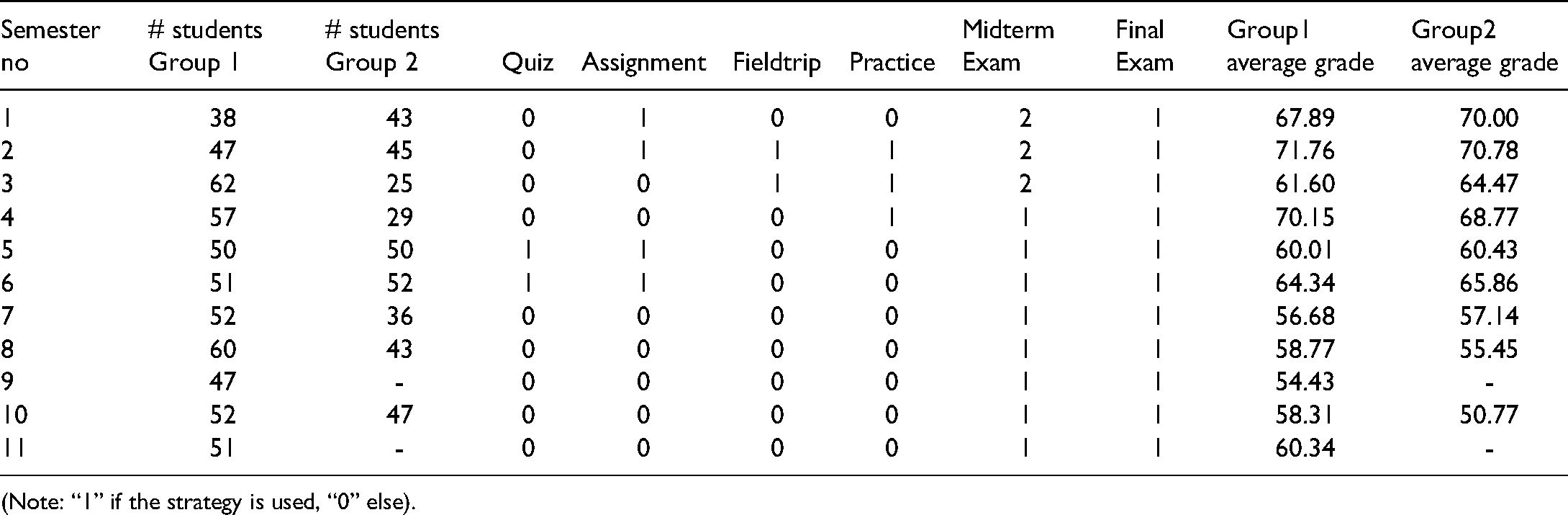
It is a fact that traditional assessment may measure the factual knowledge of a student. 2 Mid-Term Exams (each 25%) and one Final Exam (40%) were executed for the 2011–2012 Fall semester. The written type exams were prepared as open book. An Assignment (10%) was defined to encourage students to investigate how daily life products are manufactured.
In the 2012–2013 Fall semester, 2 Mid-Term Exams (each 20%) and one Final Exam (40%) were executed as written and open book. An Assignment (10%) was given for each student. The practice of theoretical knowledge can be assisted with hands-on projects or in the field. Therefore, the attendance to the practice session at the university's Metal Processes Workshop and a company visit to a casting company was assessed as 10%. The students who attended the session at the Metal Processes Workshop were encouraged to conduct at least one of the processes such as, spot welding, electric arc welding, grinding, tube, or sheet bending. Even the students who hesitated to perform any process benefited to be familiar with the machines and equipment of the processes.
For the assessment in the 2013–2014 Fall semester, 2 Mid-Term Exams (each 25%) and one Final Exam (40%) were prepared as a written type and open book. The attendance to the university's Metal Processes Workshop was defined as 10%.
Just before the 2014–2015 Fall semester had started, there was an adjustment for the mid-term exams for the Departments of Engineering Faculty due to the crowded course enrollments and lack of assistants. Therefore, only one Mid-Term Exam (20%) and one Final Exam (60%) were defined for assessment. The paper-based exams were structured as closed-book including 50% test and 50% open-ended type questions. When the assessment had a small percentage of the total assessment score, the students were not willing to attend the sessions or spend adequate time to complete their assignments. Based on this experience, the percentage for the Assignment was slightly increased to 20%.
One Mid-Term Exam (30%) and one Final Exam (40%) were defined in 2015–2016 Fall and 2016–2017 Fall semesters. The paper-based exams were again structured as closed-book including 50% test and 50% open-ended type questions. One Workshop attendance (15%) was defined and the percentage for Assignment was determined as 15%.
Starting from the 2017–2018 Fall semester, the paper-based closed-book Mid-Term Exam (40%) and Final Exam (60%) were designed to include 25 test type questions two of which included the computations (Chvorinov rule, cutting speed, tool life) taught in the class. The assessment strategy and the percentages remained the same during the 2018–2019 and 2019–2010 Fall semesters. A summer session was defined for the 2018–2019 Summer semester where paper-based test type Mid-Term Exam and Final Exam had 50% influence on the course assessment.
The 2019–2020 Summer semester was quite unusual compared to other semesters. Due to the pandemics, Mid-Term and Final Exams were performed online by use of the CMS platform. 20 test type questions were randomly selected from a total of 100 questions bank that was grouped based on the modules.
Table 4 summarizes the assessment activities for the course in concern. The summer semester courses were defined for only one group. Group 1 corresponds to the regular and Group 2 to secondary education students. The students were taught the same curriculum for each course with different course timetables. As seen in the right-hand of the last two columns, there was not a significant difference between the average of course grades.
Summary of the assessment for the course.
(Note: “1” if the strategy is used, “0” else).
Results
The study focuses on the effects of assessment strategies adopted in different semesters and the effects of course materials and knowledge transfer.
Results of assessment strategies
The engineering courses like Manufacturing Processes require to link the theoretical background and application. Therefore, a well-structured course content is crucial to transfer the theoretical basics of the processes. It is important to keep the attention of students for the course topics and stimulate their curiosity to learn. Although, project-based teaching can be used for this purpose, due to the number of the students and lack of teaching assistants, it was not possible to conduct such teaching strategy and assess the effect on student success. Highest student grades were obtained whit assignment, field trip, workshop practice, two mid-term exams, and one final exam in a semester. Assignments help students to search for related information, summarize, and report the basics of the topic in concern. However, field trips may contribute more to fill the gap between theory and practice.
The overall average grade of students for each semester is calculated and the statistical analysis results are given in Figure 1.
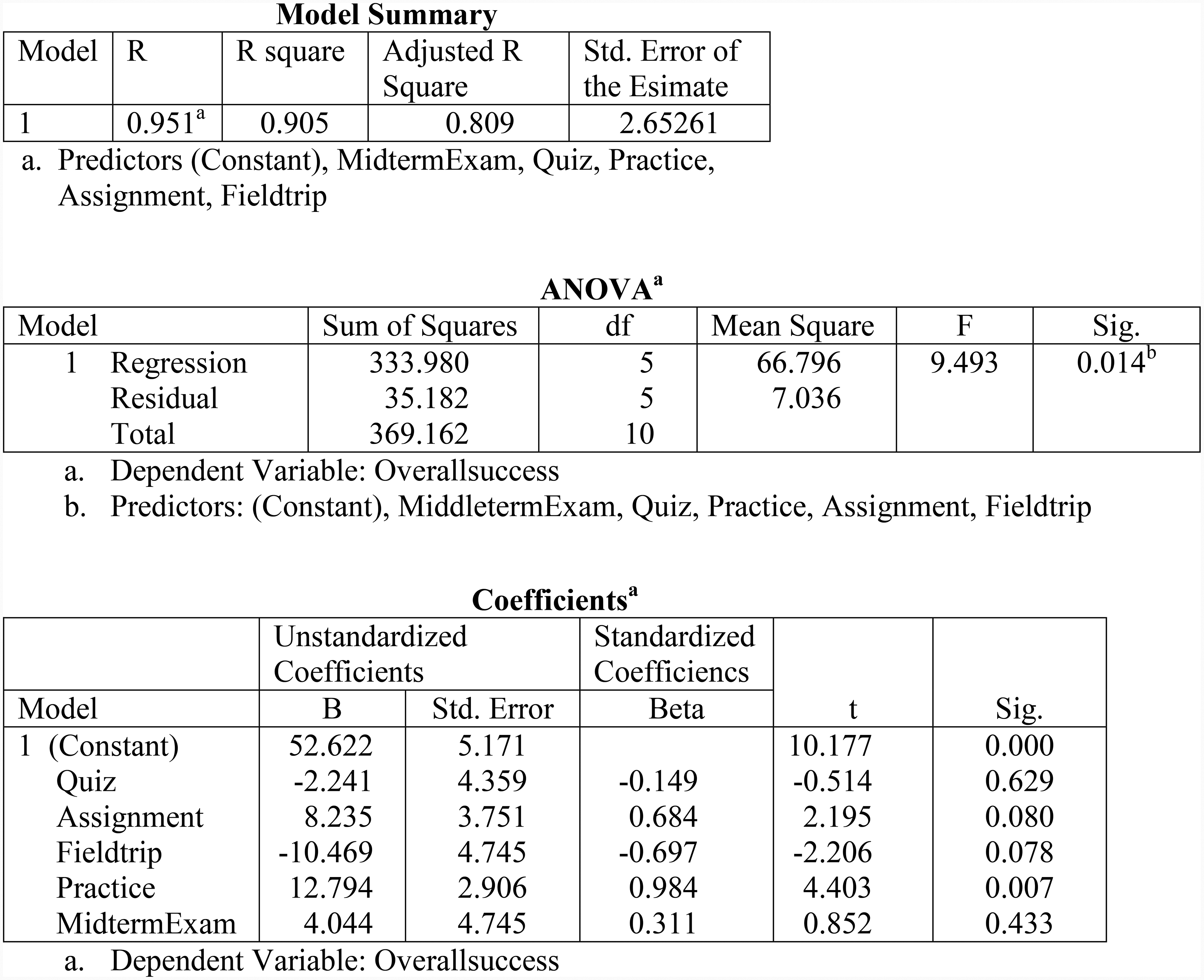
ANOVA test for teaching strategies and average of student grades.
To help students learning the basic principles of the manufacturing processes (i.e. welding, bending), they were encouraged to perform the process. The students who attended these Workshop sessions received higher grades. Therefore, the result confirms the significance of Practice (p = 0.007) to average of students grades and may be interpreted as the importance of learning by doing. However, the Workshop sessions were suspended after 2017. The main reason was the prerequisite consent application for each student. The strict legal restrictions for health and safety were limiting the number of students to conduct processes such as welding. On the other hand, there was not an adequate number of personal protection equipment available at the Workshop.
Results of feedback questionnaire
A Feedback Questionnaire was designed for the students who were enrolled in the Manufacturing Processes course in the 2019–2020 Summer semester. The main aim was to enable the students to assess the online education experience and teaching strategy. The revised version of the questionnaire from Mavromihales and Holmes 10 is given in the Appendix.
51 students were asked to answer 12 questions (two open-end) from CMS after completing the final exam. 46 students voluntarily have participated in the feedback questionnaire. The first question was to identify which device students have frequently used to attend scheduled synchronous courses. 76.60% of the students enrolled in the course stated that they used notebooks to attend the synchronous sessions. 19.15% have used their cell phone and 4.25% desktop computers. None of the students have used tablets.
The second question aimed to assess whether students had any problem to access the course notes and to connect the course sessions. 53.19% of the students never and 31.91% rarely had problems to access. Likewise, 12.77% of the students had sometimes and 2.13% of them very often had faced connection problems. None of the students always had problems during access. 53.19% of the students have stated that the duration of the synchronous sessions was good and 27.66% very good. The rest of the students rated the duration as acceptable (10.64%), poor (8.51%), and very poor (0%).
The course materials content was rated by the students as; very good (19.15%), good (55.32%), acceptable (14.89%), poor (6.38%), and very poor (4.26%). Around 74.5% of the students were satisfied with the course materials’ content.
The course materials were shared from CMS for each week. The students were asked to rate this strategy. 42.55% of students stated that they found it very useful because they had the chance to review the subject in concern before the synchronous course session starts. It was possible to print out the course PowerPoint slides and take notes during the synchronous session. The percent of the students who sometimes accessed the course notes before the synchronous session was 38.30%. 14.89% declared that there would be no different for them if the course materials were shared before or after the synchronous session. It is quite annoying that 4.26% of the students accessed the course material just before the exams.
At the beginning of the semester, students were asked to watch short instructive videos before the synchronous course session. Students who had watched all the recommended short instructive videos before the synchronous sessions and found some of them were useful had a percentage of 55.32%. Of the student group in concern, 8.51% had watched all the recommended short instructive videos before the synchronous sessions and found them helpful to understand the basics of the process. 12.77% had not watched any of the recommended short videos, because they already had prior knowledge about the processes. 2.13% of the group had not watched any of the recommended short videos. They confessed that they could not spare time or did not want to dedicate time outside the scheduled course session. On the other hand, 21.28% of the students had not watched the recommended short videos.
Links for several videos (each around 45 min) of well-known companies, explaining how the manufacturing processes are utilized, were provided at the beginning of the semester. The students were asked to watch these videos anytime during the semester. 11% had watched all recommended company videos and these students stated that the manufacturing steps for the products they are familiar with from daily life were very useful to understand the related manufacturing processes. 55% had watched some of the company videos and found them useful. 11% have thought that the videos were too long and they did not want to spare time for watching them. 11% stated that they had already watched some of the recommended company videos therefore they did not want to watch them again. On the other hand, 13% of the students suggested that watching the recommended company videos during the synchronous course sessions could be more useful. The students were asked about the adequacy of the videos. It is promising that 79% of the students found the number of company videos as appropriate. 15% believe that more company videos could be shared. Only 6% complained about the number of company videos and requested a smaller number of videos. Figure 2. summarizes the answers given by students for short and well known company videos.
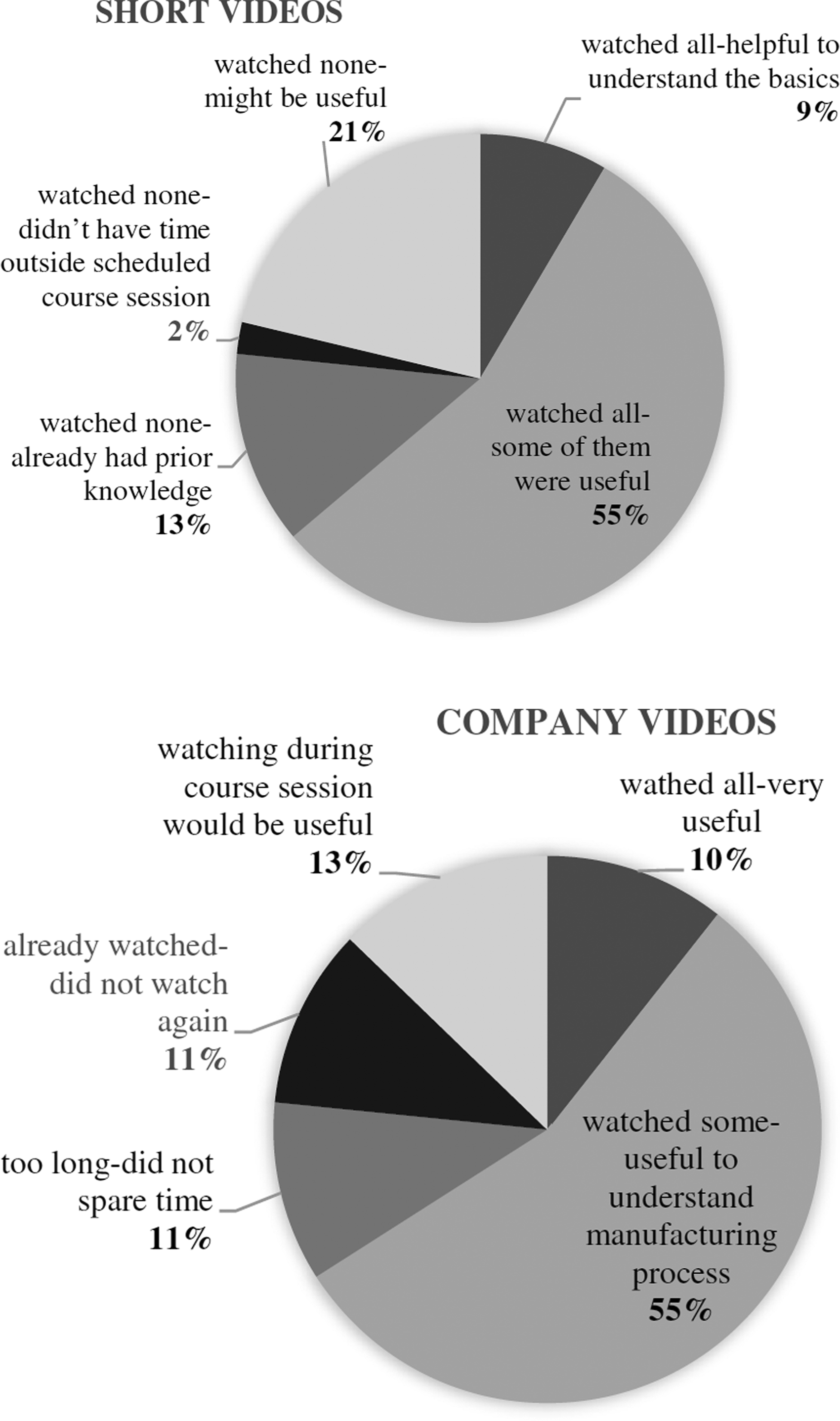
Graphical representation of results regarding videos.
Further analysis was made to assess the success of students based on the answers to the questionnaire related to watching short illustrative videos before the synchronous course session, watching videos of well-known companies with manufacturing processes, and accessing each week's course materials that were shared from CMS. p = 0.277 in ANOVA results state that short illustrative videos do not have a significant effect on student success (Figure 3). Likewise, p = 0.474 means that company videos do not have a significant effect on student success (Figure 4). Based on ANOVA results illustrated in Figure 5, it can be said that sharing the course materials before the course session may affect student success (p = 0.043).
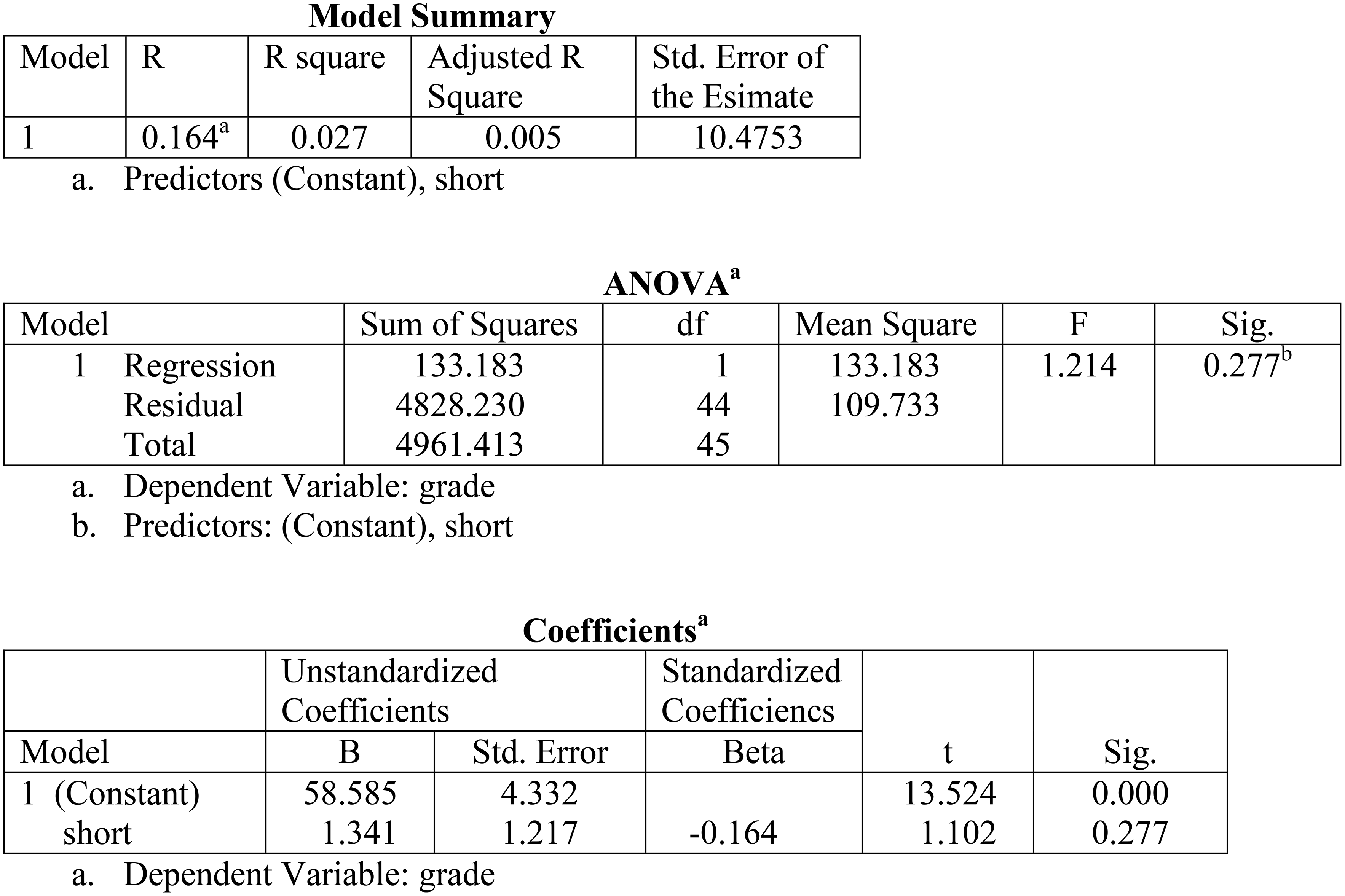
ANOVA test for short illustrations and average of student grades.
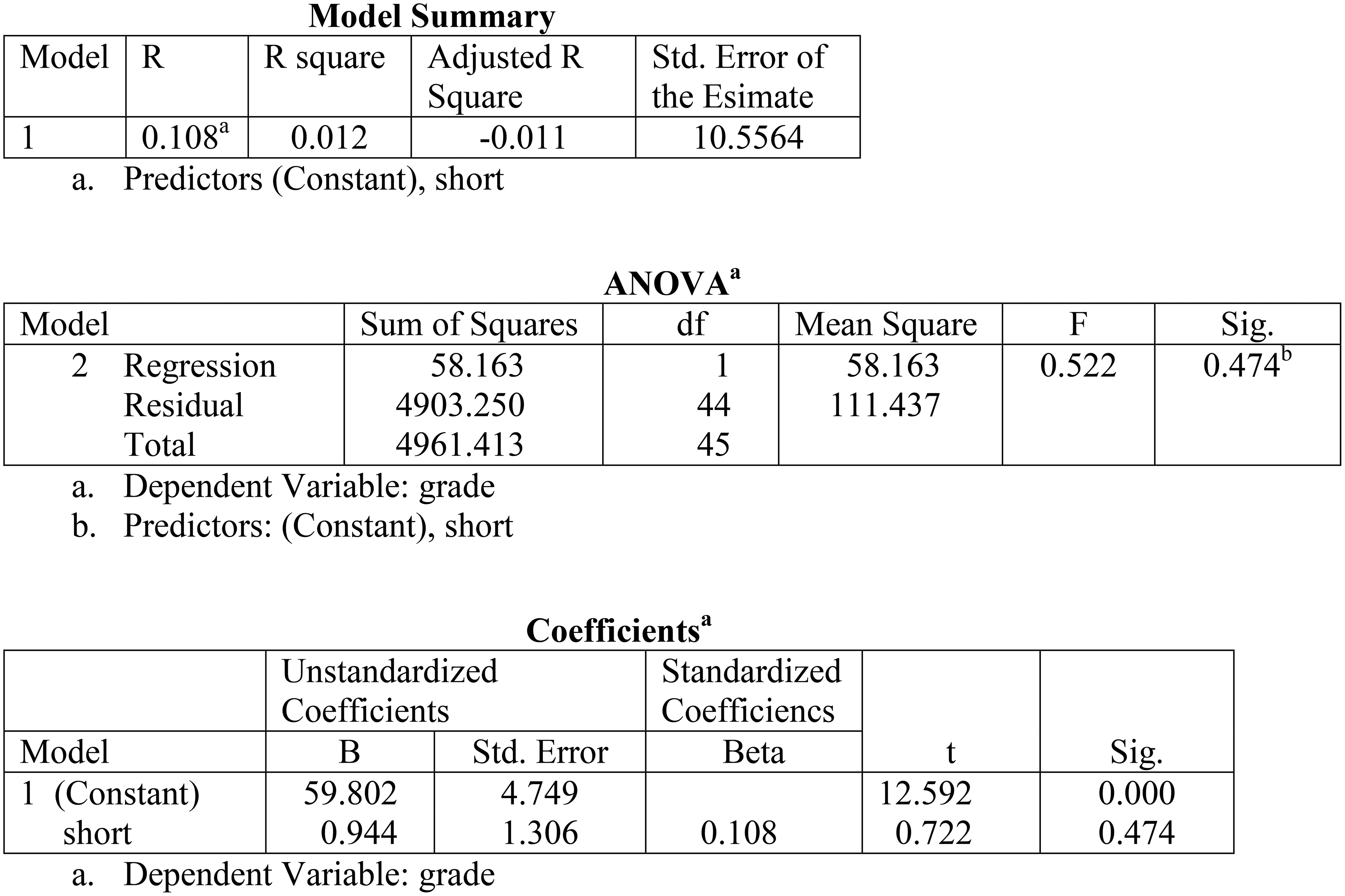
ANOVA test for company videos and average of student grades.
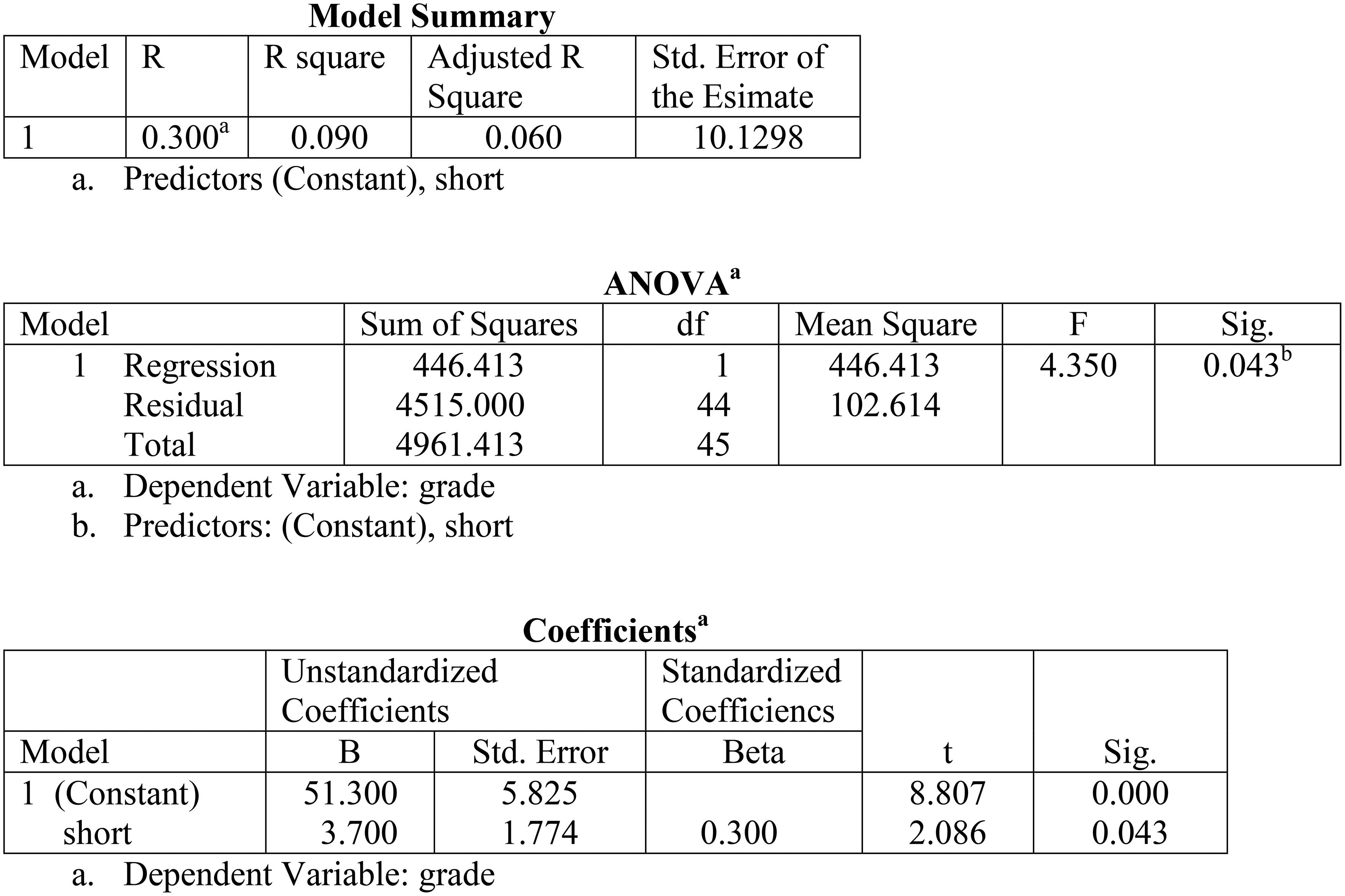
ANOVA test for course materials share before the course session and student grades
The teaching experience of the 2019–2020 Summer term can be considered as a pilot study for the Manufacturing Processes course. Therefore, students were asked if they had heard about flipped education before. Since this education strategy is not very common for engineering undergraduate students, 83% of the students stated that they have not heard about it before. But 17% have heard this type of education.
Students were requested to rate the applicability and suitability of this type of education model for the Manufacturing Process course. 62% of the students were in favor of the use of audio-visual course materials for a better understanding of Manufacturing Processes. Therefore, they agreed that sharing course materials before the class can always contribute to understanding the subject in concern. 21% claimed that the course materials can be useful to have prior knowledge about the subject, 6% stated sharing course materials can only be useful for online teaching, and 11% defended that traditional education system where lectures are given in class are better and course notes can be shared after the class. In the open-end questions, students asserted that teaching the subjects of the Manufacturing Processes course can be suitable for flipped-classroom applications compared to the usual method of course delivery.
Discussion
The research in this paper has confirmed that teaching style, course content, use of course materials, and assessment strategies may affect the attention to the course, students learning experience, and efficiency of knowledge transfer.
The traditional “chalk and talk” teaching style cannot solely attract the attention of undergraduate engineering students. Also, a traditional exam process may result in students cramming their study materials and being unable to remember the topics the next day. There is always a search for better teaching and assessment strategies. Koul and Nayar 4 point Education 4.0 applications where educators eliminate the traditional model of knowledge dissemination and emphasis developing EQ rather than just IQ. Many of the researchers agree that instructors can create a learning environment that maximizes the learners’ attention and ability to interact through discussion of audio-visual case studies and demonstrations.
Linke 22 introduces an innovative course design that is based on integrating theory of a topic, computational modeling, experimental testing, and science of manufacturing. The interdisciplinary and project-based teaching approach is proven to bridge the theory-application gap. Further, scenario-based assessments confirmed that the students had gained self-efficacy in design and other engineering skills.
Berkey 23 underlines the importance of “theory and practice” by explaining the successful applications of formal classroom instruction followed by student apprentices. Similarly, the engineering department in concern requests students to complete two internships before graduation. However, due to the new legislation, it may not always be possible to conduct practical training with the undergraduate students at the Workshop.
This study has a few limitations. The questionnaire can be enhanced by including a number of questions such as; have you completed your compulsory internship before taking the Manufacturing Process course, do you have any special interest in new technologies, how frequently do you watch YouTube and other technical channels for topics like “how is made”, do you plans to work at a metal manufacturing, aviation, etc. company after graduation, and is your English level adequate to follow the written and/or audio-visual technical literature. On the other hand, the study focuses only on a Manufacturing Processes course taught to Industrial Engineering students. Other possible topics of the courses (Introduction to Industrial Engineering, Work-Study, Occupational Health and Safety, etc.) can be considered. The questionnaire can be revised for other courses at other engineering departments.
Conclusions
Several universities across the globe adopted online teaching (virtual learning, distance learning) during the lockdown period due to the Covid-19 pandemic. The developed countries that are already equipped with online teaching facilities and along with virtually trained teachers/students, and highly qualified IT experts coped with this period better. The new generation of undergraduate students is familiar with the use of internet computer systems. In the following semesters, if the students can access the internet and properly prepared course materials, it is more probable to adopt and utilize distance learning strategies.
Future work
Future studies may consider designing and using new technologies for the Manufacturing Processes course. Frerich et al. 24 state that Virtual Labs simulate experiments and Remote Labs where plants are operated remotely that enable students to learn and deal individually with the subjects taught. Hoffman et al. 25 attract attention to the integration of practical use cases into the education process. It may not always be possible to visit engineering laboratories physically. Therefore, Virtual Reality simulators can be used to demonstrate real-world engineering applications. Although setting such technology-based laboratories may seem costly, the benefits for long-lasting learning is expected to be higher.
Supplemental Material
sj-docx-1-ijj-10.1177_03064190221078339 - Supplemental material for Teaching and assessing strategies for an undergraduate manufacturing processes course: Experiences of 9 years
Supplemental material, sj-docx-1-ijj-10.1177_03064190221078339 for Teaching and assessing strategies for an undergraduate manufacturing processes course: Experiences of 9 years by Berna Haktanirlar Ulutas in International Journal of Mechanical Engineering Education
Footnotes
Declaration of conflicting interests
The author(s) declared no potential conflicts of interest with respect to the research, authorship, and/or publication of this article.
Funding
The author(s) received no financial support for the research, authorship and/or publication of this article.

Supplemental material
Supplemental material for this article is available online.
Appendix: Questions for feedback questionnaire
References
Supplementary Material
Please find the following supplemental material available below.
For Open Access articles published under a Creative Commons License, all supplemental material carries the same license as the article it is associated with.
For non-Open Access articles published, all supplemental material carries a non-exclusive license, and permission requests for re-use of supplemental material or any part of supplemental material shall be sent directly to the copyright owner as specified in the copyright notice associated with the article.
