






Abstract
This work describes a teaching experience in bioinspired robotics, in which students were asked to design jumping robots inspired by animals. This bioinspired robotics course is offered to Master’s students in mechanical engineering with the aim of teaching them how to improve the efficiency and maneuverability of robots by drawing inspiration from biological locomotion strategies and enhancing their creativity through a bioinspired approach. This class emphasized translating biological principles into useful robots, and students based their designs upon locusts and Salticidae, two very effective species in their energy use. The students focused on mechanical design, energy storage and release approaches, and control strategies. The resulting prototypes emphasize that bioinspired solutions can offer effective strategies for robust and dynamic locomotion in robotics. In addition, it demonstrates the importance of bioinspired projects and how they can provide students with the interdisciplinary foundation needed to work in biology, mechanics, and robotics.
Introduction
The research on bioinspired robotics has seen rapid growth in the last few decades due to advances in technology that enable more accurate replication of biological systems, increasing interest in sustainable and efficient design solutions, and the growing recognition of the optimized mechanisms of nature to solve complex locomotion and interaction challenges.1,2 Bioinspired designs emulate highly efficient and adaptive biological strategies, which can lead to more energy-efficient and versatile robots. 1 Moreover, living beings are robust and capable of operating in unknown environments under a wide range of conditions; thus, robots can benefit from bioinspiration, making robots more robust and reliable in unstructured environments. 3 Thus, it is of great interest to adapt the teaching programs to include the bioinspired approach and the basic principles of bioinspired robotics in the academic curriculum. A course in bioinspired robotics can help students understand how natural systems solve complex problems. By studying natural models, students are encouraged to think creatively and explore unconventional solutions.4,5 Furthermore, students acquire an interdisciplinary approach that requires integrating mechanical, electronic, and biological systems, a highly valued skill in the robotics, automation, and healthcare sectors. Interdisciplinary learning environments also have the advantage of enhancing creative thinking, problem-solving capabilities, and interest development in students. 6 In addition, bioinspired approaches often focus on efficiency and the utilization of available materials, aligning with industry trends toward sustainable design and operations.2–5 Therefore, such a course is beneficial for future engineers, as this approach promotes innovation by taking inspiration from biological systems optimized by millions of years of evolution, leading to novel solutions that traditional engineering might not conceive. 4
Bioinspiration is increasingly integrated into secondary and higher education curricula. 4 In schools, particularly within STEM disciplines, bioinspired principles are introduced to promote interdisciplinary thinking and problem-solving skills.6–8 At the university level, bioinspiration is incorporated into several programs, particularly in engineering,9–11 where it encourages innovative design approaches that draw inspiration from biological systems to enhance efficiency, sustainability, and functionality. Due to the interdisciplinary nature of the subject, courses about bioinspired solutions are offered to students of different disciplines, ranging from biology to mechanical, biomedical, and civil engineering. 12 Moreover, the application of the bioinspired approach enhances the students’ understanding of the relationship between technological advancements and biological systems, highlighting their influence on each other. 8 These bioinspired robotics courses typically include lecture modules in which the teacher presents the fundamental concepts of bioinspiration, the principles of biomechanics underlying various locomotion strategies, and potential applications of bioinspired robots.5,10,11 Then, the majority of these courses include a module in which the students work in groups on a project, applying the bioinspired approach to design a solution to a real engineering problem, followed by a presentation of their work. The group project may include the realization of a prototype5,8,11, or conclude with a detailed mechanical design and a feasibility analysis.9,10,12 Both approaches have demonstrated that a bioinspired engineering course incorporating a group project helps students enhance the creativity and novelty of their designs, while also deepening their understanding of both biology and mechatronics.5,10
In this article, the ”Bioinspired Robotics” course in the first year of the Master’s degree in Mechanical Engineering at Politecnico di Milano is presented. The course is divided into two modules. The first is a theoretical module of 25 hours, which discusses a large number of biological features that can be interesting in robotics and presents innovative ways to exploit them through technical examples and designs of bioinspired machines and robots. The topics covered range from the principles of different locomotion strategies on land, underwater, and in the air to future trends in bioinspired robotics, such as soft robotics, growing robots, biobehavioral systems, and group intelligence. Each topic is developed by presenting different biological solutions, highlighting their unique features and operating principles, and proposing technical solutions that can adapt these functions to robotics. Then, there is a second module of 25 hours, during which students work in groups of four to five people to develop a bioinspired solution using the approach learned in the lectures of the first module. The exam consists of a 30-minute oral presentation of the project. This course is followed by an optional complementary laboratory course in the second year of the Master’s degree, in which the students will build and test the robots designed during this course. This course can be chosen by any student without any particular prerequisite or corequisite nor it is part of a multi-semester capstone sequence.
The assignment given to students in this course in the 2023/2024 academic year is to study the locomotion strategy of a jumping animal and design a bioinspired jumping robot. The main reason why jumping locomotion has been selected for this didactic project is practicality, since it is possible to take inspiration from animals with relatively simple kinematics and, compared to other types of bioinspired locomotion, a biological jumping mechanism can be simplified significantly, reducing the number of moving parts and degrees of freedom, without altering the principles on which the jumping strategy relies. Such a simplification is very difficult to achieve for walking, crawling, flying, or swimming locomotion strategies, which require a high number of moving parts or deformable elements to be mimicked by a robot. This feature makes a bioinspired jumping robot more feasible than other bioinspired robots. Another important aspect considered for this choice was that biological jumping mechanisms have higher energy efficiency and stability than other jumping mechanisms,13,14 allowing students to perceive the advantages of bioinspiration through hands-on experience.
This article describes a teaching experience, provides insights into innovative teaching methods that integrate biology and engineering, and demonstrates how students applied bioinspired principles to design robots. The learning outcomes obtained from this course show that a hands-on bioinspired robotics project enhances interdisciplinary understanding and critical thinking skills.
Objectives of the course and assignments
The objectives of the course are to teach the working principles of bioinspired design and biomimetic design, to discuss how biological systems can work to solve engineering or design problems and how biological features can be exploited in robotics, and to present the state of the art of bioinspired technologies in robotics and future challenges in the field. At the end of the course, the students are expected to have learnt how to extract principles from natural solutions and adapt them to engineering problems. They will also be expected to identify useful features in animals and adapt them to robotics. Thus, the main expected learning outcomes of this course are:
the ability to understand the mechanics of a biological locomotion strategy and figure out the role of each component of the musculoskeletal system involved; the ability to simplify the complex kinematics of the musculoskeletal structure of an animal and reproduce it with simple elements such as links, springs, and rotational joints; the ability to develop an analytical dynamic model that allows tuning the links’ lengths and springs’ stiffness to evaluate the jumping height and distance for each configuration and refine the robot design according to the obtained results. the ability to translate a kinematic and dynamic model of a robot into a CAD representation, including appropriately sized actuators, electronics, and mechanical components.
Moreover, students are expected to enhance their soft skills related to communication and teamwork, as the design process relies on sharing ideas and discussing their advantages and disadvantages with other team members.
The final exam consists of a 30-minute oral presentation of the work in front of the whole class, followed by questions from the teachers and their peers. The educational value of presenting their project lies in helping students to develop their soft skills related to communication and exposition, and encourages peer-to-peer exchange, which can be highly stimulating.
According to these expected learning outcomes, the assignment given to students consists of four parts.
The students were required to design a bioinspired robot, including:
The kinematic and dynamic analyses relied on knowledge acquired in previous courses. In contrast, all the other topics were covered during the lectures, where students were shown examples of how these tasks are addressed for other locomotion strategies, such as walking, crawling, swimming, and flying.
The students worked in groups of four or five that they could form autonomously, and had five weeks to complete the project. They dedicated four hours a week to this activity, both during class time and in approximately the same amount of time spent out of class. The students were free to organize their work as they preferred, but they were provided a suggested timeline, which was followed by all groups.
This course was also open to Biomedical Engineering students, without requiring them to integrate additional specific prerequisites. To enhance interdisciplinarity, students were encouraged to form mixed groups, where Biomedical Engineering students could focus more on the biomechanical analysis of the studied animal, while Mechanical Engineering students concentrated on aspects related to CAD design, and shared equally in the work on the other project topics. This arrangement fostered knowledge exchange across disciplines, while allowing each student to build on their own background without being burdened by topics less familiar to them.
The students completed all the tasks by working autonomously, with reviews from the teaching assistant twice a week.
Description of students’ projects
In the academic year 2023/2024, thirteen students were divided into three groups. Two groups chose to design a robot inspired by a locust, while another group decided to take inspiration from the Salticidae. In this section, the projects of the students are briefly described. The CAD files and the Matlab scripts created by the students can be found in the supplementary materials.
Locust-inspired robots
Locusts are well known for their ability to jump over long distances to escape predators or to start flight. They can jump over 0.7 m with a take-off velocity of 2.6 m/s, while the mass of the driving muscles in their legs is only 5% of the total body mass.
15
Like all insects, they have three pairs of legs, but only the hind legs are involved in the jumping mechanism. The hind legs comprise two segments of similar length called the femur and tibia, which are connected by a cylindrical joint in the knee. This joint is actuated by two antagonist muscles parallel to the femur, called the flexor and the extensor, which respectively close and open the knee joint from 0
Locust jumping can be divided into three steps.17,18
The mechanism composing the leg should have 1 DOF and should be composed of two rigid bodies (femur and tibia) connected by a rotational joint (knee). The knee extension should be powered by the elastic energy stored in the spring, replicating the extensor muscle. To avoid knee extension before the necessary elastic energy is stored, a force mimicking the flexor muscle and maintaining the knee folded in the first phase of the jump is needed. In the knee, a bistable mechanism mimicking the SLP should be positioned to store additional elastic energy and release it during the jump.
The bioinspired robot students were asked to design a robot that was only supposed to jump straight; thus, it was possible to significantly simplify the locust’s structure. Firstly, the front and middle legs could be removed since they are used by locusts only to control the flight direction and to walk.
18
The locust’s hind legs have two degrees of freedom: one is the extension of the knee, which is necessary for the jump, and the other DOF is the rotation of the femur with respect to the animal’s body, which allows it to control the direction of the take-off velocity and the elevation of the jump.
19
Since this activity is mainly focused on the energy storage and release mechanism and not on the control of the trajectory, it was possible to further simplify the leg kinematics, constraining one DOF. After this analysis, the students identified the following characteristics that the bioinspired robot should have to replicate the locust’s jumping mechanism.
To help the students with the mechanism design, they were provided with examples of locust-inspired jumping robots and mechanisms that can be found in the literature, and they were encouraged to find other jumping robots through bibliographical research on their own. The locust-inspired mechanisms and robots provided to students include robots with different mechanisms for energy storage and release. An example is the jumping robot TAUB, which stores energy compressing a torsional spring and releases it by triggering a latch, 20 or the locust-inspired robot realized by Mo et al., which consists of an eight-bar mechanism that compresses the spring while folding the legs and, thanks to incomplete gears, it suddenly releases all the elastic energy, 21 or the robot designed by Yang et al., which releases the hook that keeps the legs folded with an additional servomotor and has pitch and steering controls. 22 Other robots, instead, store energy by elongating a spring mimicking the extensor muscle, like the locust-inspired robot designed by Zhang et al., 23 which is capable of continuous jumping and steering during the flight phase, or the jumping-gliding robot LocustBot, which uses two cables pulled by the same motor to elongate the spring and release the hook. 24 The robots designed by Xu et al. 25 and by Zhang et al. 26 elongate a spring to store elastic energy and exploit torque reversal after the dead point of a crank-slider mechanism for a sudden energy release. Finally, the miniaturized robot designed by Tsai et al. mimics the extensor muscles with elastic bands triggered by artificial muscle coils. 27
Robot designed by group 1
The robot designed by the first group is shown in Figure 1. It is composed of three rigid bodies: a linear guide, a tibia, and a femur.
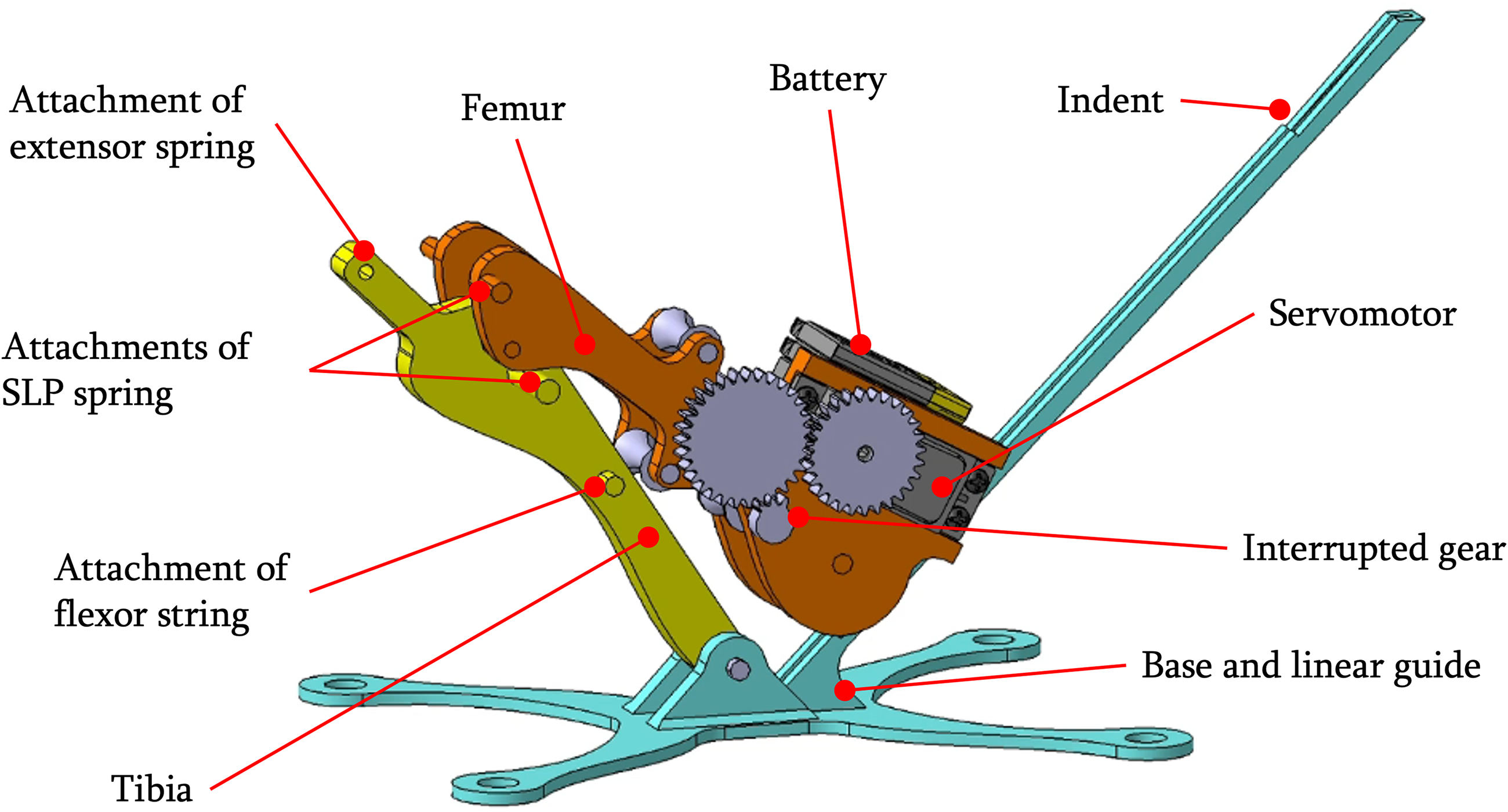
Locust-inspired robot designed by the first group.
The knee movement is actuated through a system of pulleys and wires. When the motor rotates counterclockwise, the neighboring gear and the connected pulley rotate clockwise, pulling the elastic wire connected to the tip of the tibia. At the same time, a third gear is located at the bottom, which is connected to a pulley that pulls an inextensible wire attached to a pin in the middle of the tibia. Figure 2 shows a sequence of different stages of the jumping motion of this locust-inspired robot. The jump begins when the knee is closed, forming an angle of 20°; as soon as the motor starts rotating, both the extensor and flexor are activated, simulating the co-contraction phase of the locust. Since the flexor is inextensible and has a bigger leverage than the extensor, in this initial phase, the knee remains flexed, and the extensor is stretched, storing elastic energy. The third gear is incomplete, having only teeth for a small portion of the rotation angle, so that the flexor is disengaged at a specific moment, allowing the extensor to release the elastic energy stored. Additionally, two springs act as the SLP, rendering the knee a bistable mechanism. To maintain the extended position during the jumping phase and avoid oscillations caused by the elastic force of the extensor spring, an indent is carved in the guide so that when the femur overcomes it, its return movement is blocked.
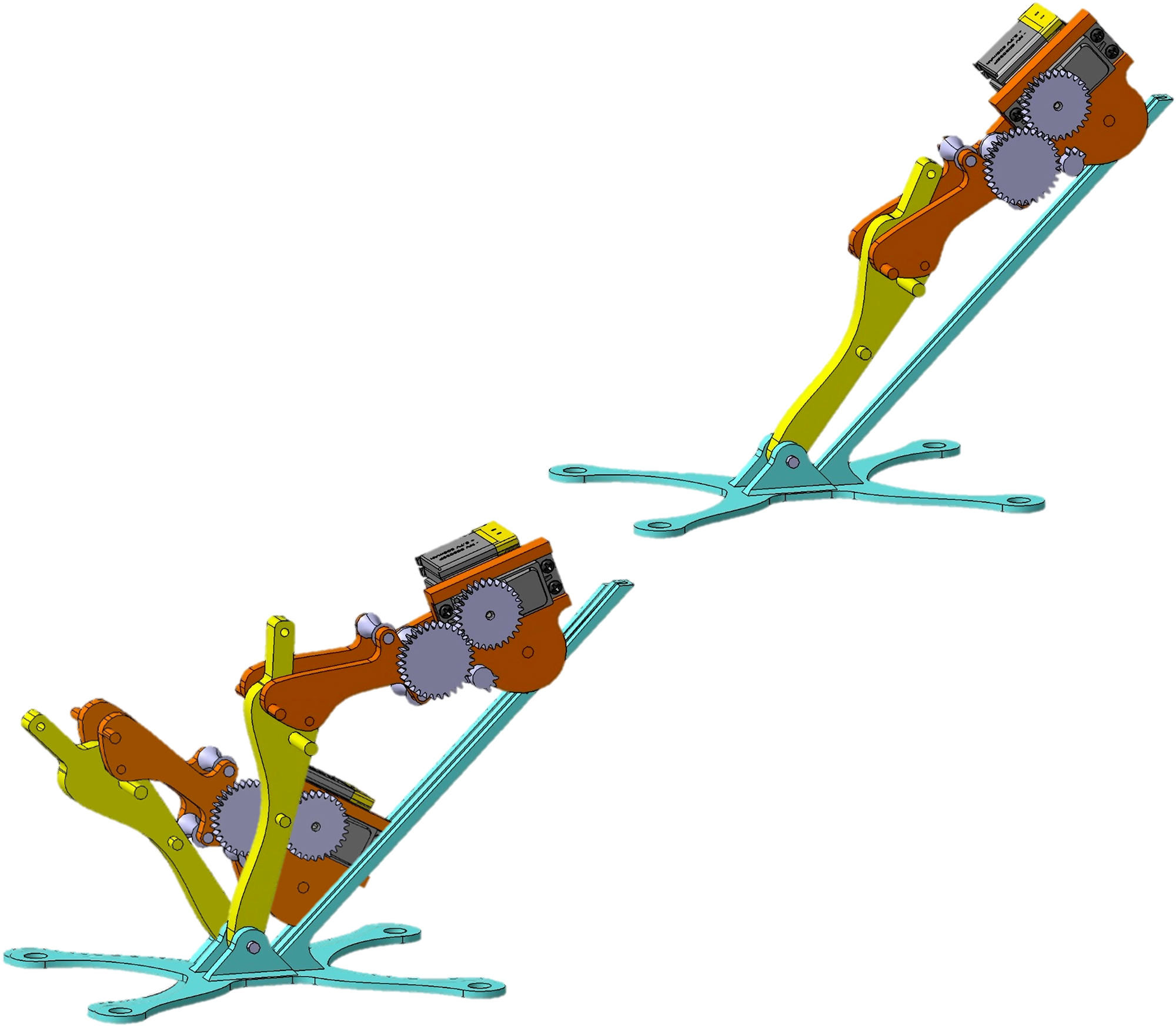
Locust-inspired robot designed by the first group at different stages of the jumping motion.
Robot designed by group 2
The second group used the same approach to design a locust-inspired robot, and the solution they proposed is shown in Figure 3.
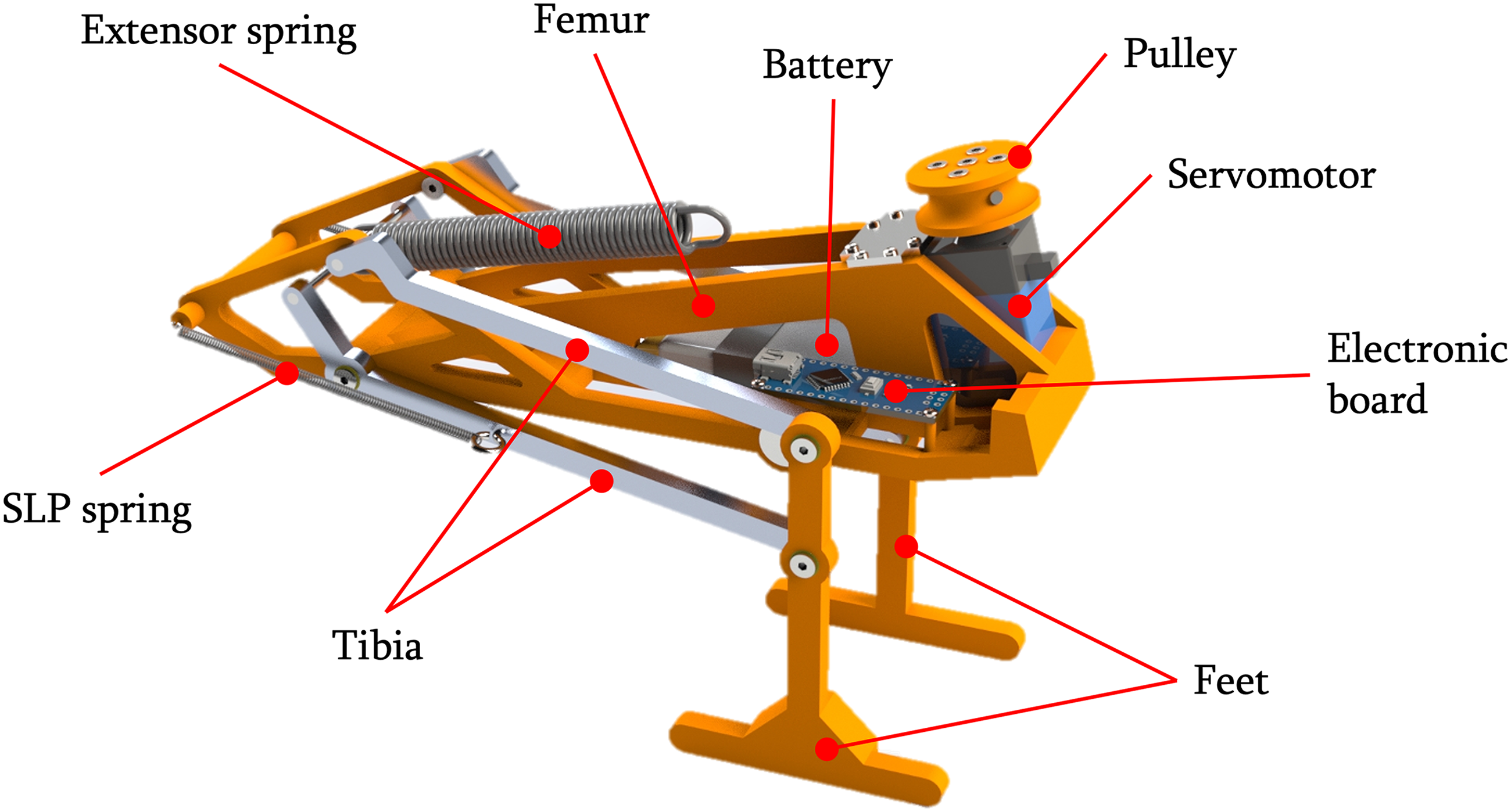
Locust-inspired robot designed by the second group of students.
The robot is composed of a foot that remains vertical with respect to the floor, an articulated parallelogram constituting the tibia, and another rigid link for the femur. Using an articulated parallelogram for the tibia allows the femur to be constrained to remain horizontal. In Figure 4, a sequence of different instants of the jumping motion of this robot is presented. At the beginning of the jump, the knee is completely folded, and the femur rests on the ground. Then, the motor is activated, pulling the spring at the top, which mimics the action of the extensor muscle. However, the knee does not immediately open because two magnets on the tibia and femur attract each other, generating a folding torque on the knee. Thus, motor rotation causes the extensor spring to elongate, and only when the cumulated elastic energy exceeds a desired threshold does the torque generated by the spring overcome that generated by the magnets, causing the knee to quickly unfold and release all the previously stored elastic energy. Similar to the robot previously described, in the knee, there is a spring mimicking the SLP, making the mechanism bistable and enhancing the elastic energy storage capacity of the robot.
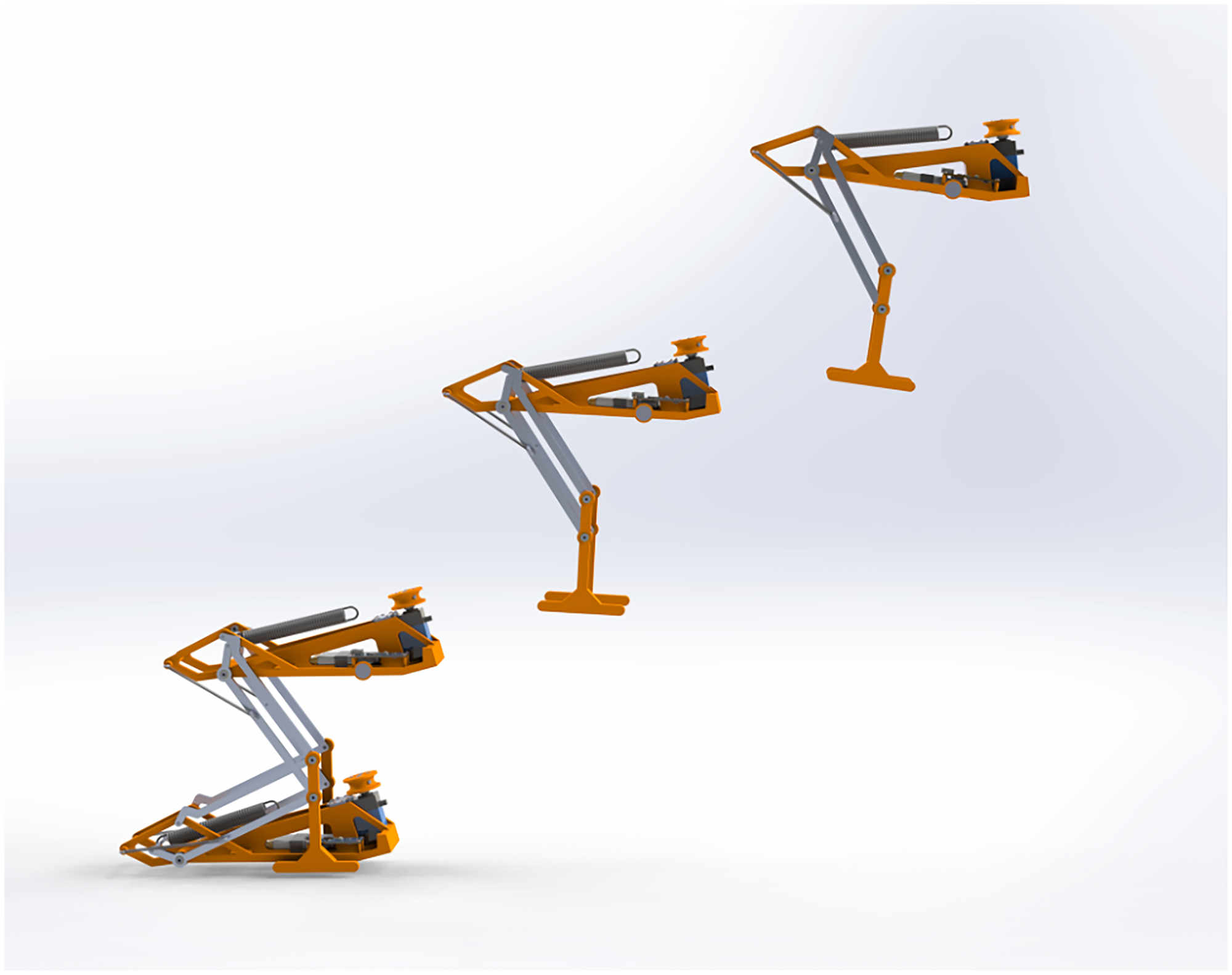
Locust-inspired robot designed by the second group at different stages of the jumping motion.
Salticidae-inspired robot
Spiders belonging to the family Salticidae can perform very quick and agile jumps to catch their prey.28,29 There are several species of Salticidae, and among them, it is possible to find some spiders that can jump with a take-off velocity of up to 1.22 m/s and achieve jumps of 0.15 m. 29
Spiders have four pairs of legs, but only the two pairs in the back (III and IV) are involved in the jump, whereas the two pairs in the front (I and II) are detached from the ground since the preliminary phase, and they are used only to balance the spider’s body.
28
The third pair of legs does not move during all the jump phases, remaining fully extended so that it can be schematized as a rigid link. Their position and inclination with respect to the ground and the spider’s body determine the direction and the elevation of the jump. Instead, the jump is powered by the IV pair of legs, composed of four rigid bodies called coxa, femur, tibia, and tarsus, and connected by rotational joints.
28
During the jump, the rear legs transition from a completely folded to a fully extended position, and all the joints participate in this movement. However, the joint between the femur and the tibia-patella undergoes the maximum rotation and generates the highest torque.
28
The main peculiarity of Salticidae’s legs is that they lack extensor muscles, and they are filled with hemolymph.
30
The joints in spiders’ legs have a bellow-like structure, and when the hemolymph pressure is increased by the contraction of the prosoma, a muscle in the spider’s central body, the bellows expand, extending the joints.
30
The absence of the extensor muscles allows the legs to maintain very low mass, considerably reducing the inertia during the jump and increasing the speed of leg extension. The jumping sequence of Salticidae can be summarized as follows.
Pivoting about leg pair III: at the beginning of leg extension, the III pair of legs is in contact with the ground, and the spider pivots about the contact point. The duration of this phase depends on the initial position of the spider's legs, and for some positions, leg pair III may detach immediately, and this phase is not present in the jump.
31
Unsupported jump: only the IV pair of legs is in contact with the ground, and the spider pivots about that point.
31
For the purpose of this course, it was possible to significantly simplify the animal’s structure because the robot object of this activity should only achieve straight jumping, mimicking the energy storage and release mechanism of the spider. Therefore, the robot does not need leg pairs I and II because they are not involved in the jump. Additionally, a single actuation mechanism can be used for the left and right legs, as it is not necessary to perform side jumps or take off with a roll angle. Moreover, since leg pair III remains extended for the whole jump, it is possible to replicate it using a rigid link. Conversely, the IV pair of legs needs to flex and extend to carry out a jump, but it is not necessary to have four rigid bodies and three joints, since there is no need to start the jump in several different configurations, so the rear legs can be composed of two links only connected by a rotational joint. Finally, since the legs are extremely thin, it is possible to consider them massless and model the central body of the spider as a concentrated mass.
This analysis of the spider’s jumping strategy allowed students to identify the features a robot inspired by Salticidae should have to replicate its jumping performance.
At the beginning of the jump, the mechanism should have two ground contact points about which it can pivot. Thus, this means that the robot should have two pairs of legs. The front legs can be rigid and connected with a rotational joint to the central body. The rear legs should be composed of at least two links connected by a rotational joint and connected to the central body by a rotational joint. The flexion of the rear legs should be actuated by pulling a string that mimics the flexor muscle. The extension of the rear legs should be actuated by the expansion of a chamber located in the joint, and the pressure increase of some fluid should cause this volume increase. The actuators that pressurize this fluid should be located in the robot’s central body.
The students were provided with some examples of robots and mechanisms inspired by the Salticidae present in the literature, such as the robot developed by Faraji et al., which uses a torsional spring to store energy, the robot is loaded manually, and the fishing line that keeps the legs folded is cut by the user as well.
31
The proposed actuation mechanisms include the telescopic folding mechanism, as realized by Sprowitz et al.,
32
and the origami folding actuator developed by Gottler et al.
30
The robot designed by this group of students is shown in Figure 5. It adopts the same kinematic scheme as Faraji’s robot, 31 where the front legs are rigid and connected directly through a hinge to the first link of the rear legs, which can be improperly referred to as the femur, as it hosts all the electronics and actuators. Finally, two other links constitute the robot’s tibia-patella, connected by hinges to the femur. The joint between the femur and the tibia is the only one actuated and responsible for the jumping locomotion, whereas the one in the front is passive. The two tibias can be actuated independently from each other, but in all the analyses performed in this project, they are always actuated together to achieve a straight jump. The rear legs’ joint is characterized by a polyethylene balloon, which is not visible in Figure 5 since it is surrounded by a rigid telescopic shield, which prevents it from breaking. The flexor muscle of each leg is reproduced with a string pulled by a servomotor located in the femur. Instead, for leg extension, the robot relies on the expansion of an elastic chamber present in the leg joint. A sequence of the different phases of the jumping motion of this robot is presented in Figure 6. At the beginning of the jump, the robot has its rear leg flexed; then, while keeping the flexor string pulled, a pump mounted on the femur pushes air inside the chamber in the leg joint, increasing its pressure but not its volume since the leg is still kept flexed by the pulled string. When the flexor is released, the chamber suddenly expands, extending the leg and starting the jump. All the actuators are controlled by an Arduino Nano board mounted on the femur.
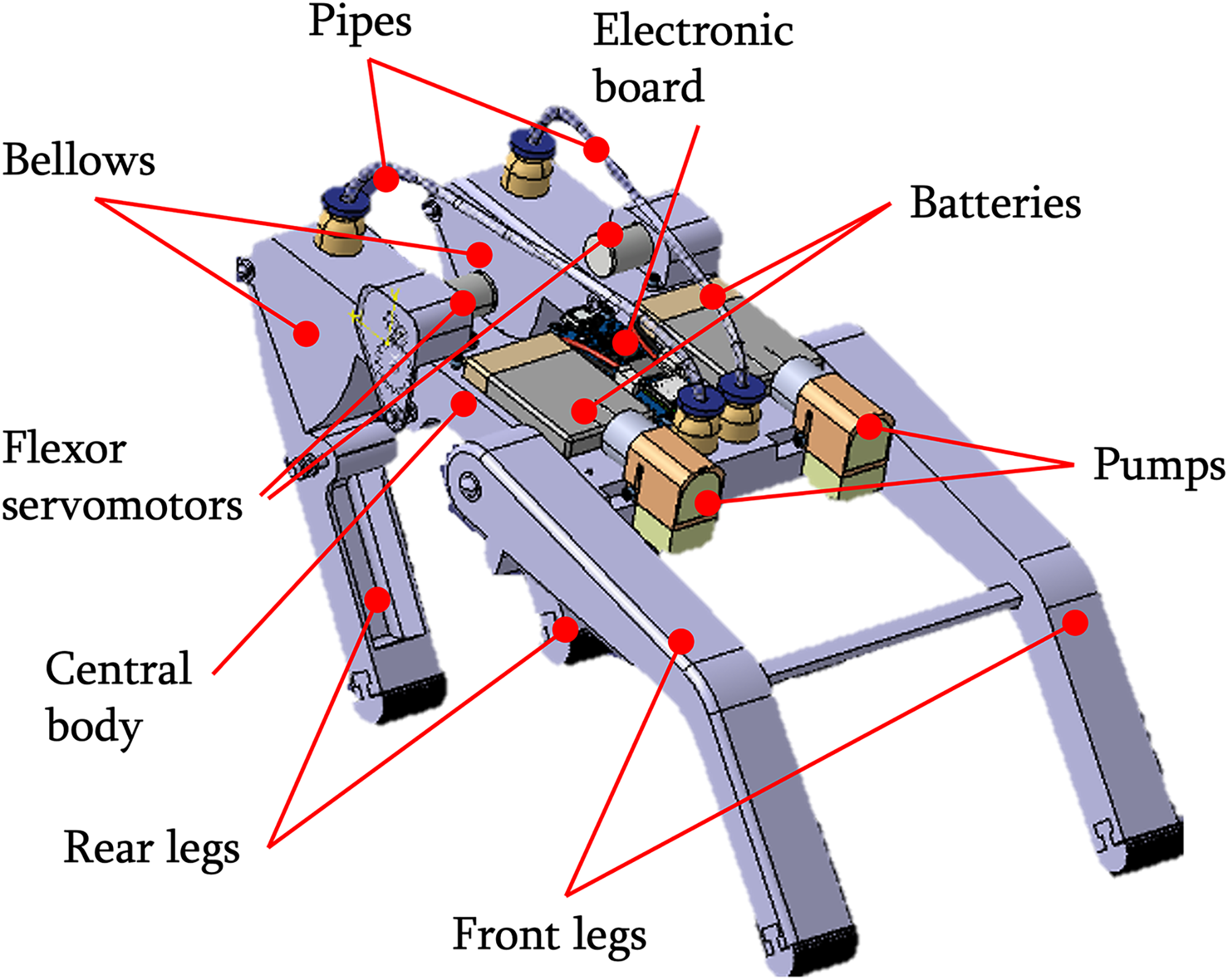
Salticidae-inspired robot.
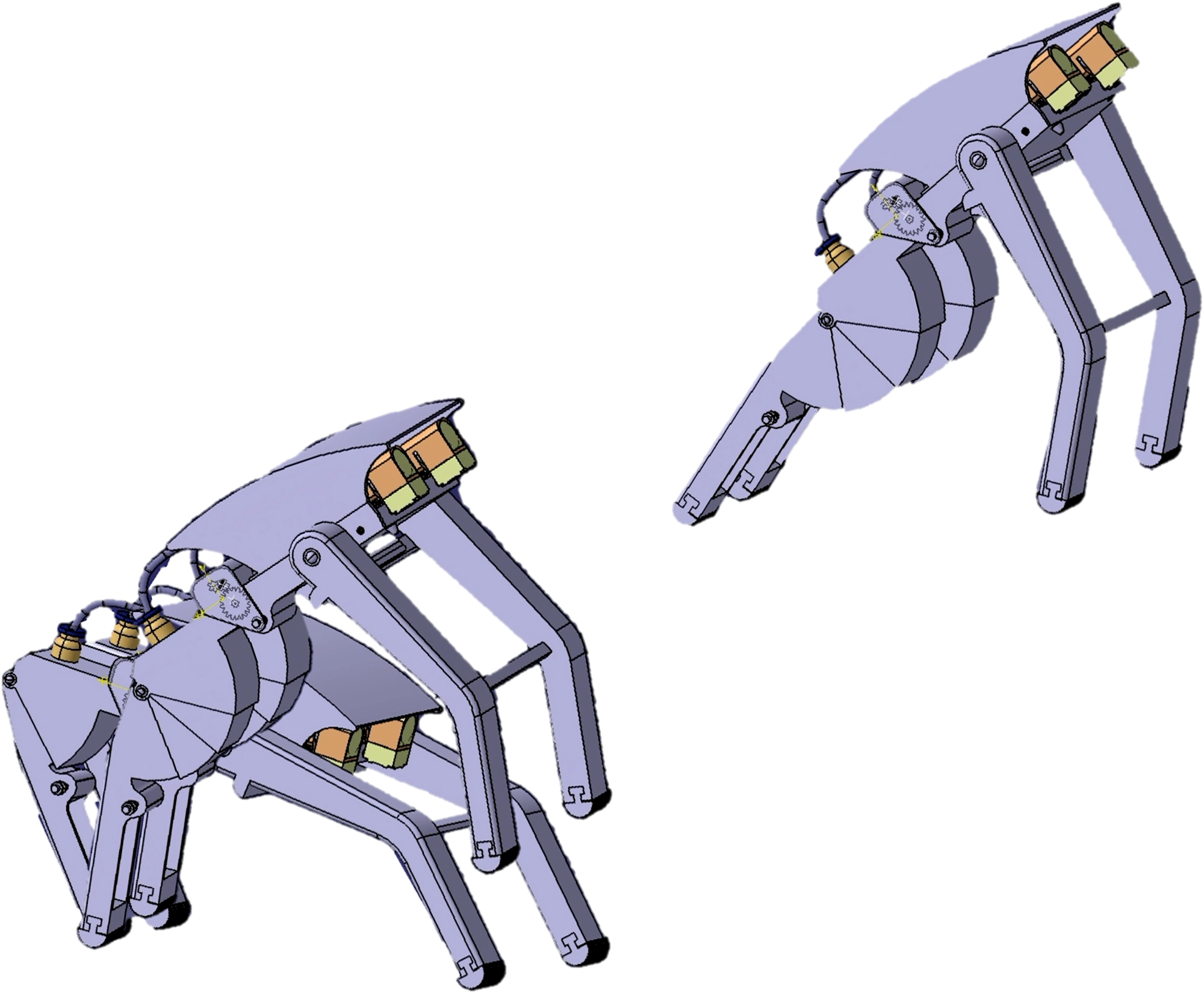
Salticidae-inspired robot at different stages of the jumping motion.
Initially, both legs are in contact with the ground and can be considered pinned, so the robot is a four-bar linkage with 1 DOF. Then, when the front legs detach from the ground, it becomes a 3-DOF system because one pin constraint is removed. The students employed the proposed approach to analyze the kinematics and dynamics of the designed mechanism and optimize the jumping performance, incorporating a potential well to prevent link interpenetration.
Then, the students computed the required pressure to get the equivalent stiffness using a simplified air spring model.
33
The assumptions of this model are:
the air is an ideal gas: the transformation is adiabatic:
According to this model, the stiffness of a torsional air spring can be expressed as follows:
33
where
where
Evaluation of the students’ work
All the projects presented received a very positive evaluation since the students could find effective solutions to mimic an animal’s jumping strategy, understand the physical principle, and replicate it, simplifying the kinematics. Moreover, during this course, students had the opportunity to apply competencies developed in previous classes, such as CAD design, dynamic analysis, and FEM analysis, to evaluate the performance of the designed robot and ensure the feasibility of their design, meeting all the expected learning outcomes of this course.
In particular, all groups demonstrated that they could integrate the core elements required in the course design: biological inspiration, kinematic and dynamic analysis, functional adaptation, and CAD modeling. Table 1 summarizes the extent to which each project incorporated these components, thereby providing direct evidence of how students applied the knowledge gained during the lectures. The exam consisted of a thirty-minute oral presentation per group, in which they described how they studied the biomechanics of the animal, explained their design choices for their robots, and demonstrated how they modeled their kinematics and dynamics. The presentation is followed by questions from the teachers and the audience regarding the work itself and other related topics covered during theoretical lessons. The audience demonstrated an excellent level of engagement, asking questions and participating in the discussion. In Table 1, the evaluation criteria are presented, highlighting which aspects were considered for the final evaluation and how each group performed in each aspect. This table not only summarizes the final evaluations but also highlights the inclusion of the required project components, thus showing how each group incorporated the key elements of the course.
Even though they all received high marks, the second locust-inspired robot was the only one to receive the maximum possible evaluation because these students demonstrated that they understood the physical principle of the locust’s jumping strategy and adapted it, designing an original kinematic diagram. Furthermore, they optimized the jump trajectory using a dynamic analysis that considered the interaction between links while the robot was in the air, and they presented a very detailed CAD model of the robot, demonstrating that the robot is feasible with off-the-shelf components and showing that they considered all the issues related to the robot’s assembly.
The spider robot received a slightly lower evaluation since their solution was less original, with kinematics almost equal to Faraji’s robot, 31 and because the CAD model was less detailed than the locust-inspired robot. Nevertheless, it was also considered that the effort to find a feasible solution with off-the-shelf components for a pneumatic actuation in such a small robot was very challenging and that the dynamic analysis of this robot was significantly more complex since it was characterized by more DOFs.
Evaluation table.
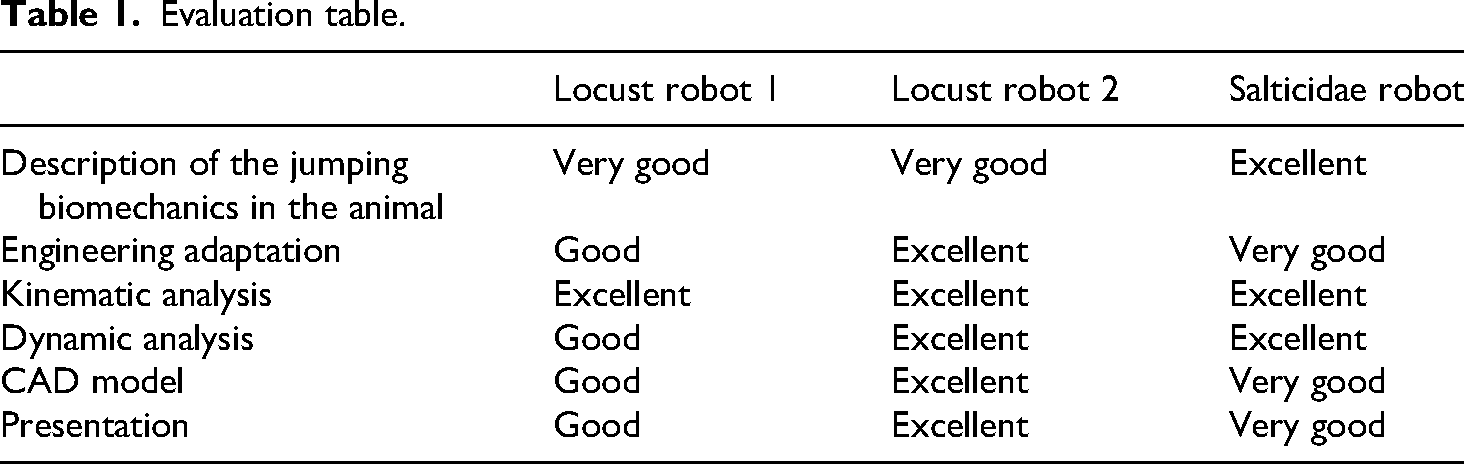
Finally, the first locust-inspired robot received a slightly lower mark than the other two groups because their dynamic analysis and CAD model were less detailed, despite finding an original solution to mimic the locust’s jumping strategy.
Students’ feedback
At the end of the course, the students were asked to answer some questions anonymously to evaluate the course. The questions are listed below, and the aggregated answers are shown in Figure 7. The questionnaire included other questions regarding the classrooms or the timetable that are not shown in Figure 7 because they are not relevant to this study.
Are you interested in the course subject regardless of how it is carried out? Were your prerequisites good enough for an adequate understanding of the subject? Is the educational material (either recommended or supplied) adequate? Is the lecturer able to motivate my interest in the subject? Does the lecturer clearly explain the subject? Do lectures enhance the learning process? Are lecturers available for clarifications and explanations? Do supplementary activities (which, for this course, consisted of project revisions with the teaching assistant) match with classes? Is attending supplementary activities beneficial to the learning process? Do trainers/tutors clearly and effectively explain the subject? Are you satisfied with the course implementation as a whole?
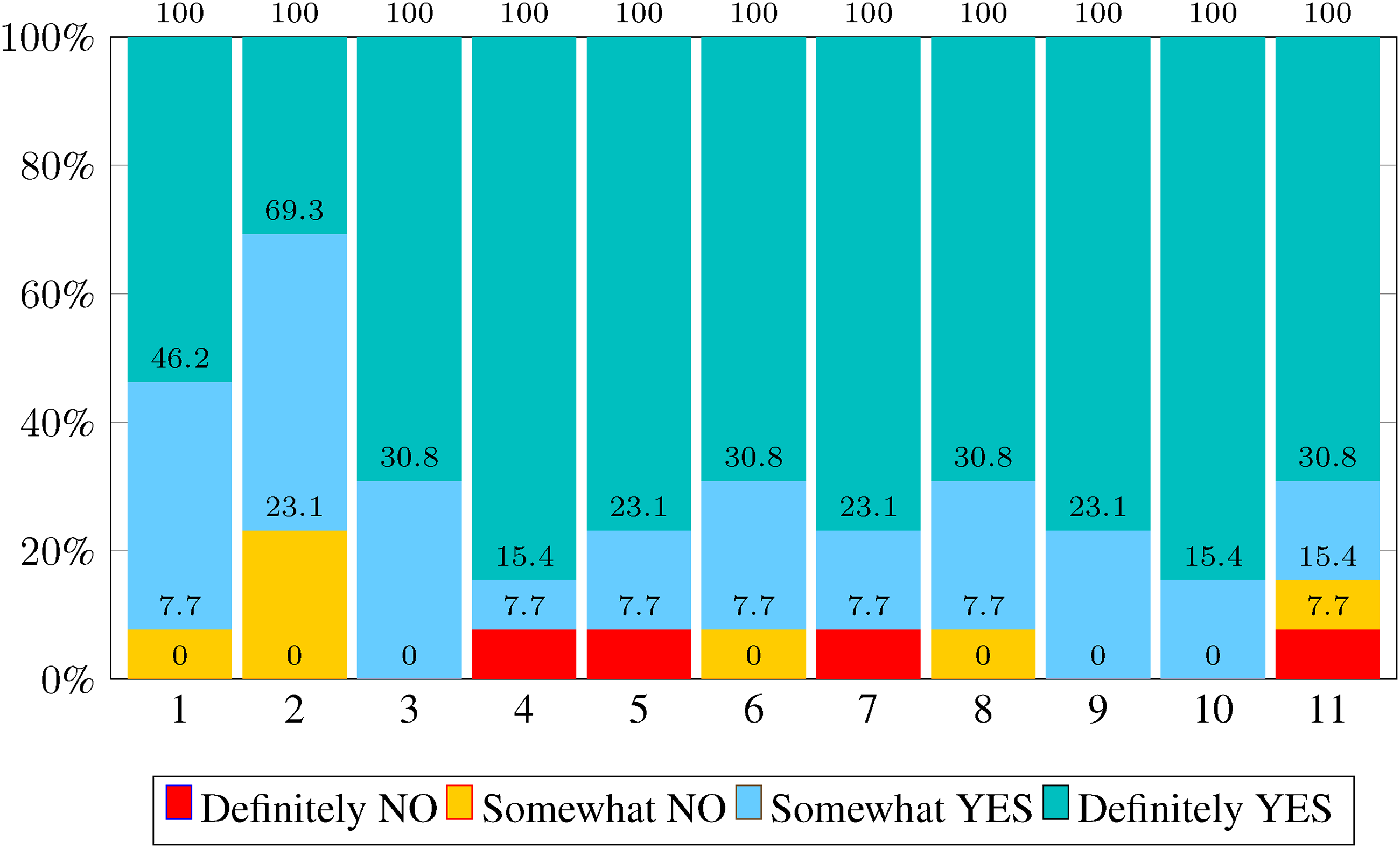
Distribution of answers to the anonymous questionnaire.
From the questionnaire, it emerged that the students chose this course because they were interested in the topics, and that they were definitely satisfied with how this course was carried out. They declared that lectures and project reviews were useful to enhance the learning process and that the way lessons and reviews were organized was effective. Additionally, students were free to leave written comments, and they expressed their satisfaction with the balance of lectures and project activities. Although they were all able to complete the project in five weeks, they felt this time was too short, and some of them would have preferred to start the project at the beginning of the semester and carry it out in parallel with the theoretical lessons. In accordance with students’ needs, starting in the 2024/2025 academic year, the project activity will begin in the second week of the course. Another improvement that will be implemented is the offer of a biomechanics course taught by a biologist to compensate for the lack of knowledge in this subject among mechanical engineering students. The request for such a course is evident in the answers to question 2 and from the free comments. This variation of the course offer will take effect from academic year 2025/2026, and the biomechanics course will not be a mandatory prerequisite, nor will it alter the overall degree requirements; however, it will be recommended. In general, the students’ satisfaction was very high, and the only issues that emerged were related to project scheduling and some difficulties in understanding biological insights, which could have been better appreciated if a basic biology module had been included in the study plan. In the following academic year, both aspects were addressed.
Conclusions
This teaching experience demonstrated the educational value of incorporating project-based learning into a bioinspired robotics course. All student groups successfully completed the assigned tasks, demonstrating their ability to analyze, model, and replicate the locomotion strategies of animals in engineered systems. The projects involved designing jumping robots inspired by the locust and the spider, each characterized by an original kinematic diagram and a comprehensive dynamic analysis of the jump, divided into pre-take-off and jumping phases. Additionally, students performed FEM static analyses on critical components, verifying the feasibility of their designs using a combination of commercially available components and 3D-printed parts. These activities deepened the students’ understanding of the dynamics underlying animal locomotion while enhancing their ability to apply engineering principles to solve complex, interdisciplinary problems. While not necessarily surpassing existing robotic systems in performance, the proposed designs effectively demonstrated students’ ability to translate biological principles into engineering applications. This course will be followed by a complementary laboratory course in the next academic year, where students will build the robots they designed. This hands-on course will provide an opportunity to experimentally validate their designs, strengthening the link between theoretical modeling and real-world implementation.
Supplemental Material
sj-txt-1-ijj-10.1177_03064190251396356 - Supplemental material for From animals to jumping robots: A teaching experience on bioinspired robotics
Supplemental material, sj-txt-1-ijj-10.1177_03064190251396356 for From animals to jumping robots: A teaching experience on bioinspired robotics by Giovanni Bianchi and Simone Cinquemani in International Journal of Mechanical Engineering Education
Footnotes
Acknowledgements
We sincerely thank the students who participated in this course for their passion, their effort to carry out the assigned project, and the valuable comments that helped us improve the course in the following years.
Locust-inspired robot 1: Matteo Altissimo, Alessandro Mariani, Matteo Vivan, Xu Weiwei;
Locust-inspired robot 2: Morgan Addison Usher, Alfredo Del Priore, Dongrun He, Tom Tidhar, Alexander Uleman;
Salticidae-inspired robot: Andrea Bocelli, Enrico Brenna, Elia Leonetti, Andrea Motta.

Funding
The authors received no financial support for the research, authorship, and/or publication of this article.
Declaration of conflicting interests
The authors declared no potential conflicts of interest with respect to the research, authorship, and/or publication of this article.
Supplemental Material
Supplemental material for this article is available online.
References
Supplementary Material
Please find the following supplemental material available below.
For Open Access articles published under a Creative Commons License, all supplemental material carries the same license as the article it is associated with.
For non-Open Access articles published, all supplemental material carries a non-exclusive license, and permission requests for re-use of supplemental material or any part of supplemental material shall be sent directly to the copyright owner as specified in the copyright notice associated with the article.
