






Abstract
The “Junior College to Undergraduate” (JCU) articulation pathway is a crucial element of China's higher education system. However, students in this pathway often encounter challenges such as feelings of inferiority, difficulties in course articulation, and competency gaps, all of which impede their academic progress. This paper, inspired by the first author's journey from junior college to postdoctoral study, is rooted in educational psychology and articulation theory. It introduces the concept of “full sequence education,” a vertically integrated talent development system encompassing higher vocational college, Bachelor's, Master's, and Doctoral education within a lifelong learning framework. Unlike lifelong education, which offers a broader perspective, and curriculum articulation, which focuses narrowly on content alignment, this concept extends explicitly to the doctoral level and integrates psychological empowerment, research literacy, academic mentoring, and career planning. The paper systematically examines the causes and interconnections of the challenges faced by JCU students and suggests reform pathways in five key areas: curriculum-based ideological education, curriculum system restructuring, teaching model innovation, research literacy cultivation, and tiered practical teaching. Initial implementation at a provincial key university indicated preliminary links between these reforms and increased academic confidence, improved success rates in postgraduate entrance exams, and enhanced employment quality. However, these findings should be viewed as preliminary associations rather than causal effects due to the pre-post design lacking a control group.
Keywords
Introduction
The education system for transitioning from junior college to undergraduate (JCU) involves selecting JCU students through examinations to continue their studies at regular undergraduate colleges and universities for two years, ultimately earning a bachelor's degree. According to the “Statistical Bulletin on the Development of National Education in 2024” released by the Ministry of Education of China, 1 there were 4.8997 million regular undergraduate students in China in 2024. Of these, 918,100 students enrolled in undergraduate programs after starting at junior colleges, making up 18.74% of the total undergraduate enrollment. This represents an increase of over 400,000 students compared to 517,900 in 2020. With this rapid growth, enhancing the quality of undergraduate education for these students through tailored bridging support is a key focus of China's higher education reform.
However, students in JCU programs often face numerous challenges during their undergraduate studies. These include low self-esteem about their academic qualifications, difficulty adapting learning methods, uneven resource distribution, teacher shortages, and misaligned management capabilities. Nationwide survey data show that over 60% of JCU students experience self-doubt and classroom silence due to “identity anxiety”.2,3 Furthermore, a 2025 survey of 1,333 graduates revealed that 64.9% encountered hiring discrimination because of their junior college background. 1 ,4, 5 These issues are not just anecdotal; they represent systemic barriers to educational equity and effective talent utilization.
This paper addresses these challenges by introducing the concept of “full sequence education,” which emphasizes embedding education within the social context of students’ lifelong development and creating an integrated training system that spans “vocational college-undergraduate-doctoral” levels. Building on this concept, the paper systematically explores pathways for teaching reform, including the integration of ideological and political education into courses, restructuring curriculum systems, developing innovative teaching models, fostering research literacy, and implementing tiered practical teaching. In the context of teaching mechanical engineering to JCU students, a three-tiered reform practice was implemented, focusing on academic mentorship systems, psychological empowerment, and enhanced career planning guidance, followed by reflections on the reform outcomes. The overall research approach is depicted in Figure 1. Ultimately, these teaching reforms enhanced students’ academic confidence and development potential, addressed structural challenges in JCU education, and provided theoretical support and practical references for developing a vocational education system in China that is integrated with general education.
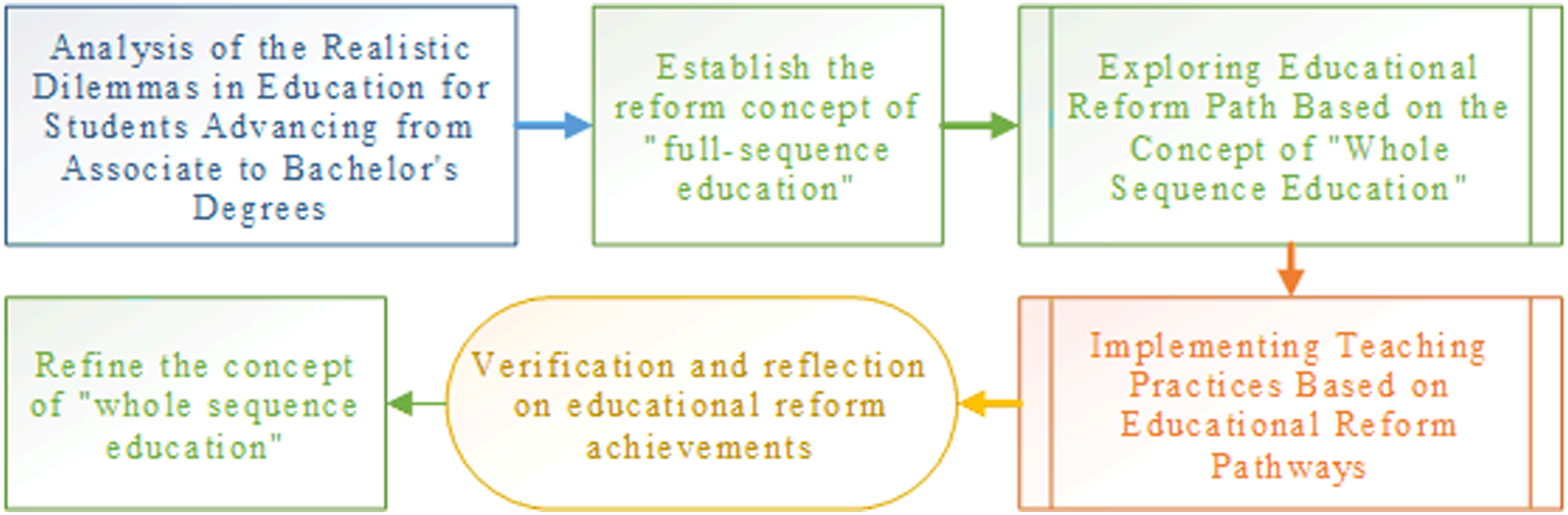
Overall research approach.
The practical predicament of education for students from JCU
After experience the entire trajectory of Chinese higher education (from junior college through doctoral degrees and postdoctoral), and leveraging teaching experience in mechanical engineering at provincial key undergraduate universities, the author conducted a comparative analysis of the growth paths of JCU students and four-year undergraduate students. This analysis is summarized in Figure 2, highlighting the “realistic challenges” of JCU education.
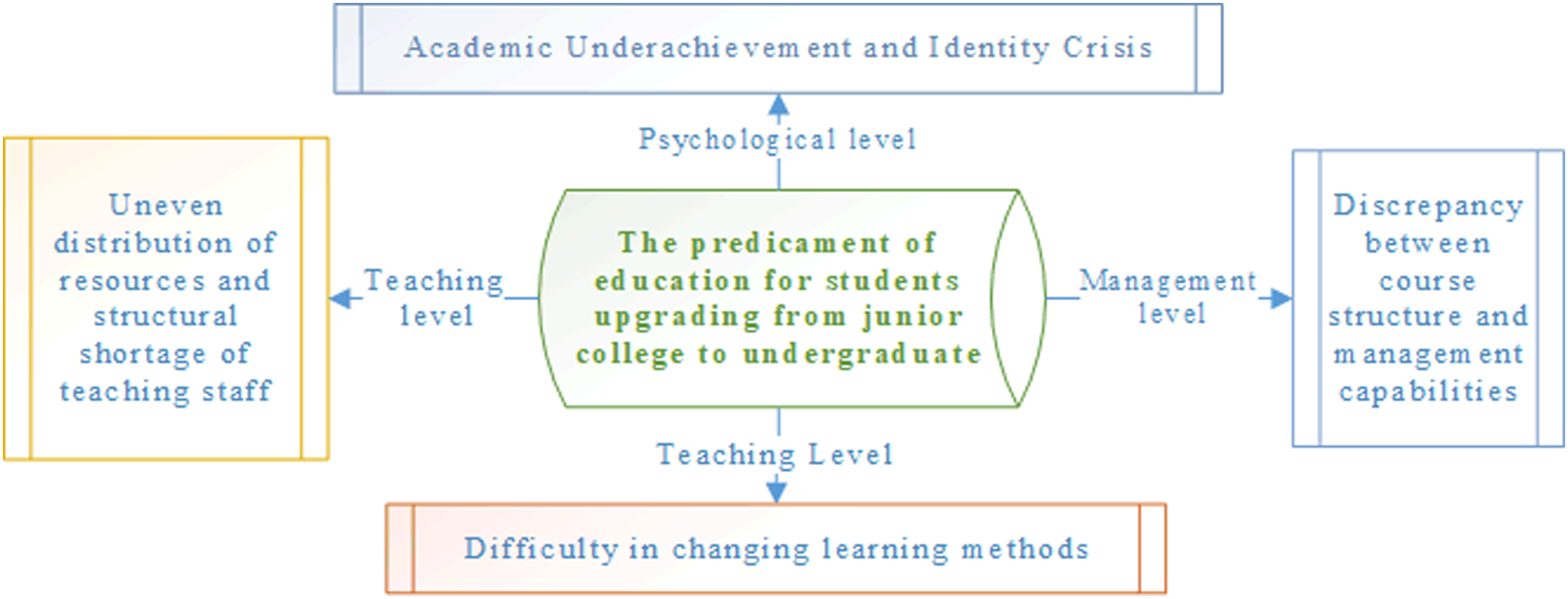
The reality of challenges in educating JCU students.
Psychological dimension: inferiority complex and identity crisis
JCU students often face a stark contrast between their junior college background, which focuses on hands-on skills and imitation-based learning, and the theoretical depth and independent learning required in undergraduate education. The junior college diploma, or “first degree,” frequently carries a social stigma, contributing to an inferiority complex that poses a significant psychological burden and is often overlooked as an obstacle to academic success. 6 Individually, this academic inferiority manifests as self-doubt, classroom withdrawal, and a lack of confidence in pursuing further education, creating a “glass ceiling” for personal development. Informal interviews with 12 undergraduate instructors reveal that JCU students are perceived as “progressive, stable, and tough,” excelling in practical skills and emotional management. However, their weak theoretical foundation and inferiority complex often hinder academic progress. Baxter and Gray 7 noted that self-doubt arising from “identity anxiety” and “academic inferiority” significantly impacts their learning and growth. Socially, academic inferiority is linked to employment discrimination against those with a “vocational background.” Gao 8 found that over 40% of companies impose an implicit threshold regarding the “first degree” during resume screenings, highlighting the need for societal attention to this employment equity issue.
Academic inferiority can significantly hinder students’ development, causing reluctance to engage with learning resources and leading to missed educational opportunities, which ultimately creates a vicious cycle. For society, the annual loss of nearly one million JCU students due to academic inferiority signifies a substantial waste of national educational and human resources, diverging from China's initial goal of establishing a “cloverleaf interchange” between modern vocational education and general higher education. Consequently, reforming JCU education and bolstering psychological empowerment are essential.
At the managerial level: Disconnection of curricula and mismatch of managerial competencies
Difficulty in course articulation is a prevalent issue in engineering education. “Junior college education” pertains to junior college-level training that emphasizes hands-on skills and imitation-based learning, while “undergraduate education” demands theoretical depth, systematic thinking, and independent learning. Junior college engineering programs typically prioritize practical skills to develop technical talents, whereas undergraduate programs focus on fostering theoretical depth and systematic thinking to nurture academic research talents. This disparity in educational objectives often results in JCU students encountering the dual challenge of lagging in theoretical understanding and losing their skills advantage.
Taking the course of “Fundamentals of Mechanical Design” as an example. At the junior college level, the focus is on conventional design methods and hands-on training, emphasizing immediate application. In contrast, undergraduate teaching demands a deep understanding of design principles and theoretical derivations, with a much greater emphasis on theory. This abrupt transition often leaves JCU students struggling to keep up with the curriculum, resulting in a loss of confidence and motivation. Furthermore, most undergraduate institutions simply extend their regular programs to JCU classes, compensating for missing compulsory courses without tailoring the curriculum to JCU students’ specific knowledge base and learning characteristics. Li 9 aptly described this situation as “simple accumulation” rather than “organic integration,” identifying it as a key barrier to improving the quality of JCU education. This “simple accumulation” reveals a cognitive bias and misalignment in management capabilities at undergraduate colleges, treating JCU students as if they are ordinary undergraduates who only need remedial classes, without recognizing their unique educational needs. This approach ultimately leads to a transitional dilemma where the “form” is connected, but the “substance” is not.
At the individual level: Difficulties in changing learning methods and lack of competence
When students transition from JCU programs, they must quickly shift their learning approach from “passive acceptance” to “active exploration.” 10 Junior college education primarily relies on “teacher demonstration + student imitation,” whereas undergraduate study emphasizes “teacher guidance + student self-study.” This shift presents a significant challenge for many JCU students. According to Pintrich, 11 transforming learning styles necessitates concurrent enhancement of cognitive structures and abilities, a daunting task for students needing to adapt to undergraduate teaching in a short timeframe. The challenges JCU students face include not only an increase in knowledge content but also the need to transition from imitation to autonomous learning, a change they often struggle to achieve independently. Without systematic guidance from teachers, most JCU students will find it exceedingly difficult to make this transition smoothly, potentially leading to academic failure.
The disparity in individual learning capabilities and knowledge systems remains a pressing issue. A significant number of JCU students display notable deficiencies in literature retrieval and academic writing. Research by Wen 12 indicates that these students use databases over 30% less frequently and have a poorer grasp of advanced search techniques compared to typical undergraduates. This data underscores a fundamental contradiction: traditional undergraduate education often assumes students have foundational skills in academic paper retrieval and writing, yet vocational college graduates generally lack this awareness. Without systematic supplementary training, this competency gap will directly affect the quality of graduation projects and pose substantial obstacles to pursuing graduate studies. In mechanical engineering research projects, which require a balance of theoretical derivation and experimental validation, vocational college students may excel in experimental operations but struggle to elevate their findings to scientific research standards through theoretical analysis.
Teaching aspect: Uneven distribution of resources and shortage of teachers
While undergraduate universities typically assert that JCU students have equal access to teaching and research resources as regular undergraduates, in reality, practical training equipment, laboratories, and research projects are often prioritized for regular undergraduates. The mechanical discipline, being highly practical, relies heavily on experimental work for developing student competence; thus, resource shortages can directly undermine the quality of education. Under these constraints, regular undergraduates, who are more familiar to instructors, often receive preferential treatment, highlighting the implicit inequity JCU students face in resource allocation. This situation reflects a conflict between the values of “efficiency first” and “fairness first,” as well as a bias in existing evaluation systems toward “student resource quality.”
The quality of talent cultivation fundamentally depends on teachers’ qualifications. Currently, undergraduate colleges face a significant shortage of “through-type” teachers who understand both the academic characteristics of the junior college stage and the requirements of undergraduate training. This shortage has become a bottleneck in the high-level training of JCU students. According to Song, 13 building a high-level teaching team requires not only advanced educational qualifications and titles but also teaching cognitive abilities that align with the needs of the students. JCU students typically exhibit a “practice first, theory lagging behind” characteristic, necessitating that teachers possess bidirectional cognitive abilities. They must deeply understand vocational training modes and curriculum systems while also grasping the academic norms and theoretical depth of undergraduate education. However, most current undergraduate faculty members come from academic PhD backgrounds and often lack a systematic understanding of vocational education. Zhang 14 emphasized that faculty development hinges on understanding the “potential” of students, which requires teachers to deeply comprehend the educational objectives. When teachers are unfamiliar with the cognitive starting points of JCU students and adhere to traditional undergraduate teaching models, teaching practices become “unreliable at both ends.” The root of this issue is that some undergraduate colleges do not prioritize “providing quality education for JCU students” as a core function and fail to recruit “dual-teacher” educators or doctoral faculty with JCU study experience. 15 To overcome this structural bottleneck, faculty development must address the unique needs of JCU students, enabling talent cultivation to progress from mere formal articulation to substantive integration.
Interconnectedness of dilemmas
The four dimensions of challenges mentioned above are interconnected and mutually reinforcing, creating a vicious cycle. An inferiority complex causes students to shy away from seeking learning resources, resulting in missed educational opportunities. Course gaps and ability misalignments exacerbate academic frustration, deepening the sense of inferiority. The lack of teachers equipped to address the specific needs of JCU students further exacerbates the uneven distribution of resources. This resource disparity, coupled with mismatched management capabilities, entrenches the external environmental challenges. Breaking this cycle requires coordinated efforts across multiple dimensions.
Proposing the concept of “full sequence education” and exploring pathways for educational reform
In response to the identified challenges in teaching and learning for JCU students, the concept of “full sequence education” has been proposed as a reform strategy. This approach seeks to dismantle institutional barriers between vocational and general higher education, focusing on lifelong learner development. It envisions a vertical integration of “higher vocational education – undergraduate education – master's degree – doctoral degree,” alongside a horizontal integration of “curriculum – research – practice,” and the fusion of “identity, ability development, and career growth.” The goal is to adopt lifelong education theory as a guiding principle, use the zone of proximal development as a teaching foundation, and apply growth mindset theory for psychological support. Ultimately, this concept aims to transform JCU education from merely “filling gaps in academic qualifications” to achieving a “leap in competence.”
To clarify the theoretical contribution of “full sequence education,” it is essential to differentiate it from several existing concepts. Lifelong education is a broad framework encompassing all forms of learning throughout one's life, whereas “full sequence education” specifically focuses on the vertical integration of three fixed stages within China's formal education system: higher vocational college, undergraduate (bachelor's) program, and doctoral education. Curriculum articulation is a narrower concept primarily concerned with aligning learning outcomes and content between two adjacent levels, addressing the “form” of connection. In contrast, “full sequence education” extends beyond curriculum alignment to include psychological empowerment, research literacy cultivation, academic mentoring, and career planning. The integrated cultivation, or “through-train” model, often links vocational and academic tracks but typically ends at the undergraduate level. In contrast, “full sequence education” extends integration to the doctoral level, creating a complete pipeline from vocational education to the highest academic degree. Thus, the theoretical contribution of “full sequence education” lies in 2 aspects: expanded temporal scope (from a two-year bridging period to a perspective including doctoral education), and multi-dimensional integration (combining curriculum, psychology, research. Huang, 16 the former director of the Department of Vocational Education of the Ministry of Education of China, emphasized that building a “bridge” integrating horizontally and vertically is crucial for unleashing the potential of technical and skilled talents and meeting the challenges of industrial upgrading. This assertion captures the core essence of the “full sequence education” concept: to create an organic articulation system between higher vocational education and general undergraduate education, and to open the cultivation channel from vocational college to doctoral degree. Implementing “full sequence education” will fill the gap between college and undergraduate education, providing upward mobility for late-starting vocational students, allowing JCU students to enter doctoral study through vocational-to-bachelor, master, and doctor examination pathways.
This study examines reform pathways in response to the “practical challenges in JCU education” and the “full sequence education concept,” focusing on five dimensions: curriculum-based ideological education, curriculum system design, innovative teaching models, research cultivation, and practical teaching methods, as shown in Figure 3.
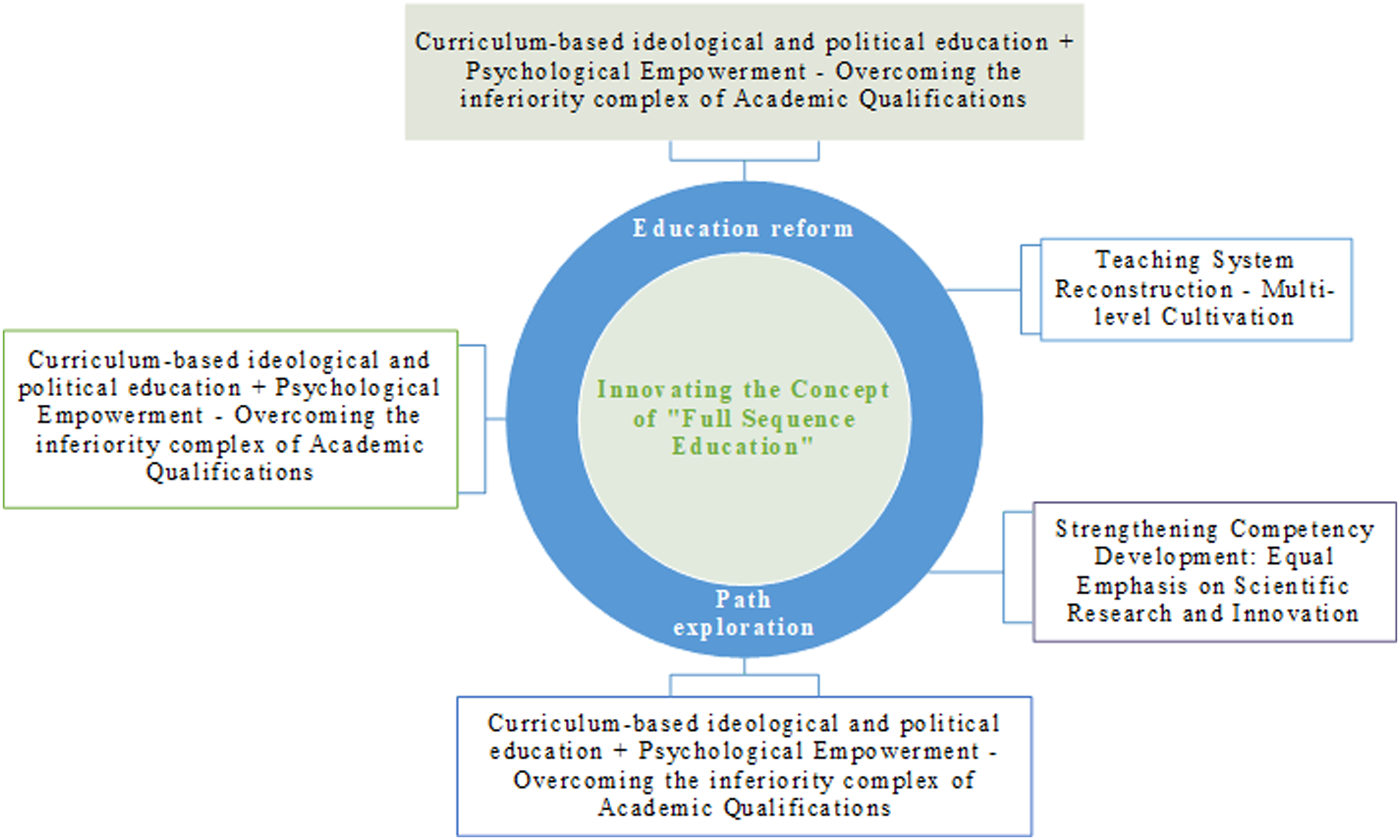
Teaching reform path.
Curriculum civics + psychological empowerment – breaking the inferiority Complex of academic qualifications
Addressing the academic inferiority complex among JCU students is crucial not only for their psychological development but also for enhancing the quality of talent cultivation and advancing educational equity. JCU students often demonstrate strong practical skills, clear learning objectives, and determination—key elements for academic success. Yeager and Dweck 17 found that “growth mindset” interventions can lead students to believe that abilities can be developed through effort, significantly boosting their confidence and resilience, particularly when encountering setbacks. This suggests that psychological counseling and ideological education should go beyond simple encouragement and systematically integrate “growth mindset” concepts into teaching practices. By introducing the concept of neural plasticity, students can understand “intellectual plasticity” from a biological standpoint, fundamentally challenging the belief that “intelligence is predestined” and turning the psychological hurdle of “first degree inferiority” into an opportunity for growth.
In teaching practice, the author emphasizes to students that “vocational education is not an endpoint but a springboard,” using examples of successful transitions to motivate them. By employing this “narrative identity” strategy alongside the “role model effect” from psychology, a clear and achievable path to success is illustrated, which reduces students’ uncertainty about the future and boosts their academic confidence. A post-reform survey reveals that over 83% of students reported more positive learning attitudes and increased confidence through guidance from teachers with similar educational backgrounds. Consequently, undergraduate colleges should arrange for 1–2 teachers with JCU experience to lecture or regularly invite successful alumni to speak, establishing “role models” that foster emotional connection among students.
Curriculum reconstruction-gradient modularized teaching
To address the course articulation issue, undergraduate colleges should implement a three-phase curriculum system—“basic-intensive-sprint”—to ensure a seamless transition in knowledge structure. Mechanical disciplines should incorporate a modular curriculum design, creating targeted training programs tailored to various student categories. Specifically, a bridge course titled “Introduction to Mechanical Engineering and Academic Fundamentals” can be introduced at the start of enrollment. Instructors with JCU experience can assist students in organizing a knowledge list of “mastered – to be supplemented” and in identifying learning objectives.
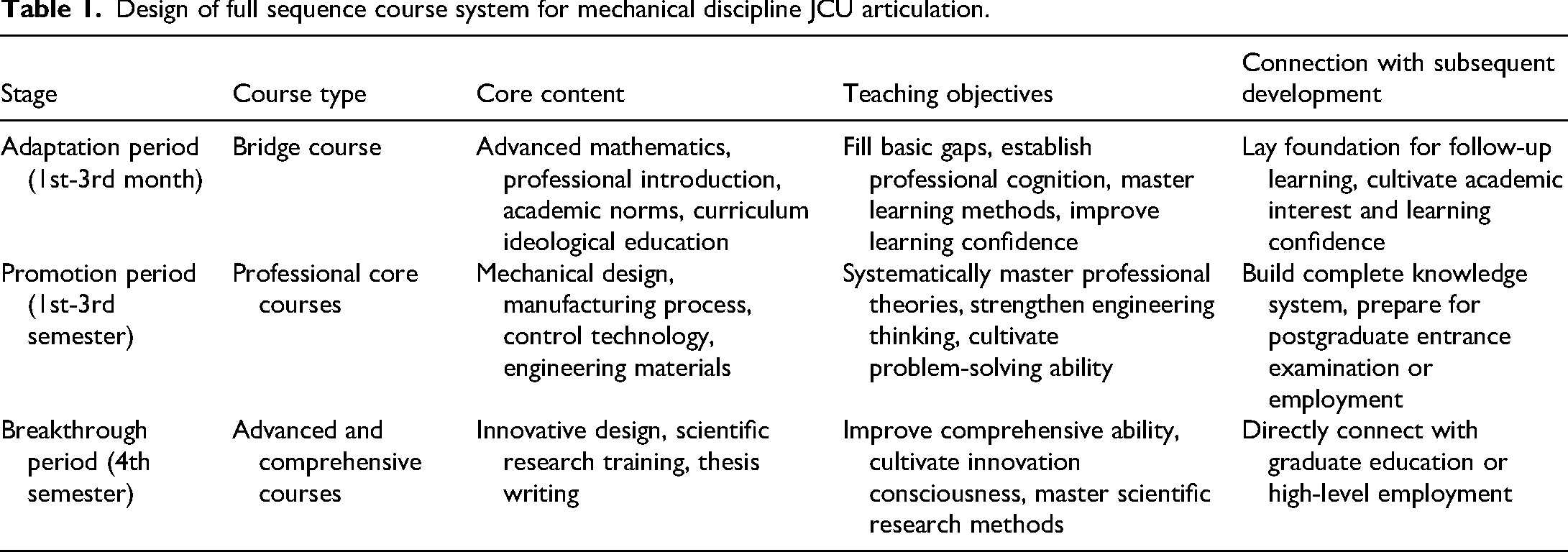
The design of professional courses at JCU should be tailored to students by integrating theory, practice, and innovation into a cohesive “theory-practice-innovation” linear model. 18 For instance, in the mechanical design course, after student's master basic CAD/CAM skills, advanced courses like “digital design and simulation” can be introduced. This approach maintains the strengths of vocational training while aligning with undergraduate teaching standards. For those intending to pursue graduate studies, a dedicated tutorial module is included to provide focused preparation for entrance exams. This modular, graded design is based on the “zone of proximal development” theory, which emphasizes teaching in the space between a student's current abilities and potential growth. By constructing “bridge courses,” “intensive modules,” and “sprint counseling,” a series of progressive “scaffolds” are created, allowing students to improve steadily through manageable challenges rather than encountering a “knowledge cliff.” The three-stage curriculum is detailed in Table 1.
Design of full sequence course system for mechanical discipline JCU articulation.
Innovation in teaching mode – student centered
Considering the practice-oriented nature of mechanical engineering, classrooms should shift from traditional lecture-based teaching to problem-oriented, inquiry-based heuristic methods. Students must be at the heart of the learning process. By employing case disassembly, task-driven strategies, group collaboration, and similar approaches, students’ active engagement is fostered, encouraging them to cultivate independent study habits and sparking both interest in learning and enthusiasm for innovation. The following are specific recommended teaching methods.
Project-Based learning (PBL)
The PBL introduces students to challenging real-world engineering tasks, requiring them to conduct research, develop design proposals, validate simulations, and engage in iterative optimization within groups. This approach not only reinforces professional knowledge but also cultivates skills in project management, teamwork, and communication. Mills and Treagust 19 found that PBL significantly boosts problem-solving abilities in engineering students and effectively motivates vocational-to-undergraduate students with practical experience. Although PBL is well-established in engineering education (Mills et al., 2003), its adaptation for JCU students—who often have strong practical skills but weaker theoretical foundations—remains underexplored. PBL effectively combines familiar problem-solving scenarios with the undergraduate requirement for independent theoretical exploration, allowing JCU students to transition smoothly between learning models within their comfort zones.
Case teaching method (CTM)
The CTM involves analyzing real engineering scenarios, helping students connect abstract theories to specific situations and apply knowledge practically. For example, instructors can introduce their latest research findings and unresolved issues into the classroom, enabling JCU students to observe the latest advancements in mechanical engineering and expand their perspectives.
Digital transformation of teaching (DTR)
The DTR in mechanical specialization courses can incorporate technologies like virtual simulation and digital twins to create learning scenarios that seamlessly integrate theory with practical training. For instance, in CNC programming instruction, VERICUT simulation software allows students to repeatedly debug code and optimize tool paths within a virtual setting. This approach reduces the costs associated with hands-on training and significantly enhances learning efficiency. De Jong et al. 20 demonstrated that virtual simulation can lower error rates in actual experiments by approximately 30% and greatly enhance comprehension of fundamental principles, which is particularly beneficial for under-resourced JCU students. Virtual simulation serves not only as a teaching aid but also as a tool for promoting educational equity. It enables JCU students to engage in repeated trial-and-error exploration in a low-cost, risk-free environment, thereby safeguarding their self-confidence while ensuring a deep understanding of theoretical concepts.
Strengthening capacity building: Equal emphasis on scientific research and innovation
Undergraduate education should prioritize cultivating research literacy and innovation, beyond merely transferring knowledge, to provide a robust foundation for students aiming to pursue master's and doctoral degrees. Lopatto 21 emphasized that involving undergraduates in scientific research projects is a key strategy for developing the critical thinking and research skills necessary for graduate studies. Thus, advancing research training to the undergraduate level is crucial. Establishing opportunities for undergraduates to engage in research early enhances their study skills and shapes their academic identity. By adopting the role of “researcher,” students can challenge the stereotype that equates vocational students with blue-collar roles, thereby building the confidence needed to overcome self-imposed limitations.
JCU students typically possess strong practical skills and a sharp engineering intuition, which serve as a solid foundation for applied research. To foster research interest and develop essential skills, scientific research training should be integrated into daily teaching through assignments like literature review reports and synthesis paper writing. Concurrently, students should be encouraged to apply for college student innovation and entrepreneurship projects and to participate in faculty-led project groups, allowing them to practice research skills in real-world projects.
Reconstruction of teaching system – multi-level cultivation
The essence of mechanical engineering is application, and JCU education must highlight practical ability training. Based on the author's training and subsequent research experience, practical teaching should build a “basic-comprehensive-innovation” three-level progressive enhancement system. (1) The basic practice layer aims to strengthen the professional foundation for all students through experimental courses, course design, and basic skills training. (2) The comprehensive practice layer targets students with an existing foundation, enhancing their ability to solve complex engineering problems through comprehensive experiments, professional practical training, and school-enterprise cooperation projects. (3) The innovative practice layer focuses on students with specialties, using scientific research projects, disciplinary competitions, and innovative practices to stimulate their innovative spirit and develop their research abilities. Ye et al. 22 confirmed that a hierarchical, progressive practical teaching mode significantly enhances students’ engineering practical skills and innovation quality, particularly benefiting students at various levels by exploring their potential.
Undergraduate institutions can successfully integrate research projects, academic competitions, and professional education by adopting a “school-enterprise collaboration and competition-integrated teaching” approach. By partnering with local machinery manufacturers to establish internship bases, these institutions can implement practical projects like product design and process optimization, thereby enhancing the relevance and applicability of instruction. Furthermore, active participation in competitions such as the Mechanical Innovation Design Contest and the Engineering Training Competency Competition enables students to “learn through competition and innovate through competition,” effectively stimulating their academic enthusiasm and creative potential.
Educational reform practices for building a full sequence education system
The author conducted a pilot project at the Department of Mechanical and Electrical Engineering at the School of Mechanical Engineering, applying the conclusions from teaching reform exploration to daily teaching practices. Specific measures are illustrated in Figure 4.
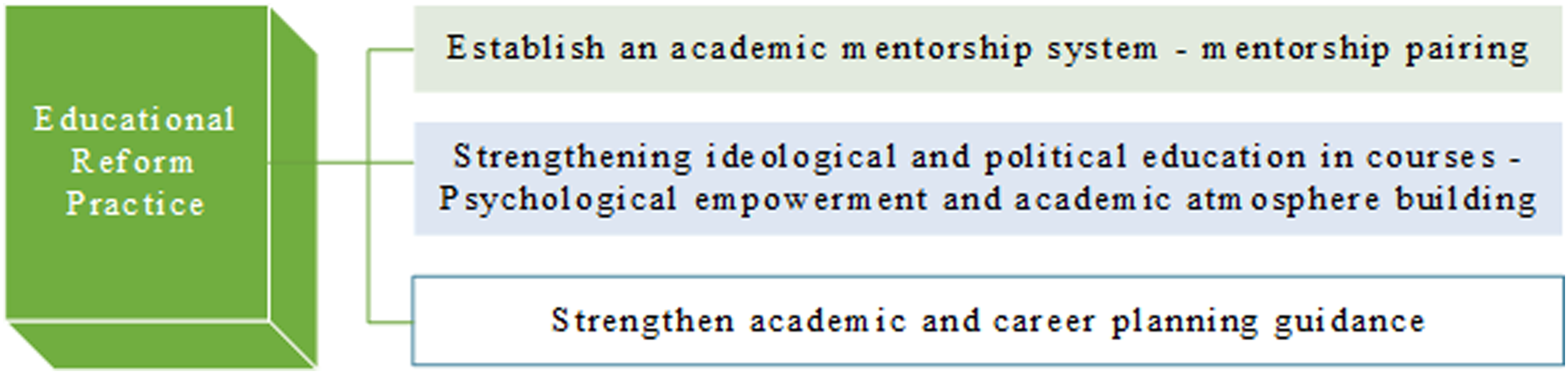
Teaching reform practices based on full sequence education.
Establish an academic mentorship system – mentorship pairing
Academic mentorship system offers an effective means of delivering personalized instruction and fostering students’ holistic development. In practice, academic tutors implement individualized guidance through a “one policy for each lifetime” approach, which not only addresses students’ immediate learning needs but also supports their long-term development by helping them craft academic and career plans tailored to their unique characteristics. Crisp and Cruz 23 after reviewing relevant literature, define academic tutors in higher education as those who significantly enhance students’ academic self-confidence, career planning skills, and enrollment satisfaction. In practice, we emphasize the importance of a mentor's “understanding” and “matching.” An ideal college mentor should not only provide academic guidance but also empathize with the unique experiences and challenges faced by college students; otherwise, the guidance risks becoming merely procedural. For students aspiring to attend graduate school, tutors should proactively guide them to engage in research projects, solidify their professional foundations, and prepare for advanced studies. For those planning to enter the workforce, mentors should focus on developing engineering skills, recommend internships, and enhance employment competitiveness.
In teaching practice, the author implemented a “blue and blue twinning” mechanism for college students. This initiative involved pairing experienced master's degree students with undergraduates to share insights on learning and graduate school experiences. This peer-led demonstration and guidance significantly enhanced students’ motivation and confidence in their academic pursuits.
Enhancement of course ideology – psychological empowerment and learning styles
A good academic style is crucial for the success of university students. During teaching, it has been observed that while students are ambitious, they often succumb to self-doubt due to the overwhelming academic workload and unfavorable external evaluations. The development of a collegiate academic style should focus on empowering students psychologically, fostering a positive and supportive environment for collective learning. Tinto et al. 24 emphasized that a student's sense of belonging within their class group significantly influences their academic performance, and constructing an “academic community” is the most effective way to enhance this sense of belonging. Consequently, the cultivation of academic style should not only focus on meeting disciplinary requirements but also aim to create a team atmosphere where students “struggle and progress together”. By forming study groups and organizing academic salons, a platform for emotional support and information exchange can be established, thereby promoting the development of an “academic community”. Within this community, academic challenges and personal anxieties can be alleviated, helping to counteract feelings of isolation stemming from perceived academic inadequacies.
In teaching practice, the author enhances students’ identity and confidence through various activities, including themed class meetings, academic salons, and experience-sharing sessions. Notably, I frequently share my personal experiences with students, illustrating how to solidify their foundational knowledge during their specialty, adapt to changes during specialization, tackle challenges in graduate school, and push their boundaries during doctoral studies. These authentic growth narratives provide students with a clear developmental pathway, helping them understand that transitioning from college to undergraduate studies is not an endpoint but rather a new beginning.
Strengthening guidance on academic and career planning
The short duration and heavy task of JCU education make it especially critical to develop a scientific academic plan. At the undergraduate level, the planning guidance for college students should be moved forward to the entrance education and extended backward to form a support system throughout the whole process. Establish distinct objectives for each stage of a student's academic journey. Initially, concentrate on adaptation and orientation. Through professional introductions, insights from senior students, and an explanation of the training programmed, assist students in swiftly acclimatizing to undergraduate life and defining their developmental goals. In the intermediate phase, the emphasis shifts to consolidation and advancement. Engaging in research training, participating in competitions, and obtaining skill certifications enhance students’ professional skills and overall capabilities. As students approach graduation, the focus turns to selection and transition. Utilizing postgraduate entrance exam preparation, employment guidance, and career planning, we support students in seamlessly transitioning to their next phase. For those intending to pursue postgraduate studies, it is crucial to priorities the consolidation of core courses within their major and encourage early preparation for entrance exams. Academic planning recommendations are detailed in Table 2.
Full academic planning for the mechanical engineering JCU program
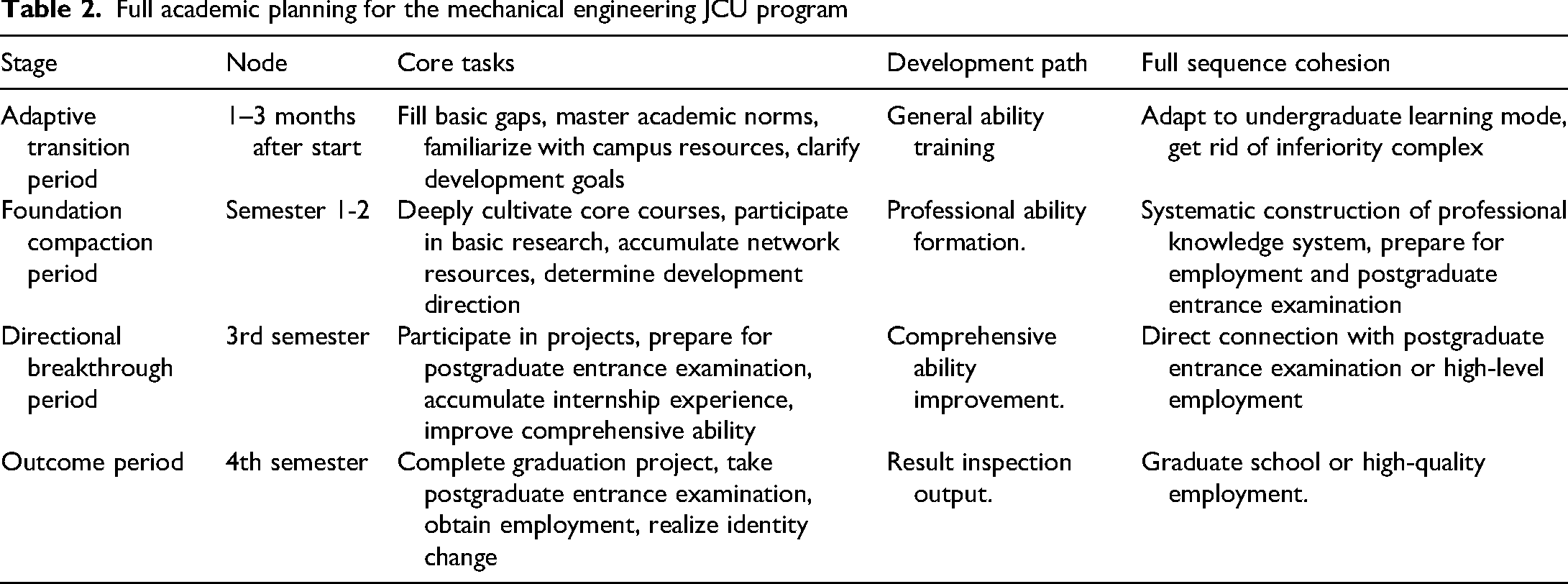
During their teaching practice, several students specializing in food machinery successfully obtained a master's degree through systematic preparation. Concurrently, one student joined Wuliangye Co., Ltd. and pursued a part-time master's degree in food machinery the following year. This experience demonstrates that with careful planning and consistent effort, post-secondary students can indeed advance their academic pursuits.
Teaching reform outcomes and reflections
Research methodology
This study utilized a mixed-methods approach, integrating both quantitative and qualitative data, to assess the effectiveness of the proposed “full sequence education” reform for JCU mechanical engineering students. Given the pre-post design without a randomized control group, all findings are presented as preliminary associations rather than definitive causal effects. (
The study was approved by the Ethics Committee of Sichuan University of Science and Engineering (approval no. SUSE-2024-021). Informed consent was obtained from all participants. (
Analysis and discussion
This study aimed to systematically evaluate the reform's effectiveness by focusing on mechanical engineering JCU students at Sichuan University of Science & Engineering from 2022 to 2025. A combination of academic record analysis, questionnaire surveys, and semi-structured interviews was employed to compare the quality of education before and after the reform's full implementation in 2024. The author presented a detailed report at Mianyang Polytechnic, as depicted in Figure 5. However, the photograph in Figure 5 primarily documents the dissemination activity and does not offer analytical evidence of the reform's impact. Future reports should consider substituting such images with data visualisations to better illustrate findings. The statistical data is presented in Table 3, and the main analysis results are summarised below.
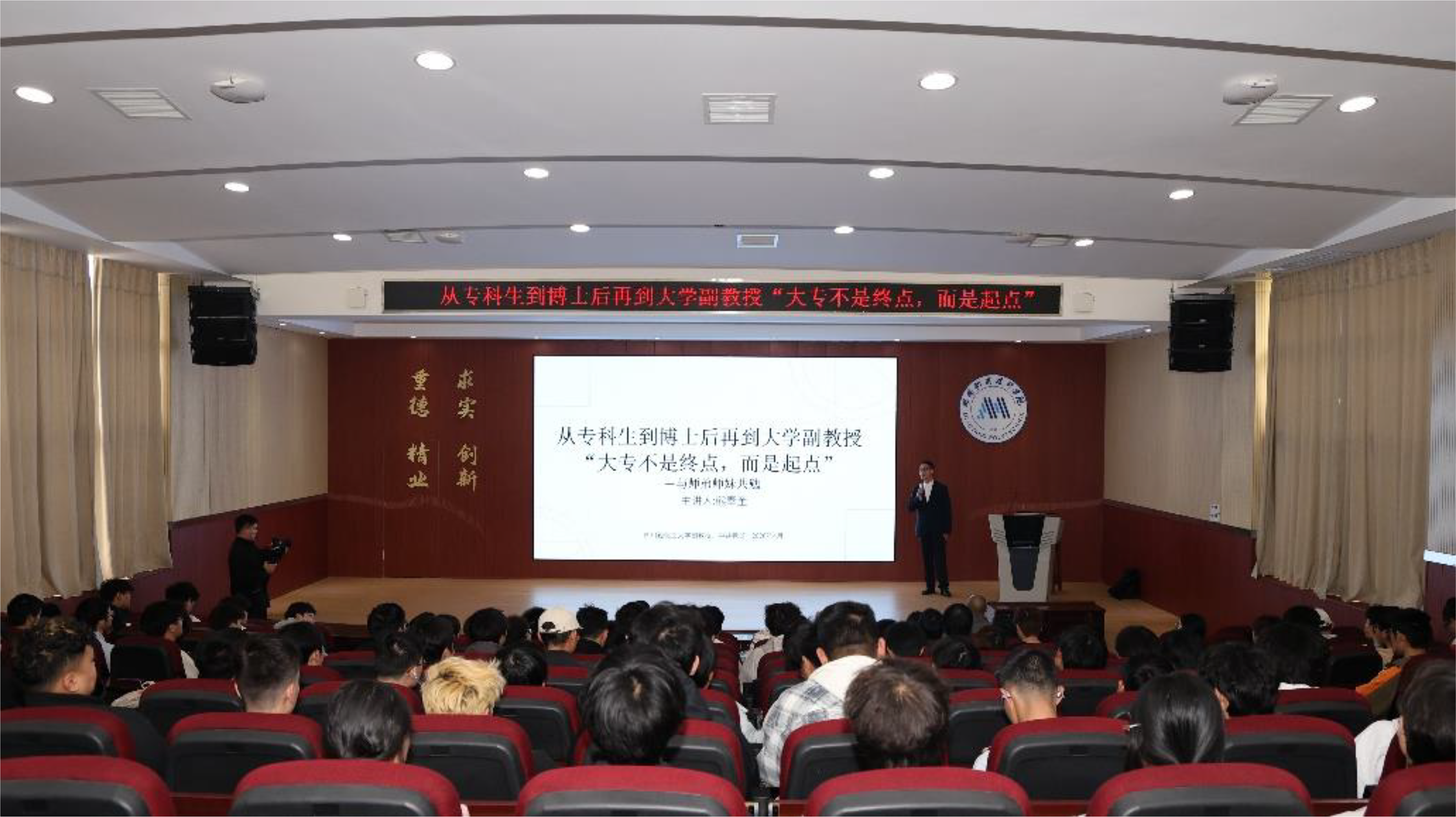
lecture photos of Mianyang Polytechnic. (The image captures the author presenting reform findings, illustrating the dissemination process. However, it should be noted that this photograph does not serve as evidence of outcomes.).
Comparison of training quality before and after reform (with statistical indices).
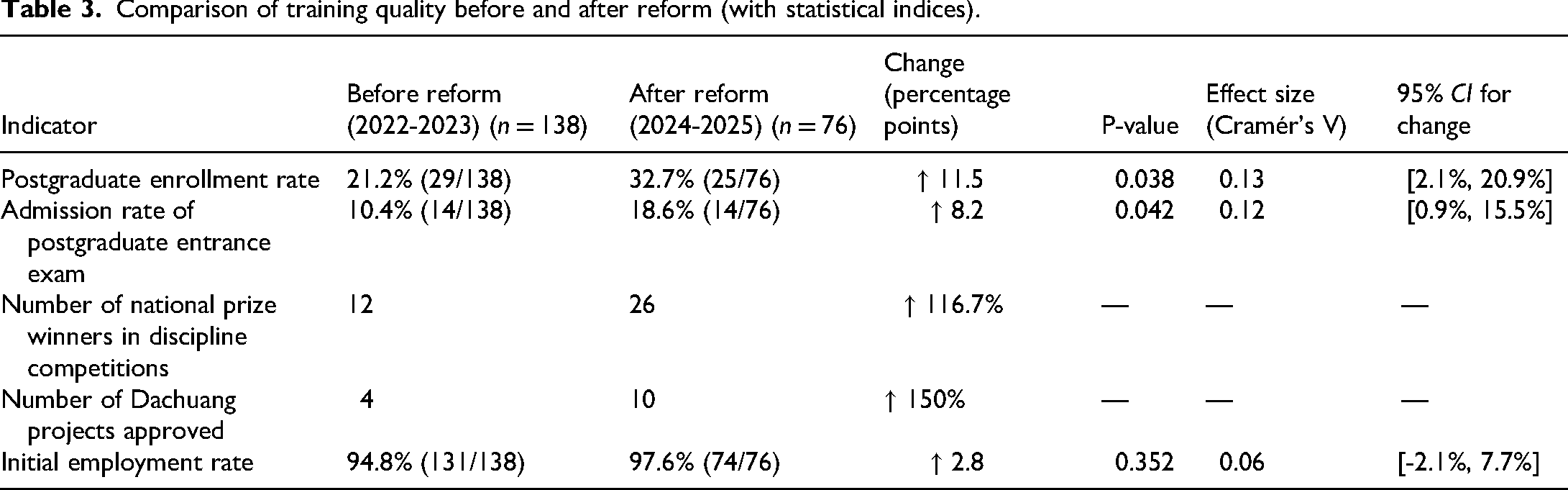
Initially, JCU students exhibited a marked increase in academic confidence and motivation for personal development. Following the reform, the rate of applications for postgraduate entrance examinations rose from 21.2% (29/138) to 32.7% (25/76) (P = 0.038, Cramér's V = 0.13, 95% CI for the difference: 2.1% to 20.9%). Concurrently, the admission rate improved from 10.4% (14/138) to 18.6% (14/76) (P = 0.042, Cramér's V = 0.12, 95% CI: 0.9% to 15.5%). These initial findings imply that such achievements may have dispelled the long-held belief among JCU students that postgraduate exams are unattainable. Nevertheless, due to the modest effect sizes (Cramér's V = 0.13 and 0.12, indicating small to medium effects) and the pre-post study design, these results should be approached with caution.
Secondly, the innovative and practical skills of JCU students saw notable improvement. The number of awards secured in national-level disciplinary competitions rose from 12 to 26, while approved college student innovation and entrepreneurship projects increased from 4 to 10. Notably, one project attracted enterprise interest for technology transfer, suggesting that the hierarchical progressive practical teaching system may have effectively stimulated students’ innovative potential. However, statistical tests were not conducted on these figures due to small expected frequencies; thus, these descriptive enhancements necessitate validation with larger samples.
In conclusion, the quality of employment outcomes presented mixed findings. Although the initial employment rate increased by 2.8 percentage points, from 94.8% [131/138] to 97.6% [74/76], this rise was not statistically significant (P = 0.352, Cramér's V = 0.06, 95% CI: −2.1% to 7.7%). Consequently, the data do not substantiate claims of enhanced employment quality post-reform. Feedback from employer interviews suggested that JCU graduates possess a notably stronger theoretical foundation and require a shorter adaptation period after being hired. Nonetheless, these qualitative insights were not systematically gathered and should be regarded as anecdotal.
The implementation of comprehensive educational reform encounters several practical challenges. The prevailing evaluation system in education overly emphasizes “origin experience” rather than actual competence, creating invisible barriers for JCU students in their future development. Additionally, limited teaching resources constrain the scope and depth of personalized training. Social biases against vocational education persist, and altering these perceptions will necessitate sustained effort over time. Despite these challenges, educators must remain confident and patient, continuing to advocate for educational reform and innovation. Full sequence education represents not only an educational philosophy but also a fundamental belief. We hold that every student possesses boundless potential, and the mission of education is to provide a platform to unleash this potential.
Conclusion
This paper addresses the real-world challenges encountered in mechanical engineering education in China, drawing from a systematic analysis of the first author's educational journey from junior college to postdoctoral study and teaching practice at undergraduate institutions. It introduces the concept of “full sequence education,” which advocates integrating JCU education into the broader context of lifelong learning. This approach aims to establish a talent cultivation pathway encompassing vocational college, undergraduate, and doctoral levels. The study systematically examines the challenges JCU students face across four dimensions: psychological, managerial, individual learning, and teaching resources. It explores how these challenges interact and reinforce one another. In response, the paper proposes comprehensive reform pathways. These include curriculum-based ideological education, curriculum restructuring, innovative teaching models, research literacy development, tiered practical teaching, and academic mentorship. Through these reforms, the study seeks to enhance the educational experience and outcomes for students.
At a practical level, the proposed reform measures have been initially implemented in the mechanical engineering programs at JCU. A pre-post comparison indicates preliminary links between these reforms, which are grounded in the “full sequence education” concept, and improvements in students’ academic confidence, success rates in postgraduate entrance examinations, and employment quality. However, as the study lacks a control group, these findings should be viewed as preliminary associations rather than definitive causal evidence. Notably, some students have excelled in research projects and academic competitions, suggesting the potential effectiveness and transferability of this concept. This exploration offers an operational teaching plan for JCU's education cultivation systems in mechanical engineering and provides both theoretical support and practical references for developing a vocational education system in China that integrates general education.
This study acknowledges several limitations. Firstly, the reform was conducted at a single institution with a relatively modest sample size (n = 214 total), which necessitates further validation to ascertain the applicability of the findings to other universities or disciplines. Secondly, the pre-post design, lacking a randomized control group, precludes the establishment of causality; thus, we report associations rather than causal effects. Thirdly, the one-year follow-up period post-reform constrains the evaluation of long-term outcomes, such as graduate school completion and career advancement. Fourthly, the non-significant result for the employment rate (P = 0.352) suggests that the reform did not lead to improved employment outcomes within this sample, and this null finding should not be disregarded. Lastly, the lecture photograph (Figure 5) offers no analytical value and should be substituted with a data figure in future revisions.
Future research could progress in several key directions. Firstly, multi-center randomized or quasi-experimental studies with control groups should be conducted to establish causal evidence. Secondly, the development of a curriculum system that integrates “positions, courses, competitions, and certifications” should be promoted. Additionally, digital platforms should be leveraged to enhance educational equity. Furthermore, a specialized teacher training programmed for JCU education needs to be established. Another important area is exploring an integrated training mechanism encompassing “higher vocational education, bachelor's degree, master's degree, and doctoral degree” to ensure institutional support for the continuous development of technical and skilled talents. Finally, data visualization tools, such as bar charts with confidence intervals, should be utilized instead of lecture photographs to present outcome comparisons effectively.
Footnotes

Funding
This work was supported by the Key project of Sichuan Provincial Department of Education [JG2024-0883, JG2024-0901, JG2024-0893]; Sichuan Province High Quality Graduate Education Reform Project [YJGXM25-C120]; Key Project of Sichuan Education Informatization and Big Data Center[2025LXKTPS353].
Declaration of conflicting interests
The authors declared no potential conflicts of interest with respect to the research, authorship, and/or publication of this article.